Category: Specials

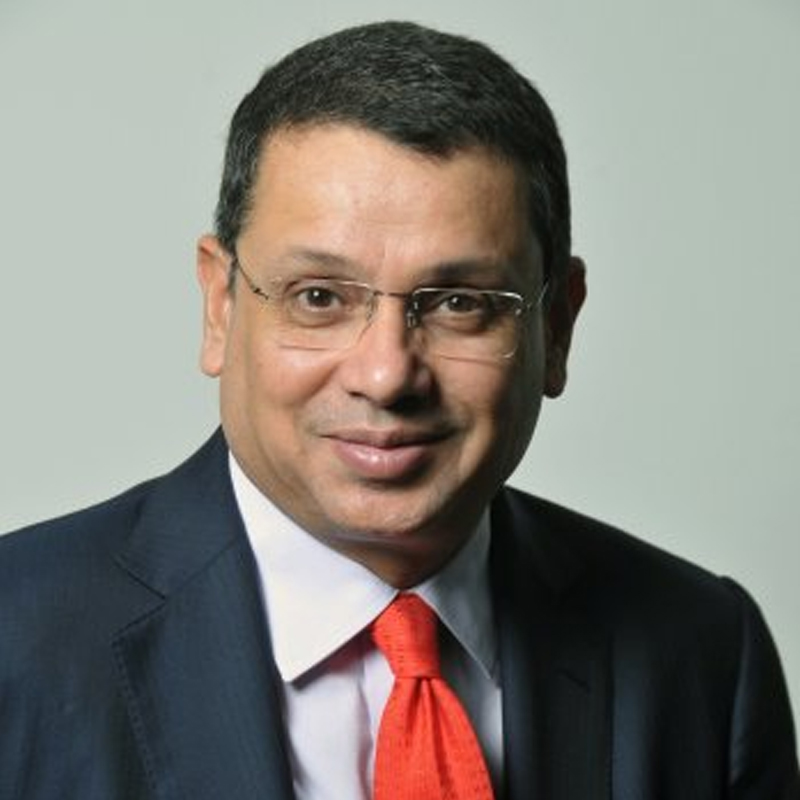
  • Industry doing nothing to transform biz models for digital world: Uday Shankar

    Industry doing nothing to transform biz models for digital world: Uday Shankar

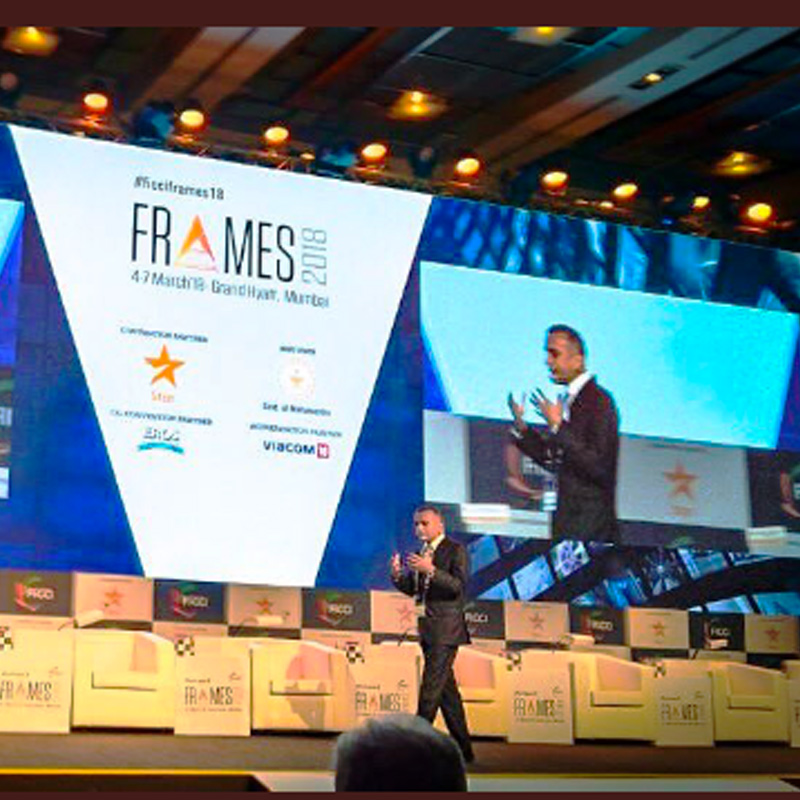
    MUMBAI: Star India CEO and Ficci Broadcast Forum chairman Uday Shankar set the ball rolling at the inaugural of the 13th edition of the Ficci Frames by saying that the industry is at the cusp of what is set to completely transform broadcasting in India, forever.

    Shankar was talking about the universal digitisation of television distribution. A subject that has dominated all discussions at all forums last year and which he presumed will continue to do so for a long time to come.

    “Most of the discussions that I have participated in are still around whether digitisation will happen and if it indeed were to go through, how chaotic it would be. With all humility may I suggest that it is a meaningless discussion triggered by a bunch of retrograde interests who are living in denial,” he said.

    The Cable Television Networks Amendment Act is not the beginning of digitisation. Digitisation of distribution is a big reality and the 40 – 45 million homes that have bought DTH boxes at some point or the other are a conclusive evidence of that. “In fact as we speak, India may just have overtaken the United States as the world’s largest DTH market,” he said.

    Shankar added, “The critics and the cynics who are still wondering whether digitisation would happen, my answer is: Look around, it is already happening and the rest of it is bound to happen because even in this country it would be difficult to undo such a momentous shift. To those who wonder how chaotic it would be, my response is that there would be some chaos, but chaos is not necessarily bad if the alternative is status quo or regression.”

    However, he also cautioned that his biggest concern now is a chaos of another kind that we are all set to create by our inaction. “Whether we like it or not, in a few years time, the vast majority of this country will receive its content through digital media – digital cable, DTH, 4G, wireless and Internet. But are we preparing for that? The answer is a big no,” he regretted.

    He said that while we debate a digital future day-in-and –day-out, the industry is doing nothing to transform or find business models for a digital world. “Let’s face it. Universal digitisation is going to force us to change the way we do business and we are not ready for it. We often blame the cable operators and MSOs that they are not ready but I am afraid that even the broadcasters and the content creators are not ready for a digital world. Are we then setting ourselves up to become uncompetitive and irrelevant?,” he asked.

    DTH has launched services like HD, Dolby sound and digital video recorder” and yet the broadcasters are doing nothing differently to service this segment. DTH has been around now for about six years and broadcasters or the content community have done nothing as an example of a strategy to exploit the new technology. This, he said, is despite an intuitive and an experiential understanding that the behaviour and the consumption patterns in DTH homes are significantly different from analogue homes. “The data also show that the average time spent on content in digital homes is much more and yet we do not treat them differently,” he said.

    Shankar said that it is scary how “we have force-fitted an analogue broadcasting model into the digital domain.”

    Is that what we are going to do even after cable goes digital, he asked. “I am afraid if the past behaviour is anything to go by, we are not ready to offer anything significantly different and therein lies the biggest crisis and risk of a chaos,” he said.

    He said there is enough global experience to suggest that digitisation leads to decentralisation, regionalisation or localisation of content creation and distribution.

    “Creatively, it is a huge catalyst for innovation and diversity. Essentially what it means is that with universal digitisation the business models of broadcasting, which are built on centralised creation and distribution of content and even a centralized advertising revenue model, may come under a huge pressure,” he cautioned.

    Shankar said that the cable community is still busy lamenting the potential loss of carriage fees and not realising what an amazing opportunity it has to participate in the local economic boom that is sweeping most parts of this country.

    “The first phase of digitisation that covers the 4 metros will be a huge unshackling of broadcasting and content opportunities. These are the cities that have crumbled under the weight of analogue frequency limitations. Just imagine the opportunities that these metros also our economic hotspots present when, from the first of July access to frequency will no longer be a constraint. So to my mind the MSOs and the cable operators may potentially become a powerful content creator that the traditional broadcasters have to contend with. There may be new creative talent ready to ride this technological transition. As the subsequent phases roll on, the decentralisation of broadcasting is bound to gain enormous momentum. However, I don’t see anyone trying to race ahead to take a pole position here,” he said.

    He also pointed out that HD TV sets have been available in this country and while many people were buying them, their off-take was still low primarily because there was no HD content and nobody was willing to invest in HD content because there were not enough HD consumers. “It was the classic chicken and egg problem. However early last year, when we at Star launched 5 HD channels with Dolby 5.1 surround sounds, even we were surprised by the rapidity with which HD gained acceptance. Today, in less than a year there are around 25 HD channels. But, I have to admit with a touch of disappointment that I am yet to see an adequate recognition of the potential of HD and a superior sound possibility by my fraternity. It is a classic case of the old mindsets struggling with a new technology,” he rued.

    Are we going to stay locked into this struggle or are we going to create a new generation of television which would be designed for the digital world?, he asked.

    Shankar said he has been an admirer of the current information and broadcasting dispensation which he thinks has shown more vision than any other dispensation in his two decades of interaction with the broadcasting establishment. “However, let me point out that we still need a lot of official and legislative enablers to remove the bottlenecks on this expressway. For instance, a clear policy to enable multiplicity of beams and splits would be a powerful trigger for proliferation of content and revenue opportunities,” Shankar said.

    He ended his keynote with the example of the latest Oscar success from Hollywood – The Artist – which is a portrayal of how a talented and accomplished artist from the silent era could become completely irrelevant because he refused to see that the times have changed.

    “Let’s not try to thwart a revolution which people are crying for. We will only hurt ourselves. The question is whether we will lead the change or whether we will vacate the space for a new set of entrepreneurs and visionaries who will replace us. It is up to us to use it or lose it,” he said.
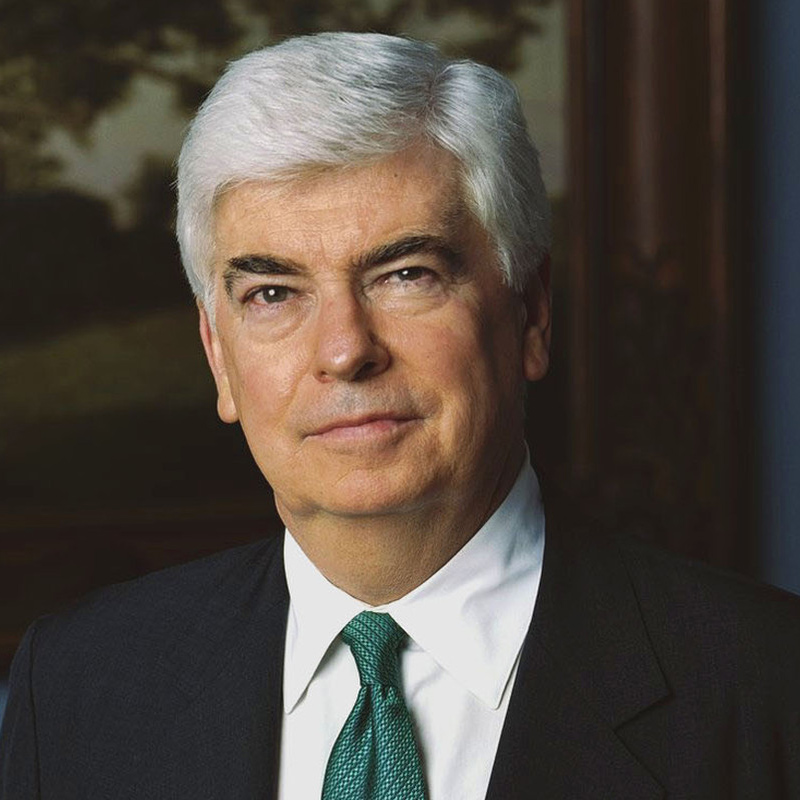
  • India must act strongly against piracy if cinema is to thrive: Dodd

    India must act strongly against piracy if cinema is to thrive: Dodd

    MUMBAI: Even though the Indian cinema is thriving and poised to become a $ five billion industry in the next two years, the government must act strongly against piracy if this growth has to be sustained.

    Motion Picture Association of America CEO Chris Dodd said during his keynote address at Ficci Frames on the opening day that movies contributed about $ 640 million to the Indian economy annually. “India is the biggest movie ticket market in the world, with 3.3 billion tickets sold every year. India‘s movie industry is in transition from being a $ 3.2 billion industry until two years ago, towards becoming a $ five billion industry in the next two years,” he added.

    But he regretted that India was among the top 10 markets when it comes to copyright infringement online. He called for joint efforts between the industries to end theft of content as it is a major threat.

    Dodd quoted an Ernst & Young report which said the Indian movie industry loses around $ one billion due to content theft every year.

    He said the notion that one cannot be pro technology and pro copyright at the same time is false. It is important to build relationships between content and technology. The Indian government must act to protect against online theft, he said, adding the government should pass anti-camcorder laws since camcorders are used in cinema halls to pirate films which are then made available on Indian streets within a few days of a film‘s launch.

    He noted that it was important to end piracy in India as money is lost not just by the faces seen on the screen but also by other people like truck drivers, dry cleaners etc. who contribute to the film industry by working in it. He mentioned Creative America which is a grassroots coalition in the United States aimed at protecting intellectual property and commercial interests of Hollywood.

    He noted that in 2010, the Los Angeles India Film Council was formed to facilitate the exchange of ideas, talent and investment. This will lead to more activities, he said. The aim of the council is to also break down barriers in production and distribution. The Council will also look at harnessing the power of emerging technologies and bring artistes to collaborate on new ideas. “Film remains a key growth driver despite economic uncertainties,” he said.

    Hollywood will release around 36 films this year, he said, and the India market was a huge opportunity that the US motion picture industry is keen on tapping.

    Stating that collaboration between the Indian and the US movie industries is expected to increase, Dodd said “barriers that prevent production and distribution of content must be brought down.”

  • Indian film industry attracts investors amid challenges

    Indian film industry attracts investors amid challenges

    MUMBAI: The Indian film industry is buoyant and is generating a lot of investor interests globally. However, it is marred by multiple challenges including a huge gap between investors and creative pieces, industry experts opined at a panel discussion at the 13th edition of Ficci Frames here.

    India is one of the biggest producers of films. “However, out of 1,200 odd films that were released last year, only 100 were studio produced,” said Moxie Entertainment MD and independent filmmaker Soumo Ganguly. “This clearly means that the other 1,100 films were made of independent funding either by banks or with the help of high net worth individuals, family, friends and relatives.”

    Ganguly said it is a challenging task to always depend on such funding and, hence, difficult to find finance.

    Speaking about a large pool of capital available by the way of private equity, Ambit Group CEO Ashok Wadhwa pointed out that while securing finance from high net worth individuals is an option, the challenge arises when the investor does not understand creative pieces.

    On a different note, Wadhwa also advised aspiring filmmakers to be absolutely certain about their finances. “I would like to advise aspiring movie makers to not start their projects unless they have 100 per cent of the film expenditure secured in their bank accounts,” he said.

    Speaking about revenues generated through selling of television rights, Blackstone senior managing director of private equity Mathew Cyriac said that the producers are generating more revenue from selling movie telecast rights to broadcasters rather than box office collections.

    “Television is becoming a bigger distribution point for movies. In Kerala, 50-60 per cent of movies get acquired by general entertainment channels. Similar is the case with Karnataka and other southern markets,” Cyriac said.

    Talking about the challenges in movie making business, he said that the studio model is yet to emerge in India.

    “Studio business in India is the early 1950s equivalent of business in the United States. Hence venture capital flavour of investment is seen more in India,” he said.

    Speaking of combining the best of investor and creative pieces to create a hybrid model, Hollywood-based The Allegiance Theater founder and partner Daniel Dubiecki said that it would be fruitful to bring together venture capitalists and studios models.

    “Group of angel investors have increased, which it is good news for the movie business,” he pointed out.

  • IBF, ISA and AAAI announce launch of BARC

    IBF, ISA and AAAI announce launch of BARC

    MUMBAI: The Indian Broadcasting Foundation (IBF), the Indian Society of Advertisers (ISA) and Advertising Agencies Association of India (AAAI) Wednesday formally announced the official formation of a nationwide audience research joint body, Broadcast Audience Research Council (BARC).

    Indian Broadcasting Federation (IBF) will have 60 per cent stake in the new entity, while ISA and AAAI will equally hold the balance 40 per cent.

    Originally founded in 2008, BARC was earlier to be set up as a joint venture between the IBF and the ISA on a 60:40 ratio and initial investment of Rs 300 million. However, ISA wanted AAAI also to be a part of the joint body.

    The announcement was made at the inaugural day of Ficci Frames 2012 here in presence of I&B Secretary Uday K Varma, Trai chairman Dr JS Sarma, Zee managing director and CEO Punit Goenka, Star India COO Sanjay Gupta, Times Television Network MD and CEO Sunil Lulla, Star CJ CEO Paritosh Joshi, Madison Group chairman Sam Balsara and Landmarc Leisure Corporation MD Paulomi Dhawan.

    Talking about the way forward, Joshi said BARC will be similar to what BARB (Broadcasters’ Audience Research Board) is in the UK. BARC will not conduct audience measurement directly but commission independent specialist research vendors.

    A technical committee is being set up, now that all the stakeholders are in place. The committee will identify the needs and requests for proposal will be invited.

    “We are not a research agency, and we are not going to compete with TAM. Instead, BARC is a joint body, which will evaluate all the research needs of the industry and in a commercially sensible manner,” Joshi said.

    BARC would represent all the clients and address all the issues on a single platform, he added.

    The primary objective of BARC is to conduct and commission market research using appropriate research methodologies, to provide accurate, up to date and relevant findings relating to broadcast audiences, including TV ratings.

    Earlier in the day, Goenka, during his keynote had mentioned that there is nothing wrong in the data provided by TAM, but it is inadequate.

    Joshi said that with the formation of BARC, the quality and scope of TV audience research in the country will get upgraded, the findings will be more robust and financials more transparent.

    “The major challenge will be to cover all the broadcasting modes in the research – terrestrial, cable & satellite, DTH, analogue and digital platforms, developing and new platforms,” he added.

    The Board of the council will have 10 members, six members from the IBF and two members each from the ISA and AAAI.

    BARC will engage in extensive industry consultations with stakeholders, specialist research consultants, existing & potential measurement service providers to identify the key concerns and requirements with regards to audience measurement. This may be followed by an R&D exercise to evaluate potential solutions including technologies & techniques.

    Dhawan said, “We are always looking for robust research in this rapidly changing television landscape. With time, it is going to be more challenging and you will need more insights from research. We have been working together since some time to launch BARC.”

    Added ISA chairman Bharat Patel, “ISA is extremely delighted to be a part of this joint industry body, BARC, along with the IBF and AAAI to provide continued and meaningful research.”

  • Young Indian agencies begin to bloom in 2011

    Young Indian agencies begin to bloom in 2011


    The scene isn‘t scary yet for the bigger agencies. But 2011 is touted as the year when younger Indian creative agencies made their presence more visible as they took away accounts like the high-profile Pepsi World Cup campaign (Taproot), Godrej Hair Colour and Freshners (Creativeland Asia) and Tata Mutual Fund (11 Brandworks).

    Considering that many of the start-ups have got project-based accounts, the majority of the business still rests with the bigger agencies. Says JWT CEO Colvyn Harris, “Big agencies don‘t get affected if some project is handed over to any young agency. They are more credible and that‘s why clients stick with them for long. Also, there can be many reasons why the client gives a particular project to some other agency. They might not want to spend much on the campaign or they might like the idea presented by the other agency more. This is the way it works in the industry.”

    True, the biggies have not been majorly impacted. But somewhere, the pride hurts when Taproot wins PepsiCo‘s World Cup campaign project while JWT continues to be the AoR and handles most of the brands from the food and beverages major.

    Clearly, India is seeing a second wave of creative entrepreneurship. Taproot India, the most talked about young agency in 2011, was floated in 2009 and then followed others like Curry-nation and Scarecrow.

    “The timing was brilliant for the Indies to emerge as the Indian brands like Tata, ITC and Bharti were looking for creative agencies that understood them and their sensibilities and there was a lot of professionals who wanted to breakaway from the processes of the bigger agencies and start an enterprise of their own,” says Law and Kenneth MP and CEO Anil Nair.

    The first wave of creative independent Indian entrepreneurship started in the ‘80s but eventually fell prey to the global agencies. Chaitra became Leo Burnett, Sistas changed to Saatchi and Saatchi, and many other Indian agencies changed ownership.

    Explains Leo Burnett NCD KV Sridhar, “The last renaissance of creative entrepreneurship was with Enterprise, Contract, Ambience which can be called the golden era for creative entrepreneurship. Ravi Gupta set up Trikaya around that time while Gopi Kukde and his Onida campaign also happened simultaneously.”

    So how is the market environment different this time around? “The biggest difference is that media is now segregated from the creative agency function. This makes it even easier for the smaller agencies to flourish since the need for capital and financial discipline is lower,” says Contract Advertising EVP Kumar Subramaniam.

    One of the main pulls of young and independent agencies is the accessibility of top management. Curry Nation director Priti Nair explains, “You don‘t really deal with organisations, you deal with people. If the same people that you dealt with before and were happy with what they delivered for you, then how does it matter if they are in a small or a large agency?”

    Was pricing a major factor in helping the young guns win accounts? While the popular belief is that the Indies have managed to get accounts based on lower pricing, they insist that they do not come cheap in any case.

    Says Scarecrow Communications founder and director Raghu Bhat, “Ad agency fees are a mere fraction of the marketing spend. Clients are not idiots. Neither are they penny wise, pound foolish. Clients want more creativity, more involvement, and more passion. If they get all this in a network agency, why would they move to a smaller agency? Barring a few exceptions, today the choice is between lousy creativity at a higher cost and good creativity at a lower or equal cost. That is a very easy decision. Once the recession ends, I don‘t think clients will suddenly develop a desire to pay more for lousy creativity.”

    11 Brandworks founder director Prateek Bhardwaj says, “Clients working with young agencies aren‘t doing so because we are cheaper. We are not. They work because they get a more responsive team and better creative output. The economic slowdown hurt us as much as the larger agencies. Once the market is bullish, we expect business to grow even more as clients increase their budgets.”

    What are the challenges the newer agencies face? Says O&M NCD Abhijit Avasthi, “While sometimes being small helps in being nimble, big network agencies do have the advantage of a larger pool of resources and experience. Some small agencies, no doubt, had a good run in 2011. The challenge for them is to continue with their success. Consistency is the name of the game. The marketing problems are a lot more complex and layered today. This calls for a wider skill set and a deeper knowledge base to tackle the problems on ground.”

    Taproot India co-founder and CEO Agnello Dias believes the younger agencies will have to focus on consolidating their businesses in 2012. “The challenge is that there can only be so many clients/assignments/brands that can benefit from this. Beyond a certain number the waiting period may be too long or the talent/output may once again start spreading itself too thin. The year 2012 will see certain calls being taken. Enthusiasm and initial excitement having worn off, it will perhaps be consolidation-based calls,” he says.

    Since the agencies are run by experienced creative people, the creative output is consistently, of a high calibre. Bhat says, “The challenges that agencies face are – financial planning, the reluctance of big brands to hire small agencies and, of course, talent retention. Having said that, small agencies are not all that small any more. Just like some big agencies aren‘t that big any more.”

    Survival in the long run is a big challenge. Says Harris, “With time, more and more agencies will come up but surviving in the marketplace will be tough for them. Like in past, the smaller agencies will sell out to the bigger multinational agencies.”

    Bhardwaj feels it is a cyclic process. “To achieve a truly large scale, a tie-up with an MNC does seem necessary. An international partner offers a larger playing field, greater access to MNC brands, more acceptability with brand managers, and, of course, funds for rapid expansion. And then, you are back where you started – working in a big MNC, with an itch to go Indie!”

    Avasthi, however, has a slightly different view. “If the younger Indian agencies are keen to build a long-term brand, they will try to retain a unique flavour that will allow them to hold on. Of course, a lot depends on how good their financial health is,” he says.

  • 2011:Growth in kids genre makes it a viable market

    2011:Growth in kids genre makes it a viable market


    India is the world’s third largest TV market with almost 138 million TV Households next to China and the USA. The television and broadcasting industry has grown tremendously over the last two decades, with an average double digit growth rate.

    Overall, 2011 was a mixed year with events such as the Cricket World Cup driving up high growth despite the last quarter seeing effects of the macro-economic slowdown. New players entered the market with niche offerings like food channels and there are now more channels in the English entertainment space than ever before. Viewers are able to access niche content easily on DTH platform even in smaller markets.

    2011 has been the year of consolidation in the media and entertainment industry. The year saw the biggest consolidation in the distribution business and the formation of Media Pro Enterprise, a 50:50 JV, formed between Zee Turner and Star Den. UTV was acquired by Disney, and Network18 has bought over ETV. Businesses would do what gives them the best value, and if the best chance of realising that value is through consolidation and acquisition, then this trend will continue.

    The kids’ genre is the largest genre in terms of viewership after mass genres like GEC contributing to 18.3 per cent of the viewership pie (Source: TAM Media Research | TG: CS 4-14 | Market: All India | Period: 2010 – Wk 3 of 2012). In 2011, this genre not only recorded growth but also saw the entrance of new channels like Sonic. The kids’ genre grew in regional languages as well. In Tamil, for example, the share of Kids is higher than News. The continued investments in launching new channels and content prove that the kids’ entertainment space is a very viable market indeed.

    Content
    With consumers having a much wider choice of channels, ownership of quality content is increasingly being seen as a key differentiator for broadcasters. Once, Cartoon Network was the only kids’ channel airing international content. Fast forward to today, and there is a plethora of kids’ channels airing classic international content (like Tom and Jerry), anime cartoons (like Hagemaru), local live action shows (like M.A.D) and the latest craze – Indian animated content (like Roll No. 21 and Chhota Bheem). There’s no doubt that the kids’ entertainment space has gone through an incredible and rapid evolution.

    The content of animated shows has also seen a subtle but consistent change. Initially, new animation content creators took inspiration from the lowest hanging fruit available to them – popular mythology, inspiring movies like Hanuman, Krishna and Ramayan. Then came fictionalizing these mythological stories with shows such as Krishna Balram where characters based on these mythologies were placed in fictional plots. Now, we are at a stage where the linkage to mythology has dwindled further. Series like Chhota Bheem on Pogo and Roll No. 21 on Cartoon Network just have character names similar to those in mythology. Other series like Kumbh Karan, although may invoke a linkage; in reality have nothing to do with popular mythology. Kumbh Karan is a series based on two fun loving, twin brothers.

    Just as the supply side of the chain has seen evolution, the consumption pattern has also changed over the years. One shift noticed in 2011 is that kids prefer to watch fewer shows on kids’ channels than before and have begun to spend more time per show. Thus, although the viewership for the number of shows has reduced, the overall category viewership remains mostly unchanged.

    The animation industry in India is also growing simultaneously where locally animated shows are the flavour of the season. The Indian animation industry was estimated to have been approximately Rs 11 billion in 2006 and it is expected to grow at a rate of 22 per cent to reach Rs 54 billion at the end of 2014 (Stockmarketreview.com) – with television estimated to contribute 65-70 per cent of overall consumption (FICCI-KPMG Report 2011).

    Although the market is not as mature as its global counterparts, the growth of this segment provides immense opportunities for investment by local companies and MNCs. This can be seen in the number of kids’ channels and the percentage of animated shows on them. Between Cartoon Network and Pogo we aired the highest number of hours of animated content (25,000 half hours) in 2011.

    One important factor to consider while creating content for kids is to ensure the gatekeepers approve of the content. It is thus important for content providers to assuage the fears of parents regarding loud content and the aggressive language in kids’ entertainment shows. Without parental approval it is difficult to reach this target audience as 48 per cent of parents always exercise control over what their kids watch (Cartoon Network New Generations Research 2011). Another way to garner success for content is to make it fun and engaging for gatekeepers as well as 66 per cent of parents watch TV together with their kids. For instance, Pogo has continued to hold the title as ‘The No. 1 Kids and Family Channel’ thanks to shows like Chhota Bheem and Mr. Bean that are among the top three rated kids shows by kids and adults.

    Online
    In today’s multiscreen playground, it’s not uncommon for kids to consume content on more than one platform. Gone are the days when the television set was the only screen in the home. Over the past decade, we have witnessed a four-fold growth in kids’ access to computers and Internet at home. Add in access in schools and cyber cafes, and now half of the kids are computer users. These “Netizes” have helped the Internet usage to grow to 18 per cent (Cartoon Network New Generations Research 2011).

    What does that mean for content providers? It represents huge opportunities to expand the presence of a brand or a character in the mobile and online space through smart phones, tablets and computers. Moreover, broadcasters and content houses are increasingly working towards building anytime anywhere access to content. With technological evolution, porting these content platforms without any additional cost is expected to become a reality.

    The key component to digital success is Content as well – leveraging popular content on television to these online and mobile platforms and creating content on these platforms that is engaging, innovative and unique. For instance, Chhota Bheem’s popularity on-air has definitely contributed largely to the success of www.pogo.tv. ‘Chhota Bheem Balloon Blaster’ is one of the most popular games on pogo.tv which allows fans to connect with their hero through a game. The site has seen immense success with about 500,000 unique viewers per month.

    In an evolving digital landscape, there is one contestant: kids love the interactivity of online games. It’s their number one activity online.

    Licensing
    The kids’ entertainment market is gaining momentum at a steady pace and apart from prime television when it comes to appeasing kids, merchandising is one of the most powerful tools to connect with them.

    Over the last few years, we have seen a dramatic shift in the Indian merchandising market. Merchandising, today, has transformed into a global arena; providing an array of international and local brands to choose from. We are witnessing a healthy rise of various kinds of merchandising in every product category. Growth potential is fuelled by increased product availability, creating awareness of merchandising product and most importantly, building demand and loyalty for branded cartoon character merchandise. Kids want to have their favourite characters with them (in the form of stationary, bags, lunch box, bottles, clothes, toys, etc.) whereever they go; be it school or outside or at home!

    For instance, Cartoon Network Enterprises (CNE), the licensing and merchandising division for Cartoon Network and Pogo, has reflected the growth of the industry by reaping profits and growing by almost 70 per cent in 2011 and has added 680 SKUs. CNE Products are now available in over 5300 retail counters across India. These achievements were recognised by the industry thereby earning us the title of ‘Licensor of the Year’ Award by Franchise India in 2011.

    In recent years, the Indian consumer has become increasingly discerning. With increasing awareness levels, our consumers want products in sync with the developed world but at relevant “Indian” prices. Identifying the right product mix which would encapsulate the demand of the Indian consumers will be the single biggest challenge for this sector. Secondly, the distribution expansion could be the single biggest game changer for this sector in the immediate future. The Indian consumers are no longer restricted to those who reside in Metro towns and shop in Modern Stores. A substantial section of them resides in smaller towns and shop via the traditional stores and will continue to do so in the future.

    Expanding distribution, however, is not going to be very easy and there will be a significant cost attached to it. Piracy is the single largest threat confronting the licensed sector in India. The trade partners as well as the consumers need to be made more aware of the potential harm that pirated goods could cause for this sector to truly thrive and be on par with international markets.

    However, growth and development of modern trade in India is at its peak and provides immense opportunities in building brands. The easing of FDI norms will help bringing in international players which increase the opportunities of organiising this industry and in return will benefit the end consumer.

    Ad Sales
    As viewers and especially as consumers, kids are a critical base, and there has been increasing awareness that kids now have a say in purchase decision-making that extends far beyond traditional categories. Today, around 63 per cent of parents involve their children in the decision making process. Thus, it becomes imperative for advertisers to engage with kids to inspire product conversion (Cartoon Network New Generations Research 2011).

    But, Indian kids are a smart bunch and with increasing levels of awareness and an insatiable need to be entertained, it is not easy for advertisers to appease them. Thus, advertisers need to explore platforms that specifically cater to kids and understand their psychology better. Kids are far more receptive to products recommended by their favourite toon hero than regular campaigns.

    Thus now, not only traditional advertisers like FMCG products reserve a large chunk of their ad sales spends for kids’ channels but also non-traditional advertisers like automobiles, electronic devices, etc. consciously target this platform. In 2011, nearly 35-40 per cent ad spends came from non-traditional advertisers on Cartoon Network and Pogo.

    If media companies can shape a perception or catch an imagination – be it through television, mobile or online – it is the key to unlock that multi-million dollar industry. Today, we would estimate the Indian kids’ ad market to be Rs I.40-2.50 billion.

    Future
    The kids’ genre today is no child’s play. It is a competitive market considering the increasingly large volume of content providers. The players need to be adept to technological evolution to ensure content is adaptable to new devices being created at every heartbeat. They need to have the ability to constantly create content that is engaging and innovative so that kids don’t find it run of the mill and change their channel preferences. Wider access to content over multiple and mobile platforms will help to end the tyranny of a single TV household and we can hope for greater avenues of reach and success.

    The performance of the kids’ genre in 2011 is an indication of the potential and growth of this market with the right mix. Many automobile, telecom, financial services and grocery products now target kids as well, which means this genre will continue to be attractive to advertisers in years to come. From that perspective, launching more channels, digitisation, the advent of 3G and better penetration of Internet in rural cities will only help to increase the scope of success for broadcasters provided Content always remains King!

  • Soirees from south

    Soirees from south


    The show about a married woman who wanted to give her salary to her mother‘s family glued people on to their television sets in the South. The script for the soap could have been regressive, but the appeal was pan India. The same story was retold in Kannada, Bengali and Hindi. The serial in question, Tamil hit soap Kolangal. Following suit was Thirumathi Selvam, another Tamil soap which mutated into Hindi as Pavithra Rishta.

    If fiction had a story to tell, non-fiction did not take away the fun, too. The KBC Tamil equivalent with Tamil film actor Suriya is in the making along with Kannada and Malayalam. Popular format shows in Hindi too have found regional audiences shows like Deal or No Deal and Million Dollar Drop. The north-south integration has come full circle, at least on Telly. Today, just like the upper part of India, the lower half also had a compelling narrative of successes on the television.

    You cannot look the other way when regional GECs in South, over the years, have emerged as key focus areas for most of the players. This is largely attributable to the connect with Non-Hindi speaking market audiences.

    The South constitutes approximately 35 per cent of all pay TV subscribers, 36 per cent of all DTH subscribers and 34 per cent of all cable TV subscribers nationally. Availability of vernacular content is the most critical factor. In fact, viewers in the South are spoiled for choice with the plethora of content.

    All figures in Millions
    Total HH*
    TV HH
    TV HH %
    C&S HH
    C&S Penetration
    Tamil Nadu
    17
    15.3
    90%
    15
    99%
    Andhra Pradesh
    20
    13.5
    67%
    13
    97%
    Karnataka
    12
    8.5
    69%
    8
    94%
    Kerala
    6
    4.7
    75%
    4
    93%
    South India
    56
    42
    75%
    41
    97%
    All India
    231
    141
    61%
    116
    82%

    Source: Deloitte analysis and industry estimates

    The above table clearly shows TV and Cable & Satellite (C&S) penetration in south is well above the national average.

    Furthermore, the number of operational regional GECs is four times those of the national GECs. If one were to decode economics as to what makes the proposition attractive, one would learn that regional channels are attractive for advertisers due to lower cost of connect with the right audience. For the broadcasters, the attraction is due to lower cost of content and distribution costs, coupled with increasing advertiser‘s interest.

    The penetration and potential has helped niche genres emerge in south too. GECs clearly dominate the viewership in there and will continue to reign at the top while news, movies and music remain the other popular genres.

    An interesting trend in the regional television space is the emergence of niche genres such as kids, youth and comedy that have a dedicated audience and provide targeted advertising platforms for brands.

    Box Populi

    For over four decades politics and cinema had a cozy alliance in the south of India, but suddenly the more influential spouse had to give way to a more alluring mistress – television. Or how could someone explain the equation? Consider the case in point: 14 news channels and counting in Andhra Pradesh; Tamil Nadu also saw an influx of new channels with Puthiya Thalaimurai TV now considered numero uno in Tamil Nadu. Sun TV, which till now ruled the roost in Tamil News, now has competition with the DMK run Kalaignar TV, Jayalaitha run Jaya TV, and Pattali Makkal Katchi (PMK), a constituent of UPA, owned Makkal TV.

    Down south in Kerala, news channels are translating to good business with Jai Hind TV, Kairali TV and the recently launched Manorama TV slugging it out with the already popular Asianet News.

    In Karnataka, 2011 was a year that saw launch of many news channels – Janashri TV, Samaya 24/7, Kasthuri Newz 24 and Publice TV to name a few.

    India has one of the highest number of news channels in the world with almost 150 channels in the genre. The South too recently saw a spurt of mushrooming news channels. The major attraction for players in this space stems from factors like political ambition and driving public opinion besides profitability. While English news channels command the highest advertising rates due to their connect with the male urban audiences, it is the regional news channels that garner major share of total advertising pie.

    TAM data suggests the viewership share of regional news channels has grown by 15-20 per cent in South India in 2011.

    Revenue share in South Markets

    Currently, Tamil Nadu is the largest market for advertisement in the South with revenues close to Rs 11.5 billion followed by Andhra Pradesh with revenues of Rs 8.2 billion. Karnataka and Kerala generate advertisement revenue to the tune of Rs 5.8 billion each.

    In 2011, of the total ad revenues in South India, Tamil Nadu and Andhra Pradesh had a share of 37 per cent and 26 per cent respectively, while Karnataka and Kerala follow with a share of about 19 per cent each.

    Content Revenue

    With fierce competition, every channel tries to maximise the topline. There are two key ways TV broadcasters earn revenue from content; subscription fees and pay per view fees. Additionally, the internet and the digital mode have gained much credence in the past 2 years or so. With the content costs from networks going up, the challenge is to maximise the yield when viewers can get content through many new media channels reducing the value for the networks. Two major markets that show promising trends are Tamil Nadu followed by Andhra Pradesh.

    Source: Deloitte analysis and industry estimates

    Way forward

    Television industry in South is on a transformation path. Multiple channels in each genre competing with each other for TRP, increasing pay TV penetration, expanding yet fragmented local as well as overseas viewership of South Indian channels, demand for more specific content – clearly set the stage for the next level of growth and transition for players across the television value chain. Content creators and broadcasters need to be cognisant of the ever increasing demand for differentiated content. While on one hand new digital content distribution platforms are emerging, on the other hand new formats of entertainment – computers, mobiles and other handheld devices – are gaining importance. Monetisation of content through these new opportunities in existing platforms and new media platforms are going to be key focus areas for the content owners.

  • A mixed year for Bollywood

    A mixed year for Bollywood

    Indian box office couldn‘t have been more definite with its message in 2011: content is king. If anything, The Dirty Picture symbolised it all. Made on a budget of around Rs 200 million, the film netted Rs 839 million from the box office. The big disappointments were Game and Ra.One, both expensive films with the Shah Rukh Khan venture easily being his costliest product.

    For the first time, four Bollywood films — Ready, Bodyguard, Singham and Ra.One — crossed the Rs 1 billion mark in a year.

    More Bollywood films were released in 2011 compared to the earlier year, with the flood coming in the final quarter. The year saw 141 films hitting the screens, up from 130 in 2010. The fourth quarter saw as many as 40 releases, followed by 38 in the second and third quarter respectively.

    Trade analysts say Bodyguard, Ready, Singham were the three big hits and The Dirty Picture, Zindagi Na Milegi Dobara, Murder 2, Delhi Belly and Sahib, Biwi Aur Gangster did respectable business.

    But will 2011 be known for its hits or flops? Says producer Mukesh Bhatt, “On the whole, it was a good year for small-to-medium budget films. Several big budget films failed to gain at the box office. People fell for films with good content and that is why films like Murder 2, The Dirty Picture and No One Killed Jessica worked while bad films like Ra.One, Desi Boyz and Rascals among others had to bite the dust.”

    The year belonged to Salman Khan who spun out Bodyguard and Ready. Ajay Devgn also had a great year with his super hit Singham.

    2011 saw the return of action-oriented genre in a big way with the release of films like Bodyguard, the top grosser of the year with a net collection of Rs 1.47 billion, Ready, Singham and Force among others. The year also saw the release of many comedy and romantic films.

    Bollywood filmmakers dug their hands into other genres like 3D films (Ra.One and Haunted 3D), crime and suspense thrillers (No One Killed Jessica, Murder 2, 7 Khoon Maaf and Not A Love Story).

    The surprise hit of the year, however, was The Dirty Picture, a low-budget film inspired by the life and death of a racy 1980s B-movie actresss Silk Smita. The film put much-needed steam to the year that started slowly. Said Bhatt, “Small and medium budget films like The Dirty Picture proved to the world that content is the only force that drives a film, not big stars.”

    2011 saw Bollywood taste big success with the remakes of south Indian films. These include Singham, Bodyguard, Ready and Force that were remade from their Tamil, Malayalam and Telugu originals.

  • Television Spring

    Television Spring


    The Arab Spring has changed the Arab region and the world for the better, and it’s in large part because of the power of television, making the author, a television channel creator proud of his profession, for a change. We discuss the trends for 2012 for the region and the world, and how it relates to television in India.

    The most pivotal region in the world

    Despite its relatively small size – only 200 million people – the region is the most pivotal in the world. It’s not just the oil or the Israel / Palestine issue – drawing in the US as Israel’s ally — that makes it important. As the birthplace of Islam, the region is the centerpiece of all Muslim / non-Muslim exchange / dialogue. As a firm believer in the power of the media as a bridge for cultures and nationalities, I wanted to see how I could make a contribution, however small.

    The Arab world grabs the spotlight

    Everyone agrees that the Arab Spring was 2011’s top story. On December 17 2010, 26-year-old Mohammad Bouazizi set himself on fire in Sidi Bouzid, Tunisia, to protest his mistreatment by the authorities, and changed the world. He was a street vendor selling fruits and vegetables, and the sole support for his family of eight. His death sparked a revolution, not just in the Arab world, but the world. (The Occupy Wall Street movement was directly inspired by the Arab Spring. OWS organiser’s goal was to make an American Tahrir Square, in effect).

    As a television channel creator, I am particularly proud of the mighty role that TV played in the Arab Spring. The Arab Spring has been called the Facebook revolution (with help from comrade Twitter). But the truth is that television channels, particularly Al Jazeera, played the leading role in creating sparks and keeping the fires burning bright. And, unlike Facebook, which has been a world media power for only the past year, Al Jazeera has been a catalyst for change and dialogue in the Arab world from its first days of broadcast in 1996.

    The strange and unique world of Arab TV

    The power of television in Southwest Asia (the politically correct name for the Middle East) and North Africa is accentuated by the peculiar nature of TV distribution in the region. There is virtually no cable TV in the region, and pay satellite operators have had little success, and enormous losses (piracy hasn’t helped).

    Free to air satellite TV dominates the Arab world, and has killed off all rivals. Six billion dollars is spent operating 500+ channels, with advertising revenue reaching just over one one billion dollars.

    The leading free-to-air satellite provider, MBC (Middle East Broadcasting Corporation), owned by Saudis, operated out of Dubai, gets nearly 70 per cent of the advertising revenue in the region with its eight channels. You do the math. There isn’t much left for the other broadcasters. The secret of the broadcaster’s survival is simple: TV is not a business, but a calling, a mouthpiece, a propaganda machine, and an extension of a country’s foreign influence.

    All one needs is $300,000 per annum to rent a 2.5Mbps of space segment on the hottest of regional DTH satellites, Nilesat. If one wants to buy an additional space segment on other satellites (Arabsat or Hotbird) for additional coverage, why not? It’s cheap, considering they all reach all the way from Morocco to Iraq, a total of 3,000 kilometres, and everyone in the Arab world – I mean everyone – has a dish and a TV, whether deep in the desert or high on a mountaintop, whether literate or illiterate. With Arabic as a common language (although spoken in many different dialects), this creates an enormous platform for gaining mindshare and winning minds and hearts.

    Governments, religious groups, political parties are happy to pay a few million for 24/7/365 access to the people, despite little hope for revenue.

    Al Jazeera – The most important channel

    Al Jazeera has virtually no advertising, but they are expanding far beyond the Arab world, launching English, Turk, Balkan, Swahili and other 24/7 news channels. Their reach and influence is enormous compared to the small size of its home country, Qatar.

    There are a number of excellent books about the Al Jazeera phenomenon (which I highly recommend); they tell the story of the huge social impact the Al Jazeera Arabic channel has had throughout the region, with many
    excellent provocative programmes helping to stimulate dialogue and debate. Despite American’s misconception about Al Jazeera being the “Osama Bin Laden Channel”, the channel has performed and is still performing a valuable public service, although it is far from perfect or completely objective.

    Revolution TV

    The ease of setting up a TV channel that will – as soon as it’s switched on – reach everyone in the region has led to the creation of a new phenomenon – the 24/7 Revolutionary TV channels. The Tunisian and Egyptian revolutions happened too quickly for their own revolution channels, but the Syrian and Libyan revolutions have several bespoke new channels just to carry revolution news – and they were and are playing an important role. (Disclaimer: I have consulted with these channels, but they are not keen for publicity regarding origination,
    for obvious reasons).

    This is a unique phenomenon in the world of media. Imagine a revolutionary channel for the breakup of the Soviet Union in the late 1980s. The technology simply didn’t exist. And after the dictators fell (in Tunisia, Egypt and Libya), the new political parties have launched dozens of channels to battle for influence and votes in the newly democratic countries.

    The production values may not be great, but who cares? And it’s all possible because of the low-cost and universal access of free to air satellite TV. Power to the People!

    Reality programming for good

    It is widely agreed that job creation is the number one problem in Southwest Asia and North Africa. The youthful population faces bleak job prospects, which leads to a range of social problems and disruption.

    I set out, with the help of 20 of the leading NGOs in the region, to create an innovative platform for new business and job development that would be helpful for the 15 million young adults who are currently unemployed or underemployed in the region. This platform, which we are calling “3plus1” was something I started to develop with Vietnamese NGOs when I was building TV channels in Hanoi and Ho Chi Minh City in 2007. The secret weapon of the platform is video – we make brief, user friendly training video clips on each of the 40 3plus1 businesses, and will create – with a leading Arab broadcaster — a reality show featuring the top 3plus1 businesses competing for a prize by earning the highest profit in their business category. We hope to launch in mid-2012, and work with a leading global production firm (such as Endemol or Fremantle) to license the format to the rest of the de-colonizing world.

    The future of TV news

    Like everywhere in the media, localisation is easier to achieve as costs of production and distribution go through the floor. While regional broadcasters in Arabic-language such as Al Jazeera and Al Arabiya deserve a lot of credit for having raised the level of professional standards in the region, and unified the region (everyone watching the same TV channel provides a shared experience), the time has come where the same professional standards can and should be applied to the national, provincial and local level.

    I’m working now with my esteemed colleagues from all over the region to develop a platform for news production and dissemination we are calling “New News.” Our goal with New News is nothing less than a revolution, taking advantage of mobile phone camera technology, 3/4G, blogs, social media, and the intelligence and passion for the truth of the people of the region. Our inspiration comes from NY1 (TimeWarner in New York City) (1992), About.com (1997), ohmynews.com in South Korea (2001), and documen-tarian Errol Morris. We hope to launch as early as Q2 2012 in one country, then in every country in the region, and then share our vision with the world.

  • The opportunity and challenges of taking Indian TV content overseas: Viacom18 head – distribution & International Business and Sun18 COO- North Gaurav Gandhi

    The opportunity and challenges of taking Indian TV content overseas: Viacom18 head – distribution & International Business and Sun18 COO- North Gaurav Gandhi

    Indian broadcasters earn over Rs 10 billion every year from subscription and advertisement revenues and content sales from the International markets. This number has been steadily increasing over the last decade and should continue to grow.

    Since this revenue source has started making substantial contributions to the bottom line of broadcasters, it is important for all to understand this opportunity and its related challenges in greater details.

    The opportunity of taking Indian television content abroad can be simply explained with the 3 ‘E’s – Enormity of audiences, Emotional link and Economic value.

    Enormity of audiences: The estimates for the NRI and PIO populations range between 25-30 million spread over 100 countries. There are more than 25 countries where the Indian overseas population crosses the hundred thousand (100,000) mark, and close to 60 countries where the population is above ten thousand (10,000) individuals. These numbers make for an attractive business opportunity for broadcasters to tap into this audience base. This becomes even more compelling since the Pareto principle applies here perfectly with the top 20 markets (of the 100+countries where Indians reside) accounting for over 80 per cent of the overseas Indian population, making it relatively easier to reach out to the larger audience pools.

    Even regional content finds dedicated audiences with large linguistic pockets in countries like Malaysia and Singapore (Tamil), the Middle East (Malayalam), Canada and UK (Punjabi) for example.

    Emotional links: Indian content is a very important tool for these communities to connect with their cultural roots. Thus the emotional involvement with Indian content is very high and Indian channels become a ‘must have’ for most of these families, thanks to shared cultural backgrounds.

    Economic Value: The economic opportunity for broadcasters becomes significant as many of these large Diaspora markets have a fairly attractive ARPU (average revenue per user) – especially in the context of what the Indian broadcasters are used to back home. Given such high ARPUs, the license fee per channel (at least for the mainline GECs) in UK, US, Middle East etc can range from $1 per sub to as high as $ 7 per sub (especially on some a-la-carte options). This is a very different scenario from the domestic market (in India) where the consumer currently pays less than $4 for 80-100 channels to the cable operator and only a fraction of that gets passed back to the broadcasters.

    The economics become even more attractive as the incremental costs to expand into overseas territories are largely limited to transport and marketing costs with content costs being minimal – largely because most Indian broadcasters own the content IP around the world for perpetuity (or at least multiple years in case of movies and events, etc)

    However, this opportunity to get incremental revenues is not without its share of challenges. The big challenges impacting this business today are several.

    Competition, clutter and bandwidth constraint: Given the attractiveness of the overseas market, most broadcasters after reaching some level of size, scale or maturity in the domestic market look at expanding operations. However, the platforms (DTH or cable) in most markets cannot dedicate enough bandwidth to distribute all of these services. In many cases the platforms don’t see the need to go beyond offering a few channels and covering only the most critical genres like GECs and Movies. Thus for several channels and especially the late entrants, this reticence is a major entry barrier. And in many markets, very often when platforms add more services to existing packages/bouquets, they are doing so at the same retail price forcing the channels to further divide the revenue pie to accommodate the new players

    Advertising opportunity remains limited: For most Indian broadcasters operating in the international arena, subscription revenues tend to form the larger part of the revenues with the advertising sales revenues playing more of the support role. The key reason for this is the fact that the ‘desi’ channels target only the Diaspora audiences and not the mainstream viewers, thereby limiting the audience base. Given the small base, to keep cost per contact at manageable and affordable levels, the advertising-sales rates are extremely low.

    Secondly as competition grows (and fragmentation increases), the same advertising dollar gets divided. And with the considerable slowdown in the global economy in the last few years and the recessionary trends in many of the large markets for Indian channels, that has also impacted the advertising revenues for the Indian broadcasters.

    Piracy: This remains a huge and ever increasing threat to revenues for both the broadcasters as well as platforms. Internet streaming as well as the proliferation of many illegitimate OTT services poses a huge danger for pay TV revenues.

    The above challenges, along with the growing cost of local operations in many overseas territories, make it a tough task for many broadcasters looking to expand their international operations.

    At Viacom18, in the short span of two years, Colors content has reached audiences in approximately 120 countries using a combination of channel distribution and content sales. For the key markets like the US/Canada, UK, Middle East, South East Asia and Australia/New Zealand/Fiji with their sizeable Indian audiences, we have set up three international feeds and local ad sales operations.

    Colors, as a channel, is now distributed in close to 50 countries. This is complimented by our content sales in those markets where our audiences are the local mainstream audiences and not necessarily the Indian Diaspora. With the popularity of Bollywood transcending language and cultural barriers, more audiences are sampling Indian content which is amply demonstrated by the fact that our content is syndicated in 20 foreign languages in over 100 countries and where one of our leading daily soaps will now be produced locally in one of the African countries for the local audiences there – a first for an Indian show. In addition we are also subtitling our feeds in English and other local languages to cater to these mainstream audiences and bolster our subscription and ad-sales revenues.

    In the final analysis, the challenges notwithstanding, it is essential for mainline Indian broadcasters to have an international strategy in place, the careful execution of which will result in substantial revenues to compliment their domestic businesses.