Category: Specials

  • The year the industry entered the ICU

    The year the industry entered the ICU

    Perhaps that best expresses what Television News underwent in 2013. Simply because it spells out to say: What (the) Hell Ever Happened!

    A pause would have been a positive sentiment; in a year that felt like the roller coaster was going to crash. Yes, flat revenues, would have been a positive. Flat viewership would have been a positive.

    If the TV News industry was a human body, it would have woken up at the end of the year, from a long and deep coma only to discover, multiple organ attacks and multiple surgeries on its meager body had thrashed whatever hope it started the year of 2013 with.

    There was a name change, a year that saw a new expression (and that’s the biggest positive outcome of 2013) – ‘TVT’ replace ‘TRP’ to aid acknowledgement of the growth of TV viewers, was the silver lining on an otherwise dark cloud. But still to gain currency and translate into value. So, at this stage for TV News, just a name change.

    Then came hope, with the promise of new infusion of body muscle with a change in thinking around foreign investment in TV News. But on the day the good Doctor did not show up and the patient will limber on trying to find investment funds. The strong may survive, but many will perish, without new hope of quality investment.

    Tossed from one operating theatre to another, the patient remains in ICU. Not knowing if the doctor will pull the plug or resuscitate.

    A series of cardiac attacks followed, with circulation of blood (advertising income) threatening to be restricted, cutting away supply of oxygen and threatening the very survival of the TV News industry and the consequent ill effects on democracy. Tossed from one operating theatre to another, the patient remains in ICU. Not knowing if the doctor will pull the plug or resuscitate. The patient though is showing visible signs of fighting strong.

    Finally, the cost of medication went up, with Digital Addressable System (DAS) 2 – carriage fees, which were expected and promised to go down (as was experienced with DAS1) headed northwards. The daily dose of vitamins just got more expensive.

    In this mayhem and bodily torture, what kept the soul and the body together, you may ask? The kindred of the TV News industry survives on the very one thing it does best – delivering quality news, round the clock, with commitment.

    There was lots of news. It became more social and digital and TV News leveraged that growth engine.

    It has built a sound set of principles and a robust mechanism to work together as an industry, in unison. This antibody resisted all those attacks and kept intact body and soul. Nourishing it for another day, another year.  One that the TV News industry, knows will not be easy. But it has got smarter and knows how to work together.

    For 2014, the TV news industry must make a Bang – big audacious news and glory. With a major election in sigh, the industry must learn to stick together even more, grow its value and turn away the woes and the Whew to bold steps of business collaboration, to drive down costs and bring profitability into the industry.

    Be it carriage, ad price, inventory, news standards, governance – the TV News business can evolve the industry’s future by creating its own self-regulation on best business practices and best shareholder practices to bring the shine back into it.

    2014 brings hope, renewed faith and will be full of News! Good News! BANG!

    (Sunil Lulla is MD and CEO of Times Television Network. The views expressed in the above article are the author’s personal views)

  • The year of the big risk

    The year of the big risk

    MUMBAI: As the headline states, Year 2013 will go down in history as the year of the big risk in Indian television and media. Whether it was with big jump into cable TV digitisation or in the area of experimenting with new programming formats or working on changing the status quo in TV ratings or in battling the Telecom Regulatory Authority of India’s (TRAI’s) ad cap, the year saw everyone playing a long hand. India’s economic growth slowed down; inflation went on the rampage as did the dollar when it appreciated drastically against the rupee, but the industry took things in its stride.

    The biggest of the gambles was the leap of faith the industry took (as though it had a choice) on the government mandate of digitising India’s fragmented nearly 100 million subscriber strong cable TV market. With no clarity on how it would roll out, everyone in the ecosystem plunged ahead – almost recklessly – into phase I and phase II, distributing nearly 18 million set top boxes (STBs). This at a time – when even a year later after digitisation commenced – there is no understanding between the multi-system operators (MSOs) and the local cable operators (LCOs) or the broadcasters on who would do the billing and take a call on how the revenues would be split post the completion of the set top box (STB) seeding and who would own the subscriber.

    The other pieces of good news during mid-2013 were the $110 million investment the Sameer Manchanda-led MSO DEN Networks attracted from Goldman Sachs and the $18.5 million that Hathway got from Prudence.

    The industry, however, took to digitisation in fits and starts. Some cities such as Chennai, thanks to a state government with a vested interest in cable TV, chose to not obey the centre’s digitisation order. Others went to court and delayed things a bit. The TRAI and the ministry of information and broadcasting (MIB) however kept at it doggedly. Though both played a soft hand, they pushed the industry hard. Deadlines were extended, consultation and supplementary consultation papers were issued and recommendations made to accommodate the industry. But they kept at it and the fact is that STBs moved into Indian cable TV homes on a scale unprecedented globally.

    Some roadblocks remained in the 42 towns where digitisation has made some progress: complete collection of Consumer Application Forms (CAFs), incorporation of subscriber information into the subscriber management system and consumer billing. LCOs have been loathe to part with all their subscriber data, as there is no surety that the MSOs will not cut them off once they have all the info.

    But just as the year was ending, light was showing through, with Hathway and the Maharashtra Cable Operators Federation (MCOF) working on hammering an agreement that could put in place a business model for LCOs and MSOs that could be replicated nationally. The other pieces of good news during mid-2013 were the $110 million investment the Sameer Manchanda-led MSO DEN Networks attracted from Goldman Sachs and the $18.5 million that Hathway got from Prudence. The efforts of InCable to set up HITS under the leadership of Tony D’Silva and the Rs 300 crore investment by Grant Investrade Limited (GIL) in InCableNet and InDigital was also notable. The cherry on the cake was the setting up of cooperatives across the country.

    DTH players, were not so lucky. Their efforts to consolidate or expand or raise capital did not meet with much success.

    DTH players, however, were not so lucky. Their efforts to consolidate or expand or raise capital did not meet with much success. Reliance Digital TV and the Sun group talked for a large part of the year to merge their respective DTH services, but the dialogue stopped when expectations on valuations by each of them did not match. Airtel also had many conversations to raise capital from investors, but was unsuccessful. Tata Sky, however, managed to get an injection of funds from the Tata group, even as it failed to convince ISRO to give it its transponders which it so desperately needs to expand its consumer offering. But it has not deterred it as it went ahead and started a massive box replacement programme, upgrading millions of consumer STB’s to MPEG-4 so that it could pack more channels into homes.

    The second gamble that the broadcast industry took was when it took on the advertiser and advertising agency fraternity in the gross vs net billing issue and on who is liable for the tax on the commission that agencies get from marketers. Advertisers and agencies had threatened to cut off the advertising lifeline for broadcasters if they even tried to change the century old tradition of gross billing. Indian broadcasters called their bluff, and even blacked out TV commercials for a day. Belligerent agencies, advertisers and broadcasters glared at each other for a while. Finally, a solution was worked out; net billing was introduced – in a format which was to the satisfaction of all concerned, including the tax collector who accepted that broadcasters need not make any payments for past commissions made to agencies by advertisers.

    At one stage, seven TV networks walked away from TAM, leaving its future uncertain. TAM, broadcasters, marketers and agencies once again sat across the table and the ratings agency agreed to change the way it would deliver the viewership numbers. TV ratings were jettisoned and viewership per thousand was ushered in.

    The third punt the industry took was in the area of reaching a consensus on changing the Indian TV ratings currency run by TAM Media Research for more than a decade. The year commenced with news broadcaster NDTV continuing with its case in a New York Supreme Court, charging TAM Media and AC Nielsen of corruption and manipulation of TV ratings. The court turned down NDTV’s plea. Though later, it went in appeal, which was also dismissed by an American judge, who asked the Indian newscaster to fight its case in Indian courts.

    TAM  Media spent the year fighting fires on several fronts. The pubcaster DD was pretty irked with it as the network’s shows did not generate much rating despite its wider reach and penetration in both urban and rural India. TAM at the beginning of the year added less than class 1 (LC1) towns to its reporting to find a solution around that. Simultaneously, it started reporting on the digitised phase I and phase II towns. The change in the universe saw the ratings of some private broadcasters plummet, while those of others went up. Sony Entertainment Television attributed the drop in ratings for its much touted IPL to the addition of LC1 towns.

    This got the private broadcasters’ goose. One by one like dominoes around mid-this year, they announced that they were cancelling their subscriptions to TAM as they had lost faith in the currency. At one stage, seven TV networks walked away from TAM, leaving its future uncertain. TAM, broadcasters, marketers and agencies once again sat across the table and the ratings agency agreed to change the way it would deliver the viewership numbers. TV ratings were jettisoned and viewership per thousand was ushered in.  

    BARC remained in the news throughout the year, with its several meetings, road shows and several biddings. As we came to the end of the year, BARC had finalised the French audience measurement company Médiamétrie as its ratings partner, using audio watermarking technology.

    The industry also quickly revived a comatose Broadcast Audience Research Council (BARC), hired a CEO in Partho Dasgupta, and quickly went about shortlisting vendors, suppliers in a bid to have another ratings system in place by mid-2014. BARC remained in the news throughout the year, with its several meetings, road shows and several biddings. As we came to the end of the year, BARC had finalised the French audience measurement company Médiamétrie as its ratings partner, using audio watermarking technology.

    2013 was also the year of the TRAI, which is led by its warlike and extremely determined chieftain Rahul Khullar. He went around whipping almost everyone in the TV ecosystem in a bid to drive ahead digitisation and also the seeding of boxes in phase I and II towns. And then he pursued the MSOs diligently to get aggressive on customer application forms and billing. The TRAI was hyperactive to say the least. Consultation papers, open houses, private meetings – it went the whole hog in trying to bring about some change and order in the way the industry operates. At the time of writing, an extremely irritated regulator had once again pulled up broadcasters and MSOs asking them to sign inter connection agreements with the latter being told to announce subscriber packages, so that true digitisation could be said to have been achieved.

    Amassive shot in the dark that the broadcast industry took was in challenging the TRAI’s stance on curtailing TV commercial air time to 12 minutes. TV channels and networks approached the TDSAT and appealed that the TRAI had no right to do what it was threatening to implement and that it would damage the industry permanently.

    A massive shot in the dark that the broadcast industry took was in challenging the TRAI’s stance on curtailing TV commercial air time to 12 minutes. TV channels and networks approached the TDSAT and appealed that the TRAI had no right to do what it was threatening to implement and that it would damage the industry permanently. Just as its arguments were beginning to sink in through several hearings, there came the news that the Supreme Court, in another hearing, had declared that TDSAT is not the right platform to challenge TRAI regulations, the High Court is. What that meant was that the months of work done by TRAI, broadcasters and TDSAT came to nought and the argument moved to the High Court where the appeal would begin afresh.

    Year 2013 saw some new risk takers diving into the already competitive television market. Among these figure: News Nation, Zee Rajasthan Plus, Jia News, &Pictures, Zee Anmol, Star World Premiere HD, InSync and Romedy Now. But several others who were willing to roll their dice did not get government clearances. Estimates are that around 50 channels are awaiting licensing from MIB. Epic TV, Blue TV, Maha Movie are some of those which figure in this list. But the MIB released data in early December 2013 which revealed that around 784 channels have been licensed to beam over India. The MIB also cancelled 61 licences of broadcasters, in the wake of the collapse of the Saradha group, as they had provided insufficient information about changes they had made in the management or their operations after being licensed.

    Year 2013 saw some new risk takers diving into the already competitive television market. But several others who were willing to roll their dice did not get government clearances.

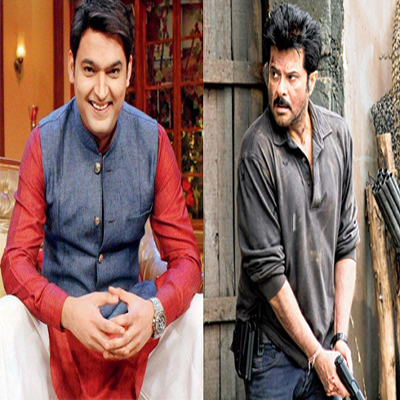
    On the Hindi GEC front, channels for the most part walked the tried and tested path in soap, drama, reality TV, though attempts at mythogolicals and historicals did bear fruit. Colors walked unknown terrain when its CEO Raj Nayak wagered with the Indian adaptation of American thriller24 with Anil Kapoor in the lead role, and also with a new stand-up comedy show Comedy Nights with Kapil. The first got critical acclaim; the second, a vast popular following. Nayak also gambled with seasons, bringing back shows such Na Bole Tum Na Maine Kuch Kaha for its second season.

    Star Plus continued to lead the genre for almost the entire year, with second, third and fourth places being traded between Colors, Zee TV, Sony, Life Ok and Sab. Period dramas and mythological drams such as Saraswati ChandraMahadevMahabharata from Star Plus and Life Ok did well with viewers. Staid old Zee was the real risk taker this year with its reality show –Connected Hum Tum (adapated from Armozia Formats). It tracks the life of ordinary folks on TV. India’s oldest existing private network flagged off shows such as Jodha AkbarBudha and added another leg to its DID franchise in DID Super Moms. It did phenomenally well for Zee TV. Sony too had a winner in its period drama – Maharana Pratap, even as its long serving CID,Adalat continue to keep it amongst the top six Hindi GEC roster. Life Ok was the surprise of the year as it has emerged as a strong contender. Channel V, Sony, Zee TV all refreshed their packaging and branding through the year.

    Colors walked unknown terrain when its CEO Raj Nayak wagered with the Indian adaptation of American thriller 24 with Anil Kapoor in the lead role, and also with a new stand-up comedy show Comedy Nights with Kapil.

    The year also saw channels risking with the film industry in a big way. Star India announced that it was forking out almost Rs 900 crore for exclusive telecast rights of all of Salman Khan’s and Ajay Devgn’s films which will be released till 2017. Then film maker Kamal Hassan attempted to premiere his film Vishwaroopam on DTH platforms but had to retreat when theatre owners protested.

    What started with Amitabh Bachchan in 2000, has now snowballed with Madhuri Dixit, Salman Khan, Mithun Chakraborty, Karan Johar, Shilpa Shetty, Anil Kapoor all becoming permanent fixtures on the small screen. Other film stars too made TV shows a must stop to promote their films. Whether it is a Hrithik Roshan or an Ajay Devgn, they definitely stopped over on the sets of a Taarak Mehta Ka Ooltah Chashmah or a reality show to promote their films. While this helps create excitement on the respective shows, too many appearances on television has made them seem rather deja vu for viewers.

    Whether it is a Hrithik Roshan or an Ajay Devgn, they definitely stopped over on the sets of a Taarak Mehta Ka Ooltah Chashmah or a reality show to promote their films. 

    Film folks turned to TV production too during 2013. Anil Kapoor co-produced 24, Sanjay Leela Bhansali produced Saraswati Chandra, Anurag Kashyap announced a fictional show starring Amitabh Bachchan, who is also reviving his production house Saraswati Audio Visuals to co-produce the show with Endemol. His wife Jaya Bachchan has also announced that she is going to make her TV debut. The Bachchans’ TV fiction show debut is much awaited as it is the septuagenarian who opened the doors for Bollywood’s big stars to host or be a part of non-fiction shows with his fabulous performance on Kaun Banega Crorepati.  

    Sports in India still means cricket for the masses. However, the year 2013 saw efforts being made to kick start other sports such as football, hockey, and even badminton through leagues. At the forefront of this was the Rupert Murdoch-owned Star India which coughed up Rs 3,851 crore to acquire the rights to domestic and international cricket from the Board of Control for Cricket in India until 2018. The deal covers 96 matches, including all the international matches India plays at home and local tournaments such as Ranji Trophy, Duleep Trophy and Irani Trophy. It even invested huge monies in becoming an associate sponsor of the Indian Premier League and followed it by paying close to Rs 200 crore to become the sponsor for Team India. This just a year after it scooped out close to Rs 1,700 crore to Disney to acquire its 50 per cent stake in their ESPN Star joint venture. The year also saw Star India rebranding and relaunching the six channels under the Star Sports umbrella Star 1,2,3,4,5,6 and introducing Hindi language commentary.

    Sports in India still means cricket for the masses. However, the year 2013 saw efforts being made to kick start other sports such as football, hockey, and even badminton through leagues. At the forefront of this was the Rupert Murdoch-owned Star India which coughed up Rs 3,851 crore to acquire the rights to domestic and international cricket from the Board of Control for Cricket in India until 2018.

    2013 has also been the year when Sony Entertainment’s billion dollar plus investment to acquire the rights to broadcast the Indian Premier League for 10 years was being questioned. Viewership ratings showed some slack, even as the entire league was embroiled in a betting and fixing scandal, which involved players from different teams. Fears were that viewers would be put off, but these were short lived and it is evident from the fact that Sony has started selling inventory for the 2014 edition at higher advertising rates than earlier years.

    In the meanwhile, on the news front, it was the year of pink slips. Almost every news network trimmed the fat on bloated payrolls as the economic crisis bit deeply. Efficiency is the buzzword today in television as TV networks grapple with a tough competitive environment, high costs, and shrinking margins. News channels like NDTV, Network 18 and Bloomberg reorganised their operations, and told excess staff to go home, with journos and camera crews being the hardest hit. Zee Media (earlier Zee News) too got shareholder approval to merge the group’s English newspaper DNA with itself. Its plan is to create an integrated newsroom serving TV, internet and print. It is quite likely that the process of doing this will result in excess staff being ejaculated. Already, its cousin sister channel Ten Sports relocated staff from Dubai to Noida, a move that saw many of them putting in their papers.

    On the news front, it was the year of pink slips. Almost every news network trimmed the fat on bloated payrolls as the economic crisis bit deeply.

    Efficiency was also the buzzword with advertisers, this year, in getting a better bang for the buck. Hence, companies such as Amagi Media saw takers for its geotargeting advertising service. Bengaluru-based Amagi Media announced its deal with Hindustan Unilever (HUL) and the Viacom18 kid’s channel Nickelodeon. The deal meant that an HUL TV commercial could run simultaneously on Nick nationally in different versions, depending on geographical location using Amagi’s DART platform. The platform also entered in a partnership with Zee TV, Zee News and Zee Business.

    With all the twists and turns in the year 2013, the upcoming year looks set to be even more interesting. Will the industry earn rewards for all the risks it took? Or, will it be forced to to continue to play the role of the great gambler?  That’s a bet we at indiantelevision.com  are not willing to wager on.

  • Sports broadcasting: A sticky 2012 wicket

    Sports broadcasting: A sticky 2012 wicket

    It’s the festival of lights. And for many the festival of noise courtesy exploding fireworks. In the hope of reducing the number of those belonging to the latter tribe, we, at indiantelevision.com, decided to put a display of firecracker articles for visitors this Diwali. We have had many top journalists reporting, analysing, over the many years of indiantelevision.com’s existence. The articles we are presenting are representative of some of the best writing on the business of cable and satellite television and media for which we have gained renown. Read on to get a flavour and taste of indiantelevision.com over the years from some of its finest writers. And have a happy and safe Diwali!

    (Written By Ashwin Pinto in 2013. He continues to write on sports television and English Entertainment)

    Posted on : 02 Feb 2013 08:41 pm

    Sports broadcasters ensured that live sports remained attractive in 2012. Even as the revenue side looked tough, prices touched the roof as Rupert Murdoch‘s News Corp and Sony were willing to bet more. Zee-owned Ten Sports did not lose ground and retained the cricket rights that came up for renewal. Neo redrew its strategies and decided to stay away from the high-cost cricket rights.

    A number of key cricketing properties came up for grabs. In most cases, however, the incumbent broadcasters ended up retaining the rights despite strong competition.

    The entry of Multi Screen Media‘s (MSM) much awaited sports channel Sony Six only exacerbated the situation on the acquisition front.

    Owning the lucrative telecast rights for the Indian Premier League (IPL), MSM‘s keenness to add other key properties like the Board of Control for Cricket in India (BCCI), England Cricket Board (ECB) and English Premier (EPL) only helped jack up the prices.

    The keenly contested BCCI media rights were bagged by Star India for Rs 38.51 billion till 2018. MSM, which had bid Rs 37 bilion, lost the rights by a whisker.

    Another case in point is the ECB rights which were retained by ESPN Star Sports (ESS) for $200 million till 2019. ESS had earlier secured the rights for $80 million.

    However, it was not just cricket that saw record money being splurged on acquiring rights. Football, too, had its share of penny. ESS retained the English Premier League (EPL) rights for three more years but not after committing a mind-boggling $145 million. In the previous three-year cycle it had committed $46 million.

    While it is true that an aggressive Sony Six had the incumbent rights holder on its toes to retain the rights at any cost, it is also true that the sports broadcasters had the impending digitisation as part of their plan while making the bids.

    Digitisation was the key theme for sports broadcasters because subscription is the way forward. Sports broadcasters in India, like their counterparts elsewhere, are still heavily dependent on ad revenue while subscription revenue is still inadequate to correct the lopsided business model that has taken a toll on their P&L.

    While the broadcast industry will be waiting with bated breath to see which way the digitisation piece moves, no one knows better about the significance of the exercise other than the sports broadcasters.

    Even as the broadcasters splurged money on acquiring rights, certain rights like the New Zealand and Bangladesh cricket rights did not find any takers since the broadcasters saw little value in them. NZC rights were earlier held by MSM while Bangladesh rights were with Nimbus Communications.

    Away from the big properties, the new sporting leagues too found favour with broadcasters who are happy to partner the rights owners in building these leagues that have potential to become big in future.

    ESS acquired the global media rights for Hockey India League (HIL) that was launched with much fanfare as a rival to Nimbus Sport and Indian Hockey Federation‘s (IHF) World Series Hockey (WSH). The five-team HIL is a Hockey India property with the backing of International Hockey Federation.

    The IPL fever spread to other countries with Sri Lanka, Bangladesh and Pakistan coming with their own IPL-styled leagues.

    ESS, which had lost out big time by not bidding for the IPL rights in 2008, went all out to acquire the rights for Bangladesh Premier League (BPL) and Sri Lanka Premier League (SLPL). The Pakistan T20 league is expected to take off in 2013.

    Ten Sports, which has been airing local tournaments like Chennai Open and I League, acquired the rights of Elite Football League of India (EFLI) that finally kicked-off after a period of uncertainty.

    The broadcaster also holds the rights for i1 Super Series which is in limbo due to the exit of co-promoter Anjana Reddy, all thanks to the financial mess that her family-promoted media company Deccan Chronicle finds itself in.

    Ten Sports further fortified its territory by renewing rights with West Indies Cricket Board (WICB) for a period of seven years. In 2011, the sports network had renewed rights for South Africa and Zimbabwe.

    The challenge for Ten Sports would be to protect the Sri Lanka and Pakistan cricket rights in the face of an aggressive Sony Six which is looking at having some cricket properties outside the IPL.

    In line with its strategy of having specialised sports channel, Zeel launched Ten Golf, a pay-driven channel priced at Rs 200. With Ten Golf, Zeel has five sports channels in its bouquet which includes Ten Sports, Ten Cricket, Ten Action+ and Ten HD.

    Six, the sports entertainment channel from MSM, has identified Ultimate Fighting Championship (UFC) and National Basketball Association (NBA) as the properties with which it plans to build its sports channel.

    What about Neo Sports? The Nimbus Communications-promoted sports network has not thrown in the towel yet while at the same time agreeing that meeting revenue targets in an analogue environment has been challenging.

    After losing the rights for India cricket, it is focusing on non-cricket sports which saw the cricket-focussed channel Neo Cricket being rebranded as Neo Prime.

    The broadcaster had Asia Cup and Uefa Euro 2012 as its saviour as it reworked its distribution deal with TheOneAlliance.

    Neo Sports Broadcast COO Prasana Krishnan says, “We are focusing on five sports- tennis, soccer, badminton, hockey and golf. Euro was our first major non cricket event and it was a good experience. We had renewed our deal with One Alliance for two years. We had also re-branded Neo Cricket as Neo Prime. Earlier if you did not have cricket, you were switched off. However, in a digital world this content has more value which is why we are present on all the DTH platforms despite the absence of cricket.”

    Bundesliga is currently the main driver property for Neo apart from Badminton World Federation (BWF) events. The broadcaster is also experimenting with Raj Kundra and Sanjay Dutt promoted Super Fight League (SFL).

    Krishna believes that with digitisation the rights of non cricket will fetch more money as broadcasters see the opportunity to unlock value. “But we will not go madly after rights. We will take properties if it makes business sense. There is no pressure on us to acquire properties. Our current deals are long term.”

    News Corp‘s big-bang sports play in India

    The biggest development of the year was News Corp‘s acquisition of ESPN‘s 50 per cent stake in ESPN Star Sports, thereby bringing down the curtain on the 16-year old joint venture that was formed with the intention of exploiting the nascent Asian market together.

    ESPN got $335 million for its 50 per cent stake in the company that valued ESS at $770 million. The deal meant ESPN‘s exit from the Asian market with a two- year non- compete clause. ESPN‘s presence is limited to digital products like ESPNcricinfo and ESPNFC amongst others.

    The divorce saw veteran sports broadcasting executive Peter Hutton take charge of ESS replacing the long serving Manu Sawhney who moved to iconic football club Manchester United as director.

    Star India, under whose watch the sports broadcasting business is expected to fall in India, has become a formidable player in the Indian market. Minus IPL, Star and ESS own the four big ticket cricket properties like BCCI, England, Australia and ICC rights.

    Ad spend at Rs 19 billion

    On the ad revenue front, the genre degrew to Rs 19 billion from Rs 21 billion in 2011 with the absence of the 50 over World Cup. The year, however, had bi-lateral home series against New Zealand, England and Pakistan in addition to the ICC Twenty20 World Cup.

    According to GroupM Maxus Client Leader Jigar Rambhia, cricket delivered well for advertisers and the rates across the three formats held steady.

    As far as non cricket events were concerned, the Olympic Games stood out. “It helped advertisers build brand saliency. India won six medals which earlier had not been expected. So companies that were present benefited,” says Rambhia.

    The IPL saga

    For a sports broadcaster, the IPL continues to be the most lucrative property with a high return on investments (ROI).

    Even from a sponsors point of view, the IPL delivers value notwithstanding controversies happening off the field. Cola major Pepsi‘s bid of Rs 3.96 billion for the IPL title rights is a testament of IPL‘s value. The amount is almost double of what DLF, which decided not to renew the costly IPL sponsorship deal, was paying.

    In fact, it was IPL‘s value proposition that made Southern media conglomerate Sun TV bid Rs 4.25 billion for the Hyderabad team. The bidding was necessitated following the termination of Deccan Chargers from IPL after a prolonged legal battle.

    While the BCCI found itself in healthy position selling its properties at record price, the same cannot be said about the franchises except for teams like Mumbai Indians, Chennai Super Kings, and Kolkata Knight Riders.

    The King XI Punjab team, which had earlier expected to breakeven in the fourth year, will only do so next season thanks to the legal fight. The good news though is that the dispute with the BCCI has been resolved. It has to pay a fine of Rs 10 million which is basically a slap on the wrist.

    Brand Finance India director Unni Krishnan, however, maintains that the valuation is very much in keeping with the trends being seen.

    “The IPL ecosystem‘s long-term value has been steadily coming under pressure and is tracking back to its base value of $2 billion from the heights of $4 billion. Further the Deccan Chargers team had come under a cloud due to misconduct and poor governance, in a sense mirroring a lot of ills which the IPL as a whole faces,” he says.

  • Koouka wins 2013 Mip Junior International Pitch

    Koouka wins 2013 Mip Junior International Pitch

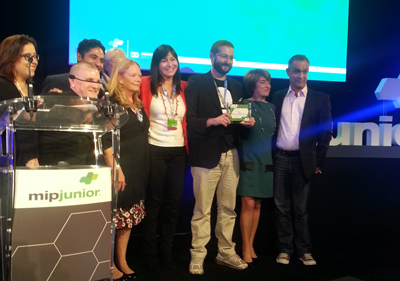
    CANNES: Apart from content, Mip Junior’s biggest draw is an opportunity to present new intellectual properties (IPs) to a larger, more discerning audience. This year, of the 60 new projects vying for top honours at the international competition, Mip Junior International Pitch – New Projects for Kids TV, five made it to the final round and one of them was declared winner i.e. Koouka by Aldebaran Distribution and Vallaround, Italy.


    Presented by distributor Anna d’ Alessandro and producer Federico Vallarino, Koouka is the story of a chameleon, which changes the colour, shape and size of the things it touches. Replete with funny gags and sans any dialogue, the series’ theme is identity and how a natural desire to be accepted by others can stop people from expressing their real selves. Interestingly, there are 26 episodes, each of one minute duration. The other four who made it to the top five include Being Zeth by Source Animation, India; Goris the Gorilla by Split, Brazil and Chile; Nelly and Nora by Geronimo, Ireland; and The Little Train Choo Choo by JM Animation, Korea. The jury comprised BBC head of CBeebies production, animation and acquisition Alison Stewart; Canal+ head of children programmes and channels Laurence Blaevoet; The Walt Disney Company (South East Asia), India head of acquisitions, programming, branded media and content Anand Roy; Globosat Programadora head of content and programming Paula Taborda dos Guaranys; and Kenn Viselmann Presents CEO/owner Kenn Viselman.


    The jury looked for projects with potential for TV and multi-platform brand extensions, as well as originality and overall appeal in the storytelling technique, and Koouka bagged the award. Winners will get free access to Mip TV 2014 and a chance to interact with buyers during the main networking event on 6 October.

  • Greymatter to debut at MIPCOM 2013

    Greymatter to debut at MIPCOM 2013

    Greymatter Entertainment – a 360 degree media company offering end-to-end creative solutions and production services for broadcast, celluloid and digital platforms – is debuting at this year’s MIPCOM with a host of new and innovative formats.


    For a company which produces content across genres, including reality, music, travel, lifestyle, game show and documentary, participating in the world’s largest content market is possibly a natural next step. Says Greymatter Entertainment owner Rahul Sarangi, “MIPCOM helps you network with global content buyers. The market is also a platform for companies with new formats.”


    So what’s on offer at the fest? “We will launch a factual documentary titled ‘Tribes of the World’, an award winning show ‘Bikini Café’, a never-seen before music reality format named ‘Remix’ and a series about unconditional love christened ‘Thanks Maa’,” Sarangi answers.


    For the uninitiated, Tribes of the World is a factual documentary which explores the unexplored and unseen faces of tribal India. Bikini Café is about testing one’s entrepreneurial skills of owning a shack while Thanks Maa gives mothers a chance to relive their dreams.


    Elaborating on his plans, Sarangi says: “We are looking at co-producing interesting formats/content under the genres we specialise. As far as selling is concerned, one of our music formats ‘Remix’ has been sold to a few markets and is distributed by Global Agency. We have also recently concluded a very successful co- production deal with Novovision on 52 x 30 min non-dialogue humour episodes for the global market.”


    What does Greymatter expect to achieve at MIPCOM 2013? “As you would be aware, Indian broadcasters don‘t give rights to producers, but we have figured that if we have a global partner, then we can retain rights and make it a global success. We believe most of our formats are very differentiated yet palatable to the global audience,” explains Sarangi, adding: “We expect to strike some interesting co-production, distribution or strategic partnership with global companies that suit our profile.”


    On the subject of markets, Sarangi says the company is open to any market, from America and Europe to the Middle East and Asia, as long as it shares Greymatter’s sensibilities. The firm will concentrate on platforms like IPTV, mobile and free to air.

  • India’s first HD travel channel at MIPCOM 2013

    India’s first HD travel channel at MIPCOM 2013

    Ask any traveller the meaning of a journey and he/she is likely to say it’s something where you never know how far you’ve reached till you go back to where it started.

    Indeed, this is the very core of what they call wanderlust, and who better to know it than travelxp HD, India’s first high definition travel channel.


    Presently, the channel stands strong as a premium lifestyle with 400+ hours of original HD travel content – shot across 35+ countries and growing, expanding at 150 hours each year, and covering all genres of the travel space. Shot in English, with hosts from across the globe, the channel boasts a truly international look and feel. Exactly what draws it to this year’s MIPCOM.


    travelxp now in its third year at MIPCOM, feels that exhibiting in a market like MIPCOM has added to its learning. The channel has not only tapped market demands and understood buyer requisites, but has also understood the latest trends, practices and technology which in turn have laid the guidelines for content that the channel creates in the future.


    Says travelxp HD director Nisha Chothani: “An international platform like MIPCOM is the year‘s most anticipated global market for entertainment content across all mediums. Our content finds the perfect fit with the needs of travel content buyers across the globe. It provides us an opportunity to reach out to our buyers, leading to ground-breaking partnerships.”


    So what’s the channel offering at MIPCOM 2013? It will launch five new shows including Quest, City Breaks, Bliss, Food Highway and World Spas for participants this year.


    Apart from these, travelxp HD will also present shows like XP Guide, Xplore World, Xplore India, Great Indian Hotels, Great World Hotels, Foodicted, Strictly Street, Heritage, Landmark, Best from the Rest, Bada Weekend, Hills and Valleys, and Divine Destination at the content sale market. “With this, we are looking forward to cracking deals and partnerships with our buyers. Also, networking with content buyers and aggregators across the globe will be an add-on,” says Chothani.


    And it’s not just travelxp HD, the entire travel industry stands to benefit from MIPCOM. “Travel content caters to a large international audience due to its geographical spread. MIPCOM provides us a platform with immense selling opportunity; it helps us to reach out to around 4,400 buyers from 100 countries across the globe. Travel content demand is growing globally, platforms like MIPCOM help two ends meet, thereby leading to the growth of the genre,” elaborates Chothani.


    Meanwhile, travelxp HD shows will be accessible to viewers on various multi-media platforms from DTH systems to in-flight screens, TV networks to IPTV networks, VOD to AVOD systems and websites to mobiles.


    The channel claims its content finds resonance with travel connoisseurs the world over.

  • IDOS 2013 to kick off in Goa on 27 Sep

    IDOS 2013 to kick off in Goa on 27 Sep

    MUMBAI: The countdown to the ninth edition (and second under its current
    nomenclature) of the annual India Digital Operators Summit (IDOS) has begun with the two-day event kicking off tomorrow at The Leela in Goa.

    A joint initiative of the Indiantelevision.com Group and Media Partners Asia, the summit will discuss and debate the hot-button topic of the digital television opportunity in India, what with the implementation of Phase II of digitisation nearing completion in three major metros – Delhi, Kolkata and Mumbai and in another 38 cities all over India.

    IDOS 2013, themed ‘Harvesting the fruits of digitisation’ will highlight pertinent issues faced by industry and offer valuable insights into how other key Asian markets have succeeded in their digital transition.

    Participants include leaders from regulatory, cable distribution, DTH, broadcast, TV distribution and technology segments as also content providers and investors in the broadcasting and pay TV industries.

    Flagging off the summit will be Indiantelevision.com Group founder, CEO and Editor-in-Chief Anil Wanvari, who will share the vision behind the event. Following suit will be Media Partners Asia executive director Vivek Couto with a presentation on India’s digital TV ecosystem and lessons learnt from other global markets.

    Day one’s inaugural session titled ‘Opening Keynotes and In Conversation’
    will discuss how digitisation is no longer a goal but the means to a critical end, where national economic benefit, advanced infrastructure and content democratisation converge to create a win-win for all. The panelists include TRAI principal advisor N Parameswaran, DEN Networks chairman & MD Sameer Manchanda, Tata Sky CEO Harit Nagpal and Star India president & general counsel Deepak Jacob. They will share their views on the progress so far in Phase II of digitisation. The session will be moderated by Couto and Wanvari.
        
    The second session, ‘Cable 2.0 – Profits across the pipe’ will see leaders across the cable and distribution industry share insights into the key challenges faced by industry as it moves into billing, tiering and rolling out of new services. The session will be moderated by NDTV head-affiliate sales & network distribution Rahul Sood while the panellists include Hathway Cable and Datacom MD & CEO Jagdish Kumar, Den Network CEO S N Sharma, HSBC Securities lead analyst – telecom & media Rajiv Sharma, Media Pro COO Gurjeev Singh Kapoor, Digicable MD & CEO Jagjit Singh Kohli, SITI Cable Network ED & CEO VD Wadhwa and Indiacast Group COO Gaurav Gandhi.

    Next up, ‘DTH – Driving the value equation’, will be moderated by Couto with panelists including Dish TV India’s Gaurav Goel, Videocon D2H CEO Anil Khera, Kotak Securities senior analyst Amit Kumar and Macquarie Capital Sr
    VP Ausang Shukla. The session will seek to answer the question: What are the key catalysts for the next phase of DTH’s value creation story?

    Titled ‘The business of specialised and premium channels’ and powered by BBC World News, the fourth session will study the proliferation of niche channel launches. To be moderated by BBC Global News COO – Indian Operations Preet Dhupar, the participants include Viacom18 SVP & GM – English Entertainment Ferzad Palia, Discovery Networks Asia-Pacific SVP and GM -South Asia Rahul Johri, FoodFood promoter & director Sanjeev Kapoor, Disney UTV Media Networks MD MK Anand and HBO India MD Monica Tata.

    This will be followed by a session on ‘HD as a mass driver for distribution platforms’ chaired by Castle Media director Vynsley Fernandes along with Videocon D2H deputy CEO Rohit Jain, Times Television Network CEO – English Entertainment Channels Ajay Trigunayat, Dolby Laboratories India country manager Pankaj Kedia and Chrome Data Analytics & Media founder & MD Pankaj Krishna.

    The next session, ‘Hidden gems riding the digital wave’ will look at how on the back of digitisation, distribution majors (MSOs and DTH) hold the promise to create ample value. The panelists include What’s-On CEO Atul Phadnis, Amagi Media Labs co-founder Srinivasan K A and Cisco Sr. business development manager – APAC Fabien Gauthier with Castle Media director Vynsley Fernandes as moderator.

    Day one’s closing session, ‘New media monetisation’ will discuss how Hindi GECs and youth channels are increasingly making content available across newer media platforms. Chaired by Wanvari, the discussion will see participation from Zenga TV CTO & MD Shabir Momin, IBM India ED & partner Raman Kalra and Exset global head – sales and marketing Rahul Nehra.
        
    Day two will start with a presentation on ‘Sports & Pay-TV – The Path to Value Creation’ by Couto followed by a Q&A session. The Last mile operator community will be represented by a presentation by Maharashtra Cable Operators Federation head Arvind Prabhu, who will talk about their role in a digitised ecosystem.

    The closing session ‘Driving digitisation deeper’ will be moderated by Wanvari and Couto and will analyse how action is going to shift next to India’s heartland which houses nearly 70-80 million TV homes among other key issues. The panellists include DEN Networks CEO S N Sharma, Hathway Cable and Datacom MD & CEO Jagdish Kumar, TRAI principal advisor N Parameswaran, Indian Broadcasting Foundation secretary general Shailesh Shah, Chrome Data Analytics & Media founder and MD Pankaj Krishna, Founder & MD, Magnaquest CMO Ramakrishna Mashetty and HSBC Securities lead analyst – telecom & media Rajiv Sharma.
    “As organizers of IDOS, our aim is to provide unity and strategic vision to drive forward digitalization and bring new value, profit and sustainable growth across the television ecosystem,” read a joint statement by Indiantelevision.com group founder Anil Wanvari executive director and cofounder Media Partners Asia Vivek Couto.

    “The next year is critical as the cable industry steps up on its B2C execution with billing, tiering and subscriber management,” added VivekCouto.”IDOS will explore the issue of co-operation with last mile local cable partners to create a valuable ecosystem for the consumer; one in which differentiated content, customer service and value added offerings are at the highest level. That will be worth paying more for and will drive ARPUs higher.”

    “It’s an important evolution,” said Wanvari, “as it helps scale and grow the cable industry and enables broadcasters and content providers gain the ROI they so desperately need to invest. It also eases the burden on the DTH sector and provides effective competition at the ground and consumer level And the entire evolution gives the regulators to mull over deregulating pricing.”

    *IDOS 2013 is powered by Star India, while summit partners include Discovery Channel, Dolby, CISCO, Hathway Cable and Datacom, SES, and Videocon d2h. The associate partners are BBC World News, Exset, Indiacast and Media Pro. 24 Frames is the webcast partner.

  • Watch out for Hyderabad’s animation booth at Mipcom

    Watch out for Hyderabad’s animation booth at Mipcom

    other states may do well to borrow a leaf from the Andhra Pradesh government, which is partly sponsoring the participation of Hyderabad’s animation industry at this year’s Mipcom.


    More specifically, the AP government is funding the stand fees for two Hyderabad-based companies – Green Gold Animation and Discreet Art.


    “The government is partly funding our participation at the event. And this goes up to 50 per cent of the total stand fee. It can go up beyond 50 per cent depending on the response we get,” informs Green Gold Animation vice president -business development Govinda Talluri.


    Creator of the popular animated character, Chhota Bheem, Green Gold Animation, has been participating in Mipcom since 2007. “Though we didn’t go in 2011-2012, this year, since the Andhra Pradesh government decided to support the companies based in Hyderabad for events like Mipcom, we, along with Discreet Arts and 20 (approximately) people from the AVCGI association will represent AP at Mipcom this year,” adds Talluri.


    AVCGI or Animation, VFX, Comic & Gaming Industry of AP is a recently formed association by the animation industry in Hyderabad with the aim of garnering support from the AP government for its proper functioning.


    Apart from Chhota Bheem, which is Green Gold’s biggest property, it will also take other animated characters Mighty Raju and Arjun to Mipcom. “We plan to come up with a theatrical for Mighty Raju by next year and so, will use Mipcom to create a buzz about the movie. Also Arjun, a show that we have created for Disney, will form part of our offering to buyers,” says Talluri. 


    For all these years, Green Gold catered to Indian and South East Asian markets and recently sold its content to USA and Canada. The major is now aiming at European countries like France, Germany, Spain and South America. “This is not an exhaustive list, we want to reach out to as many markets as possible,” adds Talluri.


    Enthused by the government’s support, Green Gold aims to present its library of 8,500 minutes of original content to a global audience. “Also, with our 174-episode Chhota Bheem being sold to eight countries, we would definitely want to expand our reach and get noticed,” says Talluri.


    With the largest content sale market cum conference just 15 days away, the company is busy scheduling meetings with buyers. “Though a few meetings have already been fixed, we are also pitching in for more buyers,” he says. The company will primarily target television as the preferred platform. “Once we are there, getting to other platforms will not be difficult,” he rounds off.

  • IndiaCast/Viacom18 all set for MIPCOM 2013

    IndiaCast/Viacom18 all set for MIPCOM 2013

    If you thought shows such as Comedy Nights with Kapil, Uttaran or even Jhalak Dikhhla Ja have takers only in India, you couldn’t be more wrong. Indeed, there is a huge demand for these programmes even in faraway markets like Latin America, Africa and Eastern Europe to name a few.


    Which is exactly what draws aggregators and distributors such as IndiaCast to MIPCOM, the world’s biggest market for content.


    So what does IndiaCast have on offer this year at MIPCOM? “While we already have a strong syndication portfolio with our dramas. movies  and reality shows from Colors, we will also focus on content from our regional channels, news channels as well as the MTV content, “replies IndiaCast group COO Gaurav Gandhi, who will represent the company along with four others at MIPCOM.


    More specifically, IndiaCast/Viacom18’s entire catalogue will be on offer. “We have more than 25 channels in our network and so, our booth will feature content from all of these channels. This will include Ballika Vadhu, Uttaran, MadhubalaJhalak Dikhhla Ja, Bigg Boss, MTV Roadies and also content from ETV and the news channels,” informs Gandhi.


    And what is IndiaCast hoping to achieve at MIPCOM? Says Gandhi: “Indian dramas are finally breaking into mainstream in many markets. We hope to find more buyers who are willing to experiment and try Indian dramas for the mainstream local audiences in the respective markets and we want to target buyers who want to remake our shows  (with script and format rights) in their respective countries .  Latin America and Turkey have been the predominant forces in exporting their drama series sales worldwide. There is an opportunity for us to break into that market in a big way. Having already licensed our content to Africa and Europe (to the mainstream market), I am hoping to tap markets like Latin America this year.” 


    Gandhi believes that demand for the programming that IndiaCast is hawking will also be strong in areas where Indian and south Asian diaspora are present in large numbers. This apart, there is another chunk of viewers in several countries which enjoy watching Indian programming dubbed and sub-titled in local languages. “Central Asia, Eastern Europe, Latin America and Africa are some of these nations,” he says.”We are looking at new distribution outlets and buyers from there for both our channels and programmes at MipCom this year.”


    Citing a couple of examples of how the event is a platform to help export content and reach out to a larger base, Gandhi says: “It was here that we sold the script of our show Uttaran, for a remake in Africa. While normally Indian channels buy formats/ scripts, we were the first ones to have sold the script to an international player. We recently sold the MTV Roadies format internationally. The discussions for this had started in MIPCOM only.”  


    MIPCOM makes it easier for exhibitors to meet people from different markets and sell content. “If it wasn’t for a market like these where would one find buyers from Serbia, Croatia, Bosnia, Macedonia and Tanzania?” he questions.


    And considering there is a sizeable regional population around the world, the aggregator is concentrating on regional content as well. “We have sold Gujarati content to a local channel in the US and also to west African countries this year. So for our regional content, this year, we will focus on building on that and tapping new markets” says Gandhi.


    The frenzied buying and selling of content apart, several affiliate meetings will keep IndiaCast executives busy at MIPCOM. “This is where we will talk about distribution of our channels; like Colors, MTV India, Rishtey which is our second GEC in the UK, ETV,  and News18 among a host of other channels,” informs Gandhi.   


    IndiaCast will concentrate on all platforms like Cable, DTH, IPTV, terrestrial and all forms, both linear and non-linear (VOD, SVOD, NVOD and PPV). “We are amongst the largest suppliers from India to VOD platforms. Our content is on Netflix, Itunes, YouTube etc. We have a lot of meetings lined up for such platforms as well,” he adds.


    It looks likely to be whistlestop and tiring MipCom for Gandhi and his team. And in all likelihood profitable too. 

  • Reliance Entertainment Digital has its eye on English entertainment content

    Reliance Entertainment Digital has its eye on English entertainment content

    Reliance Entertainment Digital CEO Manish Agarwal is pretty excited about his company’s date with MipCom this year.  Says he:  “We want to understand the market and its offering and how relevant it is for the digital business. We are always in search of some interesting and innovative content.” 


    For Agarwal, who is into content publishing, participation in Mipcom is likely to become an integral part of doing business, though his company is participating in it for the first time.


    “It gives us an opportunity to explore the large variety of content which we need for the various platforms like BigFlix, Zapak etc. We will obviously focus on networking with more content providers and aggregators across the globe,” says he.


     Reliance Entertainment Digital which launched its over the top (OTT) service BigFlix last year is sorted in terms of Indian programming and now wants add on international content in more genres and languages.


     “We want to expand our offerings to the consumer. Participating in Mipcom will help us explore more opportunities,” he says.


     Agarwal says that an increasing group of young Indian consumers is gorging on digitised content on hand held devices and on their PCs. “It is essential for Indian service providers to experiment with new type of content across genres and content-types. And it is just not that Indians will consume only trailers or paparazzi content, they will also look at different content and so we want to explore with a variety of content,” he highlights.


     The focus this year at Mipcom he emphasises will be on acquiring entertainment content – especially that which originates from English speaking nations or with English subtitles.


    “This will be entertainment for English speaking audiences, entertainment for masses and for kids. This is the reason we are going not only for Mipcom, but also for Mip Junior,” he informs.


    For those visiting Mipcom to sell gaming content, expect the Reliance Entertainment representative at your stall. “We will also look at gaming content or gaming IPs on which games can be created. So we are aiming at kids entertainment both in gaming and VOD content which caters to everyone or in niche segments in the country,” says he. “In terms of gaming IPs, since we are present across the globe, we will go for any IP which is popular. So we will be hunting for any IP across different markets in order to get a license to create mobile games


     The OTT service which delivers its content online to connected devices – a la NetFlix in the US – is looking at stacking up its video-on-demand (VOD) menu. “This can subsume movies-on-demand, TV-serials-on-demand and animations-on-demand. And for gaming again we are looking at the mobile platforms.”


    And the company is shopping cheque book in hand. So sellers will indeed be kept busy by this emerging digital giant from India.