Category: Specials

  • Siti Cable commercially rolls out its DOCSIS 3 broadband service in Delhi NCR

    Siti Cable commercially rolls out its DOCSIS 3 broadband service in Delhi NCR

    GOA: Delayed digitisation is the hottest topic of discussion in the cable TV corridors.


    With digitisation comes the hope of increased Average Revenue Per User (ARPU) and also the realisation that it is broadband that will help the multi system operators (MSOs) to increase their ARPUs.


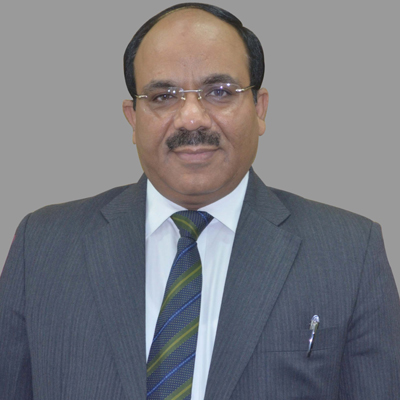
    Siti Cable is doing just that. The MSO, which for the last two months had been piloting and testing its DOCSIS 3 technology in the Delhi, NCR region, has now officially launched it in the region. Confirms Siti Cable CEO and executive director VD Wadhwa, “Yes, we have commercially launched the service in these areas.” 


    The MSO though has started with Delhi-NCR; it will soon take the service to every city where it has a subscriber base of more than 50,000.


    It is estimated that the MSO is investing anywhere close to Rs 35 lakh to Rs 40 lakh in markets with 50,000 subscribers. According to Wadhwa, as a thumb rule, of every 100 cable TV households, close to 10-15 per cent convert to broadband households. “We are taking the figure at 15 per cent,” he says.


    “Upgradation of homes passed cost close to Rs 500 per subscriber. So if, of the 100 households, 15 per cent opt for broadband, then we are looking at an investment of close to Rs 5000 per subscriber,” he informs.


    The speed for DOCSIS 2 will go up to 40 mbps, while for DOCSIS 3 will go up to 100 mbps. As for the pricing, Wadhwa says, “Our pricing will be highly competitive. We are just in the phase of finalising the tariff plan. We will have different packs for different subscribers.” 

  • IDOS 2014: ‘Digitisation delay is good if industry fixes issues’

    IDOS 2014: ‘Digitisation delay is good if industry fixes issues’

    GOA: The cable TV industry, which had earlier expressed disappointment over the government’s decision to postpone cable TV digitisation in phase III and IV, now believes that delay in digitisation is good if the industry, after getting a breathing space, fixes various issues, which it witnessed in the phase I and II.


    The extension would not strain the financial health of the industry as the need of the hour is to see digitisation on track after the timeline shift and create value and increase the Average Revenue Per User (ARPUs).


    Some experts feel that the additional inventory carrying costs and investments in infrastructure that the industry is incurring now, would impact their topline and thus have a brunt on the bottomline.


    Also, with the stable government now at the centre led by NDA, media companies can raise capital and the industry is quite bullish about the valuation benchmark.


    The government had previously set a target of digitising the cable TV services in the entire country by December 2014. Information and Broadcasting Ministry recently issued a notification as per which the deadline for the areas which came in phase III was extended from 30 September  2014 to 31 December 2015 and phase IV for December 2016.


    “Delay is never good. But, if one implements the learning from the first two phases, it may have a positive impact. Phase I and II haven’t so far reaped any fruits with zero value creation. The players are still fixing billing and other issues,” says HSBC Analyst Telecom associate director Rajiv Sharma, during a panel discussion on ‘Ecosystem Economics of the Future’ in Goa at IDOS 2014.


    According to Exponentia Capital principal Neeraj Bhatia, the delay is a welcome development. “It was required considering the ground reality. The earlier deadline was impractical,” he adds.


    “The earlier phases involved capital expenditure as more revenues were flowing through the system. MSOs were collecting less and paying more, as a result of which they saw no net benefit. So we started to question the business model and whether digitisation had anything for MSOs,” opines Bhatia.


    “We are not ready for phase III and IV,” he informs.


    The delay has given a breathing space to the MSOs to figure out the next step. “One needs to take a stand on various economic issues. This includes gross billing among others which impact people,” says Axis Bank group head strategic corporate group Salil Pitale.


    Citing reasons for the problems faced in other phases, Sharma informs that the cable industry is a fragmented one with just six big MSOs, around 6,000 other MSOs and 70,000 LCOs.


    According to the experts, value creation comes from customer ownership and thus investors will continue to invest.


    The rollout of the next two phases, after the delay will be smoother as it could bring some consensus amongst stakeholders. In phase III and IV, the stakeholders should ensure that revenue comes from day one and not after two years, opines Sharma.


    “While there was a tug of war between the MSOs and LCOs in the earlier two phases that need not be the case going forward. Both need to look forward and pool money,” says Bhatia.


    The extension has also thrown an opportunity for MSOs to opt for voluntary digitisation, feel the experts.


    There are a few financial investors who are getting excited about the growth story that digitisation proposes. “Delay is good as it also allows the MSOs and LCOs to resolve the billing issue,” explains Bhatia.


    There are mixed opinions on the extension of digitisation deadline. The big question now is: ‘Can the cable TV industry fix the issues in the next one year by executing the lessons learnt?’

  • IDOS 2014: Trust amongst stakeholders holds the key to increasing ARPUs

    IDOS 2014: Trust amongst stakeholders holds the key to increasing ARPUs

    GOA: The broadcasters, multi system operators (MSOs) and the local cable operators (LCOs) need to trust each other to solve most of the issues that affect the cable TV industry. While the dialogue between the trio has begun, there is still lack of trust and this has to change, is what the industry stalwarts expressed at the ongoing India Digital Operators Summit (IDOS) 2014, organised by Indian Television Dot Com and Media Partners Asia.


    “The current reality is that the players within the chain have at least started talking to each other, which was missing earlier. So with digitisation, this is one of the most positive moves that has happened,” says IndiaCast CEO Anuj Gandhi. He also emphasises on the need for the MSOs to resolve the jigsaw puzzle with the LCOs to ensure better Average Revenue Per User (ARPU). “The MSOs need to get the LCOs on table and understand their issues,” he says while adding that the last mile needs to be seen as partners in the cycle.


    Agreeing with him was Hathway Cable and Datacom MD and CEO Jagdish Kumar, who feels that the last mile needs to get returns on the services he provides. “But that will need collective work. We need to grow the ARPUs from the current Rs 180 to Rs 250-Rs 300,” he says.


    For Siti Cable CEO VD Wadhwa, the reason for lack of trust lies in the history of cable television ecosystem. “Historically, the understanding has been that the last mile retains a large part of revenue. Now with digitisation, underdeclaration is not possible and so the LCO is suffering from fear psychosis that he will lose his subscribers,” he says.


    The Siti Cable CEO also feels that there is a need for MSOs to give the LCOs access to the SMS so that they can feel a certain ownership towards their customers. “There is a need for a policy which is well documented, transparent and honoured,” he adds.  


    From the time government announced digitisation of cable TV homes, it is the regulations and the courts that have been driving the business. “Let’s not get the regulator involved in areas where we can resolve the issues. We need to put together a commercial document which is uniform across,” opines Star India president and general counsel Deepak Jacob.


    One of the biggest concerns for the stakeholders is increasing the currently low ARPU. “The DTH industry has done well on this front. While we started with Rs 150 in 2008, we have gone up to Rs 200-Rs 220 in phase III and phase IV markets, where the cable industry still has a ARPU of Rs 150,” informs Videocon d2h CEO Anil Khera. He also feels that the cable industry cannot have different rates for different markets.


    The DTH industry faces a huge threat from Freedish, which is becoming a great proposition in phase III and phase IV. “I see more threat from Freedish, if the platform gets the general entertainment channels onboard. According to me, all these channels should be made ‘pay’ on Freedish as well,” opines Khera.


    While talking of the threats the industry currently faces, Jacob also highlights the threat that comes from state governments playing a role in the content and distribution market. “The Tamil Nadu and Punjab markets are pretty much locked because of the monopoly of the state government in the region. The disease is growing, with more states looking at the same. We should ask the government to implement recommendations to curb this,” he says.


    Another point discussed during the session on ‘Unity and the way forward for the next five years’ was if the DTH operators have an opportunity in phase III and phase IV markets with the extension of digitisation dates.  Says Dish TV CEO RC Venkateish, “DTH in phase I and II continued doing what it did when it had started. But phase III and IV is a different kettle of fish and so we at Dish launched Zing. The delay means loss in momentum.”


    Hathway is looking beyond cable in the phase III and IV markets. “We are looking at broadband as the margins from here are far higher than cable,” informs Kumar who says that while broadband currently is at 20 per cent, it will increase significantly in the future.


    As for increasing ARPUs, Gandhi suggests that there is need to look at the basic packs. “We need to work on making the basic pack light, so that consumers see value in the higher packs,” he says. According to him, the MSOs like the DTH operators should start getting into a multi-year or five year deals with broadcasters, rather than the one year deal that they have currently. “This will help him sort his content cost and also give them more confidence, which they can then pass on to the LCOs,” opines Gandhi.


    The MSOs have taken a lot of debt for digitising phase I and phase II. “Now when we approach the investors, we will need to have a roadmap for them to invest,” informs Kumar.

    Can phase III and phase IV be underestimated, answers Jacob, “We shouldn’t underestimate these two phases. The households in phase III spend close to Rs 300-Rs 350 on telecom and VAS services, while phase IV spends some Rs 250 on it. And these households are trying to watch all the content on their phone. So this is the matrix the cable TV industry should follow.”
  • IDOS 2014: How can the pay TV industry be made better?

    IDOS 2014: How can the pay TV industry be made better?

    GOA: India Digital Operators’ Summit 2014 kicked off at The Leela in Goa on 25 September. Opening the conference, Indiantelevision.com CEO and editor in chief Anil Wanvari and Media Partners Asia (MPA) executive director Vivek Couto gave a brief on the state of the TV nation and transition to the broadband digital economy.


    Wanvari highlights how the state of the industry was a few years ago and what it has become now after the advent of conditional access system (CAS) and digital addressable system (DAS). Content makers aka broadcasters have been demanding more revenue from the pay TV industry. While the capex and opex for them has been high, the return continues to be low. The MSOs and DTH operators have been investing to expand their headends and build subscriber base respectively. “While it is a good business now, the real question is if each one of us is willing to make it a great business?” he asks.


    In order to strengthen the business, Wanvari recommends a few suggestions that could help grow the industry. The first thing is to look at digitisation and pay TV with a changed mindset that it will be beneficial to all. The government could look at setting up a digitisation transition fund that will help educate, train, seed capital and reward people who follow the rules and ensure strict penalties for those who don’t.


    Subscriber management system (SMS) should be set up with correct details and billing of the services provided to customers. The government could also look at laying down minimum standard rules for set top boxes (STBs) to ensure quality control. His final suggestion is to leave pricing to the market rather than initiate 10 to 15 per cent price rise every now and then.


    Providing a glimpse into MPA’s study on the pay TV industry in India, Couto says that out of the 262 million households in the country only 162 million houses have a TV. In this, 27 million is taken up by the free to air service providers such as Doordarshan and Freedish while the rest comes under cable and satellite.


    Couto highlights that over Rs 32000 crore has been invested in digitisation since 2005 with a bulk of the investment coming from the DTH operators followed by the MSOs and LCOs since 2011. Out of this, over Rs 11000 crore in the last 24 to 30 months has been invested by MSOs and LCOs. “India offers scale but limited monetisation,” he says. What digitisation will do primarily is increase transparency, addressability, tax collection and employment. Over 120 million STBs are needed over 10 years and nearly 47 per cent share of the total market will come through broadband.


    The tiff between the three stakeholders continues with the LCOs fighting for revenue share, MSOs facing crash crunch and broadcasters worried about increasing carriage fees which the MPA report stated as having increased by nearly 14 per cent in Q1 FY2015.


    In terms of scale, India struggles as the country with the lowest average revenue per user (ARPU) but it has one of the best channel services. Couto says that it is time for the industry to move to retail pricing than stick to wholesale tariff because the competition will keep the prices low. The need of the hour is for MSOs and broadcasters to come together and design packages, incentivise upselling, indentify opportunities for sub segmenting and create new genres. The key to which lies in raising prices to consumers.

  • IDOS 2014: HBO opening night party a grand success

    IDOS 2014: HBO opening night party a grand success

    GOA: Glitz, glamour and everything else. The most awaited opening night party of the India Digital Operators Summit (IDOS) 2014 at The Leela in Goa organised by HBO Hits and Defined premium channels has set the right tune for the next two days of the confab which will be attended by the leaders of pay TV, distribution,  cable TV and DTH industry. 


    Through the opening night party, the premium network has sent out a clear message: ‘It’s not TV, its HBO’.


    The party entertained those attending, with fabulous dances, stand-up comedy by Atul Khatri, some of the all time hits sung by the melodious Aditi Singh Sharma who has lent her voice for some of the hit songs including ‘Raabta’, ‘Dhoom Machale’, ‘Offo’ and great bollywood music, which forced everyone to shake their legs.


    The evening was well attended by the who’s who of the broadcast, cable TV and DTH industry.  


    Says HBO South Asia MD Monica Tata on the success of the party, “We are very excited to have partnered with IDOS 2014. This has helped us showcase our proposition to our consumers.”


    “The partnership has been fantastic. Through this, the HBO premium channels will connect with its key consumers, which are the platform owners. We expect them to push our channels further,” she adds.

    “More power to HBO channels and if you haven’t subscribed to it so far, do it now,” she concludes. 


  • IDOS 2014: A must, say industry stalwarts

    IDOS 2014: A must, say industry stalwarts

    MUMBAI: The broadcast, cable, DTH industry and the regulatory body is all set for the biggest confab of the year.  To be held in Goa, starting 25 September with a big bang opening night party organised by HBO Hits and Defined, all the heads of India’s pay TV market, distribution, broadcast, cable and DTH industry are gathering to brainstorm and suggest the way forward for the already delayed digitisation at the Indian Digital Operators Summit (IDOS) 2014. 


    The extension in the deadline as announced by the Information and Broadcasting Minister Prakash Javadekar has somewhat delayed the plans of many in the pay TV circuit. While the biggest concern currently is smooth rollout of the phase III and phase IV of digitisation, industry biggies will also ideate on how, with consumers moving to other screens apart of television, can be monetised.


    The tenth edition of IDOS, is themed around, ‘Digitisation: The Next Big Push.’ Organised by Indian Television Dot Com and Media Partners Asia, the conference unites stakeholders across the value chain to drive meaningful dialogue and facilitate practical solutions to drive the content and distribution markets forward.


    “The forum provides opportunity for interaction with all key people involved in the broadcasting sector, not only digital operators but others as well,” says Dish TV CEO RC Venkateish.


    According to Venkateish, the theme is very relevant given digitisation is an ongoing process. “That process is something we all hope will take the industry to the next level,” he adds.  The Dish CEO expects the conclave to be a platform for exchange of news, information and opportunity to share some of their view points with the regulator.


    For Maharashtra Cable Operators Foundation president Arvind Prabhoo, IDOS’ concept is most pertinent in today’s market scenario. “Once digitisation was announced, all the players in the ecosystem needed to come together and voice their opinion to benefit from it,” says Prabhoo adding that Indiantelevision.com was the first to identify this need and organise such a conference.


    “It is a really good one and is only going to get bigger,” he opines.


    On the theme for this year’s IDOS, Prabhoo says, “Everyone needs a push, after all the struggle that happened in phase I and phase II. There had to be some kind of out-of-the-box thinking. And this is what will come out in the next two days of the conference.”


    Prabhoo is looking forward to Telecom Regulatory Authority of India chairman Rahul Khullar, Hathway director Viren Raheja and Tata Sky MD and CEO Harit Nagpal amongst others to come up with the kind of impetus that can be given by large corporate houses.


    BBC Global News India COO Naveen Jhunjhunwala is another industry stalwart who is looking forward to some meaningful sessions and interactions at IDOS, this year. “The TV industry is progressing rapidly and the theme for this year’s conference is a positive step towards bringing together the stakeholders and tapping into opportunities that exist in digitisation,” he concludes.   

  • MIPCOM launches global channel distribution day in partnership with AIB

    MIPCOM launches global channel distribution day in partnership with AIB

    MUMBAI:  For the first time, MIPCOM, the global entertainment content market, launches a conference event to support and discuss a key sector of the international television business- the distribution of TV Channels around the world.


    The aim of the programme is to create a central point of interaction for channels and platforms to meet, and to provide an educational forum specifically dedicated to showcasing new channels and carriage platforms (cable, satellite, IPTV, OTT).


    Organised by Reed MIDEM, the 30th anniversary edition of MIPCOM will take place in Cannes, France, from 13-16 October 2014.


    This one day programme will take place on Monday October 13th in a dedicated area and will include a series of business-oriented conferences and workshops.Mediamétrie/Eurodata will present data and comments on the growing channel distribution market and leading international platforms will unveil their strategies for the year to come. The ‘Driving the Quest for The Audience: Channel Distribution Strategies for Success’ conference session will showcase new channels with international appeal.


    “With the increasing presence of multi-service operators and channels from around the world, carriage deals are a growing part of the market. Our ambition is to become the international business destination for the carriage ecosystem,” comments Laurine Garaude, Director of Reed MIDEM’s TV Division.


    “It is vitally important that channels and platforms understand each other’s businesses,” says Simon Spanswick, Chief Executive of the Association for International Broadcasting (AIB). “Neither sector can operate independently of each other. This new initiative at MIPCOM is, we believe, essential as the distribution market becomes more complicated as new platforms launch. AIB is delighted to be part of this important concept that is designed to bring businesses together and start conversations that will turn into business deals.”


    The first Global Channel Distribution day at MIPCOM will bring together the French Telco & Pay TV operator Orange, German Telco and IPTV operator Deutsche Telekom, Globecast, Al Jazeera’s global network, A+E networks, Scripps Networks International, EbonyLife TV and OTT service operator Magine. 

  • IDOS 2014: India’s broadcast, DTH & cable television industry’s captain congregate

    IDOS 2014: India’s broadcast, DTH & cable television industry’s captain congregate

    MUMBAI: Heads of India’s pay TV, distribution and broadcast sector are headed for Goa between 25 and 27 September 2014 for the industry’s annual confab – The India Digital Operators Summit (IDOS) – 2014. In its third edition, IDOS 2014’s theme is ‘Digitisation: The Next Big Push.’ 

     
    Organised by IndianTelevision.com and Media Partners Asia (MPA), it unites stakeholders across the value chain to drive meaningful dialogue and facilitate practical solutions to drive the content and distribution markets forward.


    The three day summit will kickstart with HBO hosting the most awaited party of the season on 25 September at The Leela in south Goa. 


    The highlight for the three day conference is TRAI chairman Rahul Khullar who will address the gathering on ‘Policy, practices and the way forward – The Next Five Years for Indian Television.’

    Day two of the summit will commence with a keynote on the ‘State of the TV Nation’ by Indiantelevision.com founder, CEO and editor in chief Anil Wanvari and MPA executive director Vivek Couto. 


    A panel comprising leading investment analysts and investors will next discuss the key drivers of industry economics and value creation and if digitisation extension dates will cause concerns for investors and ROI.


    ‘Unity and The Way Forward for the Next Five Years’ will be another topic for discussion at the upcoming summit. During the session, industry leaders will be seen discussing on how there is a need to converge upon and the urgency of proper execution in the coming months. The other sessions will see brainstorming on ‘Specialized content and channels in the digital ecosystem’, ‘Broadband and the digital economy – A focus on ground deployments’, ‘In focus: The growth of alternative video platforms’ and ‘Technology shifts in Indian Pay-TV’ among others.


    Amongst the headline names who are slated to attend and speak include: Star India CEO Uday Shankar, Zee TV CEO Punit Goenka, TRAI principal advisor N Parmeswaran, FoodFood promoter Sanjiv Kapoor, Dish TV CEO RC Venkateish, Videocon d2H CEO Anil Khera, Hathway Cable & Datacom MD and CEO Jagdish Kumar, Siti Cable CEO VD Wadhwa, DEN Networks CEO SN Sharma, Mybox CEO Amit Kharbanda, Scripps Networks Asia Pacific head Derek Chang,  Ortel CEO BP Rath, among others. 


    Says Indiantelevision.com founder, CEO, and editor in chief Anil Wanvari: “For decades, it has been seen as a land of promise. But India’s $7.5 billion television industry has somehow or the other belied that potential. Forced by the government to digitise, India’s TV distribution ecosystem has been struggling to get its act together. While set top boxes (STBs) have been rolled out, transparent customer billing, pricing deals between content owners and distributors, and conditional access have yet to occur seamlessly. This has left industry precisely at the same spot it was at before digitisation was mandated.”


    Adds Media Partners Asia executive director Vivek Couto:  “Revenue leakages continue, and industry discord has only heightened, amongst broadcasters, cable and DTH satellite operators. Clearly, key changes are required with the Government recently calling for an extension to the digitisation deadline to December 2015 for phase III and December 2016 for phase IV. It is in this perspective we expect IDOS to play a key role in getting likeminded  professionals from industry to come together to analyse the just completed phase I and phase II of digitisation and brainstorm for a better phase III and phase IV.”


    The title partner for the event executed by ITV 2.0 Productions is Star India. The summit partners are BBC World News, Cisco, Discovery Channel, HBO Defined HBO Hits, SES, Surewaves and Videocon D2H. The associate partners are Akamai, Asiasat, CSG International, DEN, Hathway and Scripps Network. Broadband India Forum is the support partner, while 24 Frames Digital is the webcast partner. The media partners for the event are Avishkar, Cable Quest, Radioandmusic.com, Satellite @ Internet India and Tellychakkar.com


    IDOS is to be held at the Hotel Leela in south Goa between 25-27 September 2014.

  • Ynon Kreiz, maker studios CEO, to keynote at MIPCOM 2014

    Ynon Kreiz, maker studios CEO, to keynote at MIPCOM 2014

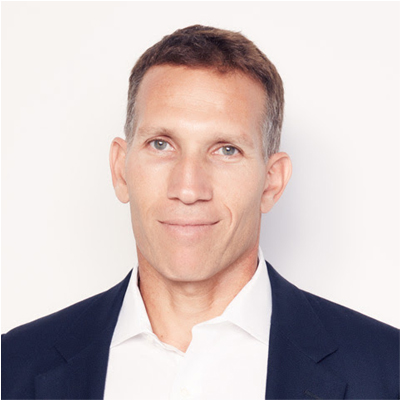
    MUMBAI: MIPCOM today announces that Ynon Kreiz, CEO of Maker Studios, a next-generation media and technology company and the world’s largest network of online video content for millennials, will deliver a keynote address as part of MIPCOM’s Media Mastermind Keynote Series. Kreiz will address delegates in Cannes on Monday, October 13.

    Organised by Reed MIDEM, the 30th anniversary of MIPCOM will take place in Cannes, France, from Monday, October 13 – Thursday, October 16.

    Kreiz joined Maker’s board as Chairman in May 2012 and was appointed Executive Chairman and CEO in May 2013. Under Kreiz’s leadership, the company was acquired by The Walt Disney Company in May 2014. During the keynote, Kreiz will discuss this year’s MIPCOM theme, The Global Quest for Original Content, he will address how Maker is packaging original shows featuring its biggest talent partners for cross-platform appeal.


    Attracting more than 8.5 billion views monthly with over 550 million loyal subscribers globally, Maker is the leading network of online video content for the coveted millennial demographic. Maker offers a massive content slate that spans 23 curated vertical genres and is home to both top digital and traditional stars along with the most-watched short-form content in the online video industry including the most-subscribed YouTuber in the world PewDiePie and the award-winning “Epic Rap Battles of History,” the most-viewed series on YouTube. With 55,000 creators in its network, Maker has enormous scale and reach. Launched in May, proprietary web platform Maker.tv offers viewers premium, curated content from Maker’s hyper-syndicated network.

    “With Ynon Kreiz at the helm, Maker is driving the short-form content revolution and becoming a major source of online video content for millennials,” said Laurine Garaude, TV Division Director, Reed MIDEM. “Ynon’s expertise in traditional entertainment coupled with online video is a perfect fit for this year’s MIPCOM theme, The Global Quest for Original Content.”

  • Netflix chief content officer Ted Sarandos to keynote at MIPCOM

    Netflix chief content officer Ted Sarandos to keynote at MIPCOM

    MUMBAI: MIPCOM today announces that Ted Sarandos, Chief Content Officer of the world’s leading Internet TV network, Netflix, will give a keynote address as part of MIPCOM’s Media Mastermind Keynote Series.


    Organised by Reed MIDEM, the 30th anniversary edition of the MIPCOM entertainment content market will take place in Cannes, France, from 13-16 October 2014.

    Coming shortly after Netflix expands its European presence, the keynote interview, which will be conducted by Eric Scherer, Director Future Media, France Televisions, will take place from 11.15am on Tuesday 14 October.

    Ted Sarandos has led content acquisition for Netflix since 2000 and is recognised in the industry as a key innovator in the acquisition, production and distribution of film and TV series.

    Netflix, the world’s leading internet subscription service for TV shows and movies, has over 50 million members in more than 40 countries, who watch more than one billion hours of per month.

    Netflix has a burgeoning slate of must-see original series, including “House of Cards”, “Lilyhammer”, “Hemlock Grove”, “Orange Is the New Black”, “The Killing”, the fourth season of “Arrested Development”, “Bojack Horseman” and, coming in December, “Marco Polo”

    Netflix will soon launch in France, Germany, Austria, Switzerland, Belgium and Luxembourg, giving broadband users in those countries access to a curated selection of Hollywood, local and global TV series and movies, whenever and wherever they like on TVs, tablets, phones, game consoles and computers.

    Besides North and South America and the Caribbean, Netflix is so far available in the UK and Ireland, Denmark, Finland, Norway, Sweden and the Netherlands.