Category: Specials

  • Kyoorius announces winners of the Kyoorius Creative Awards 2024

    Kyoorius announces winners of the Kyoorius Creative Awards 2024

    Mumbai: Kyoorius announced the winners of the 2024 Kyoorius Creative Awards, presented by ZEE, at a grand awards night held on 24 May at Mumbai’s Jio World Convention Centre amidst an audience of more than 1450 professionals from India’s marketing communications industry, the highest ever in its history.

    No entry was conferred the super-exclusive, highly-coveted black elephant award that recognizes work deemed to be the best of show, though there were two contenders – “Motorola Deep Connect” for Motorola India by Dentsu Creative and “Megh Santoor” for Hindustan Unilever’s Brooke Bond Taj Mahal by Ogilvy India. For the first time ever, they were awarded baby black elephants.  

    Kyoorius also commemorated Bharat Ratna, and former Indian cricket captain, Sachin Tendulkar, with the master of creativity award. The honour celebrates cricket’s first true megabrand and a global icon, whose endorsements, brand associations and continued work in sports marketing paved the way for not just cricketers, but most Indian athletes. Instituted in 2018, the master of creativity award recognizes a stalwart who has continuously contributed to making the marketing and communication industry more creative in whatever they do.

    Kyoorius received over 3600 entries from over 280 entrants to the awards this year, the highest ever in history. Only 1060 entries made it to the first list after the first round of online judging.

    The eleventh edition of the awards will also be remembered for the GiveBack initiative. For every entry that did not make it into the First List (i.e. beyond the first round of judging) at the 2024 Kyoorius Creative Awards, Kyoorius is giving back 50 per cent of the entry fee to the entrant.

    Post the in-person jury session, 282 entries emerged as winners of the baby elephant (in-book winners). Out of these 282 baby elephant winners, 89 entries were awarded blue elephants across disciplines. Seven entries were awarded purple elephants as part of the Zee Equality Awards.

    Awards by Kyoorius do not follow a hierarchical structure – there are no golds, silvers or bronze medals. Instead, only the work that deserves recognition wins an elephant.

    “My heartfelt congratulations to all the winners this year. GiveBack was not just a campaign idea for us – it was a way to recognise the pain points when it comes to award shows. We’ve already started the process and entrants are receiving their GiveBack money. We took this initiative to make the Kyoorius Creative Awards more accessible to smaller agencies and have recorded the highest number of entries this year. While there was no black elephant winner this year, we have two baby black elephant winners to celebrate,” said Kyoorius founder and CEO Rajesh Kejriwal.

    “I am pleased to recognise and applaud the immense creative potential of the industry, and further encourage innovation by extending our support to the Kyoorius Creative Awards year on year. At ZEE, we are humbled to play a small role in nurturing the creative quotient through the ‘GiveBack’ initiative, and we stay committed towards supporting the advertising fraternity and celebrating memorable brands and campaigns. I would like to extend my heartiest congratulations to all the participants, wishing them continued success and an abundant creative spirit to create more such enthralling campaigns in the future.” ZEE Entertainment Enterprises Ltd MD & CEO Punit Goenka.

    All the winning work can be seen at kca.kyoorius.com.

    Besides various tweaks to the existing and popular award disciplines and categories, the eleventh edition of the Kyoorius Creative Awards also introduced new specialist awards for health and pharma, regional advertising and creativity In PR.

    Blue elephants recognise work that sets new benchmarks for the industry, and is truly outstanding, while baby elephants recognize disruptive, showcase worthy work. Black elephants are reserved for work that represents the best of show, work that takes risks, creates new conversations and has a lasting impact on the industry.

    Purple elephants are awarded to winners of the ZEE Equality Award presented by Indian Creative Women. These awards recognise and celebrate work that has addressed and impacted gender inequality in India through innovative thinking. The colour ‘purple’ signifies justice, dignity and has been historically associated with efforts to achieve gender equality.

    The Kyoorius Creative Awards 2024 was presented by ZEE, with luxury experience partner Glenmorangie and is supported by Indian Creative Women. The venue was the Jio World Convention Center, Mumbai. 

  • CMAI hosts key summit to shape India’s carbon policy and achieve net-zero targets

    CMAI hosts key summit to shape India’s carbon policy and achieve net-zero targets

    Mumbai: The Carbon Markets Association of India (CMAI) successfully hosted a day-long Carbon Policy Development 2024 conclave on converging green solutions with carbon markets to achieve India’s net-zero targets on 16 May in New Delhi.

    The Carbon Markets Association of India (CMAI) is a strategic alliance of industry experts passionate about climate and offset solutions. In line with this commitment, they have joined hands to enable the development of a robust carbon credit market in India. The event brought together prominent figures from bureaucracy, industry, think tanks, and academia to discuss critical strategies for achieving India’s ambitious goal of becoming a net-zero nation by 2070. Abhay Bakre, director general, Saurabh Diddi, director, Bureau of Energy Efficiency, Ajay Mathur, director general of the International Solar Alliance, R.K. Jain, principal executive director of Indian Railways, Subhash Kumar, director general, Association of CGD Entities, Deepesh Nanda, managing director & CEO, Tata Power Renewable Energy Ltd, Kapil Kumar Jain, executive director, Gas Authority Of India Ltd., Damon DuBord, first secretary – energy affairs, Embassy of the USA, Ashish Tiwari, secretary, department of environment, Forest & Climate Change, Government of Uttar Pradesh, Hans Raj Verma, CMD, Tamil Nadu Industrial Investment Corporation Ltd, Vikram Vishal, professor, IIT Bombay, Manish Dabkara, president, CMAI, Ashok Kumar, regional representative (Central & South Asia), Dr Lokesh Dube, senior standards manager (Energy and LUF), Gold Standard, Rohit Kumar, secretary general, Carbon Markets Association of India, Sanjay Ganjoo, director general, Indian Federation of Green Energy, Alok Sharma, director (R&D), Indian Oil Corporation, Dr Gaurav Mishra, scientist F, ninistry of new and renewable energy (MNRE), Atul Sharma,  co-founder, Sarvada Legal, Siddhant Gupta, vice president, EKI Energy Services Ltd  were among the many esteemed dignitaries to attend the conclave on Carbon Policy Development 2024.

    These leaders highlighted the urgency of climate action and the importance of sustainable finance in mobilising the necessary investments for India’s energy transition.

    Bureau of Energy Efficiency director general Abhay Bakre said, “We are developing a robust and transparent framework and we have to be very careful with it; lots of work goes behind every draft we bring out. We want to keep it simple yet progressive. We don’t want any hardship or limitations for the stakeholders while implementing it tomorrow. At the same time, we can’t make it ambiguous. Mr Bakre also appreciated CMAI efforts and the major role of CMAI as an industry body.

    International Solar Alliance director general Ajay Mathur spoke of the course of action in policymaking for the industry, and highlighted the role of CMAI in it, remarking at the event, “I argue that it should be good if the carbon credits that we create domestically or globally are tooled to ask the developed countries that they should create a global guarantee fund.”

    Carbon Market Association of India president Manish Dabkara said, “It’s evident that India is taking significant strides in shaping its compliance carbon market – a critical move towards a sustainable future. It is important that India stays on course and up-to-date with the global trends, and achieves its own climate goals while benefiting from the international market financially. This is where the role of CMAI becomes crucial when it comes to influencing the policies necessary to steer India towards a net zero future with the help of carbon markets.”

    The sectoral focus for policy development

    Various stakeholders, decision-makers, and policymakers influencing the carbon market policy in India and other trade-related matters had enlightening conversations at the conference. A dedicated session focused on international cooperation in achieving climate goals. Panellists explored the role of mechanisms like Article 6 of the Paris Agreement and Carbon Border Adjustment Mechanisms (CBAM) in facilitating global emissions reductions. Discussions also addressed the challenges and opportunities these frameworks present for sustainable development and fostering innovation.

    Another panel discussion focused on specific green solutions for decarbonisation. Panellists discussed the importance of maximising domestic renewable energy sources, with a specific focus on modern bioenergy as a promising option due to India’s surplus of biomass and waste materials. The discussion highlighted the multiple benefits of modern bioenergy, including clean fuel generation, job creation, rural development, and environmental pollution mitigation. Strategies and pathways for effectively harnessing energy from biomass and waste materials were explored in this session.

    The third session of the day followed recent advancements in carbon capture and alternative fuels, showcasing innovative approaches and breakthroughs. The session also addressed the challenges hindering large-scale implementation, including technological limitations, cost considerations, and navigating regulatory hurdles. Panellists emphasised policy frameworks in incentivizing clean technologies.

    Collaboration is key

    The conference concluded on emphasising the importance of collaboration between public and private sectors in achieving net-zero targets. Participants discussed successful partnerships that have driven innovation and deployment in the clean energy sector.

    “It is a very good time when the Government of India has announced an offset mechanism which encourages industries in India to take voluntary action to mitigate residual emissions. This will support the green growth of India and its economy, and will also create numerous opportunities not only in India but also other countries, especially with Global South,” said Carbon Markets Association of India secretary general Rohit Kumar in his opening remarks.

    The CMAI’s conference generated significant discussion and highlighted the critical role of carbon markets and green solutions in achieving India’s net-zero goals. The learnings and collaborations fostered during the event will pave the way for a more sustainable future for India.

  • TCH 2024: One Nation: Diverse Voices

    TCH 2024: One Nation: Diverse Voices

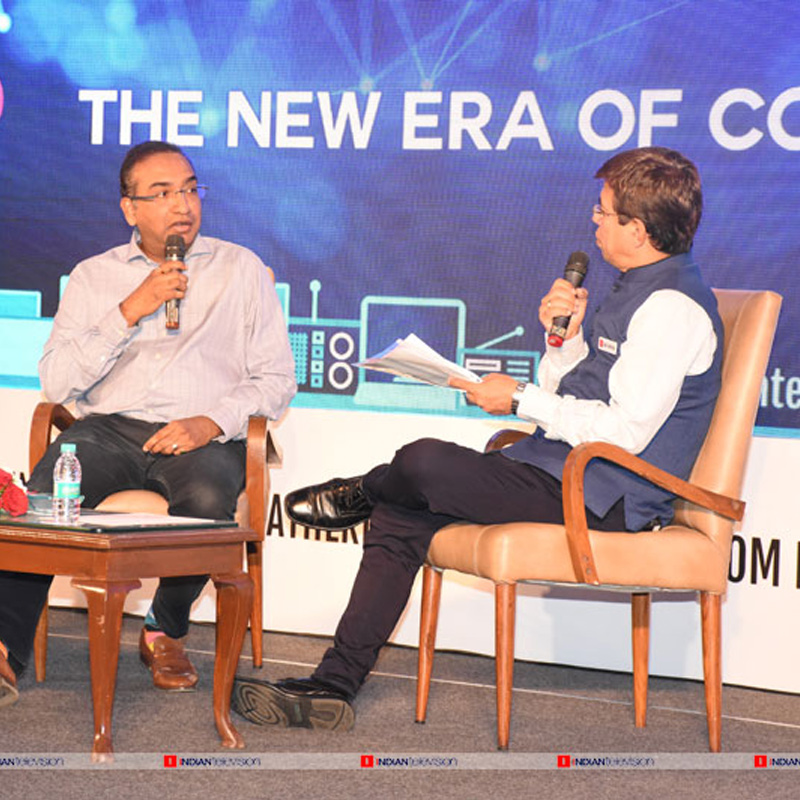
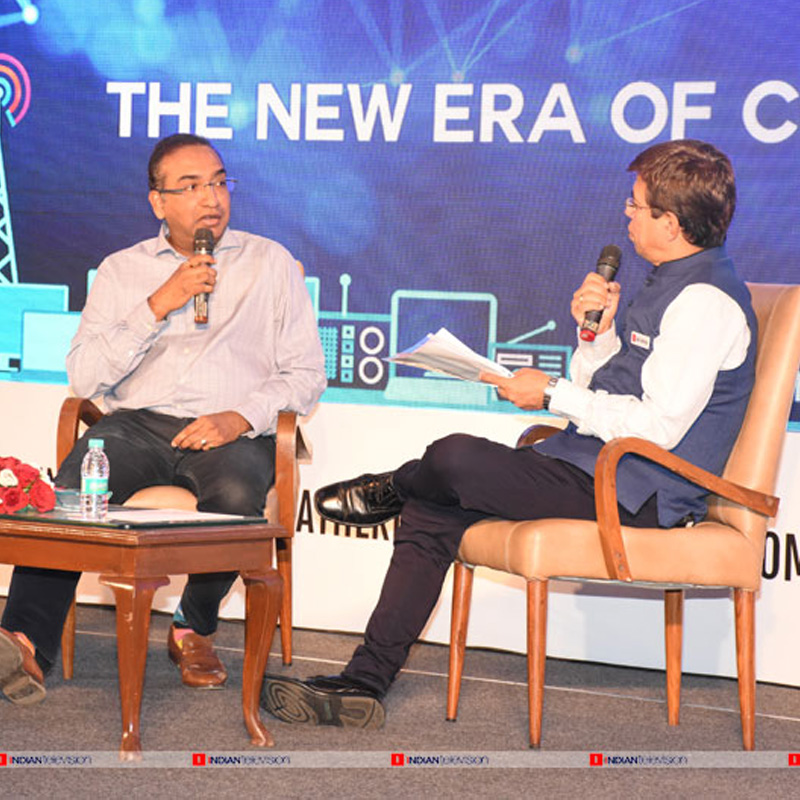
    Mumbai: Exploring the shift from regional to national content, this synopsis delves into the trends and challenges. It navigates the transformation, analyzing industry dynamics, emerging trends, and the hurdles faced. From preserving regional variation to adapting to a broader audience, it examines the multifaceted journey of regional content evolving into a national narrative. In what ways do the emerging trends and challenges influence the dynamics of the entertainment industry during this transition? How can creators navigate these changes effectively? What strategic approaches can content creators adopt to strike a balance between maintaining regional identity and fostering a cohesive national narrative in their work? How can the transition from ‘regional’ to ‘national content’ impact cultural diversity within the entertainment industry, and what measures can be taken to ensure the preservation of regional variation?

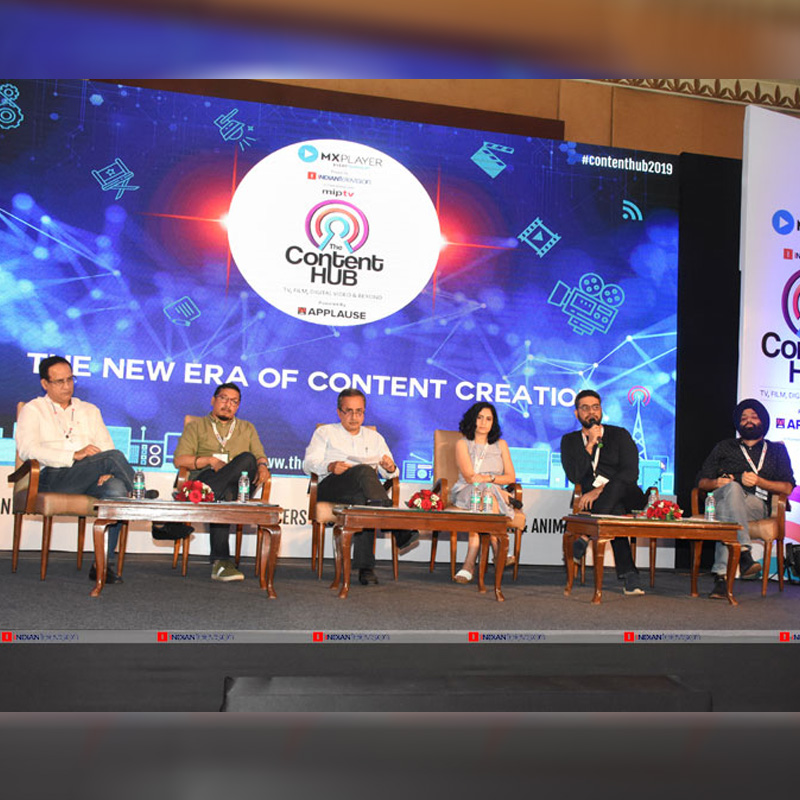
    In a rapidly evolving media landscape, seasoned industry professionals have offered valuable insights into the transformation of content consumption and production. The session was chaired by Ernst and Young partner Raghav Anand, MMTV chief executive officer P.R. Satheesh, Sony Marathi business head Ajay Bhalwankar, PTC Network chairman & MD Rabindra Narayan, Shemaroo Entertainment COO, Digital, Saurabh Srivastava esteemed voices in the field, have articulated their perspectives on the burgeoning shift towards globalised content.

    Rabindra Narayan emphasised the dissolution of regional boundaries in content consumption, attributing it to the accessibility facilitated by global platforms and connectivity options. He predicts a future where language barriers will fade, citing the potential of technology to clone and adapt voices, thus enabling seamless localization across languages.

    Saurabh highlighted the democratisation of content creation in the digital era, underscoring its empowerment and revenue potential, particularly in linguistically diverse markets like India. He emphasizes the value of culturally rooted storytelling in filling gaps in content supply, with technology enabling effective monetization, especially through OTT platforms.

    Ajay Bhalwan sheds light on the evolving landscape of Hindi and regional language content, noting a significant shift where a substantial portion of content on Hindi film channels originates from regional languages. He accentuates the importance of language in enhancing authenticity and audience engagement, exemplified by the strong resonance of Marathi content in Maharashtra.

    PR Satheesh underscored the paramount importance of content quality in driving viewership and transcending language barriers. Drawing parallels with the global popularity of Korean dramas, he advocates for leveraging technology, including AI and real-time translations, to enhance content creation and distribution.

    These insightful perspectives collectively echoed the industry’s adaptation to a globalised content landscape, where technology catalyzes innovation and accessibility. As content continues to evolve, these experts offered valuable guidance on navigating the dynamic media landscape and maximizing the impact of storytelling in diverse markets worldwide.

  • DMEA 2024 honours trailblazers in the digital media industry

    DMEA 2024 honours trailblazers in the digital media industry

    Mumbai: The Digital Media Excellence Awards 2024 showcased the best practices, innovative strategies, and impactful campaigns that shaped the digital media industry. Indiantelevision.com group was honoured to celebrate such outstanding achievements and contributions of agencies in the digital media landscape.

    Here is the complete list of the winners:

    DMEA 2024 Winners

  • TCH 2024: Need for sustainability & content creation

    TCH 2024: Need for sustainability & content creation

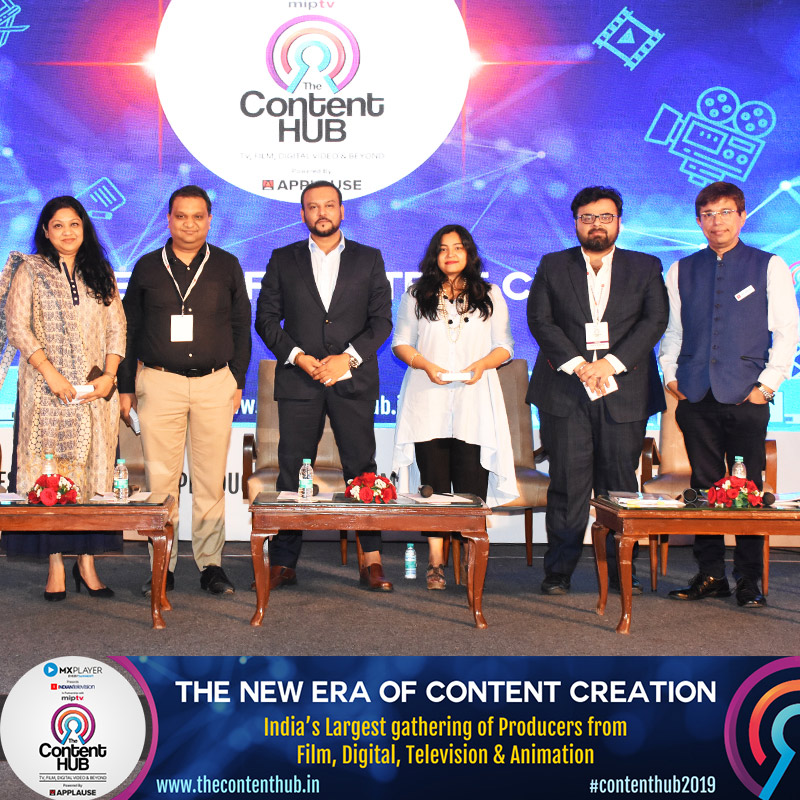
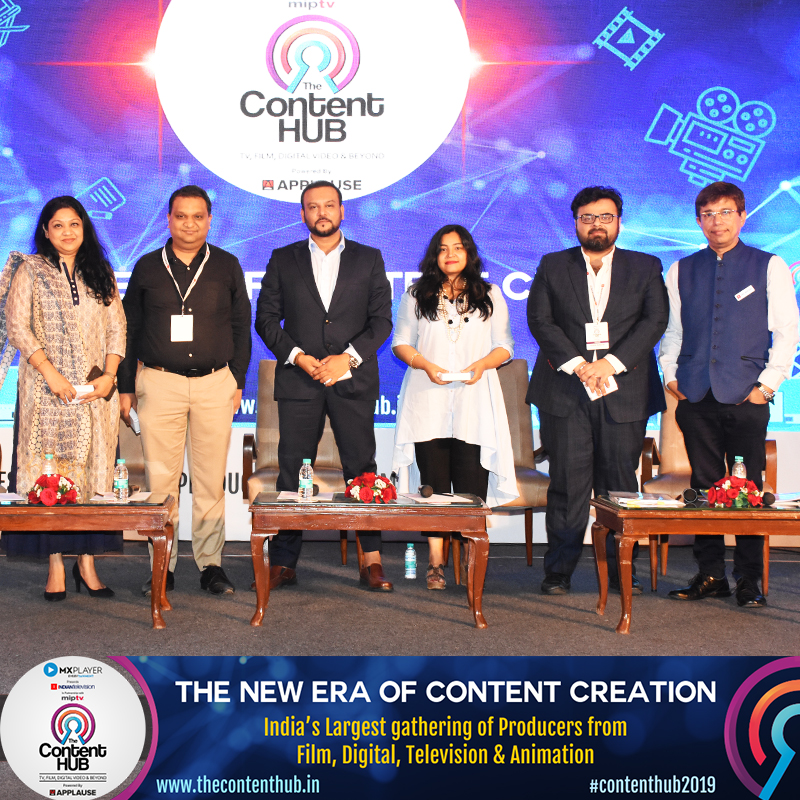
    Mumbai: The eighth edition of The Content Hub Summit delves into the ever-changing world of content creation. With the consolidation of platforms, creators face new hurdles in gaining visibility, maximizing revenue, and maintaining creative freedom. The event also explored the remarkable theatrical success of Indian cinema and unraveled the secrets behind its unprecedented profits, with a critical eye towards its sustainability.

    The fireside chat saw Indiantelevision.com group founder, chairman & editor-in-chief Anil NM Wanvari in conversation with India GreenSet CEO & co-founder Anupama Mandloi.

    They discussed the critical importance of sustainability in content creation, especially in India, which leads in volume. They highlighted the industry’s potential for influence and the necessity to adapt to climate change. Mandloi emphasized the need for sustainable practices, citing examples like the Mumbai floods’ impact on business.

    Wanvari proposed initiatives like eliminating single-use plastics at events and forming industry alliances for sustainable standards. They emphasized the shift toward sustainability as a cultural change, stressing the industry’s collective responsibility and the need for unity to overcome hurdles.

    Mandloi suggested practical steps individuals can take, urging a bottom-up approach to drive the sustainability revolution.

  • TCH 2024: Ink on the edge: Overcoming challenges for writers with audio series

    TCH 2024: Ink on the edge: Overcoming challenges for writers with audio series

    Mumbai: The eighth edition of The Content Hub Summit delved into the ever-changing world of content creation. With the consolidation of platforms, creators face new hurdles in gaining visibility, maximising revenue, and maintaining creative freedom. The event also explored the remarkable theatrical success of Indian cinema and unraveled the secrets behind its unprecedented profits, with a critical eye towards its sustainability.

    The session was chaired by Radioandmusic.com editor Namrata Kale. It included the following panelists: writer & director Pubali Chaudhuri, screenwriter Ishani Banerjee, Majburi Main Bandha Ek Rishta writer Jigyasa and Pocket FM head – branding and communications Vineet Singh.

    The panel discussion shed light on the challenges writers face in the audio, film, and OTT industries, stressing the need for recognition, fair contracts, and empowerment.

    Pubali emphasized the need to acknowledge writers’ contributions and improve revenue sharing, while Ishani highlighted the significance of contracts, credits, and acknowledgment in empowering writers. Vineet outlined Pocket FM’s initiatives to empower writers globally with equitable revenue-sharing models, while Jigyasa shared her journey of discovering writing talent during the lockdown and finding success with Pocket FM.

    In conclusion, the panel underscored the industry’s commitment to addressing the challenges faced by writers and providing platforms like Pocket FM to showcase diverse narratives.
     

  • The Content Hub 2024 – Changing Business of Content: How big is the shift and how long is it to stay?

    The Content Hub 2024 – Changing Business of Content: How big is the shift and how long is it to stay?

    Mumbai: The eighth edition of The Content Hub Summit delved into the ever-changing world of content creation. With the consolidation of platforms, creators face new hurdles in gaining visibility, maximizing revenue, and maintaining creative freedom. The event explored the remarkable theatrical success of Indian cinema and unraveled the secrets behind its unprecedented profits, with a critical eye towards its sustainability.

    The esteemed panel of industry leaders have shared their expertise on adapting to the shifting landscape, tackling daily challenges, and envisioning the future of production. 

    The session was moderated by Elara Capital senior vice president Karan Taurani which included panelists: Fremantle India managing director Aradhana Bhola, House of Talkies founder & producer Sidharth Jain, Jio Studios Head – Originals Tejkarran Singh Bajaj and producer & content head Ashima Avasthi Chaudhuri.

    Guiding the dialogue was Taurani, who steered the conversation towards the imminent trends in content consumption. Bhola espoused the paradigm shift in storytelling possibilities post-COVID, elucidating on the burgeoning spectrum of narratives that now captivate both creators and consumers alike.

    Bajaj gave a nuanced perspective on the role of data in decision-making, cautioning against its exclusive reliance. With eloquence, he delineated the delicate balance between leveraging data insights and preserving the intangible essence of creativity that distinguishes human ingenuity from algorithmic predictability.

    Jain elucidated on the challenges inherent in curating compelling narratives, underscoring the pivotal role of assembling adept teams to actualise creative visions seamlessly.

    Lastly, Chaudhari offered profound reflections on the evolving palate of the audience, emphasizing the imperatives of captivating their increasingly discerning sensibilities. With perspicacity, she underscored the exigency of recalibrating cinematic endeavors to resonate with the evolving expectations of the viewer, amidst the segmentation of diverse entertainment mediums.

    In essence, the session forged a roadmap for content creators to navigate the landscape of the digital age. 

  • The Content Hub 2024: Audio series: The new blockbuster engine

    The Content Hub 2024: Audio series: The new blockbuster engine

    Mumbai: The eighth edition of The Content Hub Summit delves into the ever-changing world of content creation. With the consolidation of platforms, creators face new hurdles in gaining visibility, maximizing revenue, and maintaining creative freedom. The event also explores the remarkable theatrical success of Indian cinema and unraveled the secrets behind its unprecedented profits, with a critical eye towards its sustainability.

    The fireside chat saw Indiantelevision.com group founder, chairman & editor-in-chief Anil NM Wanvari in conversation with Pocket FM head – India and new markets Suyog Gothi.

    During the fireside chat, Gothi discussed the platform’s journey from humble beginnings to significant success. He highlighted the inspiration behind Pocket FM, the need for longer-form content in the audio space, and the platform’s unique monetization model.

    One memorable quote Gothi said was, “We’re not just competing; we’re creating a niche for ourselves in the entertainment category.” Gothi proudly mentioned that they have had four series crossing the 100 crore revenue mark, with more on the brink, showcasing the platform’s success.

    Gothi emphasized their focus on fostering a strong community of writers and their expansion into multiple languages and global markets. He also discussed the role of AI in content creation and their vision to evolve Pocket FM into a holistic entertainment platform.

  • The Content Hub 2024 – Theatrical Bounces back, and how!

    The Content Hub 2024 – Theatrical Bounces back, and how!

    Mumbai: The eighth edition of The Content Hub Summit delved into the ever-changing world of content creation. With the consolidation of platforms, creators face new hurdles in gaining visibility, maximizing revenue, and maintaining creative freedom. The event explored the remarkable theatrical success of Indian cinema and unraveled the secrets behind its unprecedented profits, with a critical eye towards its sustainability.

    The esteemed panel of industry leaders have shared their expertise on adapting to the shifting landscape, tackling daily challenges, and envisioning the future of production.

    The session was moderated by film critic, journalist and author Mayank Shekhar along with panelists: Reliance Entertainment Studios CEO Shibasish Sarkar, Excel Entertainment producer Rucha Pathak and UFO Moviez CEO – Distribution & Film Services, Pankaj Jaysinh

    Shekhar probed the panelists on the inherent unpredictability of the film industry. Sarkar understood this volatility, noting the stark contrast between runaway hits and colossal flops, with little room for middle ground.

    Pathak highlighted the ascendancy of OTT platforms over traditional satellite and television mediums. She told that the convergence of content formats, wherein OTT offerings often mirror erstwhile TV content, potentially reshaping the market dynamics for cinematic releases.

    Jaysinh echoed this sentiment, pointing out the increasing reluctance among producers to bankroll high-budget extravaganzas. Instead, he lauded the success of smaller, niche-market productions with more modest budgets, citing examples like “Laapataa Ladies” and “Madgaon Express”.

    The session culminated on a note of reflection, encapsulating the complexities and opportunities inherent in the contemporary entertainment landscape.

  • The Content Hub 2024 – New Content Trends

    The Content Hub 2024 – New Content Trends

    Mumbai: The eighth edition of The Content Hub Summit delved into the ever-changing world of content creation. With the consolidation of platforms, creators face new hurdles in gaining visibility, maximizing revenue, and maintaining creative freedom. The event explored the remarkable theatrical success of Indian cinema and unraveled the secrets behind its unprecedented profits, with a critical eye towards its sustainability.

    The esteemed panel of industry leaders has shared their expertise on adapting to the shifting landscape, tackling daily challenges, and envisioning the future of production.

    The session was moderated by HitFlik film director & CCO Saurabh Varma which includes panelists: Inspire Films Ltd founder & managing director Yash A Patnaik, Dangal Play head Akshat Singhal, writer & director Soumik Sen, Geophil managing director Robin Philip, producer Monisha Singh Katial, GSEAMS producer, creator Kartk D Nishandar and Pratilipi co-founder & CEO Ranjeet Pratap Singh.

    Verma kicked off the discussion by highlighting the future trend of regional content, to which Katial emphasised its growing popularity beyond traditional markets. She noted the increasing viewership of South Indian movies in the Hindi belt, signaling a promising avenue for content creators.

    Nishandar echoed this sentiment, stating the importance of creating content within budget constraints while adapting to changing trends. Success, he argued, lies in the ability to evolve with the times and cater to shifting audience preferences.

    Singh drew parallels between his platform and a modern-day version of Disney, emphasizing the power of storytelling to transcend barriers of format, language, and geography. In a landscape inundated with content, he stressed the challenge of identifying what resonates with audiences.

    Sen stated the importance of audience engagement, stating that creativity thrives on interaction and connection with viewers. In an era of abundance, where choices abound, creators must actively seek to engage their audience rather than passively expect their attention.

    Philip shed light on the global perspective, highlighting the significance of international distribution in monetizing Indian content. He urged industry players to aggressively position themselves for global licensing opportunities, viewing it as a lucrative avenue for revenue generation.

    Singhal gave more importance to regional content as according to him, focusing more on niche content meaning where people can relate themselves in their daily life, can give an immense boost to the storytelling narrative.

    Patnaik gave succinct framework for content success: invite, engage, involve, and entertain. He told the importance of consistency, drawing parallels with the enduring popularity of US sitcoms characterized by their extensive episode count.

    The session wrapped up with each panelist expressing a high level of optimism regarding the future of content.