Category: VidNet

  • ALTBalaji is essentially everything that Balaji on TV is not: Sameer Nair

    MUMBAI: It was in the year 1994 that Sameer Nair was hired as a director-producer in the television industry. Shortly later, he became Star Movies’ executive producer.

    In the following years, he controlled acquisitions of movies for Star in India, and subsequently became its programming head. He eventually became the CEO of Star TV-India, a position he enjoyed till 2007. In 2008, Nair became the CEO of NDTV Imagine, a Hindi general entertainment channel from the NDTV stable, which went off air in 2011. In 2012, after quitting NDTV Imagine, Nair partnered with a few ex-colleagues and founded few startups in the media sector. In 2014, Nair became part of Ekta Kapoor’s Balaji Telefilms, a company that he had given break while in Star TV. He joined as group CEO and expanded Balaji’s digital business. In a recent development, just before Balaji and Reliance Industries announced that the latter has taken an equity stake in BLT a shade less than 25 per cent, Nair announced his departure from BLT end July.

    Nair was one of the speakers at indiantelevision.com’s second edition of Vidnet2017, held mid-July. He had a one-on-one conversation with Indiantelevision.com consulting editor Anjan Mitra.  Edited excerpts from the conversation:

    Has being in Balaji different from what you’ve been doing at Star and Imagine TV or even at a startup company?

    First of all, I have been associated with Balaji for many years because we used to work with them in Star. Balaji is primarily a television production house and is one of the most successful television production houses in India. And, the plan with Balaji was that how do you take a business like this and scale it up. How do you grow 10x? For example, for a company that is already having eight to nine shows on air, we have 20 per cent market share in general entertainment Hindi fiction. We make some movies too. So how do you grow 10x? We can’t go from 8 shows to 80 shows. So the sense was we have to go from being a B2B business to being a B2C business, which is where this plan of creating a (digital) platform came up. Now, if you could take all the Balaji shows today and put it on one channel, then that one channel would become the #1 channel. But obviously that ship has sailed and we couldn’t have started one more GEC channel. So it became clear that we should go B2C and should go digital (OTT). We should create content for it and act on our key strength, which is content creation.

    Which segment of the Balaji media business drives the revenues?

    Currently, television, obviously. TV is our base business where all the money comes from. But the future will be the digital business, which is Alt Balaji that we launched on April 16, 2017. That’s where the future is.

    How is Alt Balaji different?

    Balaji is known for its daily soaps on TV…shows that have been extremely popular and also have been criticized (for regressive themes, at times). Alt Balaji is essentially everything that Balaji on TV is not! The kind of content that we get to create (for Alt) is stuff that’s not available on TV; that you don’t see on TV and is exclusive to a platform. And, it’s in the fiction space because that’s what we specialize in. This is a big market. We have chosen to be in the OTT SVOD space.

    But critics say that the Indian digital realm is still more of traditional broadcasters, TV companies putting content available on linear or traditional television onto a digital platform. Do you agree with this line of thinking?

    It’s true. It’s common sense. Whenever a new medium starts and it grows, it lives off content from an old medium. That’s the way it goes. When satellite TV started in India, it was living off the English language programming from the West. Then English language programming was dubbed into Hindi and finally original Hindi and regional language programming came. It’s a process of evolution. Logically, if you got to put the content out there into a new medium, by default, Star’s Hotstar would put its own TV shows. In fact, that drove a lot of the viewership (to the digital platform) to start with. But as it goes forward, if you can get content everywhere, then why would you pay for it? If you actually want people to pay for anything, then it (content) has to be good and exclusive and people must see value in it.

    You mean content that you once famously described “between Narcos and Naagin”. Has that median changed or are you still grappling to traverse that terrain?

    In India in the 2000 (decade), we did the ‘K’ soaps — `Kyunki’, `Kahaani Ghar…’, etc. In 2017, that is pretty much the staple on Indian television, almost after a generation has gone. So, what we have missed as an evolutionary step is premium subscription television — the likes of HBO and Showtime. The closest India came to premium subscription television was, may be, Star One. So that’s where the opportunity is. The need (today) is the world between `Narcos’ and `Naagin’. It’s a world between a Colors Infinity and Colors — in all languages, not just in Hindi. And, that’s what we (at Balaji) are going after.

    I was reading an interview of Reed Hastings where he said that new shows, especially when they are released, do affect the seasonality of the business and the bottomlines. Do you feel in India it is still the same story or India is still an evolving drama?

    Even if you look at the TV business, the content business tends to work like that. So, in the Diwali quarter, your spends are up and your revenues too go up. However, I think, the big difference between Netflix and traditional content houses is if you have a subscriber model, then you have a basket of programming for a basket of revenue.

    Would you like to share some of the numbers?

    I am not going to share the numbers, but I can tell you what we are doing and why we think what we are doing makes sense.

    Why are you shying away from numbers?

    I am going to come to that. I got to build up to it. What we are doing is we are creating fiction shows— 10 to 12 or 15 episodes in a series and with multiple seasons going forward. We will give five episodes free. So we don’t have a one-month free scheme. What we have is every series of ours is free for the first five episodes — three episodes you can see on YouTube, two you can see on the app and then it means you have liked it; which means you are hooked on to it. We are going to ask you for some (subscription) money then. That’s the play we are aiming at. There are some things you want to pay money for and some you would not. For a movie like `Dangal’, a big section of the audience in India gave Aamir Khan Rs 300-400 crore (Rs. 3-4 billion in ticket sales) despite being aware that the film would come on TV for free technically, in a few months (of its theatrical release). But they still thronged the theatres and bought tickets. There is a draw that (good) content has…where people want to pay and see it. Our sense is to create content that people would want to watch and pay for.

    Coming back to numbers, we have got a great start. We have got about four-five million downloads. We have got subscriptions from day one, primarily because we are in five-episode free model. I can’t give you subscription numbers, but we are doing well compared to the market now. We have got subscriptions from about 70 countries. Most people have taken the quarterly pack and not the annual pack, which is fair I guess. They may first want to sample the content and see how the service is. We have got good reaction to our content.

    People who have downloaded your app are mostly of the Indian diaspora?

    Indians mostly. It’s an Indian and Indian diaspora game. It’s all in Hindi for now. We have done one Tamil show and are going to do one Bengali show. But it’s targeted towards Indians primarily. So we are not yet in the foreign (audience and non-Hindi speaking) space.

    What are the expansion plans for Alt Balaji?

    For first couple of years, we are going to focus on content, build up customer base and do content in multiple languages. We are doing content in Hindi, Tamil and Bengali. We want to add Gujarati, Punjabi and Telugu too, which we are planning to launch within 18 months time.

    The sense that I get from feedback that even the big OTT players don’t know where the revenue is going to come from in India. What is Alt Balaji’s point of view on revenues and business model, considering you are quite a late entrant?

    We are looking at the revenue from a subscription point of view and we are not in the AVOD space. We are not looking for advertising support. Within the SVOD space, our business plan is to spend some amount of money on content and getting to a certain number of paying subscribers by the end of two to three years, which takes us to break-even. That’s the plan. And, for that, the kind of content we are creating is premium subscription television content — the kind India has not seen so far. We are putting it out there (and) giving consumers the opportunity to sample it. We think the market is pretty large. There are two million homes that are watching Star World or Colors Infinity and there are 165 million (TV) homes that actually a Colors or a Star Plus reaches. The in-between audience, say about 25-30 million homes, today are already spending Rs.1000 to Rs. 2000 on a combination of Internet, entertainment and telecom (per month). They have two-three smartphones, have a DTH connection and watch one or two movies in a month. These guys will potentially spend $10 more per month in the next five years. That figure when you take to 25 million homes becomes a $3 million market. Now, what will they spend it on? They will spend it on OTT services, watching new movies. So, we are focusing on those 25 million homes, which will, in the next five years, probably become 25-40 million homes. Out of that, we want a fair share.

    By 2019-2020 you will reach the breakeven point. So, where are the stumbling blocks? Which are the three biggest stumbling blocks for digital platforms in India?   

    One of the big stumbling blocks used to be the connectivity issue. We used to wonder how this is going to work and how would we reach the consumers. Call-drops and bad connectivity is a problem. But in the last year or so, with the kind of push Jio is doing, the (digital) highways are being built. Second big stumbling block would be, would people pay? We keep saying that Indians get everything for free and that’s like a constant refrain. But ideally you pay for everything. You get nothing for free. If you go to a temple, you got to put money in the pooja thaali for blessings. So, I think people will pay. They are paying for movies, IPL matches…In fact, people have always paid for TV. For all this drama around ‘Indians like to get everything for free’, ever tried to not pay for your cable connection? They’ll (LCOs) just cut it (connection) off. Right? And, from 1992 this is going on. The third stumbling block would be if consumers are willing to pay, what are they going to pay for? That’s where the content comes in. Already, almost all of us have become Netflix subscribers. It may be expensive, but for a certain set of audience it is good to go. Amazon has come along too. So, these are the three key things and they are being addressed.

    In all this, do you feel somewhere the government can be helpful in removing the stumbling blocks?

    I don’t know actually. But government should stay far away from it. This is going reasonably well. Private players are helping in building infrastructure and are building businesses. Let market forces decide.

    At the moment, it is almost like ‘free for all’ without any regulations for the digital players; something like what cable and satellite TV was once upon a time before MIB and TRAI waded into it in 2003-04 onwards. How do you view the growth of the digital world vis-a-vis regulations or its absence?

    This is a tough one because the Internet is open; so technically at this point of time you can go out on the net and find porn too. Now going forward, more and more people will create (digital) content and somebody will push the boundaries and maybe or maybe not the government decides to regulate it. Ideally, if the players together are not creating obscene content just for the sake of creating obscene content, that would be the best self-regulated environment. But it is a big a market; too many content creators are out there and it’s hard to assume things. But I feel there are already some rules and regulations in place.

    And where do the OTT platforms fit into the Indian debate of net neutrality?

    Obviously, there should be net neutrality. I think all the OTT platforms are now pushing for net neutrality. If we don’t have net neutrality, then it would be like the TV business’ carriage phase, which still persists, though it has gone down because of the digitization.

    Is the digital world at the moment a content driven business or a technology driven business?

    Well, it’s a combination of both. Tech is equally important.
     

  • Republic to debut VR content from August for viewers

    MUMBAI: English news channel Republic TV will introduce its first set of 10-series VR (virtual reality) news stories for viewers on its digital platform Republic World next month in a move that could probably be a first for an Indian news channel.

    “The future of digital is going to be (dominated by) the three areas of vertical videos, virtual reality and artificial intelligence. Over 37 per cent of the content on Republic TV is being streamed live,” Republic TV founder Arnab Goswami told the audience at the Indiantelevision-organised Vidnet 2017 here on Thursday while dwelling on the type of video content that will drive digital and connect and engage with the new-age viewer. He was in conversation with Indiantelevision.com Group founder, CEO and chief editor Anil Wanvari. 

    VR is the use of computer technology to create a simulated environment. Unlike traditional user interfaces, VR places the user inside an experience. Instead of viewing a screen in front of them, users are immersed and able to interact with 3D worlds

    Explaining the rationale behind betting big on digital and things like VR, Goswami said that Republic TV has 10 content partners in different languages in various states and the company was not “looking at digital as a source of income, but as a brand extension” initiative. Republic TV will have a separate VR feed on Republic World, the digital platform.

    Holding forth on content, technology and bigger competitors (David vs. Goliath is his oft-repeated expression), Goswami said he sees his company more “as a content creator not a content distributor”, adding, “The future of digital will be (dependent) on the engagement levels of the content, not just the scale that you (have) built up. In a fully digitised market, we are the content creators and are at absolutely even play (compared to incumbents). It no longer depends on money. We are spending our resources on content, reporter and talent”.

    Republic is offering its wide range of content with the help of media partners including Sambad, BusinessWorld, News Live, Niyomiya Barta, North East Live, Punjab Kesari, Aajkaal, S Newz, Dainik Bhaskar, Nirmana News, Kashmir Monitor and Lokmat. Community partners include tripoto.com, RSJ, LBB.in, yourstory.com, digit.in and AutoX.

    ALSO READ:

    Arnab to start ‘original VR journalism’ on Republic World

    Arnab stomps into digital space with republicworld.com

    Republic TV to launch in Middle East and Singapore

  • Cable TV, DTH and OTT distribution

    MUMBAI: Having an OTT service is not enough; you’ve got to get it out on every outlet possible, is something we all know. But are traditional TV distributors like DTH and cable TV open to giving them carriage? That was the topic of discussion on one of the panels at Indiantelevision.com’s second VIDNET – Content on the Go powered by Viu conference in Mumbai’s Hotel Westin.

    On stage were Shemaroo CEO Jai Maroo, DEN CEO SN. Sharma and outgoing Videocond2h COO Himanshu Patil.

    Maroo said Shemaroo was interested in getting its content on every service – DTH, cable TV, OTT, traditional linear channels, or even YouTube.

    “We have done content supply deals with all the four major DTH operators and are about to do some with cable TV as well,” said Maroo. “Our content has to be on every screen.”

    He added that the company is constantly mulling over the idea of setting up its own OTT but has not gone ahead on it. “Every six months we visit the thought of doing our own app,” he shared. “But I see what’s going on with our other VOD partners and we drop it. We may do it when we think the time is right. Currently, we are curating and packaging our large content catalogue to them”

    Patil stated that the DTH provider had partnered with Shemaroo for several VAS services that Videocon d2H was offering to its subscribers. “And mind you they are willing to pay as much as Rs 30-40 for the service like Darshan, And its not only high end HD or 4K customers who are at the premium pack end who are willing to subscriber to our BAS service. Even the basic pack customers are” disclosed Patil. “So OTT players should take heart from our experiences – the willingness to pay is there as long as you provide her with the content she wants.”

    He added that Videocon2h is ready to embed any OTT app into an user interface on the DTH service. “We are currently integrating Netflix with our connected box, and are talking to almost every OTT player in India to do the same,” he said.” I’d rather have my customer stay with me for my DTH service and offer him the entire bouquet so he can move out into VOD when he wants and come back into linear television when he wants. We will be working on voice activated search and discovery which will enable to him find every piece of content related to that search.”

    He revealed that the operator had dropped the idea of serving an on-the-go app to its subscribers. “All the broadcasters are coming up with their own apps. It did not make sense for us to have our own,” he explained.

    DEN’s Sharma disclosed that the MSO had, on the other hand, unveiled its own OTT on which it was offering traditional linear channels as subscribers had expressed the need to watch these on their hand held devices or on the go. “But it’s early days for us and we are learning along the way,” he said. “We know we have to aggregate content, apart from our normal linear fare. We have 2,500 movie titles, and other video on demand fare. ”

    He highlighted that he was open to integrating any app or OTT service into the DEN network. “Yes, we are willing to partner, possibly, initially to provide customer service and get the apps or OTT players traction, but we would like to see revenue coming our way at some stage,” he elaborated.

    The fact that this would benefit his Boomband broadband services was not lost on him. “It will be a win-win for all of us,” he expressed.

    He said DEN was working on getting boxes into homes which would enable regular TVs to become smart. “Very soon,” he said.

    He was not worried about the impending launch of Jio Fibre or Jio DTH wherein rumours are that it will disrupt the wired broadband market just as it did in the wireless space.

    “If it goes the free way like it went for its 4G mobile service, I am sure no one will be able to stand up against it,” he stated. “But the fact is that it is going to take time to be available nationally. So lets’s wait and watch.”

  • VIDNET 2017: MINING THE BURGEONING OTT/VOD SECTOR

    MUMBAI: Leaders of India’s OTT, live streaming and video on demand ecosystem will be congregating at the Hotel Westin in Mumbai’s Goregaon suburb to participate in the second edition of indiantelevision.com’s industry confab VIDNET 2017- Content on the Go.

    Heads of Hotstar, DittoTV, Voot, SonyLiv, YuppTV and Viu, BARC’s planned digital measurement offering and the entertainment and media partnership heads of YouTube India and Facebook India will be highlighting the progress that their platforms have made and the way forward for video on demand and streaming services which are in their relative infancy but have seen tremendous traction over the past year or so..

    “2016-17 has been a year of an explosion in video consumption for the plethora of VOD and streaming service providers who have popped up in India,” says Indiantelevision.com group founder, CEO & editor-in-chief Anil Wanvari. “This is thanks to dropping bandwidth prices, the Reliance Jio effect of free data. Humungous investments are being poured into original content by Netflix, and Amazon, even as others are either investing in movies, sports, or kids content. This at a time when they are grappling with the business model: go pay or free or a mix of both. Our estimate is that around Rs 1,500-1,700 crore has already been invested by the various players. Thus, VIDNET 2017 is happening at an apt time. It will help foster discussions, relationships, deals between the various players and possibly allow for new ideas to flow in. A stellar lineup of speakers makes VIDNET, the industry’s leading VOD thought gathering.”

    VIDNET 2017 is slated to feature panel discussions on whether OTT/VOD/digital video is a sound investment proposition, its attractiveness to advertisers, the need for deeper distribution for the platforms, and who should be commissioned to produce the content, Bollywood biggies or smaller independents.

    Among the speakers who will be sharing their views at VIDNET include:

    Arre co-founder & CEO Ajay Chacko,

    Hotstar CEO Ajit Mohan,

    Still and Still Media collective founder

    Amritpal Singh Bindra,

    Indiantelevision.com group founder, CEO & editor in chief Anil Wanvari,

    Pocket Aces founder Anirudh Pandita,

    Z5 Business EVP & head of digital India Archana Anand,

    Republic TV founder Arnab Goswami,

    VideoTap founder & CEO Dilip Venkatraman,

    Viacom18 digital ventures Voot COO Gaurav Gandhi,

    VideoconD2h COO Himanshu Patil,

    Shemaroo Entertainment Ltd director Jai Maroo,

    BARC India digital business head Jamie Kenney,

    Aisa TV Forum and Market Reed Exhibitions executive producer & editorial director Lunita S V Mendoza,

    Asia TV Forum & Market – Reed Exhibitions business development manager Meen Yi Phua,

    Media Partners Asia vice president Mihir Shah,

    Viacom18 Digital Ventures content head Monika Shergill,

    Cheetah Mobile India director of brand solutions Neel Sapre,

    Principal Provocateur Advisory Paritosh Joshi,

    Monozygotic co-founder & chief creative officer Raghu Ram,

    WATConsult founder & CEO Rajiv Dingra,

    Prime Focus technologies founder & CEO Ramki Sankaranarayanan,

    Balaji Telefilms group CEO Sameer Nair,

    Akamai Technologies country sales manager, media Sandeep Reddy,

    Youtube entertainment partnership head Satya Raghavan,

    Facebook India media partnership head Saurabh Doshi,

    Swastik Productions, One Life studios founder & creative director Siddharth Kumar Tewary,

    Viu India marketing head Shantanu Gangane,

    Producer Siddharth Jain,

    Den Networks Ltd CEO S N Sharma,

    Amagi Media labs co – founder Srinivasan KA,

    Sourabh Pant,

    Perform group director content sales India Subhayu Roy,

    RBNL CEO TaruN Katial,

    Yupp TV founder & CEO Uday Reddy,

    SonyLIV EVP & digital head Uday Sodhi,

    Viu country head India Vishal Kumar Maheshwari,

    Emerald Media executive director & investment head Vivek Raicha

    Castle Media Pvt Ltd executive director Vynsley Fernandes.

    An initiative by Indiantelevision.com, Vident 2017 is powered by Viu. The summit partners for the event are Hotstar and Voot. Prime Focus Technologies, Sony Liv and Perform group is associate partners. Akamai is OTT partner. Animationxpress.com, Tellychakkar.com and Radioandmusic.com are online partners. The event is executed by ITV 2.0 productions.

    VIDNET 2017 will also be honoring key pioneers and movers and shakers of the industry with a plaque for their contribution to rapidly emerging digital video ecosystem.

  • Digital success via differentiated content, good story-telling, partnerships

    Digital success via differentiated content, good story-telling, partnerships

    MUMBAI: Bollywood, Hollywood and sports content will certainly get you traction, but ultimately well thought out differentiated content, partnerships with platforms and targeted audience will not only get the eyeballs, but also return on investment for content creators on OTT platforms.

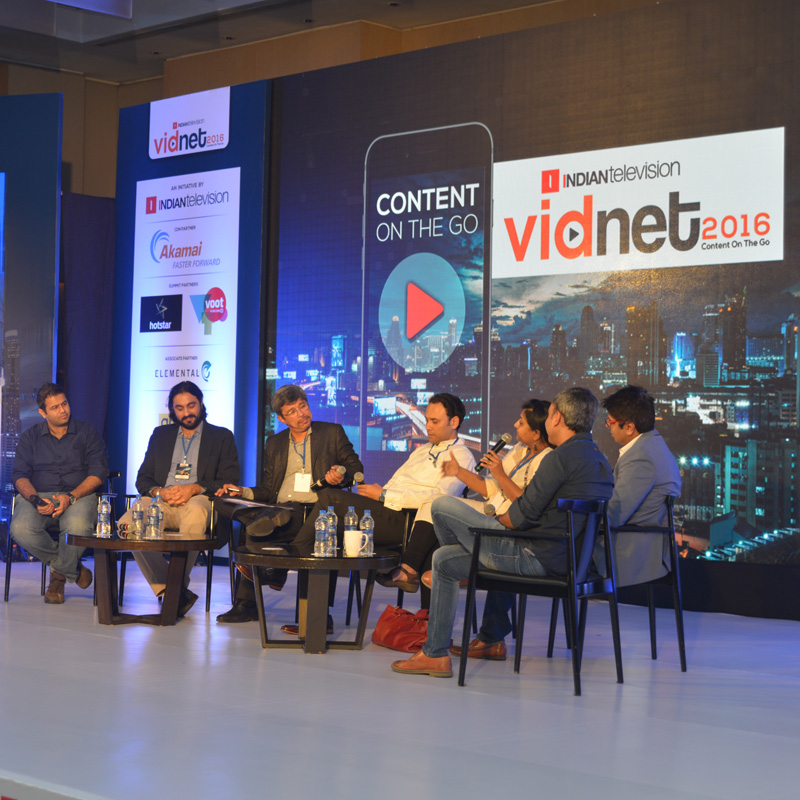
    This was the over-arching message from content creators and OTT platform operators at the session on content paradigm at Indiantelevision.com-organised conference related to OTT here yesterday, aptly themed Vidnet 2016.

    The panel included Abhimanyu Singh, CEO, Contiloe Entertainment, Mahesh Narayanan, MD, Saavn, Salil Kapoor, MD, HOOQ India, Uday Sodhi, EVP and Head Digital Business, Sony Pictures India, Varun Mathur, Co-Founder and Director VEQTA, Viviek Bhargava, MD and CEO iProspect and Yash Patnaik, Founder, Beyond Dreams Entertainment.

    The session’s basic underlying theme, highlighted by moderator Anil Wanvari, Founder and Editor-in Chief, Indiantelevision.com, revolved around the type of content that could work in the digital world while keeping in mind the needs of advertisers, agencies and investments.

    The variety of online content is vast, Sony’s Sodhi said, adding since the ecosystem is fairly new, consumption is from television content catch up. “There is a fair demand for movie viewing, including short films,” according to him as he pointed out sports too is majorly consumed by OTT subscribers.

    However, Sodhi was candid enough to admit that presently in an evolving eco-system it cannot be said with guarantee what works and what does not.

    As SonyLiv depends a lot on streaming of sports content on the platform, a question was raised whether programming differentiation on major OTT platforms was needed and also whether a global player like Netflix, focused on fictional series and movies, needs to re-strategize in India.

    Pointing out that OTT platforms ultimately will come out with their strengths, Sodhi said, “We come with a huge legacy of sports. We believe it works well for us and gives us an automatic connect between our users on TV and digital (platform), acting as an entry point for consumers.”

    While Sony Liv is banking on sports, HOOQ is finalising plans to launch in India as a VOD platform.

    Educating the uninitiated that HOOQ is a joint venture amongst Sony Pictures TV, SingTel and Warner Bros., HOOQ India chief Kapoor was of the opinion that the new digital evolution is about “pull and not push” and, therefore, “good content will get pulled (by consumers).”

    “All sorts of stories and entertainment can co exist in this (digital) space,” Kapoor said, adding that the criteria for success in the digital world were quality of content as people appreciate good content on every format.

    As per HOOQ, the criteria to measure the success of engagement is not downloads (of an app), but continuous engagement and number of active users.

    However, the experts on the panel did agree that since there is more television content, `catch up’ is a big issue presently. The next step ought to be and should be engagement of consumers with original content and the players are experimenting with that as to what’s relevant to digital natives.

    For example, Saavn, the music streaming app, has its own formula to engage audiences. The strategy for audio players is to package their content differently to provide a unique experience.

    Sharing the company’s varied ways of consumer engagement, Saavn’s Narayanan said an interesting property the company created was Saavn Live where live gigs happen on a stage in the company office with artistes performing at a pre-set time that goes live on Facebook.

    Saavn counts on social media to push its content and offers unplugged version of songs.

    The mechanism of how digital content is working has a big influence on advertising sector as well. iProspect’s Bhargava pointed out while previously brands found advertising cheaper than creating content, digital content creation has minimised cost encouraging brands to produce their own content.
    According to Bhargava, this gives brands an opportunity to engage consumers on their own platforms through licensed content and brand communication becomes easier.

    A digital advertising expert, Bhargava also felt that a shift in advertising pattern has happened past 2-3 years where a large chunk of a client’s budget has been dedicated to digital advertising. “This has given brands an opportunity to reduce advertising costs through content. Digital provides same amount of engagement in less money,” he added.

    But the question remains as to which content works and gives the correct RoI. The content creators on the panel were of the opinion that platforms and advertisers can only succeed with the right shows when a good story is created and told well. The message from the content creators was clear: better storytelling does work wonders.

    Contiloe’s Singh pointed out that television has witnessed a downfall in viewership as there was a “disengagement” with “discerning” viewers/consumers. “Platforms and (content) makers will have to shift to making differentiated content,” he explained, adding not only the plot, but storytelling method has to go undergo a change too.

    “There is a severe need to reinvent the way audiences are engaged with plots and characters,” Singh said, adding that the good news is India has a rich tradition of story-telling and an equally rich bank of tales.

    Though in today’s world there is palpable excitement about the digital eco-system, Patnaik from Beyond Dreams expanded the perspective highlighting that television, cinema and digital are separate platforms catering to the same audience and, hence, “viewership will fluctuate” according to quality of content.

    With the kind of buzz digital space is witnessing, brands, production houses and channels are launching their own platforms or attempting to. Could this clutter the digital space?

    Hinting that existing OTT platforms like Sony Liv could be used by content owners and creators, Sony’s Singh said not everyone needs to have their own platforms and, instead, they need to collaborate to create content.

    Yes, collaboration between content creators and platform operators did resonate with the panellists with most having their own perspectives.

    While Contiloe’s Singh supported the collaboration angle as a way forward, HOOQ’s Kapoor said that instead of everybody trying to do everything, partnerships should be explored.

    VEQTA’s Mathur added that sports as a segment is an under-served one in India and more variety in this space would add to the spice.

  • Digital success via differentiated content, good story-telling, partnerships

    Digital success via differentiated content, good story-telling, partnerships

    MUMBAI: Bollywood, Hollywood and sports content will certainly get you traction, but ultimately well thought out differentiated content, partnerships with platforms and targeted audience will not only get the eyeballs, but also return on investment for content creators on OTT platforms.

    This was the over-arching message from content creators and OTT platform operators at the session on content paradigm at Indiantelevision.com-organised conference related to OTT here yesterday, aptly themed Vidnet 2016.

    The panel included Abhimanyu Singh, CEO, Contiloe Entertainment, Mahesh Narayanan, MD, Saavn, Salil Kapoor, MD, HOOQ India, Uday Sodhi, EVP and Head Digital Business, Sony Pictures India, Varun Mathur, Co-Founder and Director VEQTA, Viviek Bhargava, MD and CEO iProspect and Yash Patnaik, Founder, Beyond Dreams Entertainment.

    The session’s basic underlying theme, highlighted by moderator Anil Wanvari, Founder and Editor-in Chief, Indiantelevision.com, revolved around the type of content that could work in the digital world while keeping in mind the needs of advertisers, agencies and investments.

    The variety of online content is vast, Sony’s Sodhi said, adding since the ecosystem is fairly new, consumption is from television content catch up. “There is a fair demand for movie viewing, including short films,” according to him as he pointed out sports too is majorly consumed by OTT subscribers.

    However, Sodhi was candid enough to admit that presently in an evolving eco-system it cannot be said with guarantee what works and what does not.

    As SonyLiv depends a lot on streaming of sports content on the platform, a question was raised whether programming differentiation on major OTT platforms was needed and also whether a global player like Netflix, focused on fictional series and movies, needs to re-strategize in India.

    Pointing out that OTT platforms ultimately will come out with their strengths, Sodhi said, “We come with a huge legacy of sports. We believe it works well for us and gives us an automatic connect between our users on TV and digital (platform), acting as an entry point for consumers.”

    While Sony Liv is banking on sports, HOOQ is finalising plans to launch in India as a VOD platform.

    Educating the uninitiated that HOOQ is a joint venture amongst Sony Pictures TV, SingTel and Warner Bros., HOOQ India chief Kapoor was of the opinion that the new digital evolution is about “pull and not push” and, therefore, “good content will get pulled (by consumers).”

    “All sorts of stories and entertainment can co exist in this (digital) space,” Kapoor said, adding that the criteria for success in the digital world were quality of content as people appreciate good content on every format.

    As per HOOQ, the criteria to measure the success of engagement is not downloads (of an app), but continuous engagement and number of active users.

    However, the experts on the panel did agree that since there is more television content, `catch up’ is a big issue presently. The next step ought to be and should be engagement of consumers with original content and the players are experimenting with that as to what’s relevant to digital natives.

    For example, Saavn, the music streaming app, has its own formula to engage audiences. The strategy for audio players is to package their content differently to provide a unique experience.

    Sharing the company’s varied ways of consumer engagement, Saavn’s Narayanan said an interesting property the company created was Saavn Live where live gigs happen on a stage in the company office with artistes performing at a pre-set time that goes live on Facebook.

    Saavn counts on social media to push its content and offers unplugged version of songs.

    The mechanism of how digital content is working has a big influence on advertising sector as well. iProspect’s Bhargava pointed out while previously brands found advertising cheaper than creating content, digital content creation has minimised cost encouraging brands to produce their own content.
    According to Bhargava, this gives brands an opportunity to engage consumers on their own platforms through licensed content and brand communication becomes easier.

    A digital advertising expert, Bhargava also felt that a shift in advertising pattern has happened past 2-3 years where a large chunk of a client’s budget has been dedicated to digital advertising. “This has given brands an opportunity to reduce advertising costs through content. Digital provides same amount of engagement in less money,” he added.

    But the question remains as to which content works and gives the correct RoI. The content creators on the panel were of the opinion that platforms and advertisers can only succeed with the right shows when a good story is created and told well. The message from the content creators was clear: better storytelling does work wonders.

    Contiloe’s Singh pointed out that television has witnessed a downfall in viewership as there was a “disengagement” with “discerning” viewers/consumers. “Platforms and (content) makers will have to shift to making differentiated content,” he explained, adding not only the plot, but storytelling method has to go undergo a change too.

    “There is a severe need to reinvent the way audiences are engaged with plots and characters,” Singh said, adding that the good news is India has a rich tradition of story-telling and an equally rich bank of tales.

    Though in today’s world there is palpable excitement about the digital eco-system, Patnaik from Beyond Dreams expanded the perspective highlighting that television, cinema and digital are separate platforms catering to the same audience and, hence, “viewership will fluctuate” according to quality of content.

    With the kind of buzz digital space is witnessing, brands, production houses and channels are launching their own platforms or attempting to. Could this clutter the digital space?

    Hinting that existing OTT platforms like Sony Liv could be used by content owners and creators, Sony’s Singh said not everyone needs to have their own platforms and, instead, they need to collaborate to create content.

    Yes, collaboration between content creators and platform operators did resonate with the panellists with most having their own perspectives.

    While Contiloe’s Singh supported the collaboration angle as a way forward, HOOQ’s Kapoor said that instead of everybody trying to do everything, partnerships should be explored.

    VEQTA’s Mathur added that sports as a segment is an under-served one in India and more variety in this space would add to the spice.

  • Decoding the Indian online video watchers remains an enigma

    Decoding the Indian online video watchers remains an enigma

    MUMBAI: Perhaps the biggest challenge for programmers on online media is to define and segregate the online viewers who will take to OTT mediums in India.

    Following the presentation on OTT trends in the APAC region by Media Partners Asia executive director Vivek Couto at VidNet, this question expectedly assumed importance.

    Indian Television Dot Com’s founder CEO and editor in chief Anil Wanvari flagged off the discussion by asking Isobar India MD Shamsuddin Jasani to define who is a customer for him?

    “A person who is consuming digital content through any medium be it TV, mobile, YouTube, Facebook, etc is my customer. I would spend dollars on a person who is consuming content via digital platforms, what is he consuming, time spent on that piece of content,” said Jasani.

    Adding his perspective on defining a digital customer was FoxyMoron co-founder Suveer Bajaj. He seconded the definition of an OTT consumer and added that he was one who migrated to the digital medium. “I have come across consumers who are consuming three hours on digital. There is a very powerful change that we are seeing right now. These people are plunging on digital than TV.”

    Citing example from his own personal experience, Jasani highlighted how his 6-year old kid consumes around six to seven hours of video content on various platforms like Voot, YouTube, etc. He opined that this is a powerful change that he is witnessing from TV which happens through demand. Bajaj further added that it is not just on demand but also on the go.

    dittoTV business head Archana Anand strongly believed on the platform’s subscription model. Underlining the success of ditto TV’s campaign and aggressive pricing, Anand believed that she and her team had grown the pie by reaching out to people who are not internet savvy audience and is very clear on not getting content for free. “We have marked the people who perhaps are not typical OTT audience to whom TV is being provided at a subscription of Rs 20. There is a huge audience who is alien to OTT in India and we are trying to get them on board by handholding them throughout the entire procedure of getting our app by just a missed call.

    Arre co-founder Ajay Chacko was sure he did not intend to become an OTT platform. “The way we are defining our consumers is not just through access and comfort but by creating new forms of content to drive change.”

    Voot, the AVOD platform from Viacom18 which is often credited with bolstering kids and originals apart from content from the various channels falling under the network, has targeted their digital natives. Their Head marketing and partnerships Akash Banerji dissected consumers into different categories depending upon-access and comfort, demographics and content business offers.

    Discussing the first point, he explained that there are 180 million TV households in India with an average of at least two persons in every house, meaning 350 million subscribers on Internet who are not necessarily active users. “In India, we have 120 video consumers out of which 20-30 million are native digital who are consuming videos online. It is up to a platform whether they are targeting digital natives or getting internet consumers who are not consuming videos or are looking at growing the pie of digital.”

    The discussion went a notch up with the panelists enlightening the audience on the regional content that the content providers have created so far.

    Even the consumers come from varied backgrounds. At the base of the pyramid is the young, college or office going people who are mostly from the metropolitans. The older males and women who are consuming on mobile and desktop are not consuming high velocity content like the youth comprise the mid level. Banerji said that in the past 18-24 months, he has also seen consumers evolving from tier 2 and tier 3 markets primarily consuming content on mobiles. “Rural consumers which are about 200 million i.e 80 per cent of India are also coming up on board in the next few years.”

    Voot follows clear cut understanding of content and is leveraging on its popular content library of TV shows from market. Kids content and Voot originals are the other two important key factors for the platform. “Our Voot originals do not have to follow any format or template. They have to resonate with the consumers”, he added.

    Banerji strongly believes that it is a myth for any business to chase app download numbers. “The players should work on active users and the video watch time.”

    With the second most important driver being content, focusing on just the demographics is not enough. Yash Raj Films Head of content and development Nikhil Taneja said the digital audience is primarily between the ages of 18 to 34. “We are not targeted at providing entertainment to the audiences through effective storytelling and providing emotions through content.”

    He also spoke about the different gender differences by sharing some interesting statistics about the traction and viewership of YRF’s shows. The platform, being a YouTube channel, manages to get some revenue from their channel but also has various other ways to make money. “We launch our own talent and if that talent gets picked by an advertiser, we are benefitted. Our show Love Shots has been picked up by airlines. It is definitely early for advertisers to invest but that does not stop us from creating good quality content.”

    Adding to that, Jasani said, “The customers are agnostic in accessing content and consume digital data through Wi-fi and other services available to them. The offline viewing space is also brewing up rapidly in India. If we are putting an advertiser on every stage of digital consumption, there is no need for him to be on TV.” With various service providers launching 4G, Jasani opined that within 18 months the data is going to become cheap. “Adding to cheap data rates is the launch of smartphones for Rs 2,000 which is also going to grow in the future.”

    Banerji also shed light on how the viewing dynamics are changing and why that change is happening. “With consumers in control of what they consume and content being the king, the need for quality content is just going to grow. The illusion that most of us have on the content that can go on a digital platform has to be broken”.

    The panel discussion also concentrated on the discovery of content in various languages which is currently difficult. The players said they were collectively working on the challenge.

    One thing that all the panelists accepted was to keep innovating and experimenting with content.

    Anand spoke of how asked how she is facing a challenge from payment gateways as they are in English which majority of the Indians do not understand. “Even if there is a potential customer, he has to be guided to pay for my subscription and so.80 per cent of my potential subscribers cannot be captured.” She opined that all the players in the eco-system and various payment platforms have to think in this direction.

    But are there advertisers willing to get on board? Bajaj said that it is no more about ads but content. Selective content will attract specific advertisers.

    “Advertisers are squeamish to put money. We decide after evaluating how it will help the brand after a year. We are no more selling a product but brand through its content,” said Taneja.

    “We are not finicky about not putting ads on dittoTV. There is an ad replacement technology through which I can have two different ads on TV and digital for the same content,” added Anand.

    Jasani said the digital advertising pie is small as the major audience is not yet online. The consumers are not ready to pay for content but the fact that innumerable content creators are evolving cannot be sidelined. With both AVOD and SVOD having their own perks and challenges, there is no tangible answer that any player can provide currently.

    It is an exciting space where everyone is experimenting and innovating. The panel discussion concluded by citing that both the models will co-exist at least for 10 years down the line.

  • Decoding the Indian online video watchers remains an enigma

    Decoding the Indian online video watchers remains an enigma

    MUMBAI: Perhaps the biggest challenge for programmers on online media is to define and segregate the online viewers who will take to OTT mediums in India.

    Following the presentation on OTT trends in the APAC region by Media Partners Asia executive director Vivek Couto at VidNet, this question expectedly assumed importance.

    Indian Television Dot Com’s founder CEO and editor in chief Anil Wanvari flagged off the discussion by asking Isobar India MD Shamsuddin Jasani to define who is a customer for him?

    “A person who is consuming digital content through any medium be it TV, mobile, YouTube, Facebook, etc is my customer. I would spend dollars on a person who is consuming content via digital platforms, what is he consuming, time spent on that piece of content,” said Jasani.

    Adding his perspective on defining a digital customer was FoxyMoron co-founder Suveer Bajaj. He seconded the definition of an OTT consumer and added that he was one who migrated to the digital medium. “I have come across consumers who are consuming three hours on digital. There is a very powerful change that we are seeing right now. These people are plunging on digital than TV.”

    Citing example from his own personal experience, Jasani highlighted how his 6-year old kid consumes around six to seven hours of video content on various platforms like Voot, YouTube, etc. He opined that this is a powerful change that he is witnessing from TV which happens through demand. Bajaj further added that it is not just on demand but also on the go.

    dittoTV business head Archana Anand strongly believed on the platform’s subscription model. Underlining the success of ditto TV’s campaign and aggressive pricing, Anand believed that she and her team had grown the pie by reaching out to people who are not internet savvy audience and is very clear on not getting content for free. “We have marked the people who perhaps are not typical OTT audience to whom TV is being provided at a subscription of Rs 20. There is a huge audience who is alien to OTT in India and we are trying to get them on board by handholding them throughout the entire procedure of getting our app by just a missed call.

    Arre co-founder Ajay Chacko was sure he did not intend to become an OTT platform. “The way we are defining our consumers is not just through access and comfort but by creating new forms of content to drive change.”

    Voot, the AVOD platform from Viacom18 which is often credited with bolstering kids and originals apart from content from the various channels falling under the network, has targeted their digital natives. Their Head marketing and partnerships Akash Banerji dissected consumers into different categories depending upon-access and comfort, demographics and content business offers.

    Discussing the first point, he explained that there are 180 million TV households in India with an average of at least two persons in every house, meaning 350 million subscribers on Internet who are not necessarily active users. “In India, we have 120 video consumers out of which 20-30 million are native digital who are consuming videos online. It is up to a platform whether they are targeting digital natives or getting internet consumers who are not consuming videos or are looking at growing the pie of digital.”

    The discussion went a notch up with the panelists enlightening the audience on the regional content that the content providers have created so far.

    Even the consumers come from varied backgrounds. At the base of the pyramid is the young, college or office going people who are mostly from the metropolitans. The older males and women who are consuming on mobile and desktop are not consuming high velocity content like the youth comprise the mid level. Banerji said that in the past 18-24 months, he has also seen consumers evolving from tier 2 and tier 3 markets primarily consuming content on mobiles. “Rural consumers which are about 200 million i.e 80 per cent of India are also coming up on board in the next few years.”

    Voot follows clear cut understanding of content and is leveraging on its popular content library of TV shows from market. Kids content and Voot originals are the other two important key factors for the platform. “Our Voot originals do not have to follow any format or template. They have to resonate with the consumers”, he added.

    Banerji strongly believes that it is a myth for any business to chase app download numbers. “The players should work on active users and the video watch time.”

    With the second most important driver being content, focusing on just the demographics is not enough. Yash Raj Films Head of content and development Nikhil Taneja said the digital audience is primarily between the ages of 18 to 34. “We are not targeted at providing entertainment to the audiences through effective storytelling and providing emotions through content.”

    He also spoke about the different gender differences by sharing some interesting statistics about the traction and viewership of YRF’s shows. The platform, being a YouTube channel, manages to get some revenue from their channel but also has various other ways to make money. “We launch our own talent and if that talent gets picked by an advertiser, we are benefitted. Our show Love Shots has been picked up by airlines. It is definitely early for advertisers to invest but that does not stop us from creating good quality content.”

    Adding to that, Jasani said, “The customers are agnostic in accessing content and consume digital data through Wi-fi and other services available to them. The offline viewing space is also brewing up rapidly in India. If we are putting an advertiser on every stage of digital consumption, there is no need for him to be on TV.” With various service providers launching 4G, Jasani opined that within 18 months the data is going to become cheap. “Adding to cheap data rates is the launch of smartphones for Rs 2,000 which is also going to grow in the future.”

    Banerji also shed light on how the viewing dynamics are changing and why that change is happening. “With consumers in control of what they consume and content being the king, the need for quality content is just going to grow. The illusion that most of us have on the content that can go on a digital platform has to be broken”.

    The panel discussion also concentrated on the discovery of content in various languages which is currently difficult. The players said they were collectively working on the challenge.

    One thing that all the panelists accepted was to keep innovating and experimenting with content.

    Anand spoke of how asked how she is facing a challenge from payment gateways as they are in English which majority of the Indians do not understand. “Even if there is a potential customer, he has to be guided to pay for my subscription and so.80 per cent of my potential subscribers cannot be captured.” She opined that all the players in the eco-system and various payment platforms have to think in this direction.

    But are there advertisers willing to get on board? Bajaj said that it is no more about ads but content. Selective content will attract specific advertisers.

    “Advertisers are squeamish to put money. We decide after evaluating how it will help the brand after a year. We are no more selling a product but brand through its content,” said Taneja.

    “We are not finicky about not putting ads on dittoTV. There is an ad replacement technology through which I can have two different ads on TV and digital for the same content,” added Anand.

    Jasani said the digital advertising pie is small as the major audience is not yet online. The consumers are not ready to pay for content but the fact that innumerable content creators are evolving cannot be sidelined. With both AVOD and SVOD having their own perks and challenges, there is no tangible answer that any player can provide currently.

    It is an exciting space where everyone is experimenting and innovating. The panel discussion concluded by citing that both the models will co-exist at least for 10 years down the line.

  • Satisfying writer, client and customer is biggest challenge: Arunabh Kumar

    Satisfying writer, client and customer is biggest challenge: Arunabh Kumar

    MUMBAI: The room was jam packed. Industry specialists came in droves to support Indiantelevision.com’s flagship event, Vidnet 2016: Content on the Go, India’s first focused OTT conference.

    The speaker line-up made a beefy face. Some of the biggest names shared knowledge and expertise on the podium.

    And the one who rose to a thundering applause, thanks to his cult following and inimitable personality, was Arunabh Kumar, CEO & Founder at The Viral Fever.

    In a one-to-one with indiantelevision.com CEO, Founder and Editor-in-Chief Anil Wanvari, Arunabh shared some valuable insights on the ever evolving content ecosystem. The session began with the airing of the promo of TVF’s upcoming venture, Tripling.

    “This is the first time ever that a promo of a web-series has gone viral. With Tripling, we are touching new levels of execution,” Arunabh said with a chuckle.

    Anil, snappy as ever, shot a flurry of questions to Jogi from Pitchers (character played by Arunabh). Answering why TVF is yet to partner with an established OTT platform, the beardy Arunabh said: “We are open to do so, but sadly none can afford us.”
    Confident and brave…indeed!!

    Arunabh revealed TVF’s upcoming ambitious venture, a full-fledged movie. Yes, a movie which will be a game-changer.

    “The team is currently working on it and we assure that it will be three times better than 3 Idiots. It’s going to be a full-length feature film. Once it is complete, we will plan its distribution. All big players in the movie industry have entered web space, so we decided to do the opposite.”

    The conversation proceeded with Anil and Arunabh discussing possibilities of a collaborative approach, to merge energies of different creators.

    “We would love to work with others. Our aim is simple. Whoever is working with us should be creatively satisfied and feel that they have done their best work with us,” added Arunabh.

    TVF has been one of the driving forces in the space of branded content. Arunabh shared his mantra on the same.

    “There is more competition now, which is good. It means better content will be produced. Satisfying the triangle of the writer, the client and the customer is the biggest challenge. Though the headcount of content creators have increased, there are enough brands out there to support all of us.”

    He summed up with a masterpiece: “The USP is teamwork. You need to have a good team which will believe in your project. Rest, anything can be achieved.”
    Touché!!!

  • Satisfying writer, client and customer is biggest challenge: Arunabh Kumar

    Satisfying writer, client and customer is biggest challenge: Arunabh Kumar

    MUMBAI: The room was jam packed. Industry specialists came in droves to support Indiantelevision.com’s flagship event, Vidnet 2016: Content on the Go, India’s first focused OTT conference.

    The speaker line-up made a beefy face. Some of the biggest names shared knowledge and expertise on the podium.

    And the one who rose to a thundering applause, thanks to his cult following and inimitable personality, was Arunabh Kumar, CEO & Founder at The Viral Fever.

    In a one-to-one with indiantelevision.com CEO, Founder and Editor-in-Chief Anil Wanvari, Arunabh shared some valuable insights on the ever evolving content ecosystem. The session began with the airing of the promo of TVF’s upcoming venture, Tripling.

    “This is the first time ever that a promo of a web-series has gone viral. With Tripling, we are touching new levels of execution,” Arunabh said with a chuckle.

    Anil, snappy as ever, shot a flurry of questions to Jogi from Pitchers (character played by Arunabh). Answering why TVF is yet to partner with an established OTT platform, the beardy Arunabh said: “We are open to do so, but sadly none can afford us.”
    Confident and brave…indeed!!

    Arunabh revealed TVF’s upcoming ambitious venture, a full-fledged movie. Yes, a movie which will be a game-changer.

    “The team is currently working on it and we assure that it will be three times better than 3 Idiots. It’s going to be a full-length feature film. Once it is complete, we will plan its distribution. All big players in the movie industry have entered web space, so we decided to do the opposite.”

    The conversation proceeded with Anil and Arunabh discussing possibilities of a collaborative approach, to merge energies of different creators.

    “We would love to work with others. Our aim is simple. Whoever is working with us should be creatively satisfied and feel that they have done their best work with us,” added Arunabh.

    TVF has been one of the driving forces in the space of branded content. Arunabh shared his mantra on the same.

    “There is more competition now, which is good. It means better content will be produced. Satisfying the triangle of the writer, the client and the customer is the biggest challenge. Though the headcount of content creators have increased, there are enough brands out there to support all of us.”

    He summed up with a masterpiece: “The USP is teamwork. You need to have a good team which will believe in your project. Rest, anything can be achieved.”
    Touché!!!