Category: Event Coverage

  • India must act strongly against piracy if cinema is to thrive: Dodd

    India must act strongly against piracy if cinema is to thrive: Dodd

    MUMBAI: Even though the Indian cinema is thriving and poised to become a $ five billion industry in the next two years, the government must act strongly against piracy if this growth has to be sustained.

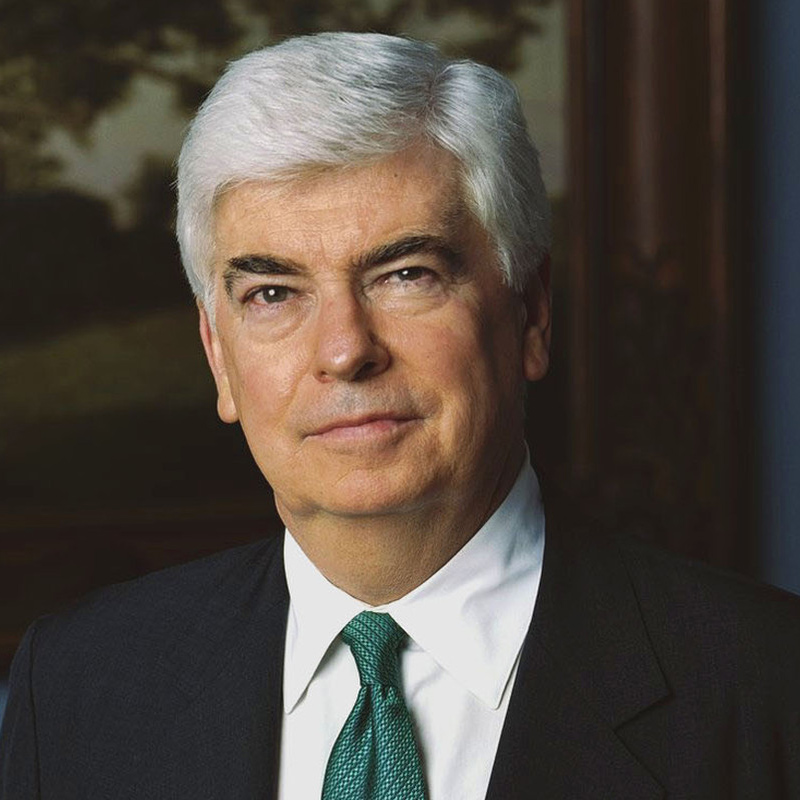
    Motion Picture Association of America CEO Chris Dodd said during his keynote address at Ficci Frames on the opening day that movies contributed about $ 640 million to the Indian economy annually. “India is the biggest movie ticket market in the world, with 3.3 billion tickets sold every year. India‘s movie industry is in transition from being a $ 3.2 billion industry until two years ago, towards becoming a $ five billion industry in the next two years,” he added.

    But he regretted that India was among the top 10 markets when it comes to copyright infringement online. He called for joint efforts between the industries to end theft of content as it is a major threat.

    Dodd quoted an Ernst & Young report which said the Indian movie industry loses around $ one billion due to content theft every year.

    He said the notion that one cannot be pro technology and pro copyright at the same time is false. It is important to build relationships between content and technology. The Indian government must act to protect against online theft, he said, adding the government should pass anti-camcorder laws since camcorders are used in cinema halls to pirate films which are then made available on Indian streets within a few days of a film‘s launch.

    He noted that it was important to end piracy in India as money is lost not just by the faces seen on the screen but also by other people like truck drivers, dry cleaners etc. who contribute to the film industry by working in it. He mentioned Creative America which is a grassroots coalition in the United States aimed at protecting intellectual property and commercial interests of Hollywood.

    He noted that in 2010, the Los Angeles India Film Council was formed to facilitate the exchange of ideas, talent and investment. This will lead to more activities, he said. The aim of the council is to also break down barriers in production and distribution. The Council will also look at harnessing the power of emerging technologies and bring artistes to collaborate on new ideas. “Film remains a key growth driver despite economic uncertainties,” he said.

    Hollywood will release around 36 films this year, he said, and the India market was a huge opportunity that the US motion picture industry is keen on tapping.

    Stating that collaboration between the Indian and the US movie industries is expected to increase, Dodd said “barriers that prevent production and distribution of content must be brought down.”

  • Indian film industry attracts investors amid challenges

    Indian film industry attracts investors amid challenges

    MUMBAI: The Indian film industry is buoyant and is generating a lot of investor interests globally. However, it is marred by multiple challenges including a huge gap between investors and creative pieces, industry experts opined at a panel discussion at the 13th edition of Ficci Frames here.

    India is one of the biggest producers of films. “However, out of 1,200 odd films that were released last year, only 100 were studio produced,” said Moxie Entertainment MD and independent filmmaker Soumo Ganguly. “This clearly means that the other 1,100 films were made of independent funding either by banks or with the help of high net worth individuals, family, friends and relatives.”

    Ganguly said it is a challenging task to always depend on such funding and, hence, difficult to find finance.

    Speaking about a large pool of capital available by the way of private equity, Ambit Group CEO Ashok Wadhwa pointed out that while securing finance from high net worth individuals is an option, the challenge arises when the investor does not understand creative pieces.

    On a different note, Wadhwa also advised aspiring filmmakers to be absolutely certain about their finances. “I would like to advise aspiring movie makers to not start their projects unless they have 100 per cent of the film expenditure secured in their bank accounts,” he said.

    Speaking about revenues generated through selling of television rights, Blackstone senior managing director of private equity Mathew Cyriac said that the producers are generating more revenue from selling movie telecast rights to broadcasters rather than box office collections.

    “Television is becoming a bigger distribution point for movies. In Kerala, 50-60 per cent of movies get acquired by general entertainment channels. Similar is the case with Karnataka and other southern markets,” Cyriac said.

    Talking about the challenges in movie making business, he said that the studio model is yet to emerge in India.

    “Studio business in India is the early 1950s equivalent of business in the United States. Hence venture capital flavour of investment is seen more in India,” he said.

    Speaking of combining the best of investor and creative pieces to create a hybrid model, Hollywood-based The Allegiance Theater founder and partner Daniel Dubiecki said that it would be fruitful to bring together venture capitalists and studios models.

    “Group of angel investors have increased, which it is good news for the movie business,” he pointed out.

  • IBF, ISA and AAAI announce launch of BARC

    IBF, ISA and AAAI announce launch of BARC

    MUMBAI: The Indian Broadcasting Foundation (IBF), the Indian Society of Advertisers (ISA) and Advertising Agencies Association of India (AAAI) Wednesday formally announced the official formation of a nationwide audience research joint body, Broadcast Audience Research Council (BARC).

    Indian Broadcasting Federation (IBF) will have 60 per cent stake in the new entity, while ISA and AAAI will equally hold the balance 40 per cent.

    Originally founded in 2008, BARC was earlier to be set up as a joint venture between the IBF and the ISA on a 60:40 ratio and initial investment of Rs 300 million. However, ISA wanted AAAI also to be a part of the joint body.

    The announcement was made at the inaugural day of Ficci Frames 2012 here in presence of I&B Secretary Uday K Varma, Trai chairman Dr JS Sarma, Zee managing director and CEO Punit Goenka, Star India COO Sanjay Gupta, Times Television Network MD and CEO Sunil Lulla, Star CJ CEO Paritosh Joshi, Madison Group chairman Sam Balsara and Landmarc Leisure Corporation MD Paulomi Dhawan.

    Talking about the way forward, Joshi said BARC will be similar to what BARB (Broadcasters’ Audience Research Board) is in the UK. BARC will not conduct audience measurement directly but commission independent specialist research vendors.

    A technical committee is being set up, now that all the stakeholders are in place. The committee will identify the needs and requests for proposal will be invited.

    “We are not a research agency, and we are not going to compete with TAM. Instead, BARC is a joint body, which will evaluate all the research needs of the industry and in a commercially sensible manner,” Joshi said.

    BARC would represent all the clients and address all the issues on a single platform, he added.

    The primary objective of BARC is to conduct and commission market research using appropriate research methodologies, to provide accurate, up to date and relevant findings relating to broadcast audiences, including TV ratings.

    Earlier in the day, Goenka, during his keynote had mentioned that there is nothing wrong in the data provided by TAM, but it is inadequate.

    Joshi said that with the formation of BARC, the quality and scope of TV audience research in the country will get upgraded, the findings will be more robust and financials more transparent.

    “The major challenge will be to cover all the broadcasting modes in the research – terrestrial, cable & satellite, DTH, analogue and digital platforms, developing and new platforms,” he added.

    The Board of the council will have 10 members, six members from the IBF and two members each from the ISA and AAAI.

    BARC will engage in extensive industry consultations with stakeholders, specialist research consultants, existing & potential measurement service providers to identify the key concerns and requirements with regards to audience measurement. This may be followed by an R&D exercise to evaluate potential solutions including technologies & techniques.

    Dhawan said, “We are always looking for robust research in this rapidly changing television landscape. With time, it is going to be more challenging and you will need more insights from research. We have been working together since some time to launch BARC.”

    Added ISA chairman Bharat Patel, “ISA is extremely delighted to be a part of this joint industry body, BARC, along with the IBF and AAAI to provide continued and meaningful research.”

  • Digital businesses should focus on profitability


    MUMBAI: For all the hype surrounding new media, few companies have figured out how to profit from their initial forays into the arena. From running a social media website to publishing a traditional print newspaper online, every company needs to turn the corner from investing in digital businesses to profiting from them. Companies can monetise their offerings through advertising and subscription-based models.


    The realisation has sunk in that while content and distribution are important aspects of the digital business model, companies can provide value in many ways – by providing context, coverage or convenience to the target audience.


    The Ficci KPMG report notes that in the second digital decade, the proliferation of devices created new channels of communication for personalized and localised.
      
    On the other hand in the first digital decade, “content is king” was believed to be the key to success. As telecom operators and cable companies aggressively entered the digital value chain, the debate shifted to whether controlling distribution channels mattered more than owning content.


    In the next five years, more Internet users are expected to connect to the Internet via mobile devices than desktop PCs. Consumers in Bric countries have leapfrogged to newer devices like tablets, as compared to consumers in more mature markets.


    In July 2010, news of India developing the world‘s cheapest tablet hit headlines. Initially, expected to cost $35, the device is another way to provide cheap computing power to the masses.


    The entry of affordable tablets for the price sensitive Indian consumer in time for the launch of 3G services is expected to boost growth in this segment. Tablets are expected to attract consumers looking to replace secondary PCs. 10 per cent of 16 Indians plan to purchase a tablet PC in 2011. In India, some forecasts suggest that there will be 1 million tablet devices in the 17 market by 2011.


    Faster broadband speeds and high user demand in India will drive content to be presented and consumed in different ways such as social media, videos and streaming of music and movies. For instance, last year, YouTube streamed live telecasts of IPL matches on its website – the first time the company showed a 18 major sporting event live .


    The IPL channel received viewers from over 200 countries and territories, and grew from 2 million channel views on the first day of the IPL to 54 million at the end of the season. IPL was the number one YouTube sports channel and the number one channel on YouTube India.


    The ad market: The advertising ecosystem has undergone a dramatic shift. The historical boundaries of traditional print and broadcast advertising disappear in the online medium. Digitisation has not only opened up new ways of reaching out to target audiences but can also effectively measure this outreach. The traditional advertising concept of right advertisement, right time and right place is enhanced with the ability to target the right consumer online through rigorous data analytics, measurement and tracking.


    While new media has created new opportunities, it also requires a shift in thinking – moving from advertising based marketing towards building a dialogue with customers. Harnessing this potential of interactivity and measurability is key to the success of digital advertising campaigns.


    The Indian online advertising market was estimated to be Rs 10 billion in 2010. Of the total online advertising market, paid searches constitute approximately 50 per cent. Sponsored advertisements in search engines (paid searches) are the most cost effective and results driven form for the advertiser, with the highest click-to-seen conversion ratios, whereas, viral marketing ads result in far fewer click conversions. Sponsored ads are more successful as users clicking on these ads are more likely to have an intention to buy the advertised product. Ironically, search is the ultimate form of behavioral targeting because people target themselves. Consequently, paid search is an effective way for small and medium sized enterprises to accomplish their marketing objectives.


    Online display advertising: Online display advertising is a sizeable portion of the overall online advertisement market in India. Online display advertising consists of banner ads, sponsorship links, rich media and digital video. Social media advertising also has a huge potential for growth.


    Successful social media strategies should effectively monitor trends, research new product ideas via social networks, have an online user group for customers, and collect and track customer reviews on their website.


    Categories using online: The biggest online ad spenders are the travel, BFSI, auto and telecom sectors. The FMCG sector, a large advertiser on traditional media platforms, is only now increasing spending on 23 online advertising.
     
    With low Internet penetration and poor understanding of the return on investment of online advertisements, there is an initial reluctance by companies and advertisement agencies to spend heavily on the online medium. However, not only can online advertising be used to publish advertising content quickly, but the content can also be customized by viewer location. Consequently, online advertising in India is expected to grow significantly.


    Mobile advertising: The Indian mobile advertising market is estimated to be Rs 0.4 30 billion in 2010.


    India is the second largest mobile Internet market in the world and now the single largest mobile ad impression market in the Asia Pacific Region.


    The Indian mobile advertising market has grown rapidly over the past year. This is primarily due to the increased penetration and also acceptability of mobile phones in India, which makes mobile phones an attractive medium for targeted and interactive ad campaigns.


    However one of the challenges is technology. In the US, the iPhone and Android are the predominant mobile operating systems with Nokia‘s symbian and Windows mobile also having prominent shares.


    Consequently, advertisers are able to develop highly focused ad campaigns targeting users of these platforms. In India, multiple OEMs and the proliferation of cheap devices used by a large segment of the population, make it difficult to reach consumers using the kind of rich media capabilities available on smartphones. Currently, only 4-5 per cent 33 of mobile phones in India are categoried as smart phones .


    3G is yet to take off: Although telecom operators in India have launched 3G services, the number of 3G-ready devices in India is still a small fraction of the total number mobile phones. With the time required to upgrade these devices to make them 3G compatible, extensive 3G usage may not happen immediately. Data plan pricing will also determine how broad 3G adoption will really be. Therefore, players should be cautiously optimistic of the growth potential of 3G in the near future.


    New media companies face challenges with concept selling of the ad-funded model to advertisers who are used to traditional ways of advertising. Even as larger companies are seriously developing broader multi-channel advertising strategies, mobile Internet advertising remains an afterthought. This is primarily due to the low levels of understanding of the wide variety of options available in mobile and Internet marketing, ranging from SMS based advertising to Bluetooth advertising.
     

  • For scale, industry needs to evole subscription models: Ronnie Screwvala


    MUMBAI: The Indian media and entertainment industry is dangerously tilted towards advertising revenues across segments and for it to considerably scale up, subscription models have to mature.


    Consumers need to pay more for their entertainment if the sunshine industry is to grow at the pace it should.


    “There are no companies of scale in that sense. The biggest problem is that all the segments are heavily dependent on advertising revenues. Even in movies, the sale of theatrical rights to broadcasters is a significant revenue stream – and the channels are dependent on advertising. The industry has to evolve subscription models,” said UTV Software Communications founding chairman and CEO Ronnie Screwvala, while delivering the valedictory address at Ficci-Frames 2011.


    Consumers do not want to pay for the content that they consume. “Due to this, the industry is heavily dependent on advertising revenues. Almost 80 per cent of the revenues come from advertising and this is the problem with all the models. You have to develop other revenue streams like subscription,” Screwvala said.


    The industry is just $15 billion now and should be growing at least 20 per cent.


    “With the given scale of the media industry, we should be growing at 20 per cent or even more like the other sunshine industries,” said Screwvala.


    Emphasising on the need for scale, he said that the media and entertainment industry would attract talent only when there is scale.


    On the rampant piracy prevalent in the film industry, he noted that it is restricting the sector to a mere 7 per cent growth rate, which is “actually a de-growth if you take into account the inflation rate”.


    He said the stakeholders need to put up large sums of money upfront to fight the menace of piracy. The proliferation of piracy was primarily due to the lack of enforcement – and not lack of regulation.


    Talking about the way forward, Screwvala said the industry needs to move from an advertising-led growth model to subscription-led growth, undertake research into audience preferences, ensure enforcement of anti-piracy laws, and innovate to make it a truly creative business.


    He also said that there is need to segregate gut feel from research in trying to find out what the audience want. He urged the younger players in the media and entertainment business to regard research as a good guiding force, by which one could pre-empt what’s going to be a hit or otherwise.


    Screwvala was gung-ho about new media and said the introduction of 4G spectrum would be a “game changer”.


    “But let us not waste this opportunity. 4G should be developed as a subscription-led and not ad-supported model,” Screwvala warned.
     

  • TV news industry should look inwards

    TV news industry should look inwards

    MUMBAI: The electronic news industry in India is in a bad shape. There is an over-dependence on advertising income, too many players (including some non-serious ones) occupy the space, content has degraded, and pressure is on revenues.
    If things remain this way, the future of electronic news is not very bright. This was the general consensus of the panel which debated on “The Future of Electronic News”.

    The session, moderated by Indiantelevision Dot Com founder, CEO and Editor-n-Chief Anil Wanvari, had TV Today Network executive director and CEO G Krishnan, MCCS CEO Ashok Venkataramani, UTV Global Broadcasting CEO MK Anand and CNBC Awaaz editor Sanjay Pugalia in the panel.

    Venkataramani said that the time had arrived for the TV news industry to look inwards. Talking about content, he said he couldn’t remember the last time when a 24-hour news channel broke a story that was followed by the print media the next day. He also pointed out that it is not necessary to dramatise content.

    Venkataramani remarked that unlike BBC, Indian channels don’t invest in documentaries. “We have not seen value in that,” he said.

    He also pointed out that the utilisation of their biggest investment – OB Vans – is less than 20 per cent. “60 per cent of the time, these vans spend in travelling from one place to other, 20 per cent of time they are idle, and the remaining time is when they are used for live reporting. Which business can grow where the biggest asset has a utilisation of under 20 per cent?” he asked.  
    Despite news channels having national network and bureaus, 40-45 per cent of the stories are coming from the stringers, Venkatarmani added.

    Pugalia took a cue from Venkataramani and spoke about the lack of confidence in the editorial operations. He said that reporters were made editors when they should have done reporting for 10 more years. “So they don’t have an idea of what can work and lose confidence in their own content. Every morning, instead of thinking what we are doing today, we think of what the other channels have done.”

    He also blamed the non-serious players for the degradation in content. He said that because one player is showing frivolous content, everyone is following that. “We need to break ourselves out of the the rat race and kick out the intruders and non-serious players. It is wrong to give frivolous content in the name of competition.”

    The panellists agreed that digitisation would help the industry grow.

    “There has been a huge delay in the digitisation and it is a clear roadblock, which has become a spiralling problem. All stakeholders must try to find out a solution in the immediate future. Digitisation will also bring down carriage costs,” Krishnan said.

    According to Anand, the low entry barrier by the government has added to the woes of the industry. While competition is dividing the pie, there is not much room for growth. Managing the cost is also an issue, he added.

    Venkataramani said the industry should invest in content production and delivery for news breaks.
      

  • 3G entering India at the right time


    MUMBAI: The arrival of 3G into the Indian telecom sector has come at the right time. That is because five years back handsets did not have the capability to exploit 3G capabilities.


    Also, while 3G arrival will help multimedia, it will also add to the bandwidth capacity for voice. It will be important for 3G service providers to not get caught up with technology per se; their focus should rest on providing added value which was not there earlier.


    These were some points made at a Ficci-Frames session on ‘3G And Its Business Models‘.
     
    Reliance Communications president Mahesh Prasad said that 3G was coming in at the opportune time. “You have to see demand. A lot also has to be done with 2.5 G. What content is appropriate for a network and a device also has to be seen by 3G operators.”


    Orange director International TV partnerships Paula Souloumiac said that the content division was set up by the company to buy content and create partnerships with content owners. “We create value for our network by delivering content. We stream live TV channels. These are not channels specially created for the mobile. With the advent of tablets and smartphones, over a million people watch mobile TV in France. We see ourselves as being a content addager.”


    She added that the consumer doesn‘t care if it is 3G or 4G or XYZ. “He wants to know about the services available, the kind of offers being made and pricing. Don’t get hung up on technology.”


    IBM Global Business Services VP. Partner Dr. Sumit Chowdhury said that his company works with media companies and aims to create technology to bring things together from the telecom and media side. He expects 4G to launch in a year. “This will give richer content involvement. You will see convergence between devices. User preferences are chasing fast. Children already do DVR and YouTube.”


    According to him, what is needed is experimentation on the mobile to see how content interaction happens. Then one can build larger platforms. “Content mobility will grow. Content creators should work with content aggregators sio that they can charge a premium on content mobility.”


    The issue of revenue sharing came up in the session. Prasad said that while an operator keeps 25-50 per cent of revenues, they do not charge for the cost of the pipe. In Japan while content creators keep 90 per cent of revenue, they also bear the distribution cost of content which is not the case in India.


    Souloumiac said that Orange works with content providers on a broader spectrum. “We work on different business models including a flat fee and fee per user. Children’s content works. People want an experience on the mobile similar to what is on the television. They want the ease of use and personalisation that they get online as well as mobility that the mobile naturally offers. A 3G operator needs tro keep these factors in mind.” 
     
    She also said that live content works well; content on demand is also catching up. “The use of catch up TV is spreading. The documentary genre may not do well on the mobile as far as TV viewing is concerned. We package services in different ways. We are doing a mobile TV trial in Tunisia. We are looking at sub Saharan Africa. There, though, you have to keep it in a price point that consumers are comfortable with.”


    Telkom Caribe chairman and CEO Mike Singh said that India has to get the current controversy over 2G out of the way and start moving ahead with 3G as soon as possible. “Telefonica will spend billions of dollars in Brazil alone by 2014 due to the soccer World Cup. People will be able to watch matches on the mobile. People don’t want to be digitally constrained, which has been a problem in Latin America. This is also an issue in India.”


    He noted that in markets like Guyana and Trnidad, there is huge demand for Bollywood content. “We have had three million downloads of Bollywood content across the Caribbean. Latin America has a content market worth $1 billion. However, India only has a two per cent share. This could easily grow if there was more dialogue.”


    Mobile Entertainment Forum founder Ralph Simon said that technology has grown and gave the example of Micromax which has brought smart phones to rural India. He sees health and wellness films benefitting from 3G. Another genre that will benefit will be education. Tablets will bring opportunities for filmmakers.


    At the session, it was noted that the price of tablets would fall to $200 in the near future. The advent of content consumption on the mobile would happen but filmmakers would be challenged in a crowded app market.


    There are 500,000 apps on the iphone, for instance. The challenge for filmmakers is to develop an app for a film or TV show that is an extension of that content.


    The ad supported app model makes it difficult for marketers to use narrowcasting to reach targeted consumers. Information available has to be mined in terms of data patterns, Chowdhury said.


  • Industry needs to invest in talent: Uday Shankar


    MUMBAI: The Indian television industry is helping three million people with jobs and is fetching a revenue of $15 billion every year. However, rather than discussing the success story, the industry is brainstorming over survival and profitability.


    The sad story is that very few companies make money and many are finding it difficult to survive. These were the opening remarks of Star India CEO Uday Shankar, who was delivering a keynote at the opening day of the 12th edition of Ficci-Frames.


    Shankar noted that for the industry to survive, the stakeholders have to invest to power growth; bring innovation in content; and ensure good delivery system.


    Shankar said that in TV there is no innovation taking place in content. He said that Kaun Banega Crorepati, which Star Plus acquired in 2000, is still being aired on other channels. “Audiences are watching it not as a choice but due to the lack of it.”


    Shankar also pointed out that there is a “dearth of talent” in this industry, which is affecting the quality and killing the social equity. “The problem is critical and the industry needs to fix time and energy in training and nurturing talent,” Shankar said. “Media has to come together to create centre of excellence.”


    He also came down heavily on the piracy in broadcasting. Demanding a change in the mindset, he said that it is probably the only industry where the content is being pirated and still the broadcasters are paying to the MSOs for carriage.


    Digitisation will help in the broadcasting industry turning profitable, Shankar added.

  • Ficci: Excellence awards for Dabangg, Shah Rukh, Vidya Balan


    MUMBAI: The 12th edition of the Federation of Indian Chambers of Commerce and Industry (FICCI) concluded with the presentation of the Ficci-Frames Excellence awards.


    The awards honoured excellence across four major entertainment verticals cinema, television, music and radio.


    Starting with the film awards, Dabangg bagged two awards – one for best film of the year and the other for the best music of the year.


    Shah Rukh Khan was adjudged the best actor for his role in My Name is Khan while Karan Johar took home the best director award for the same film. As anticipated, Vidya Balan took home the best actress award for Ishqiya.


    The highlight of the awards ceremony was Ficci conferring the Excellence International honour to Hugh Jackman, the Australian actor best known as Wolverine in the X-Men series.


    In the best debutant category (female), Sonakshi Sinha bagged the award for her performance in Dabangg, while Ranveer Singh collected the best debutant (male) award for his role in Band Baaja Baaraat. Maneesh Sharma won the best director debut trophy for the same film.


    Aishwariya Rai Bachchan was honoured with the ‘Decade of Global Achievement’ award for her completing a decade in Hindi cinema.


    In the Television category, Star Plus was given the most successful television channel of the year award while Sony’s popular reality show Indian Idol-5 was declared the most successful non-fiction show.


    In the acting category, Sushant Singh Rajput from Pavitra Rishta bagged the best actor (male) award, while Rashmi Desai of Uttaran took home the best actor (female) award.


    Radio Mirchi was declared the ‘Most Successful Radio Channel’ of the year.


    Speaking on the occasion, Ficci Entertainment Committee chairman Yash Chopra said: “The entertainment industry in India is booming along with business excellence and we are happy to recognise such levels of talent in the respective fields. We take pride in honouring best performers for their contributions in their area of work.”


    The event was a joint venture between Wizcraft International Entertainment and Ficci to honour talent for their contribution in the entertainment industry.

  • Bollywood melodramas can be more entertaining in 3D: Fink


    MUMBAI: Bollywood style melodramas can look best in 3D, said Hollywood VFX Supervisor Michael Fink, while speaking at Ficci-Frames 2011.


    “While testing movies to be converted into 3D, I always ask for a scene that has dialogues in it. An action scene with fast moving images can’t offer us the detailing and depth of a dialogue scene.”


    3D is an interesting business and many film-makers in Hollywood want to make movies in this format.


    “The key challenge is that 3D is very subjective. Viewers can disagree on which content looks better on 3D,” Fink noted.


    The session was moderated by Tata Elxsi COO Nagarajan S and other panelists were Intel Corporation DevRel visual computing director Steve Santamaria, Quantel sales director Martin Mulligan and Side Effects Software Canadian operations chief technology officer and VP Paul Salvini.


    The session discussed about the value of 3D content in movies, television, games and entertainment.


    Salvini gave his credits to Avatar for serving as a catalyst in boosting the demand for 3D across the world (at $2.7 billion it was the highest grossing Hollywood film ever). “A significant advantage of 3D content is that in most cases the pirated version can never be at par with the original print,” he remarked.


    Mulligan highlighted the growing interests in 3D among the sports providers. “In soccer, 24 cameras were used to capture the shots. But when 3D cameras are used, only six are needed to make the experience real fantastic,” he said.


    Fink mentioned that the distance between the left eye and the right eye cameras determine the depth of 3D. “A film-maker might want to pull the audience into a scene or might throw a rocket at them so that they duck,” he said.