Category: Event Coverage

  • Watch out for Hyderabad’s animation booth at Mipcom

    Watch out for Hyderabad’s animation booth at Mipcom

    other states may do well to borrow a leaf from the Andhra Pradesh government, which is partly sponsoring the participation of Hyderabad’s animation industry at this year’s Mipcom.


    More specifically, the AP government is funding the stand fees for two Hyderabad-based companies – Green Gold Animation and Discreet Art.


    “The government is partly funding our participation at the event. And this goes up to 50 per cent of the total stand fee. It can go up beyond 50 per cent depending on the response we get,” informs Green Gold Animation vice president -business development Govinda Talluri.


    Creator of the popular animated character, Chhota Bheem, Green Gold Animation, has been participating in Mipcom since 2007. “Though we didn’t go in 2011-2012, this year, since the Andhra Pradesh government decided to support the companies based in Hyderabad for events like Mipcom, we, along with Discreet Arts and 20 (approximately) people from the AVCGI association will represent AP at Mipcom this year,” adds Talluri.


    AVCGI or Animation, VFX, Comic & Gaming Industry of AP is a recently formed association by the animation industry in Hyderabad with the aim of garnering support from the AP government for its proper functioning.


    Apart from Chhota Bheem, which is Green Gold’s biggest property, it will also take other animated characters Mighty Raju and Arjun to Mipcom. “We plan to come up with a theatrical for Mighty Raju by next year and so, will use Mipcom to create a buzz about the movie. Also Arjun, a show that we have created for Disney, will form part of our offering to buyers,” says Talluri. 


    For all these years, Green Gold catered to Indian and South East Asian markets and recently sold its content to USA and Canada. The major is now aiming at European countries like France, Germany, Spain and South America. “This is not an exhaustive list, we want to reach out to as many markets as possible,” adds Talluri.


    Enthused by the government’s support, Green Gold aims to present its library of 8,500 minutes of original content to a global audience. “Also, with our 174-episode Chhota Bheem being sold to eight countries, we would definitely want to expand our reach and get noticed,” says Talluri.


    With the largest content sale market cum conference just 15 days away, the company is busy scheduling meetings with buyers. “Though a few meetings have already been fixed, we are also pitching in for more buyers,” he says. The company will primarily target television as the preferred platform. “Once we are there, getting to other platforms will not be difficult,” he rounds off.

  • IndiaCast/Viacom18 all set for MIPCOM 2013

    IndiaCast/Viacom18 all set for MIPCOM 2013

    If you thought shows such as Comedy Nights with Kapil, Uttaran or even Jhalak Dikhhla Ja have takers only in India, you couldn’t be more wrong. Indeed, there is a huge demand for these programmes even in faraway markets like Latin America, Africa and Eastern Europe to name a few.


    Which is exactly what draws aggregators and distributors such as IndiaCast to MIPCOM, the world’s biggest market for content.


    So what does IndiaCast have on offer this year at MIPCOM? “While we already have a strong syndication portfolio with our dramas. movies  and reality shows from Colors, we will also focus on content from our regional channels, news channels as well as the MTV content, “replies IndiaCast group COO Gaurav Gandhi, who will represent the company along with four others at MIPCOM.


    More specifically, IndiaCast/Viacom18’s entire catalogue will be on offer. “We have more than 25 channels in our network and so, our booth will feature content from all of these channels. This will include Ballika Vadhu, Uttaran, MadhubalaJhalak Dikhhla Ja, Bigg Boss, MTV Roadies and also content from ETV and the news channels,” informs Gandhi.


    And what is IndiaCast hoping to achieve at MIPCOM? Says Gandhi: “Indian dramas are finally breaking into mainstream in many markets. We hope to find more buyers who are willing to experiment and try Indian dramas for the mainstream local audiences in the respective markets and we want to target buyers who want to remake our shows  (with script and format rights) in their respective countries .  Latin America and Turkey have been the predominant forces in exporting their drama series sales worldwide. There is an opportunity for us to break into that market in a big way. Having already licensed our content to Africa and Europe (to the mainstream market), I am hoping to tap markets like Latin America this year.” 


    Gandhi believes that demand for the programming that IndiaCast is hawking will also be strong in areas where Indian and south Asian diaspora are present in large numbers. This apart, there is another chunk of viewers in several countries which enjoy watching Indian programming dubbed and sub-titled in local languages. “Central Asia, Eastern Europe, Latin America and Africa are some of these nations,” he says.”We are looking at new distribution outlets and buyers from there for both our channels and programmes at MipCom this year.”


    Citing a couple of examples of how the event is a platform to help export content and reach out to a larger base, Gandhi says: “It was here that we sold the script of our show Uttaran, for a remake in Africa. While normally Indian channels buy formats/ scripts, we were the first ones to have sold the script to an international player. We recently sold the MTV Roadies format internationally. The discussions for this had started in MIPCOM only.”  


    MIPCOM makes it easier for exhibitors to meet people from different markets and sell content. “If it wasn’t for a market like these where would one find buyers from Serbia, Croatia, Bosnia, Macedonia and Tanzania?” he questions.


    And considering there is a sizeable regional population around the world, the aggregator is concentrating on regional content as well. “We have sold Gujarati content to a local channel in the US and also to west African countries this year. So for our regional content, this year, we will focus on building on that and tapping new markets” says Gandhi.


    The frenzied buying and selling of content apart, several affiliate meetings will keep IndiaCast executives busy at MIPCOM. “This is where we will talk about distribution of our channels; like Colors, MTV India, Rishtey which is our second GEC in the UK, ETV,  and News18 among a host of other channels,” informs Gandhi.   


    IndiaCast will concentrate on all platforms like Cable, DTH, IPTV, terrestrial and all forms, both linear and non-linear (VOD, SVOD, NVOD and PPV). “We are amongst the largest suppliers from India to VOD platforms. Our content is on Netflix, Itunes, YouTube etc. We have a lot of meetings lined up for such platforms as well,” he adds.


    It looks likely to be whistlestop and tiring MipCom for Gandhi and his team. And in all likelihood profitable too. 

  • Reliance Entertainment Digital has its eye on English entertainment content

    Reliance Entertainment Digital has its eye on English entertainment content

    Reliance Entertainment Digital CEO Manish Agarwal is pretty excited about his company’s date with MipCom this year.  Says he:  “We want to understand the market and its offering and how relevant it is for the digital business. We are always in search of some interesting and innovative content.” 


    For Agarwal, who is into content publishing, participation in Mipcom is likely to become an integral part of doing business, though his company is participating in it for the first time.


    “It gives us an opportunity to explore the large variety of content which we need for the various platforms like BigFlix, Zapak etc. We will obviously focus on networking with more content providers and aggregators across the globe,” says he.


     Reliance Entertainment Digital which launched its over the top (OTT) service BigFlix last year is sorted in terms of Indian programming and now wants add on international content in more genres and languages.


     “We want to expand our offerings to the consumer. Participating in Mipcom will help us explore more opportunities,” he says.


     Agarwal says that an increasing group of young Indian consumers is gorging on digitised content on hand held devices and on their PCs. “It is essential for Indian service providers to experiment with new type of content across genres and content-types. And it is just not that Indians will consume only trailers or paparazzi content, they will also look at different content and so we want to explore with a variety of content,” he highlights.


     The focus this year at Mipcom he emphasises will be on acquiring entertainment content – especially that which originates from English speaking nations or with English subtitles.


    “This will be entertainment for English speaking audiences, entertainment for masses and for kids. This is the reason we are going not only for Mipcom, but also for Mip Junior,” he informs.


    For those visiting Mipcom to sell gaming content, expect the Reliance Entertainment representative at your stall. “We will also look at gaming content or gaming IPs on which games can be created. So we are aiming at kids entertainment both in gaming and VOD content which caters to everyone or in niche segments in the country,” says he. “In terms of gaming IPs, since we are present across the globe, we will go for any IP which is popular. So we will be hunting for any IP across different markets in order to get a license to create mobile games


     The OTT service which delivers its content online to connected devices – a la NetFlix in the US – is looking at stacking up its video-on-demand (VOD) menu. “This can subsume movies-on-demand, TV-serials-on-demand and animations-on-demand. And for gaming again we are looking at the mobile platforms.”


    And the company is shopping cheque book in hand. So sellers will indeed be kept busy by this emerging digital giant from India.

  • ABAI: KAVGC Summit kicks off in Bengaluru

    ABAI: KAVGC Summit kicks off in Bengaluru

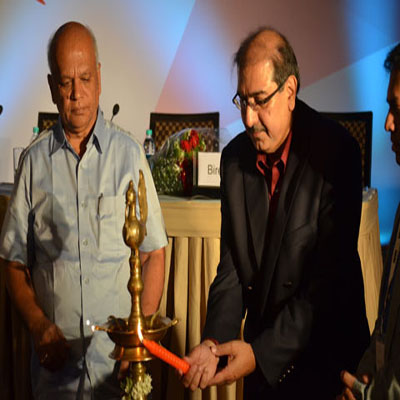
    BENGALURU: The Karnataka Animation, Visual Effects, Gaming and Comics (KAVGC) Summit organised by the Association of Bangalore Animation Industry (ABAI, in collaboration with the government of Karnataka kicked off in Bengaluru last evening. Indian as well as international stakeholders from the animation, visual effects, gaming and comics (AVGC) industry saw Karnataka’s minister for IT, BT and S&T S R Patil inaugurate the two day event at the Hotel Chancery Pavilion.


    Amongst those present during the inaugural ceremony was the Karnataka government’s principal secretary, IT, BT and S&T I S N Prasad.


    During his inaugural speech, Patil said that Karnataka state government’s thrust was on capacity building for the KAVGC industry and wanted to make Karnataka and Bangalore the preferred KAVGC destination.  He informed that this year, globally the estimated $153 billion KAVGC had a CAGR of 10 per cent, while in India it was growing much faster at about 22 per cent CAGR and was expected to reach five billion dollars this year. He said that a state funded post production and processing facility similar to the ones in Mumbai and Chennai would soon be inaugurated in Karnataka.


    He further said the state government was willing to work with bodies such as Ficci that had made some progress in setting up the curriculum for education courses.


    While echoing Patil, Prasad said that the state government was willing to listen to the KAVGC industry and act accordingly. “Karnataka will continue to lead the AVGC growth in India. We have partnered with a cross section of the digital content industries through ABAI,” said Prasad.


    Earlier, during his introductory remarks, ABAI president Biren Ghose set the tone for the summit when he said that the government and the ministry had been extremely strategic and extremely proactive in taking up a call from the industry.


    Speaking about the 2013 edition of KAVGC Summit, Ghose said, “The summit is meant to provide new direction to professionals and companies, highlighting growth and opportunity areas. It showcases our engagement with the academia, the government and industry and highlight the policy execution we have enabled as the roadmap for the next year.”


    The second ‘ABAI Leadership Excellence Award’ was conferred to Rajiv Chikalapudi, the creative and business force behind India’s animated phenomenon ‘Chhota Bheem’.


    Chikalapudi, during his keynote address detailed the long journey by his company Green Gold Animation to create and sustain a genuine IP success story including successes in merchandising and licensing. Chikalapudi said that a number of companies had great IP ready, but were afraid to pitching them. He exhorted these companies to go out and showcase their products, citing his own example – Chotta Bheem had been rejected twice before it was accepted by Pogo channel.


    The second keynote speaker Dreamwroks Country head Damian Froberville described the progress of the Indian Unit of Dreamworks and also gave some insights into the Asian scenario for global services. Froberville also said that the convergence between films and gaming was very much on the cards, but had not yet reached there. He said that this mattered to the players in the industry because of increased reliance on service providers with more content and shorter timelines of a product; and a lot more flexibility with VFX players doing a larger portion of game work.


    Among the other notable speakers and panelists included Greg Childs editorial director, The Children’s Media Conference; Jai Natarajan, Ceo, Xentrix Studios;  Owen Hurley, Creative head, Technicolor; Charles Gauthier Vice -consul and senior trade commissioner for India, Quebec office in Mumbai; Vsihal Dhupar, MD South Asia, NVDIA; Akhauri Sinha, MD, MPC, Bengaluru; Wil Braithwaite, Senior Applied Engineer-Digital Film, NVDIA; Ankur Bhasin; Ceo Bhasinsoft India Ltd; Vamsi Ayyagari, Management media professiona; AshishKulkarni, Ceo Reliance Animation.


    Notable additions to this year’s edition of KAVGC are the four Specialised Clinics – the IP Clinic; Technology Clinic; Co-production and Outsourcing Clinic; and the Pitching Clinic.


    The KAVGC Summit held annually for the last three years with the support of the government of Karnataka, continues to increase its focus on the business and industry of AVGC, aiming to provide a forum for knowledge sharing and improved connectivity among decision makers and stakeholders in the sector.


  • M&E industry need to grow at more than 12%

    M&E industry need to grow at more than 12%

    MUMBAI: The Media & Entertainment industry needs to get its act together to grow at a rate of more than 12.5 per cent to be on par with other sunshine sectors, said The Walt Disney Company India MD Ronnie Screwvala.

    Srewvala said the India M&E sector has success written all over it provided the industry comes out of its complacency. He also said that innovation and disruption will be the norm.

    "The industry is projected to grow at 12 per cent. However this growth is not enough as other sunshine sectors are growing at a much faster pace," said Disney India‘s head honcho.

    Screwvala was convinced that India has the creative talent that would help it take the next big leap.
    He also said that digitisation will change the dynamics of the broadcast industry. The early results of digitisation has been encouraging, he said.

    The benefits of digitisation will only trickle down after two to three years.

    "We have been waiting for digitisation for 20 years and it has finally happened," he said in a closing keynote address at Ficci Frames.

    Joining debate with the industry on ratings system, Srewvala said the solution for a robust television ratings agency lies within the industry. The fact that almost 70 per cent of television households are outside the current ratings system is a matter of concern, he added.

    On an optimistic note, he said that TAM is now covering more homes than it was covering earlier.

    New media is a huge opportunity for the industry. However, the key is to find the right business model. India is one of the biggest mobile phone markets, which is also encouraging.

    A Rs 1,000 crore blockbuster is not out of reach in future, he asserted.

    Print, unlike other markets, is still growing in India at a healthy pace. The India DTH market is the biggest in the world. However, monetisation remains a concern.

    On the contentious issue of censorship, an optimistic Screwvala said that India‘s track record is still commendable. The need, though, is to take it to the level of matured democracies.

    Regional market‘s, he said, had shown phenomenal growth and are the future growth markets. Understanding consumer will also be key to growth.

  • Govt  firm  on Phase 2 deadline, claims 60% digitisation in 38 cities

    Govt firm on Phase 2 deadline, claims 60% digitisation in 38 cities

    MUMBAI: The Information & Broadcasting secretary Uday Kumar Varma has asserted that the government is firm on 31 March deadline.

    Giving a keynote at the Valedictory session of Ficci Frames, Varma said that the second phase of digitisation is on track with 60 per cent of households already going digital.

    "Digitisation is happening smoothly. We have achieved 60 per cent digitisation in the second phase. Subsequent to 31 March, the process will be irreversible," Varma said.

    Out of the 38 cities that are going digital in the second phase, as many as 10 cities have achieved 75 per cent digitisation.

    Four cities have been slow in implementing digitisation, Varma added. These include Ranchi, Srinagar and one in Tamil Nadu, where the state government is vehemently opposed to digitisation.

    "Out of 16 million STBs that are to be installed, 10 million have already been installed while six million are yet to be installed. However, we are confident that these will be installed within the deadline period," Varma asserted.

    Varma also said that the industry needs to keep the spirit of alignment to take the digitisation to its logical conclusion. However, he hastened to add that digitisation is still an incomplete task as even in phase 1 only set-top box (STB) has been installed and other aspects like Subscriber Management System (SMS) and billing are yet to be put in place.

    Digitisation, Varma said, will correct the aberrations of business model in the broadcasting industry and usher in an era of transparency.

    He also said that the role of state government is important for effective implementation of digitisation.

    He reiterated that the government can step in to provide guidelines for an independent television audience measurement system should the industry ask for it.

    "We need a robust and healthy ratings measurement agency," he said.

  • Skewed  biz  model hampers electronic news media functioning

    Skewed biz model hampers electronic news media functioning

    MUMBAI: The electronic news industry is struggling against a business model of low subscription income, high carriage fees and commoditised content, experts said.

    “We are currently operating on a broken business model where subscription revenues are low and, thus, one has to depend heavily on advertising for revenues. The process of digitisation has started improving the scenario but we do have a long way to go,” said NDTV Ltd group CEO Vikram Chandra.

    Another challenge is that journalists as a breed are only just starting to adapt to new media. While there has been commoditisation of news, one must also realise that as technology is evolving journalists too need to upgrade. Instead of shirking or challenging new media, journalists can adopt means of using it to monetise news.

    Essel Group News Cluster Group CEO Dr Bhaskar Das said, “The goal should be to maintain objectivity of the news across platforms. We must remember that the consumer has become increasingly platform agnostic in news reception.”

    The silo mentality in the journalistic community is also a challenege that needs to be overcome. In an age where the consumer uses multiple forms of media, often simultaneously, journalists cannot afford to limit themselves to just one medium. They need to evolve and learn to be present and visible across mediums.

    “This is the reason why in our channels, we have made it mandatory for our reporters and journalists to be present across platforms and maintain blogs and Twitter accounts,” said Russia Today TV managing editor Prof Alexey Nikolov, while speaking at Ficci Frames.

    The session titled ‘Electronic News Media: Stock Taking and the Way Forward‘ discussed the challenges involved in running a news channel and explored ways to overcome these. The panel discussion was moderated by senior visiting fellow, national university of Singapore and author Dr Nalin Mehta.

    India News Editor-in-Chief Deepak Chaurasia threw light on the political arm-twisting that prevails and prevents news channels from reporting certain news. Another impediment faced by news channels is the monetary pressure applied by various multi-system operators (MSOs).

    “At the end of it, we are responsible for our own predicament. Many people with deep pockets have started news channels and have increased the carriage fees, which has affected all the other channels. There are no definite rules and this gives people with vested interests a chance to take advantage and pressurise channels,” he said.

    Nikolov also stressed that while social media has taken the front seat, the audience is now looking for credibility. So the trick now would be to sell trust, competency and different points of view rather than only news.

    Chandra added that in this case, trust can be built according to the niche that each channel wants to occupy. It depends on the ideology and the business model. In a country of India’s size and population, channels will find their own comfort zone and survive.

    On the topic of trust, Das said: “Trust is non-negotiable. What is worrisome is that trust has become subjective. Whose trust are we vying for today (as news channels)? Is it the viewers’ trust or the management’s trusts or the politicians’ trust or the advertisers’ trust? It is the audience’s trust that matters and today’s viewers are intelligent and astute enough to understand where the value of news lies. They can differentiate the trust worthy from that which is not and that’s why some news channels work, while others fail to attract the masses.”

    The silver lining, however, is that for the past one year the news channels, the government and other industry stakeholders have come together to discuss these matters. “It is a beginning. At least now we all agree that there is a shortcoming in the audience measurement system and process in the country. On the content side, there have been suggestions about framing a content code. In this case, the matter is too subjective and to reach a consensus is very difficult,” averred Chandra.

    The panel concluded that the need of the hour is to revamp the business model so that it is not heavily skewed towards one means of revenue, in this case advertising. Once that is resolved, the channels can take a stronger stand on content regulation.

    “The problems are complex and the fear of government interference plays a big role too. We have made a start and need to keep going as it is a long road ahead,” Das concluded.

  • India  needs  to build a second sport

    India needs to build a second sport

    MUMBAI: In a single sport country like India, it is important for all the stakeholders in sports industry to come together and build other sports besides cricket through a right model and create an ecosystem that works for everyone in the value chain – federations, broadcasters and fans.

    That, the experts believe, will reduce the dependency of sports broadcasters on cricket, which is becoming financially unviable due to steep rise in acquisition of properties
    Television is one of the most important components of popularising sports. It is broadcast rights fee that helps sporting bodies world over to fund the development of sports – whether it be creating infrastructure, developing talent or attracting talent.

    World Sport Group South Asia CEO Venu Nair believes the right model for any sports federation in India is to grow their sport by reaching out to as many people as possible. He also cautioned sports federations against blindly following the Indian Premier League (IPL) model.

    "Every other day you see an IPL-styled league with a new logo pasted on it. IPL became the success that it is because there was a thriving ecosystem in place before it launched. Other sports won‘t taste success by just emulating the IPL model," Nair said, while speaking at Ficci-Frames 2013.

    His suggestion to federations: Forge strategic partnerships with broadcasters where both rights owner and rights holder are equitable partners. He also suggested that the role of a public broadcaster should not be undermined in popularising a sport.

    "A sport like Football can become popular if it works with a public broadcaster. That will help a sport to be sampled by more people and then make it a habit for viewers to watch that sport," he averred.

    The credit for making cricket a huge success on television goes to Doordarshan, feels Nair.

    "There were lots of triggers that made Cricket popular. One of those was Doordarshan. People started following the sport because of Doordarshan. It played a large part in driving traction for cricket," said Nair during a panel discussion on ‘Sports: Economic viability and the crisis within‘.

    Cricket commentator Harsha Bhogle, who was moderating the session, pointed out how BSkyB built EPL into a powerhouse in UK.

    All India Football Federation (AIFF) General Secretary Kushal Das feels the quality of Indian football has to be on par with international football.

    "The problem with Indian football is not so much cricket as it is football itself. Today, football fans have access to the best of Football leagues whether it is EPL, La Liga or Bundesliga. When you compare Indian football with these top leagues, we don‘t match up," Das said.
     
    Indian football, he feels, suffers a double whammy of almost non-existent infrastructure and lack of talented players. Unless these issues are dealt with, Indian football will continue to suffer.

    Das said a partnership between a pubcaster and federation will only work if both the partners work in tandem towards the same goal. In the Indian context, he said the bad quality of production and commentary on DD can put off viewers who are exposed to international quality football.

    Another critical factor hampering the growth of non-cricket sports is the lack of clarity on scheduling. An annual calendar that lays down the schedule is important, not just from broadcasters point of view but also for a fan.

    Indian Football, in particular, suffers from scheduling problem that has been giving nightmares to AIFF‘s broadcast partner Ten Action+.

    Addressability & price cap de-regulation

    Sports broadcasters at the session batted for de-regulation of price cap on cricket which hasn‘t changed much since 2003 while the cost of cricket rights have gone North in the subsequent years. Cost is a structural issue which can only be addressed by ramping up subscription revenues.

    Star India Head of Sports Nitin Kureja said the government has to relax price regulation and let the market forces decide the price. "The revenue side has been a huge challenge. In fact, it has been a challenge to exploit all revenue streams. While the cost of cricket rights have gone up, the subscription revenue has not kept pace," Kukreja stated.

    "Regulation should have differential treatment for different sports," he added. Star India had bagged the BCCI media rights for Rs 38.51 billion till 2018.

    Neo Sports Broadcast COO Prasanna Krishnan opined that addressability was a bigger issue than price cap.

    "You can charge 1,000 rupees but if you don‘t know how many subscribers you have, it won‘t make much of a difference. So in my opinion, addressability is a bigger issue. Digitisation in that sense will be a game changer," Krishnan contended.

    He also felt that the mandatory sharing of feeds with the pubcaster has robbed the broadcasters of exclusivity. Pilferage of signals only worsens the situation for a sports broadcaster who has committed millions of dollars.

    "The public broadcaster in our country is too cricket-centric. That has to change if the intention is to air events of national importance. Why doesn‘t public broadcaster telecast I-League?," Krishnan questioned.

    He said the pubcaster is choosing events that are commercially viable.

    WSG‘s Nair, however, put the blame squarely on broadcasters for the broadcast rights going through the roof. "I am sure the broadcasters themselves know that they won‘t be able to recoup their investments when they bid for cricket rights. That is something that we should address. There are certain rights that have some value," he said.

    Concurring with Krishnan‘s view, IPL CEO Sundar Raman said sports broadcasting is driven by subscription income globally unlike India which is dependent on ad revenue that keeps fluctuating depending on seasons.

    "When you are dependent on ad revenue to recover your investments, you are at the mercy of media agencies. Across the globe, sports is driven by subscription. The amount of money that broadcasters get in India as subscription revenue is pittance," Raman explained.

    Raman said the addressability of audience is the single biggest challenge for the sports industry.

    Apart from addressability, the key to growing sports is to market it well, micro-targetting audience by going regional and exploiting other revenue streams, said Raman.

    On marketing front, Raman said the Hockey India League (HIL) did a good job which sports bodies can emulate. The marketing will help build a habit of strong viewing among viewers.

    Commentary, he said, is also an important aspect of growing a sport that will help viewers to understand sport better. Broadcasters, he said, should approach different markets by launching regional feeds that will build an instant connect.

    "The problem is we tend to treat India as one big mass. There is a big opportunity in regional markets. We should have regional feeds with commentary in regional language," Raman said.

    He further stated that rights holders should start exploiting other revenue streams like digital media which will increase the reach of the event. "Consumption of sports on digital medium is increasing, we should tap into this segment but broadcasters are focusing on internet fearing loss of viewers."
  • Sony to buys out private equity firm’s residual 6% stake in MSM

    Sony to buys out private equity firm’s residual 6% stake in MSM

    MUMBAI: Sony Pictures Television (SPT) will buy out private equity firm Capital International‘s six per cent stake in Multi Screen Media (formerly known as Sony Entertainment Television India) to take full ownership of the Indian broadcasting company which is on a growth path.

    Earlier, SPT had bought out 32 per cent stake of the Indian shareholders in Multi Screen Media (MSM) for $271 million, taking its shareholding to 94 per cent.

    "We are going to buy out the six per cent stake of Capital International in MSM. We hope to do it by the end of this year," Sony Pictures Television president Worldwide Networks Andy Kaplan tells Indiantelevision.com.

    Kaplan, however, ruled out a public listing of the company.
    In 2000, Capital International had picked up eight per cent stake for $200 million.

    Sony‘s aggressive growth plans in India include the acquisition of regional broadcaster Maa Television Network. "We are working on it. It is a bit complicated. The acquisition will give us a foothold in the Telugu market," avers Kaplan.

    In 2012, SPT entered into a strategic alliance with Hyderabad-based Maa Television Network to acquire a 30 per cent stake. Maa TV Network operates four Telugu-language channels.

    Sony will also eye other regional acquisition opportunities in India. "We are looking at building on our own and acquiring companies. We are weighing both the options. We are looking at each region and trying to figure out what the best strategy is," Kaplan says.

    In 2009, SPT acquired Bengali channel, Channel 8.

    MSM‘s other new growth pillar would be its sports broadcasting business. The company launched Six, a sports entertainment channel, last year. It has the Indian Premier League (IPL), cricket‘s most lucrative property, as its driver content.

    “We are also looking at other sports in which the audience interest will grow. We have the NBA rights and UFC, among others. We will be aggressive for the right property if we feel that it will be a good fit for our channel. But we will not overbid,” says Kaplan.
    In terms of rights, he said that both cricket and movie acquisition costs from an industry perspective are on the higher side. “We try to be aggressive but disciplined at the same time. India is the only market where we are in the sports genre. So it is unique for us in that sense."

    Kaplan admits that India is a big international market for Sony. "As a TV market, India has been friendly towards outsiders," he says.

  • Indian M&E sector needs to look beyond cricket and Bollywood: Dominic Proctor

    Indian M&E sector needs to look beyond cricket and Bollywood: Dominic Proctor

    MUMBAI: GroupM Global president Dominic Proctor believes that the Indian media & entertainment industry should move away from the fragile ecosystem where Bollywood, cricket and a handful of national icons and stars are used for all messaging if it has to develop a globally recognised base.

    “This must change if India is really serious about building a world class sports and entertainment industry,” Proctor said at Ficci Frames 2013.

    In what would be a food for thought for media agencies and advertisers alike, Proctor said the country needs to look beyond cricket and start investing in non-cricketing sports and the signs for their success are very encouraging.

    Recent initiatives in F1, Hockey, Combat sports and Badminton are encouraging but not enough, he added.

    "In India the content is excessively and obsessively dependent on Bollywood, cricket and stars. This is a wake up call where in order to grow in the global space, the industry here needs to look beyond Bollywood and cricket," he noted.

    He observed that the popularity of cricket in all its formats – Test, ODI and T-20 – is declining at a global stage. The dwindling performance of the biggest sport in the country is posing a threat to the business surrounding it, to the companies and brands which have invested on it.

    Sports marketing in India will require to have much broader base than just cricket. People need to look at other sports too, like the other parts of the world. Sole focus on cricket as a means to advertise and reach the target audience gives it a monopolistic edge, which has lead to over crowding in the space and over pricing of the properties.

    While Bollywood and the Indian film industry is an all pervading influence, brands in India do not leverage this platform optimally. Revenue streams exist in content advertising on multimedia screens & producers and studios should look beyond theatrical returns & innovate new platforms and formats.

    Simultaneously, creators should extract total economic value for the content with consumer centric audience planning. With a nod to Web driven content, Proctor said that digital formats will drive advertising revenue growth in under branded India and also help the Indian media and entertainment industry reach out globally.

    Talking about Bollywood, Proctor feels that brands need to find new ways to exploit movies for the benefit of the market. Web is a big opportunity too. Now the audience is exposed to the multiple media screens and one can target, monetise and measure the medium. In fact, this is a better medium of targeting consumers. "Advertising in print costs around six times more than that on web to reach out to the same consumer. And web is a better engaging medium."

    The big shift, according to Proctor, is from distribution to content, from inventory planning to audience planning. "The need is to optimise inventory by serving different ads to different consumers. So, optimising spend and minimising wastages (is required)."

    Proctor pointed out the key challenges that Indian M&E industry is facing today. They are optimising the potential of the Web which poses a huge opportunity for the industry; foundation of a world-class content industry; need to look beyond Bollywood and cricket and tap into the emerging platforms to help extract right advertising value. "As global economy slows, the opportunity is for India and Asia more broadly to lead, and then the others will follow. India can be a support to world‘s media ecosystem like the U.S was," he added.

    The media agencies in India need to invest more in digital. "Digital business here is just 5 per cent of the total pie and as compared to the other markets where the spend on digital is around 30 per cent, it is relatively small. So, the agencies here need to invest in the medium, the people who know about the medium, and rope in that kind of talent. The medium will grow and the focus on these will drive digital medium‘s growth in India."

    Also, the media agency business here needs to diversify. "Clients want much more advice on sports marketing, mobile marketing, return of investments (RoIs). The media agencies should diversify in order to cater to them effectively," Proctor concluded.