Category: Event Coverage

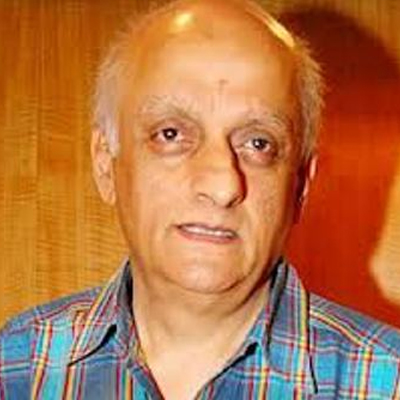
  • “The Rs 100 crore Bollywood film club is bullshit:” Mukesh Bhatt

    “The Rs 100 crore Bollywood film club is bullshit:” Mukesh Bhatt

    MUMBAI: The year 2014 will go down in history as one of the worst years for Indian cinema in recent times with poor box office collections. Movie economics were also adversely affected by dramatic reduction in demand for satellite rights by broadcasters.


    In an endeavour to produce bigger and larger movies, is the emphasis on quality declining? Are studios misreading audience tastes? Are movie budgets bloated beyond control? These questions were raised in a session of FICCI Frames 2015 moderated by Sikhya Entertainment founder Guneet Mongia with Viacom 18 Motion Pictures CEO Ajit Andhare, Eros International MD and group CEO Jyoti Deshpande, film distributer Anil Thadani, PVR Pictures president Kamal Gianchandani, Fox Star CEO Vijay Singh and Film and TV Producer Guild president Mukesh Bhatt.


    With a mere growth of 0.9 per cent, the film industry has reached its abysmal low. The panelists citied the major reason behind that as filmmakers getting carried away by big names and not sticking to the budget drawn.


    Deshpande opened up the discussion by aggressively protesting over budgeting. “We should immediately stop chasing big names and stick to quality content in order to make the industry prosper. Before green lighting content, we need to tackle a number of issues and better research can help the industry grow. Simultaneously, we also need to ensure that the number of screens increases as more screens mean more money.”


    Speaking on the shrinking number of screens, Gianchandani said, “While we are growing in some parts of the country, the fact is that there is stagnancy in some areas. The growth of multiplex depends on numerous factors, government and content being the two vital ones. We need to ensure that we have content that rejuvenates consumers and they reach the theatres.”


    It should be noted that in China a new screen starts in every three days and the industry is growing bigger and faster, whereas India is witnessing the exact opposite. Addressing the issue, veteran producer Mukesh Bhatt asserted, “In this business, if you don’t have the temperament to take a risk then you are on the wrong ship and you will certainly drown. Playing safe is not possible in the film industry and the perception that only the Khans can earn you money is ruining the industry. The Khans are good but they are 50 now and people won’t accept them singing romantic songs anymore. We have to discover new stars and new directors. All studios need to back raw and new talent. Moreover, multiplexes should have different pricing for movies that star newcomers. My father advised me that all my spending should reflect in the frame. However, nowadays our spends hardly reflects in the frame but satisfies the ego and arrogance of big names. The media given Rs 100 crore club is absolute bullshit and make no sense. I thank Viacom for green-lighting films like Mary Kom and Bhag Milkha Bhag and hope they keep it up.”


    Viacom CEO Ajit Andhare added, “I don’t recall when the film industry made profit or grew larger. The biggest challenge is to make people believe that spending more is not the key to success and one has to pay more attention to content and not green-light a movie going by the actor or director’s name.”


    Great content like Aankhon Dekhi, Dr Prakash Baba Amte and Chatuskone find it difficult to stay in theatres where glamour and big names keep knocking. Similarly, the scenario where a common man finds it difficult to afford a ticket needs to change in order to ensure growth of the film industry.
  • Tata Sky awaits MIB approval for Rs 250 crore investment

    Tata Sky awaits MIB approval for Rs 250 crore investment

    MUMBAI: Direct to home (DTH) operator Tata Sky has been applying a wait and watch policy not only for transponder space, but also for an approval from the Information and Broadcasting Ministry (I&B), for an additional Rs 250 crore investment.


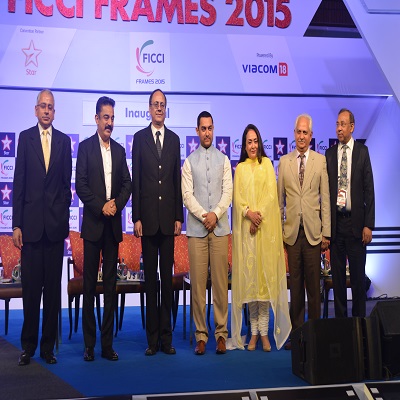
    “The money for the project has already come. But, if the approval doesn’t come in the next 48 hours, I will have to return that money to the foreign investors,” said Tata Sky MD & CEO Harit Nagpal, while addressing the inaugural session at FICCI FRAMES 2015.


    Responding to this, I&B Ministry additional secretary JS Mathur said, “Well, we had granted the approval a month back, and then Tata Sky realized that for the route it wanted to take with the investment, it had to reapply and this is the reason it is taking time.”


    Taking cue from Prime Minister Narendra Modi’s ‘Digital India’ campaign, Nagpal said, “The enabler of connectivity is broadband.”


    As per Nagpal, with low Average Revenue Per User (ARPU), putting fresh wires in the country would not give any return on investment. “Otherwise, there are enough hungry entrepreneurs, who would have used the opportunity. And if they haven’t, means that conditions are not viable in the country,” opined Nagpal.


    The country, though has hundreds miles of wires all over, which can carry broadband, and all it’s waiting for is an enabling and uniform environment, to use this infrastructure and deliver broadband to the consumer. “The rest as has happened in telecom, will happen,” he added.


    According to Nagpal, the industry lacks new thinking. “If anybody finds a successful format, 20 others follow and copy. I have seen general entertainment channels (GECs) being launched as pay TV, churning out the same content, and then either vanishing or becoming free to air (FTA). They lose viewership and distribution and then they are forced to carry 20-22 minutes of advertisement, which the regulator starts questioning and they are then seen sitting in courts,” he said.


    The problem, as per Nagpal, is not the producers, but the economics of the business, the restrictions and the permissions needed to do business. “All this restricts the producer from taking risks and choosing a safe and successful path,” he said.


    Nagpal, further went on to say, “I don’t think there is room for more Stars, Zees and Sonys. Also there is one Arnab and one Barkha, you can’t have too many of them. It is the niche, which will take us forward, and they are low investment and high return product.”


    Flair of creativity and new ideas is the key ingredient in the media and entertainment sector. “The deeper I travel, the more gems I see, but the production centres in the country are all located in the big cities. There is need to take production centres in smaller towns, where the talent is and create more self employed professionals in those areas,” he added.


    According to Nagpal, while the rules for setting up, funding and running the business are in place, one still needs to follow rules and ask for permission at every step. “Things have improved in the past few months and the government is keen to clear files, faster than ever before,” he said.


    The only way the industry can grow, as per Nagpal, is by allowing the businesses to inform and not seek approvals and also by self regulation. “In case we violate the law, issue penalties, cancel the licence,” he announced.


    Touching upon the movie business, Nagpal said that while we make the highest number of films, the industry is still not making money. “We have reached a choking point in terms of adding screens and it is marred by either high cost of real estate or the long list of approvals,” he said.


    According to Nagpal, the increasing number of digitized homes will help more producers to monetize their production. “This has already started, a lot of films are breaking even only on the basis of selling their rights to cable and satellite,” he said.


    The country has seen digitisation of 42 cities. Touching upon the condition in the digitized cities, Nagpal said, “The local cable operators are running the digitised area and the multi system operators (MSOs) are watching. Customers are not getting packages they want and neither are they getting value added services. The customers are willing to pay, unlike what is being projected by LCOs.”


    Digitisation is equal to automation. “The new role of the LCO is to be of a service provider to the MSO and not a partner. I think this needs to be thought about,” concluded Nagpal. 

  • FICCI FRAMES: Prasar Bharati CEO Jawhar Sircar to speak on pubcaster & revenue

    FICCI FRAMES: Prasar Bharati CEO Jawhar Sircar to speak on pubcaster & revenue

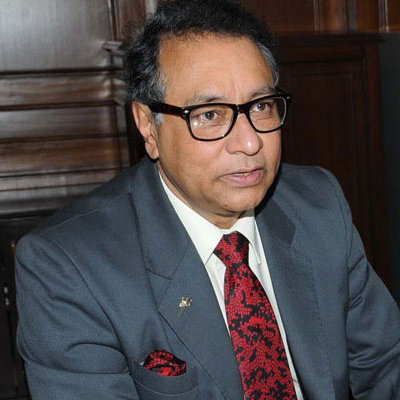
    NEW DELHI: Prasar Bharati chief executive officer Jawhar Sircar will be addressing the annual FICCI FRAMES convention commencing in Mumbai on how a public broadcaster can still earn revenue.


    Sircar’s talk is on “India 2015: Role of the Public Service Broadcaster and Lessons from the World.”


    The three day convention from 25 – 27 March will extensively cover discussions on various issues related to the media sector centred around the theme – how to make India a Global Entertainment Superpower.


    Sircar said, “There is no nation in the world that does not have a decent public broadcaster and some of them like BBC or NHK Japan or the Korean Broadcasting System are legends, mainly because their nations, people and their governments wanted them to be so and help them succeed. India cannot be an exception as it is the only public broadcaster, which operates from the icy peaks of Kargil to our lonely borders in Arunachal, right down to Andaman and every possible corner of India: without ever looking at short-term commercial gains.”


    This panel discussion is scheduled on the second day of the entertainment and media conclave and will be moderated by business journalist Pranjal Sharma featuring BBC Global News CEO Jim Egan and Russia’s largest media corporation and public broadcaster – VGTRK deputy CEO Ayuna Badmaeva.


    The other key participant is Asia Pacific Broadcasting Union (ABU) secretary general Javad Mottaghi, who is a special invitee at FICCI FRAMES 2015.


    FICCI secretary general Dr A Didar Singh said, “The discussion would provide greater clarity on how to maximise the efforts of public service broadcasting, and also how institutions like Prasar Bharati can balance their programming mandate with effective revenue generation, and remain relevant in the digital era.”


    The session will explore the relevance, importance and space for Public Service Broadcasting in today’s ‘always connected’ world which offers a multitude of choices by way of content, delivery platforms and engagement channels.


  • Sky’s Jeremy Darroch to give keynote at MIPTV

    Sky’s Jeremy Darroch to give keynote at MIPTV

    MUMBAI: Sky group CEP Jeremy Darroch will give a media mastermind keynote on 13 April, 2015, as part of the MIPTV conference programme, it was announced by Reed MIDEM, organiser of MIPTV.


    Darroch became the group chief executive of Sky following the acquisition of Sky Italia and a majority interest in Sky Deutschland, which transformed the pay TV and home communications company into one of Europe’s leading investors in content.


    The MIPTV keynote will be the first time Darroch will address the international media industry since completing the transaction. This year, the theme for MIPTV conference is “The Millennial Shift,” tapping into the heart of this savvy generation of media users whose habits are shifting to newer forms of entertainment.


    In three strands of conferences, MIP Digital Fronts, Drama at MIPTV and Junior@MIPTV, this year’s programme will offer the global media industry unprecedented access to the hottest entertainment trends, companies, personalities and emerging media players on the cutting edge when it comes to engaging and embracing millennials.


    Darroch joined Sky in 2004 as CFO, and was appointed chief executive of the company in 2007. Under his leadership, Sky has grown into Europe’s leading entertainment company, increasing spend on its own original commissions as well as striking partnerships with some of the world’s biggest content producers.


    He said, “2015 will be a great year for entertainment programming on Sky. The launch this month of Fortitude, our most ambitious drama yet, and the first to launch simultaneously across all five of our markets, is just the first in a slate of exciting new shows that we are bringing to screen this year. I look forward to coming to MIPTV 2015 to lift the lid on our plans and talk to the industry about the scale of the opportunity as we work together to create a powerhouse for TV content across Europe.”


    Reed MIDEM director of television Laurine Garaude added, “We are privileged to welcome Jeremy Darroch for this keynote address. Given Sky’s pivotal position in the creation of original content with transnational appeal, his insight will be of great value to the MIPTV audience.”


  • The Content Hub: How formats are created?

    The Content Hub: How formats are created?

    MUMBAI: On the day first day of The Content Hub masterclass, The Format People CCO and partner Justin Scroggie, spoke about how ideas are generated and then turned into formats for television.


    Defining a format as a series that travels and something that can be adapted in another territory, Scroggie emphasised  that certain elements in a format determine how effective it is.  In the making of a television programme, the order of television elements, both original and common, have to be in such a way that a distinctive narrative progression is created.  These elements could be: set, cast, rules, prize money, audience connect or any other element that make up a television show. Scroggie cited the reality show, ‘Canada’s worst driver’ as an example where the element of ‘elimination’ came as a twist wherein the contestants wanted to get eliminated instead of the avoiding it. He elaborated that the level of originality depends on the order of these elements and how one can give the audience something new. There needs to be a precise beginning, middle and end to each format.  According to him, formats need to address three important things – people (who are involved), action (what they have to do) and motivation (why they have to do it).  The audience needs to know the genre and core subject of the show.


    “In order to generate good television ideas, one should start of by watching television content, in a genre that is unfamiliar to you,” he said. By watching television shows that one is not used to, he/she becomes aware of what else is happening around the realm and it helps in developing better ideas. “The wider your own television experience is, the more broadly you will be able to think”, he added. 


    Scroggie believes that television influences the way in which people behave, speak and think.


    There are several methods from which good content and format can be created.  “When we start thinking of ideas, we tend to go down the familiar path. That is how our brains are designed. We need to find ways to trick our way out of that”, he informed.


    He went on add that, one can simply begin with a phrase, proverb, movie title or lyrics as a starting point for an idea. For example, one can take the idea of the film title, ‘Frozen’ and formulate a dating show wherein the guy ‘freezes’ upon meeting his date and how he overcomes the same.  Ideas can also be generated by changing the angle of a simple show. For example, one can take a simple cooking show and look at it from another angle, that could possibly also highlight domestic problems between married couples. Scroggie added, “When you take a married couple and put them in a kitchen, particularly ‘her’ kitchen, there are bound to be difficulties”.


    Another method of creating ideas would be to take an existing show and reverse it. “Things can basically start from anywhere. By reversing ideas, it will help you open up fresh and new stuff”, he commented.


     ‘Secret Millionaire’ is one such show, that starts with the contestant having a million dollars at the beginning and then starts losing it as the game progresses.


    A lot of formats follow a set of narratives. “Audiences like stories with a familiar shape to it, that’s why even movies follow a familiar shape of a beginning, middle and end. Shows have different narratives that add to the value of the show.” he added. Similarly for television, narratives can be applied to the basic themes. One needs to understand these narratives in order to come up with successful formats.


    Narratives can be in the form of a make-over as showed in programmes like ‘American dream builders’, ‘Shamba shape up’ and “Let me in” or follow a campaign narrative, like the show ‘Dream school’. There is also the swap narrative format.


    According to Scroggie, successful formats are majorly designed along the lines of the ‘fish out of water’ narrative where you put a person or group of people in an unfamiliar situation, out of their comfort zone. “It is a common narrative where you see the outcome of putting people in an unfamiliar situation,” he stated and added, “Narratives that are experimental are also picking up fast these days. Unlike most reality shows that are scripted, experimental narrative has a lot more honesty to it. People want to see open-ended shows where nobody really knows what is going to happen next”.


    Apart from that, a creator or writer of a show should try and break rules that could possibly bring about twists in the show. One should also keep an emotional connect with the audience. “You should be clear about the kind of reaction you want from the audience. It could be a feeling of happiness or anger”. 


    Last but not the least, titles play an important part in grabbing attention.

  • The Content Hub: Thinking digital

    The Content Hub: Thinking digital

    MUMBAI: Digital has become the core of any strategy today. And highlighting the same were the digital content creators at indiantelevision.com’s ‘The Content Hub,’ where the makers shared their valuable insights on the success stories and how they manage making money in this competitive market.


    Sharing their views were Viral Fever and TVF Media Labs founder and CEO Arunabh Kumar, Rajshri Entertainment MD and CEO Rajjat Barjatya, Viacom18 Media – MTV and MTV Indies EVP and business head Aditya Swami, Qyuki Digital Media co-founder and MD Samir Bangara, Zenga Group MD and CTO Shabir Momin, YouTube head of content operations India Satya Raghavan and Multi Screen Media EVP and head – digital business Uday Sodhi.


    Moderated by CNBC-TV18 editor, storyboard Anant Rangaswami, the discussion began with Rangaswami raising the point of how each digital creator makes money differently in the business.


    According to Sodhi, while ‘digital only’ may not be the viable way of going about it right now, for popular sports it will turn around. “Look at television or any other entertainment, sports is a critical part where money goes from advertisers and from an eyeballs perspective. Why the same pattern is not followed on digital? It will happen, but how it grows and how much money it takes, only time will tell,” opined Sodhi.  


    Rangaswami believes it is an interesting curve and content can make money on digital. Agreeing to him, Kumar shared that in the financial year 2012-13, also the first year of TVF online network, its total turnover was equal to one day of shooting cost of an MTV promo and this financial year its total turnover is the cost of one promo of MTV. “The growth has been really phenomenal. Once upon a time, we were doing 10-15 thousand views on YouTube and the brands feature were also very less. That time there was this whole idea that a brand or a client could own a piece of content after giving you money. But cut to now, we have shows on MTV or our channel or AIB and you can see a lot of brands being open to that.”


    For Kumar, it is a pretty much age old television model where for example Cadbury takes a lot of money for KBC, because it is watched by a lot of people.


    According to Bangara, the big opportunity is the content marketing opportunity. “If advertisers and brands let creators do what they need to without putting restrictions, then it will work much better. Because audiences online are very different than audiences consuming content on the traditional platforms.”


    The traditional media players believe that production value equals quality. “In the online space, production value is not directly proportionate to popularity. The concept drives engagement and therefore you don’t need expensive budgets to ride your films on digital platforms,” said Bangara.


    Rangaswami further delved to find out whether is it easier to sell branded content on digital than on television? Contradicting his statement, Swamy feels that the future of TV is TV and from a reach and growth perspective, there is huge growth and spread still on television. “On branded content, the way we make this work is that it is the combination of bringing the screens together.  If you go to see TV and digital separately, the challenge will be much harder. But a lot of branded content that we do, we bundle the whole thing. For example, take the premium content like ‘Coke Studio’ series that we produce, we produce it as a broadcaster, give it legs on television and it kind of survives on beyond TV as well.”


    Going forward, Rangaswami highlighted the different needs of monetisation of content. Barjatya revealed that Rajshri has 20,000 hours of content that it has aggregated with Mukta Arts. “That brings in the revenue. But we also do a lot of experimentations. We have a channel in the entertainment space, bollywood news space, hollywood news space, television space, channels in kids, food and devotional space. These I think will grow going forward.”


    But, according to Barjatya, money still needs to keep coming in and that can come only through blockbuster movies, which the company has acquired over the last couple of years.


    According to Raghavan brands are experimenting, content creators are experimenting and the entire ecosystem is experimenting. He pointed out that the difference the industry is noticing in the last few years is that advertisers are ready to put their money on content because they believe that the creator of the content or the participant will be able to create the content and distribute it as well. “Till now what was happening was that they wanted to own the delivery itself which is why a lot of brands created good stuff but later fell off the clip. Now, they are trusting a lot on the creators. That’s where the point of money floating to content creators and to networks is multiplying.”


    Further adding to this, Momin felt that success on the digital platforms is not counted only by achieving the million views mark. “People get onto the digital platforms for multiple reasons. A movie production house comes to the digital platform not to make money or for ad sales but they are now looking at increasing their eyeballs reach.” He believes that there are other serious players who are trying to make this as a profession. “Branded content is becoming content and that will always be there because they are the ones who are pumping in a lot of their money but if you look at the industry overall , it is the rate of creating content which is growing,” said Momin. 

  • The Content Hub: Broadcasters need to encourage new concepts

    The Content Hub: Broadcasters need to encourage new concepts

    MUMBAI: While the common consensus was that there is a lull in the content that we see on television today, a few freelance scriptwriters present at The Content Hub claimed that this was not due to a dearth of good writers. According to them, there, in fact, is a lack of good producers.

    Indiantelevision organized a three-day initiative that  brought together writers, creators, producers, artistes and broadcast executives to discuss, understand, educate and engage those involved in the content creation process – both for TV and digital.

    Putting forth the creator’s perspective, Balaji Telefilms creative director Nivedita Basu said, “Well, we need to be in the realms of what the Indian audience wants. When you talk about pushing the envelope so drastically, we need to be careful of not venturing too differently.”

    Basu, who has been working with Balaji since the late 90s, feels that the saas-bahu sagas are the ones that bring in the money. “I am a huge fan of daily soaps but I am ready to experiment with new concepts as long as the audience relates to it,” she said.

    A budding screenplay writer, Ilashree Goswami, on the other hand, feels that there is not enough support from the producers when it comes to fresh concepts. She stated, “There is a misconception that we lack good writers. Producers and channels need to support and encourage writers with fresh concepts.”  

    The Format People CCO and partner Justin Scroggie provided a different perspective when he said, “Broadcasters need to see if shows sell. Creators need to be clear about what kind of show it is, in terms of genre.”  

    Speaking on how channels can help in making a show popular, Basu explained, “Promotions matter a lot too. Kudos to Sony for promoting Itna Karo Na Mujhe Pyaar so well. I hope this show turns the channel around and becomes the next Bade Acche Lagte Hain.  We, as producers, also can’t experiment if the channel is not supportive.”


  • Are film promotions on TV losing novelty?

    Are film promotions on TV losing novelty?

    MUMBAI: Television has carved a niche for itself in India.  There are many different kinds of shows ranging from fictional, non-fictional, reality and seasonal programmes. While the film fraternity used to earlier view television as a subordinate to movies, today, it is hard for the fraternity to imagine its existence without television. Over the years, television shows have become the most sought after platform when it comes to film promotions. Films are being promoted radically on every show and by doing so, the audience gets a chance to formulate opinions about an upcoming movie. The films get noticed and it builds curiosity amongst the viewers. But is this trend wearing out?


    Speaking on how the promotion of films influences the audience, producer of Taarak Mehta Ka Ooltah Chashmah, Asit Kumar Modi says, “Film promotion on television shows is very common. These days, everybody needs media publicity. So, a film will definitely benefit by being on a popular show on TV. At the same time, the TV show will also have celebrities for an episode or two. It’s a win-win situation.”


    Having a similar opinion on the impact of film promotions on television, producer of Diya Aur Bati Hum, and Punar Vivah, Sumeet H Mittal opines, “I believe it works to the advantage of both the show as well as the film being promoted. For the television series, it gives the audience a twist to look forward to while in the case of the film being promoted, it helps to reach an assured mass audience.”


    With the stupendous success of ‘Happy New Year’ (HNY), one has to agree that marketing strategies are vital for a film to get the right kind of attention. The baadshah of Bollywood, Shah Rukh Khan promoted HNY on platforms like ‘Kaun Banega Crorepati’ (KBC), ‘Comedy Nights with Kapil’ and went a step ahead by even launching a reality show, ‘Dil Se Naachein Indiawaale’ on Zee TV.

    Founder of Director’s Kut Productions and director of many popular hit television shows, Rajan Shahi, expresses, “In terms of film promotions on television, I feel that the novelty has gone away. Few years back, it was a rarity to see a Bollywood celebrity on television. The audience used to look forward to it.  It was something new and generated lots of curiosity. These days, every film is being promoted on every show, on various channels. It is not as exciting as it used to be before. The audience has understood that these are all promotional tactics.”


    Well, the fact is – trends are temporary. The audience today is wise enough to understand that a celebrity appearing on a show is just part of the movie’s promotional campaign. Whether or not this promotional mechanism will be equally popular in the next few years would depend on what new marketing strategies film makers come up with.

  • The Content Hub: Talent shows and drama series drive the global format business

    The Content Hub: Talent shows and drama series drive the global format business

    MUMBAI: “Format business is a major industry.  Today, the production value of format business is well over 20 billion euros,” said The Format People CCO & partner Justin Scroggie during his keynote at ‘The Content Hub’ organised by indiantelevision.com.

    It is unquestionable that television formats have indeed become essential components in the international television market. Largely licensed by television networks, TV formats describe the overall concept of a show and its premises. Investors around the world are now looking at television as an attractive business.

     “Over the past nine years, American Idol has generated US $8 billion on its own,” he said.

    Scroggie also discussed about the major global trends and television formats in the international landscape as part of his keynote presentation. According to him, the original drivers for the format business are game shows. “Game shows are flexible, relatively short, scalable in terms of cost and renewable. They are repeatable and above all, they are adaptable in various cultures,” he opined while highlighting that despite all this, game shows are struggling these days.

    So why is this happening? “Everybody is looking for the next big game show breakout and nobody is finding it,”Scroggie explained.  Citing the example of the popular game show Who wants to be a Millionaire, Scroggie said that big money prizes are not delivering the kind of drama as the audience is too familiar with it now.

    In addition, with the advent of reality and talent programmes, game shows are not delivering the same level of drama, strong characters and emotional connect which the audiences are expecting. According to Scroggie, talent and reality shows are driving the international format business.

    “Got Talent entered the Guinness book of world record as the world’s most successful reality television format. It has been adapted in 63 countries,” he informed. There are many successful talent show formats like ‘Strictly Come Dancing’ and ‘Masterchef’ that have been adapted globally.  “However trends don’t happen in every country at the same time,”Scroggie added. While Canada does not have many talent shows, China currently has more than 90 talent shows on air.  

    At this point, Scroggie also said that talent shows are also getting saturated.  “Having learnt the grammar of making international talent programmes, more and more countries are making their own versions so that they don’t need to buy international formats,” he explained.  

    Scroggie believes that the fastest growing area of format business is scripted formats which include drama series that can be adapted and remade in other countries. Homeland, for example, one of the highly successfully television shows in the US, is actually an Israeli format.

     
    “The best dramas are those that travel and have something about them. They can be adapted into the story and emotions of any country,” he said.

    Scroggie also spoke about telenovelas, such as ‘Everest’ on Star Plus that drive scripted formats. He believes that today we can find quality drama content written by top talent starring A-listers.  Serialised dramas like family, crime and politics also work.

    In the last part of his keynote, Scroggie explained how the barriers between viewers and shows are breaking down. “Television is a passive medium and the audience wants to interact with the people they see on screens,” he added.  Scoggie feels that web series is picking up and is easy to watch.  While social experiments are popular, they are also risky as they involve real people in a live and reality drama.

    Scroggie, whose organisation deals in format creation, consultancy on formats, branding and in-house training also delved on why UK is a leader in format sales.

    “UK broadcasters are only allowed to keep 15 per cent of the rights on the show. The creators of the shows retain 85 per cent. This has created a huge incentive for producers to sell their formats to broadcasters,” he stated.   

    While UK, US, Netherlands, Israel and Brazil are doing well in the format business, Scroggie feels that Turkey and China are potential countries to also look out for in the future.

     “With your help, let’s add India to the list,” he concluded.


  • The Content Hub: Few breakaways from herd mentality

    The Content Hub: Few breakaways from herd mentality

     MUMBAI: The fiction show space in India is going through a changing scenario. While there is experimentation, several shows address similar themes. Discussing about the same at indiantelevision.com’s, ‘The Content Hub,’ were Hats Off Productions founder JD Majethia, Balaji Telefilms creative director Nivedita Basu, Epic Television Networks creative head Ravina Kohli, MTV programming head Vikas Gupta, writer and producer Ila Bedi Dutta and author and scriptwriter Gajra Kottary. The session was moderated by IPR Times Group head of content and operation Monisha Singh Katial.

    The discussion began with Katial questioning whether the fiction space was experiencing a lull period. Basu who joined Balaji after a sabbatical, said that the reason why she rejoined was because the fiction space was still evolving. However, Kottary felt that there is a lull in terms of the fact that everything looks the same.

     Kohli too agreed that there is a herd mentality, but Epic isn’t  competing in the GEC space, since it is a different channel. “Usually people evaluate shows by seeing if others will like it. We believe that if we can watch a show, we will go ahead with it rather than make it for an audience that we don’t even know,” she informed.

    Gupta said that due to age group differences, looking at a show from an age group perspective wasn’t easy. “I may be older but I am creating shows for the age group of 15 to 20. And research is showing us that 30 is the new 18,” he explained.

    Writers on board said that most of them have had unusual stories to tell, but broadcasters pick up shows depending on their research. “When a creative person comes up with a good show, which receives appreciation, but not the ratings, then the broadcaster pulls the plug on it. He loses conviction in experimenting and goes back to the tried and tested shows,” opined Majethia. He mentioned that Sarabhai vs Sarabhai which was telecast once a week never got the desired ratings and when Star One put it as a repeat daily, the ratings shot up.

     Through the discussion, Kohli added that it isn’t possible to sustain creativity day after day, which was agreed by Majethia, who said that the current shows are squeezing writers so much that they lose the creativity and passion that they began the show with.

    While Basu said that it was encouraging to see the type of content that Epic and MTV are creating, Balaji’s experience has been quite different. “Channels want success. We at Balaji have also tried doing mature shows such as Kehna Hai Kuch Mujhko but our experiments have failed miserably and so we were asked to go back to doing dailies,” she said.
     
    The issue with having a single episode a week shows is that the audience doesn’t usually come back like it does for a daily because it has been trained that way, said Majethia. According to him, the way to do this was to have Monday to Thursday shows and Friday to Sunday shows because it is easier to remember weekends than once a week.
     
    Gupta said that the audience looks forward to weekend shows being larger than life. He said that while experiments have happened such as MTV’s own show about a gay love story, not every viewer is ready. While earlier shows catered to urban settings, with increasing TV penetration shows have also gone backward.  He also highlighted a point saying, “There isn’t a lull in fiction, there is a lull in fiction success. Everyone tries something new in fiction almost every year.”

     Over the years, there has also been an increasing competition among GECs, unlike the limited channels earlier. Kottary also spoke about one of her shows which was broadcast on Zee TV in the early 2000s which was about a 34 year old lady doctor falling in love with a younger man. This according to her was much ahead of its time and yet worked for three years.

     Basu, who has also worked on the Indian adaptation of 24, said that though a lot of efforts went behind it, but it didn’t garner the expected ratings. She then proposed a question asking which of the two channels, Zindagi and Sony Pal that launched with different content,  could be called a success? Majethia to this said that Zindagi has spent little on buying the shows while Pal has invested heavily in producing original shows. “Zindagi is a success because it is a finance driven model,” he said.

    Basu with her bag full of ideas, said that channels have been typecast. So a comedy show will be sent to Sab, while a youth oriented show will be sent to MTV, to which Gupta said that this level of segmentation is healthy.

    Whether writers, producers and channels are really pushing the envelope was a question raised in the session, to which most people replied with a positive note, while Kottary said that she doesn’t feel they are really pushing it, but it was possible.