Category: Event Coverage

  • Gaming apps, YouTube, publishing can boost revenue for kids content producers

    Gaming apps, YouTube, publishing can boost revenue for kids content producers

    MUMBAI: Kids content is being developed worldwide primarily through satellite or public broadcasting or a combination of both. In the absence of a strong public broadcasting model, content creators can become completely dependent on satellite broadcasting only. Thus it becomes a challenge to build larger than life character brands from which alternate sources of revenue can be milked for higher returns. However, can Indian children’s programming develop towards embracing emerging alternate revenue sources in the digital age?


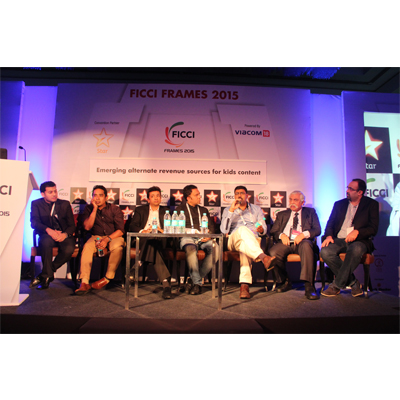
    At a FICCI Frames 2015 discussion titled, “Emerging alternate revenue sources for kid’s content,” panelists shared their experiences. On the panel were, Dream Theatre founder and CEO Jiggy George, Disney India VP and head consumer products Abhishek Maheshwari, Aditya Horizons founders GD Bakshi and Aditya Bakshi, Yaboho New Media founder and CEO Hitendra Merchant and Reliance Entertainment Digital CEO Manish Agarwal. 


    Panelists shared their views on how alternate sources of revenue for kid’s content can be monetized.


    Yaboho New Media founder and CEO Hitendra Merchant

    According to Merchant, when the multi-channel network started off it realised that it did not have to be a multi-national company (MNC) based in North America to create strong digital content. “We create pre-school content and we are one of the largest preschool content creators on YouTube.”


    He also said that a digital multi-channel network content provider did not have to rush towards a broadcast network to put forth their content. The changing dynamic of the media space, according to him, presented two opportunities. One was through YouTube, which could help monetize kid’s content and secondly through gaming apps that kids were increasingly using today. “Both are driven by storytelling, for example Angry Birds,” he explained.


    Disney India VP and head consumer products Abhishek Maheshwari

    Explaining about a large brand like Disney, Maheshwari informed that the revenue potential created through merchandising across categories like stationary and toys were a bigger source of revenue than the content itself (i.e films produced by the studio). “Publishing of our content both on print through books and on digital platforms are also value added propositions for us,” he said.


    He then went on to speak of the brand’s iconic journey so far the world over. The fundamental aspect to the success of Disney’s characters was that consumers were able to relate to the story and that later on translated towards revenue streams. “About 75 per cent of our focus is on storytelling. Mickey Mouse is a big gift that continues giving us maximum revenue across networks. ESPN as a sports brand is also a large contributor towards our overall revenues,” Maheshwari highlighted, adding that the brand was launching its next big theme park in Shanghai and the Marvel franchise was a big growth booster in India.


    Reliance Entertainment Digital CEO Manish Agarwal

    For Agarwal, gaming was going to become the next big reality in monetization of kids content. Illustrating his point through an example, he said that when parents today reached their respective homes, their smart phones were taken over by their kids in order to play games. Raising two key points, he said, “High speed internet without buffering issues was still a roadblock and secondly, propensity to pay for gaming apps is no longer a major issue as audiences don’t mind paying for the same.”


    He also remarked that the psychological roots of a gaming app pushed users towards purchasing items in the real world, which boosted additional revenues. Throwing in some vital statistics, he said that while a popular gaming app would easily see close to five to ten million downloads in a month, a newly created gaming app would receive a million downloads easily in a country like India because of a large market. Ads via these apps were revenue boosters too.


    Aditya Horizons founders GD Bakshi and Aditya Bakshi

    The father son duo are pioneers behind the brand called Indian War Comics. While GD Bakshi hails from a military background as he is a retired major general, his son Aditya is from a merchant navy background. “None of our educational systems today have values,” the former army man began. He said that the comics created by them were based on real life stories of Param Vir Chakra and Ashok Chakra real war heroes, who had laid down their lives for the country. “Values are not thought but caught,” he added. The target audience was sixth and seventh class upwards and the comics strive to propagate “national values.”


    Aditya, on the other hand, went on to explain that the comic company had tied up with institutions like schools, NGOs and self-help groups to distribute their comics as they found the traditional distribution systems daunting. The company’s step will be towards digital apps and toys in order to monetize.


    Dream Theatre founder and CEO Jiggy George

    George’s company is mainly into merchandising and licensing of content on three mediums i.e films, digital apps/games and television. For George, two trump cards that could help a lot in gaining from the licensing market in India were the size of the entertainment market and a rising consuming class that had strong and bigger pockets to purchase items. “In addition, local content on TV, like Chotta Bheem, will always perform better.”


    Towards the end, entrepreneurs were guided that they should explore the art of telling great stories for kids, while other monetizing options would follow. Catch them while they are young they concluded.

  • Brands on its way to digital success

    Brands on its way to digital success

    MUMBAI: As digital advertising and online presence gains ground for brands, they are increasingly realising that the digital world differs greatly from traditional media. A one size fits all strategy is unlikely to help brands leverage the full strength of the digital platform.


    Additionally, user engagement in real time and dynamic digital environment is a challenge. To add credibility to visibility, marketers need to continue to make full use of online by listening and engaging-not just showcasing.


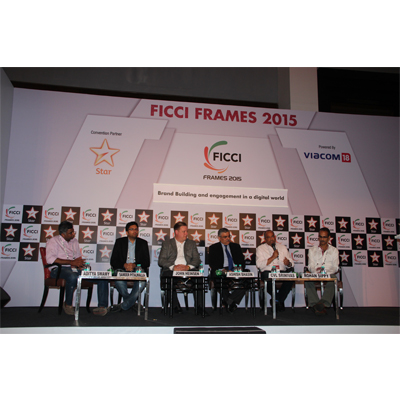
    Discussing the same were panelists namely Dentsu Aegis CEO Ashish Bhasin, GroupM South Asia CEO CVL Srinivas, Producers Guild of America CEO, Bunnygraph and VP, new media John Heinsen, Culture Machine CEO Sameer Pitalwalla and Viacom18 Media MTV EVP and business head Aditya Swamy.


    The panelist discussed the ingredients required to build a successful online brand presence. The session was moderated by film-maker Rohan Sippy.


    According to Srinivas, the world is moving towards programmatic buying and advertising. “Most of the advertising media is getting automated on digital. It has huge implications on the brands,” he said.


    Talking about brand’s engagement on the digital world, Bhasin feels that there is nothing different in the digital world earlier than the digital brands. He believes that many brands in today’s time are going wrong. “The principle of any brand is to identify the consumer’s needs and fulfil them,” he said adding that today many brands are getting caught between digital and technology.


    He believes that the key to success will be to retain factors like – maintaining the principles of brand building and secondly speed of response accelerated to deliver a lot more basis on the consumer’s needs.


    Heinsen opined that brands on digital platforms are the best combination. It gives visibility to brands even more. A successful brand building is the convergence of three things – traditional media, advertising and technology. According to him, integrating these things are needed to build a brand. “As content creators and story-tellers, if we have all these factors only then can you entertain, engage and influence the audiences.”


    According to Pitalwalla, brands face two challenges on the digital platforms. One, there are multiple platforms and each of them comes with their own rules and have a lot more content than traditional media. Second, there is a fragmentation of content. He believes that TV commercials have become just one format in a way people are interacting with the brand.


    Swamy has a different story to tell. He asserted that if people are not talking about your brand, it is considered that your brand has not made it to the heart and minds of consumers. He feels that brand management has now become a 24×7 and 365 days activity.


    As a broadcaster and content creator, Swamy believes that everyone is messing with the format. “People are just playing with all kinds of formats. There is not one fixed formula to it, but people are just experimenting and waiting for it to hit the right chord.”


    Swamy added that dialogue conversation with the digital audiences is very important to keep the brand healthy and live. He stated the example of Roadies. “When Roadies was launched, we noticed that there was buzz only for that time of the period till it was on-air. Offline, there were no conversations at all. To keep the brand alive, we launched a digital series, which is accessible throughout the year and now the digital has become a base and TV show just compliments it. That is the power of digital,” he informs.


    Bhasin believes that today’s consumers have matured. Earlier, people consumed whatever was shown on television. “Now the consumers are telling us what to do. They are dictating the tonality to which we can pass message through our brand,” he said.


    Heinsen believes in the power of conversations. “As a content creator, you should be able to create a content that can spark off conversations. And that’s where social media platforms come into play.”

  • Digital: A complement or challenge for existing platforms?

    Digital: A complement or challenge for existing platforms?

    MUMBAI: FICCI Frames 2015 laid the stage for a open discussion on the 360 degree disruption, which the digital ecosystem has effected upon the entertainment sector. The session also had panelists analysing future and current trends in the digital business in order for these platforms to become growth drivers in truest sense. The emergence of the digital platform can become a threat to the other established platforms as all the platforms share the same source of revenue.


    The session was moderated by Filmkaravan founder Pooja Kohli and the panel comprised producer and actor Abhay Deol, Tata Sky chief content and business developing officer Paolo Matteo Agosstinelli, Facebook Wallla president Eric St. Anthony Pence and LA digital media advisor James Veraldi.


    Supporting the theory that content is king, Agostinelli said, “The emergence of the digital platform is not a threat but an opportunity for the enterprises willing to serve creative content. We are here to deliver content and sensible content in any platform will find relevance and generate revenue. We have to put efforts in understanding the change in behaviour and nature of our target audience and adapt as per need. The millennium youth in India is an encouragement for content makers and we have to utilise that by providing captivating content.”


    Technology is evolving with time and the existing platforms are challenged by the new ones. The battle for the old ones is to still be relevant. Commenting on the evolution, Veraldi said, “DVD came into existence in 1999 and saw huge success till 2005. Now the digital platform is growing and is poised to grow even bigger. There are various platforms that enable creators to deliver content and the challenge is in finding a way to monetise those platforms. If we keep earning money and devote it on quality content and the demand of consumer is taken care of, the new revolutions won’t make a difference. The biggest challenge is not how you adapt with the emerging challenge but is to keep meeting the demand of audience.”


    Digital has given unconventional content makers a platform to exhibit their excellence and offer new options to the audience. Traditional content finds producers easily, while the out of the box or breaking stereotype concepts are portrayed as risky. Hence financiers more often avoid such risks. Moreover global distribution of content is another tough challenge, which finds digital as a big solution.


    Deol produced movie One By Two was released on the internet for global audience the same day as it was released in Indian theatres. “I was sure of the fact that I won’t manage to get screens abroad but at the same time I also wanted the audience to have the option of watching the content and that’s when I took the decision of launching it online. The other reason was that whenever I have been to United States, I saw the willingness in people to see the unconventional but the option was not available for them. They used to ask me why we can’t make more unconventional content. When a theatre is three hours away and the pirated DVD seller is nearby, people opt for the pirated version but when we gave the same person option of watching it online by paying certain premium, they opted for it. That’s the beauty of the digital platform,” said Deol.


    While Pence was of the opinion that change complements other existing platforms. “The digital platform will complement the existing ones and the biggest beneficiary of that will be consumers. Every platform will try to provide as high quality content as possible and that’s the best part. With development of bandwidth and online payment infrastructure digital will grow but the traditional platforms will co-exist.”


    While the number of smartphone user is an encouragement for the digital platforms, low bandwidth and high tariffs are the major challenges that the venture has to tackle.

  • Freedom of press under danger in India

    Freedom of press under danger in India

    MUMBAI: While the fourth estate is known both as a conscience keeper of society as well as shaper of public opinion, is the freedom of speech for the media under pressure in recent times? Speaking on the same were BBC Global News presenter Matthew Amroliwala, NDTV managing editor Manika Raikwar, Equus founder and Counselage India managing partner Suhel Seth, and FICCI entertainment committee co-chair Ramesh Sippy at a panel discussion at the ongoing FICCI Frames 2015. The session was moderated by Association of International Broadcasters UK CEO Simon Spanswick.


    The witty Seth had the audience in constant applauding mode. He began saying that the current Censor Board chief in India was an idiot. “If words like Bombay are banned in a film, why don’t the jokers also approach the High Court of Bombay? Again, we have some very good judges and some very bad judges. Society must mirror the varied aspirations of society,” Seth said.


    He was of the strong opinion that the press in India had abused its power for far too long. “Most channels today are on sale and are driven by commercial interests. Times Now is clean but is a noise factory. We are in very troubled times and there is grave danger to the freedom of press in India. We are ruled by a right wing party and fringe elements have arisen. Instead of discourse and debate, people are resorting to violence,” he opined.


    When questioned by Spanswick on ethics being compromised because of revenue, Raikwar posed a counter question, “How do you get revenue for a costly business medium?” She was of the opinion that transparency was the key by informing the masses about which news packages were sponsored and which were not. “Mint, for example and NDTV too, clearly mention to viewers if there is a conflict of interest in their stories either in a box or a scroll,” she informed. It was upto the audiences then to make a choice in believing what stories were true or were planted.


    Agreeing with her, Amroliwala opined that if indeed audiences knew what they were reading and watching, then they would be able to pin point closely what the news factor was in a story. “The BBC is all about trust and we don’t deviate from it, which is our USP,” he remarked.


    Seth at this point said that increasingly today TV editors were writing newspaper columns and newspaper editors vice versa appeared on television. “These editors appear on television because they can’t write. They are supposed to inform people through their writing about strong opinions of current events,” he said. He then went on to attack the Badal family of Punjab. “The Badals own the biggest channel in Punjab and also control the distribution system,” he added.


    Spanswick queried if people trusted these channels, to which Seth implored, “What else will people watch? They don’t have a choice.”


    As the talk revolved around journalistic ethics, Sippy commented that unparliamentary language was become parliamentary language across the world and everyone was in a race to grab eyeballs. Raikwar felt that the edit page of a newspaper was largely important as it is today becoming the main news page. “There is space for opinion but it has to be clearly narrated and spaced,” she voiced. She also noted that there would be times when journalists would commit unintentional errors in their stories. In such a scenario, the best way forward was to issue to apology and move on. “It is all about trust,” she stressed upon.  


    Spanswick then quizzed the panel if the media in India was able to reflect society well enough through their creative products? Seth was of the opinion that every film reflected a certain section of society. “While the film Haider was dedicated to Kashmiri pundits, the narrative of the film had nothing to do with them. We have to evolve through self-restraint. It’s also sad to note how religion today is being used as a political weapon whereas people of feeble intellect are running the censor board,” he said.


    “How can one counter this?” asked Spanswick. Seth said that Sippy and Inc. could come up with movies that spoke of such phenomenons without going overboard. Sippy replied that in recent times two films, Oh My God and PK touched upon religion. “They were using restraint through humour,” the filmmaker highlighted. Raikwar said that the attitude of ‘sab kuch chalta hai’ (anything goes) should stop and the consumer being the key would be the ultimate judge of a news item.


    Amroliwala in conclusion stated that the pictures the BBC used for a particular story, the content and the language used was very important to the pubcaster. “This is absolutely crucial in our news reporting,” he highlighted.

  • Live events in India need huge impetus from government

    Live events in India need huge impetus from government

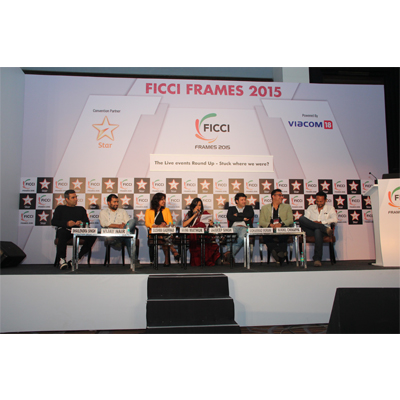
    MUMBAI: In order to discuss the long road ahead in making India a productive profit centre in the global live event landscape, a session dedicated to the same was conducted on the final day of FICCI Frames 2015 held in Mumbai.


    With a vision to wash away the red tape and enable business environment, the discussion was led by a panel comprising entrepreneurs like Cineyug director Mohammad Morani, OML CEO and founder Vijay Nair, Ice Global owner Sushma Gaekwad, Viacom18 INS Jaideep Singh, Coca Cola India VP – marketing Debu Mukherjee and Percept joint MD Shailendra Singh. The session was moderated by anchor Mini Mathur.


    Gaekwad kick-started the discussion by saying that issues relating to licensing norms and taxation policies amongst others needed to be sorted out. “We have to sort out these issues. There is a lot of work ahead of us but yet the industry has the potential to grow,” she said.


    Gaekwad believes that the industry has taken the first step in sorting everything out and like-minded bunch of entrepreneurs have started coming together as an association. “Earlier each business was of its own, but now as an association, we can sort issues that each of us bring to the table.”


    Percept’s Singh went on to add that almost 58 per cent of India’s population was below the age of 25 years and the young population is extremely restless and has tremendous amount of energy. “What young people need in today’s time is entertainment. Live entertainment is a very serious business, but the government has never understood the industry and has not taken it seriously. One can’t even imagine that how much business the industry can bring, how many job opportunities it can create and how well it can entertain. We are deprived as a country for live entertainment just because the Government doesn’t believe that this industry should be taken seriously,” he opined.


    For Festival curator Nikhil Chinappa, making the sense of 1.25 million population in the country is the biggest concern. He believes that in the space, the numbers are vast and so are the opportunities. “Even though we are talking about the opportunities, but we need to know whether there are more people buying tickets or are the same people trying to buy different tickets again and again?”


    Answering his own question, he replied saying that research indicated that there are no new people, who buy tickets but the same ones who are interested in buying always.


    Agreeing with Chinappa, Singh continued to say that in this sector, it has not been able to harness new members in the industry. “We can only grab eyeballs of the newbies by our strong business models and that is going to lead the success path,” he said.


    Picking up to what Gaekwad pinpointed on the licensing part, Nair feels that Maharashtra has been left behind when it comes to licensing policies. “If an artist is performing at the same venue for 10 times in a year, he has to apply for licenses all the time, which is not needed. Moreover, the situation is going to get worse with the new laws coming in. For example, 14 per cent of service tax has been added to buy tickets.”


    Percept’s Singh believes that everything in the society happens from top down. “If there is a ministry sitting at the top to look at these issues at the forefront, then why are we begging in front of them? They have to understand that this is the need of the new Indian. Young India wants entertainment. Why should we pay the price or suffer?” he questioned.


    He further said that it is impossible to make money in live entertainment today. “The opportunity that live events provide is massive. When will the government understand this?” he further lamented.


    On the other hand, Viacom18’s Singh believes that the government alone cannot be blamed alone because the onus lies on the entrepreneurs, who are working in this space too. “I believe that this should come from top, but we are also equally responsible for it maybe because we are not pushing it or fighting enough for it. We need to put our business propositions together and fight for it right up there. We need to prove our might with numbers, which they are not seeing right now.”


    Mathur questions, “Are we doing enough as an industry?” To which, Gaekwad responded that the fraternity has taken the first step by coming together and working towards it and is confident that by next year it will be talking a different language. But she also believed that currently there is a lack of vision, which needs to be improved. “It is not only about the local spender but also about the international spender.”


    Talking about the industry’s future, Chinappa stated that to him vision is accessibility. “If you want the music and dance industry to grow, one needs to ensure that it is easily accessible for people and that can happen best through social media platforms. Digital platforms are the best mediums where people can share and exchange ideas,” he said.


    Viacom18’s Singh further revealed that brands too have been taking the industry very seriously. Where there is reach, there are brands. According to him, in the first year it got close to 10 – 12 brands on board, whereas the second year saw some improvement with close to 25 brands. What’s more, the third year saw a fantastic response with about 60 brands coming on-board.


    Throwing light on the solutions to make the industry more profitable, Percept’s Singh said that the market will grow where there is a sense of security. To top it all, the three E-formulas will always work wonders – educate the market, empower and entertain the consumers.


    The session concluded with each of them focusing on issues like making music more available and accessible to people, strong compelling business to generate numbers, collaborate and work together as an association for faster progress and yet be competitive by focusing on the consumer’s need.

  • Digital is the next big medium for news telling & selling: Raghav Bahl

    Digital is the next big medium for news telling & selling: Raghav Bahl

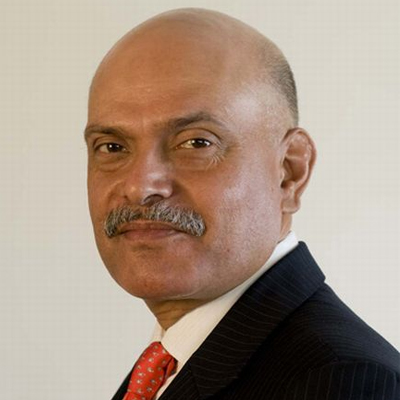
    MUMBAI: The media and entertainment sector is one of the most dynamic sectors prone to rapid change. In order to survive, one must simply re-invent and adapt to the landscape. Raghav Bahl is unarguably one such man, who knows how to build himself from scratch, as he moved from the television space to the digital environment.


    After selling the Network 18 Group for a tidy sum to Mukesh Ambani owned Reliance Industries, Bahl did not stop there. Through his digital venture The Quint, he has now launched a mobile focussed digital news website. Speaking at an interactive session at the ongoing FICCI Frames 2015, Bahl touched upon the key points as an entrepreneur in the digital domain.


    “The smartphone has revolutionised the media ecosystem,” Bahl’s voice booms in the packed auditorium as he begins sharing his thoughts.


    Consumer Habits

    Bahl says that consumers today are increasingly looking out for content that is personalised, “I, Me, Mine” as he called it. Consumers are always looking for content that leads to instant gratification as audiences resort to uploading, sharing, finding and following data points on their smartphones. Increasingly, users also want data sans baggage.


    Content

    Content in the digital space, according to the media baron, is moving from exclusive and breaking news to news pieces that are re-purposed with stronger in-depth analysis. “Now it’s also about the creation of content versus the packaging of content,” he adds. There is also an emerging section in the digital news media segment called the “Light-Fun-Weird,” which is the new news category where news is narrated far different from the traditional form. People increasingly are also looking out for ‘nearby’ content where local information, news and content is being sought. In the social media space, content is also about discovering news, as people used various platforms like Twitter, Facebook and Instagram. “Close to 1.8 billion photos are uploaded and shared everyday on Instagram, while around 50 billion messages are sent via Whatsapp each day,” Bahl informs.


    Impact on the Landscape

    As massive content is bombarded on the cyberspace, Bahl says that “except for community news and large scale entertainment format on the static screen, it will completely change the landscape. Language will now have to become edgier and it will have to become the language of the young because the audience today has a point of view. Quicker, shorter and strong opinions,” Bahl sums up.


    Content in the next three years will move more exclusively to hand held devices.


    Quint’s Approach to News Telling

    As a digital product, Bahl informs that he doesn’t need to send a reporter on field. Providing an example on how he would approach a plane crash story, he informs that he would prepare “multiple smaller packets” of news than one lengthy story that will not buy the audience’s attention. He would come up with stories like the age of the aircraft, the mindset of the airplane pilot and so on. “I am investing more in the technology than a TV channel network spends on ground reporting,” he stated.


    Financing and Costs

    When he started with his news channel CNBC TV18, it drew in a revenue of Rs 2 crore. However, today the channel draws in revenue to the tune of Rs 300 crore. “As audiences come in, buyers will come in too. If the content is receiving traction, advertisers would come in too.”


    According to Bahl, three kinds of advertising models will be hot selling properties in the digital domain: 1) Complete programmatic advertising, 2) Native advertising and 3) Display ads. “However, display ads will have to be modified for mobile screens,” he said.


    Assessment of Indian media and leaving Network 18

    I am an optimist and I believe the sheer plurality of the Indian media would ensure cards are not stacked in one direction,” Bahl assessed. He went on to reveal that he was in no way ready to become a paid employee. “Today the Network 18 group is in strong competitive hands. If I was not a majority stakeholder anymore, I would have to re-invent myself,” he said.


    Conclusion

    In his concluding remarks, Bahl highlighted a few points. For instance, he said that primetime is dead as audiences today are always connected via their multiple screens to receive content. The very short lifespan of news was taken over by “curated explainers,” who would summarise a story with in-depth analysis. “Journalists today will have to be expert in their field. You cannot cover financial markets or terrorism,” he remarked.

  • Maharashtra govt proposes tax exemption for AVGC sector in state

    Maharashtra govt proposes tax exemption for AVGC sector in state

    MUMBAI: The Animation, Visual Effects, Gaming and Comics (AVGC) sector in Maharashtra is in for some treat. The sector, which so far has gone unnoticed in the state, has finally got itself a space in the fourth IT Policy, which will be sent to the Cabinet soon.


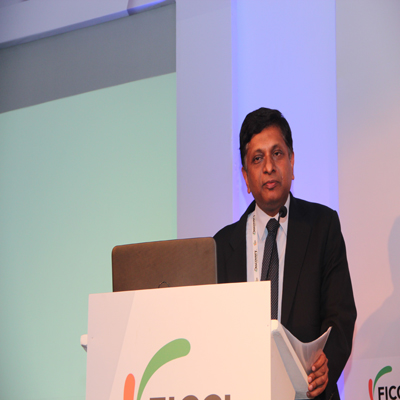
    “I agree that the state has so far not focussed on the Media & Entertainment (M&E) sector,” said Government of Maharashtra principal secretary-industries Apurva Chandra at FICCI Frames 2015.


    According to Chandra, AVGC is a part of the IT sector and hence has been included as a sub-section in the soon to be submitted IT Policy. “The perception is that the state is not friendly to the sector and we aim at shedding that with this policy,” said Chandra.


    Chandra agreed that the AVGC sector, which was once strong in Maharashtra has been overtaken by Bangalore, where the government is taking several initiatives. “We would like to bring more AVGC centres into the state,” he added.


    Maharashtra has the right ecosystem, the creative people and robust IT set up, which can give a boost to the AVGC sector.


    One of the major points, which have been covered in the proposed policy is that of entertainment tax. The policy provides doing away with three kinds of taxes:


    · Entertainment tax exemption for movies 100 per cent made in Maharashtra.

    · Giving 100 per cent exemption from entertainment tax to animated movies, which have been converted from 2D to 3D in the state.

    · 100 per cent tax exemption to live action movies, which minus the opening credits and end credits, has 50 per cent visual effects during the running time of the movie.


    The AVGC policy also contains the provision for AVGC parks. “As part of this, all the incentives given to IT Parks will be made available to AVGC Parks. One such is the integrated IT Township, which will also become an integrated AVGC Township. Under this any land, whether it is private or public, above 10 hectare can be cleared as IT or AVGC Township. In this township, 60 per cent of the land will be for industrial moves like setting up studios and 40 per cent will be open to all. Above all a higher FSI (floor space index) would also be given. This can bring a lot of discipline not only in IT but the AVGC sector as well,” informed Chandra.  


    AVGC centres will also be promoted in cities of Maharashtra through several incentives. “We will be providing financial support and are proposing a corpus fund of Rs 50 crore through the state government. In terms of clearance also, the state government is ready to support,” he added.


    The policy also proposes a certification charge refund from the agencies. “Capital subsidy for larger AVGC centres will also be given,” he informed.  


    The National Centre of Excellence, which was announced by the Finance Minister in Delhi has also been proposed to the Maharashtra government. The Media and Entertainment Council is currently working closely with the Information and Broadcasting Ministry and other state governments to facilitate this for Maharashtra.   


  • From ‘Red Tape’ to ‘Red Carpet’: Maharashtra govt’s vision for M&E sector

    From ‘Red Tape’ to ‘Red Carpet’: Maharashtra govt’s vision for M&E sector

    MUMBAI: The demand for single window clearance for the film sector is nothing new, but the good news now is that the newly appointed state government under Chief Minister Devendra Fadnavis is looking into it, and seriously.


    Government of Maharashtra Tourism & Culture secretary Valsa Nair Singh told the gathering on the concluding day of FICCI Frames 2015, that the process for single window clearance has begun. “The problem is that no one is aware how many clearances are needed to be able to produce a movie in Maharashtra. While someone says 70, others say 60 or 50. It has been a month and I have been trying to collect all the data regarding clearances that are currently needed. I still don’t have a clear picture,” she informed.


    The government, after collecting the required data, will start analysing the clearances which are actually needed. “I am sure almost half of it would either be repetitive or redundant. We will then see how many of the clearances can be clubbed. We will also appoint a nodal officer, who would be handling everything, thus ensuring that the producer doesn’t have to go to each department,” informed Singh.


    Once the process is completed for films, the government will look at coming up with single window clearance even for live events. “What we have seen is that people are moving away from the state for live events and the reason they cite is the long process of approvals. So we have to make the system more conducive,” she added.

    The single window clearance has been set in motion, said Singh adding that the Chief Minister who had attended the Pune Film Festival had also suggested that the procedure will be in place before the next film festival.

    Considering that the film industry contributed almost Rs 50 billion to the GDP in 2013 and an employment of 7.75 lakhs in just one year, the Maharashtra government is looking at ensuring that more films are shot in the state. “We need to make the process simpler and provide the infrastructure,” she said.


    Singh raised concerns over the multiple authority clearance, which according to her leads to red tapism. “We want to move from red tape to red carpet, this is the intention of the Maharashtra government,” announced Singh.  


    In a meeting held on 25 March, the government has already taken the decision to start moving towards single window clearance and reduce the number of approvals.

    The Maharashtra government also wants to create awareness about the locations in the state, which can be used for shooting. “We would be doing it through a ready reckoner for locations. It will have the photographs, the connectivity, the location and the helpline numbers for the location. We will be compiling everything and uploading the same on the website,” she said.


    The government wants to move to the online regime, “but that will take time and so the single windowing process will start manually first as a pilot project and then move to online,” informed Singh. The nodal officer for the entire project will be the managing director of Film City located in Goregaon in Mumbai. “We are trying it on pilot basis from the next month and the announcement for the same will be made soon.”

    Singh also agreed that the industry needed to be incentivised. “The more movies that are shot here, the government stands to benefit and that will happen with incentives. We would like to take it up soon,” she said.

    This is a new beginning for the film industry. “The M&E has so far not got its due. We will look at it closely,” concluded Singh.


  • Research imperative to exploit big sports leagues

    Research imperative to exploit big sports leagues

    MUMBAI: The year 2014 witnessed the emergence of sports as it rekindled the nation’s hope and sports channels played a huge role in creating buzz in the arena of sports.


    The successful league models in Kabaddi, Cricket, Hockey, Football, Badminton and Tennis paved the way to create viable career options for young Indians. However, the key to success remains in monetization and return of investment for stakeholders and the sustainability of their business models.


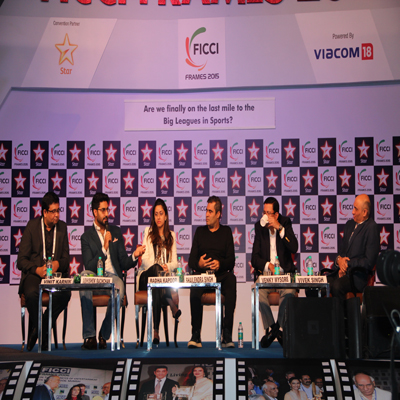
    In a session of FICCI Frames moderated by Group M national director sports and entertainment Vinit Karnik, which had Percept joint MD Shailendra Singh, DOIT media founder Radha Kapoor, KKR CEO Venky Mysore and various sports franchise owner Abhishek Bachchan, panelists spoke on the issues relating to a national policy on sports.


    Infrastructure status to build stadiums and facilities, challenges before rights holders to monetise sports content, franchisees business models and a national curriculum on sports were some of the topics that were touched upon.


    The panel spoke aggressively against federation becoming a regulatory body and intruding into business strategies of a privately owned entity. Speaking on the same Singh said, “The growth is determined by demand and supply, you can make money of something you go for it. India has a large youth population desperately waiting for an opportunity to make a career out of sports but what’s stopping them is poor infrastructure and that is where Narendra Modi is going wrong. The federations are unwanted obstacles headed by corrupts. They make things difficult and people walk off from doing a business. I organised a similar tournament like IPL in 1999 but Dalmiya called it Masala and asked me to stop it immediately. Today BCCI cherishes the IPL.”


    While Venky Mysore, who closely works with the BCCI being the CEO of Kolkata Knight Riders (KKR), emphasised on the commercial sector saying, “While it’s easier to work with the BCCI considering the fact that one has to deal with less number of people compared to the sports ministry, their intrusion in the business and strategic affairs of the franchisee is a bit irrational. KKR has made money out of IPL and we are a debt free franchisee – a fact that I am proud of. For any brand to work in India you need fans and the ratings show that KKR matches always bag the pole position. So every new sport has room but it should not be rushed as the loss is immense.”


    While non-cricketing sports are also emerging in the major sporting league category, making money out of them is difficult for broadcasters, addressing the issue Bachchan said, “When Charu came to me with the Pro Kabaddi concept, I was shocked. But after seeing the ground reality my perception changed. There are more than 1500 Kabaddi clubs in Mumbai desperately looking for an opportunity and a platform to showcase their talent and Star and Pro Kabbadi League opened it up for them. The Indian Super League (ISL) is another example of broadcasters and corporates coming together to put up an exquisite event. Due to the ISL deal that ensures ground level improvement of the sport, more kids are getting the infrastructure they deserve, which will show its relevance 10 years down the line.”


    DOIT Media founder served for more women participation and declared new platforms for women in India. “We are launching a new kabaddi league dedicated to women, which will ensure their participation and it’s just the beginning. Every sport in future may have a female version too because the talent exists but gets rusted due to lack of use.”


    Every major sport now has two leagues but all of them are not profitable for the broadcaster. Kabbaddi changed rules to rope in more revenue generating opportunities and the federation supported it, cricket also did the same with innovations like strategic time out. While it is very important not to lose the authenticity of the sport, generating revenue is a big necessity in order to ensure longitivity.     

  • Print or digital; what redefines a traditional paradigm?

    Print or digital; what redefines a traditional paradigm?

    MUMBAI: While circulation of newspapers is still in the positive and print continues to have the lion’s share of the ad spend pie; digital is gaining ground rapidly. So is there a reason for fear amongst print players?


    Discussing this was a panel comprising The Indian Express Group wholetime director Anant Goenka, Mid-Day editor Sachin Kalbag, BBC Online editor Nidheesh Tyagi, Danik Bhaskar Group SVP – sales, market development and brand marketing Vinay Maheshwari and Percept Allied Media CEO Shripad Kulkarni. The panel was moderated by MXM editor-in-chief and CEO Pradyuman Maheshwari.


    Goenka recalled that when he started handling the digital side of The Indian Express Group, the important factor was to stick to the funda of ABCD – Astrology, Bollywood, Cricket and Devotion. He went on to say that politics became the hot topic interest on the Internet, thanks to the issues related to Narendra Modi, elections and Arvind Kejriwal. He believes that Internet, gives them an opportunity to reach out to a wider range of audience where print can’t be reached at this point of time.


    Goenka believes that it is a very complimentary medium. “It is clearly about finding a way to create content that works for both mediums (digital and print). Content has to be exclusively for each medium. Both mediums in India are comfortable and are here to stay,” he said.


    According to Danik Bhaskar’s Maheshwari, both the mediums always do not have the same set of audience. He opines that print and digital are going to co-exist and for long. He believes that newspapers act as an advantage for any consumer. “It reaches people at 7 am in the morning at their doorsteps and people are fresh to read it. In tier II and III cities, literacy, income and readership is on a rise. On top of all this, affordability is also on the rise. The reach that print delivers today is worth mentioning,” he said, adding that regional languages papers are also consumed well.


    Kalbag said that what digital is doing right now is putting a lot of strength to what print delivers in the morning. “Where you break big stories in print, it is a big worry for any journalist and editor for how to do justice post 8 am for internet. To viralise it on social media platforms is the best way to reach out to the whole world.” He asserted that social media platforms have become curated platforms where all print news is curated in the best manner for each of the digital platform.


    “What works for Twitter may not necessarily work for Facebook or Pintrest and vice-a-versa. So each of these platforms need to have a perfect tactic or strategy to put all of the content together and every journalist and editor should know how to do justice to each of the platforms,” said Kalbag.


    Kulkarni had a different opinion altogether. He believes that the industry is definitely witnessing a change, thanks to digital platforms entering into the market. “We have spoken about India and Bharat but for the first time, digital has had a heavy impact. Look at all the generations, from old generation like me to a new generation like my daughter. I still prefer newspapers and she prefers reading it online. This is the change and more changes are yet to come.”


    To conclude, most of the parties believed that print and digital are equally important for different set of audiences and both are here to stay for a very long time.