Category: Event Coverage

  • Can OTT players leverage market opportunities & rationalize rising content costs?

    Can OTT players leverage market opportunities & rationalize rising content costs?

    MUMBAI: In a bid to grab eyeballs, spending on digital advertising is on the increase, but this increase also comes with challenges, if KPMG is to be believed.

    KPMG director Girish Menon said that digital advertisement is likely to cross Rs 25,500 crore in 2020, but digital ads do not come without challenges with major concerns being inability to track mobile activity, ad fraud, ad blocking and measurement.

    Making a presentation at an event organised by FICCI here yesterday, Fast Track India: Bolstering Growth in the Digital Content, Menon added, “OTT video is likely to become the holy grail in digital media. The advent of OTT services and on-the-go content, aided with competitive tariffs and falling average retail price of smartphones, has helped to drive video consumption in India.”

    According to him, approximately 40 per cent of mobile data traffic is being driven by video and audio consumption.

    The Indian market is highly price sensitive and broadcast services are well accepted, making the growth and profitability of OTT video players an uphill task. As digital media consumption grows in the country, content owners and delivery platforms need to reflect on innovative ways of monetizing digital content. OTT players need to leverage market opportunities while rationalizing rising costs of acquiring or producing digital content.

    “Profitability still continues to be a major challenge coupled with infrastructure and affordability of data tariffs and payments models. It is imperative for the OTT players to address these concerns through innovative means to achieve the medium’s full potential,” added Menon.

    Discussing future trends to grow this market, through effective monetization of content, while delivering consumer value, in addition to evaluating various payment models at FICCI Knowledge Series 2016 were Film Producer Vishesh Bhatt, DittoTV business head Archana Anand, Arre co-founder and CEO AJay Chacko and Eros Digital COO Karan Bedi.

    Sparking the discussion was Bhatt who observed how this conversation flagged off last year with everyone talking about content that has come to a point where it’s annoying. He is of the opinion that serious content makers fuelling the various platforms have to first understand the ecosystem. “In my opinion, even the platforms have not taken initiatives to educate the content makers. The ecosystem currently is extremely poor. The content makers have to understand the economics first or open my own platform to air content and then make money out of it.”

    Various content monetization options are being explored with the rapid adoption of digital platforms. Ad remains the major source of advertising. Short format made-for-digital content is being leveraged for immediate monetization opportunity. Existing content is being repackaged and delivered across digital platforms owned and 3rd party (YouTube, Mobile Apps, etc.). Existing content infrastructure is being leveraged to create purpose built content (interactive shows, online polls, etc.).

    The focus has now shifted to original/exclusive content for digital media, to drive subscription revenues

    Enlightening the audience further, Chacko pointed out how the content consumption medium has evolved from print to broadcast and now to digital. While there is 70 per cent investment in content creation for digital, the showdown does not stop there. “Investing more on content is the rule.”

    Citing the example of Pokemon Go, Bedi asserted how the game is earning roughly 1.6 million per day which is just 10 per cent of what they can make if monetised properly. “The cost of data, infrastructure, etc, remains an issue for us. We are definitely not there yet with the subscription model, but it’s not far.”

    Anand though strongly surmises that platforms need to set their strategies right. “You have to establish with masses first to get subscribers. We followed the consumer behaviour trend on mobile and made it affordable for them. Like anyone else, we never told them to download our app, rather gave them the option to give a miss call to download it. To solve bandwidth constraints, we tied up with Telcos and payment wallets and the usage has been phenomenal.”

    dittoTV has a clear road map set wherein it has first focused on getting eyeballs to its platform. Anand also opined that the platform does not have to necessarily follow a linear model in future.

    But how will the value change make money? Answering that, Bedi said that the three levers- revenue generation, content creation and marketing acquisitions. “Netflix does not invest on marketing acquisitions. In the end, it depends on the platform to decide what model it wants to follow and it has to make it work right.”

    “SVOD also allows multiple things to be done. There is an inherent ability to share piece of profit with partners by tying up with various partners”, added Anand.

    With various global players like Netflix, Amazon Prime Video, etc, entering India, the players will have to focus on producing original quality content to drive viewers. But is it beneficial to the creators here to put their content on the different platforms. Bhatt strongly affirmed that the West has made its content makers worth. It’s no more only about money but about environment.

  • Can OTT players leverage market opportunities & rationalize rising content costs?

    Can OTT players leverage market opportunities & rationalize rising content costs?

    MUMBAI: In a bid to grab eyeballs, spending on digital advertising is on the increase, but this increase also comes with challenges, if KPMG is to be believed.

    KPMG director Girish Menon said that digital advertisement is likely to cross Rs 25,500 crore in 2020, but digital ads do not come without challenges with major concerns being inability to track mobile activity, ad fraud, ad blocking and measurement.

    Making a presentation at an event organised by FICCI here yesterday, Fast Track India: Bolstering Growth in the Digital Content, Menon added, “OTT video is likely to become the holy grail in digital media. The advent of OTT services and on-the-go content, aided with competitive tariffs and falling average retail price of smartphones, has helped to drive video consumption in India.”

    According to him, approximately 40 per cent of mobile data traffic is being driven by video and audio consumption.

    The Indian market is highly price sensitive and broadcast services are well accepted, making the growth and profitability of OTT video players an uphill task. As digital media consumption grows in the country, content owners and delivery platforms need to reflect on innovative ways of monetizing digital content. OTT players need to leverage market opportunities while rationalizing rising costs of acquiring or producing digital content.

    “Profitability still continues to be a major challenge coupled with infrastructure and affordability of data tariffs and payments models. It is imperative for the OTT players to address these concerns through innovative means to achieve the medium’s full potential,” added Menon.

    Discussing future trends to grow this market, through effective monetization of content, while delivering consumer value, in addition to evaluating various payment models at FICCI Knowledge Series 2016 were Film Producer Vishesh Bhatt, DittoTV business head Archana Anand, Arre co-founder and CEO AJay Chacko and Eros Digital COO Karan Bedi.

    Sparking the discussion was Bhatt who observed how this conversation flagged off last year with everyone talking about content that has come to a point where it’s annoying. He is of the opinion that serious content makers fuelling the various platforms have to first understand the ecosystem. “In my opinion, even the platforms have not taken initiatives to educate the content makers. The ecosystem currently is extremely poor. The content makers have to understand the economics first or open my own platform to air content and then make money out of it.”

    Various content monetization options are being explored with the rapid adoption of digital platforms. Ad remains the major source of advertising. Short format made-for-digital content is being leveraged for immediate monetization opportunity. Existing content is being repackaged and delivered across digital platforms owned and 3rd party (YouTube, Mobile Apps, etc.). Existing content infrastructure is being leveraged to create purpose built content (interactive shows, online polls, etc.).

    The focus has now shifted to original/exclusive content for digital media, to drive subscription revenues

    Enlightening the audience further, Chacko pointed out how the content consumption medium has evolved from print to broadcast and now to digital. While there is 70 per cent investment in content creation for digital, the showdown does not stop there. “Investing more on content is the rule.”

    Citing the example of Pokemon Go, Bedi asserted how the game is earning roughly 1.6 million per day which is just 10 per cent of what they can make if monetised properly. “The cost of data, infrastructure, etc, remains an issue for us. We are definitely not there yet with the subscription model, but it’s not far.”

    Anand though strongly surmises that platforms need to set their strategies right. “You have to establish with masses first to get subscribers. We followed the consumer behaviour trend on mobile and made it affordable for them. Like anyone else, we never told them to download our app, rather gave them the option to give a miss call to download it. To solve bandwidth constraints, we tied up with Telcos and payment wallets and the usage has been phenomenal.”

    dittoTV has a clear road map set wherein it has first focused on getting eyeballs to its platform. Anand also opined that the platform does not have to necessarily follow a linear model in future.

    But how will the value change make money? Answering that, Bedi said that the three levers- revenue generation, content creation and marketing acquisitions. “Netflix does not invest on marketing acquisitions. In the end, it depends on the platform to decide what model it wants to follow and it has to make it work right.”

    “SVOD also allows multiple things to be done. There is an inherent ability to share piece of profit with partners by tying up with various partners”, added Anand.

    With various global players like Netflix, Amazon Prime Video, etc, entering India, the players will have to focus on producing original quality content to drive viewers. But is it beneficial to the creators here to put their content on the different platforms. Bhatt strongly affirmed that the West has made its content makers worth. It’s no more only about money but about environment.
  • Online pirates beware, Copyright Force on way

    Online pirates beware, Copyright Force on way

    MUMBAI: Red alert for online pirates of TV content and movies. Copyright Force is on its way.

    In a move to fight online piracy, major broadcasters, studios and the recently set-up Telangana  Intellectual Property Crime Unit (TIPCU) are joining hands with Motion Pictures Association of America (MPA)’s Indian chapter for strengthening and effective implementation of regulations.  
    Tentatively named Copyright Force, the industry alliance’s main aim is to set an agenda on Intellectual Property Rights (IPR) policy and engage with the government.

    “When you talk about Digital India, the government will have to put out a strong message on curbing online piracy. There are just not enough teeth in existing laws to tackle online piracy. Hence, the industry is exploring an industry alliance to sensitise the government and judiciary of the issue,” Viacom18 general counsel Sujeet Jain explained to indiantelevision.com.

    Confirming the move Uday Singh, Managing Director-India, MPA, however, clarified the move was a positive one but needed more deliberations.

    The alliance is looking at getting broadcasting companies, studios and other industry organisations like MPA under one roof.

    “There are many organizations with larger objectives. The Copyright Force’s (or its formal version) sole purpose would be to push copyright issues,” Jain added.
    According to industry sources, initial exploratory meetings on the issue were attended by the likes of Viacom18, Star India, Walt Disney, Zee, Turner, Sony Pictures Networks, Sun TV Network, Eros International, Reliance and TIPCU.

    Earlier, speaking on the issue of Digital Content Economy and Robust Enforcement Model at an event organised by FICCI here today, Jain said, “You cannot fight online crime with offline measures. Online enforcement has to happen.”

    According to him, the Copyright Act and IT Act have to be updated so the issue of online piracy is addressed directly and helps the judiciary to properly interpret relevant laws to pass judgements on cases relating to online piracy.

    In recent time, the issue of piracy has gained currency in India with mostly film-makers taking John Doe orders in an effort to safeguard against online leaks of films before formal theatrical releases.

    However, the content industry feels such cases don’t properly address the growing menace of online piracy.

    But taking a leaf out of the UK’s PIPCU (Police Intellectual Property Crime Unit), run by City of London Police, the Telangana government has set up country’s first anti-piracy unit called Telangana Intellectual Property Crime Unit (TIPCU).

    The reason for TIPCU formation was effective lobbying by the Telugu Film Chamber of Commerce with the state government on behalf of the local film industry that is reported to have suffered losses in excess of Rs 361 crore because of online piracy.

    Telugu Film Chamber of Commerce honorary chairman, governing council, anti video piracy cell, Rajkumar Akella said, “As we have been witnessing in recent days, the problem of online piracy is most urgent. The greatest threat now has become the pre-movie release leakages. Without real time interventions from the government and the industry, it will go out of control.”

    According to him, TIPCU, an initiative brought to life by the Telangana government, the Telugu film industry and MPA India, was a very significant step. “The unit will be making optimum use of technology besides policy enforcement and outreach,” Akella added.

    MPA regional director, online content protection, Oliver Walsh said, “The Indian film and TV industry supports 1.8 million jobs which are at risk because of rising online content theft. The future of legitimate content delivery platforms depends on effective enforcement measures supported by Indian State governments.”

    Pointing out that TIPCU was a great example of a dedicated law enforcement unit to tackle organized online film piracy, Walsh said such an approach will go a long way in significantly reducing online infringement of films and television content. 

    Jain also pointed out that there is a need to develop dedicated digital courts in the country where the issue of online piracy is addressed exclusively.

  • Online pirates beware, Copyright Force on way

    Online pirates beware, Copyright Force on way

    MUMBAI: Red alert for online pirates of TV content and movies. Copyright Force is on its way.

    In a move to fight online piracy, major broadcasters, studios and the recently set-up Telangana  Intellectual Property Crime Unit (TIPCU) are joining hands with Motion Pictures Association of America (MPA)’s Indian chapter for strengthening and effective implementation of regulations.  
    Tentatively named Copyright Force, the industry alliance’s main aim is to set an agenda on Intellectual Property Rights (IPR) policy and engage with the government.

    “When you talk about Digital India, the government will have to put out a strong message on curbing online piracy. There are just not enough teeth in existing laws to tackle online piracy. Hence, the industry is exploring an industry alliance to sensitise the government and judiciary of the issue,” Viacom18 general counsel Sujeet Jain explained to indiantelevision.com.

    Confirming the move Uday Singh, Managing Director-India, MPA, however, clarified the move was a positive one but needed more deliberations.

    The alliance is looking at getting broadcasting companies, studios and other industry organisations like MPA under one roof.

    “There are many organizations with larger objectives. The Copyright Force’s (or its formal version) sole purpose would be to push copyright issues,” Jain added.
    According to industry sources, initial exploratory meetings on the issue were attended by the likes of Viacom18, Star India, Walt Disney, Zee, Turner, Sony Pictures Networks, Sun TV Network, Eros International, Reliance and TIPCU.

    Earlier, speaking on the issue of Digital Content Economy and Robust Enforcement Model at an event organised by FICCI here today, Jain said, “You cannot fight online crime with offline measures. Online enforcement has to happen.”

    According to him, the Copyright Act and IT Act have to be updated so the issue of online piracy is addressed directly and helps the judiciary to properly interpret relevant laws to pass judgements on cases relating to online piracy.

    In recent time, the issue of piracy has gained currency in India with mostly film-makers taking John Doe orders in an effort to safeguard against online leaks of films before formal theatrical releases.

    However, the content industry feels such cases don’t properly address the growing menace of online piracy.

    But taking a leaf out of the UK’s PIPCU (Police Intellectual Property Crime Unit), run by City of London Police, the Telangana government has set up country’s first anti-piracy unit called Telangana Intellectual Property Crime Unit (TIPCU).

    The reason for TIPCU formation was effective lobbying by the Telugu Film Chamber of Commerce with the state government on behalf of the local film industry that is reported to have suffered losses in excess of Rs 361 crore because of online piracy.

    Telugu Film Chamber of Commerce honorary chairman, governing council, anti video piracy cell, Rajkumar Akella said, “As we have been witnessing in recent days, the problem of online piracy is most urgent. The greatest threat now has become the pre-movie release leakages. Without real time interventions from the government and the industry, it will go out of control.”

    According to him, TIPCU, an initiative brought to life by the Telangana government, the Telugu film industry and MPA India, was a very significant step. “The unit will be making optimum use of technology besides policy enforcement and outreach,” Akella added.

    MPA regional director, online content protection, Oliver Walsh said, “The Indian film and TV industry supports 1.8 million jobs which are at risk because of rising online content theft. The future of legitimate content delivery platforms depends on effective enforcement measures supported by Indian State governments.”

    Pointing out that TIPCU was a great example of a dedicated law enforcement unit to tackle organized online film piracy, Walsh said such an approach will go a long way in significantly reducing online infringement of films and television content. 

    Jain also pointed out that there is a need to develop dedicated digital courts in the country where the issue of online piracy is addressed exclusively.

  • Nice terror attack, Cannes and the Palais des Festivals

    Nice terror attack, Cannes and the Palais des Festivals

    The date: 14 July. The location: The Taj Mahal Hotel in Mumbai’s Colaba area. French consul general Yves Perrin plays host to businessmen, politicians, artistes, entertainment professionals, journalists like he does every year on Bastille Day to celebrate France’s National Day. Wine, champagne, and a mouth watering menu of French cuisine is rustled up by the Taj’s chefs and served to those who have a linkage with France. That’s of course after the customary playing of the French national anthem and the speech by the honorary counsel general. The evening proceeds well and late into the night as guests mingle and enjoy each other’s company.

    Some 4,000-odd miles away in the picturesque city of Nice in the south of France, the entire Palais des Anglais is choc-a-bloc with general members of the public. The mood is celebratory. The bright summer sky, and the azure blue sea, are what the French Riviera town is known and has drawn tens of thousands of tourists during the holiday period.

    The local Nice government has planned an evening of fireworks and music to celebrate France’s National Day. Tourists and locals have been looking forward to an evening of revelry and gaiety. The main street is cordoned off courtesy the roadblocks that have been erected. Young couples with their children in prams, some with their elderly parents, kids with their parents, groups of young are lounging about, walking around relaxed.

    Suddenly, a white truck comes down the crowded road, swaying from side to side, driven at 40-50 miles per hour in a zig-zag motion and bodies start to fly. A scramble starts as word gets around further down the Promenade that a killer is on the loose. In the meanwhile, scores are hit by the white truck; some die on the spot; some are critically injured.

    In a matter of a few more minutes, the police shoot and kill the driver of the truck. Before that, however, the manic truck has inflicted maximum damage. On the street lie mangled, broken, twisted bodies, bleeding.

    Celebration has turned to shock. 84 people die, 10 children, and many more are hospitalized, critically injured.

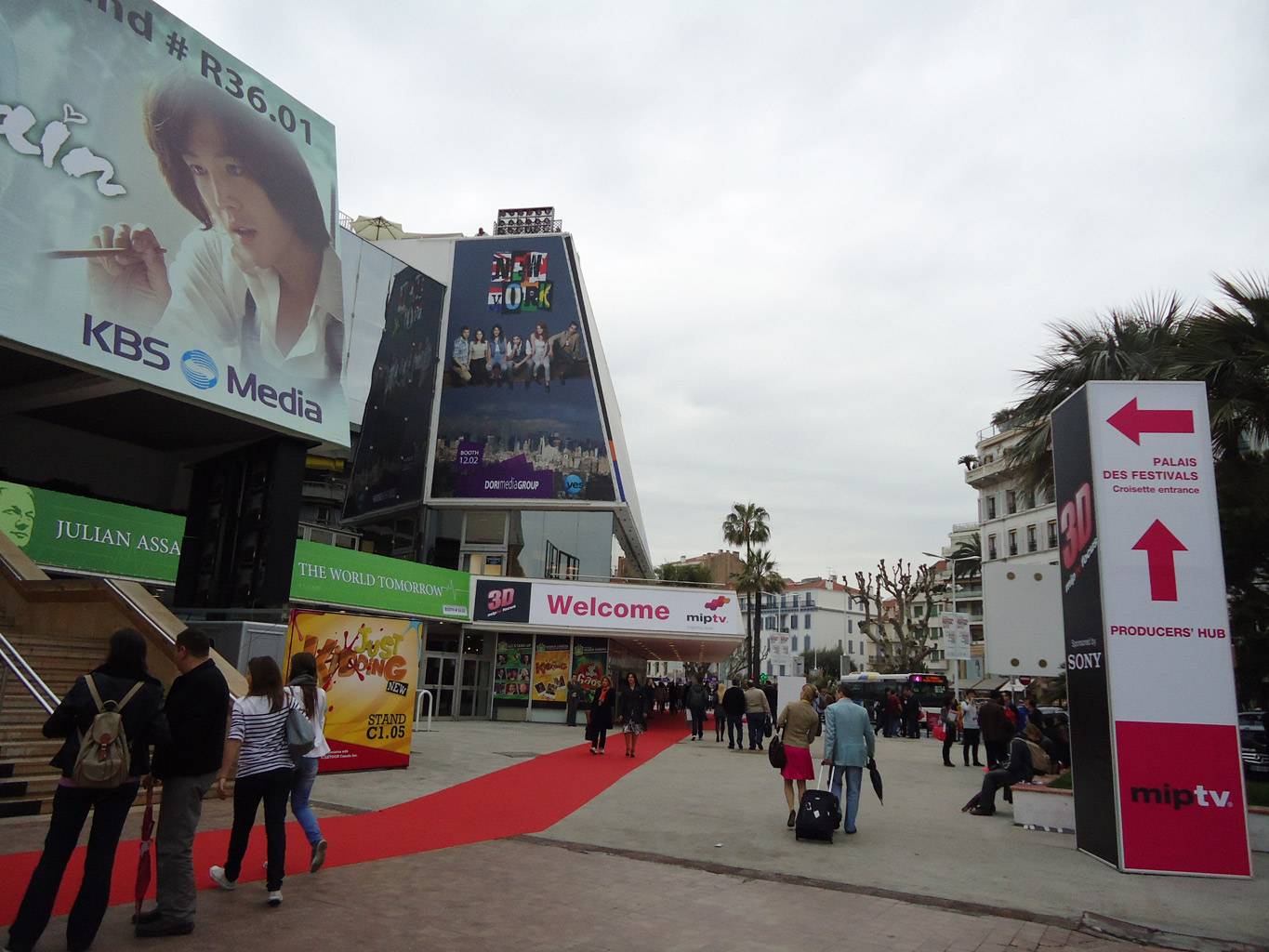
    The horror of that attack spreads across the world. A must-visit tourist destination, Nice has been relatively safe for years and is the gateway to Cannes, which houses the Palais des Festivals. A majority of the world’s biggest and most famous exhibitions and festivals are held in the building– the Lions, the Film Festival, Mipcom, MipTV, Midem, Toys, Mipim and many others. Nice airport is where everybody lands and takes a cab or a bus to Cannes.

    About 300 film professionals from India, Pakistan, Sri Lanka and Bangladesh attend the Cannes Film Festival, another 100-odd ad & marketing executives the Cannes Lions, and about 400 attend the TV and music markets – Mipcom, Mip TV and Midem every year.

    Cannes is where Indian broadcast, film, animation, production and music executives go to do business, buying and selling content, signing co-production and syndication deals. And have been doing so for many years.

    Should they continue visiting it now? Is it safe enough?

    Indeed, it is as safe as Mumbai’s Taj Mahal Hotel where France’s National Day celebrations were held on the same ill-fated evening. One can’t forget that a few years ago, the Taj Mahal Hotel itself was the target of a terrorist attack which left hundreds dead. Did we stop visiting the Taj Mahal Hotel?

    Visitors to Cannes and its exhibitions can be assured that France is going to step up its security to maximum. An additional 10,000 soldiers have been deployed on its streets. A state of emergency has been extended by another three months. Border controls are being strengthened. Because Nice has been hit, it is going to get heightened security attention. Ditto with Cannes .

    Expect visa formalities for those wanting to visit Schengen nations to get stricter (so please apply for your visas early; don’t make last minute applications). Expect airport security to be more vigilant. Already for the past six months visitors to Nice have had to go through an additional immigration check at the airport even if they have made their entry into Europe from another country.

    Additionally, even the administrators of the towns of Nice and Cannes are going to take strong security measures to build confidence and really keep visitors safe. One has to only go back to the measures that the Palais des Festivals took after the 911 attacks, with body scans and X-ray machines. Queues used to be pretty long then.

    Reed Midem is also going put its best behind making Mipcom –which is the next big event slated to take place from 15-20 October in Cannes – safer for attendees. And it has been known take extreme measures to support its clients. Like refunding money to clients who were afflicted by the floods during the festival last year. Like contributing to the Cannes city to help it in its rehabilitation.

    Most agree that the only way to keep at bay those who want to damage nations and their people is to stay resolute and continue to do business as usual. Let us translate that into action.

    (Anil Wanvari is the founder, editor in chief of the Indiantelevision.com group and also the India, Pakistan, Sri Lanka, Bangladesh representative of Reed Midem’s Mipcom, MipTV, Midem and Mipim markets)

  • Nice terror attack, Cannes and the Palais des Festivals

    Nice terror attack, Cannes and the Palais des Festivals

    The date: 14 July. The location: The Taj Mahal Hotel in Mumbai’s Colaba area. French consul general Yves Perrin plays host to businessmen, politicians, artistes, entertainment professionals, journalists like he does every year on Bastille Day to celebrate France’s National Day. Wine, champagne, and a mouth watering menu of French cuisine is rustled up by the Taj’s chefs and served to those who have a linkage with France. That’s of course after the customary playing of the French national anthem and the speech by the honorary counsel general. The evening proceeds well and late into the night as guests mingle and enjoy each other’s company.

    Some 4,000-odd miles away in the picturesque city of Nice in the south of France, the entire Palais des Anglais is choc-a-bloc with general members of the public. The mood is celebratory. The bright summer sky, and the azure blue sea, are what the French Riviera town is known and has drawn tens of thousands of tourists during the holiday period.

    The local Nice government has planned an evening of fireworks and music to celebrate France’s National Day. Tourists and locals have been looking forward to an evening of revelry and gaiety. The main street is cordoned off courtesy the roadblocks that have been erected. Young couples with their children in prams, some with their elderly parents, kids with their parents, groups of young are lounging about, walking around relaxed.

    Suddenly, a white truck comes down the crowded road, swaying from side to side, driven at 40-50 miles per hour in a zig-zag motion and bodies start to fly. A scramble starts as word gets around further down the Promenade that a killer is on the loose. In the meanwhile, scores are hit by the white truck; some die on the spot; some are critically injured.

    In a matter of a few more minutes, the police shoot and kill the driver of the truck. Before that, however, the manic truck has inflicted maximum damage. On the street lie mangled, broken, twisted bodies, bleeding.

    Celebration has turned to shock. 84 people die, 10 children, and many more are hospitalized, critically injured.

    The horror of that attack spreads across the world. A must-visit tourist destination, Nice has been relatively safe for years and is the gateway to Cannes, which houses the Palais des Festivals. A majority of the world’s biggest and most famous exhibitions and festivals are held in the building– the Lions, the Film Festival, Mipcom, MipTV, Midem, Toys, Mipim and many others. Nice airport is where everybody lands and takes a cab or a bus to Cannes.

    About 300 film professionals from India, Pakistan, Sri Lanka and Bangladesh attend the Cannes Film Festival, another 100-odd ad & marketing executives the Cannes Lions, and about 400 attend the TV and music markets – Mipcom, Mip TV and Midem every year.

    Cannes is where Indian broadcast, film, animation, production and music executives go to do business, buying and selling content, signing co-production and syndication deals. And have been doing so for many years.

    Should they continue visiting it now? Is it safe enough?

    Indeed, it is as safe as Mumbai’s Taj Mahal Hotel where France’s National Day celebrations were held on the same ill-fated evening. One can’t forget that a few years ago, the Taj Mahal Hotel itself was the target of a terrorist attack which left hundreds dead. Did we stop visiting the Taj Mahal Hotel?

    Visitors to Cannes and its exhibitions can be assured that France is going to step up its security to maximum. An additional 10,000 soldiers have been deployed on its streets. A state of emergency has been extended by another three months. Border controls are being strengthened. Because Nice has been hit, it is going to get heightened security attention. Ditto with Cannes .

    Expect visa formalities for those wanting to visit Schengen nations to get stricter (so please apply for your visas early; don’t make last minute applications). Expect airport security to be more vigilant. Already for the past six months visitors to Nice have had to go through an additional immigration check at the airport even if they have made their entry into Europe from another country.

    Additionally, even the administrators of the towns of Nice and Cannes are going to take strong security measures to build confidence and really keep visitors safe. One has to only go back to the measures that the Palais des Festivals took after the 911 attacks, with body scans and X-ray machines. Queues used to be pretty long then.

    Reed Midem is also going put its best behind making Mipcom –which is the next big event slated to take place from 15-20 October in Cannes – safer for attendees. And it has been known take extreme measures to support its clients. Like refunding money to clients who were afflicted by the floods during the festival last year. Like contributing to the Cannes city to help it in its rehabilitation.

    Most agree that the only way to keep at bay those who want to damage nations and their people is to stay resolute and continue to do business as usual. Let us translate that into action.

    (Anil Wanvari is the founder, editor in chief of the Indiantelevision.com group and also the India, Pakistan, Sri Lanka, Bangladesh representative of Reed Midem’s Mipcom, MipTV, Midem and Mipim markets)

  • 250 Indian journalists to deliberate issues concerning women and children

    250 Indian journalists to deliberate issues concerning women and children

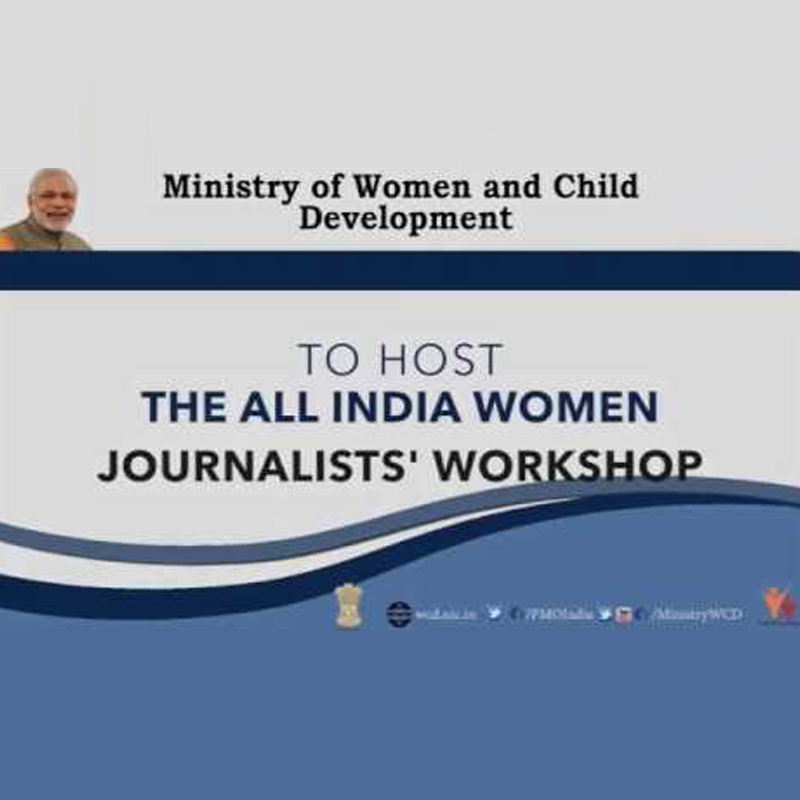
    NEW DELHI: Around 250 journalists from 30 States/UTs across the country representing 120 media organizations will come together on a single platform here tomorrow at the first ever ‘All India Women Journalists’ Workshop’ to understand, discuss and deliberate on issues concerning women and children.

    Organized by Women and Child Development ministry in association with Press Information Bureau of the Information & Broadcasting ministry, the women journalists represent print, electronic and online media across the country including small regional media organizations.

    This conference will be a unique gathering of women journalists who specialize in social sector reporting.

    WCD minister Maneka Sanjay Gandhi will herself make a presentation to showcase the achievements of the ministry during the last two years and also obtain a feedback on a number of issues concerning women and children especially on the recently released Draft National Policy for Women, Draft Anti Trafficking Bill, Draft Regulations under JJ Act.

    The ministry is also looking forward to new ideas/ areas concerning women and children which could be taken up in the coming months.

    In the post lunch session, the Commerce & Industry minister Nirmala Sitharaman will make a presentation on the achievements and new initiatives of the entire government during the last two years.

    The WCD ministry will also be putting up an exhibition of two of its large initiatives: Beti Bachao-Beti Padhao and Children’s Helpline-Childline.

    Tags: Maneka Sanjay Gandhi, Beti Bachao-Beti Padhao, Children’s Helpline-Childline, Women and Child Development ministry, Information and Broadcasting ministry, I&B, Pess Information Bureau. PIB, Beti Bachao-Beti Padhao, Childline, Draft National Policy for Women, Draft Anti Trafficking Bill, Draft Regulations under JJ Act

  • 250 Indian journalists to deliberate issues concerning women and children

    250 Indian journalists to deliberate issues concerning women and children

    NEW DELHI: Around 250 journalists from 30 States/UTs across the country representing 120 media organizations will come together on a single platform here tomorrow at the first ever ‘All India Women Journalists’ Workshop’ to understand, discuss and deliberate on issues concerning women and children.

    Organized by Women and Child Development ministry in association with Press Information Bureau of the Information & Broadcasting ministry, the women journalists represent print, electronic and online media across the country including small regional media organizations.

    This conference will be a unique gathering of women journalists who specialize in social sector reporting.

    WCD minister Maneka Sanjay Gandhi will herself make a presentation to showcase the achievements of the ministry during the last two years and also obtain a feedback on a number of issues concerning women and children especially on the recently released Draft National Policy for Women, Draft Anti Trafficking Bill, Draft Regulations under JJ Act.

    The ministry is also looking forward to new ideas/ areas concerning women and children which could be taken up in the coming months.

    In the post lunch session, the Commerce & Industry minister Nirmala Sitharaman will make a presentation on the achievements and new initiatives of the entire government during the last two years.

    The WCD ministry will also be putting up an exhibition of two of its large initiatives: Beti Bachao-Beti Padhao and Children’s Helpline-Childline.

    Tags: Maneka Sanjay Gandhi, Beti Bachao-Beti Padhao, Children’s Helpline-Childline, Women and Child Development ministry, Information and Broadcasting ministry, I&B, Pess Information Bureau. PIB, Beti Bachao-Beti Padhao, Childline, Draft National Policy for Women, Draft Anti Trafficking Bill, Draft Regulations under JJ Act

  • CommunicAsia2016, EnterpriseIT2016 and BroadcastAsia2016 open with a view of a digital future

    CommunicAsia2016, EnterpriseIT2016 and BroadcastAsia2016 open with a view of a digital future

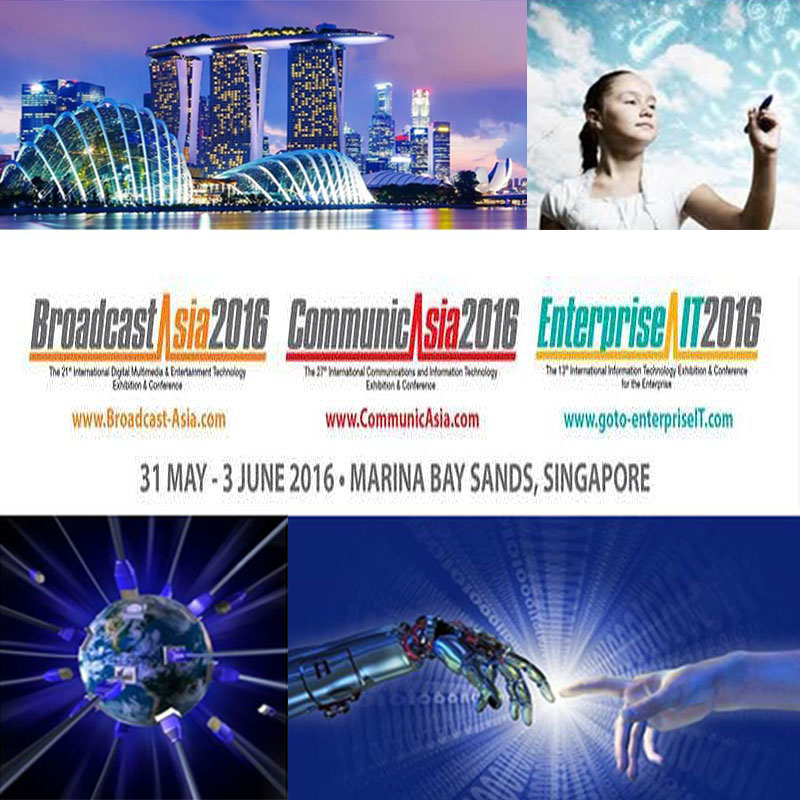
    MUMBAI – Robots, Virtual Reality, Drones, and Smart Devices – these are the innovations fueled by digital transformation that will pave the way of Asia Pacific’s future. With digitisation and smart technologies enhancing productivity, these innovations form the heart of CommunicAsia2016, EnterpriseIT2016 and BroadcastAsia2016 which opens today, from 31 May to 3 June 2016, at Marina Bay Sands, Singapore.

    From taxi bookings, travel lodging to courier arrangements, digital transformation which includes integration is at the heart of businesses’ and consumers’ lives today. On the back of digitalisation, bringing together the movers and shakers in the world of information and communications technology (ICT) and media, the event will gather about 1,800 exhibitors and 34 international pavilions from 53 countries and regions, bringing innovations critical for digital transformation in the region.

    “Disruptive models from businesses like Uber and Netflix – who are speakers of this year’s events – have propelled organisations’ into innovating and reinventing themselves to stay ahead in a digitally transformed world. The programme for CommunicAsia2016, EnterpriseIT2016 and BroadcastAsia2016 presents participants with cutting-edge technology from robotics, Internet of Things (IoT) manifestations, virtual reality (VR) and more, alongside topical, forward-thinking conversations led by industry thought leaders,” said Lindy Wee, Chief Executive, Singapore Exhibition Services.

    Gabriel Lim, CE-designate of the IMDA and Co-Managing Director of IDA said, “We are moving into an exciting digital future, marked by connectivity and creativity, which will bring about exciting possibilities for Singapore. The new IMDA will help Singapore seize these opportunities, by implementing the Infocomm Media 2025 masterplan, and creating a vibrant and globally competitive ICM sector here. CommunicAsia and BroadcastAsia are important shows that bring different parts of the ICM ecosystem together, creating platforms for individuals and companies to take the ICM sector to new frontiers. We look forward to working with our international partners and industry stakeholders to create a brighter future for us all.”

    CommunicAsia2016 and EnterpriseIT2016: Powering digital transformation
    Smart technology paves the way towards a smarter and more simplified digital lifestyle, producing countless opportunities that transform how people live, learn, work and play.

    Extending conversations from smart technology to smart city development, for the first time, this year’s programme will feature the Asia ICT Innovation Forum, held in strategic partnership with Huawei. Happening today, the forum features speakers from the World Economic Forum, Singapore’s Smart Nation Programme Office, Huawei, Facebook and BT and more. Participants will be immersed in presentations and discussions on technology’s impact to Asia Pacific’s digital economy, how businesses can make global digital inclusion a reality, and the value of Big Data analytics in today’s digital era.

    In addition to macroeconomic discussions, also new this year is the invitation-only CIO Forum, organised in partnership with the CIO Academy Asia, on 1 June. Speakers from IDA, The Farrer Park Company (Asia’s first integrated hub for healthcare & wellness), Tetra Pak and Agile Development, will provide CIOs and CTOs with the how-tos and pitfalls to avoid in delivering digital transformation for organisations.

    Today’s sharing economy with disruptive app-based business models entering the Asia Pacific market have raised discussions and drive for new ideas. Giving participants the platform to gain insights, network and spark ideas for innovation, IdeasCollider, a mini-conference held in collaboration with The Innovators Institute on 2 June 2016, will feature speakers from Galen Growth Asia, Padang & Co, Samsung Asia, SAP Innovation Center Network and more.

    IoT and connected devices remain to be of interest to businesses and consumers in the region. Bringing to life latest IoT innovations, theNXT@CommunicAsia2016 showcases products and solutions that can make enterprises, cities and consumers smarter, greener, and more efficient. Visitors will get to see the ‘Double’, a first of its kind surveillance robot for home use by OTSAW, and the Birloki system, an urban street connector and space activator aimed at boosting city environmental spaces by Nerei, among many others.

    Beyond ‘NXT’, other showfloor highlights include ST Electronics’s launch of its Next-Gen Connected Bus Stop. The system leverages on smart sensors, smart phones to capture and analyse wide-ranging data including number of passengers at bus stops, bus loads and traffic conditions to provide timely and useful bus information for commuters. Operators can optimise operational efficiency and resource utilisation, as well as maintain high quality of services to commuters. In addition, ST Electronics is signing a Memorandum of Understanding at its booth today with US-based Motorola Solutions, to co-create innovative technologies for advanced secured communications in public safety, national security and enterprise sectors across the region.

    Over at the Huawei booth is a series of innovative solutions developed to help accelerate digital economic development, ensure a nation’s safety and security, enrich an individual’s lifestyle and most importantly, build an ICT infrastructure for a Better Connected World.

    Asia’s largest gathering of satellite players at SatComm2016
    As the cornerstone of the world’s ICT system, satellite communications continue to play an important role in enabling and promoting digitisation. 2016 sees the largest gathering of satellite players from the region, with participation from Inmarsat, Intelsat, MEASAT, Singtel and more. The exhibitors will be showcasing the latest innovations from HTS monetisation and deployment models, to methods of customisation of spot beams and frequency reuse.

    BroadcastAsia2016 unveils content from core to beyond boundaries
    Content consumption has experienced an incredible shift with the influx of new content creation methods and delivery strategies. With broadcasters and content providers across Asia battle for viewers and look for innovative ways to monetise their content, BroadcastAsia2016 will bring together top industry service providers to showcase an entire ecosystem of the latest end-to-end solutions needed to stay ahead of the curve.

    On spotlight are new innovations from first time exhibitors such as CISCO, Dell, Tata Communications, Level3 Communications andHyku. For instance, Dell is showcasing how content experiences can be rejuvenated with the latest in 360 degree VR capabilities, andHyku, social TV application with patented second-screen sync technology designed to better connect and engaged hyper-connected consumers of today.

    Consumer expectations in the region increasingly present new challenges to provide more convenient and reliable access to content.Building on the success of its debut last year, the popular TV Everywhere! Zone returns with an emphasis on OTT and multiscreen solutions and explore the entire value chain of non-linear broadcasting.
    In addition to the TV Everywhere! Zone, attendees can explore other themed zones, including the Cinematography/Film/Production Technology Zone – where exhibitors are demonstrating the latest motion picture production tools and software capabilities – and the Post Production Hub where industry experts will share their knowledge and experience using technology showcased at BroadcastAsia2016.Oscar nominated, multi Grammy-nominated producer of soundtracks, classical and jazz recordings and former Senior Vice President ofSony BMG Masterworks, Christopher Craker will be a part of the lineup at the Post Production Hub, as well as award winning sound designer and composer of The Lord of the Rings Trilogy, The Hobbit, King Kong, Dave Whitehead.

  • CommunicAsia2016, EnterpriseIT2016 and BroadcastAsia2016 open with a view of a digital future

    CommunicAsia2016, EnterpriseIT2016 and BroadcastAsia2016 open with a view of a digital future

    MUMBAI – Robots, Virtual Reality, Drones, and Smart Devices – these are the innovations fueled by digital transformation that will pave the way of Asia Pacific’s future. With digitisation and smart technologies enhancing productivity, these innovations form the heart of CommunicAsia2016, EnterpriseIT2016 and BroadcastAsia2016 which opens today, from 31 May to 3 June 2016, at Marina Bay Sands, Singapore.

    From taxi bookings, travel lodging to courier arrangements, digital transformation which includes integration is at the heart of businesses’ and consumers’ lives today. On the back of digitalisation, bringing together the movers and shakers in the world of information and communications technology (ICT) and media, the event will gather about 1,800 exhibitors and 34 international pavilions from 53 countries and regions, bringing innovations critical for digital transformation in the region.

    “Disruptive models from businesses like Uber and Netflix – who are speakers of this year’s events – have propelled organisations’ into innovating and reinventing themselves to stay ahead in a digitally transformed world. The programme for CommunicAsia2016, EnterpriseIT2016 and BroadcastAsia2016 presents participants with cutting-edge technology from robotics, Internet of Things (IoT) manifestations, virtual reality (VR) and more, alongside topical, forward-thinking conversations led by industry thought leaders,” said Lindy Wee, Chief Executive, Singapore Exhibition Services.

    Gabriel Lim, CE-designate of the IMDA and Co-Managing Director of IDA said, “We are moving into an exciting digital future, marked by connectivity and creativity, which will bring about exciting possibilities for Singapore. The new IMDA will help Singapore seize these opportunities, by implementing the Infocomm Media 2025 masterplan, and creating a vibrant and globally competitive ICM sector here. CommunicAsia and BroadcastAsia are important shows that bring different parts of the ICM ecosystem together, creating platforms for individuals and companies to take the ICM sector to new frontiers. We look forward to working with our international partners and industry stakeholders to create a brighter future for us all.”

    CommunicAsia2016 and EnterpriseIT2016: Powering digital transformation
    Smart technology paves the way towards a smarter and more simplified digital lifestyle, producing countless opportunities that transform how people live, learn, work and play.

    Extending conversations from smart technology to smart city development, for the first time, this year’s programme will feature the Asia ICT Innovation Forum, held in strategic partnership with Huawei. Happening today, the forum features speakers from the World Economic Forum, Singapore’s Smart Nation Programme Office, Huawei, Facebook and BT and more. Participants will be immersed in presentations and discussions on technology’s impact to Asia Pacific’s digital economy, how businesses can make global digital inclusion a reality, and the value of Big Data analytics in today’s digital era.

    In addition to macroeconomic discussions, also new this year is the invitation-only CIO Forum, organised in partnership with the CIO Academy Asia, on 1 June. Speakers from IDA, The Farrer Park Company (Asia’s first integrated hub for healthcare & wellness), Tetra Pak and Agile Development, will provide CIOs and CTOs with the how-tos and pitfalls to avoid in delivering digital transformation for organisations.

    Today’s sharing economy with disruptive app-based business models entering the Asia Pacific market have raised discussions and drive for new ideas. Giving participants the platform to gain insights, network and spark ideas for innovation, IdeasCollider, a mini-conference held in collaboration with The Innovators Institute on 2 June 2016, will feature speakers from Galen Growth Asia, Padang & Co, Samsung Asia, SAP Innovation Center Network and more.

    IoT and connected devices remain to be of interest to businesses and consumers in the region. Bringing to life latest IoT innovations, theNXT@CommunicAsia2016 showcases products and solutions that can make enterprises, cities and consumers smarter, greener, and more efficient. Visitors will get to see the ‘Double’, a first of its kind surveillance robot for home use by OTSAW, and the Birloki system, an urban street connector and space activator aimed at boosting city environmental spaces by Nerei, among many others.

    Beyond ‘NXT’, other showfloor highlights include ST Electronics’s launch of its Next-Gen Connected Bus Stop. The system leverages on smart sensors, smart phones to capture and analyse wide-ranging data including number of passengers at bus stops, bus loads and traffic conditions to provide timely and useful bus information for commuters. Operators can optimise operational efficiency and resource utilisation, as well as maintain high quality of services to commuters. In addition, ST Electronics is signing a Memorandum of Understanding at its booth today with US-based Motorola Solutions, to co-create innovative technologies for advanced secured communications in public safety, national security and enterprise sectors across the region.

    Over at the Huawei booth is a series of innovative solutions developed to help accelerate digital economic development, ensure a nation’s safety and security, enrich an individual’s lifestyle and most importantly, build an ICT infrastructure for a Better Connected World.

    Asia’s largest gathering of satellite players at SatComm2016
    As the cornerstone of the world’s ICT system, satellite communications continue to play an important role in enabling and promoting digitisation. 2016 sees the largest gathering of satellite players from the region, with participation from Inmarsat, Intelsat, MEASAT, Singtel and more. The exhibitors will be showcasing the latest innovations from HTS monetisation and deployment models, to methods of customisation of spot beams and frequency reuse.

    BroadcastAsia2016 unveils content from core to beyond boundaries
    Content consumption has experienced an incredible shift with the influx of new content creation methods and delivery strategies. With broadcasters and content providers across Asia battle for viewers and look for innovative ways to monetise their content, BroadcastAsia2016 will bring together top industry service providers to showcase an entire ecosystem of the latest end-to-end solutions needed to stay ahead of the curve.

    On spotlight are new innovations from first time exhibitors such as CISCO, Dell, Tata Communications, Level3 Communications andHyku. For instance, Dell is showcasing how content experiences can be rejuvenated with the latest in 360 degree VR capabilities, andHyku, social TV application with patented second-screen sync technology designed to better connect and engaged hyper-connected consumers of today.

    Consumer expectations in the region increasingly present new challenges to provide more convenient and reliable access to content.Building on the success of its debut last year, the popular TV Everywhere! Zone returns with an emphasis on OTT and multiscreen solutions and explore the entire value chain of non-linear broadcasting.
    In addition to the TV Everywhere! Zone, attendees can explore other themed zones, including the Cinematography/Film/Production Technology Zone – where exhibitors are demonstrating the latest motion picture production tools and software capabilities – and the Post Production Hub where industry experts will share their knowledge and experience using technology showcased at BroadcastAsia2016.Oscar nominated, multi Grammy-nominated producer of soundtracks, classical and jazz recordings and former Senior Vice President ofSony BMG Masterworks, Christopher Craker will be a part of the lineup at the Post Production Hub, as well as award winning sound designer and composer of The Lord of the Rings Trilogy, The Hobbit, King Kong, Dave Whitehead.