
Category: Event Coverage

  • IBC 2016 scores another triumph

    IBC 2016 scores another triumph

    The 49 th edition of IBC 2016 held at Amsterdam’s RAI convention centre between 8-13 September 2016 resulted in streets, hotel lobbies, trams, restaurants, bars, cafes, and even the infamous red light district brimming over with techies and business executives.

    Statistics released by the IBC office reveal that 55,796 professionals attended the six-day exhibition-cum-conference, coming from 160 countries. 668 more attended this year compared to 2015. 435 speakers took part in more than 100 sessions including keynotes and panel discussions during the IBC conferences.

    On the exhibition side, 1,800 exhibitors set up tent in the RAI with stands. 249 of them were newbies to the trade show.

    One important addition to the feature areas in the exhibition was the IBC IP Interoperability Zone, an initiative to push forward open standards in new connectivity. Supported by AIMS and the IABM and working with AES,AMWA, the EBU, SMPTE and VSF, IBC created a dedicated exhibit which demonstrated verified technical progress in IP interoperability and featured the award-winning VRT-EBU LiveIP studio which was used for IBCTV’s production at this year’s show.

    IBC chief executive Michael Crimp was thrilled to bits. Said he: “IBC really is the only forum that attracts a global audience, the most comprehensive exhibition, and the best thought-leaders to spark the debate. Above all else, it is about bringing people together to share knowledge and to do business. It is clear, from the buzz around the whole show, that this has been a great year.”

    It probably had a record participation this year from India too. Specific numbers were not available but they definitely were in excess of 300. CTOs of broadcast majors, cable ops roamed the aisles trying to get to grips the technological upheaval the world of television. OTT, cable TV is going through. Dish TV’s Jawahar Goel, Tata Sky’s Harit Nagpal, Videocon d2h Himanshu Patil were spotted meeting their tech suppliers. GTPL’s Anirudh Singh Jadeja was checking out the latest in STBs and billing solutions.

    Among the major Indian exhibitors figured: Media Guru, Amagi, Wasp3D, Canara Lighting, Tata Elxsi, and Prime Focus Technologies.

    Media Guru’s Sanjay Salil said he had back to back meetings with clients which kept him on his toes throughout the six days.

    According to Goel, the transformation of the industries towards the cloud,IP and streaming services is going to change the way everyone in traditional television delivers and creates content. In the process, this is going to put pressure on vendor pricing – especially those who are continuing to work in the old linear television broadcast ways.

    Amongst the key trends noticed were the increasing shift towards augmented reality, virtual reality filming equipment, processing and VR and AR video delivery. Ultra HD, HDR, OTT platforms and app development and deployment were some of the major key words heard during the six days.

  • IBC 2016 scores another triumph

    IBC 2016 scores another triumph

    The 49 th edition of IBC 2016 held at Amsterdam’s RAI convention centre between 8-13 September 2016 resulted in streets, hotel lobbies, trams, restaurants, bars, cafes, and even the infamous red light district brimming over with techies and business executives.

    Statistics released by the IBC office reveal that 55,796 professionals attended the six-day exhibition-cum-conference, coming from 160 countries. 668 more attended this year compared to 2015. 435 speakers took part in more than 100 sessions including keynotes and panel discussions during the IBC conferences.

    On the exhibition side, 1,800 exhibitors set up tent in the RAI with stands. 249 of them were newbies to the trade show.

    One important addition to the feature areas in the exhibition was the IBC IP Interoperability Zone, an initiative to push forward open standards in new connectivity. Supported by AIMS and the IABM and working with AES,AMWA, the EBU, SMPTE and VSF, IBC created a dedicated exhibit which demonstrated verified technical progress in IP interoperability and featured the award-winning VRT-EBU LiveIP studio which was used for IBCTV’s production at this year’s show.

    IBC chief executive Michael Crimp was thrilled to bits. Said he: “IBC really is the only forum that attracts a global audience, the most comprehensive exhibition, and the best thought-leaders to spark the debate. Above all else, it is about bringing people together to share knowledge and to do business. It is clear, from the buzz around the whole show, that this has been a great year.”

    It probably had a record participation this year from India too. Specific numbers were not available but they definitely were in excess of 300. CTOs of broadcast majors, cable ops roamed the aisles trying to get to grips the technological upheaval the world of television. OTT, cable TV is going through. Dish TV’s Jawahar Goel, Tata Sky’s Harit Nagpal, Videocon d2h Himanshu Patil were spotted meeting their tech suppliers. GTPL’s Anirudh Singh Jadeja was checking out the latest in STBs and billing solutions.

    Among the major Indian exhibitors figured: Media Guru, Amagi, Wasp3D, Canara Lighting, Tata Elxsi, and Prime Focus Technologies.

    Media Guru’s Sanjay Salil said he had back to back meetings with clients which kept him on his toes throughout the six days.

    According to Goel, the transformation of the industries towards the cloud,IP and streaming services is going to change the way everyone in traditional television delivers and creates content. In the process, this is going to put pressure on vendor pricing – especially those who are continuing to work in the old linear television broadcast ways.

    Amongst the key trends noticed were the increasing shift towards augmented reality, virtual reality filming equipment, processing and VR and AR video delivery. Ultra HD, HDR, OTT platforms and app development and deployment were some of the major key words heard during the six days.

  • Ang Lee and the art of 4KHD 3D 120 fps film-making

    Ang Lee and the art of 4KHD 3D 120 fps film-making

    AMSTERDAM: Ang Lee is an auteur par excellence. His films Crouching Tiger Hidden Dragon and The Life of Pi bear testimony. Lee is open to pushing technology to mount a magnificent tale. Lee was at the IBC here to talk about his latest film Billy Lynn’s Long Halftime Walk.

    What’s different about his latest work is that it has been shot in 4K HD 3D and at a 120 fps frame rate under the Tristar banner for a 11-November release in the US. It is the highest frame rate that a film has been shot at so far, and has been filmed at a budget of $ 46-48 million. The film has been shot on the Sony 4K F65 by two-time Oscar-winning cinematographer John Toll.

    Otherwise, it’s based on Ben Fountain’s 2012 novel by the same name. It follows Billy Flynn, a 19-year old soldier (played by newcomer Joe Alwynn) and his unit who survive a battle in Iraq to return to the U.S. for a promotional tour culminating with a halftime-show appearance at a Thanksgiving football game.

    Lee has said that his film is a story of a young man “learning his place in the world, and of the special brotherhood among men at arms, the depths of their bonds, and the sacrifices they make.”

    Sony’s TriStar and Britain’s Film4 are partnering with Jeff Robinov’s Studio 8 for the film.

    Lee disclosed during his key note that it was a challenge to film at 120 fps 4K HD 3D.

    “We had to really light up everything differently. I wanted realism for this film. I wanted the expressions to be real, and not acting. But, everything was magnified,” he stated. “If the actors overacted or made some awkward facial movements, it became larger than life.”

    “I am a guinea pig for the studio,” he confessed. “Since the day I began this film, everyday has been crazy. I was seeing what was being shot at 120 fps 4K in 60 fps 2K monitors, and it was a challenge. I kept telling my heads of departments that they are not good enough. Because, even I am not good enough while working with this new format.”

    While Lee was greeted with applause, some stated that the clip which was screened looked very much like “video” and did not look like cinema.

    To this Lee, responded, “Please give us a chance. It is a baby, and we are pioneering something. Directing this film has been very humbling for me as no one has tread this path before, shooting in 120 fps 4K, HD, 3D.”

    Lee chose to shoot at these frame rates because it would allow the studio to be able to experiment with various frame rates below — right from 60 fps to 24 fps to 48 for releases in different territories because of the availability — or lack of 4K HD 3D 120 fps projectors – in theatres in different parts of the world.

    “I am not saying 24 fps 2D is not good enough,” he pointed out. “But, it is about making a difference and taking a leap forward in technology and in art.”

    Lee ended by saying he would continue pushing the boundaries on technology in cinema. He would like the equipment makers to come up with smaller cameras, better sensors.

  • Ang Lee and the art of 4KHD 3D 120 fps film-making

    Ang Lee and the art of 4KHD 3D 120 fps film-making

    AMSTERDAM: Ang Lee is an auteur par excellence. His films Crouching Tiger Hidden Dragon and The Life of Pi bear testimony. Lee is open to pushing technology to mount a magnificent tale. Lee was at the IBC here to talk about his latest film Billy Lynn’s Long Halftime Walk.

    What’s different about his latest work is that it has been shot in 4K HD 3D and at a 120 fps frame rate under the Tristar banner for a 11-November release in the US. It is the highest frame rate that a film has been shot at so far, and has been filmed at a budget of $ 46-48 million. The film has been shot on the Sony 4K F65 by two-time Oscar-winning cinematographer John Toll.

    Otherwise, it’s based on Ben Fountain’s 2012 novel by the same name. It follows Billy Flynn, a 19-year old soldier (played by newcomer Joe Alwynn) and his unit who survive a battle in Iraq to return to the U.S. for a promotional tour culminating with a halftime-show appearance at a Thanksgiving football game.

    Lee has said that his film is a story of a young man “learning his place in the world, and of the special brotherhood among men at arms, the depths of their bonds, and the sacrifices they make.”

    Sony’s TriStar and Britain’s Film4 are partnering with Jeff Robinov’s Studio 8 for the film.

    Lee disclosed during his key note that it was a challenge to film at 120 fps 4K HD 3D.

    “We had to really light up everything differently. I wanted realism for this film. I wanted the expressions to be real, and not acting. But, everything was magnified,” he stated. “If the actors overacted or made some awkward facial movements, it became larger than life.”

    “I am a guinea pig for the studio,” he confessed. “Since the day I began this film, everyday has been crazy. I was seeing what was being shot at 120 fps 4K in 60 fps 2K monitors, and it was a challenge. I kept telling my heads of departments that they are not good enough. Because, even I am not good enough while working with this new format.”

    While Lee was greeted with applause, some stated that the clip which was screened looked very much like “video” and did not look like cinema.

    To this Lee, responded, “Please give us a chance. It is a baby, and we are pioneering something. Directing this film has been very humbling for me as no one has tread this path before, shooting in 120 fps 4K, HD, 3D.”

    Lee chose to shoot at these frame rates because it would allow the studio to be able to experiment with various frame rates below — right from 60 fps to 24 fps to 48 for releases in different territories because of the availability — or lack of 4K HD 3D 120 fps projectors – in theatres in different parts of the world.

    “I am not saying 24 fps 2D is not good enough,” he pointed out. “But, it is about making a difference and taking a leap forward in technology and in art.”

    Lee ended by saying he would continue pushing the boundaries on technology in cinema. He would like the equipment makers to come up with smaller cameras, better sensors.

  • IBC to Honour NASA at IBC2016 Awards

    IBC to Honour NASA at IBC2016 Awards

    MUMBAI: IBC announced that it is to give one of its highest awards, the Judges’ Prize, to NASA. Celebrating the achievements of one of the world’s most well known brands, the award will be presented at the ceremony held on Sunday 11 September at the RAI, Amsterdam. NASA’s contribution to the ceremony promises to be literally out of this world.

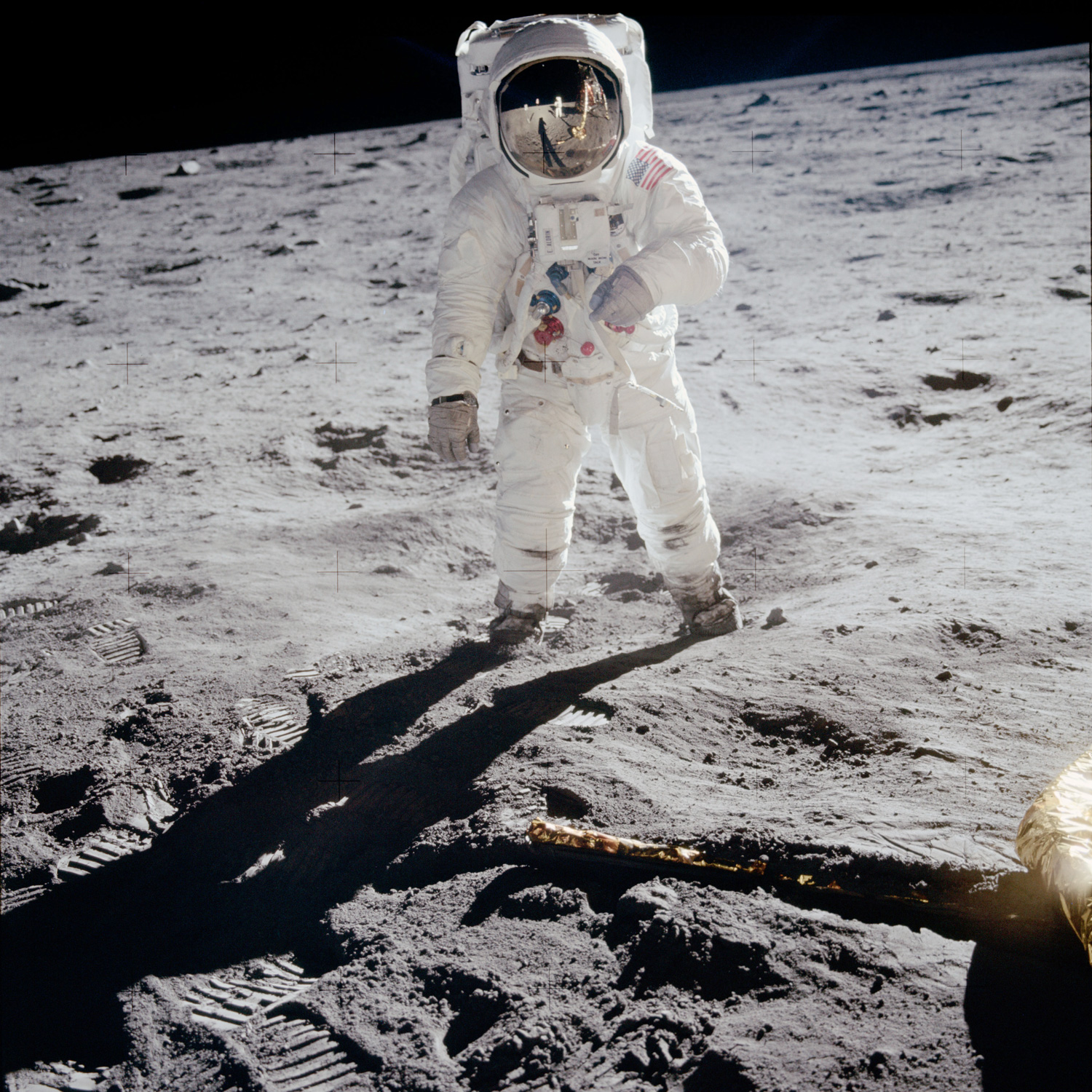
    From the very beginning, NASA has ensured that every moment of the space exploration programme has been captured, firstly with film cameras and then video, including the globally viewed footage of Neil Armstrong setting foot on the moon in 1969. Today NASA operates a 4K Ultra HD channel and allows viewers to watch footage on a wide range of televisions and internet connected devices.

    The Judges’ Prize is presented to a company or project displaying a unique creative, technical or commercial imagination and past winners include Stereoscopic 3D coverage of the 2010 FIFA World Cup and DNA’s single frequency networks for HD with DVB-T2, which was awarded in 2011. The award will be accepted by Carlos Fontanot, Imagery Manager for the International Space Station and Kelly O. Humphries, the voice of mission control for more than 50 shuttle missions and hundreds of space station activities.

    “It is impossible to understate the importance of NASA’s film and video efforts,” said Michael Crimp, CEO of IBC. “Their engineers and producers have had to overcome massive technical challenges, which has meant close co-operation with suppliers of equipment and systems. The result has been stunning imagery, which has literally changed our view of the world.”

    The IBC Awards Ceremony will take place on Sunday 11 September, and is free for all IBC attendees. Find out more about the awards at IBC.org/awards and register for your IBC2016 pass at IBC.org/register

  • IBC to Honour NASA at IBC2016 Awards

    IBC to Honour NASA at IBC2016 Awards

    MUMBAI: IBC announced that it is to give one of its highest awards, the Judges’ Prize, to NASA. Celebrating the achievements of one of the world’s most well known brands, the award will be presented at the ceremony held on Sunday 11 September at the RAI, Amsterdam. NASA’s contribution to the ceremony promises to be literally out of this world.

    From the very beginning, NASA has ensured that every moment of the space exploration programme has been captured, firstly with film cameras and then video, including the globally viewed footage of Neil Armstrong setting foot on the moon in 1969. Today NASA operates a 4K Ultra HD channel and allows viewers to watch footage on a wide range of televisions and internet connected devices.

    The Judges’ Prize is presented to a company or project displaying a unique creative, technical or commercial imagination and past winners include Stereoscopic 3D coverage of the 2010 FIFA World Cup and DNA’s single frequency networks for HD with DVB-T2, which was awarded in 2011. The award will be accepted by Carlos Fontanot, Imagery Manager for the International Space Station and Kelly O. Humphries, the voice of mission control for more than 50 shuttle missions and hundreds of space station activities.

    “It is impossible to understate the importance of NASA’s film and video efforts,” said Michael Crimp, CEO of IBC. “Their engineers and producers have had to overcome massive technical challenges, which has meant close co-operation with suppliers of equipment and systems. The result has been stunning imagery, which has literally changed our view of the world.”

    The IBC Awards Ceremony will take place on Sunday 11 September, and is free for all IBC attendees. Find out more about the awards at IBC.org/awards and register for your IBC2016 pass at IBC.org/register

  • Digital is nothing, says Havas Media’s Tom Goodwin

    Digital is nothing, says Havas Media’s Tom Goodwin

    NEW DELHI: Tom Goodwin is not happy with the way marketers have abused the word ‘digital.’ In fact, he doesn’t want the word to be used at all. To the roomful of marketing enthusiasts gathered at Zee MELT 2016, who anticipated a lecture on cutting edge technology and the disruption it brings to the brand world, this 37-year-old SVP of strategy and Innovation at Havas Media said: ‘Sorry, no change.’

    “Things have never changed so fast before, but it will never change so slowly again. If you look at the daily everyday lives of people in suburbs, not everything is changing. While it’s important to look ahead, we need to pay more attention to what is not changing,” Goodwin made it clear.

    One needs to be mindful of the human behaviour that has evolved from centuries, that won’t change so easily.

    Through a number of pictorial slides, Goodwin then took the audience to a time before the industrial revolution to point out how that big change had effected how we function, and its implication in the new world of disruption.

    Giving the analogy of how power plants looked almost the same before and after electricity was discovered, Goodwin implied that technology can be embraced at surface and at deeper levels. Only when the latter is done that real efficiency kicks in a system.

    Putting it in context with the current ‘digital’ onslaught, “currently businesses are trying new technology only at the fringes. Whenever something new comes up, they are tacking it on their existing system without rebuilding the entire structure,” Goodwin said.

    Goodwin then cautioned creative agencies from celebrating their so called ‘digital ads.’ “Simply sticking a TV ad on a pre roll before an online video, or publishing an ad on an online portal doesn’t make it digital. There is nothing new about using the same old ideas in different devices,” he said.

    Calling the current use of technology in marketing as a ‘digital garnish’ done mostly for PR attention rather than serving a functional purpose, Goodwin called said businesses were getting complacent on using digital in silos or add-ons.

    “That Dominos ad with drones delivering pizza was an attractive piece of content but we still await a drone to deliver pizza at our doorstep. British Airways went all high tech and introduced Neuroblankets that would gauge its passenger’s emotions for collecting data, when its website doesn’t have an email address to write to! That’s a perfect waste of marketing spends when the same purpose could be served if they get their basics right,” Goodwin advised.

    In order for business to get these basics right, Goodwin suggested a few pointers. To start with “we need to stop getting awed by digital like we are still in the 90s, as if it is some place to go to. In today’s world there is no concept of ‘online’ or ‘offline.’ An 11 year old boy who has grown up with Internet, doesn’t go to shop ‘online on his smart phone’, he simply shops. Marketers need to understand this concept of ‘disappearing of digital world,’ and stop introducing new ‘digital arms’ in their respective organisations,” Goodwin explained.

    “People really don’t care about how a product gets to them, they don’t want to understand what is radio, print, digital, display, out of home, television or streaming, so marketers too should stop overanalysing over the different channels,” he said.

    Marketers should be mindful of the new realities like virtual reality augmented reality, chat bots and even AI; but ensure that technology or tools aren’t limiting their imagination and growth. “There is a famous saying that goes ‘we shape tools and then they shape us.’ Hotel lobbies still use a giant desk to separate the consumer from the staff, when it was a product of pre digital age and can be done without off now,” cited Goodwin.

    Goodwin sees huge potential in the use of anticipatory computing in advertising where contextual information on how a consumer lives his or her day can help brands target them with meaningful and relevant advertising. “The goal of an advertiser is to make people’s life easier. Brand building can play a huge role in this. Advertising should help us navigate through life not woo us at points with cool tech toys,” Goodwin opined.

    Lastly, Goodwin left the room with a thought: Digital is nothing. It is vital but noticeable only through its absence. This mad race to add another ‘digital’ silo to our business isn’t challenging any system, but following it. No changes there.

  • Digital is nothing, says Havas Media’s Tom Goodwin

    Digital is nothing, says Havas Media’s Tom Goodwin

    NEW DELHI: Tom Goodwin is not happy with the way marketers have abused the word ‘digital.’ In fact, he doesn’t want the word to be used at all. To the roomful of marketing enthusiasts gathered at Zee MELT 2016, who anticipated a lecture on cutting edge technology and the disruption it brings to the brand world, this 37-year-old SVP of strategy and Innovation at Havas Media said: ‘Sorry, no change.’

    “Things have never changed so fast before, but it will never change so slowly again. If you look at the daily everyday lives of people in suburbs, not everything is changing. While it’s important to look ahead, we need to pay more attention to what is not changing,” Goodwin made it clear.

    One needs to be mindful of the human behaviour that has evolved from centuries, that won’t change so easily.

    Through a number of pictorial slides, Goodwin then took the audience to a time before the industrial revolution to point out how that big change had effected how we function, and its implication in the new world of disruption.

    Giving the analogy of how power plants looked almost the same before and after electricity was discovered, Goodwin implied that technology can be embraced at surface and at deeper levels. Only when the latter is done that real efficiency kicks in a system.

    Putting it in context with the current ‘digital’ onslaught, “currently businesses are trying new technology only at the fringes. Whenever something new comes up, they are tacking it on their existing system without rebuilding the entire structure,” Goodwin said.

    Goodwin then cautioned creative agencies from celebrating their so called ‘digital ads.’ “Simply sticking a TV ad on a pre roll before an online video, or publishing an ad on an online portal doesn’t make it digital. There is nothing new about using the same old ideas in different devices,” he said.

    Calling the current use of technology in marketing as a ‘digital garnish’ done mostly for PR attention rather than serving a functional purpose, Goodwin called said businesses were getting complacent on using digital in silos or add-ons.

    “That Dominos ad with drones delivering pizza was an attractive piece of content but we still await a drone to deliver pizza at our doorstep. British Airways went all high tech and introduced Neuroblankets that would gauge its passenger’s emotions for collecting data, when its website doesn’t have an email address to write to! That’s a perfect waste of marketing spends when the same purpose could be served if they get their basics right,” Goodwin advised.

    In order for business to get these basics right, Goodwin suggested a few pointers. To start with “we need to stop getting awed by digital like we are still in the 90s, as if it is some place to go to. In today’s world there is no concept of ‘online’ or ‘offline.’ An 11 year old boy who has grown up with Internet, doesn’t go to shop ‘online on his smart phone’, he simply shops. Marketers need to understand this concept of ‘disappearing of digital world,’ and stop introducing new ‘digital arms’ in their respective organisations,” Goodwin explained.

    “People really don’t care about how a product gets to them, they don’t want to understand what is radio, print, digital, display, out of home, television or streaming, so marketers too should stop overanalysing over the different channels,” he said.

    Marketers should be mindful of the new realities like virtual reality augmented reality, chat bots and even AI; but ensure that technology or tools aren’t limiting their imagination and growth. “There is a famous saying that goes ‘we shape tools and then they shape us.’ Hotel lobbies still use a giant desk to separate the consumer from the staff, when it was a product of pre digital age and can be done without off now,” cited Goodwin.

    Goodwin sees huge potential in the use of anticipatory computing in advertising where contextual information on how a consumer lives his or her day can help brands target them with meaningful and relevant advertising. “The goal of an advertiser is to make people’s life easier. Brand building can play a huge role in this. Advertising should help us navigate through life not woo us at points with cool tech toys,” Goodwin opined.

    Lastly, Goodwin left the room with a thought: Digital is nothing. It is vital but noticeable only through its absence. This mad race to add another ‘digital’ silo to our business isn’t challenging any system, but following it. No changes there.

  • Ads low in print with greater customer feedback in digital mediums

    Ads low in print with greater customer feedback in digital mediums

    NEW DELHI: There was a growth of forty per cent in advertising in the United Kingdom in fifiteen years from the turn of the millennium, but the the print medium saw a fall of 65 per cent in advertising in the same period.

    Online advertising is the dominant source in the UK cornering 74 per cent, according to Financial Times Chief Data Officer Tom Betts.

    In a presentation on Data Insights: Disrupting News at the just concluded ZEEMelt, Betts said however, that sixty per cent do not remember what they read on the social media and agreed with a comment that the digital medium had sight and sound but the touch was missing and that was why the primt medium continued to grow in many countries.

    However, it was equally true that there is very little feedback in the print medium unlike the data driven growth in digital technologies. “Customer data is at the centre” and was the customer DNA in digital platforms, he said.

    “It is really exciting times for news just as it is for advertising”, he said, with mobiles and i-pads providing competition to the print medium.

    Digital technology has also helped to bring personal finance to the top and the advertising wold has to cater to that.

    But customer engagement comes from ‘Recency, Frquency, and Volume’ and advertising is analytically power driven through personalised products and data-supported discovery often depending on what he termed as ‘digital serendipity.’

    Echoing these same sentiments in another session on ‘The future oif storytelling’, Conde Nast Digital Director Gaurav Mishra said today’s consumer wanted on-the-go content.

    As a result, interest graphs were narrowing as the consumer only wanted to see what interested him.There was also ‘digital serendipity’ resulting in a lot of sharing on the social platforms. This led to a shared purpose and passion.

  • Ads low in print with greater customer feedback in digital mediums

    Ads low in print with greater customer feedback in digital mediums

    NEW DELHI: There was a growth of forty per cent in advertising in the United Kingdom in fifiteen years from the turn of the millennium, but the the print medium saw a fall of 65 per cent in advertising in the same period.

    Online advertising is the dominant source in the UK cornering 74 per cent, according to Financial Times Chief Data Officer Tom Betts.

    In a presentation on Data Insights: Disrupting News at the just concluded ZEEMelt, Betts said however, that sixty per cent do not remember what they read on the social media and agreed with a comment that the digital medium had sight and sound but the touch was missing and that was why the primt medium continued to grow in many countries.

    However, it was equally true that there is very little feedback in the print medium unlike the data driven growth in digital technologies. “Customer data is at the centre” and was the customer DNA in digital platforms, he said.

    “It is really exciting times for news just as it is for advertising”, he said, with mobiles and i-pads providing competition to the print medium.

    Digital technology has also helped to bring personal finance to the top and the advertising wold has to cater to that.

    But customer engagement comes from ‘Recency, Frquency, and Volume’ and advertising is analytically power driven through personalised products and data-supported discovery often depending on what he termed as ‘digital serendipity.’

    Echoing these same sentiments in another session on ‘The future oif storytelling’, Conde Nast Digital Director Gaurav Mishra said today’s consumer wanted on-the-go content.

    As a result, interest graphs were narrowing as the consumer only wanted to see what interested him.There was also ‘digital serendipity’ resulting in a lot of sharing on the social platforms. This led to a shared purpose and passion.