Category: Event Coverage

  • IDOS 2017: Television is growing and will continue to do so, says BARC’s Partho Dasgupta

    IDOS 2017: Television is growing and will continue to do so, says BARC’s Partho Dasgupta

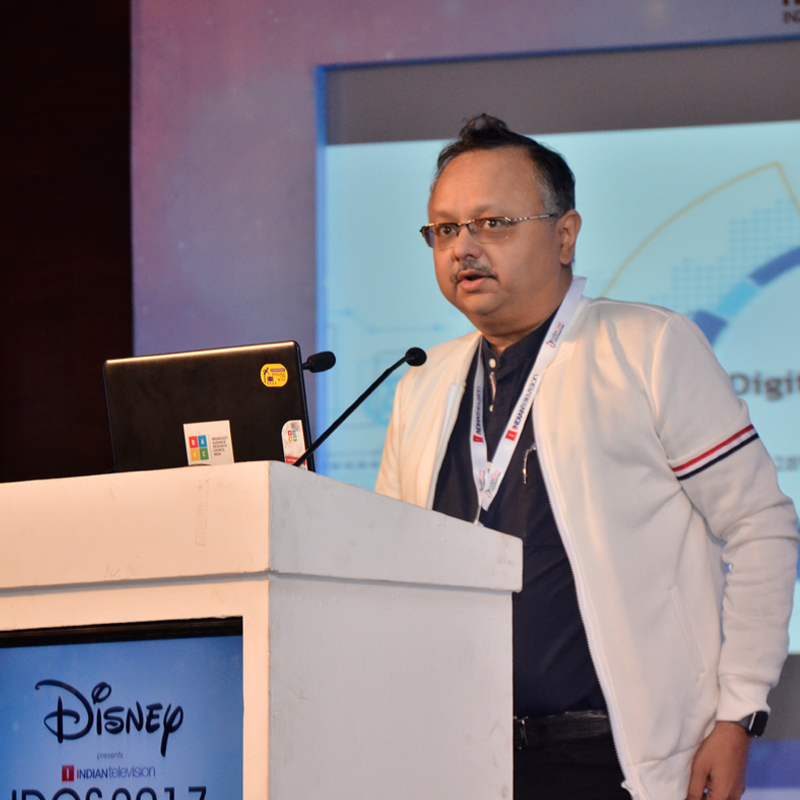
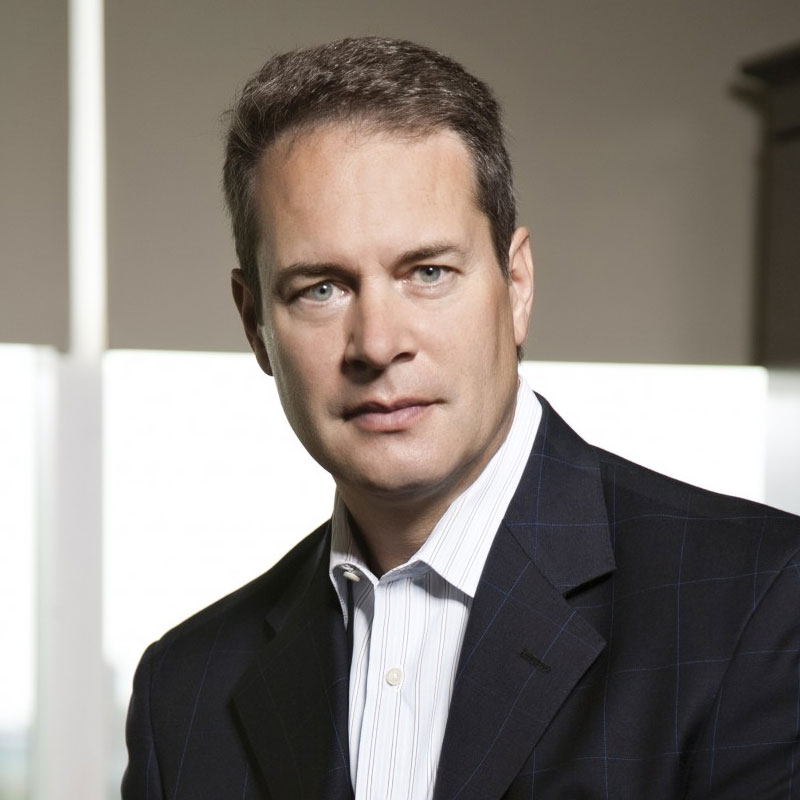
    NEW DELHI: Broadcast Audience Research Council (BARC) India CEO Partho Dasgupta sounded a positive note at Indiantelevision.com’s 13th Indian Digital Operators Summit (IDOS 2017) in New Delhi’s The Lalit on 28 September 2017. Dasgupta stated that the video distribution ecosystem will have place for all types of DPOs – DTH, cable TV, OTT, terrestrial, free to air and even FTTH.

    “India’s cable TV operators have been pretty resilient over the years,” said he. “There is a lot potential for them to distribute video in India. TV has till now reached around 64 per cent of the Indian households. Thirty-six per cent is still left. A 100 million households are still not connected with TV. Even if 50 million more were to get connected, that’s a lot of potential for everyone. Multiple players and multiple digital formats will exist,” he said.

    He explained that India is one of the few countries where around 40 (television) channels are being added (as per MIB permissions) every year. “The launches are happening because there is potential in the market,” he said.

    He pointed out that TV viewership is seeing growth like never before. “It spurted by 25 per cent to 27.0 billion impressions in 2017, from 22.4 billion impressions in 2016,” he stated. “Even the daily average time spent (ATS) has grown by 16 per cent from three hours seven minutes in week 41 2015 to three hours thirty-seven minutes in week 36, 2017.”

    Dasgupta exclaimed that Doordarshan’s FreeDish is emerging as a potent force. “Free TV with 80 channels is being watched in rural areas. For them, the fact that some of the programmes are repeats does not matter because viewers are watching them for the first time.”

    He highlighted that there is a lot of excitement around flat TVs, HD TV, 4K TV, but the reality in the Indian marketplace is that 86 per cent of TVs are CRT (cathode ray tube) sets. “There is movement upwards expected in this area too,” he added.

    Dasgupta was of the view that the new millenials are watching some TV but they are also consuming video on their handheld devices. “However, OTT has some way to go because of bandwidth issues in India,” he pointed out. “Though the situation could change soon with dropping bandwidth prices and quality. And, we are getting ready with our measurement of multiscreen viewing which will include handheld devices.”

    He stated that future of television looks healthy, as almost every genre is showing growth in terms of viewership. “GEC has expanded 12 per cent since the beginning of the year,” he elaborated. “News and movies have also grown. Hindi movies grew by 60 per cent in 2017 over week 41 of 2015; Hindi news by a whopping 93 per cent in 2017 over week 41 of 2015.”

    For TV industry professionals, that should surely come as good news.

  • IDOS 2017: Cable TV sector needs more collaborative broadcasters, say MSOs

    IDOS 2017: Cable TV sector needs more collaborative broadcasters, say MSOs

    NEW DELHI: Even as the multi-system operators and cable operator are doing their bit to aid digitisation, broadcasters need to participate more in the process which officially has been completed. They need to be more transparent and supportive of the distribution platform operator — in this case the MSO and cable TV operator — and not be like a tax collector always asking for more.

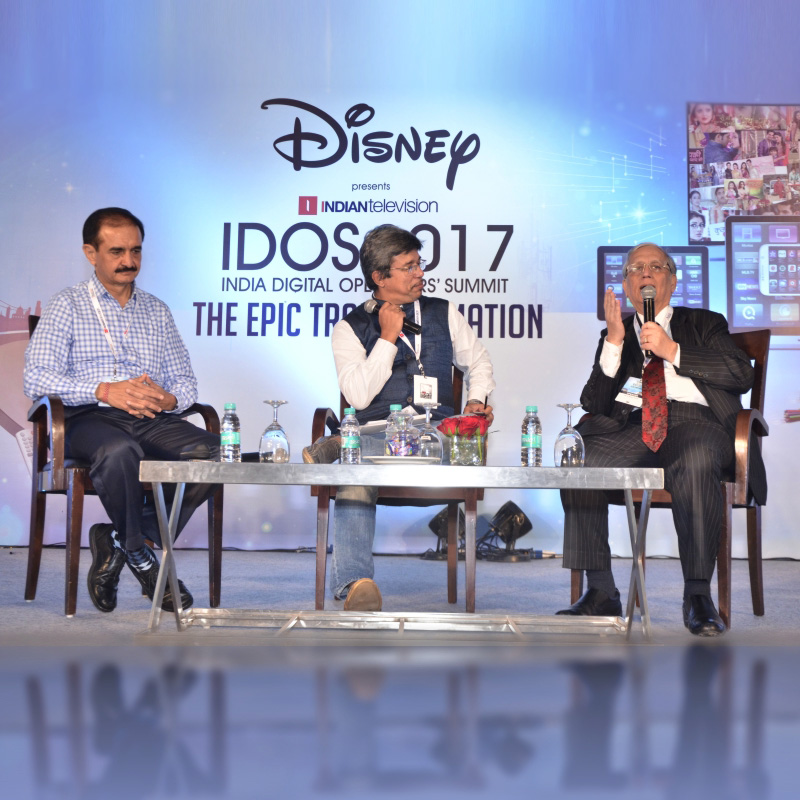
    This was the general view of both, S N Sharma of Den and Ashok Mansukhani of Incable in a discussion in ‘The Indian MSO: Redefining the raison’etre’, who also said it was only now that the MSO was beginning to monetise almost five years after digital addressable system was first launched.

    Furthermore, the broadcasters were still free to fund the business as they wanted, and, as Sharma put it, there are only two laws that control the broadcaster – the Programme and Advertising Codes and the Cable Television Networks (Regulation) Act 1995. Thus, there is virtually no regulation for the broadcaster, Sharma said.

    Both, Sharma and Mansukhani agreed that MSOs and even LCOs had put in a lot of effort to get DAS off the ground — that too in a period of four to five years, which is unprecedented globally.

    “The DAS regulation was brought in for transparency and to allow everyone to have a fair share of the huge subscription revenues that viewers were paying to watch cable TV,” said Sharma. “But, the sad part is that broadcasters are constantly asking for rate increases of 24 per cent or so without even asking if it were possible,” added Mansukhani.

    They said that it would be better if the broadcasters were to communicate rate increases to viewers and invest in promoting that, rather than expecting MSOs who are just about recovering from the hangover of the huge investments they have put into DAS as well as getting robust systems and processes in place. “Also, we are not equipped or have the creative mindset to communicate this effectively for all channels,” agreed both Sharma and Mansukhani.

    Rather than going to courts to stall the TRAI tariff order, they said, broadcasters could collaboratively work with the DPOs to take DAS on to the next level. “Neither the government nor the regulator has been able to do anything,” they said.

    “We have our own troubles, recouping our investments to bring back profitability into the cable TV sector, as well as dealing with piracy and leakages which broadcasters take time to check and stop because they have procedures to follow,” said Sharma.

    Mansukhani disagreed with Indiantelevision.com founder, CEO and editor-in-chief Anil Wanvari that the cable TV sector will not be in a position to manage complicated skinny a la carte bundles for the millions of customers that it serves. “Our backends are ready,” he said. “Our SMS, billing and KYC of the customers is in place,” he said. “We are just waiting for the (court) order to come through.”

    He opined that the industry would ultimately survive the changes, and he was also confident that the cable industry was ready to adapt to any new technology.
    To a question about monetisation, Sharma said the MSOs were not beginning to reap the monetary benefits of Phase I. Even the DTH industry was beginning to break even only now, more than a decade after it was launched.
    Mansukhani said he was happy that the Hinduja’s headend in the sky (HITS) NXTDigital was reaching 1.5 million consumers. But, the need was to break even as early as possible and “giving a dividend to my shareholders.”

    But, he stressed the need to keep the dialogue open with the LCOs who are the ones dealing with the consumer. Consumer connect has to continue. He regretted that the level playing field that he had hoped to get from the government has never came.

    Both Mansukhani and Sharma agreed that, though the government had not made a difference between the urban and rural viewers, this was necessary if there has to be penetration in rural areas. Otherwise, they would go to Doordarshan’s FreeDish.

    Sharma said his company was soon launching a device that would not be internet-based and could be used for all gadgets including mobiles, TV, tabs, and so on.

    Mansukhani said that it was clear that the MSO will have to graduate from being a TV MSO to a multi-screen MSO.

  • Imagine Communications to host thought-leadership sessions at IBC2017

    Imagine Communications to host thought-leadership sessions at IBC2017

    MUMBAI: Imagine Communications has unveiled the schedule and speaker lineup for the IBC2017 edition of the company’s popular ImagineLIVE Power Sessions, a series of presentations and interactive discussions featuring prominent executives and experts from across the media and entertainment and IT industries. This year’s thought-leadership series, presented at Imagine’s IBC stand (4.A01), also includes a line-up of Master Classes, topical educational courses led by Imagine Communications subject matter experts.

    Power Sessions and Master Classes will be conducted at lunchtime and in the early afternoon throughout the exhibition. The IBC2017 Power Session series will include testimonials from customers and highlights of how media companies from around the world are adapting operations to next-generation architectures to achieve new levels of agility and evolve their media facilities to meet future market requirements. Power Sessions and Master Classes will focus on the solutions and technology trends, such as microservices, inventory optimisation, real-world IP deployments and OTT distribution, that are influencing the direction of evolving business models and monetisation practices.

    “The media industry is now fully engaged in transitioning operations to a new technology foundation based on next-generation architectures that leverage IP, commercial-off-the-shelf (COTS) compute and networking resources, virtualization and other IT technology attributes,” said Imagine Communications CEO Charlie Vogt, who will be kicking off the ImagineLIVE sessions with a special keynote on the impact of microservices that features representatives from IBM and Al Jazeera. “ImagineLIVE Power Sessions and Master Classes spotlight the trends and technologies influencing the direction of the industry and provide valuable insights into the remaining challenges and future opportunities facing today’s media and entertainment ecosystem.”

    ImagineLIVE Power Sessions and Master Classes schedule and speakers:

    Friday, 15 Sept., 17:00-17:45
    CEO Keynote: Why Microservices are a Game Changer (Charlie Vogt, CEO, Imagine Communications; Brick Eksten, Chief Product Officer, Imagine Communications; Steve Canepa, Global Managing Director Telecommunications, M & E Industry, IBM; and Miljenko Logozar, Chief Broadcast Architect, Al Jazeera Media Network)

    Saturday, 16 Sept., 12:00-12:30
    Master Class: Microservices & Open Zenium (Darren Gallipeau, Zenium Program Director, Imagine Communications)

    Saturday, 16 Sept., 15:00-15:30
    Multiscreen Opportunities – Moderated by Allan McLennan, President and Chief Market Technologist, PADEM Media Group (Steve Reynolds, CTO, Imagine Communications; Tony Emerson, WorldWide Managing Director, Media & Cable, Microsoft; and Chris Carey, Chief Revenue Officer, Verizon Digital Media Services)

    Sunday, 17 Sept., 12:00-12:30
    Master Class: End-to-End IP (John Mailhot, CTO of Networking, Imagine Communications and Andreas Lattmann, CTO, tpc)

    Sunday, 17 Sept., 15:00-15:30
    From Playout to Payout (Yuval Fisher, CTO of Distribution, Imagine Communications)

    Monday, 18 Sept., 12:00-12:30
    Master Class: Ad Optimization in the Cloud (Graham Heap, Director, Product Management, Advertising Management Systems, Imagine Communications)

    Monday, 18 Sept., 15:00-15:30
    Revenue Optimization (Sarah Foss, Chief Product Office, Advertising Management Systems, Imagine Communications and Angela Goodsir, Chief Technology & Systems Operations Officer, Multi Channel Network)

  • Green Gold backs first animation pitch at Asia Television Forum

    Green Gold backs first animation pitch at Asia Television Forum

    MUMBAI: Visitors to Asia’s leading entertainment content market and conference event – Reed Exhibitions’s Asia Television Forum in Singapore – will get to see Indian animation studio Green Gold Animation getting prominence. The Indian studio has become the first Indian company to get behind as the sponsor of the ATF Animation Pitch which is being introduced at the confab this year on 28 November-1 December.  

    The competition is being positioned as the premier Asian pitching competition for creators and producers of innovative concepts for new and original animation targeting kids, and is aimed at facilitating the exchange of ideas and talent between leading international television, distribution and Asia-based producers. 

    ATF has opened its call for entries from today for the live pitch which will take place on 30 November 2017 in conjunction with the annual trade event. This platform will showcase the best of Asian originality and expose ideas for export and development within and even outside the region. 

    Backed by Green Gold Animation, India’s largest animation production company that caters primarily to children, ATF Animation Pitch 2017 is set to become Asia’s top-flight pitching competition. With the tagline, “Think. Believe. Dream. And finally… Dare.”, ATF Animation Pitch 2017 is open to all creators and producers from around Asia (individuals, students and small-to-medium-sized companies), keen to present their new and original, animated shorts, series and feature films in the genres of Comedy, Adventure, Action, Fantasy. 

    The winner will receive a US$ 19,000 prize from Green Gold Animation, comprising a $ 2,500 cash award, and a consultancy package worth $16,500 that is tailor-made for the winner to develop their animation, making it ready to pitch to broadcasters. 

    As part of the bespoke consultancy package, Green Gold Animation’s leading executives will also share their expertise in areas such as marketing, writing a pitch document, global format sales opportunities, trailer and sizzle preparation, production budgeting, talent payments, press publicity, the global sales process and editing. 

    The first round of judging will be led by Green Gold Animation  founder and CEO, Rajiv Chilaka, and Green Gold Animation (USA) vice-president and head of US operations Marc Lumer, with input from the company’s acquisitions and marketing teams led by vice-president, content sales Bharath Laxmipati. 

    Shortlisted participants will then progress to the live pitching event, where they have the opportunity to pitch their ideas in front of some of the industry’s most experienced veterans, including senior executives from Green Gold Animation. Leading commissioning editors will also be on stage, offering advice and commentary on the ideas pitched. 

    “Being surrounded by passionate and ambitious people, who share a similar love for animation, is a great way to feel inspired and expand intellectual horizons. It’s also important to give back to the entrepreneurial ecosystem in the animation industry, foster creativity and innovation. After all, animation is the craft of the soul,” says  Chilaka about the company’s rationale for supporting ATF Animation Pitch. 

    “We are extremely proud to launch the inaugural ATF Animation Pitch with one of Asia’s biggest players in the industry – this is a true reflection of the potential of a rising Asia. Just as our existing pitch competitions – ATF Formats Pitch and Southeast Asian Film Financing Project Market – have nurtured Asia’s talent pool and created a culture of excellence in content, we are confident that ATF Animation Pitch will be another significant element within ATF that will allow us to be the enabler of so much merit across this vast and diverse continent,” says Reed Exhibitions   ATF senior project director Yeow Hui Leng.

  • IBC2017: Imagine to show seamless transition to next-gen architecture

    IBC2017: Imagine to show seamless transition to next-gen architecture

    MUMBAI: Imagine Communications will at IBC2017 show how it is assisting all segments of the media & entertainment ecosystem in the migration of workflows to a more agile technology foundation through inventive-but-pragmatic practices and solutions that significantly reduced the friction at the intersection of traditional and next-generation networks.

    Imagine Communications will use IBC2017, a media and entertainment industry’s European trade show and exhibition, which begins 14 September in Amsterdam, to provide real-world proof points of how it is assisting several of its customers — through unprecedented openness and the practical application of innovation — to move mission-critical live, playout, distribution and business operations to software-based, virtualized environments based on commercial off-the-shelf (COTS) equipment.

    “For the past several years, Imagine Communications has been leading the evolution toward and embracing the power and efficiencies of IP, software and cloud, delivering the agility, flexibility and responsiveness our clients require to compete in today’s hyper-competitive market,” said Imagine CEO Charlie Vogt. “Imagine’s bold vision and direction, first articulated at IBC2014, has fully evolved into market-leading advertising, playout and automation, networking and OTT solutions that are being deployed around the world.”

    Imagine Communications will once again present a series of knowledge-sharing seminars featuring thought leaders from across the media and entertainment and IT industries. In addition to showcasing commercial deployments of next-generation solutions, the IBC2017 ImagineLIVE Power Sessions, as well as a series of Master Classes, will explore critical and timely technology trends, including microservices, cloud, all-IP production, the latest standards, next-gen advertising management and inventory optimisation. Presentations and Master Classes will be conducted at the Imagine Communications stand (Amtrium, 4.A01) throughout the event. A schedule and full description of all presentations will be issued prior to the event.

    An additional IBC2017 objective for Imagine Communications is to demonstrate how the company is assisting broadcasters, distributors and other media companies in stretching the boundaries of their businesses and generating new monetisation opportunities through the creative integration of broadband networks into their content distribution strategies. The ability of broadcasters to complement over-the-air transmissions with the two-way capabilities of Internet-based distribution, for example, holds the potential to redefine the competitive positioning of broadcasters in the media & entertainment ecosystem.

    Imagine Communications will also unveil additional details of its Open Zenium™ program, introduced at NAB in the spring. The Open Zenium program is designed to stimulate innovation through a commitment to collaboration and transparency by sharing source code to the Zenium microservices library with a community of Imagine customers and partners. Zenium is the company’s pure microservices platform for building smarter, more efficient and future proof media operations. Open Zenium provides media companies with the ability to customise, optimize, modify, design and deploy next-generation workflows and services of unparalleled efficiency, scalability and performance, as well as gain access to a vibrant software community backed by teams of developers, architects and DevOps engineers. 

    IBC2017 will also mark the European debut of several product innovations from Imagine Communications, including the Selenio™ Network Processor (SNP), an all-IP-capable processing solution optimised for handling uncompressed UHD signals based on the SMPTE ST-2110 specification for transporting media over IP networks. SNP is designed to usher in a new era in live production, optimising both studio and mobile facilities to take full advantage of the performance, agility and efficiency benefits of IT-based infrastructures, while at the same time easing the upgrade of operations to support UHD picture quality. The most recent enhancements to Versio™, the company’s integrated playout solution, will also be featured at IBC2017.

    Imagine Communications is spearheading the gradual and managed transition to next-generation architectures across four major pillars — live, playout, multiscreen and advanced advertising management solutions — through the practical application of innovation that oversees every step in the customer’s migration of their workflows to more agile and flexible environments.

    Live 

    In addition to the Imagine SNP, featured live production solutions include the hybrid SDI-IP Platinum™ IP3 router and UHD-ready EPIC™ MV multiviewer. Imagine solutions empower media companies to transform sports, in-venue and other live production operations by leveraging standard IT equipment without squandering investments in traditional broadcast technology or sacrificing performance. Imagine Communications’ production and contribution portfolio provides ultra-low latency encoding and decoding and the delivery of standards-based uncompressed media over IP for HD and UHD, as well as third-party lightweight compression technologies. Imagine’s live production portfolio also supports the most recent UHD processing technologies, including up/down conversion, high dynamic range (HDR) image quality and precision timing. 

    Imagine Communications will also participate in the IBC2017 IP Showcase, a cooperation of multiple standards organizations and the Alliance for IP Media Solutions (AIMS) dedicated to demonstrating the interoperability of the ST-2110 specification (currently being drafted) and highlighting the creative and business-building benefits of IP technology.

    Playout

    Imagine Communications’ Versio playout and graphic workflow solutions support compressed or uncompressed IP-based playout, advanced multichannel and UHD playback and branding. Also featured will be the latest interface and integration advances available on the modular Cloud-Native and hybrid playout and master control solutions, which seamlessly unify playout, automation and graphics and support fully virtualized deployments, including cloud environments. Showcasing its storage capabilities, Imagine will demonstrate the capabilities of Versio IOX™, which provides sharable and scalable storage — SAN and NAS — throughout the content lifecycle while offering the highest levels of digital asset protection.

    Multiscreen 

    Imagine’s multiscreen delivery portfolio is among the most comprehensive available and supports high-density and high video quality transcoding and delivery for OTT linear and on-demand services, all supported by advanced dynamic ad insertion (DAI) capabilities. An end-to-end OTT infrastructure solution, which includes transcoding, middleware, packaging and client apps, will be showcased at IBC. The company’s next-generation DAI and unified distribution portfolios have been designed to enable content distributors to consolidate and simplify their infrastructures to reduce costs and explore new monetisation opportunities. 

    Advertising Management

    Imagine’s end-to-end, multiplatform ad management portfolio features open, modular systems that help manage, connect, deliver and optimize ad revenue. Highlighted demonstrations include sales, scheduling and analytics for linear and nonlinear monetisation, as well as ground-breaking inventory optimisation and other advanced ad management capabilities enabled though Imagine’s next-generation and modular xG solutions portfolio. The company will also demonstrate the first-of-its-kind integration of playout and scheduling achieved through the unification of its Versio™ and xG Schedule™ solutions, as well as hyper-localised monetisation models that leverage IP-based delivery networks.

  • Competing with Google & FB on free side and with Netflix and Amazon on subscription — Hotstar CEO Ajit Mohan

    One of the early movers in the Indian over the top (OTT) space, Hotstar – – part of the Twenty First Century Fox-owned Star India – has been setting a scorching pace for itself. In a nation where high data costs made customers wary of consuming content when on the move, it displayed a voracious appetite for acquiring them. Today, its massive subscriber base equals or surpasses the total subs of all the VOD services in Asia and rivals that of the big boys in the US.

    It has also been aggressive in its content strategy – paying top dollar for movies and TV series from  top notch Hollywood studios as well as for sports telecast rights.

    21st Century’s Fox’s leaders – the Murdoch brothers Lachlan and James – along with the Star India management led by Uday Shankar and Sanjay Gupta – are quite bullish that the investments being poured into Hotstar are well worth it and should bear fruit, sooner than later. Estimates are that around $500 million has so far been pumped into the VOD service.

    The man in the hotseat at Hotstar has been the US returned executive Ajit Mohan who has been steering it right from day one three years ago. With single minded focus, he has been at his task of building a robust product and a team that helps it remain so.

    The publicity shy Mohan was one of the Indian VOD leaders who had a one on one with Indiantelevision.com founder, CEO and editor in chief Anil Wanvari at the highly successful  second VIDNET OTT conference in Mumbai two weeks ago.  Excerpts from the conversation:

    First of all, I would like to start by congratulating you on your CBS Showtime deal. Tell me little more about it?

    If you look at what we have built on Hotstar premium we feel pretty proud. I think we have built a fairly distinctive subscription service which in many ways I think compares to the best in the world.  I am not sure that there is any platform worldwide that brings together the best studios for American TV shows and movies. With Hotstar Premium we have HBO, Fox and Disney movies exclusively. And we thought that the only missing piece was Showtime. So we have done an exclusive partnership with  Showtime to both bring the Showtime brand and also the best of their marquee shows  to India on Hotstar.

    I think it really completes our offering. We have built a free service that has scaled up dramatically in the past two and half years or so. Now we are kind of applying some of the same rigor and aggression on P remium as well.  From the content proposition point of view I feel pretty good about how it  looks like.

    What will we get to watch? What kind of shows and will it be on same day and date?

    It is. One of the promises we have as pat of the English part of Premium is that all the TV shows will be aired at the same time as  the US. That’s true for HBO, Fox and it will be true for Showtime as well. Billions, one of their best shows will be on Hotstar and Twin Peaks too. Overall, I think it’s a pretty exciting roster.

    I think more than any individual shows what I am excited about is that both HBO and Showtime in the US have created these fabulous premium pay TV propositions on the back of really redefining what a high quality  American show looks like. I think  by bringing them together on the same platform, what we are essentially saying when it comes to English content there really is no need to look beyond Hotstar Premium. Not in terms of other services.  Or not in terms of torrents, which is still a meaningful source of competition for us.

    We will now start investing in educating the market where there is a substantial number of users who have an affinity to English who are spending a lot of time – especially the younger demographic – digging up for content on torrents. And very often they don’t get good quality versions. They don’t get it on time.Or they get It dubbed or subtitled in a language that is not familiar.

    Now the reality is that as a consumer in India you don’t need to have  to go through the pain. It may be difficult for them to understand the richness of the proposition that is  on offer today. Now when you compare it to consumers in any other part of the world today; the Indian consumer has probably the best deal.  Rs 199 per month only…I don’t think price is a  challenge anymore. So I think it’s more about creating  awareness.  And I think there is still a segment – especially in the younger demographic – who believes it’s cool to pirate. And I am sure that philosophy will be carried by a lot of people. For most people,  it is just creating awareness that there is a serious ease of getting almost every show that you want on Hotstar Premium at a price that is quite affordable. And that is what we are going to invest in on the back of the Showtime deal and what we already have on Premium. And taking it to a mass market in a way that’s not been done in this country before.

    So will you have Hindi sub titles? Or in any other languages?

    Currently, it’s English subtitles. I think the fundamental  point you are making is improving accessibility, can dramatically expand the audience for English TV shows or movies in India. Hollywood has shown that with dubbing. The direction we are moving is to make it accessible by subtitling in multiple languages which you will see over the next few months.

    How are you doing on the app download front?

    We have crossed 300 millions downloads and we are seeing downloads across all operators. Wifi.  Jio obviously has  had a tremendous impact on the ecosystem in terms of expanding access to mobile broadband and increasing affordability. Two things stand out over the last nine months when Jio has had this massive disruption. One is that video has  benefited disproportionately. For us what the last two years -and the last year in particular – has really established is the bet that we made if data was not a constraint,  people will gravitate towards  long-form content including on a mobile. That  what we saw in the early stages of the ecosystem , people consuming short form clips, user generated content  – that it did not represent the truth. It was not the end state; it was the beginning of the market.  That has really played out  And you see that in the data, the time spent time..the watch time on video  has grown disproportionately to social media.. And by multiple factors. And Hotstar has grown – disproportionately to any other video platform.

    300 million I don’t think somebody else has this kind of numbers in the world.

    I think Jio has been an enabler. But more and more you are seeing that for sieving out where consumers are going, both in terms of adoption and in terms of watch time. I think data is an enabler. My sense is that the more people have access to 4G, the cheaper data gets – a high quality propostion like Hotstar that has both the content proposition and is compelling as well  and we are seriously investing in technology to keep improving the consumer experience. I think that combination is quite powerful.

    We are seeing that in the numbers which are substantive. One of the numbers that stands out for us is that just on the Google Playstore globally we crossed 100 million downloads a couple of months ago. From what we know, only Netflix has done that globally outside of Hotstar and may be in the entertainment space, Spotify. And it does feel like even being in one market in India, I think  the scale of what we are seeing clearly compares to the best in the world.

    I believe this should be a moment of pride for the country as well that in the mobile ecosystem that we are blazing the trail in terms of what can be done. And for us, we really think of ourselves as “we are not replicating models that have happened in other parts of the world. We are truly creating a template for what a mobile centric business could look like which would be relevant in any market.”

    How many of these are active?

    In the month of May and June 2017, we crossed more than 100 million active users

    How would you define these actives?

    Somebody coming and spending meaningful time at least once a month. The reality is almost everyone who comes to Hotstar comes multiple times a month. And very often multiple times a day. But a monthly active way is a good way to look at it as it a common measure for looking at adoption across the ecosystem. And all our 100 millions actives are unique.

    Some of the OTT players are distinguishing between monthly active users and uniques.  

    Digital is an interesting space where is there is no common measurement system in place and that equally applies to Facebook, Youtube or Hotstar. It makes sense to have a common measurement that is consistent. To the extent that  we know how to identify  unique users, their presence on devices, not everyone logs in. It’s not the same login across Hotstar, Facebook, Google  – all of those still remain. But We are seeing more than 100 million users coming to Hotstar.

    Are you still in the consumer acquisition mode or you have passed that. In what phase are you?

    I think we are going to be in a perennial growth mode for a long time because of two reasons: I think that’s the kind of company we want to build. The proposition is so exciting,  it’s relevant for more than 100 million users.

    Second, the context of India where as more people get access to  data… one of the things that we are convinced is the primary use case for getting people getting online can be video and Hotstar.

    The next 100 million or the first 500 million to go on digital in India.. we think mobile video and especially around the entertainment proposition that we have.. more than search, social media or ecommerce we can be the beach head. Because people love stories and it’s relevant for  a larger number of people. From that point of view I don’t think we are going to stay away from focusing on growth for a long time. I think we can be the primary use case for bringing people online in India.

    But your customer acquisition cost are going up or down?

    I think costs are going down. It’s a two and half year old platform now; there is a lot equity of the Hotstar as a brand. Once you reach a certain scale and have broken through I think the organic momentum starts kicking in. We are in the stage where it feels like growth is happening with far less effort than two years ago. Having said that it looks exciting to look for the next100 million users..and the next 100 million users after that.

    It’s not in an optimization mode, it’s in growth mode and in growth mode our focus is all three:  adoption of new users, it’s watch time and the third is revenue.

    I think for a uniquely consumer internet company we believe there is a virtuous cycle between consumer adoption, engagement and revenues.  We don’t see  it as competing, we see it as going together.  

    Varun (HotStar head of product and engineering EVP) said in some conference that he would like get some billion minutes. Correct me if am wrong?

    A year ago in APOSTech in Shanghai Varun had articulated this ambition of crossing a billion minutes a day in watch time. I don’t think we have said this publicly but we have crossed that  number a few times  in the past couple of months.  

    How has the playground has changed since you were here last year. What do you seeing? Your tech is keeping up or you have to spruce up your tech. You invested in Zapr to get some analytics in place. What has changed?

    Three things in my mind have changed.

    We have made significant movement in the past 12 months.  I think we have hired 60 engineers just in the last nine months. I think we are looking at doubling that number in the next six months.

    We have the clarity that we can build something unique in India and compete with some of the best global tech companies. It comes with building our own technology muscle.

    Second, if you look at the consumer internet space with lot of actions across e-commerce, fin-tech and our own media space, we have been quite thoughtful in building a deep bench in leadership. The past 12 months have been marked by a significant bulking up of our leadership capacity in Hotstar.

    Third big change that has happened as a result of that there is starting to be  a bit of a separation in terms of services that are standing out from an adoption, engagement and scale point of view – and clearly that’s happening.

    The last 12- 15 months have seen the launch of whole bunch of new services in OTT and a lot of them have very interesting propositions. They are occupying interesting positions in the market …some fairly niche but if I step back and think about it what we are proud of at Hotstar is we are breaking away when it comes to  serious scale and engagement.

    And for me it looks like we are competing with Google and Facebook on the free side which is all about its large scale,  ad supported and big numbers. And on the other front its subscription, which is still nascent, much smaller audience at the moment, we are competing with Netflix and Amazon Prime. At Hotstar, we have two sorts of vertical, one is the free ad supported business and the subscription business where we are facing two different sets of competitors.

    But I believe the ad supported services, IPL got you good revenues from two partners Vivo and Maruti. Agencies have told me its Rs 20 crore per head.

    I think we did okay.

    But that is serving out well in the terms of revenue.

    One of things is clear to advertisers and that’s a big movement in the last 12-24 months especially at a time when there have been a lot of issues around  brand safety that came up in the UK. I think two things are showing up I think most advertisers started to recognizing that the Hotstar proposition is unique. In most parts of the world high quality on demand content on streaming is completely behind the paywall. Therefore it’s not available for brands to advertise on like you can’t advertise on Netflix in US.

    So Hotstar represents a unique opportunity on digital where for the longest time advertisers could only reach audience through user generated content or short clips whereas on HotStar you get premium content which is very different from most streaming business models.

    Second thing that the advertisers started recognizing the power of its engagement. I think it different when you reach an audience when they are scrolling and checking something on social media for 30 seconds or when watching a 40 second clip. It’s a very distracted audience. So even when you presumably get scale and you get metrics like video views what you are not getting is real engagement that comes with long form content. There is a reason why television helped build brands for 50-60 years. It was because people spent time deeply immersed into stories. And that’s the proposition we offer on Hotstar.

    Sports is driving you plus Hollywood. You kind of have tip toed away from originals unlike what Amazon Prime or Netflix are doing?

    I feel I keep answering this question but for whatever reason people don’t want to embrace the answer – especially my peers. Sports is big on Hotstar.  Sports is less than 15 per cent of our total watch time. It’s definitely played a meaningful role for us.

    But TV shows and movies are much larger on Hotstar. The proposition of Hotstar at least for consumers is  that they know that Hotstar is beyond cricket or sports. On originals, almost everything we have is exclusively on Hotstar on digital. Right from the early stages we believe in the power of exclusive content. Which is why Game of Thrones, a Star Plus show is all exclusively on Hotstar. The originals bandwagon was started by the people who did not have the enough content. I am not sure why Hotstar with the most compelling  content portfolio in the world would want to get on the same bandwagon.

    Why is Republic TV  there on your platform?

    …..For more of the interview click and watch the video  link below

  • ALTBalaji is essentially everything that Balaji on TV is not: Sameer Nair

    MUMBAI: It was in the year 1994 that Sameer Nair was hired as a director-producer in the television industry. Shortly later, he became Star Movies’ executive producer.

    In the following years, he controlled acquisitions of movies for Star in India, and subsequently became its programming head. He eventually became the CEO of Star TV-India, a position he enjoyed till 2007. In 2008, Nair became the CEO of NDTV Imagine, a Hindi general entertainment channel from the NDTV stable, which went off air in 2011. In 2012, after quitting NDTV Imagine, Nair partnered with a few ex-colleagues and founded few startups in the media sector. In 2014, Nair became part of Ekta Kapoor’s Balaji Telefilms, a company that he had given break while in Star TV. He joined as group CEO and expanded Balaji’s digital business. In a recent development, just before Balaji and Reliance Industries announced that the latter has taken an equity stake in BLT a shade less than 25 per cent, Nair announced his departure from BLT end July.

    Nair was one of the speakers at indiantelevision.com’s second edition of Vidnet2017, held mid-July. He had a one-on-one conversation with Indiantelevision.com consulting editor Anjan Mitra.  Edited excerpts from the conversation:

    Has being in Balaji different from what you’ve been doing at Star and Imagine TV or even at a startup company?

    First of all, I have been associated with Balaji for many years because we used to work with them in Star. Balaji is primarily a television production house and is one of the most successful television production houses in India. And, the plan with Balaji was that how do you take a business like this and scale it up. How do you grow 10x? For example, for a company that is already having eight to nine shows on air, we have 20 per cent market share in general entertainment Hindi fiction. We make some movies too. So how do you grow 10x? We can’t go from 8 shows to 80 shows. So the sense was we have to go from being a B2B business to being a B2C business, which is where this plan of creating a (digital) platform came up. Now, if you could take all the Balaji shows today and put it on one channel, then that one channel would become the #1 channel. But obviously that ship has sailed and we couldn’t have started one more GEC channel. So it became clear that we should go B2C and should go digital (OTT). We should create content for it and act on our key strength, which is content creation.

    Which segment of the Balaji media business drives the revenues?

    Currently, television, obviously. TV is our base business where all the money comes from. But the future will be the digital business, which is Alt Balaji that we launched on April 16, 2017. That’s where the future is.

    How is Alt Balaji different?

    Balaji is known for its daily soaps on TV…shows that have been extremely popular and also have been criticized (for regressive themes, at times). Alt Balaji is essentially everything that Balaji on TV is not! The kind of content that we get to create (for Alt) is stuff that’s not available on TV; that you don’t see on TV and is exclusive to a platform. And, it’s in the fiction space because that’s what we specialize in. This is a big market. We have chosen to be in the OTT SVOD space.

    But critics say that the Indian digital realm is still more of traditional broadcasters, TV companies putting content available on linear or traditional television onto a digital platform. Do you agree with this line of thinking?

    It’s true. It’s common sense. Whenever a new medium starts and it grows, it lives off content from an old medium. That’s the way it goes. When satellite TV started in India, it was living off the English language programming from the West. Then English language programming was dubbed into Hindi and finally original Hindi and regional language programming came. It’s a process of evolution. Logically, if you got to put the content out there into a new medium, by default, Star’s Hotstar would put its own TV shows. In fact, that drove a lot of the viewership (to the digital platform) to start with. But as it goes forward, if you can get content everywhere, then why would you pay for it? If you actually want people to pay for anything, then it (content) has to be good and exclusive and people must see value in it.

    You mean content that you once famously described “between Narcos and Naagin”. Has that median changed or are you still grappling to traverse that terrain?

    In India in the 2000 (decade), we did the ‘K’ soaps — `Kyunki’, `Kahaani Ghar…’, etc. In 2017, that is pretty much the staple on Indian television, almost after a generation has gone. So, what we have missed as an evolutionary step is premium subscription television — the likes of HBO and Showtime. The closest India came to premium subscription television was, may be, Star One. So that’s where the opportunity is. The need (today) is the world between `Narcos’ and `Naagin’. It’s a world between a Colors Infinity and Colors — in all languages, not just in Hindi. And, that’s what we (at Balaji) are going after.

    I was reading an interview of Reed Hastings where he said that new shows, especially when they are released, do affect the seasonality of the business and the bottomlines. Do you feel in India it is still the same story or India is still an evolving drama?

    Even if you look at the TV business, the content business tends to work like that. So, in the Diwali quarter, your spends are up and your revenues too go up. However, I think, the big difference between Netflix and traditional content houses is if you have a subscriber model, then you have a basket of programming for a basket of revenue.

    Would you like to share some of the numbers?

    I am not going to share the numbers, but I can tell you what we are doing and why we think what we are doing makes sense.

    Why are you shying away from numbers?

    I am going to come to that. I got to build up to it. What we are doing is we are creating fiction shows— 10 to 12 or 15 episodes in a series and with multiple seasons going forward. We will give five episodes free. So we don’t have a one-month free scheme. What we have is every series of ours is free for the first five episodes — three episodes you can see on YouTube, two you can see on the app and then it means you have liked it; which means you are hooked on to it. We are going to ask you for some (subscription) money then. That’s the play we are aiming at. There are some things you want to pay money for and some you would not. For a movie like `Dangal’, a big section of the audience in India gave Aamir Khan Rs 300-400 crore (Rs. 3-4 billion in ticket sales) despite being aware that the film would come on TV for free technically, in a few months (of its theatrical release). But they still thronged the theatres and bought tickets. There is a draw that (good) content has…where people want to pay and see it. Our sense is to create content that people would want to watch and pay for.

    Coming back to numbers, we have got a great start. We have got about four-five million downloads. We have got subscriptions from day one, primarily because we are in five-episode free model. I can’t give you subscription numbers, but we are doing well compared to the market now. We have got subscriptions from about 70 countries. Most people have taken the quarterly pack and not the annual pack, which is fair I guess. They may first want to sample the content and see how the service is. We have got good reaction to our content.

    People who have downloaded your app are mostly of the Indian diaspora?

    Indians mostly. It’s an Indian and Indian diaspora game. It’s all in Hindi for now. We have done one Tamil show and are going to do one Bengali show. But it’s targeted towards Indians primarily. So we are not yet in the foreign (audience and non-Hindi speaking) space.

    What are the expansion plans for Alt Balaji?

    For first couple of years, we are going to focus on content, build up customer base and do content in multiple languages. We are doing content in Hindi, Tamil and Bengali. We want to add Gujarati, Punjabi and Telugu too, which we are planning to launch within 18 months time.

    The sense that I get from feedback that even the big OTT players don’t know where the revenue is going to come from in India. What is Alt Balaji’s point of view on revenues and business model, considering you are quite a late entrant?

    We are looking at the revenue from a subscription point of view and we are not in the AVOD space. We are not looking for advertising support. Within the SVOD space, our business plan is to spend some amount of money on content and getting to a certain number of paying subscribers by the end of two to three years, which takes us to break-even. That’s the plan. And, for that, the kind of content we are creating is premium subscription television content — the kind India has not seen so far. We are putting it out there (and) giving consumers the opportunity to sample it. We think the market is pretty large. There are two million homes that are watching Star World or Colors Infinity and there are 165 million (TV) homes that actually a Colors or a Star Plus reaches. The in-between audience, say about 25-30 million homes, today are already spending Rs.1000 to Rs. 2000 on a combination of Internet, entertainment and telecom (per month). They have two-three smartphones, have a DTH connection and watch one or two movies in a month. These guys will potentially spend $10 more per month in the next five years. That figure when you take to 25 million homes becomes a $3 million market. Now, what will they spend it on? They will spend it on OTT services, watching new movies. So, we are focusing on those 25 million homes, which will, in the next five years, probably become 25-40 million homes. Out of that, we want a fair share.

    By 2019-2020 you will reach the breakeven point. So, where are the stumbling blocks? Which are the three biggest stumbling blocks for digital platforms in India?   

    One of the big stumbling blocks used to be the connectivity issue. We used to wonder how this is going to work and how would we reach the consumers. Call-drops and bad connectivity is a problem. But in the last year or so, with the kind of push Jio is doing, the (digital) highways are being built. Second big stumbling block would be, would people pay? We keep saying that Indians get everything for free and that’s like a constant refrain. But ideally you pay for everything. You get nothing for free. If you go to a temple, you got to put money in the pooja thaali for blessings. So, I think people will pay. They are paying for movies, IPL matches…In fact, people have always paid for TV. For all this drama around ‘Indians like to get everything for free’, ever tried to not pay for your cable connection? They’ll (LCOs) just cut it (connection) off. Right? And, from 1992 this is going on. The third stumbling block would be if consumers are willing to pay, what are they going to pay for? That’s where the content comes in. Already, almost all of us have become Netflix subscribers. It may be expensive, but for a certain set of audience it is good to go. Amazon has come along too. So, these are the three key things and they are being addressed.

    In all this, do you feel somewhere the government can be helpful in removing the stumbling blocks?

    I don’t know actually. But government should stay far away from it. This is going reasonably well. Private players are helping in building infrastructure and are building businesses. Let market forces decide.

    At the moment, it is almost like ‘free for all’ without any regulations for the digital players; something like what cable and satellite TV was once upon a time before MIB and TRAI waded into it in 2003-04 onwards. How do you view the growth of the digital world vis-a-vis regulations or its absence?

    This is a tough one because the Internet is open; so technically at this point of time you can go out on the net and find porn too. Now going forward, more and more people will create (digital) content and somebody will push the boundaries and maybe or maybe not the government decides to regulate it. Ideally, if the players together are not creating obscene content just for the sake of creating obscene content, that would be the best self-regulated environment. But it is a big a market; too many content creators are out there and it’s hard to assume things. But I feel there are already some rules and regulations in place.

    And where do the OTT platforms fit into the Indian debate of net neutrality?

    Obviously, there should be net neutrality. I think all the OTT platforms are now pushing for net neutrality. If we don’t have net neutrality, then it would be like the TV business’ carriage phase, which still persists, though it has gone down because of the digitization.

    Is the digital world at the moment a content driven business or a technology driven business?

    Well, it’s a combination of both. Tech is equally important.


  • Republic to debut VR content from August for viewers

    MUMBAI: English news channel Republic TV will introduce its first set of 10-series VR (virtual reality) news stories for viewers on its digital platform Republic World next month in a move that could probably be a first for an Indian news channel.

    “The future of digital is going to be (dominated by) the three areas of vertical videos, virtual reality and artificial intelligence. Over 37 per cent of the content on Republic TV is being streamed live,” Republic TV founder Arnab Goswami told the audience at the Indiantelevision-organised Vidnet 2017 here on Thursday while dwelling on the type of video content that will drive digital and connect and engage with the new-age viewer. He was in conversation with Indiantelevision.com Group founder, CEO and chief editor Anil Wanvari. 

    VR is the use of computer technology to create a simulated environment. Unlike traditional user interfaces, VR places the user inside an experience. Instead of viewing a screen in front of them, users are immersed and able to interact with 3D worlds

    Explaining the rationale behind betting big on digital and things like VR, Goswami said that Republic TV has 10 content partners in different languages in various states and the company was not “looking at digital as a source of income, but as a brand extension” initiative. Republic TV will have a separate VR feed on Republic World, the digital platform.

    Holding forth on content, technology and bigger competitors (David vs. Goliath is his oft-repeated expression), Goswami said he sees his company more “as a content creator not a content distributor”, adding, “The future of digital will be (dependent) on the engagement levels of the content, not just the scale that you (have) built up. In a fully digitised market, we are the content creators and are at absolutely even play (compared to incumbents). It no longer depends on money. We are spending our resources on content, reporter and talent”.

    Republic is offering its wide range of content with the help of media partners including Sambad, BusinessWorld, News Live, Niyomiya Barta, North East Live, Punjab Kesari, Aajkaal, S Newz, Dainik Bhaskar, Nirmana News, Kashmir Monitor and Lokmat. Community partners include tripoto.com, RSJ, LBB.in, yourstory.com, digit.in and AutoX.

    ALSO READ:

    Arnab to start ‘original VR journalism’ on Republic World

    Arnab stomps into digital space with republicworld.com

    Republic TV to launch in Middle East and Singapore

  • Cable TV, DTH and OTT distribution

    MUMBAI: Having an OTT service is not enough; you’ve got to get it out on every outlet possible, is something we all know. But are traditional TV distributors like DTH and cable TV open to giving them carriage? That was the topic of discussion on one of the panels at Indiantelevision.com’s second VIDNET – Content on the Go powered by Viu conference in Mumbai’s Hotel Westin.

    On stage were Shemaroo CEO Jai Maroo, DEN CEO SN. Sharma and outgoing Videocond2h COO Himanshu Patil.

    Maroo said Shemaroo was interested in getting its content on every service – DTH, cable TV, OTT, traditional linear channels, or even YouTube.

    “We have done content supply deals with all the four major DTH operators and are about to do some with cable TV as well,” said Maroo. “Our content has to be on every screen.”

    He added that the company is constantly mulling over the idea of setting up its own OTT but has not gone ahead on it. “Every six months we visit the thought of doing our own app,” he shared. “But I see what’s going on with our other VOD partners and we drop it. We may do it when we think the time is right. Currently, we are curating and packaging our large content catalogue to them”

    Patil stated that the DTH provider had partnered with Shemaroo for several VAS services that Videocon d2H was offering to its subscribers. “And mind you they are willing to pay as much as Rs 30-40 for the service like Darshan, And its not only high end HD or 4K customers who are at the premium pack end who are willing to subscriber to our BAS service. Even the basic pack customers are” disclosed Patil. “So OTT players should take heart from our experiences – the willingness to pay is there as long as you provide her with the content she wants.”

    He added that Videocon2h is ready to embed any OTT app into an user interface on the DTH service. “We are currently integrating Netflix with our connected box, and are talking to almost every OTT player in India to do the same,” he said.” I’d rather have my customer stay with me for my DTH service and offer him the entire bouquet so he can move out into VOD when he wants and come back into linear television when he wants. We will be working on voice activated search and discovery which will enable to him find every piece of content related to that search.”

    He revealed that the operator had dropped the idea of serving an on-the-go app to its subscribers. “All the broadcasters are coming up with their own apps. It did not make sense for us to have our own,” he explained.

    DEN’s Sharma disclosed that the MSO had, on the other hand, unveiled its own OTT on which it was offering traditional linear channels as subscribers had expressed the need to watch these on their hand held devices or on the go. “But it’s early days for us and we are learning along the way,” he said. “We know we have to aggregate content, apart from our normal linear fare. We have 2,500 movie titles, and other video on demand fare. ”

    He highlighted that he was open to integrating any app or OTT service into the DEN network. “Yes, we are willing to partner, possibly, initially to provide customer service and get the apps or OTT players traction, but we would like to see revenue coming our way at some stage,” he elaborated.

    The fact that this would benefit his Boomband broadband services was not lost on him. “It will be a win-win for all of us,” he expressed.

    He said DEN was working on getting boxes into homes which would enable regular TVs to become smart. “Very soon,” he said.

    He was not worried about the impending launch of Jio Fibre or Jio DTH wherein rumours are that it will disrupt the wired broadband market just as it did in the wireless space.

    “If it goes the free way like it went for its 4G mobile service, I am sure no one will be able to stand up against it,” he stated. “But the fact is that it is going to take time to be available nationally. So lets’s wait and watch.”

  • VIDNET 2017: MINING THE BURGEONING OTT/VOD SECTOR

    MUMBAI: Leaders of India’s OTT, live streaming and video on demand ecosystem will be congregating at the Hotel Westin in Mumbai’s Goregaon suburb to participate in the second edition of indiantelevision.com’s industry confab VIDNET 2017- Content on the Go.

    Heads of Hotstar, DittoTV, Voot, SonyLiv, YuppTV and Viu, BARC’s planned digital measurement offering and the entertainment and media partnership heads of YouTube India and Facebook India will be highlighting the progress that their platforms have made and the way forward for video on demand and streaming services which are in their relative infancy but have seen tremendous traction over the past year or so..

    “2016-17 has been a year of an explosion in video consumption for the plethora of VOD and streaming service providers who have popped up in India,” says Indiantelevision.com group founder, CEO & editor-in-chief Anil Wanvari. “This is thanks to dropping bandwidth prices, the Reliance Jio effect of free data. Humungous investments are being poured into original content by Netflix, and Amazon, even as others are either investing in movies, sports, or kids content. This at a time when they are grappling with the business model: go pay or free or a mix of both. Our estimate is that around Rs 1,500-1,700 crore has already been invested by the various players. Thus, VIDNET 2017 is happening at an apt time. It will help foster discussions, relationships, deals between the various players and possibly allow for new ideas to flow in. A stellar lineup of speakers makes VIDNET, the industry’s leading VOD thought gathering.”

    VIDNET 2017 is slated to feature panel discussions on whether OTT/VOD/digital video is a sound investment proposition, its attractiveness to advertisers, the need for deeper distribution for the platforms, and who should be commissioned to produce the content, Bollywood biggies or smaller independents.

    Among the speakers who will be sharing their views at VIDNET include:

    Arre co-founder & CEO Ajay Chacko,

    Hotstar CEO Ajit Mohan,

    Still and Still Media collective founder

    Amritpal Singh Bindra,

    Indiantelevision.com group founder, CEO & editor in chief Anil Wanvari,

    Pocket Aces founder Anirudh Pandita,

    Z5 Business EVP & head of digital India Archana Anand,

    Republic TV founder Arnab Goswami,

    VideoTap founder & CEO Dilip Venkatraman,

    Viacom18 digital ventures Voot COO Gaurav Gandhi,

    VideoconD2h COO Himanshu Patil,

    Shemaroo Entertainment Ltd director Jai Maroo,

    BARC India digital business head Jamie Kenney,

    Aisa TV Forum and Market Reed Exhibitions executive producer & editorial director Lunita S V Mendoza,

    Asia TV Forum & Market – Reed Exhibitions business development manager Meen Yi Phua,

    Media Partners Asia vice president Mihir Shah,

    Viacom18 Digital Ventures content head Monika Shergill,

    Cheetah Mobile India director of brand solutions Neel Sapre,

    Principal Provocateur Advisory Paritosh Joshi,

    Monozygotic co-founder & chief creative officer Raghu Ram,

    WATConsult founder & CEO Rajiv Dingra,

    Prime Focus technologies founder & CEO Ramki Sankaranarayanan,

    Balaji Telefilms group CEO Sameer Nair,

    Akamai Technologies country sales manager, media Sandeep Reddy,

    Youtube entertainment partnership head Satya Raghavan,

    Facebook India media partnership head Saurabh Doshi,

    Swastik Productions, One Life studios founder & creative director Siddharth Kumar Tewary,

    Viu India marketing head Shantanu Gangane,

    Producer Siddharth Jain,

    Den Networks Ltd CEO S N Sharma,

    Amagi Media labs co – founder Srinivasan KA,

    Sourabh Pant,

    Perform group director content sales India Subhayu Roy,

    RBNL CEO TaruN Katial,

    Yupp TV founder & CEO Uday Reddy,

    SonyLIV EVP & digital head Uday Sodhi,

    Viu country head India Vishal Kumar Maheshwari,

    Emerald Media executive director & investment head Vivek Raicha

    Castle Media Pvt Ltd executive director Vynsley Fernandes.

    An initiative by Indiantelevision.com, Vident 2017 is powered by Viu. The summit partners for the event are Hotstar and Voot. Prime Focus Technologies, Sony Liv and Perform group is associate partners. Akamai is OTT partner. Animationxpress.com, Tellychakkar.com and Radioandmusic.com are online partners. The event is executed by ITV 2.0 productions.

    VIDNET 2017 will also be honoring key pioneers and movers and shakers of the industry with a plaque for their contribution to rapidly emerging digital video ecosystem.