Category: Event Coverage

  • M&E stakeholders need to collaborate for growth: Sudhanshu Vats

    M&E stakeholders need to collaborate for growth: Sudhanshu Vats

    MUMBAI: If the Indian media and entertainment (M&E) sector, poised to be Rs 2 trillion industry by 2020, is to be a force multiplier and up the present growth trajectory, then all the stakeholders, including the government, need to collaborate sinking differences, according to Viacom18 Group CEO Sudhanshu Vats

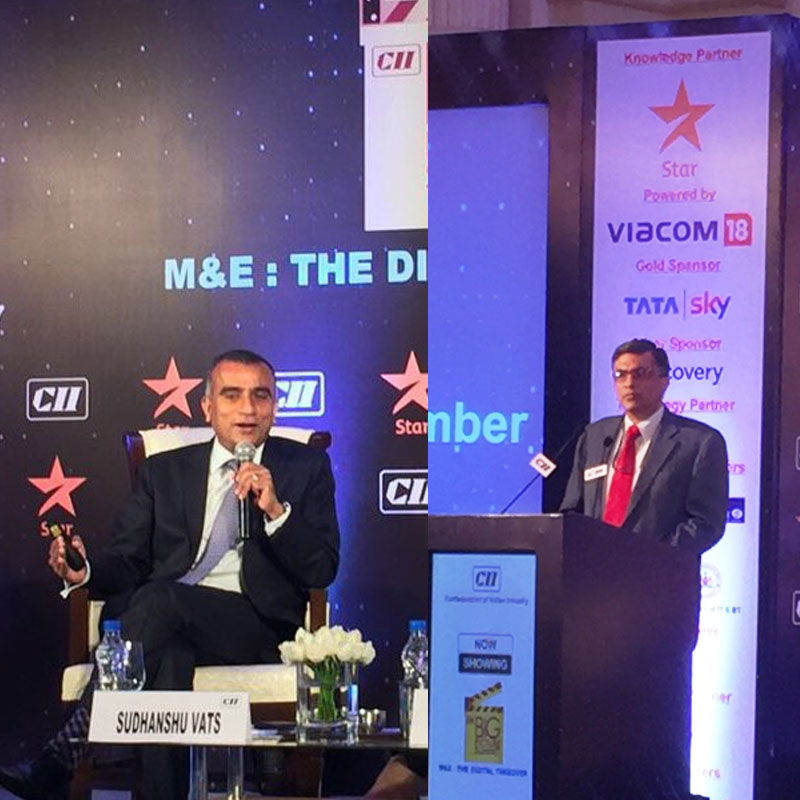
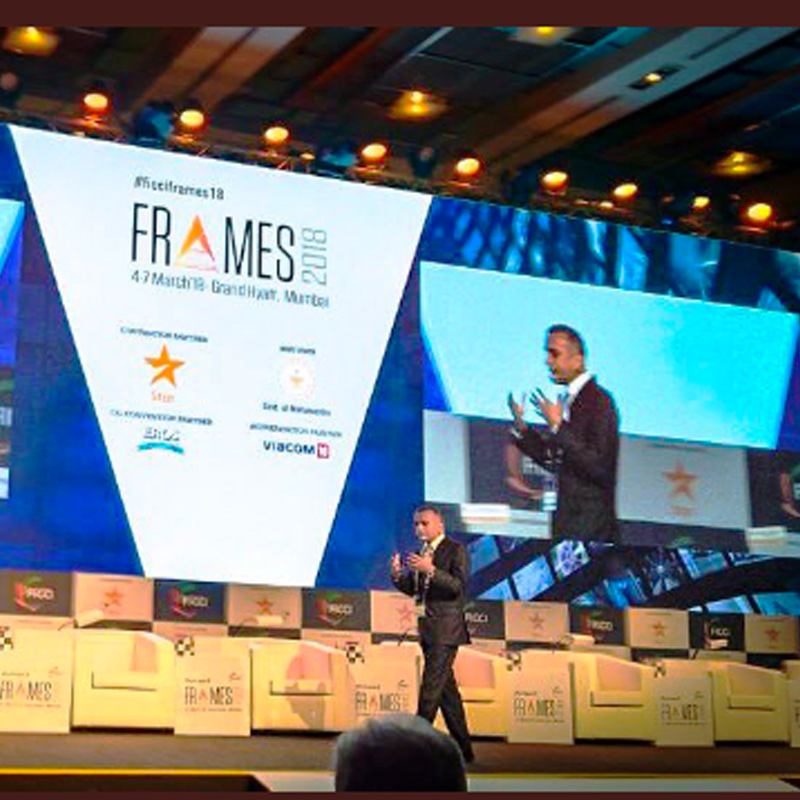
    “We need to learn to collaborate as an industry. We need to collaborate with competitors at times so collaboration and competition can coexist. The scale of industry is such that innovation and disruption is bigger than what any single one of us can achieve. It is only when we form partnerships [and] collaborate that we can achieve greater heights,” Vats on Monday said delivering a keynote address, themed ‘Media and Entertainment: The Force Multiplier At The Heart Of Society’, at the ongoing FICCI-Frames 2018 here.

    Pointing out that the M&E sector has deep links with other sectors of the economy, Vats asked and answered, “Where is it that you first heard about the mobile phone in your hands? Why do you even use it? How did you come across the shampoo you used this morning? What did you do in the car while driving to this conference? Well for most of you, the answer will be some form of media, be it print, or digital or electronic.”

    Deconstructing his observations in terms of numbers, Vats explained that the M&E sector has added over Rs 50,000 crore in output in the last five years, has a revenue size of Rs 130,000-135,000 crore and the direct or indirect induced benefits to the economy of the total industry size is Rs 450,000 crore with a contribution of 2.8 per cent to the country’s GDP. This apart, the industry also employed, across both formal and informal sectors, 1-1.2 million people, contributing significantly to India’s job creation.

    Having excited the audience with some hard data, Vats added, “Did you know that by several estimates, video streaming accounts for over 50 per cent of total mobile internet usage in India? This is expected to touch 75 per cent over the next three years. Today itself, the contribution of data to telco revenue stands at 20-25 per cent. Imagine what will happen when virtual reality (VR) becomes a commonplace phenomenon?”

    According to Vats, while presently the media sector employed around 1.5 million people directly and indirectly, it has the potential to add another million over the next five years, which might seem a small number —  given the total workforce of 460 million — but these are jobs that were non-routine, least likely to be automated and, more importantly, most of these jobs will need ‘on-the-job training’ — meaning that these jobs don’t need to wait for the country’s education infrastructure to catch up.

    But, given the M&E industry’s role as a force multiplier, how much steam is left? Because if the engine starts to weaken, it is obvious that its role as a force too will reduce. Vats thinks the answer to the question need not be a pessimistic one. Why?

    Vats listed the reasons for growth opportunities: (i) M&E industry’s ad-spend to GDP ratio was still 0.4 per cent compared to 1 per cent in developed economies (ii) the total sector is one per cent of GDP compared to 2.5 per cent or so in developed economies and (iii) while Indian TV audience (780 million) is bigger than that of the total population of Europe (745 million), India has only 64 per cent penetration with 183 million TV households. “With electrification progressing at a blistering pace, imagine future growth,” he reasoned.

    Though the opportunities are there, can the M&E industry pull it off? Certainly yes, if all the stakeholders sunk their differences and learnt to collaborate without being skeptical of newer techs and data-driven findings instead of always asking the government and regulator for help, which they must provide being facilitators and further adding to ease of doing business, Vats said exhorting the industry to rise to the challenges as one.

    “We need to become comfortable with data because we need to bring in more transparency, authenticity and objectivity to our data. If a new-age entrepreneur comes to us, we are skeptical of his idea or technology. If someone approaches us with a new way of measuring, say, our audiences, we are dismissive. We need to change this attitude. We need to change this mindset,” Vats reasoned, adding that Viacom18 was doing its own little bits, including starting a pan-network engagement programme with startups where the company partners with validation. The initiative is called Vstep or the Viacom18 Startup Engagement Programme.

    Urging the Indian society to loosen up a bit — learning to “laugh at ourselves” — Vats signed off saying: “Let us, the media and entertainment industry, be the force multiplier for growth, the force multiplier for change, the force multiplier for jobs and, above all, the force multiplier for the good of society.”

    Also Read :

    M&E to cross Rs 2 trillion by 2020: FICCI-EY reportFicci

    Frames 2018: Smriti Irani for highlighting M&E’s economic importance 
  • M&E to cross Rs 2 trillion by 2020: FICCI-EY report

    M&E to cross Rs 2 trillion by 2020: FICCI-EY report

    MUMBAI: FICCI Frames 2018 saw the launch of its annual media and entertainment (M&E) report, this year by Ernst & Young (E&Y) titled ‘Re-imagining India’s M&E sector’ which captures key insights from the exciting and fast growing Indian M&E sector.

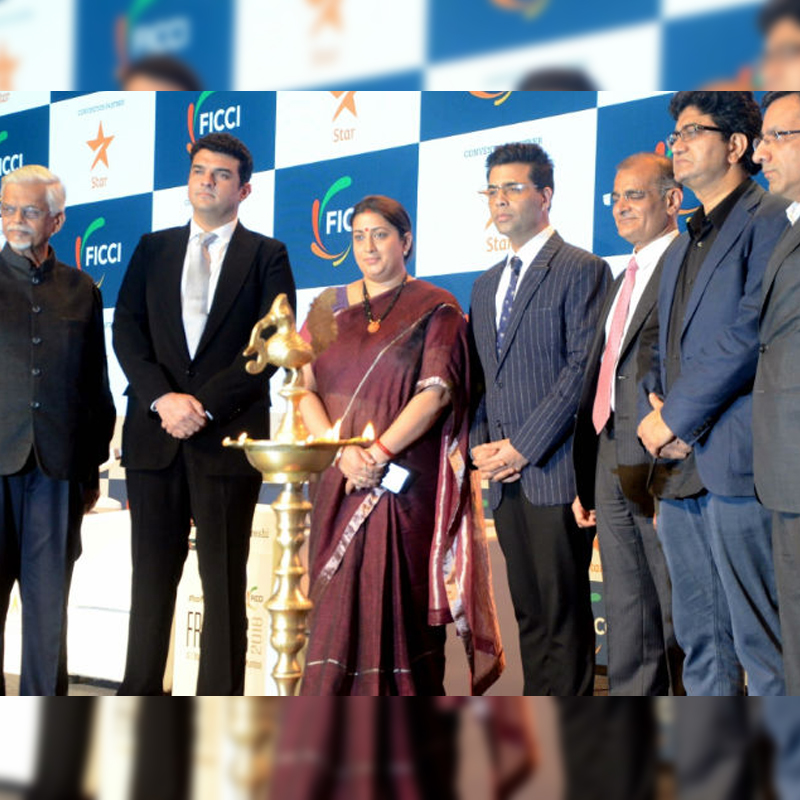
    Launched on Sunday in the presence of the Information & Broadcasting minister Smriti Irani and other industry stalwarts like Star India MD Sanjay Gupta, Siddharth Roy Kapoor, filmmaker Karan Johar and others, the FICCI-EY report highlights that the M&E sector continues to grow at a rate faster than the GDP growth rate, reflecting the growing disposable income led by stable economic growth and changing demographics.

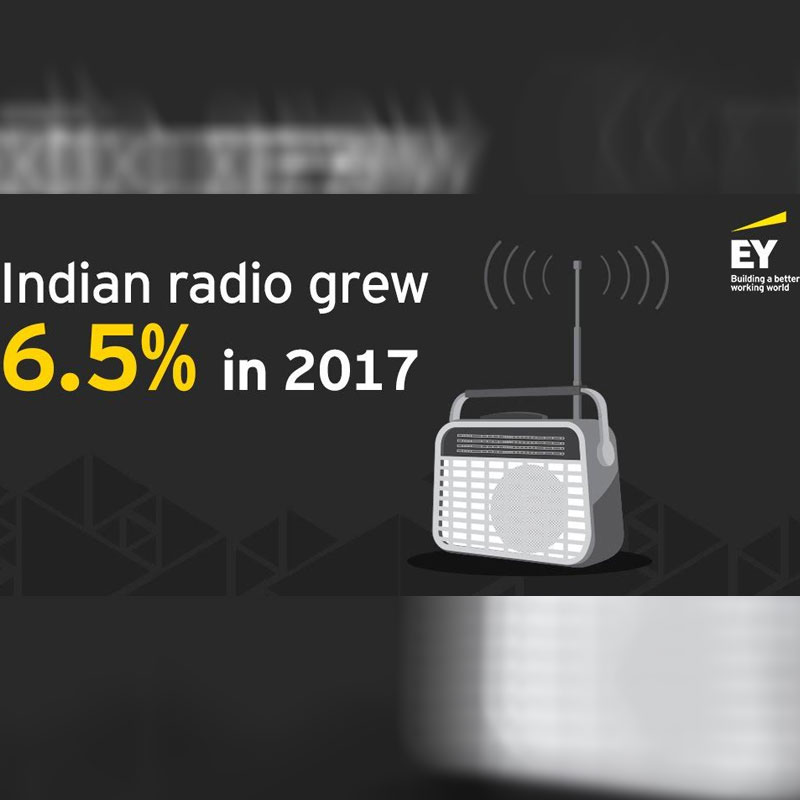
    The report suggests that the Indian M&E sector reached Rs 1.5 trillion in 2017, a growth of around 13 per cent over 2016 and is expected to cross Rs 2 trillion by 2020, growing at a compounded annual growth rate (CAGR) of 11.6 per cent. The digital segment led growth, demonstrating that advertising budgets are in line with the changing content consumption patterns.

    The report states that subscription growth outpaced advertising growth in 2017 but advertising will continue to grow till 2020 led by digital advertising. The report estimates that approximately 1.5 million consumers in India today are digital only and would not normally use traditional media. It is expected that this customer base will grow to 4 million by 2020 generating significant digital subscription revenues of approximately Rs 20 billion. Going forward, micropayment, enabled through the Unified Payment Interface (UPI) and Bharat Interface for Money (BHIM) platforms developed by the National Payments Corporation of India (NPCI) will further accelerate subscription revenues for entertainment content.

    EY India partner and M&E leader Ashish Pherwani expects digital and gaming sectors to grow between 2 to 3 times by 2020.

    Television
    While advertising is 41 per cent of the total revenues today, the report expects it to grow to 43 per cent by 2020. There are over 30 per cent households in India which are yet to get television screens, but being at the bottom of the pyramid, these households will tend to move first towards free and sachet products. 

    EY report states that the TV industry grew from Rs 594 billion to Rs 660 billion in 2017 and advertising grew to Rs 267 billion while distribution grew to Rs 393 billion. At a broadcaster level, however, subscription revenues including international subscription made up approximately 28 per cent of revenues. 

    Digital media

    250 million people viewed videos online in 2017 and the figure is expected to double to 500 million by 2020. 93 per cent of time spent on digital videos is in Hindi and other regional languages and OTT subscription in India is expected to touch Rs 20 billion by 2020.

    Digital media has grown significantly over the past few years and continues to lead the growth charts on advertising. Subscription revenues are emerging and are expected to make their presence felt by 2020. In 2017, digital media grew at 29.4 per cent on the back of a 28.8 per cent growth in advertising and a 50 per cent growth in subscription. Subscription, which was just 3.3 per cent of total digital revenues in 2016, is expected to grow to 9 per cent by 2020.

    Print

    Today, 98 per cent of readers read dailies and 20 per cent read magazines. Reader base is 395 million, or 38 per cent of the population. Readership has grown by 110 million over the last 3 years. Rural (52 per cent) reader base is larger than urban (48 per cent). 44 per cent of children aged between12-17 years read a newspaper or magazine. Magazines have a higher readership in urban area (57 per cent) as compared to rural areas (43 per cent).

    Print accounted for the second largest share of the Indian M&E sector, growing at 3 per cent to reach Rs 303 billion in 2017 and is estimated to grow at an overall CAGR of approximately 7 per cent till 2020. 

    This growth is expected despite the FDI limit remaining unchanged at 26 per cent and therefore, restricting access to foreign print players and the imposition of GST at 5 per cent on the advertising revenues of the print industry for the first time in history.

    Films

    Regional movies drove the growth in number of releases in 2017. Screen count increased from 9481 in 2016 to 9530 in 2017. Number of Hindi movies crossing the Rs 1 billion mark was highest in 2017 in the past five years. From 31 movies in 2016, Hindi dubbed movies increased more than three times to 96 in 2017.

    The Indian film segment grew 27 per cent in 2017 on the back of box office growth – both domestic and international, coupled with increased revenues from sale of satellite and digital rights. All sub-segments, with the exception of home video grew and the film segment reached Rs 156 billion in 2017. 

    The Hindi films comprise the majority component of the Indian film segment. They contribute almost 40 per cent of the net domestic box office collections annually, despite comprising only 17 per cent of the films made. Films in 29 other Indian languages account for approximately 75 per cent of the films released but they contribute approximately 50 per cent to the annual domestic box office collections. Hollywood and international films comprise the balance.


    M&A in M&E

    The Indian M&E sector witnessed a relatively new trend in deal activity with emerging segments such as gaming and digital gaining momentum, while the deal activity in the traditional media segments was slower. The slowdown can be partially attributed to challenges faced by the advertising segments of the industry due to demonetisation and GST. Overall, the number of transactions in the M&E sector decreased from 56 deals in 2016 to 40 deals in 2017.

  • Ficci Frames 2018: Smriti Irani for highlighting M&E’s economic importance
    Ficci Frames 2018: Smriti Irani for highlighting M&E’s economic importance
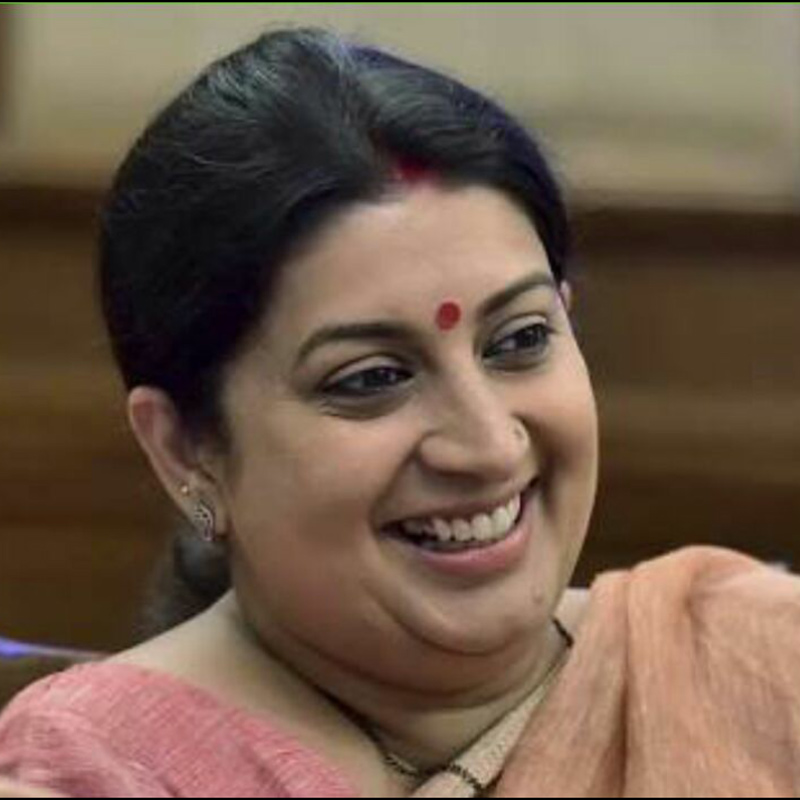
    MUMBAI: Even as the Indian media and entertainment (M&E) sector is projected to cross $31 billion by 2020, Minister for Information and Broadcasting (MIB) Smriti Irani said yesterday it is imperative that the country as a whole projected the economic value that the industry lends to the country’s economy.

    Speaking at the FICCI-Frames 2018 inaugural ceremony here, Irani said the Indian M&E industry is much more than just naach-gana (song and dance) and it was high time that the industry came forward to articulate the economic value and contribution that it gave to the Indian economy and exhorted the industry to use modern data analytics and technology to arrive at conclusions at the type of content the consumer desired.

    Referring to artificial intelligence or AI and other technologies, she said, “Technology is looked upon as a disruptor, but have we looked at technology from a creative point of view?”

    The Indian M&E sector hit nearly Rs 1.5 trillion ($22.7 billion) in 2017, growth of around 13 per cent over 2016. With its current trajectory, it is expected to cross Rs 2 trillion ($31 billion) by 2020, at a CAGR of 11.6 per cent. The digital segment-led growth demonstrates that advertising budgets are in line with the changing content consumption patterns, according to the FICCI-EY report ‘Re-imagining India’s M&E sector.’

    Launched on Sunday in the presence of the minister and other industry stalwarts such as Star India MD Sanjay Gupta, Siddharth Roy Kapoor and filmmaker Karna Johar, the FICCI-EY report highlighted that the M&E sector continues to grow at a rate faster than the GDP growth rate, reflecting the growing disposable income led by stable economic growth and changing demographics.

    The report states that the subscription growth outpaced advertising growth in 2017, but advertising would continue to grow till 2020 led by digital advertising.

    The report estimates that 1.5 million consumers in India today are digital-only and would not normally use traditional media. It is expected that this customer base will to grow to 4 million by 2020, generating significant digital subscription revenue of approximately Rs 20 billion. Going forward, micropayments, enabled through the Unified Payment Interface (UPI) and Bharat Interface for Money (BHIM) platforms, developed by the National Payments Corporation of India (NPCI), will further accelerate subscription revenue for entertainment content.

    EY partner and M&E leader Farokh Balsara stated, “The Indian M&E sector reached INR1.5 trillion in 2017 led by digital. With digital subscribers expected to reach 20 million by 2020, has Indian M&E reached its digital tipping point? We now need to reimagine the future of Indian M&E sector.”

    Said Gupta, “These are truly exciting times for our industry. It is amongst the fastest growing sectors in the country and has crossed the Rs 147 thousand crore mark. There is a revolution happening all around us, one that promises to, and in fact, has already started to redefine the future of media and entertainment.”

    “To compete well with the world, we need to set new standards of storytelling, we need to reimagine our stories. We cannot allow our legacy to shape our creativity. With digital, we have the license to break away from all the trappings of traditional media. We need to challenge where we release our films first, in a theatre or on a mobile screen. We need to challenge the constraints of 8 pm prime time, daily and hourly news formats and 22-minute episode lengths,” he added.

  • New initiatives at FICCI Frames 2018

    New initiatives at FICCI Frames 2018

    MUMBAI: The 19th edition of FICCI Frames to be inaugurated by the I&B and Textiles minister Smriti Irani on March 4 is all set to be a grand event.

    There are a lot of interesting sessions lined up with few new initiatives this year.

    The annual media and entertainment global convention will kick-start on the 4th evening with the launch event, which will be followed by the CEOs round-table addressed by Maharashtra Chief Minister Devendra Fadnavis.

    The 4-day event that will commence from the 4th and conclude on the 7th will see the who’s who from the media and entertainment industry attend, including the likes of Karan Johar, Shabana Azmi, Siddharth Roy Kapur, Nandita Das among many others.

    One of the major attractions will be the launch of a content market, which is expected to bring over 70 buyers and sellers of content from across the world to this platform.

    FICCI FRAMES CONTENT MARKET – A CONTENT BUYER AND SELLER PARADISE

    The 1st edition of the Content Market is aimed at facilitating the business of Content. Over 70 buyers from across the globe have been invited for the bazaar, including the likes of 102 Distribution, Edko Films, Shoreline Entertainment, Spuul, Top Entertainment, Aurora Global Media Capital, Front Row entertainment, Alpha Violet Sarl and Indian companies like Zee enterprises, Star, Eros Now, Reliance entertainment among others.

    In the first edition of the market, a special screening facility has also been set up to introduce festival programmers and key buyers to a highly curated slate of new Indian films. Festival programmers from International film festivals such as London, Venice, Edinburgh among others will also be in attendance.

    With over 100 sellers and over 70 buyers of content expected to be part of the 1st content market organized by FICCI, this sets the ball rolling for greater content exchange.

    Speaking about the 1st content market Leena Jaisani, FICCI said “This is being organized with the support and advise from the media and entertainment industry professionals. There was a dearth for such a market and with this first step, we hope to move ahead towards filling this void and facilitating more business for content.”

    International Women’s Day Celebrations with Women Leaders at FICCI FRAMES

    On 5th March, few women leader will get together to discuss women empowerment in the digital era, the rise of women movements, and how the community can support the development of more women leaders in the future.

    Led by Maya Hari, Managing Director of Asia Pacific at Twitter, who will be moderating the session, the panel will feature Director of Lipstick under my burkha Alankrita Shrivastava Actor Gul Panag, Author of Face at the window Kiran Manral; Deputy Editor of Rolling Stones India, Nirmika Singh and film producer and founder of IconicBot, Vishakha Singh

    Other Important sessions
    Few of the other important sessions would include discussions on Film Tourism, The future of TV in India, Box Office Collections of films, Biopics made in India, Women Power in Films, Screen density in India, Digital Revolution, Investments in Sports, Fake News, Low budget content heavy films, Regional Films going beyond regions, Films making money internationally, GST in Entertainment sector and Cyber security.

    There will also be a masterclass with Director Anand L Rai, a case study on web series Breathe along with a workshop on Facebook.

    Annual Media and Entertainment reports to be launched

    The annual media and entertainment report on figures related to entertainment industry and an Economic Contribution Report (ECR) for 2018 will also be launched.

  • All India Radio, Radio Mirchi, INOX & State Governments join forces with The Festival of Bharat

    All India Radio, Radio Mirchi, INOX & State Governments join forces with The Festival of Bharat

    MUMBAI: The Festival of Bharat, a one-stop experiential window into the best of India, partners with India’s national broadcaster, All India Radio, and India’s favourite Hindi music radio station, Radio Mirchi to promote arguably the largest PPP (privately funded and organised, government backed) cultural event of the country, and an unmissable one for Indians and India lovers across the globe. India’s two biggest radio stations, from both public and private sectors respectively, have come together in a rare instance of multiple major radio partners for one event, to cover this much anticipated festival. The festival has also tied-up with India’s premium chain of cinemas, INOX, who will play promotional videos of the festival at all their screens throughout the country, to further target the large numbers of HNI visitors expected to visit the festival.

    The Festival of Bharat will showcase an array of exciting events ranging from a day time lit fest with debates and talks, an evening music fest with beautiful Indian music from stars and legends alike, a morning yoga retreat by The Art of Living, a carefully curated multi-state flea market and exhibition, a spectacular outdoor fashion show, a ‘desi’ after-party, and an unmissable organic food festival. Speakers at the 5-day mega festival include Subramanian Swamy, Padma Vibushan Archarya David Frawley, Major Gaurav Arya of Republic TV fame, Suhel Seth, Ira Trivedi, Karolina Goswami, Nupur Sharma, and Vivek Agnihotri among others. 

    Commenting on the association, Cory Bixler, Founder of The Festival of Bharat said “I am pleased that India’s finest media platforms continue to join hands with The Festival of Bharat, and see their central role in celebrating the culture and traditions of India. Associating with these firms and other big brands is only natural and to be expected, as we all desire the same outcomes – a revival, exemplification and promotion of the best of India’.

    Supported by The Ministry of Tourism, Government of India, state governments, The Indian Debating Union, and The Art of Living, The Festival of Bharat has been painstakingly curated as a 21st century tribute to the majesty and depth of India’s unique history and culture.

    This most-awaited event is slated to attract tens of thousands of upwardly mobile visitors from April 4th – 8th at IGNCA, right next to Rajpath in the heart of New Delhi. 

  • FICCI BAF Awards 2018 entries now open

    FICCI BAF Awards 2018 entries now open

    FICCI Frames–the three-day global convention covering the entire gamut of India’s media and entertainment industry–is close, bringing with it the Best Animated Frames (BAF) Awards, one of the most coveted animation, visual effects and gaming (AVG) awards. The last date to submit entries for the awards is 15 February 2018.

    The fifteenth edition of the BAF Awards will take place on 5 March 2018 at Hotel Grand Hyatt, Mumbai, for which entries are invited for the animation, visual effects and gaming categories.The BAF Awards at FICCI Frames are an affair of extreme excitement as the entire AVG industry gathers under one roof after a year of arduous work.

    The BAF awards were started in 2004 by the Federation of Indian Chambers of Commerce and Industry (FICCI) to recognise and honour students and professionals in the field of animation. This first-ever animation awards in India have grown over the years to encompass awards not only in animation but also in the VFX and gaming fields.

    The contest now receives top-notch entries from across the globe; the last BAF Awards held on 22 March 2017 received 400 entries from across 12 countries.

    Entries can be sent online.

    For more details and registration, click here.

    public://FICCI-BAF-2018_Poster.jpg

  • Houseful at Bengaluru leg of MIP India roadshow

    Houseful at Bengaluru leg of MIP India roadshow

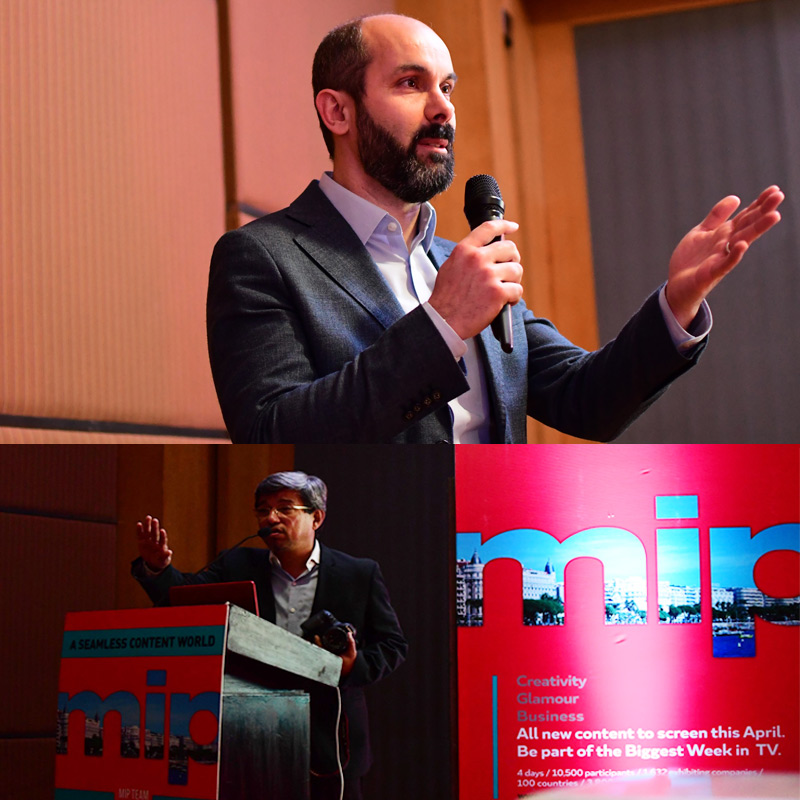
    BENGALURU: All the seats were taken and more had to be brought in as the Bengaluru leg of the MIP TV India roadshow ended last evening at the Lalit Ashok. With the theme ‘A Seamless Content World’, the Bengaluru MIP was addressed by Reed Midem (Paris) Asia Head Paul Barbaro and India representative for Asia Markets and Indiantelevision.com managing director and CEO Anil Wanvari. The duo addressed the rapt audience in tandem.

    Beginning with the theme of the roadshow, Wanvari quoted Netflix chief content officer Ted Sarandos’ words that he had spoken during an interview – “A good story told well is a global product.” In today’s connected world, which is increasingly becoming seamless, content is king, queen and prince irrespective of geography. This was evident by the success of creations such as the Louis Fonse-Daddy Yankee’s Spanish number Despacito, which had 5 billion views on YouTube, even more than those that Gangnam Style had, explained Wanvari.

    “Increasingly, scripted and non-scripted local shows made in a local language and aimed at domestic viewers are finding a global audience. And building a fan base overseas can only boost the revenue potential,” said Barbaro. Exhorting Indian creators, animators, Indian content aggregators and buyers and people from the Indian media and entertainment industry to participate at the India Pavilion at MIP TV 2018 at Cannes from 9 April to 12 April 2018, Barbaro and Wanvari spoke of the advantages, the gains, the benefits of doing so.

    Citing examples of some successes of local content, Barbaro said, “Historically, dramas and comedies have not travelled well because they are steeped in local customs, conventions and cultures. Yet, Keshet’s Loaded, Star India’s Iss Pyaar Ko Kya Naam Doon, and Broken Pieces from Turkey’s Global Agency made compelling scripted entertainment centred on universal truths. And these stories have enthralled audiences in a number of diverse geographies.”

    Reed Midem’s statistics and data about buyers and sellers and the kind of content that was required, details about the money that could be earned from different countries were shared. Case studies were presented and AVIs of some success stories of some of the people who participated at MIP TV were played.

    “Don’t come and register if you plan to come to MIP TV just once. You have to be there for the long haul if you want to truly succeed, to network with the buyers and sellers and leverage the associations that you built there,” concluded Wanvari very bluntly.

    For details contact: Priyanka Sharma +91-8017562056/+91-22-6642 4062

    Email: priyankas@indiantelevision.co.in or devikak@indiantelevision.co.in

  • Govt extends support to M&E sector in fighting digital piracy

    Govt extends support to M&E sector in fighting digital piracy

    NEW DELHI: The government of India yesterday stressed that it stood alongside the media and entertainment (M&E) industry in fighting digital piracy to safeguard loss of revenue and ease norms for doing business, while CII entertainment committee head and Viacom18 group CEO Sudhanshu Vats, on behalf of the industry, admitted that automation could result in loss of jobs leading to challenging times, but said the core of the industry will be ‘automation-proof’.

    “The government will stand with you on the issue of digital piracy,” department of industrial policy & promotion (DIPP) joint secretary Rajiv Aggarwal told the audience on Tuesday at the CII-organised Big Picture Summit here, adding that they were exploring a national anti-piracy regulation or regime and there was no need to get further into enacting complicated laws but finding solutions based on global experiences.

    Digital or online piracy is not only a big global challenge for the M&E industry, but has awakened stakeholders in India too who are feeling the heat of heavy loss of revenue due to rampant piracy of Indian content worldwide.

    Pointing out that the Indian government is alive to the issue of digital piracy and the potential of the M&E industry in being able to generate revenues and employment in the country, Aggarwal said that they were looking at how global and some local bodies (like PIPCU of the UK, TIPCU in Telangana and Maharashtra’s online anti-piracy unit) were addressing this challenge.

    Dwelling further on this issue, he exhorted the industry stakeholders to give feedback that will help India in forming a strong case and point of view for submission at WIPO where discussions are on to formulate standards for a global broadcast treaty.

    This year’s Big Picture Summit, an annual two-day conference on issues related to M&E industry, has been themed `The Digital Takeover’, which lays emphasis on the creeping digitisation in general and of delivery services like cable, HITS and OTT, and an impending automation (egged on by the likes of AI) of the various industry sectors.

    TRAI non-committal on exploring auctioning of TV licences

    SK Gupta, telecom regulatory authority of India (TRAI) secretary, which is the telecoms and broadcast regulator, while dwelling on various issues of the recently issued recommendations on net neutrality said the organisation’s efforts have always laid emphasis on consumer interest, while creating a level playing field for all players.

    Incidentally, at a time when the FCC has dismantled net neutrality norms in the US, put in place by the Obama regime earlier, favouring walled gardens of content and premium tiered pricing of various services, India’s TRAI has upheld net neutrality stating that all content should be made available to all distribution platforms on a non-discriminatory basis, apart from other level playing initiatives.

    Later, asked by journalists on the sidelines whether TRAI was exploring a consultation paper on auctioning of TV licences or permissions on the advice of the ministry of information and broadcasting (MIB), Gupta said he at least was not aware of any such move. He was non-committal when pressed on the issue.

    Asian Age newspaper a week back had reported that the government was exploring auctioning of television channel frequencies on the lines of telecoms spectrum, coal blocks and FM radio licences. Reason: bid to increase government revenues as presently permission to uplink and/or downlink TV channels cost a fixed amount with the applicant fulfilling certain set out financial norms, apart from getting clearances for satellite space and internal security. The newspaper report had added that MIB had sought advice from TRAI in this regard. What the report did not clarify was whether the auctioning was of TV licences pertained to DTT (digital terrestrial transmission) or satellite-delivered TV channels later distributed by cable and online.

    M&E industry holds key to creating future-proof, dynamic workforce: Vats

    Earlier in the morning, setting the agenda for the two-day conference, CII entertainment committee head and Viacom18 group CEO Sudhanshu Vats in his opening address said that the theme of ‘Digital Takeover’ was a topic that had “loads of nuances” that needed to be addressed in a proper perspective.

    “In my honest assessment, this is an extremely provocative theme – and one that can mean different things to different people. I can imagine some of my colleagues from the broadcast sector feeling upset. I can also imagine what some of my younger colleagues, who are already social media influencers thinking – this theme is passé, the takeover was complete a few years ago. I don’t want to pick a side at this stage and I’m certain that no definitive side can be picked,” Vats said, adding that he hoped the theme would help delegates form their own distinctive understanding of the future of the Indian industry in general.

    Pointing out that digital takeover could mean greater automation and fewer human jobs, a trend that could is likely to play out slowly in India because of availability of cheap labour, Vats said the Indian M&E sector directly employs between 1.1-1.2 million Indians and in the next five years one million more jobs would be added, thereby playing a role in “assuaging the challenge”. He added: “If we achieve breakout growth, that number can also touch five million. However, I would like to draw your attention not to the number of jobs but to their quality.”

    Explaining that skills, like creativity, story-telling, emotional intelligence and cognitive ability, in M&E sector were most ‘non-routine’ jobs, Vats said, “These are also the skills that can be transferred to other sectors, making us a part of the solution. Of course, we too will face our share of the burden. Some roles will be automated, and the media organisation might look very different in 2027, but our core will still be automation-proof.”

    Vats also pointed out that the private sector needed to be more ‘creator-friendly’ or ‘freelancer-friendly’, which also meant that the M&E sector could hold the key to “creating a future-proof, agile, dynamic workforce” that can take its skills and drive impact across industries even as the government continued to create a better business environment.

     ALSO READ:

    M&E industry to hit Rs8 trillion revenue by 2022: report


  • M&E industry to hit Rs8 trillion revenue by 2022: report

    M&E industry to hit Rs8 trillion revenue by 2022: report

    According to a report published by Boston Consulting Group (BCG) and Confederation of Indian Industry (CII), India’s media and entertainment (M&E) industry is expected to reach revenue of Rs7.5-8 trillion by 2022 from an estimated Rs4.5 trillion in 2017. Over the next five years, the industry is poised to grow at an annual growth rate of 11-12 per cent.

    The report highlighted that the M&E industry has the potential to generate four million jobs (direct and indirect) over the next four-five years, on the back of technology adoption, big data and analytics.

    By 2022, total employment across the industry is expected to be 6-6.5 million from the estimated 3.5-4 million in 2017. The report said that the structural changes across the industry and major shifts around adoption of technology, big data and analytics will lead to several new job roles and a massive reskilling of the current workforce.

    “The Indian M&E sector has huge room for growth and can create four-five million jobs without much spending from public infrastructure. Digital platforms are proliferating and there are tremendous opportunities that never existed before, especially for creators, storytellers and technology providers,’’ CII director general Chandrajit Banerjee said in the report.

    The report highlighted that M&E organisations need to rebuild their strategies to fit in the shifting digitally oriented landscape. “It’s the need of the hour for the industry to identify the creative, technological and analytical skills that will be required over the next five-seven years to restructure its business model for the upskilling exercise,” said Kanchan Samtani, partner and director at BCG, in the report.

    The report said that the M&E industry will require 140,000-160,000 trained/employable individuals entering the workforce every year for the next five years.

  • ATF’s first Animation Pitch announces winners

    ATF’s first Animation Pitch announces winners

    MUMBAI: The Asia TV Forum (ATF) is drawing to a close amid much fanfare. The event saw several activities such as an exciting round of on-stage pitches wherein producers from all over Asia presented their ideas. The winners of the inaugural Asia TV Forum & Market (ATF) Animation Pitch were also anounced and the unveiling of the second ATF Formats Pitch took place on 30 November 2017.

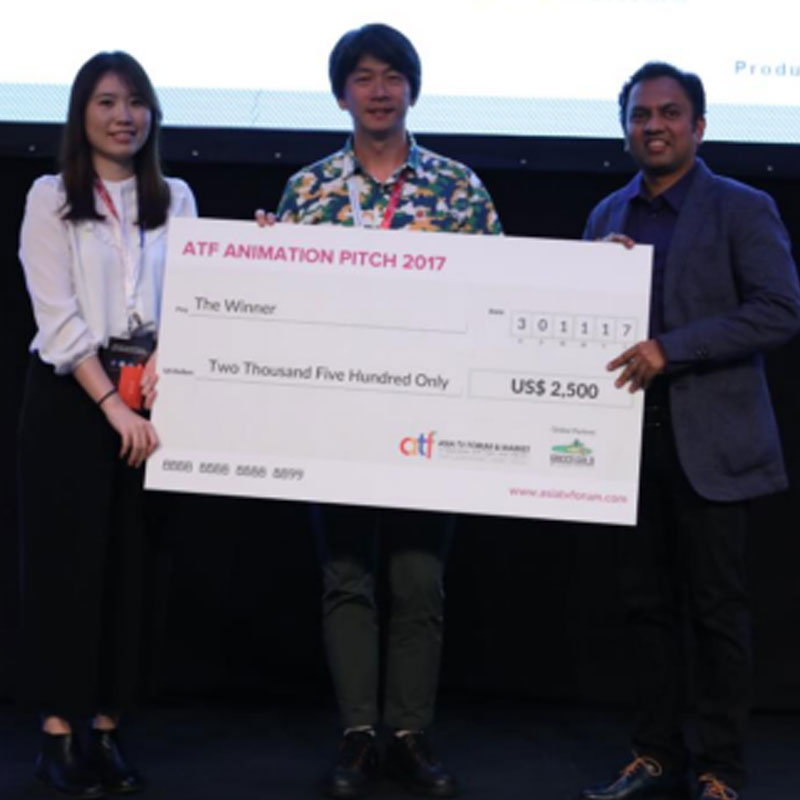
    Reed Exhibitions and global partner Green Gold Animation announced studio2 Animation Lab as the winner of the first-ever ATF Animation Pitch. The animation concept, titled “The Western Journey of Pigsy”, wowed the on-stage jury for its creativity and strong appeal to children. The line-up of judges, which comprises some of the biggest names in kids’ animation and entertainment, also saw strong potential for the concept to be exported and extended to a series.

    Targeted at creators and producers of innovative concepts for new and original kids’ animation, ATF Animation Pitch is aimed at facilitating the exchange of ideas and talent between leading international television, distribution and Asian-based producers. In total, 61 entries were received from all over Asia.

    “I am thrilled and excited to be named the winner of the inaugural ATF Animation Pitch. We had a unique concept and we felt that it allows viewers to experience the journey in the west story in a contemporary way. Moving forward, we will work towards developing the script for the concept,” said studio2 Animation Lab director Chiu Li Wei.

    Chiu Li Wei and Grace Chuang from studio2 Animation Lab received a $19,000 prize from GreenGold Animation. This includes a $2,500 cash award, and a consultancy package worth $16,500 that is tailor-made for them to further develop the winning animation, making it ready to pitch to broadcasters.

    After a closely contested fight between five finalists, leading independent distributor all3media International and ATF announced that Gamaliel Paulus (Gammy) from Indonesia, came out on top, winning $3,500 in cash and a $16,500 (both Singapore dollars) consultancy package tailor-made to develop the format, making it pitch-ready for broadcasters.

    ATF Formats Pitch is the premier Asian pitching competition designed to discover innovative concepts for new and original non-scripted entertainment formats from the pan-Asian region. This platform showcases the best of Asia, and exposes ideas for export and development within and even outside of the region.

    In its second year, the competition received more than 50 entries from 13 countries and only five finalists were selected to pitch their concept during the live on-stage judging session which concluded earlier today. Formats were evaluated based on creativity, originality and capacity to return for multiple series. The winning concept must also have the capability to resonate with audiences globally.

    Portraying all these qualities was the winning format, Ranking. It is a game show where participants have to guess the correct order of a ranking in return for prizes. Besides the excitement value that comes with game shows, it also serves to dish fun facts and information to viewers. The judges loved the simplicity of the idea and felt that it had great potential for further development.

    “As many people are familiar with rankings, I believe my format will appeal to any country. Also, I have not seen it in the form of a game show concept. As a producer myself, I understood that for a format to do well, it has to be simple. I am very thankful for the win, I didn’t expect it at all,” said Gamaliel Paulus (Gammy).

    To further develop the format and make it ready for pitching to broadcasters, Gamaliel Paulus (Gammy) will work closely with all3media International. This follows the success of “Hit It” from XTREME Media, which won at the inaugural ATF Formats Pitch last year, and has received its first local commission for a debut in February 2018.

    Aside from the ATF Animation Pitch and ATF Formats Pitch, ATF and ScreenSingapore is also home to another pitching competition, the Southeast Asian Film Financing Project Market.