Category: Event Coverage

  • India’s leading content creators to come together at The Content Hub 2020

    India’s leading content creators to come together at The Content Hub 2020

    MUMBAI: India’s content creation community will head to The Content Hub 2020, India’s largest content creators’ gathering organised by Indiantelevision.com, today and tomorrow (4-5 March 2020) in Mumbai’s Sahara Star Hotel.

    The Content Hub has been designed as a coming together of thought leaders in the creation and production of films, TV shows, OTT digital series, short-form digital videos, and podcasts. The conference will also have masterclasses and workshops by writers, directors and creators of some the biggest box office and viewing hits.

    “There’s a tremendous demand for content – video and audio – and there is not enough quality supply to meet it,” said Indiantelevision.com Group founder, CEO and editor-in-chief Anil Wanvari. “The Content Hub is bringing together leaders from both the business and creative spaces of film, TV, OTT and short form content to catalyse new ideas, conversations, relationships, opportunities for those involved in the content ecosystem.”

    Close to 80 professionals will discuss and share the experiences of their journeys and giving insights on how success can be attained in the content creation ecosystem through fireside chats, presentations, and panel discussions. 

  • ‘Shubh Mangal Zyada Saavdhan’ director Hitesh Kewalya to speak at The Content Hub 2020

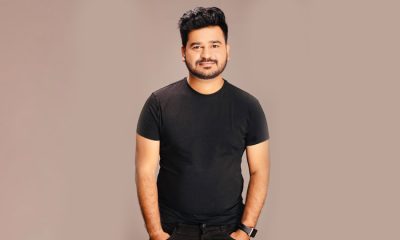
    ‘Shubh Mangal Zyada Saavdhan’ director Hitesh Kewalya to speak at The Content Hub 2020

    MUMBAI: Shubh Mangal Zyada Saavdhan has been hogging B-Town limelight for the last two days. One of the major attraction points seems to be the recreated version of the 80s hit track Yaar Bina Chain Kaha Re, which has already taken social media platforms by storm. It seems director Hitesh Kewalya’s debut feature is treating him well.

    Kewalya will share inputs on content creation and its business at Indiantelevision.com’s two-day-long event, The Content Hub 2020. The fourth edition of the summit will be graced by the biggest producers, studios, content creators, and platforms involved in the feature film, television and digital, along with the makers of international content that has worked in India.

    He is an alumnus of the National Institute of Design, Film Department, started his career as a writer on the radio in 1998. Jumping through various fields like theatre, advertising, cartoons/illustrations for a magazine, he finally found his calling in Mumbai in 2005. Over the years, he has worked across genres like feature films, advertising, television dramas and short films as a screenwriter and director.

    Is Modh Pe Kuch Nahin Hota, Rhythmatics, Man Of The Match are among some of his award-winning short films. He has also written for popular shows such as Miley Jab Hum Tum, Is Pyaar Ko Kya Naam Doon, Nisha Aur Uske Cousins.

  • Here are the winners of The Indian Telly Awards!

    Here are the winners of The Indian Telly Awards!

    Mumbai 20 March 2019: When indiantelevision.com’s The Indian Telly Awards are held, the stars come out in style and in numbers. The glittering gala was held on 20 March 2019 in Mumbai and the presence of almost every known television star clearly demonstrated why indiantelevision.com’s  The Indian Telly  Awards are referred to as Indian television’s biggest and most entertaining awards.

     The awards have been conceptualized and created by Mr. Anil Wanvari, the founder and CEO of IndianTelevision.com.Says Wanvari: “We are delighted with the support that the entire actor, producer, director and support technical crew gave to indiantelevision.com’s The Indian Telly Awards in its 15 edition. The awards gala was successful becaue of the unprecedented presence of so many stars. The awards are for them,  and decided by them – and we look forward to their continued participation in our future endeavors. We are pleased that the awards show trended at No 2 on Twitter nationally.”

    Indiantelevision.com aired the awards ceremony differently this year. It partnered with Zee Entertainment Enterprises’s Zee5 OTT platform to stream the entire evening live which was hosted by the extremely engaging and fun-loving TV star quartet of Nakuul Mehta, Karan Tacker, Meiyang Chang, and Gunjan Utreja. Moreover, charming actor and presenter Jay Soni hosted the red carpet and curtain raiser.

    The awards night kicked off with celebrities thronging the ceremony in their most glamourous avatars. The event was graced by the who’s who of the television industry, including Divyanka Tripathi, Vivek Dahiya, Parth Samthaan, Erica Fernandes, Vikas Gupta, Hina Khan, Anita Hassanandani, Mohit Malik, Hunar Hali, Jennifer Winget, Aditya Chopda, Dheeraj Dhoopar, Shradha Arya, and many others.

    The four stellar hosts entertained the audience with their sizzling bromance, spontaneous humour, and goofiness. Their infectious energy and hilarious one-liners won the hearts of all present. So much so that close to 400 stars and their colleagues the venue way past midnight when the awards ceremony concluded with more than 57 awards, including jury, fans choice and TellyChakkar.com Editor’s Choice statuettes being given away to the most deserving of performers on screen in calendar year 2018. All in all, it was a night to remember!
    Here’s the full list of winners across the 57 categories of the awards.

    Best Child Artist Boy (Jury) Krish Parekh (Tenali Rama)

    Best Child Artist Girl (Jury) Aakriti Sharma (Kulfi Kumar Bajewala)

    Anchor in a Reality Show (Jury) Maniesh Paul (Indian Idol Season 10)

    Talk Show Host (Jury) Karan Johar (Koffee With Karan Season 6)

    Actor in a Comic Role – Male (Jury) Rohitashv Gour (Bhabhiji Ghar Par Hai!)

    Actor in a Comic Role – Female (Jury) Shubhangi Atre (Bhabhiji Ghar Par Hai!)

    Actor in a Supporting Role – Male (Jury) Varun Badola (Internat Wala Love)

    Actor in a Supporting Role – Female (Jury) Poorva Gokhale (Tujhse Hai Raabta)

    Actor in a Supporting Role (Comedy) – Male (Jury) Yogesh Tripathi (Bhabhiji Ghar Par Hai!)

    Actor in  a Negative Role  – Male (Jury) Mukul Dev (21 Sarfarosh Saragarhi 1897)

    Actor in  a Negative Role – Female (Jury) Hina Khan (Kasautii Zindagii Kay )

    Fresh New Face – Female (Jury) Aakriti Sharma (Kullfi Kumarr Bajewala)

    Actor in a lead Role – Male (Jury) Mohit Raina (21 Sarfarosh Saragarhi 1897)

    Actor in a lead Role – Female (Jury) Divyanka Tripathi (Yeh Hai Mohabbatein)

    Best Ensemble (Fiction) (Jury) Taarak Mehta ka Ooltah Chashmah  (Sony Sab)

    Best Jodi (Jury) Sumedh Mudgalkar & Mallika Singh (Radha Krishn)

    Best Show for Kids (Fiction) (Jury) Little Singham (Discovery Kids)

    Best Series (Episodic) (Jury) Breaking Point: High Altitude Warfare School (Discovery)

    Best Program with a Social Message (Jury) Moonbound (Discovery)

    Best Daily Series (Jury) Kullfi Kumarr Bajewala (Star Plus)

    Best Weekender Show (Jury) India's Got Talent Season 8 (Colors TV)

    Best Continuing TV Programme (Jury) Yeh Rishta Kya Kehlata Hai (Star Plus)

    Best Drama Series (weekly, daily, bi-weekly) (Jury) Patiala Babes (Sony TV)

    Best Thriller- Horror Programme (Jury) Kaun Hai (Colors TV)

    Best Sitcom Comedy Programme (Fiction) (Jury) Taarak Mehta ka Ooltah Chashmah (Sony Sab)

    Best Sitcom Comedy Programme (Non – Fiction) (Jury) Entertainment Ki Raat (Colors TV)

    Best Reality Show (Jury) India's Citizen Squad (Discovery)

    Dance Talent Show (Jury) Super Dancer Season 3 (Sony TV)

    Singing Talent Show (Jury) Indian Idol Season 10 (Sony TV)

    Mythological/ Historical Series (Jury) Radha Krishn (Star Bharat)

    Youth Show  (Jury) Troll Police (MTV)

    Best Animated Kids Show (Jury) Super Bheem – Babalok Mein Hulchul (Pogo TV)

    Best Indian Original Format (Non Fiction/Reality) (Jury) India's Citizen Squad (Discovery)

    Fans Choice Awards

    Actor in a lead Role – Male (Fan's Choice) Nakuul Mehta

    Actor in a lead Role- Female (Fan's Choice) Jennifer Winget

    Best Jodi (Fan's Choice) Erica Fernandes & Parth Samthaan

    Actor in a Supporting Role – Male  (Fan's Choice) Kunal Jaisingh

    Actor in a Supporting Role – Female  (Fan's Choice)  Anita Hassanandani

    Actor in  a Negative Role – Male  (Fan's Choice) Rajesh Khattar

    Actor in  a Negative Role – Female  (Fan's Choice) Hina Khan

    Best Show (Fan's Choice) Kumkum Bhagya

    Actor in a Comic role – Male  (Fan's Choice) Dilip Joshi

    Actor in a Comic role – Female  (Fan's Choice) Hiba Nawab

    Special Awards

    Gary Bhinder Award (Special Award) Amit Sharma for Badhai Ho

    Hall of Fame Award (Special Award) Asit Modi – Neela Telefilms

    Next Gen Award (Special Award) Ashnoor Kaur

    Television Personality of the Year (Special Award) Divyanka Tripathi

    Entertainer of the year (Special Award) Bharti Singh

    Telly Chakkar Editorial Choice Awards

    Best Actor in a Supporting Role (Comedy) – Female  (Tellychakkar -Editor's Choice) Ashita Dhawan Gulabani (Nazar)

    Best Ensemble – Non fiction (Tellychakkar – Editor's Choice) Super Dancer (Sony TV)

    Best Game Show  Kaun Banega Crorepati (Sony TV)

    Fresh New Face – Male (Tellychakkar – Editor's Choice) Adnan Khan (Ishq Subhan Allah)

    Best Show for Kids Non Fiction (Tellychakkar – Editor's Choice) Dance India Dance Lil Masters Season 4 (Zee TV)

    Most Popular International Show on Indian TV (Tellychakkar – Editor's Choice) Big Bang Theory – Zee Cafe

    Best Child Actor Award (Tellychakkar – Editor's Choice) Kartikey Malviya – Chandragupta Maurya

    About indiantelevision.com’s The Indian Telly Awards

    indiantelevision.com’s The Indian Telly Awards are India’s first recognition of performance behind and off the screen and were instituted by Anil Wanvari in the year 1998 but came into existence on 6 July 2001. Over the years, it has become the gold standard to recognise and reward television talent in India.

    For further information contact: Tanmaya Vyas, Contact no: 919619872899

  • Cinema content producers still discovering audience taste

    Cinema content producers still discovering audience taste

    MUMBAI: The Indian movie industry is one of the richest in the world and its content has been gaining patrons worldwide. But producers still believe that the industry doesn’t have the pulse of audience preference.

    The point was raised at the third edition of Indiantelevision.com’s ‘The Content Hub’ during a panel discussion on how new Hindi film producers are making their mark and what business models they are drawing up. The panel included Essel Vision (Zee Studios) CEO Shariq Patel, Viacom18 Studios chief operating officer Ajit Andhare, Alliance Media and Entertainment owner Sunil Doshi and Fox Star Studios India CEO Vijay Singh. Moderating the panel was film reviewer at Film Companion Suchitra Tyagi.

    Singh said that though we do not have an absolute understanding, we are better informed than we were few years ago. "Let me just give you some facts. Theatrical in India was going single digit till last year, where it actually has its most record breaking year and the business has grown by 14 per cent. Correspondingly, even if you look at Hollywood, last year they have had their biggest theatrical year," he said.

    However, Patel was of the view that the reason behind this is the constantly emerging trends. He shared that it is not possible to foresee or sight the changes in what the audience deems popular.

    Reflecting similar thoughts was Andhare who said, “Trends and cinema are two terms which are not friends with each other, because the moment you try to say this is trend you will falter. You can safely say that yes content has to be taken more seriously, just the package film which used to a success few years ago may not work.”

    He further added, “Also from a purely film business point of view, if you see a movie goer base, it is actually divided in three major markets, Hindi is just one, and the other two big bases are down south. So if you really want to address the entire consumer base for cinema in this country, you have to address all these three and from that stand point regional becomes extremely relevant.”

    There is a great opportunity to be a content producer today. "There is a huge opportunity in OTT and I can tell you that in films there is equally large opportunity. What has happened in Hollywood over the last 10 years, because the contribution from outside America started going up. 10 years back international content contributed 30 per cent and today it contributes 70 per cent. That is the reason why studios are working on franchise films or the few films which have the ability to actually travel across the globe,” Singh concluded.

  • Pre-school kids content’s monetisation and viewership challenges

    Pre-school kids content’s monetisation and viewership challenges

    MUMBAI: Animators have long contemplated the complexity of producing pre-school content for the ages of two to four years. On the third day of FICCI Frames 2019, executives from the industry spoke about ‘Catching youngest viewers: Powering the kids network and advertisers ecosystem through data’. It had panellists BARC India senior VP business development partnerships Elbert D’silva, Sony Yay head programming Ronojoy Chakraborty, DDB Mudra Group executive director Sathyamurthy Namakkal, GroupM business head entertainment, sports and live events Vinit Karnik, Viacom18 head content kids TV network Anu Sikka and Graphiti multimedia co-founder Mujal Shroff. The session was moderated by Punaryug Artvision founder Ashish Kulkarni.

    Sikka threw the limelight over the issue that the industry had been facing since the start and the reason why the kids genre is under-indexed. She said that at first it was a question of finance and so the industry depended on acquired content and later realised the need to produce home-grown content. Parents also exert some control over what the kid watches. A kid may have no issue with Dora being Indian or not, but it is the parents who demand local content. They would want their kids to watch localised content. “Kids from age five demand local content, but in case of kids from the age group of 0-2, the parents are the gatekeepers,” she concluded.  

    She further added that now is the time that we need to cater to specialised content. “If you look at our Nick Jr. channel, it has grown three to four times this year. But unfortunately, if you look at the overall programming, we don’t get viewership of the two to fourteen years age group. And that is why there is a lack of pre-schooling content,” she said.

    On the other hand, Shroff said that there is also a placement issue. He said, “If you look at the viewing pattern, as the child evolves these days, it is on multiple devices. But some age groups still prefer TV.” Kids aged 5-6 or 9-10 tend to consume content on their parents mobile phones or any other device but a 2-year-old kid still watches TV.

    Chakraborty explained that pre-school programming is only justified if it can be monetised. “If you look at our category, one-fourth share is GECs but the revenue share for kids category is one-tenth. Hence the revenue here is very less and therefore, broadcasters are not creating content,” he said. If BARC were to provide some viewership cuts for the pre-school audience rather than keep it as a part of the entire kids genre, broadcasters will be able to curate better content.

    Agreeing with him, Karnik said that it would be difficult to strategise programming for the pre-schooling kids as the category as a whole is under-indexed in terms of advertising. Despite witnessing a hike in ratings, revenues are increasing at a snail’s pace.

    Namakkal chipped in with a different standpoint. He said that the industry shouldn’t get greedy about data because there is already information overload. “One-third of kids consume one and a half hours of video on TV screens. But while we talk about advertising revenue, it will never be equal to viewership share,” he explained.

  • Gazing into the Crystal Ball – Sustaining Growth in Uncertain Times

    Gazing into the Crystal Ball – Sustaining Growth in Uncertain Times

    MUMBAI: In an interesting session titled “Gazing into the Crystal Ball – Sustaining Growth in Uncertain Times, that was held on day 3 of at the 20th edition of Ficci Frames, Shri Sanjeev Sanyal, Principal Economic Advisor, Ministry of Finance, Goverment of India gave a keynote address.  

    While in conversation with Mr. Ashish Pherwani, Partner, Advisory, EY, Mr. Sanyal spoke about how Indian content has found resonance globally. 

    “Few of the successful writers like Amish Tripathi and Chetan Bhagat are writing in the languages that are Indian but are relatable to the audiences internationally. Similarly filmmakers are making films that have indian stories but are attract audiences globally. Dangal for example was not written with an international audience in mind but the story was true to our roots and we succeeded”

    “We have a lot of talent in our country and India has great stories. The time is to reinvent those stories and tell them with top class technologies. We definitely have ability to create global content.” He concluded.

  • Monetisation is the biggest challenge for regional industry

    Monetisation is the biggest challenge for regional industry

    MUMBAI: The growth of the regional sector in the media industry was discussed on the third day of FICCI Frames 2019. Experts from the television sector discussed on the topic ‘Regional: is it the giant waiting to be awakened?’ It had panellists Viacom18 head regional entertainment Ravish Kumar, Reliance Broadcast Network Thwink Big country head Sunil Kumaran, Discovery communication VP head of advertising sales and business head of regional cluster Vikram Tanna, Westland Publications head language publishing Minakshi Thakur, Network18 CEO languages Karan Abhishek Singh and Google industry head media and entertainment Sandeep Ramesh.

    Talking about the challenges in the industry while creating the content as against monetisation, Ramesh said that the latter depends on macroeconomic conditions which are the GDP, per capita income, advertising or subscriptions coming in as a source of income.

    Tanna highlighted that looking at the overall scenario of English as against regional languages, perception is bigger than performance and that will change over a period of time. “If you look at pure regional form in TV or digital, there are two markets of monetisation—one is coming in from the regional local businesses and the other is coming from the national advertisers. If you actually add the pricing of both these buckets in any medium, the indexes for regional are quite higher and the reason is that this hyper looking market can calculate ROI much better beyond a simple measurement ROI system,” he added.   

    Singh chipped in and said that it is also incumbent upon them as content creators to do what it takes. “We need to create an environment where regional content formats are not seen as ‘long tail’ for media planners,” he said.

    Meanwhile, an interesting observation was put across where a homogenisation culture was happening, such as the influence of Diwali, Holi and other festivals are witnessed in the Bengali culture these days, which in reality are not so famous in these cultures. Speaking about the trend, Kumar said, “These festivals are actually making the culture larger than life. Of course, there is homogenisation in these cultures, consciously or unconsciously, but it’s the desire to be larger than life because people want entertainment and we look at it very differently.”

    Though Baahubali is one regional movie that has travelled internationally the question still remains as to why we can’t make more such innovative content. Kumar replied that we are lazy. He added that we are very good at learning the markets or develop from the ecosystems but not as good as putting out originality. “I would love to see Indian dramas like Turkish content and these are not just working in one market, they are working in multiple markets. We need to come up with something new and innovative and way bigger than what it is.”

    A major reason why no content is created for the north-eastern part of the country is budget constraint. Kumar added, “But we can’t put the blame just on budgets. Give us four to five years to offer the content of your choice.”

  • Ad industry not kept pace with consumer and digital changes

    Ad industry not kept pace with consumer and digital changes

    MUMBAI: The last decade has been disruptive for media, advertising and marketing with the evolution of digital. However, Sam Balsara, the veteran in advertising industry, feels that media buying has not been able to keep pace with that change. He also said that the currency that really should be looked at from marketing point of view is cost per unit of brand outcome rather than CPRP or CPT.

    Throwing light on the magnitude of the change, Balsara said that the advertising market has tripled in size in the last ten years, moving up from Rs 20,000 crore to Rs 61,000 crore in 2018. He also added that the growth came on the back of digital while the share of the digital medium itself has reached 19 per cent from merely four per cent ten years back. According to him, digital will replace print as the second largest medium in the next two to three years.

    “The only thing that has not changed, I will say regretfully, is the way media buyers and media agencies buy media. It has, probably, not changed as dramatically as the media scene has,” Madison World chairman Sam Balsara commented in a session “Advertising, Media, Marketing: #10yearChallenge” on the third day of FICCI FRAMES 2019 while highlighting all the changes in the last decade.

    Ultratech joint executive president, marketing head Ajay Dang also expressed his concern on the same. Dang seemed sceptic about whether the industry, including creative agencies, marketers, content generators, has been able to keep pace with audience evolution. He also expressed his concern about the industry’s understanding of the needed change in storytelling and measuring the reach of the story to the final audience.

    “We are constantly in a phase of catch-up, we are falling behind. That’s my take. Because of our lack of putting it all together, at the end of the day our return on investment that we are supposed to deliver to our organisations is suffering,” he commented.

    Balsara also spoke on the “democratisation of advertising”. While the top 50 advertisers accounted for as high as 43 per cent of total adex in 2009, the number came down to 35 per cent last year thanks to the huge growth of regional brands.

    “We have to look at efficiency, effectiveness and innovation. I think today we are in a scenario where there is democratisation of data as well and data is threatening to become a deluge to drown companies if they do not do something about it. That’s largely becoming a priority for us to take up now,” Marico media and digital marketing head Ankit Desai said.

    BARC CEO Partho Dasgupta also pointed out the lack of talent in terms of media analytics tool. While sectors like BFSI and telecom have data analytics talent but in media finding people who understand the media domain and the big data tools of analytics is a big problem.

    It was also noted in the session that the FMCG brands are ever-inclined to TV despite the rapid growth of digital growth. On the issue of bias towards TV, experts think as the communication journey of many companies has been built around the medium over all these years, TV still plays the role for audience aggregator for these brands. However, it has also been said that the shift towards other mediums like digital has started.

    Viacom18 Hindi Mass Entertainment & Kids TV Network head Nina Elavia Jaipuria concluded the session calling for unity among all three parties including the media owner, advertiser and the media agency. She said that there is a need for all three to come together as the common goal is to drive market share for brands but sometimes a conflict of interest is good for the growth of the business.

  • Mr. Sunil Gavaskar launches the So Sorry Gully Cricket app by India Today

    Mr. Sunil Gavaskar launches the So Sorry Gully Cricket app by India Today

    MUMBAI: A cricket app of India Today called So Sorry Gully Cricket was formally launched in the presence of legendary cricketer Sunil Gavaskar on day 3 of FICCI FRAMES 2019 in a session moderated by Vikrant Gupta. Apart from the Mr. Sunil Gavaskar, Present were Mr. Sam Balsara, Mr. Shashi Sinha and Mr. Jaideep Trivedi.

    Sunil Gavaskar spoke about the memories associated with Gully Cricket, “There used to be very narrow space between the two buildings and if you hit over the top of the 1st floor, you were out. We learnt only to play straight. You sort of leant to adjust your bat speed and you learnt to either play forward or back. The best part or the worst part according to the way you saw it was that the umpires were all from the building so if they liked you, they would say not out they didn’t like you, you were given out.” He said laughingly.

    Mr. Sam Balsara said, “There is nothing big in the country right now that cricket and politics. You are giving both these things to Indians in form of a game, you should hit jackpot with this.”

  • Industry experts discuss OTT growth, need for measurement system

    Industry experts discuss OTT growth, need for measurement system

    MUMBAI: To measure or not to measure? Despite the humongous growth of OTT in the country, experts still can’t seem to agree on this question. While some of the experts believe a TV like measurement system will bring more transparency in the ecosystem, other players think third-party tools are already serving the purpose.

    A session on Dual Screen Addiction saw panellists Star India Hindi GEC president and head Gaurav Banerjee, ZEE5 CEO Tarun Katial, Network 18 COO, A+E Networks MD Avinash Kaul, media veteran Raj Nayak, Netflix partnerships director Abhishek Nag, Hooq India MD Zulfiqar Khan, Vuclip country head Vishal Maheshwari and moderated by Balaji Telefilms group CEO Sunil Lulla.

    Speaking at a session in FICCI FRAMES 2019 Banerjee emphasised on the need of a unified measurement system. “As we have entered into digital, we have not thought of putting in place a measurement system which is extremely robust,” he said. Banerjee thinks it will make assessments of watch-time easier for the advertisers.

    Katial strongly disagreed and argued that there are robust third-party tools in the market. He also cited the example of YouTube and Facebook’s strength in digital advertising. According to him, if there was no credibility in measurement, advertisers would not have put so much money.

    “In the case of TV, when consumers now exercise their choice some channel may lose its base of 198 million and drop to 20 million but that also shows the affluence of the customer who can pay Rs 20 a month. Otherwise, channels on DD Free Dish would have retained revenue three times greater than Star Plus,” Kaul commented.

    Nayak said that advertising money is going to get fragmented and it’s going to get worse with more players coming in. “In the OTT space, the number of players will shrink. I predict that in the next 3-5 years there won’t be more than 10 players in this space. I think then the realisation of value will happen both in terms of subscription and advertising,” he added.

    Talking about monetising on OTT through advertising, Katial said the volume of content on the platform is a necessity. He added that when ZEE5 was launched it kept the faith on three ‘v’s – voice, vernacular and video which worked. According to him, CPM is also rising on the contrary to popular belief in the industry.

    However, the experts agreed to the growing subscription model in the country. Netflix partnerships director Abhishek Nag said this is a great time for subscription business in India. The use of credit cards for online payment without fear of fraud and mobile wallets especially the ones with low bandwidth has opened up revenue channels for the platforms. Nag also thinks bundling of telco or broadband plans with live TV and OTTs can make it stronger.

    ZEE5 CEO said along with B2B2C, the B2C model is growing. According to him, proper bundling and pricing play a major role in B2C revenue. In the case of B2B2C, he said partnerships with e-commerce platforms like MakeMyTrip will add value to the model in future.