Category: Occasions

  • Casbaa becomes the Asia Video Industry Association

    Casbaa becomes the Asia Video Industry Association

    MUMBAI: At an Extraordinary General Meeting of members today, Casbaa overwhelmingly approved the adoption of a new constitution and new name. Casbaa will now be known as the Asia Video Industry Association (AVIA) and have a new mandate to represent the interests of companies across the broader video industry. The principal objective of AVIA is to make the video industry and ecosystem in Asia Pacific stronger and healthier.

    Specifically, the Association will be focused on three main goals: to be the interlocutor for the video industry with governments across the Asia Pacific region; to be dedicated to reducing video piracy and creating a more sustainable business environment within which established and new video companies can innovate and grow; and to be a leading source of insight into the video industry through publications and reports as well as seminars and conferences.

    Speaking about the changes, Louis Boswell, the CEO of AVIA said “As an industry Association we need to reach out to all parts of the video ecosystem and we need to embrace change. Our role must be to try and create a better environment for our members to grow their businesses and at the same time provide insight into how
    the industry is changing”.

    As part of the change, AVIA will actively seek to broaden its membership and interests it represents to include video on demand companies and telcos for whom video is playing an increasingly important role. On the back of these changes two new companies have joined AVIA: Toolbox, the leading provider of ‘TV everywhere’ services in Latin America that is now reaching out to Asia; and the popular streaming service Netflix.

    AVIA is also re-introducing a category for smaller companies and start-ups  to become members, and making it clear that all employees of member companies are members. The voting entitlements of different member categories have also been amended to take account of their respective contributions.

    Speaking about the new association, President of Turner Asia Pacific, Ricky Ow said “The change allows AVIA to be a better representation of the video ecosystem and members should rightfully expect our industry organisation to have its core focus
    on key industry issues. I believe these changes are a huge step in the right direction to keeping AVIA at the forefront of the video industry in Asia and will serve it well for many years to come”.

  • Wizcraft’s 4th broadway styled bollywood musical stage show comes to kingdom of dream

    Wizcraft’s 4th broadway styled bollywood musical stage show comes to kingdom of dream

    MUMBAI: After a glorious run in Mumbai with over 100 shows, Balle Balle – The Biggest and Craziest Indian Wedding Musical theatrical show, is all set to woo audiences in Delhi NCR.  Balle Balle would be staged at the Kingdom of Dreams, Gurgaon starting 11th August, 2018.

    The International Broadway styled Bollywood Theatrical -Balle Balle shall continue to spread its magic and entertain the audiences giving an experience like never before. Taking theatre a notch higher, this high production show combines the best of western theatre with engaging content curated around a Big Fat Indian (Punjabi) Wedding! 

    The brand new Balle Balle is a hilarious heartfelt delight about the chaos of love & arranged marriages. It’s modern Bollywood’s biggest original block buster & a glorious addition to the world of family friendly musicals.

    Bursting with color, invention & spectacle this show flips between comic zip & dramatic grit as it immerses the audience immediately into the day’s long affair that is the decadent, colorful process of Indian Weddings.

    This two-hour Hindi spectacle features talented actors & performers from across the country, singing iconic Bollywood songs as they simultaneously entertain the audiences with their phenomenal performances, dazzling costumes, breathtaking visuals and sizzling choreography. 

    The musical definitely swayed the hearts of Mumbai. It not only received accolades from Bollywood celebrities but the critics complimented it for its minute detailing.

    The show has been directed by Mr Viraf Sarkari and produced by Andre Timmins, Sabbas Joseph and Viraf Sarkari. 

    Sharing about the overall concept, Mr Viraf Sarkari, Director and Co-founder of Wizcraft International Entertainment shares “ Balle Balle was launched in Mumbai on 10th November 2018 and has had a successful run of over a 100 shows. Moving to Kingdom of Dreams, Gurugram, was a strategic decision as Balle Balle is designed to be a touring show. We want audiences across India and across the world to experience the magic of Balle Balle. KOD is the ideal venue for a large format musical and this part of India is known to celebrate the grandest weddings full of song, dance and dhamaka. 

    Balle Balle is a grand spectacle of our culture. It is a total family entertainer filled with music, emotions, laughter and drama, the essential ingredients of an Indian wedding. 

    We have big plans to take Balle Balle out to the world and give audiences an experience of a BIG FAT INDIAN WEDDING”.

    Kingdom of Dreams & Wizcraft previously featured Super hit theatrical shows which include –  Zangoora – The Gypsy Price which surpassed over 2500 shows & running nonstop for 8 years & Jhumroo, Celebrating the Spirit of Kishore Kumar which surpassed 1500 shows & running nonstop for 6 years.

    Now with Balle Balle, Kingdom of Dreams & Wizcraft endeavors to keep the celebration going and rekindling the true joyous moments of a crazy Punjabi Wedding.

  • ConnecTechAsia Successful in Bridging the Digital Divide for Governments, Cities and Enterprises with Showcase of Latest Tech and Trends

    ConnecTechAsia Successful in Bridging the Digital Divide for Governments, Cities and Enterprises with Showcase of Latest Tech and Trends

    SINGAPORE: ConnecTechAsia, the inaugural mega technology event comprising BroadcastAsia, CommunicAsia and the new NXTAsia wrapped up last week after an exciting three days of exhibitions and a summit covering the latest innovations in cloud, blockchain, AI, VR/AR, IoT, robotics, 5G, IP broadcasting, OTT and smart cities, among others.

    Under the new brand, ConnecTechAsia this year drew close to 40,000 attendees from 96 countries/regions, and 1,800 exhibitors from 52 countries/regions. Emerging technologies and digital disruption were hot topics, amid the convergence of the Telecoms, Media and Technology (TMT) industries in an evolving business landscape.

    “We are pleased to hold the first edition of ConnecTechAsia, which has a renewed format for a more immersive experience with insightful sessions and displays for our attendees that reflect the latest industry trends and technologies that are impacting governments, cities and businesses. We hope that the many partnerships and friendships forged will serve as a foundation for an even more diverse ecosystem and empower Asia as it evolves digitally,” said Victor Wong, Event Director for ConnecTechAsia, UBM.

    Gateway to Asia –  a fast growing, digital powerhouse

    The Asia-Pacific region today accounts for 44 per cent of global GDP1 and its shift towards digital is powering the region towards a new era of economic growth and redefining the region’s social landscape.

    Echoing this, Paul Marriott, Senior Vice President of Digital Core Solutions, SAP and ConnecTechAsia Summit speaker said, “Asia is an exciting region with its rapid digitalisation and growth. Enabling enterprises in their journey towards digital evolution to be at the frontier of their respective industries is
    a core focus for us at SAP. ConnecTechAsia has been a great platform for us to build key relationships with governments and global businesses to foster greater collaboration and innovation.”

    Using ConnecTechAsia as a gateway to the region, the exhibition saw several Asian launches. PepperStack Global, with the support of the Victorian Government of Australia, launched their new NeatStreets Around Me and Micro-compensation feature-sets into the Southeast Asian markets, which allow the public to serve as “human sensors” and report on safety-related matters using their mobile devices, enhancing the uptime and efficiency of public utilities.

    Forsway, a Swedish technology provider, announced the launch of the new Odin F-50 hybrid satellite router to the Asian market, which combines mobile networks with satellites to enable operators to provide highly affordable broadband internet to consumers in regions lacking reliable internet access.

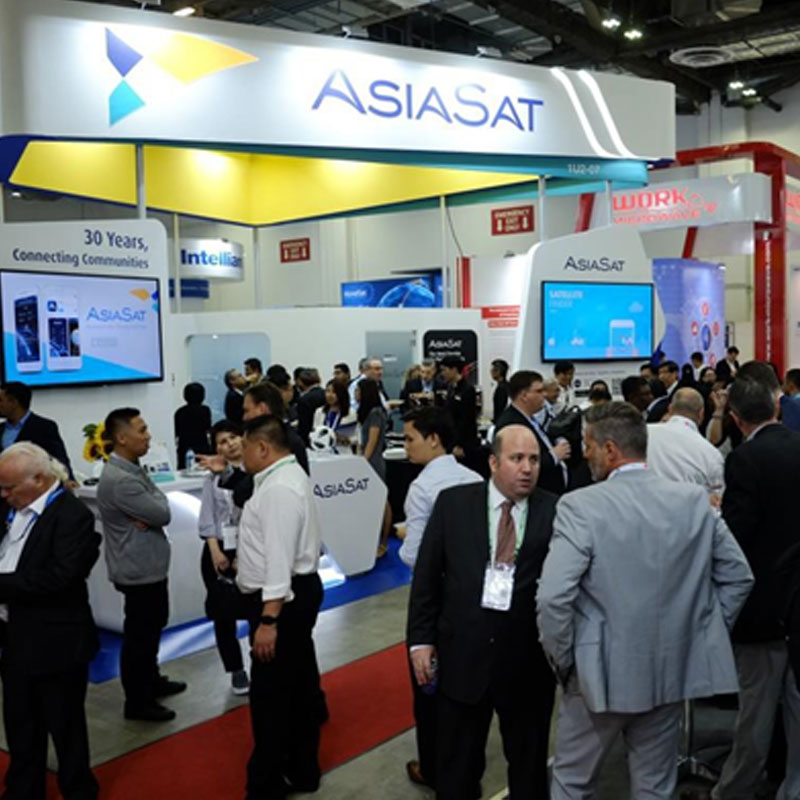
    AsiaSat, a leading satellite operator in Asia, also announced its collaboration with KBZ to provide OTT satellite video service in Myanmar, enabling audiences across the country to enjoy video content and TV programmes wherever they are, be it in rural areas or while on-the-go on trains or planes.

  • RIL is collaborating with Lakme Fashion Week and designer Anita Dongre

    RIL is collaborating with Lakme Fashion Week and designer Anita Dongre

    MUMBAI: World Environment Day – 2018 is going to be special as India is hosting global celebrations of the event today. To commemorate the occasion, Reliance Industries Ltd (RIL) has launched a special T-shirt, branded ‘The Earth Tee’ and designed by renowned fashion designer Anita Dongre, under its unique programme – ‘Fashion for Earth’.

    The idea is to nudge people to switch to fashion that not only enhances aesthetics but also help conserve the environment and our planet.

    During the launch of R|Elan™, at the IMG Reliance’s Lakme Fashion Week in January 2018, RIL collected post-consumer (used) PET bottles from the venue – Jio Garden at the BKC. Those have since been processed, recycled and converted into R|Elan™ GreenGold fabrics – one of the greenest fabrics using which Anita Dongre has designed and created the elegant ‘The Earth Tee’.

    This limited edition ‘The Earth Tee’ has been presented to celebrities, selected by IMG Reliance & Anita Dongre, to join the ‘Fashion for Earth’ movement and spot ‘The Earth Tee’ initiatives.

    RIL a leader in sustainable business development is focusing on promoting the concept of Circular Economy. Earlier this year, at the Lakmé Fashion Week, incidentally – at the same time that R|Elan™ fabrics was launched with Anita Dongre as a design partner – RIL’s R|Elan has launched ‘Fashion for Earth’ an ongoing program to drive awareness pertaining to sustainable fabrics, fashion & living.

    The Earth Tee is the latest initiatives from this program to commemorate the ‘World Environment Day’.

    “Reliance is committed to ensure environmentally sustainable and responsible operations to achieve highest standards of excellence. The ‘Fashion for Earth’ is our endeavour to make people participate in our efforts to conserve environment and the planet. The Earth Tee, designed by Anita Dongre, depicts the new paradigm of environmentally responsible fashion. The initiative is launched to celebrate the initiation of this long-term relationship, as we decided to jointly promote The Earth Tee with Anita Dongre and Lakmé Fashion Week as partners”, a RIL spokesperson said. 

    Reliance Industries, the owner of brand R|Elan, is one of the largest recycler of PET bottles in India, recycling 2.2 billion PET bottles a year.

    The R|Elan GreenGold, made from recycled PET, substantially reduces the emission of greenhouse gases, and cuts down on water usage as well. The fabric is made from pre-dyed fibres that doesn’t require much water. Whatever little water is required, 90% of it is recycled.   

    RIL is the only company in the world that has built a complete circle – right from creation of PET Resin for bottles, and collection of discarded bottles to converting them to Recron GreenGold eco-friendly polyester fibre, which in turn is converted to R|Elan GreenGold fabric for the manufacture of high-fashion apparels.

  • Promaxbda India 2018 announces Puja Vohra and Glenn Urquhart as their masterclass speakers

    Promaxbda India 2018 announces Puja Vohra and Glenn Urquhart as their masterclass speakers

    MUMBAI: PromaxBDA India has announced its first 2 Masterclass speakers for the 15th edition of its annual conference and awards property in India, which will take place on 23rd May 2018. Speaking at the Masterclass are truTV’s Puja Vohra and creative mastermind Glenn Urquhart. 

    As Executive Vice-President for Marketing and Digital of truTV, Puja Vohra is responsible for creating and implementing some of the channel’s most innovative campaigns that were successful in expanding the truTV brand. Puja has also effectively launched several shows such as The Glee project, Project Runway, Top Chef and The Real Housewives franchise, during her stint with Oxygen Media and Bravo Media. 

    During her Masterclass, Puja will break down the award winning #TruTVIsAThing campaign- how she and her team took on an army of twitter trolls and won! According to Puja, her session- Know Thyself (and be as funny as hell), will help you understand how to “tap into the power of great, real-time self-aware social media content”.

    The multi-disciplined Glenn Urquhart comes with experience in copywriting, direction, music production, journalism and commercials. As ex-creative director at Foxtel, he created some of the most awarded work in Australian television promotion with launches for Grand Designs Australia and Embarrassing Bodies Down Under. He also positioned The Lifestyle Channel’s Australia multi-platform brand as the country’s first totally modular, infinite colour trend-led branding design system.

    Glenn’s session Curiosity Skilled the Cat promises to reveal a secret formula to an effective creative. Speaking about his session, Glenn says, “You can expect a huge shot in the arm, its basically about creative inspiration. There will be a robust discussion about what makes a good creative. Because a good creative doesn’t happen in a vacuum. You’ll be able to put some simple things into practice that will lead to better creative thinking, that are actually pretty simple and they’re fun!”

    The Masterclass sessions follow the much sought after Bootcamp workshop: THE TIME [V]ACHINE, which is scheduled to take place on 22nd May 2018, at Indian School of Design and Innovation, Mumbai. The TIME [V]ACHINE offers to be a unique drill where three hardcore creative geniuses: Rob Middleton, Arnab Chaudhuri and Pete Bishop come together and dive into the technicalities of creating promos that are versatile and relevant for all platforms. 

  • ABBY Awards 2018 shortlists announced

    ABBY Awards 2018 shortlists announced

    MUMBAI: The coveted ABBY Awards that recognizes and rewards excellence across Advertising, Marketing and Media has now announced that the shortlists for the 2018 edition have started being posted, by category. The Abby Awards 2018 have been adjudged by eminent industry leaders and category stalwarts, making winning the ABBY’s a momentous occasion and a category benchmark. The shortlists for the 2018 edition are now live on www.abbyshortlists.com. As part of the inclusive process of ABBY’s the category shortlists are available for review on the website  for a period of 7 days, ensuring complete transparency in the judging process, during which time specific feedback and comments are welcome.

    Speaking about the shortlists for the iconic ABBY Awards 2018, Ajay Kakar, Chairman of the Awards Governing Council said “This year the ABBYs boasts of a Jury of Masters, each of who has been a game changer and innovator. The jury has deliberated and identified the short lists. And these are now being put up in the public domain, by category. May the best of best win.”

    ABBY Award 2018  is the the gold standard in advertising awards. Presented by the Advertising Club and AAAI the  awards will once again see the entire advertising and marketing fraternity come together in Goa from 5th April, 2018 to  8th April 2018  at the The Grand Hyatt, Bambolim, North Goa.  

  • All India Radio, Radio Mirchi, INOX & State Governments join forces with The Festival of Bharat

    All India Radio, Radio Mirchi, INOX & State Governments join forces with The Festival of Bharat

    MUMBAI: The Festival of Bharat, a one-stop experiential window into the best of India, partners with India’s national broadcaster, All India Radio, and India’s favourite Hindi music radio station, Radio Mirchi to promote arguably the largest PPP (privately funded and organised, government backed) cultural event of the country, and an unmissable one for Indians and India lovers across the globe. India’s two biggest radio stations, from both public and private sectors respectively, have come together in a rare instance of multiple major radio partners for one event, to cover this much anticipated festival. The festival has also tied-up with India’s premium chain of cinemas, INOX, who will play promotional videos of the festival at all their screens throughout the country, to further target the large numbers of HNI visitors expected to visit the festival.

    The Festival of Bharat will showcase an array of exciting events ranging from a day time lit fest with debates and talks, an evening music fest with beautiful Indian music from stars and legends alike, a morning yoga retreat by The Art of Living, a carefully curated multi-state flea market and exhibition, a spectacular outdoor fashion show, a ‘desi’ after-party, and an unmissable organic food festival. Speakers at the 5-day mega festival include Subramanian Swamy, Padma Vibushan Archarya David Frawley, Major Gaurav Arya of Republic TV fame, Suhel Seth, Ira Trivedi, Karolina Goswami, Nupur Sharma, and Vivek Agnihotri among others. 

    Commenting on the association, Cory Bixler, Founder of The Festival of Bharat said “I am pleased that India’s finest media platforms continue to join hands with The Festival of Bharat, and see their central role in celebrating the culture and traditions of India. Associating with these firms and other big brands is only natural and to be expected, as we all desire the same outcomes – a revival, exemplification and promotion of the best of India’.

    Supported by The Ministry of Tourism, Government of India, state governments, The Indian Debating Union, and The Art of Living, The Festival of Bharat has been painstakingly curated as a 21st century tribute to the majesty and depth of India’s unique history and culture.

    This most-awaited event is slated to attract tens of thousands of upwardly mobile visitors from April 4th – 8th at IGNCA, right next to Rajpath in the heart of New Delhi. 

  • Govt extends support to M&E sector in fighting digital piracy

    Govt extends support to M&E sector in fighting digital piracy

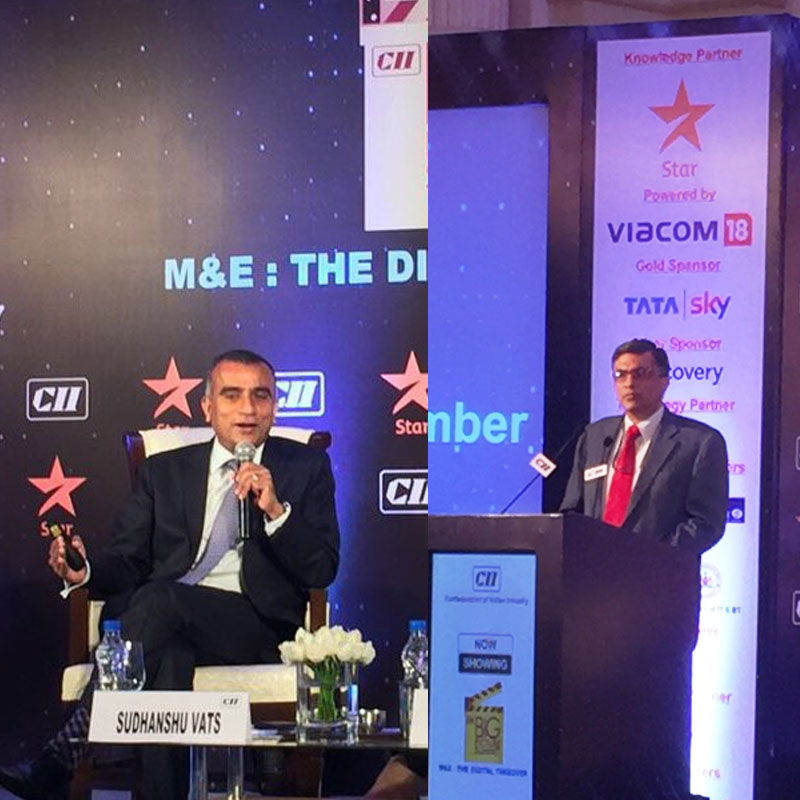
    NEW DELHI: The government of India yesterday stressed that it stood alongside the media and entertainment (M&E) industry in fighting digital piracy to safeguard loss of revenue and ease norms for doing business, while CII entertainment committee head and Viacom18 group CEO Sudhanshu Vats, on behalf of the industry, admitted that automation could result in loss of jobs leading to challenging times, but said the core of the industry will be ‘automation-proof’.

    “The government will stand with you on the issue of digital piracy,” department of industrial policy & promotion (DIPP) joint secretary Rajiv Aggarwal told the audience on Tuesday at the CII-organised Big Picture Summit here, adding that they were exploring a national anti-piracy regulation or regime and there was no need to get further into enacting complicated laws but finding solutions based on global experiences.

    Digital or online piracy is not only a big global challenge for the M&E industry, but has awakened stakeholders in India too who are feeling the heat of heavy loss of revenue due to rampant piracy of Indian content worldwide.

    Pointing out that the Indian government is alive to the issue of digital piracy and the potential of the M&E industry in being able to generate revenues and employment in the country, Aggarwal said that they were looking at how global and some local bodies (like PIPCU of the UK, TIPCU in Telangana and Maharashtra’s online anti-piracy unit) were addressing this challenge.

    Dwelling further on this issue, he exhorted the industry stakeholders to give feedback that will help India in forming a strong case and point of view for submission at WIPO where discussions are on to formulate standards for a global broadcast treaty.

    This year’s Big Picture Summit, an annual two-day conference on issues related to M&E industry, has been themed `The Digital Takeover’, which lays emphasis on the creeping digitisation in general and of delivery services like cable, HITS and OTT, and an impending automation (egged on by the likes of AI) of the various industry sectors.

    TRAI non-committal on exploring auctioning of TV licences

    SK Gupta, telecom regulatory authority of India (TRAI) secretary, which is the telecoms and broadcast regulator, while dwelling on various issues of the recently issued recommendations on net neutrality said the organisation’s efforts have always laid emphasis on consumer interest, while creating a level playing field for all players.

    Incidentally, at a time when the FCC has dismantled net neutrality norms in the US, put in place by the Obama regime earlier, favouring walled gardens of content and premium tiered pricing of various services, India’s TRAI has upheld net neutrality stating that all content should be made available to all distribution platforms on a non-discriminatory basis, apart from other level playing initiatives.

    Later, asked by journalists on the sidelines whether TRAI was exploring a consultation paper on auctioning of TV licences or permissions on the advice of the ministry of information and broadcasting (MIB), Gupta said he at least was not aware of any such move. He was non-committal when pressed on the issue.

    Asian Age newspaper a week back had reported that the government was exploring auctioning of television channel frequencies on the lines of telecoms spectrum, coal blocks and FM radio licences. Reason: bid to increase government revenues as presently permission to uplink and/or downlink TV channels cost a fixed amount with the applicant fulfilling certain set out financial norms, apart from getting clearances for satellite space and internal security. The newspaper report had added that MIB had sought advice from TRAI in this regard. What the report did not clarify was whether the auctioning was of TV licences pertained to DTT (digital terrestrial transmission) or satellite-delivered TV channels later distributed by cable and online.

    M&E industry holds key to creating future-proof, dynamic workforce: Vats

    Earlier in the morning, setting the agenda for the two-day conference, CII entertainment committee head and Viacom18 group CEO Sudhanshu Vats in his opening address said that the theme of ‘Digital Takeover’ was a topic that had “loads of nuances” that needed to be addressed in a proper perspective.

    “In my honest assessment, this is an extremely provocative theme – and one that can mean different things to different people. I can imagine some of my colleagues from the broadcast sector feeling upset. I can also imagine what some of my younger colleagues, who are already social media influencers thinking – this theme is passé, the takeover was complete a few years ago. I don’t want to pick a side at this stage and I’m certain that no definitive side can be picked,” Vats said, adding that he hoped the theme would help delegates form their own distinctive understanding of the future of the Indian industry in general.

    Pointing out that digital takeover could mean greater automation and fewer human jobs, a trend that could is likely to play out slowly in India because of availability of cheap labour, Vats said the Indian M&E sector directly employs between 1.1-1.2 million Indians and in the next five years one million more jobs would be added, thereby playing a role in “assuaging the challenge”. He added: “If we achieve breakout growth, that number can also touch five million. However, I would like to draw your attention not to the number of jobs but to their quality.”

    Explaining that skills, like creativity, story-telling, emotional intelligence and cognitive ability, in M&E sector were most ‘non-routine’ jobs, Vats said, “These are also the skills that can be transferred to other sectors, making us a part of the solution. Of course, we too will face our share of the burden. Some roles will be automated, and the media organisation might look very different in 2027, but our core will still be automation-proof.”

    Vats also pointed out that the private sector needed to be more ‘creator-friendly’ or ‘freelancer-friendly’, which also meant that the M&E sector could hold the key to “creating a future-proof, agile, dynamic workforce” that can take its skills and drive impact across industries even as the government continued to create a better business environment.

     ALSO READ:

    M&E industry to hit Rs8 trillion revenue by 2022: report


  • M&E industry to hit Rs8 trillion revenue by 2022: report

    M&E industry to hit Rs8 trillion revenue by 2022: report

    According to a report published by Boston Consulting Group (BCG) and Confederation of Indian Industry (CII), India’s media and entertainment (M&E) industry is expected to reach revenue of Rs7.5-8 trillion by 2022 from an estimated Rs4.5 trillion in 2017. Over the next five years, the industry is poised to grow at an annual growth rate of 11-12 per cent.

    The report highlighted that the M&E industry has the potential to generate four million jobs (direct and indirect) over the next four-five years, on the back of technology adoption, big data and analytics.

    By 2022, total employment across the industry is expected to be 6-6.5 million from the estimated 3.5-4 million in 2017. The report said that the structural changes across the industry and major shifts around adoption of technology, big data and analytics will lead to several new job roles and a massive reskilling of the current workforce.

    “The Indian M&E sector has huge room for growth and can create four-five million jobs without much spending from public infrastructure. Digital platforms are proliferating and there are tremendous opportunities that never existed before, especially for creators, storytellers and technology providers,’’ CII director general Chandrajit Banerjee said in the report.

    The report highlighted that M&E organisations need to rebuild their strategies to fit in the shifting digitally oriented landscape. “It’s the need of the hour for the industry to identify the creative, technological and analytical skills that will be required over the next five-seven years to restructure its business model for the upskilling exercise,” said Kanchan Samtani, partner and director at BCG, in the report.

    The report said that the M&E industry will require 140,000-160,000 trained/employable individuals entering the workforce every year for the next five years.

  • ‘It is criminal for TV not to think of social change’ – PMC’s Kriss Barker

    ‘It is criminal for TV not to think of social change’ – PMC’s Kriss Barker

    For most programming executives and management in TV companies today, television is all about running on a treadmill chasing ratings, viewership, and the concomitant revenues, followed by the next bonus and promotion. Every trick in the creative book and outside it is resorted to, to keep the ratings of a show on a high.

    Hence, it comes as a breath of fresh air when one comes across a senior media professional who does not care much about ratings or twisted elongated plots, rather focuses on helping the creation of TV and radio content with meaning, which has an impact on society and sparks off social change. US-born Population Media Centre vice-president international Kriss Barker has been behind creative initiatives on TV and radio in 56 countries over her 20-year career.

    She is in India at the invitation of a Hong Kong-based financing and production house and Indiantelevision.com’s founder Anil Wanvari to train Indian TV writers to produce entertainment education, which is based on the PMC Methodology. The latter itself is based on the Sabido scriptwriting methodology, which has been used to write television shows in about 80 languages and more than a 100 countries. The workshop is underway in Mumbai currently and ends on 3 December. Indiantelevision.com ‘s Kirti Chauhan got into a conversation with Barker – who is a PhD in public health  and has made Cape Town South Africa as her home , but travels 300 days each year, preaching the gospel of television with purpose – on the importance of TV as a medium to spark social change and how it can be done in India. Excerpts:

    What are the factors behind your shift from being a health practitioner to a media practitioner and scriptwriter trainer?

    My background is in public health and I have spent a lot of time working on public health inventions. And you find that you are spending so much time treating illness and diseases which are preventable. Public health has avoided doing it for years. We are treating conditions at the very end of the situation, rather than at the beginning. We do not focus so much on prevention, rather we have our eyes on treatment.

    When I found this powerful communication tool, which we call the Sabido or PMC methodology, it really helps to motivate change that can lead to prevention using media.

    Miguel Sabido – a TV researcher from Televisa in Mexico in the sixties and seventies – created this methodology, which focuses not on the story – but the social issue or problem. The story comes last. First, I first need to get ‘what’ is the real problem, and ‘why’ does that problem exist. And then look at ‘positive’ and ‘negative’ values that people in society hold around that. We need to honour these values and we need to integrate those people holding those into the TV show’s script and let those voices be heard.  Sabido or PMC methodology believes there are three characters every story or TV show has: positive, negative, and transitional. The transitional character is the one who has the journey – it is the one, the audience has to identify with. That is the doubting character, who does not know what to do. The positive and negative role models are almost like archetypes – they are too bad and too good to relate to me, but the one in the middle is exactly like me. He or she is the one I relate to.

    In Toilet Ek Prem Katha, the father is the negative character, the daughter is the positive one, and Akshay Kumar is the transitional. You love him.  All three are needed to help tell a story that in turn helps influence and bring about the desired social change.

    There are socially relevant shows being made on TV? What’s so special about a Sabido methodology show?

    A lot of people think they are doing social shows but this is not done effectively. I think it because only some (not all of them) of a whole gamut of theories and golden rules have been captured and used in these shows. You feel you have mastered the techniques but the fact is that you have not mastered the refinements. And you know that a lot of these programmes fail because of this. People have made music videos, short films around responsible parenting etc. Over the years, what we have learnt is that it needs to be a long running TV series, it needs to be a serial drama. You can’t do this in film or documentary, music video or a short number of episodes. You can’t cut short this; everybody is looking at a shortcut. But like in life, you get what you put in and hence, they have failed.

    When we go into a country we do a lot of formative research which helps creative people, the writers, to understand the realities of the situation of the social issues. But we have to be very careful all along the way. For example, we design a show about women inequality, women’s empowerment, the question is how far do you go before women say: no, no, that’s not me! So you have to take it a little bit aspirational, but you can’t take it too far or it is no longer believable.  And it is no longer even desirable.

    How important is it for TV channels and OTT platforms in the modern world to engage in social change shows? Why should they do it?

    It is criminal not to. Media is such an important powerful tool, and it has been misused a lot. We just play with it. And then we get things like the Columbine shooting or people going and shooting a cinema because they saw it in a movie or in a TV show.

    If you want to make a powerful product even more popular, make it more relatable. That’s the big disconnect. That is why the biggies are losing to Netflix and Hulu in the US because the former decide what they want people to see and they forgot that people really want to see themselves.

    What are the challenges you have faced?

    Funding is the big challenge. For example, a radio programme running at least twice a week over a year needs at least 104 episodes. In television, it is at least for a season. However, to get an investor or donor to commit to that is challenging. A radio show of that duration in Africa takes around $1.5-2 million. This is a lot of money for even a donor or investor, or a bucket of investors. They would rather do billboards or a comic book is what we hear sometimes.  The biggest challenge is to convince the investors that if they really want mass change on a big scale, this approach is cost effective as you can reach out to millions of people.

    How receptive have television stations and research been to using television as a tool for changing society?

    They are getting more so now because they have started realising that by not doing this, they would lose the market. For example, we are currently negotiating with Televisa Mexican, they are struggling (especially younger market) to find a way to get back into the market because of Netflix. We come in, and we say that the way to get back that market is to make a show about them.

    We had a hit show in LA, East Los High and the reason behind its popularity was that it was the only show ever produced in LA by Latinos and for Latinos. The whole production and acting cast and crew were Latinos. That’s the first this had ever happened. It seems nuts to me because this was in East LA where the majority of the population is Latino. People will watch shows of a lower production quality as long as they see themselves in the characters and the story. Like in Nollywood where the production quality is not great, but some of them connect so well.

    You have had a legacy relationship with India? Can you elaborate?

    Our predecessor organisation worked here many years ago and helped produce Hum Log, Humrahi on Doordarshan. Since about 2003, we have been wanting to get into India and just haven’t managed to get any inroads. Right now, we have been engaged by south-east Asian investment organisation One Talk Media and then they partnered with Indiantelevision.com. We are training some of the writers in our methodology and we hope to carry something to fruition with the two partners. India is a sophisticated market like Mexico and the US, and this is a model we will follow here. 

     Tell us about your reason to enter India.

    We have been trying to get into India for a long time – it’s a huge-huge market. The reason behind PMC is to try and create a sustainable population for the world. Whether you like it or not, India has a huge demographic impact on world sustainability. So, to be here and looking at societal behaviour change and looking at family planning and population dynamics, looking at women’s empowerment, children’s health – these are exactly the kind of things we need to be doing in a huge powerhouse like India.

    Have you ever cast big stars or are you planning to cast in your social issues related shows?

    We tend not to. And one of the reasons is cost. Our shows are trying to be a slice of life. We want you to believe that these are real people and if you get a big star or a known person, whether for the radio voice over or for a TV show, our viewers are not going to believe that the character is real no matter how good the actor is. So, we tend to take younger, less known voices and faces because we can make him who you want him to be.

    How effective has the Sabido method been in attaining its objective of social change?

    50 of the 55 shows that have been made using the Sabido or PMC methodology have achieved the desired social change objective. So the method works. The four or five that did not work was because we deviated from the methodology or put them in the wrong time slot.

    We lowered the fertility rate in Ethiopia by over a child and a half in a period of two and a half year period.  So it works.

    What is the relevance of societal change in a world of so much audio-video content? What role can it really play?

    A couple of things. Identification is big, these shows are built around that. So it’s entertainment that has a purpose and I feel most of us, I believe, like to be entertained. We want to go in that space where we can just relax, not want to think, but at the same time most of us like learning something. There is no preaching. These are ‘educational’ shows, social change content shows but we are not doing a good job if anybody recognises it to be that. For instance, a viewer in Africa should not tell me that the show is about female genital mutilation. Rather she should tell me it is about Fatima (a character) who had a rough time in her life. Just the educational content should be a part of the entertaining story. If you can build a story about someone who is like ‘me,’ then you have me in.