Category: Occasions

  • APOS: The future of streaming

    APOS: The future of streaming

    Mumbai: APOS, the defining voice and global platform for the Asia Pacific media and telecoms industry, took place from 26-28 September 2023, at the Ayana Estate in Bali, Indonesia.

    Created & curated by Media Partners Asia, APOS is the ultimate destination for deals, partnerships and thought leadership with a focus on content, connectivity and commerce sectors.

    APOS was established in 2010 and is attended by global, local, and regional industry leaders.

    On the first day of the conference, on the topic ‘Perspectives on ‘The future of streaming’, Udhay Shankar, co-founder of Bodhi Tree Systems and director of Viacom18, advocated for JioCinema as the future alternative to television. In a discussion with MPA executive director Vivek Couto, Shankar emphasised the need for a comprehensive, centralized service to cater to India’s vast social and linguistic diversity. He suggested that JioCinema could offer a wide range of content and create an alternative to traditional television.

    Shankar also expressed his optimism about advertising-supported video on demand (AVOD) and stressed the importance of reaching non-paying AVOD viewers, considering India’s diverse audience.

  • APOS: Perspectives on the advertising economy & role of video

    APOS: Perspectives on the advertising economy & role of video

    Mumbai: APOS, the defining voice and global platform for the Asia Pacific media and telecoms industry, took place from 26-28 September 2023, at the Ayana Estate in Bali, Indonesia.

    Created & curated by Media Partners Asia, APOS is the ultimate destination for deals, partnerships and thought leadership with a focus on content, connectivity and commerce sectors.

    APOS was established in 2010 and is attended by global, local, and regional industry leaders.

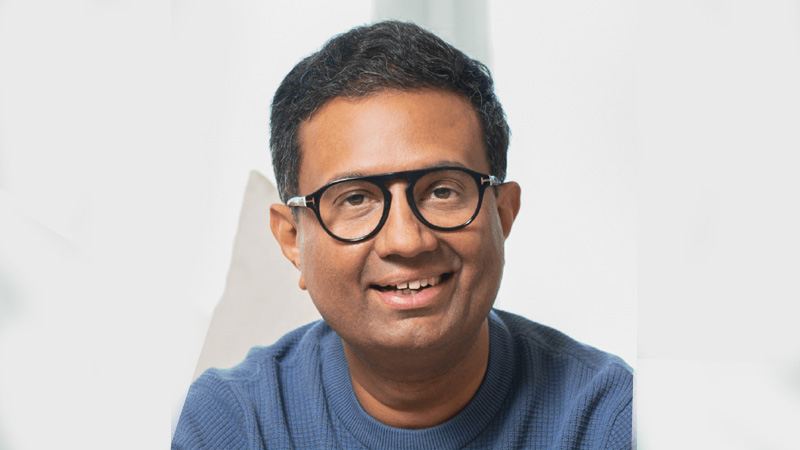
    In a one-on-one conversation with Snap Inc president APAC Ajit Mohan on ‘Perspectives on The Advertising Economy & Role of Video’, here are his views on the same.

    On the topic of significant changes, Mohan said, “I believe that Snap represents a major shift in how people, especially younger generations, communicate. It’s evident in the creative world and the essence of authentic and private communication it offers, which is increasingly valuable in today’s world.

    Snap is currently at a pivotal stage in its journey as a 12-year-old company with a substantial and rapidly growing community of around 750 million users. This community predominantly consists of younger individuals who grasp the value proposition. However, we haven’t yet built a business that matches the scale of this community.”

    When asked about the exciting opportunities, Mohan replied, “I see an exciting opportunity in this part of the world, where I believe the next phase of innovation for the company can originate. Asia holds great potential, and I’m enthusiastic about what lies ahead for both Snap and our community.

    On APAC, Mohan said, “Our focus on APAC over the past four to five years has primarily centered on Australia, India, and Japan, with limited exposure to China. However, we are now gaining traction in countries like the Philippines, Indonesia, and Malaysia. As a relatively smaller company competing with tech giants and media conglomerates, my priority over the next 12 to 18 months is to ensure the sustained growth we’ve witnessed in these regions.

    For instance, in India, we’ve gone from zero to 200 million users in just two and a half years once the community grasped the visual, fun, and highly private nature of our platform. It’s clear that when our proposition resonates, and we achieve a certain scale, growth takes off.”

    On the other markets in the world, Mohan said, “My objective is to replicate this success in regions like Europe, the US, Southeast Asia, and North Asia. Much of our current efforts are focused on product localization and tailoring our approach for the specific needs of each community. Deeply localizing our proposition, while challenging, is a crucial step in our journey. This approach sets us apart from other tech companies and aligns with our commitment to delivering value to diverse audiences across the globe. Exciting developments are unfolding in Asia as we work towards these goals.”

    On revisiting the fundamental essence of why Snap makes sense, Mohan said, “It all begins with our unique concept—the app opening to the camera, enabling users to authentically express themselves within a close-knit circle of friends and family. This emphasis on privacy and authenticity sets us apart and was conceived as a counterbalance to traditional social media.”

    He went on to add, “This starting point has spurred much of our innovation around cameras and lenses. Younger generations use the camera as their primary mode of communication, creating lenses and augmenting their visuals to engage throughout the day.”

    Earlier this year, we introduced an AI Chatbot experiment, My AI, in the messaging context. Surprisingly, over 150 million users quickly embraced this service. It revealed that people not only desire interactions with friends and family but also value conversational AI that harnesses the potential of advanced language models.

    On venturing into the AR, Mohan stated, “We’ve also ventured into the realm of dreams, where Augmented Reality (AR) takes center stage. With approximately 250 million Snapchatters actively using AR, we possess one of the world’s largest AR communities. Recent developments in AI have presented exciting opportunities, such as creating stylized images of oneself and collaborating with friends in this creative process.”

    He further added, “In this context, it’s essential to understand that AI and machine learning have evolved beyond mere content matching. While technology and media companies have historically used tech for content recommendation, we’ve reached a stage where we’re redefining the conversation. Our innovation revolves around enhancing the user experience within our beloved community, leveraging advances like conversational chatbots and general AI capabilities to keep the conversation authentic and engaging.”

    Snapchat’s AR features have revealed an interesting trend, particularly among our younger user demographic. Many of them use AR to virtually try on clothing and shoes, suggesting a strong appetite for this kind of interactive experience. Consequently, numerous brands are engaging with our community to bring these try-on experiences to Snapchat.

    Our decision to explore taking these capabilities beyond the platform aligns with our ongoing investments in AR. We recognize that this opens up various possibilities for us to explore.

    We’ve reached a significant milestone in terms of the size and loyalty of our community. With a strong focus on privacy and authenticity, especially catering to the younger demographic prevalent in this region, we’ve established ourselves as an innovative platform. However, we acknowledge that we’ve been somewhat less successful in building a robust monetization engine around it. Over the past two years, we’ve been working diligently on improving performance and optimizing the platform for advertisers. We’ve seen early positive results, and given the rapid innovation happening in this region, we’re optimistic about the growth opportunities.

    Our strategic approach involves diversifying our revenue streams. The launch of Snapchat Plus, a subscription service offering early access to products and features, has exceeded our expectations, recently surpassing five million subscribers. Additionally, we’re exploring opportunities in the ever-evolving retail and e-commerce landscape. Our community, primarily aged 30 to 34, is open to discovering new categories and products, making us well-positioned to tap into the thriving retail and e-commerce industry catering to millennials.

    Our key priorities and pillars of growth for 2024 are as follows:

    Maintain Momentum: We aim to sustain the impressive momentum we’ve achieved in countries where we’ve rapidly gained traction, such as India and Australia. This includes continuing to scale up our business, which is part of our global agenda.

    Focus on APAC Agenda: The Asia-Pacific (APAC) region presents unique opportunities and challenges. We have a specific agenda for APAC, recognising its importance in our global strategy.

    Learning from Industry Leaders: We see valuable learning opportunities from experts in both the media and tech industries, many of whom are present in this room. Collaborating and gaining insights from industry leaders will be instrumental in our growth strategy.

    Expanding to New Territories: With a strong foundation in place, we intend to carefully select new markets, such as Indonesia, Vietnam, Korea, and the Philippines, where we can introduce the magic of the Snapchat community and grow our presence.


  • Prime Video: A Unified APAC Strategy or Bespoke Country Approaches to Win?

    Prime Video: A Unified APAC Strategy or Bespoke Country Approaches to Win?

    Mumbai: APOS, the defining voice and global platform for the Asia Pacific media and telecoms industry, took place from 26-28 September 2023, at the Ayana Estate in Bali, Indonesia.

    Created & curated by Media Partners Asia, APOS is the ultimate destination for deals, partnerships and thought leadership with a focus on content, connectivity and commerce sectors.

    APOS was established in 2010 and is attended by global, local, and regional industry leaders.

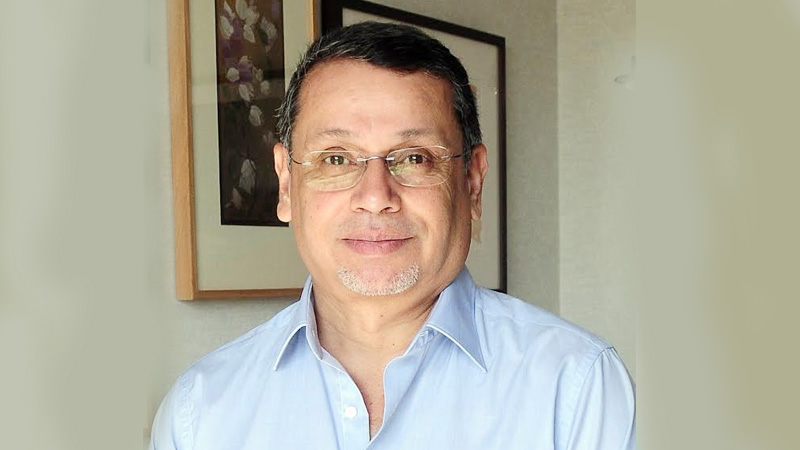
    The speakers of the panel discussion on ‘Prime Video: A Unified APAC Strategy or Bespoke Country Approaches to Win?’ were Prime Video VP Asia Pacific Gaurav Gandhi, Prime Video director Southeast Asia David Simonsen, and Prime Video head of originals – India and SEA Aparna Purohit.

    On your long-term strategy and on applying insights from your successful ventures in India

    Aparna: I’m thrilled about my expanded role overseeing Originals in Southeast Asia. First, looking back at the past seven and a half years in India, where we pioneered premium cinematic content. It was a journey of breaking new ground and convincing filmmakers to join us in creating something unprecedented. We learned and grew together, and our shows like “Inside Edge” became cultural phenomena, demonstrating our long-term vision and creative commitment. We invested time and creativity without hesitation and championed gender balance both on and off-screen. Our India team continues to excel.

    Now, in Southeast Asia, I see endless possibilities. Meeting creators there highlighted the universal power of storytelling, transcending language and culture. Our strategy is to craft authentic, locally rooted stories that resonate with each unique audience. We’ll build upon the strong foundation laid by our exceptional teams on the ground. It’s an exciting journey, tailoring content to our customers’ preferences and connecting through the art of storytelling.

    On some successes, challenges, and your broader ambitions

    David: In our first year, we’ve seen significant success in building a strong team in Singapore. We’ve made excellent hires, fostering diversity and expertise within our team. Our regional infrastructure, active for the past six months, has further bolstered our capabilities to reach millions of customers across the region. We’ve been strategizing for customer engagement and acquisition.

    On the flip side, we’ve encountered challenges related to product and consumption events. However, we’ve stayed committed to our plans and adapted as needed. The introduction of three new modes in Q2 this year has had a substantial impact on our business, positioning us favorably.

    We view this year as foundational, having established valuable relationships in the market and forged new partnerships in programming and production. Looking ahead, we’re excited about the opportunities the next few years hold.

    On approaching significant markets like Indonesia, Philippines, and Thailand, especially considering Thailand doesn’t have a standalone service yet

    David: Certainly, Prime is a significant aspect of our business, and we’re diving into it in greater depth in our priority markets. Quality and customer experience are paramount, and this remains consistent across our various offerings. Rather than viewing it as a barrier, we see it as an opportunity to cultivate and expand a brand-new subscription service in markets where we haven’t made our mark yet.

    On your strategies driving scale in both past and present market landscapes and lessons from these experiences that can be applied to markets like Thailand and the Philippines

    Gaurav: Amazon’s approach always centers on understanding customers’ needs and creating value. We start by identifying white spaces in each market, seeking ways to win local customers across key segments. In Japan, our success lies in being the go-to destination for local content, including films and unscripted formats. We’ve also excelled in sports, particularly baseball and boxing. Our channels business thrives, forming a robust entertainment ecosystem for a vast customer base.

    When we began, we were clear about not limiting ourselves to a single language but scaling across languages simultaneously. We focused on two key dimensions: original content and a personalized user experience. These differentiators have been instrumental in our success. We’ve also looked at the business-to-customer category, addressing the overwhelming amount of content and the need for a better user experience.

    Another key aspect is our commitment to breaking barriers and creating categories where opportunities exist.

    Our collaboration with T-Mobile in India is a prime example of expanding beyond language silos, and it has been remarkably successful, showcasing the potential for creators and offering a richer experience for customers. These strategies are part of our ongoing efforts to innovate and cater to diverse customer preferences.

    On navigating different scenarios, you’ve competed with Netflix in Japan to build the category. India appears to be developing a global category, while Netflix dominates in Southeast Asia.

    Gaurav: We’re certainly excited about being a beloved content service for our customers, offering a diverse range of programming pillars. We program our content while also partnering with others.

    Our service encompasses a wide variety of content, including movies, shows, and sports, catering to diverse emotional experiences. Collaboration with our partners is key to this approach. As we venture into Southeast Asian territories, some of which are in the early stages of development, we aim to play a significant role in shaping the creative economy. We envision not only contributing to the existing category but also expanding it through our offerings.

    On mentioning Prime Video as a one-stop entertainment destination and elaborating on how this strategy will unfold in APAC, especially considering the significance of live sports and the convergence of live sports, channels, and television in this region and  it enhancing the overall user experience

    Gaurav: We’re actively involved in live sports in various parts of the world, with a stronger presence in Japan, where we’ve had success in baseball and boxing. We’re exploring channel content as well, and it’s an exciting part of our offerings.

    In terms of sports programming, we evaluate it on an event-by-event basis to provide our customers with a compelling experience. Additionally, sports plays a crucial role in our channels offering, complementing the digital wallet approach.

    We’ve seen strong demand for video-on-demand sports content, especially in India. Our strategy varies by country, taking into account the market’s maturity. In India, we’ve adopted a curated strategy with a focus on live sports events and a vast catalog of recent movies. The response has been highly positive, with deep engagement and customer satisfaction.

    We collaborate with global and local partners, creating a comprehensive spectrum of offerings. We’re open to discussing partnerships with anyone interested in expanding their reach, whether they are global or local partners.

    On your strategy for engaging with pay TV operators and telcos in the region and are there any early successes or partnerships you’d like to highlight

    David: Overall, we’re diligently working on each chapter, ensuring our retail funnel remains in top shape. We’re actively pursuing partnerships with a clear goal in mind: engaging and retaining customers through these collaborations. Expanding our reach is of paramount importance to us, providing customers with various gateways to access and enjoy the Prime service.

    In addition, we have dedicated teams managing relationships with our partners across the board. We prioritize the onboarding process, striving to get customers onto the service swiftly and efficiently. Our focus is on building relationships where Prime Video complements the broader B2B ecosystem. You can expect to hear more from us on this front as we continue to make progress, even though we may have been relatively quiet in this space in the past.

    On envisioning potential opportunities in Indonesia and expanding this model across the region and globally and are there specific areas you believe require further attention and development

    Aparna: We’ve witnessed how some of our international shows gain popularity and travel across Europe and beyond. India shows have seen up to 20 per cent of their viewership come from outside their home country. The diverse linguistic palette is striking, with viewers comfortably consuming content in more than three or four languages. I firmly believe that the next wave of global content innovation will emerge from this region.

  • IDBF 2023: Unlocking Growth through Conversation Media Marketing

    IDBF 2023: Unlocking Growth through Conversation Media Marketing

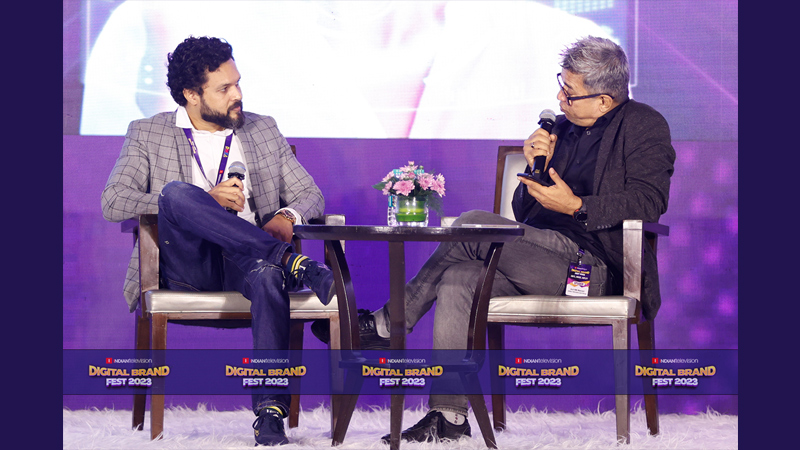
    Mumbai: The third edition of Indian Digital BrandFest 2023 kicked off and had brands, advertisers, and tech platforms discuss all these trends and more. The summit looked at the latest trends driving the change in consumer behaviour and how it has impacted the industry’s growth.

    Whether it was a boom in influencer marketing or the popularity of short video platforms, brands did not hesitate to jump onto the digital bandwagon to up their marketing game. So Indiantelevision.com took this opportunity to bring a host of industry experts together under one roof to discuss all these new trends shaping the future.

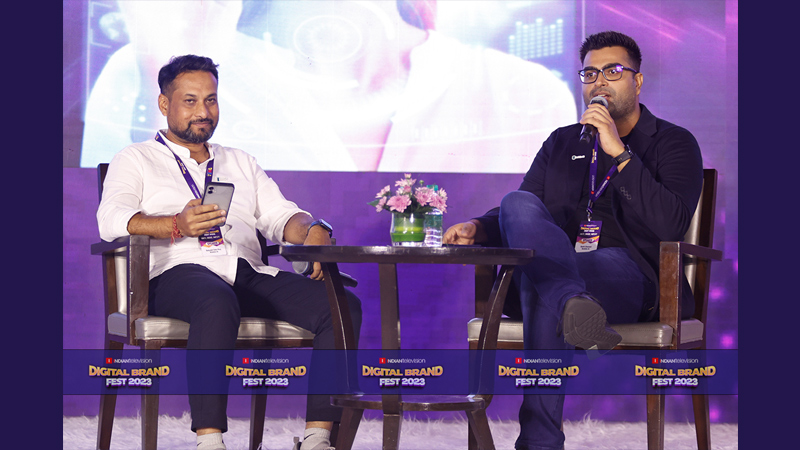
    The speakers of this industry session were Bobble AI revenue head (India) Satyajit Deb Roy in conversation with Bobble AI chief growth & marketing officer Sahil Deswal.

    Roy asked, “If you were a marketer for a major event or an OTT platform launching a new product, short film, or movie, how would you plan your marketing strategy?

    Deswal said, “As the CMO of an FMCG or OTT platform, my primary focus when launching a new product, show, or movie would be on impactful metrics such as top-of-mind awareness, reaching the right audience, and driving engagement on our platform. To achieve this, my marketing team would employ a diverse range of strategies, including influencer marketing, television ads, out-of-home advertising, social media, and targeted digital channels.

    However, I recognize that today’s consumers are savvy and often skeptical of sponsored content. They understand that brands pay influencers to promote their products, leading to a trust deficit. To address this, I would recommend complementing our traditional marketing efforts with a conversational media campaign (CMM). Conversational media allows our brand to become a part of daily conversations, leveraging the authenticity and persuasiveness of recommendations from friends and family.

    In essence, my marketing approach would involve creating awareness and engagement through traditional channels while enhancing trust and authenticity through conversational media. This combination ensures a well-rounded and effective marketing strategy, given the evolving landscape of consumer awareness and preferences.”

    Adding on to that, Roy said, “It’s fascinating to realize that users generate around 12 billion intents daily. This staggering number underscores the importance of marketers taking a serious look at the conversations happening among users. Leveraging the power of conversational media in their marketing strategies has become essential.

    I’d like to share an example from a recent campaign we conducted for Motorola. The objective was to enhance awareness and recall for a new product aimed at the 18-44 age group. Strategically, we integrated the catchphrase into users’ conversations through stickers and GIFs. This approach resulted in over three million brand imprints within six months, demonstrating the effectiveness of conversation media marketing.”

    Deswal then said, “Absolutely, the numbers are staggering, and I couldn’t agree more with your perspective. Branded stickers and GIFs essentially represent user-generated intents, and users willingly choose to express themselves using these branded elements in their conversations. It’s a conscious choice and a form of endorsement when they select a specific brand sticker, like Starbucks, for instance. This is where the power of the platform lies; it allows brands to seamlessly integrate into users’ daily conversations.

    Contrast this with traditional advertising, like an intrusive OTT ad or an interruption during browsing on platforms like Instagram. Such interruptions often break the flow and have limited recall and attention span from users. In contrast, when users choose to incorporate branded elements, it’s a voluntary engagement that reflects their preferences and choices.

    I’d like to highlight the significance of organic engagement through CMM (conversational media marketing). For instance, our content carries a global watermark, sparking curiosity and driving organic engagement as users seek the source of the content. CMM enables brands to have a direct presence in users’ daily conversations, democratizing the process and creating a more potent form of long-term awareness and consideration.

    So, my recommendation to fellow marketers is not to rely solely on traditional channels but to complement them with conversational media. In a world where brands must become a part of daily conversations, this approach is essential for sustained success.”

    Adding on, Satyajit said, “Indeed, the real-time aspect of these contents is what makes them incredibly powerful. I completely agree with you on this point.

    Now, let’s shift our focus to the next step. Once you’ve successfully secured reach, built awareness, and initiated a domino effect with consumers receiving branded content from multiple sources, resulting in a significant expansion of your audience, the question remains: What else can you do to further engage these users and drive them toward deeper consideration?”

    To which Deswal answered, “Now, let’s assume we’ve successfully entered organic conversations, and we have this highly engaged user base who are well aware of our brand. As the CMO of an OTT platform, the next step is moving them into the consideration or sustenance phase.

    Consider this scenario: I want to recommend a new show or content to my existing users on WhatsApp, tapping into my fan base. Can we create an innovative and creative solution that encourages them to engage with our brand and even generate user-generated content? For instance, one of our offerings is the bobble selfie to bobble head technology, which allows users to personalize content. When this happens, everyone starts sharing it within their networks, creating a ripple effect that generates consideration for our campaign.

    Imagine I’m binge-watching a show on Netflix, and there’s another brand I want to talk about during that time. If I can personalize a sticker with my face alongside my favorite character’s and share it within my network, it piques curiosity in others. This is the feeling we want to evoke during the consideration phase.

    In essence, what I’m getting at is that you can generate a high level of intent and consideration in a short time, provided you have creative solutions that truly engage users. Instead of resorting to traditional messaging channels that bombard users with texts, think about the superpower of models where you can capture everyone’s attention but need to engage them effectively. That’s the key to success.”

    Giving an example of a friendship campaign, Roy said, “It’s evident that conversational media is emerging as a potent force in marketing.”

    Deswal then said, “So it’s really that the sea doesn’t have the problem, the ship on top of that sea really needs to be sorted.”

    Moving on to his last question, Roy asked, “Now that you’ve effectively built brand awareness and consideration using conversational media marketing (CMM), the next crucial step is leveraging CMM to guide these users down the funnel towards the ultimate goal: the intent to purchase. This phase of the journey is of utmost importance for marketers, as it signifies the conversion of engagement into tangible action.”

    Deswal replied, “I think this is by far the most important step in the funnel. So if I am running this campaign, I’m definitely looking at the return process as you go down the funnel, and assuming that you’ve created the right kind of engagement and awareness and consideration. At this point, it’s all about delving deeper into conversations with consumers, but the depth here doesn’t mean relentless promotion; it’s about creating an unforgettable experience.

    At this stage, it’s all about delivering the right intent at the right moment and offering the right nudge to put the user in a purchasing mindset. Contextual nudges play a significant role in our platform. Let me explain with a simple example: Suppose a user is chatting about traveling from one city to another. If we detect the intent, such as “Looking to book a cab,” we can seamlessly open up the Uber chatbot experience, providing a trustworthy and familiar platform to quickly book a cab. This eliminates the need to switch between multiple apps and offers a frictionless, personalized experience.

    Another example is a group of friends discussing travel plans on WhatsApp. When our AI detects the intent to travel, we can instantly provide real-time search results, allowing one friend to book flights seamlessly. This is the essence of purchase intent.

    In essence, the goal is straightforward: from creating awareness to moving users into the purchase intent phase, the way we deploy conversational media platforms and solutions can deliver returns across all three stages. It’s incredible how real-time and seamless this process has become.”

  • Industry Address: Can India lead the cross media measurement solution for the world

    Industry Address: Can India lead the cross media measurement solution for the world

    Mumbai:The 3rd edition of Indian Digital BrandFest 2023 kicked off and had brands, advertisers, and tech platforms discuss all these trends and more. The summit looked at the latest trends driving the change in consumer behaviour and how it has impacted the industry’s growth.

    Whether it was a boom in influencer marketing or the popularity of short-video platforms, brands did not hesitate to jump onto the digital bandwagon to up their marketing game. So Indiantelevision.com is taking this opportunity to bring a host of industry experts together under one roof to discuss all these new trends shaping the future.

    One such session was an industry address on how India can lead the cross media measurement solution for the world. It was led by Aquiliz founding member Gowthaman Ragothaman. Attached here is the presentation of the whole session.

    India CMM IDBF 2023


  • IDBF 2023: Connecting to the new age consumer – The new order

    IDBF 2023: Connecting to the new age consumer – The new order

    Mumbai: The third edition of Indian Digital Brand Fest 2023 had brands, advertisers, and tech platforms, to discuss the trends and more. The summit also looked at the latest trends driving the change in consumer behaviour and how it has impacted the industry’s growth.

    Whether it was a boom in influencer marketing or the popularity of short video platforms, brands did not hesitate to jump onto the digital bandwagon to up their marketing game. So Indiantelevision.com took this opportunity to bring a host of industry experts together under one roof to discuss all these new trends shaping the future.

    Jio Entertainment Sr. VP content licensing & partnerships Kaushal Modi in conversation with TV9 Digital executive editor K Krishnakumar.

    Krishnakumar commenced the session by saying, “The good thing is that we have a very interesting and simple enough topic – ‘Connecting to the new age consumer – The new order’, and who better than somebody like Kaushal Modi, who is involved in the most exciting business as far as the aam aadmi or the aam janata is concerned, i.e., the OTT business, which connects with all kinds of consumers – new age and old age. They say old-age consumers behave like new-age Gen Z consumers when they come to watch content on OTT. I just want to begin by asking how is the way in which connecting with consumers is changing and most importantly, how is that impacting content, creation, distribution and consumption?”

    Modi said, “ In 2016 when we launched 4G, it changed a lot of things in the industry. Pandemic was another event that changed and got to complete adoption of the digital side. We keep saying Gen Z, but when we talk about my parents, they are ‘Gen Z’, because they’ve just come onto the bandwagon suddenly getting internet in their hand. So for us, all consumers are new. The digital natives are the early adopters, and everybody else coming in. There is no looking back, it is part of everybody’s life, we have 600 to 700 million customers currently, out of a population of 1.5 billion.”

    Laughingly interrupting Modi, Krishnakumar said, “That’s the power of IPL, or IPL and succession.”

    Adding on it, Modi said, “So succession is obviously a more niche audience. But yes, we do cater to each and every audience. What we did was, ensure that you had connectivity and everybody was consuming content. It’s not a new business in terms of content. There were different services, there were different screens, there were different modes of getting entertained. What has changed with internet is, it has just created another mode of delivery, another medium of delivery, and it’s no longer fixed to a wall, like a television screen, but changed to mobile screen. We have become a mobile-first country and as we keep growing, and as we keep evolving, now there is the Jio phone, Jio fibre just to get connectivity to everybody at an affordable price. We ensure that the connectivity is there, the device ecosystem as well, and so on. So you’ve got the smartphones,  the feature phones with connectivity, and the connected TVs, you’ve got everything which is there.”

    Immediately adding on to that, Krishnakumar said, “Kaushal, Reliance does diruption with backward integration, from telecom to OTT. It’s incredible, the story you’re telling us. I’m curious to know, with so much content that you are licencing, and you’re partnering to create, in that space I’m asking. Now you have digital to push that content promoted on social media as well. From that point, in that zone of things, how are you seeing content change and evolve when it comes to connecting with consumers?”

    To which, Modi replied, “So earlier, it was just long form content to web series, let’s say this was a new thing, maybe four or five years ago, it’s changed, you’ve got shorts, influencers, digital media and social media is changing everything. So there is no one scope, which covers everybody. Everybody’s got a different taste, culture and requirements in terms of entertainment, infotainment as per the requirement of each consumer. What we’ve enabled is getting it in their hands. People are consuming across different services, be it social media, the open internet, the OTT apps,q our apps effectively, which is making sure that the content is available. You can consume the way it is, it’s available there. Different models from a content creators lens, it could be an AVOD content experience, it could be an SVOD content experience. Everybody has a different commercial model and a different model of engagement. So that’s from the content creator side. Similarly you got the other side which is the consumer, they’re getting brutal. They’re deciding what they want to watch. If they like it, they continue or else they just drop it and move forward. But there is an opportunity, with the internet, connectivity and the ecosystem evolved, to make everybody a creator and everybody a consumer of the content. You no longer have to be stuck to a television channel at nine o’clock to watch a show. We know those days are gone…”

    Krishnakumar then asked Modi, “Content licencing, for a consumer company like Netflix, where every region becomes a separate business as every territory has different genres of content and pricing, and what you’re watching changes from region to region. The third point is that everything is in silos at this stage. Talk to us about the Indian market, and Indian market has been targeted by the global giants. I dare say that such an important market will wait for Jio to push it further and become the most dominant player going forward. From that perspective, Kaushal, how are things changing in terms of licensing and distribution?”

    Modi answered, “So we feel that the global giants are driving the consumption or the market, I don’t think that’s the case. That’s what people in this room are experiencing because we’ve taken the OTT subscriptions. But even in the OTT subscription, things are getting blurred. People are watching global, Korean and Latin American shows. They’re being watced without it being dubbed in your local language. So that’s one thing, that is obviously content transcending into multiple languages, they’re moving across. So that’s the consumption which is happening. Apart from 80 to 110 million subscriptions, which is what people keep claiming, beyond that you have the huge audience base, which is still consuming other content, which could be anything like a DD free dish, or open Internet content, which is available for free and driving millions and millions of views. You suddenly put a new music video and people are talking about 500 million views, versus we looking at any of these top OTTs, and they’re saying, ‘hey, our show which is in the top, and has five million views. So obviously, it’s also looking at perspective in terms of what I said. From our perspective, we’ve aggregated and tried to get everything onto one platform, making it seamless, a single destination, and making everything available, and then let the consumer decide what they want to do. So it’s the choice given to the consumer, at an affordable package, and then you’ve broken the barriers for people to consume the model.”

    Wrapping up the session with one last question, Krishnakumar asked, “What’s the most watched content on Jio, for now? Anything that comes to your mind that really works well as a content pieces?”

    Modi said, “It changes every month, every day, every hour. So there is no fixed thing in terms of what worked, what didn’t work. Every day is a new benchmark. If it was a benchmark, three months ago, it might have been different, obviously, it’s a very evolving market, new users coming in, a lot of changes happening, different experiences coming in…”

  • IDBF 2023: Cipla X Pocket Aces – The Power of Impact Content

    IDBF 2023: Cipla X Pocket Aces – The Power of Impact Content

    Mumbai: The third edition of Indian Digital Brand Fest 2023 had brands, advertisers, and tech platforms, to discuss the trends and more. The summit also looked at the latest trends driving the change in consumer behaviour and how it has impacted the industry’s growth.

    Whether it was a boom in influencer marketing or the popularity of short video platforms, brands did not hesitate to jump onto the digital bandwagon to up their marketing game. So Indiantelevision.com took this opportunity to bring a host of industry experts together under one roof to discuss all these new trends shaping the future.

    The speakers of this fireside chat were Cipla director & senior marketing head – consumer marketing Amit Patel and Pocket Aces co-founder & CEO Aditi Shrivastava.

    Shrivastava began the conversation by saying, “These two words impact and content, they’re very dear to me because they bring together the last 12 years of my career working in the impact space and now working in content. For you, it’s been a really incredible marketing journey, from FMCG to pharma. So, today we’d love to talk about how you also made that journey in your career and what are the big differences that you see in, something like FMCG and marketing, something which is highly regulated like pharma.”

    Terming it as a very good question, Patel replied, ”I have been in the industry for last 15 years and one thing that has remained constant is my focus on creating robust content pieces. I believe as human beings, our prime objective to exist is story. Storytelling is one of the most important areas and last 15 years I’ve got various chances across various brands, across various countries to explore this art. Prior to working in the current organisation, I was associated specifically with Dabur International and there were many instances that I faced. Making content for the US market versus making content for a Middle East market or southeastern market, I believe that it’s the cultural nuances that change, consumers remain the same everywhere. If the content is timeless and geography less, it stays for years to come. We’ve seen examples of it right from Lay’s to Loreals of the world, P&Gs of the world, these have set certain boundaries around the content and it is working out for them. However I believe as marketers are moving into newer industries, and when I talk about my current industry, I’ve to give a disclaimer that views are my own because it’s a highly regulated industry. This doesn’t represent the views of my organisation.”

    He further added, “In a pharmaceutical company, the storytelling element kind of takes a back seat and it’s really important to reinvent that to ensure that you are bringing patients stories, you are bringing doctors stories out there, that what kind of change a particular therapy area or change a particular approach has in the life of patients. It’s very critical to keep on reinventing yourself, and that is what we’ve been doing through and through. As a pharma company, we run one of the largest marketing campaigns in the country and this has been going on since the last five years. The campaign essentially aims around creating awareness about the right treatments for Ashtma which is a deep-rooted problem in the country. Now there are two ways to go about it. We can do the traditional doctor-level marketing which every other pharma company does or can we break the mould, can we go beyond that, can we go beyond the pill and that is where we are innovating and partnering with storytellers like you.”

    Talking about Pocket Aces’ first video with Cipla being released on FilterCopy, and Cipla’s previous work on doing anthems and songs and associating with influencers, Shirivastava then asked him, ”So walk us through how in a pharma industry, legal and medical teams are sitting at the main table and marketing is behind them. How have you convinced your teams, your HQ to take this plunge and how have you shown them the ROI it will deliver?”

    Patel answered it saying, ”What we’ve been doing so far is we don’t call it marketing campaigns. The right way to put it would be – public awareness initiatives because here we are talking about lives and how we impact the lives of people. So this public awareness initiative doesn’t talk about any product. To distinguish between FMCG marketing and pharma marketing I would say pharma is more purpose-driven and FMCG is more profit-driven. So purpose-driven marketing is something that we started we realised that it is not the patient who is affected. Like in our country, everyone becomes a doctor as soon as you fall sick and the actual doctor takes a back seat. So it is very important to convince everyone in the room and not just the patient on what is right treatment or what is the right therapy area around that. Specifically when there is a disease as common as asthma, which is one of the leading causes of death in India unfortunately. So we created a campaign that tells people and asthmatics that you can live an unstoppable live even with asthma, what are the right ways to deal with asthma. We had done one of the largest patient support programs in Asia and every year we reach almost 38 lac patients one on one. On top of that, we have been working with a lot of Bollywood celebrities in the last five years wherein they helped in spreading the message. There is still some sort of stigma connected to it and the campaign that we embark, there is a very strange kind of challenge I would say and to describe the challenge in one sentence – the fear of stigma is more than the fear of disease. That is a very tricky problem to have. The only way to bulldoze that or make sure people are going for the right treatment is to go for large-scale consumer marketing campaigns as we do right now. There are a lot of elements that we have explored over the years. We also reinvented ourselves from TV to radio and right now the campaigns stays on digital channels. We have been constantly innovating with our storytelling approach. Earlier the focus was push. We’re doing a lot of ads but then we realised as consumers, how many times am I clicking on an ad? Or are ads getting as effective as they used to be? I believe the golden age of advertising is not here anymore. So it’s very important to take and park it into the journey where the consumer is going. So internally we have a map, which is something we call as micro-moments that cumulatively decide how the consumer journey is going to end and that’s how contextually relevant we want to be. That’s why storytelling is really important for us, alternate content formats become more relevant for u. We have been doing a lot of initiatives that come from music and we have a very beautiful song written by Amit Trivedi and Amitabh Bhattacharya, showing what is the real treatment for asthma in the country. Believe me, all these things coming from a pharma company taking the courage to go beyond the pill and that’s where we are heading.”

    Moving on, Shrivastava spoke about Cipla monitoring the engagements very closely, i.e., what is the audience saying on the content and anything we put out and what can we take to put in the next video, etc.

    Patel then added, “Being in a purpose-driven organisation and a purpose-driven environment, our metrics are generally different. It’s not the similar kind of metrics that you follow in a profit-led organisation because the awareness is largely done on therapy areas. We do have a Neilsen brand track, so over the years we have measured how the needle has moved in demolishing the myths, demolishing the stigmas associated with that. So all the metrics over the years is because of our communication and we’ve tried to break the myths. In the last five years, I would say the metrics that we measured with Neilsen data has gone down almost 30-40 points and that’s huge.”

    Furthermore, Shrivastava asked Patel, ”What advice do you have for brand markets in general when it comes to highly regulated industries like for example mutual funds? Their approach has also changed quite a bit over the years. You’ve done a lot of content with them a few years ago and now their specifically saying – ‘Oh we can’t have celebrities in the content, we can’t do XYZ things. So what is your advice for how to innovate regulated industries?”

    Patel then said, “So as you rightly mentioned the regulated industry marketing is no longer the star of the room. We somehow sit in the room and compliance, legal and all these departments become the force to deal with. Every time there is a new communication, you’ll have to take ten thousand approvals even if it is as simple as putting out a social media post. In industries like mutual fund, I would say we kind of understand the pain that they have because the adoption of mutual funds is similar to the adoption of inhalers in the country. Though I cannot compare both of them together but generally that’s how both of them move together. In these industries it is very important, first of all, to understand what is your position in the industry. For example, if you’re doing consumer-level marketing in a regulated industry and if you’re not a category leader then I would say you need to have a laterneck approach. You can only take these steps if you have the courage, might, and capacity to execute campaigns like these. And if the onus is on you to make sure that the category grows. If you’re a challenger brand in this situation.  I would very much recommend going with direct marketing. Sit directly with the stakeholders and convince them instead of investing a lot of money in creating large-scale campaigns. The benefit will go to the leader brand. It won’t go to the challenger brand. So unless you are a leader in the category, it is strongly advisable to go a direct marketing approach. Market shaping and changing the psychology of consumers is not easy as it looks and that is a true litmus test for any market leader to take that up.”

    Concluding the session, Shrivastava asked, ”What is Patel’s biggest pet peeve when it comes to marketing” but Patel then went on to ask the same question to her.

    To which, Shrivastava replied saying, “My biggest pet peeve has to be when people don’t respect the intelligence of the audience. Today’s audience is extremely discerning. They understand subtlety. We do content, so we know. Viewers understand everything from humor, drama, sarcasm, everything. So I think the beauty of storytelling is that you should be able to show regular use cases in the lives of consumers and how your brand beautifully fits in that life.”

    After that Patel said, ”My biggest pet peeve is deceptive advertising and a lot of marketers get into that. Using claims that your product won’t be able to deliver. This is not just deception at your level, you’re not true to yourself but to the markets.”

  • GroupM- Experential Session: Unveiling The 5G Frontier: Interacting, Immersive and Integrated Commerce

    GroupM- Experential Session: Unveiling The 5G Frontier: Interacting, Immersive and Integrated Commerce

    Mumbai: The 3rd edition of Indian Digital BrandFest 2023 kicked off and had brands, advertisers, and tech platforms discuss all these trends and more. The summit looked at the latest trends driving the change in consumer behaviour and how it has impacted the industry’s growth.

    Whether it was a boom in influencer marketing or the popularity of short-video platforms, brands did not hesitate to jump onto the digital bandwagon to up their marketing game. So Indiantelevision.com is taking this opportunity to bring a host of industry experts together under one roof to discuss all these new trends shaping the future.

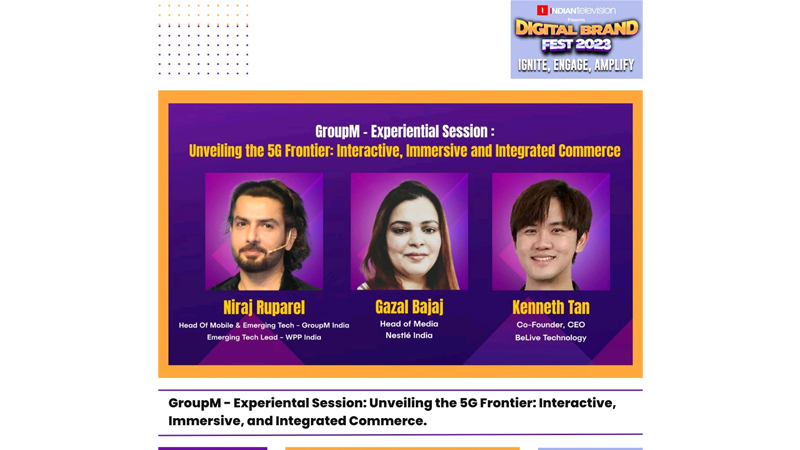
    One standout moment at Indian Digital BrandFest this year was the experiential section led by WPP / GroupM emerging tech lead Niraj Ruparel, alongside BeLive CEO & co-founder Kenneth Tan and speaker from Nestle India head of media Gazal Bajaj. Together, they orchestrated an unforgettable experience that pushed the boundaries of innovation.

    Ruparel harnessed the lightning-fast speeds of 5G, integrated mind-bending functionalities of a live commerce platform, and curated a precise, immersive, and engaging shopping experience, culminating in the ultimate extravaganza.

    Overall, a great panel discussion combined thoughtful planning, engaging content, effective moderation, and respectful dialogue to create a meaningful and memorable experience for both panellists and attendees.

  • IDBF 2023: From Script to Screen: EC Studios Crafting compelling narratives for brands

    IDBF 2023: From Script to Screen: EC Studios Crafting compelling narratives for brands

    Mumbai: Beginning the session on a lighter note, Wanvari, who was intrigued by the earrings Bopche was wearing, asked him what was so special about it. To which Bopche said that it was more from a religious point of view, and it was not a fashion statement.

    Wanvari then asked, “There are various studios out there, but what makes EC Studios so special?”

    Bopche replied, “I think the first part is, yes, there are a lot of studios, a lot of content houses but EC is special because it has been owned by an agency. So, it works as a one-stop solution. Also, I think for brands to tell them compelling narratives, not just the creative, but production, post-production end-to-end, we take care of. First of all, this is medium agnostic, agency agnostic, as well as platform agnostic. So that’s one of the biggest USP and that kind of differentiates us from the rest of them. Also, we are web 3.0 already. So, I think that kind of sums it up in terms of the difference.”

    Wanvari then asked Bopche, “How does it work? Does a brand approach you or an agency approach you?”

    Bopche replied saying, “As I said, it’s more like end-to-end. At the same time, it’s piecemeal which is also available. Today, brands are looking for a quicker turnaround time, lower budget, and mostly the ecosystem as you have a creative agency production house, post-production house, and then technically, the content distribution partners. What we focus on is a flexible model. Brands can choose to engage with us for a one-neck-to-grab approach, where we handle everything end-to-end. Alternatively, they may already have an established agency that handles scriptwriting and then passes it on to us for production. There’s also the option for smaller projects, which might involve post-production, including CGI and VFX. So, it’s a matter of offering a full-service experience or fitting seamlessly into their existing supply chain, wherever they see the best fit.”

    Adding on to it, Wanvari asked, ”You have a full-fledged creative team in-house, including scriptwriters and crew, right?”

    Bopche said, “Not only do we have our creative team, which is standard for any agency or content house, but we also have our streamlined workflow tailored towards producing high-volume content. In today’s market, we’re witnessing a surge in live commerce activities and an increasing demand for content from DTC brands. The days of creating a single TV advertisement are behind us. Brands now aim to become content destinations, focusing on continuous engagement across platforms. That’s where we come in with our comprehensive in-house capabilities, encompassing studio setup, creative teams, production units, and post-production. If a script requires an external shoot, we arrange for it, but for the most part, our operations are fully in-house.”

    Moving on to his next question, Wanvari asked, “When working with an agency or brand, how closely do you all work?”

    To which Bopche replied, “Many names in the industry are primarily post-production houses, often comprising just two or three individuals with a set of producers who outsource post-production work. Companies like Famous or Prime Focus are typical examples, focusing exclusively on post-production and not involved in the creative aspect such as scriptwriting. The industry has traditionally been quite fragmented in this way. However, what sets us apart is our one-stop-shop approach. We handle everything in-house, from scripting to campaign development. Whether it’s engagement campaigns, ROI-focused ad campaigns, or any other type of content, we manage it all internally. It’s not about outsourcing; it’s about having everything under one roof, which allows us to pass on cost-efficiency and shorter timelines to our clients. In today’s landscape, content is the currency that brands are dealing in, and we aim to be at the forefront of helping brands optimize their content strategies.”

    Wanvari then asked, “How does being a part of the chain network help you?”

    Bopche answered, “Being part of a larger network is immensely beneficial for us. Countries like Korea and China are well ahead of India in terms of content marketing and production, covering everything from virtual reality to live commerce. We draw inspiration and best practices from these markets. This is one of the reasons why we confidently say we are well-prepared. While the media’s focus has been on meta, we believe that as we transition to web 3.0, there will be a significant demand for content creation in that space. Today, we create content for platforms like Instagram, Facebook, and YouTube, which operate within the web 2.0 framework. Content will always play a crucial role in advertising, just as newspapers, TV, and radio did in the past. Some platforms may coexist while others may fade away over time; the future will reveal this. Additionally, we are gearing up for the Metaverse era, including digital human creation and Metaverse content production. Learning from more advanced markets, such as Indonesia and developed countries, where content is concerned, they are approximately two years ahead of India. This ongoing learning process greatly benefits us.”

    Following the presentation of an AV for EC Studios, Wanvari then highlighted the tagline displayed in the last frame of the video and inquired, “Could you please share some insights about ‘Kaam se hi Naam’?”

    Bopche replied saying, “We believe that our work should speak for itself, much like the approach taken by individuals like Sachin Tendulkar, MS Dhoni, or Shahrukh Khan, who have earned their names through their achievements. While there may be countless others with the same name, it’s the work that distinguishes them. This philosophy is at the core of our values, and with every project we undertake for our clients, our aim is to not only meet their satisfaction but also elevate the pride and satisfaction of our team.”

    Talking further about the pleasant feeling of the video, Wanvari said, “I’m sure clients will also feel comfortable when they come in there.”

    Bopche then went on to say, “We’ve been in operation for the past four and a half years, and we’ve recently expanded with a new facility, including two studios located in Gurgaon. One of these studios is exclusively dedicated to Samsung, where we manage their live commerce operations. While we certainly create entertaining content that engages audiences, we also produce educational content that delivers ROI for the brand. Additionally, we craft content designed to foster engagement and build communities for our brand partners.”

    Wanvari then shot his next question, “What is the one thing that we wished the client understood about the production side?”

    Bopche answered, “While production may appear easy and glamorous to outsiders, it presents a myriad of challenges. One of the key challenges is coordination and collaboration. Production involves managing large teams with diverse skills and responsibilities, making it crucial to maintain effective communication and coordination. Failure to do so can impact costs and timelines, both of which are critical. Staying within budget and adhering to tight schedules are essential in this line of work. Safety is also a paramount concern when dealing with crews of 120 to 150 individuals. Ensuring safety on set is a top priority. Furthermore, client satisfaction post-shoot is vital. In the world of production, there is a significant degree of unpredictability, as we’re experiencing today. This necessitates a team with skills like adaptability, problem-solving, and the ability to make quick decisions on the set. These aspects often go unnoticed but are instrumental in the success of any production.”

    Wanvari then asked, “How does coordination take place at EC Studios? Is it facilitated through cloud-based systems, with clients providing feedback online?”

    Bopche replied, “In today’s fast-paced world, convenience is key. People want to access content with a simple tap on an app, and nobody has the time to deal with downloading links or managing files through WhatsApp or WeTransfer. That’s why we’ve developed a cloud platform that streamlines the approval and feedback process for decision-makers, such as senior CMOs or marketing heads, even when they’re on the move, like at the airport. They can easily provide feedback on content with a few clicks, and it’s automatically relayed to us. We make the necessary changes, and it goes back to them seamlessly. There’s no need for manual link transfers; it’s all automated. This approach not only simplifies content production but also enhances the logistical aspects of the creative collaboration between the brand and the agency. Everyone can work together efficiently on a single platform to achieve the desired output.”

    Moving on, Wanvari asked Bopche whether they welcome clients on their shooting floor. To this, Bopche replied with a laugh, “Obviously, they are the ones putting the money.”

    Adding on to it, Wanvari said that it gets very painful at times after the storyboard is approved and after everything’s approved.

    Bopche then said, “When we have clients on the set, it comes with its own set of pros and cons. Let’s start with the pros. Having the brand or client present on the set allows for quick feedback, as they can see the production in action. It promotes transparency, as they witness the communication firsthand. Moreover, it enables swift decision-making, especially in unpredictable situations. Additionally, client feedback often contributes valuable creative nuances that enhance the final film, from a brand hygiene perspective. However, there are also cons to consider. Having the client on set can sometimes be distracting, adding pressure to the production crew. Excessive interference from the client in the creative process can be challenging, as it may undermine the expertise of the production and creative teams. So, while there are definite benefits, it’s essential to strike a balance when clients are on set.”

    Wanvari asked, “How do you respond to clients’ expression that budgets are constrained but promise significant exposure in return for your services?”

    Bopche answered, “While we always maintain a smiling demeanour externally, internally, we engage in critical evaluation when clients mention tight budgets and the promise of exposure. This assessment considers several factors, such as the state of our business at that time, the value the project brings to our portfolio, and whether it’s worth undertaking even if the financial compensation is limited. Given the choice, we often lean towards managing tight timelines over tight budgets, as it offers an opportunity to showcase our skills under pressure.”

    Pointing out that Bopche didn’t answer the question properly, Wanvari said, “Would you choose to undertake the project, strike a balance between the two by possibly compromising on the budget for exposure, or opt for a different approach altogether based on the demand?”

    Bopche replied, “We need to establish the value of what’s achievable. Content can be created at various price points, and it’s important to convey what clients can realistically expect based on their investment. It’s not a matter of categorically refusing projects; we don’t work for free, as no one can sustain that. We have a track record of successful projects and satisfied clients, supported by testimonials. However, there’s a delicate balance. We always consider whether a project adds substantial value or if it’s worth undertaking. It’s about helping clients understand the value they’ll receive in return. While there’s often humour around client expectations versus reality in memes, in real life, we’re committed to maintaining quality. We believe that, ultimately, people remember the one goal you miss, not the ten you save. So, we uphold our commitment to delivering quality work.”

    Wanvari added, “You’ve worked for a Korean company. Korean companies are known to look at bottom lines.”

    Adding on to the same, Bopche said, “Yes, business is crucial, and everyone in this room, regardless of their role or department, is connected to it in some way. It’s a shared goal. However, it’s equally important to consider how to approach it ethically. Bottom lines hold significance, but there are instances where projects may have tight budgets, yet they are worth pursuing. Not all content will deliver a high ROI, just as not all content will directly impact the bottom line.”

    Wanvari then asked Bopche, “What role does technology play as far as your studio is concerned and production is concerned?”

    Bopche said, “Technology has played a pivotal role in the evolution of film production. We’ve witnessed significant advancements in cameras, cinematography techniques, editing software, and special effects, including the exciting realm of virtual reality. Now, we can pre-visualize scenes with precision, addressing safety concerns proactively. Technology has become an integral part of filmmaking, especially for creating unreleased content and product launches where the product hasn’t been seen before. CGI and VFX have always been present, but its utilization is increasing. They enable us to depict what’s otherwise challenging to capture, and with the rise of OTT platforms and global content consumption, this demand has surged. People are enjoying content from various countries with diverse exposure levels. As a result, we see a growing use of VFX, virtual reality, and technology as a central component of this dynamic landscape.”

    “We’ve formed a partnership with a Korean company specializing in digital humans for the Metaverse. This involves creating a digital archive. A notable case study is the use of a digital avatar to continue filming when a Fast and Furious cast member passed away. We anticipate that Bollywood celebrities, influential figures, and even politicians will establish their digital archives. In this futuristic vision, even after their physical presence has departed, these digital personas can continue to endorse brands, perpetually earning royalties. The concept of royalties is not new, but it’s poised to take on a whole new dimension,” added Bopche.

    Wanvari then asked, “More and more brands are going the B2C route. So how do you see this entire thing?”

    Bopche answered, “In the B2C realm, there’s a notable shift towards increased brand control and awareness. Data-driven insights are becoming central, and content marketing is playing a significant role. As Neeraj mentioned earlier, live commerce, like what we do for Samsung, is a prime example. Many clients are realizing the power of creating content to support their sales efforts, whether through live video commerce or other means. D2C is an exciting space, emphasizing the need for a higher volume of content. It’s no longer solely about crafting a single TV commercial but about producing a plethora of content aimed at educating and engaging consumers to foster brand loyalty. This dynamic landscape has witnessed an abundance of content creation, with even companies like Whirlpool generating thousands of recipe videos to promote a microwave, showcasing the immense potential of this space.”

    Moving on Wanvari asked, “What is your stance regarding clients establishing in-house studios?”

    Bopche answered, “Having in-house studios is always an option, and it’s similar to the earlier concerns advertising agencies had when setting up in-house creative teams. However, this doesn’t eliminate the entire industry ecosystem. This industry relies heavily on talent and professionalism. While some content can be managed in-house, it doesn’t replace the need for skilled production and large-scale expertise. Establishing something like that would typically require significant resources.”

    Wanvari then asked his final question, “I believe you’re doing something special for clients, you have some loyalty programs going on, can you let us know a little more about that?”

    Bopche said, “I’d like to clarify that this is more of a reward program rather than a loyalty program, as loyalty comes with time and usage. We operate in the content creation industry, and we saw this as a way to introduce a unique experiment for EC Studios. Today, we’ll be distributing the EC card, which is essentially a reward program card pre-loaded with 50,000 points, equivalent to 50,000 rupees. My team will be distributing these cards here, and they can be redeemed for any content creation services, big or small. As they continue to use our services, they’ll accumulate more rewards. While reward programs aren’t new, they are somewhat unique in our industry. It’s a way of bringing the concept of rewards, which we see in various sectors from Google Pay to others, into the B2B landscape, which we believe can add value to our clients.”

    Adding on to it,  Bopche said, “This offer is exclusively for companies, and you can utilise it for various services. Whether it’s creating static posts, producing videos, designing motion graphics, or other services we offer, the options are diverse. It’s essentially a way for your organization to save 50,000 bucks.”
  • Indian Digital BrandFest 2023: Are Virtual Reality & User Experiences Driving The Future Of Genz Customers

    Indian Digital BrandFest 2023: Are Virtual Reality & User Experiences Driving The Future Of Genz Customers

    Mumbai: The 3rd edition of Indian Digital BrandFest 2023 kicked off and had brands, advertisers, and tech platforms discuss all these trends and more. The summit looked at the latest trends driving the change in consumer behaviour and how it has impacted the industry’s growth.

    Whether it was a boom in influencer marketing or the popularity of short-video platforms, brands did not hesitate to jump onto the digital bandwagon to up their marketing game. So Indian television.com is taking this opportunity to bring a host of industry experts together under one roof to discuss all these new trends shaping the future.

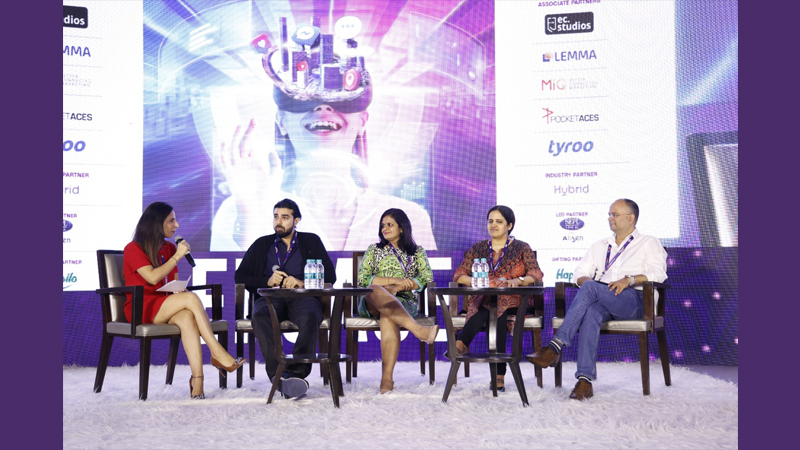
    The panellists for this session were Indian Gaming League CEO & co-founder Yash Pariani, Starbucks director – marketing, category- loyalty & digital Deepa Krishnan, Tyroo chief revenue officer Akshay Mathur, Amazon mini TV director & business head Aruna Darayanani. The session chair for this panel was Good Ants Media founder & CEO Parul Menghani.

    Menghani kicked off the session by saying some key points to be highlighted around the gaming & VR industry. She then turned towards the panellists by asking about the current ecosystem around the industry and what changes they see

    Beginning with Pariani, he said, “One of the biggest factors of why virtual reality hasn’t been adopted by a lot of the users is the price tag, the portability, logistics and of course the quality of the games that are currently on it.”

    Krishnan replied by saying, “I think the two things that Starbucks has done globally, one is used virtual reality and Web 3.0 overall to create better experiences and you could go on to personalize it and also creating NFTS which consumers can then use as part of the loyalty program.”

    Mathur shared something on attention span by which he said, “This is a generation which has extremely limited time spans or attention spans. Within 3 seconds you do your communication or you’re out of it.”

    Darayanani had said something differently about the industry, “These are some early thinking days I would say, for the content industry to really look at it and I’m hopeful we’ll be able to crack that formula to move forward.”

    Meghnani concluded the session and thanked the panellists for sharing their insights and making the conversations pretty lively.