Category: News Television Summit

  • NT Awards 2022: Check out the winners!

    NT Awards 2022: Check out the winners!

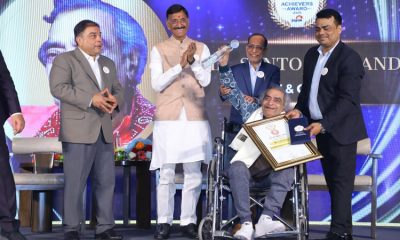
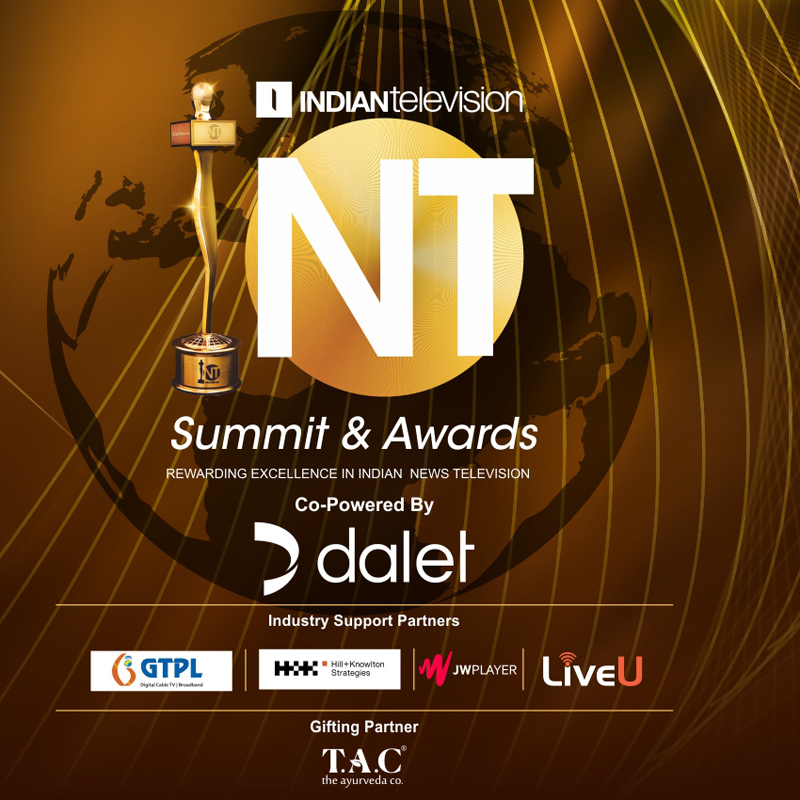
    Mumbai: IndianTelevision.com is back with its latest edition of the News Television (NT) Awards 2022, that recognises, honours and celebrates the ground-breaking work done in the space of Indian television news in the year gone by.

    The 15th edition of the NT Summit and Awards were held at Holiday Inn, New Delhi on Friday. The evening saw the cream of the Indian news industry being felicitated, including regional news channels. The event was co-sponsored by Dalet. GTPL Hathway, Hill+Knowlton Strategies, JW Player and Live U were industry support partners and The Ayurveda Company was gifting partner.

    The NT Awards 2022 felicitated work across English, Hindi, Marathi, Tamil, Telugu, Bangla, Gujarati, and Kannada languages, among others. Each language had five categories including, ‘Programming Awards’, ‘Personality Awards’, ‘Promo, Design and Packaging Awards’, ‘Sales and Marketing Awards’, and ‘Special Awards’.

    A total of 154 awards across 40 categories were given out this year to deserving news channels and eminent personalities in the industry. These included awards presented to channel programmers, anchors, presenters, technicians, producers, editors, reporters and management from news media groups such as TV9 Network, Zee Media Corporation, Network18 Group, India Today Group, Times Network, NDTV, ABP Network, among others.

    This year’s Best Prime Time News Show in the Programming Awards category was conferred upon News18 India’s Sau Baat Ki Ek Baat show while amongst English News channel Wion’s Gravitas took home the award.

    The Prime TV News Anchor (male) award was won by NDTV 24×7’s Sanket Upadhyay, while CNN-News18’s Marya Shakil picked up the coveted award in the female anchor category for English channels.

    In Hindi, Zee Hindustan’s Pratyush Khare and Aaj Tak’s Anjana Om Kashyap bagged the honours, respectively.

    English news channel, Wion took home the top honours for Best Live News Reporting on Ground, as well as the award for Strongest Digital Footprint of a News Network.

    Aaj Tak’s digital campaign won the Strongest Digital Footprint of a News Network Award among Hindi news channels.

    In the Sales and Marketing category, Times Now Navbharat’s ‘Ab Badlega Bharat Banega Navbharat’ campaign won the ‘Best Marketing Initiative from a News Channel’ in Hindi, while in English, CNN-News18’s #DontShowMeYourFace campaign won the honour.

    In the Special Awards category, India Today’s ‘Pehno Sahi’ and TV9 Bharatvarsh’s Suraksha Bandhan with Gulf Oil won the ‘Social Contribution by a News Network’ recognition respectively.

    The esteemed jury for the awards included H+K Strategies India chief executive officer Abhishek Gulyani, Sri Adhikari Brothers chairman and managing director Adhikari Markand, OMD India CEO Anisha Iyer, Airtel VP-media Archana Aggarwal, Upstox senior director-marketing Kunal Bhardwaj, among others.

    The complete list of winners can be viewed below.

  • NT Awards announces its jury

    NT Awards announces its jury

    NEW DELHI:Indiantelevision.com’s unique summit and award property that honours the crème de la crème of the television news industry is all geared up for its 2020 edition. Scheduled to be held over two days – 29-30 October 2020 – the News Television (NT) summit will focus on the overall industry and the challenges and opportunities that lie ahead of it. The award ceremony that will be held on 6 November will felicitate news channels and the technical and editorial talent.

    The summit and award ceremony is powered by TVU Networks.

    The important decision of screening and selecting the winners will be taken by our esteemed jury. Every member of the panel is a stalwart with considerable experience in the news, media, and the brand space.

    Here’s our honoured 37-member jury for NT Awards 2020:

    The awards will recognise the leading players in the news television space across 51 categories in news programming, personality, technical, and sales & marketing domains. For more information, head on to http://ntawards.tv/index.php

  • Smarter data and innovations in news selling should go hand in hand

    Smarter data and innovations in news selling should go hand in hand

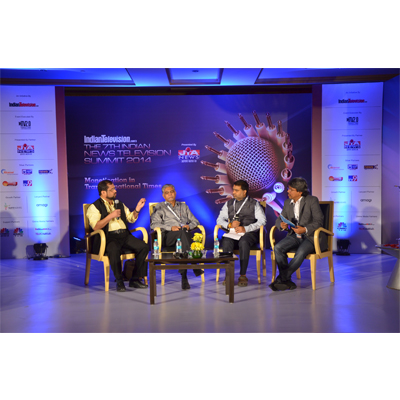
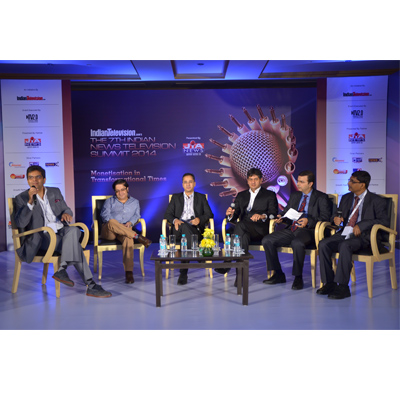
    MUMBAI: At the Seventh Indian News Television Summit, a panel comprising Zee Sangam national sales head Harsha Vardhan Dwivedi, IndiaTV senior VP and country head ad sales Sudipto Chowdhuri, CNN IBN and IBN 7 national revenue head Vishal Bhatnagar, Times Television Network senior VP business head branded content Hemant Arora, GroupM south Asia CEO CVL Srinivas and IPG Mediabrands Initiatives CEO Anamika Mehta discussed the various means for ‘Innovation in news selling’.


    The session moderated by Provocateur Advisory principal Paritosh Joshi revolved around how media agencies can increase brands’ ROI from news channels.


    Joshi began by saying that one expects the sales and strategy team in a news channel to show more interesting numbers but what one gets is a rehash of an existing standard rating currency. According to Arora, the right clients, revenue and ROI comes when he and his team turns the big data into smart data. 


     “It is not just about the data but one has to be able to effectively show how it can impact the marketing objectives. But the matrix system that is currently in use does not really allow sellers and buyers to go beyond it. Eventually it comes down to CPR, slot rates etc and the value that is being offered. Times Now, for example, does not need to be a news channel, it is part of life. It’s the hue we create with our brand and then we pass on the benefit to the brand which wants to be a part of the ecosystem,” said Arora.


    Dwivedi then speaking about the revenue of regional channels said that of the total business that regional channels have been making, only 40 per cent comes from corporate and thus, 60 per cent is supported by government and SMEs. “If it was not for the government and SME, the regional channels would not have been able to survive,” he said adding that two years ago there were 14 news channels in Bihar, Jharkhand and Uttarakhand, while today out of that only four are operating while others have shut down.


    Joshi, addressing Mehta, recalled the days when he sold ad inventories. “Those days, agencies worked towards “de-selling brands”, because they had a personal grouse against a particular brand or they simply ignored them and therefore, sometimes broadcasters did approach the client directly to bring them on to their media plan. Now, how healthy is the entire ecosystem?” he questioned.


    Mehta agreed to the fact that personal biases could exist in the industry. Credibility of content is what matters and we don’t often see channels coming to us and sharing insights beyond just a channel share, rating etc. She illustrated her point by giving an example. “We have brands like Dettol, which as a pure FMCG typically would be on the GEC platform, Hindi movies and not on a English news channel. However, taking from the national agenda of the Prime Minister which is Swatch India, we tied the brand with it in terms of sanitation,” she said. Integrating the brand and creating custom solutions gave far greater ROI.


    Bhatnagar joined the conversation and said that the most important thing is how well one understands the product. “There is a huge responsibility on us to understand what business we are in. Are we in the business of just farming inventory and off loading the inventory?” he asked. He then mentioned that today a lot innovation depends on the kind of discussion news channels have with the agencies or clients. “For example, we tried to do something innovative with Microsoft during elections. And Microsoft of all things wanted to talk about analytics which on news channels does initially snicker people. But then we sat down with the agency, Lodestar, and discussed the various possibilities before pitching for it,” he added. The initiative got Microsoft a lot of feedback globally in terms of how to engage with audiences.


    According to Chowdhuri innovation has to be like the topping on a pizza but it can’t be the pizza. “Some news channels may  have done deals like 20 L bands a day for 365 days a year into two years adding up to Rs 5 crore. So, while your content is on screen, the advertisement too comes on screen. Hence, if you have ‘X’ million viewership for a programme then you have the same number of viewers for the ad as well,” he said.


    Srinivasan had the last word in the discussion when he was asked if agencies and news channels were ahead of time when it comes to digital. “I think we are a bit late because while digital might be eight per cent of the total adex in India, it occupies 80 per cent of the time with conversation with clients. Today every campaign that is conceptualised, you end up spending a little on digital but the whole thought of promoting and creating the buzz is steeped towards digital. There are huge opportunities to win from digital,” he concluded.

  • Editors give thumbs up to branded content, if it doesn’t interfere with quality

    Editors give thumbs up to branded content, if it doesn’t interfere with quality

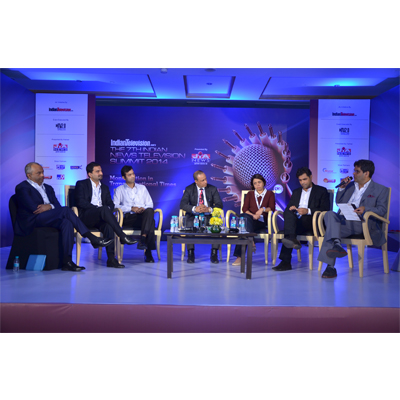
    MUMBAI: While the business heads and sales heads are worried about how to keep revenues growing, the editors are concerned about keeping them away from getting into their editorial decisions. Discussing exactly this was a panel at the 7th Indian News Television Summit that saw ITV Network editor in chief Deepak Chaurasia, senior columnist and veteran journalist QW Naqvi and Mi Marathi consultant and former IBN Lokmat chief editor Nikhil Wagle that was moderated by indiantelevision.com group founder, CEO and editor in chief Anil Wanvari.


    The discussion started off with Wanvari asking them how much would allow business heads to interfere with the editorial. Naqvi said that a business target should not influence editorial decision. Wagle said that he is aware that business is needed to run a channel but ‘without interference the channel can be profitable.’


    Chaurasiya was of the opinion that both need to be together for the business model to survive. “The company will go into loss if the model is wrong. The editorial should know the company’s profit and loss because it can’t be a loss  making business. However, sales and editorial should not have the authority to decide whether or not a story should be shown or the angle of the story be taken. If the marketing team will tell me that a particular party is giving money if we do this story and in this angle, then I would say I have surrendered myself to them,” he said.


    Wanvari said that political parties were different from brands, to which Wagle said that he isn’t against sponsored programmes, if they are disclosed. “If I was an editor, either I will stop such content or resign,” he said. Naqvi said that he is fine with integration where the quality, judgment and quantity isn’t compromised. “A programme shouldn’t be made just to make a brand happy despite not having any value,” he pointed out.


    Chaurasia however said that even a half an hour show with bad ratings will ruin his day’s average, so he hesitates while taking advertorial, despite the money. “Rather than think short term, I think its long term impact on my ad rates. 90 per cent advertisers want to make the show in their perspective,” he said. He was however worried about how with too many ads the time spent on the channel is decreasing.


    Times Now editor in chief Arnab Goswami is a brand in himself, which is being used by the channel, said Wanvari asking whether the three of them would allow that to happen to them. “TAM ratings only give numbers, not reactions. When that can be analysed, the real worth of a brand will be known,” he said.


    According to Chaurasia, with emergence of new channels and people shifting channels, it isn’t easy to keep brand loyalty. “Now-a-days people think that in four months, people will start asking for autographs while the first generation journalists have taken many years to prove their worth. They feel marketing will help them become this sooner,” he said.


    Moving on to the digital play in the future, Naqvi said that there is no doubt about digital being the priority for all. But when Wanvari asked if the editor would go with the marketing to an advertiser, Chaurasia said, “My work is to do content and make them understand the meaning. I have to get them ratings, revenue is a different department.”


    The regional space will see proliferation of digital in five years, according to Wagle, and long format journalism will be replaced by short form.


    Responding to Wanvari’s question about syndicating shows like how Al Jazeera or BBC does, Naqvi said that when the format will turn to digital, they could think of creating content that could sell because then the audience becomes global. “For this, we will need good internet connectivity till the remotest corner of the country,” he said. However, he also pointed out that not too many channels will survive digitally because people will not want to clutter their phones, but won’t mind seeing a long list of channels on TV.

  • Targeted advertising is the way forward for news channels

    Targeted advertising is the way forward for news channels

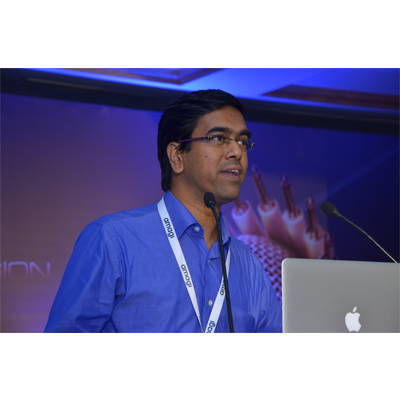
    MUMBAI: In a tough environment how can news channels monetise better from brands? Well, speaking at the Seventh Indian News Television Summit 2014 organised by indiantelevision.com, Amagi co-founder KA Srinivasan answered the big question.


    He began his keynote by giving the number of brands and advertisers on print and television. “Print media today has about 1.2 lakh or 1.5 lakh advertisers as compared to a paltry 11,000 on television.  When we look at brands there are about 17,000 brands on television compared to 2 lakh brands on print,” he said referring to a study conducted by Amagi from 13 October to 14 September.


    News as a genre, specifically English and Hindi channels, has 600 advertisers and about 1,000 to 1,400 brands advertising for the entire year. He then compared these numbers to print readership, which has a penetration of 20 per cent. “In any market outside India, print advertising is typically half of TV advertising size. While in India, a market where print is dramatically under penetrated compared to TV, we are seeing equal, if not more, advertising revenue generated by print,” said Srinivasan.


    He added, “As per the study, regional advertising consisting of only local brands on print, radio and outdoor is at least Rs 6,500 crore. The print classified size market is Rs 1,300 crore and is expected to grow to Rs 3,600 crore in the next two years.”  


    He then suggested ways by which news channels could tap into this market. A national channel which delivers substantial audience in various markets can monetise better by going after regional brands which is what Amagi has been doing. “In the US such targeted marketing was worth Rs 30,000 crore,” he informed.


    Srinivasan stated the example of how a television channel being watched at the same time in four different geographies can potentially showcase four different ads at the same time. By creating ad inventory regionally to address more advertisers and brands, news channels can increase revenue dramatically. The model can be utilised by local advertisers and large national advertisers while launching a brand specifically for one region and can save on spillage.


    “Hyundai ran an ad for different regions of Maharashtra like Baramati, Kolhapur, Sangli, Nasik etc simultaneously. Each of these ads ran with the local contact detail of the local dealer in each of these local cities,” he said. The study also presented a case study about the Telugu news classifieds market. “The market includes non FCT scrolls, tickers, ashton bands and brand builders predominantly scroll driven with local matrimonial, property deals that is worth Rs 20 crore and just in one market. Can it be replicated across India?” he asked.


    Another monetisation opportunity for news channels is by aggregating a number of channels together as advertisers find it attractive since this presents them a substantial chunk of viewership. “We believe that there are umpteen number of opportunities today that are completely untapped in terms of targeting geographically from a pure FCT perspective,” Srinivasan said in his closing remarks.

  • “I don’t see a revenue stream from digital for 2-3 years”: Kartikeya Sharma

    “I don’t see a revenue stream from digital for 2-3 years”: Kartikeya Sharma

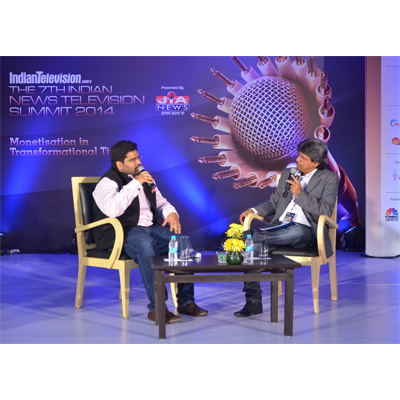
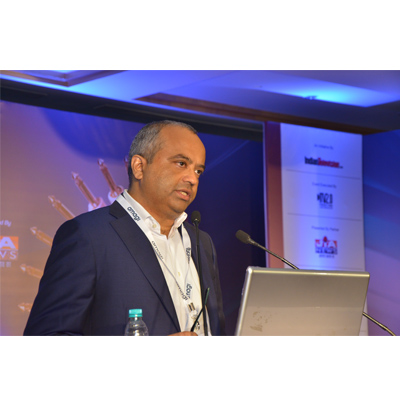
    MUMBAI: At the Seventh Indian News Television Summit, ITV Network managing director Kartikeya Sharma took the stage to speak about the success of his network and the future plans. Hailing from a political family, Sharma was adamant that he did not want to get into politics.


    It was while he was studying in London that he got attracted to the media industry. “When I was studying, the only way of being in touch with home was television with the first channel that came on Sky. That drew me into the space,” he said while speaking to indiantelevison.com founder, CEO and editor in chief Anil Wanvari. He added that what affected him was the rise of primetime during 2004-05 and the way India was reacting to the world while it was fresh off the boat.


    On being asked about the difference in running his hospitality business vis a vis media business, he said that the two cannot be compared. “News is definitely a tough business and there isn’t any particular revenue model that works well. You have to improvise. Circumstances are also important. So at what point a channel is being launched and the policies at that time is crucial,” he said.


    Speaking about the growth of his Hindi News channel, India News, Sharma said that the initial projected benchmark was 6-7 per cent market space but it actually went to 11 per cent within a span of six to eight months. “We don’t fight for filling ad slots on the channel anymore,” he said.


    The growth of the ITV Network has been a combination of both internal accruals and external debt. It will be going after a few more acquisitions and product launches in the regional space in the coming months. “By 2016 we want to be the largest and most profitable news network in the country,” he added.


    Responding to Wanvari’s question about whether syndication of news was an alternative means of revenue for sustaining the business, Sharma said that surely that will bring in a new source of revenue. “There is enough content floating around with 400 channels but the true value of syndication is debatable and I don’t think you can look at it vis-?-vis subscription or ad sales,” he said.


    While digital is touted as the ‘next big thing’, according to Sharma it is still too early to predict its fate. “In foreign countries, people aren’t able to monetise the digital platform as expected. There has been very little work done in research and development. I am not very optimistic about a revenue stream coming out of digital for the next two-three years,” he said adding that there is a need to look at digital as a synergy between evolution of content and technology.


    According to him, evolution of digital does not mean the old world will end. “I am a big fan of digital myself but we are being bullish when we talk of this medium. It is a matter of fact that it is the future but the timing is important. We have made huge errors of calculating that in the past and we are doing the same again,” he said.


    Talking about his tenure as Association of Regional TV Broadcasters (ARTB) president, Sharma said that the main aim was to help regional broadcasters since he realised that they needed a voice. “I managed to get 40 per cent of revenue for broadcasters from the government,” he stated.


    For the industry to progress, Sharma said that unity was necessary but collective decision doesn’t last long. “DD Freedish has pushed up its rates from Rs 50 lakh to Rs 5 crore in five years because of GECs wanting to get onto it. We all decided that we won’t go on the platform but then some of us ended up breaking that decision,” he shared with the audience.


    While the news space was cluttered, he believes that there is space and chance to be a number one in news.

  • The 7th Indian News Television Summit a roaring success

    The 7th Indian News Television Summit a roaring success

    NOIDA: The 7th Indian News Television Summit that was held at The Radisson in Noida, was a huge success with some of the big names in the industry attending the conference.


    The day began with a keynote by India TV chairman and editor in chief and the News Broadcasters Association president Rajat Sharma wherein he spoke about the changing face of news and how content as well as ad sales is under pressure and for things to improve, the industry has to get together and find solutions.


    He lamented on the horror of having to pay huge carriage fees along with the burden of the ad cap which the NBA is vociferously fighting. According to him, the TV news industry has changed in the last three years with more responsibility having crept into the veins of channels.


    This was followed by a one on one with ITV Network MD Kartikeya Sharma wherein he discussed about why he got into the news business, the aim of his news network and its future roadmap to being the biggest news company in the country.


    The first session saw NDTV Group CEO Vikram Chandra, TV Today CEO Ashish Bagga, IBN18 CEO Avinash Kaul, Focus News Network group CEO Neeraj Sanan and Doordarshan ADG news Mayank Agrawal speak on the various modes of revenue generation through traditional and digital mediums. Executives highlighted that it was too soon to depend heavily on the digital medium for revenue which will work as a compliment to television but not replace it.


    This was followed by a keynote from GroupM south Asia CEO CVL Srinivas who highlighted what brands were looking for in news networks and how the genre is growing year on year. According to Srinivas, news broadcasters need to keep in mind a few things for the future-co creating socially responsible agendas with brands, invest more in digital, new metrics such as consumer sentiment, social buzz, social impact, viewers’ profile and getting into big data.


    Following this was a discussion on finding innovative ways for revenue generation that saw Zee Sangam national sales head Harsha Vardhan Dwivedi, India TV senior VP and country head ad sales Sudipto Chowdhuri, CNN-IBN and IBN7 national revenue head Vishal Bhatnagar, IPG Mediabrands CEO initiatives Anamika Mehta and Times Television Network senior VP and business head for branded content Hemant Arora.


    An informative presentation by Amagi co-founder KA Srinivasan enlightened the audience about utilising geo-targetting to increase revenue for various channels of a network and also more focused reach for a brand.


    The day concluded with an editorial session that discussed how much editors are willing to allow ad sales to interfere with content for higher revenue. ITV Network editor in chief Deepak Chaurasia, senior columnist QW Naqvi and Mi Marathi consultant Nikhil Wagle discussed on how much an editor can mix with the ad sales team and how much of interference by them is acceptable.


    With the belief that the discussions between the various stakeholders of the industry will propel better returns for the community as a whole, we look forward to the Indian News Television Summit 2015.

  • Share of news channels in total AdEx is encouraging: CVL Srinivas

    Share of news channels in total AdEx is encouraging: CVL Srinivas

    NOIDA: “Indian news industry is as vibrant as the different cultures of India,” said GroupM south Asia CVL Srinivas as he presented the keynote on Innovations in news selling at the 7th Indian News Television Summit.


    Srinivas, sharing a media agency’s perspective on news and brands, added that the news industry today needs a lot of balance especially in terms of reportage, content for different audiences across platforms. 


    As for the AdEx, he informed that in the country the advertising expenditure for television stood at Rs 16,000 crore. “The news channels take 13 per cent share of the pie which is encouraging as the viewership of news channels stood at 10 per cent,” he stressed upon.


    Talking about the ad spend growth in the country, he informed that the television medium was growing at a rate of 14 per cent overall. The Hindi news genre was growing at 15 per cent, closely followed by regional news at 10 per cent while English news genre stood at seven per cent.


    Moving then onto brand research, Srinivas felt that today brand research is undergoing a radical change and old measurement methods are being questioned. Throwing some light on GroupM’s one such initiative, Social Command Centre, he said, “It is a virtual conference room that monitors the digital space and provides rich insights about consumers and brands.” And stated the example of Nestle which uses the tool to monitor chatter and gather buzz around the brand digitally. 


    Honda using the popular comedian Kapil Sharma to launch a series of campaign online, which garnered 1.5 million hits, was another example, he highlighted upon. He went on to say that cause-based marketing should be initiated and brands should ask themselves, how do we evolve ourselves to become more meaningful entities?  “Once brands are able to answer the same, there will be a lot of headroom for improvement and growth,” he opined. Providing another example, he said an agency called Crayon Data was able to come up with tastegraphs that showed the purchasing and behavioural pattern of different audiences in well-segmented clusters.


    He further went on to add that the evolving Indian digital space sees 220 million Indians active on the digital front spending  almost 200 minutes a day online either checking mails or watching videos. “This implies that the new medium cannot be ignored,” he informed.


    According to Srinivas, news broadcasters need to keep in mind a few things for the future such as co creating socially responsible agendas with brands, invest more in digital, adopt new metrics such as consumer sentiment, social buzz, social impact, viewers’ profile and lastly getting into big data.


    In his closing remarks, he said that while the upcoming digital environment has caused a big disruption to some it will provide a huge opportunity to the news industry and sky is the limit.

  • Television and online medium need different approach for revenue making

    Television and online medium need different approach for revenue making

    NOIDA: The news television space is burdened with cash crunch. And addressing this core issue were the news industry giants at the 7th News Television Summit organised by indiantelevision.com. The Summit which began with a session on ‘Content monetisation through conventional and digital platforms of news channel’ was moderated by Provocateur Advisory principal Paritosh Joshi and attended by NDTV Group CEO Vikram Chandra, TV Today Network CEO Ashish Bagga, IBN18 Network CEO Avinash Kaul, Doordarshan ADG news Mayank Agarwal and Focus News Network group CEO Neeraj Sanan.


    Joshi began the session by asking Chandra how viewership data has changed since NDTV raised its voice against the alleged faulty ratings three years ago. Chandra said that they weren’t getting correct ratings and when they talked about it to others they were told to either swim with the tide or do something different which would get the TRPs. Soon after, they were joined by other broadcasters as well.


    Joshi then asked Bagga the secret behind Aaj Tak’s dominance in the genre for the last 10 years. Bagga highlighted that it was not easy to sustain its position given the tough environment. “There was reluctance from various quarters so it was necessary to push that credibility,” he said. He added that the network had grown 25 per cent since last year and while others were growing at just two to five per cent.


    Talking about the ad rates, Bagga said that the price for a slot on news channels, unlike the GECs is pitiable. However, TV Today has put its business on a sustainable model of 20 per cent y-o-y growth. “This has been done by quality, resource, building perception and getting the required numbers,” he said.


    Doordarshan, on being asked about its transformation, said that it had done a good revamp to maintain norms and standards. “People may feel that we put out the news stories a little later than the others, but that’s not the case. We are alert,” said Agrawal.


    He however agreed that a lot is still left to be done apart from the new programmes and the new look it has given to its anchors. “We have also set up new teams in order to cover news better and are also focusing on our online medium,” informed Agrawal.  


    Joshi also highlighted the fact that there is little differentiation in content between the news channels. Disagreeing with the observation, Kaul said that though it could be true, the approach of each channel for a story is different. “You can cater the news to different age groups and segment it differently,” he opined.


    Kaul is optimistic about the new rating system that will be brought out by BARC India. “This will bring in change to the type of content being produced,” he said.


    Joshi also brought out the common criticism that the news industry has to deal with. “Various quarters have said that while the news broadcasters crib about the bad business, the genre still sees new players getting into it every now and then. Is it the political money that is going into it?” questioned Joshi.


     Sanan at this point said that the reason for this was the fact that people see a lot of potential in news because of its ever growing consumption. “If all news channels give same content then that means there is a need for someone to come and stand out. If people are willing to pay and if you can package your content well then there is no reason why one cannot get into it,” he said.


    While digital is a growing platform, Joshi asked whether the algorithm that it follows is trustworthy with regards to journalism. Chandra highlighted the fact that even today the brand of an anchor is important. “When people come to the online medium, they want to come to trustworthy sources rather than a layman giving information,” he opined.


    Kaul said that with BARC India bringing in meters in the rural areas, the genre will have to strengthen its coverage in those areas as well. “With 4G and broadband making in-roads, we will be in a better state,” he said.


    Chandra stated that it was not right to replicate the TV business model for online and that digital was growing at a CAGR of 40 per cent.

  • “The news industry is fighting amongst itself”: Rajat Sharma

    “The news industry is fighting amongst itself”: Rajat Sharma

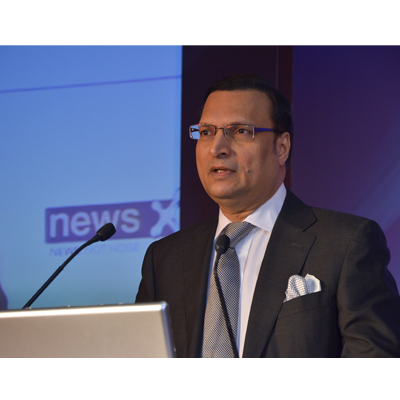
    NOIDA:  He is one of the most well known faces of the Indian media industry. Rajat Sharma, the host of popular talk show, Aap Ki Adalat, has added responsibilities on his shoulders. He is not only the chairman and editor in chief of India TV, but also represents the industry as the new president of the News Broadcasters Association as well as the vice president of strategic affairs of the Indian Broadcasting Foundation (IBF).

    Sharma, who was addressing the 7th Indian News Television Summit 2014 organised by indiantelevision.com as a keynote speaker highlighted the evolution of the news industry as well as listed the three biggest challenges that lie ahead.

    He began by saying that three years ago the news channel industry was very different from what it is today. “There has been a change in perception in the way news is seen,” Sharma said adding that news no longer is considered to be negative.

    Substantiating the evolution in terms of changing perception, Sharma gave the example of the 26/11 terror attack when reporters did 24X7 reportage and were blamed for aiding the terrorists and their handlers in Pakistan. “News channels also suffered commercial losses during the attacks as ad breaks were restricted,” he informed. According to Sharma, while news channels earlier were perceived as being a platform that telecasted frivolous events to garner eyeballs, things today have changed. “News is back,” he announced.

    He pointed out that the space has seen drastic changes.  “The society has evolved and the media has played a great role in it especially during events like the Lokpal Bill, the Delhi gang rape and the tirade against corruption,” he said.

     “Today even if Shah Rukh Khan or Salman Khan want to promote their films or emerging sports like Kabaddi wants to garner attention, news channels have a role to play in that as well,” he opined.

    Sharma while praising the social commitments of the news industry said that the space as a whole is not healthy. “The biggest problem for the industry is its revenue model,” he said while pointing out that though this year the balance sheets of the industry looks good due to elections, but, as a whole, the model is not sustainable.

    Listing the three main challenges for the genre, Sharma said that carriage fee was the biggest concern. “A few years ago, people expected news channels to be a loss making property since carriage fees were high and when broadcasters spoke to the multi system operators (MSOs) they said it was a problem of demand and supply. When digitisation kickstarted, we thought that consumers will get better quality channels and carriage fees will disappear. For the MSOs, it is the carriage fee from the news channels that helps them sustain, since they pay the GEC’s huge sums for getting their programming on their platform,” he said.

    He informed that the industry had 20-25 meetings with the previous TRAI chairman to discuss the issue of carriage fees.  While it was expected that digitisation would bring down carriage fees, something unexpected happened. Two days before the former TRAI chairman could retire he signed the ad cap. “When we were trying to improve the content and trying to solve one issue we were burdened with another one.”

    “Ad cap ensured we received 50 per cent less advertising. Death was certain now for the news channels,” he added.

    While the then Union Minister Ambika Soni said she will look into the matter, the broadcasters decided to fight the case in TDSAT. “News channels have managed to get a stay and therefore are surviving,” he said while giving the example of the newspaper industry, which has no such restriction. “We want the same for the broadcasting industry,” he opined.

    He also mentioned that the industry needs a better rating system and the TAM currency will be replaced by BARC India, which is an incorruptible agency.  “Therefore today the biggest challenge for the industry is the ad cap, the rating system and carriage fees,” he informed.

    In his closing remarks he said the whole industry including the IBF and the NBA should work together to resolve these issues. “The news industry as a whole cannot fight the MSOs as we are fighting amongst ourselves. While, we come together during a board room meeting, once we are out there will be one or two who would go against the same,” he lamented.