Category: Mipcom

  • Turkey named the new ‘Country of Honour’ for MIPCOM 2015

    Turkey named the new ‘Country of Honour’ for MIPCOM 2015

    CANNES: Reed MIDEM has announced that Turkey will be the ‘MIPCOM 2015 Country of Honour.’


    Organised by Reed MIDEM, MIPCOM 2015 will take place in Cannes, from 5-8 October 2015.


    Turkey, which is one of the most dynamic and prolific drama-producing nations, takes the torch from Mexico, which was ‘Country of Honour for MIPCOM 2014’. Turkish produced shows are currently aired in more than 100 countries worldwide. The territory’s annual drama exports exceed $150 million. Major international hits from Turkey include the Ottoman Empire costume drama series Magnificent Century now in its fourth season, which has been a top-rated show in the international market.


    Turkey has a population of more than 76 million, giving it a strong domestic market for TV content. Its high-quality output covers all genres including drama, feature films, documentaries and animation. In recent years, the country has become a fresh source for adaptable formats. At the crossroads of Europe and Asia, Turkey also acts a valuable production hub, offering quality technical infrastructure.


    Istanbul Chamber of Commerce vice president Dursun Topcu said, “The Turkish television industry ranks as the second-fastest growing in the world. As the Country of Honour, we would like to share this dynamism at MIPCOM 2015, which provides a global showcase for Turkey to advertise its treasures to the world.”


    The MIPCOM focus on Turkey will feature a series of high-level conferences from Turkish industry figures, screening showcases to preview the country’s latest programme, and business networking events.


    “The Country of Honour programme allows TV executives from around the world to discover the richness of Turkey’s TV and entertainment industry,” commented Reed MIDEM director- television division Laurine Garaude.


  • “Asia is a priority market for Lionsgate”: Kevin Beggs

    “Asia is a priority market for Lionsgate”: Kevin Beggs

    CANNES: Lionsgate is scrutinising the Asian market.  For the company which has been in the channel business in Asia through joint ventures for the past five years, the region now features in the priority market list.


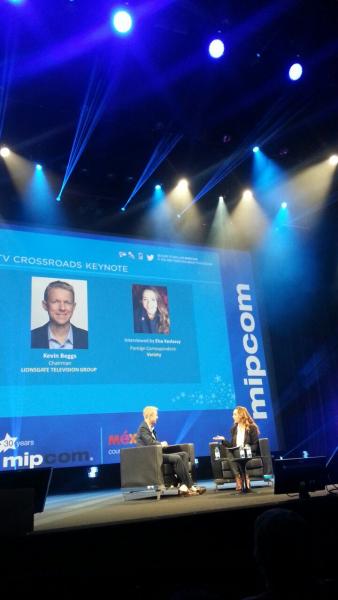
    Addressing the audience at MIPCOM 2014, Lionsgate chairman Kevin Beggs said that with its Hong Kong office, the company is also pushing into India. “Shows like Orange is the New Black in China represent a huge revenue growth for us, which before was pretty close to nothing,” he said, adding that while the region is temperamental in a way, it is also very promising.


    The theatrical side of Lionsgate is in deep discussions about bringing more films into Asia. “We are looking at developing shows that could find itself in the market now. It’s a priority for the company, but it is also an emerging market for us, that will go a long way at making us strong, and we are focused on it,” informed Beggs.  


    Lionsgate, the creators of ‘Orange is the New Black’, ‘Manhattan’, ‘Mad Men’ is a firm believer of having a global look, while making a show. “Both Mad Men and Orange Is The New Black are high quality shows, which we were hoping would be liked by the global audiences. It has exceeded expectations,” he said.


    The company keeps its eyes open for finding great partnerships across the globe. “We are talking to people all the time. We are finding the perfect shows that we can co-commission or commission simply for the UK or Germany or France pay market. It is a high priority for us,” informed Beggs.


    Lionsgate has auctioned many formats so far in different markets. “We always look for the right thing to adapt,” he added.


    Beggs also touched upon the streaming services that have started playing a key role. “While television has ad breaks with 42 or 43 minutes of drama, the streaming services have no advertising obligation. And they have a much longer running time and no breaks. The storytelling of ‘Orange is the New Black’ on Netflix is very different. It takes a lot of digressions on the shows, and because people will re-watch, one has a lot of freedom to tell a story in a much more serialised and novelised way. There is no need for a dramatic ending before a commercial break, so that people can come back. So the pacing is interesting from our standpoint as well,” he said.


    He feels that in a scenario like this, the writers have to do a great job and also as producers “we need to understand the audience and what would hold them back. Audiences can watch the whole season of a series in a few hours and would wait for the next season, which would take a year. So this is different,” he informed.


    Beggs believes that there will be more streaming players in the future. “It the next two years or so, there will be six to seven new streaming services or may be more,” he stated. Citing the reason for the change, which could see some big players jumping into it, he said that streaming business, on a pay basis, does not need a huge number of subscribers to breakeven.  “Brands will follow where the audiences are,” he concluded.


  • MIPCOM 2014: Best time to invest in India, say Indian media barons

    MIPCOM 2014: Best time to invest in India, say Indian media barons

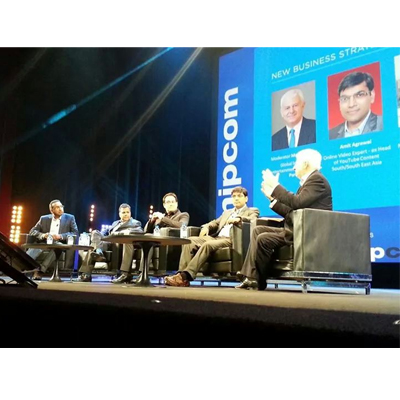
    CANNES: Indian content market is going through an exciting phase, and putting the scenario upfront to the world, through one of the biggest stages at the ongoing MIPCOM 2014 was the India panel which comprised of Colors CEO Raj Nayak, Balaji Telefilms group CEO Sameer Nair, Rajshri Entertainment managing director and CEO Rajjat Barjatya and online video expert and ex-head of YouTube content south/south east Asia Amit Agrawal. The session on ‘New business strategies from India’ was moderated by PwC global leader, entertainment and media Fenez Marcel.


    Setting the stage for some heated discussion was Nayak when he highlighted one of the biggest issues the country faces: lack of broadband. “Lack of connectivity is an issue. If the experience of watching becomes smooth, it will be a game changer,” he said.


    Comparing the online market in India with that of the world, Agrawal said that the Indian market has both traditional medium and online play “and both are very strong,” he informed adding that this meant huge opportunity to tap into.  


    Agrawal went on to say that while India consumes a lot of content online, almost 30-40 per cent of this content is not made in India. “That’s a huge chunk. I am seeing an emergence of micro-communities with technology. This will enable the content producer to tackle the right community. It will happen and very soon, may be in the next 12-18 months,” he stressed.


    There is too much of fragmentation in the country, currently. Mentioning the Telecom Regulatory Authority of India’s regulation about ad-cap for pay TV, Nayak said, “Once this happens, the supply and demand ratio will change. This will also help in the yield going up, because the demand will go up. We have to come at a point where the FTA channels will carry advertising with no limitations, pay channels which will have 10+2 advertising and very premium channels will have no advertising.”


    Barjatya who wears the hat of both traditional movie maker and digital feels that India is at a cusp of digital revolution. “For me the opportunity is to reach the global audience, especially through mobile. Traditional media rules cannot be applied on mobile,” he said.  


    The YouTube journey in India started with traditional media content that was distributed to audience which was moving away from traditional media. “But now, over the last one and a half years, I see so many online channels coming up on comedy, food, music, news, tech bloggers have all come up,” informed Agrawal.  


    With a contradicting viewpoint, Nayak said that YouTube is the biggest competitor to the broadcaster. And that it is due to this, that the broadcaster, since the last month, has taken its hit show Comedy Nights with Kapil off YouTube. “I am a big believer of digital media and I feel it is the future, but I also feel that it will co-exist with television and they will grow parallel.”


    Viacom itself is looking at a lot of short formats. “But the problem is that unless broadband issue is not addressed, monetisation will remain a huge problem. If you look at the money, YouTube does Rs 500-600 crore business from India, where television is a Rs 7000 crore business, so the numbers are small and that will not grow until and unless the bandwidth issues are addressed,” said Nayak.


    Nayak believes that no one in India has so far mastered the art of monetising content on the digital media, social media the way it should be, given its increasing reach and targeting abilities.. 


    “Monetisation will happen with broadband and hopefully this should be resolved with the rollout of 4G,” he added.


    The panel also put forth its wish list for the new government formed under Prime Minister Narendra Modi. According to Nair regulation for content already exists, which is beneficial to the whole industry. Highlighting PM Narendra Modi’s ‘come make in India’ campaign, he said that the government is giving open invitation for people to come to India. “As for Raj’s point that producers in India are not partnering with broadcasters and thus not sharing risks, we are looking at that very seriously and are encouraging everyone else to do it. If there is a risk-reward mechanism, everyone can benefit,” explained Nair.  

    As for Nayak, keeping in mind the dynamic & tech-savvy PM the country currently has, who understands the power of the Digital media, connectivity and broadband will get addressed in a much faster footing.  Given that electricity is still erratic in rural India, people will communicate and consume content through mobile phones. “I would ask him to release spectrum because that’s a big issue that’s coming in the way of growing business. Another thing that I would request  is complete implementation of the digitisation, process which is expected to be over by 2016 . He further added that broadcasters are not getting their fair share of subscription revenue and this can only happen once the digitisation process is complete and all stakeholders start seeing the benefits,” he said.


    Barjatya’s wish list consists of wiring up India and encouraging Indian entrepreneurs to have a global outlook rather than be restricted to Indian audiences alone. “We need to appeal to the audience outside of India,” he said.


    For Agrawal, the government should remove hurdles. “Out of all the YouTube content that we produce, more than 70 per cent of the viewership for programme comes from global audiences. We haven’t done a great job in marketing ourselves and make people aware of the country,” he added.


    Nayak is hoping for a dynamic change in the media industry, with the new PM.   


    The discussion also touched upon the consumer behaviour in the country.  “We see a lot of consumption happening on handheld devices. When we began, 10 per cent of our views were from handheld devices, today it is almost 50-50 and that number is higher in India than in the rest of the world. India’s next billion people will access internet on mobile, and will not know about PCs,” opined Barjatya.


    Agreeing to this, Nayak said that the reason it will happen is because for mobile, one doesn’t need electricity. “We have 160 million homes and 900 million handheld devices right now, which is expected to go up to 1.5 billion handsets. So the explosion is happening. Power will take a lot of time to be addressed, but if you have internet, you can consume content,” he informed.


    Nair classified the audiences and the programmes being made. He said, “The television industry currently is programming for newer audiences who are more into household dramas. Then there are also those who have already lived through all this and are now looking for more. The audience is evolving. There will be more niche channels.”  


    All the panelists felt that this is the best time to invest in India. “In India, people are ready to match dollar to dollar. And we are ready to put the money where our mouth is,” announced Nair.  


    Concluding the session with one advice to entrants in the market, Nair said, “It is important to be patient. We are still at the ground floor, but we can build.”

  • I want to restore choice and option for consumers, says Netflix’s Ted Sarandos

    I want to restore choice and option for consumers, says Netflix’s Ted Sarandos

    CANNES: For Netflix chief content officer Ted Sarandos this is the golden age of storytelling. Sarandos was giving a keynote on day two of MIPCOM 2014.


    Talking about Netflix and its engagement with the audience, he said, “We have been able to innovate and advance technology that favours the consumer. We have been able to innovate the audience, who are on-demand viewers.”


    Netflix which has 50 million paid subscribers in 40 countries, recently launched in France and Germany. Talking about the viewership pattern Sarandos said, “We have been very encouraged with viewing behaviour in France and unsurprisingly, Orange is the New Black is the most watched show in France and Germany for Netflix, in the first couple of weeks and we are excited about it since the shows have not been previously available in these markets.”


    According to Sarandos, what works for Netflix is the fact that it caters to the desire of people who have heard about shows, but not been able to see it. 


    Netflix offers 70 per cent TV shows and 30 per cent movies, “and that’s the way people watch as well,” he informed.


    On his catalogue being small at the time of launch, he said, “What we launch within a new territory is half of the programming that the territory will have in the next 12 months. And we are literally adding content everyday wherever we launch.”


    For Sarandos, it is each passing day that gives him the idea of the viewing habits of consumers. “So what you see at the launch is what we know pretty much about the market without even being there and then depending on the viewing behavior, we licence content that people want to see.  So it is an intentional move to launch with less content,” he added.


    Netflix also recently launched in Germany and talking about the lessons from the market he said that viewing hours per subscriber was very impressive.


    The platform offers consumers the level of choice that they haven’t seen yet. “So while there are a lot of pre-conceived notions, one needs to have dubbed content while also have subtitled programming.”


    The platform may also have plans for original French production. “We have found large audiences for existing French content around the world already. We have started working with French animation houses for co-productions,” he said while adding that they have already aggregated a lot of audiences around the world for French shows.  

    So is the business profitable overseas? Answered Sarandos, “We are investing continuously in expansion, we want to be a global company. We are at serious investment phase.”


    Sarandos believes that Netflix is a destination for content, for ability to choose and enjoy in one’s own timetable.


    The platform which is now also moving into making movies, but doesn’t get involved in writing the script, aims to be active on distribution. “We pick storytellers and let them tell the stories. We don’t dictate creative storytelling,” he said.


    Netflix doesn’t want to kill windowing, instead wants to restore choice and option. He also touched upon the point of Netflix’s data analytics. “We use the data to help determine the potential size of the show. The ability to invest in the show was because of the data we had. We didn’t use the data to influence the creative of the show,” he clarified. 


    Will Netflix move to sports and news as well? Sarandos quickly said, “It is on-demand that makes Netflix desirable and sports and news are linear events, so we can’t do anything interesting in sports and news right now.”

  • MIPCOM 2014: Aamir Khan’s three conditions before starting ‘Satyamev Jayate’…

    MIPCOM 2014: Aamir Khan’s three conditions before starting ‘Satyamev Jayate’…

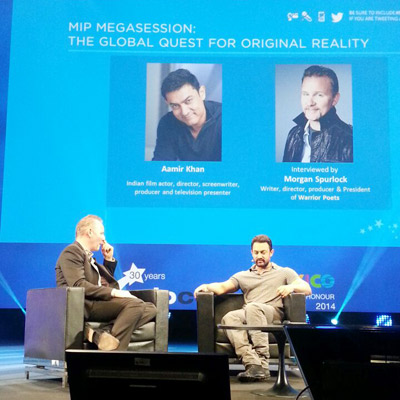
    CANNES: He is a man who can make his mark even on a distant land, far away from home. Yes! We are talking about Indian film actor Aamir Khan, who was in Cannes, giving the MIP Megasession keynote at the ongoing MIPCOM 2014 in a packed Grand Auditorium about his landmark show Satyamev Jayate (SMJ). Indiantelevision.com founder, CEO and editor in chief Anil Wanvari is the Indian representative for all MIP markets.


    So how did it all start? Said Khan, “It all started, becuase I was very inspired from my friend Satya (Satyajit Bhatkal, director of SMJ), who was my friend and class topper from school, was working in the social space. And I being an actor, was doing well in my career, but wasn’t doing much on this.”


    He further went on to say that as TV grew in India, this idea, of doing something on this front, grew bigger. “Star India CEO Uday (Shankar) offered me a game show, which I refused, he then asked me if I could do anything on TV. So I asked him if we could work on something that can bring some change. And he agreed,” he added.


    Khan and his small team comprising Satyajit worked together to create the show, which has gone down in the history of Indian television as one of the most popular shows. “Through the show, we try to understand the society. We try and put the issues to the people, be it child abuse, honour killing, rights and responsibilities etc,” he informed the audience which comprised of content creators from across the globe.  


    All that we see on television wasn’t created in a day. “We took a year to work on research. The reason we researched was to find out if we had a show,” he said. In order to be sure, the team researched with four topics “and once we were confident, it didn’t matter to us if Star would take the show or not. We knew we could go ahead with it and put it on YouTube or anywhere,” he said adding that it took just five minutes for Shankar to approve the concept of the show.


    But, it was not all that easy. Khan then put three conditions in front of Shankar before agreeing to go ahead with Satyamev Jayate.


    One, he wanted the programme to be in multiple languages, since he wanted to reach out to people in their language. “I just didn’t want the main Star channel, but wanted the whole network, which would air the show at the same day and time.”


    The second condition was that in the states, where Star didn’t have a presence, the show was to be given to its competitor and the third was to give it to the terrestrial network Doordarshan. “Many villages in India do not have satellite TV even now and we wanted to reach those homes through Doordarshan,” he announced.  


    But, Shankar, coming from a journalism background, understood where Khan was coming from. “I was talking of a show where I was not investing money but investing time. Star and my team is a part of the show which is made of love,” he said.


    Of the 1.2 billion population in India, 600 million people watch SMJ every week. “We didn’t know if people would be interested in a show like this. It was heartwarming to see how people connected emotionally. There is a huge vacuum of content on social issues and people want a show like SMJ,” he added.


    So how does Satyamev Jayate impact the society? “Well, we empower people by selecting an organisation each week so that one can help financially. What we also do is have partners, who help us on issues.” So far the show has been able to raise $ 45 million for the NGOs connected with it.


    Khan also mentioned how the political and administrative class of the country had also shown interest in the show. “Our show hits out on political and administrative class most of the times and so we didn’t know how they would respond, but I can tell you that there have been 9-10 examples where these people have come ahead and supported us.”


    Explaining the reasons for the show doing so well, Khan said, “There was a need and desire for things to change. India is on a cusp of change so a show like this helps them understand the issue and move towards change,” he said.


    “Sometimes when we research, we feel angry about certain things. But we have to approach people with love. We can’t attack them, if we do that, we will close the door for ourselves,” he added.


    Khan feels that the audiences in India today are looking for content that is engaging. “Even serious content can be made engaging.”


    One of the things that they do to catch the attention of the audience is keep the topic of the show a secret. “No one knows the topic, till the episode is aired. This attracts them to the show.”


    Khan also believes that serious issues can be presented in a way that people can relate to. Giving an example he said, “So when I talk about female foeticide, I do not start with the fact that women are being forced into abortion. That drives away audience, what I do is, I start by asking them, their most favourite person and then go on talking about their mother, my mother and then tell them the reality,” he narrated.


    Khan and his team is taking journalism and combining it with drama and storytelling. “My job as a storyteller is to be engaging,” he concluded.  

  • batteryPOP announces first brand partnerships

    batteryPOP announces first brand partnerships

    CANNES: Burgeoning kid’s cross-platform network, batteryPOP has announced its first strategic brand partnerships with the MLS, HarperCollins Children’s and VEVO. Through these partnerships, batteryPOP will host custom channels that feature each brand’s unique content.


    With a continued mission to bring fun, safe and educational content to kids online, these brand sponsorships will serve to inspire young viewers to increase their daily activity level, amplify their excitement for reading and inspire their interest in music.  


    batteryPOP co-founder and CEO Greg Alkalay believes that video is the perfect way to engage with the audience. “Our new custom channels give kid-focused brands the opportunity to connect with the 6-12 year old demographic in a safe, curated environment.”


    MLS will be supplying content from its ‘Anatomy Of A Goal’ series that highlights in-depth breakdowns of thrilling goals from some of the top MLS pros, the ‘Top 5’ series featuring a roundup of some of the league’s most action-packed moments and the ‘MLS Trivia’ series that grills MLS stars on league knowledge.


    HarperCollins Children’s will deliver a wide range of video offerings to ignite an excitement for reading among the batteryPOP viewership. This will encompass a number of their ongoing series including “How a Book is Made,” a range of “How To” videos such as a step-by-step guide to creating a Radio Transmitter as inspired by “Alien in My Pocket,” colorful book trailers, interactive videos that immerse readers into the world of the book and fan videos.


    Additionally – just in time for Halloween – batteryPOP will be collaborating with HarperCollins Children’s to craft original content on the site surrounding the Zombie Chasers series.


    batteryPOP’s partnership with VEVO will deliver kid-friendly music videos to viewers that will provide positive role models for kids along with catchy tunes.


  • MIPCOM 2014: Star India eyes newer formats, greater reach

    MIPCOM 2014: Star India eyes newer formats, greater reach

    CANNES: It is a meeting place for the content industry across the globe. And this is precisely what the seven member team of Star India is doing in Cannes, at the ongoing MIPCOM 2014. The network, which includes Hindi general entertainment channels: Star Plus and Life OK as well as its movie cluster: Star Movies, Star Movies Action, Star Gold, and Movies OK is having a busy MIPCOM.


    While a three member team is here selling its content, which ranges from drama to mythology, a four member team: two each for GECs and movie channels is looking to buy formats that can be adapted for the Indian audiences, both fiction and non-fiction.


    Uncountable meetings have kept the seven member team busy on both day one and day two of the market, which will be here till 16 October, the last day of MIPCOM 2014.


    On sale is the entire cluster of shows from both Star Plus and Life OK. But what is being pushed more is Yeh Hai Mohabbatein, Ek Hasina Thi, Saraswatichandra and Mahabharat, apart from its other hit shows, including the just launched Airlines, Nisha Aur Uske Cousins and the biggest hit on Life OK, Mahadev.


    While the GEC cluster is looking at the entire world market for both selling and buying shows and formats, the English movie cluster is focusing on Hollywood movies.


    The number one channel in the Hindi GEC space, as per the TAM TV ratings, is also of key importance to 21st Century Fox co-chief operating officer James Murdoch.  “The business in India has been doing great. We are the number one network there. If we continue to innovate and lead in India, it will prove to be a game changer for us,” he had said during his keynote, here in Cannes.

  • “I don’t have many artists on the panel because artists don’t like finding another artist”: Simon Cowell

    “I don’t have many artists on the panel because artists don’t like finding another artist”: Simon Cowell

    CANNES: MIPCOM 2014 has kickstarted with some great content from across the globe and some great sessions. The biggest content market on day one saw an interesting question and answer session between producer and talent scout Simon Cowell, who has been named the ‘personality of the year’ and a former Got Talent judge Piers Morgan.


    Excerpts…


    Was it in your blood to be in the entertainment industry?


    I loved entertainment since childhood. My dad was a very loyal guy, he told me one thing, whatever you do, remember that in every person, there is an invisible sign which says, “make me feel important.” And that’s how I started making my TV shows.


    What was the key moment for you in the business? When you started work and then everything fell, everything you dreamed of, crashed, what did all that tell you?


    If you work in TV, film, music business, only two things matter, stars and hits. I had nothing. When there is no training, you make more mistakes. I owned the bank half a million pounds. But in a way, it was the best thing that ever happened to me. Although I don’t want to do it again!


    You made the genius move of fusing the power of TV to power of music. You did it at a time when no one had thought of it…


     The truth is it was always there. Right from Elvis to Beetles, TV played a massive part in spreading their fame worldwide and for me I was very concerned about the stranglehold that radio companies had on record artists, and then I thought TV was the medium that I could use to connect with music.


    You have been critical of the participants who come on X Factor and Got Talent, will you sober down with age?


    In my business you have to become the audience permanently. So when I am editing and noting one of my shows, it has to be what I like and find emotional or funny. You can’t treat the audience like idiots. If somebody comes on stage and is literally tone-deaf, and if I say take a couple of singing lessons and you’ll be a star, they’ll think I’m mad. I am a perfectionist. The day you just let go without looking at it, that’s the day you lose it.


    What about stars as judge on the show?  


    I never wanted to put too many artists in the panel, because artists don’t want to find another artist.


    About partnership with FremantleMedia…


    Without FremantleMedia, I would not have been sitting here now. What I really liked about Fremantle was that it understood that the combination of a music company making a TV show was better than a TV company making a music show.


    You created One Direction, through your show…


    I don’t like the word ‘create’. I didn’t create them, I gave five people the opportunity to be in a group because I felt as a whole they would have a better chance of being successful because they were so young and inexperienced.


    The groups, I have to admit, were terrible that year, but I felt these guys could work together. What I did was because that’s what I needed to do, I gave them the opportunity and the boys ran with the opportunity. It was a fantastic collaboration.


    What happened to X Factor America?


    I haven’t given up on the format in America. We just gave up on it too early.


    How important are the broadcasters in each territory?


    The broadcaster is one thing; it is the people in the channel who are important. They have trusted us and our partnership has been great.


    What do you look in people when you look for partnerships?


    Trust in both ways. If we didn’t have them trusting us in the first place, I wouldn’t have been here. They look after the shows and make it their own. That’s what I love.


    Are you moving into movies?


    Yes, but slowly. So we will do what we did in TV. My thought process is that with so many artists, I am looking at something like a High School Musical.


    Why have you done so few shows?


    Because it is difficult to come up with hit shows like X Factor or Got Talent. Too many shows will kill the market. The show these days are more about gimmick.


    Do you see a problem with multi-screen viewing?


    I don’t see a problem with it. If there are new ways of watching our shows, it is only to our advantage.


    When you relook, what’s that one moment you look to?


    The second week’s ratings of X Factor UK. The numbers had gone up by millions, as compared to the first week. So I felt really good.

  • Audiences watch less TV as they grow younger, says Maker Studios CEO Ynon Kreiz

    Audiences watch less TV as they grow younger, says Maker Studios CEO Ynon Kreiz

    CANNES: Maker Studios CEO Ynon Kreiz is noticing the emergence of short format content. “This side of business is growing at double digits,” he said during his keynote at the ongoing MIPCOM 2014.


    According to Kreiz, consumption habits are changing. “There is a massive shift from linear to online,” he added. Citing a survey, he said that while 12-24 year olds watch one third less linear TV than adults aged between 25 and 49, it is less than half of what adults aged 50-65 watch.“It’s not that they watch more as they grow older, but that they watch less as they grow younger,” said Kreiz.


    Talking about Maker’s acquisition by Disney he said, “Disney being the number one company of the world and Maker being the largest short form company, we both had to do something to remain relevant. So for Disney, this gives an opportunity to extend their business to short form, while for us, this gives the opportunity to move to traditional media.”


    The reach of Maker Studios and Disney taken together is third only to Google and Facebook.


    “The current generation of kids hasn’t grown up with TV, the way we did. Kids control what they want to watch, where, why and how. Against this, there is a demographic which is hard to find,” he added.


    Millennial kids watch 50 per cent more video online as compared to others. So the big question is how do they reach them? Said Kreiz, “When we say short form, it is a different medium in which you make, monetise, consume and market content. There is a difference in movies and TV and TV and short form.”


    Talking about the duration of the short formats he said, “If you take the top 100 properties in the US, right from Google to Netflix to Amazon etc, the average duration of content is 4 minutes. And this doesn’t include mobile, this is just desktop.”


    According to a study conducted by Netflix, almost 90 per cent of Netflix content consumed on mobile is 10 minutes of duration. “Maker specialises in the genre, which started off as a group that wanted to build the DNA of a media company that understood content in short form and that’s what separates the company from the rest,” he opined.


    Kreiz feels that Maker inspires expressions, while also entertaining global audiences. “We enable global brands to engage with the millennial audience,” he added.   


    Maker currently has 55,000 creators in more than 100 countries. “It’s a large network of people creating content. But we put great emphasis on quality of content. We get 10,000 to 15,000 people who want to join the network, of which we take 100 people every day,” he said.


    According to Kreiz, what makes their work exciting is that they are inventing a new medium. “Everyone in the company is a Maker. With Disney we can accelerate growth and become mainstream,” he expressed hopefully.


    Talking about advertisement, he said, “In some cases the CPM we get is higher than TV. But this is a nascent industry. We are in the business of monetising advertising inventory. The growth is in double digits and a lot of credit for this goes to YouTube.”


    As per Kreiz, advertisers are now moving 10-25 per cent of the TV advertising budgets to digital. “We can monetise in several ways which could be through ad integration, branded entertainment amongst others. We have created our own platform to bring a market place which brings the advertisers and makers together.”


    While everyone is running behind the millennials, they are running behind content. The challenge for most of the platforms is to remain relevant. “With Disney, we feel we are at a good place to achieve it,” concluded Kreiz.  

  • Being a lean aggressive company has helped us, says Sony’s Steve Mosko

    Being a lean aggressive company has helped us, says Sony’s Steve Mosko

    CANNES: Right from the hit series Breaking Bad to the new show on the block, Outlander, Sony has been in the middle of it all. And taking the centre stage for the first master keynote at MIPCOM 2014 was Sony Pictures Television president Steve Mosko.  


    He set the right tone for his keynopte by saying, “Our buyers have doubled due to the digital feed.” With business spanning around TV channels, production and distribution, where does he fit? Answered Mosko, “When people think of Sony, they think of multi-platform. On TV we have found that our independence has helped us in the US. People say, you cannot exist as a standalone. We have 30 original shows on air with 14 networks.       Internationally being a lean aggressive company has helped us.”


    Mosko believes that a number of great ideas come from the smart creative development people. “World is becoming consolidated and this also increases work in order to put everything together,” he opined.


    Delving on piracy he said that while one cannot control piracy but can minimise it. “We have done a couple of things to minimise it. So we have instilled tight controls, where we do the dubbing, subtitling et or a show.”


    Sony, from a business solution point of view, is working with its partners across to ensure that the shows are aired closer to the US telecast dates. “We cannot limit pirates, we just have to minimise it,” he added.


    Mosko during his keynote also spoke about selling shows to new digital buyers globally. “Added competition makes everyone better. We have seen our buyers double around the globe, in the past five years,” he said.


    Mentioning the growth of Netflix he said, “The platform has gone from zero to where it is today. Media companies are observant of what is happening in the US, for us, all this given us more buyers and makes us more creative.”


    He is firm believer of the fact that it is the content that drives platforms. Talking about Sony Pictures within Sony he said, “There has never been a time when different parts of the company have worked so closely. Within the company we are working closely to maximise the business.”


    Sony Pictures currently is doing big budget TV shows on playstation “and the budget is equal to what we are doing on cable TV. We have been working towards making the model work,” he informed.


    Mosko said that everyone takes pride in being in the TV business. “TV experience is great now. Sony is making investments in 4K to enhance quality of content. This goes a long way to convince people to be in the TV business,” he said.


    During his keynote, he pointed out that tax benefits to shoot in different countries act as a great booster.


    Talking about the millennial kids, he said that they are not obliged to watch content when they are told to watch. “There is more opportunity to watch content today,” he said, adding that TV viewing is going up because of the great content.