Category: IDOS

  • IDOS 2014: Niche content to play a critical role in digitised era

    IDOS 2014: Niche content to play a critical role in digitised era

    KOLKATA: With more consumers looking at content tailor-made for them and with TV consumption growing on multiple screens, niche content is likely to work as a pivotal differentiator in a digital universe. The viewership for special content has grown substantially, and with digitisation at a growing trajectory in the country, broadcasters with niche channels bet on the growth.


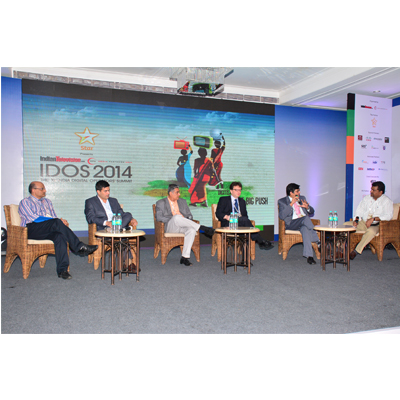
    Speaking at a session titled ‘Specialised content and channels in the digital ecosystem’, at IDOS 2014, FoodFood CEO SK Raj Barua said, “TV penetration has reached the masses and the lifestyle category is improving. I think there is a lot of opportunity in terms of capacity in the next phases of digitisation. We see a great opportunity for us. With new media on the rise, demand for food content has gone up by more than 200 per cent.”


    On the other hand Insync founder and managing director Ratish Tagde, a classical music channel, said: “There is a huge demand for classical music and the audience is looking for Sufi music. When we talk about niche channel, it is all about content. The digital era is likely to monetise content. There are many new platforms and niche content has a good future.”


    Apart from FoodFood and Insync, A+E Networks is also slowly growing its footprint in the country. A+E Networks APAC VP sales and operations Saugato Banerjee said that the ability to create local content is main for niche channels. He added that A+E Networks, that operates with Network 18 in India, can’t depend on advertising and sales for everything it does. “Growing audience share is our target and there is a lot of optimism here,” he said.


    While Videocon d2h deputy CEO Rohit Jain said that one needs to look at niche channels from an economic point of view. “If any new channel is launched in the market, we have to have the whole push model so that the customer gets a chance to see the content first. Every channel has its own audience base,” he said.


    While AsiaSat, that leads in the satellite broadcasting and telecommunications sector in Asia Pacific region, believes the same what Indian broadcasters feel about niche channels. AsiaSat senior regional manager Paulus Chau said that the broadcasters are looking at launching more channels. “We are also looking at the opportunity because regulation is India is not simple,” he said.


    Scripps Networks, a US-based media company, specialising in lifestyle content like food, home and travel categories, is evaluating its strategy in Asia and India. Scripps managing director APAC Derek Chang said that India is a huge market for the company as compared to other markets. He hinted that Scripps might look at the Indian market for launching its niche content related to lifestyle. “It could translate into partnerships. It depends on how we see the potential market. It has its own characteristics and challenges,” he said.

     
    All the panelists agreed that niche content providers have to invest in the content and said the broadcasters have to understand that niche in India has various definitions considering the national and regional clients.


    While talking about the challenges faced by the channels, Barua said that carriage fees have gone up. “In the process, the business model has to be slightly different. We do research for content creation for particular people,” he said.


    Tagde however felt that the niche channels involve too much of research and investment. “We are struggling with the issues of technology like reaching out to people overseas. The content is owned by us and we have to invest in marketing too. There is a hope that we will get support from distributors,” Tagde said.


    Niche channels are not cheap to create: tremendous funds are needed to do research, and programming teams to implement concepts for informative channels.


    While the digital world is changing phenomenally, a bouquet of channels, with some mainstream entertainment channels and other niche channels, will soon adapt to the change.
    Viewership will be segmented leading to an increase in the number of niche channels.


    Going niche is the future of television as it helps to target specific viewers and in terms of revenue generation from advertisers, it is much more focused.
     

  • IDOS 2014: Are STBs high on QC?

    IDOS 2014: Are STBs high on QC?

    GOA: As high as 38 million set top boxes (STBs) have been rolled out in phase I and II of digitisation, but as for the quality, a lot of these boxes were described as ‘dabbas’. Of the total number of boxes, a tiny percentage was high definition boxes and even of those, several were found faulty. The session on ‘Technology Shifts in Indian Pay TV’ during the recently concluded India Digital Operators’ Summit (IDOS) 2014 at Goa, started with these crucial facts.


    The government has decided to push digitisation of phase III and phase IV to December 2015 and December 2016 respectively, citing indigenous manufacturing of boxes as the main reason for the extension. The big question now is, ‘Are the Indian manufactures ready for the 100 million boxes needed in the next 24-30 months?’


    “Contrary to the expectations of many, yes, we are ready,” said Mybox executive director Amit Kharbanda.


    With the ‘Make in India’ concept, the government is not just promoting the Indian manufactures, but is asking the international manufacturers to come to India and create hardware here. “When you talk of manufacturing of STBs, the basic requirement, after the components, is the capacity for big production. According to our calculation, if there is a requirement for 100 million boxes, and we break it to 40-45 million boxes per year, the SMT capacity required is 26 machines, and if we remove all the big international manufactures, India will still have SMT capacity with an availability of 46 machines,” informed Kharbanda.


    The next question which many have been asking is how has the extension benefited the STB manufacturers? “We have been growing from the time we entered the manufacturing space. After digitisation, we knew we had to supplement the market and so we increased our capacity by about 30-40 per cent. Right now we have the capacity of 5 million boxes per annum, of which 60 per cent is utilised by our captive customers and 40 per cent is for other consumers. But considering the experience we have, we can easily expand our capacity,” said Videocon Group head trend electronics Jagdish Bangad.


    The question, according to Kharbanda is not about if we can manufacture 45 million STBs in one year, the question is, considering there are 300 components in a STB, “will we have those many Broadcom or other chips makers in India, and this, keeping in mind that we are not the only country buying it?” Kharbanda questioned.   


    For Broadcom MD Rajiv Kapur, the chip output is extremely high. “We produce more than two billion chips annually. The issue is not production of chips, neither is capacity an issue. The main thing now is that we should be a little careful about our expectations. One doesn’t want to go down the path of over preparing and over- producing and compromising on the maturity which is needed to develop quality in a supply chain,” said Kapur.


    He also cautioned the industry, that in order to achieve the target of the 100 million boxes in the given time frame, one should not start cutting the corners on quality.  


    Cisco, which works closely with a number of multisystem operators (MSOs) in the country and also the STB manufacturers, is agnostic to whether the boxes are made in India, China or Korea. “We welcome the move that the Indian government is keen to promote manufacturing locally,” said Cisco director John McCorkindale adding that they haven’t changed their strategy for the country with delayed digitisation.  


     According to Logic Eastern CTO Vineet Wadhwa, one needs to keep the backend support ready. “One of the key points is that most of us are just concentrating on the manufacturing skills or strengths. But, this is just a part. More thoughts need to go when one plans on scaling,” he said adding that the industry needs funding.


    “We are dealing with tier II and tier III markets. The amount of support needed for tier II and III markets don’t help me when I go to tier IV MSOs. For every three or four tier III MSOs, one needs at least one or two support personnel and for every five support personnel, you need one support manager,” informed Wadhwa.


    He also highlighted that with the different types of CAS, boxes, networks etc, the complexity of managing a network 500-2000 km away over mobile phone is difficult. This means that the manufacturers will also need to set up a support team. “They will have to have deep pockets,” he added.


    A very crucial point that came out during the session moderated by Castle Media director Vynsley Fernandes was that while the capability and technology exists in India, the fundamental challenge is that tier III and IV markets have huge pricing issues. One needs to understand from the LMOs, how much their subscribers will be ready to pay.


    Kharbanda pointed out that the industry which has a target of manufacturing 100 million boxes, if it could even produce 50-60 million boxes, will start a cycle that will help them in the long run. “The fact is that we have to come together as an industry and we need support from the MSOs as well,” said he.


    According to McCorkindale tier III and IV MSOs want to control everything on their own. “They want good quality and want more power to increase their ARPU,” he said.


    For Kapur, delayed digitisiation is actually good. “I feel we were going too fast. The benefit of this delay is that now we can look at the experience of the first 20-30 million boxes which have been deployed. The common approach from vendors in the first two phases was of cutting corners, while only thinking of price and compromising on the quality,” he said.


    MSOs, according to Kapur, have learnt a lot from the first two phases and are now upping their specs. “The difference in pricing of high quality and low quality boxes is not a very big dollar amount. One only needs to know what specs are needed for its STBs,” he added.  


    Another point which was highlighted during the session was that in the rush to seed boxes, no field trials were done in the first two phases. “This led to bad quality boxes being rolled out. Now we have the time to do all this and control the quality,” opined Kharbanda.


    A very important component of the STB cost is the warranty and the support charge per hour from the box company, CAS company and SMS company etc. “And my belief is that the MSOs of tier II and tier III will not compromise on the quality of the box. But they might not be able to afford the dollar per hour charges for support,” said Wadhwa.


    Kapur, is a firm believer that the STBs should have a long lifecycle. “India is a nation where TV moves from house to house but is never thrown, so we can’t be producing 100 million boxes, which are bad quality ones, with no support and element of future proof for different markets,” he said.

    The session concluded with the remark: It is time we move away from speed and cost. 

  • IDOS 2014: SureWaves all set for the big digitised wave

    IDOS 2014: SureWaves all set for the big digitised wave

    GOA: Localisation is the new mantra, which businesses across the world are adopting to survive the highly competitive market scenario. Who would have thought of a paneer burger from the house of KFC?


    Taking a cue from that, national advertisers are increasing their spending on local cable television channels as it garners high viewership due to the locally relevant content it airs. The aim is simple: to target consumers in specific geographic areas.


    SureWaves MediaTech CMD Rajendra Khare during a fireside chat with Indiantelevision.com founder, CEO and editor in chief Anil Wanvari at IDOS 2014 spoke on ‘New drivers of monetisation for cable TV’.


    Cable reaches the remotest of hinterland and the national advertisers are looking for growth from these markets. “SureWaves is already on its way to becoming a game changer as far as geo-targeted advertising in the country is concerned,” he said.


    “The local content aired by the MSOs and the LCOs or the niche satellite channels has a great connect with the local audience. Not only in India but world over, people care more about what’s happening in their locality rather than what’s brewing at the national and global level,” he added.


    SureWaves MediaTech, a Bangalore-based digital media-technology company, offers the SureWaves Media Grid, an integrated advertisement aggregation, content delivery, network management, media planning and reporting platform. SureWaves provides real-time data monitoring of ads, which has, for the first time, made cable TV advertising accountable.


    Elaborating more about the company Khare said, “We build cloud based technology. We have our own devices, which we install at the studios of our channels partners.” The company positions a propriety device which is connected to the grid and the TV channels.


    It is learnt that the company has partnered with many channels, irrespective of the people watching those channels. “Here the national advertiser, who wants a large audience, benefits the most as the business house gets combined viewership of end number of channels together,” he said.


    As for the local channels, they are happy with the new advertising revenue coming in from the big players. The local channels till all these years never got access to the advertisement revenue from the national advertisers. So that problem is now getting solved. “We are solving the problems of the parties. Advertisers are experimenting with our platform,” he said.


    “This is the robust monetisation model that channel partners sign with us. We are accountable and instantly can see whether the advertisements are aired or not,” he highlighted.


    Stating the TAM report, Khare said that nationally these channels command around 4.5 per cent of the channels’ share and nationally it is top five channels. “The combined viewership of local channels is very large. As a standalone, these channels don’t get the national advertisers’ revenue as the national advertisers contribute a big chunk to the national television advertising spent,” he said.


    With the digitisation process in full swing, the country is expected to see satellite channels increasing, and post digitisation, the solution provided by the company would be more sought after. “In the digitised era, more niche high definition content would be there,” he said.


    Talking about the challenges, he agreed that it is problematic as some local broadcasters’ air pirated content. However, he further added that it is easier to screen content.


    He concluded by saying that the company is working on a solution to create content for the broadcasters, who are its partner.

  • IDOS 2014: Alternative platforms eye growth in phase III and IV of digitisation

    IDOS 2014: Alternative platforms eye growth in phase III and IV of digitisation

    MUMBAI: With digitisation being delayed for phase III and IV of digitisation, alternative platforms such as HITS and OTT will see their importance rising. Speaking on the growth of alternative video platforms were Doordarshan deputy director general CK Jain, IMCL MD and CEO Tony D’silva, JAINHITS MD Ankur Jain and Zenga TV MD and CTO Shabir Momin moderated by indiantelevision.com founder, CEO and editor in chief Anil Wanvari and Media Partners Asia executive director Vivek Couto.


    Couto started off by asking how the digitisation delay will impact DD’s DTH service Freedish to which CK Jain responded by saying that it won’t hurt Freedish or DD much because most of DD’s audience is in phase III and IV markets. “There are still many households that don’t yet have a TV set but I’m sure that the new households are likely to have DD Freedish as the connection or our upcoming DVB T2 service. So even if we lose out on some numbers, we will most likely make them up with the new ones,” he said.


    Ankur Jain was then asked to explain a bit about his HITS model to which he highlighted that JAINHITS has 253 services out of which 140 are free to air (FTA) for which no subscription is charged. However, the road wasn’t easy for them. He said that most broadcasters refused to give content on the pretext of geo fencing and piracy. “It took six months of TDSAT and High Court. But we still have one of the highest content rates in the industry as most of them are on RIO which we subsidise for our partners,” he said.


    JAINHITS has signed up with nearly 300 partners in 240 districts that have an analogue base of 2.7 million customers. As far as digitisation delay is concerned, Ankur Jain said, “The Minister had started making noise around the delay a while before it was announced and indiantelevision.com wrote the first story on it and it spread like wildfire. But we haven’t seen any real change in business volumes, demand for STBs, headends etc.”


    According to him, this model acts like an aggregator for the smaller operator and for bigger ones, an opportunity to reach smaller markets where they don’t have fibre or reach. When questioned about the challenges a HITS operator has to face, Ankur Jain said that it was the pressure to keep STB cost low. But eventually, it was seen that the STB that was sold to the LCO at Rs 2300 was being sold by the LCO to the customer either at Rs 2300 or Rs 2500. “The cable guy was cribbing that we would make him bankrupt. But they have the money and ability to talk to consumers and in most cases, they market the price up and sell it,” he pointed out.


    Mindset is also an issue while dealing with content companies because some of them want average revenue per user (ARPU) to go up while some want to selectively distribute and keep ARPU low and charge good rates.


    On the other hand, D’silva feels that the Hinduja ideology for launching HITS is different. “One of the major issues of phase I and II was that we aren’t getting fair share. The reason why we are looking at HITS is to bring order in disorder and we are spending considerable money to upgrade and take this network itself up,” he said. Content, however, remains an issue but according to him the way forward is to take content and make universal bundles.


    D’silva claims that for cable operators nearly 60 to 65 per cent of revenue comes from phase I and II, which is about 30 million with another 100 million lying in phase III and IV. With this, bundling dynamics will have to change. The Hinduja HITS model is looking at launching prepaid from the first day along with services such as VAS, TV Everywhere etc.  “It is not about delaying or advancing digitisation. It is whether we make the same mistakes or learn from it,” he said.


    He also said that he isn’t convinced about digitisation being mandated solely to increase ARPU as according to him ARPU is a function of the derivatives that are put in.


    Addressing Momin, Couto asked him to highlight a bit about the digital model. Momin started off by saying that digital has always been taken either as a threat or as inconsequential.  “We are building for a leapfrog future. I have to worry about 19 formats (devices). Our advantage is lack of hierarchy leading to more growth,” he said.


    The dynamics of digital is different where success is measured by minutes watched. Momin says that for digital platform, the important thing is to establish reach through good content. “I run two companies, Zenga TV and One Digital, both of them PAT positive. Sitting in India, we have a global platform with about 40 per cent revenue coming from international which has only 10 per cent viewership because their CPM rates are higher,” he said.


    Couto asked whether advertising revenue from India was sufficient and if it was coming out of TV and whether this will lead to a subscription based model for OTT anytime soon. Momin feels that the last few years have seen content makers rip people off by giving low quality product, thereby losing trust. “Very few people will say that I don’t want to look at an ad, I want to pay for quality content,” he said while stating that brand integration was an important means of revenue.


    Momin said that brands that were spending about Rs 50 lakh last year are now spending Rs 3 crore to Rs 3.5 crore but the important thing is brands mandating agencies to look at digital more. As far as ad rates are concerned, they aren’t the best in the world because of lack of good ad formats.


    Coming to an end to the session, Couto asked the HITS players to highlight their value in the ecosystem. Ankur Jain said that JAINHITS is helping digital India plan, DOCSIS and two way cable be a reality while D’silva said that broadband would be a success when entertainment is added as an important quotient to ‘roti, kapda aur makaan’. 

  • IDOS 2014: ‘Customer is the King and not the Content’

    IDOS 2014: ‘Customer is the King and not the Content’

    GOA: Content is the king is a passé; in today’s world it is the customer which rules.


    Businesses across the world understand that involving their customers will help them innovate and provide better products and services. The same goes for the Indian cable television industry. The players believe that the core intention of digitisation was not just converting the analogue signal into digital one, but to offer choice to the customers.


     “One key element, which we all missed out in the phase I and II of digitisation is the customer, itself. Customer is the king and not the content. Customer decides whether ARPUs will go up or not. Hence, a methodology needs to be found by all the stakeholders,” said Hinduja Group MD and IMCL CEO Tony D’silva while adding that if  a customer wants broadband, VAS or cable, we have to give it to him/her as per the need.


    He was speaking at a panel discussion on ‘Digitisation: The phase III and phase IV Challenge’ held at IDOS 2014.


    Ortel Communication CEO BP Rath said that the core intention of digitisation was not to decrease the carriage fee but to increase the ARPUs. “The aim was to offer choice to the customers; those who want more services, will pay more or otherwise,” he said and added that he is happy with the delay in dates for digitisation in phase III and IV as the players would get more time to understand the needs of their clients.


    “It was inevitable. Most of the people sitting here don’t know what India is. The lessons are simple. Except for seeding boxes in phase I and II, nothing much has been done. Customers’ choice was not taken into consideration in earlier phases,” he said.


    Instead of taking the top-down approach, we should work from customers’ perspective and integrate those into our plans, suggested Rath.


    Speaking in the same tone, CSG International south Asia vice president Letchu Narayanan said that customer experience matters the most. The industry should shift focus to customer as it is a customer-driven industry.


    Essel Group’s Dish TV CEO RC Venkateish feels that in phase III and IV there is a need for regional and low price offerings in around 70-80 million cable TV homes, which are yet to be digitized. He said that even though the players have different models, customer addressability is the need of the hour.


    On the content and the challenges to be handled in phase III and IV, Venkateish said the DTH players are working on different packages as per the customers need. “The road for better revenue can be achieved if all solve the problem together,” he said.


    Talking about the Dish TV business model, he said India is a big market and there are different needs. The company reports around 55 per cent of its revenue from the mass as only 15-20 per cent customers go for HD channels. “It all depends on the purchasing power,” he said.


    Maharashtra Cable Operators Foundation (MCOF) president Arvind Prabhoo said the players are mulling to offer choices to customers by not only providing network, Wi-Fi but also ensuring that the up-gradation is done before the next rollout.


    Agreeing with others Sagar E-Technologies executive director Sudish Kumar further elaborated that by understanding the needs of the customers, the industry players can establish the market well. “Every cable TV home in our network will connected with internet. If a customer will get a taste of it then it will contribute to the ARPU. We might not charge for cable, at all,” he proposed.


    The public broadcaster, Doordarshan, also has the same opinion that customer has to play a key role in digitisation. Doordarshan deputy director general CK Jain said, “Doordarshan is trying to ensure that people, who can’t afford the subscription of cable and DTH, we will provide value to them.”


    Cable TV Operators Association (COA) president Nassir Hassan Anwar talking about the preference of the customers in the southern region of the country said the demand for Hindi channels among the customers is comparatively less hence, the packages are designed keeping that in mind.


    So, going forward if customers’ needs are addressed, cable digitisation in India offers huge opportunity for all the stakeholders.


  • IDOS 2014: Industry solutions to distribution dynamics gain momentum

    IDOS 2014: Industry solutions to distribution dynamics gain momentum

    GOA: The India Digital Operators Summit (IDOS) 2014, the largest TV distribution summit in India ended with significant progress and a level of stakeholder unity on the way forward for digitisation in India, embracing voluntary and mandatory DAS, ground level pricing, interconnect and revenue sharing between LCOs, LMOs and MSOs and broadcaster support for standard, uniform pricing based on addressable deployment. Key stakeholders also agreed that it’s critical to further improve hygiene in Phase I and II of DAS while various ecosystem entities, including DTH pay-TV operators, domestic STB manufacturers, alternative TV distribution  platforms (HITS, Free Dish) along with the cable fraternity agreed that ahead of the delayed DAS mandate, voluntary DAS has legs in Phase III and Phase IV.


    IDOS 2014 had a full attendance of the who’s who of the industry with more than 300 professionals from the digital TV landscape making their way to the beautiful picturesque resort of Hotel Leela in south Goa.


    The summit which kickstarted with the biggest opening night party organised by HBO on 25 September, saw some eye opener facts presented by Media Partners Asia executive director Vivek Couto on the current status of Indian cable TV industry. He said, “Out of the 262 million households in the country only 162 million houses have a TV. Of this, 27 million is taken up by the free to air service providers such as Freedish via satellite and 7 million by terrestrial DD, while the rest comes under cable and satellite.”


    He also informed the gathering that over Rs 32000 crore has been invested in digitisation since 2005 with a bulk of the investment coming from the DTH operators followed by the MSOs and LCOs since 2011. Out of this, over Rs 11000 crore in the last 24 to 30 months has been invested by MSOs and LCOs.


    He pointed out that while the cost of all the pay channels on a wholesale basis is Rs 922 to digital platforms, the highest pack price is Rs 550 which is an anomaly and needs correction. “Wholesale channel rates should be reflective of retail  prices,” he highlighted. “The sector needs to move towards retail pricing to foster trust between broadcasters, cable TV operators, and LCOs. Retail pricing will make rates transparent. Competition amongst six DTH, two HITS, five national MSOs and several regional ones and the local cable ops will keep retail rates in check.”


    Another important point that came out during the session was that carriage fees which were declining before the digitisation mandate have now reversed their path following completion of phase of phase I and phase II .  “The carriage fee has gone up by 14 per cent on Q1 of FY15 over the previous corresponding quarter,” he informed.


    Indian Television Dot Com founder CEO Anil Wanvari suggested the way forward for the cable TV fraternity. He said, “The first thing is to look at digitisation and pay TV with a changed mindset that it will be beneficial to all. The government could look at setting up a digitisation transition fund that will help educate, train, provide seed capital to go digital – this is specially relevant in phase III and phase IV areas. The fund could be discontinued once the transition is completed successfully, say in the next four to five years. A mechanism needs to be put in place to reward people who follow the rules and ensure strict penalties for those who don’t.”


    Apart from this, Wanvari also suggested that Subscriber Management System (SMS) should be set up with correct KYC  details and bills be issued to consumers. The government or regulator could also look at laying down standards and tech specifications for set top boxes (STBs) which were in keeping in making the customer technology-future-proofed for at least three to four years and to ensure quality control. That’s if the mandate of made in India set top boxes is to become a reality. “The first wave of digitisation has seen low end zapper boxes being shipped in from China – of maybe not the best quality – and being dumped on to the Indian customer to meet the so-called deadlines in phase I and phase II,” he said. “Which is not fair on the lay customer who may have to go in for a new one in the not to distant future.”


    “On the pricing front, industry could be allowed to price their content based on market demand,” Wanvari added. “The prepaid model as followed by DTH with recharges being made available from your kiranawala (neighbourhood store) or paanwala will allow for more transparent collection from the ground for MSOs and the cable sector. The base pack price could rise; and content costs on cable could be brought on a parity with DTH.  On the other hand, different packages could be made available to the consumer.”


    One key take away from the three day summit was the fact that right from the broadcaster, to the MSOs, DTH operators and also a few local cable operators, no one is happy with the delayed digitisation. The captains of the industry expressed similar opinion  to what the Telecom Regulatory Authority of India chairman Rahul Khullar has been airing on several occasions, that ‘delayed digitisation sends out a wrong message to the world and helps no one.’


    Many also felt that the Average Revenue Per User (ARPU) needs to go up from the current Rs 150 to Rs 250-Rs 300. “ARPUs can see an upward trend only if there is trust amongst the various stakeholders,” said IndiaCast CEO Anuj Gandhi.


    Star India president and general counsel Deepak Jacob during a session suggested putting together a commercial model which is uniform. While Siti Cable CEO VD Wadhwa opined to opt for voluntary digitisation, if the broadcasters and LCOs support the MSOs.


    “IDOS is a great platform for the industry to express their point of view, which for this year was delayed digitisation. I am very pleased with the discussions and the quality turnout at IDOS,” said Wadhwa.


    “As a first timer, I got to learn a lot through all the sessions that were conducted. Given a chance, I will keep coming back,” said Scripps Networks Asia Pacific managing director Derek Chang.


    “The session on STB was very informative and there is no other platform where all the stakeholders can meet and discuss the issues related to the cable TV industry,” said Times Television Network MD and CEO MK Anand.


    The highlight of IDOS 2014 was the closed door interaction with TRAI chairman Dr Khullar via videoconference with the various industry stakeholders.

  • IDOS 2014: MCOF’s vision for DAS phase III and IV

    IDOS 2014: MCOF’s vision for DAS phase III and IV

    GOA: Maharashtra Cable Operators Foundation president Arvind Prabhoo has expressed complete dissatisfaction at the extension of the digitisation dates in phase III and phase IV. While the Information and Broadcasting Minister Prakash Javadekar has said that the delay in digitisation is because he is looking at indigenisation of set top boxes (STBs), Prabhoo feels that even before the Indian STB manufacturers come up with their quality boxes, the international vendors will start chipping in boxes, which will be over priced.


    According to Prabhoo, the postponement also sends a signal that there is a dichotomy between the regulator and the industry. The MCOF president was expressing his views during the just concluded IDOS 2014 in Goa.   


    “The worst impact of this delay will be on the last mile owners (LMOs), who will now face stiff competition from the direct to home (DTH) players because they will now have almost a year or year and a half to start marketing their product,” informs Prabhoo.


    The LMO, for Prabhoo is an entrepreneur “and we have been saying this since last year.”


    Many LMOs have started realigning themselves at district level as well as state level. “The last mile owner has realised that alignment and realignment will happen and it is good for him. We know that a lot of LMOs, who have a good standing in the community will get funds for fellow LMOs,” opines Prabhoo.


    He also highlights that a lot of technology solutions will be provided by LMOs, which will be much cheaper than what is currently available. “And if we adopt technology, I think it will become a great time for LMOs and independent headend operators.”


    Prabhoo through IDOS 2014 has also requested the Telecom Regulator Authority of India (TRAI) chairman Rahul Khullar to open up the ISP licences for cable television owners. “It is after this that the broadband and digital India dream can materialise,” he says.  


    He opines that while the extension has been given, the challenge can be seen as an opportunity. He is aware of the challenges, considering the different demographics for phase III and IV markets. “There are almost 5000 headend owners; we might have to cut this down to maybe 50 headends. That’s going to lead to unemployment. Also revenue differentiation will be there,” he highlights.


    Prabhoo disagrees with the perception that the ARPU is less. “There is going to be a viability concern because of transportation cost. We have requested the TRAI chairman to also allow us to use the national optical fibre system and subsidise rates. If that happens and cost of transportation goes down then these headends could be a viable proposition,” he says.


    According to him, players who were earlier in the B2B space and have applied for a DAS licence, when they begin to expand in phase III and IV areas, they won’t have any legacy issues. MCOF claims to have helped the LMO and independent headend owner by tying up with telecom skills department to re-skill employees because digital era is different than their analogue culture. “We are revenue driven and not valuation drive. So, those who want to see actual revenues coming in, should partner with us,” says Prabhoo.


    Learning from the mistakes of phase I and II, this time it will emphasise on data services. One of the major issues was about customer ownership and MCOF says that this will keep the ownership with the LMO with a fee based OSS and BSS services such as headend operation, billing etc. “We are looking at reducing a tier in the broadcaster, MSO, LMO, customer tier thus enabling lower MRP and much higher revenue share to the LMOs,” he concludes.

  • IDOS 2014: News broadcasters still struggling to make money

    IDOS 2014: News broadcasters still struggling to make money

    GOA: The news television industry has been witnessing losses for several years now. To throw some light on what are the hurdles and what needs to be kept in mind while forming regulations, NDTV vice chairperson KVL Narayan Rao, Times Television Network MD and CEO MK Anand and BBC World News India COO Naveen Jhunjhunwala took the stage at IDOS 2014 for the session ‘News Television- a specialised beast’ that was moderated by Castle Media founder Vynsley Fernandes.


    The session took off with a keynote from industry veteran Rao, who spoke of the issues facing the most competitive news industry. “News has always been a high cost, low return industry and since 20 years, there has been an unholy dependence on advertising revenue in an environment that doesn’t seem to be changing,” he said while adding that one needs to consider the importance of news in such a landscape. “Not a single news operator in this country is making money,” he stressed.


    The recent extension to digitisation has also not gone down well with Rao, who just this week stepped down as the president of the News Broadcasters Association. “Digitisation was to finish by this year but has been extended till 2015 and 2016. To say the least, I am very disappointed with this decision,” he said.


    As far as regulations are concerned, he says that content should always be kept separate from carriage. “The business environment that we are operating in is one where we pay a large amount of money as carriage fees. For most news broadcasters, one third of operating cost goes as carriage fees while 90 per cent of revenue is generated from advertising and in some cases 100 per cent. All news broadcasters today pay a large amount as carriage fees and it is a terrible burden that we find impossible to bear,” said he. All the stakeholders must see the way the news channels operate and not look at regulations in isolation.


    News channels during primetime end up showing only panel discussions because of the lack of resources. The western countries have subscription revenue of up to 60 to 70 per cent. All these issues were meant to change after digitisation with subscription revenues kicking in and carriage fees eventually coming down. However, Rao hopes that the new government helmed by Narendra Modi would do all it can in its new ‘Digital India’ plan.


    He spoke of the statement by the Editors’ Guild regarding denial of access to journalists by government and increasing number of significant government authorities taking to social media to give information. He says that this serious issue needs to be addressed since news is not about press releases but rather about ‘ferreting information out’.


    Adding to the issues faced by the industry was Anand. He said that the last six months have seen a loss of collective bargaining due to the deaggregation paper by the Telecom Regulatory Authority of India (TRAI). “The paper has hit news broadcasters and unless one diversifies into entertainment, it is difficult to survive,” he said. In order to make money, the idea is generally to go heavy on branding and marketing and create an aura around the channel. The lopsided ad sales revenue also adds to the woes.


    Jhunjhunwala said that the BBC has been broadcasting news for decades and the technological advancements have allowed it to make it smoother and more cost effective.


    The ad cap has also hit them hard by restricting advertising air time to 12 minutes per hour. Here, the panel agreed that there are times when channels go live for hours without showing any ads and there is no provision to make up for the lost time. Fernandes questioned that in such a scenario, could there be alternative sources of revenue that can be put into use.  Rao said that now, to monetise news one needs to generate revenue through different streams such as sponsorships and associations. “But how can you not have subscriber revenue?” he questioned.


    Fernandes then questioned if there should be a limit on the number of channels that exist to which Rao said that the government should not curtail the number of channels because it is a free market. However, he feels the politicians and political parties should not be allowed to be in news.


    Anand said that the regulator could think about regulating carriage fees with some focus on news channels. He also pointed out that a decade ago, ad spots on news channels were sacrosanct but today it is being sold at one third the rate.


    Jhunjhunwala said that the government could look at raising the FDI limit on news to bring in more investment. There were talks of raising it to 49 per cent but no one has addressed the issue.


    Rao finally concluded by saying that though the digitisation deadline has been extended it will hopefully iron out things.

  • Siti Cable commercially rolls out its DOCSIS 3 broadband service in Delhi NCR

    Siti Cable commercially rolls out its DOCSIS 3 broadband service in Delhi NCR

    GOA: Delayed digitisation is the hottest topic of discussion in the cable TV corridors.


    With digitisation comes the hope of increased Average Revenue Per User (ARPU) and also the realisation that it is broadband that will help the multi system operators (MSOs) to increase their ARPUs.


    Siti Cable is doing just that. The MSO, which for the last two months had been piloting and testing its DOCSIS 3 technology in the Delhi, NCR region, has now officially launched it in the region. Confirms Siti Cable CEO and executive director VD Wadhwa, “Yes, we have commercially launched the service in these areas.” 


    The MSO though has started with Delhi-NCR; it will soon take the service to every city where it has a subscriber base of more than 50,000.


    It is estimated that the MSO is investing anywhere close to Rs 35 lakh to Rs 40 lakh in markets with 50,000 subscribers. According to Wadhwa, as a thumb rule, of every 100 cable TV households, close to 10-15 per cent convert to broadband households. “We are taking the figure at 15 per cent,” he says.


    “Upgradation of homes passed cost close to Rs 500 per subscriber. So if, of the 100 households, 15 per cent opt for broadband, then we are looking at an investment of close to Rs 5000 per subscriber,” he informs.


    The speed for DOCSIS 2 will go up to 40 mbps, while for DOCSIS 3 will go up to 100 mbps. As for the pricing, Wadhwa says, “Our pricing will be highly competitive. We are just in the phase of finalising the tariff plan. We will have different packs for different subscribers.” 

  • IDOS 2014: ‘Digitisation delay is good if industry fixes issues’

    IDOS 2014: ‘Digitisation delay is good if industry fixes issues’

    GOA: The cable TV industry, which had earlier expressed disappointment over the government’s decision to postpone cable TV digitisation in phase III and IV, now believes that delay in digitisation is good if the industry, after getting a breathing space, fixes various issues, which it witnessed in the phase I and II.


    The extension would not strain the financial health of the industry as the need of the hour is to see digitisation on track after the timeline shift and create value and increase the Average Revenue Per User (ARPUs).


    Some experts feel that the additional inventory carrying costs and investments in infrastructure that the industry is incurring now, would impact their topline and thus have a brunt on the bottomline.


    Also, with the stable government now at the centre led by NDA, media companies can raise capital and the industry is quite bullish about the valuation benchmark.


    The government had previously set a target of digitising the cable TV services in the entire country by December 2014. Information and Broadcasting Ministry recently issued a notification as per which the deadline for the areas which came in phase III was extended from 30 September  2014 to 31 December 2015 and phase IV for December 2016.


    “Delay is never good. But, if one implements the learning from the first two phases, it may have a positive impact. Phase I and II haven’t so far reaped any fruits with zero value creation. The players are still fixing billing and other issues,” says HSBC Analyst Telecom associate director Rajiv Sharma, during a panel discussion on ‘Ecosystem Economics of the Future’ in Goa at IDOS 2014.


    According to Exponentia Capital principal Neeraj Bhatia, the delay is a welcome development. “It was required considering the ground reality. The earlier deadline was impractical,” he adds.


    “The earlier phases involved capital expenditure as more revenues were flowing through the system. MSOs were collecting less and paying more, as a result of which they saw no net benefit. So we started to question the business model and whether digitisation had anything for MSOs,” opines Bhatia.


    “We are not ready for phase III and IV,” he informs.


    The delay has given a breathing space to the MSOs to figure out the next step. “One needs to take a stand on various economic issues. This includes gross billing among others which impact people,” says Axis Bank group head strategic corporate group Salil Pitale.


    Citing reasons for the problems faced in other phases, Sharma informs that the cable industry is a fragmented one with just six big MSOs, around 6,000 other MSOs and 70,000 LCOs.


    According to the experts, value creation comes from customer ownership and thus investors will continue to invest.


    The rollout of the next two phases, after the delay will be smoother as it could bring some consensus amongst stakeholders. In phase III and IV, the stakeholders should ensure that revenue comes from day one and not after two years, opines Sharma.


    “While there was a tug of war between the MSOs and LCOs in the earlier two phases that need not be the case going forward. Both need to look forward and pool money,” says Bhatia.


    The extension has also thrown an opportunity for MSOs to opt for voluntary digitisation, feel the experts.


    There are a few financial investors who are getting excited about the growth story that digitisation proposes. “Delay is good as it also allows the MSOs and LCOs to resolve the billing issue,” explains Bhatia.


    There are mixed opinions on the extension of digitisation deadline. The big question now is: ‘Can the cable TV industry fix the issues in the next one year by executing the lessons learnt?’