Category: IDOS

  • IDOS 2016: OTT  advertising vs TV advertising

    IDOS 2016: OTT advertising vs TV advertising

    GOA: Is Online Video (read: OTT) advertising eating into TV’s share? That was the question posed  by the final session of IDOS 2016 held in Goa’s Leela Hotel. The obvious consensus answer from the panelists was a big “no” – and it does not take a genius to reach that conclusion.

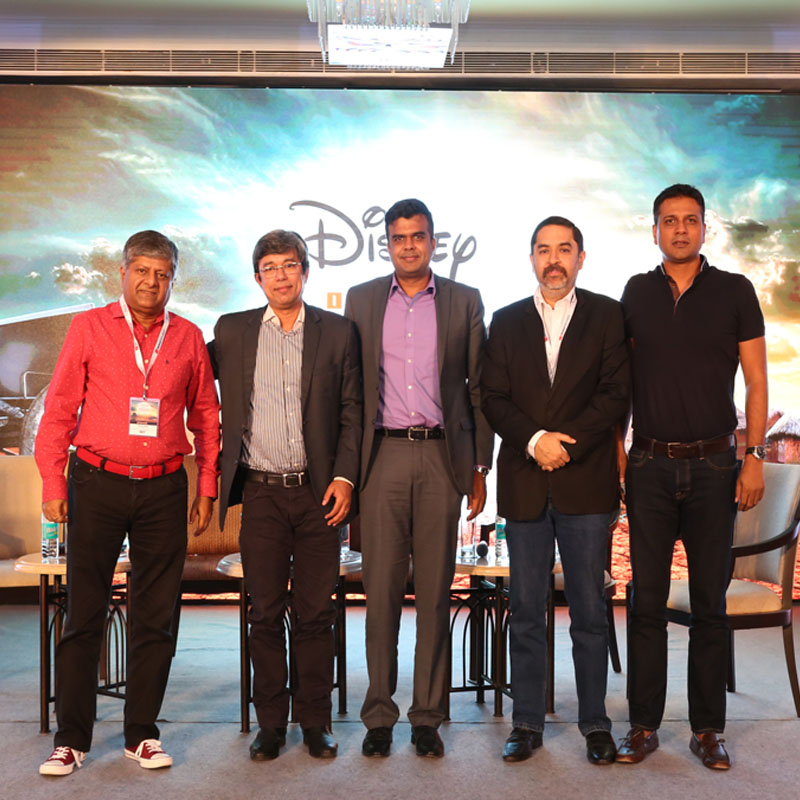
    On the panel were IPG Media brands CEO Shashi Sinha, Sony Pictures Network India (SPNI) digital head Uday Sodhi, Starcom India Group CEO, Mallikarjun “Malli”  Das and Eros Now business head Zulfiqar ‘Zulfi’ Khan.

    “Digital advertising accounts for about eight to nine per cent of total ad spends,”  said Malli. “Most of this goes towards Google, Facebook. Two to three per cent is going towards digital video, and that too most of it is going towards You Tube.  It’s early days yet for the OTT players to have any revenues of significance.”

    “Google has played a pioneering role –  the educational and evangelizing approach that it along with YouTube took visiting advertisers and agencies to explain to them the efficacy of using it  platform,” said Zulfi. “The OTT industry is too nascent and new, and has a lot of work to do.”

    Sinha pointed out that the disparity in CPMs between television and online IP video is drastic. “Television is being sold on a cost per rating point (CPRP) basis in India today. In most countries, it is on a CPMs,” he said. “The CPMs even for TV are very low, and for online video, even lower. Airtime on television has become a commodity as there is plenty of inventory, but networks have large enough audiences to present to advertisers.”

    public://IMG_5444.jpg

    Added Malli: “Television also has a reliable currency – BARC – to measure what’s happening to their spends – the reach, the viewership. Which makes all of us in the media and advertising community secure. We can buy across a network and aggregate audience.”

    The panelists agreed even though the OTT players are providing very specific – in fact a surfeit of data, enough confidence has yet to be built in among the advertisers. “There’s fragmentation in the OTT community. There are too many platforms,” said Sinha. “And you can’t aggregate enough audiences of significance to allow us to take CPMs up here.”

    Sodhi agreed that OTT video platforms had managed to build an active audience of about 70 million. He said: “China’s tipping point for OTT to significantly impact TV ad spends came when the number of users crossed 200 million.  India has to grow. SonyLiv has around around 10 million. Good and stable bandwidth and right pricing  of data are the issues to be dealt with to expand the OTT user base,” Sodhi said.

    Malli believed that the audience of 70 million is large enough. “The Times of India has a seven and a half million readership and there is thousands of crores going into the paper.”

    Both Malli and Sinha stated that agencies have started presenting media plans which, include TV plus and online video. “That’s a great improvement over earlier. We are putting in money behind online video. But it’s left to the OTT- owner – the broadcaster – to show it as OTT ad spend or TV ad spend. However, to be fair, the sector will grow when FMCGs start putting in their faith behind digital online video,” revealed Sinha.

    Then what is holding the ecosystem back? “Most of the robust OTT platforms are backed by the broadcasters,” revealed Sinha. “The leadership is fearful their targeted revenue objectives from television might get impacted if they start shifting the focus more toward digital video advertising. This leadership has to take a hard call.”

    He pointed out that BARC – of which he is a technical committee member – is gearing up to measure online video consumption and become the second country in the world to do so.

    “We are ready to launch online video measurement  by March 2017. Relevant data is going to be provided by some of our partners in the ecosystem to allow us to provide effective measurement numbers. However, the signal has to come from the broadcast community,”  he quipped.

    Zulfi pointed out that Eros Now has around a  million subscribers – split between India and overseas – paying Rs 49 a month for its Bollywood movie service.

    However, his view that today snacking was the primary form of consumption of digital video, was countered by Sodhi, who stated  that the SonyLiv audience was sticking around for  around for 16-22 minutes per session.

    They all agreed that there is a bright future for digital video advertising. But, none wanted to hazard a guess as to when will it happen. “I have no clue when will the inflection point come,” Sinha said. “It is now.”

    Malli too said that he had no clue about it. “Although the stage is set, I can’t predict when a significant migration to digital will happen — in one, two or three years from now.”

    Sodhi revealed that almost 70 million users are being added to the digital video consumers pie every year. “Within two to two and a half years we will have 200 million users,” he predicted. “And that will be a number no one will want to ignore. The advertising tap will flow and flow then.”

  • ‘Broadcasters could consider different pricing for rural-urban subscribers’

    ‘Broadcasters could consider different pricing for rural-urban subscribers’

    When DEN Networks promoter Sameer Manchanda set up the national MSO in 2007, one of the key professionals on his team, which was led by CEO Anuj Gandhi, was the cable TV veteran S.N. Sharma. The trio quickly ramped up the company and took it to national level status.  Gandhi then moved on in 2010 to join Network18. And, Sharma who was the president (operations), was promoted as the CEO a year or so later.

    He continued with the company, expanding it nationally, and seeing it through the first two phases of digitization before departing in 2015 to get on board India’s biggest and most funded  startup  — the Mukesh Ambani-backed Reliance Jio.  A former McKinsey professional Pradeep Parameswaran was roped in to lead the company in his place.

    Sharma, meanwhile, at Jio, worked on planning and building the team for company’s foray into cable TV along with another cable TV veteran K. Jayaraman.

    Then, in July 2016, Sharma made a sudden about-turn and decided to return to DEN Networks, a move that raised the eyebrows of many but cheered many in the trade. For he is known for his relationships and his deep understanding of how cable TV should be run in the Indian context.

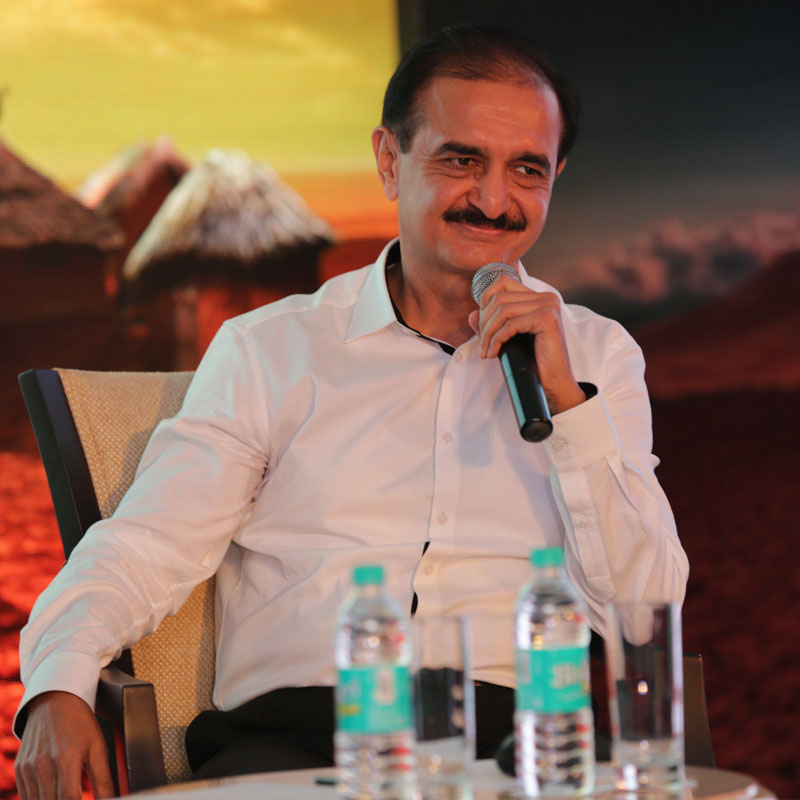
    Sharma was one of the key notes at indiantelevision.com’s Eleventh India Digital Operators Summit 2016 which concluded over the weekend at the Leela Hotel in south Goa. He had a one-on-one conversation with Indiantelevision.com Founder, CEO  & Editor in chief Anil Wanvari. Read on to get some insights into what is going on at DEN and with Sharma. Excerpts from the conversation:

    Why did you leave DEN in the first case, join Reliance and then why did you choose to come back?

    Having been into the cable industry for over 20 plus years, I thought, let me do something else. And, that’s why I moved to Reliance. Basically, I wanted to roll out fibre to the home (FTTH) over there. It would have been a great experience and learning (I thought). And it was, indeed. I learnt a lot in the short span of one and a half year. It was a wonderful learning that I brought in to my personality.

    But then, there was a call from my previous employer DEN, my friend Sameer.  I am one of the co-founders of DEN Network. And, I requested my employers at Reliance if I could leave. And they were kind enough to let me go back. It was more of an emotional decision than a professional one. All my learnings that I have had  at Reliance, I am
    sure, will help me learn to drive DEN in a better manner,in a positive direction in time to come.

    What are the challenges you are facing?

    The challenge as we all know is primarily monetization.  We started seeding boxes in 2010, now it is 2016. DAS came in 2012. And “hote hote” (by and by) it became 2013. Phase I and II happened quickly.

    There is a lag in monetization. Of course, we all can understand and you will appreciate that an industry which evolved since 1990, almost 30 year old industry, it  takes time for things to change. And, we took tiny, baby steps to monetize it.  But now, the time has come the boxes seeded in 2010 have almost lived their life and new technology is coming in. So my prime task is to see to it that we augment the process of monetization.

    The other challenge that I face immediately which I am working very aggressively on is to reduce the cost. We all know that Phase III digitization got into  a confused state, with boxes having got seeded, and the courts intervening.  Analogue signal has also been taken away from many of us. The MIB says 93 per cent  of digitization has happened. So the monetization process also has to start. But, in the bargain, we have already incurred some expenditure.  And unless I start recovering my revenue, the journey will be difficult.

    This time, in a short span of one and a half month, I addressed my cable TV partners, my business partners and my associates in a very transparent manner. We had a discussion – a whole day discussion wherein I shared with them my experiences with the telco. I shared with them the upcoming technology. I told them there is a change. The technology is not going to spare them.  We all used to think that last mile …last mile. But, my subscriber is not bound by last mile. My biggest threat today is the handset that I carry. The viewing habits are changing. Technology is bringing other alternatives. For the same viewer  who used to be watching their services. It is high time they realized it and accepted this change. And, they all agreed. I was surprised. It was a very open, frank and to-the-point discussion. I told them if we are willing to change, if we are willing to adopt, life will be there for us, otherwise the journey is going to be difficult. Everybody is cooperating. We hope to see a very good upside as far as collections are concerned.

    Third is making the LCOs, our partners realize the pains we are going through.  And, make them see the technology.

    And fourth is we have started conducting sessions with cable TV operator to sensitise them with the consumers. Like the regulator also said: Don’t force things on the consumer. He is in no mood. So the approach has to be friendlier than earlier. We have to change the face of our representative visiting the home of the subscriber. The
    presentation of our package has got lost.  We brought in a digital set-top box, we invested in that. But, we forgot in the process that we had not changed our face to the consumer. The cable TV operators accepted that we need to bring in a lot of ethics and discipline in that part.  You will see our representatives wearing uniforms. Uniform could be ours or the LCO’s.  It has to be in a presentable form. Today, if you are visited by a courier boy, the way he  is approaching is different.

    I am sure the cable TV operators will comply.

    Where are you reducing costs?

    Our priority early on was to penetrate the market, you increase your reach and when you penetrate certain areas, those can be reached through fibre or through links from telcos. After some time, you realize that you have spent an X amount in reaching an area and you have seeded 50 boxes. It does not make sense to you. So, you need to make a quick decision. You retract, you save money on that. Or you go to another MSO who is reaching the same area  and he has done it using a different pipe. And, he has 50,000 subscribers. So, I would tell him, why don’t we share the pipe. That process (of sharing)  has already started.  Then, we have started sharing the infrastructure also in another manner, in terms of content. If a competitor has a pipe serving more subscribers in the same area than I have less or vice-versa, I am open to sharing the pipe with the competitor. This is helping reduce costs. We have started sharing local content with cable operators. The cable operator has local content with him. So, instead of spending separately on the same content, we have started sharing that content too. Then, there are usual steps — reduction of manpower, to hire on a temporary basis, and cutting down the day-to-day expenses.

    Where are you getting your maximum margins?

    You see we have largely been a phase III player.  We have seeded 5.5 million in phase III, and 3-4 million are to go in phase IV. Of the 13 million subscribers, we have seeded 9-9.5 million. My upside will come from revenues of phase III boxes, which were yielding Rs 10-20. We have already crossed a milestone of Rs 40- 45 revenues, By December-end, it will touch  Rs 75 plus — that is a 45 per cent growth. Phase I is likely to give us 15-20 per cent.

    Who is going to get you this money – LCOs or the customer?

    You see the mood is set.  In the exercise, baby steps were taken to augment phase I revenues. It took us four years.  Phase III customer is also aware.  All studies and research show us is that the  buyingcapacity is there,  paying capacity is there too. HD is another example.  Around 70 per cent of TVs are HDTVs going into to Phase III
    areas. As it is for me to perform and deliver, I need my costs to be under control.  On the whole, we have also become very cost-conscious. We want our pie of the revenue.

    The cable sector has been bashed red and blue and cable TV bottomlines are stained with red ink? When will it turn around?

    You will see by Q3 end there should be an upside.

    You are very strong up north. Are you strengthening that or are you expanding into newer territories?

    As of now, my focus is to strengthen where we are. I have 13 million subscribers, I am happy to be limited where we are. As we start seeding boxes, it might go to 15 million as we deliver. I want to have a positive bottomline. I want a fair share of revenue. I want to move towards an era where sharing of revenues has be settled. As of now, there is always a dilemma, am I to stand by the TRAI that cable operators should get 35 per cent of revenue. The fact of the matter is that today we are receiving 35 per cent, and he is getting 65 per cent.

    I am very much focused that let’s first  set it right. It will take time and over few months. But, I see that over the next 12 months, this will move towards 50:50. And then, as we move forward, and add more values in the system, I am sure the operator will also get to earn  more through us if he wants to stay with us and be part of the journey.  If he says, he does not want to do broadband with, that’s his choice. If that arises, then we might go direct or we have leave that with him. I am very focused that instead of spreading thinly, focus where you, monetize it well. Settle a good business model. A good business case.  Business will follow.

    LCOs’ insecurity is less than earlier. Your comments.

    You can’t help it. Even MSOs. Nobody is secure. Times are changing. We have to adapt. You can’t ignore the technolgy. If I don’t change, just because my fellow LCO has not, and even I don’t, that’s a folly. Today, in  a matter of time, we started broadband. We have tested a broadband formula. We have close to 125,00 subscribers. We did this with a focused mind in Delhi and Kanpur. To test how the technology behaved, how the arithmetic works here. Now we find that, with 15-17 per cent of penetration, the project is breaking even. Now, anything added into it, is your upside.  The LCOs who are willing to work with us are very happy as they march around with us. And also, there is a learnin that the normal consumer is consuming 40 GB of internet at a speed of 10 mbps at a price of Rs 800. Broadband consumption is rising fast, 5 GB has gone to 10, and 20 GB has gone to 40 GB. Putting in everything into perspective, the cost is Rs 10 per GB.  Next year, I am sure it will be 100GB. And the speed will touch 50 MBPs. In such a scenario, if  I don’t move, somebody else will move.

    You must be happy Goldman Sachs invested but it was a discount to its earlier price, actually a deep discount What’s the way forward on the investment?

    It’s a subjective analysis . But, you should say that this proves that there is strength in the business model of DEN.

    On broadband there will be an increased investment going in. And besides broadband, we are incorporating OTT and value added services.

    So what’s the way forward on the pay TV market, with 31 December coming up?

    We are looking at it wholly. The boxes are going at a good speed. We are not really pushing. My focus is on getting Phase I, II III right. Once that business model is set in place, everything will also.  It is a matter of time, the  pull should come from the consumer, from the LCO. If he is willing to work with me. In the earlier case, in Phase I and II, we were subsiding the boxes. Today, it is a pure business case. This my product. You want to do business with me, please do.

    How can broadcasters assist the process of digitization till the tariff order comes out?

    There was a time when broadcasters used to have dual pricing policy. For rural, it was lower, and for urban, higher.  Now, that we have invested and are investing, all of a sudden  they have foregone  that policy of theirs, which they were following in analogue, and still they are following in some places even today. The moment we seed STBs in phase III, they start charging digital rates. I would urge broadcasters too relook at this.
  • ‘Broadcasters could consider different pricing for rural-urban subscribers’

    ‘Broadcasters could consider different pricing for rural-urban subscribers’

    When DEN Networks promoter Sameer Manchanda set up the national MSO in 2007, one of the key professionals on his team, which was led by CEO Anuj Gandhi, was the cable TV veteran S.N. Sharma. The trio quickly ramped up the company and took it to national level status.  Gandhi then moved on in 2010 to join Network18. And, Sharma who was the president (operations), was promoted as the CEO a year or so later.

    He continued with the company, expanding it nationally, and seeing it through the first two phases of digitization before departing in 2015 to get on board India’s biggest and most funded  startup  — the Mukesh Ambani-backed Reliance Jio.  A former McKinsey professional Pradeep Parameswaran was roped in to lead the company in his place.

    Sharma, meanwhile, at Jio, worked on planning and building the team for company’s foray into cable TV along with another cable TV veteran K. Jayaraman.

    Then, in July 2016, Sharma made a sudden about-turn and decided to return to DEN Networks, a move that raised the eyebrows of many but cheered many in the trade. For he is known for his relationships and his deep understanding of how cable TV should be run in the Indian context.

    Sharma was one of the key notes at indiantelevision.com’s Eleventh India Digital Operators Summit 2016 which concluded over the weekend at the Leela Hotel in south Goa. He had a one-on-one conversation with Indiantelevision.com Founder, CEO  & Editor in chief Anil Wanvari. Read on to get some insights into what is going on at DEN and with Sharma. Excerpts from the conversation:

    Why did you leave DEN in the first case, join Reliance and then why did you choose to come back?

    Having been into the cable industry for over 20 plus years, I thought, let me do something else. And, that’s why I moved to Reliance. Basically, I wanted to roll out fibre to the home (FTTH) over there. It would have been a great experience and learning (I thought). And it was, indeed. I learnt a lot in the short span of one and a half year. It was a wonderful learning that I brought in to my personality.

    But then, there was a call from my previous employer DEN, my friend Sameer.  I am one of the co-founders of DEN Network. And, I requested my employers at Reliance if I could leave. And they were kind enough to let me go back. It was more of an emotional decision than a professional one. All my learnings that I have had  at Reliance, I am
    sure, will help me learn to drive DEN in a better manner,in a positive direction in time to come.

    What are the challenges you are facing?

    The challenge as we all know is primarily monetization.  We started seeding boxes in 2010, now it is 2016. DAS came in 2012. And “hote hote” (by and by) it became 2013. Phase I and II happened quickly.

    There is a lag in monetization. Of course, we all can understand and you will appreciate that an industry which evolved since 1990, almost 30 year old industry, it  takes time for things to change. And, we took tiny, baby steps to monetize it.  But now, the time has come the boxes seeded in 2010 have almost lived their life and new technology is coming in. So my prime task is to see to it that we augment the process of monetization.

    The other challenge that I face immediately which I am working very aggressively on is to reduce the cost. We all know that Phase III digitization got into  a confused state, with boxes having got seeded, and the courts intervening.  Analogue signal has also been taken away from many of us. The MIB says 93 per cent  of digitization has happened. So the monetization process also has to start. But, in the bargain, we have already incurred some expenditure.  And unless I start recovering my revenue, the journey will be difficult.

    This time, in a short span of one and a half month, I addressed my cable TV partners, my business partners and my associates in a very transparent manner. We had a discussion – a whole day discussion wherein I shared with them my experiences with the telco. I shared with them the upcoming technology. I told them there is a change. The technology is not going to spare them.  We all used to think that last mile …last mile. But, my subscriber is not bound by last mile. My biggest threat today is the handset that I carry. The viewing habits are changing. Technology is bringing other alternatives. For the same viewer  who used to be watching their services. It is high time they realized it and accepted this change. And, they all agreed. I was surprised. It was a very open, frank and to-the-point discussion. I told them if we are willing to change, if we are willing to adopt, life will be there for us, otherwise the journey is going to be difficult. Everybody is cooperating. We hope to see a very good upside as far as collections are concerned.

    Third is making the LCOs, our partners realize the pains we are going through.  And, make them see the technology.

    And fourth is we have started conducting sessions with cable TV operator to sensitise them with the consumers. Like the regulator also said: Don’t force things on the consumer. He is in no mood. So the approach has to be friendlier than earlier. We have to change the face of our representative visiting the home of the subscriber. The
    presentation of our package has got lost.  We brought in a digital set-top box, we invested in that. But, we forgot in the process that we had not changed our face to the consumer. The cable TV operators accepted that we need to bring in a lot of ethics and discipline in that part.  You will see our representatives wearing uniforms. Uniform could be ours or the LCO’s.  It has to be in a presentable form. Today, if you are visited by a courier boy, the way he  is approaching is different.

    I am sure the cable TV operators will comply.

    Where are you reducing costs?

    Our priority early on was to penetrate the market, you increase your reach and when you penetrate certain areas, those can be reached through fibre or through links from telcos. After some time, you realize that you have spent an X amount in reaching an area and you have seeded 50 boxes. It does not make sense to you. So, you need to make a quick decision. You retract, you save money on that. Or you go to another MSO who is reaching the same area  and he has done it using a different pipe. And, he has 50,000 subscribers. So, I would tell him, why don’t we share the pipe. That process (of sharing)  has already started.  Then, we have started sharing the infrastructure also in another manner, in terms of content. If a competitor has a pipe serving more subscribers in the same area than I have less or vice-versa, I am open to sharing the pipe with the competitor. This is helping reduce costs. We have started sharing local content with cable operators. The cable operator has local content with him. So, instead of spending separately on the same content, we have started sharing that content too. Then, there are usual steps — reduction of manpower, to hire on a temporary basis, and cutting down the day-to-day expenses.

    Where are you getting your maximum margins?

    You see we have largely been a phase III player.  We have seeded 5.5 million in phase III, and 3-4 million are to go in phase IV. Of the 13 million subscribers, we have seeded 9-9.5 million. My upside will come from revenues of phase III boxes, which were yielding Rs 10-20. We have already crossed a milestone of Rs 40- 45 revenues, By December-end, it will touch  Rs 75 plus — that is a 45 per cent growth. Phase I is likely to give us 15-20 per cent.

    Who is going to get you this money – LCOs or the customer?

    You see the mood is set.  In the exercise, baby steps were taken to augment phase I revenues. It took us four years.  Phase III customer is also aware.  All studies and research show us is that the  buyingcapacity is there,  paying capacity is there too. HD is another example.  Around 70 per cent of TVs are HDTVs going into to Phase III
    areas. As it is for me to perform and deliver, I need my costs to be under control.  On the whole, we have also become very cost-conscious. We want our pie of the revenue.

    The cable sector has been bashed red and blue and cable TV bottomlines are stained with red ink? When will it turn around?

    You will see by Q3 end there should be an upside.

    You are very strong up north. Are you strengthening that or are you expanding into newer territories?

    As of now, my focus is to strengthen where we are. I have 13 million subscribers, I am happy to be limited where we are. As we start seeding boxes, it might go to 15 million as we deliver. I want to have a positive bottomline. I want a fair share of revenue. I want to move towards an era where sharing of revenues has be settled. As of now, there is always a dilemma, am I to stand by the TRAI that cable operators should get 35 per cent of revenue. The fact of the matter is that today we are receiving 35 per cent, and he is getting 65 per cent.

    I am very much focused that let’s first  set it right. It will take time and over few months. But, I see that over the next 12 months, this will move towards 50:50. And then, as we move forward, and add more values in the system, I am sure the operator will also get to earn  more through us if he wants to stay with us and be part of the journey.  If he says, he does not want to do broadband with, that’s his choice. If that arises, then we might go direct or we have leave that with him. I am very focused that instead of spreading thinly, focus where you, monetize it well. Settle a good business model. A good business case.  Business will follow.

    LCOs’ insecurity is less than earlier. Your comments.

    You can’t help it. Even MSOs. Nobody is secure. Times are changing. We have to adapt. You can’t ignore the technolgy. If I don’t change, just because my fellow LCO has not, and even I don’t, that’s a folly. Today, in  a matter of time, we started broadband. We have tested a broadband formula. We have close to 125,00 subscribers. We did this with a focused mind in Delhi and Kanpur. To test how the technology behaved, how the arithmetic works here. Now we find that, with 15-17 per cent of penetration, the project is breaking even. Now, anything added into it, is your upside.  The LCOs who are willing to work with us are very happy as they march around with us. And also, there is a learnin that the normal consumer is consuming 40 GB of internet at a speed of 10 mbps at a price of Rs 800. Broadband consumption is rising fast, 5 GB has gone to 10, and 20 GB has gone to 40 GB. Putting in everything into perspective, the cost is Rs 10 per GB.  Next year, I am sure it will be 100GB. And the speed will touch 50 MBPs. In such a scenario, if  I don’t move, somebody else will move.

    You must be happy Goldman Sachs invested but it was a discount to its earlier price, actually a deep discount What’s the way forward on the investment?

    It’s a subjective analysis . But, you should say that this proves that there is strength in the business model of DEN.

    On broadband there will be an increased investment going in. And besides broadband, we are incorporating OTT and value added services.

    So what’s the way forward on the pay TV market, with 31 December coming up?

    We are looking at it wholly. The boxes are going at a good speed. We are not really pushing. My focus is on getting Phase I, II III right. Once that business model is set in place, everything will also.  It is a matter of time, the  pull should come from the consumer, from the LCO. If he is willing to work with me. In the earlier case, in Phase I and II, we were subsiding the boxes. Today, it is a pure business case. This my product. You want to do business with me, please do.

    How can broadcasters assist the process of digitization till the tariff order comes out?

    There was a time when broadcasters used to have dual pricing policy. For rural, it was lower, and for urban, higher.  Now, that we have invested and are investing, all of a sudden  they have foregone  that policy of theirs, which they were following in analogue, and still they are following in some places even today. The moment we seed STBs in phase III, they start charging digital rates. I would urge broadcasters too relook at this.
  • Eleventh IDOS to commence in Goa today

    Eleventh IDOS to commence in Goa today

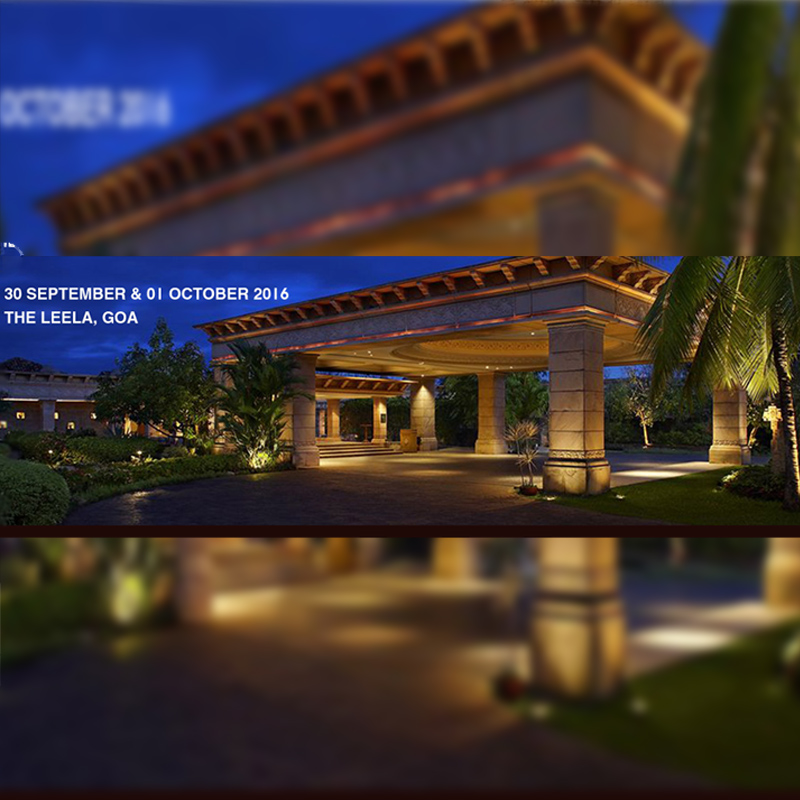
    GOA: The 11th Indian Digital Operators Summit (IDOS 2016) is slated to be flagged off today evening – 30 September — at south Goa’s prestigious Hotel Leela. India’s largest gathering of India’s broadcast, distribution, investment, technology players and the regulators is happening at a time when the industry is grappling with issues related to the government mandated digital addressable system (DAS) which seeks to digitize India’s 100-million viewer strong cable TV ecosystem.

    While two phases of DAS have been progressing gradually, the third phase has been stalled awaiting a decision from the Delhi high court. The logjam despite, the countdown to the fourth phase deadline of 31 December 2016, has commenced.

    It’s challenging times for the whole video distribution ecosystem. OTT live streaming and VOD platforms, telco companies are all marching into what was traditionally a broadcaster, cable TV operator’s or DTH or HITS operator’s turf. And, though they are yet to come up with robust business models, some of them have deep pockets. DTH players, on the other hand, are beginning to bear the fruits of their early investments in delivering quality, transparent services across India.

    Churn rates are stable, and, in fact, the subscriber numbers for many of these players are rising.

    A large part of the smaller cable TV community — especially in phase III and phase IV – is fragmented, undercapitalised and is fearful for its future and, in some areas, is resisting digitisation. Larger MSOs have brought in some organization to the ground in phase I and phase II over the past few years and will continue doing so as the years pass by, even in the interiors. Niggling issues such as interconnection and tariff agreements, carriage fees with broadcasters continue to seek resolution.

    Free to air DTH services such as DD FreeDish serve the needs of some of the viewers in the heartlands. And HITs platforms are waiting on the sidelines and are hoping to plug the infrastructure gap for delivering video signals to the undercapitalized cable operators in the phase III and phase IV areas.

    The regulators, the Telecom Regulatory Authority of India and the ministry of information and broadcasting, are seeking to put in place a regulatory framework which would fuel DAS nationally, keeping everyone’s interests in mind.

    “It is against this backdrop that IDOS 2016 is being held,” says Indiantelevision.com founder, CEO & editor in chief Anil Wanvari.

    “Over the years it has proved to be a fertile ground for moving the needle on distribution further. We hope this year’s DAS will also help in supporting the progress.”

    Among the major speakers at IDOS are: DEN Networks CEO SN Sharma, Prasar Bharati CEO Jawahar Sircar, Hathway Cable CEO Jagdish Kumar, Times Television Network CEO M.K. Anand, Sony Pictures Networks India executive vice president and head – digital business, Uday Sodhi, Indusind Media CEO Tony D’Silva, Walt Disney Co India vice president Nikhil Gandhi, Asianet Satellite Communications president & COO G.

    Sankaranarayana, India Cast EVP Amit Arora, Ortel Communication CEO Bhibhu Rath, CastleMedia executive director Vynsley Fernandes, Reliance BIG TV business head Vivek Garg, GTPL COO Shaji Matthews, Akamai head of mobile strategy Vijay Kolli and regional vice president, media sales Sid Pisharoti, Chrome Data CEO Pankaj Krishna, and TRAI adviser Sunil Kumar Gupta.

    The conference will end on 1 October late evening.

    Among the partners who have come forward to support IDOS 2016 are:
    Walt Disney Co India (Title Partner); Discovery India (Summit Partner), Elemental and Hathway (Associate Partner), Akamai Technologies (CDN Partner), Friends MTS, Sony Pictures Network and Zee Distribution Networks (Support Partners), SES (Name Badge Partner), and IndiaCast (LanYard Partner).

  • Eleventh IDOS to commence in Goa today

    Eleventh IDOS to commence in Goa today

    GOA: The 11th Indian Digital Operators Summit (IDOS 2016) is slated to be flagged off today evening – 30 September — at south Goa’s prestigious Hotel Leela. India’s largest gathering of India’s broadcast, distribution, investment, technology players and the regulators is happening at a time when the industry is grappling with issues related to the government mandated digital addressable system (DAS) which seeks to digitize India’s 100-million viewer strong cable TV ecosystem.

    While two phases of DAS have been progressing gradually, the third phase has been stalled awaiting a decision from the Delhi high court. The logjam despite, the countdown to the fourth phase deadline of 31 December 2016, has commenced.

    It’s challenging times for the whole video distribution ecosystem. OTT live streaming and VOD platforms, telco companies are all marching into what was traditionally a broadcaster, cable TV operator’s or DTH or HITS operator’s turf. And, though they are yet to come up with robust business models, some of them have deep pockets. DTH players, on the other hand, are beginning to bear the fruits of their early investments in delivering quality, transparent services across India.

    Churn rates are stable, and, in fact, the subscriber numbers for many of these players are rising.

    A large part of the smaller cable TV community — especially in phase III and phase IV – is fragmented, undercapitalised and is fearful for its future and, in some areas, is resisting digitisation. Larger MSOs have brought in some organization to the ground in phase I and phase II over the past few years and will continue doing so as the years pass by, even in the interiors. Niggling issues such as interconnection and tariff agreements, carriage fees with broadcasters continue to seek resolution.

    Free to air DTH services such as DD FreeDish serve the needs of some of the viewers in the heartlands. And HITs platforms are waiting on the sidelines and are hoping to plug the infrastructure gap for delivering video signals to the undercapitalized cable operators in the phase III and phase IV areas.

    The regulators, the Telecom Regulatory Authority of India and the ministry of information and broadcasting, are seeking to put in place a regulatory framework which would fuel DAS nationally, keeping everyone’s interests in mind.

    “It is against this backdrop that IDOS 2016 is being held,” says Indiantelevision.com founder, CEO & editor in chief Anil Wanvari.

    “Over the years it has proved to be a fertile ground for moving the needle on distribution further. We hope this year’s DAS will also help in supporting the progress.”

    Among the major speakers at IDOS are: DEN Networks CEO SN Sharma, Prasar Bharati CEO Jawahar Sircar, Hathway Cable CEO Jagdish Kumar, Times Television Network CEO M.K. Anand, Sony Pictures Networks India executive vice president and head – digital business, Uday Sodhi, Indusind Media CEO Tony D’Silva, Walt Disney Co India vice president Nikhil Gandhi, Asianet Satellite Communications president & COO G.

    Sankaranarayana, India Cast EVP Amit Arora, Ortel Communication CEO Bhibhu Rath, CastleMedia executive director Vynsley Fernandes, Reliance BIG TV business head Vivek Garg, GTPL COO Shaji Matthews, Akamai head of mobile strategy Vijay Kolli and regional vice president, media sales Sid Pisharoti, Chrome Data CEO Pankaj Krishna, and TRAI adviser Sunil Kumar Gupta.

    The conference will end on 1 October late evening.

    Among the partners who have come forward to support IDOS 2016 are:
    Walt Disney Co India (Title Partner); Discovery India (Summit Partner), Elemental and Hathway (Associate Partner), Akamai Technologies (CDN Partner), Friends MTS, Sony Pictures Network and Zee Distribution Networks (Support Partners), SES (Name Badge Partner), and IndiaCast (LanYard Partner).

  • IDOS 2015: The Broadband Drive

    IDOS 2015: The Broadband Drive

    GOA: The penultimate session of the Indian Digital Operators Summit (IDOS) 2015 was a panel discussion on ‘The Broadband Drive.’ 


    The session was moderated by Indiantelevsion.com founder, CEO and editor-in-chief Anil Wanvari and Media Partners Asia executive director and founder Vivek Couto. The other members of the panel were Maharashtra Cable Operators Foundation (MCOF) president Arvind Prabhoo, Hathway MD & CEO Jagdish Kumar, Ortel Communications Limited head of broadband Servises Jiji John, Lukup Media founder and CEO Kallol Borah and Broadcom India MD, head – business development, India and South-East Asia Rajiv Kapur.


    The session began with Jagdish Kumar saying that earlier, Hathway had positioned itself as a cable company that also offered internet, and now it had started positioning itself as one that offered both cable and broadband. Hathaway had doubled its turnover from broadband as compared to last year. However, the company had yet to firm up plans for OTT, said Kumar.


    Kumar was of the opinion that the government should take the eight per cent revenue share from data revenue of the cable industry only after higher internet penetration levels took place after two or three years. “This has to be looked upon as an infrastructure development,” he added.


    “Average revenue per user (ARPU) is not the driver for broadband to be taken up as a business by MSOs or LMOs. It is margins that actually matter. The reason why MSOs and LMOs have taken up broadband is because there was a requirement,” said John.


    In his view, access devices have multiplied over time and with that the consumer wanted to see videos on whatever device, whenever, and wherever. “While mobile internet is the only option when one travels, it is wired broadband that offers the proper stable throughput. Systems such as DOCSIS 3.0 offered a better experience than television did,” John added.


    For Ortel, broadband was an important stream and DOCSIS 3 was being tested in a limited way. Ortel garnered subscriber numbers in three digits during the pilot phase revealed John. “We have now started offering video free to broadband customers,” said John.


    The company is looking at charging a customer approximately Rs 1000 – 1200 for 10 mbps broadband and Rs 1999 for 50 mbps. “This will subsidise content charges to broadcasters for the free video offerings to subscribers,” he said.


    Similarly, Hathway was also considering bundling of HD content free along with broadband, according to Kumar.


    India has its own unique business and environmental challenges, which include unpredictable power and last mile cable laying amongst others. However, technology was available to serve India and/or China specific solutions, said Broadcom’s Kapur. “On the subscriber side, PC penetration is low and operators saw the STB only as a live video delivery necessary evil. Some operators would proactively drive broadband, while others would react only,” he said.


    Emphasising that if broadband was considered as a ‘use case’ as opposed to a pipe, Kapur said that services delivered to the consumer could be quite game changing. “Broadcom is very bullish about broadband in India. Broadband is the only answer for a cable operator to retain customers as well as raise ARPUs. Progressive minded cable operators will take advantage of the fact that networks could be two way and will establish a service that would retain a customer with a higher ARPU. The higher ARPU customers were in turn needed to subsidise the lower ARPU customers. Rather than government driven, a private sector sustainable business and profitability driven long term sustainable business model is required,” Kapur opined.


    The pipe is already in place said MCOF’s Prabhoo. “The question is about how one utilises it. There is enough fibre waiting to be exploited for Phase III of digitisation. MCOF is educating its members about the ways to monetise the pipe. On an experimental basis, MCOF tied up with a PSU, a national ISP that brought the pipe to a particular place, and from there, over the last 20 days, we have connected 25 branches of a nationalised bank with secured leased lines. This would be scaled up to about 125 over the next few days. Over the next three months, this would further be scaled up to 525 branches across the state of Maharashtra,” he informed.


    This would help build LMOs confidence that they could deal with a PSU explained Prabhoo.


    Also, some MCOF members had established WiFi service hotspots, which had initially offered high speed internet free of charge for the first six months, and now could be availed though a voucher at a small price of Rs 5 for three hours, or Rs 10 per day from small vendors such as a ‘paan shop.’ Prabhoo claimed that through the commissions on voucher sale alone, a paan shop owner’s earnings had gone up by Rs 8000 per month. 


    Bullish on the broadband sector in India, Prabhoo said that he envisioned a number of innovations coming into the business.


    Explaining his company’s product, Lukup Media’s Borah said that it offered on-demand multiscreen TV service and operates as an OTT platform through a multiscreen home gateway that brought internet delivered content to television and other consumer devices. In the coming months, Lukup also planned to bring linear broadcast TV channels and internet access though a single connection.


    Questioning as to why cable companies were not sharing infrastructure in the way telcos were, Wanvari of the opinion that cable companies could compete on products. Kumar agreed that there was merit in cable companies sharing infrastructure for a lot of backend processes and expected this to evolve naturally over a period of time. On the other hand, Prabhoo said that LMOs would be willing to upgrade their infrastructure to work with telcos for providing broadband.

  • TRAI prefers industry-driven guidelines instead of mandating directives: SK Gupta

    TRAI prefers industry-driven guidelines instead of mandating directives: SK Gupta

    GOA: Even as he reiterated that there will be no further extension of date for the third phase of Digital Addressable System (DAS) slated for 31 December, 2015, Telecom Regulatory Authority of India (TRAI) principal advisor  SK Gupta stressed the need of industry-driven guidelines instead of those mandated by the regulators.


    Pointing out that many lessons had been learnt from implementation of the first two phases of DAS, Gupta also stressed that the consumer was king and all policy decisions including tariffs had to be made with him in mind.


    Addressing the concluding session of the Indian Digital Operators Summit (IDOS) 2015, through teleconferencing from Delhi, Gupta accepted a suggestion for the need of a ‘supra-body’ other than the Task Force to go into these issues and solve problems that arise during implementation. 


    IDOS 2015 was organised by Indiantelevision.com and Media Partners Asia from 24 to 26 September in Goa.


    Gupta was of the opinion that the consumer’s choice was neglected and he was forced to pay for bundling of channels or bouquets instead of a la carte rates, which may not give him the channels he wants.


    At the outset, he said that there the industry had seen a sizeable growth. “The number of cable households have gone up from 79 million in 2006 to over 101 million at present. The number of channels have gone up to over 800,” he said.


    However, he added that though the number of channels have grown to over 800 in India, the driver channels totalled to just around 50.


    Furthermore, he said that customer still face billing problems and it wasn’t easy for them to switch to another operator. “The stakeholders must jointly resolve these issues. It has to be understood that it will not be easy to get customer to pay more,” he said.


    Pointing out that the increase in average revenue per user (ARPU) is illusory, if the system was faulty, Gupta asked stakeholders to reflect on it jointly. However, he was quick to add that this may not be possible, given “the level of infighting within the sector.”


    Gupta also urged the broadcasting sector to take a few lessons from the telecom sector, which had also begun with lot of litigations but had then realised that collaboration was the only way to go ahead. “Today they are prepared to share and sell spectrum and have accepted mobile portability. As a result, there has been tremendous growth in the telecom sector,” he said.


    Speaking on broadband, Gupta said, “Lowering the price of broadband is do-able if set top boxes could provide both television and broadband. TRAI gave its recommendations in this regard to the Government in January this year. This will herald the start of a new era in broadband growth.”


    “Stakeholders need to realise that the concept of television or video watching is moving to mono-viewing,” he said.


    While it was for the stakeholders to find ways to get the customer to fill the Common Assessment Framework (CAF) forms, Gupta said that lessons learnt from the first two phases should help. TRAI would “like to see consensus,” he said.


    Gupta also said that while TRAI had its offices in many centres of the country, he would urge the Information and Broadcasting Ministry to send proper instructions to nodal officers in the Phase III and Phase IV areas. His remark came following a complaint that most nodal officers in smaller towns were still not clear about their role in DAS.


  • TV content creators keen on digital platforms but rue dearth of writers

    TV content creators keen on digital platforms but rue dearth of writers

    GOA: Producers of content for television feel that they are not creating value as the intellectual property rights go to the channels. However, they are ready to invest in creating content for digital networks and over-the-top (OTT) platforms.


    Addressing a session on whether the content ecosystem was ready to serve 2000 channels, these producers said serials made for television gave them money but they did not feel satisfied since they were not the owners of their creations. 


    Contiloe Pictures CEO Abhimanyu Singh said there was little doubt that TV got more eyeballs than cinema, but this was not totally satisfying. Singh was in fact keen to syndicate their content, which the company could then monetize in different languages.


    “One reason why content creators settle for the present position is because the risk lies with the broadcaster and not with the creator,” he said.


    In the session moderated by Indiantelevision founder CEO and editor-in-chief Anil Wanvari, Singh said that he was keen to take up the challenge of creating content for other digital platforms.


    Further stating that the younger generation was not coming to television but taking to other mediums, Singh lamented the shortage of good writers in the industry. “The ecosystem has to change for content creators, and this can happen when the intellectual property rights remain with the creator,” he emphasised.


    Concurring with Singh on the shortage of writers, Colosceum Media CEO Lalit Sharma looked upon the future as an opportunity for new people to come in. He said, “We will be ready to create content for other digital platforms.”


    Beyond Dreams Entertainment Ltd founder Yash Patnaik added, “We have already been doing programmes for other platforms and we have tested audiences for new formats. I am waiting for the market to open up with the entry of OTTs.”


    Referring to the shortage of writers, Patnaik said that the writer was also preparing himself for digital platforms. “It is an investment on losses, which may turn into profits later. Content creation needs money, which in turn will create value, which will fetch more investments,” he added. 


    Wanvari expressed confidence that OTT players will pay well.

  • Change in investor mindset needed for MSOs to chart growth path

    Change in investor mindset needed for MSOs to chart growth path

    GOA: While the direct-to-home (DTH) sector has managed to attract investment from private investors because of its growth, the cable industry will be able to do so only if multi-system operators (MSOs) add broadband to their services.


    This was the general consensus of a session on ‘Investing in Digital assets – Gems and long bets’ at the ongoing Indian Digital Operators Summit (IDOS) 2015 organised by Indiantelevision.com and Media Partners Asia.


    HSBC Securities and Capital Markets (India) Pvt Ltd director of analyst telecoms, media and Internet Rajiv Sharma said that DTH had gained as it has shown growth in terms of average revenue per user (ARPU), and innovation.


    While the stocks of cable industry initially went down, a reading of the figures of both cable and DTH showed that there was some recovery towards the end of the year. “The MSOs have not matched up to expectations, partly because of MSO-local cable operator problems,” Sharma said.


    In the session moderated by Castle Media ED Vynsley Fernandes, Sharma said that broadband can be the catalyst, which can bring in growth but only one or two MSOs have entered the broadband space.


    “The scale of growth is directly linked to attracting investments. If LCOs (local cable operators) can show that they own subscribers, they will get investment,” Sharma said. However, he was quick to add that broadband infrastructure and broadband compliant STBs (set top boxes) would help.


    Asked about collaborations, Sharma said that the media can learn a lot from telecom where networking and collaborations led to the government thinking in terms of letting them sell or share spectrum. “Telecoms focus on revenues to share, while the cable industry wants finance for set top boxes,” he said.


    Replying to a question about the slow growth of broadband in the country, he said, “Anything that is wireline will grow slowly whereas wireless will grow much faster. The consumer is willing to pay but it is for the government to facilitate this.”


    Sharma also added that the quality of management, profitability and network will attract investments. He regretted that the cable industry had failed to learn any lessons from the first two phases of the Digital Addressable Systems (DAS).


    Concurring with Sharma, MPA executive director Vivek Couto added, “Investors reward growth and DTH did exactly that.” However, he was of the opinion that the last mile operator (LMO) will consolidate under the Headend In The Sky (HITS) platform and that may change the situation. “The results will begin to show in the three to four years,” he said.


    Referring to NXT Digital, which was prepared to offer funding, he said that LMOs may now come forward.


    Couto added that while organized MSOs were doing well, investment in broadband in the short term would bring in benefits in the long term.


    In reply to a question, he said that India was the only country where content generation was growing. “But in all this, the cable industry was feeling lost,” he opined.


    Indiantelevision.com founder CEO and editor-in-chief Anil Wanvari had the last word when he said that the mindset of investors had to change as few MSOs in India could today afford the kind of growth their counterparts had shown in foreign countries.


    In another session, Maharashtra Cable Operators Foundation president Arvind Prabhoo and Sagar E-Technologies executive director Sudhish Kumar agreed that the cable industry had to organise itself better if it was to attract investments and grow in the digital era.


    Prabhoo said he had succeeded to an extent in this by getting the LCOs to be seen as the last mile operator (LMO). In an example of how the LMOs can grow, he said, “30 LMOs in Nagpur have joined together to form an MSME and were not prepared to invest in other LMOs,” he said.


    He added that if investors put in money to help create model services, there will be a major change in the next six months or so. “If cable operators offer other services through their STBs, there will be a churn in the industry,” he said.


    Kumar, who has a headend in Bangalore, lamented that finance was a major problem. “One STB cost around Rs 1500, but some of the larger MSOs sell boxes for around Rs 1000 and this forced others to sell at lower rates, which in turn results in a loss,” he said.


    Emphasising on the fact that MSOs were not concentrating on marketing, he said that if they did, it would help in consolidating the industry.


    Citing his own example, he said that he had not lost a single LMO despite having had ups and downs in his company because of the faith reposed in the company.

  • LMO – consumer collaboration is key to successful digitisation: IDOS

    LMO – consumer collaboration is key to successful digitisation: IDOS

    GOA: Collaboration is the only way for the Indian digital industry to go forward – particularly if it involves the last mile operator (LMO) as well as the subscriber. This was the core of the opening of the Indian Digital Operators Summit (IDOS) 2015 organised by Indiantelevision.com along with Media Partners Asia on the theme of ‘Defining the Digital Future.’


    Speakers at the summit, which is being held at The Lalit, Goa from 24 – 25 September, stressed that it was time to stop fighting with each other in courts or other forums and to move forward together since digitisation was inevitable.


    Speakers in the opening session of IDOS 2015 were clear that though the government was the largest gainer by way of taxes etc, it could not be depended upon and it was for the stakeholders to move forward on their own if the Phase III and IV digitisation deadlines set by the government had to be achieved. 


    Describing the scenario as a marathon race, Viacom Group CEO Sudhanshu Vats said it was critical for all stakeholders to collaborate and yet compete at the same time.


    The industry also needed to keep in mind the fact that the consumer is running ahead and everything depends and changes according to what he wants.


    In order for the market place to evolve, it was imperative that all stakeholders moved forward in a collaborative spirit. The policy makers, unfortunately, are the last in this race as they are slowest. So frustration will set in if everyone looks to the government as the winner.


    “Digitisation is being looked at myopically but it is necessary to look at it along with the consumer. Over the Top services will shortly take over in a big way. It is therefore important to realize that while each platform has a different technology, it’s important to keep pace. Players have to be pro-active and customise for all the 1.2 billion viewers,” Vats said. 


    Walt Disney India MD Siddharth Roy Kapur said it was important to see how consumers were rapidly moving from just a single screen scenario to usage of multiple platforms. “That is the reason why I prefer to use the expression ‘video content delivery business’ instead of television business. There is a strong need to put consumers at the centre of the whole media business,” he added.


    However as a result of multiple screens coming in, the level of attention span per screen has been declining. “Stakeholders have to keep this in view while planning their strategies. Content creation therefore has to change accordingly and companies need to find ways to get the consumer to value the content,” he added.


    He also stressed on the need for companies to look at each other as partners and move ahead to derive more value and average revenue per user (ARPU).


    Hinduja Group’s Grant Investrade MD Tony D’Silva said his company had carried out various studies before launching their Headend In The Sky (HITS) platform – NXT Digital. “All these studies showed that the last mile operator, who had built this industry with his sweat and blood, had to be taken along, and the consumer was a key stakeholder,” he said.


    It was clear that the first beneficiary through taxation, service tax, entertainment duty or licence fee was the government. However, the government has done little to support the industry. On the other hand, the second beneficiary was the broadcaster, which received 75 to 80 per cent of the revenues. “He therefore must play a key role in this journey,” D’Silva said. 


    Considering what these stakeholders – government and broadcasters – get, it was necessary that the two help other stakeholders if digitisation had to be achieved. 


    Digitisation will also help bring about transparency in a scenario where the LMOs had been declaring just around 15 – 20 per cent of their subscriber numbers.


    NXT Digital has been designed in a manner in which the LCO/LMO does not lose proprietorship of their business and did their own broadcasting deals as well as pricing and packaging as per market rates. The HITS platform also enabled LCOs to obtain set top boxes at their own convenience with easy funding and set up local channels in order to compete with other digital platforms like direct-to-home. NXT Digital had worked out a fee of just Rs 50 per subscriber per month and is offering 500 channels.


    It also ensured encryption at three stages: in the NXT system, at the LCO level and at the STB-end. GPS had been provided to the STB to ensure any movement was detected. It is therefore clear that the LCO has to be helped if Digital Addressable Systems (DAS) has to succeed. Perhaps the biggest problem was to get the consumer to pay, and the LCO needs to be aided in this task.


    In a presentation of the present scenario, MPA executive director Vivek Couto said that it was important for stakeholders to get their act together as digital penetration was only at 50 per cent so far. “It is also necessary to remember that Phase III and Phase IV comprise a large chunk than the first two phases,” he added.


    According to Couto, around 70 per cent of the content contribution was coming from players like Viacom, Sony, or Fox. Adding that the low rate of internet connectivity around the country was a major issue, he said, “The Indian pay TV business will remain competitive and reach its peak in the next three years, but research and collaboration is very critical for this.”


    Indiantelevision.com founder CEO and editor-in-chief Anil Wanvari said in his opening remarks that in order to meet their targets, stakeholders had to have commitments and take tough decisions. “However, the large number of legal cases and problems of agreements between various stakeholders must make them realise that DAS will not succeed in this manner,” Wanvari emphasised.


    At the same time, Wanvari was also of the opinion that LCOs and LMOs had to change and forge partnerships in order to move forward. 


    The government on its part must do something about taxation along with opening up for greater foreign direct investment (FDI).