Category: Ficci Frames

  • India’s paid VoD users spend 53 per cent watch time on local content

    India’s paid VoD users spend 53 per cent watch time on local content

    MUMBAI: Despite a deluge of global content coming to India thanks to a multitude of streaming platforms, the Indian audience continues to retain a strong appetite for local content. According to a report from Alphabeta Strategy and economics, the paid video-on-demand (VoD) audience in the country spends 53 per cent watch time on local content. Along with India, other Asian countries also show the same fondness for local content.

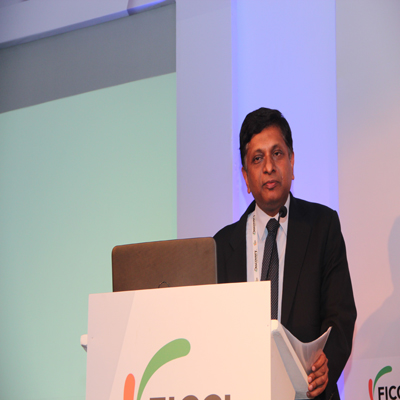
    AlphaBeta commissioned a survey of internet users watching paid online VOD once a month or more in India, Indonesia, Malaysia, Taiwan and Thailand. The survey has also found that the demand for local content remains same across all the age groups. During a session in FICCI FRAMES 2019, Alphabeta Strategy and Economics engagement manager Dr. Konstantin Mathhies revealed the findings.

    “With strong consumer demand for local content, VOD players will have to increasingly provide high-quality local content to align with these preferences. Already, many VOD players in Asia have developed “hyper-local” strategies in content investment – with a focus on producing high-quality shows that also differentiate their offerings in a competitive market,” the report read. It also cited the example of global players like Amazon, Netflix going local in Asia.

    While all the large international players are investing in the Asian countries, local players are also ramping up the investment in content. The study estimates that the content spending in Asia could go up to US$10.1 billion in 2022 from US$2.7 billion in 2017.

    Moreover, foreign direct investment in local content in Asia is also expected to get a boost given the fact that VoD spending is largely driven by global players . The report added that the potential FDI could reach US$4 billion by 2022.

    The key findings of the report depict that over 80 per cent of VoD executives cite a welcoming investment environment, supportive regulations, and high-quality content production infrastructure as key to driving content investment. It also adds that VoD makes it easier for Asian entertainment to reach at least 450 mn people globally today.

  • Netflix to keep both dubbing and subtitling options available

    Netflix to keep both dubbing and subtitling options available

    MUMBAI: The fact that India has a higher per cent of mobile streaming compared to the US has caught Netflix’s eye. Speaking at a session moderated by CNN News 18 Editor Anuradha Sengupta on the stage of FICCI Frames 2019, Netflix VP Product Todd Yellin said that despite the liking for the small screens, India’s fondness for the big screen will not fade away.

    While Netflix has already delivered hits like Sacred Games in India, the OTT platform will double its investment in the country. He also added in a presentation that the series was a global hit for the service, with two out of three viewers of the show live outside India. On the other hand, Indians are also loving international shows as Bandersnatch was a huge hit here also.

    “We don’t care about someone’s gender so we don’t collect it. We don’t care about the age so we don’t collect it. The only data we really care about is taste and we don’t want to stereotype. Internet TV is for everyone to liberate and make the experience greater so they can enjoy entertainment on their control and that’s what we care about,” Yellin commented while asked about the demographic and psychographic profile of Netflix users in the country.

    To reach to more people, Netflix is also planning to extend the number of languages in which the content is available. While Orange is the new Black was released in seven languages back in 2013, The Umbrella Academy was released in more than 25 languages six weeks ago.

    Along with subtitling, Netflix also wants to keep the dubbing option always available for users given the past data. “45 per cent of people watched Ghoul in English speaking countries with dubbing, 37 per cent with subtitles and 18 per cent with both,” he highlighted.

    Although Netflix is becoming unbeatable among OTT platforms, Disney’s entry in the space is likely to pose a challenge. However, the company seems to look at it positively as Yellin said competition motivates the team venturing into more interesting things.

    The OTT platform will be doubling down on interactive series also but it won’t necessarily be science fiction or dark. According to Yellin, it could be a wacky comedy or a romance even. With all the plans in store, the next couple of years will be interesting to see how the OTT platform handles its leading position as other big pocket players are stepping in.

  • Sudhanshu Vats says content, platform and technology key to good storytelling

    Sudhanshu Vats says content, platform and technology key to good storytelling

    MUMBAI: On day 1 of FICCI Frames 2019 in a session titled ‘Looking back as we move ahead’, Viacom18 group CEO and MD Sudhanshu Vats was in conversation with Indian Express executive director Anant Goenka. The burning question that came out to dominate this conversation was ‘does the industry even realise how to and what to evolve to?’

    Vats began by stating that a lot has changed in the industry for the better. He went on to state, from the content space, the first thing that has changed, irrespective of the platforms, is that the industry has moved away from broadcast to micro-cast online. The industry has moved from beaming things to having more conversations making things more interactive.

    According to him, the second most important change led by technology is that it isn’t necessary to tell stories to everyone, rather tell it to a limited number of people and tell it successfully. 2018 has seen films target certain audience and these films performed exceedingly well in spite of not being blockbusters such as Andhadhun, Badhai Ho, etc. 

    The third and most interesting thing he pointed out to is the changes and differences between curator, creator and consumer. It used to be much simpler to differentiate between these three in the past but today the lines have completely blurred. And this is also followed by audiences across, where audiences have also become content curators.

    While reiterating the fact that the industry is experiencing many important changes, he states a welcoming change is the narration of diverse stories in a classical content sense.

    He stated that because the TV model is an ad-driven model, telling stories in an authentic manner has become a little difficult as compared to the past as it's driven by ratings. He noted that while playing with the original story, many times the industry is taking away from the story. He stressed that importance must be given here and that the focus must be on the ability to tell stories which will eventually sell rather than looking at only selling the stories.

    Speaking about ‘Formula’ as a safety net, Vats believes that formula works as a safety net at some level. With minds being patterned in a particular format, and sometimes from the commercial point of view, one must believe in intuition. With reference to the western world, he added that the media industry in the West follows a pattern format leading to success.

    Sudhanshu Vats believes that there will be a lot of custom use in the story and segmentation in the audience. According to him, there will be a set of audience that will love, and there will be one that doesn’t. But in the future, it won’t matter as every story can reach its audience and every audience their story.

    The session ended on the note that the future can be rafted only from lessons learnt in the past. The media industry is in interesting times today, as it witnesses a disruptive process of embracing change to redefine itself for the future.

  • Uday Shankar, citing TRAI tariff order, suggests govt should unshackle instruments of monetisation

    Uday Shankar, citing TRAI tariff order, suggests govt should unshackle instruments of monetisation

    MUMBAI: Uday Shankar believes one of the most ‘powerful’ means of fuelling the next decade of growth for India’s media and entertainment industry is for the government to ‘unshackle the instruments of monetisation’. Driving home his point, the veteran executive cited the Telecom Regulatory Authority of India’s (TRAI) as an example.

    “Distribution regulation of television content, where what you can charge from the consumer regardless of how much you invest in the content, is determined by the regulator and not the market,” Shankar said on the opening day of FICCI FRAMES 2019, where he moderated a session titled ‘Global Goes Indian’ featuring MIB secretary Amit Khare and Prime Minister Narendra Modi’s Economic Advisory Council chairman Bibek Debroy as panellists.

    Shankar wondered whether there was a need for India to revise its ecosystem in order to compete in the global content market place.

    “When a Hollywood film is made, or when Netflix or Amazon produce a series, they are able to monetise it across the world and hence their ability to invest in that content is a great deal more. In India, especially for TV, because of restrictions on how and how much can you monetise, there is a cap on investment. There are regulations on the affiliate monetisation front. So, your ability to monetise is limited,” he argued.

    Shankar channelled his inner newsman as he highlighted some of the most pressing issues facing India’s media and entertainment industry. The recently appointed Disney APAC boss referred to a series of stumbling blocks across film, TV and digital content creation that could delay the sector from realising its true and full potential.

    The 56-year-old focused on three key areas that needed addressing for the Indian M&E to grow at a faster pace. The FICCI vice president drew the attention of the panellists and the audience to issues plaguing content creation, monetisation and the need for government policies and regulations to be consistent.

    Shankar rued the fact that India wasn’t adding more theatres in tune with the times. He pointed out that the increase in number of screens was a result of single screen theatres being converted to multiplexes.

    “New theatres are not coming and while more films are being released in Hindi and regional languages, it becomes a challenge for them to get exhibited because there are not enough screens. While the big budget films are still accepted by theatres, the smaller and regional films are struggling. This problem looks like it’s going to get more and more complex,” he said.

    Shankar then shifted his focus to the lack of adequate infrastructure, adding how this was preventing creators from scaling up their focus on local and city-specific content across the country. To further build on his perspective, Shankar offered the example of Mumbai’s film city.

    “We had one film city which used to cater to the needs of the film industry and a few TV channels. Now, we still have the same film city which has to cater to the needs of the much diversified industry,” he stated.

    Shankar asked whether policy development by the government, given that M&E is a major employer, would be a potential problem solver. However, he made it clear that the industry isn’t seeking any special favours from the government.

    “The entire content for whole Hindi heartland from Bihar all the way to MP, Rajasthan, Gujarat and Haryana is created out of Mumbai because it is the only city where basic infrastructure still exists. A decade ago, there were initiatives to launch Bhojpuri channels designed to cater only to the population of Bihar and some parts of UP. But all those channels turned out to be unviable because there was no facility to create content locally and all of them had to come and rent expensive facilities in Mumbai and create content here. There are no facilities available outside Mumbai. Is this a subject needs that needs to be addressed via policy intervention?” he asked the panel.

    Shankar then drew a parallel to how a complex process at every level had been a hindrance to investment in theatre infrastructure.

    “For instance, the reason malls are coming up everywhere and no theatre is being made is simply because the entire policy around building a new theatre, in terms of all requirements, is too complicated,” he said.

    Shankar made another critical point as he highlighted the need for government policies to be consistent.

    “There has to be certainty of regulation. You should know what is expected of you and what you need to deliver. There should be no surprises, because surprises create a shock in the system and everyone takes time to recover from that,” he stated.

    Earlier in the day, during his opening remarks, Shankar described India as one of the major media markets in the world. According to him, Indian M&E is at an inflexion point.

    “We are already seeing the innovations that are taking place in this country in the domain of sports or in digital, where Indian creativity is being talked about globally and attracting the interest of one and all. However, we need to make sure that our policies are aligned to accelerate creativity and growth,” he said.

  • Ficci Frames and market concludes on grand note

    Ficci Frames and market concludes on grand note

    MUMBAI: The FICCI Frames and the newly launched content market as part of FICCI Frames 2018 concluded on a grand note.

    The three-day conference and adjoining market saw the who’s who in the entertainment business attend and part take in the conference, in addition to buyers and sellers from across the globe and country engage in active meetings regarding a diver range of content.

    The conference  saw I & B and Textiles minister Smriti Zubin Irani launch the three-day conference and market and engage in a riveting discussion with noted Filmmaker Karan Johar. This was followed by a range of conference panel discussions that saw the likes of Siddharth Roy Kapur, Nandita Das, Madhu Chopra, Rima Das, Sanjay Gupta (MD, Star India), Ajit Andhare, Vani Tripathi Tikoo, Megha Tata among many others take part.

    The first year of the content market was also a grand success, with the participation of over 100 buyers and festival programmers of Indian content and content sellers from across many countries..  With active meetings held across the three days, the international companies such as 102 distribution, Alpha Violet, Karma Films, Wild Bunch were also present.

    “In two days I had about 35 meetings with investors from all around the world. I was successful in raising interest of a total of 5 million dollars which we will now move forward to close with the help of my producers George Merkert and Academy Award winning Tim McGovern from LA Based Whisper Pictures…The Market was so well organized…”  said Reena NeGandhi an attendee of the market.

    “…This content market will help to unite the production houses with best content creators and will change the phase of Indian entertainment ecosystem.” said Satish Narayanan, Founder, Design Media and Edutainment Solutions.

    Furthermore 9 films including new Indian films such as Mudita by Swaroop Kanchi, Once again by Kanwal Sethi, Oh Shit! by Kamakhya Narayan Singh, Hamid by Aiijaz Khan, Ee Ma yau by Lijo Jose Pellissary and Rana Dugabbati presented C/O Kancharapalem among others were showcased to leading festival programmers from Venice, London, Edinburgh and Italy among others as a first of it’s kind initiative to fuel the discovery of Indian films internationally.

    The three-day event also saw a special installation of the mobile theatres by Picturetime digiplex where the films were screened. 

  • Screen Density: Lessons from the world & Exploring new business models

    Screen Density: Lessons from the world & Exploring new business models

    MUMBAI: On Day 2 of FICCI FRAMES happening in Mumbai, there was a session on Screen Density in India attended by some eminent panelists consisting of Mr. William Feng, VP, Greater China, MPA, Kurt Rieder, Head-Theatrical Asia, 20th Century Fox, Kapil Agarwal, Joint MD, UFO, Kamal Gianchandani, Chief of Stratergy, PVR Ltd,  Rajkumar Akella, Managing Director – Theatrical, India, ComScore and Mr. Kulmeet Makkar, Chief Executive Officer, The Film & Television Producers Guild of India Ltd. and Sushil Chaudhary, Founder and CEO, Picturetime Digiplex moderated by Uday Singh, Managing Director, MPDA.

    The Panelists discussed the existing scenario of screen density in India and how lessons from other countries can help India explore new business models to improve the screen count.

    Addressing the problem of screen density faced in India, Mr. Kurt Rieder, Head – Theatrical, Asia, 20th Century Fox Said “We would like to see more number of screens in tier 2 and tier 3. There are not enough screens per multiplex in tier 1 and 2 because once they build these things, nobody realizes that regional films are going to explode and suddenly the average multiplex probably requires twelve screens.”

    William Feng, VP- Greater China, MPA gave a presentation on screen density: China Market Development while 

    Sushil Chaudhary, Founder and CEO, Picturetime spoke about the new business module on screen density that aims at targeting audiences of rural areas.

    The DigiPlex mobile theatre vans, run by Picturetime, offer their audiences high-quality movie-viewing experience in the rural areas and is an economical option for the audiences in remote areas to catch up with newly released films.  

    Charging between Rs 30 from to Rs. 70 each viewer, the DigiPlex first pitches a collapsible all-weather canopy that can accommodate at least 120 viewers.  

    This can help put up more screens at very low cost as compared to building multiplexes in remote and even urban areas.

    “With this module, we are also looking at helping regional cinema and campaigns issued in pubic interest.” concluded Chaudhary.

  • Broadcasters see positive future for TV in India

    Broadcasters see positive future for TV in India

    MUMBAI: The threat of OTT and integrated platform ecosystems like Android TV is at the peak. Its increasing penetration across all age groups may be a threat to the broadcasters in the coming time. But, it isn’t the case yet in India with 64 per cent TV home penetration and much room for growth. Data also shows that 86 per cent of Indian homes still watch TV on CRT sets and only 3 per cent are multi-TV homes. TV viewing in India has grown from 3 hr 14 min (2015) to 3 hr 36 min (2017) but it is still lower than US, which boasts of an ATS of 3 hr 54 min. This gives a clear indication that there is immense scope for TV and it will further rise.

    The FICCI Frames 2018 saw a session on ‘The future of TV in India’ with panellists Novi Digital CEO Ajit Mohan, Viacom18 COO Raj Nayak, Times Network MD & CEO MK Anand, Indiacast CEO Anuj Gandhi, EY Partner Ashish Pherwani, BARC CEO Partho Dasgupta and industry veteran Amit Khanna. The panel was moderated by Provocateur Advisory principal Paritosh Joshi.

    Gandhi highlighted that we have the pulse of what audience wants which today is reality. Whether it’s a long form or short form content, people watch it, regardless of screen size or type. He said that people will consume TV content anywhere they can.

    Nayak believes that the future of TV is bright. He said that if distribution is king, content is queen. “The myth has been broken that the youth don’t watch TV and people watch short formats. Even in the US, people above 90 years of age watch TV content,” he said. He further added that linear watching on Jio TV is exploding with 3 crore viewers per month.

    According to Khanna, the average time spent on digital has grown with an hour and twenty minutes on phone especially in urban cities. When it comes to television, more that 70 per cent of viewership comes from movies and general entertainment. Pherwani said that 40 per cent of the time spent is on the mobile phone.

    Anand said that better technology, bandwidth and campaigning had eased the worry of broadcasters. He added that it was much easier to start a video stream but monetisation had not been easy.

    Broadcasters seem optimistic about the future of television, despite the onslaught posed by digital media. At least in India, the television will reign houses and minds of people for some time to come.

    Also Read:

    Ficci Frames 2018: Smriti Irani for highlighting M&E’s economic importance

    New initiatives at FICCI Frames 2018

  • M&E stakeholders need to collaborate for growth: Sudhanshu Vats

    M&E stakeholders need to collaborate for growth: Sudhanshu Vats

    MUMBAI: If the Indian media and entertainment (M&E) sector, poised to be Rs 2 trillion industry by 2020, is to be a force multiplier and up the present growth trajectory, then all the stakeholders, including the government, need to collaborate sinking differences, according to Viacom18 Group CEO Sudhanshu Vats

    “We need to learn to collaborate as an industry. We need to collaborate with competitors at times so collaboration and competition can coexist. The scale of industry is such that innovation and disruption is bigger than what any single one of us can achieve. It is only when we form partnerships [and] collaborate that we can achieve greater heights,” Vats on Monday said delivering a keynote address, themed ‘Media and Entertainment: The Force Multiplier At The Heart Of Society’, at the ongoing FICCI-Frames 2018 here.

    Pointing out that the M&E sector has deep links with other sectors of the economy, Vats asked and answered, “Where is it that you first heard about the mobile phone in your hands? Why do you even use it? How did you come across the shampoo you used this morning? What did you do in the car while driving to this conference? Well for most of you, the answer will be some form of media, be it print, or digital or electronic.”

    Deconstructing his observations in terms of numbers, Vats explained that the M&E sector has added over Rs 50,000 crore in output in the last five years, has a revenue size of Rs 130,000-135,000 crore and the direct or indirect induced benefits to the economy of the total industry size is Rs 450,000 crore with a contribution of 2.8 per cent to the country’s GDP. This apart, the industry also employed, across both formal and informal sectors, 1-1.2 million people, contributing significantly to India’s job creation.

    Having excited the audience with some hard data, Vats added, “Did you know that by several estimates, video streaming accounts for over 50 per cent of total mobile internet usage in India? This is expected to touch 75 per cent over the next three years. Today itself, the contribution of data to telco revenue stands at 20-25 per cent. Imagine what will happen when virtual reality (VR) becomes a commonplace phenomenon?”

    According to Vats, while presently the media sector employed around 1.5 million people directly and indirectly, it has the potential to add another million over the next five years, which might seem a small number —  given the total workforce of 460 million — but these are jobs that were non-routine, least likely to be automated and, more importantly, most of these jobs will need ‘on-the-job training’ — meaning that these jobs don’t need to wait for the country’s education infrastructure to catch up.

    But, given the M&E industry’s role as a force multiplier, how much steam is left? Because if the engine starts to weaken, it is obvious that its role as a force too will reduce. Vats thinks the answer to the question need not be a pessimistic one. Why?

    Vats listed the reasons for growth opportunities: (i) M&E industry’s ad-spend to GDP ratio was still 0.4 per cent compared to 1 per cent in developed economies (ii) the total sector is one per cent of GDP compared to 2.5 per cent or so in developed economies and (iii) while Indian TV audience (780 million) is bigger than that of the total population of Europe (745 million), India has only 64 per cent penetration with 183 million TV households. “With electrification progressing at a blistering pace, imagine future growth,” he reasoned.

    Though the opportunities are there, can the M&E industry pull it off? Certainly yes, if all the stakeholders sunk their differences and learnt to collaborate without being skeptical of newer techs and data-driven findings instead of always asking the government and regulator for help, which they must provide being facilitators and further adding to ease of doing business, Vats said exhorting the industry to rise to the challenges as one.

    “We need to become comfortable with data because we need to bring in more transparency, authenticity and objectivity to our data. If a new-age entrepreneur comes to us, we are skeptical of his idea or technology. If someone approaches us with a new way of measuring, say, our audiences, we are dismissive. We need to change this attitude. We need to change this mindset,” Vats reasoned, adding that Viacom18 was doing its own little bits, including starting a pan-network engagement programme with startups where the company partners with validation. The initiative is called Vstep or the Viacom18 Startup Engagement Programme.

    Urging the Indian society to loosen up a bit — learning to “laugh at ourselves” — Vats signed off saying: “Let us, the media and entertainment industry, be the force multiplier for growth, the force multiplier for change, the force multiplier for jobs and, above all, the force multiplier for the good of society.”

    Also Read :

    M&E to cross Rs 2 trillion by 2020: FICCI-EY reportFicci

    Frames 2018: Smriti Irani for highlighting M&E’s economic importance 

  • M&E to cross Rs 2 trillion by 2020: FICCI-EY report

    M&E to cross Rs 2 trillion by 2020: FICCI-EY report

    MUMBAI: FICCI Frames 2018 saw the launch of its annual media and entertainment (M&E) report, this year by Ernst & Young (E&Y) titled ‘Re-imagining India’s M&E sector’ which captures key insights from the exciting and fast growing Indian M&E sector.

    Launched on Sunday in the presence of the Information & Broadcasting minister Smriti Irani and other industry stalwarts like Star India MD Sanjay Gupta, Siddharth Roy Kapoor, filmmaker Karan Johar and others, the FICCI-EY report highlights that the M&E sector continues to grow at a rate faster than the GDP growth rate, reflecting the growing disposable income led by stable economic growth and changing demographics.

    The report suggests that the Indian M&E sector reached Rs 1.5 trillion in 2017, a growth of around 13 per cent over 2016 and is expected to cross Rs 2 trillion by 2020, growing at a compounded annual growth rate (CAGR) of 11.6 per cent. The digital segment led growth, demonstrating that advertising budgets are in line with the changing content consumption patterns.

    The report states that subscription growth outpaced advertising growth in 2017 but advertising will continue to grow till 2020 led by digital advertising. The report estimates that approximately 1.5 million consumers in India today are digital only and would not normally use traditional media. It is expected that this customer base will grow to 4 million by 2020 generating significant digital subscription revenues of approximately Rs 20 billion. Going forward, micropayment, enabled through the Unified Payment Interface (UPI) and Bharat Interface for Money (BHIM) platforms developed by the National Payments Corporation of India (NPCI) will further accelerate subscription revenues for entertainment content.

    EY India partner and M&E leader Ashish Pherwani expects digital and gaming sectors to grow between 2 to 3 times by 2020.

    Television
    While advertising is 41 per cent of the total revenues today, the report expects it to grow to 43 per cent by 2020. There are over 30 per cent households in India which are yet to get television screens, but being at the bottom of the pyramid, these households will tend to move first towards free and sachet products. 

    EY report states that the TV industry grew from Rs 594 billion to Rs 660 billion in 2017 and advertising grew to Rs 267 billion while distribution grew to Rs 393 billion. At a broadcaster level, however, subscription revenues including international subscription made up approximately 28 per cent of revenues. 

    Digital media

    250 million people viewed videos online in 2017 and the figure is expected to double to 500 million by 2020. 93 per cent of time spent on digital videos is in Hindi and other regional languages and OTT subscription in India is expected to touch Rs 20 billion by 2020.

    Digital media has grown significantly over the past few years and continues to lead the growth charts on advertising. Subscription revenues are emerging and are expected to make their presence felt by 2020. In 2017, digital media grew at 29.4 per cent on the back of a 28.8 per cent growth in advertising and a 50 per cent growth in subscription. Subscription, which was just 3.3 per cent of total digital revenues in 2016, is expected to grow to 9 per cent by 2020.

    Print

    Today, 98 per cent of readers read dailies and 20 per cent read magazines. Reader base is 395 million, or 38 per cent of the population. Readership has grown by 110 million over the last 3 years. Rural (52 per cent) reader base is larger than urban (48 per cent). 44 per cent of children aged between12-17 years read a newspaper or magazine. Magazines have a higher readership in urban area (57 per cent) as compared to rural areas (43 per cent).

    Print accounted for the second largest share of the Indian M&E sector, growing at 3 per cent to reach Rs 303 billion in 2017 and is estimated to grow at an overall CAGR of approximately 7 per cent till 2020. 

    This growth is expected despite the FDI limit remaining unchanged at 26 per cent and therefore, restricting access to foreign print players and the imposition of GST at 5 per cent on the advertising revenues of the print industry for the first time in history.

    Films

    Regional movies drove the growth in number of releases in 2017. Screen count increased from 9481 in 2016 to 9530 in 2017. Number of Hindi movies crossing the Rs 1 billion mark was highest in 2017 in the past five years. From 31 movies in 2016, Hindi dubbed movies increased more than three times to 96 in 2017.

    The Indian film segment grew 27 per cent in 2017 on the back of box office growth – both domestic and international, coupled with increased revenues from sale of satellite and digital rights. All sub-segments, with the exception of home video grew and the film segment reached Rs 156 billion in 2017. 

    The Hindi films comprise the majority component of the Indian film segment. They contribute almost 40 per cent of the net domestic box office collections annually, despite comprising only 17 per cent of the films made. Films in 29 other Indian languages account for approximately 75 per cent of the films released but they contribute approximately 50 per cent to the annual domestic box office collections. Hollywood and international films comprise the balance.


    M&A in M&E

    The Indian M&E sector witnessed a relatively new trend in deal activity with emerging segments such as gaming and digital gaining momentum, while the deal activity in the traditional media segments was slower. The slowdown can be partially attributed to challenges faced by the advertising segments of the industry due to demonetisation and GST. Overall, the number of transactions in the M&E sector decreased from 56 deals in 2016 to 40 deals in 2017.

  • Ficci Frames 2018: Smriti Irani for highlighting M&E’s economic importance

    Ficci Frames 2018: Smriti Irani for highlighting M&E’s economic importance

    MUMBAI: Even as the Indian media and entertainment (M&E) sector is projected to cross $31 billion by 2020, Minister for Information and Broadcasting (MIB) Smriti Irani said yesterday it is imperative that the country as a whole projected the economic value that the industry lends to the country’s economy.

    Speaking at the FICCI-Frames 2018 inaugural ceremony here, Irani said the Indian M&E industry is much more than just naach-gana (song and dance) and it was high time that the industry came forward to articulate the economic value and contribution that it gave to the Indian economy and exhorted the industry to use modern data analytics and technology to arrive at conclusions at the type of content the consumer desired.

    Referring to artificial intelligence or AI and other technologies, she said, “Technology is looked upon as a disruptor, but have we looked at technology from a creative point of view?”

    The Indian M&E sector hit nearly Rs 1.5 trillion ($22.7 billion) in 2017, growth of around 13 per cent over 2016. With its current trajectory, it is expected to cross Rs 2 trillion ($31 billion) by 2020, at a CAGR of 11.6 per cent. The digital segment-led growth demonstrates that advertising budgets are in line with the changing content consumption patterns, according to the FICCI-EY report ‘Re-imagining India’s M&E sector.’

    Launched on Sunday in the presence of the minister and other industry stalwarts such as Star India MD Sanjay Gupta, Siddharth Roy Kapoor and filmmaker Karna Johar, the FICCI-EY report highlighted that the M&E sector continues to grow at a rate faster than the GDP growth rate, reflecting the growing disposable income led by stable economic growth and changing demographics.

    The report states that the subscription growth outpaced advertising growth in 2017, but advertising would continue to grow till 2020 led by digital advertising.

    The report estimates that 1.5 million consumers in India today are digital-only and would not normally use traditional media. It is expected that this customer base will to grow to 4 million by 2020, generating significant digital subscription revenue of approximately Rs 20 billion. Going forward, micropayments, enabled through the Unified Payment Interface (UPI) and Bharat Interface for Money (BHIM) platforms, developed by the National Payments Corporation of India (NPCI), will further accelerate subscription revenue for entertainment content.

    EY partner and M&E leader Farokh Balsara stated, “The Indian M&E sector reached INR1.5 trillion in 2017 led by digital. With digital subscribers expected to reach 20 million by 2020, has Indian M&E reached its digital tipping point? We now need to reimagine the future of Indian M&E sector.”

    Said Gupta, “These are truly exciting times for our industry. It is amongst the fastest growing sectors in the country and has crossed the Rs 147 thousand crore mark. There is a revolution happening all around us, one that promises to, and in fact, has already started to redefine the future of media and entertainment.”

    “To compete well with the world, we need to set new standards of storytelling, we need to reimagine our stories. We cannot allow our legacy to shape our creativity. With digital, we have the license to break away from all the trappings of traditional media. We need to challenge where we release our films first, in a theatre or on a mobile screen. We need to challenge the constraints of 8 pm prime time, daily and hourly news formats and 22-minute episode lengths,” he added.