Category: Ficci Frames

  • Cloud technology to empower users

    MUMBAI: Cloud-based technology will empower consumers and has the potential to change the way content is consumed. This was the underlying theme of the panel discussion on the ‘Digital Entertainment with Connected Devices and Cloud Based Services‘ at Ficci Frames 2012.


    For starters, Cloud Computing is a web-based service which allows users to access content from anywhere by tapping into the vast resources of the Internet.


    Reliance Entertainment Digital Business COO Manish Agarwal said the company’s subscription-based video-on-demand service Bigflix is run completely on cloud technology which allows consumers to watch video seamlessly from any device, anywhere.


    UTV Interactive Sr. VP Sameer Pitalwalla said UTV, which produces a lot of movies every year in addition to the content that it produces for its various channels, is among the few companies to digitise its content.
    Pitalwalla further stated that the content produced by the company is gradually uploaded on its YouTube channels besides Facebook, which has become the defacto destination to access and exchange content.


    Adobe Systems South Asia Regions MD Umang Bedi said the company has transitioned to cloud technology as the consumers are asking for it. The company has created Adobe Creative Cloud, a creative hub, which allows users to explore, create, publish, and share work using Adobe services.


    Tata Communications Head- Sales, Media & Entertainment Richard Craig Mcfeely said the cloud service will help Indian content owners in a big way to monetise their content well in international markets that have sizeable NRI population.


    One sentiment that the panellists echoed was that the cloud technology will help content providers understand their consumer preferences as cloud stores data about user which allows them to provide content that is relevant to their tastes.


    “In simple terms, cloud knows the person and will help to dissect what the consumer wants. From consumers perspective it’s about the content that they want,” Bedi said.


    According to a study conducted by research firm IDC for Microsoft, the cloud technology is projected to create two million jobs in India by 2015 and will generate nearly 14 million new jobs worldwide in the same period. The study also estimates revenues from cloud innovation to reach $1.1 trillion per year by 2015.

  • 1000 deals in M&E worth $50 bn in 2011: Ficci KPMG report

    1000 deals in M&E worth $50 bn in 2011: Ficci KPMG report

    MUMBAI: Deal activity in the Indian media and entertainment (M&E) industry stayed strong in 2011. More than 1000 deals were stitched as mergers and acquisitions and private equity funding accounted for over $50 billion, according to a Ficci KPMG report.


    The deal activity in the M&E sector witnessed a significant uptrend in 2011 with 42 transactions valued at $940 million as compared to 27 transactions valued at $693 million in 2010 and 27 transactions valued at $722 million in 2009.


    However, the deal activity did not touch the peaks of 2008, which saw 38 deals valued at $1.5 billion.


    Private equity funds closed 16 deals valued at $319 million, while, within the M&E sector, television was the largest contributor accounting for $320 million of the total deal value.


    “Consolidation will be a major theme going forward as media and entertainment companies will seek to grow inorganically by expanding into newer geographies and by adding to their existing portfolio. Consequently, robust deal activity is expected across all platforms and segments in 2012,” the report says.


    Marquee transactions in 2011 included the Walt Disney Company’s acquisition of an additional 41 per cent stake at a value estimated to be over $300 million in UTV Software, thereby taking its total shareholding in UTV to approximately 90 per cent, Providence Equity Partners’ PE investment in UFO Moviez India ($58 million), and HSBC’s PE investment in Avitel Post Studioz ($60 million).


    Television


    The large volume of funding received by this segment over the last five years has resulted in the continuing wave of consolidation. TV18’s acquisition of the Eenadu Group in early 2012 for a consideration of $395 million was the standout transaction of the year indicating the need for a complete channel bouquet focusing on profitable growth.


    The need for profitable growth and to more effectively build the business around its niche segments resulted in the Walt Disney Company making a delisting offer for UTV Software Communications.


    Educational Trustee Company, floated by the promoters of Dina Thanthi Group, acquired Metronation Chennai Television (NDTV-Hindu JV channel) for $3.2 million, further reinforcing the theme that businesses are focusing on core competencies and exiting segments that witnessed hyper competition.


    However, the regional ad market boosted by increasing reach and consumption in tier II and tier III towns is reasonably under capitalised. Regional channels with a disproportionate share between viewers and advertisement dollars are likely to witness investment interest from financial investors and large broadcasters.


    Intense competition in general entertainment and news genre has resulted in broadcasters offering content across niche genres such as food, lifestyle, music, technology, science, thus catering to an urban upscale audience that enjoys a disproportionate value of ad dollars.


    Distribution Biz


    The cable and satellite distribution market witnessed minimul deal activity. However, 2011 witnessed a landmark distribution tie-up between Star Den and Zee Turner. The two formed a 50:50 JV, Media Pro Enterprise India, to jointly distribute channels.


    The C&S distribution market has over the last few years seen its fair share of investment activity from financial and strategic players on the key premise that this unorganised market, dominated by local cable operators (LCOs), will witness disruptive changes brought forward through digitisation.


    In their quest to build a sizeable subscriber base, each player is saddled with high customer acquisition costs, leading to low profitability and being in the investment stage.


    Going forward, a consolidation may be witnessed amongst MSOs (multi-system operators) and capital be raised by them. DTH players, promoted by large business houses with diverse business interests, may pave the way for consolidation by exiting non-core, non-profitable operations.


    Print


    Favourable demographics saw larger players seeking to expand reach by entering new markets by acquiring smaller regional players.


    The newspaper industry, which is facing declining readership in many international markets, continues to thrive in India, driven by increasing literacy rates, consumer spending and the growth of regional markets and spatiality newspapers.


    The newspaper industry has high entry barriers as existing players have developed strong brand equity and have developed control over their distribution network. Hence, regional print companies with strong operating dynamics are expected to raise capital through the capital markets or PE to expand their presence across the media value chain and also launch city centric supplements.


    Consolidation is imminent as the large players will continue to seek regional players to add to their portfolio.


    Activity from international players may remain muted till such time that FDI caps are rationalised.


    Radio


    As the oldest and one of the most cost-effective form of advertising, radio has more reach than both traditional print media and television.


    Although deal activity was limited, 2011 witnessed the re-emergence of satellite radio services with Saregama India acquiring 10 per cent stake in Timber media.


    The Phase III round of licensing is expected to bring about regulatory changes such as relaxation of FDI limits, grating permission to own multiple frequencies in a city and a permission to air news and current affairs. As a result, this segment is likely to witness deal activity in the form of consolidation amongst existing players, PE investments/exit and increased interest from International strategic players such as Fox, Walt Disney, Hearst, Rogers Communications, Virgin Group and CTV Globemedia.


    Films


    India remains the largest film consuming market in the world and continues to attract interests from financial and strategic investors. With economies of scale and cost efficiencies being prime value drivers in the film exhibition space considering low value of ticket sales, the film exhibition segment is expected to witness further consolidation and also embrace technological innovation.


    On the back of investment received from Providence, UFO Moviez India acquired a majority stake in Scrabble Entertainment to globally expand its business of digitising screens.


    Large players in M&E ecosystem may consider taking minority stakes in production houses.


    Gaming


    Deal activity in the online gaming segment searched in 2011 as both financial and strategic investors clamoured to get a share of the industry, estimated at $280 million.


    Private equity players invested in Games2Win while UTV acquired additional 30 per cent stake in Indiagames in a deal worth $20 million. The growth prospect for the industry remains strong as global gaming firms enter into distribution alliances to promote their games through the web, mobile phones, consoles and gaming cafes.


  • Ten Golf kicks off, priced at Rs 200

    Ten Golf kicks off, priced at Rs 200

    MUMBAI: Taj Television Thursday launched Ten Golf, its third specialised channel, and has priced it aggressively at Rs 200 per subscriber a month.

    The golf-dedicated channel will be currently available on Dish TV and on Hathway Cable & Datacom‘s digital set-top boxes (STBs).

    “We have priced the channel at Rs 200 and are only offering it as a standalone channel . Ten Golf has set a target of 500,000 subscribers in three years,” Taj TV CEO Atul Pande told Indiantelevision.com.

    Taj has become a four-channel sports network, the other three being Ten Sports, Ten Cricket and Ten Action+. The channel will be on four platforms by the end of the month.

    “India as a sporting nation is fast transforming from a single sport to a multi-sport nation. As one of India’s leading sports broadcaster, we understand that the sports consumption pattern of the Indian viewer raises the need for specialised differentiated sport channels and this is what we hope to deliver to our revered golf viewers,” Pande said.

    The channel will showcase a mix of live, non-live and feature programming, “Along with live Golf action, Ten Golf will also showcase feature programming on Golf including magazine shows and archival programming,” said Pande.

    In terms of marketing, the channel will be promoted through a combination of ATL and BTL activities. Below the line activities will come in the form of a promotional offer through things like free golf rounds and merchandise.

    International syndication is also an important part of the plan, Pande said. Locally, the channel sees viewership potential in non-metro cities like Pune and Punjab.

    Ten was recently on a content acquisition spree , getting hold of the broadcast rights of professional golf tournaments in India through a three-year partnership with PGTI.

    The broadcaster had recently inked a licensing deal with NBCUniversal which will allow it to showcase 400 hours of golf programming. It also has European Tour and Asian Tour rights till 2016, in addition to US PGA Championship, Ryder Cup, LPGA and LET.

  • Cisco to be top Cas firm in India with NDS buy

    Cisco to be top Cas firm in India with NDS buy

    MUMBAI: Cisco will become the largest video and content security solutions provider in India following its $5 billion acquisition of NDS.


    The California-based networking giant has been highly active in the Indian market, inking deals with several multi-system operators (MSOs) for providing digital set-top boxes (STBs).


    Cisco Capital has also provided vendor financing to some cable TV networks. It has, for instance, supported Fastway Transmissions, which has presence in Punjab, Haryana and Himachal Pradesh, and Gujarat Telelinks Private Ltd (GTPL), a joint venture where Hathway Cable & Datacom has 50 per cent stake, for its digital services in Kolkata.


    NDS, the video and content security software company currently owned by News Corp and Permira Advisers LLP, is already a major player in the Indian market. It provides encryption systems integration to big digital distribution companies like Tata Sky, Airtel Digital TV, Hathway Cable & Datacom, Den Networks and Asianet.


    “NDS’ service provider footprint will expand Cisco’s video customer base internationally, including in emerging markets, such as in China and India, where video subscriber growth is increasing rapidly. For media companies, this acquisition will strengthen Cisco’s ability to provide them with a platform to directly serve their customers and better align with service providers,” Cisco MD, Corporate Strategy, Investments and Acquisitions – Asia Pacific Japan Theatre & WW Services Joydeep Bose told Indiantelevision.com.


    Cisco will also have access to NDS‘ R&D centre at Bangalore in India. NDS has invested over $250 million in the country and has 1900 people, with offices in Delhi, Mumbai and Bangalore.


    “The merger between NDS and Cisco brings the best of both worlds to the digital-pay TV market. NDS is the leader in the digital broadcasting sector in India, securing and enhancing the TV- watching experience of over 20 million homes in India. We can leverage the resources that Cisco brings to this merger, so that we can both work together to support the digitalisation process in India,” NDS senior VP, GM and MD, Asia Pacific Sue Taylor told Indiantelevision.


    Added Bose, “In India, NDS is a leading provider to the satellite TV market, which is rapidly growing due to increasing subscriber penetration.”


    Cisco, with the new acquisition, will be in a position to aggressively push for expansion to smaller cable TV networks in India, something which NDS has not been able to tap due to cost reasons.


    “Cisco will become the largest Cas (conditional access system) company in India with the acquisition of NDS. We already have a 10-year association with Cisco for our broadband service,” said You Broadband and Cable India MD & CEO EVS Chakravarthy. Cisco also provides Cas solutions to Scod18, You Broadband‘s cable TV outfit in Mumbai.


    Cisco agreed Thursday to buy NDS for $5 billion, including $1 billion retention-based incentives and debt as it seeks to expand its video services business. The acquisition will strengthen Cisco‘s position in emerging markets like China, besides India. BSkyB, Canal Plus and DirecTV are also NDS‘ main clients.


    “The NDS acquisition is aligned with our video priority and our strategic initiatives – to lead in emerging countries, build software platforms, and drive business and technology architectures. NDS’s video software solutions are complementary to Cisco’s Videoscape platform, and together they will transform how service providers and media companies deliver next generation video experiences,” said Bose.


    The acquisition will have an impact in the Indian market. “This is in line with Cisco‘s earlier acquisition of Scientific Atlanta to create an end-to-end triple play solution for cable networks in the digital economy. The NDS purchase is in the same direction as it seeks to expand its Videoscape entertainment platform. Cisco boxes will come with NDS embedded Cas,” said Chakravarthy.


    The acquisition is expected to close during the second half of calendar year 2012, subject to regulatory approvals.


    Fastway Transmissions, the cable distribution company with foothold in Punjab, Haryana and Himachal Pradesh, has signed a pact with Cisco to deploy over two million STBs over the next two years.

  • Print thrives in India amid digital growth

    Print thrives in India amid digital growth

    MUMBAI: Print is still breathing strong in India while gasping for life in the US where Internet is poised to overtake the traditional media this year as advertisers chase young audiences.

    A wave of acquisitions and expansions through multiple editions have been supported by the raising of capital from initial public offerings (IPOs) and private equity firms. Heightened activity is driven by increasing literacy rates, consumer spending and the growth of regional markets.

    Said Business Standard chairman T N Ninan, “In India, the print market shows contradictory trends. Proliferation and consolidation are happening at the same time. New titles are being launched even as the market is consolidating. Advertising is going towards the entertainment media while advertising in news content is moving towards the Internet.”

    The encouraging fact is that newspapers have seen 6 to 20 per cent growth in sales, while TV news channels have seen losses. However, Ninan has expressed doubts about certain anomalies in the sector. “English newspaper circulation grows by 70 per cent but readership grows by 2 per cent. Industry practices need to come to focus at some point of time. Metrics of the industry are rigged, so nobody knows the truth,” he said.

    HT Media CEO Rajiv Varma said the print medium is still a thriving business in the eastern countries like Japan and Singapore. “The picture is not very encouraging in western countries like the US where print newspaper advertisements have declined from $60 billion in the late ‘90s to $20 billion in 2011. Internet has impacted most newspapers in the last decade in the US. In India, the picture is not very clear. How audience is going to behave in the next decade remains a question. For newspapers to survive, they will have to be more innovative and will have to diversify into other portfolios.”

    Advertising is still the primary source of income for print. The business model needs to be tweaked to fit into the new market environment. Said Ninan, “Internationally, the business model is subscription-led. At some point of time, India will have to move towards that model.”

    According to Lintas Media Group Chairperson and CEO Lynn De Souza, advertising spends during the last five years have doubled and print has done well to maintain its share. “Ad spends have grown from Rs 150 billion to Rs 300 billion. The share of the print media has remained the same – around 40 per cent,” she said, while speaking at Ficci Frames.

    De Souza noted that despite the growth of TV and Internet, the print medium has held fort. “There is certainly buoyancy in the print market,” she said, adding that digital technology was still confined primarily to the English-speaking market and would take time to reach the masses who are already hooked to the print medium, mainly because of its availability in regional/vernacular languages.

    Digitisation is putting pressure on print to change. “For decades, newspapers were built on a model where readers would come and engage with the stories to reach the advertised product or message. Digitisation has disrupted that model. Now advertisers do not need to use doors to reach their target as they can reach out to them directly. The online revolution is very young but in the next decade will be more viable and newer models will evolve, ” observed Varma.

  • Good filmmaking possible only if production houses rope in creative producers

    MUMBAI: Filmmakers in India have begun to realise that low-budget films do well within the country as well as outside, if the content is good and relevant.


    This was one of the views expressed in a rare meet of film directors who gathered at the Ficci Frames to talk about other directors, and not just business – something that producers do.


    Noted directors Anurag Kashyap, Zoya Akhtar, Imtiaz Ali, Bruce Beresford (director of ‘Driving Miss Daisy’) and award winning Australian filmmaker Robyn Kershaw were giving their view of ‘The Art of Movie-Making: Director’s Cut’ at a session moderated by Amol Gupte.


    Kashyap said, “The year 2012 is set to be a landmark year in the annals of the Indian film industry that is to celebrate its 100 years next year. This has been proved by two low budget films ‘Paan Singh Tomar’ and ‘Kahaani’ becoming hits.”


    Compared to blockbusters like ‘Bodyguard’, ‘Ready’ and ‘Singham’ and some others, films that also brought in good returns during 2011 were ‘Rockstar’, ‘Zindagi Na Milegi Dobara’ and ‘The Dirty Picture’.


    The participants also mentioned that low-cost films have been doing exceedingly well internationally too. To prove this, Gupte said the South Korean distributor of his film ‘Stanley Ka Dabba’ had ordered as many as 102 prints of the film which was released in India with 200 prints.


    But the directors also agreed that small budget films are not a cup of tea for big time producers who always bank on big stars to fetch them good business at the box office.


    “But both these films – ‘Paan Singh Tomar’ and ‘Kahaani’ – have proved that even without a Khan, a film can fetch superlative returns if there is good content. After a long time we have set to underline that content is indeed the king,” added Kashyap.


    Kashyap went on to add that there was a need for a creative producer who could look at the creative part of the film besides the financer who was equally important.


    Agreeing with him, Akhtar said Excel Entertainment had just the right combination in Ritesh Sidhwani sourcing the funds for a project, while co-producer Farhan Akhtar looked after the creative aspects of the film besides directing it. “Hence it was a wholesome Entertainment company,” she observed.


    Referring to the negative aspects of a producer, Gupte said: “Since my film ‘Stanley Ka Dabba’ had school-going children including my son Partho comprising the cast. I shot only on Saturdays so that the studies of the children should not be hampered. I approached Fox Star Studios only after I finished the film. If I had approached them earlier, they would have come to know that I was shooting only on Saturdays and they would have shown me the door. This is because the studios and big-time producers are very particular about the schedules and want to complete a particular film on time. They account everything financially and not with creativity,” he added.


    Agreeing with Gupte, Ali said, “When I started to make my first film ‘Jab We Met’, there was some problem or the other cropping up from the producer’s end. But I was determined that I would go ahead with my conviction of making a good film and I succeeded. But it took me three years to complete the film, though I had planned to complete the filming in three months. However when I undertook to helm ‘Rockstar’, both the production people and I were in unison in our thoughts. In my view, the system needs an immediate change,” he added.


    He felt that directors turning producers will not help to change the scenario. “Of late I turned producer, but since then I have been able to direct only one film for I am too much glued in my production activities,” observed Kashyap.


    It now remains to be seen whether producers heed the directors’ call to involve a creative producer. Such a step will not only turn fruitful but will also cut costs dramatically. All said and done, the star system is on the wane with good content coming to the fore.

  • Tenets for building relationships online growing

    MUMBAI: The world is going online and Indian businesses and consumers are not far behind in accepting the notion of online purchases and e-commerce sites.


    ‘The Building Essential Relationships in the Online World: emerging Business Models and more’ session at Ficci Frames 2012 explored the possibilities that are open to this trend and how the success stories from India came into being. The moderator MEF Americas chairman Ralph Simon and the panelists Nielsen MD Farshad Family, Hungama Digital and bollywoodhungama.com CEO Albert Almeida and Flipkart digital distribution head Sameer Nigam lent their own perspectives to this.


    Simon coined the term ‘Screenagers’ for the population that alternates between the online, mobile and television medium for entertainment or communication.


    Family provided some statistics about how the population in India is increasingly accessing the digital space on a daily basis.


    According to the latest Nielsen report, smartphone users on an average spend two to two and a half hours on their phones out of which 20 to 25 per cent is spent for communication while the rest is spent surfing the applications.


    In the age group of 18 to 24 years, the time spent is more than three hours a day on smartphones. “This indicates a impact on the media consumption on the whole, but doesn’t necessarily mean that time spent watching TV is affected as many houses now have one TV set while the children have smartphones. So the number of people watching the TV together may decrease, but both the screens are used in any case,” Family concluded.


    Following this pattern, one can see that the digital medium is gaining acceptability and it is now easier for businesses to attract online purchases. “The trigger points for an online purchase are convenience, value and trust in that order,” explained Family. Considering that the digital space is a novel medium, the players have more wriggle room and space for experiment in the process of discerning the taste of the ‘Screenagers’.


    Taking the session forward, Nigam explained how Flipkart is focused on generating trust amongst its patrons and providing convenience. “For this, we are in the process of making online shopping as convenient and trustworthy as possible through features like cash on delivery. In a market that still believes in assuring the quality of the product after a touch and feel experience, cash on helps in inculcating trust of the buyers.” Additionally, the online dealer is also developing its own logistics chain in order to deliver efficiently and safely.


    Almeida offered that the key for any online business to thrive is to offer value. The QUE or the Quality User Experience is what really sells one’s online business and to gain the loyalty of customers in an age where choice is ample, providing value can make a big difference.


    “Brands have begun to realise that mere advertising or pushing the communication towards the consumer is no longer going to work. They have to be involved in the conversation that their consumers are engaging. Take for example the automobile brands. They realised that Indians love to discuss automobiles online and to make themselves noticed, they just need to be a part of these conversations. Hence you see auto brands are becoming increasingly active on the social media platform.”


    Nigam concluded that the Indian consumer is communicative and thus engaging him in a two way interaction is a good way of knowing what the brand is doing wrong or more importantly what it can do to make the experience better.


    Mobile, according to the panel, is the medium of the future with the penetration being deep. Smartphones, though finding a lot of takers in the urban areas, will lag behind features phones and, thus, IVR services will find takers for the time being.

  • India, Hollywood working on ways to collaborate

    India, Hollywood working on ways to collaborate

    MUMBAI: The ball has started rolling for more collaboration and cross pollination of knowledge, technology and talent between two of the world’s largest film communities – Hollywood and India.


    The Motion Picture Association of America (MPAA) chairman, CEO Senator Chris Dodd participated in an event of the LA India Film Council during the 2012 Ficci Frames Convention to discuss how to push this partnership forward.


    The event included the announcement of the Council’s governing body, the premiere of a “sizzle” video highlighting the initiative, and a presentation of the Council’s enhanced website. A special Council publication commissioned from Ernst & Young providing further information about the LA and Indian industries was released and plans for upcoming activities, including film premieres and conference events, were discussed.


    Dodd said, “The LA India Film Council is a natural corollary to the rapidly increasing creative, technological and location partnerships developing between the two countries and promises to set new benchmarks in the world of cinema. On the behalf of the MPAA, and as a big fan of Indian cinema, I wish the Council great success in the future”.


    The LA India Film Council was set up in 2010, as part of a declaration between the city of Los Angeles and the Indian film industry. The initiative aims to explore mutual opportunities in fostering and encouraging partnerships between the two influential film industries.


    Filmmaker and producer Ramesh Sippy said, “We can learn from schools in LA. We should learn from each other. Create and enrich each other‘s knowledge, strengths and experiences. I feel the council can only take us forward. One thing is for sure, it will bring people of two cultures closer together.”


    Hollywood is looking at the growing Indian market even as its threatical revenues from overseas have overtaken that of US. A flood of 3D movies has also made the products popular in tough markets like China.


    “India is a preferred destination for a lot of films, and I think the LA India film council will hugely benefit both countries. We could co-create film schools and schools of technology. The mingling and merging of the two cultures is essentially the desire behind a co-production”, said filmmaker Shekhar Kapur.


    The Council focuses on developing and strengthening motion picture production, distribution, technology, content protection and commercial cooperation between the two filmmaking communities. Members of the Council’s governing body comprise powerful film guilds, government organisations, industry experts and leading companies in the areas of VFX, animation and post production from both Los Angeles and India.


    Actor Anil Kapoor said, “Without a body like this people may get connected with wrong people. A body like this can help and support those who seek guidance”.


    In recent years, the Indian film industry has globalised its reach as producers have improved the international marketability of their films by building partnerships with international domain experts. More and more producers in India are considering foreign locales to shoot their films. Previous big budget Indian productions filmed in Los Angeles include: Kites (2010), My Name Is Khan (2010), Kambakkht Ishq (2009), Kaante (2002) and Pardes (1997)


    Other joint ventures and co-productions between individual Hollywood studios and Indian production houses over the past two years alone include: Ek Deewana Tha (2012), Dum Maro Dum (2011), Stanley ka Dabba (2011), Force (2011) and Engeyum Eppothum – Tamil (2011).


    Indian investment in Hollywood has also been steadily increasing, most notably with Indian entertainment conglomerate Reliance Entertainment’s (A.DAG) acquisition of DreamWorks SKG and the launch of YRF Entertainment in Los Angeles.

  • 30 June deadline for 4 metros sacrosanct: Uday Varma

    30 June deadline for 4 metros sacrosanct: Uday Varma

    MUMBAI: Information & Broadcasting Secretary Uday Varma Wednesday said the government was committed to the 30 June deadline for the complete switchover from analogue to digital in the four metros, putting an end to speculation that the the industry would get more preparatory time.

    Delivering the keynote address at the 13 edition of Ficci Frames here, Varma said :”The government has laid out a roadmap for digitisation of broadcasting and is committed to time bound transformation of the broadcast chain, especially the cable television distribution chain.

    The cable services will switch to digital mode in Mumbai, Delhi, Kolkata and Chennai as early as July 2012 and the whole country will go digital by 31 December, 2014.

    “It is a unique position where there is no political opposition for it (digitisation). In terms of what the government had to do, there is nothing much left. Yes, it is a difficult task but to change the status quo has always been challenging with gains and losses for all the stakeholders,” Varma stated.

    Elaborating further, he said: “30 June is not an unrealistic date. “We have set up mechanisms , task force and interest groups.”

    The I&B Ministry will go back to the revenue ministry, seeking for incentives for digitisation. When this was proposed earlier, the concerned ministry had certain reservations and would need some clarifications.

    On the promotion of digitisation, Varma said the first task is to ensure that people at large are accepting the shift. “We are at the threshold of a revolution and large changes are going to happen in a wider sense. And most of them will be beneficial for the stakeholders,” Varma opined.

    Varma also informed that the Department of Industrial Policy & Promotion (DIPP), the nodal body for approving the FDI, has already circulated the note on raising the FDI limit in the cable and DTH sector. He stressed that there is no serious issue and it should be done soon.

    The infrastructure created via digitisation would also help in increasing broadband penetration.

    According to Varma, over 80 million analogue TV homes are going digital. “This will make cable the largest provider of digital content.”

    The government has also approved the proposal to allow 839 new FM radio stations in over 250 towns of the country, the auction process for which has already been initiated.

    He further said that the government is laying special focus on community radio and informed that as many as 1000 community/campus radio stations will be set up across the country, to give voice to local aspirations.

    Outlining other initiatives taken by the I&B Ministry, Varma said the government is mulling setting up single window facility for shooting clearances in India in a bid to promote India as a cinema shooting destination in collaboration with the Ministry of Tourism and Culture.

    Meanwhile, Trai chairman Dr JS Sarma, who also was speaking at the annual media conclave, said that digitisation is an “essential ingredient” for India’s growth.

    Sarma said the sale of analogue TV sets has gone down while people are trying to acquire better TVs and better “digital content”.

    Trai is also open to reviewing the must provide clause and other regulations , if there is a need.

  • New media to open up new revenue streams: Punit Goenka

    New media to open up new revenue streams: Punit Goenka

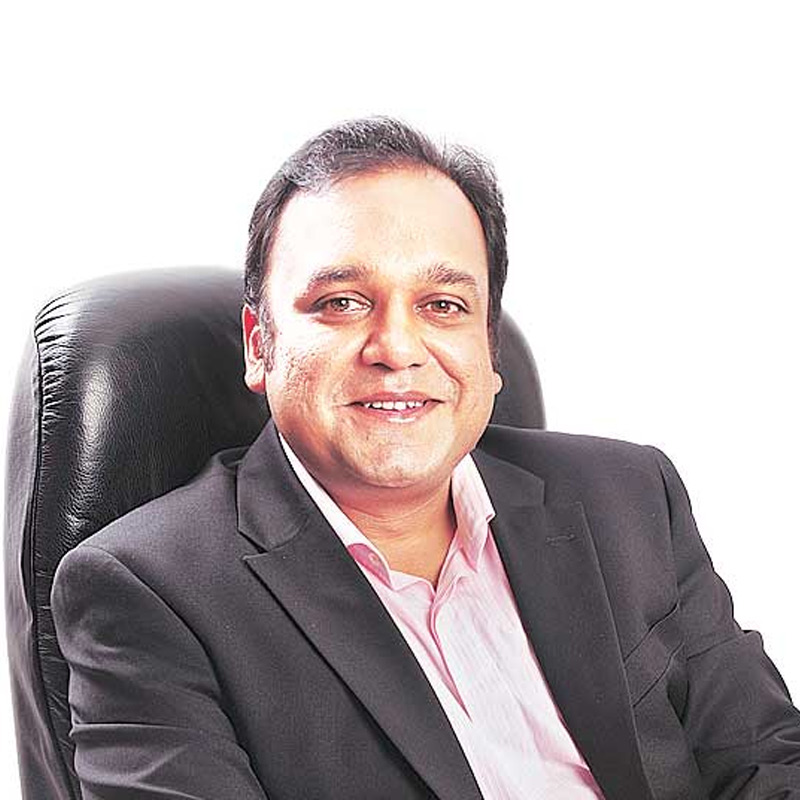
    MUMBAI: Entertainment in today’s times cannot be termed as evolution anymore, it is a ‘revolution’, Zee Entertainment Enterprises MD and CEO Punit Goenka said on Wednesday while delivering a keynote address at Ficci Frames 2012.

    According to Goenka, there are two main factors that are driving the revolution — young population with high disposable income; and a new generation that is ready to embrace new technology at the drop of a hat.

    Emphasising on the fact that new media would create unique revenue generation models for the entire value chain, he said that with the spread of adoption of content consumption, very soon new media will not be new media. It will be “The media”.

    Goenka said content consumption is going through a sea change. Broadcasters are increasingly looking to engage young audiences through new media offerings. “With dependence on ad revenues going down, newer avenues will open up for content players. Niche and sports channels, currently unprofitable ventures, will start becoming viable businesses. 3G, 4G and Wireless Broadband will evolve as new platforms for distribution of content. Also, smart devices will drive consumption of content on-the-go.

    Goenka also said that the ratings system in India is inadequate. It needs to be enhanced to give the right picture of TV viewing.

    He said that GenNext is redefining the TV broadcast industry and to move forward content creators, content delivery platforms and broadcasters have to work in sync to meet their expectations.

    “India’s young population is demonstrating huge appetite for digital content. Broadcasters and content providers need to ride on the tech wave to seize the opportunity. Technology is re-defining industries and consumer consumption. Broadcasters and content houses are working towards building anytime, anywhere access to content. Content producers are looking at partnerships with platform owners. Distribution players need to evolve into an intelligent pipe,” he added.

    Niche is the way forward in the television space. “It is imperative to have fair price for the content available. Content has to scale up to command fair share of consumer’s wallet. Premium pricing should be demanded for exclusive content and consumers are willing to pay for such content.”

    Talking about digitisation, Goenka said, “Consolidation and co-option will drive digitisation. Less than 20 per cent channels are profitable on standalone basis. With the implementation of DAS, as per the announced timelines, there would be accelerated conversion from analogue to digital subscribers. I believe that over the next 4-5 years, the television distribution business can evolve to a more transparent, organised and service oriented industry.”

    “Young Indian with an average age of 29 constitutes a majority of wealth accumulators. They will decide which way the entertainment content and delivery mechanism moves over the next few years. At least 2.2 million jobs will be created over the next two years, resulting in the changing lifestyle of India‘s younger generation. Over the next 10 years, GenNext should constitute the majority of ‘wealth accumulators’,” he added.

    As smart phones gain in popularity and acceptance, emerging youth markets such as China and India offer a bigger opportunity in terms of market size and potential. “India will leapfrog the United States and Europe’s combined markets to become the second largest youth smart phone market with 66 million owners,” he added.