Category: Ficci Frames

  • TV industry to touch Rs 975 billion in 2019: FICCI KPMG Report

    TV industry to touch Rs 975 billion in 2019: FICCI KPMG Report

    MUMBAI: There is some good news for Indian broadcasters, who even after digitisation of phase I and II cities, have not been able to reap its full benefits. According to the ‘FICCI KPMG Indian Media and Entertainment Industry Report 2015,’ the sector will see a higher subscription revenue growth, which will outstrip advertising revenue increases.


    The report, which was released on 25 March highlights that the subscription revenue will grow at an annualized 16 per cent; higher than ad revenue’s 14 per cent annualised growth. This will be on account of better monetisation, courtesy digitsation. According to the FICCI KPMG report, television industry in India, which is estimated at Rs 475 billion in 2014, will grow at a CAGR of 15.5 per cent to reach Rs 975 billion in 2019. 


    Highlights of the report: 


    Paid C&S penetration of TV households 


    The number of TV households in India increased to 168 million in 2014, implying a TV penetration of 61 per cent, even as the Cable and Satellite (C&S) subscribers increased by 10 million in 2014, to reach 149 million. Excluding DD Freedish, the number of paid C&S subscribers is estimated to be 139 million, implying a paid C&S penetration of 82 per cent. The paid C&S subscriber base is expected to grow to 175 million by 2019, representing 90 per cent of TV homes. 


    DTH ARPU Growth


    While subscriber addition for direct to home (DTH) operators was muted in 2014, they had a healthy revenue growth due to sustained increase in the average revenue per user (ARPU). DTH operators have seen an ARPU increase of around 12 to 15 per cent in 2014. While some of the ARPU increase was driven by DTH operators’s ability to continue to push price hikes, the more promising trend is that DTH operators are able to increase collections from customers by providing additional services such as HD channels, premium channels and other value added services (VAS).


    There are close to four million HD subscribers, accounting for 10 per cent of all DTH subscribers, while 15 to 20 per cent of incremental subscribers in 2014 were HD subscribers. 


    Broadcasting


    Television advertising revenue bounced back in 2014 led by the Indian general elections and the improved macro economic outlook due to a stable government at the centre. 


    The total TV advertising market is estimated to have grown at 14 per cent in 2014 to Rs 155 billion. Going forward, TV advertising in India is expected to grow at a CAGR of 19 per cent to reach Rs 299 billion by 2019. 


    In 2014, the subscription revenues for broadcasters grew at only 10 per cent to Rs 75 billion. This is expected to grow at a CAGR of 22 per cent from 2014 to 2019 to Rs 201 billion. 


    The increase in declared subscriber base and increase in revenue share of broadcasters of the subscription pie is expected to drive up the share of subscription to total broadcaster revenue from 33 per cent in 2014 to 40 per cent in 2019.


    Content Production


    The size of Indian TV content production industry is RS 30 billion, excluding news, animation and sports. Of this, Hindi language content contributes to two-third of the market, with regional languages contributing the rest. 


    Digital Media


    Digital ad spends accounted for 10.5 per cent of the total ad spends of Rs 414 billion in 2014. Digital media advertising in India grew around 45 per cent in 2014, and continues to grow faster than any other ad category.


    The number of internet users in India is closing on to 300 million, thus dethroning USA as the second largest internet enabled market, the largest being China. The year on year growth stands at 31 per cent. 


    The total number of wired internet connection stands at 20 million, whereas there are 210 million wireless internet connections in the country. Smartphone penetration is 10 per cent, which is lower than the average global penetration which stands at 25 per cent. Driven by reduction in tariffs of 2G, 3G and introduction of 4G, the number of wireless internet connections is estimated to reach 402 million by 2017 and 528 million by 2019. 


    It is estimated that 52 million new internet users will login to the digital world by mid-2015. India is expected to reach 640 million internet users by 2019. 


    Internet users to grow faster than TV viewers


    In 2014, the number of TV viewers in India was 825 million, as compared to the number of internet user at 281 million. The CAGR for TV viewership is estimated to be around three per cent from 2014 to 2019, whereas the number of internet users is expected to grow by 18 per cent during the same period.
     

  • India could have 1000 radio FM channels by 2016: JS Mathur

    India could have 1000 radio FM channels by 2016: JS Mathur

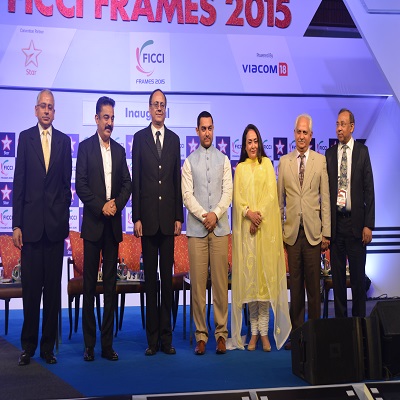
    MUMBAI: By the year 2016, India could have close to 1000 radio FM channels. Speaking at the FICCI Frames 2015 convention in Mumbai, Information and Broadcasting Ministry additional secretary JS Mathur said, “It is an exciting time for the radio industry. The FM radio expansion in the country, which has also got the nod of the government of India, will see the first batch of phase III e-auction very soon. This will be covering 69 cities and 135 channels.”


    Mathur added that while it is was exciting time for the industry, but with that also comes challenges. “The new government needs to meet these challenges and meet them in best possible manner,” he said.


    During his address, he agreed that there were issues of content diversification as also of newer business and revenue models. “For the new government under Prime Minister Narendra Modi, these are exciting times as there are things, which have started rolling out, while the others that have been proposed, needs to be rolled out,” he opined.


    He said that while the digitisation of phase I and II has been completed, the rollout of phase III and IV will digitise the entire country. “It is a major step forward. There is a lot at stake for all the stakeholders, which includes the broadcaster, the consumer and the platform providers. Everyone will have to ensure that the consumer gets the best product, while every stakeholder gets his due,” said Mathur.


    While congratulating the media for the great work, Mathur emphasized the role of the media as well. “Media can play an important role in spreading awareness about critical issues amongst consumers,” he opined.


    Mathur concluded by showing hope in the new government. “The Narendra Modi led government is prompt in ensuring that the M&E sector grows,” he concluded.

  • OTT, video apps can work progressively with cable & satellite platforms

    OTT, video apps can work progressively with cable & satellite platforms

    MUMBAI: The market for Over The Top (OTT) services has been rapidly growing in the United States. However, can the same model be adopted for the Indian market? That was the key question asked at a discussion at FICCI Frames 2015 on the topic – ‘Clash of the Walled Gardens: OTT and Video apps versus cable and satellite.’


    Joining the panel were Zenga TV founder and CEO Shabbir Momin, DGive director and CEO GD Singh, IndiaCast group COO Gaurav Gandhi, Videocon d2h CEO Anil Khera, Eros Digital COO Karan Bedi, Hungama.com CEO and Hungama Digital COO Siddhartha Roy and Hinduja Ventures whole time director Ashok Mansukhani. The session was moderated by Whats ON chief executive officer Atul Phadnis.


    Sharing some insights from the US market, Gracenote general manager – video Richard Cusick said that according to a study conducted by the company, nearly 50 per cent of the US broadband households used OTT video services. Young viewers were particularly driving the change as 18 to 24 year olds watched less than half as much traditional TV as 50 to 64 year olds. “Netflix for example has 57 million subscribers worldwide and is a top OTT service provider,” he said.


    Cusick said the study increasingly found that networks and studios were resorting to unbundling to single channels as well as live TV bundles. “In such a scenario, consumers benefit the most as great content is served to them,” he said.


    The question posed to panelists was whether the US implications were similar to that of India and if cable and DTH operators were changing the landscape? Gandhi felt that the implications were not similar to the Indian market because channel specific models like HBO were not available in India. “As a content broadcaster or distributor, the US markets are very clear that they will follow a proper pay model. Here it is still very disruptive,” he opined.


    Moving to the experience of launching an OTT in India, DGive’s Singh said that while they still struggled to generate the right revenues, they did in fact receive 25 million downloads. He said when his company approached someone from the US for guidance for the company’s growth charter in India, the executive told him, “If you’re buying content, you cannot give it for free to audiences.” That was a major learning from the US market.


    On the content front, Singh said that currently the company had 30 per cent of its content set under the pay wall, which was premium content. “We sell our service for $1 per month per subscriber. We have a million users paying us since we are screen, operator and consumer agnostic. We are looking at breaking even in the next seven to 10 months.”


    Sharing his experience, Momin said that Zenga TV had started in 2009 and he was happy with the response from users. “What was surprising in the initial stages was that we saw response patterns coming in from Tier II cities. We now have 20 to 22 million active users per month and have been profitable for the last three years,” he informed. The company also launched a show called India’s Digital Super Star on its platform, which sold sponsorship slots.


    Bedi opined that Eros Digital had 14 million active users, wherein the company followed a transactional as well free model that catered to Indian audiences as well as NRIs. “Some key points for our industry is that we will take a leap; a steroid growth will be seen. Two, revenue models like ad dependent, subscription based, free as well as paid will have to work in tandem,” he said.


    The true value of the customer in the coming years will move towards mobile screen consumption, informed Roy.


    Speaking from the perspective of a direct to home (DTH) operator, Khera was of the opinion that while OTT players may have a million plus subscribers, the content from OTT was for second screen consumption. Technology like 4K is only for television. On a lighter note, he added, “India gets entertained heads up and not heads down.”


    Mansukhani too had a similar opinion. According to him, being an old cable company didn’t mean being out of date. He said that they too provided pay channels on a pre-paid model. “Most Indian homes today use multiple screens. It doesn’t matter who wins. There is space for all as content is being consumed via tablets, mobiles as well as television.”


    Mansukhani went on to compliment Star India’s Hotstar app saying that it was a fantastic proposition.


    “As a businessman, I am interested in exploring various opportunities but I’m worried about providing free content as high content cost is not justified in providing the content without a price tag. I am against giving free content on OTT,” Khera opined. He also hinted at Videocon d2h entering the OTT space but refused to give any details.


    Speaking on the challenges of the OTT space, Roy said that for them to benefit from the digital advertising pie, the pie itself should grow in order for profits to trickle in.


    The notion that OTT platforms are for free should be broken. “OTT is about the bundle and there is no choice if one has to pay or not. Cable companies are our allies as they provide us pipes for distribution,” Bedi said.


    Having the last word, Mansukhani said that all stakeholders should come together and ask customers on the kind of content and pricing for platforms. The profits could then be shared, he suggested.


    In conclusion, the panelists agreed that the three key challenges were cash flow, content windowing and specific business models.

  • Relativity Media upbeat on Make In India; could shoot ‘Immortals’ in India

    Relativity Media upbeat on Make In India; could shoot ‘Immortals’ in India

    MUMBAI: Prime Minister’s Narendra Modi’s ‘Make In India’ dream has made a headway in the entertainment space. Relativity Media in association with B4U is looking at the possibility to shoot the sequel of the blockbuster movie Immortals in India. The entire movie will be shot across the country and will be distributed globally. The association will back the initiative by offering significant roles to Indian actors to attract Indian audience in theatres.


    The Relativity – B4U joint venture, which was inked last year, is also set to remake global hits like The Best of Me3 Days To Kill,Masterminds, and horror thriller Oculus in India for the Indian market, which also complements the ‘Make In India’ campaign and Make For India concept of RBI governor Raghuram Rajan. The Best of Me is already in the production stage and overseen by Balaji Telefilms, where as Zahak the Bollywood version of Oculus has been already shot featuring Huma Qureshi and Hawa Hawai star Saquib Saleem and is in the post production stage. 


    While delivering a keynote on FICCI Frames 2015 Relativity CEO Ryan Kavanaugh said, “We associated with B4U in order to understand the Indian market, which is one of the biggest in the world. We have 120 partnerships with B4U where they educate us about India and we use our distributing muscles to promote Indian movies. Content plays the biggest role in success, but the content has to be created after detailed research, which includes segmentation, targetting and positioning.”


    B4U CEO Ishan Saksena added, “The association with Relativity is huge as it breaks many barriers and opens up new possibilities for us. B4U with the help of the distribution muscle of Relativity took Queen to areas where Indian movies have never reached before and that’s the beauty of this partnership. We will, in future, ensure that Indian content is distributed abroad and Hollywood movies reach Indian theatre with ease. As a result of this association, soon we will see Indian actors working in Hollywood movies and American superstars featuring in Bollywood films.”


    The association will also launch a new online content platform B4U online. “The number of hits Hotstar got in recent time shows us how digital is going to be the next big thing in India and that brings us to our new venture. Unlike other American companies, I don’t want to change the culture. I want to suit myself in it and hence I think Relativity has a future,” concludes Kavanaugh.


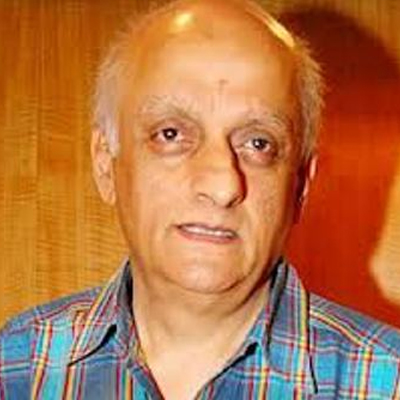
  • “The Rs 100 crore Bollywood film club is bullshit:” Mukesh Bhatt

    “The Rs 100 crore Bollywood film club is bullshit:” Mukesh Bhatt

    MUMBAI: The year 2014 will go down in history as one of the worst years for Indian cinema in recent times with poor box office collections. Movie economics were also adversely affected by dramatic reduction in demand for satellite rights by broadcasters.


    In an endeavour to produce bigger and larger movies, is the emphasis on quality declining? Are studios misreading audience tastes? Are movie budgets bloated beyond control? These questions were raised in a session of FICCI Frames 2015 moderated by Sikhya Entertainment founder Guneet Mongia with Viacom 18 Motion Pictures CEO Ajit Andhare, Eros International MD and group CEO Jyoti Deshpande, film distributer Anil Thadani, PVR Pictures president Kamal Gianchandani, Fox Star CEO Vijay Singh and Film and TV Producer Guild president Mukesh Bhatt.


    With a mere growth of 0.9 per cent, the film industry has reached its abysmal low. The panelists citied the major reason behind that as filmmakers getting carried away by big names and not sticking to the budget drawn.


    Deshpande opened up the discussion by aggressively protesting over budgeting. “We should immediately stop chasing big names and stick to quality content in order to make the industry prosper. Before green lighting content, we need to tackle a number of issues and better research can help the industry grow. Simultaneously, we also need to ensure that the number of screens increases as more screens mean more money.”


    Speaking on the shrinking number of screens, Gianchandani said, “While we are growing in some parts of the country, the fact is that there is stagnancy in some areas. The growth of multiplex depends on numerous factors, government and content being the two vital ones. We need to ensure that we have content that rejuvenates consumers and they reach the theatres.”


    It should be noted that in China a new screen starts in every three days and the industry is growing bigger and faster, whereas India is witnessing the exact opposite. Addressing the issue, veteran producer Mukesh Bhatt asserted, “In this business, if you don’t have the temperament to take a risk then you are on the wrong ship and you will certainly drown. Playing safe is not possible in the film industry and the perception that only the Khans can earn you money is ruining the industry. The Khans are good but they are 50 now and people won’t accept them singing romantic songs anymore. We have to discover new stars and new directors. All studios need to back raw and new talent. Moreover, multiplexes should have different pricing for movies that star newcomers. My father advised me that all my spending should reflect in the frame. However, nowadays our spends hardly reflects in the frame but satisfies the ego and arrogance of big names. The media given Rs 100 crore club is absolute bullshit and make no sense. I thank Viacom for green-lighting films like Mary Kom and Bhag Milkha Bhag and hope they keep it up.”


    Viacom CEO Ajit Andhare added, “I don’t recall when the film industry made profit or grew larger. The biggest challenge is to make people believe that spending more is not the key to success and one has to pay more attention to content and not green-light a movie going by the actor or director’s name.”


    Great content like Aankhon Dekhi, Dr Prakash Baba Amte and Chatuskone find it difficult to stay in theatres where glamour and big names keep knocking. Similarly, the scenario where a common man finds it difficult to afford a ticket needs to change in order to ensure growth of the film industry.

  • Tata Sky awaits MIB approval for Rs 250 crore investment

    Tata Sky awaits MIB approval for Rs 250 crore investment

    MUMBAI: Direct to home (DTH) operator Tata Sky has been applying a wait and watch policy not only for transponder space, but also for an approval from the Information and Broadcasting Ministry (I&B), for an additional Rs 250 crore investment.


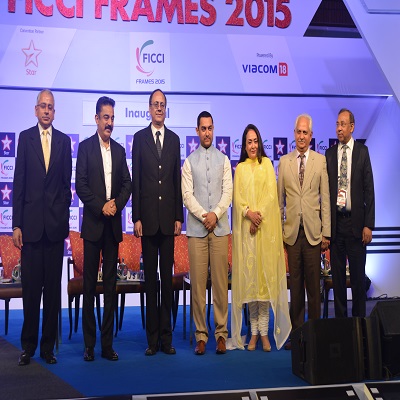
    “The money for the project has already come. But, if the approval doesn’t come in the next 48 hours, I will have to return that money to the foreign investors,” said Tata Sky MD & CEO Harit Nagpal, while addressing the inaugural session at FICCI FRAMES 2015.


    Responding to this, I&B Ministry additional secretary JS Mathur said, “Well, we had granted the approval a month back, and then Tata Sky realized that for the route it wanted to take with the investment, it had to reapply and this is the reason it is taking time.”


    Taking cue from Prime Minister Narendra Modi’s ‘Digital India’ campaign, Nagpal said, “The enabler of connectivity is broadband.”


    As per Nagpal, with low Average Revenue Per User (ARPU), putting fresh wires in the country would not give any return on investment. “Otherwise, there are enough hungry entrepreneurs, who would have used the opportunity. And if they haven’t, means that conditions are not viable in the country,” opined Nagpal.


    The country, though has hundreds miles of wires all over, which can carry broadband, and all it’s waiting for is an enabling and uniform environment, to use this infrastructure and deliver broadband to the consumer. “The rest as has happened in telecom, will happen,” he added.


    According to Nagpal, the industry lacks new thinking. “If anybody finds a successful format, 20 others follow and copy. I have seen general entertainment channels (GECs) being launched as pay TV, churning out the same content, and then either vanishing or becoming free to air (FTA). They lose viewership and distribution and then they are forced to carry 20-22 minutes of advertisement, which the regulator starts questioning and they are then seen sitting in courts,” he said.


    The problem, as per Nagpal, is not the producers, but the economics of the business, the restrictions and the permissions needed to do business. “All this restricts the producer from taking risks and choosing a safe and successful path,” he said.


    Nagpal, further went on to say, “I don’t think there is room for more Stars, Zees and Sonys. Also there is one Arnab and one Barkha, you can’t have too many of them. It is the niche, which will take us forward, and they are low investment and high return product.”


    Flair of creativity and new ideas is the key ingredient in the media and entertainment sector. “The deeper I travel, the more gems I see, but the production centres in the country are all located in the big cities. There is need to take production centres in smaller towns, where the talent is and create more self employed professionals in those areas,” he added.


    According to Nagpal, while the rules for setting up, funding and running the business are in place, one still needs to follow rules and ask for permission at every step. “Things have improved in the past few months and the government is keen to clear files, faster than ever before,” he said.


    The only way the industry can grow, as per Nagpal, is by allowing the businesses to inform and not seek approvals and also by self regulation. “In case we violate the law, issue penalties, cancel the licence,” he announced.


    Touching upon the movie business, Nagpal said that while we make the highest number of films, the industry is still not making money. “We have reached a choking point in terms of adding screens and it is marred by either high cost of real estate or the long list of approvals,” he said.


    According to Nagpal, the increasing number of digitized homes will help more producers to monetize their production. “This has already started, a lot of films are breaking even only on the basis of selling their rights to cable and satellite,” he said.


    The country has seen digitisation of 42 cities. Touching upon the condition in the digitized cities, Nagpal said, “The local cable operators are running the digitised area and the multi system operators (MSOs) are watching. Customers are not getting packages they want and neither are they getting value added services. The customers are willing to pay, unlike what is being projected by LCOs.”


    Digitisation is equal to automation. “The new role of the LCO is to be of a service provider to the MSO and not a partner. I think this needs to be thought about,” concluded Nagpal. 

  • FICCI FRAMES: Prasar Bharati CEO Jawhar Sircar to speak on pubcaster & revenue

    FICCI FRAMES: Prasar Bharati CEO Jawhar Sircar to speak on pubcaster & revenue

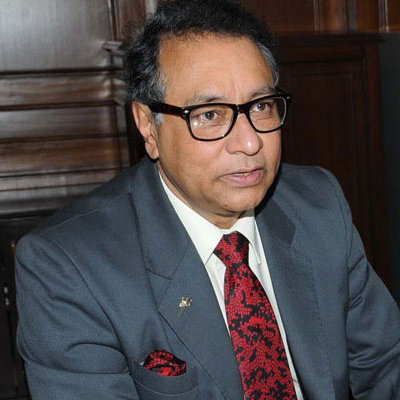
    NEW DELHI: Prasar Bharati chief executive officer Jawhar Sircar will be addressing the annual FICCI FRAMES convention commencing in Mumbai on how a public broadcaster can still earn revenue.


    Sircar’s talk is on “India 2015: Role of the Public Service Broadcaster and Lessons from the World.”


    The three day convention from 25 – 27 March will extensively cover discussions on various issues related to the media sector centred around the theme – how to make India a Global Entertainment Superpower.


    Sircar said, “There is no nation in the world that does not have a decent public broadcaster and some of them like BBC or NHK Japan or the Korean Broadcasting System are legends, mainly because their nations, people and their governments wanted them to be so and help them succeed. India cannot be an exception as it is the only public broadcaster, which operates from the icy peaks of Kargil to our lonely borders in Arunachal, right down to Andaman and every possible corner of India: without ever looking at short-term commercial gains.”


    This panel discussion is scheduled on the second day of the entertainment and media conclave and will be moderated by business journalist Pranjal Sharma featuring BBC Global News CEO Jim Egan and Russia’s largest media corporation and public broadcaster – VGTRK deputy CEO Ayuna Badmaeva.


    The other key participant is Asia Pacific Broadcasting Union (ABU) secretary general Javad Mottaghi, who is a special invitee at FICCI FRAMES 2015.


    FICCI secretary general Dr A Didar Singh said, “The discussion would provide greater clarity on how to maximise the efforts of public service broadcasting, and also how institutions like Prasar Bharati can balance their programming mandate with effective revenue generation, and remain relevant in the digital era.”


    The session will explore the relevance, importance and space for Public Service Broadcasting in today’s ‘always connected’ world which offers a multitude of choices by way of content, delivery platforms and engagement channels.


  • Media’s love-hate relation with politicians won’t change

    Media’s love-hate relation with politicians won’t change

    MUMBAI: Earlier in the day the comment about the “media being sold” by Aam Aadmi Party chief Arvind Kejriwal hit the headlines. And it was just apt for NDTV editor Vishnu Som to kick off the session – Media as Opinion-Maker – which he was anchoring at the recently concluded FICCI Frames 2014 by posing the first question to the AAP representative Shazia Ilmi, who was in the panel along with Minister of state, IT and communications and shipping, government of India Milind Deora, BJP Maharashtra state unit president Devendra Phadnavis, Reliance entertainment chairman and FICCI convergence committee chairman Amit Khanna and All India Trinamool Congress representative and member of parliament Derek O’Brien.


    So, Ilmi was asked if it was right on Kejriwal’s part to shun the media as it was the media who made AAP. While she agreed that the media had been friendly to AAP, she also pointed out that it was left with no choice than to cover AAP as many others were doing it and the interest also lied there.


    Deora, however, presented quite a friendly take about media as he remarked, “When someone chooses to be a politician you are placing yourself under scrutiny. It is extremely immature to talk about media being fair or unfair.”


    As the discussion continued, many topics from the importance of “social media” in the general elections to the issue of BJP Prime Ministerial candidate avoiding an “one-on-one” talk with media came up.


    In fact Modi took a fair share of the time during the discussion. From his style of promoting himself to his recently devised campaign “Chai Pe Charcha” formed a major part of the conversation.


    “Modi believes in one way communication,” was the remark made by O’Brien to which Phadnavis retaliated by stating that Modi may not be talking to media but he is talking to the people through ‘Chai pe Charcha’.


    O’Brien didn’t miss an opportunity to take a potshot at the Congress also when he wittily remarked to Deora that it was the Congress’ Mani Shankar Aiyer, who gave Modi the lollypop by calling him a ‘chaiwala’.


    Even Ilmi thinks that Modi must come out and answer crucial questions as to what are his views on important policy decisions that need to be taken rather than just show his ‘model of Gujarat’.


    The discussion turned towards censorship when Khanna said that our country lacked a concrete form of a regulator such as the Federal Communications Commission (FCC) in the US. “We have the Telecom Regulatory Authority of India (TRAI) which does not actually have the mandate to regulate broadcast or content,” he said.


    We are standing at the brink of a media convergence occurring right in front of eyes but O’Brien says that it won’t be just social media that will be impactful in the future. “The mobile will be an important tool in the hands of every person in this country,” he said while also highlighting the fact that the real action was happening in regional media.


    Media in the country is no longer a form of public service. It is a combination of that and a business, which Som admitted himself. “If one is looking to the media as the sole repository of honest investigation of truth then unfortunately it does not exist currently,” he said.


    The one point that all politicians agreed was that they needed the media as much as media needed them and both the media as well as politicians were seeking to increase the level of engagement.

  • BARC could consider different ratings frequencies for different genres

    BARC could consider different ratings frequencies for different genres

    MUMBAI: The long tail gets an unfair deal – be it in television viewership ratings, print media readership surveys or radio audience research.  The long tail, in marketing, refers to the large number of products and services that are not consumed by the masses, like niche television channels and specialised publications.


    The small number of television channels or print publications that are consumed on a large scale always get more than their fair share in the audience or readership measurement systems.


    This was the general consensus at a panel discussion on “Measurement Miasma, TVTs, Readerships, Clicks and Such: The Great Love/Hate Epic” on the concluding day of the FICCI Frames 2014 on Friday.


    Not all measurement currencies can have the same frequencies, said Provocateur Advisory Principal Paritosh Joshi, who anchored the discussion. The results of measurement currencies are just data points.


    The need for different frequencies for measurement currencies was felt as different products have different consumption patterns.


    This prompted Entertainment Network India’s  Executive Director & CEO Prashant Panday suggest that the Broadcast Audience Research Council (BARC) consider different frequencies for different genres of television channels.


    Broadcast Audience Research Council CEO Partho Dasgupta responded by saying that BARC may look at having different frequencies for different genres.


    So, when BARC launches its television ratings service towards the end of 2014, we could see only the ratings for larger genres like the general entertainment channels (GECs) being released on a weekly basis and for the niche television channels less frequently.


    “We are trying to go beyond” (what the TAM Media Research provides). We will have different kinds of products and different slices,” elaborated Dasgupta.


    HDFC Life Sr Executive VP Sanjay Tripathy said there was a problem with TAM ratings because the sample size was not appropriate.


    He said research may not always give the right results and the advertisers need to tell the broadcasters that the measurement data is just a reference point.


    Pandey told the audience that they had two researches on radio audience in Delhi and the audience size put out by the two researches was hugely divergent. One research said the audience in Delhi is forty lakh and the other said it is over one crore.


    He said in television, 95 per cent of the channels are small and not captured correctly and that advertisers should be demanding better currencies.


    Google India  Director, Agency Business, Punitha Arumugam said there is a need for external validation of the result of any measurement currency.


    The discussion veered around the futility of validating the process of a measurement currency and that the validation should be of the result of the measurement currency. The result of a measurement currency should be explainable with external data.


    One of the panelists said when BARC issues its first ratings, and Star Plus, the undisputed number one channel under the current ratings currency, does not turn out to be the number one, there could be criticism of the ratings results. Star which is a member of BARC may decide  to disagree.


    HDFC Life’s Tripathy said advertisers need some data to justicy. “We spend so much.”


    In early days of television there was just Doordarshan and then came Zee. It was easy to choose the channel to advertise on. Today there are more than 200 channels.


    Tripathy said, “Media habits have now fragmented. We will have to chop… We will try to reach the target audience in the cheapest way.”


    There is also the issue of who will invest in a measurement system that will give the best measurement results. Partho said the cost of a television currency is mainly split between the broadcasters and advertisers.


    The need for a measurement currency is felt by everyone in the entire value chain across television, print and radio. Everyone in the value chains need to share the costs of robust measurement systems.

  • Should creative content be barred from widespread dissemination?

    Should creative content be barred from widespread dissemination?

    MUMBAI: Companies and people logger heading over Intellectual Property (IP) is nothing new in India. Over decade, we have seen people taking each other to court for “stealing” their ideas and this has raise the question: should the intellectual property or creative content be barred from widespread dissemination to protect the hard work of producers, or should it be freely spread around the world in a global economic era that often doesn’t have boundaries?


    To find a solution to these and similar questions, a panel anchored by NDTV editor and senior anchor Vishnu Som highlighted issues around intellectual property and the dynamics of its ownership in an industry that is rapidly becoming characterised by multiple content distributors over multiple delivery platforms discussion on “Intellectual Property, Piracy and the Creative Industries” on the third and final day of the FICCI FRAMES convention being held in Mumbai.


    Present on the panel was Government of India registrar of copyrights Dr G Raghavender. He spoke about the Copyright Amendment Act, 2012. The amendments were designed to extend copyright protection to the digital environment in harmony with the World Intellectual Property Organisation (WIPO) Copyright Treaty and the WIPO Phonograms Treaty, 1996. The bill introduced exclusive economic rights for performance, and, for the first time, moral rights for performers.


    But Star India president and general counsel Deepak Jacob differed in his view about the bill. He said that it had a fundamental problem: Of the five key stakeholders that come under copyright, viz. the print , film, television, radio and animation and gaming sectors, not a single one was consulted when these amendments were proposed. They were proposed at the behest of certain vested interests, primarily authors of literary and musical works, and certain performers. The amendments have actually created an impasse in the film and television industry, where authors have become trade unions holding film and television producers and content creators to ransom by demanding exorbitant royalties.


    Saikrishna & Associates partner Ameet Datta, felt that the statutory requirement that when government evolves policy, it will focus on multiple stakeholders, is a positive development. Yet, there was bound to be friction between the expanding numbers of stakeholders and levels of dissemination; he suggested that involuntary licensing could provide industry with seamless access to works.  He also flagged up the issue about the biggest brands being advertised on pirate websites.


    “The dumber you act, the less responsibility you will have,” is what the law is suggesting, said Copyright Integrity International Nandan Kamath. The laws need to take responsibility for content on networks. He felt that the issue of digital piracy is not just legal but has ripple effects into the monetisation of content. Piracy itself is not well defined, and has lots of grey areas.


    World Economic Forum Entertainment and Information Industries media director Annie Luo, discussed about her work on intellectual property in the digital context, that identified cultural differences as an element affecting how people related to the digital media.


    FIAPF director general Beniot Ginisty felt that it was important for producers to enjoy full contractual freedom to produce films and robust operate in a high risk financial environment.


    Questions from the audience revolved around who in a team would be the “owner” of a script, how young people could be educated about piracy, and when permissions were needed to use content.