Category: Content Hub

  • In the online medium, the audience is the king, say digital stars

    In the online medium, the audience is the king, say digital stars

    MUMBAI: Over the past few years, the media landscape has taken a dramatic shift. It is a whole new virtual world and the rise of ‘YouTube generation’ has enabled talents to gain large followings online. From music to comedy, there are compelling opportunities for people to show their skills on the world wide web. The future of story-telling is evolving and the online sphere has proven to be a great platform for talents to find their own voices. So, what is it about crafting content online that attracts numerous talents?

    “It is an opportunity for us to work with the creative freedom and aesthetics that mainstream media doesn’t allow,” say the talents of the popular YouTube channel, Enna Da Rascals.

    Explaining their reasons to take on the virtual world, the group elaborates, “We started off as a theatre company and all of us work in films. It felt like a logical extension to move towards online content.” The channel, which has over 27,000 subscribers and 1,000,000 views on YouTube, includes names such as Pooja Devariya, Venkatesh Harinathan, Rajiv Rajaram and Yohan Chacko.


    The creators of another popular channel, SnG Comedy, boasting over 80,000 YouTube subscribers and 5,000,000 views tell us a comparable story. “With the kind of comedy we do, there were only two ways to get ourselves out there – stage and YouTube. The stage, while truly gratifying, does not have the reach and the ability that YouTube has.”


    More and more people are relying on their smartphones and tablets to watch content online. Whether it is a tip on how to look good or how to cook a dish, chances are that we would go online for instant solutions.  “People like to be spoon fed. They are lazy to answer their own questions,” says make-up artist and hair stylist Elton Fernandez, who has over 8000 subscribers and 300,000 views on his YouTube channel.  According to Fernandez, the audience today wants specific content and answers to their precise requests.  

    This can be deemed true for the current generation which particularly has a short attention span and is constantly looking for diverse entertainment. According to Enna Da Rascals, people are inherently opinionated and content which polarize people and make them think about their perspectives do well.  

    SnG Comedy, comprising Karan Talwar of BollywoodGandu, Varun Thakur, Aadar Malik, Brij Bhakta, Neville Shah and Kautuk Srivastava, believes that the audience today wants real and original content.  “There are no fixed formulas. It all depends on your originality and how the audience can relate with your content,” they say.

    So, how do these talents create good content online?

    “With us, there is no strategy really. We do stuff that we like. We prefer to get our humour and ourselves out there,” answers SnG comedy.

    Make-up artiste and hair stylist Mrinalinee Mukherjee who has recently started a YouTube channel, feels that it is vital to be true to one’s art and share the expertise of a subject to the best of their ability. She says, “Making good videos, teaching new things and reaching out to them are some ways to keep the audience interested.”

    Fernandez tries to keep his content simple and does things that are actually achievable in real life. “The viewers should not feel that what I am doing is rocket science. It should not be intimidating for them to try,” he adds.

    However, according to Enna Da Rascals, there is a downside to having creative freedom online. The content created is up and there for everyone to judge. “With a film or a play, you can market or sell it to a specific audience. Here, the content is for everyone to see. Finally, you realize in this medium, the audience is king. You can’t rig the press, the counts or juries. What you see is what you are,” they say.

    Budget is also a common concern for all these talented online celebrities. There is a cost attached to making videos with no fixed returns. So, do they then compromise on the quality of their content?
    Enna Da Rascals feels that this is where engagement with brands come in handy. “Sometimes brands can help you create videos with a much larger design.  If we’re feeling ambitious and the content is something the audiences may enjoy, we’ll need the support of a brand to make it happen.”

    With the advent of multi-channel networks, talents are also being able to find support financially. SnG comedy which comes under Culture Machine Digital Video Entertainment Company says, “Culture Machine has been pivotal. They’re really the money. They are the ones who selflessly invested actual capital to help us grow as a channel. They believed in our style and brand of comedy. They’ve pulled all stops to help and assist us.”

    Adding to that, Enna Da Rascals states, “It’s nice to know that someone has your back looking at the monetary side of things. Also, they provide insights on which videos have the potential to do well.”

     
    Despite of all these, the perks of being a digital star are endless. A digital footprint contributes in getting live gigs and recognition. For SnG Comedy, it has helped them in the sales of their stage shows. Having a channel online has added to their brand equity when they are pitching for a live act.  “People know us,” they say.

    For Fernandez, he feels it is nice to be recognised by a specific target audience and creating content online is a long term business for him.


    Such is the case with Enna Da Rascals who believes that they have been successful in attracting the attention of various brands. According to them, the online world is definitely preferred amongst the young tech savvy consumers. “Don’t be surprised if you find yourself choosing the online industry over the main industry,” they conclude.

     

  • “The biggest idea can come from somebody you are not looking at”: Ajit Thakur

    “The biggest idea can come from somebody you are not looking at”: Ajit Thakur

    MUMBAI: It is the only channel, which has never shied away from experimenting; from mythology to drama, from thriller to comedy, it has done it all. The soon-to-be three-year-old channel from the Star Network’s stable, Life OK, has always been riding high on success.

    For ‘The Content Hub’, indiantelevision.com spoke to the channel’s EVP and GM Ajit Thakur to understand his views on how Indian content has shifted its paradigm and challenges that he faces while spotting new talents.

    According to Thakur, more than the concepts the channel is always looking out for fresher talent. “We are looking at people from Bollywood and advertising to come to us with different concepts. Also, we want to explore more genres. Currently, with Pukaar we are not only exploring action genre but also have got on board film director Vipul A Shah. In the future, we would love to do a lot more of comedy, thrillers, spy stories and a mythology.”

    He believes that with both television and Bollywood growing at a tremendous speed, the demand for the same writers has increased over the years, making the task different. “We can all either wait for those people to come on board or can develop our own talent. Therefore, we have hired a lot of new writers.”

    For shows like Mahadev and Savdhaan India, the channel has in-house writers. According to him talent spotting and retaining that talent is a big challenge as well. “One might be available today but he/she will get busy after six months. Plus, one cannot depend on established talent. So, we have to develop our own talent,” says Thakur.

    He goes on to say that though Indian content has the ability to travel abroad; it will take some time because currently, the industry is not investing enough on production to scale it up. “Production quality will take another five to seven years to enter international market. But the interesting concepts will take lesser amount of time,” he says while adding that our shows are currently travelling to the Middle East and South Asia because of Indian diaspora, but for a show to have the scale for it to be sub-titled and aired in America, it will take time.

    Is Indian content shifting its paradigm? According to Thakur, it is but slower than one would like it to. “Our viewers are evolving fast but at the end of it our cultural context is important too. As a country we are very different, so it’s not that our viewers are not evolving but they are evolving within the paradigm of Indian society where families are important and cultural values are important.”

    He adds, “I think we have to take pride in the kind of stories we tell, but we need to produce them at the scale, which the international markets can look up to.”

    Thakur has two best practices when it comes to sparking off changes in the thought and creation process of content. One, it is very important to have the right insights on which one wants to work on. “One should know who your target is whether you are a TV channel, filmmaker or a digital platform. I think very often we are making a mistake of not looking at who we want to target at, carefully. Who is your core TG? Is it urban India or rural India? Is it men or women? Is it young families or joint families? It is an important factor which many a times we overlook.”

    Second, once you are clear about the TG then instead of trying to do many things, one must focus on one thing they are good at. “If you are developing one genre, develop a number of dramas, be the best at it rather than trying to do everything. And once you know that this is the target group and this is the kind of audience you want to target, then go ahead and find multiple story tellers. Never think that the current best lot is the one that will take it to the next level. Probably the biggest idea will come from somebody you are not looking at,” concludes Thakur.


  • “Seasonal shows can break the monotony”: Sumeet H Mittal

    “Seasonal shows can break the monotony”: Sumeet H Mittal

    MUMBAI: The television industry has grown by leaps and bounds, believes the co-founder and director of Shashi-Sumeet Mittal Productions, Sumeet H Mittal.

    As part of Content Hub, indiantelevision.com spoke to Mittal who, along with his wife Shashi Mittal, has produced many successful shows like Sajan Ghar Jaana Hai, Diya Aur Baati Hum and Punar Vivah amongst others, to find out his perspectives on the changed television content.

     “Up and until five years ago, our industry was at a nascent stage when compared to the television industry of other countries. However, things have changed. A lot of that has to do with the global exposure we receive in India today, which drives evolution of mindsets and hence, the demand for progress in concepts and ideas as well,” he says.

    Mittal highlights that today, the audience no longer accepts a basic plot as they want to be stimulated with depth and complexity. He feels that a script writer needs to be able to create that while keeping the interest of the audience.

    According to him, the content shown on television also needs to be in line with the viewer preferences and demands. “There is a need today for differentiated content and everyone is working towards providing just that. Our shows like Diya Aur Bati Hum and Punar Vivah are strong examples of shows that are different from the usual,” he says.

    Mittal feels that seasonal shows can break the monotony.  He adds, “We did two seasons of our cult hit – Punar Vivah, and both were received very well by the audiences. I strongly believe a story should only be told till it holds merit and not be stretched just for the sake of it. That is cheating your audiences.” He also stresses that unless a broadcaster and producer work hand-in-hand, a show will not be successful.

    When asked if Indian content has the potential of going international, Mittal says, “Some of the more popular television serials are already being sub-titled in different languages such as French, German and even English and are being broadcast around the world.”

    He states that today there are a lot more schools and institutions teaching the budding writers to develop the skill to create great original scripts. “Hear them out with an open mind. You never know who has a super idea with a potential to be turned into a great script,” he signs off.

  • “The line between social and digital video are blurring very fast”: Saket Saurabh

    “The line between social and digital video are blurring very fast”: Saket Saurabh

    MUMBAI: From the most imaginative chefs to awe-inspiring musicians, from comics who find humour in almost everything to discerning fashionistas who are on the top of trends, from celebrities to the kid next door, there is one talent based digital entertainment network which is home to everyone.


    Here we are talking about #fame, a part of ‘TO THE NEW Ventures’, an end-to-end digital services network specialising in ‘SMACK’ services – social, mobile analytics, content and knowledge.


    The essence of the business is to work with emerging and established talents and create digital content and communities with them. Creating exclusively digital content with emerging established talents, #fame focuses on a few strategic genres which include food, fashion, music and comedy.


    As part of indiantelevision.com’s ‘Content Hub’ series, we will also feature content creators in the digital space.


    According to #fame CEO Saket Saurabh, video is the new text and talent is the most powerful currency in the digital age. “We are in two businesses, one in the talent business and number two in the content business. With talent, our value addition is that we help the talent create, curate, promote, distribute and monetise content. We deliver audiences world class digital entertainment which is not available elsewhere in any other platform where they can engage.”


    How does #fame pick up talent? From talent management programs to partnership and crowd-sourced platforms, #fame has done it all. The digital entertainment network has multiple strategies of picking up talent. It has its own talent management program and process through which it discovers across digital platforms with the help of its team and analytics to identify the talent which it believes has the potential to grow.


    Secondly, it also works with a number of platforms. It works with one of the crowd sourcing platform called Blogmint, a blogger market place which has close to 4,000 bloggers registered on it across areas like food, fashion, technology space and etc.


    In terms of the content creation process, the company is a mix of in-house and production houses network. “It is no different. It is very much like how a television network functions. We create some of the content in-house and rest we work with production houses. At the end it depends on the genre, format and category,” reasons Saurabh.


    While today characters on television become famous and house-hold names, does digital have that power to create powerful characters? “Absolutely,” comes a quick reply from Saurabh. He believes that digital is a very intimate medium and the way audiences can connect and engage with talent on digital; it can never be matched by any other medium. Citing few examples, recently the network launched a new channel in the food space with Maria Goretti who is a well-established VJ and Comedy Kid of #fame with Saloni who won a comedy reality show – Chhote Miyan. “So these are already established people in their own space and they see great power in digital,” he says.


    The company has worked with a number of emerging talents as well. There is a great comedian – Sikandar Sidhu who has a huge following already in a span of just two-three weeks. “People can now comment, like, dislike and that is what the talent wants: instant feedback and that kind of engagement.”


    One of the visions that Saurabh had when he launched #fame was that he wanted to reach out to 50,000 content creators in the subsequent three years and have over 5,000 channels in six countries. “In digital, the medium allows content creators and networks like ours to reach out to important niches within alternatives and cater to specific interests. We want to be Asia’s premier talent led digital entertainment network. We are working towards achieving that,” he says.


    Youth being a fickle audience and with a short attention span, what is #fame’s strategy to keep them engaged? Saurabh believes that the video durations have to be economical because digital consumption most of the times is happening on mobile and people are consuming content no matter where they are. “And in that kind of consumption context, it is important that you provide content to a consumer which is easy to sample and enjoy it. That is why duration cannot be long.”


    On an average the duration of the video clip ranges from 3 – 5 minutes depending on what kind of content it delivers. He says that the beauty of digital is that it allows audiences to sample byte sized content.


    However, Saurabh feels there are challenges in everything. But more than a challenge, he calls it a good problem. According to him the good problem is that digital video will be the biggest rival of digital in general going forward. “I often say that video is the new text. Any kind of digital content will increasingly use video as its language. The fact that digital video will be the driver and one of the fastest growing segments within digital it is fairly clear.”


    He is confident that growth is definitely going to be there in terms of usage, brands realising the power of digital video, users and communities. “I think the good problem is that while there is complete consensus on the fact that this is the biggest growth opportunity media has seen in the last two years, not all partners or stakeholders agree to the speed of that growth. Sometimes, this makes things slower than it should because people have different views on how fast it will grow. However, no one doubts the fact that it is going to grow. I think that poses some challenge for us and for the entire industry.”


    Today digital represents 10-12 per cent of advertising. The fact is that digital will be the driver medium. People are coming up with the digital first plan where digital meets the idea or brands vision and television or print ads surround it. “Those things have started to happen. There are brands, partners and talents who have understood that but obviously different people move at different speed.”


    Today, digital is too large and diversified to talk about at one go. He feels that we need to talk about social and digital video differently. According to him, digital is not one medium anymore and one needs to talk about it in a focused and calm manner.


    He feels that social is increasingly becoming the video leg and the lines between social and digital are blurring very fast and that’s where the biggest opportunity lies. As per statistics, digital video content has been the fastest growing segment in digital in the last four years. It grew at 56 per cent CAGR whereas social grew at 45 per cent.


    How does #fame work with brands? The company works with them on what they call – Impact properties. Recently the company announced the property of School of Style with Karan Johar for fashion vertical. For its music vertical, the company partnered with Pritam for Web Singer. “Lot of Impact properties that we call as tent poles attract a lot of attention from brands.” The company is also involved in branded content where it helps to create digital video content. It also works with brands for channel management where #fame manages its digital video assets. According to a media analyst, the company’s substantial portion of revenue comes from brands.


    Moreover, the digital entertainment network makes inventory revenues on digital video platforms and generates revenue through syndication partners who work with revenue shares with the company. “We also monetise content in terms of what we do with the talent. If there is a talent whom the brand wants to reach out to or an opportunity arises, we create monetisation through that,” concludes Saurabh.

  • “This is the best time for Indian television”: Rajan Shahi

    “This is the best time for Indian television”: Rajan Shahi

    MUMBAI: Rajan Shahi made his directorial debut 15 years ago with the series, Dil Hai Ki Manta Nahi. What followed after that was a succession of hit shows including Jassi Jaisi Koi Nahi, Hamare Tumhare, Rishtey, Kareena Kareena, Reth, Mamtaa, Millee, Virasaat and Saathi Re. Shahi started his own production company in 2007. His first series as producer was Sapna Babul Ka Bidaai on Star Plus, followed by Yeh Rishta Kya Kehlata Hai which is presently running on television.


    As part of our Content Hub series, we spoke to the acclaimed director and producer on the existing content on Indian television today. Shahi tells us, “I think we are experiencing the best time for television today. There are so many different genres of programs that we see on TV. Every channel has a variety of comedy, romantic, horror, finite and reality series”.


    Shahi feels that there are good story tellers in the industry but the television rating numbers (earlier TV rating points) are also important. According to him, the typical Saas-Bahu dramas do very well as far as the ratings go. He points out that there have been several people who have tried to experiment with fresh content but have not achieved their desired ratings.  “So, what is the point of try something new if I know I will not achieve the same level of viewership?” he asserts.


    Speaking about the reach of Indian television content, Shahi elaborates, “We have a certain medium of our own. Our shows are hit abroad. People watch these typical shows as they like seeing Indian culture, traditions and customs.”


    When we asked whether broadcasters understand the creative freedom of directors and producers, Shahi explains, “I am seeing a very healthy trend these days. Every broadcaster is trying to get new technology and new story-telling methods. This is optimistic. Channels are willing to experiment and support new makers. They are trying to get the best of sets and costumes. Channels place a lot of time and emphasis on developing content.”


    Ending the conversation on a positive note, Shahi says, “The seasonal format is a really good idea if one wants to keep a brand name alive. There is a big scope for finite series and this is just the beginning.”


    Content Hub is a three day conference organised by Indiantelevision.com and is aimed at established professionals, newbies and anyone who is keen on taking the plunge into the fascinating world of writing, producing and creating for television and the digital space.

  • Good writers are hard to find, says the television industry

    Good writers are hard to find, says the television industry

    MUMBAI: The heartbeat of any television programme lies in its story and content. Developing good content through various ideas and imagination is a significant priority for television channels and producers. Story-telling, as they say, is an art and the small screen is constantly looking for compelling scripts that tell stories which entertain, engage and enrich the audience. Over the past few years, the Indian television industry has been exploring new formats and series of programmes in order to give the viewers an excellent TV viewing experience.

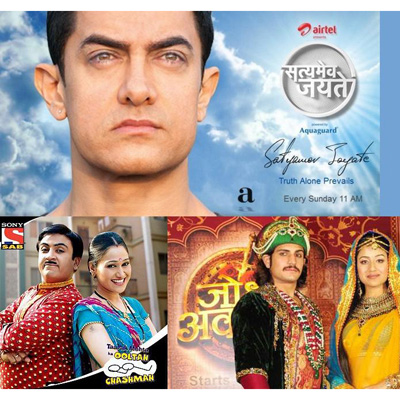
    Television director and creator of the unique chat show Satyamev Jayate, Satyajit Bhatkal says, “To be honest, we did not have any preconceived model for content creation or the kind of show we hoped to do. We made 6-7 documentaries on real life people and we realised that there was so much happening in the country. The common man faces so many problems and we needed to address these serious issues and give a 360 degree look to the matter.”

    However, except for a few who are willing to take up the challenge of creating something new, many are still stuck with the tried and tested.  According to Bhatkal, television, today, is way too cautious.  He elaborates, “It is a challenge that we have to cater to people of various education levels and social backgrounds. However, I feel we are not willing to move to a different level of aesthetics.”

    Director of many popular television series like Amanat, Kyunki Saans bhi kabhi bahu thi, and the current hit show Jodha Akbar, Santram Verma believes that there is a division amongst the audiences today as while some of the viewers want to watch fresh content, the older generation wants to stick to the same stories that were showcased years back. As a result, he feels that it is hard for the industry to evolve.


    He says, “Everybody is sticking to the safe formula of ‘saas-bahu’. Good writers are hard to find these days. Writers lack the fire in them to come up with fresh concepts. TV is not experimenting with novel ideas.”

    Speaking on the quality of writers, producer of the very popular show, Taarak Mehta Ka Ooltah Chashmah, Asit Kumar Modi says, “There is a lack of good writers. Generally speaking, channels go with writers that they have previously worked with. If we want to encourage new content, channels should have better adaptability for new writers and then, we can produce better content.”

    When asked whether broadcasters give the makers enough support and freedom, Modi informs that Sab played a good role in encouraging fresh content and promoting comedy shows like his on the channel.


    Bhatkal expresses that Star has been an extraordinary and participative partner for his show, “Star allowed us to feature the show on a Sunday morning instead of an evening prime time slot as we wanted the whole family to watch. Since it did not have a Telugu channel, the network gave the broadcast rights to its Telugu competitor as we wanted the programme to air in every Indian language. Star even permitted SMJ to be aired simultaneously on Doordarshan on the same day and at the same time, at the expense of its own traffic. What more could I ask for?”

    Talking about the concept of seasonal shows, Verma says, “Seasonal shows are the best. If implemented fully on Indian television, it will have a better emotional connect with the audience.”

    According to Modi, it is a good idea to have seasonal shows as after a point even the audience gets bored. However he is quick to point out that channels should also be convinced of the format.

    Channels need to have more confidence in seasonal formats and help in the distribution of the same. Modi emphasises that irrespective of ratings, losses and profits, one needs to constantly experiment on Indian television.

    To discuss more about the content on television, Indiantelevision.com is organising the ‘Content Hub’ that brings together writers, creators, producers, artistes and broadcast executives, both for TV and digital, all under one roof. This initiative is meant for all professionals, newbies and anyone who is keen to know about writing, producing and creating content for television and the digital space.


  • “Mini-series is the way forward”: Vipul A Shah

    “Mini-series is the way forward”: Vipul A Shah

    MUMBAI: He started his career as a director with a soap opera called Ek Mahal Ho Sapno Ka on Sony Entertainment Television (SET) in the year 1999. It was the first Hindi fiction series to reach the landmark of 1000 episodes and is considered as one of the longest-running television serials of Indian television.


    After that, there was no looking back for Vipul Amrutlal Shah, who has given the film industry hit movies like Aankhen (2002), Waqt: The Race Against Time (2005), Namastey London (2007), London Dreams (2009) and Action Replay (2010) as a director. He has also produced movies like Singh Is King, Force, Commando and Holiday.  


    The producer cum director is back to the small screen, and this time with an action series Pukaar – Call for the Hero on Life OK.


    In the second of the Content Hub series, Indiantelevision.com had a quick chat with Vipul Shah to understand his views on the growth of content over the years and what the audience expects from a director/producer.


    According to Shah, the larger issue with television content is that it is static. “We have got stuck into the rut where we feel that the audience just wants to see the saas-bahu soaps and that is the only way forward. I don’t think that is right,” he says.


    He believes that audiences are not stagnant and they move forward even before the creators of the show realise. “There was a time when daily soaps would clock a TRP of 20 plus. Today the number one show is five or a little more than that. This only suggests that the number of viewers watching the series is no longer the same.”


    With most television content packed with saas-bahu soaps, Shah feels that somewhere the television audience is losing interest. “And largely, producers are to be blamed for not creating different content. I think the time has come where channels and producers need to realise and give a new dimension to the work we are doing.”


    He wants the television industry to evolve and think beyond saas-bahu soaps. With its new series being a bi-weekly and a finite one (slated for 24 episodes), he says that the audience is looking out for something new always. According to Shah, mini-series is the way forward. “Internationally, it is the way. We are going to move forward with mini-series,” he adds.


    He strongly believes that Indian content has the ability to travel abroad. Shah informs that his directorial debut Aankhen was going to be made in Hollywood as well. “We had almost sold our rights to a Hollywood studio. My producer messed up the deal; otherwise Aankhen would have been the first film to travel to Hollywood.”


    Shah states that we should not worry too much about what Hollywood wants and should concentrate on the Indian market. “If we are able to satisfy the 125 crore people in India, the whole world will come to us,” he opines.


    Talking about creative freedom from the broadcasters end, Shah says that he has always been given absolute freedom. “Nobody has ever told me anything in terms of how I should write or direct.”


    As a maker, Shah is open to look at concepts which are new, dynamic, challenging and fun to execute.


    For the background, Content Hub brings together writers, creators, producers, artistes and broadcast executives, both for TV and digital on one platter. The initiative is aimed at established professionals, newbies and anyone who is keen on taking the plunge into the fascinating world of writing, producing and creating for television and the digital space.

  • “Unlike the west, we don’t have developed comedy genre”: Anooj Kapoor

    “Unlike the west, we don’t have developed comedy genre”: Anooj Kapoor

    MUMBAI: Think you can tell great stories? If yes, then here is your chance to meet the best from the industry and learn from them.


    The growth of the visual medium, from traditional television to online short format content to mobile TV content, has changed the way it is created and especially how it is consumed. Now, more than ever before, there is a constant need for new and exciting content, and as a result, a requirement of dynamic creators and scriptwriters.


    Bringing together writers, creators, producers, artistes and broadcast executives, both for TV and digital, Indiantelevision.com’s Content Hub aims to bridge that gap.


    The initiative is aimed at established professionals, newbies and anyone who is keen on taking the plunge into the fascinating world of writing, producing and creating for television and the digital space.


    In the first of the series, indiantelevision.com profiles a broadcaster, which has never shied away from taking risks that too in the space of comedy. Sab sr EVP and business head Anooj Kapoor talks about the scope of Indian content going international, the different kind of concepts the channel is looking for, the demand for good story tellers and much more.


    Sab, the only channel dedicated to comedy has given viewers popular shows like Taarek Mehta Ka Ooltah Chashmah, Chidiya Ghar, F.I.R and Lapataganj. But according to Kapoor it wasn’t an easy journey.


    He says that unlike the west, it is very difficult to create comedy in India. “Sab has become the first dedicated comedy channel on the Indian television space and that has only happened in the last five years and therefore we have to make do with whatever restricted but very talented bunch of people that are present in the comedy genre in television. Therefore, yes, it is difficult to tell interesting stories in the genre of comedy,” he pin points.


    Moreover, since it taken upon itself the challenge of doing daily comedies, the task has become doubly difficult. “However, not only are we able to sustain the channel with good quality content albeit with a very restricted talent pool but at the same time through our marketing initiatives like Chai Pe Chutkule we are trying to source fresh talent and expand the talent base. I hope that as we go along not only do we grow as a channel, not only does comedy grow as a genre but also the talent pool of comedy writers, actors, directors and producers also increases,” states Kapoor.


    To further engage with the audience and give them some little more of entertainment, it tried its stint with stand-up comedy with Tu Mere Agal Bagal Hai which ran for 60 episodes and got a decent response from the viewers.


    The channel can also be credited for bringing paradigm shift in Indian content, moving away from melodrama to light hearted family entertainment.  “And, within that, the fact when the rest of the GECs were talking about the negatives of the joint family system, Sab was talking about the positives of the joint family system,” explains Kapoor.


    He further goes on to say that in the recent times, more and more general entertainment channels (GECs) have realised and recognised that the saas-bahu genre is passé and therefore one sees a lot more new and fresh themes now being tried across other channels.


    Is there some fatigue setting in comedy? Kapoor reverts saying that on Sab, he ensures that whenever a fatigue is setting on a comedy show, it is immediately replaces it.  “This is why we have a robust product line up and as well as, perhaps, one of the few channels in the television space which launches fresh programs at regular intervals,” says Kapoor.


    Kapoor believes, the Indian content definitely has the potential to go international. The channel’s show Gutur Gu, a silent comedy, first of its kind produced on Indian television was successfully sold at last year’s Mipcom in Cannes to several countries.