Category: Content Hub

  • Top TV producers weigh in on OTT challenge, formats & IP rights

    Top TV producers weigh in on OTT challenge, formats & IP rights

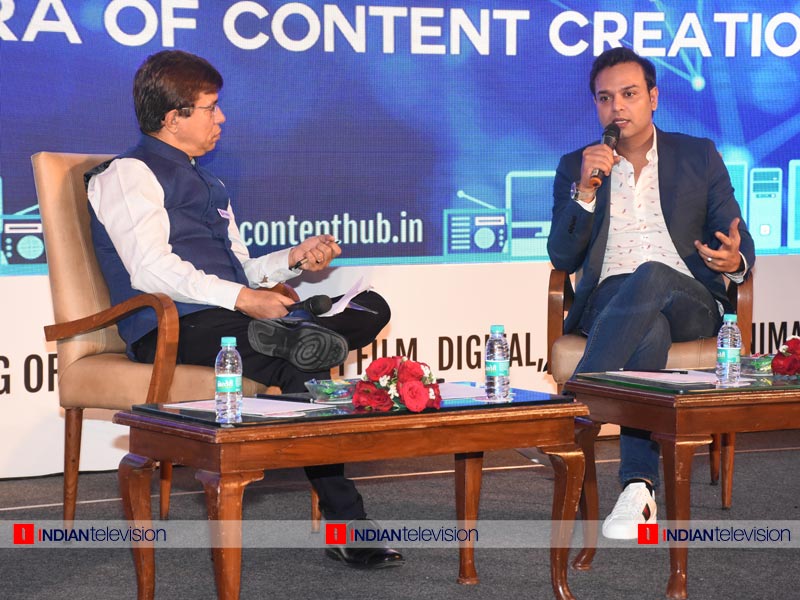
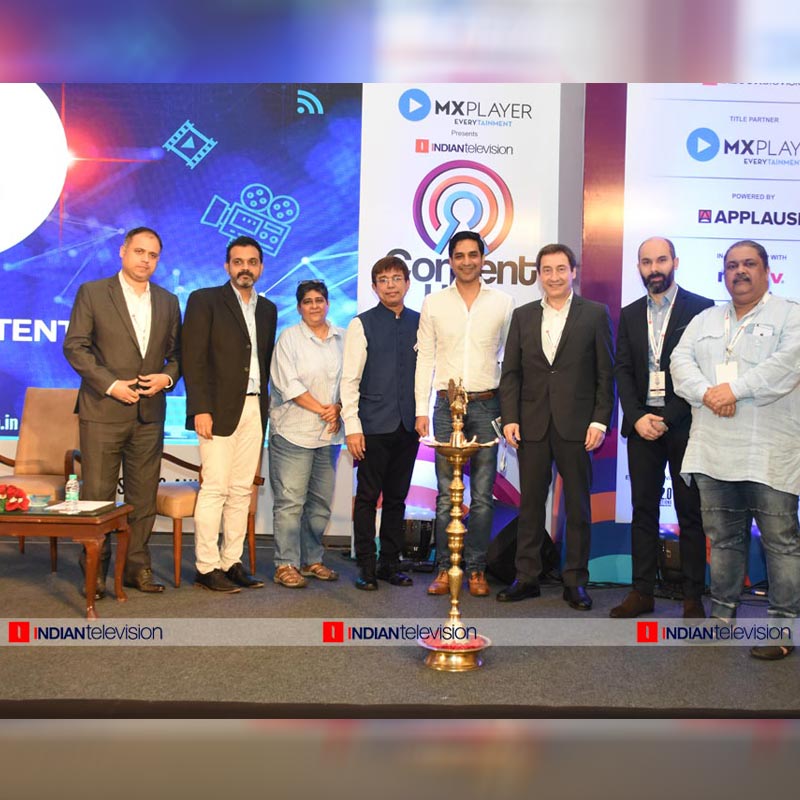
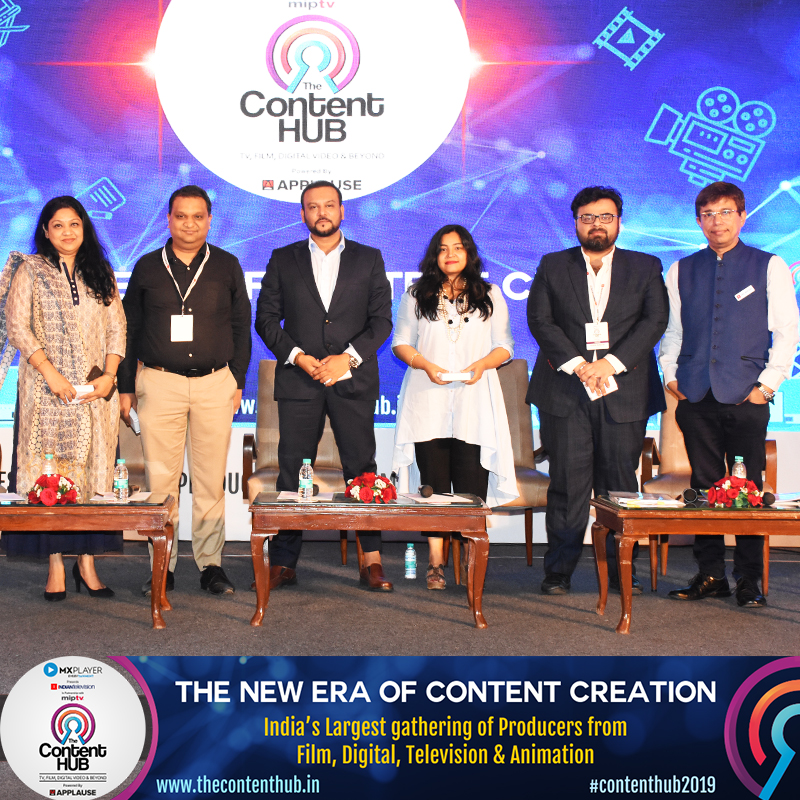
    MUMBAI: Content creators today cannot rely on daily soaps to attract viewers. With OTT looming large, production houses have to broaden their content nexus. Indiantelevision.com’s The Content Hub hosted a session – ‘The TV production Story: Reality, Non-fiction’, with the panellists Contiloe Pictures producer and founder Abhimanyu Singh, Endemol Shine CEO Abhishek Rege, SOL India – Banijay Group founder and MD Fazila Allana. The session was moderated by Bodhitree Multimedia co-founder and director Mautik Tolia

    The panel discussed the hot topic of IP rights, whether it should be given to the broadcaster or kept with the creator. To this, Singh said that it is valuable for every production house to hold its IP rights, where one can syndicate and get certain revenues on a recurring basis. "If the ecosystem thinks of it then I think the law needs to protect creators just as the musicians are protected," he said and Allana agreed with him.

    Rege said that retaining IPs means financial risks for the producer. He further explained, "If we have commissioned a show in Hindi, why would you have the IP of all the languages go with the network? But while we think all this to happen, are we ready to take all the risk?”

    Discussion on the potential of content, Rege said that scripted shows are platform-agnostic. He said that the challenge here is making attractive content for the viewers and targeting the right TG. "With OTT, I don’t think it’s easy to do as many talents shows that we do on linear," he added.

    The new tariff order will bring about a change in content creation, according to Rege. With customers choosing individual channels, broadcasters need unique content to attract people. “This fight is based on non-scripted or premium scripted property," he said.  

    Allana said that non-fiction producers have a bigger challenge as opposed to fiction producers because there has been a saturation of ideas. But she added that non-fiction content is going to evolve in the OTT platform but the future belongs to scripted shows. “On OTT there will be a lot of social experimentation as well as lifestyle programming.  Earlier we all used to chase formats now we chase stories,” she said.

    The deluge of daily content has thwarted premium content from growing. Rege said, "In creating premium content, you will have to spend time in writing. Apart from that, as far as production is concerned, you will have to have the discipline of pre-producing the series and this doesn’t exist on our television. The whole ecosystem needs to move in this direction." 

  • The Content Hub 2019: Creators discuss digital adaptation, creativity and originality

    The Content Hub 2019: Creators discuss digital adaptation, creativity and originality

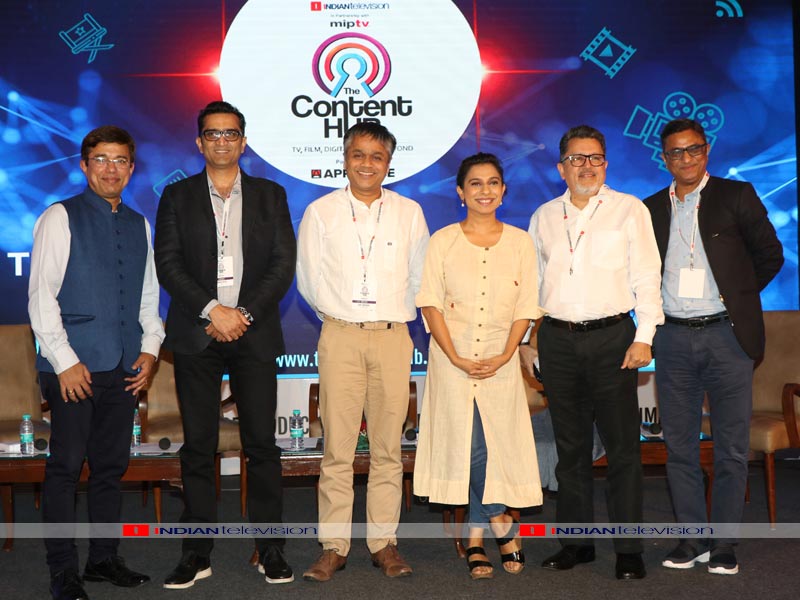
    MUMBAI: Indiantelevision.com on Wednesday wrapped the third edition of its popular event The Content Hub in presence of some of the biggest names from the TV, digital, and the movies industry. Spanned across several panel discussions and fireside chats, this edition of The Content Hub discussed ‘the new era of content creation’ with a focus on the digital boom, need of good content creators, the synergy between creators and producers, and creating properties that can travel globally.

    Starting the day was a panel discussion on ‘The TV Production Story: Reality, Not Fiction’, moderated by Bodhi Tree Multimedia co-founder and director Mautik Tolia. In discussion were some of the most successful and prominent names in the TV industry – Contiloe Pictures Pvt Ltd founder and producer Abhimanyu Singh, Endemol Shine India CEO Abhishek Rege and SOL India – Banijay Group founder and MD Fazila Allana.

    The distinguished panel discussed the opportunities and challenges fiction and non-fiction formats today face in the TV and digital world. They also shed some light on the prospects premium content has in the Indian industry.

    The panel agreed that non-fiction producers face bigger challenges in creating content as compared to those investing in fiction and dramas. Allana noted that while earlier people were chasing formats, now they are chasing stories. However, she quipped that there is a vast opportunity for non-fiction shows on OTT platforms citing examples of TV shows like MTV Troll Police.

    Singh reflected the same sentiments as he noted that this is a very good time for the content creators. He said, “I feel it is a great time to tell stories. I think we as an industry haven’t delivered premium content because the nature of delivery has always been daily content. So, this is an opportunity to deliver premium content.”

    Rege mentioned, “Scripted becomes a little easier to tell stories more across TV, OTT or across multiple platforms. The challenge here is making attractive content for the viewers and targeting the right people. With OTT I don’t think it’s easy to do as many talent shows that we do on linear.”

    The second session was a fireside chat between Indiantelevision.com founder, CEO and editor-in-chief Anil Wanvari and Swastik Productions  & One Life Studios founder and chief creative officer Siddharth Kumar Tewary.

    Tewary, based on his extensive experience of industry work, reflected upon many aspects of content creation and production including formats, IP rights, and disruptors in the industry. He noted while most of the people believe that longer formats don’t work internationally, the reality is not the same.

    Speaking about IP rights of content, Tewary made some relevant points saying, “IP creation is a scientific thing related to the socio-political situation in the country and the world. We need to know where the world is heading. If you are going to add value and bring something unique for the TV, then you will get the IP.” He also announced the foray of his group in the animation category at the platform.

    The next session was a discussion on the animation industry with an esteemed panel of Discovery Kids head Uttam Pal Singh, Golden Robot Animation head of business development RK Chand, Paperboat Animation co-founder and chairman Soumitra Ranade and Bioscopewala Pictures managing partner Nishith Takia. The session was moderated by Kinsane Entertainment Inc chief marketing officer Pranab Punj.

    The panel highlighted the vast opportunities OTT platforms are offering them right now. Takia shared that his company is in talks with several big digital players to create content for them. Another point that the panel highlighted was that Indian audience is not very keen to visit theatres to consume animated content and that closed their avenues of creating content for a wider audience and not just the kids.

    Answering a question on why there aren’t more female-led animated shows in India, the panel shared a similar tone as they mentioned that in most of their shows, the female characters have an equal prominence as the mail lead, they are inclusive to the storyline. They added that male-led shows are doing well in the market and from a business perspective they are focusing on that aspect as well.

    The next session was an interesting and insightful chat on ‘The Syndication Opportunity’ between Sony head networks—licencing Malvika Prabhu, Go Quest Media Ventures MD Vivek Lath, Swastik Productions and One life studio producer and managing director Rahul Kumar Tewary, MX Player head of content acquisition Mansi Shrivastav and ANM Global co-founder partner Nidhish Mehrotra. Moderating the panel was Wanvari.

    Wanvari started the discussion by asking the panellists whether the demand for Indian content in the global market is going up or declining. To this, the panel stated that it has probably reduced over time. However, the Indian creations are performing well at markets like Thailand and Sri Lanka.

    The panel mentioned that genres like romance, drama, horror, and good animation has a lot of markets overseas. They also added that premium content will also attract a lot of traction towards Indian creations. Kumar stated that we need to relook at the type of content we are creating and invest more in subjects that have the potential to travel. He also said that Indians do not value their content enough.

    Lath said, “We have to think like a programmer and not from a sales perspective,” as he elaborated on the right approach to sell content overseas. He predicted that India has the potential to make around Rs 400-500 crore with content syndication (minus the movies) because it is still young in the market and has a lot of potential to improve in the coming times. Kumar added that in the next few years Indian premium content will find a lot of audiences globally.

    Taking the insightful day ahead was the next panel of digital producers including Addatimes Pvt Ltd managing director Rajiv Mehra, The Viral Fever (TVF) global head of business and content Rahul Sarangi, Viacom18 EVP and head content Monika Shergill, MX Player chief content officer Gautam Talwar and One Digital Entertainment COO and co-founder Gurpreet Singh. The panel was moderated by industry veteran and Hungama Digital Media Entertainment executive producer Sanjeev Lamba.

    While the panel agreed that there is a great influx of male-oriented and sexually-oriented content performing on OTT platform, they all are looking beyond that. They all mentioned that the industry is currently focusing on good writing talent and meaningful stories. Sarangi said that TVF is not looking towards creating violent or sexual content at all, at least for the next four to five years. Its focus is on stories like Pitchers and Yeh Meri Family that touch the hearts of the people.

    Shergill shared that Voot is looking at ideas that bring new and original voices to the stories. Unless platforms experiment, she believes they will lose their audience.

    Talwar shared that the focus of recently launched MX Player is on creating content that can be watched on a 5-inch phone screen rather on a 50-inch TV. The TG for the player is 18-30-year-old male and it wants the platform to be genre-agnostic.

    The next event was a fireside chat between Wanvari and Applause Entertainment CEO Sameer Nair. The duo discussed ‘The New Studio Model’.

    Nair started with launching an amazing showreel of upcoming programmes from the Applause banner. They included a wide variety of content ranging from humour to political to drama. It also included the Indian version of the very popular The Office series.

    Nair stated that he did not want to start a company which goes on to become just a production house but he rather wanted to invest in good content. He thus worked with some amazing directors, writers, and actors like Ronit Roy, Pankaj Tripathi and Swara Bhaskar to create the first instalment of the Applause shows. One of the flagship series, Rasbhari-starring Swara Bhaskar and written by Shantanu Shrivastava—has in fact already been selected for ‘Series Mania’ festival in France. Warning them of slacking in content, he said, “If the content industry is not careful right now, it will end up becoming a replica of TV.”

    The day continued with a panel discussion on how new Hindi film producers are making their mark and what business models they are drawing up. Part of the discussion were Essel Vision (Zee Studios) CEO Shariq Patel, Viacom18 Studios chief operating officer Ajit Andhare, Alliance Media and Entertainment owner Sunil Doshi and Fox Star Studios India CEO Vijay Singh. Moderating the panel was film reviewer at Film Companion Suchitra Tyagi.

    The panel was a light-hearted but with insightful discussions on the current trends of the Indian movie industry, the need for well-written scripts and content that performs. The panel agreed that today is an amazing time for good storytellers and content creators. They forced upon the fact that literature is the sibling of cinema. The panel also discussed on creating avenues to make the system more approachable to the budding writers who want to reach out to the studios.

    The evening was concluded by an overview of the MIP platform by MIP China Hangzhou director of market development Ted Baracos, who in an interactive session apprised the gathering of various opportunities this global content-sharing platform brings and how they can leverage on that.

  • Amazon Prime Video India’s Vijay Subramaniam on content strategy, audience response, product proposition

    Amazon Prime Video India’s Vijay Subramaniam on content strategy, audience response, product proposition

    MUMBAI: India’s burgeoning over-the-top (OTT) space is witnessing an explosion what with aggressive competition brewing between home-grown and international players fighting for eyeballs and time spent. Amazon Prime Video, one of the leading global contenders, is aggressively expanding its Indian original library since its launch in 2016. Starting with critically acclaimed Inside Edge, the OTT platform has upped its game significantly with shows in different genres. After its recent blockbuster Mirzapur, Amazon Prime Video has started streaming its sixth original show Four More Shots Please.

    Amazon Prime Video India content director and head Vijay Subramaniam, the media veteran whose experience pans across brands like Walt Disney and Star India, heads the content segment of the platform. Indiantelevision.com’s Gargi Sarkar caught up with Subramaniam for an understanding of Amazon Prime Video India’s strategy. In a short freewheeling chat, he spoke about the content plan this year, response to its flagship show Mirzapur, regional originals and more.

    Edited excerpts:

    What will be your content strategy in 2019?

    We will try to focus on more variety, more authentic stories and open up more genres because we are just getting started. We have expanded our library from one in 2017 to five in 2018 which will reach to eight, hopefully, this year. You are going to see us crack open many new genres like we have Four More Shots Please. You can expect returning seasons of successful shows like Comicstaan and Inside Edge as well.

    How has been the response to Amazon Prime Video in India compared to other international markets?

    We are very happy with the growth and India is a very important market for us in the long term. Frankly, we are just getting started. As the service has been there for around two years, I think it is just dawn of day one for Prime Video. Customers seem to really like the variety we are providing and so we are seeing impressive growth and we remain committed to providing diversity of content. We added Kannada in November. We are going to add three more languages in the first six months of this year. So, we just want to make sure that something is there for every one of our customers; current as well as future customers. Within that, we are seeing how to balance gender diversity, age, right kind of content for kids, right kind of content for young adults, etc. It’s a blend of all of that. I think all these factors have been instrumental in helping us.

    Which factors help Amazon Prime Video to differentiate itself?

    Great content, being able to reflect the taste and preferences of customers and being able to serve them consistently help us to differentiate our service. We are providing a great product, user experience and value. The kind of content selection we have, if you look at our movies, is big Hollywood blockbusters and great US TV shows. Our US originals have been breakout hits like Jack Ryan, Homecoming, The Marvelous Mrs. Maisel and then Indian originals. If you look at our regional selection, we have latest and great films. I think this blend of content, great user experience and proprietary technology that allows you to choose your own data streaming limits and choose the quality you want to see, giving you the control of the amount of data you use. Prime benefit programs include shipping, shopping, music, video, and now reading. Moreover, all that is available in Rs 129 per month and Rs 999 per year.

    Which type of content is getting more traction?

    All of it. There are a couple of reasons. For the first time customers are becoming their own programmers; you can decide what to watch and when to watch. You have truly flexible opportunity to surf in and out of content, come back to our shows or finish watching movies, depending on the kind of story you want to watch. So, our customers are enjoying all of these.

    In addition to that, movies are always popular. We are Indians, we love movies. Our originals are fantastic drivers.  So, I think at this stage, customers are coming in for two things. One is for the things they are familiar with like Thugs of Hindostan. Then they are discovering all the great content. They are navigating through all sorts of content. At this stage, people love everything equally.

    How has been the response to Mirzapur in international markets?

    Well, it’s been a very successful show for us. We are both honoured and humbled by the love we got from customers for this. It has become a buzz-worthy show now. I think the love that has come from customers in India and outside is because of the authenticity. It is truly authentic to its roots and speaks the language of that land. It is set in that milieu. What we have learnt from this show is making our stories authentic. Four More Shots Please is a very authentic story. It’s unapologetic and looks at the friendship between four women without any pretends.

    What is the biggest challenge when it comes to business expansion in India?

    I am really excited about the opportunities that we have in front of us. As I said it’s a mobile-first country, data charges have decreased making it easy for folks to access. Mobile infrastructure has grown and phone has become primary screen for young adults. There is no dearth of great stories in this country, which has a rich culture of storytelling. We are super excited about all the opportunities we have to expand. If you look at our catalogue when we started versus today, you will see how we have ramped up, especially in additional languages.

    What’s your plan of launching original in regional languages?

    We constantly evaluate what customers want in every language and learn from that. If you recall we launched our first Telugu show to test and learn what exactly customers prefer. Recently we launched one in Tamil; it’s definitely part of our content strategy to expand into regional language original in the near future.

  • Inside ZEEL’s ambitious new bet on Zee Studios Originals

    Inside ZEEL’s ambitious new bet on Zee Studios Originals

    MUMBAI: 20 years of traversing across television networks and production houses, Ashima Avasthi now finds herself saddled in the hot seat at Zee Studios as head of its digital content arm. She's been quick off the blocks, equipping herself to be battle-ready within two months of her arrival at the company's office in Andheri, Mumbai's entertainment hub. In her last gig, Avasthi crafted award-winning content for BBC Studios as its senior creative director and head of branded content.

    “This was actually the perfect time to move into digital. The year will mark the start of the transformation for OTT and digital content,” she says rationalising the reason behind the switch. 

    In 2018, two words 'digital' and 'content' reverberated more powerfully than ever before. In all likelihood, we'd probably be saying the same in 2028 as well. Avasthi likens the current content creation craze to running a marathon. 

    "There's an excitement when you see loads of other people running. Everybody wants to reach the finish line. So, everyone is driving and inspiring the other one. It's the same for this market," she points out.

    With ZEEL now ready to produce content in a new avatar, Indiantelevision.com caught up with Avasthi in the first instalment of The Content Hub 2019 for an insight into how she intends to drive the media conglomerate’s ambitious plans.

    As head of Zee Studio Originals, what’s your mandate?

    We would work like a studio that produces content, which gets commissioned by various platforms and not just ZEE5. We’ll be working with everybody. We'll also be investing a lot in IPs and make the content we believe in. It’s going to be a two-pronged approach. IP is going to be a huge thing for us.

    All the platforms, international or domestic, are seeing the real potential of this market and have committed so much of investment. They are all spending Rs 500-600 crore a year. That’s a huge, huge amount for originals. For content makers and content producers it’s the best time.

    How is your content creation philosophy different from that of ZEE5 Originals?

    ZEE5 will be basing everything, I’m assuming, on what their audience wants. We are not going to be creating anything for a particular audience. We are going to see the digital audience in a larger perspective. We are going to keep creating content by anticipating who the audience is going to be in the next few months.

    OTTs are going to have a much higher subscription in tier 2 and 3 cities. It’s no more just a tier 1 town syndrome.  If you see, the demographics of the audience is changing. So, we are going to cater to the world at a large as opposed to a particular audience. Each platform is probably going to have its own strategy on what they want to produce. So, we’ll be creating content that suffices the need of a consumer wherever he or she’s watching.

    Shouldn’t OTTs adopt a content creation mindset similar to yours instead of focusing on a particular audience?

    With digital, content makers are not within the shackles of audience and ratings. So, you go and make content that’s going to be a benchmark, break clutter, cut across various people, and travel outside India. Sacred Games is actually something that was viewed more outside of India. You make content that is going to be considered world class by any consumer sitting across the world. While OTTs too shouldn’t restrict their offerings to a particular audience, there is bound to filtering and a direction taking that will happen. Everyone’s experimenting.

    At some point, every platform will figure out who they want to narrow it for. There are platforms that are already doing it, for instance, Viu is focussing on regional. Some are looking at sports content, some are only looking at tier 2. So, they will take their own direction and there will be some larger players who will say ‘we’ve got it all’.

    In the next five years, this [OTT] is going to penetrate a lot into tier 2 and tier 3, and in villages. It’s going to get big in rural at some point. All of us are television converts to digital. The new kids on the block are not, as they’ve grown up in a digital world. In the next two or three years, that’s going to happen to rural. Some platforms could take a direction wherein they focus on rural. Eventually, there’s going to be three apps on every user’s phone. But for content producers, you cannot have that filter.

    You used the world 'benchmark'. Do you think Netflix is the benchmark in terms of content creation?

    I think what Netflix has done, particularly for India, is show that digital content doesn’t have to be mediocre and cheap in terms of production quality. The benchmarks they have set are more on the quality of production. And to be fair, everyone’s followed. We just needed someone to come in and say that 'it’s okay to spend that kind of money on digital'. Netflix has redefined ‘premiumness’.

    In terms of vision, what are the pillars on which your content strategy will hinge on?

    Two adjectives we want associating with our content are world class and unexpected. 'Good' doesn’t cut it for us. We want audiences across the world to think of us as great content producers.

    What are the challenges for a digital content studio in today’s environment?

    I think right now content studios are in a good place. All the problems they have are good problem to have. For us, I think the advantage is that we are not a pure producer. We are also IP creators. So we are investing in our IPs and content. So we are not in the race vying only vying for commissions. Our main game is going to own our content. When I say own, I mean purely Zee Studio Originals.

    Netflix, ZEE5 among others have signed a self-censorship code. Amazon hasn't. Where do you stand on the censorship debate?

    Censorship is not a hindrance for me. I think it’s the responsibility of content creators to use that freedom intelligently. I don’t think there should be censorship. Creativity should never have censorship. However, we have to be responsible creators.

    Can you delve deeper into your plans for 2019?

    We are definitely looking at getting a good number of series. We are looking at direct-to-digital films and I know that OTT platforms are very open to it. They are looking for digital films. We are also doing some regional work. Right now we are in the process of signing up some really good directors to kick-start our slate which we should be ready to announce soon. We should be ready with some of our content by the third or fourth quarter.

    How do you intend to leverage the synergies of Zee Studios and ZEE5?

    We are a part of ZEE Studios. ZEE5 is a platform like any other independent platform. There is always an advantage of a being part of a larger family because there’s going to be synergies there. But we walk our own paths and focus on our respective targets.

    Have you identified any digital content consumption trends?

    I don’t think there’s a trend. The trend changes before you can call it a trend. What’s happening is we are creating content left, right and centre. It’s a windfall for consumers. They themselves haven’t figured out what they want. We’ve got loads of people who are subscribing. We have OTTs that have committed really high spends to create content and now we are ready to make things for all audiences. So, now will be the time that you’ll start seeing audience trends.

    As someone who has the final say, how do you greenlight projects?

    Gut. It’s pure gut. In a very creative world, you have to go with your gut. You have to observe and not live in a box. You have to understand the market and consumer, but finally, you go with your gut.

    How do you keep evolving as a creative professional?

    To be very honest, I keep trying to learn. This [digital content] is such a new thing for everybody. Consuming global content is an obvious way to keep oneself updated. I also keep learning from different age groups. It’s such a great time to listen.

    What’s a typical day at the office for you?

    My entire day is spent listening – to scripts, ideas, and people – which is brilliant. Listening is the best way to trigger ideas.

    What are you currently watching?

    I’m actually enjoying Rangbaaz right now. I'm mostly very critical of content but I think it’s well made. Funnily, I’m enjoying Narcos Mexico a lot more than Narcos.

    Any particular series or show that you watched recently and wished you'd made it?

    There’s a lot. I have to say I’m waiting for the time when Indian platforms starting buying really high-end documentaries. I’d love to make aWild Wild Country. I’d like to make an absolutely world class, cutting edge documentary.

    Interesting. Are Indian audiences lapping up documentaries as much as other content?

    No, not really. Even globally, the skew is too wide. Even the greatest of docu makers like Errol Morris have a fixed audience set. But the fact that a Wild Wild Country made an impact in India is a good sign to suggest that the consumers are open to anything. This audience is discerning yet open-minded unlike the television audience, which is set in its ways. 

    Do you see Indian content traveling anytime soon?

    I think it will. A lot will definitely depend on the OTT platform and the importance that it gives. Television series were made at some other level internationally versus what we were making here. However, in digital that’s all changed. We are making content at the same level. Is Mirzapur or Rangbaaz any lesser than Narcos Mexico? No it's not. So, I think it's a question of time and a bit of marketing for sure. It’s going to get there. This is going to be the defining year. Netflix wants all Indian Originals now commissioned out of India as opposed to Los Angeles. So, everyone’s seeing the merit in what we’re creating and the level that it’s being created at.
  • Who defines prime time – Advertisers or viewers?

    Who defines prime time – Advertisers or viewers?

    MUMBAI: For those who have wondered and often cribbed about why popular channels have mostly nothing original to offer in the afternoon, and later had reluctantly resigned to watch re-runs of shows, The Content Hub 2016’s session on ‘Redefining Primetime’ was the place to be.


    The question of the hour was whether there is a need to redefine what we call ‘prime time’ on television. And who better to answer it than those who dabble in the general entertainment channels’ (GEC) prime time of Indian television i.e, Doordarshan ADG Mukesh Sharma, Colors CEO Raj Nayak, Balaji Telefilms CEO Sameer Nair, Reliance Broadcast Network CEO Tarun Katial and Havas Media Group CEO – India and South Asia Anita Nayyar.


    Moderator for the session and Indiantelevision.com founder, editor-in-chief and CEO Anil Wanvari struck at the nerve of the issue by posing the pertinent question — What defines the prime time of a Hindi GEC channel? 


    While most viewers are oblivious to it, there is a whole science — or as Nayak had pointed out during the discussion — ‘pure economics’ to it. 


    “The phrase ‘Kill for prime time’ is what we broadcasters are often heard using. As we don’t have the budget to program for all 24 hours of the day, we prepare content for five to six hours and that becomes our prime time. If we can get good traction for a new show during that time, it may also get an equally good viewership ratings for its reruns as well,” said Nayak.


    “There isn’t anything fixed called prime time. It is how broadcasters define it. When we started off, 8 pm to 10 pm was prime time, then we stretched it to 8 pm to 11 pm, and now 6.30 pm to almost 11.30 pm is what we define as prime time. It is a question of content and the availability of a large section of the audience in front of the television. Therefore, by definition it is post evening hours,” he added.


    With the advent of digital however, this staple idea of prime time is changing as the audience has access to entertainment media almost all hours of the day at their own convenience via the second screen. “The prime time we are talking about is a very TV thing. OTT audience is not defined by prime time although there are surges in viewership at certain times of a day. For them, anytime is prime time. But that ‘anytime’ isn’t a feasible option for advertisers,” opined Nair.


    Getting into the crux of the matter, it is the advertiser who defines the prime time. Because depending on whether a show is coming on prime time or not, the advertising rates are decided. Throwing light on how premium rates for ad slots are determined, Nayyar shared, “The logical way an advertiser defines the prime is when there is content and there is an audience for it. A cricket tournament for example, which can happen at 4 pm in the afternoon will have traction and therefore will attract advertisers as well. So prime time is basically where the eyeballs are. From an agency perspective as well, we look at where and when content is viewed the most and that becomes prime time.”


    On the prospect of growing the time band of ‘prime’ shows, Nayak retrospected, “There was a time when Doordarshan used to air only India cricket matches. When ESPN and Star Sports launched, none of the advertisers initially were willing to pay for the non-India matches and test matches. Until in 1996, during the Safari India South Africa series, we decided we will not sell any slots until advertisers are willing to buy it all in a package. For the first three days of the tournaments there were no advertisers. But things have changed now, haven’t they?”


    One would think that going by the same logic of ‘viewers will lap up any good content,’ if creativity is not a hindrance with several content creators and writers waiting to get exposure, broadcasters can find reason in allowing relatively small budget shows to redefine a new prime time band with day part programming.


    Television being an advertiser dependent medium where a 3 rating in the evening is worth 10 times that of the same rating in the afternoon, broadcasters, especially that of Hindi GECs find the stakes to be too high to take the risk.


    “At Star TV there were some original shows in the afternoon time band, which got even better ratings than the evening prime time shows. While the shows worked, its return on investment did not because irrespective of viewership ratings, advertisers were attracted to only to shows aired from 6 pm onwards. The fact remains that the same advertisers, for the same rating at two different times of the day were not willing to pay the same price for the ad slots,” Nayak stated. 


    This also paints a sad picture of the broadcast business in south India where there is an ongoing trend of remaking Hindi TV shows into regional languages. Producers are asked to create the same content for half, or even one fourth of the production cost that the same Hindi GEC show had incurred as advertisers are not willing to pay for that region, observed Nair.


    “Down south they are remaking Hindi shows at approximately Rs 1 – 1.5 lakh per episode. In the Bengal and Marathi regional markets, it’s even lesser. All this brings me to the advertisement driven industry we have, which eggs on this unfair practice. This in turn makes me wonder how advertisers categorise their consumers in the market and where they place them in terms of ad spends,” said Nair.


    Bringing a whole new perspective to it was RBNL’s Katial, whose comedy channel Big Magic is largely dependent on kids for viewership and ratings and therefore the channel’s definition of prime time also varies. 


    “We have two channels, which are both very unique in their target audiences. One targets Bihar and Jharkhand, which are mostly dominated by semi urban and rural landscapes. People essentially wake up early and go to bed early, therefore 70 per cent of our GRPs comes from the morning programming. While infrastructure too plays a role, I feel it is our viewers who ultimately define our prime time,” Katial informed.


    Citing another example of a non-traditional concept of prime time, Katial added, “On our comedy channel our entry point is kids. We feel it is a good way to expand visibility with mothers and other family members. Therefore we have to build a prime time where there are more kids available than others. Therefore once you define your audience and geography, you have your prime time.”


    Taking a queue from Katial and concurring, Nayyar said that from a media planner’s perspective, there are times when it’s more efficient to buy an afternoon ad slot for an advertiser at a lower rate than prime time slots.


    “For a client of ours, McDonald’s, we used to buy afternoon time slots because it was far more cost efficient. We were catering to the housewives and mothers, who watched TV shows with their kids. I feel that it rides a lot more on how broadcasters pitch or sell shows. I feel the media industry needs to come together and give the products what they deserve,” quipped Nayyar.


    As the panelists dived deeper into the issue, several varying perspectives ruled the discussion, each leading to a different conclusion. However, media heads present on the panel unanimously agreed that even though Indian television was one of the cheapest markets for advertisers to operate in, it was undervalued, be it from talent or financial standpoint. 


    The consensus was that rather than thinking of how to get production costs down, the way to bring a change was by coming up with ways to increase ad rates as well as by investing more in original content leading to more hours of it on television, which in turn would lead to a redefined prime time.

  • Who defines prime time – Advertisers or viewers?

    Who defines prime time – Advertisers or viewers?

    MUMBAI: For those who have wondered and often cribbed about why popular channels have mostly nothing original to offer in the afternoon, and later had reluctantly resigned to watch re-runs of shows, The Content Hub 2016’s session on ‘Redefining Primetime’ was the place to be.


    The question of the hour was whether there is a need to redefine what we call ‘prime time’ on television. And who better to answer it than those who dabble in the general entertainment channels’ (GEC) prime time of Indian television i.e, Doordarshan ADG Mukesh Sharma, Colors CEO Raj Nayak, Balaji Telefilms CEO Sameer Nair, Reliance Broadcast Network CEO Tarun Katial and Havas Media Group CEO – India and South Asia Anita Nayyar.


    Moderator for the session and Indiantelevision.com founder, editor-in-chief and CEO Anil Wanvari struck at the nerve of the issue by posing the pertinent question — What defines the prime time of a Hindi GEC channel? 


    While most viewers are oblivious to it, there is a whole science — or as Nayak had pointed out during the discussion — ‘pure economics’ to it. 


    “The phrase ‘Kill for prime time’ is what we broadcasters are often heard using. As we don’t have the budget to program for all 24 hours of the day, we prepare content for five to six hours and that becomes our prime time. If we can get good traction for a new show during that time, it may also get an equally good viewership ratings for its reruns as well,” said Nayak.


    “There isn’t anything fixed called prime time. It is how broadcasters define it. When we started off, 8 pm to 10 pm was prime time, then we stretched it to 8 pm to 11 pm, and now 6.30 pm to almost 11.30 pm is what we define as prime time. It is a question of content and the availability of a large section of the audience in front of the television. Therefore, by definition it is post evening hours,” he added.


    With the advent of digital however, this staple idea of prime time is changing as the audience has access to entertainment media almost all hours of the day at their own convenience via the second screen. “The prime time we are talking about is a very TV thing. OTT audience is not defined by prime time although there are surges in viewership at certain times of a day. For them, anytime is prime time. But that ‘anytime’ isn’t a feasible option for advertisers,” opined Nair.


    Getting into the crux of the matter, it is the advertiser who defines the prime time. Because depending on whether a show is coming on prime time or not, the advertising rates are decided. Throwing light on how premium rates for ad slots are determined, Nayyar shared, “The logical way an advertiser defines the prime is when there is content and there is an audience for it. A cricket tournament for example, which can happen at 4 pm in the afternoon will have traction and therefore will attract advertisers as well. So prime time is basically where the eyeballs are. From an agency perspective as well, we look at where and when content is viewed the most and that becomes prime time.”


    On the prospect of growing the time band of ‘prime’ shows, Nayak retrospected, “There was a time when Doordarshan used to air only India cricket matches. When ESPN and Star Sports launched, none of the advertisers initially were willing to pay for the non-India matches and test matches. Until in 1996, during the Safari India South Africa series, we decided we will not sell any slots until advertisers are willing to buy it all in a package. For the first three days of the tournaments there were no advertisers. But things have changed now, haven’t they?”


    One would think that going by the same logic of ‘viewers will lap up any good content,’ if creativity is not a hindrance with several content creators and writers waiting to get exposure, broadcasters can find reason in allowing relatively small budget shows to redefine a new prime time band with day part programming.


    Television being an advertiser dependent medium where a 3 rating in the evening is worth 10 times that of the same rating in the afternoon, broadcasters, especially that of Hindi GECs find the stakes to be too high to take the risk.


    “At Star TV there were some original shows in the afternoon time band, which got even better ratings than the evening prime time shows. While the shows worked, its return on investment did not because irrespective of viewership ratings, advertisers were attracted to only to shows aired from 6 pm onwards. The fact remains that the same advertisers, for the same rating at two different times of the day were not willing to pay the same price for the ad slots,” Nayak stated. 


    This also paints a sad picture of the broadcast business in south India where there is an ongoing trend of remaking Hindi TV shows into regional languages. Producers are asked to create the same content for half, or even one fourth of the production cost that the same Hindi GEC show had incurred as advertisers are not willing to pay for that region, observed Nair.


    “Down south they are remaking Hindi shows at approximately Rs 1 – 1.5 lakh per episode. In the Bengal and Marathi regional markets, it’s even lesser. All this brings me to the advertisement driven industry we have, which eggs on this unfair practice. This in turn makes me wonder how advertisers categorise their consumers in the market and where they place them in terms of ad spends,” said Nair.


    Bringing a whole new perspective to it was RBNL’s Katial, whose comedy channel Big Magic is largely dependent on kids for viewership and ratings and therefore the channel’s definition of prime time also varies. 


    “We have two channels, which are both very unique in their target audiences. One targets Bihar and Jharkhand, which are mostly dominated by semi urban and rural landscapes. People essentially wake up early and go to bed early, therefore 70 per cent of our GRPs comes from the morning programming. While infrastructure too plays a role, I feel it is our viewers who ultimately define our prime time,” Katial informed.


    Citing another example of a non-traditional concept of prime time, Katial added, “On our comedy channel our entry point is kids. We feel it is a good way to expand visibility with mothers and other family members. Therefore we have to build a prime time where there are more kids available than others. Therefore once you define your audience and geography, you have your prime time.”


    Taking a queue from Katial and concurring, Nayyar said that from a media planner’s perspective, there are times when it’s more efficient to buy an afternoon ad slot for an advertiser at a lower rate than prime time slots.


    “For a client of ours, McDonald’s, we used to buy afternoon time slots because it was far more cost efficient. We were catering to the housewives and mothers, who watched TV shows with their kids. I feel that it rides a lot more on how broadcasters pitch or sell shows. I feel the media industry needs to come together and give the products what they deserve,” quipped Nayyar.


    As the panelists dived deeper into the issue, several varying perspectives ruled the discussion, each leading to a different conclusion. However, media heads present on the panel unanimously agreed that even though Indian television was one of the cheapest markets for advertisers to operate in, it was undervalued, be it from talent or financial standpoint. 


    The consensus was that rather than thinking of how to get production costs down, the way to bring a change was by coming up with ways to increase ad rates as well as by investing more in original content leading to more hours of it on television, which in turn would lead to a redefined prime time.

  • OTT – The new El Dorado: Nailing the coffin on television?

    OTT – The new El Dorado: Nailing the coffin on television?

    MUMBAI: With the industry buzz word for 2016 being ‘digital content,’ much has been spoken about the vista of prospects that the medium poses for content creators with figures and studies on rapidly growing digital adex often thrown around in the air. But how much of that talk is really translating into reality for those working in the ‘OTT’ or alternate video content business, was the question raised in the Indiantelevision.com organised Content Hub’s penultimate session ‘OTT: The New El Dorado.’

    Panelists on board the discussion were Alt Digital CEO Nachiket Pantvaidya, Isobar India MD Shamsuddin Jasani, The Viral Fever founder and CEO Arunabh Kumar, Big Synergy director Anita Kaul Basu, and Arré CEO Ajay Chacko.

    Just as the title reflects, while looking at the macro picture of digital media of the future, marketers and content creators often forget to ask the basic questions of budget, sustainable revenue models, relevance in future and of course the return on investments.

    Throwing light on ground reality of the matter, each of the panelists shared their insights and experiences.

    I Don’t Watch TV, the upcoming web series from Arré, and its equally disruptive trailer set the tone of the discussion, which was anchored by Indiantelevision.com founder, editor-in-chief and CEO Anil Wanvari.

    Consciously steering away from being called an “OTT” platform, Chacko stated that their new venture was a content brand that believed in disruptive content. Elaborating on the reason, he said, “Digital, like every media transition we have seen in the past, gives you the opportunity to create different tone of content, be experimental and maybe give form to the next big cliché. The need of the hour is social relevance and we not only churn out radical content but also play around with it within the social context. While we crib or joke about the hackneyed television content and the people behind it, the truth is that it isn’t as much. It’s the hackneyed content revenue that compels them to act in a certain way and our effort is to break free from it,” Chacko shares.

    Expanding on the business model of digital platforms, especially with respect to Arré’s on-demand content arm, Chacko confesses that he hails from a very traditional school of thought that Indian content market is ad-funded. “I don’t see an escape from dependency on advertisers even on digital. However, the nature in which a brand or advertisment interacts with content is changing. We are entering an era of the next level of branded content, which has been mastered by my fellow panelist Arunabh (of TVF fame),” Chacko adds.

    Seconding the new form of branded content and possibilities that it brings for marketers, Jasani shares, “From what I have observed, Indian viewers are inherently inclined to not pay for content and that mindset is not changing in the near future. Therefore, ad-funded content is the way forward. The way people are going to consume video will primarily be on demand. It is an interesting crossroad for advertisers and marketers as well on how to use this new age content. Several brands are open to experimenting with branded content with content creators and even take ownership of the content marketing they do. Agencies, marketers and content creators are coming together to make branded content and share the IPs of it, as well as the revenue the property generates.”

    Moving on from the tug of war between television and the second screen, Jasani projects a whole new dynamic in the near future when viewers will be screen agnostic. “A seamless flow of data and videos that is available on all my devices, be it television, laptop or mobile, is what people want in the near future. Therefore, the whole concept of creating for mobile or creating for television needs an overhaul and creators will need to think from a macro perspective.”

    While Jasani paints an optimistic picture on the investment interest advertisers have in the digital content front, TVF’s Kumar begs to differ.

    While taking a question raised in the post session Q&A round, Kumar comes clear on the ground reality of how an advertiser operating in the current landscape thinks of the digital medium as compared to the traditional medium platform for its advertising spends. “Let me be honest, people say digital spend is growing but that’s all lip-service. This is my observation over the last five years. The major advertisers end up striking a deal with a fancy agency and spend crores on TVCs, while their purses become tight when it comes to the digital video space. If brands were to spare even a single digital per cent of what they do on television, it will be a huge boost to the production budget and quality of what digital creators are making. But right now that is hardly happening.”

    Continuing, Kumar further adds, “When we pitch a show to a brand, we have to make it clear that we are not going to make a TVC. We are not asking money for a 30 sec slot, the content for which you have created and paid for. We are actually going to make your brand an integral part of storytelling so that viewers become fans of the show as well as the brand. I believe that is cent per cent more than what a TVC can do for a brand.”

    Jasani admits the challenge the digital believers have in hand is converting the old school thinkers to see the returns that digital content can give, but is equally confident that the change will follow, as the drastically changing content space will only compel the marketers to evolve or be left behind.


  • OTT – The new El Dorado: Nailing the coffin on television?

    OTT – The new El Dorado: Nailing the coffin on television?

    MUMBAI: With the industry buzz word for 2016 being ‘digital content,’ much has been spoken about the vista of prospects that the medium poses for content creators with figures and studies on rapidly growing digital adex often thrown around in the air. But how much of that talk is really translating into reality for those working in the ‘OTT’ or alternate video content business, was the question raised in the Indiantelevision.com organised Content Hub’s penultimate session ‘OTT: The New El Dorado.’

    Panelists on board the discussion were Alt Digital CEO Nachiket Pantvaidya, Isobar India MD Shamsuddin Jasani, The Viral Fever founder and CEO Arunabh Kumar, Big Synergy director Anita Kaul Basu, and Arré CEO Ajay Chacko.

    Just as the title reflects, while looking at the macro picture of digital media of the future, marketers and content creators often forget to ask the basic questions of budget, sustainable revenue models, relevance in future and of course the return on investments.

    Throwing light on ground reality of the matter, each of the panelists shared their insights and experiences.

    I Don’t Watch TV, the upcoming web series from Arré, and its equally disruptive trailer set the tone of the discussion, which was anchored by Indiantelevision.com founder, editor-in-chief and CEO Anil Wanvari.

    Consciously steering away from being called an “OTT” platform, Chacko stated that their new venture was a content brand that believed in disruptive content. Elaborating on the reason, he said, “Digital, like every media transition we have seen in the past, gives you the opportunity to create different tone of content, be experimental and maybe give form to the next big cliché. The need of the hour is social relevance and we not only churn out radical content but also play around with it within the social context. While we crib or joke about the hackneyed television content and the people behind it, the truth is that it isn’t as much. It’s the hackneyed content revenue that compels them to act in a certain way and our effort is to break free from it,” Chacko shares.

    Expanding on the business model of digital platforms, especially with respect to Arré’s on-demand content arm, Chacko confesses that he hails from a very traditional school of thought that Indian content market is ad-funded. “I don’t see an escape from dependency on advertisers even on digital. However, the nature in which a brand or advertisment interacts with content is changing. We are entering an era of the next level of branded content, which has been mastered by my fellow panelist Arunabh (of TVF fame),” Chacko adds.

    Seconding the new form of branded content and possibilities that it brings for marketers, Jasani shares, “From what I have observed, Indian viewers are inherently inclined to not pay for content and that mindset is not changing in the near future. Therefore, ad-funded content is the way forward. The way people are going to consume video will primarily be on demand. It is an interesting crossroad for advertisers and marketers as well on how to use this new age content. Several brands are open to experimenting with branded content with content creators and even take ownership of the content marketing they do. Agencies, marketers and content creators are coming together to make branded content and share the IPs of it, as well as the revenue the property generates.”

    Moving on from the tug of war between television and the second screen, Jasani projects a whole new dynamic in the near future when viewers will be screen agnostic. “A seamless flow of data and videos that is available on all my devices, be it television, laptop or mobile, is what people want in the near future. Therefore, the whole concept of creating for mobile or creating for television needs an overhaul and creators will need to think from a macro perspective.”

    While Jasani paints an optimistic picture on the investment interest advertisers have in the digital content front, TVF’s Kumar begs to differ.

    While taking a question raised in the post session Q&A round, Kumar comes clear on the ground reality of how an advertiser operating in the current landscape thinks of the digital medium as compared to the traditional medium platform for its advertising spends. “Let me be honest, people say digital spend is growing but that’s all lip-service. This is my observation over the last five years. The major advertisers end up striking a deal with a fancy agency and spend crores on TVCs, while their purses become tight when it comes to the digital video space. If brands were to spare even a single digital per cent of what they do on television, it will be a huge boost to the production budget and quality of what digital creators are making. But right now that is hardly happening.”

    Continuing, Kumar further adds, “When we pitch a show to a brand, we have to make it clear that we are not going to make a TVC. We are not asking money for a 30 sec slot, the content for which you have created and paid for. We are actually going to make your brand an integral part of storytelling so that viewers become fans of the show as well as the brand. I believe that is cent per cent more than what a TVC can do for a brand.”

    Jasani admits the challenge the digital believers have in hand is converting the old school thinkers to see the returns that digital content can give, but is equally confident that the change will follow, as the drastically changing content space will only compel the marketers to evolve or be left behind.


  • The Content Hub: How formats are created?

    The Content Hub: How formats are created?

    MUMBAI: On the day first day of The Content Hub masterclass, The Format People CCO and partner Justin Scroggie, spoke about how ideas are generated and then turned into formats for television.


    Defining a format as a series that travels and something that can be adapted in another territory, Scroggie emphasised  that certain elements in a format determine how effective it is.  In the making of a television programme, the order of television elements, both original and common, have to be in such a way that a distinctive narrative progression is created.  These elements could be: set, cast, rules, prize money, audience connect or any other element that make up a television show. Scroggie cited the reality show, ‘Canada’s worst driver’ as an example where the element of ‘elimination’ came as a twist wherein the contestants wanted to get eliminated instead of the avoiding it. He elaborated that the level of originality depends on the order of these elements and how one can give the audience something new. There needs to be a precise beginning, middle and end to each format.  According to him, formats need to address three important things – people (who are involved), action (what they have to do) and motivation (why they have to do it).  The audience needs to know the genre and core subject of the show.


    “In order to generate good television ideas, one should start of by watching television content, in a genre that is unfamiliar to you,” he said. By watching television shows that one is not used to, he/she becomes aware of what else is happening around the realm and it helps in developing better ideas. “The wider your own television experience is, the more broadly you will be able to think”, he added. 


    Scroggie believes that television influences the way in which people behave, speak and think.


    There are several methods from which good content and format can be created.  “When we start thinking of ideas, we tend to go down the familiar path. That is how our brains are designed. We need to find ways to trick our way out of that”, he informed.


    He went on add that, one can simply begin with a phrase, proverb, movie title or lyrics as a starting point for an idea. For example, one can take the idea of the film title, ‘Frozen’ and formulate a dating show wherein the guy ‘freezes’ upon meeting his date and how he overcomes the same.  Ideas can also be generated by changing the angle of a simple show. For example, one can take a simple cooking show and look at it from another angle, that could possibly also highlight domestic problems between married couples. Scroggie added, “When you take a married couple and put them in a kitchen, particularly ‘her’ kitchen, there are bound to be difficulties”.


    Another method of creating ideas would be to take an existing show and reverse it. “Things can basically start from anywhere. By reversing ideas, it will help you open up fresh and new stuff”, he commented.


     ‘Secret Millionaire’ is one such show, that starts with the contestant having a million dollars at the beginning and then starts losing it as the game progresses.


    A lot of formats follow a set of narratives. “Audiences like stories with a familiar shape to it, that’s why even movies follow a familiar shape of a beginning, middle and end. Shows have different narratives that add to the value of the show.” he added. Similarly for television, narratives can be applied to the basic themes. One needs to understand these narratives in order to come up with successful formats.


    Narratives can be in the form of a make-over as showed in programmes like ‘American dream builders’, ‘Shamba shape up’ and “Let me in” or follow a campaign narrative, like the show ‘Dream school’. There is also the swap narrative format.


    According to Scroggie, successful formats are majorly designed along the lines of the ‘fish out of water’ narrative where you put a person or group of people in an unfamiliar situation, out of their comfort zone. “It is a common narrative where you see the outcome of putting people in an unfamiliar situation,” he stated and added, “Narratives that are experimental are also picking up fast these days. Unlike most reality shows that are scripted, experimental narrative has a lot more honesty to it. People want to see open-ended shows where nobody really knows what is going to happen next”.


    Apart from that, a creator or writer of a show should try and break rules that could possibly bring about twists in the show. One should also keep an emotional connect with the audience. “You should be clear about the kind of reaction you want from the audience. It could be a feeling of happiness or anger”. 


    Last but not the least, titles play an important part in grabbing attention.

  • The Content Hub: Thinking digital

    The Content Hub: Thinking digital

    MUMBAI: Digital has become the core of any strategy today. And highlighting the same were the digital content creators at indiantelevision.com’s ‘The Content Hub,’ where the makers shared their valuable insights on the success stories and how they manage making money in this competitive market.


    Sharing their views were Viral Fever and TVF Media Labs founder and CEO Arunabh Kumar, Rajshri Entertainment MD and CEO Rajjat Barjatya, Viacom18 Media – MTV and MTV Indies EVP and business head Aditya Swami, Qyuki Digital Media co-founder and MD Samir Bangara, Zenga Group MD and CTO Shabir Momin, YouTube head of content operations India Satya Raghavan and Multi Screen Media EVP and head – digital business Uday Sodhi.


    Moderated by CNBC-TV18 editor, storyboard Anant Rangaswami, the discussion began with Rangaswami raising the point of how each digital creator makes money differently in the business.


    According to Sodhi, while ‘digital only’ may not be the viable way of going about it right now, for popular sports it will turn around. “Look at television or any other entertainment, sports is a critical part where money goes from advertisers and from an eyeballs perspective. Why the same pattern is not followed on digital? It will happen, but how it grows and how much money it takes, only time will tell,” opined Sodhi.  


    Rangaswami believes it is an interesting curve and content can make money on digital. Agreeing to him, Kumar shared that in the financial year 2012-13, also the first year of TVF online network, its total turnover was equal to one day of shooting cost of an MTV promo and this financial year its total turnover is the cost of one promo of MTV. “The growth has been really phenomenal. Once upon a time, we were doing 10-15 thousand views on YouTube and the brands feature were also very less. That time there was this whole idea that a brand or a client could own a piece of content after giving you money. But cut to now, we have shows on MTV or our channel or AIB and you can see a lot of brands being open to that.”


    For Kumar, it is a pretty much age old television model where for example Cadbury takes a lot of money for KBC, because it is watched by a lot of people.


    According to Bangara, the big opportunity is the content marketing opportunity. “If advertisers and brands let creators do what they need to without putting restrictions, then it will work much better. Because audiences online are very different than audiences consuming content on the traditional platforms.”


    The traditional media players believe that production value equals quality. “In the online space, production value is not directly proportionate to popularity. The concept drives engagement and therefore you don’t need expensive budgets to ride your films on digital platforms,” said Bangara.


    Rangaswami further delved to find out whether is it easier to sell branded content on digital than on television? Contradicting his statement, Swamy feels that the future of TV is TV and from a reach and growth perspective, there is huge growth and spread still on television. “On branded content, the way we make this work is that it is the combination of bringing the screens together.  If you go to see TV and digital separately, the challenge will be much harder. But a lot of branded content that we do, we bundle the whole thing. For example, take the premium content like ‘Coke Studio’ series that we produce, we produce it as a broadcaster, give it legs on television and it kind of survives on beyond TV as well.”


    Going forward, Rangaswami highlighted the different needs of monetisation of content. Barjatya revealed that Rajshri has 20,000 hours of content that it has aggregated with Mukta Arts. “That brings in the revenue. But we also do a lot of experimentations. We have a channel in the entertainment space, bollywood news space, hollywood news space, television space, channels in kids, food and devotional space. These I think will grow going forward.”


    But, according to Barjatya, money still needs to keep coming in and that can come only through blockbuster movies, which the company has acquired over the last couple of years.


    According to Raghavan brands are experimenting, content creators are experimenting and the entire ecosystem is experimenting. He pointed out that the difference the industry is noticing in the last few years is that advertisers are ready to put their money on content because they believe that the creator of the content or the participant will be able to create the content and distribute it as well. “Till now what was happening was that they wanted to own the delivery itself which is why a lot of brands created good stuff but later fell off the clip. Now, they are trusting a lot on the creators. That’s where the point of money floating to content creators and to networks is multiplying.”


    Further adding to this, Momin felt that success on the digital platforms is not counted only by achieving the million views mark. “People get onto the digital platforms for multiple reasons. A movie production house comes to the digital platform not to make money or for ad sales but they are now looking at increasing their eyeballs reach.” He believes that there are other serious players who are trying to make this as a profession. “Branded content is becoming content and that will always be there because they are the ones who are pumping in a lot of their money but if you look at the industry overall , it is the rate of creating content which is growing,” said Momin.