Category: Content Hub

  • The Content Hub 2020: An enriching and engaging first day

    The Content Hub 2020: An enriching and engaging first day

    MUMBAI: Indiantelevision.com’s The Content Hub 2020 progressed into more insightful afternoon sessions after an enriching morning session. The discussion centred around the need for focussing on quality content and right storytelling. Top industry executives spoke about trending topics in the industry as well as the need to focus on creating relevant content.

    The power of regional storytelling

    The panel on the power of regional storytelling was moderated by Bodhitree Multimedia co-founder-director Mautik Tolia with the panelists Endemol Shine India CEO Abhishek Rege, Vaishnave Mediaa Works managing director Kutty Padmini, Star Maa & Star Vijay creative consultant and Zee Network Programming Trainer Vivek Bahl, Fakt Marathi co-promoter Shirish Pattanshetty and Prime Focus Technologies SVP-global localisation Jyoti Nayak. 

    The panelists elaborated on the need for exploring regional stories, challenges faced by the broadcasters and creators, dubbed content and remaking of regional content and the way forward. The panelists mentioned that more localised stories are the way forward to connect with larger audiences.

    Originals created on OTT bring more stickiness

    The second panel discussed the need for generating audiences and building stickiness around the content that has been created. The panel was moderated by ISOBAR India chief growth officer Shekhar Mhaskar with panelists Red Chillies Entertainment head marketing Binda Dey, MX Player head of marketing and business partnerships Abhishek Joshi, Juggernaut Productions chief operating officer (OTT) Samar Khan, Filme founder Abhishek Shukla, EVP Lionsgate India executive vice president Amit Dhanuka, and Shemaroo Entertainment digital new media COO Zubin Dubash.

    The panel discussed why reaching the target audience is important and how traditional broadcasters would retain their core audiences in view of increasing affinity towards on-demand OTT platforms.  

    The panelists said that OTT works in two ways: one is the technology which is giving someone, who used to watch television earlier at 9 pm, an opportunity to watch the same show at any time. OTT has supplemented television audiences in many ways and also brought in audiences who are not getting that content on television. The originals created on OTT are bringing in more stickiness which consumers were not getting to watch earlier.

    Research important while creating content: Nepa India

    Creating content is nothing without appropriate research about the audience and their choices, said Nepa India’s managing director Esha Nagar.

    Dwelling at length on the nitty-gritty of research, Nagar pointed out that it's important to understand how the content resonates with the audience.

    Due to the proliferation of over-the-top platforms, content has been consumed across genres, genders and boundaries, says Nagar. She said at least 60 per cent of the South Indian viewers watch Hindi content. Similarly, 50 per cent of the audience watch shows due to the ‘fear of missing out’ and peer pressure.

    The way forward with movies

    Viacom18 Studios COO Ajit Andhare in a fireside chat with Film Companion founder-editor Anupama Chopra spoke about discovering new stories and new talent. They also touched upon the need for studios to be open for stories coming from everywhere. 

    Andhare says regional cinema is an exciting space. It is far ahead in experimentation compared to the Hindi cinema since directors down South are willing to take creative risks.

    Asked about the secret behind choosing a movie, Andhare said: “It is actually reacting to what is happening around you. You only go with stories that make sense to you that broadly have been the approached. The content conceived a year ago may not be relevant now.”

    According to Andhare, Bollywood actors are at the heart of the universe of films and you cannot take that away from them. But today you cannot also just go with a star-led project; it is also important to look at the content. Even the star needs a story.

  • The Content Hub 2020: Creators emphasise on importance of content quality over formats

    The Content Hub 2020: Creators emphasise on importance of content quality over formats

    MUMBAI: It was an exciting morning session on the first day of the Indiantelevision.com’s fourth edition of The Content Hub 2020, hosting discussions across a wide array of content-creation topics. Some of the most successful and powerful names from the content industry shared secret recipes and insightful and incisive analyses of churning out engaging stories.  The conversations revolved around every genre of content like long-form episodic, short-format videos and digital-original movies.

    The Korean connection!

    The session started with an investment banker-turned-film maker from South Korea who has now expanded his creative horizon to India. In conversation with Indiantelevision.com founder, CEO and Editor-in-Chief Anil Wanvari, Kross Pictures co-founder Thomas Kim stated how he started his career as an investment banker and then working in Walt Disney and Pirates of the Caribbean inspired him to become a filmmaker.

    ”I was working on a project where I realised that movies can be made with any kind of story. This thought stuck with me and I decided to become a filmmaker. So, I quit Disney and started my company in 2003. I am mostly active in Korea and China in making films and TV series based on famous IPs, mostly in comics and novels. In 2015 I had the pleasure to come out to India and worked on a film project called ‘Teen’ with Amitabh Bachchan. This was my first experience in Bollywood. Today I have offices in Seoul, Los Angeles, Mumbai and Hyderabad," Kim stated.

    Kim believes that not all stories are able to resonate in foreign countries, except some. He is currently working on the adaptation of the Bollywood film Kahaani and finds Indian films exciting and emotional. However, he feels there is a lack of disciplined storytelling in India. That's what Kross Pictures can bring to India.

    ZEE5’s content strategy relies on consumer understanding

    ZEE5 programming head Aparna Acharekar said that the core values of ZEE5 are based on three Cs – compelling content, convenience and the consumer-viewing experience.

    Acharekar said that the content must eventually give value for their money while increasing the viewing experience.

    “Relatable content that is real and resonates with the audience is going to work,” Acharekar says. She believes that convenience is the basic reason we see the shift of audience towards over-the-top platforms.

    The golden age of content

    Sooni Taraporevala, an Indian screenwriter, photographer and filmmaker best known for her work in Mississippi Masala, spoke on The Golden Age of Content at the Content Hub 2020. Taraporevala also shared her experience on the making of Salam Bombay and how a rejection from National Geographic changed her fate.

    Sooni Taraporevala believes it’s a golden age of content for writers and others as suddenly they are in demand. Yeh Ballet, currently on Netflix, proved to be a game-changer for her. A Harvard University student, Taraporevala came to movies both by chance and destiny. Her biggest lesson, ‘never hate the naysayers and never give up,’ made her successful and relevant in the industry.

    Uncovering opportunities to create great content

    The first panel discussion discussed uncovering opportunities to create great content. The panel was moderated by Bulldog Media and Entertainment co-founder and producer Akash Sharma. The panelists included: Zee Studios VP & head Ashima Avasthi, SonyLiv original content head Saugata Mukherjee, and Contiloe Pictures CEO Abhimanyu Singh.

    The panel discussed the drivers of content boom, how creating great content differs between TV and digital and content strategies adopted by production houses.

    Avasthi said:  "As technology grows and boundaries demolish, content boom has to happen. In our country it's fabulous to see how we have gone from television to every person watching content on mobile."

    According to Singh, the number of screens has increased as well as the number of audiences, and therefore, there is more requirement for content today.

    The panelists also said that there are opportunities in creating any kind of content as audiences are open to experience different genres. They also believe that the focus should be on telling the story and not on what the audience wants.

    We are hungry for people who have not been discovered yet: Netflix Aashish Singh

    Netflix, the streaming colossal that revolutionised the way of consuming content, is now trying to make inroads in India, said Netflix India original film director Aashish Singh, during an interaction with Indiantelevision.com founder, CEO and Editor-in-Chief Anil Wanvari. Along with long-format episodic content, the streaming giant promises a slate of 15 new original films by the end of 2020.

    Singh revealed the platform’s intent to work with new talent while not overlooking content quality.

    Singh reemphasised that good stories can come from anywhere and can be watched everywhere.

    Talking about new talents, he said the platform is working with ten new directors, nine writers, eight women directors and writers this year. “We are hungry for people who have not been discovered yet," he said. He made it clear that Netflix does not want to keep working with the same faces repeatedly.

    Once a film gets the nod, Netflix will have a positive involvement, helping the filmmakers throughout the project across segments including pre-production, post-production, VFX and finance, he said.

    TikTok has a comprehensive set of community guidelines: Nikhil Gandhi

    TikTok has taken the Indian social media universe by storm. Although TikTok India head Nikhil Gandhi did not reveal the exact numbers, he said that the platform has witnessed massive growth in the last two years in terms of the user base in India.

    He mentioned that the platform lends a lot of support for anyone with talent, which is unlikely on other platforms and provides huge discoverability too.

    He also added that short-form content is being enabled with the growth in vertical video format, which, according to him, was pioneered by TikTok.

    While there are a number of controversies around TikTok videos, Gandhi noted that it has a comprehensive set of community guidelines which it keeps updating every year. “We do a lot of social campaigns for creators to make them conscious about posting responsibly and be sensitive to issues relating to India,” he said.

  • India’s leading content creators to come together at The Content Hub 2020

    India’s leading content creators to come together at The Content Hub 2020

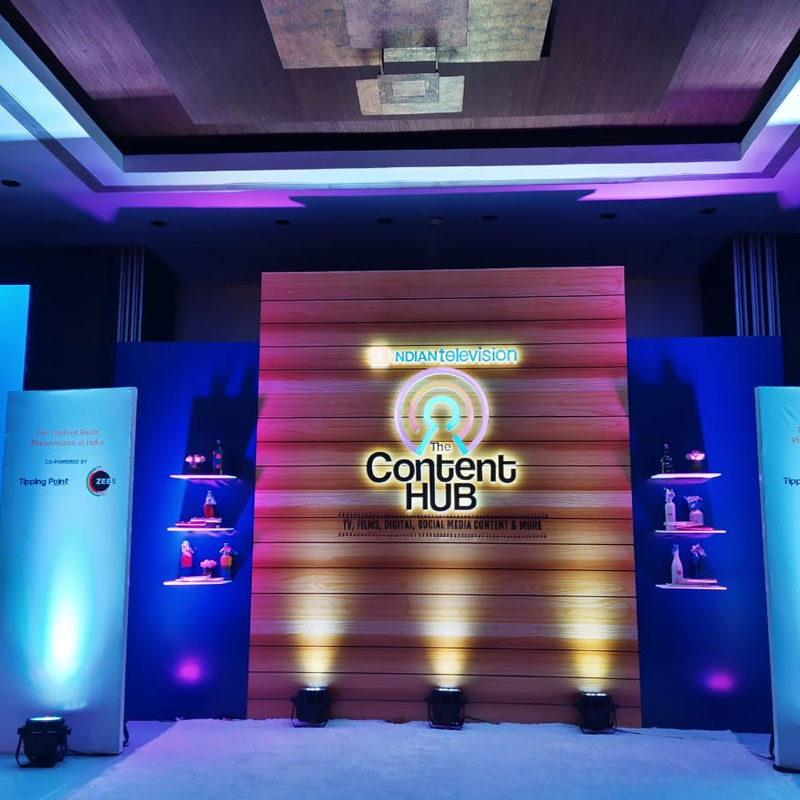
    MUMBAI: India’s content creation community will head to The Content Hub 2020, India’s largest content creators’ gathering organised by Indiantelevision.com, today and tomorrow (4-5 March 2020) in Mumbai’s Sahara Star Hotel.

    The Content Hub has been designed as a coming together of thought leaders in the creation and production of films, TV shows, OTT digital series, short-form digital videos, and podcasts. The conference will also have masterclasses and workshops by writers, directors and creators of some the biggest box office and viewing hits.

    “There’s a tremendous demand for content – video and audio – and there is not enough quality supply to meet it,” said Indiantelevision.com Group founder, CEO and editor-in-chief Anil Wanvari. “The Content Hub is bringing together leaders from both the business and creative spaces of film, TV, OTT and short form content to catalyse new ideas, conversations, relationships, opportunities for those involved in the content ecosystem.”

    Close to 80 professionals will discuss and share the experiences of their journeys and giving insights on how success can be attained in the content creation ecosystem through fireside chats, presentations, and panel discussions. 

  • ‘Shubh Mangal Zyada Saavdhan’ director Hitesh Kewalya to speak at The Content Hub 2020

    ‘Shubh Mangal Zyada Saavdhan’ director Hitesh Kewalya to speak at The Content Hub 2020

    MUMBAI: Shubh Mangal Zyada Saavdhan has been hogging B-Town limelight for the last two days. One of the major attraction points seems to be the recreated version of the 80s hit track Yaar Bina Chain Kaha Re, which has already taken social media platforms by storm. It seems director Hitesh Kewalya’s debut feature is treating him well.

    Kewalya will share inputs on content creation and its business at Indiantelevision.com’s two-day-long event, The Content Hub 2020. The fourth edition of the summit will be graced by the biggest producers, studios, content creators, and platforms involved in the feature film, television and digital, along with the makers of international content that has worked in India.

    He is an alumnus of the National Institute of Design, Film Department, started his career as a writer on the radio in 1998. Jumping through various fields like theatre, advertising, cartoons/illustrations for a magazine, he finally found his calling in Mumbai in 2005. Over the years, he has worked across genres like feature films, advertising, television dramas and short films as a screenwriter and director.

    Is Modh Pe Kuch Nahin Hota, Rhythmatics, Man Of The Match are among some of his award-winning short films. He has also written for popular shows such as Miley Jab Hum Tum, Is Pyaar Ko Kya Naam Doon, Nisha Aur Uske Cousins.

  • Cinema content producers still discovering audience taste

    Cinema content producers still discovering audience taste

    MUMBAI: The Indian movie industry is one of the richest in the world and its content has been gaining patrons worldwide. But producers still believe that the industry doesn’t have the pulse of audience preference.

    The point was raised at the third edition of Indiantelevision.com’s ‘The Content Hub’ during a panel discussion on how new Hindi film producers are making their mark and what business models they are drawing up. The panel included Essel Vision (Zee Studios) CEO Shariq Patel, Viacom18 Studios chief operating officer Ajit Andhare, Alliance Media and Entertainment owner Sunil Doshi and Fox Star Studios India CEO Vijay Singh. Moderating the panel was film reviewer at Film Companion Suchitra Tyagi.

    Singh said that though we do not have an absolute understanding, we are better informed than we were few years ago. "Let me just give you some facts. Theatrical in India was going single digit till last year, where it actually has its most record breaking year and the business has grown by 14 per cent. Correspondingly, even if you look at Hollywood, last year they have had their biggest theatrical year," he said.

    However, Patel was of the view that the reason behind this is the constantly emerging trends. He shared that it is not possible to foresee or sight the changes in what the audience deems popular.

    Reflecting similar thoughts was Andhare who said, “Trends and cinema are two terms which are not friends with each other, because the moment you try to say this is trend you will falter. You can safely say that yes content has to be taken more seriously, just the package film which used to a success few years ago may not work.”

    He further added, “Also from a purely film business point of view, if you see a movie goer base, it is actually divided in three major markets, Hindi is just one, and the other two big bases are down south. So if you really want to address the entire consumer base for cinema in this country, you have to address all these three and from that stand point regional becomes extremely relevant.”

    There is a great opportunity to be a content producer today. "There is a huge opportunity in OTT and I can tell you that in films there is equally large opportunity. What has happened in Hollywood over the last 10 years, because the contribution from outside America started going up. 10 years back international content contributed 30 per cent and today it contributes 70 per cent. That is the reason why studios are working on franchise films or the few films which have the ability to actually travel across the globe,” Singh concluded.

  • Sameer Nair on Applause Entertainment’s shows, content creation and trends [Part 2]

    Sameer Nair on Applause Entertainment’s shows, content creation and trends [Part 2]

    MUMBAI: This is the second part of Indiantelevision.com’s conversation with Applause Entertainment CEO Sameer Nair. You can read the first part here.

    So within your company, is a format kind of a lab being developed going forward? Because I see opportunity in format, paper formats too while you’re creating content and you’re going to start licencing it in stage two I presume. That will be next year after the first wave is sold out.

    We hope the first of our shows streams at the end of March, so let’s see.

    So when will your agreements allow you to sell those globally?

    It depends. Some will be after a year.

    In the meanwhile are you looking at setting up a format lab? Like Zee has set up a format lab which is working on creating formats, Star is working on formats in house.

    No, I don’t think we are doing that. Currently, we are focusing on drama and fiction, not so much on the non-fiction part of business. And within that, if we find something that we really like, we proceed to make it. We are not really making a paper pilot or a pilot.

    We are not really making globally relevant content whereas the Turks make it, the Koreans are more advanced as a culture so their shows travel, but Indian shows are not really travelling, we’re getting $200, $250, maybe a Porus might get $3000 or $2000 per hour but not all shows are getting the money that they should.

    Actually, apart from US content which is the English content and which is what makes it a globally dominant soft power, I don’t think any other content is genuinely travelling.

    Today Turkish content is going at $150,000 an episode in west Asia.

    What I’m saying is that we’ve got a very large market, we’re a billion Indians. In any case, you’ve got to decide who you’re making this content for. There’s something known as primary audience and secondary audience. Narcos was not made for us, it was made for Latin American and North American audiences. We happened to like it, it went on to become a global hit and well, good luck. Like that, I’m sure a 100 other shows are made which we haven’t heard of. So what I’m saying is that as far as we are concerned, we are focused on telling great stories and we are catering to an extremely large Indian audience.

    Some shows do travel but you can’t set out to make something thinking it will straddle a global audience, even the Americans didn’t do that. When the Americans made Seinfeld, they didn’t make it to make Indians or Koreans or Japanese laugh, they made it to make Americans laugh. That the rest of the world laughs with The Big Bang Theory or FRIENDS or House of Cards or whatever is a happy outcome. So I think from a content creation point of view, we’ve got to focus on how we can tell great stories, how we can monetise those great stories and how can we make this business profitable.

    So you’re investing in production value, you’re investing in writing and I see that you’re investing in the cast.

    You’re investing in good actors, you’re investing in good writing, you’re investing in production values, good directors, you’re making these like essentially extended films, it’s all produced at one go, it’s post-produced at one go, so we are doing that and we should invest.

    Will all of these travel or will some of these travel?

    Some of these will travel, all may not. For example, The Office comes from abroad and I believe that a show like that should be made in every country because every country would have this dull sleepy office with the horrible boss from hell and the other terrible people we work with. But some will travel, I think something like City of Dreams will travel, that’s a nice political story. I find too many of my colleagues in this business stand on the shore and look towards the sea. I think we are a large enough country to stand on the shore and look inwards.

    That’s why Hollywood is a soft power.

    Hollywood is a soft power not for what they’re doing, it’s because it’s driven by the language.

    Roma is a Mexican film that went on to win so many Oscars.

    You know what, it is a cool fashionable thing to say that we should be all making stuff that the world applauds.

    But if you put sub-titles, everybody watches.

    I’m not disputing it, I’m saying that you’ve got to run a business, it is called showbiz. There’s show and there’s biz and they go together. So when you’re running a business you must be clear as to why you’re doing it. It cannot be for an amorphous global audience. If it’s a good story, the world will watch.

    There’s a science to get the world to watch, getting recommended, the social bars, etc.

    That comes after you’ve made a good story.

    Do you have a strategy to build this globally? Would you be investing as much to push these globally?

    It’s a process. You don’t plan for all these things, you’ve got to make it, you’ve got to put it out there, it gets some traction, it builds an audience, the word of mouth spreads, when things are going well you keep adding to it, it’s a process. I don’t think Ramesh Sippy set out to make Sholay, he set out to make a movie that proceeded to become Sholay. That’s how it goes. Everything happens like that.

    I believe that you’re more evolved than Ramesh Sippy in terms of understanding the ecosystem.

    No, not like that. I’m saying that even when you take a movie like Dangal, it went on to become a big success in China. In hindsight, we can all be geniuses and have 100 million reasons why that happened. But in the process of making it, it was not being made for that audience, it was being made for an Indian audience is what I’m saying.

    So around IP sharing, you’ve always told me that put your skin in the game then I’ll give you a piece of the action. The industry has started putting money where their mouth is. Producers like Siddharth Tewary, Abhimanyu Singh, Asit Modi have been putting their skin in the game and they’ve been retaining IP. How’s that going for you now that you’re on the other side?

    I remain exactly where I was. I think there should be a share of the spoils definitely because there’s a certain degree of a creative investment, there’s a certain degree of financial investment. I think it’s fair enough for people to want to have a share of it. So we are continuing with a similar model, we’re happy to do that. When I talk about putting skin in the game, I mean that. Not everyone has money, but there are different ways to do that. But again there’s so much debate that keeps happening about IP, that where are the shares of IP? I think the first important thing is to create IP. If you create intellectual property then you can derive value from them.

    I find too many people talking about IP without ever having created IP. So I think that focus is important. Beyond that, different models will emerge, we are already doing that. A lot of the international shows that we buy are represented by format owners who then proceed to give a share of what we have sold it for back to the original creator. It’s a process, internationally it’s been done forever. So I think it will happen in India as well. If the content community is not careful at this point in time, then it will just be a replica of TV.

    Do you fear that it could end up being a replica of what happened in TV?

    Currently, it seems to be approaching it in that manner, as in you get commissioned and that’s it, you have nothing left. If you indeed want to have a play beyond that, you must be willing to give up something, you must be willing to put something and you have to figure a way around it.

    So what are the different models that are available? Do you give the story rights, dubbing rights, sub-titling rights, Indian language rights, film rights or animation rights?

    No, this is an evolving market. Currently, the position is that we give nothing or we get nothing. But I think as it gets along it will sort of play out.

    Which of these will play along in the market or be more relevant to India?

    There are at least 10-15 streaming platforms. These are the early days, everyone is well funded, obviously serious competitors, nobody’s going away in a hurry, so I think the next 2-3 years will help define that as to who pulls ahead, who falls back, what kind of content works, how India responds to it and all of that. Currently, the default position of all the broadcast players is, well we want everything, even if it never goes on TV.

    So in terms of exports, we haven’t really grown.

    Again, now what will happen is you’ve created this great show, and it’s going to go onto a global platform, but now the platform itself wants to dub it into all international languages.

    If they give you a piece of it?

    So you’ve got to work all that out, it’s got to be figured out but the thing is that everyone is pushing in that direction. So your dream of having an Indian show that the whole world watches is around the corner now.

    Do we need legislation in place?

    I think that ship has sailed. Legislation and the opportunity of making a law out of this is long gone. This happened in the US in the 60s. Now I think if we indeed want to resolve this problem, we’ve got to be more creative about this. They’re not going to get a law passed.

    Javed Akhtar did that for the music industry.

    It’s a royalty thing. And the control of monetisation still rest with the music companies, it’s not with the composer.

    So at least, could we move in that direction?

    No, so the way to do that is for all the content creators to sort of galvanise and unite and work together and try and attract more money to the content creation business and have people believe in the process, believe in the thing that you can create content and that content can then be sold. Currently, the thing is that it sounds very risky, you’ve got to get commissioned from someone. If somebody is going to give you the money then I’ll move and make something. As long as it exists in that manner, it’s always going to be a hard sell and especially for something as large as a content business. A piece of music, a song, these are smaller pieces of content

    So you don’t see a solution?

    Not legislation, not at all.    
  • OTT platforms need more passion projects, experimental content, original voices

    OTT platforms need more passion projects, experimental content, original voices

    MUMBAI: 2018 saw various OTT players in India gain massive popularity. There are more than 30 sites serving hours and hours of original as well as syndicated content, in various languages, genres, and tastes. During the third edition of Indiantelevision.com’s The Content Hub, sponsored by MX Player, representatives from some of the top OTT platforms in the country the need of good and meaningful content and the kind of programs that can work in this dynamic world.

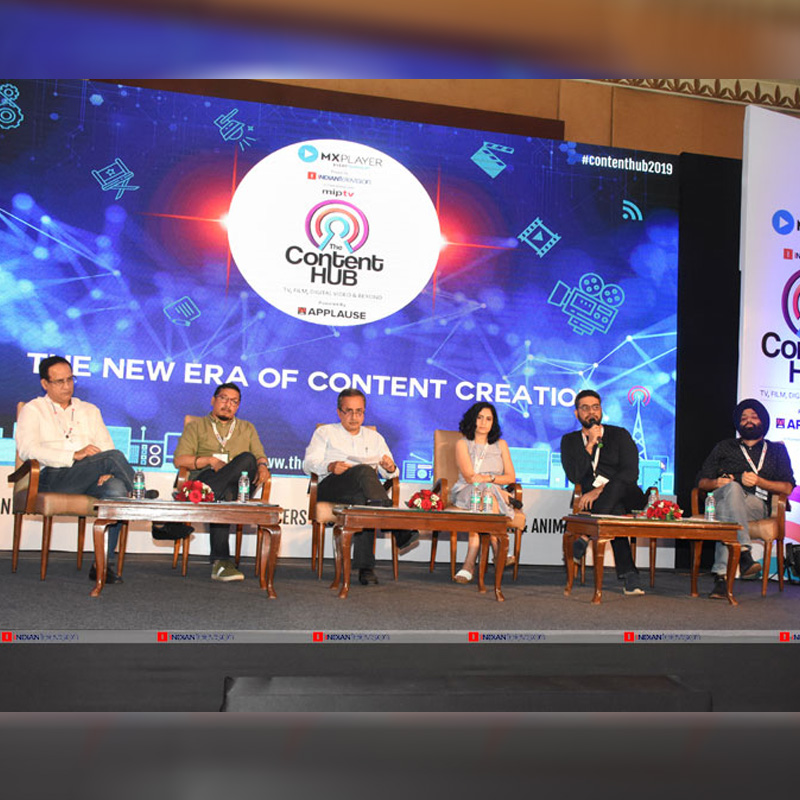
    Part of the panel were Addatimes Pvt Ltd managing director Rajiv Mehra, The Viral Fever (TVF) global head of business and content Rahul Sarangi, Viacom 18 EVP and head content Monika Shergill, MX Player chief content officer Gautam Talwar and One Digital Entertainment COO and co-founder Gurpreet Singh. The panel was moderated by industry veteran and Hungama Digital Media Entertainment executive producer Sanjeev Lamba.

    The panel unanimously agreed on the fact that the greatest need of time is to procure and create high-quality original content that resonates with the audience. They stated that all the logistics; be it production or budgets, come only after people who can create and write quality content.

    Shergill said, “The competition to find good creators and partners to tell great stories is actually, by far, the single biggest challenge that we face because I feel that as a market, we kind of missed out on the golden age of content creation. While the world was producing a lot of mature content, we were leaning towards only soap opera kind of stories.”

    Sarangi chipped in with some fine examples of the work that TVF has created, “To see what kind of content people watch, we pulled out a few episodes of ‘Yeh Meri Family’ from YouTube and then put it on Netflix. The show became the second-most trending content in India and has a completion rate of 70 per cent. Because the writing was so strong, people came and watched it again and again. Similarly, with ‘Pitchers’, it wasn’t a grand show shot on high production budgets like ‘Sacred Games’. But it became the highest rated show on IMDB, just because of good writing.”

    He added, “I think the biggest thing we need to do right now is to invest in good writers. Also, we need to give them the time and pay them well. Groom the talent! Writers are going to be the prime thing that we need.”

    Moderating the panel, Lamba put another pertinent question forward asking what sort of content OTT platforms are willing to back. To this, the panel hailed the need of bringing original voices to the paradigm that are not just fresh but can also add on to the type of content that is already working on the web.

    Talwar mentioned that being the newest kid on the block, MX Player is currently trying to understand what the viewing pattern of the audience is. He said, “We have licenced quite a lot of content from people who have a high experience in actually creating successful web series, including TVF, Pocket Aces, and ALTBalaji. We have put this content online and now we are using a lot of data to understand what actually works in the space.”

    He continued, “Essentially, we are looking for content that is going to appeal to 18-30-old males, largely from North India. But it is genre-agnostic because I believe, people today watch everything. We are looking out for authentic stories from heartland India as they work well with the metro audience as well.”

    Mehra also agreed that the audience today loves watching all sort of content, be it long form or short form. He mentioned the need to experiment with the duration of the content and tell stories that the audience can connect to.

    While Shergill vouched for the need for passion projects and experimental content, Sarangi shared that they are looking for stories that touch the hearts of people. He stated that TVF will not indulge in violence or sexually explicit content, at least for a few more years.

    The panel also discussed the much-debated topic of IP rights. Shergill noted, “IP is something that is very important because this content is meant for posterity. You are believing in someone’s idea and paying to the last stream. So, the skin of the game for any platform is to have IP rights with them. But having said that, I also feel that when we know what kind of content creators we are speaking about, then there may be certain different models to work. But when you are working with teams of creators, and backing their idea, IP is the only asset you are creating and you should have the right to it.”

    Sarangi mentioned that as a company they do not sell their IP rights despite having worked with several OTT platforms. He said, “The reason behind this is that it is not only about production cost. It is also because of the time and effort put in by the creative team. We thereby do mostly an output kind of a deal or a licencing avenue. Also, we can do this at this point in time because we can guarantee a hit rate.”

    However, Singh shared a different angle and said, “IP has become a very crude word. Most people don’t even know what the value of an IP is. People are just fighting for it right now but they don’t even know what they are going to do of it after two or three years. So, I think if you are being compensated for the value, you must sell the rights to the platform.”

  • Sameer Nair on Applause Entertainment’s shows, content creation and trends [Part 1]

    Sameer Nair on Applause Entertainment’s shows, content creation and trends [Part 1]

    MUMBAI: Sameer Nair isn’t a man in a hurry. The seasoned media and entertainment industry executive describes the content creation business as a real get rich slow scheme and not a get rich quick scheme. He’s in it for the long haul and he’s here to stay. The Applause Entertainment CEO, who has been witness to many seismic shifts in showbiz, is among the most important and influential figures in the OTT ecosystem as India and the word scrambles to deliver consistent and credible content to consumers. During the third edition of Indiantelevision.com’s The Content Hub 2019, Nair gave the audience a tour d’horizon of the Indian and global content landscape. In conversation with founder, CEO and editor-in-chief of the Indiantelevision.com Group Anil Wanvari, the 53-year-old offered key insights into his company’s plans, creating content in today's age and making shows that grip the audience.

    You're collaborating with a diverse range of producers, there’s Deepak [Dhar], you’ve got BBC and you’ve got Nagesh [Kukunoor], so how did you go about selecting these guys to produce for your studio model?

    Actually, I’ve been working with all of them for all these years so we’ve done a lot of work before. When we set up Applause, the thought was to invest in content. I didn’t want to set up a company and be a production house because that’s not what we are, what we are is a studio which is investing in the production of content and we’re working with the best talent, best production houses, best writers, international formats, books, all sorts of things and we are investing money in content and then once its ready then we show it to platforms and hopefully they like it.

    So the thing was that you knew these guys and you knew that they could deliver, what if there’s someone absolutely new but has great ideas?

    No, actually it’s a mix. For example, Rasbhari is made with a producer called Tanveer Bookwala of Ding. I’ve known him from Balaji, but his is a relatively new company. Rasbhari has been selected for the Series Mania Festival in France as the only show from India, so it’s a big deal. It’s not necessarily about the big names, it’s really about storytelling and there’s a lot of creative talent out there and I think this premium drama series opens a whole new world because there is daily soap television for the fiction space and then there are the movies and that's a totally different beast. This is opening up a whole new world for writers, for directors, for creators and for actors. It’s not star-dependent, we work on great stories.

    So how far down are you on the road that you want to take? You’ve got about six series on board?

    Now we’ve produced 10, we’ve also done something in Tamil, we’ve also done a show in Bhojpuri, and we’ve of course done Hindi. We’ve got another 10 in production, we’ve got another 15-20 in development, so it’s actually quite a lot.

    Are you getting a good price on these or are they licensing deals?

    It’s both, it can be licencing, it can be outright, as in it depends and different platforms have different strategies and not necessarily every show works for everyone. Different people have different ways of doing it, but either way, I am here to help the platforms and work with them. They’ve got the harder job because they are the B2C business, they are the ones who’ve got to acquire customers, they’ve got to retain customers, and they’ve got to spend millions of dollars in doing all of that. What the biggest driving factor in customer retention is the quality of the content and the price you’re giving it at. 

    Are you getting the prices you want or is there a gap? My understanding is there is a gap.

    There’s no such thing as prices you want. We are not in any sort of 'get rich quick scheme'. This is a real 'get rich slow scheme'. I’m in no hurry. We’d like these shows to be liked by the audience, which should then allow us to do multiple seasons. That would be the thing. The platform should be happy and it should get a lot of traction.

    So that’s going to be the first outlet of sale. What happens after that? Do you go out globally with this or do you retain it for a while?

    It depends. On some shows our platforms are international platforms, they tend to be everywhere. In some cases, we have domestic platforms so there’s something left on the table for us to continue to sell. We are talking about language dubs, both domestic and international. We are talking about making the same show in another language when we get a chance. It’s brand new, we are a year and a half old, now we are doing our first round of deals, the shows will come out, and we’ll do a lot more.

    I think this is a great time, so we are investing in content and I think this is the time for all content creators to genuinely put their money where their mouth is because you keep hearing this debate about IP and ownership and is there anything left for us and all of that. This is the moment in time where it is possible for all the creators to get out there.

    Let’s talk about creativity in India. I’m seeing a bit of unfurling of creativity, a lot of creativity is being unleashed. Do you think that it has or there still needs to be a lot more unleashing of creativity?

    I don’t agree with this that we are somehow unleashing creativity now. If you take Indian cinema as an example, every year, and you can pick any year at random, has always produced a mainstream blockbuster that has gone out to become a hit, it’s also produced a big mainstream blockbuster that has bombed. In the same year, there have been sleeper hits and there have been art house movies.

    But now what appeared to be art house movies are becoming big hits.

    No, I’m saying even if you take the year for example when the movie Naseeb released, it was the big AB (Amitabh Bachchan) movie of the time. That was also the year Jaane Bhi Do Yaaro came. It was not an art house, but it went on to become a very successful movie. So this has been happening always, so what happens this year, happened last year, happens every year. I don’t think we have a problem with creativity. India is a very creative country. We are creative with accounting, we are creative with politics, and we are a creative country.

    But that being said, I think what is happening now is that the market has grown so we are spending more money on it. But the focus should be on content because that is the soul of the business. Finally, the consumers don’t know what’s behind the screen, they only know what’s on the screen and in this new digital world they just push play and if it captivates them and it holds them, they’re watching or they go away. So while all the tech is important and everything else is important, finally the consumer interface is the content.

    Haven’t you got stories being told that could not be told before?

    Of course.

    So in that sense, it’s unleashing the writing.

    It’s a good thing. Actually when you think about it, before satellite TV came Doordarshan used to do this. Doordarshan has done Tamas and Khandaan. Doordarshan has done a partition story. So there has been great work that has already happened on Doordarshan. Then satellite TV came along and it took the market in a direction and then the daily soap operas came along and took the market in an even more skewed direction. But that doesn’t mean India has not done that. So this is a good opportunity.

    But the filmmakers are looking at this as an opportunity too..

    This actually happened in the US in the late 90s. In the late 90s, TV had got to a point and Hollywood had become really big and that’s when premium drama broke out in the US, starting with HBO and Sopranos and then Showtime and everything else. In fact, a lot of Hollywood, all the film guys moved to TV. That was the golden age of American television and radio and it continues today. This, I hope, is going to be for India.

    Have we developed a Chuck Lorre in India? Will you do that?

    We will do that. It will happen. It’s just started. We are trying to work on an animated series, we are doing a lot of development on all sorts of new genres, all sorts of crazy shows. Rasbhari is that kind of show. We are doing a show called Salt City. It’s just about relationships, there’s nothing else to it. So there are so many things that are happening.

    I want you to commit that you’ll get a Chuck Lorre kind of a guy who can do the shows that he does in America in India.

    It depends. Chuck Lorre does a lot of shows, so it’s not just one type. So in that sense, many of these shows have been made and they have been made in India, some have worked very well, some have not. I don’t think Asit Modi is anywhere lesser than being Chuck Lorre. He is our version of it. We shouldn’t be bedazzled by that, but on the other hand, of course, there’s so much to learn, there’s so much creativity and so much stuff that they’ve done which we can adapt, which we can learn from. I don’t like to rip off anything, so I prefer to adapt.

    (Part 2 of this interview will be released tomorrow) 

  • OTT has been favourable for animated content

    OTT has been favourable for animated content

    MUMBAI: Much of the Indian TV market is ruled in one way – the broadcasters keep IP rights for the shows and not the production houses. The scenario is the same whether it’s Hindi GEC or kids or lifestyle. Indiantelevision.com’s The Content Hub hosted a panel discussion ‘Animation Producers: Getting Animated’ with panellists Discovery Kids head Uttam Pal Singh, Golden Robot Animation head of business development RK Chand, Paper Boat Animation chairman, creative director Soumitra Ranade and Biscopewala managing partner Nishith Takia. The session was moderated by Kinsane Entertainment CMO Pranab Punj.

    Emphasising the retention of IP rights, Ranade said, “IP creation is a big thing and for this socio-political aspects are to be kept in mind as to what kids are watching now and five years later. But for this, we need to create relevant stories. It’s not going to work if we make B grade version of Disney or Pixar.”

    Singh said that Discovery Kids is making relatable shows for the Indian market and targeting global reach with OTTs. The idea behind making Little Singham was to create an IP and make it a brand.

    While speaking of the emergence of OTT platforms, Singh was of the opinion that he has not seen significant investment from the OTT players to create IPs which come to the OTT platform first and then on linear television. He added, “While OTT is growing and most of the English TV genres have been affected immensely in terms of audiences, the kids' genre, on the other hand, has grown on Indian television. It has grown to 8 per cent as per BARC report and we still see that a broadcaster has maximum reach as opposed to OTT platforms.”

    Moreover, Chand said that OTT platforms have given them the scope to explore new ideas and stories. He said, “The entire catalogue of Chhota Bheem was the first kids content on Amazon. OTT gives us a range of audience that isn’t restricted to TV. Netflix and Amazon have enabled us to innovate stories and characters.”

    Takia revealed that his company is talking to OTT platforms in a bid to make content for them. He added that budgets restrict the quality of animation. “We feel that very few people understand the aesthetic behind the project. Budgets also restrict the quality of animation. If you want to create high-quality content, you need high budgets,” he said.

  • Indian content owners, creators don’t value own content

    Indian content owners, creators don’t value own content

    MUMBAI: The third edition of Indiatelevision.com’s The Content Hub had an insightful panel on the global syndication market. The panel consisted of Go Quest Media ventures MD Vivek Lath, Swastik Productions and One Life Studios MD Rahul Kumar Tewary, MX Player head-content acquisition Mansi Shrivastav, Sony head networks – licencing Malvika Prabhu and ANM Global co-founder partner Nidhish Mehrotra and moderated by Indiantelevision.com founder, CEO and editor-in-chief Anil Wanvari.

    Go Quest Media ventures MD Vivek Lath said that a lot of countries are now doing indigenous production. “But what they lack is the kind of creative maturity and evolution India has gone through. That’s where we see much larger opportunity going forward.”

    Swastik Productions and One Life Studios MD Rahul Kumar Tewary said that the demand for Indian content has reduced over time. “But what we need to understand is what kind of content we are creating. Does it resonate with the international audience or are we only catering to the Indian market? In the end, it is a business and we only cater to the Indian market. But if we really want our content to travel the world, I guess we need to re-look at what kind of content we are creating,” he said.

    Another issue syndication faces is that, according to Lath, Indian content creators don’t value their content as people from Korea, Turkey and China do because of which it is underpriced. Tewary agreed with Lath and said, “Turkish, Chinese and Korean dramas have got a standard market price. No one brings the market price down. So they value their content. Unfortunately, we are the cheapest. You can sell it for $50-70.”

    Much of Indian content travels to Southeast Asia because it has a similar market. In India, shows are telecast for 5-6 days a week which is 260-312 episodes a year. It becomes difficult to sell so many episodes across the world because the appetite for such viewing is lacking. With Thailand emerging as a new market in the last two years, it helped cushion the impact from the other markets. Latin America is also a promising area but tough to crack which Tewary feels will open up soon.

    The genres that are doing well currently are animation, fantasy, mythology and the modern drama series. Experts also foresee a future demand for Indian horror thrillers on OTT platforms, because of their high production quality. Lath believes that GEC dramas are the fastest moving in the international markets across 60-odd countries.

    The deciding factor for content buying is the platform. MX Player head-content acquisition Mansi Shrivastav said, “I think for OTT there is more flexibility because there is an ability to programme for an individual customised experience. When you are buying for linear TV, you have to keep the overall target audience in mind and there is only one kind of programming."

    For OTT, there is still limited data available on usage and behaviour patterns. But sometimes, you follow your gut and take a risk. MX Player has just bought 100,000 hours of content which varies from two-minute videos to long-form series. “Movies in each language are important to us because there is a lot of traction for that. But we are buying across top ten languages; we are giving a lot of importance to regional markets including Tamil, Telugu, Kannada, etc. and Hindi, of course, is a key language,” Shrivastav added.

    According to experts, the Indian content export business excluding movies is around Rs 400 crore as the syndication of Indian content started only from 2007 onwards. “I think in the future, animation is something which is going to add on a lot of export to India in the next 5-10 years,” Tewary concluded.