Category: Content Hub

  • There is only good TRP and bad TRP show on TV: Sandiip Sikcand

    There is only good TRP and bad TRP show on TV: Sandiip Sikcand

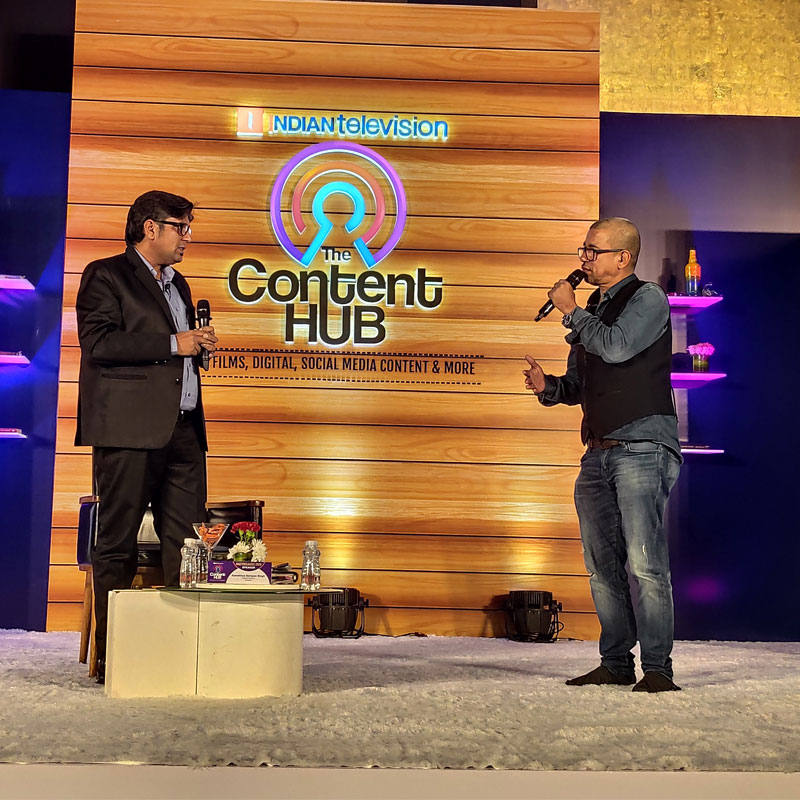
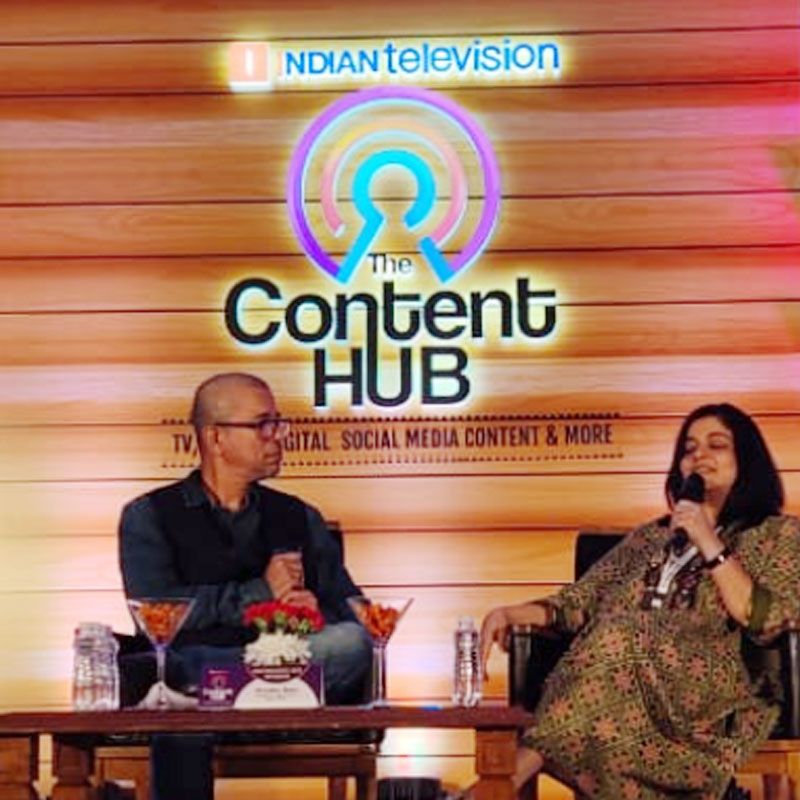
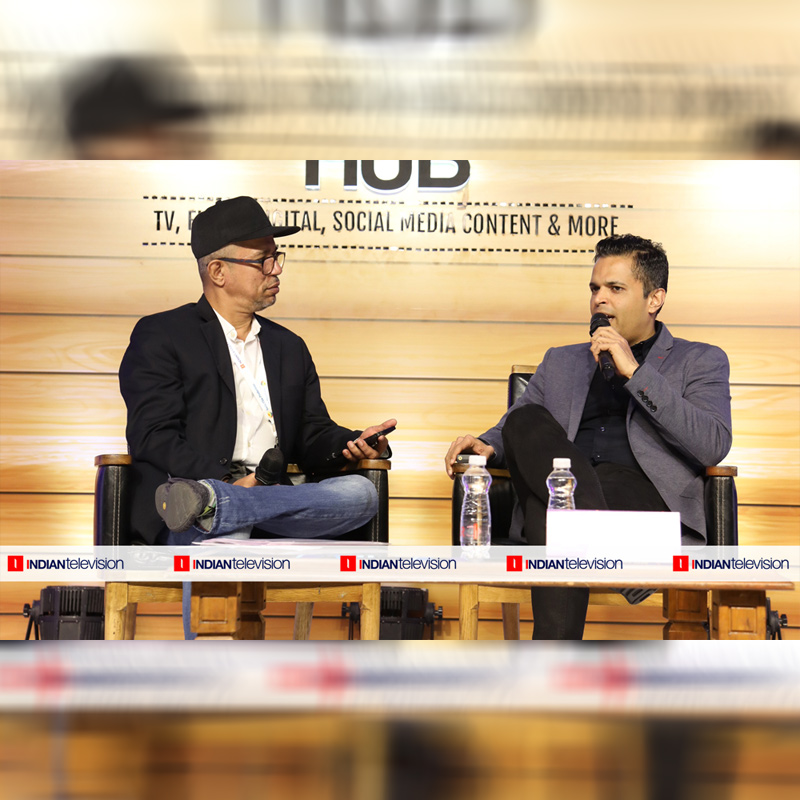
    MUMBAI: In one of the sessions of day 2 of The Content Hub 2020 organised by Indian Television.com, Sandiip Sikcand shared his thoughts on the challenge television is facing today in a conversation with Indiantelevision.com editor-in-chief, CEO and founder Anil Wanvari. He also briefed the audience on his journey from being a garment exporter to creative director to creative head to producer.

    Sikcand said, “I am a classic example of who can learn at the place of work. My first job in the industry was with Balaji Telefilms’ Kayaamat as a creative director. I have learnt from the best teachers in the industry on how to create characters and take risks.”

    He also said, “The channel people are in same level of stress what the creative people or producers are. I understand both the side and bring learning lessons from the creator and channel and that’s what make me a successful producer.”

    “Over the period of time I have learnt to create characters who resonate with viewers, early from Parvati in Kahaani Ghar Ghar Ki to Sonakshi in Kahaan Hum Kahaan Tum. Creative head is someone who brings everything to one spot. He/she takes the show from his/her thoughts to screen,” said Sikcand.

    He added: “Yes, we are taking off Kahaan Hum Kahaan Tum but that won’t stop me from creating different stories.”

    Sikcand also believes that the challenge television is facing today is in creating sticky content. “With OTT coming in picture today everybody has an opportunity to watch the show anywhere and anytime on their phone. It’s not like another time when people would rush to catch up their favorite show on television.”

    He also said, “OTT is a blessing and a curse as well. Curse because television doesn’t have a privilege to create any kind of content. So, if television needs to survive we have to keep on telling and creating different stories.”

    He opined, “Television also needs to do things similar to OTT like they only care about views and not about TRPs. Television needs to keep the rating aside and focus on creating good shows. I understand advertising comes from TRPs but we need to change all of these.”

    Sikcand added: “The problem with television is that there is no good or bad content, there is only good TRP show and bad TRP show.”

  • Jyoti Kapoor on high-concept films and screenplay

    Jyoti Kapoor on high-concept films and screenplay

    MUMBAI: There is a myth in Bollywood that high-concept cinemas don’t find their way to the box office. But the economy of film-making is going through a change and more small budget story-driven films are coming out as hits. The list is long with Badhhai Ho, Raazi, Andhadhun, Thappad, Shubh Mangal Zyada Saavdhan and The Sky is Pink.

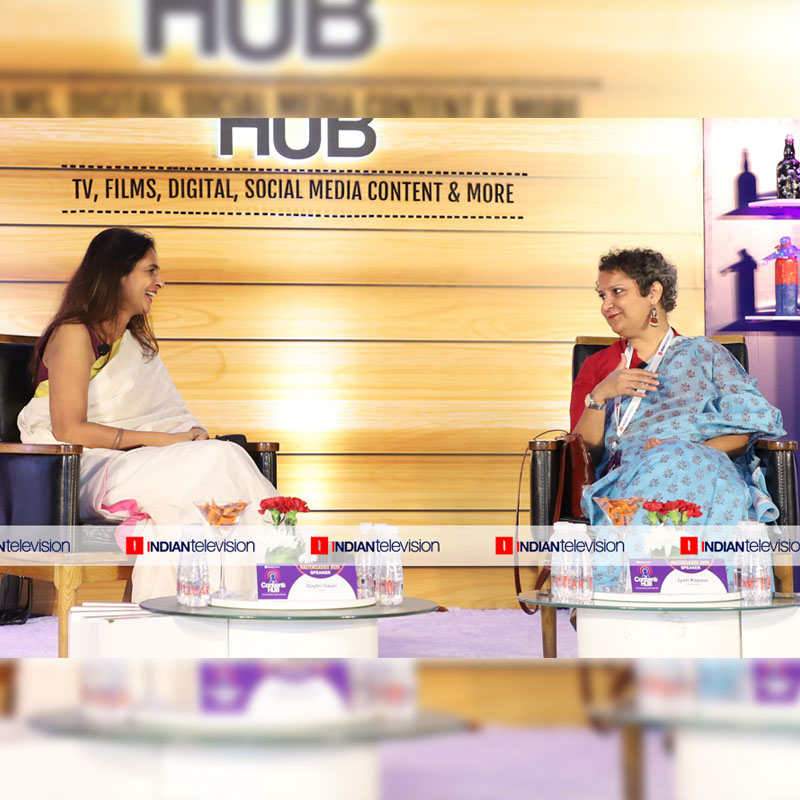
    At The Content Hub 2020 Masterclass, Jyoti Kapoor, writers of films like Badhhai Ho and Good Newzz in a candid chat with film-critic Gayatri Gauri shared insights on high-concept films.

    Kapoor said that high concept story is something that is unique and the premise of the film can be defined in one line. However, according to her all good films are not necessarily high-concept driven. She also shared experiences of her early professional life as a journalist which helped her later as scriptwriter also. Although she did not reveal too much she said that real life definitely reflects in her works.

    She also added that constant work teaches you how to make a synopsis less boring, how to balance between breaking and following a screenplay structure. While there are chances of story ideas being stolen, she said that chances of ideas getting tampered increases if a one-page story synopsis is being shared.

  • Case study on Marathi web series ‘Pandu’

    Case study on Marathi web series ‘Pandu’

    MUMBAI: Pandu is a Marathi comedy web-series on the everyday life of Mumbai Police starring Suhas Sirsat, Deepak Shirke, Abish Mathew and Trupti Khamkar. A session at The Content Hub 2020 Day 2 organised by Indiantelevision.com was a case study on Pandu by the creators of the Marathi series. 

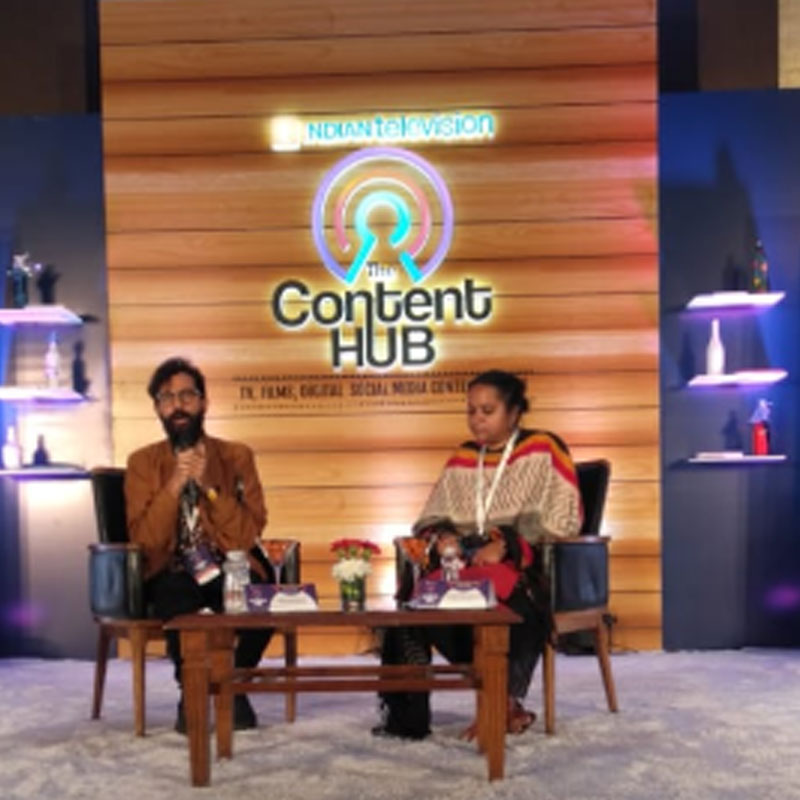
    Gulbadan Talkies founder and creative director Sarang Sathaye and co-founder and director Anusha Nandakumar briefed the audience on the establishment of Bharatiya Digital Party (BDP). 

    Sathaye said, “We wanted to have our own voice on the digital space in a long format series. We started with the idea of making our own digital platform, so we started to make Marathi digital content in BDP four years back."

    Speaking on life before the making of Pandu, Sathaye briefed the audience on the struggle they went through in creating what they actually wanted to create. He said, “Despite having numbers on our site we were struggling to mark ourselves as a creator that can create long format content too.”

    Nandakumar said, “Lots of Maharashtrian youth were not watching Marathi content because they were not able to connect with the shows. So, we felt the need to create Marathi content that connects well with viewers. Pandu is a typical Maharashtrian comedy series and we are happy that MX Player supported us. The show is about what happens to Singham when he goes home.”

    Sathaye believes comedy lies in our regular conversation. “For us Pandu is made of all our day-to-day unique moments. Every episode is theme based," he said.

    He further said, “There was hardly any platform that was backing regional content and MX Player truly supported us with Pandu. Makers should look at regional content and make Marathi content to that extent that one day people will wake-up to watch Marathi content in the US like we watch Game of Thrones here.”

    The creators also spoke on challenges they faced in hiring talent for the show and selling the content to the OTT platform. 

  • Visuals are as important as storytelling for content, says Travelxp’s creative director

    Visuals are as important as storytelling for content, says Travelxp’s creative director

    MUMBAI: Along with storytelling, the impact of visuals is also important, says Travelxp creative director Kamakhya Narayana Singh, while addressing the crowd about the advantages of 4K and 8K format experience on day two of The Content Hub 2020, an initiative by Indiantelevision.com.

    Travelxp is the first Indian travel genre broadcasting channel to come up with high quality viewing experience of 4K and 8K to the viewers.

    Singh mentions that the concept of 4K is not just about enhancing pixels but making the screen and viewers' experience beautiful. He adds that it may take time and investment to produce 4K content but the results they achieved were tremendous.

    Producing content is a futuristic process and it’s done for the generations to come, said Singh. “And, it is very much viable in terms of returns as it increases the viewers' experience altogether,” he said.

    He said, “The channel, Travelxp, made a difference and mark in the broadcasting industry because of the quality of content in 4K and 8K that we started producing. However, it took us time to understand what 4K is but eventually, it started bearing results for us.”

  • Writers are the key to creating great content: Radhika Gopal and Caleb Franklin

    Writers are the key to creating great content: Radhika Gopal and Caleb Franklin

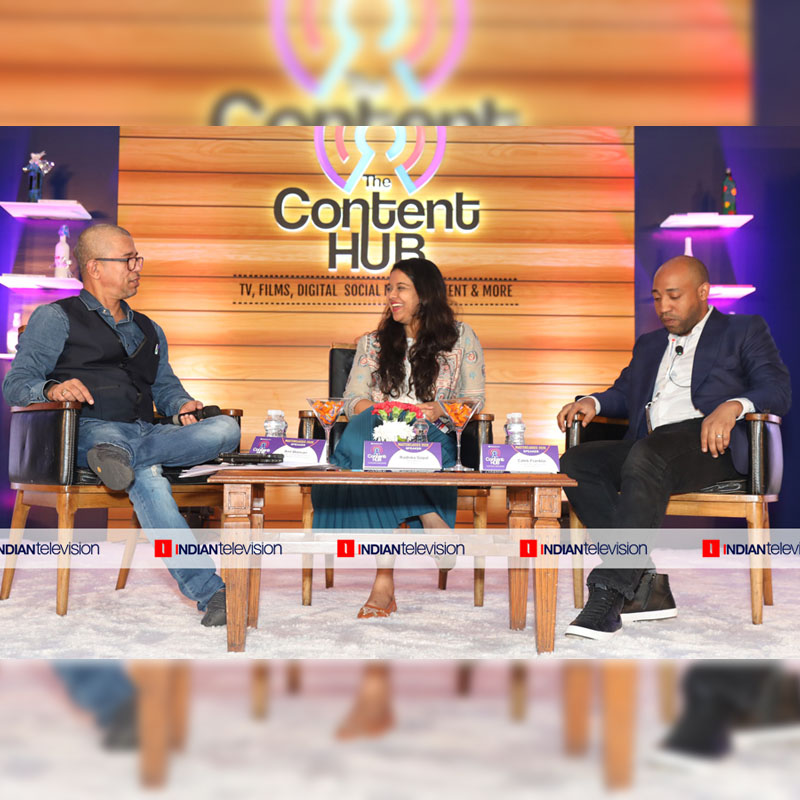
    MUMBAI: Day two of The Content Hub 2020 started with a fireside chat with Tulsea talent manager Radhika Gopal and Matter Advisors founder and managing partner Caleb Franklin where they discussed the importance of creating an ecosystem and a platform for writers. Writers are the key to creating great content.  

    Radhika Gopal said, "Through Tulsea we worked with some great writers, directors and actors. We make sure the talent roaster is balanced. We want to be an objective narrative party in order to make deals more transparent."

    Franklin, who has been in the content industry for the past 16 years, believes the journey from storytelling to origination to how writers are delivering the content to end-user is important. “There is a plethora of talent in India. Our primary job is to inform business to our clients. What story is happening, what are the current trends, new podcasts and much more. We usually don’t care about where you are or what your background is," he said.

    Radhika further added, “I believe being financially stable helps you to focus on your passion. We at Tulsea are also enabling producers to get one-stop access of talent so that they can access our platform to deliver great content. We are talking to people across the globe to set the proper structure.”

  • Women’s role in media and entertainment has evolved, says all-women panel

    Women’s role in media and entertainment has evolved, says all-women panel

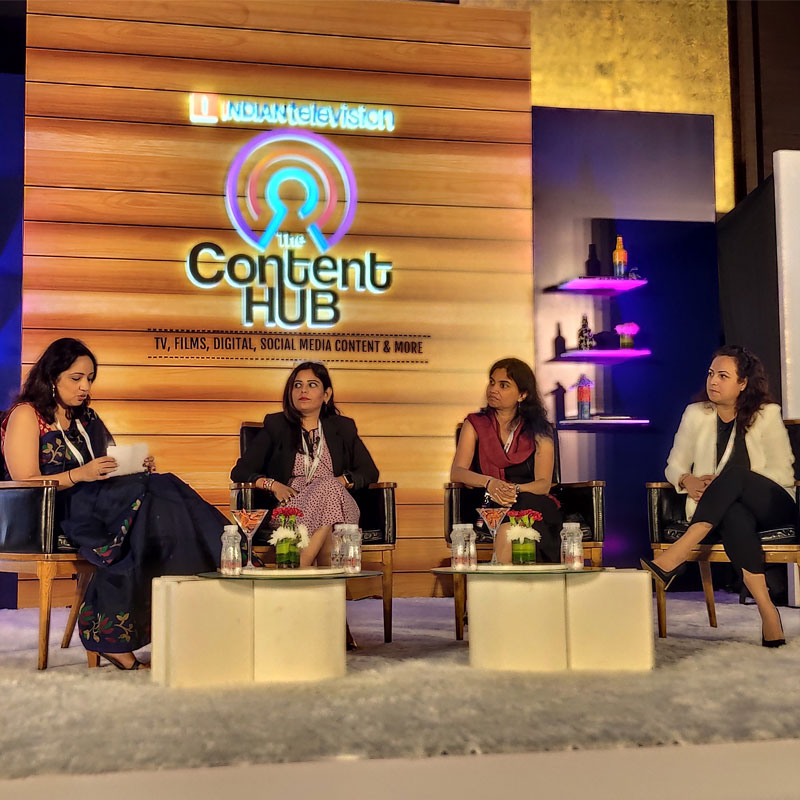
    MUMBAI: Women’s representation and role in media and entertainment has evolved and increased over a period of time. This was the primary opinion of the all women panel discussing on the topic ‘women in entertainment’ on day two of The Content Hub 2020.

    The panel, moderated by She Means Business co-founder Dipika Singh, comprised of IN10 Media VP corporate strategy and development Mansi Darbar, Shemaroo Entertainment chief operation officer Kranti Gada and Women In Film and TV (WIFT) India’s founder Petrina D’Rozario.

    The panel spoke at length on the challenges and opportunities for women in the media and entertainment industry. It also made an attempt to send a message to fellow and budding women in the industry to focus on themselves and not pay heed to people’s opinions and comments.

    The panel also echoed a similar view that talent has nothing to do with gender discrimination, be it male or female protagonist; content speaks for the film’s success. They also pointed out that the talent ingrained in a person stays irrespective of age.

    Gada mentioned that women bring core values such as commitment, passion, honesty, empathy, integrity among others to the work. Meanwhile, D’Rozario said, “There is a misconception within youth that the entertainment industry is all about glamour. However, it’s not about just glamour, but a lot hard work involved in it.”

  • Gippi director Sonam Nair on her upcoming shows and challenges in the OTT industry

    Gippi director Sonam Nair on her upcoming shows and challenges in the OTT industry

    MUMBAI: Sonam Nair, director and writer best known for her work in Wake Up Sid, Gippi and The Trip in a fireside chat at the Content Hub 2020 spoke at length about directing digital and television series.

    After working as an assistant director in Wake Up Sid and Vishal Bharadwaj’s Saath Khoon Maaf Nair made Gippi a movie based on her own life. Nair poured her heart out while addressing social stigmas and how she was bullied and body shamed as a kid. However, things were never easy for her. She had to wait for three years to make a sex comedy film. Finally, a short film based on the same ethos of sex comedy Khujli starring Neena Gupta and Jackie Shroff resurrected Nair’s career.

    “I don’t think in a way which is a very large screen, having lots of special effects, ensemble star cast. I think simple, relatable stories can have humour attached to it. This whole digital platform opened up for me  and I could tell stories I wanted to tell. After Khujli I directed the second season of Trip, I directed Kaafir and now I am working on a story written and directed for Netflix called Masaba and Masaba," she said.

    The  show is based on the bond between a real-life mother-daughter duo of ace fashion designer Masaba Gupta and Bollywood actor Neena Gupta.

    While addressing the issues prevailing in the content industry Nair said, “It is difficult to sell stories to a particular platform because this not how OTT platforms work. It is an anthology of supposedly six short films that works otherwise platforms are quite scared to take just one story.”

  • Nivedita Basu’s journey from Balaji Telefilms to her own production house

    Nivedita Basu’s journey from Balaji Telefilms to her own production house

    MUMBAI: The Day 2 of The Content Hub 2020 had an interesting session on producing for television by Nivedita Basu.  The audiences witnessed the independent producer and creative director speak on her journey in Balaji Telefilms to becoming an independent producer and creative director. 

    Basu joined Balaji Telefilms in 2000 as a deputy creative director and worked on many TV serials with Ekta Kapoor and worn many hats under her mentorship. Basu quit Balaji Telefilms in 2009 and she started her own production house 'House of Originals'. 

    Basu says, "After 15 years, it's natural to go independent. I was very excited about making Meri Awaaz Hi Pehchaan Hai and we wanted to make a show that stands out."

    She further adds, "There are lots of obstacles in becoming an independent producer and creator. I always wear a creative hat more than the producer's. Even though I didn't make profit out of my first show but I am still proud of it. Luckily, after Meri Awaaz… I got the second show and that did commercially well and gave me the confidence as a producer."

    Basu also shared her experience of working with Balaji Telefilms. She says, “The advantage of Balaji Telefilms is that we have Ektaa Kapoor and Shobha Kapoor there. In Balaji I was handling nine shows at a time and it was not that difficult as I had Ekta as guru.”

    Basu believes today's writers are struggling between writing and producing. She says, “Right now, television is not the only thing for writers or creative people. Thanks to digital and OTT, people are making what they want to make. Going ahead, I will be producing content for OTT platform.”

  • Industry leaders provide valuable insights on content creation at The Content Hub 2020

    Industry leaders provide valuable insights on content creation at The Content Hub 2020

    MUMBAI: The fourth edition of The Content Hub 2020, presented by Indiantelevision.com, saw a gala turnout with scores of people eager to hear industry leaders speak about content and the way forward. While the first part of the day saw discussions on digital content and the second half went into understanding storytelling, research and OTT format, the last part saw a mix of audio content, movies and digital transformation.

    Before we venture into day two, here’s a wrap of what happened yesterday.

    The audio content business

    Rainshine Entertainment co-founder and COO Anuraag Srivastava in a fireside chat with Monisha Singh Katial explored the opportunity of the podcast business. The audio and podcast side is a new venture for the company where it dedicatedly has two verticals looking after AVOD and SVOD services.

    Srivastava believes the potential gap between the audience belonging to rural and urban space is increasing because the content on television is not heard on the radio anymore. So, podcast is a way by which small towns can plug in through radios. "One of the things that we see here, unlike the US, is that India entirely skipped the satellite radio market where we went from short wave to FM. There was never a serious radio or anything equivalent of radio where you paid to hear good content" he mentioned.

    A new wave is taking over big screens

    Rather than relying on big B-Town stars, new-age directors, writers, scriptwriters are focusing on delivering messages through stories. At the panel ‘The role of writers and directors in developing the magic script’ at The Content Hub 2020, the panellists agreed that the audience wants new stories in a familiar way.

    Screenwriter, script consultant and advisor Anjum Rajabalia, film director, writer and producer Hansal Mehta, screenwriter and director Hitesh Kewalya, film director, writer and producer Om Raut, dialogue writer and director Sumit Arora participated in the panel.

    The panellists opined that not only we have opened up to social issues but the crucial thing is that it is being led by good writing. He also added that people have begun realising the importance of a good script. The panellists also agreed that storytelling needs to be relooked at and constantly evolve. According to them, if the most politically, socially relevant and taboo topics can be told in a manner that can touch hearts, then stories will travel far. 

    Decoding new-age content

    The last couple of years have seen a huge evolution of content with the shifting paradigm. At The Content Hub 2020, the creators who are at the forefront of the change discussed the way forward and what are the new initiatives they are taking.

    Actor and creator Mallika Dua said she is looking at long-format content as well. She has been more into short format content. She also added that spending quality time online should be the focus rather than random scrolling. Pocket Aces founder Anirudh Pandita, who in a lighter note said that their mission is to solve boredom in India, mentioned that he is looking at two new segments.

    OML Entertainment chief executive officer Gunjan Arya said that working with creators and growing platforms have opened up more opportunities. OML is looking at making Comicstaan in Tamil. It is also working with OTT platforms to get content outside India.

    YouTube partnerships director Satya Raghavan said that while there is the platform’s traditional advertising-driven business, now it is also looking at subscription business including YouTube Premium, YouTube Music, etc. He also added that some partners can sell their own inventory on the platform which is another revenue stream. TVF content and business global head Rahul Sarangi spoke about the creator’s new focus in vernacular languages and output deals with major OTT platforms.

    Fireworks India CEO Sunil Nair said that it would not depend on influencers-based content. He also added that it’s not necessary for short-format apps to do cringy content.

    Digital content, self-censorship and more 

    Applause Entertainment CEO Sameer Nair took the stage with House of Cheer founder Raj Nayak to discuss the realm of TV and OTT content. Nair said that this trend of pushing everything to digital-first will not allow enough revenue to come through. Instead, we must follow the US approach of first releasing movies in the theatre and then giving them out on DVD or digital.

    When it comes to series-based content, Nair said that digital benefits in giving the user the power to decide rather than the broadcaster deciding for them. That's why international content is being consumed with subtitles. TV, though it was successful, it was a one-way street.

    Nayak posed a question on the need for self-censorship and whether it will kill creativity. To that Nair responded that self-regulation is a tricky area and people are finding innovative ways to tackle that. He also added that people realise that if they don't self-censor, they will face repercussions.

    Movies and their success

    The success of a film is never planned, it happens. This was the unanimous response of the panel moderated by Talkietive Content Creators co-founder Priyanka Sinha Jha, with panellists Reliance Entertainment group chief executive officer Shibasish Sarkar, Azure Entertainment chief executive officer Sunir Kheterpal and Zee Studios chief executive officer Shariq Patel.

    The panellists were of the view that the emotions embodied in the story of the film resonate with the audience then it definitely creates a market for itself. And, this is the biggest reason why Dangal and Bahubali both part one and two received huge success in the foreign markets like China.

    Moreover, the panellists also echoed the same view that the cost of talent is never sustainable. However, there is also value related to the face and that eventually ends up generating more revenue.

    There’s a market for everything and the business of films and content is here to stay no matter what platform it is released on.

    Stay tuned with us for more updates from day 2 of The Content Hub 2020.

    Day 1 Highlights

    The Content Hub 2020: An enriching and engaging first day

    The Content Hub 2020: Creators emphasise on importance of content quality over formats

    Check out the gallery from Day 1 of The Content Hub 2020
  • Short video content ecosystem grew by 100x in last two years: TikTok’s Nikhil Gandhi

    Short video content ecosystem grew by 100x in last two years: TikTok’s Nikhil Gandhi

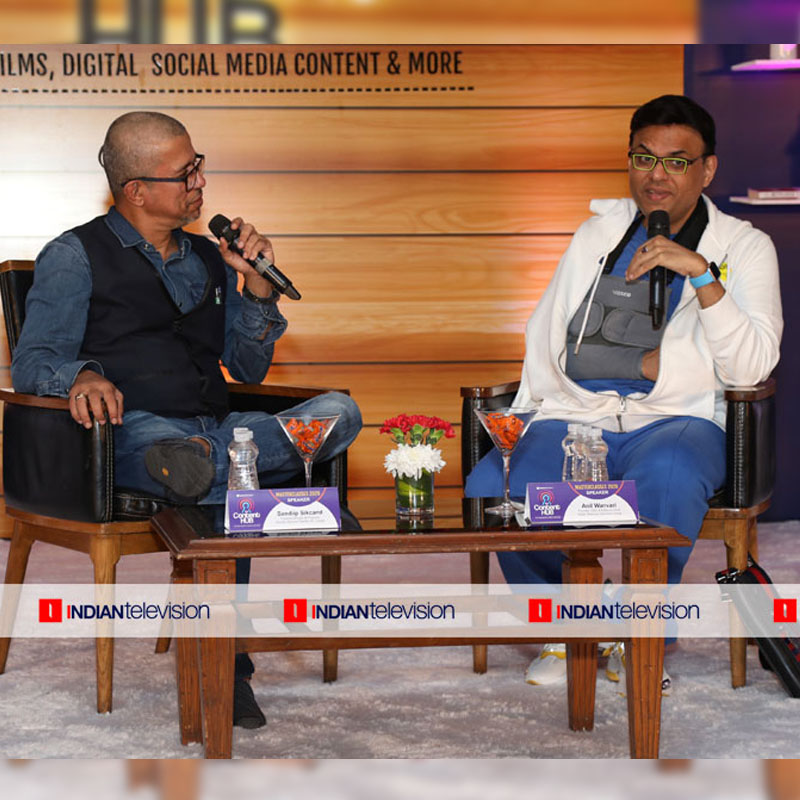
    MUMBAI: Streaming services started democratising content creation a couple of years ago but TikTok has made easier for the mass also to express and create. Bytedance’s most popular app has taken young Indians by a storm along with boosting vertical video growth. TikTok India head Nikhil Gandhi said that they have been now on the forefront of creating a new economy.

    Gandhi got the mandate to lead  ByteDance’s most aspiring product in India last year. In a fireside chat with Indiantelevision.com founder, CEO and editor-in-chief Anil Wanvari at the Content Hub 2020, the TikTok India head shared the growth of short-format video, how TikTok is helping a new breed of creators, how they maintain a self-moderated standard of content. He said that the app actually promotes and inspires creativity. Moreover, it has given wings to young creators to fly , to showcase their creativity and bring out their art form.

    As he comes from a rich broadcasting background, it’s a new learning phase for Gandhi as well. He mentions the suit of four products from ByteDance that operate in India. Along with TikTok, helo, and Vigo Video, the latest addition is a music streaming app Resso. Hence, he pointed out that the suite of apps that they have reach out to all ends of the spectrum. He added that it has been a fascinating journey for TikTok. “We've taken off on a great start. And in the last two years, we've seen massive, massive growth as far as the user base is concerned in India,” Gandhi said. Although he did not reveal the exact number, reports say it boasts of 200 million users in India.

    “The average consumer in India spends a little less than three hours a day on TV. But he spends about three and a half hours a day being online. And out of that, he spends about two hours plus just watching video content. So I think it's a very, very encouraging trend for content creators who are in the digital space. And I think this is going to continue,” he commented.

    Not only video viewing is growing, the bite size, short video content ecosystem also grew by 100 X in the last two years. Gandhi shared the total consumption of short video was about 530 million per month in January 2018. Exactly after two years, about 5.3 billion minutes of short video is being consumed.

    “From our analysis, about 70 odd percent of people tend to continue to watch the entire short video which is a full length of one to three minutes. However, the moment you have a video, which is about 20 minutes, almost 24 per cent only consumed the entire content,” he said.

    While content creation has already become a career for many youngsters, Gandhi added that if a creator’s video is good, brands will also follow them. According to him, as long as the creator has the ability to promote themselves and bring out the art form, the app lends a lot of support. Many TikTok influencers are now working with brands, getting featured on TV shows, collaborating with B-Town faces. Even established creators are gradually coming on the platform. He said that the platform hosts right from popular creators to unique talent, which is unlikely on other platforms. He added that the discoverability is huge.

    But along with more native creators, the risk of unsolicited content also increases. Gandhi noted that TikTok has got a very comprehensive set of community guidelines to create awareness about trust and safety. They keep updating community guidelines every year.

    “We do a lot of social awareness campaigns for creators to make them conscious to promote the fact that they should be posting responsibly and sensitive issues that are related to India and overall trust and safety. And anybody who violates our community guidelines is not welcome on the app. So we take those content off the app,” he pointed out.

    “We have a very strong tested safety moderation system, which is a huge factory of about a huge number of people who are just constantly moderating content and the numbers of the total uploads as is huge on a daily basis is in India. So it's a very, very big push for us,” he added.