Category: Content Hub

  • High concept, simple story, understandable plot are key to good movies: Kross Pictures’ Thomas Kim

    High concept, simple story, understandable plot are key to good movies: Kross Pictures’ Thomas Kim

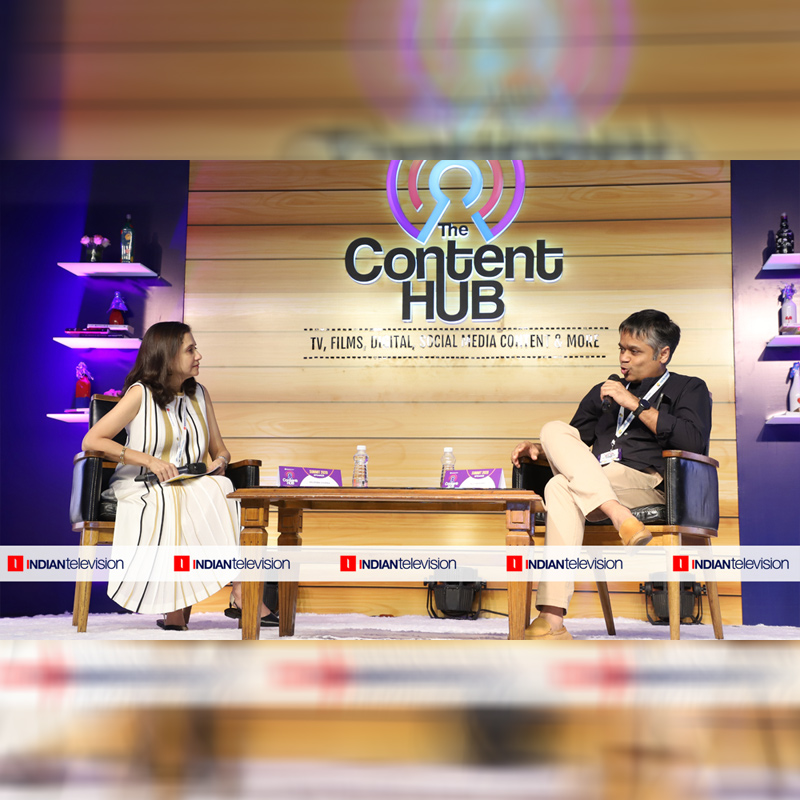
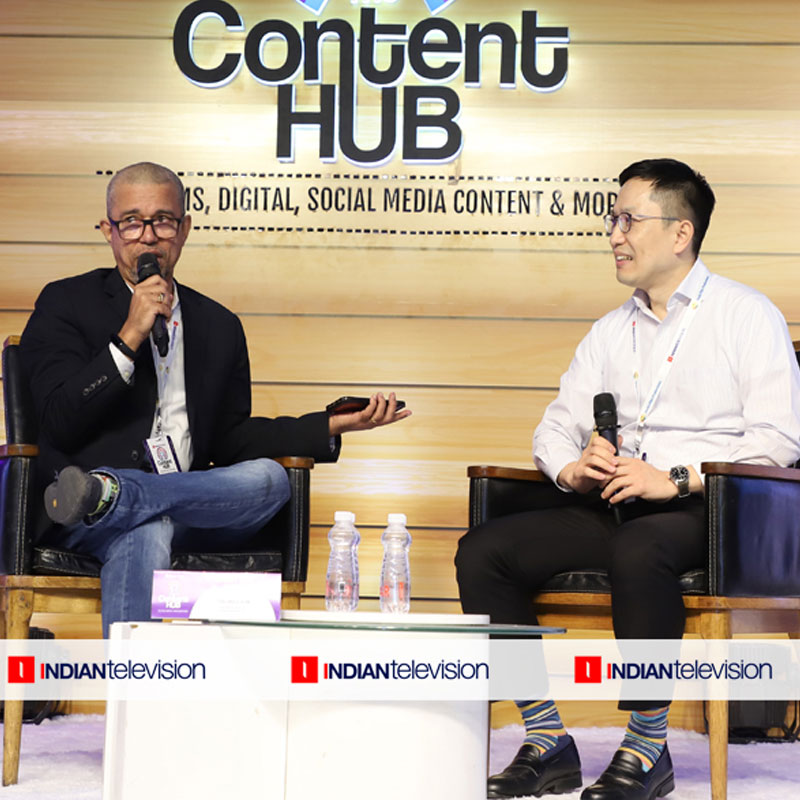
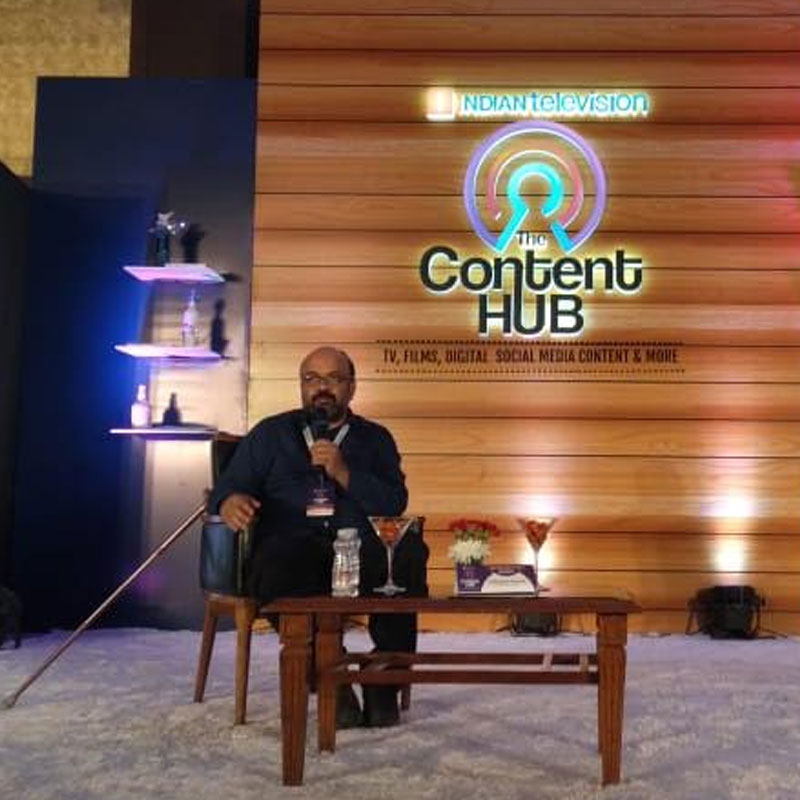
    MUMBAI: Thomas Kim, co-founder of Kross Pictures, in a candid conversation with indiantelevision.com founder CEO and editor in chief Anil Wanvari at The Content Hub 2020, mentioned how he started his career as an investment banker. He also shared how working in The Walt Disney Company and Pirates of the Caribbean inspired him to become a filmmaker.

    Kross Pictures, an international film and television production company, made the commercially successful movie The Devotion of Suspect X.

    Kim echoed, "I was working as a management consultant for a few years but never really enjoyed that work. I had an opportunity to go to Hollywood and work at The Walt Disney company. This was the first time I saw how movies are made. One particular project Pirates of the Caribbean opened my eyes to filmmaking. The motion pictures group came to my group which was in charge of making a theme park called imaginary group. They made a movie based on the storyboard. This actually taught me that films can be made with any type of stories. So, I quit Disney and started my company in 2003. I am mostly active in Korea and China in making films and TV series based on famous IPs, mostly in comics and novels. In 2015 I had the pleasure to come to India and worked on a film project called ‘Teen’ with Amitabh Bachchan. This was my first experience of working in Bollywood. Today I have offices in Seoul, Los Angeles, Mumbai and Hyderabad.”

    Kim, who is very active in China, made one feature film and a TV series and both were commercially hit. The Devotion of Suspect X became a mega-hit with Rs 4 crore box office collection.

    Kross Pictures currently has over 15 features and TV content both in Hindi and the South and aspires to become a premium production house. “I believe storytelling is universal. The story which works in one country can work in other countries too. With that vision I have a team in Korea, India, and America, who are constantly looking at projects,” he stated.

    In 2014 Kim met Balaji Telefilms' Tanuj Garg in Korea for a project. This meeting led Kim to come to India and explore Indian filmmaking market.

    Sharing his Indian vision of Kross Pictures Kim said: “My aspiration for my Mumbai team is to grow to be a premier production house and maybe possibly a studio in the near future."

    Kim believes that not all stories are able to mobilise in foreign countries, other than the one which do commercially well. According to Kim, there are key three aspects for a good movie: the element of high concept, a simple story and an understandable plotline. Also, not all stories can localise. A lot of Indian stories are great but it may not work in the Korean market.

    Kim, who is currently working on the adaptation of the Bollywood film Kahaani, thinks Believe Oh Baby! – a Telugu movie was a great combination of storytelling and execution. Successful stories or successful adaptation requires a good understanding of the original material. He finds Indian films exciting and emotional. However, there is a lack of disciplined storytelling. That's what the Kross Pictures wants to bring to India.

    Sharing details on the necessary ingredients required for a commercially successful film, Kim said, “We try to identify stories which are exciting to the Indian audience. We also look at commercial success. Combining the two we constantly look for stories in Korea, Japan and China that have a track record of being a commercial success.”
  • We want to be future-protected: Netflix’s Aashish Singh

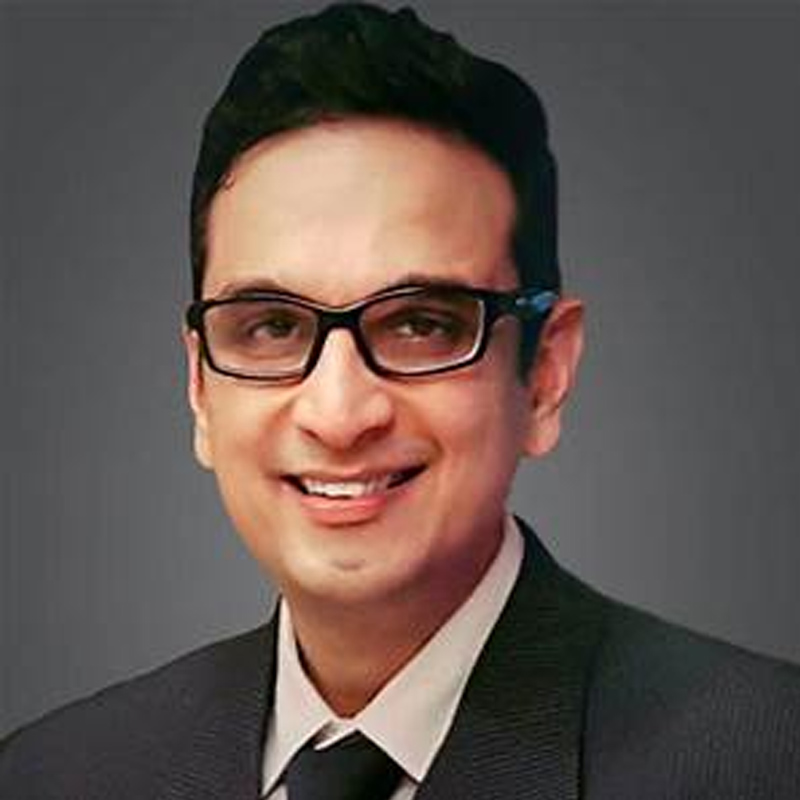
    We want to be future-protected: Netflix’s Aashish Singh

    MUMBAI: Netflix India’s recent film Yeh Ballet has received critical appreciation. It is a story of two boys from humble backgrounds who go on to become dancers. On the contrary, critics did not hold a very high view of Drive. The streaming service has kicked off March with another film Guilty. Along with churning out premium episodic content like Sacred Games, Jamtara, the ambition of Netflix to make a mark in digital original films is very evident.

    At Indiantelevision.com's The Content Hub 2020, Netflix India original film director Aashish Singh in a candid chat with Indiantelevision.com founder, CEO and editor-in-chief Anil Wanvari spoke about Netflix’s upcoming diverse slate of films to offer its subscribers content for every mood.

    Singh said that they are looking for content creators to create the best work of their lives. The platform is looking at a very diverse slate including films that can work across all genres for any audience that they can watch, anytime, anywhere. Singh is of the view that good stories could come from anywhere and can be watched everywhere. 

    “We do look at quality in terms of the technical requirements of a film, in terms of the cameras because we want to be future-protected. We want our films to be watched even ten years later, for that matter. So definitely quality is something that we definitely look at. We want to work with the best creative talent,” Singh commented.

    Netflix is also expanding its funnel by getting to know the Indian market better. 

    "So you will get to see a very diverse state going forward. And we have a wonderful slate already that's in process for 2021 and 2022,” he added.

    Singh also reaffirmed that the platform is not only looking at big names and they are working with ten new directors, nine new writers, eight women as new writers and directors this year itself. He added that Netflix is hungry for people who have not yet been discovered. According to him, those are the people who can come up with shows like Jamtara.

    When it comes to filmmaking, Netflix helps filmmakers throughout the process right from pre-production. The streaming service has a production team, finance team, post production team, VFX team that supports the entire filmmaking process. He notes that it helps in quality production. He also mentioned that they support creators to make it the best experience for them but they do not interfere in the process.

    “I liked Yeh Ballet a lot. And it's a very authentic story which talks about dance form that's not very common. The feedback that I got from a lot of people is that they didn't know much about ballet but after they saw the film, they want their kids to probably go and learn ballet,” he added. He also stated that Drive has also performed well on the platform.

    Although Netflix has not announced any animated content in terms of films, the platform is exploring things that could do well in the animation space and is in talks with a lot of people who are creating animation content in the country.

    Talking about challenges, Singh mentions that awareness of Netflix is an issue in India. Although the tier one cities and most of the urban people know about Netflix, Singh thinks they still have a long way to go as far as reaching out to the tier two cities or tier three cities. 

  • OTT gives an opportunity to tell realistic, honest stories

    OTT gives an opportunity to tell realistic, honest stories

    MUMBAI: Critically acclaimed screenwriter and director Charudutt Acharya in his speech at The Content Hub 2020 discussed scriptwriting and opportunities in over-the-top platforms.

    Acharya said, “For my entire life I have been a writer; the whole OTT thing happened just a couple of years ago. When you are working on a certain story or plot you derive ideas from your own experiences. You have a folder of an idea that you love but deep down a person knows all ideas cannot be made into stories. Because it does not fit into the kind of television that is commissioned. But, now ideas from your thinking bag are doable; it comes from your own life, your own experiences.”

    According to Acharya, OTT gives an opportunity to tell stories that are realistic and honest in nature. It is a growing medium. Acharya who doesn’t differentiate between OTT and television content finds TV is now like a bungalow system. But writers will have to look at the world angle where nuances are more defined.

    Acharya believes that apart from learning techniques and structures, one needs to learn the art of creating originals. Writing for OTT is evolving grammar. One has to focus on writing economically because audiences just don’t come for a plot they come for the character in the series and what treatment has been given to the show.

  • A combination of stars and stories is the need of the hour: Viacom18 Studios’ Ajit Andhare

    A combination of stars and stories is the need of the hour: Viacom18 Studios’ Ajit Andhare

    MUMBAI: A fireside chat between Viacom18 Studios COO Ajit Andhare and Film Companion founder and editor Anupama Chopra at The Content Hub 2020 saw him talk about discovering new stories and new talent as well as the need for studios to be open for stories coming from everywhere. 

    Andhare finds regional cinema an exciting space. It is far ahead in experimentation compared to Hindi cinema. Directors down South are willing to take creative risks.

    Andhare, when asked about revealing the secret behind choosing a movie, said, “It is actually reacting to what is happening around you. You instantly respond to the material that you identify with. You only go with stories that make sense to you and that has been the approach. One also needs to do something which is meaningful as well. I think the earnest approach is responding to instincts and also making an effort to look sideways other than only the front.”

    When asked about keeping box-office the priority Andhare said, “We do think of box-office but at a later stage. The first thing you see is the consumer and for theatre-going audiences, Bollywood actors are at the heart of the universe of films, you cannot take that away from them. But today you cannot just go with a star-led project; it is also important to look at the content. Even the star needs a story. A combination of stars and stories is the need of the hour.”

    Andhare also shared his thought on Intellectual Property (IP) becoming bigger than the actors playing a character. He added, “Today Singham or Sooryavanshi the entire franchise is clearly attracting a lot of stars in the project. When you look at other conventional franchises like Dhoom, they may be doing a series of films but look at the amount of business they are making. We are clearly moving the franchise way. It is a constant effort between studios to develop franchises. However, we are at the stage where a character is not the franchise like in the case of Hollywood movies such as Spiderman or Superman. It is the concept that is a franchise. Eventually, we will get to a point where franchise only of a character will become the big idea.”

    According to Andhare, the biggest challenge is to try to answer the question of what is working. “With this, you are not bringing your instinct you are just trying to second guess the formula of success,” he said.

  • Content executives believe ‘doing it the right way’ should be the focus

    Content executives believe ‘doing it the right way’ should be the focus

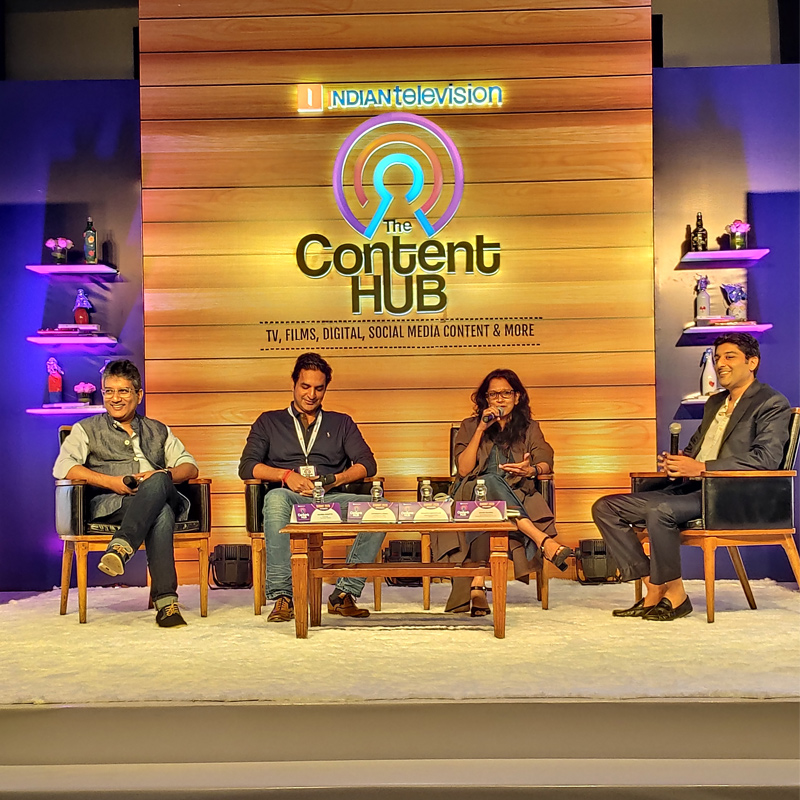
    MUMBAI: Doing it right! This was the fundamental view of the panel of content creators that participated in a discussion on ‘uncovering opportunities for great content’ during the fourth edition of The Content Hub 2020, an initiative by Indiantelevision.com.

    The panel, moderated by Bulldog Media and Entertainment co-founder and producer Akash Sharma, comprises of Zee Studios Originals vice-president and head Ashima Avasthi, Contiloe Pictures Pvt Ltd chief creative officer Abhimanyu Singh, SonyLIV head of original content Saugata Mukherjee.

    The panel was also of the view that the recent surge in content creation and consumption is mainly because of technological advancement and awareness within the audience. Due to these factors, the boundaries across the world have come down and local stories are becoming global.

    In this regard, Avasthi while giving her input said, “The content boom in India was about to happen. Individual viewing has eventually increased all thanks to the emergence of smartphones and high-speed internet. As technology grows, the boundaries between countries are coming down.”

    Zee group’s film production and distribution arm Zee Studios last year had rolled-out an independent digital content subsidy Zee Studios Originals, which will produce premium, original content and create new IPs (intellectual properties) for all digital platforms of the group globally.

    She added, “Despite the surge of individual viewership, there is no difference between binge and traditional watching, both have respective markets. However, television gives only a single opportunity, whereas the digital platform is providing viewers’ a variety.”

    Meanwhile, Singh was of the view that the number of increasing screens such as mobile, laptop, smart TV, etc., are directly proportional to the number of increasing audience. He said, “The television audience is no more identifying the content shown on the channels and is done with it. Currently, the content market is driven by what consumers want and watch.”

    He added, “It’s the right time to re-invent the grammar of telling stories and digital platforms have this acumen to show these stories with a new tale. India has a quality to tell its own Narcos story and we have many stories to tell the world.”

    Abhimanyu’s Contiloe Pictures' upcoming State of Siege: 26/11 will feature on ZEE5 from 20 March 2020 and took at least a year to complete, said Singh.

    Another panellist, Mukherjee, pointed out that the growth of the internet has helped content to boom. “Digital has enabled the diversified connection of content, which has been appreciated the across continents in the world,” he said.

    Mukherjee added, “There’s scope and space for everyone, be it TV or OTT (over-the-top) platforms; it's never us versus them.” He believes that content will find its place and reach across borders. Moreover, broadcast content won’t go away because there’s a big market for it already.

    Echoing the thoughts of Singh, the SonyLIV head said, “The big difference between TV and digital platform is the grammar of storytelling. We should re-invent and tell stories which are quintessentially Indian and draw a line of how Indian platform is different from global digital platforms.”

    Saugata, talking about SonyLIV’s future plan, said: “We don’t want to get stuck with thriller or love stories; rather we are going to try everything to lure the consumers to the platform.”

    Being positive of the growth of the digital content, the panel mentioned that this is the perfect time to enter the business. However, the only thing that should be adhered to is whichever form or format is done, it should be done in the right way as content creation is not an easy task and takes blood and sweat.

  • TV, OTT coexist and complement each other

    TV, OTT coexist and complement each other

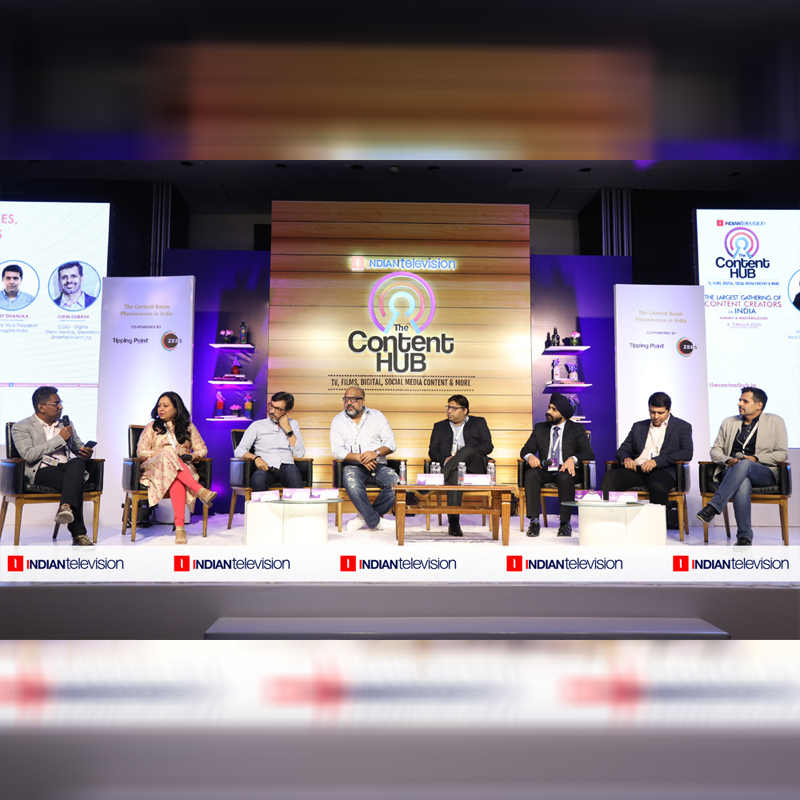
    MUMBAI: A panel discussion at The Content Hub 2020 discussed the topic of generating audiences and building stickiness around the content that has been created. The panel was moderated by ISOBAR India chief growth officer Shekhar Mhaskar with panelists Red Chillies Entertainment head marketing Binda Dey, MX Player head of marketing and business partnerships Abhishek Joshi, Juggernaut Productions chief operating officer (OTT) Samar Khan, Filme founder Abhishek Shukla, EVP Lionsgate India executive vice president Amit Dhanuka and Shemaroo Entertainment digital new media COO Zubin Dubash.

    The panel discussed how content made is of no use unless and until it reaches the right audiences. Getting them to watch your content is important. The panel also discussed how traditional broadcasters would retain their core audiences in view of increasing affinity towards on-demand OTT platforms.  

    Binda Dey said, "I have been working in the broadcast sector for a long time. With OTT coming in, the number of ways in which people can consume content has increased. So, it is not television vs OTT but about how people want to consume content and at what time. In television Live content has been a big boom. There has been a lot of innovation in the way IPL is being promoted by Star. This is a kind of gamification where you are combining television with digital. It leads to consuming the same kind of content across different platforms.”

    Amit Dhanuka added, “The content that you see on broadcast television and OTT platform has a stark difference because the consumer that’s consuming it on television vs the audiences who are consuming it on OTT have a different sensibility. One medium reaches out to a very mass pool of audiences while the other is looking for edgy content that has a certain sense of storytelling. Television is not in any way losing out on OTT. They, in fact, are complimenting in some manner.”

    The panelists believe that OTT has given new audiences. It is giving someone who used to watch television earlier at 9 pm an opportunity to watch the same show at any time. OTT has supplemented television audiences in many ways and also brought in audiences who are not getting that content on television. They are now watching content on streaming services rather than traditional broadcast channels. Originals has opened up a brand new audience that was not getting its content on television. Because in television there is a different number of hours and limited slots available to make that content. On the contrary, OTT does not suffer from that as they do not have a designated slot. The Originals that are created for OTT are bringing in more stickiness which consumers were not getting earlier.

    There are so many different platforms like television, cinema and OTT but the question arises are these platforms geared up to face the changing media consumption pattern.

    Zubin Dubash said, "Shemaroo has been there for the last five decades as an organisation. We have been on every digital platform one can think of. So, when we started our OTT story with Shemaroo Me, we had ten years of solid data and consumption habits around our YouTube story. Today on YouTube Shemaroo’s content generates close to 3 billion views every month and we have got around 120 million MAUs on the YouTube platform consuming the content voluntarily. When looking at the business plan of Shemaroo Me we analysed that there is a lot of unmet demand of content that is cataloged and the content that has its shelf-life which doesn’t end ever. We have launched it a year ago, and during this time we witnessed a lot of traction bringing customers to say that a lot of AVOD content comes from Shemaroo.”

    Sharing their views on the same panellists believe that platforms are challenging each other with better storytelling along with better special effects and technicians working on them. Audiences are now expecting better writing, better performances because now consumers are open to new challenges. It is in fact pushing platforms to create better content.

  • Fantasy gives creative liberty to writers

    Fantasy gives creative liberty to writers

    MUMBAI: Writers of the show Naagin, Mukta Dhond and  Mrinal Jha, explored the scope of supernatural genre at day two of The Content Hub 2020 organised by indiantelevision.com.

    Dhond thinks the most exciting thing about fantasy is that it gives creative liberty to writers. As they say, anything is possible in the fantasy world which usually is not possible in other normal stories. There are some real stories; outside of that there is a whole world of small creatures that have a power. Naagin is a female superhero and there are very few female superheroes worldwide, especially here in India.

    “For example, Naagin's biggest attraction when we started was that here is a woman who does what she wants to, who has a power. She is able to fight back and takes revenge, but the world doesn’t hate her. The character can do unimaginable things that we cannot think of. That is the beauty of supernatural shows.”

    Mrinal Jha said, “Supernatural genre also demands pace in writing which sometimes is a challenge. The struggle is to find something new to tell every week.”

    Sharing the same sentiments, Mukta said: “People in India don't have patience. They want romance, action, drama all in one episode. So, the volume of content generation in supernatural genre like Naagin or Nazar becomes high. It is like surprising yourself and the audience every day.”

    The panelists also agreed that the one good thing about supernatural genre is that you can discover finer sub-classifications which make one show different from the other.

  • India lacks bandwidth, financial ability to work in sequences like Hollywood

    India lacks bandwidth, financial ability to work in sequences like Hollywood

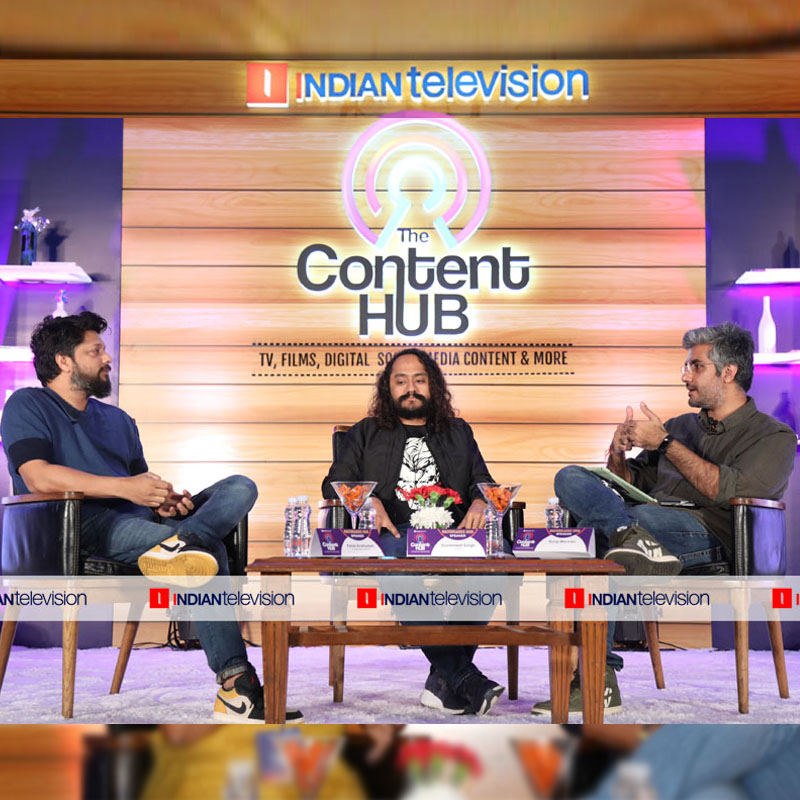
    MUMBAI: The last session of The Content Hub 2020 organised by Indiantelevision.com was moderated by Suraj Wanvari with screenwriter-director Karan Anshuman and director Gurmmeet Singh. The duo spoke on their learning while making shows for OTT platforms and the development process of Inside Edge and Mirzapur.

    In conversation with Wanvari, Anshuman and Singh spoke about their journeys as a writer and film director, challenges they faced, development of Inside Edge and Mizapur, OTT platforms, and the genres that will work well on OTT.

    Anshuman said, “Writing is my favourite part of filmmaking. While writing, we have to let the big idea win and we should allow them to come. Hollywood works on sequences and we want to work in the same manner but we don’t have that bandwidth or money to work in a similar format.”

    Singh said, “While in writing best idea wins, but as a director there is always a chance of improvisation as new ideas are always welcomed; it depends from case to case. We keep ourselves creatively open and engaging within the team.”

    Anshuman said, “There is a rigour about how streaming platforms access a project. On OTT there is a proper way of accessibility; there are good creative people who take their decisions.”

    Asked about which genres OTT platforms are looking at and what genres new writers should focus on, Singh said, “Gangster kind of stories has come to a saturation level; platforms are looking at comedy genre but it’s difficult to make them in long format.”

  • Spontaneity and reliance on gut feeling are the guidelines of Amit Sharma’s direction

    Spontaneity and reliance on gut feeling are the guidelines of Amit Sharma’s direction

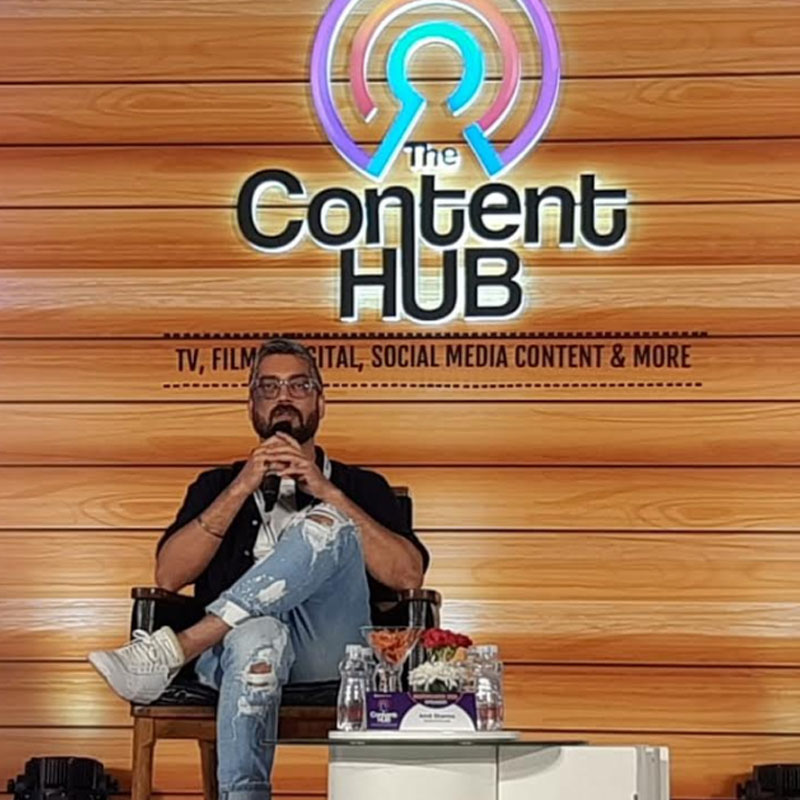
    MUMBAI: Director is like a manager of a film, who incorporates the idea received from departments, says film director and producer Amit Sharma while addressing fellow and budding content creators at the fourth edition of The Content Hub 2020, an initiative by Indiantelevision.com.

    Amit Sharma is the director of Ayushmann Khurrana-starring Badhaai Ho! and is currently directing Ajay Devgn for an upcoming project called Maidan, which is schedule for later this year.

    Sharma, while guiding the content creators, shared his experience of filmmaking and believes that ‘NG cuts’ (not good cuts) are also sometimes useful for the film.

    Sharma told the crowd that he has never liked reading a script and has always visualised a scene before taking a final shot. Sharma, being a keen observer, pointed out that it’s important to feel the film from the perspective of different departments involved in filmmaking.

    Giving his mantra to the audience, Sharma said, “Being spontaneous and believing on gut feeling are the two basic fundamentals of my direction.”

    Sharma started his career from very early age of 18 and had always wanted to become an actor. He has acted in at least 16-17 television commercials; however end up becoming a film maker. Moreover, Sharma also spoke about how he likes to play with the audience’s emotions in a good manner. “It gives satisfaction to him, when audience leave theatres with a smile on their face or teary eyed,” he added. 

  • Films are at the mercy of the director, says ‘Neerja’ writer

    Films are at the mercy of the director, says ‘Neerja’ writer

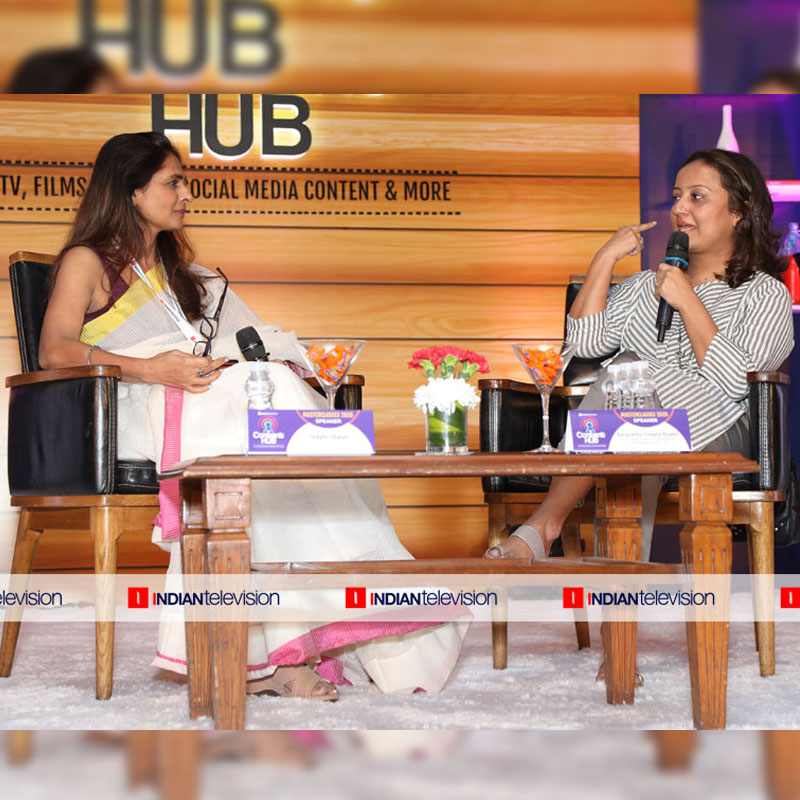
    MUMBAI: Neerja writer Sanyuktha Chawla Shaikh in conversation with the audiences at The Content Hub 2020 shared some interesting insights from her movie. “All stories come from life experiences. My film Bobby Jasoos was inspired by the family I am married into. The only part is to make it fictional. The major challenge I faced in Neerja was to bring the spirit into a character. Shabana Azmi's character was completely inspired by Neerja's mother. The structuring of this movie was very different,” says Shaikh.

    Shaikh, who never aspired to be a scriptwriter, has given audiences some wonderful movies like Bobby Jasoos and Neerja. She feels digital writing is liberating; you can get into things that are interesting. She, however, found writing dialogues for Delhi Crime very weird as one cannot write dialogues based on real testimonies.

    Shaikh also believes that scripts should be read by the director, writer and the actors. It helps in better functionality. Asked about having the ownership while working with a director, she said, “Films are at the director’s mercy; he has the complete ownership and cast and crew need to have a trust upon him. If you disagree with a certain plot, there is always an option to narrate your story to some other director.”