Category: Content Hub

  • Research is important while creating content: Nepa India

    Research is important while creating content: Nepa India

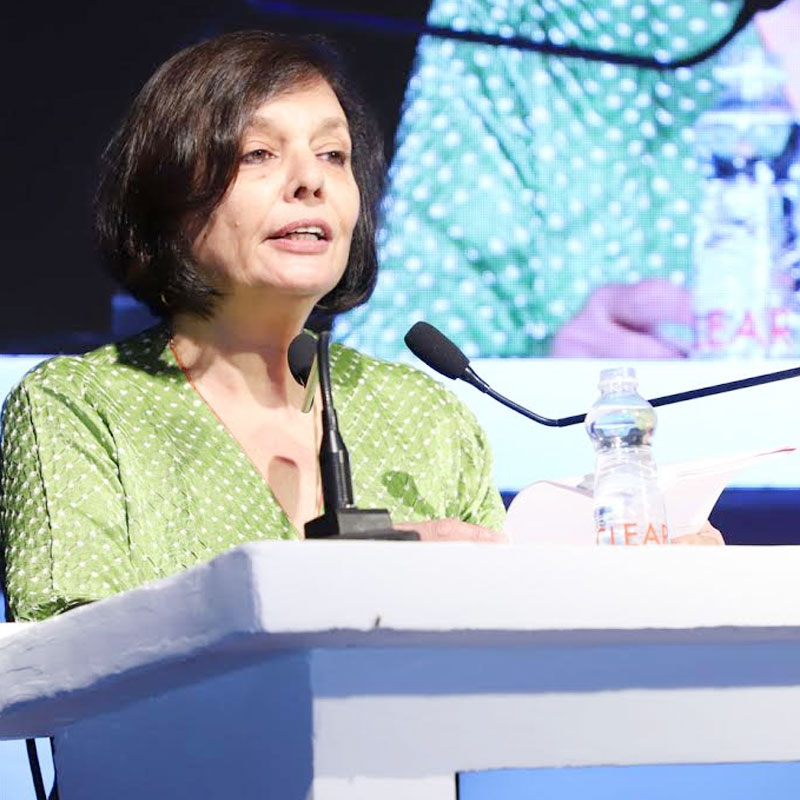
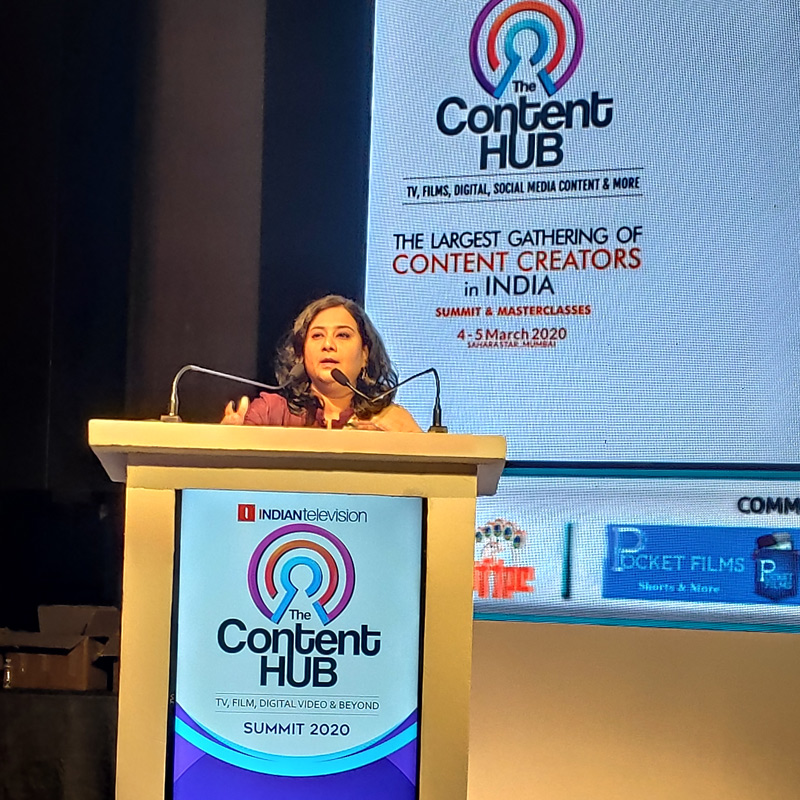
    MUMBAI: Research is a key ingredient before the launch of any product or brand. And creating content is nothing without appropriate research about the audience and their choices, explains Nepa India managing director Esha Nagar while giving a presentation at the fourth edition of The Content Hub 2020 organised by indiantelvision.com.

    Nagar, while explaining the nitty-gritty of the research involved in the content business, says, “Research is not everything to make content but it definitely is important to understand the viewers behaviour related to the content, its content taste and the clutter he/she likes.”

    Nagar points out the importance of understanding how the content resonates with the audience. She mentions that the choice of the content is driven by two concepts – behaviour and physiography. Behavioural aspect is dependent on the relevance, brand and category, whereas the psychographics rely on the social and cultural persona of the viewers.

    Nagar says that a binge-worthy content is a dedicated balance between viewers’ resonance and creative fluidity, which includes different phenomenon such as ideas, service, clutter, quality, flow, loyalty among others. Nepa India is in the business of research and the business of media & science.

    Giving an example of an educated middle-age home-maker, Nagar says, despite her busy schedule, a person will certainly take out time to continue watching a show that he/she was binge-watching a night before. She adds that even while travelling, having a meal or in their free time, of even a few minutes, a viewer wants to know and watch more about the content he/she is engrossed in.

    Nepa India’s MD also states it has been proved by a research that content gets major popularity due to word of mouth. She also says that at least 50 per cent of the audience watches a show on OTT platform due to ‘fear of missing out’ and peer pressure.

    Due to the proliferation of over-the-top platforms, content is now consumed across genres, genders, and boundaries. And while pointing out some research numbers, she adds that at least 60 per cent of the south viewers watch Hindi content.

    “Lately, a change in the consumption pattern has been seen in both male and female audience,” says Nagar. “It has been found that at least 45 per cent of women viewers prefer dark themed genre content, whereas 53 per cent of men watch romcom and drama genres.”

    Nagar says, “With over 40 OTT players and growing in the content market, we are on the verge of doubling up its viewer base by 250 million and 88 billion minutes of content per month by 2020. We are in the process of making a super viewer in the content business like an FMCG super consumer."

    Nagar, before concluding her presentation, also guides fellow and budding content creators to help them understand the importance of research involved in the spread of the content. “Research before the release will help the content get proper traction and attention of viewers,” she concludes.

  • Spontaneity, gut feeling are fundamentals of my direction: Badhaai Ho director Amit Sharma

    Spontaneity, gut feeling are fundamentals of my direction: Badhaai Ho director Amit Sharma

    MUMBAI: The director is like the manager of a film who brings talent under one roof and extracts it to create good content, said film director and producer Amit Sharma while addressing fellow and budding content creators at the fourth edition of The Content Hub 2020 organised by indiantelevision.com earlier this month.

    Sharma is the director of Ayushmann Khurrana-starring Badhaai Ho and is currently directing Ajay Devgn for an upcoming project called Maidan, which is scheduled for later this year.

    While guiding content creators, he shared his experience of filmmaking and said that he believes in ‘NG cuts’ (not good cuts), which majority of the time, are useful for the film. He, playing a scene from his last directorial, explained the audience how a narration or storytelling should be done and how every director has their own journey to tell the story.

    He also told the audience, “I never say cut as when you don’t say cut, the actor keeps improvising and this eventually helps to get the different moods of the character that the actor is playing.”  

    Sharma said that he has never liked reading a script and has always visualised a scene before taking a final shot. “I don’t read scripts because I remember the story of the film with dialogues, full stop, and commas mentioned in the script. I also don’t make storyboards; don’t write my shots as it’s all in my mind,” he said.

    In fact, he even leaves home with a blank mind. “I usually don’t have any idea or agenda while leaving from the home for shooting. Rather, during the shoot, I enact the scene to my actors along with the screenplay.”

    Sharma, being a keen observer, points out that it’s important to feel the film from the perspective of different departments such as sound, art and DoP. The film is a team effort with music, actors’ performance and writers, among others.

    Giving his mantra to the audience, Sharma said, “Spontaneous is the word that works for me and believing in gut feeling, which helps me create a scene or film. These two phenomena are the basic fundamentals of my direction.”

    For him, it’s important that the scene affects him emotionally because only then will the audience also feel the same. “I like to play with the emotions of the audience in a good manner. My work is only done when the audience leaves theatres with either teary eyes or happy faces,” he added.

    Before concluding, he proudly mentioned that extracting performance from the actors is something that is his forte.

  • Supernatural genre gives writers most creative liberty

    Supernatural genre gives writers most creative liberty

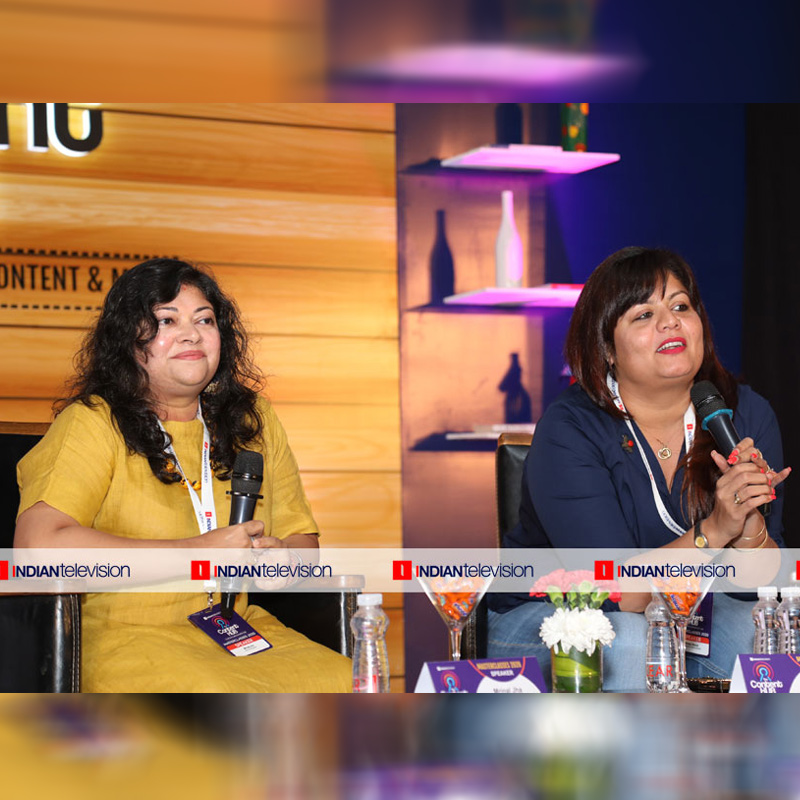
    MUMBAI: Writers of the popular TV show Naagin, Mukta Dhond and  Mrinal Jha, explored the scope of the supernatural genre at The Content Hub 2020 organised by indiantelevision.com.

    Dhond said that the most exciting thing about fantasy is that it gives creative liberty to writers. As they say, anything is possible in the fantasy world which usually is not possible in other human stories. Human situations give you certain amount of possibilities but in fantasy there is so much more that is possible. There are some real stories; outside of that there is a whole world of small creatures who have power. Naagin is a female superhero; there are very few female superheroes worldwide, especially here in India.

    “Naagin is a woman who does what she wants to do. She is a woman who has power. She is able to fight back and take revenge, but the world doesn’t hate her. The character can do unimaginable things that we cannot think of. She tells people that they are wrong and the Indian audience accepts it. Naagin is somebody like just you and I. But they are able to speak their mind. The funniest part of doing Naagin is that there is no limit, anyone can turn around and do anything. You are free to write what you want. You can just close your eyes and think something, the fantasy world takes you there. That is the beauty of supernatural shows,” said Dhond.

    According to the panelists, for several years the supernatural genre was missing on Indian television. Aahat was the only show that continued for a long time. Otherwise no one  wanted to venture into it. And later Naagin and Nazar happened which opened the door for plenty more shows.

    They believe that the most exciting part for writers working on fantasy is the thought of coming up with unique ideas. It gives you the liberty to think out of the box.

    Jha said that the supernatural genre also demands pace in writing which sometimes is a challenge. "The events of each minute are very high generally and you cannot borrow from the real life around you. You have to imagine constantly and keep creating. The plots and twists have to be new every time. That is the exciting part. But the struggle is to find something new to tell every week,” she said.

    Sharing the same sentiments, Dhond said: “People in India have less patience. They want romance, action, drama, and revenge – all in one episode. The story that I finish in six months in a daily soap, it is over in its fourth week in Naagin. So, the volume of content generation that happens in fantasy shows like Naagin or Nazar becomes high. It is like surprising yourself and the audience every day.”

    India’s obsession with knowing the future and foretelling gave birth to their new show Divya Drishti. The story is about a girl who can see the future.

    “Also, what happens while writing shows like Naagin, Nazar and  Divya Drishti is that you discover the classification of what is called supernatural. For example, Nazar is a creature horror. Why is it a creature horror and why isn’t it a superhero is an interesting classification because they dictate how you tell the story. This is the key part of doing supernatural, you are able to identify sharply as to what is the template of the story that you are portraying,” said Jha.

    While answering the question of picking a genre while making a career in writing, Dhond said, "I started my career by writing for a supernatural genre. The first book which I did was called "November Rain" which later went on to become a series on Zee TV called Tum Bin Jaaoon Kahaan. I wrote lot of Mano Ya Na Mano at that time. It just came my way. Eventually I discovered my interest in that genre.”

  • Applause Entertainment’s Sameer Nair on digital content creation, self-regulation and creative freedom

    Applause Entertainment’s Sameer Nair on digital content creation, self-regulation and creative freedom

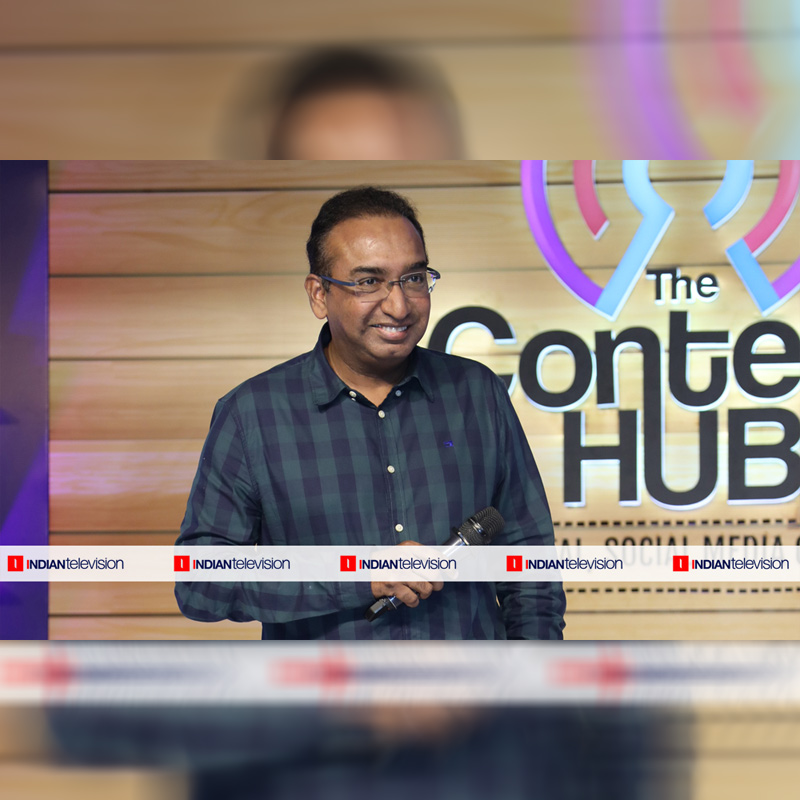
    MUMBAI: Creativity, freedom of expression, self-regulation and content quality are some of the factors that come into play for digital platforms. These topics were addressed in a fireside chat between House of Cheer founder and CEO Raj Nayak and Applause Entertainment CEO Sameer Nair, at Indiantelevision.com’s The Content Hub 2020.

    Nayak started off by stating that even though just 30 per cent of Indians have access to the theatre, films like Thappad and Badhaai Ho are growing in production and acceptance. Does this signal a diamond era for content creators? Nair agreed that the screen density in India is less in comparison to the US or China. However, he feels that television has played a big role in the distribution and dissemination of cinema. Even if just 30 per cent watch movies in the theatre, eventually more people watch it on TV.

    “From a consumption point of view, everyone is seeing. The big challenge is the lack of screens. Of late, there seems to be a push that all content needs to go to digital which, in my opinion, is not the best thing. The US has figured out this window where they first go to theatres and then to TV and DVD. So, there’s more monetisation. It’s a pity when they go directly to digital because you can’t extract revenue out of it when people are willing to go to theatres and buy tickers. Theatre screens need to be an opportunity taken. It’s a good time where different kinds of stories are being told. Smaller movies have also done well. But it’s always been in the history of Indian cinema where we have space for all kinds of things. In the year when Naseeb launched, we also had something like Jaane Bhi Do Yaaron,” he said.

    Nair has delved in various types of content creation from production houses to TV to digital, making him one of the most prominent faces of the industry. With Applause, his aim is on producing content for digital. “The digital medium makes consumers behave in a particular way and that creates a difference in the content,” he said. “TV has always been a one-way talk. You program a channel and give it to the consumer. The consumer can’t control the schedule. OTT and digital have given the consumer the power to choose what they want to see or read – when, where and how they like it.”

    Even though TV is dictatorial and one-way, it has been and is still successful, according to Nair. But the choice that digital provides is creating niches. “That’s why so much of international content is being consumed with subtitles. That wouldn’t have been possible in the pre-OTT era.”

    Nayak questioned Nair on the differentiation between the content found on digital and TV. Nair replied, “We missed a revolutionary step of doing premium subscription television. For digital series, we’re talking of what the US has done successfully for 25 years with shows like The Sopranos. That’s what we are doing now with OTT. All broadcasters have found one more place to show their content.”

    With his experience, Nair highlighted that TV is driven by ratings and that limits the kind of stories that can be told. But on OTT, you can tell those stories that are restricted by TV and this is driving the change in content.

    Nayak brought up the topic of creative freedom in times of growing censorship. Nair said, “If you’re a genuinely creative person, you will look to be subversive in any environment. There’s no such thing as freedom. You have to tell your story and get it out. During the Emergency, the government banned Aandhi which returned after the government changed. But because of the new medium, we can tell stories. TV didn’t allow it, not because there wasn’t any freedom but rather because the medium wasn’t conducive. The medium requires ratings and ratings require the lowest common denominator. Stories on mothers-in-law and daughters-in-law worked very well as a formula for TV.” However, even in this new freedom, Nair said, there are bad shows.

    Even though India is only just warming up to the series format, Nair feels we are already late. With India’s propensity to leapfrog technology, it is likely we may do so in content too. “Will India watch 60-minute episodes on 4G connection? There is a lot of talk about short-form content and other disruptors but right now, we have to look at making money. Going forward, we are looking at series and short-form content.”

    Nayak, who has decades of experience in the TV industry, quizzed Nair on the need for self-regulation. “On TV, since it was family viewing, we had restrictions. But, now with digital, we have great creative freedom. Both international and local are pushing the envelope. So do you think self-regulation is necessary and does it kill creative freedom?” he asked.

    “Self-regulation is a slippery slope. It puts you in a place where you accept that if you don’t regulate in that manner there will be repercussions,” Nair pointed out. “If you want to speak, there will always be someone who will be unhappy. Someone will protest to your freedom of speech. Different countries operate differently. The US is the freest. They are also a 200-year-old democracy and they have been at freedom longer. But people are pushing boundaries and finding new ways of expression and getting away with things. Most often the establishment finds it hard to figure out what you’re saying. That’s the sort of thing to do.”

    It’s a fact that known faces work well in promoting films and shows but a show like Jamtara performed well on Netflix with new faces too. “It always starts with the story and writing. We’ve done shows with stars and without. I don’t think you can knock down faces. They are faces for a reason, for marketing and have value. There are audiences out there who like them and want to see their work. The series format does allow us to take different stars and these tend to be an ensemble cast and not focussed on a single hero. So, the script is the hero,” explained Nair.

    The area to be cautious is that since the power lies with the viewer, they can choose to skip or stop watching. That’s where the story must be interesting. “Faces will get an audience but not keep them there,” he said.

    Applause Entertainment is in the process of creating the Indian adaptation of the popular Israeli series Fauda. Giving insights into its creation, Nair said, “From an adaptation point of view, it operates at two levels. One level is the socio-political issue of the place being set in Israel and Palestine. The other one is the thriller. We’ve separated the two. With what’s going on in India, we’re using that as fodder for dialogue and context. This environment lends itself to that.”

    Comparing filmmaking and writing in the US with India, Nair mentioned, “The US takes greater care to mitigate failure. They are more disciplined in their writing and production process. They tick a lot more boxes and we have also been doing that, even if not at the same level. Even in the series business, we are looking at international businesses and learning.”

    On his prediction for content creators in 2020, Nair said that there can’t be anything truer than stories being well-written. “Everyone feels not everyone gets an opportunity. But there’s a lot of work happening out there. It’s the nature of the business that not everything gets made and even great ideas get left behind. It’s nothing to be despondent about. You’ve got to keep at it and keep trying to tell your story,” he concluded.

  • It’s the golden age of content: Sooni Taraporevala

    It’s the golden age of content: Sooni Taraporevala

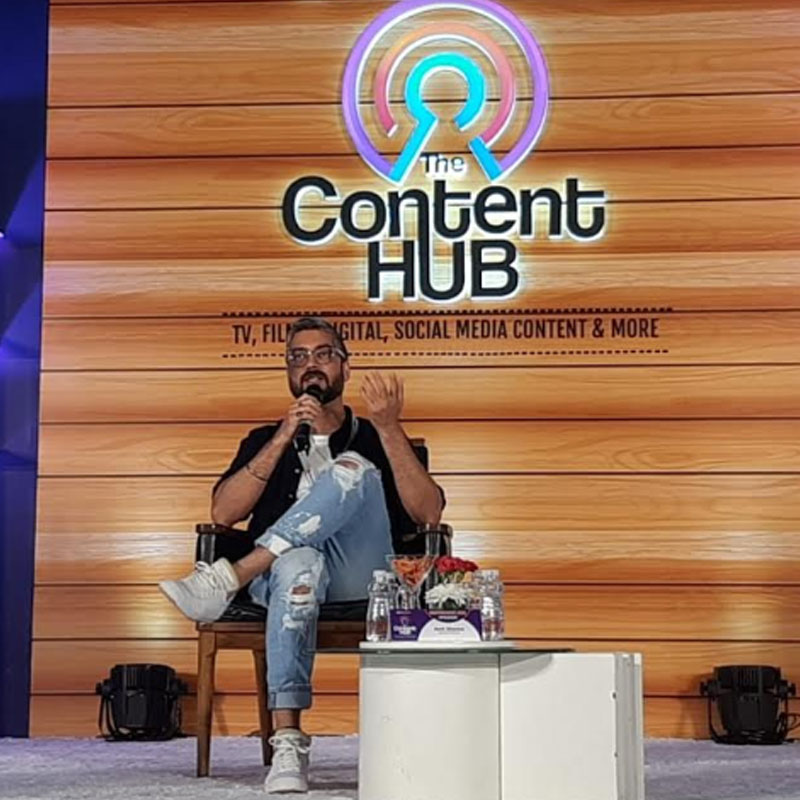
    MUMBAI: Sooni Taraporevala, an Indian screenwriter, photographer and filmmaker best known for her work in Mississippi Masala, spoke on ‘The Golden Age of Content’ at The Content Hub 2020 organised by indiantelevision.com.

    Taraporevala was the screenwriter for the movie Namesake and Oscar-nominated Salaam Bombay, both directed by Meera Nair. Speaking on her friendship with Nair and her most difficult movie she said: “Meera and I wanted to work together for the longest time. Seven years after we graduated, she had several acclaimed documentaries under her belt and wanted to make her first feature. We embarked on what was to become Salaam Bombay.”

    Yeh Ballet, currently on Netflix, proved to be a game-changer for the filmmaker. A Harvard University student, Taraporevala came to movies both by chance and destiny. Her biggest lesson, ‘Never hear the naysayers and never give up’, made her successful and relevant in the industry.

    She said, “Like in screenplays real life does have turning points and this was mine. At Harvard, I discovered two things – photography and films. I initially felt I don’t have the personality to be a filmmaker. I was happy with my crew of one person and a camera. I returned to India and started working as a professional photographer.”

    Taraporevala has progressed a lot since those initial days. “I remember when I wrote the Salaam Bombay script I didn’t know what ad structures are. My script was research mixed with imagination. Everything I have learned helped me in writing. From literature, I moved to narrative, character, point of view, plots and sub-plots. Certain stories didn’t work out well. Later, I moved to Bombay. That time I was also writing Mississippi Masala, Dr Babasaheb Ambedkar, directed by Dr Jabbar Patel and later started Namesake. Dr Ambedkar with Jabbar Patel took ten years. It was one of the most difficult movies I did.”

    While addressing the audience, Tarporevala spoke at length about her foray into filmmaking. In 2005, the writer, after completing her shoot for Namesake, was all set to take a big leap in her life. “Now I had time for myself because before that I was writing for other people. So I wrote Little Zizou in ten days. It was a story that took place in my backyard. The main locations were the lane where I grew up as a kid.”

    Taraporevala made her directorial debut with Little Zizou. The movie had an ensemble star cast of Boman Irani and John Abraham in the main lead.

    Taraporevala believes it is the golden age of content because content providers, writers and producers are in demand. “There’s a lot of work for everybody. There is diversity of storytelling and scale. There’s never been a better time for medium-sized stories and web series to be in the business,” she concluded.

  • Writers are the key to great content

    Writers are the key to great content

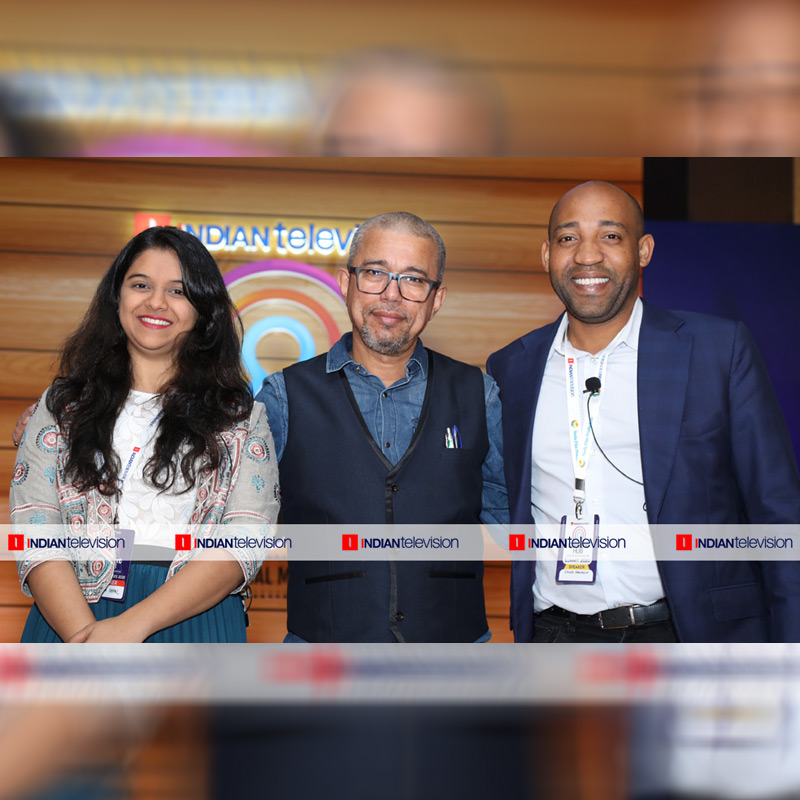
    MUMBAI: At The Content Hub 2020 organised by indiantelevision.com, Tulsea talent manager Radhika Gopal and Matter Advisors founder and managing partner Caleb Franklin discussed the importance of creating an ecosystem and a platform for writers.

    While speaking to Indiantelevision.com founder, CEO and editor-in-chief Anil Wanvari, the panellists agreed that writers are the key to creating great content.

    Gopal said, “Through Tulsea we worked with some great writers, directors and actors. We make sure the talent roster is balanced. We want to be an objective narrative party in order to make deals more transparent.”

    Gopal works as an agent at Mumbai and Los Angeles-based Tulsea, a management company in India that focuses on writers and directors.

    Franklin, who has been in the content industry for the past 16 years, believes the journey from storytelling to origination to how writers are delivering the content to the end user is important. Franklin’s firm Matter Advisors closely works with writers, actors, producers and directors who ensure that the stories are presented to the right target audience.

    “There is a plethora of talent in India. We have so much opportunity. More importantly, we are constantly working to deliver great stories. We constantly update our clients on the current stories, trends, new podcasts and much more. We look at the entire ecosystem,” he said.

    Franklin represents the company's clients across the global landscape of media, entertainment, technology and sports.

    Commenting on the difference made on the writer’s life Radhika said: “What we attempt to do is give writers leisure time to write, network and help in handling contracts. We give them some time to focus on their craft and work so that they can do better. Money is a very important aspect of anyone’s career. When you are financially stable you are able to continuously focus on something you are passionate about. It is hard for people to be objective about what their core value is especially in the entertainment industry that runs predominantly by relationships. From the writer's perspective, we take away the headache of dealing with everything.”

    “We talk to people in India, the US, Europe and other parts of the world to understand the ongoing trends. We look into storytelling patterns, deal structure and new formats. In fact much before Netflix and Amazon came to India we were able to foresee that the Indian entertainment sector is going to change,” she further added.

    Caleb believes that the most difficult part is not cracking the deal. But, more than deal it is about socialising which is difficult on the writer’s part.

    The panelists also started that it takes two years to execute a story on the screen. Hence, it becomes a part of a writer’s job to help deliver profit.

  • Visuals go hand-in-hand with storytelling for compelling content

    Visuals go hand-in-hand with storytelling for compelling content

    MUMBAI: It takes massive effort, time and investment but delivers great result for producing high-quality content in terms of visuals, said Travelxp’s creative director Kamakhya Narayana Singh while sharing the advantages of 4K and 8K format during the fourth edition of The Content Hub 2020 hosted by indiantelevision.com.

    Travelxp is the first Indian travel genre broadcasting channel to provide high-quality viewing experience of 4K and 8K to the viewers. It began its journey to create 4k content in 2015 and 8K in between 2016-17.

    “Two things make content great: storytelling and visual quality,” said Singh. “Storytelling is important but at the same time visuals are also important as it increases the viewing experience of the consumer.”

    From scratch to the final product, Singh points out that content creation in high-quality visual may be tiresome but the final output is beautiful and enriching. He said, “The concept of 4K is not just about increasing pixels but making the pixels, screen and viewers' experience more beautiful.”

    “Producing content is a futuristic process; we don’t produce content for one day; rather it’s done for the generations to come. And because of our futuristic approach, it took us time to understand the value of high-quality filmings such as 4K and 8K,” he said. 

    Singh said, “70 minutes of an HD shoot takes 52 gigabytes (GB) storage, whereas a 32-minute 4K shoot requires 512 GB storage. Similarly, it takes 2 hours to ingest one terabyte (TB) data, while for 4K data it takes 24 hours to ingest at the same duration.”

    “Even the last stage to get the final product takes time: 24 hours to render 30 minutes of 4K show, and 36 hours to render 8K. The time for rendering may increase subject to glitches in the first attempt'" added Singh.  

    The advantage of shooting the content in raw format and increasing the frame-per-second (FPS) from 25 to 55 gave producers a lead in visual experience. However, the major challenge they faced was storing the data they shot in high-quality like 4K and 8K as the budget increased four-fold.

    Singh said that the channel started receiving respect in the broadcasting industry because of the quality of its content (4K and 8K).

    During his 20-minute conversation with the audience, he explained how visual quality is important along with content, to give 360-degree experience to viewers. 

    The Content Hub 2020 witnessed over 900 registered delegates, more than 110 speakers and 19 partners. The two-day event saw at least 35 sessions for the content creators.

    The Content Hub’s main goal is to bring individual creators, professional storytellers, producers, streaming platforms, broadcasters and film studios under one platform to connect with a mission to broaden the knowledge pool of the content industry. “It is all about learning, networking and collaborating towards building a roadmap for a better content ecosystem,” said Indiantelevision.com group founder, chief executive officer and editor-in-chief Anil Wanvari.

  • More localised stories is the way forward to connect with larger regional audiences

    More localised stories is the way forward to connect with larger regional audiences

    MUMBAI: Regional GEC is the new focus area after Hindi GEC for broadcasters, OTT platforms and production houses as well. South market is the biggest market in the regional space; it has grown by 45 per cent with OTT platforms investing in regional content. So, what is the way forward to connect with larger audiences in the regional market for broadcasters and OTT players?

    A panel discussion on the power of regional storytelling at The Content Hub 2020 organised by Indiantelevision.com highlighted that more localised and relatable stories that connect the audiences in regional market is the way forward. The panel was moderated by Bodhitree Multimedia co-founder and director Mautik Tolia with panellists Endemol Shine India CEO Abhishek Rege, Vaishnave Mediaa Works managing director Kutty Padmini, Star Maa & Star Vijay creative consultant and Zee Network Programming Trainer Vivek Bahl, Fakt Marathi co-promoter Shirish Pattanshetty and Prime Focus Technologies SVP-global localisation Jyothi Nayak. 

    The panellists also elaborated on the need to explore regional stories, challenges faced by broadcasters and creators, dubbed content, remaking of regional content and the way forward.

    Padmini said, “Today, 45 per cent of south Indian content has grown and this year Netflix, Amazon, Hotstar, and Zee5 have invested huge money and created so much of work for people like us who are creative. The south content is very strong because it has talented technicians and writers. Hindi GEC is the largest space and the budget allotted to them is also high but South GEC has limited budget and in that limited budget we also create very good content.”

    Bahl lamented that although it is fantastic to see so many networks going into regional market he is a little disappointed that the content is similar and not unique. "We need to dive deep down and look more into local stories which are relevant in that particular market." He added the network owns all the IPR and replicate in whichever language they want without paying the writer or creator anything else and they are probably not even getting the credit. That also is holding back the talent.

    Rege said that there is a great acceptance of formats like Bigg Boss in the past few years. "More than acceptance it was always a demand to want high-quality stuff which wasn’t coming by. It helped the advertisers and broadcasters pushing it in. There is always going to be such demands again, so you put through all formats as long as you can make it viable and it's upto producers to come up with such stuff.”

    Pattanshetty said that some people from the fraternity claim that Maharashtra is bilingual so the requirement of Marathi which was classified as a P1 market a couple of years back is now going down because buyers feel that their requirement is covered by Hindi channels while that is not the case. "If we exclude Mumbai and Pune we find that Maharashtra has a lot of regional content requirement and it is growing fast. On the Marathi remake of Tarak Mehta… also we were little hesitant and we took a strong call on doing it. We saw that with that show we grew in the urban market as well.”

    Nayak said, “From 2019 to 2022, the OTT space probably is going to grow around 118 per cent. As a company, we have to ensure what is that your audience is looking at in order to scale up. If we talk about dubbing, it’s not just about translating the language, it’s about understanding that particular regional space. As a company we have to be the backbone and support and ensure that we are working hand-in-hand with content creators to ensure their expectations are met. At the same time our audiences are accepting what you are delivering. So we are in the middle of content creators and audiences and we have to satisfy both our people and that’s the challenge. Overall, the digital disruption in the media and entertainment industry has definitely impacted the market landscape and that has helped the industry while going to the next level when it comes to creating the content or serving the partners.” 

  • ZEE5’s content strategy is customer-centric: Aparna Acharekar

    ZEE5’s content strategy is customer-centric: Aparna Acharekar

    MUMBAI: The core values of Zee’s digital platform are based on three Cs – compelling content, the convenience of viewing  and consumer experience, said ZEE5 programming head Aparna Acharekar while giving a presentation at the fourth edition of The Content Hub 2020 organised by indiantelevision.com.

    Explaining about the three Cs, Acharekar said, “We want to create compelling content, which can be watched as per the convenience of the audience, anywhere and eventually, that increases the viewing experience of the consumer while giving value for their money.”

    She added, “We want to ensure that a 40-minute each 10 episode-long series or 90-minute long digital film become compelling enough to binge-watch. Similarly, we give the power of convenience to consumers of what to watch, when to watch and with whom to watch the content. And the consumer experience to view content on various platforms be it subscription or advertising-based.”

    “Our main theme is being customer-centric,” said Acharekar. “We have kept the customer at the heart of everything we do, and which is exactly why, we are able to entertain the young boy in Colaba, Mumbai and a person of the same age living in Chhapra, Bihar.”

    “Relatable content that is real and resonates with the audience is going to work,” Acharekar said. She believes convenience is the basic reason we see the shift of audience towards over-the-top platforms.

    “ZEE5’s content strategy has relied on the understanding of consumers, who are divided in a huge number of content clusters,” Acharekar said post the audiovisual screening, which had glimpses of the original shows and films the platform possesses.

    “It’s important to indulge in perfect science and art while creating content – the science of making the content and the art of how you execute it,” pointed out Acharekar. “We are in the era of content creation wherein even an antagonist, who has made a star in the state, is enough to attract eyeballs.”

    The Content Hub 2020 witnessed over 900 registered delegates, more than 110 speakers and 19 partners. The two-day event saw at least 35 sessions for the content creators.

    The Content Hub’s main goal is to bring individual creators, professional storytellers, and producers, streaming platforms and broadcasters, film studios under one platform to connect with a mission to broaden the knowledge pool of the content industry. “It is all about learning, networking and collaborating towards building a roadmap for a better content ecosystem,” said Indiantelevision.com group founder, chief executive officer and editor-in-chief Anil Wanvari.

  • Content creators should focus on viewership in the beginning: ‘Gippi’ director Sonam Nair

    Content creators should focus on viewership in the beginning: ‘Gippi’ director Sonam Nair

    MUMBAI: Sonam Nair, the director of Kaafir, Gippi, Khujli and The Trip – Season 2, never had any plans to enter B-town but has been praised by audiences and critics alike. At The Content Hub 2020, an initiative by indiantelevision.com, Nair at spoke at length about directing digital and television series.

    Nair poured her heart out while addressing social stigmas and how she was bullied and body shamed as a kid.  However, things were never easy for her; she had to wait for almost three years to make a sex comedy film. Finally, a short film named based on the same ethos of sex comedy Khujli starring Neena Gupta and Jackie Shroff resurrected Nair’s career.

    Khulji’s success inspired Nair to work for digital platforms.

    Sonam echoes, “I don’t think having lots of special effects and an ensemble star cast works. I think simple, relatable stories that have humour attached to it do. This whole digital platform opened up for me and I could tell stories I wanted to tell. After Khujli I directed the second season of the show called The Trip, I directed Kaafir and now I am working on a story written and directed for Netflix called Masaba Masaba. The show is based on the bond between a real-life mother-daughter duo of ace fashion designer Masaba Gupta and Bollywood actor Neena Gupta."

    Her interest in movies increased only after working in Ayan Mukerji’s Wake Up Sid. Post that she worked as an assistant director in Vishal Bhardwaj’s 7 Khoon Maaf. After working in two critically acclaimed movies Nair went on to direct a film based on her own life titled Gippi.

    While addressing the issues prevailing in the content industry Nair said, “It is difficult to sell stories to a particular platform because this not how OTT platforms work. It is an anthology of supposedly six short films that works. Otherwise platforms are quite scared to take just one story. Initially one should focus on viewership and not selling the story to the OTT platforms. With this move you create confidence in audiences and also at the same time prove your work.”

    Expressing her view on the term showrunner Nair said that the term is now a days completely misused. Sometimes a head writer becomes a showrunner, or sometimes a producer is a showrunner. "In my previous show, Kaafir, Siddharth Malhotra was a producer and a showrunner. His gets the credit for bringing in the cast together. He was responsible for the scripts. That makes him a showrunner. I am still figuring out this term. Getting credit for the work which you have not done still scares me.”