Category: Budget

  • Union Budget 2016: What it means for the media & entertainment industry

    Union Budget 2016: What it means for the media & entertainment industry

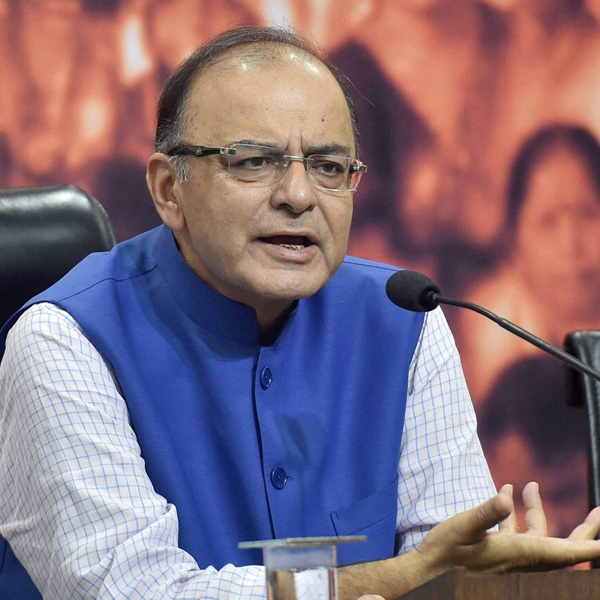
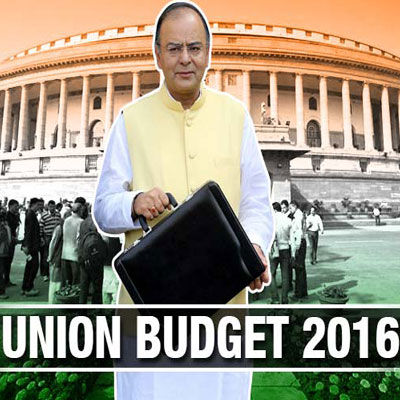
    MUMBAI: 29 February marked an important date in the year’s calendar as Indian Finance Minister Arun Jaitley presented the Union Budget 2016, amidst expectations from all sections. With an aim to give equal attention to all sectors that need financial assistance, Jaitley presented the nine pillars of his budget that focused on multiple subjects; from eCommerce to start-ups; from education to increasing jobs; and from agriculture to health.

    In a quest to find out what it really means for the media and entertainment industry, Indiantelevision.com reached out to several industry stalwarts to find out how they interpret the Union Budget 2016.

    Here’s what they have to say:

     M&E Tax Advisory India, EY, partner and head Rakesh Jariwala

    “As part of the budget proposals, India has levied an equalisation levy – what is known as ‘google tax’ globally. The tax @ six per cent of the consideration will apply on services relating to online advertisement, provisions on online ad space or other facility or services for the purpose of online advertisement, when such services are provided by a non-resident to either an Indian resident or a non-resident having a permanent establishment in India. The payer for these services are required to deduct 6% prior to making the payment. This is the first time that online services are being taxed in India.”

     Videocon director Anirudh Dhoot

    “The Finance Minister presented a balanced budget with a focus on infrastructure and agriculture sectors. By keeping the fiscal deficit target to 3.5 per cent of the GDP, the budget addresses long term positive impact on businesses. For consumer durable and home appliances industry specifically, the budget brings mixed responses. While the focus is more on dispute resolution and simplification of provision, the voluntary income disclosure will dampen the market. The government has lowered the corporate tax for new manufacturing units at 25 per cent with a view to promote industrial activity and generate jobs. With regard to small units having a turnover of Rs 5 crore, the corporate tax rate has been reduced from 30 per cent to 29 per cent. However, there is no relief on the corporate tax for big manufacturers. Government has stressed on GST implementation and proposed changes in customs duty to push make in India initiatives, which is aimed at improving the overall business environment.” 

     Sony Pictures Networks India CEO NP Singh

    “From an overall budget perspective, the enhanced public spending through various social schemes and infrastructure investments should further help to expedite economic growth. The government has also balanced spending with fiscal prudence by reigning-in fiscal deficit. From a media industry perspective, there were no major changes. I feel that a change in the definition of industrial undertaking for the services industry as well as a push to define the GST roadmap would have been sector-positive. There is a landmark attempt in the budget to simplify the tax administration, which should herald a friendlier tax regime.”

     Dentsu Aegis Network South Asia CEO and chairman and Posterscope & MKTG – Asia Pacific chairman Ashish Bhasin 

    “Overall there are some positives and some negatives in the budget. Not increasing the service tax is a positive, particularly for the advertising and media sector. The general expectation was that Service Tax may go up in anticipation of higher GST rates. Controlling the fiscal deficit and several steps to invigorate the rural economy and rural consumption are positive signals. A rural consumption revival will help the economy and the advertising and media sector tremendously. On the negative side, there was an expectation based on what the Finance Minister said in the past, that corporate tax rates would come down. That is not to be so for most large companies. Introducing double taxation on dividends is also a negative. In balance this seems to be a mixed bag budget with a positive bias. If it is able to spur overall economic growth, we could see good times ahead for the advertising and media sector.”

     Times Network CEO and MD MK Anand

    “Digitisation, in my opinion is the most important factor for the broadcast sector currently, we are very happy about the excise duty changes proposed for set-top-boxes, which will help in the last mile infrastructure of Digital Addressable System (DAS) Phase 3 and 4. Overall, a stable and positive fiscal situation is good for the economy and that will support our ad sales growth projections. All in all budget 2016 looks good for the Broadcast sector.”

     Viacom18 Group CEO and National Media and Entertainment Committee CII chairman Sudhanshu Vats

    “Kudos to the government for presenting a disciplined and inclusive budget. The emphasis on rural development and commitment to the fiscal deficit target augur well for the economy in the long-run. The proposal for a more conducive excise duty regime for STBs and other ‘entertainment-access devices’ is welcome. While many of us from the industry were anticipating more sector-specific announcements, I’m sure that this budget will benefit the larger economy and therefore, by extension, have a positive impact on our industry as well.”


  • Budget 2016: Relief to classical & folk music performers with increase in exemption limit in service tax

    Budget 2016: Relief to classical & folk music performers with increase in exemption limit in service tax

    NEW DELHI: In an attempt to promote classical and folk forms of music, the government has announced some relaxation in service tax.

    The exemption limit on services provided by a performing artist in certain folk or classical art forms of music, dance or theatre, has been enhanced to Rs.1.5 lakh per event with effect from 1 April.

    Thus, those paying up to 14 per cent for such performances will not have to pay any service tax.

    Meanwhile, at a time when the government is stressing on green technologies, the Basic customs duty on wood in chips or particles for manufacture of paper, paperboard and news print has been reduced from five per cent.

  • Budget 2016: Relief to classical & folk music performers with increase in exemption limit in service tax

    Budget 2016: Relief to classical & folk music performers with increase in exemption limit in service tax

    NEW DELHI: In an attempt to promote classical and folk forms of music, the government has announced some relaxation in service tax.

    The exemption limit on services provided by a performing artist in certain folk or classical art forms of music, dance or theatre, has been enhanced to Rs.1.5 lakh per event with effect from 1 April.

    Thus, those paying up to 14 per cent for such performances will not have to pay any service tax.

    Meanwhile, at a time when the government is stressing on green technologies, the Basic customs duty on wood in chips or particles for manufacture of paper, paperboard and news print has been reduced from five per cent.

  • Mobile & computer prices may be affected with withdrawal of special additional duty

    Mobile & computer prices may be affected with withdrawal of special additional duty

    NEW DELHI: The Union Budget for 2016-17 is expected to result in raising the prices of mobile phones as well as personal computers.

    In his budget speech, Finance Minister Arun Jaitley said the exemption from basic customs duty, CV duty, Special Additional Duty on charger/adapter, battery and wired headsets/speakers for manufacture of mobile phone was being withdrawn and vary between four to 12.5 per cent.

    But inputs, parts and components, subparts for manufacture of charger / adapter, battery and wired headsets /speakers, of mobile phone, subject to actual user condition was being exempted.

    The exemption from Special Additional Duty (SAD) on populated PCBs for manufacture of personal computers (laptop or desktop) was being withdrawn and would go up to four per cent.

    The exemption from SAD on populated PCBs of mobile phone/tablet computer being withdrawn and the concessional SAD on populated PCBs for manufacture of mobile phone/tablet computer was being imposed at two per cent.

    The Excise duty structure on domestically manufactured charger/adapter, battery and wired headsets/speakers for supply to mobile phone manufacturers as original equipment manufacturer has been changed and will be between two to 12.5 per cent.

    At the same time, the excise duty on inputs, parts and components, subparts for manufacture of charger/adapter, battery and wired headsets/speakers of mobile phone, subject to actual user condition have being exempted from 12.5 per cent at present.

    Specified telecommunication equipment [Soft switches and Voice over Internet Protocol (VoIP) equipment namely VoIP phones, media gateways, gateway Product/Switch (POTP/POTS), Optical controllers and session border controllers, Optical Transport equipment; combination of one / more of Packet Optical Transport Network(OTN) products, and IP Radios, Carrier Ethernet Switch, Packet Transport Node (PTN) products, Multiprotocol Label Switching- Transport Profile (MPLS-TP) products, Multiple Input / Multiple Output (MIMO) and Long Term Evolution (LTE) Products on which 10 per cent Basic Customs Duty was imposed in 2014-15 Budget has been excluded from the purview of the other exemptions also and goes up to 10 per cent.

    The Basic Customs Duty exemption on preform of silica for manufacture of telecom grade optical fibre /cables has been withdrawn and will be 10 per cent.

    The Minister said the assignment by the Government of the right to use the radio-frequency spectrum and its subsequent transfers being declared as a service so as to make it clear that assignment of right to use the spectrum is a service leviable to service tax and not sale of intangible goods, with effect from date of enforcement of Finance Bill, 2016. It will therefore be 14 per cent. 

  • Mobile & computer prices may be affected with withdrawal of special additional duty

    Mobile & computer prices may be affected with withdrawal of special additional duty

    NEW DELHI: The Union Budget for 2016-17 is expected to result in raising the prices of mobile phones as well as personal computers.

    In his budget speech, Finance Minister Arun Jaitley said the exemption from basic customs duty, CV duty, Special Additional Duty on charger/adapter, battery and wired headsets/speakers for manufacture of mobile phone was being withdrawn and vary between four to 12.5 per cent.

    But inputs, parts and components, subparts for manufacture of charger / adapter, battery and wired headsets /speakers, of mobile phone, subject to actual user condition was being exempted.

    The exemption from Special Additional Duty (SAD) on populated PCBs for manufacture of personal computers (laptop or desktop) was being withdrawn and would go up to four per cent.

    The exemption from SAD on populated PCBs of mobile phone/tablet computer being withdrawn and the concessional SAD on populated PCBs for manufacture of mobile phone/tablet computer was being imposed at two per cent.

    The Excise duty structure on domestically manufactured charger/adapter, battery and wired headsets/speakers for supply to mobile phone manufacturers as original equipment manufacturer has been changed and will be between two to 12.5 per cent.

    At the same time, the excise duty on inputs, parts and components, subparts for manufacture of charger/adapter, battery and wired headsets/speakers of mobile phone, subject to actual user condition have being exempted from 12.5 per cent at present.

    Specified telecommunication equipment [Soft switches and Voice over Internet Protocol (VoIP) equipment namely VoIP phones, media gateways, gateway Product/Switch (POTP/POTS), Optical controllers and session border controllers, Optical Transport equipment; combination of one / more of Packet Optical Transport Network(OTN) products, and IP Radios, Carrier Ethernet Switch, Packet Transport Node (PTN) products, Multiprotocol Label Switching- Transport Profile (MPLS-TP) products, Multiple Input / Multiple Output (MIMO) and Long Term Evolution (LTE) Products on which 10 per cent Basic Customs Duty was imposed in 2014-15 Budget has been excluded from the purview of the other exemptions also and goes up to 10 per cent.

    The Basic Customs Duty exemption on preform of silica for manufacture of telecom grade optical fibre /cables has been withdrawn and will be 10 per cent.

    The Minister said the assignment by the Government of the right to use the radio-frequency spectrum and its subsequent transfers being declared as a service so as to make it clear that assignment of right to use the spectrum is a service leviable to service tax and not sale of intangible goods, with effect from date of enforcement of Finance Bill, 2016. It will therefore be 14 per cent. 

  • Budget 2016: Major relief for cable TV industry as STBs exempt from basic custom duty

    Budget 2016: Major relief for cable TV industry as STBs exempt from basic custom duty

    NEW DELHI: In a major relief to the cable television and industry, which will also boost digitisation, basic custom duty (BCD) has been exempted in several parts and components of electronic equipment including set top boxes (STBs) for television or internet.

    Presenting his budget for 2016-17, Finance Minister Arun Jaitley announced that parts and components, subparts for manufacture of routers, broadband modems, STBs for gaining access to internet, STBs for TV, digital video recorder (DVR)/network video recorder (NVR), CCTV camera/IP camera, lithium ion battery [other than those for mobile handsets] were being exempted.

    The excise duty on the above has been changed, falling from 12.5 per cent to four per cent.

    He also said excise duty on parts and components, subparts for manufacture of the above mentioned items was being exempted from the current 12.5 per cent.

    The service tax on the services of Information Technology software on media bearing RSP, are being exempted, provided appropriate Central Excise duty is paid with effect from 1 March.

    The mutual exclusiveness of levy of excise duty and service tax on information technology software [in respect of software recorded on media and “not for retail sale”] has been ensured by exempting from excise duty only that portion of the transaction value on which service tax is paid, with effect from 1 March. Thus, it remains at 14 per cent.

  • Budget 2016: Major relief for cable TV industry as STBs exempt from basic custom duty

    Budget 2016: Major relief for cable TV industry as STBs exempt from basic custom duty

    NEW DELHI: In a major relief to the cable television and industry, which will also boost digitisation, basic custom duty (BCD) has been exempted in several parts and components of electronic equipment including set top boxes (STBs) for television or internet.

    Presenting his budget for 2016-17, Finance Minister Arun Jaitley announced that parts and components, subparts for manufacture of routers, broadband modems, STBs for gaining access to internet, STBs for TV, digital video recorder (DVR)/network video recorder (NVR), CCTV camera/IP camera, lithium ion battery [other than those for mobile handsets] were being exempted.

    The excise duty on the above has been changed, falling from 12.5 per cent to four per cent.

    He also said excise duty on parts and components, subparts for manufacture of the above mentioned items was being exempted from the current 12.5 per cent.

    The service tax on the services of Information Technology software on media bearing RSP, are being exempted, provided appropriate Central Excise duty is paid with effect from 1 March.

    The mutual exclusiveness of levy of excise duty and service tax on information technology software [in respect of software recorded on media and “not for retail sale”] has been ensured by exempting from excise duty only that portion of the transaction value on which service tax is paid, with effect from 1 March. Thus, it remains at 14 per cent.

  • Encourage greater indigenous STB production with tax holiday in budget for DAS to succeed

    Encourage greater indigenous STB production with tax holiday in budget for DAS to succeed

    NEW DELHI: With the Government hoping to achieve complete digitisation of the cable television sector by the end of this calendar year, it is imperative that the Union Budget for 2016-17 being presented on Monday has important concessions for the industry.

    Perhaps the most important step would be to give infrastructure status to the Broadcast, Cable and direct-to-home (DTH) sector so that it gets all the benefits and incentives available for infrastructure industry including the availability of finance at a concessional rate.

    Though the government claims more than 90 per cent seeding of set top boxes (STBs) in all urban areas covered under Phase III of digital addressable system (DAS) – a figure disputed by most private stakeholders, it is important that the budget should give some concessions that benefit the sector particularly as far as set top boxes go.

    While the Make in India or Digital India initiatives have failed to encourage many indigenous manufacturers of STBs, it is necessary not merely to give some tax concessions under these two schemes but also a tax holiday for some years for those who venture to beat the sale of Chinese STBs and encourage Indian STBs.

    Earlier, the Entertainment Wing of FICCI had said in a pre-budget memorandum to Finance Minister Arun Jaitley that the sector should be allowed tax concessions under Section 80-IA of the Income Tax Act.

    As the digitisation process and the deployment of STBs are heavy capital oriented sectors needing large investments, FICCI had said they should be allowed to set off accumulated losses and unabsorbed depreciation allowances to be carried forward as per Section 72 A of the Act.

    One way of giving greater encouragement to indigenous STBs is to give the broadcast industry the same benefits that the manufacturing sector gets.

    FICCI had in fact also said that the rate of taxes, which range from 30 – 70 per cent, especially the entertainment tax imposed by the states, over and above the service tax are punitive in nature. It is important that the overall taxation level is brought down for the sector as a whole.

    State Entertainment tax legislations levy high taxes on the subscription earned by cable operators and DTH operators. The non-availability of credit of central taxes against the state taxes and vice versa increases the tax burden on the entertainment industry.

    In addition to this, the Central Government has levied service tax at 14 per cent on the transfer of copyrights, which is already being taxed as ‘goods’ under the various state VAT legislations.

    There is therefore need to rationalise taxes or rush through the Goods and Service Tax (GST) Bill to bring parity and clear snags in taxation.

    With so many cases pending before TDSAT and the Telecom Regulatory Authority of India (TRAI) constantly being impleaded in such matters, the Government should provide a clarification that the payments made towards carriage fees are not in the nature of royalty or fees for technical services and TDS is required to be made on such payments as per section 194C of the Act.

    The Indian media and entertainment industry grew from Rs 918 billion in 2013 to Rs 1026 billion in 2014, registering an overall growth of 11.7 per cent. The industry is estimated to achieve a growth rate of 13 per cent in 2015 to touch Rs 1159 billion. The sector is projected to grow at a healthy CAGR of 13.9 per cent to reach Rs 1964 billion by 2019.

    The benefits of Phase I and II of DAS rollout, and continued Phase III rollout are expected to contribute significantly to strong continued growth in the TV sector revenues and its ability to invest in and monetise content. The sector is expected to grow at a CAGR of 15.5 per cent over the period 2015-2019.

  • Encourage greater indigenous STB production with tax holiday in budget for DAS to succeed

    Encourage greater indigenous STB production with tax holiday in budget for DAS to succeed

    NEW DELHI: With the Government hoping to achieve complete digitisation of the cable television sector by the end of this calendar year, it is imperative that the Union Budget for 2016-17 being presented on Monday has important concessions for the industry.

    Perhaps the most important step would be to give infrastructure status to the Broadcast, Cable and direct-to-home (DTH) sector so that it gets all the benefits and incentives available for infrastructure industry including the availability of finance at a concessional rate.

    Though the government claims more than 90 per cent seeding of set top boxes (STBs) in all urban areas covered under Phase III of digital addressable system (DAS) – a figure disputed by most private stakeholders, it is important that the budget should give some concessions that benefit the sector particularly as far as set top boxes go.

    While the Make in India or Digital India initiatives have failed to encourage many indigenous manufacturers of STBs, it is necessary not merely to give some tax concessions under these two schemes but also a tax holiday for some years for those who venture to beat the sale of Chinese STBs and encourage Indian STBs.

    Earlier, the Entertainment Wing of FICCI had said in a pre-budget memorandum to Finance Minister Arun Jaitley that the sector should be allowed tax concessions under Section 80-IA of the Income Tax Act.

    As the digitisation process and the deployment of STBs are heavy capital oriented sectors needing large investments, FICCI had said they should be allowed to set off accumulated losses and unabsorbed depreciation allowances to be carried forward as per Section 72 A of the Act.

    One way of giving greater encouragement to indigenous STBs is to give the broadcast industry the same benefits that the manufacturing sector gets.

    FICCI had in fact also said that the rate of taxes, which range from 30 – 70 per cent, especially the entertainment tax imposed by the states, over and above the service tax are punitive in nature. It is important that the overall taxation level is brought down for the sector as a whole.

    State Entertainment tax legislations levy high taxes on the subscription earned by cable operators and DTH operators. The non-availability of credit of central taxes against the state taxes and vice versa increases the tax burden on the entertainment industry.

    In addition to this, the Central Government has levied service tax at 14 per cent on the transfer of copyrights, which is already being taxed as ‘goods’ under the various state VAT legislations.

    There is therefore need to rationalise taxes or rush through the Goods and Service Tax (GST) Bill to bring parity and clear snags in taxation.

    With so many cases pending before TDSAT and the Telecom Regulatory Authority of India (TRAI) constantly being impleaded in such matters, the Government should provide a clarification that the payments made towards carriage fees are not in the nature of royalty or fees for technical services and TDS is required to be made on such payments as per section 194C of the Act.

    The Indian media and entertainment industry grew from Rs 918 billion in 2013 to Rs 1026 billion in 2014, registering an overall growth of 11.7 per cent. The industry is estimated to achieve a growth rate of 13 per cent in 2015 to touch Rs 1159 billion. The sector is projected to grow at a healthy CAGR of 13.9 per cent to reach Rs 1964 billion by 2019.

    The benefits of Phase I and II of DAS rollout, and continued Phase III rollout are expected to contribute significantly to strong continued growth in the TV sector revenues and its ability to invest in and monetise content. The sector is expected to grow at a CAGR of 15.5 per cent over the period 2015-2019.

  • News broadcasters’ expectations from the Union Budget 2016

    News broadcasters’ expectations from the Union Budget 2016

    MUMBAI: As another budget looms ahead of us, expectations are high riding especially amongst the Indian news broadcasters. The budget will be presented by the Finance Minister on 29 February, 2016 and almost every segment has a set of expectations. To get a better perspective of what news broadcasters’ aspirations are from this year’s allotment, Indiantelevision.com spoke to a few stalwarts from the industry.

    Times Network MD and CEO MK Anand says, “Digitisation in general and the rollout of Digital Addressable System (DAS) in the Phase III and IV markets will be perhaps the biggest game changer for Media & Entertainment. We’re looking at addressability and millions of undeclared TV households coming into the radar and huge corrections in the subscription ad revenues anomalies in India. Between Phases III and IV, we are talking around 110 million TV homes. So my biggest budget wish for the industry is that the operators in the distribution chain be empowered, financially, to be able to afford or access, and offer the mandated technically superior digital setups to take their analog TV homes digital. This will become easier if the government accords infrastructure status to the broadcast industry. The cable industry is expected to invest some Rs 40,000 – 45,000 crore on STBs. The government can really help accelerate and optimise the roll-out of DAS to a great extent with this one step.”

    As the press is often considered to be the fourth pillar of democracy in India, it is constantly observed that the fraternity has not been benefited much by the budget.

    Shedding some light on it, News Broadcasters Association honorary treasurer and News24 chairperson cum managing director Anurradha Prasad says, “First, according to me the government should include media industry in the infrastructure sector. Second, the fruits of digitisation should now come to media. It should positively come into news broadcasting. Media is the fourth pillar of democracy and it’s high time that it gets treated differently.”

    However Prasar Bharati CEO Jawhar Sircar is of the opinion that their requirements are being met by the Ministry’s budget. “We don’t seek much from the national budget,” he adds.

    CNN-IBN managing editor Radhakrishnan Nair says, “There is an opportunity available as the global oil prices have come down majorly, so we are sitting on a lot of money. We have not reduced excise on the fuel prices for consumers. There is a lot of tax money that the government has got in. One major thing is that GST, which has not yet been implemented. The budget should look towards the tax structure in which we will make ourselves ready for GST whenever it comes. There could be a possible increase in the taxes or some excise adjustments for different commodities but this year’s budget will not be a great people’s budget or a populist budget. It will be a budget that will try to reserve money for the economy and the government. I do not expect too many freebies rather I am expecting many improvements in the agriculture sector as the sector is facing a lot of stress due to various reasons. I would also like a lot of things for the benefit of the start-ups as they are young and willing to start their own businesses. So I expect a lot of tax allowances or policy allowances in this year’s budget.”

    With the budget round the corner, we journalists are often worried about different ways to cover it with a unique peg to the story. Speaking as a true journalist, NDTV Group CEO Vikram Chandra scorns, “I am not expecting anything from the budget. I am more worried about how I will cover it.”