Category: Budget

  • Guest Column: Budget ’17 needs to incentivise digital adoption, stir rural economy

    Guest Column: Budget ’17 needs to incentivise digital adoption, stir rural economy

    This year’s Union Budget, called unique, has been the talk of the town. First, it’s going to be scheduled on 1 February 2017instead of the usual presentation on 28 February. Second, it’s the first time that the Railway Budget is going to be merged with the Union Budget.

    However, I would like to consider it unique for other reasons as well. We are aware of the fact that this exercise has come against the backdrop of demonetisation. Due to this, demand has dropped and the GDP of the country has been affected gravely. While experts have already envisioned a poor growth rate, I would like to consider a worst possible situation of seven per cent plus rate as still healthy. What affects us the most in marketing, branding and advertising sectors of the media industry is consumer business segment.

    The consumer business sector has seen a lot of volatility of late due to impending rollout of GST (Goods and Services Tax) and demonetisation. The retail and FMCG segments have been directly affected. This means stringent marketing budgets, which has slowed brand development exercises.

    Hence, I would like to term the budget “unique” if my budget expectations are met. What are my expectations? The following:

    1. Shaking up rural economy

    Prime Minister Narendra Modi has been talking about this for a long period of time. The finance minister had given hints to incentivise foreign companies to come here and market Indian agricultural produce. I am eagerly looking forward to this as this would mean sizable investment in this sector and more start-ups getting into it promoting healthy business and growth rates.

    2. Promote digital payments

    Now that the government has shown us the dream of a cashless economy, I am expecting clear incentives for financial technology companies and cashless transacting businesses. Some bit of it has already started, but some better provisions will ensure more innovation in the sector, thus leading to consumer ease.

    3. Government investment in health and education

    We have seen the government going strong on the Swachha Bharat (Clean India) campaign and many brands associating themselves to a larger social cause. I am expecting a similar impetus in the health and education sectors.

    4. Clarity on GST game plan

    A clearer roll out timeline for the GST is the need of the hour to end the uncertainty looming large everywhere. I am expecting a clearer picture after the budget is announced.

    5. Tax relaxation

    After the demonetisation drive, the government seems to have successfully collected a significant amount of money. The individual salaried person is definitely expecting a relaxation of tax slabs and rates. I am hoping that the fiscal deficit will be lower and, hence, the base line tax rate coming down, which can essentially widen the base and make the environment more conducive for business.

    public://Saswata Das.jpg (Saswata Das is partner & executive director WOW Design. The views expressed here are personal, and Indiantelevision.com need not necessarily subscribe to them)
  • CNN-News18’s ‘Axe The Tax’ to present wishlist to FM

    CNN-News18’s ‘Axe The Tax’ to present wishlist to FM

    MUMBAI: CNN-News18 through its budget programming #BudgetAfterDeMo will endeavour to look at expectations from different sections of society from Budget 2017 with special emphasis on decoding and analysing the impact of demonetisation.

    Post demonetisation, people, in general, are expecting major tax sops from finance minister Arun Jaitley. CNN-News18 provides a platform to the viewers to voice their expectations on various taxation policies from the Union Budget through its award-winning show, Axe The Tax.

    The show will air on 28 January at 7:30 pm and on 29 January at 1:30 pm.

    This special campaign of the channel, which as completed 10 years, will present six key suggestions to the finance minister this year for changes to the country’s taxation rules. The suggestions will be based on viewer’s feedback and from consultations with top tax analysts.

    In the past, many of the suggestions have found mention in the Union Budget thus making it a truly impactful and effective initiative.

  • CNN-News18’s ‘Axe The Tax’ to present wishlist to FM

    CNN-News18’s ‘Axe The Tax’ to present wishlist to FM

    MUMBAI: CNN-News18 through its budget programming #BudgetAfterDeMo will endeavour to look at expectations from different sections of society from Budget 2017 with special emphasis on decoding and analysing the impact of demonetisation.

    Post demonetisation, people, in general, are expecting major tax sops from finance minister Arun Jaitley. CNN-News18 provides a platform to the viewers to voice their expectations on various taxation policies from the Union Budget through its award-winning show, Axe The Tax.

    The show will air on 28 January at 7:30 pm and on 29 January at 1:30 pm.

    This special campaign of the channel, which as completed 10 years, will present six key suggestions to the finance minister this year for changes to the country’s taxation rules. The suggestions will be based on viewer’s feedback and from consultations with top tax analysts.

    In the past, many of the suggestions have found mention in the Union Budget thus making it a truly impactful and effective initiative.

  • Budget 2017 Wish-list: MSOs demand industry status, rationalisation of entertainment & services taxes

    Budget 2017 Wish-list: MSOs demand industry status, rationalisation of entertainment & services taxes

    NEW DELHI: Annually various sectors of the Indian industry draw wish-list and hope that the government will grant them some relief during the presentation of the annual Budget of the country. MSOs are no exception and the All India Digital Cable Federation (AIDCF) has not only demanded an industry status, which will give it related financial incentives, but also rationalisation of various other taxes, including service and entertainment taxes.

    “Grant us infrastructure status for the (distribution) industry and remove the 8 per cent AGR applicable for MSOs offering broadband via cable,” said AIDCF Secretary-general Saharsh Damani when asked by indiantelevision.com about what the organisation would like Finance Minister Arun Jaitley to announce during his Budget presentation on February 1, 2017.

    AIDCF has also exhorted the government to grant them parity with manufacturing sector vis-a-vis u/s 2A as a disparity between the service and the manufacturing sectors is “adversely affecting” the growth and consolidation of service sector of which the MSOs are part of.

    “The tax benefits under Section 72A of the Income-tax Act, 1961 in respect of amalgamation or demerger (carry forward and set off of accumulated loss and unabsorbed depreciation allowances) are currently limited to industrial undertakings or a ship, hotel, aircraft or banking. The definition of industrial undertaking should be widened to include service industry, broadcasters and content production companies,” Damani said.

    The AIDCF, which is said to be a new and digital avatar of MSO Alliance, would also like removal of dual applicability of service and entertainment taxes on the cable TV.

    According to the apex body of MSOs, till the time GST (Goods and Services Tax) comes in place, entertainment tax paid to a state government may also be made creditable against the service tax liability of the cable TV sector. What does it mean? When a cable TV network, for example, pays an entertainment tax of Rs 100, then it should be able to adjust the same against the service tax payable and get a credit there on, AIDCF said.

    “This will be a short term measure, but will give higher declaration of entertainment tax and will bring in sufficient numbers to ensure that (overall revenue) collection of the government on service tax does not drop,” AIDCF’s Damani explained.

    Originally GST was supposed to have rolled out from April 1, 2017, but because of political wrangling and some states raising doubts on their share of the tax collected under a GST regime, Finance Minister Jaitley, according to media reports, has opined the new tax regime could be rolled out some time middle of 2017.

    Apart from that, AIDCF has also urged the government to rationalise indirect taxes like import duties on network equipment. Further, the organisation has suggested allowing use of USO (Universal Service Obligation) Funds for broadband infrastructure expansion would greatly benefit the industry.

    Also Read:

    Broadcasters bat for parity with print medium under GST

    India, US should resolve IPR issues at earliest: IACC

  • Budget 2017 Wish-list: MSOs demand industry status, rationalisation of entertainment & services taxes

    Budget 2017 Wish-list: MSOs demand industry status, rationalisation of entertainment & services taxes

    NEW DELHI: Annually various sectors of the Indian industry draw wish-list and hope that the government will grant them some relief during the presentation of the annual Budget of the country. MSOs are no exception and the All India Digital Cable Federation (AIDCF) has not only demanded an industry status, which will give it related financial incentives, but also rationalisation of various other taxes, including service and entertainment taxes.

    “Grant us infrastructure status for the (distribution) industry and remove the 8 per cent AGR applicable for MSOs offering broadband via cable,” said AIDCF Secretary-general Saharsh Damani when asked by indiantelevision.com about what the organisation would like Finance Minister Arun Jaitley to announce during his Budget presentation on February 1, 2017.

    AIDCF has also exhorted the government to grant them parity with manufacturing sector vis-a-vis u/s 2A as a disparity between the service and the manufacturing sectors is “adversely affecting” the growth and consolidation of service sector of which the MSOs are part of.

    “The tax benefits under Section 72A of the Income-tax Act, 1961 in respect of amalgamation or demerger (carry forward and set off of accumulated loss and unabsorbed depreciation allowances) are currently limited to industrial undertakings or a ship, hotel, aircraft or banking. The definition of industrial undertaking should be widened to include service industry, broadcasters and content production companies,” Damani said.

    The AIDCF, which is said to be a new and digital avatar of MSO Alliance, would also like removal of dual applicability of service and entertainment taxes on the cable TV.

    According to the apex body of MSOs, till the time GST (Goods and Services Tax) comes in place, entertainment tax paid to a state government may also be made creditable against the service tax liability of the cable TV sector. What does it mean? When a cable TV network, for example, pays an entertainment tax of Rs 100, then it should be able to adjust the same against the service tax payable and get a credit there on, AIDCF said.

    “This will be a short term measure, but will give higher declaration of entertainment tax and will bring in sufficient numbers to ensure that (overall revenue) collection of the government on service tax does not drop,” AIDCF’s Damani explained.

    Originally GST was supposed to have rolled out from April 1, 2017, but because of political wrangling and some states raising doubts on their share of the tax collected under a GST regime, Finance Minister Jaitley, according to media reports, has opined the new tax regime could be rolled out some time middle of 2017.

    Apart from that, AIDCF has also urged the government to rationalise indirect taxes like import duties on network equipment. Further, the organisation has suggested allowing use of USO (Universal Service Obligation) Funds for broadband infrastructure expansion would greatly benefit the industry.

    Also Read:

    Broadcasters bat for parity with print medium under GST

    India, US should resolve IPR issues at earliest: IACC

  • Broadcasters bat for parity with print medium under GST

    Broadcasters bat for parity with print medium under GST

    NEW DELHI: The Indian Broadcasting Foundation (IBF) today urged the government to level the playing field under the proposed GST regime for “all mediums”, including electronic, radio and print, as businesses across sectors had taken a hit due to demonetisation of high value currency notes November last.

    In a statement put out on Friday, the IBF, which is dedicated to the promotion of television broadcasting in and from India as an organisation, exhorted the government to treat broadcasting community at par with the print medium.

    “Just like the print media that has been clamouring for a zero rating of newspapers under the new GST regime, fuming under mass retrenchment and closing down of various editions, the electronic and the radio media, though bleeding under cancellations of advertisements (of) over Rs. 2000 crore (Rs. 20 billion) have requested the government to treat them at par with the print counterpart as they cater to imparting of not only news, entertainment, but also help educate the masses,” the statement said.

    The IBF statement comes a day after Minister of Information and Broadcasting M. Venkaiah Naidu directed his ministry’s top official, Secretary Ajay Mittal, to examine various concerns raised by the print media players, including the tax regime that would be ushered in under the proposed Goods & Services Tax (GST), wages in the sector and the way government hands out advertising business to newspapers and magazines.

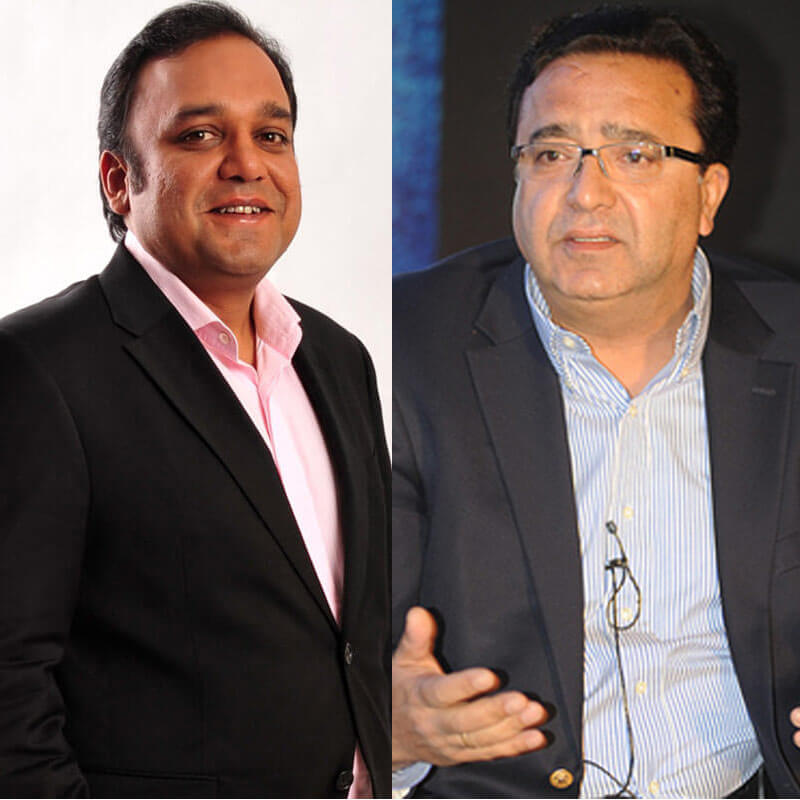
    President of IBF, representing broadcasters in the country with more than 400 channels and 90 per cent of viewership in the country, Punit Goenka said, “It is important that the government recognises TV services, which has evolved over the years as a product/service of mass consumption, to be classified and categorized under the item of mass consumption having a GST rate of 5 per cent so that it becomes affordable to masses.”

    Goenka further added: “Going by the number of TV households, which stands at 120 million, we submit to the government that broadcast services, that is, TV and radio, must be treated at par with the print (medium) in the new GST regime. This submission is based entirely on the fact that TV services have become integral part of everyday life of the vast majority in the country and the general economic downturn globally has impacted the sector extensively.”

    According to MIB data as on 31 December 2016, there are 899 licensed TV channels in the country of which 399 are news and current affairs channels, while 500 fall under the non-news and current affairs category. Building on this data, IBF highlighted that while many news channels had shuttered or are doing so, some others were downsizing to cope with falling revenues — a fall out of shrinking advertising revenue following demonetisation — and rising infrastructure and contest costs. “It seems that many (TV channel) licenses would get either get cancelled or submitted (back) voluntarily by the stakeholders,” IBF warned.

    Pointing out that the rates of DAVP advertisements (the government body that hands out government ads to media), which all broadcasters have to mandatorily carry on their networks, have remain unchanged since 2010, Sony Pictures Networks India president, network sales and international business Rohit Gupta said, “The rock-bottom rates are not at all in keeping with the existing market rates and allows little flexibility to carry out businesses.”

    Dwelling on the impact that rising costs can have on smaller TV channels’ investments in content, which can have “cascading” effects on viewer choice, Zee Entertainment president, legal & regulatory, A Mohan said, “We urge the government to free the media, print, television and radio (mediums) from obsolete taxation squeezes and attacks on revenue streams, as the vitality of this industry is essential to protect the fibre of the country, both socially and economically.”

    The IBF statement, which cautioned government against job losses and disruptions in the vibrant Indian media industry, advocated non-stifling tax regime that can reflect in the upcoming Budget 2017.

  • Broadcasters bat for parity with print medium under GST

    Broadcasters bat for parity with print medium under GST

    NEW DELHI: The Indian Broadcasting Foundation (IBF) today urged the government to level the playing field under the proposed GST regime for “all mediums”, including electronic, radio and print, as businesses across sectors had taken a hit due to demonetisation of high value currency notes November last.

    In a statement put out on Friday, the IBF, which is dedicated to the promotion of television broadcasting in and from India as an organisation, exhorted the government to treat broadcasting community at par with the print medium.

    “Just like the print media that has been clamouring for a zero rating of newspapers under the new GST regime, fuming under mass retrenchment and closing down of various editions, the electronic and the radio media, though bleeding under cancellations of advertisements (of) over Rs. 2000 crore (Rs. 20 billion) have requested the government to treat them at par with the print counterpart as they cater to imparting of not only news, entertainment, but also help educate the masses,” the statement said.

    The IBF statement comes a day after Minister of Information and Broadcasting M. Venkaiah Naidu directed his ministry’s top official, Secretary Ajay Mittal, to examine various concerns raised by the print media players, including the tax regime that would be ushered in under the proposed Goods & Services Tax (GST), wages in the sector and the way government hands out advertising business to newspapers and magazines.

    President of IBF, representing broadcasters in the country with more than 400 channels and 90 per cent of viewership in the country, Punit Goenka said, “It is important that the government recognises TV services, which has evolved over the years as a product/service of mass consumption, to be classified and categorized under the item of mass consumption having a GST rate of 5 per cent so that it becomes affordable to masses.”

    Goenka further added: “Going by the number of TV households, which stands at 120 million, we submit to the government that broadcast services, that is, TV and radio, must be treated at par with the print (medium) in the new GST regime. This submission is based entirely on the fact that TV services have become integral part of everyday life of the vast majority in the country and the general economic downturn globally has impacted the sector extensively.”

    According to MIB data as on 31 December 2016, there are 899 licensed TV channels in the country of which 399 are news and current affairs channels, while 500 fall under the non-news and current affairs category. Building on this data, IBF highlighted that while many news channels had shuttered or are doing so, some others were downsizing to cope with falling revenues — a fall out of shrinking advertising revenue following demonetisation — and rising infrastructure and contest costs. “It seems that many (TV channel) licenses would get either get cancelled or submitted (back) voluntarily by the stakeholders,” IBF warned.

    Pointing out that the rates of DAVP advertisements (the government body that hands out government ads to media), which all broadcasters have to mandatorily carry on their networks, have remain unchanged since 2010, Sony Pictures Networks India president, network sales and international business Rohit Gupta said, “The rock-bottom rates are not at all in keeping with the existing market rates and allows little flexibility to carry out businesses.”

    Dwelling on the impact that rising costs can have on smaller TV channels’ investments in content, which can have “cascading” effects on viewer choice, Zee Entertainment president, legal & regulatory, A Mohan said, “We urge the government to free the media, print, television and radio (mediums) from obsolete taxation squeezes and attacks on revenue streams, as the vitality of this industry is essential to protect the fibre of the country, both socially and economically.”

    The IBF statement, which cautioned government against job losses and disruptions in the vibrant Indian media industry, advocated non-stifling tax regime that can reflect in the upcoming Budget 2017.

  • Budget allocations for Digital India, northeast go up for Communication and Information Technology Ministry

    Budget allocations for Digital India, northeast go up for Communication and Information Technology Ministry

    New Delhi: The allocation for capital outlay on telecommunication and electronic industries is Rs 125 crore for the Departments of Telecommunications Communications and Information Technology (DeiTY), according to the Union Budget presented by Finance Minister Arun Jaitley on February 29.

    While the capital outlay on telecommunication and electronic Industries has been sharply increased for the telecommunications department from Rs 16 crore in the revised budget of 2015-16 to Rs 80 crore for 2016-17, it had been cut from Rs 69 crore in the revised estimates of the DeiTY for 2015-16 to Rs 45 crore for 2016-17.

    Interestingly, this works against the interests of the broadcasting industry, since set top boxes, antennae, headends and other equipment would fall under the DeiTY’ help to public or private industry under the head of  ‘capital outlay on telecommunication and electronic Industries.’

    The total budgetary outlay for the Telecommunication Department is Rs 21214.66 crore, while it is Rs 3328.82 crore for DeiTY for 2016-17

    Under Digital India programme, there are separate allocations for the Manpower Development Programme to ensure availability of trained human resources; Electronics Governance to deliver all Government services electronically to the citizens in his/her locality through integrated and inter-operable systems via multiple modes, while ensuring efficiency, transparency and reliability of such services at affordable costs; the National Knowledge Network with multiple gigabit bandwidth to connect Knowledge Institutions across the country; Promotion of Electronics/IT Hardware Manufacturing;  R&D in IT/Electronics/CCBT; and Foreign Trade and Export Promotion to reimburse Central Sales Tax to Electronics Hardware Technology Parks (EHTP) and Software Technology Park (STP) units.

  • Budget allocations for Digital India, northeast go up for Communication and Information Technology Ministry

    Budget allocations for Digital India, northeast go up for Communication and Information Technology Ministry

    New Delhi: The allocation for capital outlay on telecommunication and electronic industries is Rs 125 crore for the Departments of Telecommunications Communications and Information Technology (DeiTY), according to the Union Budget presented by Finance Minister Arun Jaitley on February 29.

    While the capital outlay on telecommunication and electronic Industries has been sharply increased for the telecommunications department from Rs 16 crore in the revised budget of 2015-16 to Rs 80 crore for 2016-17, it had been cut from Rs 69 crore in the revised estimates of the DeiTY for 2015-16 to Rs 45 crore for 2016-17.

    Interestingly, this works against the interests of the broadcasting industry, since set top boxes, antennae, headends and other equipment would fall under the DeiTY’ help to public or private industry under the head of  ‘capital outlay on telecommunication and electronic Industries.’

    The total budgetary outlay for the Telecommunication Department is Rs 21214.66 crore, while it is Rs 3328.82 crore for DeiTY for 2016-17

    Under Digital India programme, there are separate allocations for the Manpower Development Programme to ensure availability of trained human resources; Electronics Governance to deliver all Government services electronically to the citizens in his/her locality through integrated and inter-operable systems via multiple modes, while ensuring efficiency, transparency and reliability of such services at affordable costs; the National Knowledge Network with multiple gigabit bandwidth to connect Knowledge Institutions across the country; Promotion of Electronics/IT Hardware Manufacturing;  R&D in IT/Electronics/CCBT; and Foreign Trade and Export Promotion to reimburse Central Sales Tax to Electronics Hardware Technology Parks (EHTP) and Software Technology Park (STP) units.

  • Union Budget 2016: What it means for the media & entertainment industry

    Union Budget 2016: What it means for the media & entertainment industry

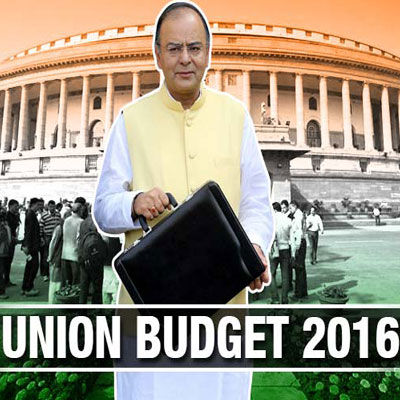
    MUMBAI: 29 February marked an important date in the year’s calendar as Indian Finance Minister Arun Jaitley presented the Union Budget 2016, amidst expectations from all sections. With an aim to give equal attention to all sectors that need financial assistance, Jaitley presented the nine pillars of his budget that focused on multiple subjects; from eCommerce to start-ups; from education to increasing jobs; and from agriculture to health.

    In a quest to find out what it really means for the media and entertainment industry, Indiantelevision.com reached out to several industry stalwarts to find out how they interpret the Union Budget 2016.

    Here’s what they have to say:

     M&E Tax Advisory India, EY, partner and head Rakesh Jariwala

    “As part of the budget proposals, India has levied an equalisation levy – what is known as ‘google tax’ globally. The tax @ six per cent of the consideration will apply on services relating to online advertisement, provisions on online ad space or other facility or services for the purpose of online advertisement, when such services are provided by a non-resident to either an Indian resident or a non-resident having a permanent establishment in India. The payer for these services are required to deduct 6% prior to making the payment. This is the first time that online services are being taxed in India.”

     Videocon director Anirudh Dhoot

    “The Finance Minister presented a balanced budget with a focus on infrastructure and agriculture sectors. By keeping the fiscal deficit target to 3.5 per cent of the GDP, the budget addresses long term positive impact on businesses. For consumer durable and home appliances industry specifically, the budget brings mixed responses. While the focus is more on dispute resolution and simplification of provision, the voluntary income disclosure will dampen the market. The government has lowered the corporate tax for new manufacturing units at 25 per cent with a view to promote industrial activity and generate jobs. With regard to small units having a turnover of Rs 5 crore, the corporate tax rate has been reduced from 30 per cent to 29 per cent. However, there is no relief on the corporate tax for big manufacturers. Government has stressed on GST implementation and proposed changes in customs duty to push make in India initiatives, which is aimed at improving the overall business environment.” 

     Sony Pictures Networks India CEO NP Singh

    “From an overall budget perspective, the enhanced public spending through various social schemes and infrastructure investments should further help to expedite economic growth. The government has also balanced spending with fiscal prudence by reigning-in fiscal deficit. From a media industry perspective, there were no major changes. I feel that a change in the definition of industrial undertaking for the services industry as well as a push to define the GST roadmap would have been sector-positive. There is a landmark attempt in the budget to simplify the tax administration, which should herald a friendlier tax regime.”

     Dentsu Aegis Network South Asia CEO and chairman and Posterscope & MKTG – Asia Pacific chairman Ashish Bhasin 

    “Overall there are some positives and some negatives in the budget. Not increasing the service tax is a positive, particularly for the advertising and media sector. The general expectation was that Service Tax may go up in anticipation of higher GST rates. Controlling the fiscal deficit and several steps to invigorate the rural economy and rural consumption are positive signals. A rural consumption revival will help the economy and the advertising and media sector tremendously. On the negative side, there was an expectation based on what the Finance Minister said in the past, that corporate tax rates would come down. That is not to be so for most large companies. Introducing double taxation on dividends is also a negative. In balance this seems to be a mixed bag budget with a positive bias. If it is able to spur overall economic growth, we could see good times ahead for the advertising and media sector.”

     Times Network CEO and MD MK Anand

    “Digitisation, in my opinion is the most important factor for the broadcast sector currently, we are very happy about the excise duty changes proposed for set-top-boxes, which will help in the last mile infrastructure of Digital Addressable System (DAS) Phase 3 and 4. Overall, a stable and positive fiscal situation is good for the economy and that will support our ad sales growth projections. All in all budget 2016 looks good for the Broadcast sector.”

     Viacom18 Group CEO and National Media and Entertainment Committee CII chairman Sudhanshu Vats

    “Kudos to the government for presenting a disciplined and inclusive budget. The emphasis on rural development and commitment to the fiscal deficit target augur well for the economy in the long-run. The proposal for a more conducive excise duty regime for STBs and other ‘entertainment-access devices’ is welcome. While many of us from the industry were anticipating more sector-specific announcements, I’m sure that this budget will benefit the larger economy and therefore, by extension, have a positive impact on our industry as well.”