Category: Budget

  • Guest Column: M&E sector pins hopes on a developmental budget

    Guest Column: M&E sector pins hopes on a developmental budget

    The market size of the Indian media and entertainment (M&E) sector is estimated to be in excess of USD 20 billion. India has more than 180 million television households and approximately 900 television channels (including news and current affairs). The country also produces the highest number of films–around 2,000 films every year in more than 20 languages.

    The key sub-sectors under M&E include (1) broadcasting, (2) print, (3) films, (4) sports, (5) radio, (6) music, (7) digital advertising, (8) out-of-home advertising, (9) animation and VFX, (10) gaming, (11) live events. The M&E sector is expected to outpace GDP growth in 2018. Now, with everyone’s eyes on Budget 2018 proposals, the key expectations of the sector are outlined below:

    Mergers and amalgamations

    Industrial undertakings are allowed to carry forward tax losses in case of merger or amalgamation. The definition of industrial undertaking, includes manufacture of computer software, providing telecommunication services. However, the sector (including broadcasting, radio) has not been included in this definition. Accordingly, the benefit of tax losses is currently not available for M&E players in cases of consolidation.

    On account of evolving business models (including moving to a B2C model), there is a thrust on consolidations within the M&E sector. Considering this and the convergence of the broadcasting and radio sectors with telecommunications, the government should consider including broadcasting and radio under the definition of industrial undertaking for carrying forward tax losses. This would facilitate consolidations in broadcasting and radio.

    Infrastructure status

    Broadcasting is capital intensive and requires huge investment of funds on account of digitisation, upgrade of technology and infrastructure architecture. Currently, broadcasting is not granted infrastructure status and the government should consider granting such status to the sector. This, amongst others, would aid financing for future growth and help the sector achieve its potential.

    Foreign direct investment (FDI) in print

    Currently, FDI in print (news and current affairs) is capped at 26 per cent. This sector is trying to deal with the impact of digitalisation. Considering the trend of liberalising the FDI policy and sector’s needs for investment in digital assets, the government should consider increasing the FDI cap for print to 49 per cent. This would help in attracting foreign funds into the sector.

    Transfer pricing

    Safe harbour is a mechanism under which tax authorities accept the transfer price (under certain circumstances) declared by the taxpayers, without undertaking a detailed audit/scrutiny. The scope of safe harbour transactions has been enlarged in 2017 to provide certainty to taxpayers and transactions such as provision of software development services for IT/ITeS sector are part of the safe-harbour regime. However, transactions specific to the M&E sector are currently not a part of the regime.

    The government should consider including the transaction of distribution of content by an Indian company to its overseas group company under the safe-harbour regime. This would provide relief to M&E players in terms of obtaining certainty from a transfer pricing perspective.

    Withholding tax

    Over the last couple of years, the government has been forthcoming in terms of clarifying tax positions (for instance expense deduction for abandoned films, withholding tax in respect of advertising contracts and content transactions) by way of circulars to avoid litigation. Outlined below are a few issues that the government should consider clarifying the withholding tax position to reduce litigation:

    ·  Channel placement fees: The government should consider clarifying that such payments do not amount to royalty/fees for technical services considering the Bombay high court decision on this issue.

    ·  Live broadcast rights: Clarifying that such payments do not amount to royalty/fees for technical services should be considered based on the Delhi high court and Mumbai tribunal decisions on this issue.

    ·  Transponder fees: The government should also consider clarifying that a non-resident taxpayer can claim the benefit under a tax treaty for transponder fees and domestic tax law explanation of the process should not be       imputed to the tax treaty definition of royalty.

    Goods and services tax (GST)

    Services by way of admission to exhibition of cinematograph films is subject to GST at 18 per cent or 28 per cent, depending on the price of the ticket. In addition to GST levied by state and central governments, the right to levy and collect tax has also been given to local authorities and this right continues even after implementation of GST. It should be ensured by the government that such local bodies do not levy additional tax on exhibition of films. If levied, a corresponding reduction in GST rate should be granted.

    The M&E sector is at the cusp of exponential growth opportunities but to achieve such growth trajectory, the support of the government reforms is of utmost importance. Hopefully, on 1 February 2018, when the Budget proposals are presented, we would take a significant step in that direction.  

    Thakkar is Partner and Bhojwani is Director with Deloitte India. The views expressed are personal and Indiantelevision.com may not

  • Rs 12 billion budgeted for ‘Digital India’ ’17-18

    Rs 12 billion budgeted for ‘Digital India’ ’17-18

    NEW DELHI: With the Government’s emphasis on cashless and paper-less working, electronic governance gets the highest chunk of Rs 4.0055 billion out of the overall budget of Rs 12.1642 billion set aside for Digital India for 2017-18.

    Of the total allocation for electronics governance, Rs 3.8555 billion has been set aside as programme component.

    According to the budget for the electronics and information technology ministry, the objective of e-governance is to deliver all government services electronically to the citizens in his/her locality through integrated and inter-operable systems via multiple modes, while ensuring efficiency, transparency and reliability of such services at affordable costs. 

    The World Bank supported India: e-Delivery of Public Services project is an externally aided project under Electronic Governance Scheme under which financial support is extended for various e-governance initiatives of the Centre and States/UTs in the broad areas of policies, human resources, technology, project development, etc.

    Manpower development gets Rs 3.0676 billion while the National Knowledge Network has been allocated of Rs 1.5 billion.

    The objective of manpower development is to ensure availability of trained human resources for the manufacturing and service sectors of electronics and IT industry. Initiatives include identifying gaps emerging from the formal sector and planning programmes in non-formal and formal sectors for meeting these gaps.

    The National Knowledge Network has been initiated with multiple gigabit bandwidth to connect Knowledge Institutions across the country

    Promotion of electronics and IT HW Manufacturing (MSIPS, EDF and Manufacturing Clusters) will get Rs 7.45 billion. The ministry says electronics manufacturing is one of the important pillars of Digital India Programme and target to achieve net zero imports is a striking demonstration of intent. 

    Ministry sources said the demand for electronics hardware is expected to rise rapidly and India has the potential to become an electronics hardware manufacturing hub and contribute significantly to the GDP, employment opportunities and exports.

    For Promotion of IT/ITeS Industries, the total allocation is Rs 60 million while Cyber Security Projects (NCCC & Others) get Rs 210.8 million.

    Two schemes (NEBPS and IBPS) under IT for Jobs pillar have been launched under Digital India Programme to incentivise BPO/ITES operations across the country, particularly digitally deficit areas for creation of employment opportunities for the youths and the balanced regional growth of IT/ITES Industry.

    The objective of the Cyber Security scheme is to adopt a holistic approach towards securing the cyber space of the country by pursuing multiple initiatives like Security Policy, Compliance and Assurance, Security, Incident-Early warning & Response, Security Training, Security specific R&D, Enabling Legal Framework and 
    Collaboration.

    A sum of Rs 1.01 billion has been set aside for research and development in IT/Electronics/CCBT. Proliferation and absorption of emerging technology by supporting R&D is one of the important objectives, apart from creating essential R&D infrastructure and scientific & technical human capital. 

    The allocation for Foreign Trade and Export Promotion is a mere Rs 30 million to reimburse Central Sales Tax (CST) to Electronics Hardware Technology Parks (EHTP) and Software Technology Park (STP) units according to the Foreign Trade Policy.

    Also Read:

    Budget ’17: Encourage digital economy to make tax system globally competitive

    Dist. National Informatics Centres to be of international standards

    How Digital India will foster VoD growth: Spuul Global CEO

  • Ravi Shankar too hopes DTH will support Swayam

    Ravi Shankar too hopes DTH will support Swayam

    NEW DELHI: Communications and Information Technology Minister Ravi Shankar Prasad has expressed the hope that said linkage with direct-to-home platforms will help the ready-to-be-launched Swayam platform with at least 350 online courses.

    This will leverage information technology and enable students to virtually attend the courses taught by the best of the faculties present in the country, access high quality reading resources, participate in discussion forums, take tests and earn academic grades.

    Prasad in a statement described the budget as “A Digital Friendly Budget aimed at accelerating India’s Transformation into a Digitally Empowered Society”.  

    He said the Digital India initiative of the government had transformed the digital profile of India significantly. Investments in electronic manufacturing which was just Rs 110 billion in June 2014 has increased to Rs 1278.8 billion.

    The production of indigenous LCD/LED TVs went up by 38 per cent to 12 million units in 2015-16 as compared to 8.7 million units in 2014-15.

    LED products made in the country earned Rs 35.9 billion in 2015-16, showing a growth of 65 per cent over 2014-15 when the earning was Rs 21.72 billion.

    Similarly, 110 milion Indian mobile handsets were produced in 2015-16, showing a rise of 83 per cent over the previos year 2014-15 when the production was 60 million units. With 72 new mobile handset and component manufacturing units set up in last two years, India has emerged as a mobile manufacturing hub. The growth in mobile handsets in value terms means a growth of 185 per cent, having risen to Rs 540 billion in 2015-16 as against Rs 189 billion in 2014-15.

    The number of telephone users in the country had grown from 950 million in June 2014 to 1080 million mobile phone users. He listed some of the other achievements of the Digital India programme:

    ·   Bharat Net: Optical Fibre Network to connect villages of India has seen rapid growth. In June, 2014 only 358 kms of optical fibre was laid. In January, 2017 1.72 lakh kms of optical fiber has been laid across more than 76, 000 Gram Panchayats.

    ·   MyGov: A new platform created for participative governance now has over 40 lakh registered users.

    ·   Aadhaar Holders: From 63 Crore Aadhaar holders in 2014, India today has 111 Crore Aadhaar holders.
    ·   Common Service Centers: To provide digital services to common people in villages the Common Services Centers were created. In June 2014, only 83,000 such centers were active across the country, which has now increased to 2.05 lakh centers.

    ·    Jeevan Pramaan Portal: A new initiative to provide convenience to pension holders was created which now has 56 lakh registered pensioners.

    ·    Digi Locker:  A new initiative to provide safe online document storage to citizen now has more 42 lakh users. More than 165 Crore digital documents have been issued by the Government in these lockers.
    ·   Scholarship Portal: Online scholarship was easily made available to the students. 1.4 Crore students have registered under this.

    ·   Online Hospital Appointment: Online appointment services in 60 major hospitals have been started. Total 47 lakh appointments have been taken online.

    ·   eNAM: Online National Agriculture Market was created so that farmers can get the best price for their produce. Today more than 8.5 lakh farmers have registered on this portal.

    ·   Growth in Digital Transactions: eTaal portal which measures the digital transactions of various eGovernance services has seen a rapid growth:
    ·   In 2013- 66.25 lakh transactions per day
    ·   In 2014- 96.9 lakh transactions per day
    ·   In 2015- 1.85 crore transactions per day
    ·   In 2016- 3 crore transactions per day

    ·  Computerization of Land Records: Land records have been computerized in 31 states and Union Territories. Record of Rights (RORs) made online for 22 States/UTs. Bhu-Naksha/ Map digitization done for 15 States/UTs.

    · Digi Dhan Abhiyaan: To promote digital payments across the country, Digi Dhan Abhiyaan was launched in December, 2016. Under this effort of the Ministry, more than 2 Crore people and 7.18 lakh shopkeepers were trained in digital payments across 5636 blocks of 640 districts.

    Speaking on the relevance of the Union Budget 2017-18 to Electronics and IT sector, Prasad said, “As India is now on the cusp of a massive digital revolution, promotion of a digital economy is an integral part of Government’s strategy to clean the system and weed out corruption and black money. It has a transformative impact in terms of greater formalisation of the economy and mainstreaming of financial savings into the banking system. This, in turn, is expected to energise private investment in the country through lower cost of credit.”

    “Digital Economy aims for speed, accountability and transparency. We are also creating an eco-system to make India a global hub for electronics manufacturing. Over 250 investment proposals for electronics manufacturing have been received in the last 2 years, totalling an investment of Rs 1260 billion. A number of global leaders and mobile manufacturers have set up production facilities in India. A shift to digital payments has huge benefits for the common man. The earlier initiative of our Government to promote financial inclusion and the JAM trinity were important precursors to our current push for digital transactions”, he added.

    Digital Inclusion remains of central concern to this Government. In order that people in rural areas are able to access quality services, the Government has announced that a DigiGaon initiative will be launched in order to provide tele-medicine, education and skills through use of digital technologies. For senior citizens an Aadhar based Smart Card containing health details will be introduced initially on a pilot basis in 15 districts in 2017-18. This week the Cabinet has approved a scheme for digital literacy for 6 crore rural households– Prime Minister Gram Digital Saksharta Abhiyaan PMGDISHA which will be strengthened through the network of the Common Service Centre. We expect that this will further open up opportunities for livelihood in digital arena in rural areas. It is to be noted that CSCs have generated employment opportunities for over five lakh youth in rural areas.

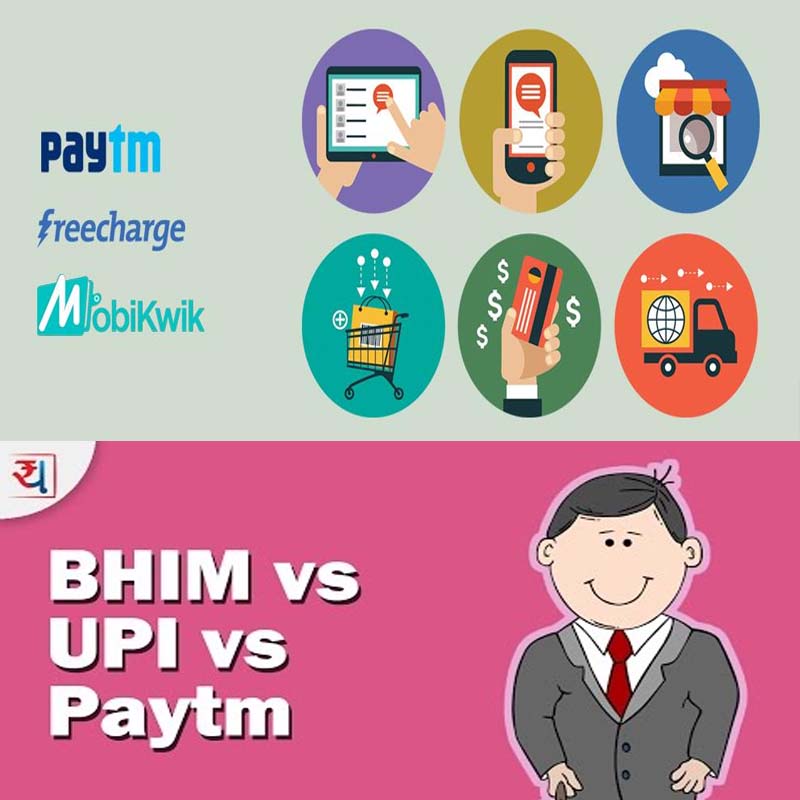
    He said the recently launched BHIM App by the Government will unleash the power of mobile phones for digital payments and financial inclusion. So far, over 140 lakh people have adopted the BHIM app. The Government will launch two new schemes to promote the usage of BHIM; viz., Referral Bonus Scheme for individuals and a Cashback Scheme for merchants

    Aadhar Pay, a merchant version of Aadhaar Enabled Payment System, will also be launched shortly.  This will be specifically beneficial for those who do not have debit cards, mobile wallets and mobile phones. A Mission will be set up with a target of 2,500 crore digital transactions for 2017-18 through UPI, USSD, Aadhaar Pay, IMPS and debit cards. Banks have targeted to introduce additional 10 lakh new PoS terminals by March 2017.  They will be encouraged to introduce 20 lakh Aadhaar based PoS by September 2017.  

    Keeping in view the need to promote cashless transactions, exemptionfrom BCD, Excise/CV duty and SAD on miniaturized POS card reader for m-POS, micro ATM standards version 1.5.1, Finger Print Readers/Scanners and Iris Scanners been brought down to nil. Simultaneously, exemption is also extended to parts and components for manufacture of such devices, so as to encourage domestic manufacturing of these devices. I am sure you will notice that there are a number of other measures that are aimed at improving the ease of doing business and also for encouraging start ups.

    The focus would be on rural and semi urban areas through Post Offices, Fair Price Shops and Banking Correspondents and cooperative sector. Support has been provided for NABARD for computerisation and integration of all 63,000 functional PACS with the Core Banking System of District Central Cooperative Banks. This will be done in 3 years at an estimated cost of Rs 1,900 crores, with financial participation from State Governments. This will ensure seamless flow of credit to small and marginal farmers. The coverage of National Agricultural Market (e-NAM) will be expanded from the current 250 markets to 585 APMCs. Steps would be taken to promote digital payments in petrol pumps, fertilizer depots, municipalities, Block offices, road transport offices, universities, colleges, hospitals and other institutions, such as using the recently launched BHIM App.  A proposal to mandate all Government receipts through digital means, beyond a prescribed limit, is under consideration.  Further, steps will be taken for linking of individual demat accounts with Aadhaar.

    The Government is planning to introduce a new and restructured Central scheme – Trade Infrastructure for Export Scheme (TIES) in 2017-18. The allocation for incentive schemes like M-SIPS and EDF exponentially increased to an all time high of Rs 7450 million in 2017-18. Duties have been rationalized which will provide boost to manufacturing of LED lights and solar cells and modules.

    Cyber Security being very critical for safeguarding the integrity and stability of the financial sector and one of the major factors behind the Digital drive, the government is setting up a Computer Emergency Response Team for the Financial Sector (CERT-Fin).  This entity will work in close coordination with all financial sector regulators and other stakeholders.

    Also Read:

    FM wants DTH to help Swayam, industry skeptical

    DTH channels being launched by September to impart education: Javadekar

    Only Dish TV carrying HRD ministry’s educational TV channels

  • Budget ’17: SAP enables mid-sized cos to go digital

    Budget ’17: SAP enables mid-sized cos to go digital

    MUMBAI: Aligning to the Union Budget 2017, SAP SE announced the launch of SAP S/4HANA Private Cloud, the next generation business suite tailored for midsize companies, which will be available at a simple and affordable subscription pricing.

    With increased impetus for digital, cashless transactions and a unified, transparent taxation regime, companies will need to gear up for rapid growth while balancing business control with the agility to capitalize on emerging opportunities. With SAP S/4HANA Cloud, private edition, midsize companies will benefit from the innovation, flexibility, and functionality of SAP S/4HANA enterprise management solution and derive the benefit of effortless scalability, ease of implementation and management.

    The SAP S/4HANA Private Cloud will provide the perfect platform for businesses that are at the cusp of making strategic shift to digital. Available in a modular subscription pricing without any upfront capital investment, this solution offers enterprise-caliber data security and faster time to value allowing SMEs to go digital within weeks on predefined services.

    “The recommendations in the Union Budget 2017 are tailored to accelerate growth for midsize companies,” said SAP Indian subcontinent president and MD Deb Deep Sengupta. “Our commitment, through SAP S/4HANA Private Cloud, is to provide each and every Indian business the opportunity to tap into the power and potential of SAP HANA as they pave the way towards a pervasive digital business.”

    From standard business processes to deep industry-specific functionality, companies of any size can now take advantage of SAP’s 40+ years of experience delivering solutions for businesses in every industry.

  • Budget ’17: Rural net will facilitate travel bookings

    Budget ’17: Rural net will facilitate travel bookings

    MUMBAI: The union budget has broadly focused on themes such as the farming sector, the tourism industry, development of road network, and infrastructure. The high speed internet connectivity in rural areas will now be the biggest advantage to the travellers.

    This is the first time the railway budget was merged with the general budget. One significant announcement was the fencing project on the Delhi-Mumbai and Delhi-Howrah routes which is expected to cost around Rs 45 lakh per km. Other announcements included track and signalling upgradation and elimination of unmanned level-crossings along the two major routes at an estimated cost of Rs 21,000 crore.

    Royal Caribbean Cruises exclusive India representative TIRUN​​ CEO Ratna Chadha said, “The union budget we hope will have a positive impact on the tourism industry which is a great employment generator, resulting in a significant multiplier effect on the economy. We are happy to see infrastructure development at airports in tier 2/3 cities, as most of the aspirational India resides here.”

    Online travel industry enabler Travelyaari co-founder and CEO Aurvind Lama said, “The union budget presented a progressive outlook with due importance to infrastructure development and tech development. The investment proposed in building national highways along with developing road network is a welcome step.”

    Lowcostdepartures.com’s new avatar Travkart.com co-founder Gursahib Singh Sethi said, “For increase in railway connectivity to the remote areas and upgradation of airports in Tier 2 cities, a huge number of people will be able to travel smoothly from Tier 2 and Tier 3 cities. The high speed internet connectivity in rural areas will be the biggest advantage to them. This will help them to do more purchasing and online bookings. Enlarging the tax exemption bracket would be a crucial factor in people’s saving. This will increase their budget to travel.”

    Sales enablement services provider Denave global CEO & co-founder Snehashish Bhattacharjee said, “Union Budget 2017 is mostly in line with the long-term economic development strategy of the present government. For the retail/ FMCG segment, highway and road infrastructure focus will work well in tandem with the advantages of the GST implementation. This will also go a long way in allowing development of tier3/satellite towns closer to the Tier1/tier2 cities and thereby a little more even distribution of population across tiered cities and rural areas. The sops towards getting closer to a cashless economy (digitisation sops, BHIM app and Aadhaar Pay drive, removal of service charges on e-ticket booking etc.) will help get closer to the 3% fiscal deficit goal by FY’19.”

  • Budget ’17 initiatives will drive overall demand, believe startups

    Budget ’17 initiatives will drive overall demand, believe startups

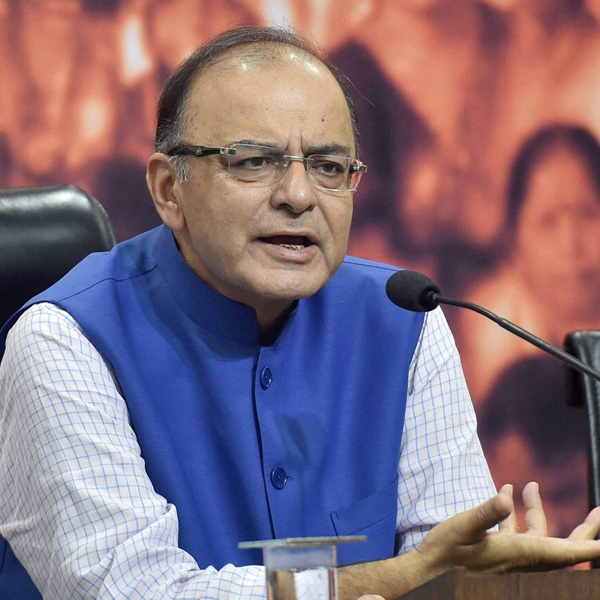
    MUMBAI: Startups are in a celebratory mode after the presentation of the Union Budget 2017 by the finance minister Arun Jaitley. He announced that small businesses with an annual turnover of Rs 50 crore will now have to pay five per cent less income tax, in order to make micro, small and medium enterprises (MSMEs) more viable.

    This brings down their income tax level to 25 per cent. The profit linked deduction available to the start-ups has changed to three years out of seven years.

    For the purpose of carrying forward of losses in start-ups, the condition of continuous holding of 51 per cent of voting rights has been relaxed. However, this is subject to the condition that the holding of the original promoter/promoters continues.

    On the issue of removal of Minimum Alternate Tax (MAT), the FM opined that it is not practical to remove or reduce MAT at present though, he has proposed to allow carry forward of MAT up to a period of 15 years instead of 10 years at present.

    The government also plans to spend Rs 2.44 lakh crore for small business loans.

    Media Konnect founder and CEO Ranjit Thakur said, “After being overlooked for almost two years, the media & entertainment industry has finally come to the fore in this Union Budget. Post-demonetisation, the budget focuses on paving the way for entrants and helping in sustainability of businesses. An industry that is audience-led, with the GST finally getting implemented this April, ticket prices will go down by 15-20 per cent which in turn will increase the demand and consumption by the audience.”

    “The abolishing of the Foreign Investment Promotion Board (FIPB),” he said, “will allow a smooth foreign investment in this sector. On an optimistic note, a quick action team initiated by the Finance Minister is going to help curb film piracy that plagued the industry until now. Overall, with the roll out of the GST, access to digital media and a strong action against film piracy – brings a lot of promise for the M&E Industry.”

    Venture Catalysts co-founder Dr. Apoorv Ranjan Sharma asserted, “Union Budget 2017-2018 is a progressive economy budget. The government has introduced the right policies, from reducing fiscal deficit gap to cleaner GDP growth, whilst promoting digitalisation and growth of the rural sector. For the startup economy, there is a significant relief in deductions within profit available for seven years from the existing five years. Furthermore, the deduction in corporate tax is a great boost for the companies with turnover of Rs 50 crore or less. Besides, SMEs with turnover up to Rs 2 crore, will enjoy tax relaxation from eight per cent to six per cent now. The move is going to waive the financial burden, while propelling small merchants on their path to success.”

    Mobclixs Technologies founder and CEO Dushyant Jani added, “Finally, the anticipation has come to an end with the unfolding of the Union Budget 2017-18 and we welcome the finance minister’s decisions on the various policies and tax saving schemes. The decision on the allocation of Rs. 10,000 crore for the Bharat Net project will provide high-speed broadband will definitely change the game for VAS businesses in the future. With increased number of people accessing the internet, the number of VAS users will also increase. Infrastructure development in terms of highways, shipping, and airways will help in public transportation.”

    He added, “Further, the newly announced income tax slab of 25 per cent, for the income bracket of Rs. 50 crore for start-ups, will help entrepreneurs in the efficient allocation of funds. However, the detailed announcement on the GST bill is still on the cards, and companies now are eagerly awaiting the same. We hope that the new policy formations in the budget are put into action effectively, in the same way as their presentation.”

    Tpot founder Robin Jha said, “Considering the current market scenario post-demonetisation in the last two months, it was important for government to introduce initiatives which would have a ripple effect on the overall demand in the economy. The increased spending by government on infrastructure and reduction in tax for salaried class is a step in that direction. Further the tax break for start ups and benefits for labor intensive industries would also spur the demand.”

  • Budget ’17 initiatives will drive overall demand, believe startups

    Budget ’17 initiatives will drive overall demand, believe startups

    MUMBAI: Startups are in a celebratory mode after the presentation of the Union Budget 2017 by the finance minister Arun Jaitley. He announced that small businesses with an annual turnover of Rs 50 crore will now have to pay five per cent less income tax, in order to make micro, small and medium enterprises (MSMEs) more viable.

    This brings down their income tax level to 25 per cent. The profit linked deduction available to the start-ups has changed to three years out of seven years.

    For the purpose of carrying forward of losses in start-ups, the condition of continuous holding of 51 per cent of voting rights has been relaxed. However, this is subject to the condition that the holding of the original promoter/promoters continues.

    On the issue of removal of Minimum Alternate Tax (MAT), the FM opined that it is not practical to remove or reduce MAT at present though, he has proposed to allow carry forward of MAT up to a period of 15 years instead of 10 years at present.

    The government also plans to spend Rs 2.44 lakh crore for small business loans.

    Media Konnect founder and CEO Ranjit Thakur said, “After being overlooked for almost two years, the media & entertainment industry has finally come to the fore in this Union Budget. Post-demonetisation, the budget focuses on paving the way for entrants and helping in sustainability of businesses. An industry that is audience-led, with the GST finally getting implemented this April, ticket prices will go down by 15-20 per cent which in turn will increase the demand and consumption by the audience.”

    “The abolishing of the Foreign Investment Promotion Board (FIPB),” he said, “will allow a smooth foreign investment in this sector. On an optimistic note, a quick action team initiated by the Finance Minister is going to help curb film piracy that plagued the industry until now. Overall, with the roll out of the GST, access to digital media and a strong action against film piracy – brings a lot of promise for the M&E Industry.”

    Venture Catalysts co-founder Dr. Apoorv Ranjan Sharma asserted, “Union Budget 2017-2018 is a progressive economy budget. The government has introduced the right policies, from reducing fiscal deficit gap to cleaner GDP growth, whilst promoting digitalisation and growth of the rural sector. For the startup economy, there is a significant relief in deductions within profit available for seven years from the existing five years. Furthermore, the deduction in corporate tax is a great boost for the companies with turnover of Rs 50 crore or less. Besides, SMEs with turnover up to Rs 2 crore, will enjoy tax relaxation from eight per cent to six per cent now. The move is going to waive the financial burden, while propelling small merchants on their path to success.”

    Mobclixs Technologies founder and CEO Dushyant Jani added, “Finally, the anticipation has come to an end with the unfolding of the Union Budget 2017-18 and we welcome the finance minister’s decisions on the various policies and tax saving schemes. The decision on the allocation of Rs. 10,000 crore for the Bharat Net project will provide high-speed broadband will definitely change the game for VAS businesses in the future. With increased number of people accessing the internet, the number of VAS users will also increase. Infrastructure development in terms of highways, shipping, and airways will help in public transportation.”

    He added, “Further, the newly announced income tax slab of 25 per cent, for the income bracket of Rs. 50 crore for start-ups, will help entrepreneurs in the efficient allocation of funds. However, the detailed announcement on the GST bill is still on the cards, and companies now are eagerly awaiting the same. We hope that the new policy formations in the budget are put into action effectively, in the same way as their presentation.”

    Tpot founder Robin Jha said, “Considering the current market scenario post-demonetisation in the last two months, it was important for government to introduce initiatives which would have a ripple effect on the overall demand in the economy. The increased spending by government on infrastructure and reduction in tax for salaried class is a step in that direction. Further the tax break for start ups and benefits for labor intensive industries would also spur the demand.”

  • Top M&E industry honchos see no major benefit from Budget ’17

    Top M&E industry honchos see no major benefit from Budget ’17

    MUMBAI: With the Union Budget’s focus on rural and infrastructure sectors, the media and entertainment (M&E) industry seems to be disappointed as the budget does not offer much. Though the sector is hoping to get some benefit through the digital push mentioned in the budget, expectations were high as the budget overlooked the sector even in the previous two budgets.

    No clarity on foreign direct investment (FDI) policy, goods and services tax (GST), no further reduction in the service tax, no direct benefit for the digital ecosystem, MSOs, telecom, and many such misses has upset the M&E industry at large.

    Impetus on digital payments and transactions will eventually help the OTTs/VoDs platforms subscription model. The government’s move to abolish Foreign Investment Promotion Board (FIPB) is believed to make it largely easier for foreign investors to invest in Indian companies.

    Reliance Broadcast Network Limited

    Reliance Broadcast Network (RBNL) CEO Tarun Katial said, “Budget 2017 is Neutral for the M&E sector although the consumption centric budget will put more money in the pocket of the common man and hence help the advertising and broadcast industries. Radio broadcast industry has requested specific policy measures like five per cent GST rate, reduction in custom duty for capex, etc and we look forward to the announcements when the GST rates are announced.”

    Mukta Arts 

    Mukta Arts MD Rahul Puri asserted, “The Union Budget this year has focused more on uplifting some of India’s poorest sections of society. While this year again the media and entertainment sector has been overlooked, however some announcements will definitely help our industry in many ways. Setting up the cyber security teams will help fight piracy, similarly, the government’s push towards Internet penetration in rural markets will help increase content consumption and increase the audience base. Further the abolishment of FIPB will make it easier for foreign investors to invest in Indian companies.”

    Worldwide Media 

    Worldwide Media CEO Deepak Lamba added, ‘’The Union Budget 2017 announced today, doesn’t include much on the  M&E sector, however there are some points that will have a positive impact on our industry. The budget reinforced India’s huge shift towards digitization especially with the proposed deployment of high optic cables to increase internet penetration in rural India. This is a big positive for content creators like us, as it will boost the digital content consumption across online and mobile platforms. Further impetus on digital payments and transactions will eventually help the subscription model. Also, the government’s move to abolish FIPB to make the inflow of FDI smoother and to consider liberalization of the FDI policy will have a positive impact for players across sectors in the long run.”

    KSS Limited (K Sera Sera)

    KSS Limited group CEO and KSS Digital Cinema CEO Rahul Kanani added, “The Union Budget 2017 introduces the abolition of the Foreign Investment Promotion Board which is a positive step leading to inducing more foreign studios investment in India. More investments coupled with technological upgradation will certainly be a boon for the Indian film industry. Further, with the digital transactions getting a boost the industry especially single screen businesses which have suffered hugely because of the recent demonetization will help get a push.”

    Pixel Pictures 

    Pixel Pictures CEO Prashanti Mallisetti said, “The budget on the onset looks quite positive and is in-line with the recent reforms. Though there are no major takeaways for any industry in particular that can affect a trajectory movement – the curb on cash transactions of 3 Lakhs is the one that is going to be a predominant factor in the demonetization short term scenario. More clarity in GST would have been great, but I guess we have to wait for that a little longer.”

    Dome Entertainment

    Dome Entertainment’s Mazhar Nadiadwala added, “GST would be implemented on the entertainment and events industry, and this would unify the indirect tax administration in India and help the country in two ways. Firstly, it will simplify and make it easy for the consumers to understand. Secondly, it will ease doing business in India. Also, application of GST will result into growth of the country and there will be transparency in the transactions. Under GST, service tax or state tax will be available as a credit which will reduce overall costs and eliminate dual levies of service tax and VAT on transactions. However, every coin has two sides, at one end where we have advantages of GST, on the other end certain businesses will face initial challenges, especially the ones who use traditional methods for transactions.”

    ActorsApply.com 

    An ActorsApply.com spokesperson said, “Government’s proposed reduction in the income tax for smaller organisations will add to the agenda of Startup India thereby expanding the scope for aspiring start ups. Also, the plan to provide a seven-year tax relief will help startups to overcome the losses incurred post demonetisation. The increase in time frame from 5 to 7 years for profit linked deductions was a much needed move specially for emerging start ups. The budget also levelled India’s huge shift towards digitization supporting it with the announcement of use of optic fibre cables for high-speed broadband connectivity in rural areas. This will mean increased Internet penetration through mobile and online mediums thereby boosting the start up sector overall.”

  • Top M&E industry honchos see no major benefit from Budget ’17

    Top M&E industry honchos see no major benefit from Budget ’17

    MUMBAI: With the Union Budget’s focus on rural and infrastructure sectors, the media and entertainment (M&E) industry seems to be disappointed as the budget does not offer much. Though the sector is hoping to get some benefit through the digital push mentioned in the budget, expectations were high as the budget overlooked the sector even in the previous two budgets.

    No clarity on foreign direct investment (FDI) policy, goods and services tax (GST), no further reduction in the service tax, no direct benefit for the digital ecosystem, MSOs, telecom, and many such misses has upset the M&E industry at large.

    Impetus on digital payments and transactions will eventually help the OTTs/VoDs platforms subscription model. The government’s move to abolish Foreign Investment Promotion Board (FIPB) is believed to make it largely easier for foreign investors to invest in Indian companies.

    Reliance Broadcast Network Limited

    Reliance Broadcast Network (RBNL) CEO Tarun Katial said, “Budget 2017 is Neutral for the M&E sector although the consumption centric budget will put more money in the pocket of the common man and hence help the advertising and broadcast industries. Radio broadcast industry has requested specific policy measures like five per cent GST rate, reduction in custom duty for capex, etc and we look forward to the announcements when the GST rates are announced.”

    Mukta Arts 

    Mukta Arts MD Rahul Puri asserted, “The Union Budget this year has focused more on uplifting some of India’s poorest sections of society. While this year again the media and entertainment sector has been overlooked, however some announcements will definitely help our industry in many ways. Setting up the cyber security teams will help fight piracy, similarly, the government’s push towards Internet penetration in rural markets will help increase content consumption and increase the audience base. Further the abolishment of FIPB will make it easier for foreign investors to invest in Indian companies.”

    Worldwide Media 

    Worldwide Media CEO Deepak Lamba added, ‘’The Union Budget 2017 announced today, doesn’t include much on the  M&E sector, however there are some points that will have a positive impact on our industry. The budget reinforced India’s huge shift towards digitization especially with the proposed deployment of high optic cables to increase internet penetration in rural India. This is a big positive for content creators like us, as it will boost the digital content consumption across online and mobile platforms. Further impetus on digital payments and transactions will eventually help the subscription model. Also, the government’s move to abolish FIPB to make the inflow of FDI smoother and to consider liberalization of the FDI policy will have a positive impact for players across sectors in the long run.”

    KSS Limited (K Sera Sera)

    KSS Limited group CEO and KSS Digital Cinema CEO Rahul Kanani added, “The Union Budget 2017 introduces the abolition of the Foreign Investment Promotion Board which is a positive step leading to inducing more foreign studios investment in India. More investments coupled with technological upgradation will certainly be a boon for the Indian film industry. Further, with the digital transactions getting a boost the industry especially single screen businesses which have suffered hugely because of the recent demonetization will help get a push.”

    Pixel Pictures 

    Pixel Pictures CEO Prashanti Mallisetti said, “The budget on the onset looks quite positive and is in-line with the recent reforms. Though there are no major takeaways for any industry in particular that can affect a trajectory movement – the curb on cash transactions of 3 Lakhs is the one that is going to be a predominant factor in the demonetization short term scenario. More clarity in GST would have been great, but I guess we have to wait for that a little longer.”

    Dome Entertainment

    Dome Entertainment’s Mazhar Nadiadwala added, “GST would be implemented on the entertainment and events industry, and this would unify the indirect tax administration in India and help the country in two ways. Firstly, it will simplify and make it easy for the consumers to understand. Secondly, it will ease doing business in India. Also, application of GST will result into growth of the country and there will be transparency in the transactions. Under GST, service tax or state tax will be available as a credit which will reduce overall costs and eliminate dual levies of service tax and VAT on transactions. However, every coin has two sides, at one end where we have advantages of GST, on the other end certain businesses will face initial challenges, especially the ones who use traditional methods for transactions.”

    ActorsApply.com 

    An ActorsApply.com spokesperson said, “Government’s proposed reduction in the income tax for smaller organisations will add to the agenda of Startup India thereby expanding the scope for aspiring start ups. Also, the plan to provide a seven-year tax relief will help startups to overcome the losses incurred post demonetisation. The increase in time frame from 5 to 7 years for profit linked deductions was a much needed move specially for emerging start ups. The budget also levelled India’s huge shift towards digitization supporting it with the announcement of use of optic fibre cables for high-speed broadband connectivity in rural areas. This will mean increased Internet penetration through mobile and online mediums thereby boosting the start up sector overall.”

  • Budget ’17: Leading digital players hail sectoral  boost

    Budget ’17: Leading digital players hail sectoral boost

    MUMBAI: “Digital economy helps in cleaning up the system, has transformational impact, energises private investment through low-cost credit, and benefits the common man,” asserted finance minister Arun Jaitley while announcing the Union Budget 2017 on 1 February. The budget 2017 emphasised a lot on the promotion of digital economy and strengthening the country’s cashless economy.

    Apart from launching two new schemes, Referral bonus for citizens and cashback for merchants, the government has also announced the launch of Aadhaar Pay. For the financial year 2017-18, the government targets around 2,500 crore digital transactions through UPI, USSD, Aadhaar Pay, IMPS and debit cards.
    The government’s focus on growing the digital footprint in India, enhancing digital infrastructure, capping cash transactions and enabling Aadhaar Pay crucial measures were laudable. Let’s take a look at what the digital, payment solution, e-commerce platforms and payment wallets have to say about the Union Budget 2017:

    Hungama.com CEO Siddhartha Roy said, “Focus on digital infrastructure in the current budget is extremely encouraging. Greater reach of broadband and data services into urban and rural India will lead to an inclusive digital economy, encouraging more people to embrace digital, driving consumption and transactions across the medium. Better quality of data is also set to give an impetus to the digital entertainment industry lead by video which is certainly poised for massive growth.” 
    Payment Wallets: FreeCharge & Oxigen
    Oxigen Services CMD Pramod Saxena says: “The budget 2017-18 reflects the government’s continuous efforts to move towards less cash economy and bringing transparency in value chain through digital payments & GST. The budget has stressed upon the importance of strengthening India’s digital economy by bringing down cost of digital infrastructure. The acceleration of PoS infrastructure with 10 lakh PoS machines by March 2017 and  another 20 lakh Aadhaar-based PoS by September 2017 is a reflection of pushing digital payments at last mile by 300 per cent from the current base of 15 lakh PoS achieved so far in last 20 years. The decision to exempt duty on various POS machines will help in reducing cost of digital infrastructure implementation and benefit companies like Oxigen.” 
    FreeCharge CEO Govind Rajan shared: “FreeCharge welcomes the policy measures aimed at accelerating the adoption of a digital economy in India. The incentives for adoption of fintech equipment, expansion of digital infrastructure in under-served areas, Aadhar Pay for wider adoption by merchants and capping cash transactions at Rs 3 lakh, all together have kept the spotlight on building a less-cash India. In doing so, we will all help build a transparent and efficient future for our country”
    Payment Solution Platforms: AGS & Telr

    AGS Transact Technology group chief marketing officer Pratik Seal added, “The Union Budget 2017 has seen a host of incentives to boost India’s digital economy.  However, the budget has not been a very populous one with incentives for the startup fraternity per se. Reduction of income tax for companies with a turnover of Rs. 50 crore to 25 per cent is a welcome move, and will aid many emerging companies. The three-year tax holiday in the first seven years (extended from five years) since inception of startups is a measure which will provide some relief to them. 

    Furthermore, he added, the surcharge of 10 per cent levied on individuals earning between Rs 50 lakh to Rs 1 crore may impact startups in the process of scaling-up, to attract senior talent on  their usual cash and ESOP/stocks packages, as the taxation gap over and under the Rs. 1 crore mark is now practically non-existent. The instant gratification “of being in the Rs 1-cr plus CTC and still be in the sub Rs-1 crore tax bracket” part is effectively eliminated. One would rather demand a fatter, all-cash pay-cheque now. Unfortunately, no policies have been announced providing relief for the aspiring Indians in the Rs 10-30 lakh bracket while heavier taxation for Rs 50-100 lakh is also a serious “aspiration dampener!”

    Telr founder and CEO Sirish Kumar said, “The budget looks well-rounded and in favour of digital economy, something we had anticipated following the demonetisation drive. There are policies to take internet to rural masses, including Bharat Net and ensure security of same via BHIM app and setting up CERT. Furthermore, limiting cash transactions to three lakh is going to work in favour of payment solution-providers, having the provision to handle payments of bigger ticket sizes. The increased emphasis on AadhaarPay, tax exemptions on Iris scanners, MicroATMs and POS machines, in addition to iris scanners, is further going to democratise digital economy in India. Taxes have been lowered for more than 67 per cent of MSME. This will make these businesses more viable.”

    E-commerce Platforms: Craftsvilla & Snapdeal

    Craftsvilla co-founder Manoj Gupta added, “There is nothing big bang in this Union Budget. There is very little for startups and ecommerce. Abolition of FIPB would hopefully make FDI easier. I was looking forward for the Government to take more proactive actions on areas like handloom and tourism that has huge potential for India. I would have also loved it if they announced developing handloom parks or heritage parks across the country with better facilities.”
    Snapdeal Kunal Bahl co-founder & CEO Kunal Bahl said, “We commend the focus on growing the digital footprint in the country — enhancing digital infrastructure, capping cash transactions, reducing cash donations, using Adhaar Pay to enable more digital payments are significant measures. Initiatives make an impact when there is continued attention and the new announcements build on the demonetisation efforts. We also welcome the emphasis on skill development and technical education – this will enable India to successfully harness the demographic dividend. The attention to affordable housing, greater employment in rural areas are the right interventions to build a more equitable society.”