Category: Budget 2025

  • A budget like no other; take a bow Ms Sitharaman

    A budget like no other; take a bow Ms Sitharaman

    MUMBAI: Imagine opening your paycheck and finding an unexpected bonus—except this time, it’s courtesy of the taxman. Looks like all the meme trolling has finally aided the middle class. FM Nirmala Sitharaman’s Union Budget 2025 under section 115BAC has shaken up India’s tax slabs like a well-mixed cocktail, giving middle-class earners a Rs 1 lakh crore collective boost. If last year’s tax regime was a clunky old scooter, this year’s is a turbocharged sedan with better mileage.

    The headline-grabber? The tax-free ceiling now sits at Rs 12 lakh, up from Rs 7 lakh last year, translating into a neat Rs 80,000 annual saving for many households. The 30 per cent tax slab, which kicked in at Rs 15 lakh before, has now been pushed to Rs 24 lakh. That’s a serious upgrade—enough to fund an iPhone 15 Pro Max, a holiday in Bali, or 12 EMIs on a Tata Nexon.

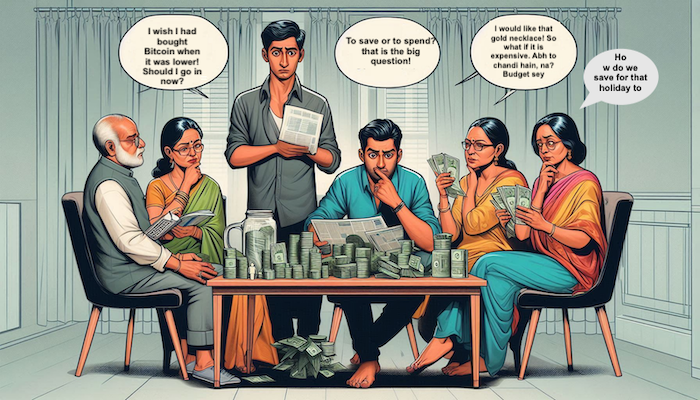
    But here’s the real question: will these extra rupees flood shopping malls and stock markets, or will inflation gobble them up before they can do any real good? While finance honchos cheer, economists are cautiously watching if this fiscal facelift is a lasting glow-up or just a one-time Instagram filter.

    Tax Slabs
    The new tax regime, which now serves as the default for Assessment Year 2025-26, offers a streamlined six-tier structure:
    * 0 per cent tax up to Rs 4 lakh (previously Rs 3 lakh)
    * 5 per cent on Rs 4–8 lakh
    * 10 per cent on Rs 8–12 lakh
    * 15 per cent on Rs 12–16 lakh
    * 20 per cent on Rs 16–20 lakh
    * 25 per cent on Rs 20–24 lakh
    * 30 per cent only above Rs 24 lakh (up from Rs 15 lakh earlier)

    Under the default new regime for assessment year 2025-26, the 30 per cent tax bracket now kicks in at Rs 15 lakh, up from Rs 10 lakh in the old structure (Part I rates). A taxpayer earning Rs 15 lakh saves Rs 37,500 annually versus the old regime. The slabs now have six tiers (vs four earlier), with a 5 per cent rate for Rs 3-7 lakh and 10 per cent for Rs 7-10 lakh. For seniors, the Rs 5 lakh threshold for octogenarians remains a sweetener.

    Sitharaman’s ministry has also played its cards well with surcharge reductions:

    * The surcharge on incomes exceeding Rs 2 crore (excluding dividends/capital gains) has been trimmed to 25 per cent from 37 per cent.
    * The ultra-rich still face the 37 per cent surcharge, but only on incomes exceeding Rs 5 crore.
    * A taxpayer earning Rs 3 crore saves Rs 3.7 lakh in surcharges.
    The government’s objective? A calibrated redistribution of wealth that puts more money in middle-class hands while ensuring high earners see incentives to keep investing.
    Consumer boom: Will it hold?
    A Deloitte study suggests that every Rs 1 saved in taxes results in Rs 0.65 of additional consumer spending. Here’s what that means for the economy:
    * Rs 37,500 savings per taxpayer Rs 24,375 extra spending per household
    * Eight million taxpayers in this bracket  Rs 19,500 crore injected into markets
    * Private consumption growth is forecasted to touch 7.8 per cent YoY in H2 2025, up from 6.7 per cent
     

    Says media veteran Yesudas Pillai: ” a proud Indian, I couldn’t have asked for a more comprehensive and forward-looking budget, setting aside all political narratives.It is visionary, inclusive, and growth-driven—a bold economic catalyst that fuels consumption, empowers communities, and accelerates sustainable development. With its progressive, consumption-led, and investment-focused approach, this blueprint lays the foundation for a resilient and thriving future. The budget ensures no sector is left untouched, with a strong emphasis even on center-state collaboration to drive holistic and inclusive growth. This is, without a doubt, the most transformative budget I have ever seen.

    The stock market is throwing a post-Budget party, and everyone’s invited! Avenue Supermarts (D-Mart’s parent) is up over 10 per cent, clocking its fifth straight day of gains. FMCG heavyweights HUL and ITC saw a five  per cent surge, as investors bet on rising grocery bills. Varun Beverages, PepsiCo’s bottling giant, snapped a two-day losing streak and fizzed up by six  per cent. Not to be left out, Sapphire Foods (operator of KFC and Pizza Hut) is dishing out a near 10 per cent jump.

    Even food delivery titans Zomato and Swiggy are savoring a six  per cent rally, proving that tax savings might just be feeding India’s appetite. Other big gainers? Godfrey Phillips (Up 12 per cent), Blue Star (Up 11 per cent), Phoenix Mills (Up 7.5 per cent), Devyani International (Up seven per cent), and Godrej Consumer (Up 6.5 per cent). Looks like the budget has delivered more than just tax cuts—it’s serving up a full-fledged consumption boom!

    Tata Motors ED Girish Wagh said, “Cutting customs duties on battery materials is a power move—literally. It’s a big push for India’s EV ecosystem and a greener future.”
    Godrej Consumer Products CFO Aasif Malbari noted, “This budget balances rural growth, manufacturing, and consumer demand—vital cogs for the FMCG sector. More jobs and rural investments mean stronger markets and higher consumption.”
    Marketing bonanza: Rs 2.3 trillion up for grabs?
    India’s advertising industry is preparing for a Rs 2.3 trillion windfall, assuming 30 per cent of tax savings flow into discretionary spends. Expect:
    * E-commerce wars: Flipkart, Amazon, Nykaa, and Myntra gearing up for record discount seasons.
    * Luxury labels expanding: Brands like Louis Vuitton and Tesla targeting Tier-2 cities.
    * Digital ad spends exploding: Google and Meta looking at all-time high revenues.
    When disposable income rises, premiumisation kicks in. Consumers opt for the iPhone over a budget Android, or a luxury sedan over a hatchback. GST collections are also forecasted to rise 12 per cent YoY, reflecting the broader spending wave.
    Beyond direct tax cuts, the budget carries a silent game-changer—the reduction of TDS on insurance commissions from 5 per cent to 2 per cent. With insurance premiums collecting Rs 7.3 lakh crore last year, this subtle move could spur a 15 per cent rise in agent-driven policy sales. Expect health and term insurance policies to fly off the shelves, driven by a more incentivised agent network.
    Despite all the optimism, a few red flags remain:
    * Inflation concerns: At 6.1 per cent in December 2024, inflation could dilute some tax savings.
    * Sensex jitters: The stock market’s muted response suggests investor caution over fiscal deficits.
    * Savings paradox: If too many households hoard their extra cash instead of spending, GDP growth could take a hit.

    The 2025 tax reset has transformed India into a giant Petri dish of economic psychology. Will taxpayers loosen their purse strings and fuel growth, or will inflation rain on this parade? Will digital marketing giants be the biggest winners of this newfound liquidity? And most importantly—does this set the stage for GST rate rationalisation ahead?

    One thing is clear: India’s middle class is stepping into 2025 with thicker wallets and bigger spending power. Whether that power 

  • Sitharaman stuns with her Union budget 2025

    Sitharaman stuns with her Union budget 2025

    MUMBAI:Should finance minister  Nirmala Sitharaman  be hailed  or should she be nailed? 
    The jury is out – as were the stock markets.

    One faction has been stunned in a negative sense and  is pretty morose that the government is not pumping in enough capital spending behind infrastructure to make up for the loss of revenue courtesy the tax reforms. Hence, they pulled down all the infrastructure stocks. 

    They will change their minds quickly should the government make some interim extra-budgetary announcements on infrastructure spends which it most likely will.

    Another faction is singing Sitharaman’s hosannahs for her tax reforms making government levies on personal  income nil upto Rs 12 lakh. They believe that the repressed middle class will run to the malls and markets and buy more groceries and garters (read: items of luxury) now that it will more money in its  pocket rather than given away to the government by way of taxes. Customers  will premiumise, go after articles of conspicuous consumption.

    This lot of the jury can’t stop praising Ms Sitharaman. They sent the stocks of FMCG, retail firms, entertainment outlets screaming up on the bourses. 

    Should they be proved right, then advertising spends will rise, sales will soar, and boy will it be party time for all. 

    On the whole, however, the Union Budget is being seen as growth oriented introducing significant measures aimed at stimulating economic growth and addressing key societal concerns.

    In a bid to bolster the middle class and enhance domestic consumption, the government has raised the income tax exemption threshold from Rs 8 lakh to Rs 12 lakh per annum. Additionally, tax rates for higher income brackets have been reduced, a move anticipated to increase household spending and savings. 

    The budget unveiled a six-year programme to boost the production of pulses and cotton, aiming to reduce dependence on imports. This includes state agencies purchasing pulses at guaranteed prices to support farmers. Furthermore, a “national mission” has been announced to develop high-yielding seed varieties, addressing challenges posed by shrinking farmlands and erratic weather. 

    Revised MSME criteria will double investment and turnover limits, benefiting over a  crore enterprises.
    Credit guarantee cover for micro and small enterprises will increase from Rs 5 crore to Rs  10 crore, with start-ups eligible for up to Rs  20 crore.

    A customised credit card scheme with a Rs  5 lakh limit will benefit 10 lakh micro-enterprises registered on the Udyam portal.

    A Fund of Funds with a fresh government contribution of Rs 10,000 crore will support start-ups. A scheme offering loans up to Rs  2 crore will target first-time women, Scheduled Caste, and Scheduled Tribe entrepreneurs.

    Labour-intensive sectors like footwear, leather, and toys will be promoted to boost employment and exports
    The government plans to modestly increase capital spending to offset revenue losses from tax cuts. This includes investments in infrastructure development, manufacturing, and exports. A high-level committee for regulatory reforms and the creation of an investment friendliness index have been proposed to improve the ease of doing business. 

    Measures benefiting the poor, youth, farmers, and women have been incorporated into the budget. The allocation for food, fertiliser, and rural employment subsidies remains nearly flat at Rs 4.57 trillion, with the rural job guarantee programme retaining its budget of Rs 860 billion. These steps aim to support the rural economy and provide a safety net for vulnerable populations. 

    Infrastructure ministries will outline three-year project pipelines under PPP mode. States can leverage the India Infrastructure Project Development Fund.

    The government has allocated Rs 1.5 lakh crore as interest-free loans to states for capital expenditure. The second Asset Monetisation Plan (2025-30) aims to unlock Rs 10 lakh crore for new projects.

    The Jal Jeevan Mission will extend until 2028 to achieve universal rural tap water access.

    Urban sector reforms will be incentivised, with a Rs 1 lakh crore Urban Challenge Fund supporting city redevelopment and sanitation projects.

    India Post will evolve into a logistics hub for MSMEs, with NCDC supported for cooperative lending.

    A National Manufacturing Mission will bolster clean tech production, including solar PV, EV batteries, wind turbines, and grid-scale batteries.