Category: Budget 2024

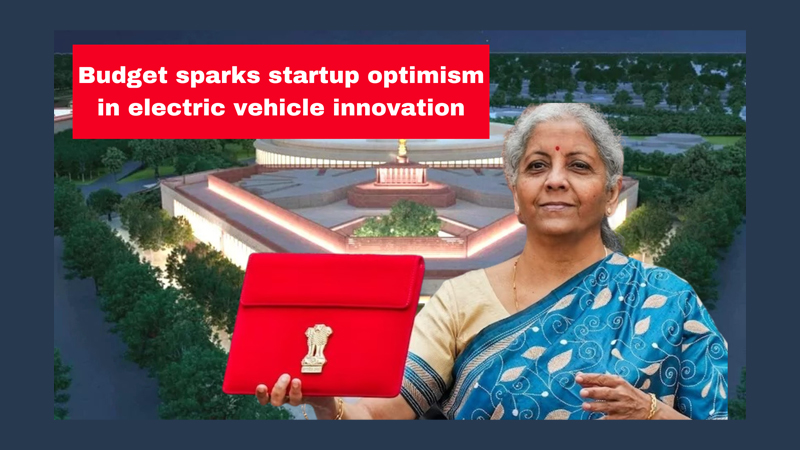
  • Budget sparks startup optimism in electric vehicle innovation

    Budget sparks startup optimism in electric vehicle innovation

    Mumbai: Amidst the dynamic landscape of India’s burgeoning startup ecosystem, the recent interim Union Budget for 2024 has sparked a wave of reactions from key players in various sectors. With a resounding focus on fortifying the electric vehicle (EV) ecosystem and supporting innovation across industries, the budget has drawn both applause and anticipation for its potential impact on the entrepreneurial landscape.

    Here are the diverse perspectives and insights shared by prominent figures representing startups and ventures, each echoing a unique chord in the symphony of India’s startup narrative.

    ParkMate – co-founder & CEO Dhananjaya Bharadwaj

    ParkMate applauds the interim Union Budget 2024-25 for its commendable focus on fortifying the electric vehicle ecosystem, a positive development for all parking management stakeholders. The government’s pledge to allocate a One lakh crore corpus with a 50-year interest-free financing scheme for private sector R&D holds tremendous promise, capable of ushering innovative solutions across sectors. Importantly, this substantial financial commitment not only empowers ongoing research and development initiatives but also lays the foundation for transformative, long-term projects. In addition, the extension of tax benefits to startups until March 31, 2025, reflects the government’s ongoing support for entrepreneurial ventures, including those in the auto-tech space like ParkMate” said Dhananjaya Bharadwaj, co-founder and CEO of ParkMate.

    e-Sprinto – co-founder & director Atul Gupta

    “Certainly, particulars regarding the E-Mobility mission and encouragement of EV infrastructure were missing in the speech, however, the budget did point towards creating ambitious policies towards adoption of EVs in the public transportation sector. Furthermore, since the budget has circumscribed the requirement to strengthen manufacturing of EVs and infrastructure, we can be sure that it stands high on the government’s agenda, and we do expect supporting policies to follow soon,” said Atul Gupta- Co-founder & Director at e-Sprinto.

    PickMyWork co-founder and CBO Kajal Malik

    “We understand this is an Interim Budget and did not introduce much on the policy aspect for startups specifically, nevertheless, with the allocation of a Rs one lakh crore corpus for interest-free loans, the government not only acknowledges but firmly supports the pivotal role startups play in our economy’s fabric. The extension of tax benefits for another year further cements the commitment to nurturing the immediate needs of this vibrant sector. As we look ahead, we remain hopeful for policy reforms that will further invigorate angel and foreign investments, setting the stage for an unprecedented era of growth and opportunity post-elections. This budget, indeed, is a testament to the belief that startups are not just businesses, but the very backbone of our nation’s future prosperity.”

    Quantum Energy managing director Chakravarthi C

    “The emphasis on eco-conscious initiatives in the previous budget, with environmental sustainability among the top seven priorities, set a commendable precedent. In today’s budget, this commitment is not only sustained but elevated, reflecting a clear understanding of the urgent need to address environmental challenges. While applauding the positive aspects of the interim budget, we note certain expectations that remain unmet. The imminent expiration of the FAME II subsidy program by March 2024 sparked hopes for its extension, aligning with the government’s ambitious 2030 target of 30 per cent of electric vehicles on Indian roads. An extension would have solidified support for the EV industry. Furthermore, a substantial reduction in GST on lithium-ion battery packs and cells, from 18 per cent to 5 per cent, would have alleviated manufacturing costs, making EVs more competitively priced and boosting consumer adoption. The absence of a standardized policy for the battery-swapping market is also a missed opportunity. A unified policy would enhance safety, streamline charging infrastructure, and create a more reliable and secure environment for EV users. As we look forward to the full budget post-general elections, we hope these crucial aspects receive due consideration for the sustainable growth of the electric vehicle sector.”

    Keydroid – co-founder & CEO Rajat Jaiswal

    The government’s resolute commitment to bolstering India’s automotive ecosystem echoes loudly in this year’s budget. The emphasis on fortifying the electric vehicle (EV) sector through robust support for manufacturing and charging infrastructure is a positive stride. The allocation of a 1-lakh crore corpus, with 50-year interest-free financing, aims to propel private sector R&D, fostering innovation. Extending tax benefits to startups until March 31, 2025, emphasizes a supportive environment for entrepreneurial ventures. While this interim budget recognizes the transformative shift in the automotive sector, we await full budget policies post-general elections to address the evolving landscape comprehensively, ensuring sustained growth for consumers, OEMs and suppliers” said Rajat Jaiswal – Co-founder & CEO at Keydroid

    InfoVision managing director Shreeranganath Kulkarni

    InfoVision warmly welcomes the budget announcement by Finance Minister Nirmala Sitharaman. The introduction of a one-lakh crore fund with a 50-year interest-free benefit for private sector research and development is a transformative step, particularly for innovation-driven enterprises like ours with a strong focus on edge technologies such as  Artificial Intelligence (AI) and Machine Learning (ML).

    The injection of such long-term, interest-free capital promises to substantially boost our research and development initiatives that serve not only India but also the global market. It arrives at an opportune time, aligning with InfoVision’s recognition in the Zinnov Zones for Engineering R&D and Digital Services 2023, particularly for our work in Data & AI Engineering.

    This financial support will undoubtedly speed up efforts to create top-tier innovations in India for the world. It underscores our commitment to leveraging India’s rich talent pool and contributes to our nation’s technological progress.

    Pinnacle Industries & EKA Mobility founder & chairman Dr Sudhir Mehta

    The union government has yet again reinstated its commitment to sustainably growing and strengthening the economy. Capital allocation of 11.11 lakh crore towards infrastructure development will play a pivotal role in fostering economic growth and prosperity. Additionally, investments in infrastructure create jobs, stimulate demand for goods and services, and attract private-sector investment. The government’s initiatives and focus on uplifting women’s entrepreneurship will significantly enhance the startup ecosystem, propelling the Indian economy to new heights.

    The emphasis on improving manufacturing and charging infrastructure aligns perfectly with our aim for a more environmentally responsible tomorrow.

    Simultaneously, the growing adoption of e-buses for public transport networks is a commendable step that not only solves environmental issues but also paves the way for significant growth in the electric vehicle market. The emphasis on EV charging infrastructure not only accelerates the transition to greener energy, but also encourages entrepreneurial possibilities for vendors, creating jobs for young people skilled in manufacture, installation, and maintenance.

    Furthermore, the introduction of the rooftop solarisation scheme, the conversion of 40,000 rail coaches to Vande Bharat standards, and the ambitious goal of establishing 100 million tonnes of coal gasification and liquefaction capacity by 2030 demonstrate a comprehensive approach to sustainable development. Additional efforts, such as starting a new biomanufacturing and bio-foundry plan and legislating the gradual mixing of CNG and biogas, add to the budget’s optimistic tone for a future in which economic growth and environmental conscience coexist. And we look forward to benefiting from these positive developments. The implementation of such measures serves as a significant boost to Make in India and contributes to the realization of our vision to promote domestic manufacturing.

    Alt Mobility co-founder & CFO Manas Arora

    In a visionary move towards sustainable transportation, Alt Mobility applauds the Finance Minister’s commitment to bolster the e-vehicle ecosystem. By offering innovative solutions, Alt Mobility stands ready to contribute to the government’s vision, supporting the expansion of e-buses and charging infrastructure. Our commitment to lease charging infrastructure aligns seamlessly with the Finance Minister’s emphasis on fostering a robust e-mobility network. This collaboration not only accelerates the transition to green transportation but also ensures a seamless and secure payment mechanism. Alt Mobility is proud to be a driving force in the government’s journey towards a greener and more sustainable future for transportation.

    Neuron Energy CEO & co-founder Pratik Kamdar

    “The Interim Budget focused on key sectors and one of the promising ones is Electric Vehicles (EV). The initiatives will enhance and fortify the EV ecosystem by bolstering manufacturing and charging infrastructure. Additionally, the encouragement of greater adoption of e-buses for public transport networks through payment security mechanisms is a notable benefit. These investments not only pave the way for increased EV sales and adoption but also open doors for burgeoning job opportunities and entrepreneurial ventures within the sector. These efforts remain dedicated to driving India’s green mobility revolution forward. There is also an anticipated outcome in the form of economic empowerment which will equip the youth with valuable technical skills, ensuring a robust workforce for the manufacturing of EV chargers, and associated equipment. We look forward to the July budget where the focus will be on the Faster Adoption and Manufacturing of Hybrid and Electric Vehicles (FAME II) scheme and much-anticipated FAME III scheme.”

  • Sectoral wishlists for Budget 2024-25: What industries hope to see

    Sectoral wishlists for Budget 2024-25: What industries hope to see

    Mumbai: The Union Budget for 2024-25, scheduled to be presented on 1 February, is a highly anticipated event for every sector of the Indian economy. From infrastructure, Information technology, telecom, agriculture, healthcare, and human resources to education, stakeholders are eagerly waiting to see how the government’s financial roadmap will impact their industries. This article will delve into the key highlights and expectations for different sector’s industry leaders in Budget 2024-25, based on pre-budget consultations, industry reports, and expert analyses.

    1.      BIF president T V Ramachandran said, “India is undergoing rapid digital transformation on the back of continuous Government reforms. The recently notified Telecommunications Act 2023 is a game changer and will help catalyze the growth of the sector even further.

    As Broadband India Forum, we would like to see the Union Budget 2024-25 focus on three important aspects viz.

    ●        Facilitate affordable Broadband through Satcom through reasonably modest spectrum fees

    ●        Budgetary support for the growth of Public Wi-Fi through waiver of duties & levies on equipment and on revenues

    ●        Budgetary support to incentivize Fiber to the Building +Wi-Fi to enable rapid growth in Fixed Broadband, by way of reduction in statutory fees and levies and exemption of GST on service revenues

    With the above measures, we hope that Union Budget will help accelerate the momentum of the reforms in the sector which has been set by other Government policies & measures”

    2.      Fujitsu global delivery centres head Manoj Nair said, “Major economies across the world are seeing a challenging macroeconomic situation with slowdowns that have affected various industries. Amid this period, it is the tech industry that is leading the charge in recovery with a positive outlook. The demand for IT skills, especially in the new-age technologies – AI, ML, analytics, data science and other digital capabilities continues to surge presenting an opportune time to GCCs to further scale and usher in the next phase of digital revolution in India. India is a leading hub of Global Capability Centers (GCCs) with 1500+ GCCs housed in India that play a crucial role in growth of the tech industry. According to EY, the domestic GCC market size is expected to hit US$110b by 2030 with the number of GCCs  expected to scale to 2400. Over the past few years, there has been a major shift in how GCCs operate – from delivering cutting-edge services to becoming powerful innovation hubs. These GCCs, with their vast trove of STEM talent and heavy investments in technology and upskilling are uniquely positioned to spearhead digital transformation for customers. Our technical capabilities across AI, ML, data science, cloud, automation, enterprise applications are crucial to powering deep research and product development. “

    “Now, as GCCs continue to invest in reskilling talent in the face of evolving tech landscape, building demand-based and niche skills in relevant areas, they are playing a crucial role in employment generation for India. With GCCs being a major engine for economic growth, Budget 2024 can play a key role in facilitating growth and sustainable development. GCCs require support and investment for infrastructure and growth environment. The Budget 2024 can help GCCs further scale and accelerate innovation at a faster rate as India emerges as the world’s technology and services hub.”

    3.      STT GDC India chief financial officer ) Bimal Khandelwal said, “As India charges ahead on its digital transformation journey, the upcoming budget offers a timely window to cultivate a world-class data center ecosystem that steers this advancement. We are hopeful of incentives to spur domestic manufacturing and infrastructure builds specially tailored for data centers’ massive scale and seamless connectivity needs. Attractive capital subsidies for setting up future-ready facilities and easy financing options to offset development costs will unleash growth. We also envision provisions that encourage the adoption of renewable energy to meet data centers’ clean power appetites. Additionally, preferential procurement directives favoring home-grown data centers will provide an upside. With an emphasis on nurturing a cutting-edge domestic data center industry, India can swiftly go up the technology value chain and cement dominance in delivering digital services globally. Having granted an infrastructure tag has remarkably expedited logistics. “

    4.      Fujitsu International Regions HR shared services head Sumit Sabharwal said, “As an HR leader, I eagerly anticipate the 2024 budget, urging the Government of India to prioritize robust investments in skill development. A strategic focus on honing our workforce’s capabilities will propel India’s IT industry to new heights, fostering innovation, and global competitiveness. The India artificial intelligence market size reached $ 680 million in 2022 and further it is expected to reach $3,935.5 million by 2028, showcasing a growth rate (CAGR) of 33.28% between 2023-2028. Data Science and Analytics have emerged as a game-changer across industries, with organizations harnessing data-driven insights to make informed decisions. With exponential growth in the digital realm, this field is expected to witness substantial opportunities in the coming years. The demand for STEM jobs in India has increased by 44% in the last 5 years. STEM skills will be a requirement for 80% of the jobs created in the next decade. To meet the increasing demands for STEM professionals in India’s rapidly growing technology, engineering, and manufacturing sectors, it becomes imperative to offer robust STEM education. For organizations, it has become necessary to provide upskilling and reskilling opportunities to existing employees. The Fourth Industrial Revolution is upon us, and STEM education will align closely with its demands. To keep up with this new information-based and technology-dependent world, India must scale up the innovation ladder with initiatives.”

    5.      Fujitsu JDU head Meghan Nandgaonkar shared his views saying that, “Technology has played an important role in India’s growth story. Our expectation from Budget 2024 furthers to boost technology solutions for sustainable society, green initiatives, agro-tech, etc., Additional focus on skilling initiatives for people engaged in traditional sectors, using technology and online delivery along with incentives for technology companies in Tier 2 and Tier 3 cities.”

  • India’s pre-Union Budget 2024 expectations set the stage for economic revival

    India’s pre-Union Budget 2024 expectations set the stage for economic revival

    Mumbai: As India anticipates the unveiling of its Budget for the fiscal year 2024, expectations run high for a comprehensive economic roadmap that addresses the nation’s challenges and capitalises on emerging opportunities.

    Against the backdrop of global economic shifts and domestic imperatives, stakeholders eagerly await key policy announcements that are poised to shape the trajectory of India’s growth.

    The Budget is expected to navigate the delicate balance between stimulating economic recovery, fostering innovation, and addressing pressing social issues. This pivotal financial document is poised to play a crucial role in steering India towards a resilient and sustainable future.

    Indiantelevision.com reached out to various sectors including brands, marketing, e-sports, AI, have shared their thoughts on Budget 2024.

    Edited excerpts

    Noise co-founder Amit Khatri

    India’s resilient economy, fueled by entrepreneurship and proactive governance, is set to reach $5 trillion by 2024. With a projected annual growth rate of 6.3%, India’s ascent to become the third-largest global economy by 2027 is on the horizon.

    As we anticipate the upcoming Union budget, a robust regulatory framework fortifying the startup ecosystem, and streamlined funds allocation, alongside strategic efforts in technological advancements, are crucial. A dedicated push to boost R&D and technological opportunities within the country will be pivotal in shaping India’s economic landscape and enhancing global investment.

    Initiatives like the PLI scheme have been instrumental in boosting ‘Make in India’ efforts, and we believe the upcoming budget holds the utmost importance in further shaping India’s electronic manufacturing space. We hope for continued support from the government with the push for localizing components as well, fostering an environment that encourages homegrown brands to lead India on the global stage, further accelerating growth and enhancing international prominence.

    Loco chief financial officer Suhaas Khullar

    The Indian gaming and esports industry is experiencing a robust growth trajectory, projected to surge by 35-40% annually. This momentum is fueled by a maturing consumer base and supportive regulatory measures. Recent policy advancements, including the landmark recognition of esports as a mainstream sport and favorable state-based model policies for AVGC-XR, hold immense potential. These initiatives are already propelling grassroots talent development across diverse regions of India.

    For the upcoming budget, dedicated allocations for skill development and targeted tax incentives for the AVGC sector will be pivotal in realizing the ‘Create in India’ vision. Such fiscal support will foster sustained success and multi-decade growth in this sector.

    Let’s Influence founder Bhavna Sethi

    As the 2024 budget is to be shared soon, the marketing world is on the edge of big changes, waiting to be influenced by an expected budget that mirrors how people are changing their buying habits and the trends in the market. As we step into this important year, we’re all focused on upcoming financial decisions that could really shake up our industry.

    We can feel the excitement in the marketing community, sensing a great chance to work together. We’re eager to connect with important players in the field, coming together to share a mix of thoughts and ideas that go beyond just looking at the numbers. Our aim is to add to the story, not just breaking down where the money is going but also shining a light on how it affects businesses navigating this tricky landscape.

    This team effort goes beyond the usual budget talks; it’s a place for us to figure out together how these financial choices will really impact the marketing world. Think of it as an opportunity to dig deeper and get a better understanding of the problems and possibilities waiting for us. Together, we’re starting a journey to uncover the details of what we expect from the budget in 2024, knowing that the story we create will echo across different industries.

    As we move through this time of financial change, let’s use our combined knowledge to tell a story that not only captures the vibe of the marketing world but also speaks to many different areas. Together, we’re not just going to explain the budget but actively join in crafting a story that lights the way forward, guiding the industry toward new ideas, strength, and lasting growth in a world that’s changing fast.

    EaseMyTrip CEO & co-founder Nishant Pitti

    In expectation of the Union Budget 2024, we earnestly expect crucial reforms to strengthen and revitalize the tourism sector. We expect the Government to allow GST input on holiday businesses, a strategic reduction in income tax to catalyze growth in the country’s tourism industry, and the streamlining of the TCS structure to a more favorable 5 percent slab. Additionally, we expect a comprehensive overhaul of tax exemption policies related to Leave Travel Allowance (LTA), urging the Government to consider an annual allowance and the inclusive coverage of the entire tour package cost under LTA, surpassing the limitation to only flight expenses. Predicting the realization of the full potential of domestic tourism, we look forward to a budgetary emphasis on infrastructure development, technology integration, and health-safety measures across airports, aviation, roads, railways, and waterways. Recognizing the vast, underleveraged potential of India’s waterways, which includes sea and river cruising opportunities, we strongly urge the Government to undertake necessary measures for the development of this sector.

    Analog Devices Inc India managing director Vivek Tyagi

    As we approach the Union Budget 2024, we at Analog Devices Inc are hopeful for a forward-looking fiscal roadmap that steers the nation towards technological prowess and sustainable growth. We believe the upcoming budget will play a crucial role in shaping India’s economic development, particularly in emerging sectors like semiconductor, e-mobility, green hydrogen, and renewable energy. Recent commitments observed at the Vibrant Gujarat Global Summit 2024 underscore the industry’s collective dedication to Indian Government’s vision of a ‘Developed India @2047.’

    In this dynamic landscape, we encourage policies that bolster indigenous semiconductor manufacturing ecosystem. The announcements by global players to invest in Gujarat highlight the sector’s potential and the need for a conducive policy environment. We believe that the budget should be a catalyst for nurturing innovation, research, and skill development, particularly in frontier technologies like artificial intelligence, 5G/6G networks and renewable energy.

    As the world embraces the integration of 5G technologies, AI-enabled solutions and sustainable practices, we look to the budget to provide a strategic framework that not only navigates current challenges but also sets the stage for India’s emergence as a global technology and innovation hub. In essence, the forthcoming budget represents a pivotal opportunity for India to fortify its position on the global stage, and Analog Devices Inc remains committed to contributing to this transformative journey.

    Punit Balan Group chairman & managing director Punit Balan

    Last year’s significant boost in the sports budget showcased the government’s commitment to supporting athletic talent. Considering the Paris Olympics 2024 this year, I hope to see a continued emphasis on encouraging and building future stars. Last year’s highest-ever budget allocation was a positive step, and I am hopeful for further measures to bolster the ever-growing sports sector of the country. I hope to see more emphasis on the critical role of Professional Sports Leagues that provide a stable commercial platform, backed by corporates becoming the backbone of sports development nationally.

    This combination of grassroots initiatives like Khelo India and the professional leagues is essential for nurturing talent and ensuring a sustainable ecosystem for Indian sports. As a Sportsprenuer and patronage focusing on developing grassroots and non-cricketing sports especially, I hope the government will support our budding stars, champions and sports deeply rooted in Indian culture to nurture and bring more champions to the international stages. I am sure that the Union Budget 2024 will further elevate & fuel the growth and prosperity of the sports sector.

    Ultimate Kho Kho CEO & league commissioner Tenzing Niyogi

    With last year’s budget marking significant funding for the country’s sports industry, we anticipate the government’s continued support in the upcoming budget to make India a sporting powerhouse. Aligning with the nation’s vision to host the 2036 Olympics under the leadership of our honourable Prime Minister Shri Narendra Modi, we expect a strategic allocation for non-cricketing sports for infrastructure and talent development across diverse sporting disciplines.

    Furthermore, the allocation of funds from NSF is also of utmost importance as it will serve as a catalyst for nurturing grassroots programs and identifying as well as developing raw talent. This will play a pivotal role in paving the way for the creation of future sporting stars who have the potential to secure podiums not just in India but on the international stage.

    Building on the success of Khelo India in junior development and the role of Professional Sports Leagues in providing a stable commercial platform backed by corporates, an increase in the National Skill Development Fund is also imperative. This is not only in line with making India a multisport-playing nation but also with the creation of more opportunities through the PPP model to engage and entice additional corporate participation in the Sports Movement.

    U Mumba CEO Suhail Chandhok

    Building on the strong initiatives of the government to propel the sporting sector over the past year, I am optimistic about the upcoming budget’s potential to accelerate the sporting industry’s growth in 2024. With rapid development of emerging homegrown sports leagues, we anticipate an allocation of funds to elevate their prominence in the country.

    We also hope for a strategic focus on talent identification and grassroots development which to me are crucial pillars for creating a vibrant sports ecosystem. Investing in these areas will not only promote but also contribute to sustainable development of diverse sporting disciplines. We look forward to witnessing the collaborative efforts between the government, corporates, and various sports entities to ensure a brighter, more stable future for Indian sport.

    Yuva Kabaddi Series CEO VIikas K Gautam

    While the previous budget reflected a significant boost, my primary expectation for the upcoming budget is a strategic focus on grassroots development.

    A significant investment is needed in sporting infrastructure especially at the grassroot level. The allocation of funds towards the training of coaches is crucial, given the current lack of infrastructure and the absence of internationally standardized coaching facilities. It is imperative to recognize that only well-trained coaches can cultivate athletes to compete at the international level. Emphasis on holistic development programs, focusing on talent identification and nurturing, nutrition, and sports science, to create a well-rounded ecosystem for aspiring athletes. Transparent allocation of funds, with clear accountability mechanisms in place, can guarantee that the allocated budget is effectively utilized for its intended purpose.

    With these measures, the budget can establish a strong foundation and I am optimistic that this budget will lay the groundwork for India to emerge as a global force in the sporting arena.

    Gamepoint CEO & co-founder Aditya Reddy

    In line with the previous year (11% increase), the overall budget for sports is expected to increase by a double-digit percentage. Given that Prime Minister Modi announced India’s intention to bid for the 2036 Olympics, it is expected that a significant amount will be allocated for capital expenditure to set up and upgrade existing sports facilities. Since  Ahmedabad is being considered as the host city, a large chunk could be planned for new facilities in the city.

    In order to transform the sports sector in India, it is imperative to encourage and incentivize private sports organizations. This can be made possible by reducing the GST on sports services from 18% to 12%, incentivizing the establishment of sports goods manufacturing in India through a PLI scheme for sports equipment, and facilitating access to government, railways, and PSU sports facilities for the general public. If necessary, involving private organizations in managing these facilities under a PPP model can enhance both management and maintenance efficiency.

    Creduce founder & MD Shailendra Singh Rao

    This budget would be a vote on account, hence there wouldn’t be too much of an expectation from the present government. But considering the fact that the election results seem to be predetermined towards a certain party we hope that the present budget takes the good work forward.

    We hope the Climate Change budget is taken forward with more emphasis on nature based Solutions. More job creation opportunities are shared in this process. And most importantly technological advancements are encouraged in this sector which would not only help Bharat but also the world.

    The Hosteller founder & CEO Pranav Dangi

    The travel, tourism and hospitality industry is one of the biggest contributors to India’s GDP. Knowing this, the GOI had in the past put a greater emphasis on the industry’s growth via multifaceted approach towards building air, road & train infrastructure, focused on last mile connectivity, upskilling of Human Resources working in the sector, providing financing opportunities to small and medium sized enterprises, etc. It will be expected of the government to further push for significant improvement in these areas and keep the momentum going towards overall growth of the industry. tive to the industry’s continued, healthy, and sustainable growth. India’s vision of 2047 for a new India cannot be complete without additional and immediate measures for the hospitality industry such as inclusive growth for all (specially women), infrastructural and technological advancements, reducing GST rates to bring it down to comparable rates of 5-6% prevalent in South East Asian countries, providing a single window clearance approval system for granting licenses for rapid development of hotel industry and foster the industry in adding more inventory in the market to bridge the supply demand gap.

    Erekrut HR Automation Solutions Pvt Ltd. co-founder Ravinder Goyal

    As we approach the 2024 budget, the HR sector in India harbours specific expectations, particularly regarding policy reforms that currently pose challenges. A primary area of focus is the streamlining of labour laws, which were characterised as cumbersome, rigid, and difficult to follow. The sector thus anticipates reforms that would simplify these laws, making them more adaptable to the modern workplace, especially in terms of flexible working arrangements and remote work policies.

    The segment could also benefit from the refinement of the Provident Fund (PF) and Employee State Insurance (ESI) schemes. The current structures of these schemes pose administrative challenges and often result in delayed contributions and settlements. An overhaul aimed at simplifying these processes could greatly enhance operational efficiency in HR management.

    Moreover, the HR sector needs more supportive measures to nurture talent, specifically through enhanced tax incentives for employee training and development programs. This would encourage companies to invest more in upskilling their workforce, aligning with the evolving skill demands of the digital economy. Along with this, the expansion of tax benefits under schemes like Section 80-IAC, which currently has restrictive criteria, is desired to enhance accessibility to a broader range of startups.

    In essence, the HR sector’s pre-budget expectations for 2024 revolve around policies that reduce compliance complexity, foster talent development, and support startups through more inclusive and flexible fiscal incentives. These changes are crucial for creating a more dynamic and responsive HR landscape in India’s rapidly evolving economic environment.

    Zoomcar CEO & co-founder Greg Moran

    Last year’s budget paved a path to higher adoption of EVs in India resulting in a sharp shift of customer mental models to make more greener & smarter choices. With the rise of marketplaces and digitisation in India, it is becoming a convenience first nation that is also setting high benchmarks globally. This year as a public listed company, we at Zoomcar anticipate the Union Budget 2024 to pave the way for innovative policies that accelerate sustainable mobility solutions and drive economic resilience which will help customers with cost effective solutions and mobility apps to support the evolution of transportation in the automobile industry.

    Finvasia co-founder & MD Sarvjeet Virk

    As we approach Budget 2024, we anticipate a continued focus on advancing India’s digital public infrastructure, a key pillar for realizing the $5 trillion economy dream. I look forward to enhanced government initiatives fostering financial inclusion benefiting Bharat, not just India. On the tech front, I hope to see further progress in establishing AI Centres of Excellence. There is also a need for more policies to enable public-private partnerships to boost end-use-cases of generative and predictive AI and increase its adoption in India. The fintech industry, as usual, will be the flagbearer of innovation. Government support in terms of policies and funding will be instrumental in propelling the fintech sector to new heights of success.

    VoloFin co-founder & CEO Roshan Shah

    The fintech industry is the backbone of India’s economic growth and resilience. We expect the Interim Budget 2024 to recognize the potential and challenges of FinTech and provide an ecosystem to support and enable it to operate. VoloFin supports the continuous growth of exporters, from SMEs to large corporates, across industries and geographies, and delivers instant liquidity with no collateral through our state-of-the-art technology platform. We hope the government will facilitate the adoption of trade financing, simplify tax and compliance standards, and promote financial digitization and innovation.

    The budget shapes Fintech’s innovation by determining research, technology adoption, and compliance efforts. Adequate budgets enable the exploration of emerging technologies, ensure regulatory compliance, and enhance user experiences. Limited budgets may restrict these initiatives, impacting a company’s ability to stay at the forefront of technological advancements in the financial technology sector.

    SahiBandhu Gold Loans founder & COO Anuj Arora

    Speaking on the ‘expectations or recommendations for the Interim Budget 2024’ Anuj Arora, Co-founder & COO, SahiBandhu Gold Loans said, “We anticipate the Interim Budget 2024 to align with the government’s mission of uplifting the underprivileged and urge the government to introduce beneficiary schemes, especially as the General Sabha election approaches, focusing on the socio-economic empowerment of the marginalized. Acknowledging the FinTech and tech-based gold loan industry’s pivotal role in reshaping financial services, we hope for policies supporting our growth, particularly in Tier 2, 3, and 4 cities, aiming to integrate rural communities into the formal banking system. Incentivizing FinTech dedicated to empowering SMEs through financial and technical interventions would mark a significant stride. Addressing loan disbursement including loans against gold/jewellery, we recommend regulations fostering collaboration between traditional banks and digital lenders for accessible loans. With the budget on the horizon, SahiBandhu Gold Loans, the largest gold loan aggregator platform eagerly anticipates a budget that propels innovation and inclusion in the rapidly evolving FinTech and gold-tech landscape.

    Greendot Health Foods Pvt. Ltd. managing editor Vikram Agarwal

    We are seeking budgetary measures to enhance the competitiveness of the food sector in the international market. Our expectation is for a strategic approach aimed at nurturing growth and fostering innovation, particularly within the domestic snack industry. We request the government to allocate funds for export incentive schemes in the food sector, coupled with subsidies to facilitate overseas participation in major food shows. These initiatives will play a pivotal role in promoting the sector’s global presence and stimulating innovation at home.

    Recode Studios co-founder Dheeraj Bansal

    In the ever-changing landscape of the beauty industry, our startup stands at the center of innovation and consumer demand.  The remarkable increase in demand in the beauty sector has not only promoted our constant expansion but also highlighted the industry’s revolutionary power. As a startup strongly established in the retail sector, our upcoming budget expectations are filled with optimism and visionary planning. Founded on the potential for revolutionary reforms, we are expecting budget policies that recognize the dynamic nature of D2C startups in beauty retail, as well as incentives and support processes that promote experimentation and long-term growth. The anticipated relaxation of company policies and regulations, along with the potential announcement of reduced interest rates for the retail industry in the budget, signifies a promising landscape for easier financing. This budget provides a chance for policymakers to foster positive change within the industry, ensuring that startups like ours continue to add vibrancy, originality, and economic value to the developing landscape of beauty and retail.  By 2030, the e-commerce market is expected to reach $350 billion, growing at a CAGR of 23%.

    Winston India co-founder Himanshu Adlakha

    As the founder of a dynamic D2C startup in the e-commerce space, the upcoming budget is important to our entrepreneurial journey. The e-commerce environment, which is marked by innovation and digital change, eagerly anticipates budgetary measures that promote growth and sustainability. We are looking forward to a budget that not only recognizes the importance of entrepreneurs in the e-commerce market but also provides strategic incentives for our continued growth. The possibility of monetary support for the Open Network for Digital Commerce (ONDC) program is a desirable prospect. This ground-breaking initiative has the potential to empower micro, small, and medium-sized businesses (MSMEs) by providing seamless access to different e-retail platforms. Standardizing data and processes through ONDC would increase productivity and build a vibrant ecosystem for e-retail entrepreneurs. In the modern era of technological advancement, a budget that supports online businesses while also reducing regulatory processes and providing financial incentives will drive our ambitions and contribute to the broadening of the e-commerce industry. As a startup, we are excited about the budget’s potential to be a catalyst for innovation and economic empowerment launching the e-retail sector to new heights of success.

    Unity Group director Mrinaal Mittal

    The sentiment prevalent in the real estate sector in 2024 is propitious after having witnessed an extraordinary growth spurt in 2023 notwithstanding various quandaries like lofty rates of interest. The demand drive and growth rate in residential real estate will be vastly shaped by the verdict of the next general elections. Every year, prior to the budget announcement, the real estate industry expresses its expectations from the Finance Ministry. The agenda remains rather consistent with few basic demands which also include fast tracking the resolution of issues in the real estate sector. Additionally one of the key asks from this budget would be an increase in the tax rebate slab on home loan interest rates to at least twice of what it is presently. Affordable housing will need encouragement in the form of tax holidays to persuade developers to launch such housing projects as schemes introduced during and after the pandemic has expired. As a contributor of about 7.5% to the country’s GDP, our industry is justified in expecting a serious consideration to regulations that will augment the robustness of last year.

    SILA senior VP Hari Kishan Movva

    To stimulate the housing market, it’s crucial to increase the Income Tax Act Section 24’s home loan interest rate rebate from INR 2 lakh to at least INR 5 lakh. This adjustment could particularly benefit budget homes, facing a 20% decline in sales in 2023 due to the pandemic.

    Reviving expired incentives, like tax breaks, is imperative for affordable housing. Modify eligibility criteria, considering the Ministry’s definition based on income, property size, and price. Adjust the qualifying cost for city properties; for instance, raise the budget to INR 85 lakh for Mumbai. This ensures broader accessibility and utilization of government subsidies and reduced GST rates.

    Address the land shortage by releasing government-owned lands for affordable housing. Lands owned by entities like Indian Railways could significantly lower real estate prices when allocated specifically for this purpose.

    Walplast managing director Kaushal Mehta

    As we step into 2024, the construction materials industry anticipates a year of robust growth with strong tailwinds. The sector, pivotal for infrastructure development, envisions a positive trajectory, bolstered by technological advancements, sustainable practices and a renewed focus on efficiency. As we eagerly await Budget 2024, our expectations center around supportive policies that foster innovation, development, sustainability and affordability. A far-sighted budget allocation in an election year can serve as a catalyst for the industry’s growth engine, driving job creation and economic prosperity. Embracing the challenges ahead, the construction materials sector is poised for a transformative year, contributing significantly to the nation’s progress and reinforcing its role as a cornerstone of sustainable development.

    Space Creattors Heights CEO Henna Misri,

    From formidable office settings in austere colors to lively, colorful and quirky offices, the co-working industry changed the way we work. From catering to mostly startups and freelancers to having mammoth corporate clients, flexi offices witnessed a metamorphosis that was further propelled by the pandemic. Over the next three to five years, it is foreseen that the co-working sector, which presently makes up roughly 18% of all commercial real estate utilization in India, would achieve a proliferation rate of 25 to 30%. For an industry growing so rapidly, we are seeking some support and encouragement from the upcoming budget. These essentially include positive tax reforms to support the expansion of our footprint along with lowering of GST rates and clearer standards on electricity tariffs. The creation of a single-window clearance system and a major impetus to infrastructure will also accelerate the entry and operation of coworking spaces in non-metropolitan areas which is the next step in the progression of the co-working and flexi office spaces.

    Space Creattors Heights director sales & operations Aryann Suri

    According to a recent study, co-working spaces accounted for 27% of the net assimilation of 8.2 million square feet among the top seven to eight cities in Q1 2023. The flexi office industry is growing by leaps and bounds and is here to stay. Owing to its flexible work tenets and equitable pricing alternatives, co-working spaces continue to be in high demand and the flexible co-working business is more vital now than ever before. Several corporates and large businesses have also switched to co-working spaces as they have accepted the hybrid work style to meet their organizational needs. Despite a metamorphic rise our industry is a nascent one in all fairness and hence seeks some latitude from the Budget 2024. A lower goods and services tax (GST) for one will appreciably help the coworking industry augment their market presence by attracting smaller players and subsequently grow the revenue collection to the government. Moreover a reduction in the TDS which is at 10% currently will help the key stakeholders to offer assets at better prices to their clients.

    Space Creattors Heights founder & managing director Vipin Suree

    For an industry that contributes 7 – 8 % to the country’s GDP and begets employment only second to agriculture, real estate is a relatively less appreciated and recognized industry. Our sector crested and corroborated a staggering growth rate in 2023 wherein the key property markets indexed an annual growth of 5%, in spite of contentions like record high interest rates and surge in listing prices. We are bullish and expect to see the upswing in demand continue throughout 2024 but there is an expectation of some tangible support from the Finance Ministry. The government must provide momentum and succour to further stimulate the buying thereby encouraging the buyers. Further through the new budget, government has to undertake cogent steps to not just boost demand but also address regulatory obstacles. A single window clearance, tax reliefs and GST rationalization are some of the unequivocal measures that need to be initiated apart from granting real estate the industry status it has long deserved.

    Santaan CEO & co-founder Raghab Panda

    The status of IVF health services and national health systems in the region of 2024 stands as a testament to our collective commitment to prosperity. The Ayushman Bharat program continues to be the cornerstone weaving a safety net for countless lives IVF and that.” it will strengthen health care , ensuring that the dream of parenthood becomes a reality for more families. In addition, national health systems are poised to receive increased funding, which will provide comprehensive health care coverage say Let us believe in the irreplaceable addition of empathy and understanding to health issues.With the availability of ART and Surrogacy Act 2021 and next logical steps include IVF treatment under Ayushman Bharat, programme with state sponsorship and private insurance players will increase the number of couples dreaming of parenthood This entire ecosystem will enable AI, IoT and other innovations for new startups to realize it is in India.