Category: Budget 2017

  • Budget 2017: After DeMo, govt. announces sops for digital infra & economy

    Budget 2017: After DeMo, govt. announces sops for digital infra & economy

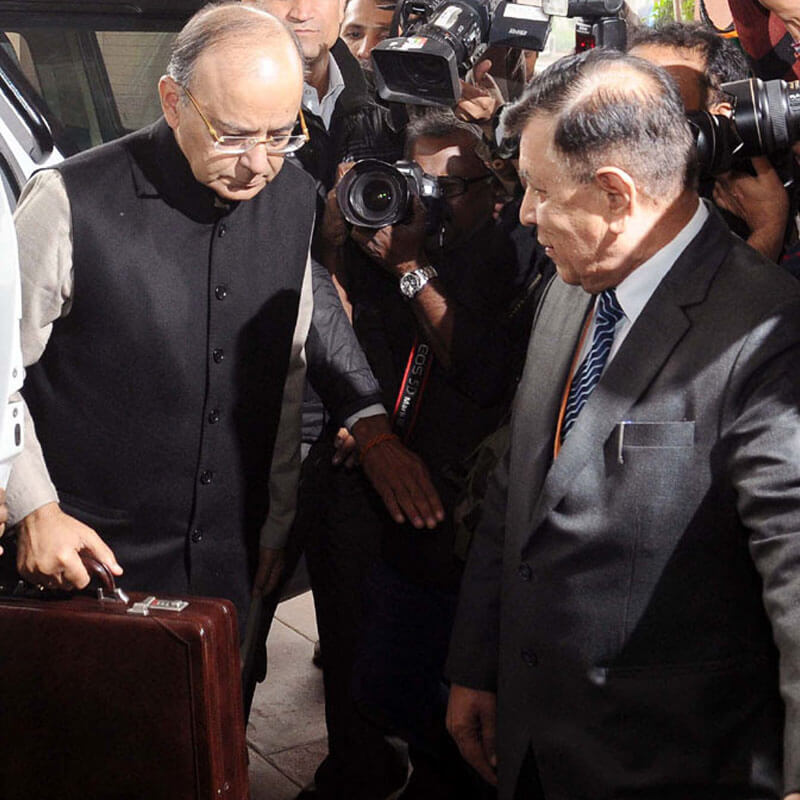
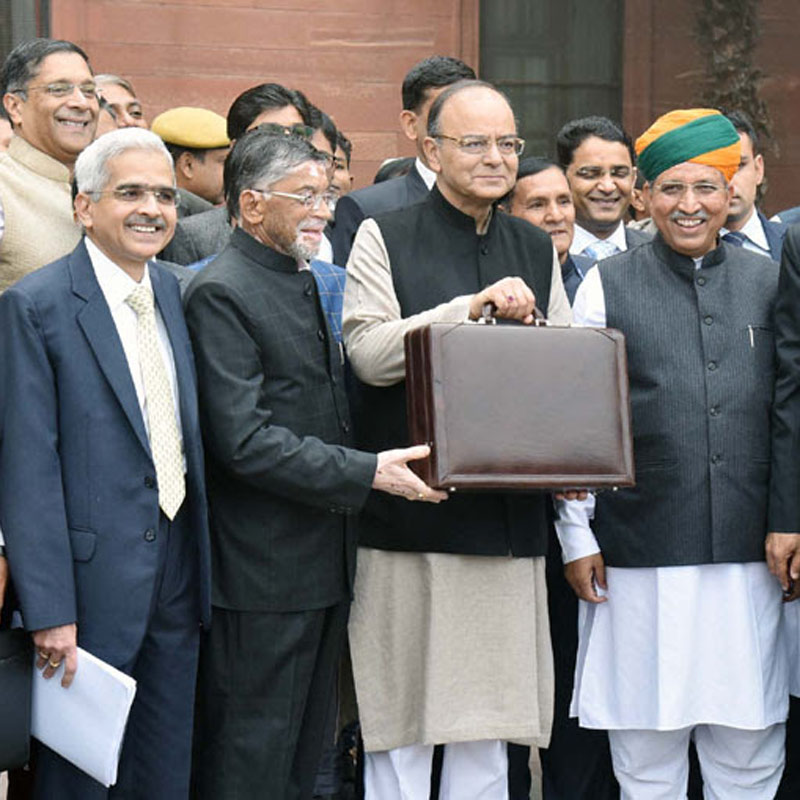
    NEW DELHI: Stating that the budget for 2017-18 was on the agenda to “Transform, Energise and Clean India” in a RAPID (Revenue, Accountability, Probity, Information and Digitisation) way, Finance Minister Arun Jaitley announced various concessions for pushing ahead digital economy, which indirectly may benefit some segments of the media and entertainment sector.

    Under the BharatNet Project, 1, 55,000 km optic fibre cable had been laid in the country. The allocation for BharatNet Project had been increased to Rs 10,000 crore in 2017-18. By the end of 2017-18, high speed broadband connectivity on optical fibre will be available in more than 1, 50,000 gram panchayats (village administrative offices), with wi-fi hot spots and access to digital services at low tariffs. A DigiGaon or digital village initiative will be launched to provide tele-medicine, education and skills through digital technology, Finance Minister Arun Jaitley said.

    The allocation for OFC-based network for defence services had also been increased from Rs 2710 crore in the last budget to Rs 3000 crore in 2017-18.

    Coupled with push towards digital payments for services, including in the broadcast and cable segments, investments in the internet infrastructure and telecom equipments will likely have cascading benefits for the media sector too, especially those offering video streaming services on phones and other hand-held devises.

    The finance minister said a shift to digital payments has huge benefits for the common man. The earlier initiative to promote financial inclusion and the JAM trinity were important precursors to government’s current push for digital transactions.

    In a budget, which for the first time since independence was presented on 1 February instead of the last day of the month, Jaitley said an eco-system was being created to make India a global hub for electronics manufacturing. Over 250 investment proposals for electronics manufacturing had been received in the last two years, totalling an investment of Rs 1.26 lakh crore. A number of global leaders and mobile manufacturers have set up production facilities in India. “I have therefore exponentially increased the allocation for incentive schemes like M-SIPS and EDF to Rs 745 crore in 2017-18. This is an all-time high,” he added.

    A major announcement by Jaitley was the abolition of the Foreign Investments Promotion Board (FIPB) and further liberalisation of FDI policy for which necessary announcements will be made in due course.

    Jaitley said: “Our government has already undertaken substantive reforms in FDI policy in the last two years. More than 90 per cent of the total FDI inflows are now through the automatic route. The FIPB has successfully implemented e-filing and online processing of FDI applications. We have now reached a stage where FIPB can be phased out”.

    He said the telecom sector was an important component of Indian infrastructure eco-system. He claimed the recent spectrum auctions have removed spectrum scarcity in the country and this will give a major fillip to mobile broadband and Digital India for the benefit of people living in rural and remote areas.

    In a boost to domestic industry, a special additional customs duty of 2 per cent is being levied on Populated Printed Circuit Boards (PCBs) for use in the manufacture of mobile phones, subject to actual user condition.

    Noting that India is on the cusp of a massive digital revolution, Jaitley said there was evidence of increased digital transactions. The BHIM (Bharat Interface for Money) app would unleash the power of mobile phones for digital payments and financial inclusion. A total 12.5 million people had adopted the BHIM app so far, Jaitley said, adding that the government will launch two new schemes to promote the usage of BHIM: referral bonus scheme for individuals and a cash back scheme for merchants.

    Aadhar Pay, a merchant version of Aadhar Enabled Payment System, was being launched shortly. This will be specifically beneficial for those who do not have debit cards, mobile wallets and mobile phones. A Mission will be set up with a target of 25,000 million crore digital transactions for 2017-18 through UPI, USSD, Aadhar Pay, IMPS and debit cards. Banks have targeted to introduce additional one million new PoS (point of sales) terminals by March 2017 and they will be encouraged to introduce two million Aadhar-based PoS by September 2017, the finance minister said.

    Jaitley said the Government will consider and work with various stakeholders for early implementation of the interim recommendations of the Committee of Chief Ministers on digital transactions. The Committee on Digital Payments, constituted by Department of Economic Affairs, had recommended structural reforms in the payment eco system, including amendments to the Payment and Settlement Systems Act 2007.

    In a boost for digitisation, the government has removed service tax on e-tickets booked through IRCTC (Indian Railways’ website).

    According to a PTI report, after a flat day time trading Sensex zoomed 485.68 pts to close at 28,141.64.
  • Budget 2017: After DeMo, govt. announces sops for digital infra & economy

    Budget 2017: After DeMo, govt. announces sops for digital infra & economy

    NEW DELHI: Stating that the budget for 2017-18 was on the agenda to “Transform, Energise and Clean India” in a RAPID (Revenue, Accountability, Probity, Information and Digitisation) way, Finance Minister Arun Jaitley announced various concessions for pushing ahead digital economy, which indirectly may benefit some segments of the media and entertainment sector.

    Under the BharatNet Project, 1, 55,000 km optic fibre cable had been laid in the country. The allocation for BharatNet Project had been increased to Rs 10,000 crore in 2017-18. By the end of 2017-18, high speed broadband connectivity on optical fibre will be available in more than 1, 50,000 gram panchayats (village administrative offices), with wi-fi hot spots and access to digital services at low tariffs. A DigiGaon or digital village initiative will be launched to provide tele-medicine, education and skills through digital technology, Finance Minister Arun Jaitley said.

    The allocation for OFC-based network for defence services had also been increased from Rs 2710 crore in the last budget to Rs 3000 crore in 2017-18.

    Coupled with push towards digital payments for services, including in the broadcast and cable segments, investments in the internet infrastructure and telecom equipments will likely have cascading benefits for the media sector too, especially those offering video streaming services on phones and other hand-held devises.

    The finance minister said a shift to digital payments has huge benefits for the common man. The earlier initiative to promote financial inclusion and the JAM trinity were important precursors to government’s current push for digital transactions.

    In a budget, which for the first time since independence was presented on 1 February instead of the last day of the month, Jaitley said an eco-system was being created to make India a global hub for electronics manufacturing. Over 250 investment proposals for electronics manufacturing had been received in the last two years, totalling an investment of Rs 1.26 lakh crore. A number of global leaders and mobile manufacturers have set up production facilities in India. “I have therefore exponentially increased the allocation for incentive schemes like M-SIPS and EDF to Rs 745 crore in 2017-18. This is an all-time high,” he added.

    A major announcement by Jaitley was the abolition of the Foreign Investments Promotion Board (FIPB) and further liberalisation of FDI policy for which necessary announcements will be made in due course.

    Jaitley said: “Our government has already undertaken substantive reforms in FDI policy in the last two years. More than 90 per cent of the total FDI inflows are now through the automatic route. The FIPB has successfully implemented e-filing and online processing of FDI applications. We have now reached a stage where FIPB can be phased out”.

    He said the telecom sector was an important component of Indian infrastructure eco-system. He claimed the recent spectrum auctions have removed spectrum scarcity in the country and this will give a major fillip to mobile broadband and Digital India for the benefit of people living in rural and remote areas.

    In a boost to domestic industry, a special additional customs duty of 2 per cent is being levied on Populated Printed Circuit Boards (PCBs) for use in the manufacture of mobile phones, subject to actual user condition.

    Noting that India is on the cusp of a massive digital revolution, Jaitley said there was evidence of increased digital transactions. The BHIM (Bharat Interface for Money) app would unleash the power of mobile phones for digital payments and financial inclusion. A total 12.5 million people had adopted the BHIM app so far, Jaitley said, adding that the government will launch two new schemes to promote the usage of BHIM: referral bonus scheme for individuals and a cash back scheme for merchants.

    Aadhar Pay, a merchant version of Aadhar Enabled Payment System, was being launched shortly. This will be specifically beneficial for those who do not have debit cards, mobile wallets and mobile phones. A Mission will be set up with a target of 25,000 million crore digital transactions for 2017-18 through UPI, USSD, Aadhar Pay, IMPS and debit cards. Banks have targeted to introduce additional one million new PoS (point of sales) terminals by March 2017 and they will be encouraged to introduce two million Aadhar-based PoS by September 2017, the finance minister said.

    Jaitley said the Government will consider and work with various stakeholders for early implementation of the interim recommendations of the Committee of Chief Ministers on digital transactions. The Committee on Digital Payments, constituted by Department of Economic Affairs, had recommended structural reforms in the payment eco system, including amendments to the Payment and Settlement Systems Act 2007.

    In a boost for digitisation, the government has removed service tax on e-tickets booked through IRCTC (Indian Railways’ website).

    According to a PTI report, after a flat day time trading Sensex zoomed 485.68 pts to close at 28,141.64.
  • Budget 2017: From highway to e-way media sector searches for sops

    Budget 2017: From highway to e-way media sector searches for sops

    MUMBAI: The Indian government today unveiled a roadmap for financial year 2017-18 that covers areas from “highways to e-ways” (PM Modi’s words while describing the Union Budget 2017) aimed at “strengthening the hands of the poor”, while looking at further easing doing business by abolishing Foreign Investment Promotion Board and hinting at a new FDI policy. However, for India’s media and entertainment sector, especially the broadcast and cable sector looking to reach the $ 100 million turnover mark, there wasn’t much to cheer about — unless an angel is hiding in the fine prints that are still being deciphered.

    Finance minister Arun Jaitley, while announcing the Budget, has brought in macro-level major financial reforms by slashing tax rates for middle level income groups and opening the FDI floodgates in favour of a rural economy.

    Jaitley’s budget focused on boosting infrastructure and lifting up rural incomes besides bringing in reforms in the financial sector such as the abolition of the FIPB to enable a new policy for FDI. The Indian Railways Catering and Tourism Corporation (IRCTC), one of the world’s biggest e-commerce companies, will be now be listed, Jaitley said, aside from sending out an indirect warning to economic offenders such as Lalit Modi and Vijay Mallya that for for absconders new legislation would be drafted soon.

    But a big thumbs up to the government for allocating Rs. 10,000 crore (Rs 100,000 million) to boost rural fibre optics network to give further leg up to all round digitisation.

    While the fine prints are still being read, some highlights are as follows:

    # The FIPB will be abolished. Further liberalisation in the FDI policy would be done in the next few days. (Star Den, etc to benefit)

    # SANKALP – Rs 4000 crore allotted for market-oriented training. (At least 4 million youth will be provided market-relevant training under Sankalp programme)

    # Cashback scheme – Petrol pumps card payments, launch two more schemes for use of BHIM app

    # In yet another boost for digitisation, the government has removed service tax on e-tickets .

    #IRCTC to be listed.

    # The government proposes to create a payment regulatory board at RBI. (The proposal assumes significance as there is currently no regulator for FinTech companies such as Paytm in India.)

    # Small and Medium enterprises (MSME) to be encouraged. Income tax reduced to 25% from 30% if turnover is up to Rs 50 crore or Rs 500 million.

    # Startups to pay tax on profits for three out of seven years, increased from three out of five years.

    # Under Bharat Net, optic fibre cable has been laid out In 1,55,000 km. (Recent spectrum auctions have removed spectrum scarcity.) Bharat Net allocation at Rs 10,000 crore.

  • Budget 2017: From highway to e-way media sector searches for sops

    Budget 2017: From highway to e-way media sector searches for sops

    MUMBAI: The Indian government today unveiled a roadmap for financial year 2017-18 that covers areas from “highways to e-ways” (PM Modi’s words while describing the Union Budget 2017) aimed at “strengthening the hands of the poor”, while looking at further easing doing business by abolishing Foreign Investment Promotion Board and hinting at a new FDI policy. However, for India’s media and entertainment sector, especially the broadcast and cable sector looking to reach the $ 100 million turnover mark, there wasn’t much to cheer about — unless an angel is hiding in the fine prints that are still being deciphered.

    Finance minister Arun Jaitley, while announcing the Budget, has brought in macro-level major financial reforms by slashing tax rates for middle level income groups and opening the FDI floodgates in favour of a rural economy.

    Jaitley’s budget focused on boosting infrastructure and lifting up rural incomes besides bringing in reforms in the financial sector such as the abolition of the FIPB to enable a new policy for FDI. The Indian Railways Catering and Tourism Corporation (IRCTC), one of the world’s biggest e-commerce companies, will be now be listed, Jaitley said, aside from sending out an indirect warning to economic offenders such as Lalit Modi and Vijay Mallya that for for absconders new legislation would be drafted soon.

    But a big thumbs up to the government for allocating Rs. 10,000 crore (Rs 100,000 million) to boost rural fibre optics network to give further leg up to all round digitisation.

    While the fine prints are still being read, some highlights are as follows:

    # The FIPB will be abolished. Further liberalisation in the FDI policy would be done in the next few days. (Star Den, etc to benefit)

    # SANKALP – Rs 4000 crore allotted for market-oriented training. (At least 4 million youth will be provided market-relevant training under Sankalp programme)

    # Cashback scheme – Petrol pumps card payments, launch two more schemes for use of BHIM app

    # In yet another boost for digitisation, the government has removed service tax on e-tickets .

    #IRCTC to be listed.

    # The government proposes to create a payment regulatory board at RBI. (The proposal assumes significance as there is currently no regulator for FinTech companies such as Paytm in India.)

    # Small and Medium enterprises (MSME) to be encouraged. Income tax reduced to 25% from 30% if turnover is up to Rs 50 crore or Rs 500 million.

    # Startups to pay tax on profits for three out of seven years, increased from three out of five years.

    # Under Bharat Net, optic fibre cable has been laid out In 1,55,000 km. (Recent spectrum auctions have removed spectrum scarcity.) Bharat Net allocation at Rs 10,000 crore.

  • Budget ’17: Encourage digital economy to make tax system globally competitive

    Budget ’17: Encourage digital economy to make tax system globally competitive

    MUMBAI: Various industry sectors are of course expecting the budget to ease stress in the business environment with tax rebates, restructuring of slabs or incentives. The advertising and communication industry is seeking some incentive announcements to further popularise the digital initiatives of the government. In the backdrop of demonetisation, every addressable transaction may be charged which may ideally move in the direction of becoming a zero-tax nation.

    Pulp Strategy Communications Founder & MD Ambika Sharma says, “The upcoming budget announcement I hope will focus on providing incentives such as better tax slabs to ‘Make in India’ companies in the technology space. A relaxation in the corporate tax rate will give a great boost to the startups in the tech sector in India, and will encourage tech companies to contribute more actively to the vision of ‘Digital India’.”

    She recommends that “Provisions must also be made for carry forwarding losses to be set off against any future income.”

    Sharma feels, “The growth in smartphone penetration and better internet connectivity means that more consumers are now leveraging the online channels of media consumption. However, players in the segment currently have to deal with different taxation slabs, leading to multi-layered problems such as effective tax rates, dual tax levies, and multiplicity of indirect taxes. This calls for a standardisation of tax and implementation on online media in the latest budget. Implementation of the tax should be standardized and made simpler with all players following a standard structure with no ambiguity.”

    Vertoz Media CEO and founder Ashish Shah says, “There is hope that there will be some incentive announcements to further popularise the digital initiatives of the government. Being a pure AdTech firm, we are very optimistic on the government’s vision of ‘Digital India’. We expect to see a growth oriented budget.”

    “The government has been encouraging entrepreneurship among the younger generation with its flagship initiative – ‘Startup India’ and keep up the momentum this time as well. More entrepreneurs in the ecosystem will drive sustainable economic growth and generate more job opportunities,” Shah added.

    Dentsu Aegis Network chairman & CEO – South Asia said, “A Union Budget that is growth oriented and puts more money in the pocket of the common man will benefit the advertising industry. Research has shown that, as a rule of thumb, every percentage point added to the GDP growth adds 1.5 – 2 per cent points to the advertising Industry growth. So, I hope that there is a growth oriented budget, which in turn spurs economic growth all around in India, particularly in the rural areas.”

    He is forthcoming on the fact that “the advertising industry doesn’t really mind paying legitimate taxes. It is actually the on-ground implementation and the complexities of the taxation system that causes huge amounts of productive time to be wasted in unproductive red-tape. In that context, any simplification of the taxation processes, both in the direct and in the indirect tax areas will be welcome. Even GST, which was supposed to simplify indirect taxation, is likely to inadvertently make it much more tedious for the services sector. The Government needs to address this urgently. Service tax on advertising is already very high at 15 per cent, including surcharges. I hope, particularly given the slowdown caused due to demonetisation, the finance minister will consider not taking it up any further and reducing it if possible.”

    Chrome Data Analytics & Media MD Pankaj Krishna says, “Post-demonetisation, the government would be looking at increasing demand, hence we can expect people-friendly measures being introduced in this budget. There will also be a focus on more spends on infra, utilizing the gains from demonetisation. The prime minister’s laudable schemes, including smart cities and digital India should stand to gain more fund allocation. Rural connectivity too will be in focus, given the govt.’s push towards cashless transactions.”

    Krishna feels, “This is an ideal time to see a cut in corporate tax, given the unprecedented collections for banks, to the tune of Rs 14 lakh crore. Personal taxes too should see a cut and a more simplified structure. The exchequer would generate it from charging a percentage per transaction, since these will be addressable transactions. Ideally, this will be a move in the direction of becoming a zero-tax nation.”

    moneycontrol editor Santosh Nairbelieves, “Due to the buoyant tax collections — both direct and indirect, the numbers for the current fiscal are likely to be healthy. Most economists expect the fiscal deficit target of 3.5 per cent to be maintained.”

    He feels, “The big challenge for the FM is going forward is to forecast revenues and spending without a clear handle on the impact of demonetisation.”

    “To help create more jobs without adding to its own wage bill,” he opines, “the government is likely to announce incentives for start-ups by way of friendly tax structures and fewer approvals to set up a business.”

    Viacom18 group CEO & CII media and entertainment committee chairman Sudhanshu Vats is expectant of a high-impact budget, as he says, “This budget will be a ‘transformational’ budget. The government has already showcased its commitment to alter the status quo by changing the classification of expenditure, subsuming the rail budget and advancing the date of the announcement.”

    He says, “I have always maintained that as an industry, we have a lot to gain from an economy that is buoyant in the aggregate sense. This year’s budget will enable just that – a revitalized economy that’s raring to go. Demonetisation is sure to expand the tax base in the medium term. I am certain that the government will use this added fire-power in a prudent manner. Hopefully, we’ll get to hear policy measures that encourage the digital economy, make India’s tax system globally competitive and put more money in the hands of Indians. As the saying goes, ‘the best is yet to come’.”

    SABGROUP CEO Manav Dhanda says, “From a media industry perspective, I feel that a change in the definition of industrial undertaking for the services industry as well as a push to define the GST roadmap would be sector-positive. There is a landmark attempt in the budget to simplify the tax administration, which should herald a friendlier tax regime.”

    “Not increasing the service tax,” he said, “is a positive, particularly for the advertising and media sector.” “The general expectation will be that service tax may go up in anticipation of higher GST rates. Controlling the fiscal deficit and several steps to invigorate the rural economy and rural consumption are positive signals. A rural consumption revival will help the economy and the advertising and media sector tremendously,” he feels.

    There will an expectation based on what the finance minister said in the past, that the corporate tax rate would come down, Dhanda said.

    In balance, there seems an expectation of a mixed bag budget with a positive bias.

    “Digitisation, in my opinion,” he said, “is the most important factor for the broadcast sector — change in excise duty changes proposed for set-top-boxes might help in the last mile infrastructure of Digital Addressable System (DAS).”

    “The proposal for a more conducive excise duty regime for STBs and other ‘entertainment-access devices’ would be welcome,” he said.

    Jack in the Box Worldwide president Kaizad Pardiwalla says,”I hope this budget is a growth-oriented budget, one that incentivises consumption. If GST comes in that will also aid India Inc. and will hopefully see an upswing in media spends. Digitalisation is and should remain a priority for the government as it is leading to an opening up of the economy and driving profitable growth.”

    Contiloe COO Anup Vijai says, “I think there will a reduction in the overall tax rate. And also, GST was supposed to be implemented come 1 April, but now they are talking about 1 July. So we are expecting a road map around that. Right now, the GST slab rates have come up.”

    “Going forward,” he said, “we are expecting the rates of movie tickets to go down say by 15 to 20 per cent in the state of Maharashtra where we have a very high entertainment tax. Moreover, high rates of entertainment tax and lack of uniformity in tax rates across different states, is adding on. A uniform taxation across product categories will benefit the entertainment sector on the whole,” he added.

  • Budget ’17: Encourage digital economy to make tax system globally competitive

    Budget ’17: Encourage digital economy to make tax system globally competitive

    MUMBAI: Various industry sectors are of course expecting the budget to ease stress in the business environment with tax rebates, restructuring of slabs or incentives. The advertising and communication industry is seeking some incentive announcements to further popularise the digital initiatives of the government. In the backdrop of demonetisation, every addressable transaction may be charged which may ideally move in the direction of becoming a zero-tax nation.

    Pulp Strategy Communications Founder & MD Ambika Sharma says, “The upcoming budget announcement I hope will focus on providing incentives such as better tax slabs to ‘Make in India’ companies in the technology space. A relaxation in the corporate tax rate will give a great boost to the startups in the tech sector in India, and will encourage tech companies to contribute more actively to the vision of ‘Digital India’.”

    She recommends that “Provisions must also be made for carry forwarding losses to be set off against any future income.”

    Sharma feels, “The growth in smartphone penetration and better internet connectivity means that more consumers are now leveraging the online channels of media consumption. However, players in the segment currently have to deal with different taxation slabs, leading to multi-layered problems such as effective tax rates, dual tax levies, and multiplicity of indirect taxes. This calls for a standardisation of tax and implementation on online media in the latest budget. Implementation of the tax should be standardized and made simpler with all players following a standard structure with no ambiguity.”

    Vertoz Media CEO and founder Ashish Shah says, “There is hope that there will be some incentive announcements to further popularise the digital initiatives of the government. Being a pure AdTech firm, we are very optimistic on the government’s vision of ‘Digital India’. We expect to see a growth oriented budget.”

    “The government has been encouraging entrepreneurship among the younger generation with its flagship initiative – ‘Startup India’ and keep up the momentum this time as well. More entrepreneurs in the ecosystem will drive sustainable economic growth and generate more job opportunities,” Shah added.

    Dentsu Aegis Network chairman & CEO – South Asia said, “A Union Budget that is growth oriented and puts more money in the pocket of the common man will benefit the advertising industry. Research has shown that, as a rule of thumb, every percentage point added to the GDP growth adds 1.5 – 2 per cent points to the advertising Industry growth. So, I hope that there is a growth oriented budget, which in turn spurs economic growth all around in India, particularly in the rural areas.”

    He is forthcoming on the fact that “the advertising industry doesn’t really mind paying legitimate taxes. It is actually the on-ground implementation and the complexities of the taxation system that causes huge amounts of productive time to be wasted in unproductive red-tape. In that context, any simplification of the taxation processes, both in the direct and in the indirect tax areas will be welcome. Even GST, which was supposed to simplify indirect taxation, is likely to inadvertently make it much more tedious for the services sector. The Government needs to address this urgently. Service tax on advertising is already very high at 15 per cent, including surcharges. I hope, particularly given the slowdown caused due to demonetisation, the finance minister will consider not taking it up any further and reducing it if possible.”

    Chrome Data Analytics & Media MD Pankaj Krishna says, “Post-demonetisation, the government would be looking at increasing demand, hence we can expect people-friendly measures being introduced in this budget. There will also be a focus on more spends on infra, utilizing the gains from demonetisation. The prime minister’s laudable schemes, including smart cities and digital India should stand to gain more fund allocation. Rural connectivity too will be in focus, given the govt.’s push towards cashless transactions.”

    Krishna feels, “This is an ideal time to see a cut in corporate tax, given the unprecedented collections for banks, to the tune of Rs 14 lakh crore. Personal taxes too should see a cut and a more simplified structure. The exchequer would generate it from charging a percentage per transaction, since these will be addressable transactions. Ideally, this will be a move in the direction of becoming a zero-tax nation.”

    moneycontrol editor Santosh Nairbelieves, “Due to the buoyant tax collections — both direct and indirect, the numbers for the current fiscal are likely to be healthy. Most economists expect the fiscal deficit target of 3.5 per cent to be maintained.”

    He feels, “The big challenge for the FM is going forward is to forecast revenues and spending without a clear handle on the impact of demonetisation.”

    “To help create more jobs without adding to its own wage bill,” he opines, “the government is likely to announce incentives for start-ups by way of friendly tax structures and fewer approvals to set up a business.”

    Viacom18 group CEO & CII media and entertainment committee chairman Sudhanshu Vats is expectant of a high-impact budget, as he says, “This budget will be a ‘transformational’ budget. The government has already showcased its commitment to alter the status quo by changing the classification of expenditure, subsuming the rail budget and advancing the date of the announcement.”

    He says, “I have always maintained that as an industry, we have a lot to gain from an economy that is buoyant in the aggregate sense. This year’s budget will enable just that – a revitalized economy that’s raring to go. Demonetisation is sure to expand the tax base in the medium term. I am certain that the government will use this added fire-power in a prudent manner. Hopefully, we’ll get to hear policy measures that encourage the digital economy, make India’s tax system globally competitive and put more money in the hands of Indians. As the saying goes, ‘the best is yet to come’.”

    SABGROUP CEO Manav Dhanda says, “From a media industry perspective, I feel that a change in the definition of industrial undertaking for the services industry as well as a push to define the GST roadmap would be sector-positive. There is a landmark attempt in the budget to simplify the tax administration, which should herald a friendlier tax regime.”

    “Not increasing the service tax,” he said, “is a positive, particularly for the advertising and media sector.” “The general expectation will be that service tax may go up in anticipation of higher GST rates. Controlling the fiscal deficit and several steps to invigorate the rural economy and rural consumption are positive signals. A rural consumption revival will help the economy and the advertising and media sector tremendously,” he feels.

    There will an expectation based on what the finance minister said in the past, that the corporate tax rate would come down, Dhanda said.

    In balance, there seems an expectation of a mixed bag budget with a positive bias.

    “Digitisation, in my opinion,” he said, “is the most important factor for the broadcast sector — change in excise duty changes proposed for set-top-boxes might help in the last mile infrastructure of Digital Addressable System (DAS).”

    “The proposal for a more conducive excise duty regime for STBs and other ‘entertainment-access devices’ would be welcome,” he said.

    Jack in the Box Worldwide president Kaizad Pardiwalla says,”I hope this budget is a growth-oriented budget, one that incentivises consumption. If GST comes in that will also aid India Inc. and will hopefully see an upswing in media spends. Digitalisation is and should remain a priority for the government as it is leading to an opening up of the economy and driving profitable growth.”

    Contiloe COO Anup Vijai says, “I think there will a reduction in the overall tax rate. And also, GST was supposed to be implemented come 1 April, but now they are talking about 1 July. So we are expecting a road map around that. Right now, the GST slab rates have come up.”

    “Going forward,” he said, “we are expecting the rates of movie tickets to go down say by 15 to 20 per cent in the state of Maharashtra where we have a very high entertainment tax. Moreover, high rates of entertainment tax and lack of uniformity in tax rates across different states, is adding on. A uniform taxation across product categories will benefit the entertainment sector on the whole,” he added.

  • Guest Column: The ‘make or break’ budget

    Guest Column: The ‘make or break’ budget

    The recent cash ban has sucked a lot of momentum out of one the world’s fastest growing economy. Finance Minister Arun Jaitley is meticulously examining ways which can boost the slumping economy, as a result of s. No budget is effortlessly manageable, but 2017 is certainly taking challenges to a new high with several global and national factors to take note of.

    Arun Jaitley should be immaculately prepared as this is one of the most awaited budgets ever, in the history of India. The fourth budget of the NDA term, this budget demands to be the beautiful balance of crisis management and future prospectus. The government, a couple of months ago was of the notion that they will be able to reap a humongous amount of money as unreturned old currency notes. In the government’s perspective, this sum could have been later invested in infrastructural development along with other progressive measures. This plan seems to have misfired with a huge chunk of ‘unamounted’ currency finding its way back to the banks. This concern has to be dealt with caution, immediately.

    One factor that can be attributed to the demonetisation effect is the increased collection of direct taxes. This may further culminate in more of such fraudulent cases giving into the pressure and larger chunks of money being deposited in the banks as some kind of income.

    Expectations are riding high as government may benefit the salaried class by increasing the margin of the income tax slab. Taking into consideration the existing miniature base of the tax payers in the country, many experts have warned the government against taking such a move.

    The government clearly has to strike a balance between staying loyal to the fiscal deficit roadmap and borrowing large amounts to spend on improving the economy. As a nation that’s pacing towards becoming a global power, the minister will have to bring down the fiscal deficit to three per cent of GDP in FY18 to maintain the stability. Many have observed based on the current scenario that the government may announce a target of 3.5 per cent which is slightly more achievable.

    By far, the hardest challenge would be to make up for the crack caused by the private sector’s unwillingness to invest in the economy due to debt-heavy balance sheets and insufficient demand. Also, scrapping the fiscal plans would require exaltation by rating agencies will need time to be set up. The alternative would not be a cakewalk either; not loosening the grip on fiscal deficit could weaken demand in the economy more.

    For capital markets, it’s a mixed scenario. On a positive note, there might be some extra incentives for new investors in equity markets. But as a flipside, it is being assumed that the government may increase the threshold for long term capital gains to three years from the current one year. The current system favors long term investors as they do not have to pay long term capital gains when they sell. This privilege is often taken advantage of by several high net worth individuals to launder their unaccounted income, by counterfeiting long term capital gains.

    Prime Minister Narendra Modi mentioned that the financial markets must make a fair contribution to nation-building through taxes and we are looking forward to a revolutionary budget that’s inclusive of all.

    public://Untitled-3_11.jpg

    (Santosh Nair is the editor of Moneycontrol. The views expressed here are personal, and Indiantelevision.com need not necessarily subscribe to them)

  • Guest Column: The ‘make or break’ budget

    Guest Column: The ‘make or break’ budget

    The recent cash ban has sucked a lot of momentum out of one the world’s fastest growing economy. Finance Minister Arun Jaitley is meticulously examining ways which can boost the slumping economy, as a result of s. No budget is effortlessly manageable, but 2017 is certainly taking challenges to a new high with several global and national factors to take note of.

    Arun Jaitley should be immaculately prepared as this is one of the most awaited budgets ever, in the history of India. The fourth budget of the NDA term, this budget demands to be the beautiful balance of crisis management and future prospectus. The government, a couple of months ago was of the notion that they will be able to reap a humongous amount of money as unreturned old currency notes. In the government’s perspective, this sum could have been later invested in infrastructural development along with other progressive measures. This plan seems to have misfired with a huge chunk of ‘unamounted’ currency finding its way back to the banks. This concern has to be dealt with caution, immediately.

    One factor that can be attributed to the demonetisation effect is the increased collection of direct taxes. This may further culminate in more of such fraudulent cases giving into the pressure and larger chunks of money being deposited in the banks as some kind of income.

    Expectations are riding high as government may benefit the salaried class by increasing the margin of the income tax slab. Taking into consideration the existing miniature base of the tax payers in the country, many experts have warned the government against taking such a move.

    The government clearly has to strike a balance between staying loyal to the fiscal deficit roadmap and borrowing large amounts to spend on improving the economy. As a nation that’s pacing towards becoming a global power, the minister will have to bring down the fiscal deficit to three per cent of GDP in FY18 to maintain the stability. Many have observed based on the current scenario that the government may announce a target of 3.5 per cent which is slightly more achievable.

    By far, the hardest challenge would be to make up for the crack caused by the private sector’s unwillingness to invest in the economy due to debt-heavy balance sheets and insufficient demand. Also, scrapping the fiscal plans would require exaltation by rating agencies will need time to be set up. The alternative would not be a cakewalk either; not loosening the grip on fiscal deficit could weaken demand in the economy more.

    For capital markets, it’s a mixed scenario. On a positive note, there might be some extra incentives for new investors in equity markets. But as a flipside, it is being assumed that the government may increase the threshold for long term capital gains to three years from the current one year. The current system favors long term investors as they do not have to pay long term capital gains when they sell. This privilege is often taken advantage of by several high net worth individuals to launder their unaccounted income, by counterfeiting long term capital gains.

    Prime Minister Narendra Modi mentioned that the financial markets must make a fair contribution to nation-building through taxes and we are looking forward to a revolutionary budget that’s inclusive of all.

    public://Untitled-3_11.jpg

    (Santosh Nair is the editor of Moneycontrol. The views expressed here are personal, and Indiantelevision.com need not necessarily subscribe to them)

  • Times presents ‘budget’ programming line-up

    Times presents ‘budget’ programming line-up

    MUMBAI: Times Network, the television broadcast division of India’s largest media conglomerate The Times Group, has always been at the forefront of economic events that have a big impact on the nation. Times has a special programming lined up for the biggest announcement of the year – Budget 2017, across its three leading news channels, ET NOW, TIMES NOW and MAGICBRICKS NOW.

    ET NOW

    Leading the power-packed campaign will be ET NOW, India’s leading English business news channel, with an exclusive campaign ‘Budget 2017: Tryst with Destiny’. In a way ET NOW will be a chronicler of history, considering the big shift in the functioning of the economy in the wake of demonetization.

    The channel will be the torch-bearer of budget debates, anchored by Sandeep Gurumurthi, Supriya Shrinate, Nikunj Dalmia, Mythili Bhusnurmath, Faye D’Souza, Ayesha Faridi, Tanvir Gill and Swaminathan Aiyar. The channel will ensure that viewers get all the relevant information comprehensively on ET NOW, well ahead of competition.  

    The one-hour special ‘Budget Debate’, anchored by Supriya Shrinate, will present views from India Inc’s top CEOs and renowned economists, policy makers like Chanda Kochhar, MD & CEO, ICICI Bank; Deepak Parekh, Chairman, HDFC; Pawan Goenka, MD, M&M; Nitin Gadkari, Union Highways Minister; Piyush Goyal, Union Power Minister; Amitabh Kant, CEO, Niti Aayog; Prakash Javadekar, Union HRD Minister; Nirmala Sitaraman, Industry & Commerce Minister; Jayant Sinha, Minister of State for Aviation; Ramdeo Agrawal, Motilal Oswal; Rashesh Shah, Edelweiss Group; Nilesh Shah, Kotak AMC; and Jahangir Aziz, JPMorgan; Shaktikanta Das, DEA Secretary; Arvind Subramanian, Chief Economic Advisor; Arvind Panagariya, Vice-Chairman, Niti Aayog; Nalil Kohli, BJP Spokesperson; Abhishek Manu Singhvi, Congress Spokesperson and Shashi Tharoor, Congress Leader.

    As finance minister Arun Jaitley sets the agenda for Budget 2017, ET NOW will bring the insights from world renowned economists while ET NOW’s Consulting Editor, Swaminathan Aiyar, will break up the key takeaways for the common man.

    Supporting the on-air line-up, ET NOW has designed a 360-degree campaign across different platforms, including print, OOH, radio, digital and trade. The channel has also lined up a contest for its viewers to enhance consumer engagement.

    Marketing plan for Budget 2017

    The marketing plan for Union Budget 2017 included Print ads across eight major metros on February 1, 2017; Out Of Home (OOH) Advertising in Mumbai, Delhi & Bangalore at major bus shelters, metro panels and branding at airports; EPG Branding at Hathway, DEN & Asianet; Radio announcements Mumbai, Delhi & Bangalore; Digital campaigns for Budget special with hash-tag promotion; Trade promotions with Newsletter branding & Page Pushers and Viewer contest which includes Watch & Win IPhone 7.

    TIMES NOW

    The undisputed leader among English news channels, TIMES NOW will present non-stop programming from 7 am on Feb 1, 2017, titled ‘Budget 2017: Votes or Vision’. The penultimate budget before the current Governments term ends; expectations are intense from this budget. The government is walking a tight rope; it’s a double edged sword as an extreme reform oriented budget might be unpopular among the masses, especially with elections to 5 key states just around the corner. On the other hand a populist budget with sops will hit the nation long term economic growth. How will they strike the balance? Will it be votes for the party or vision for the nation?

    Catch a power-packed panel including Rajiv Kumar, Senior Fellow at Centre for Policy Research, Rajiv Desai, Comma Consulting, Lord Meghnad Desai, Economist and Omkar Goswami, Chairperson of CERG Advisory  decode the historic budget into news that the viewers can use. 

    The budget coverage will begin with discussions on dissecting the economy in the run-up to the FM’s speech. With the help of advanced technologies like augmented reality (AR) graphics and holograms, TIMES NOW will reach out to the common man. 

    MAGICBRICKS NOW

    Tracking the Budget announcements closely, Magicbricks NOW will break up key policy decisions and analyze their impact on the Urban Citizen. Investor’s Guide, the exclusive show on personal finance, will decode the Budget from multiple angles and not just the lens of real estate. It will give an in – depth analysis on the tax policy and how it affects your wallet. The channel will bring live audience from across five cities, with personal finance experts answering all their queries on tax implications, investment possibilities and home buying.  

    The channel will feature top experts like Dhirendra Kumar, CEO, Value Research, Shailesh Haribhakti, Chairman, Dh Consultants, Anuj Puri, CEO, JLL and Pankaj Razdan, CEO & MD, Aditya Birla Life Insurance. This show will be anchored by Faye D’Souza, Senior Editor, Personal Finance and Real Estate of ET NOW and Editor of Magicbricks NOW, will be telecast live across all three news channels – TIMES NOW, ET NOW and MAGICBRICKS NOW — at 7:00 pm.  

    It’s a Budget that can change the course of the Indian economy, a budget that can kick off the next phase of growth. This year, the network talks about Revolution on ET NOW, Votes or Vision and Eco-Political scenario on TIMES NOW and impact of Budget on common man on Magicbricks NOW, as world-renowned economists, corporate honchos and market experts debate the hits and misses.

  • Times presents ‘budget’ programming line-up

    Times presents ‘budget’ programming line-up

    MUMBAI: Times Network, the television broadcast division of India’s largest media conglomerate The Times Group, has always been at the forefront of economic events that have a big impact on the nation. Times has a special programming lined up for the biggest announcement of the year – Budget 2017, across its three leading news channels, ET NOW, TIMES NOW and MAGICBRICKS NOW.

    ET NOW

    Leading the power-packed campaign will be ET NOW, India’s leading English business news channel, with an exclusive campaign ‘Budget 2017: Tryst with Destiny’. In a way ET NOW will be a chronicler of history, considering the big shift in the functioning of the economy in the wake of demonetization.

    The channel will be the torch-bearer of budget debates, anchored by Sandeep Gurumurthi, Supriya Shrinate, Nikunj Dalmia, Mythili Bhusnurmath, Faye D’Souza, Ayesha Faridi, Tanvir Gill and Swaminathan Aiyar. The channel will ensure that viewers get all the relevant information comprehensively on ET NOW, well ahead of competition.  

    The one-hour special ‘Budget Debate’, anchored by Supriya Shrinate, will present views from India Inc’s top CEOs and renowned economists, policy makers like Chanda Kochhar, MD & CEO, ICICI Bank; Deepak Parekh, Chairman, HDFC; Pawan Goenka, MD, M&M; Nitin Gadkari, Union Highways Minister; Piyush Goyal, Union Power Minister; Amitabh Kant, CEO, Niti Aayog; Prakash Javadekar, Union HRD Minister; Nirmala Sitaraman, Industry & Commerce Minister; Jayant Sinha, Minister of State for Aviation; Ramdeo Agrawal, Motilal Oswal; Rashesh Shah, Edelweiss Group; Nilesh Shah, Kotak AMC; and Jahangir Aziz, JPMorgan; Shaktikanta Das, DEA Secretary; Arvind Subramanian, Chief Economic Advisor; Arvind Panagariya, Vice-Chairman, Niti Aayog; Nalil Kohli, BJP Spokesperson; Abhishek Manu Singhvi, Congress Spokesperson and Shashi Tharoor, Congress Leader.

    As finance minister Arun Jaitley sets the agenda for Budget 2017, ET NOW will bring the insights from world renowned economists while ET NOW’s Consulting Editor, Swaminathan Aiyar, will break up the key takeaways for the common man.

    Supporting the on-air line-up, ET NOW has designed a 360-degree campaign across different platforms, including print, OOH, radio, digital and trade. The channel has also lined up a contest for its viewers to enhance consumer engagement.

    Marketing plan for Budget 2017

    The marketing plan for Union Budget 2017 included Print ads across eight major metros on February 1, 2017; Out Of Home (OOH) Advertising in Mumbai, Delhi & Bangalore at major bus shelters, metro panels and branding at airports; EPG Branding at Hathway, DEN & Asianet; Radio announcements Mumbai, Delhi & Bangalore; Digital campaigns for Budget special with hash-tag promotion; Trade promotions with Newsletter branding & Page Pushers and Viewer contest which includes Watch & Win IPhone 7.

    TIMES NOW

    The undisputed leader among English news channels, TIMES NOW will present non-stop programming from 7 am on Feb 1, 2017, titled ‘Budget 2017: Votes or Vision’. The penultimate budget before the current Governments term ends; expectations are intense from this budget. The government is walking a tight rope; it’s a double edged sword as an extreme reform oriented budget might be unpopular among the masses, especially with elections to 5 key states just around the corner. On the other hand a populist budget with sops will hit the nation long term economic growth. How will they strike the balance? Will it be votes for the party or vision for the nation?

    Catch a power-packed panel including Rajiv Kumar, Senior Fellow at Centre for Policy Research, Rajiv Desai, Comma Consulting, Lord Meghnad Desai, Economist and Omkar Goswami, Chairperson of CERG Advisory  decode the historic budget into news that the viewers can use. 

    The budget coverage will begin with discussions on dissecting the economy in the run-up to the FM’s speech. With the help of advanced technologies like augmented reality (AR) graphics and holograms, TIMES NOW will reach out to the common man. 

    MAGICBRICKS NOW

    Tracking the Budget announcements closely, Magicbricks NOW will break up key policy decisions and analyze their impact on the Urban Citizen. Investor’s Guide, the exclusive show on personal finance, will decode the Budget from multiple angles and not just the lens of real estate. It will give an in – depth analysis on the tax policy and how it affects your wallet. The channel will bring live audience from across five cities, with personal finance experts answering all their queries on tax implications, investment possibilities and home buying.  

    The channel will feature top experts like Dhirendra Kumar, CEO, Value Research, Shailesh Haribhakti, Chairman, Dh Consultants, Anuj Puri, CEO, JLL and Pankaj Razdan, CEO & MD, Aditya Birla Life Insurance. This show will be anchored by Faye D’Souza, Senior Editor, Personal Finance and Real Estate of ET NOW and Editor of Magicbricks NOW, will be telecast live across all three news channels – TIMES NOW, ET NOW and MAGICBRICKS NOW — at 7:00 pm.  

    It’s a Budget that can change the course of the Indian economy, a budget that can kick off the next phase of growth. This year, the network talks about Revolution on ET NOW, Votes or Vision and Eco-Political scenario on TIMES NOW and impact of Budget on common man on Magicbricks NOW, as world-renowned economists, corporate honchos and market experts debate the hits and misses.