Category: Budget 2016

  • Budget allocations for Digital India, northeast go up for Communication and Information Technology Ministry

    Budget allocations for Digital India, northeast go up for Communication and Information Technology Ministry

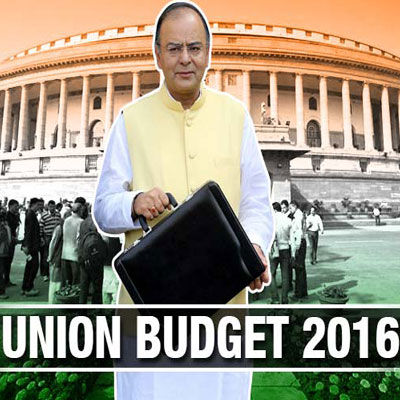
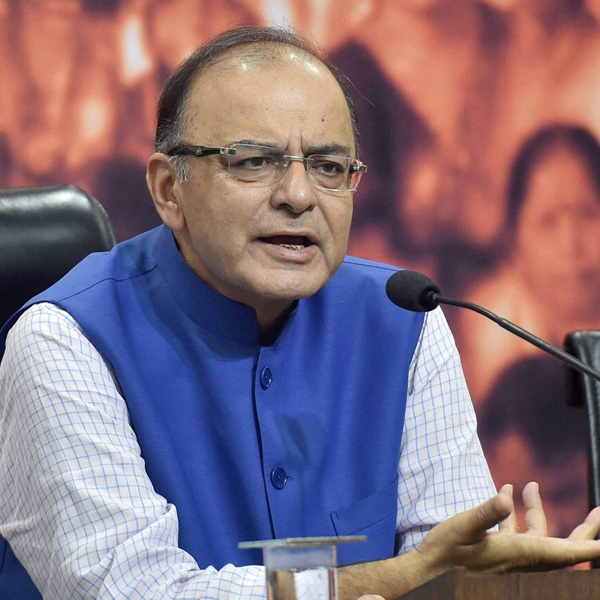
    New Delhi: The allocation for capital outlay on telecommunication and electronic industries is Rs 125 crore for the Departments of Telecommunications Communications and Information Technology (DeiTY), according to the Union Budget presented by Finance Minister Arun Jaitley on February 29.

    While the capital outlay on telecommunication and electronic Industries has been sharply increased for the telecommunications department from Rs 16 crore in the revised budget of 2015-16 to Rs 80 crore for 2016-17, it had been cut from Rs 69 crore in the revised estimates of the DeiTY for 2015-16 to Rs 45 crore for 2016-17.

    Interestingly, this works against the interests of the broadcasting industry, since set top boxes, antennae, headends and other equipment would fall under the DeiTY’ help to public or private industry under the head of  ‘capital outlay on telecommunication and electronic Industries.’

    The total budgetary outlay for the Telecommunication Department is Rs 21214.66 crore, while it is Rs 3328.82 crore for DeiTY for 2016-17

    Under Digital India programme, there are separate allocations for the Manpower Development Programme to ensure availability of trained human resources; Electronics Governance to deliver all Government services electronically to the citizens in his/her locality through integrated and inter-operable systems via multiple modes, while ensuring efficiency, transparency and reliability of such services at affordable costs; the National Knowledge Network with multiple gigabit bandwidth to connect Knowledge Institutions across the country; Promotion of Electronics/IT Hardware Manufacturing;  R&D in IT/Electronics/CCBT; and Foreign Trade and Export Promotion to reimburse Central Sales Tax to Electronics Hardware Technology Parks (EHTP) and Software Technology Park (STP) units.

  • Budget allocations for Digital India, northeast go up for Communication and Information Technology Ministry

    Budget allocations for Digital India, northeast go up for Communication and Information Technology Ministry

    New Delhi: The allocation for capital outlay on telecommunication and electronic industries is Rs 125 crore for the Departments of Telecommunications Communications and Information Technology (DeiTY), according to the Union Budget presented by Finance Minister Arun Jaitley on February 29.

    While the capital outlay on telecommunication and electronic Industries has been sharply increased for the telecommunications department from Rs 16 crore in the revised budget of 2015-16 to Rs 80 crore for 2016-17, it had been cut from Rs 69 crore in the revised estimates of the DeiTY for 2015-16 to Rs 45 crore for 2016-17.

    Interestingly, this works against the interests of the broadcasting industry, since set top boxes, antennae, headends and other equipment would fall under the DeiTY’ help to public or private industry under the head of  ‘capital outlay on telecommunication and electronic Industries.’

    The total budgetary outlay for the Telecommunication Department is Rs 21214.66 crore, while it is Rs 3328.82 crore for DeiTY for 2016-17

    Under Digital India programme, there are separate allocations for the Manpower Development Programme to ensure availability of trained human resources; Electronics Governance to deliver all Government services electronically to the citizens in his/her locality through integrated and inter-operable systems via multiple modes, while ensuring efficiency, transparency and reliability of such services at affordable costs; the National Knowledge Network with multiple gigabit bandwidth to connect Knowledge Institutions across the country; Promotion of Electronics/IT Hardware Manufacturing;  R&D in IT/Electronics/CCBT; and Foreign Trade and Export Promotion to reimburse Central Sales Tax to Electronics Hardware Technology Parks (EHTP) and Software Technology Park (STP) units.

  • Union Budget 2016: What it means for the media & entertainment industry

    Union Budget 2016: What it means for the media & entertainment industry

    MUMBAI: 29 February marked an important date in the year’s calendar as Indian Finance Minister Arun Jaitley presented the Union Budget 2016, amidst expectations from all sections. With an aim to give equal attention to all sectors that need financial assistance, Jaitley presented the nine pillars of his budget that focused on multiple subjects; from eCommerce to start-ups; from education to increasing jobs; and from agriculture to health.

    In a quest to find out what it really means for the media and entertainment industry, Indiantelevision.com reached out to several industry stalwarts to find out how they interpret the Union Budget 2016.

    Here’s what they have to say:

     M&E Tax Advisory India, EY, partner and head Rakesh Jariwala

    “As part of the budget proposals, India has levied an equalisation levy – what is known as ‘google tax’ globally. The tax @ six per cent of the consideration will apply on services relating to online advertisement, provisions on online ad space or other facility or services for the purpose of online advertisement, when such services are provided by a non-resident to either an Indian resident or a non-resident having a permanent establishment in India. The payer for these services are required to deduct 6% prior to making the payment. This is the first time that online services are being taxed in India.”

     Videocon director Anirudh Dhoot

    “The Finance Minister presented a balanced budget with a focus on infrastructure and agriculture sectors. By keeping the fiscal deficit target to 3.5 per cent of the GDP, the budget addresses long term positive impact on businesses. For consumer durable and home appliances industry specifically, the budget brings mixed responses. While the focus is more on dispute resolution and simplification of provision, the voluntary income disclosure will dampen the market. The government has lowered the corporate tax for new manufacturing units at 25 per cent with a view to promote industrial activity and generate jobs. With regard to small units having a turnover of Rs 5 crore, the corporate tax rate has been reduced from 30 per cent to 29 per cent. However, there is no relief on the corporate tax for big manufacturers. Government has stressed on GST implementation and proposed changes in customs duty to push make in India initiatives, which is aimed at improving the overall business environment.” 

     Sony Pictures Networks India CEO NP Singh

    “From an overall budget perspective, the enhanced public spending through various social schemes and infrastructure investments should further help to expedite economic growth. The government has also balanced spending with fiscal prudence by reigning-in fiscal deficit. From a media industry perspective, there were no major changes. I feel that a change in the definition of industrial undertaking for the services industry as well as a push to define the GST roadmap would have been sector-positive. There is a landmark attempt in the budget to simplify the tax administration, which should herald a friendlier tax regime.”

     Dentsu Aegis Network South Asia CEO and chairman and Posterscope & MKTG – Asia Pacific chairman Ashish Bhasin 

    “Overall there are some positives and some negatives in the budget. Not increasing the service tax is a positive, particularly for the advertising and media sector. The general expectation was that Service Tax may go up in anticipation of higher GST rates. Controlling the fiscal deficit and several steps to invigorate the rural economy and rural consumption are positive signals. A rural consumption revival will help the economy and the advertising and media sector tremendously. On the negative side, there was an expectation based on what the Finance Minister said in the past, that corporate tax rates would come down. That is not to be so for most large companies. Introducing double taxation on dividends is also a negative. In balance this seems to be a mixed bag budget with a positive bias. If it is able to spur overall economic growth, we could see good times ahead for the advertising and media sector.”

     Times Network CEO and MD MK Anand

    “Digitisation, in my opinion is the most important factor for the broadcast sector currently, we are very happy about the excise duty changes proposed for set-top-boxes, which will help in the last mile infrastructure of Digital Addressable System (DAS) Phase 3 and 4. Overall, a stable and positive fiscal situation is good for the economy and that will support our ad sales growth projections. All in all budget 2016 looks good for the Broadcast sector.”

     Viacom18 Group CEO and National Media and Entertainment Committee CII chairman Sudhanshu Vats

    “Kudos to the government for presenting a disciplined and inclusive budget. The emphasis on rural development and commitment to the fiscal deficit target augur well for the economy in the long-run. The proposal for a more conducive excise duty regime for STBs and other ‘entertainment-access devices’ is welcome. While many of us from the industry were anticipating more sector-specific announcements, I’m sure that this budget will benefit the larger economy and therefore, by extension, have a positive impact on our industry as well.”

  • Union Budget 2016: What it means for the media & entertainment industry

    Union Budget 2016: What it means for the media & entertainment industry

    MUMBAI: 29 February marked an important date in the year’s calendar as Indian Finance Minister Arun Jaitley presented the Union Budget 2016, amidst expectations from all sections. With an aim to give equal attention to all sectors that need financial assistance, Jaitley presented the nine pillars of his budget that focused on multiple subjects; from eCommerce to start-ups; from education to increasing jobs; and from agriculture to health.

    In a quest to find out what it really means for the media and entertainment industry, Indiantelevision.com reached out to several industry stalwarts to find out how they interpret the Union Budget 2016.

    Here’s what they have to say:

     M&E Tax Advisory India, EY, partner and head Rakesh Jariwala

    “As part of the budget proposals, India has levied an equalisation levy – what is known as ‘google tax’ globally. The tax @ six per cent of the consideration will apply on services relating to online advertisement, provisions on online ad space or other facility or services for the purpose of online advertisement, when such services are provided by a non-resident to either an Indian resident or a non-resident having a permanent establishment in India. The payer for these services are required to deduct 6% prior to making the payment. This is the first time that online services are being taxed in India.”

     Videocon director Anirudh Dhoot

    “The Finance Minister presented a balanced budget with a focus on infrastructure and agriculture sectors. By keeping the fiscal deficit target to 3.5 per cent of the GDP, the budget addresses long term positive impact on businesses. For consumer durable and home appliances industry specifically, the budget brings mixed responses. While the focus is more on dispute resolution and simplification of provision, the voluntary income disclosure will dampen the market. The government has lowered the corporate tax for new manufacturing units at 25 per cent with a view to promote industrial activity and generate jobs. With regard to small units having a turnover of Rs 5 crore, the corporate tax rate has been reduced from 30 per cent to 29 per cent. However, there is no relief on the corporate tax for big manufacturers. Government has stressed on GST implementation and proposed changes in customs duty to push make in India initiatives, which is aimed at improving the overall business environment.” 

     Sony Pictures Networks India CEO NP Singh

    “From an overall budget perspective, the enhanced public spending through various social schemes and infrastructure investments should further help to expedite economic growth. The government has also balanced spending with fiscal prudence by reigning-in fiscal deficit. From a media industry perspective, there were no major changes. I feel that a change in the definition of industrial undertaking for the services industry as well as a push to define the GST roadmap would have been sector-positive. There is a landmark attempt in the budget to simplify the tax administration, which should herald a friendlier tax regime.”

     Dentsu Aegis Network South Asia CEO and chairman and Posterscope & MKTG – Asia Pacific chairman Ashish Bhasin 

    “Overall there are some positives and some negatives in the budget. Not increasing the service tax is a positive, particularly for the advertising and media sector. The general expectation was that Service Tax may go up in anticipation of higher GST rates. Controlling the fiscal deficit and several steps to invigorate the rural economy and rural consumption are positive signals. A rural consumption revival will help the economy and the advertising and media sector tremendously. On the negative side, there was an expectation based on what the Finance Minister said in the past, that corporate tax rates would come down. That is not to be so for most large companies. Introducing double taxation on dividends is also a negative. In balance this seems to be a mixed bag budget with a positive bias. If it is able to spur overall economic growth, we could see good times ahead for the advertising and media sector.”

     Times Network CEO and MD MK Anand

    “Digitisation, in my opinion is the most important factor for the broadcast sector currently, we are very happy about the excise duty changes proposed for set-top-boxes, which will help in the last mile infrastructure of Digital Addressable System (DAS) Phase 3 and 4. Overall, a stable and positive fiscal situation is good for the economy and that will support our ad sales growth projections. All in all budget 2016 looks good for the Broadcast sector.”

     Viacom18 Group CEO and National Media and Entertainment Committee CII chairman Sudhanshu Vats

    “Kudos to the government for presenting a disciplined and inclusive budget. The emphasis on rural development and commitment to the fiscal deficit target augur well for the economy in the long-run. The proposal for a more conducive excise duty regime for STBs and other ‘entertainment-access devices’ is welcome. While many of us from the industry were anticipating more sector-specific announcements, I’m sure that this budget will benefit the larger economy and therefore, by extension, have a positive impact on our industry as well.”

  • Budget 2016: Relief to classical & folk music performers with increase in exemption limit in service tax

    Budget 2016: Relief to classical & folk music performers with increase in exemption limit in service tax

    NEW DELHI: In an attempt to promote classical and folk forms of music, the government has announced some relaxation in service tax.

    The exemption limit on services provided by a performing artist in certain folk or classical art forms of music, dance or theatre, has been enhanced to Rs.1.5 lakh per event with effect from 1 April.

    Thus, those paying up to 14 per cent for such performances will not have to pay any service tax.

    Meanwhile, at a time when the government is stressing on green technologies, the Basic customs duty on wood in chips or particles for manufacture of paper, paperboard and news print has been reduced from five per cent.

  • Budget 2016: Relief to classical & folk music performers with increase in exemption limit in service tax

    Budget 2016: Relief to classical & folk music performers with increase in exemption limit in service tax

    NEW DELHI: In an attempt to promote classical and folk forms of music, the government has announced some relaxation in service tax.

    The exemption limit on services provided by a performing artist in certain folk or classical art forms of music, dance or theatre, has been enhanced to Rs.1.5 lakh per event with effect from 1 April.

    Thus, those paying up to 14 per cent for such performances will not have to pay any service tax.

    Meanwhile, at a time when the government is stressing on green technologies, the Basic customs duty on wood in chips or particles for manufacture of paper, paperboard and news print has been reduced from five per cent.

  • Mobile & computer prices may be affected with withdrawal of special additional duty

    Mobile & computer prices may be affected with withdrawal of special additional duty

    NEW DELHI: The Union Budget for 2016-17 is expected to result in raising the prices of mobile phones as well as personal computers.

    In his budget speech, Finance Minister Arun Jaitley said the exemption from basic customs duty, CV duty, Special Additional Duty on charger/adapter, battery and wired headsets/speakers for manufacture of mobile phone was being withdrawn and vary between four to 12.5 per cent.

    But inputs, parts and components, subparts for manufacture of charger / adapter, battery and wired headsets /speakers, of mobile phone, subject to actual user condition was being exempted.

    The exemption from Special Additional Duty (SAD) on populated PCBs for manufacture of personal computers (laptop or desktop) was being withdrawn and would go up to four per cent.

    The exemption from SAD on populated PCBs of mobile phone/tablet computer being withdrawn and the concessional SAD on populated PCBs for manufacture of mobile phone/tablet computer was being imposed at two per cent.

    The Excise duty structure on domestically manufactured charger/adapter, battery and wired headsets/speakers for supply to mobile phone manufacturers as original equipment manufacturer has been changed and will be between two to 12.5 per cent.

    At the same time, the excise duty on inputs, parts and components, subparts for manufacture of charger/adapter, battery and wired headsets/speakers of mobile phone, subject to actual user condition have being exempted from 12.5 per cent at present.

    Specified telecommunication equipment [Soft switches and Voice over Internet Protocol (VoIP) equipment namely VoIP phones, media gateways, gateway Product/Switch (POTP/POTS), Optical controllers and session border controllers, Optical Transport equipment; combination of one / more of Packet Optical Transport Network(OTN) products, and IP Radios, Carrier Ethernet Switch, Packet Transport Node (PTN) products, Multiprotocol Label Switching- Transport Profile (MPLS-TP) products, Multiple Input / Multiple Output (MIMO) and Long Term Evolution (LTE) Products on which 10 per cent Basic Customs Duty was imposed in 2014-15 Budget has been excluded from the purview of the other exemptions also and goes up to 10 per cent.

    The Basic Customs Duty exemption on preform of silica for manufacture of telecom grade optical fibre /cables has been withdrawn and will be 10 per cent.

    The Minister said the assignment by the Government of the right to use the radio-frequency spectrum and its subsequent transfers being declared as a service so as to make it clear that assignment of right to use the spectrum is a service leviable to service tax and not sale of intangible goods, with effect from date of enforcement of Finance Bill, 2016. It will therefore be 14 per cent. 

  • Mobile & computer prices may be affected with withdrawal of special additional duty

    Mobile & computer prices may be affected with withdrawal of special additional duty

    NEW DELHI: The Union Budget for 2016-17 is expected to result in raising the prices of mobile phones as well as personal computers.

    In his budget speech, Finance Minister Arun Jaitley said the exemption from basic customs duty, CV duty, Special Additional Duty on charger/adapter, battery and wired headsets/speakers for manufacture of mobile phone was being withdrawn and vary between four to 12.5 per cent.

    But inputs, parts and components, subparts for manufacture of charger / adapter, battery and wired headsets /speakers, of mobile phone, subject to actual user condition was being exempted.

    The exemption from Special Additional Duty (SAD) on populated PCBs for manufacture of personal computers (laptop or desktop) was being withdrawn and would go up to four per cent.

    The exemption from SAD on populated PCBs of mobile phone/tablet computer being withdrawn and the concessional SAD on populated PCBs for manufacture of mobile phone/tablet computer was being imposed at two per cent.

    The Excise duty structure on domestically manufactured charger/adapter, battery and wired headsets/speakers for supply to mobile phone manufacturers as original equipment manufacturer has been changed and will be between two to 12.5 per cent.

    At the same time, the excise duty on inputs, parts and components, subparts for manufacture of charger/adapter, battery and wired headsets/speakers of mobile phone, subject to actual user condition have being exempted from 12.5 per cent at present.

    Specified telecommunication equipment [Soft switches and Voice over Internet Protocol (VoIP) equipment namely VoIP phones, media gateways, gateway Product/Switch (POTP/POTS), Optical controllers and session border controllers, Optical Transport equipment; combination of one / more of Packet Optical Transport Network(OTN) products, and IP Radios, Carrier Ethernet Switch, Packet Transport Node (PTN) products, Multiprotocol Label Switching- Transport Profile (MPLS-TP) products, Multiple Input / Multiple Output (MIMO) and Long Term Evolution (LTE) Products on which 10 per cent Basic Customs Duty was imposed in 2014-15 Budget has been excluded from the purview of the other exemptions also and goes up to 10 per cent.

    The Basic Customs Duty exemption on preform of silica for manufacture of telecom grade optical fibre /cables has been withdrawn and will be 10 per cent.

    The Minister said the assignment by the Government of the right to use the radio-frequency spectrum and its subsequent transfers being declared as a service so as to make it clear that assignment of right to use the spectrum is a service leviable to service tax and not sale of intangible goods, with effect from date of enforcement of Finance Bill, 2016. It will therefore be 14 per cent. 

  • Budget 2016: Major relief for cable TV industry as STBs exempt from basic custom duty

    Budget 2016: Major relief for cable TV industry as STBs exempt from basic custom duty

    NEW DELHI: In a major relief to the cable television and industry, which will also boost digitisation, basic custom duty (BCD) has been exempted in several parts and components of electronic equipment including set top boxes (STBs) for television or internet.

    Presenting his budget for 2016-17, Finance Minister Arun Jaitley announced that parts and components, subparts for manufacture of routers, broadband modems, STBs for gaining access to internet, STBs for TV, digital video recorder (DVR)/network video recorder (NVR), CCTV camera/IP camera, lithium ion battery [other than those for mobile handsets] were being exempted.

    The excise duty on the above has been changed, falling from 12.5 per cent to four per cent.

    He also said excise duty on parts and components, subparts for manufacture of the above mentioned items was being exempted from the current 12.5 per cent.

    The service tax on the services of Information Technology software on media bearing RSP, are being exempted, provided appropriate Central Excise duty is paid with effect from 1 March.

    The mutual exclusiveness of levy of excise duty and service tax on information technology software [in respect of software recorded on media and “not for retail sale”] has been ensured by exempting from excise duty only that portion of the transaction value on which service tax is paid, with effect from 1 March. Thus, it remains at 14 per cent.

  • Budget 2016: Major relief for cable TV industry as STBs exempt from basic custom duty

    Budget 2016: Major relief for cable TV industry as STBs exempt from basic custom duty

    NEW DELHI: In a major relief to the cable television and industry, which will also boost digitisation, basic custom duty (BCD) has been exempted in several parts and components of electronic equipment including set top boxes (STBs) for television or internet.

    Presenting his budget for 2016-17, Finance Minister Arun Jaitley announced that parts and components, subparts for manufacture of routers, broadband modems, STBs for gaining access to internet, STBs for TV, digital video recorder (DVR)/network video recorder (NVR), CCTV camera/IP camera, lithium ion battery [other than those for mobile handsets] were being exempted.

    The excise duty on the above has been changed, falling from 12.5 per cent to four per cent.

    He also said excise duty on parts and components, subparts for manufacture of the above mentioned items was being exempted from the current 12.5 per cent.

    The service tax on the services of Information Technology software on media bearing RSP, are being exempted, provided appropriate Central Excise duty is paid with effect from 1 March.

    The mutual exclusiveness of levy of excise duty and service tax on information technology software [in respect of software recorded on media and “not for retail sale”] has been ensured by exempting from excise duty only that portion of the transaction value on which service tax is paid, with effect from 1 March. Thus, it remains at 14 per cent.