Category: Budget 2014

  • CNBC-TV18 tops the chart on Budget day

    CNBC-TV18 tops the chart on Budget day

    MUMBAI: Upholding their legacy of 15 years of leadership, CNBC-TV18 has once again emerged decisively as the No.1 channel during Budget 2014 with 67 per cent market share on Budget Day.

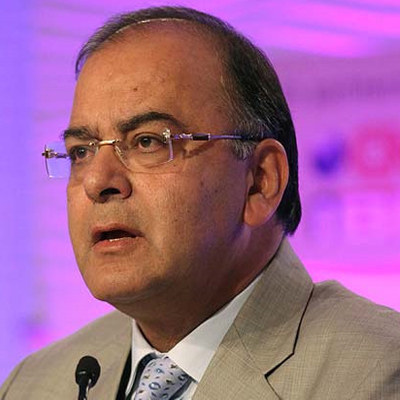
    As pioneers of coverage of the Union Budget, CNBC-TV18 has always provided viewers with a comprehensive programming line up. This time was no different; with a one month long focus on the channel about key expectations from the industry, banking and financial sectors as well as policy changes anticipated from what was Prime Minister Narendra Modi and Finance Minister Arun Jaitley’s maiden Union Budget.

    Yet again, India’s leading business news channel has proved that they are specialists of the genre –  through differentiated Budget coverage, aimed at helping viewers achieve an incisive understanding of the Budget and what lies ahead, presented by an editorial powerhouse.

    CNBC-TV18 led across the following programming pegs & time bands during the Union Budget in July 2014:


    1.    Budget Day (24 hrs) in all India: CNBC-TV18 leads with 67 per cent relative share followed by ET Now with 22 per cent, NDTV Profit is at #3 with 11 per cent and Bloomberg TV has 1 per cent viewership.

    2.    Budget Week (24 hrs) in all India: CNBC-TV18 leads with 65 per cent relative share followed by ET Now with 27 per cent, NDTV Profit is at #3 with 7 per cent and Bloomberg TV has 2 per cent viewership.

    3.    FM Speech (11:01 to 13:13 hrs) in all India: CNBC-TV18 leads with 58 per cent relative share followed by ET Now with 29 per cent, NDTV Profit is at #3 with 13 per cent and Bloomberg TV has no viewership.

    All these figures are for the core audience group of CS AB Males 25+.

    In addition to the above data points, CNBC-TV18 also lead across all markets and target audiences, in all parameters pertaining to Budget coverage.
    CNBC-TV18 has always been at the forefront of covering business, political and economic news and bringing quality journalism to its viewers. This strong performance reiterates CNBC-TV18’s undisputed leadership and legacy in coverage of key economic events for the past 15 years.
    CNBC-TV18 Managing Editor Shereen Bhan said ‘I have firmly believed in the power of specialisation and this overwhelming verdict confirms my belief. Being the first in Business news is not just a tagline for us, it is our core strategy. Our Budget coverage is a reflection of our deep expertise and experience. It also showcased our ability to stay ahead of the curve with new programming which included our reporters travelling around the country from Nashik to Ahmednagar to get an in-depth look at how Government Schemes like the NREGS are performing. We brought together the most influential voices from India Inc, the markets, Foreign Investors and Tax experts to find the devil in the details. CNBCTV18 was also the channel of choice for the Finance Minister Arun Jaitley and his Budget team including the Finance Secretary and Revenue Secretary as they laid out the roadmap for economic revival.’

    Commenting on CNBC-TV18’s impactful Budget coverage and viewership, Anil Uniyal (CEO, CNBC Channels) said, “We have consistently sought to bring content of value to our viewers and this is what has reinforced our No. 1 position in Budget 2014. I’d like to thank our viewers for making CNBC-TV18 their channel of choice for the Budget and also for the past 14 years, which encourages us to stay ahead and continue to strive for excellence.”

  • E-commerce gives thumbs up to Budget 2014

    E-commerce gives thumbs up to Budget 2014

    MUMBAI: The e-commerce sector is a happy lot. Finance Minister Arun Jaitley in his maiden budget announced that manufacturing units will be allowed to sell their products through retail including e-commerce platforms without any additional approval.


    This paves path for the foreign direct investment (FDI) in the manufacturing sector.


    Foreign consumer brands with manufacturing units in the country have been piggybacking on the online retailers’ potential growth which is currently estimated to be at $3.2 billion.


    PwC India technology leader Sandeep Ladda says, “Liberalisation of FDI in e-commerce sector will provide much-needed certainty to foreign players and to a sector that has the promise to provide increased commerce and generate employment in the country. This will also provide boost to the sector and create healthy competition so as to benefit all the constituents in the ecosystem – consumers, government, e-commerce players, and retailers in general.”


    While the Department of Industrial Policy & Promotion (DIPP) is keen on opening e-commerce to FDI, as was made abundantly clear in the meeting with industry stakeholders, they were also clear that they needed to understand how FDI would help boost manufacturing.


    American Swan CEO and director Anurag Rajpal says, “A more robust online retail sector will spur manufacturing and help an economic revival. India currently does not allow global online retailers from selling goods directly to customers but allows them to own 100 per cent of a marketplace business, where third-party suppliers can use their platform. Both Amazon and eBay use such a platform to operate in the country.”


    Amazon India, which recently launched its first TVC in the country during IPL 7 and promises delivery on the same day, feels that FM’s announcement is a positive statement of intent for the e-commerce industry. “It recognises the role of e-commerce companies in the growth of manufacturing sector. Following this statement, we are hopeful of a more positive and liberalised policy on e-commerce in the near future aimed to help grow the manufacturing industry,” says a spokesperson from the e-retailer.


    One of the biggest players of this space in the country, Flipkart co-founder and CEO Sachin Bansal thinks this is a forward looking budget and hopes to see results over time. “The focus on giving a fillip to infrastructure and skill development is very encouraging. The fact that we could see a GST roll out by the end of the year is very positive and will augur well for all sectors. The attention to facilitating entrepreneurship and the allocation towards the National Rural Internet and Technology Mission is an extremely positive move, as collectively they provide the opportunity for both individuals as well as businesses to go digital,” he opines.


    Brands feel that the move will give a push to the manufacturing sector, and will also encourage foreign companies to set up manufacturing facilities in India.


    Currently, India allows wholly-owned overseas subsidiaries in single-brand retailers that sell products under a single label through physical stores such as Zara, Panasonic or Marks & Spencer. However, the catch is that they have to get clearance from Foreign Investment Promotion Board (FIPB) and produce 30 per cent of their products within the country.


    Moreover, other announcements in the budget too signal a positive way for the online sector. More internet penetration and connection in the rural areas, increase in logistics because of increase in railway freight and decrease in excise duties on shoes, apparel etc bring in good news for the portals.


    Jabong’s co-founder & MD Praveen Sinha feels that though it is still unclear that how increase in service tax on online advertising will impact the sector, one will have to wait and watch how these announcements will be implemented. 

  • Shocked by the retrograde budget proposal, says Indian Beverage Association

    Shocked by the retrograde budget proposal, says Indian Beverage Association

    MUMBAI: Taking a cue from Health Minister Dr Harsh Vardhan, who has been pushing for higher tax on tobacco products, the Finance Minister Arun Jaitley took a step further from not only increasing excise duty on tobacco, but targeted the aerated drinks as well.


    With an eye oncreating a healthier India, the FM has taxed aerated drinks containing sugar, while exempting fruit juices and other aerated drinks like soda.


    “I also propose to levy an additional excise duty at 5 per cent on aerated waters containing added sugar. These are healthy measures and I hope everyone would welcome them from the point of view of human and fiscal health,” Jaitley said in his speech.


    However, the move hasn’t gone down well with the industry.


    On the hike,  an Indian Beverage Association (IBA) spokesperson says, “We are extremely shocked by the retrograde budget proposal of a 5 per cent hike in excise duty on aerated drinks with added sugar.”


    The players point out that the soft drinks industry is already one of the highest taxed categories in the country. The combined impact of CENVAT and state VAT rates reaches 34 per cent in eight states in the country. “Coming on top of the current 12 per cent rate, the additional 5 per cent duty increase will be tantamount to a 40 per cent increase in the central excise duty which would hit the industry hard and cause a major slowdown at a time when demand growth for the industry has been sluggish,” elaborates the spokesperson.  


    The IBA rebuts the increase by saying that the carbonated soft drinks (CSD)  industry is a key segment of the food processing sector in India. It is a significant user of agri products and, with its high labour intensity, contributes significantly to agricultural growth and employment. With a ratio of direct to indirect employment of 1:4, similar to that of the software industry, the industry’s developmental impact is not adequately appreciated. Currently, it employs over 300,000 people, and if there is a conducive environment for growth the industry has the potential to grow at double digit rates and can contribute more than a million additional jobs over the next decade.  


    “It must also be understood that in a country where options of safe, convenient and hygienic beverages are rather limited, CSDs play a very important role in meeting the hydration needs of people. With this hike in excise duty, the industry will have no option but to increase the price of its products. An increase in price will also fuel the growth of beverage options from the spurious and unorganised sector which, on the one hand, pose significant risk to public health and on the other, will take away tax revenue from the government,” adds the spokesperson.


    Parle Agro CMO and JMD Nadia Chauhan says, “In the wake of current hike, we will be evaluating our cost efficiencies for Cafe Cuba, whilst closely observing the change in dynamics of the CSD market. Our immediate focus is to work out a strategic approach that works best in serving consumer interest as well as maintaining the organisation’s operational cost. Whether we will be adjusting our price points, reworking volumes or fine-tuning marketing expenses is a key decision that will be taken basis analysis of all the key factors that determine our pricing strategy.”


    As per a report by Euromonitor International, soft drinks off-trade value sales continued to record further growth in 2013 in India. The year also recorded many new launches in flavours across categories including juices, powder concentrates, and carbonates. Leading companies such as Coca-Cola India and PepsiCo India introduced various new flavours across the year. Smaller domestic companies including Hector Beverages and Pioma Industries also followed the suit.


    The IBA has urged the government to reverse this hike as it will retard the progress of an industry which can have a significant positive impact on India’s development, particularly in the changed governance scenario in the country.

  • SRFTI lauds proposed ‘Institute of National Importance Status’ by FM

    SRFTI lauds proposed ‘Institute of National Importance Status’ by FM

    KOLKATA: Praising the proposal made by Finance Minister Arun Jaitley to accord Satyajit Ray Film and Television Institute (SRFTI) in Kolkata the status of ‘Institute of National Importance,’ its director has said that the move would open up new vistas in education of aspirants as well as boost international collaborations.


    FTII Pune and SRFTI Kolkata, the two premium film institutes in the country, would be accorded the status of institutes of national importance, Finance Minister Arun Jaitley said in his budget speech in Lok Sabha on Thursday.


    “It is good to know that SRFTI is being considered important on a national scale. It will open up new avenues for education in cinema and television. We have collaborative projects but this status will provide a boost to further partnerships globally,” SRFTI director Sanjaya Pattanayak said.


    Veterans from the Bengal film and television industry also lauded the decision. “Education in filmmaking is important,” they added.


    Experts feel that though Bengal was supposed to get more in terms of textile, agriculture and farming, the Budget mentioned nothing on those lines. “It is good that the minister at least thought about SRFTI. It will help students who are keen to take television and cinema as career options,” experts added.

  • FinMin gives Prasar Bharati enhanced grants-in-aid

    FinMin gives Prasar Bharati enhanced grants-in-aid

    NEW DELHI: The grants-in-aid for Prasar Bharati has been raised from the revised estimates of Rs 2089.56 crore in 2013-14 to Rs 2421.58 crore, even as there is no separate investment by the government in the pubcaster for the second year in a row.


    Interestingly, the grants-in-aid for Prasar Bharati had been raised in the interim budget (for four months) by the previous government to Rs 2331.58 crore which remains the same and the only difference is in the addition of Rs 90 crore for Kisan TV.


    In the budget for 2014-15 presented in Parliament, Finance Minister Arun Jaitley has made provision of Rs 200 crore from Internal and Extra-budgetary resources for Prasar Bharati and the total plan outlay for broadcasting is Rs 731.58 crore.


    An explanatory memorandum says that the grants-in-aid is meant for meeting the salary and salary related expenditure. In addition, there is a proposal for Kisan TV for making available information to farmers across the country for which a provision of Rs 100 crore was announced. I&B Ministry secretary Bimal Julka confirmed to indiantelevision.com that the Planning Commission had sent a note about setting aside Rs 100 crore for Kisan TV.


    Expenditure on salaries of Prasar Bharati has fallen on the shoulders of the government since all Prasar Bharati employees who were in employment as on 5 October 2007 have been given deemed deputation status.


    The total budget of the Information and Broadcasting Ministry has been raised to Rs 3316 crore for 2014-15 against the revised budget of Rs 2855.03 crore (against the initial allocation of Rs 3035.65 crore) for the year 2013-14.     


    The budgetary allocations in most sectors have remained the same as proposed by the then Finance Minister P Chidambaram in the interim budget earlier this year on 17 February in view of the forthcoming elections, apart from Kisan TV and some other smaller changes.


    The allocation under ‘Secretariat – Social services’ covering centenary of cinema celebrations and digitisation of cable television among other things has gone up to Rs 126.55 crore as against the revised estimates of Rs 79.72 crore. Other subjects under this head include the National Film Heritage Mission, anti-piracy measures, promotion of Indian cinema overseas, production of films and documentaries, and setting up a centre of excellence for animation, gaming and visual effects. The explanatory note adds that Secretariat – Social services also covers expenses on development of community radio, and development support to the north-east as well as Jammu and Kashmir and ‘other identified areas’. Interestingly, the allocation in this sector is Rs 3 crore less than the proposal by Chidambaram in the interim budget.


    The allocation under the film sector has, unlike last year, been increased to Rs 135.81 crore for 2014-15. The budget for the film sector for 2013-14 was Rs 117.17 crore while the revised estimates had put this figure at Rs 116.42 crore. There is an additional outlay of Rs 7.18 crore towards certification of cinematographic films.


    For the fifth year in a row, the government has not announced any investment in the National Film Development Corporation.


    The allocation for Press Information Services which includes grants to the Press Council of India has been marginally increased to Rs 65.44 crore from last year’s revised estimates of Rs 57.56 crore to meet the expenses for the Press Information Bureau, the Press Council of India, and to the Press Trust of India for running the non-aligned countries news pool.


    The allocation to the Electronic Media Monitoring Centre has been increased substantially to Rs 13.75 crore from the revised estimates of Rs 7.17 crore in 2013-14. The EMMC was set up for monitoring television and radio channels for violation of programme and advertising codes.


    The allocation for advertising and visual publicity has been lowered to Rs 230.37 crore against the revised estimates of Rs 241.6 crore and budget allocation of Rs 239.06 crore for 2013-14, covering expenditure incurred by the Directorate of Advertising and Visual Publicity for publicity campaigns through advertising and other printed materials, as well as through radio, television, exhibitions and other outdoor campaigns. The allocation is thus just Rs 3 crore more than that made by Chidambaram.


    The allocation for research and training in mass communication has been doubled to Rs 33.54 crore (as proposed in the interim budget) as against the revised estimates of Rs 15.91 crore and the budgetary allocation of Rs 17.85 crore for 2013-14. This covers the Indian Institute of Mass Communication and the Research and Reference Division of the I&B Ministry which collects and collates basic information on subjects of media interest for providing assistance to the Ministry and to its media units, Indian missions overseas, and newspapers and news agencies.


    There is a major increase in the lump sum provision for projects/schemes for development of north-eastern areas including Sikkim to Rs 100.5 crore for 2014-15. The budgetary allocation was Rs 90.5 crore in 2013-14 which had come down in the revised estimates to Rs 74 crore.

  • Online & mobile advertising service tax levy: Industry says ouch!

    Online & mobile advertising service tax levy: Industry says ouch!

    MUMBAI: Budget 2014 brought with it the announcement that the 12.36 per cent service tax would be levied on online and mobile advertising also. These two were earlier exempt from the levy which was applicable to advertising on television. Finance minister Arun Jaitley, however, chose to continue to keep the much larger print media sector out of the tax net. Service tax on advertising on TV had been hiked to 12 per cent (plus 3 per cent sucharge) from 10 per cent in 2012, by the then government. The new levy will come into effect from a date to be notified after the passing of the Finance Bill.


    Indiantelevision.com spoke to digital agency heads to check out whether they were ok with the inclusion of online and mobile advertising under the service tax umbrella.


    “Okay to be on par with others”

    Online marketing and ad agency Pinstorm Technologies  founder & CEO Mahesh Murthy doesn’t think that it is a big issue. “We are now a grown-up industry and though the tax that’ll be mopped up here will be just around Rs 500 crore, I’m okay with us being treated on par with taxes on broadcast,” says Murthy.


    “The grey area here is what exactly constitutes advertising in the online world. Is a Facebook post by a brand an ad? What about a tweet by an influencer? What about native content-driven solutions being used by sites like Buzzfeed? I believe the definition of what exactly constitutes digital and mobile advertising would help a lot. Right now there isn’t any clarity,” observes Murthy.


    It can be noted that all agencies were charging service tax as it was in non-exempt category. Only recently it was moved to the exempt category.


    Online digital agency ibs MD Sabyasachi Mitter thinks the industry will be going back to how things were a little over a year back.


    “At the agency the billing complication is reduced as we don’t need to raise different bills for media cost and commission. Also, reconciliation becomes easier. For most clients who take input credit it will also not be a big deal. What will happen is for clients who release pay orders for all inclusive budgets, the spendable value will go down, ” mentions Mitter.


    Vdopia APAC VP Preetesh Chouhan says bringing online advertising in the service tax ambit will help digital players understand whether the medium has arrived or not.


    “As a video advertising company, our numbers show that we are witnessing an amazing organic growth of both online and mobile audiences and this is not going to change. So my opinion is that tax levied will not affect how brands are allocating spends on digital media. It could be a good opportunity to see if we have made the final transition from niche to mainstream advertising,” says Vdopia VP-APAC Preetesh Chouhan.


    “Time to re look at online advertising budgets”


    Digital L&K Saatchi & Saatchi CEO and managing partner Anil Nair expected this to happen.


    According to him it will mean that brand managers and media companies will have to relook at their online budgets and account for accommodating the service tax component now given that their overall budgets are already fixed.


    “It may augur well for social media though as monies could be diverted into content, apps etc. While online display will see a marginal cut back for a couple of quarters till it picks up again,” says Nair.


    “While some sections of the industry are not happy with the online and mobile advertising being included under the service tax, we believe that the philosophy of pruning the negative list in order to promote GST in the industry, is in the right direction and thus inclusion of such services in the taxation is a small price to pay in the short-term,” said PricewaterhouseCoopers leader- entertainment & media practice India Smita Jha.


    Foxymoron co-founder Suveer Bajaj believes the finance minister’s decision is likely to have a negative  impact as most brands and large corporations have already budgeted their online media spends for the year.


    “This would imply that these marketing and advertising budgets would eventually get undercut. Owing to the fact that, online and digital advertising in India is fairly nascent, this move might discourage new entrants to the industry and allocation of spends towards digital marketing. The speedy rate at which the industry was evolving now faces a setback,” adds Bajaj.


    Bajaj, however, says the budgetary initiative to set aside  close to Rs 500 crore for the digital India programme to ensure connectivity at the grass-root level is laudable. “Brands and organisations on digital will now also focus on the rural markets, if they haven’t already so through the online mediums. Going forward, there will be a paradigm shift in the communication and marketing strategies by digital and technology agencies to specifically target this new audience by including unique and innovative rural marketing campaigns,” he opines.


    HDFC Life senior executive VP marketing Sanjay Tripathy thinks this move will have an impact on the growth of this medium. He also states that this might lead to cut down on marketing spends in the coming days.


    According to Future Group president (customer strategy) and CEO (Bengal warriors & T24) Sandip Tarkas the announcement is a bit of a hit but not a surprise. “As we move towards a GST regime, this anomaly had to be removed. This also reflects the growing size of online ad market which is large enough to be taxed,” says Tarkas.


    Industry leader and Hungama Digital Media Entertainment MD & CEO Neeraj Roy speaks for the entire online industry in this comment he sent out to publications.  “The aspect of bringing back online advertising into the service tax ambit, whilst it is still a fledgling segment, is almost a conflicting action and not a welcome move.”

  • Customs duty imposed on telecom products not covered by Information Technology Act

    Customs duty imposed on telecom products not covered by Information Technology Act

    NEW DELHI: Basic customs duty at 10 per cent has been imposed on specified telecommunication products that are outside the purview of the Information Technology Agreement as part of an attempt to boost domestic production and reduce dependence on imports.


    The Telecom Equipment Manufacturing Association (TEMA)  is all smiles about this largesse from the finance minister. It states that it is likely to generate 500,000 jobs over the next three years.


    TEMA chairman emeritus N.K. Goyal gives his perspective: ” The Government signed ITA 1 on 25th March 1997 and committed import of duty free on 217 items. However, several items which were not covered under ITA 1, were also imported Duty Free. So, now this has been corrected by levy of import duty on non ITA-1 items. While ITA allowed import of finished product duty free, domestic manufacturers paid taxes on import of components used for making a complete unit which made indigenous production of electronic products expensive and wiped out almost entire hardware production in India. This budget gives a positive signal that while India will meet all its WTO commitments, it will also support domestic manufacturing. This will go in long way to promote indigenous manufacturing of telecom equipment.”


    Some of the telecom gear which will see an increase in production, TEMA, says are VoIP phones and some network equipment, which will be in high demand during the roll out of 4G services. It expects that the move will push industry production to around Rs 25,000 crore, while the requirement of 3G and 4G equipment is expected to be worth Rs 10,130 crore and 12,660 crore in 2015-16. On the whole it stated that the telcos will be pumping in close to Rs 5.21 lakh crore by 20120 to expand their networks.


    Noting that the demand for electronics is growing very fast, Finance Minister Arun Jaitley in his proposals for 2014-15 announced that all inputs/components used in the manufacture of personal computers would be exempted from four per cent special additional duty (SAD). Education cess has been imposed on imported electronic products to provide parity between domestically produced goods and imported goods.


    An exemption of four per cent SAD on PVC sheet and ribbon used for the manufacture of smart cards has also been proposed.

  • Govt to invest Rs 500 crore for internet and technology

    Govt to invest Rs 500 crore for internet and technology

    NEW DELHI: Budget 2014 has come up with an extensive plan to bridge the digital divide in India. Finance Minister Arun Jaitley has proposed a national rural internet and technology mission for which Rs 500 crore has been set aside.


    ‘Digital India’ has been initiated to provide broadband connectivity and other IT facilities at village level. Also proposed is a national rural internet and technology mission for services in villages and schools, training in IT skills and E-Kranti for government service delivery and governance scheme.


    ‘Digital India’ will aim to bridge the divide between the digital ‘haves’ and ‘have-nots’. This would ensure broadband connectivity at village level, improved access to services through IT enabled platforms, greater transparency in government processes and increased indigenous production of IT hardware and software for exports and improved domestic availability. Special focus will be given on supporting software product startups.

  • Govt allocates Rs 100 crore to promote community radio

    Govt allocates Rs 100 crore to promote community radio

    NEW DELHI: The Government today announced a new scheme to promote community radio with an allocation of Rs 100 crore.


    This will support about 600 new and existing community radio stations, Finance Minister Arun Jaitley said while presenting his budget for 2014-15.


    He said that 400 permissions for setting up of a community radio stations had been issued so far.


    The Government had recently announced a scheme for grants to those who come up with innovations in development of community radio and has also instituted annual awards in various categories for community radio stations.


    “Budgetary allocations for promoting community radio are also welcome, though the sector policies needs re-visiting to ensure the viability of these stations on a long-term basis,” concluded PricewaterhouseCoopers leader- entertainment & media practice India Smita Jha

  • Sensex turns positive, rises 150 points

    Sensex turns positive, rises 150 points

    MUMBAI: Just as Finance Minister Arun Jaitley presented Budget for the year 2014-15, stock markets showed positive signs. However, by the end of the day it had fallen lower than its opening value. At 3:34 pm the Sensex closed at 25,372.75, down 72.06 points and Nifty ended trading at 7,567.75, falling by 17.25 points. Among specific sector indices Midcap index was up 0.35 per cent, Realty index up 4.67 per cent and Bank Nifty down 1.25 per cent. The IT index was down by 0.96 per cent while infrastructure index  was up by 0.15 per cent.


    At 3:10 pm was when the Sensex turned negative and was down 81 points at 25,363. The  Nifty down 17.3 points at 7,568 but at 1:16 pm the Sensex was trading at 158 points higher at 25,603.61 and Nifty was up  by 45 points at 7,630.


    At 1:00 pm the realty index was up by 1.05 per cent but at 12:20pm, the 30-share benchmark BSE sensex was down 139.75 points, or 0.6 per cent at 25,305.06 points


    Sensex stocks like Wipro rose by 2.2 per cent while IT giant Infosys rose by 1.5 per cent.


    Stocks of Sesa Sterlite fell by 2.5 per cent along with Bharti Airtel whose stocks were down by 2.4 per cent. The stock exchange’s power and banking indices were down by 1.5 per cent each.


    Shares of defence companies and financial services companies, with interests in insurance, rose after Jaitley raised the cap for foreign direct investment (FDI) in these two sectors by up to 49 per cent.


    Financial services firms Reliance Capital and Bajaj Finserv were up by 1.9 per cent each, while Max India rose by 2.7 per cent.


    “Difficult as it may appear, I have decided to accept this target as a challenge,” Jaitley said, adding that the fiscal deficit would be brought down to 3 per cent of GDP by 2017. “We cannot leave behind a legacy of debt for our future generations.”