Category: Specials

  • Bengaluru roundtable by Indiantelevision.com & mfilterit concludes on a high note

    Bengaluru roundtable by Indiantelevision.com & mfilterit concludes on a high note

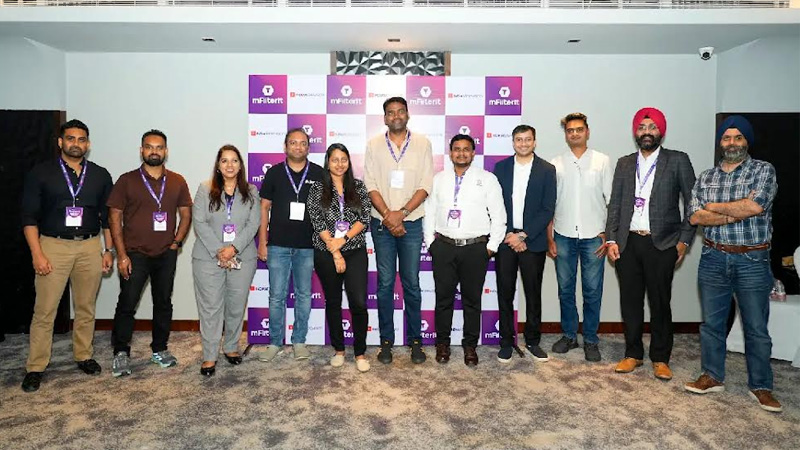
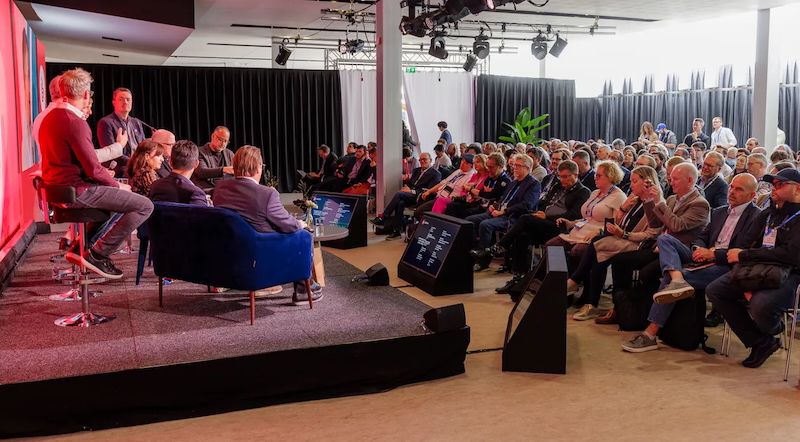
    BENGALURU: The Bengaluru edition of Indiantelevision.com Group and mfilterit’s closed-door roundtable proved to be a power-packed and highly successful gathering of India’s app economy leaders. Themed “Build winning app acquisition & engagement strategy using AI & analytics”, the event on 12 September brought together an exclusive panel of senior voices from well-established brands. With candid conversations, practical insights, and real-world case studies, the session set a new benchmark for dialogue around the future of app marketing in India.

    Indiantelevision.com Group chief business officer Soumitra Sahu said, “At Indiantelevision.com, we see ourselves as enablers of meaningful conversations that move the industry forward. The Bengaluru roundtable was a reflection of that, bringing together diverse voices from India’s thriving app economy to candidly address both opportunities and blind spots. What stood out was the willingness of leaders to go beyond surface metrics like installs and really dig into questions of quality, transparency, and long-term engagement.”

    “By partnering with mFilterIt, we wanted to create a forum that doesn’t just spotlight challenges but also equips marketers with actionable insights to build sustainable, growth-focused strategies. Judging by the energy in the room and the quality of ideas exchanged, this event was a resounding success and a step toward shaping a stronger digital ecosystem for all,” Sahu added.

    The forum underscored how the conversation in today’s attention-deficit era has shifted: installs alone no longer define success. Instead, cleaner traffic, genuine engagement, and sustainable ROI are the new imperatives. Moderated by  WPP Medi national head – performance marketing Satheesh Kumar, the powerhouse panel included industry moguls from Phonepe’s Indus Appstore, Ajio, Rapido, Pocket FM, Jar, redbus, Payrupik, Stable Money, My Growth Club, and mfilterit.

    Durgesh Rathore of mFilterIt highlighted the session’s depth and practical value, noting that discussions around KPIs, media mix, and the challenges posed by SRNs and third-party channels made the forum highly engaging. He emphasised that despite reliance on standard validation metrics, brands still face gaps due to opaque models, underscoring the need for robust checks and AI-driven solutions.

    Rathore also valued the opportunity to exchange insights with industry veterans. “Presenting in front of a focused group of industry peers was a proud moment. The insightful exchanges with veterans like Pawandeep Singh and Utkarsh Garg provided diverse perspectives and a deeper understanding of the evolving digital ecosystem,” he noted.

    Reflecting on the value of the discussion, Phonepe Indus Appstore VP product Rohit Utmani said, “The discussion was an insightful, high-quality exchange. The most valuable aspect was the focus on real-world examples and best practices from the panelists’ companies.”

    “It was refreshing to learn from their practical experiences on scaling, rather than relying on a traditional market research approach. It was also great to hear the positive reception to Indus Appstore and the enthusiasm that developers in the ecosystem have about exploring our platform as a new way to acquire users,” he added.

    For moderator Satheesh Kumar, the event exceeded expectations. 
    “My expectation was to have a candid, insightful discussion around the opportunities and challenges in the app ecosystem, particularly on growth, fraud prevention, and attribution. The session absolutely lived up to that, with panelists openly sharing their practical experiences and perspectives.”

    “What I enjoyed most was the diversity of viewpoints, each panelist brought a unique lens from their respective industries, which made the discussion rich and well-rounded. It even went to the extent where the panelists started building on each other’s points of view, turning the session into a super engaging conversation rather than a typical Q&A. What made it truly insightful was that the dialogue wasn’t limited to just app marketing, it naturally expanded into broader aspects of marketing, product, and business strategy,” Kumar added.

    From highlighting fraud patterns like CTIT anomalies, invalid OS versions, and click hijacking, to stressing the importance of independent AI-powered validation, the session offered a roadmap for marketers to move beyond vanity installs toward growth-focused, transparent, and efficient strategies.

    For Indiantelevision.com Group, co-hosting the roundtable augmented its role as a trusted knowledge partner for the industry, while for mFilterIt, it further demonstrated its leadership in shaping cleaner, more accountable digital ecosystems.

  • IBC 2025: Media moguls and tech titans converge as Amsterdam buzzes with AI ambition

    IBC 2025: Media moguls and tech titans converge as Amsterdam buzzes with AI ambition

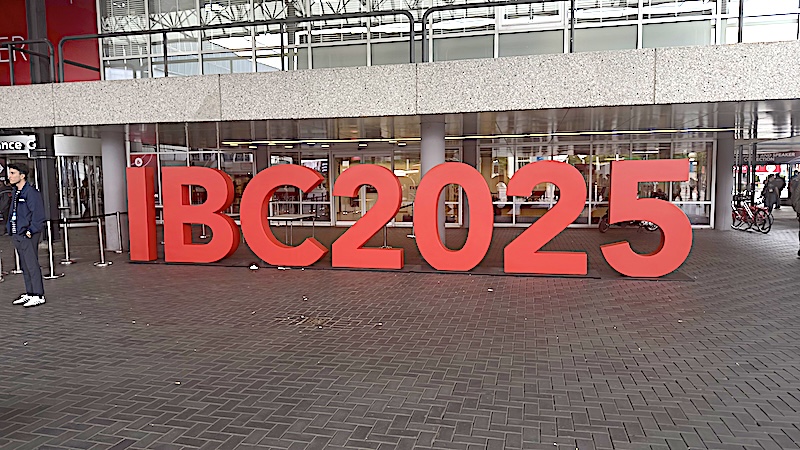
    AMSTERDAM: Amsterdam’s RAI convention centre became the epicentre of media’s digital revolution last week as 43,858 industry professionals descended on IBC2025, the world’s largest broadcasting and entertainment technology show. From global media giants to plucky start-ups, 1,300 exhibitors and 600 speakers gathered to chart the future of an industry in the throes of transformation.

    The event’s success reflects an industry caught between disruption and opportunity. Visitors from 170 countries—from veteran broadcasters to streaming insurgents—came seeking answers to questions that keep chief executives awake at night: how to harness artificial intelligence without losing the human touch, and how to stay relevant as viewing habits fragment across countless platforms.

     IBC chief executive Michael Crimp declared the event had “delivered real business outcomes” with “overwhelmingly positive feedback.” 

    What struck him most, he said, was the prevailing “sense of optimism and purpose”—a notable sentiment in an industry more accustomed to existential dread.

    The debut of Future Tech in Hall 14 captured much of this optimism. Here, punters could witness live demonstrations of generative and agentic AI, immersive media experiences, and cloud-native workflows. France Télévisions showcased a 5G-enabled aircraft, whilst others explored private networks and sustainable innovation—all buzzwords that would have seemed like science fiction a decade ago.

    “We’re witnessing a pivotal moment of innovation,” said Tata Communications global business leader Brijesh Yadev. The hyperbole may be familiar, but the underlying sentiment rings true: the industry is scrambling to reinvent itself before others do it for them.

    This urgency was palpable in the quality of conversations on the show floor. Gone were the days of casual networking; exhibitors reported “more strategic” discussions focused on “future-looking solutions” and “next-phase investments.”

    The conference programme reflected these concerns, with packed sessions on AI, new business models, and sustainability. Icons like Thelma Schoonmaker, the Oscar-winning editor who worked with Martin Scorsese, provided creative inspiration alongside more prosaic technical papers on practical innovation.

    Perhaps most tellingly, the industry is finally acknowledging that technology alone won’t save it. IBC2025 emphasised people and talent, with initiatives focused on skills development and inclusion. 

    The show floor itself told the story of an industry in flux. Established giants like Amazon Web Services, Microsoft, Sony, and Samsung rubbed shoulders with newcomers such as Baron Weather, Momento, and Remotly. Each hall showcased advances in production, distribution, and streaming—the building blocks of tomorrow’s entertainment ecosystem.

    For all the talk of transformation, IBC2025 proved that some things endure. The event remains the world’s essential meeting place for media professionals. In an increasingly digital world, the value of face-to-face connection—and the deals that flow from it—appears undiminished.

    Whether this optimism translates into sustainable business models remains to be seen. But for four days in Amsterdam, at least, the industry felt confident about its ability to shape its own destiny rather than have it shaped by others.

  • “Indian broadcasters need to look at solutions not just products to get real value” – Ross Video’s David Ross

    “Indian broadcasters need to look at solutions not just products to get real value” – Ross Video’s David Ross

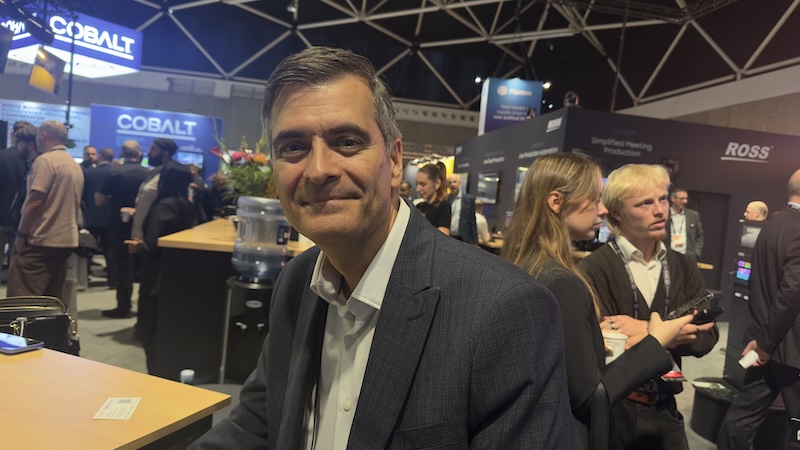
    At around 10 am on 12 September, long before the espresso machines hit their stride, Hall 8 of Amsterdam’s RAI convention centre throbbed with an unexpected chant: “Go Ross Go!” The source was not a marketing stunt but the chairman and chief executive himself. David Ross, head of Ontario-based Ross Video, stood shoulder-to-shoulder with his crew on the IBC show floor,  voice carrying across the cavernous hall. While rival executives do their glad-handing from glassy suites, David prefers to start the day in the trenches, rallying the troops like a regimental captain before battle.
    Engineering and enterprise run in his circuitry. He began programming at the age of nine, scooped up national engineering prizes as a teenager and left university with a computer-engineering degree heavy on business. Before joining the family firm in 1991 he cut his teeth at the CBC and Electrohome, fiddling with projectors and video-effects units. From product manager to head of R&D, then president in 2004 and chief executive two years later, his climb was brisk and unshowy at Ross Video.
    The numbers are anything but modest. Under his watch Ross Video has posted roughly 15 per cent compound growth every year since 1991—without a single downturn, recession or not. He owns more than four-fifths of the company yet has kept it employee-friendly, structuring it as an ESOP and keeping private equity at bay. The mantle of respect is heavy: an honorary doctorate from the University of Ottawa, fellowships from Canada’s Academy of Engineering and from the Society of Motion Picture and Television Engineers, and a trophy cabinet of industry awards.
    For all the laurels, David remains a kinetic learner. He trades ideas with fellow chiefs through TEC (Vistage in America) and gulps down management audiobooks while pounding out marathon miles. It is this mix of technical curiosity, fiscal discipline and boyish gusto that has made Ross Video one of broadcasting’s quiet powerhouses.
    When Indiantelevision.com founder and editor in chief Anil Wanvari caught up with him at IBC, the conversation roamed from the science of sustaining perpetual growth to the sheer pleasure of building kit that makes television sparkle—proof that the man leading the cheer is also the engineer behind the magic. Excerpts from the tete a tete:

    On what’s exciting him about IBC 2025.
    To start off we just bought a company. And we just had some fun with it. We are talking about, you know, peanut butter goes with jelly, movies go with popcorn and you know video goes with audio. So we bought Lama (Lean and Mean Audio) – a company that does audio entirely software-based in the cloud and on-prem. It’s quite a comprehensive feature set. It’s also got automix and things like that. They did 16,000 streams of audio for the Paris Olympics where they needed to match up commentators with crowd noise – and to have it automatically set up. They were doing hundreds and hundreds of them a day.  We are going to sell what we have and over time we are going to do more with it.

    On whether Ross Video’s acquisition streak is going to continue. 
    Lama was our twenty second acquisition. Acquisition number 23 is almost done. We can’t talk about that, But watch this space. We also do organic growth. If all we were going to do is grow through acquisition, we would not have 500 people in R&D like we do today. So that’s a major investment, especially when you consider that Ross Video is only about 1500 people. One in three are designing new products. And also considering we have our own manufacturing in-house. That  is a major commitment to new product development.  But we look at everything that is adjacent to- complimentary to – what we do. Everything has to connect with what we do in multiple ways.

    The first robot I actually bought was in house, and we bought it out. It was the Furio, which is on tracks. I did that around 2011 or so. It was a bit of a shock when I came back and said: “Stop everything. Let’s start building robots.” Then we did Cambotics three months later, and then we did an organic product, which was SkyDolly and and just last year, we launched Artimo, which was an organic product based upon acquisitions. So, how much is acquisition? How much is organic? It kind of gets all blurred after a while, because we’re doing brand new innovations, but because we are already in the market. Now we have that technology that we brought in house. You’re going to see the same sort of thing again, with Lama, you know, bringing in audio in house. Great. What’s next? That’ll be organic,

    On whether Ross Video will consider outsourcing production to cheaper locations such as India or China
    What we make in our industry is generally not interesting to make in India or China. They want to make a million of something. We make hundreds or thousands of something. Very, very complex products at lower volumes than the mass market. There’s a lot of enhancements and back and forth of R&D. It all makes sense to have all of that in-house. It might be more expensive for us to do the manufacturing in China as there’s a lot inefficiencies in working with an outside company and also it’s just not interesting to them. Our factories are designed to make studio robotics or routers or production switchers.
    On the product gaps in the company’s portfolio and how will Ross fill those.
    We’re already in broadcast, we’re in sports and live events, we’re in OB vans, we’re in mega churches, we’re in government, we’re in corporate, high end type production. We’re already in stadiums that’s actually our biggest market. What else can we do? I know there’s there’s other adjacencies. So I can’t quite tell you where our gaps are. You could say that we’ve got a great portfolio, and we can create some really great end-to-end solutions. I can also tell you that there’s 1000 companies that aren’t part of Ross; they do stuff that we don’t do. So you could say that we’ve got a thousand gaps. In other words, lots of opportunity in the future.

    On how long can the motivated and family like culture continue at Ross Video now that it is expanding aggressively.
    I think I enhanced it a little bit coming forward from what my father John had put in place. You know, there was a day when I had to move from the Iroquois in Canada  location, where we really started, and to Ottawa, an hour north. And not being in the factory, things started to go wrong, and culture started to change. And I’d hear stories about people not working well together and so on. That was only when we were around about 75 people, and I thought to myself  how are we going to get to 100 people and keep the culture? It’s already falling apart, so we sat down and wrote up the Ross Video code of ethics. We wrote down the Ross Video culture. We put it in everybody’s, you know, walls or their cubes and their offices, their home offices. We put it on the website. It sits on the doors of our meeting rooms. Here we live it. And when you do that, it’s a culture that can extend potentially indefinitely, because I’m already not in every location, but we’re able to bring people on. They understand what it is. We got a lot of people that live this culture and love it. And people who don’t match that culture, that don’t respect each other, that don’t help each other, that aren’t focused on customers, that sort of thing. They don’t last very long at Ross Video, sometimes they self-select and out they go. They just don’t fit. So how big can we go? I know, as big as you want.

    On how Ross Video deals  with a market like India where price plays a very important role in closing a deal and negotiations can be endless as compared to other countries.

    Well,  the thing is I am unaware of a major manufacturer of routers or production switchers or sports analysis tools or robotics out of India. We’re competing with the same players, for the most part, in India that we do with in the rest of the world. So really, the question is figuring out the right solution for the job and sharpening your pencil for India is but in the end, you know, it’s the same products. So I would love to be able to discount our products to 90 per cent but then it would be cheaper for us to just shovel money and not sell products, because we’d have been losing money on everything we sell.

    So, so from the point of view of price, I think India, like everybody else as well, does have certain minimum requirements for what they want. I mean, I was looking at a bid from Doordarshan just yesterday, actually,  “they didn’t just say we would need a production switcher. We want the lowest price.” They had, you know, a couple of dozen criteria the product. Before you can bid, you must have all of these high end features. And if you qualify for that, then we want to see the best price. So it’s not just a race to the bottom.

    These features are important to our customers in India like everywhere else, because they provide value. And I think what we need to start doing in India as well, like we have been doing everywhere else, that is not just talk about a product, its features and its price, but also the ecosystem and the solution that we provide.

    For example, you know, OverDrive works really well with our Carbonite production switchers. Carbonite production switchers work really well triggering XPression graphics. XPression graphics work really, really well with our with our weather system Raiden. Xpression workflows work really well with Voyager, which ties in sports analysis, which talk  to our instant replay systems and so forth. So you can see there’s a thread that goes through everything that we do that also has value. And I think if one of the things you have to have a conversation with locally is discuss the system that you want, the solution that you want, and not just bid for individual products. Because I think if India continues to just look at one product at a time, some features and a price, they’re missing out on unlocking real value and real savings in workflow and efficiencies.

    On whether Ross Video will consider serving the individual creator community at some stage.
    I’m going to say only at the highest end, yeah, one of the most important things when you have a company of any sort is the path to market. How are you going to be communicating with a market, and how are you going to service that market? Ross Video is very intentionally set up to have a close relationship with its customers. When somebody comes onto our booth in an exhibition, we know who they are, we know what they need. We understand their company, their needs. We often know the person, even have a relationship with that person, maybe over many years.

    When you’re talking about the creator community, and you say there’s a million creators out there, we can’t do that. That is a different type of a sale. It’s a sale where it’s about marketing, it’s about lead generation. It’s about no price negotiation. It’s about clicking and buying it on a website. We’re not set up for that. And also it’s about a larger mass market.

    And in the mass market as well is that’s where you have to build in millions at a very, very low price, very little customisation, if any. That’s not what we do either. We do more expensive products. That’s what our factory is set up to do. And we have, we would say, a more expensive but more intimate connection with our customers. When the creator community, you know, gets to a certain point, if you have one that’s making it, you know, has a lot of eyeballs, therefore making a lot of money, they want to transform from to a more professional look, and they want to create a studio, then we’re there for them. So we don’t need to move into the content creator business to be able to get to the billion dollars in revenue from the 500 million we have now, but to get to $2 billion in revenue, maybe, maybe that’s next. But right now, I think the way we want to leverage our customers and our brand and our go to market and our manufacturing capability and our design expertise, more so to be able to double the size of the company.

    On the role that AI is playing at Ross Video and in its products.
    AI is a really, really big topic. It’s everything like it’s interesting inside the company. You could say there’s inside, there is outside the products, and then there’s many types of AI as well. Inside the company, there’s AI everywhere. Pretty much everybody that wants chatgpt gets an enterprise copy of it inside of Ross video, so we’ve got like, 1000 copies of chatgpt running at any given time. We’re using it, developing our software. We’re using it developing our manuals. We’re using it to drive our website, our manuals. We’re using it writing our specifications, our market research, internal communications. We’re using it everywhere, and that’s on purpose, because I want to make sure that all of our employees, in all ways, become very, very familiar with AI and be able to get more ideas of how can it affect workflows and get that comfort.

    Now, inside of Ross Video, we have something called Ross Research Labs, and that is different and separate. Ross Research Labs is different and separate from all the product groups. So we got, you know, R and D team for production switches, another for routers, another for graphics, another for robots and so forth.

    Ross Research Labs is there for all of the different groups. So for example, recently, they were using AI to do player tracking for our Piero system, our sports analysis system, and be able to make sure that when one player goes through another player and comes out the other side, it doesn’t suddenly get identified as a new player. It can track them properly they had to go through we actually worked with universities to figure out the very best algorithms to be able to make player tracking work.

    We also take a look at the pitch, say for cricket or football or something like that, where we can look at that, and we can now use AI to calculate where the camera is that’s taking that image and what the zoom setting is on the lens and everything else, and understand where it is. The camera is in a three dimensional space, so we can overlay graphics with it. That was another thing that came out of Ross Research Labs.

    Another thing that we’re doing is Ross voice control. So this is speech to text, but we have examples of major broadcasters. I’ll say that that I’ve done hour long productions where the presenter is speaking, controlling the graphics, running maps and creating all these animations behind them. There is no one in the control room following this and pressing any buttons. It is all speech to text. That text goes into an engine that then drives through an API our products to be able to do the production. And when we did it, there was only one time that somebody had to reach in and press a button over a one hour or two hour production, which is just amazing, and it was running faster than  any human operator could could run in real time.

    There’s another thing that we’re just starting to work with as well, which we’re starting to do in stadiums where we’re doing closed captioning, basically, but for the big screen. So people who can’t hear that, or maybe the crowd is too loud they want to hear what a commentator said. We’re actually putting that up on the screen. We can also do it in real time. Translations. We’ve compared that to human translators, and we’re faster by like, five seconds, and more accurate as well. So that’s another use of AI that we’re starting to roll out, and that came out of some of our other R and D teams. There’s more going in that direction. The next side of things as well. Oh, of course, our Artimo, you know, has all sorts of facial tracking and body tracking and things like that for our cameras to be able to keep talent centered in a production quality way, but there’s more

  • Indiantelevision.com, mFilterIt co-host Bengaluru roundtable on AI-led app marketing

    Indiantelevision.com, mFilterIt co-host Bengaluru roundtable on AI-led app marketing

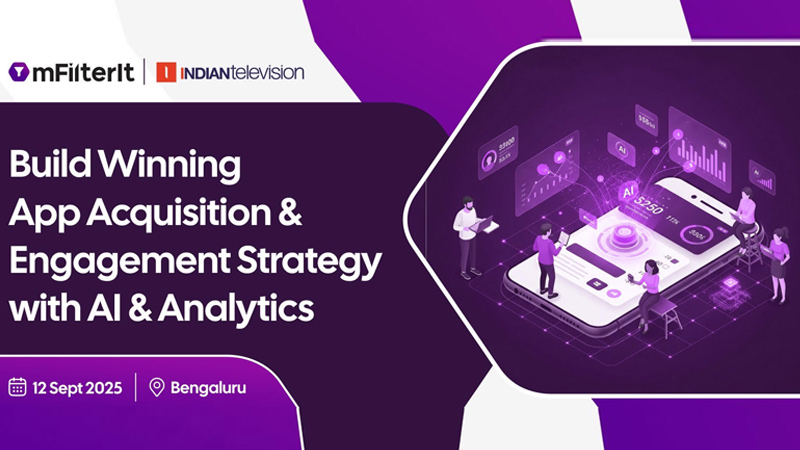
    BENGALURU: With India’s app economy mushrooming and companies locked in a race for clicks and engagement in an era of attention deficit, the question is no longer just about investing in app marketing, it’s about making every install count. To address this challenge, Indiantelevision.com Group and mFilterIt co-hosted a closed-door roundtable in Bengaluru on September 12, themed Build Winning App Acquisition & Engagement Strategy Using AI & Analytics.”

    “In an ecosystem, where installs alone no longer define success, it is critical to focus on cleaner traffic, sharper strategies, and genuine engagement. That’s why we are delighted to co-host this forum with mFilterIt—a partner whose expertise in AI and analytics has been pivotal in redefining transparency and trust in the digital ecosystem. By co-hosting this forum with mFilterIt, we aim to equip marketers with insights that go beyond the numbers and help shape sustainable, growth-focused approaches for the industry,” noted Indiantelevision.com, chief business officer, Soumitra Sahu.

    The invite-only forum brought together senior voices from leading brands to discuss sharper strategies for app marketers. The focus was not only on driving installs but also on ensuring genuine user engagement, maintaining cleaner traffic, and improving key efficiency measures such as cost per install (CPI) and cost per engagement (CPE). 

    The shifting ground of app acquisition

    With user acquisition campaigns increasingly driven by affiliates, India’s top brands are beginning to face blind spots in their frameworks. Attribution platforms may be able to measure installs, but optimisation and bot detection often fall outside their scope. This is where independent validators such as mfilterit have entered the picture, deploying AI-powered algorithms and layered checks that uncover wasted ad spend and fraud patterns usually missed by traditional systems. 

    A powerhouse panel

    The discussion was moderated by WPP Media, national head – performance marketing, Satheesh Kumar and featured senior leaders including Rohit Utmani of Phonepe’s Indus app store, Manas Prakash of Ajio, Pawandip Singh of Rapido, Akansha Kumari of Pocket FM, Utkarsh Garg of Jar, Satheesh Chinnappan of redbus, Saravanan G of Payrupik, Kirtiman Phadke of Stable Money, Rajat Srivastava of My Growth Club, Durgesh Rathore of mfilterit, and Jagmeet Singh of mfilterit. Together, they brought perspectives from diverse verticals of India’s booming app economy.

    Cracking the code

    The agenda stressed on some of the toughest questions in app marketing today. Among them was how brands can detect wasted ad spend and improve ROI, what critical metrics validate app ad traffic and highlight potential risks, and how incent walls distort campaign outcomes. A key theme: why marketers must challenge the data they receive from platforms and affiliates instead of taking it at face value. Fraud samples, like unusual CTIT patterns, installs from invalid OS versions, click hijacking, incent traffic, and even fake orders, further demonstrated how affiliate monitoring and real-time validation can uncover non-compliant activities and wasted spend. By highlighting these real-world patterns, the session demonstrated how independent checks bring more rigour, transparency, and efficiency to app marketing campaigns. 

    Why it matters

    By the end of the session, participants gained a clearer view of the blind spots in user acquisition and a sharper understanding of how AI and big data can improve campaign outcomes. They also walked away with a roadmap to elevate their strategies with real-time insights, helping ensure that every install delivers value rather than vanity. For Indiantelevision.com group, co-hosting the event reinforces its role as a knowledge partner to the industry. Together with mfilterit, it aims to provide marketers with a forward-looking agenda at a time when the quality of engagement, rather than sheer quantity, defines sustainable growth.

  • IBC 2025 brings the future of media to Amsterdam

    IBC 2025 brings the future of media to Amsterdam

    AMSTERDAM: Amsterdam’s RAI convention centre will become the global capital of media and technology from 12–15 September when IBC 2025 opens its doors to broadcasters, streamers, studios and tech firms from around the world.

    The show will run 10:30–18:00 on opening day, 09:30–18:00 across the weekend and close at 16:00 on Monday. Organisers have built the edition around the theme of innovation, with a newly minted Future Tech hub in Hall 14. Here visitors can test emerging tools such as artificial intelligence, cloud-native production workflows, augmented reality, virtual sets, immersive audio-visual formats and sustainability-driven hardware.

    A three-day conference, from 12–14 September, features more than 300 speakers drawn from major broadcasters, global streaming platforms, technology vendors and creative studios. Panels will probe platform evolution, revenue models, AI integration and the next wave of interactive storytelling. JioStar’s Prashant Khanna is one of the headlined speakers being featured at IBC this year. 

    Elsewhere, the IBC Innovation Awards will celebrate cutting-edge deployments, while the Accelerator Media Innovation Programme offers collaborative trials of experimental tech. Free-to-attend theatres and showcase stages promise continual demos and debate on content delivery, rights management, talent development and the fast-changing business landscape.

    Beyond the exhibition floor, organisers are pitching IBC 2025 as a working laboratory: a place where engineers, producers and executives can handle new kit, swap ideas and chart the next phase of global media transformation.

  • IBC honours Thelma Schoonmaker with top award as Globo and EBU team recognised

    IBC honours Thelma Schoonmaker with top award as Globo and EBU team recognised

    AMSTERDAM: IBC has named legendary editor Thelma Schoonmaker as the recipient of its highest accolade, the International Honour for Excellence. A three-time Oscar winner and lifelong collaborator of Martin Scorsese, Schoonmaker will also appear in a fireside chat at the Rai Amsterdam on 14 September, free for all attendees.

    Two other major honours were announced ahead of the IBC Innovation Awards. Globo will receive the IBC Special Award, recognising a century of media innovation and leadership in Brazil. Meanwhile, a Swiss team from the European Broadcasting Union and HEIG-VD will take home the best technical paper award for groundbreaking research on artificial intelligence in trusted news.

    This year’s awards highlight both sides of the media equation: Schoonmaker’s enduring commitment to the art of editing, Globo’s forward-looking broadcasting strategy, and the EBU-led team’s pioneering work applying AI to journalism. Winners will be formally recognised at the IBC Innovation Awards ceremony on 14 September in Amsterdam.

  • IBC2025 conference lines up global media heavyweights and bold ideas

    IBC2025 conference lines up global media heavyweights and bold ideas

    LONDON: IBC 2025 has pulled back the curtain on a turbocharged conference programme packed with power players from across the global media, entertainment and tech ecosystem. From 12 to 14 September at RAI Amsterdam, the three-day summit promises to tackle media’s defining challenges—AI disruption, fragmentation, collapsing business models, and the war for attention.

    Top brass from Netflix, Walt Disney Studios, Paramount Global, Snap, TikTok, YouTube, Roku, TelevisaUnivision, PGA Tour, kweliTV and India’s JioStar are among the featured speakers. Industry provocateur Evan Shapiro will headline with a data-fuelled keynote, while seasoned commentator Mike Darcey closes the show with a sharp take on rights, economics and the shape of future broadcasting.

    “This year’s agenda is urgent, imaginative and provocative,” said IBC head of content Sally Watts. “We’re bringing together disruptors and legacy leaders to map the media universe as it shifts beneath our feet.”

    The conference kicks off with a heavyweight CTO roundtable featuring Avi Saxena (Warner Bros. Discovery), Simon Farnsworth (ITV) and Phil Wiser (Paramount). Big tech meets broadcast in sessions like YouTube’s Pedro Pina in conversation with Channel 4’s Grace Boswood, and Snap’s Jorrit Eringa alongside execs from Yahoo, Sky, Sling TV and A1 Group dissecting the future of content collaboration.

    TikTok’s Rollo Goldstaub will explore how short-form video is rewriting the rules of sports engagement, while Netflix’s Victor Marti and Vancouver Media’s Migue Amoedo offer a behind-the-scenes look at storytelling innovation.

    In a major AI-focused session, ABC’s Damian Cronin unpacks how the broadcaster is embedding machine learning into its core workflows. Meanwhile, DeShuna Spencer (kweliTV), Brad Danks (OUTtv), Rajat Nigam (JioStar India) and others weigh in on what’s next for the streaming wars.

    ‘MovieLabs – Leading the Vision’ sees Disney, Sony, Warner Bros. and Paramount map the road to 2030 for content creation, moderated by MovieLabs president Richard Berger. Sunday’s schedule spotlights Fremantle’s Jens Richter on global distribution in a post-peak TV world, while PGA Tour execs reveal how they deployed live AR shot-tracking across all 18 holes — winning a Sports Emmy in the process.

    In the closing session, Mike Darcey, now managing director at Tide End Consulting and former News UK boss, breaks down how rights, economics and regulation must evolve to fit the new media order.

    Beyond the main stage, the IBC Technical Papers Programme offers 10 peer-reviewed sessions delving deep into bleeding-edge R&D across 5G, 6G, AI, immersive formats and content authentication. Topics include:
    * AI in speech, postproduction and curation
    * Provenance, privacy and content trust
    * Wireless tech advances from 5G to 6G
    * IP Studio 2.0 and live production
    * Sport tech, AR, avatars and AI-enhanced streaming

    Registration is now open at show.ibc.org.

  • Anime India, the country’s largest Japanese Anime Convention announced; brings Global Anime Icons, Behind Death Note, Attack on Titan, Black Clover and Gachiakuta to interact with fans in India

    Anime India, the country’s largest Japanese Anime Convention announced; brings Global Anime Icons, Behind Death Note, Attack on Titan, Black Clover and Gachiakuta to interact with fans in India

    MUMBAI: Anime enthusiasts across India are in for the time of their lives this August as Anime India – the first and largest ever full-scale anime convention, a festival focusing on Japanese anime – is set to be held from 22 to 24 August at Hall 1 of Mumbai’s NESCO Bombay Exhibition Centre.

    A host of immersive experiences have been planned for fans at Anime India: conversations with Japanese anime maestro directors, voice-over talents, fan panels, anime film festivals, cosplay competition, singing contests, artist alleys, an anime concert, anime quizzes, and more. Die-hard fans can also dive deep into the merchandise zone and purchase original merchandise.

    Anime India is already being talked about as a landmark event amongst the community of 100 million Indian Japanese anime enthusiasts. Tetsuro Araki, the acclaimed animation director behind global phenomena such as Attack on Titan and Death Note, is flying in for his first-ever visit to India. Araki will be the key special guest at Anime India, the nation’s largest anime convention.

    Anime India marks a monumental moment for the rapidly growing Indian anime community, offering an unparalleled opportunity to engage directly with one of the most influential figures in modern animation. Tetsuro Araki’s visionary work has captivated billions worldwide, with Attack on Titan receiving widespread critical acclaim and a massive global fanbase, and Death Note remaining a timeless psychological thriller.

    Also in attendance will be Hideo Katsumata, the President of Avex Pictures behind top anime series like Black Clover, Gachiakuta and the 2024 Crunchyroll Anime Awards winner Look Back. At the colocated Animation & More Summit, Susume Fukunaga, Corporate Officer of The Pokémon Company will be attending as a speaker.

    “We are incredibly honored to host Tetsuro Araki for his inaugural visit to India,” says Anime India organiser Neha Mehta. “His presence elevates Anime India to a global stage and underscores the immense passion for anime that exists within our country. This is a dream come true for countless fans who have been inspired by his groundbreaking work.”

    “We are really excited to bring the first anime convention to India. This is something I, as an anime fan, truly wanted to see happen. We are also excited to see Katsumata-san, a global legend in the anime space speaking at the event” exclaims Mishaal Wanvari, organiser, Anime India.

    Anime India will have a lot more going on, promising an immersive experience for all attendees:

    ● An Exclusive Panel and Q&A with Tetsuro Araki: Fans will have the chance to hear directly from the master director about his creative process, inspirations, and the intricate worlds he has brought to life.

    ● Meet and Greet with Voice Actors: Fans have the chance to meet freelance Japanese voice actor Tsunko, who will be traveling to perform at the event.

    ● Grand Anime Concert: On 24 August, the convention will host a spectacular anime concert, bringing beloved anisongs to life.

    ● Dynamic Cosplay Competition: Witness incredible talent as cosplayers dress up as their favorite characters, vying for top honors.

    ● Engaging Anime Quiz: Test your knowledge in a lively quiz challenging fans on all things anime.

    ● Singing Contest: The best artists from across the country assemble at Anime India to show off their singing prowess.

    ● Expansive Merchandising Expo Zone: Our professional expo area will feature official licensed merchandise from globally popular IPs including Demon Slayer, Attack on Titan, Spy x Family, Tokyo Revengers, and Naruto, ensuring fans can take home authentic collectibles.

    ● Artists Alley and Cosplayers Circuit: For the first time in India, over 24 extensively vetted independent artists and cosplay creators from the anime community will be exhibiting at the event, selling original work and explicitly permitted derivative works.

    ● Fandom Realm: Eight fandom communities including anime clubs, gaming communities, and other interest groups such as Vocaloid fans will be setting up experiences for fans right on the Anime India show floor.

    ● Fan Panels: Panels span the 3-day schedule of Anime India across our 3 stages, bringing anime fan panel culture to India on an extensive scale – having not just in-depth explorations of the media that we love but also game shows, and so much more!

    ● Maid Cafe: Come experience the authentic Maid Cafe experience for the first time at an event in India.

    ● Anime Film Festival: Exciting film and TV anime screenings, with behind-the-scenes footage, exclusively at Anime India!

    Anime India aims to be the ultimate celebration of Japanese pop culture, fostering a vibrant community and providing a platform for fans to connect with their favorite series and creators.

    The historic visit by Tetsuro Araki is expected to draw record attendance and further solidify India’s position on the global anime map.

    Tickets for Anime India can be purchased from Zomato’s District ticketing platform and are available in four brackets: Rs. 199, Rs. 299 and Rs. 799, and Rs. 1499.

    Event Details:

    ● Event: Anime India

    ● Dates: August 22nd – 24th, 2025

    ● Location: Mumbai, India (NESCO Bombay Exhibition Centre)

    ● Special Guest: Tetsuro Araki (Director of Attack on Titan, Death Note)

    ● Tickets: https://link.district.in/DSTRKT/AnimeIndiaPartnerAds

    ● Social Media: https://www.instagram.com/animeindia.live

  • Saudi Media Forum returns to Riyadh

    Saudi Media Forum returns to Riyadh

    MUMBAI: The fourth Saudi Media Forum (SMF25) is set to commence on 19 February at the Hilton Riyadh, bringing together prominent figures from the international media landscape for a three-day conference.

    The event will feature notable speakers including Starz Executive Vice President Karen Bailey, Gersh Agency partner Roy Ashton, and Wonderhouse Studios CEO David Abraham. Former British prime minister Boris Johnson will attend as a special guest alongside other industry executives such as FIPP CEO Alastair Lewis and SeriesFest founder Randi Kleiner.

    Running concurrent with The Future of Media Exhibition (FOMEX), the forum will showcase emerging technologies in artificial intelligence, digital content creation, and Esports. The programme includes business matchmaking sessions, innovation showcases, and investor roundtables aimed at fostering growth in Saudi Arabia’s media sector.

    The event aligns with Saudi Vision 2030, the kingdom’s economic diversification strategy, as it seeks to establish itself as a global media hub. Organisers have emphasised the forum’s role in facilitating strategic partnerships and developing local media talent.

    SMF25, which has become the largest specialised media event in Saudi Arabia, will conclude on 21 February. The forum aims to highlight investment opportunities in the region’s expanding media and entertainment industry.

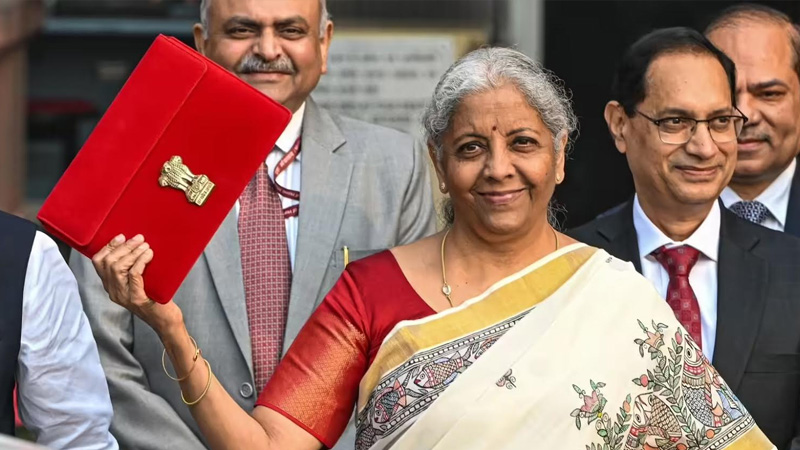
  • A budget like no other; take a bow Ms Sitharaman

    A budget like no other; take a bow Ms Sitharaman

    MUMBAI: Imagine opening your paycheck and finding an unexpected bonus—except this time, it’s courtesy of the taxman. Looks like all the meme trolling has finally aided the middle class. FM Nirmala Sitharaman’s Union Budget 2025 under section 115BAC has shaken up India’s tax slabs like a well-mixed cocktail, giving middle-class earners a Rs 1 lakh crore collective boost. If last year’s tax regime was a clunky old scooter, this year’s is a turbocharged sedan with better mileage.

    The headline-grabber? The tax-free ceiling now sits at Rs 12 lakh, up from Rs 7 lakh last year, translating into a neat Rs 80,000 annual saving for many households. The 30 per cent tax slab, which kicked in at Rs 15 lakh before, has now been pushed to Rs 24 lakh. That’s a serious upgrade—enough to fund an iPhone 15 Pro Max, a holiday in Bali, or 12 EMIs on a Tata Nexon.

    But here’s the real question: will these extra rupees flood shopping malls and stock markets, or will inflation gobble them up before they can do any real good? While finance honchos cheer, economists are cautiously watching if this fiscal facelift is a lasting glow-up or just a one-time Instagram filter.

    Tax Slabs
    The new tax regime, which now serves as the default for Assessment Year 2025-26, offers a streamlined six-tier structure:
    * 0 per cent tax up to Rs 4 lakh (previously Rs 3 lakh)
    * 5 per cent on Rs 4–8 lakh
    * 10 per cent on Rs 8–12 lakh
    * 15 per cent on Rs 12–16 lakh
    * 20 per cent on Rs 16–20 lakh
    * 25 per cent on Rs 20–24 lakh
    * 30 per cent only above Rs 24 lakh (up from Rs 15 lakh earlier)

    Under the default new regime for assessment year 2025-26, the 30 per cent tax bracket now kicks in at Rs 15 lakh, up from Rs 10 lakh in the old structure (Part I rates). A taxpayer earning Rs 15 lakh saves Rs 37,500 annually versus the old regime. The slabs now have six tiers (vs four earlier), with a 5 per cent rate for Rs 3-7 lakh and 10 per cent for Rs 7-10 lakh. For seniors, the Rs 5 lakh threshold for octogenarians remains a sweetener.

    Sitharaman’s ministry has also played its cards well with surcharge reductions:

    * The surcharge on incomes exceeding Rs 2 crore (excluding dividends/capital gains) has been trimmed to 25 per cent from 37 per cent.
    * The ultra-rich still face the 37 per cent surcharge, but only on incomes exceeding Rs 5 crore.
    * A taxpayer earning Rs 3 crore saves Rs 3.7 lakh in surcharges.
    The government’s objective? A calibrated redistribution of wealth that puts more money in middle-class hands while ensuring high earners see incentives to keep investing.
    Consumer boom: Will it hold?
    A Deloitte study suggests that every Rs 1 saved in taxes results in Rs 0.65 of additional consumer spending. Here’s what that means for the economy:
    * Rs 37,500 savings per taxpayer Rs 24,375 extra spending per household
    * Eight million taxpayers in this bracket  Rs 19,500 crore injected into markets
    * Private consumption growth is forecasted to touch 7.8 per cent YoY in H2 2025, up from 6.7 per cent
     

    Says media veteran Yesudas Pillai: ” a proud Indian, I couldn’t have asked for a more comprehensive and forward-looking budget, setting aside all political narratives.It is visionary, inclusive, and growth-driven—a bold economic catalyst that fuels consumption, empowers communities, and accelerates sustainable development. With its progressive, consumption-led, and investment-focused approach, this blueprint lays the foundation for a resilient and thriving future. The budget ensures no sector is left untouched, with a strong emphasis even on center-state collaboration to drive holistic and inclusive growth. This is, without a doubt, the most transformative budget I have ever seen.

    The stock market is throwing a post-Budget party, and everyone’s invited! Avenue Supermarts (D-Mart’s parent) is up over 10 per cent, clocking its fifth straight day of gains. FMCG heavyweights HUL and ITC saw a five  per cent surge, as investors bet on rising grocery bills. Varun Beverages, PepsiCo’s bottling giant, snapped a two-day losing streak and fizzed up by six  per cent. Not to be left out, Sapphire Foods (operator of KFC and Pizza Hut) is dishing out a near 10 per cent jump.

    Even food delivery titans Zomato and Swiggy are savoring a six  per cent rally, proving that tax savings might just be feeding India’s appetite. Other big gainers? Godfrey Phillips (Up 12 per cent), Blue Star (Up 11 per cent), Phoenix Mills (Up 7.5 per cent), Devyani International (Up seven per cent), and Godrej Consumer (Up 6.5 per cent). Looks like the budget has delivered more than just tax cuts—it’s serving up a full-fledged consumption boom!

    Tata Motors ED Girish Wagh said, “Cutting customs duties on battery materials is a power move—literally. It’s a big push for India’s EV ecosystem and a greener future.”
    Godrej Consumer Products CFO Aasif Malbari noted, “This budget balances rural growth, manufacturing, and consumer demand—vital cogs for the FMCG sector. More jobs and rural investments mean stronger markets and higher consumption.”
    Marketing bonanza: Rs 2.3 trillion up for grabs?
    India’s advertising industry is preparing for a Rs 2.3 trillion windfall, assuming 30 per cent of tax savings flow into discretionary spends. Expect:
    * E-commerce wars: Flipkart, Amazon, Nykaa, and Myntra gearing up for record discount seasons.
    * Luxury labels expanding: Brands like Louis Vuitton and Tesla targeting Tier-2 cities.
    * Digital ad spends exploding: Google and Meta looking at all-time high revenues.
    When disposable income rises, premiumisation kicks in. Consumers opt for the iPhone over a budget Android, or a luxury sedan over a hatchback. GST collections are also forecasted to rise 12 per cent YoY, reflecting the broader spending wave.
    Beyond direct tax cuts, the budget carries a silent game-changer—the reduction of TDS on insurance commissions from 5 per cent to 2 per cent. With insurance premiums collecting Rs 7.3 lakh crore last year, this subtle move could spur a 15 per cent rise in agent-driven policy sales. Expect health and term insurance policies to fly off the shelves, driven by a more incentivised agent network.
    Despite all the optimism, a few red flags remain:
    * Inflation concerns: At 6.1 per cent in December 2024, inflation could dilute some tax savings.
    * Sensex jitters: The stock market’s muted response suggests investor caution over fiscal deficits.
    * Savings paradox: If too many households hoard their extra cash instead of spending, GDP growth could take a hit.

    The 2025 tax reset has transformed India into a giant Petri dish of economic psychology. Will taxpayers loosen their purse strings and fuel growth, or will inflation rain on this parade? Will digital marketing giants be the biggest winners of this newfound liquidity? And most importantly—does this set the stage for GST rate rationalisation ahead?

    One thing is clear: India’s middle class is stepping into 2025 with thicker wallets and bigger spending power. Whether that power