Category: Special Report

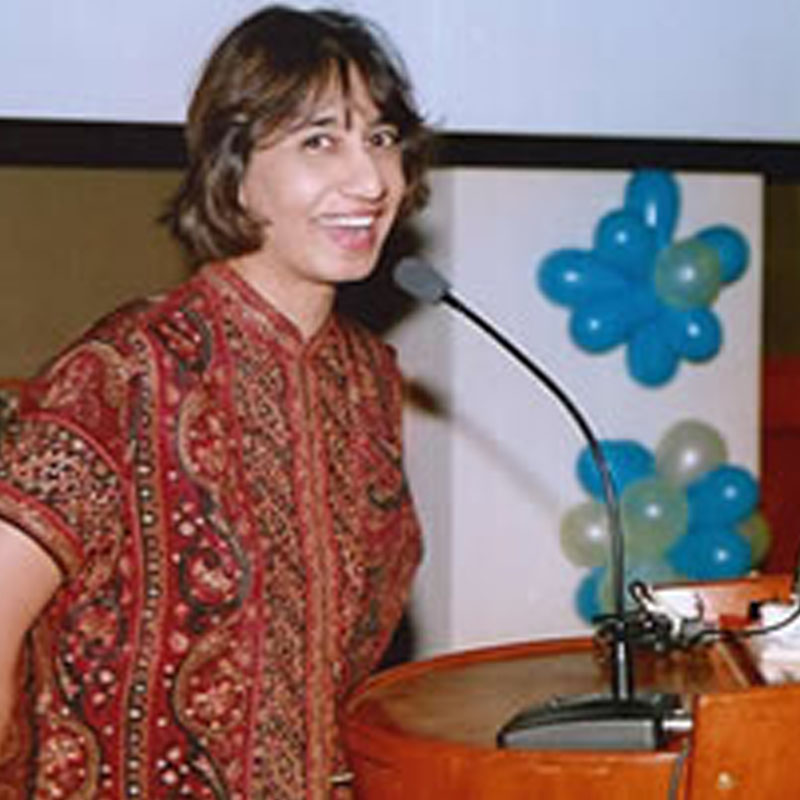
  • MediaCom South Asia president Jasmin Sohrabji

    MediaCom South Asia president Jasmin Sohrabji

    The Indian media industry today boasts of some powerful and intelligent women who have, through their incessant hard work and grit, found their place under the sun. In the second of the series – Ms. Media: 25 Women Who Matter – we tried to find out what MediaCom South Asia president Jasmin Sohrabji is all about and what it took her to get to the top!

    Jasmin has been in the industry for the last 16 years and is looked upon as “one of the most brilliant media professionals the industry has had in a long long time.” She is one of the members of Tam India’s Joint Industry Body (JIB) Committee, which advises Tam on corrections and also guide them about the placement of samples in newer areas.

    Sporting an MA in Economics and an MBA, this double postgraduate joined Trikaya Grey (now Grey worldwide) in 1989 after a short stint with Contract. Within Grey, she was sent to Bangalore in 1996 to set up the media department after the agency won the Wrigley account. Under her guidance MediaCom was launched in September 1996. The lady then packed her bags and was off to Indonesia to head the MediaCom operation there, where she worked on clients like Proctor & Gamble (P&G), GlaxoSmithKlien (GSK) and British American Tobacco (BAT).

    After a year, Jas (as she’s popularly called in the industry) zoomed off to New York to work on MediaCom clients – P&G and GSK – in the US. There she was also instrumental in training the US, South American, Eastern Europe and Asian markets on MediaCom’s proprietary optimiser tool – Maxis.

    Jasmin returned to Indian soil in 1999 and now heads MediaCom South Asia as president along with co-president Harish Shriyan. In addition to MediaCom South Asia (Bangladesh and Sri Lanka), Jasmin was also responsible for the P&G planning for the P&G AAI GBU including nine Asian countries.

    Her mantra for always being ahead of the others in this game is research. Today, MediaCom is known for its extensive research and has also won a lot of laurels through awards. In an environment where television ratings drive most decisions that media planners and buyers make, Jasmin has made it a point to go beyond mere ratings and churn out addressable solutions for the agency’s clients through extensive research. It’s no wonder that MediaCom has been consistently winning the Emvies for their research papers.

    Credit goes to her for giving the media industry two landmark research papers. The first one is TeleOsmosis, which is a paper on light TV viewers, which was a first for India. This research is an important input into TV optimisation and has won a Silver at the Emvies. What’s more, light TV viewer planning has become part of the media planning norm. Her second paper demonstrated the impact of multiple TV sets penetration on television viewing and therefore television planning and optimising. This paper – set2view – won three awards at the Emvies last year — the Gold for Best Media Research; the Grand Emvie for the best entry across all categories and the Tam cash award for Best TV Research.

    We asked this MediaCom loyalist, (who only dresses in black), whether she would be game to shift to an entirely new profession for the challenge of it. “I totally love what I do, but if a challenge comes my way I would be open to consider. But it’s not really about the challenge, the work content has to interest me! There are some sectors that are extremely challenging, but don’t interest me in the least. The business has to engage me before I engage the consumer,” she confidently replies.

    Being in the media industry for close to 16 years, Jasmin has a keen eye on what the future holds for the television and media industry. “The future will get more and more consumer focused, where on the one hand non-traditional touch points will be sought to effectively address the consumers, while on the other hand television planning will get further sophisticated in its attempt to not just reach out to numbers, but reach relevant quality consumers. Studies such as multi-set analysis on viewing impact will become more the order of the day, than just ratings. What’s leading these trends are new genres, new programming formats and new transmission formats!” says Jasmin.

    A no-nonsense woman, Jasmin is keen on making the media industry attractive enough to bring in talent from across sectors. “Our industry is shrinking in its talent pool and we need fresh blood and a fresh perspective,” she opines.

    Another thing on her agenda is to elevate the media agency function in the country to its justified remunerative status.

    Her mantra in life is to work hard and shop hard! “If you’re not going to spend it, why earn it! To many it’s ‘work hard, party hard,’ for me it’s ‘work hard, shop hard’,” Jasmin confides.

    What has the industry taught her? “I have been in this agency for 16 years and one thing this place has taught me is that hard work and loyalty are valued and will help me face any challenge,” says she.

    To her, Grey is her family and will always remain close to her heart! And when she needs to get away from work, her favourite pastime is “S&S” aka “Spa & Shopping”! “My work has always given me travel opportunities and I don’t really need to ‘get away’ from work, I just need to mix work with some pleasure,” says Jasmin. She loves to shop in New York and Paris.

    When asked what her strengths and weaknesses are, she says, “Media planning is my strength and shoes are my weakness! On a more serious note, I believe my strength is my ability to nurture and motivate my people. My weakness is my inability to easily accept people who do not fit into my benchmarks of ‘good’ human beings. I try to put people into ‘black’ or ‘white’ compartments where in reality there are only shades of gray. It’s the one fault I have always been pulled up for, and it’s the one mistake I keep making.”

    Jasmin is known among her colleagues as a person who loves to give career advice. “I believe I am very philanthropic with regard to career counseling as well as career planning for both current and past employees who have worked with me in any capacity. So there are many people in whose prayers and blessings I would always be present. Apart from this, I am also involved with CRY (Child Relief and You) but at a very base level.”

    In this day and age when it doesn’t take much to lure talent from one company to the other, Jasmin has stayed on with MediaCom for 16 years, which in itself is commendable for a person her stature. “One should enjoy the work one does. It’s not enough to be successful; it’s important to enjoy doing so. The means to success should be as enjoyable as success itself. Hard work and loyalty pays and the reason why I am where I am today is because after 16 years, I am just as passionate about what I do,” signs off the lady.


  • In the brave new digital world, content could really be king

    In the brave new digital world, content could really be king

    “If content is King and distribution is God, then God save the King!” That was Prasar Bharati CEO KS Sarma speaking at a recent industry seminar.

    In these times of increasing channel influx onto already overloaded analogue cable systems, the distribution God is certainly making the content king do the merry carriage dance. Reminds one of the ever-worsening infrastructural mess that is Mumbai actually, where people are paying more and more for less and worse but with a big difference. Mumbai’s is a story that is looking more hopeless by the day, while in this case there is much optimism about the future.

    True, for the short to medium term, it will be the distribution God in whose hands will lie the fate of the content King. But once the dust has settled on all of this and the new platforms like digital cable, DTH, IPTV and mobile TV have reached critical mass, then it will be content that will hold sway, and how.

    True, for the short to medium term, it will be the distribution God in whose hands will lie the fate of the content King
    _____****_____

    Disney’s ABC network is already pointing one of the ways forward with its new online service of free programming. As part of a two-month-long experiment, Disney-ABC Television Group will be offering ad-supported, full-length episodes of four ABC primetime series online at www.abc.go.com.

    What’s the logic working here? Is ABC getting Get ‘Desperate’ and ‘Lost’ as regards its online strategy. Not at all. It all makes sense if we keep in mind that if there is one place where the dominant culture is to access content for free, it is the Web.

    So if ABC is trying to transpose the “traditional advertising driven network model” onto the Web there is already an inbuilt advantage over television. It is that while the whole TiVo, time-shifting, DVR mentality is now carrying over to the Web, the consumer cannot zap out the ads. And since many of the ads will be interactive, advertisers will be guaranteed even greater value.

    The content creators that stay ahead of the curve and the distribution platform providers most alive to the challenges and opportunities that the digital world offers will be the ones who will reap the benefits
    _____****_____

    Closer to home, companies like Reliance and Airtel expect to start IPTV services by the end of this year. And for a basic package they are promising rates as cheap as your current cable TV charges. No one is trying to say there won’t be teething problems (and knowing the ground realities here, these would probably be pretty severe). In India the biggest problem is going to be unbundling of the so called last mile, which basically means that incumbent operators like BSNL or MTNL should allow other operators to use their copper wires.

    With the imminent arrival of Tata-Sky DTH, Zee’s Dish TV ramping up and the big telecom players aggressively pushing ahead with IPTV and mobile TV, the value of quality content can only go up. We see some sort of shakeout — both on the content as well as the technology side by 2008.

    In the meanwhile, the content creators that stay ahead of the curve and the distribution platform providers most alive to the challenges and opportunities that the digital world offers will be the ones who will reap the benefits.

    There could well be a lesson in this for the cable fraternity too. Market forces could soon make the whole CAS debate irrelevant and the MSOs may well end up “missing the addressability bus”.

    Maybe MSOs should instead be focussing their efforts on attractively packaging and marketing CAS to their direct points to begin with and concurrently convincing their franchisees of the need to get CAS going, government or no government.

    The cable fraternity has a huge first mover advantage vis-?-vis pushing addressability because they own the last mile. Maybe they should as aggressively be chasing market-driven addressability as they are the mandating of CAS. A twin strategy would better cover their bases one would think.

    As for the content game, to quote John Hendricks, chairman of Discovery Communications Inc, from a recent report: “Newly empowered TV consumers will drive networks to improve their offerings, putting a ‘great squeeze’ on ‘marginal quality content’. They’re in control now.”

    Not in India, they’re not. But they will be. Of that nobody need have any doubt.

  • Hindi GECs in summer overdrive

    We will have to speak to our competitors and see how they are placed before scheduling our press conference,” says a PR executive who works for one of the leading Hindi general entertainment channels.The interesting comment came when we told her about the big day ‘24 April‘ that would witness the launch of about five programmes across the channels.

    Yes, this summer is about to witness a programming bonanza in the general entertainment channel (GEC) space, with not less than eight prime time shows being lined up for launch during this April-May phase. Both the weekday and weekend prime time bands will witness a flurry of activity and the shows gearing up for launch include some big budget projects as well. Star Plus, Sony, Zee, Sahara One and Sab, all will be launching an array of soaps during this time.

    Star Plus will replace its daily soap Milee with the much-awaited Ravi Chopra production Viraasat. The show will run Monday to Thursday in the 9 pm slot, starting 24 April. The channel has also lined up two shows — Prithviraj Chauhan, Dharti Ka Ek Veer Yodha and Ek Chaabi Pados Mein — for launch in May.

    According to Star India senior creative director Shailja Kejriwal, Prithviraj Chauhan will run Friday to Sunday, while Ek Chaabi Pados Mein is yet to be scheduled. “Prithviraj Chauhan will run Friday through Sunday. Internal discussions are going on to decide the time slot for this show, as well as the exact schedule for Ek Chaabi Pados Mein,” says Kejriwal.

    The channel has been working on these three projects since a long time as it required strong properties to fill the void left by its weekend driver show KBC 2. With the launch of these three big projects — two in the weekend band and one in the weekday band — Star Plus‘ attempt will be to bring in some significant improvement as well as consistency to its performance in the prime time band across the week.

    Sony, on the other hand, is now eyeing weekdays and is introducing two new shows on 24 April, after strengthening its Friday band with its Shukra Hai Shukravaar Hai package. Aisa Des Hai Mera will be aired at 9 pm and Thodi Khushi Thode Gham at 9.30 pm from 24 April. The shows will run from Monday to Thursday.

    On Monday and Tuesday, these two new shows will replace the second season of Indian Idol, which is coming to its end. Whereas, on Wednesday and Thursday, the two shows will substitute Deal Ya No Deal, which is now being made into a weekly and will air only on Friday at 8 pm.

    The channel is unveiling its programming strategy gradually. While the first one was to strengthen the Friday line up, the second is to ramp up the 9 to10 pm band on weekdays.

    In the next couple of months, Sony will also be revamping the 10 to 11 pm band as well as the afternoon band, where the latter at present comprises re-runs of old shows and repeats of prime time shows. Also, Jassi Jaisi Koi Nahi, which airs from Monday to Thursday at 10 pm will end its run in May and new shows are likely to be introduced then.

    Says Sony Entertainment Television (SET) India chief operating officer NP Singh, “We will be rolling out our new programming strategy step by step in the coming months. The beginning was made with the Friday lineup. By July, the programming schedule of Sony will be completely transformed.”

    Sony‘s move to strengthen its weekday programming with fiction will also see the channel taking a deliberate retreat from the reality terrain. Once Indian Idol 2 bids adieu, the channel will have its reality dose further scaled down with only Fear Factor there to represent the genre.

    Sab TV will be also be launching a new show – Twinkle Beauty Parlour in May in the 9 pm slot. However Sab business head Vikas Bhal declined to comment whether it would be a weekday or weekend show.

    While Sony is making some calculated moves to regain lost glory in prime time, the Zee camp is not sitting on its laurels but banking on some big launches. After launching its biggest project of the year Business Baazigar on 31 March, Zee TV will flag off another key property on 24 April. The soap Jab Love Hua will replace Rubba Ishq Na Hove and Sarrkkar in the 8:30 pm slot to run Monday through Friday. Then viewers can also expect some fireworks from the latest Sa Re Ga Ma Pa version Ek Mein Aur Ek Tu. It is learnt that the channel has ensured a high doze of reality-oriented excitement in the forthcoming episodes of the talent hunt show.

    Ek Mein Aur Ek Tu along with Zee TV‘s soap brigade have their task cut out: block any resurgence by Sony and make the viewers thank Zee TV as well – be it a Monday or a Friday.

    On Monday, 10 April, Sahara One will be launching a new fiction show – Suno… Harr Dill Kuchh Kehtaa Hai in the 10 pm slot. This show will run from Monday to Friday and will replace the re-runs of Virasaat on the channel. Once Buniyaad gets over in May, Sahara One will be launching another show – Sati to replace it.

    Reshuffle in Prime time rankings; Sony & Star One push Zee to fourth spot

    Interestingly, since the re-launch of Shukra Hai Shukravaar Hai on 10 March, Sony‘s prime time performance has seen a radical jump. Last month, the channel strengthened its Friday lineup, which included Deal Ya No Deal (8 pm), Fear Factor (9 pm), CID (10 pm) and Kandy Floss (11 pm). While Fear Factor has been the top rated show on Sony for three consecutive weeks; the new format CID has also been rating well consistently for the channel.

    In the week beginning 26 February, Sony‘s prime time (8 pm to 11 pm) channel share was 12.9 per cent in the C&S 4+ Hindi speaking market according to Tam. Whereas, in the week beginning 5 March (when the new Friday lineup was introduced), the channel‘s prime time share jumped to 20.3 per cent. In the corresponding week (12 March), the share further increased to 22.1 per cent. However, in the week beginning 19 March, the prime time channel share fell to 17.2 per cent.

    The latest prime time picture is as follows:

    Star Plus‘ share in the prime time fell from 56.9 per cent in the week beginning 26 February to 46.8 per cent in the week beginning 5 March and further to 43.4 per cent in the week beginning 12 March, according to Tam. In the week beginning 19 March, Star Plus‘ prime time channel share rose to 49.1 per cent.

    Star One meanwhile has overtaken Zee TV in prime time to claim the third position with 14.8 per cent channel share as opposed to Zee‘s 11.6 per cent in the week beginning 19 March. The shows which have triggered the good performance for Star One include Saarabhai Vs Saarabhai, Remix, The Great Indian Laughter Challenge 2, Kya Hoga Nimmo Ka and Mano Ya Na Mano.

    On the other hand, Sahara One, which has claimed to be the number three channel in the week ending 25 March, is still way behind Sony as far as prime time channel share is concerned. Sahara One‘s prime time channel share in the week beginning 19 March was 5.3 per cent. Star One has overtaken Zee TV in prime time to claim the third position with 14.8 per cent channel share as opposed to Zee‘s was 11.6 per cent in the week beginning 19 March.

    As the prime time action heats up across the networks, expect to see an ongoing jostling for leadership positions over the next two months. Behind Star Plus of course.


  • Lintas Media Group director Lynn de Souza

    Lintas Media Group director Lynn de Souza

    Women in television and media… a handful of them but all worth their salt. Most people know them for what they do in their respective fields but there’s much more to them than just their work and the designations that come with it. A mother, a media buyer, a homemaker, a soap maker, a Gucci lover, an animal rights’ activist, a producer, a journalist, a shopoholic, an entrepreneur, an ad sales head, a CEO, an auditor… they’re all there… carving a niche for themselves and making their presence felt in boardrooms and studios, on-screen and off-screen. Whatever said and done, creativity runs in their blood. These Indian media power women have arrived and how.

    In the first of the weekly series – Ms Media – 25 Women Who Matter – we have someone who felt she was giving an exam while answering our queries for this column. Hiding behind her serious professional appearance is a lady who is extremely passionate about animals. She’s Lynn de Souza… the multi faceted media professional, author, tennis champ, a trained veterinary nurse and animal rights’ activist… we could go on!

    Lynn-opinion

    Before going on to what the lady is all about… Let’s take a dekkho at what she thinks she’s all about!

    A song by Whitney Houston best describes Lynn’s life mantra

    Well there’s a bridge and there’s a river that I still must cross
    As I’m going on my journey
    Oh, I might be lost

    And there’s a road I have to follow, a place I have to go
    Well no-one told me just how to get there
    But when I get there I’ll know
    Cuz I’m taking it

    Step By Step, Bit by Bit,
    Stone By Stone (Yeah), Brick by Brick (Oh, yeah)
    Step By Step, Day By Day, Mile by Mile (ooh, ooh, ooh)

    “I am a very intelligent person, and also more creative than most. I am also more perceptive than I would like to be. It’s a Scorpio trait and when I was born both the Sun and the Ascendent were in Scorpio. So yes, my weakness is that I do have a nice sharp sting!!! I am an impatient person; impatient with humans, but very patient with animals! In my performance appraisal, I am always told to be less direct and more tactful, but then I don’t know whether being brutally honest is a strength or a weakness! I believe I am also quite a compassionate fool.”

    Not a word more required to know her true mettle. Panache, threat, compassion and an impatience of sorts… it’s all there in those words.

    For the uninitiated, as far as the “designation” bit goes, this Goan heads Lintas Media Group as director and has been in the industry for more than two decades. Lynn is known for her outspoken nature, one who doesn’t hesitate to call a spade, a spade.

    She wishes she were 20 years younger so as to start all over again… but this time on the content side of the business as that’s where all the action is going to be. “For the television and media industry, there are optimistic, positive, exciting, challenging and great times ahead,” says Lynn.

    An alumnus of the Jamnalal Bajaj Institute, she began her career in 1982 with a brief stint at Speer before spending five years at O&M, where she did planning and buying for brands like J&J, Asian Paints, Titan Watches and Unilever. Trikaya Grey (now Grey Worldwide) got added to her resume, where she joined as media director in 1988.

    In this media business, which has become a huge scientific industry in the last few years, Lynn was an early bird entry. She’s been credited with pioneering the concept and openly championing the cause of media buying, as an independent business in India, after training stints with Mediacom at London and Dusseldorf.

    In this male dominated Indian society, women are now making their presence felt and in every walk of life. So how easy or difficult is it for a woman to be a top-notch professional? Lynn believes it’s not that difficult. “This is an equal opportunity industry, much more than most. At one time, there were more women media directors than men, and people used to wonder why!” she says.

    In an industry where there are more men than women, how does she face male dominance (if any)? “I don’t face any challenges that men don’t. As for male dominance, better you ask them how they fight female dominance! (If there is any, and I am sure there isn’t!),” Lynn quips back.

    Lynn-ventory

    So what’s on this versatile lady’s inventory at present? Firstly, she wants to see the Lintas Media brand and its sub-brands “making a positive difference to the market in all aspects – from client service, to new media use, to talent development to rebuilding client respect for the work that media agencies do and the ethics that media professionals employ.”

    Second thing on her agenda arises out of her love for animals. “I am driving expansion of the Goa SPCA’s activities within Goa beyond what we do for ownerless animals – responsible pet ownership is practically non existent in that State and that’s a new thing that we are working on,” says Lynn.

    Another pet peeve of Lynn’s is the current television ratings system. She’s made no bones about the fact in the media that the current ratings system is not up to the mark. And that with new emerging media platforms, the existing ratings system will become redundant. An active member of the Media Research User’s Council (MRUC) Lynn has formed technical and business committees to act on the suggestions made by the industry for improving the TV ratings system. “I am keen on making a real difference to the state of TV audience measurement in this country despite some fairly stiff and below-the-belt opposition in this area,” she stresses.

    When asked about that special quality of hers which brought her to the position she is today, she cheekily replies – “Breathing.”

    Lynn-tertainment

    An avid lover of animals, Lynn took in a pet rat for company when she went to Australia to study for a year.

    She has two homes, one in Mumbai and the other in Goa. In Mumbai, she lives with her parents. “My parents are in thier late seventies but pack in more energy and spirit than 20 of me!” Lynn says. Then she has her pets Gemma and Pixie. Gemma is an Afghan hound who she rescued a few years ago and Pixie is her 13 and a half year old pom.

    Her passion is her pets and her day starts and ends with them. “Apart from my pets, the other thing that makes me tick are all the birds and animals we work with and help. I don’t know how I could ever live without one of these creatures with me. Animals put our lives into perspective, they remind us that we do not own and control the earth, and never will,” she philosophises.

    What’s more, Lynn is also an author and has to her credit a work of fiction – ‘A Dog’s Life’, which was published two years ago. The book is a first person account of a mongrel and his mates, a touching story of friendship that crosses social boundaries. Now she’s working on her second book, which is scheduled for release next year.

    Phi-Lynn-thropist

    On being queried about her philanthropist efforts, she quickly replies that she’s not as much a philanthropist as she would like to be. “I wish I could do more for less fortunate people, but I think there are already too many people doing that. So I choose to give a lot to the world of nature. Indians do very little for the animals, it’s certainly not a popular cause to work for, and that’s our society’s short-sightedness,” she says.

    “Plus I always find that the people who say ‘why do you work for animals when there are so many suffering humans?’ are those who do nothing for humans either, whereas all those who work in human and social upliftment show a lot of compassion towards animals too,” she reminisces.

    On a concluding note, what this tough lady strongly believes in is that the means are always just as important, if not more, than the end. “I like to build rather than raid, to enjoy the fruits of my own efforts than feast on the efforts of others,” she says.


  • Bollywood banks on corporate route to the big league

    Bollywood is becoming a game for the big boys. New upstarts like Sahara and UTV are pumping in money behind production and marketing to create mega commercial hits like No Entry and Rang De Basanti while Anil Ambani‘s Adlabs Films is planning to have a high-point presence in all the segments of film business.

    The movie business landscape, in fact, is changing fast. Indiantelevision.com takes a look at how the industry is shaping up to script a new tale.

    MORE BANKS LEND, BUT STILL CAUTIOUS…

    IDBI Bank is the leader in the pack, having late last year decided to double its exposure limit to Rs 2 billion. No wonder the big daddy of film financing believes it has found the right formula for lending to the industry. It has sanctioned Rs 1.8 billion while disbursals stand at Rs 850-900 million towards movie projects.

    Says IDBI deputy managing director Jitender Balakrishnan, “It has proved to be a successful product for us, giving us returns which match other industry sectors. This is why the IDBI board took the decision to increase the upper limit to Rs 2 billion.”

    Other banks like UTI have entered the fray, but the lending is still extended to select production houses and the norms are strictly observed. IDBI, for instance, funds only corporates who have a track record of three years and insists on a 1:1 debt equity ratio. “We don‘t deviate from these lending norms. Besides, the size of the loan can‘t be less than Rs 40 million and anything above Rs 200 million will have to be backed by a completion guarantee,” says Balakrishnan.

    Banks rely on an advisory committee drawn from the film industry itself to examine the merit of each project proposal. The approval of the project, however, is done by an internal team after weighing several considerations including revenue earning potential of the movie. “It is just over four years since banks have started film financing. The process is evolving and as the confidence grows, banks will keep changing the lending norms,” says Balakrishnan.

    Banks believe there is a need at this stage to stand vigil in a sector that has chronic ups and downs. They have gone slow on expanding their film finance portfolio. Though film producers are required to repay the debt before the release of a movie, holding IPR rights may not be a safety net for loan recoveries. Take Bank of India which has financed just Rs 250 million for five movies over a four year period. While two movies under its portfolio have been successful, one has just about managed to recover costs.

    “Another project is stuck over disputes and the movie is yet to be released. We have also financed a fresh project which is coming up for release. Organised finance is coming, but the pace is very slow. We have nominated just one branch in Andheri which does film financing. Because of its risky nature, we have an upper ceiling of Rs 50 million per movie,” says Bank of India general manager (credit) S Sampath.

    An early lender into the film business, Bank of Baroda is extremely cautious about providing debt to the film sector. “Our experience has not been good so far,” says a senior official of the bank.

    That has not stopped some banks from experimenting in the glamour industry. Export-Import Bank of India (Exim) has recently agreed to lend $7 million to Crest Animation Studios in what would be its first funding for an animation film project. Starting to lend to the film sector since April 2004, the bank has financed Rs 580 million for nine movies so far. This includes Rs 400 million to noted filmmaker Yash Chopra for movies like Veer Zaara, Hum Tum, Bunty Aur Babli and Dum. It has also lent Rs 100 million for Farhan Akhtar‘s Don and Rs 80 million for Mangal Pandey – The Rising.

    “We feel the entertainment sector will become big business. We decided to start with the film industry. But we pick and choose projects very carefully. Unlike the telecom and other sectors, it is far riskier than what we have been used to funding. We have been lending only to established names,” says Exim Bank general manager Mathew John.

    Organised finance is available at much lower interest rates, but is not accessible to fresh filmmakers. Private financiers charge as high as three per cent on a monthly basis. “Almost all banks are now open to financing films based on the historical track record and balance sheet of the producer, in addition to the security of the film negative. Interest rates range between 9-13 per cent. There are instances of institutions like Exim Bank offering foreign exchange loans against overseas rights at cheaper rates,” says UTV Software Communications COO Ronald D‘Mello.

    Exim Bank, which has been funding Hindi movie projects that have a potential to earn foreign currency revenues in the overseas market, offers floating interest rates.

    So what do banks need? “This industry will have to corporatise more. Besides, there has to be a complete cheque mode of payment so that the accounting is transparent. An established track record is also important,” says Sampath.

    The lesson in this? If you are making your maiden movie, the chase to the bank for arranging finance may turn futile. Banks are willing to lend to corporate-driven organisations, provided the norms are in place. Such companies can leverage on their equity and internal accruals to raise debt as a mix of funding for movies.

    “Of the 117 Hindi movies produced last year, the fund requirement would have been around Rs 7 billion. Only 10 per cent of this must have come from organised finance,” says a trade analyst.

    What, though, is not flowing in is equity into film financing from venture capitalists (VCs) or high net worth individuals. Despite attempts at setting up Film Funds, no progress has been made. Explains D‘Mello, “There are no tax or other regulatory incentives to attract subscribers to the Fund. Also, there is a high risk perception of Bollywood movies coupled with non existence of completion bonding which works well overseas.”

    As film production becomes more expensive, innovative forms of financing have to creep in to make it available to a broad section of filmmakers. One way is to ensure a transparent online accounting system on the exhibition side and make that cash flow accessible to banks and institutional funding agencies. “By securitising the cash flows from the theatres into the funding agencies, risks can be made more acceptable. Multiplexes have a role to play in this and banks can take a position on the movie‘s future earning potential,” says Mukta Arts CEO Ravi Gupta.

    A more radical suggestion is to allow the formation of limited liability companies. “Such companies can be formed for individual projects. Foriegn and high net worth investors can come in for a movie and after the completion of its commercial exploitation, the company can be allowed to close down. This is a practice in the western countries. But the government will have to allow this format in India,” says Gupta.

    INDUSTRY GETS MORE CORPORATISED, BUT DISTRIBUTION STILL THE IRRITANT

    The rules of the filmed entertainment business are changing. The production process is getting more corporatised, multiplexes are bringing in a breath of fresh air on the exhibition front, and investors are watching with keen interest which way the fortunes are going to swing.

    The production cycle is getting shorter for at least the organised players. Mukta Arts, for instance, took six months to produce Shaadi Se Pehle. The duration of completing a movie, though, varies from project-to-project and also depends on the production house. But, as Gupta says, the average time spent on the floor has generally shrunk.

    The industry, once used to waste and extravagance, is realising the value of streamlining operations. Focus on good stories, well-oiled machineries, planned executive and effective marketing campaigns are going to be crucial in driving down costs and getting mainstream hits. Says D‘Mello, “People are not working on broken schedules. This has brought down time and cost escalations.”

    Fragmenting and targeting niche audiences is possible today with the number of multiplexes which have sprung up across the country. Multiplexes are also securing a better revenue flow across the distribution value chain. Says E-City Ventures CEO Atul Goel, “The revenue leakage on the distribution front is still an issue. But there is an improvement because of the multiplexes which have brought about transparency.”

    Digital delivery of movies will also drive change. But it is still at a nascent stage and is taking place at the low-cost end. “The industry has around 250 digital exhibition theatres across the country. We will have to push it up to 2,000 to 3,000 theatres,” says Gupta. Mukta Arts has a joint venture with Adlabs for the digital delivery business.

    Multiplex operators are fast ramping up. Says Goel, “There are around 100 multiplexes in the country. But with the players lining up major expansion plans, this is expected to grow to 250 multiplexes within two years. We are scaling up from four properties and 17 screens to a total of 35 multiplexes and 150 screens by early 2008.”

    Adlabs plans to invest Rs 2 billion over three years towards multiplexes, adding 100 new screens by the end of FY 08 to take the total to 135 screens. Even on the production side, it aims to produce over 10 films in a year from FY 06 onwards. “We will have to run faster and higher. We have signed up Ram Gopal Varma, Ramesh Sippy, Prakash Jha and Vipul Shah,” says Adlabs Films chairman and managing director Manmohan Shetty.

    Such ramp ups across the top production houses like Yash Chopra, Mukta Arts and Sahara will be a challenge and will depend upon how much the market can absorb. Though multiplexes are growing, it remains to be seen how much additional supply they can take in.

    “The exhibition side is getting valued already. On the production side, as more companies scale up and start demonstrating earnings, the scepticism will disappear and investors will find it a more acceptable model,” Says Enam Financial Consultants vice president Salil Pitale.

    STRIVING FOR VERTICAL INTEGRATION MODELS

    A more varied business model is taking shape as corporate houses strive for size and vertical integration. Adlabs, Sahara, UTV and E-City originate from different backgrounds and are creating empires that will synergise with their other ventures.

    Ambani is building an entertainment powerhouse that will sprawl over his telecom venture. Having paid Rs 3.6 billion for a 51 per cent stake in Adlabs, he quickly raised $100 million through an offering of foreign currency convertible bonds (FCCBs).

    Flushed with funds, Adlabs will scale up movie and radio operations with a heavy presence in exhibition, production, film processing and distribution segments. His Reliance Infocomm will link up threatres and deliver content through its fibre optic backbone. His foray into home video segment will help provide content for Reliance Infocomm‘s triple play service which Ambani plans to launch by the end of this year. The direct-to-home (DTH) service will also gain content from Adlabs.

    “In this type of a model, it is viable to create an integrated platform, scale up and absorb all the risks from the vagaries of film business. Ambani is best poised to take the film industry forward, but has to get the content right,” says an analyst.

    Subroto Roy, on the other hand, grew up a broadcast business and then spread his fabric over Bollywood. His Sahara motion pictures division has churned out several hits and can play a big role in pushing the flagging general entertainment channel forward. He has also launched a Hindi movie channel and, along with news, is hoping to have enough firepower to migrate from free-to-air to pay TV business.

    An outsider in film production, Roy has turned out to be one of the leading producers with a pipeline of 40 movies.
    Sahara‘s model of tying up with production house K Sera Sera, which had a long term deal with Ram Gopal Varma, for 10 movies proved fruitful. The company also worked out multiple-movie deals with Boney Kapoor and Madhur Bhandarkar. “We are making 20 movies this year. We will be totally funding these movies. We are also into film distribution business,” says Sahara One Media and Entertainment Ltd CEO Shantonu Aditya.

    UTV, which started as primarily a TV content production house, has marched into movies and broadcast areas to boast of being an integrated media company. The company has produced seven movies over the last 30 months and more are on various stages of production now. “We do not consider film business more risky compared to other media businesses. Selecting the right project after due evaluation and research, having a slate of film projects of varying content profiles, managing cost and time schedules well and effective and timely exploitation of revenue potential are the key to successfully managing the film business,” says D‘Mello.

    UTV was commissioned by Star to produce movies for them. “Broadcasters of late are looking at acquiring a slate of movies from producers for television exploitation compared to film acquisition earlier. Apart from assuring future content, this also helps broadcasters to amortoise the cost over multiple films,” says D‘Mello.

    Television content companies like Balaji Telefilms have also made cautious steps into film production. Their aim: to drive topline growth. Movie companies like K Sera Sera are also going the reverse way by foraying into TV content business.

    Pure film companies are aiming to size up their business. Yash Raj Films has a strong overseas distribution arm and has set up a hi-tech studio to grab outsourcing work from Hollywood. Others like PNC have attracted equity financing, but are trying to grapple with ways to grow the business. Mukta Arts has opened an academy to train professionals and have a constant supply of talent to feed the industry.

    Exhibition companies are getting into the distribution business. “Exhibition margins range between 15-20 per cent. It makes business sense for us to be in distribution, which has margins of 30 per cent, as well. We have entered Gujarat territory as we have taken 22 theatres on hire there. But one has to progress selectively into territories,” says Goel.

    Distribution companies are also finding the climate conducive for movie production. Sony Pictures Releasing of India, which had obtained FIPB (foreign investment promotion board) approval for film production, had stayed out of it for years. But recently the company announced a joint venture with Sanjay Leela Bhansali for production of Hindi movie Saawariya (Beloved). “We are globally into film production. We think the time is also right as corporatisation has led to a more organised production process,” says Sony Pictures Releasing of India managing director Uday Singh.

    For any chance of organised funding to get better, efficiencies have to grow across the value chain. Aligning with directors for multiple films can draw and lock in talent while co-productions can raise the production values. On the positive side, the dependence on domestic theatrical collections has reduced while international territories are yielding better cash returns.

    The revenue mix for good movies is more widely spread today. While domestic box office accounts for 50-55 per cent (earlier 70 per cent) of total revenues, satellite TV rights make up 20 per cent and overseas territories 10-15 per cent. The home video segment is also growing, accounting for 10 per cent revenues. In the wide basket, it is only the music rights which have sunk over the years and seen very little rise.
    New media exploitation options like mobile and internet also offer promissing revenue potential for film content.

    The best thing to happen is the emergence of a diverse range of players who are aggressively getting into the film business for strategically different reasons. This is good for the health of the film industry and will fuel its future growth.

  • Toon channels hit the ground running

    Toons have smashed through the TV screens and have come out in the flesh, ummm… fur more likely.

    As more and more kids‘ channels resort to ground events to lure kids; the kids are having a field day and are actually getting to touch and feel their favourite toons.

    Toons come looking for kids

    This touch and feel factor is increasingly becoming important for channels to have a direct connect with their target audience.

    Indian kids have never had it better and the excitement and promise is only going to get bigger from here on. With seven kids‘ channels in the country, there is a wide array of entertainment options available to a child. And it‘s not just the programming on the channels that we‘re talking about here. Ground events and live shows have started featuring on the ‘must have‘ lists of almost all kids‘ channels.


    Cartoon Network has Toon Cricket and Toon Yatra, Pogo has Pogo Amazing Kids Awards, Pogo Funtakshri, M.A.D Workshops and Hungama TV has Hungamathon, Hungama Express, Hungama Captain‘s Hunt and the latest to join on the field is Disney Magic. Rest assured there‘s more to come as Nick too is planning to launch ground events this year.

    The investment that goes in organizing these events is no child‘s play for sure. Sample this: According to industry estimates, Walt Disney Television International (India) spent close to Rs 23 million – Rs 25 million (approximately $550,000) for their six city Disney Magic event that was held in India earlier this year. Out of this, Rs 5 million was spent on advertising the event through various media across the country. An event like Toon Cricket would also entail a budget of approximately Rs 25-odd million.

    Doremon thronged by kids at the Hungamathon in Mumbai

    On the other hand, industry analysts informed that for the Hungamathon event in Mumbai and Delhi, Hungama TV would have spent in the region of Rs 15 million (Rs 7.5 million per city). However, the actual cost of organizing just the ground event would be somewhere between Rs 7-8 million; the rest comprise marketing and advertising costs.

    On completing one year of operations in the country, Walt Disney Television International (India) kicked off a huge scale on-ground event – Disney Magic – in Mumbai, Ahmedabad, New Delhi, Kolkata, Hyderabad and Bangalore. For the first time ever in India, Disney Channel presented the Disney stars in a musical extravaganza that took Indian kids on a magical journey packed with song and dance. What‘s more, Mickey, Minnie, Donald and Goofy along with Chip and Dale even danced on a couple of popular Bollywood songs like ‘Just Chill‘ and ‘Dus Bahaney‘ from the movies Maine Pyaar Kyon Kiya and Dus respectively.

    The channel took three to four months just to put the event together. The show was held in various cities over a period of three months. The result: over 100,000 people witnessed the Disney Magic show and approximately Rs 250 million ($5.5 million) worth of ad equivalent coverage in the print and electronic media spanning close to 25 hours in four weeks.

    Walt Disney Television International (India) director marketing Tushar Shah says, “Events are a key ingredient to build a brand as these allows consumer interactivity and connect. This in turn strengthens the bond between the consumer and the brand. While the events‘ space is cluttered in India, there is a huge need-gap for kids‘ events as it is an undeserved category. Kids are exposed to other events, which are targeted at adults. It is difficult to put together a niche event, which will cater to kids as well as their parents. With Disney Magic, our aim was to build loyalty among our target audience.”

    It‘s time to play Toon Cricket with Mark Waugh and the toons!

    Cartoon Network has been organising a unique sporting event Toon Cricket since 1999. Last year, more than 45,000 toon and cricket lovers in Mumbai gathered for Toon Cricket 2005. Toons like Scooby Doo, Johnny Bravo, Dee Dee, Jerry, Fred, Bob the Builder, Mojo Jojo, Popeye, Olive Oyl, Tom, Dexter and Noddy had a field day playing cricket.

    “Events are a window for consumer interaction with the network. They enable children and their families to experience the brands in a different environment and to become a part of their lives and culture. With Toon Cricket, we have established an inimitable and indelible association with India‘s national passion and hence extended the appeal of the brand beyond television,” explained Cartoon Network and Pogo India director marketing Vivek Krishnani.

    Apart from this, channels also look at promoting “family time” with such events, wherein kids and parents alike can experience the excitement and fun together. “Events are an extremely important brand extension for Cartoon Network and Pogo. They are organised with dual objectives of increasing current viewer involvement with the network by enabling them to actively participate across multiple platforms – on-air, online, and on-ground, by telephone and SMS,” added Krishnani.

    To throw in some figures, over 65,000 people enjoyed Toon Cricket; over 5,000 entries were received for the Pogo Amazing Kids Awards and Pogo Funtakshri received 90,000 entries within the first three weeks itself.

    Thousands of kids run at the Hungamathon

    Hungama TV senior vice president marketing and communications Siddhartha Roy Kapur points out the objectives with which ground events are launched. “The touch and feel factor with the viewer is of immense importance in order to create a brand experience with them and also to put across what we embody. We are the only homegrown kids‘ channel in the country and that is our USP. With these ground events, we get to interact with our audience, learn from these experiences and put them to use,” he says.

    Buoyed by the response that Hungamathon received in Mumbai and Delhi, the channel also launched the event in Kolkata last month.

    Look at that smile! Time for a “real” handshake with the toons

    Moreover, it‘s also the “awe factor” that channels look to capitalise on by bringing the toons face to face with kids. Watching toons on TV is surely different from watching them live in action… at least from the kids‘ perspective. We, adults, would probably want to watch a film award function in the sanctity of our drawing rooms far way from the madding crowd. But we‘re talking kids here. Krishnani says, “The aim for all events and initiatives is to extend the magic of our brands beyond the confines of the TV set. It‘s a platform that offers fantastic active and non-passive interaction opportunities to involve fans in a unique and fun way.”

    Also, most ground events have a contest tied around it and therein comes the “fame factor.” Kids can win goodies and also have a chance of being featured on television and in print. Moreover, these days most parents encourage their children to be active in extra curricular activities and even more if these activities are related to the media.

    But do these live ground events actually help in raking in eyeballs for the channels and strengthening the brand? While, ground events may not have a direct correlation to the increase in ratings or viewership on the channel, they do help in increasing the reach of the channel in the cities where they are being held.

    “Cartoon Network and Pogo‘s channel shares grew in January – December 2005 over January – December 2004 and was responsible for 22 per cent of the overall growth of the kids‘ channels in this period. Over 97 per cent of all transmissions that delivered 1.0 TVR or more in the whole of 2005 on all kids‘ channels were aired on Cartoon Network or Pogo,” says Krishnani.

    Hungama TV has an annual event Captain‘s Hunt through which the channel selects the board of directors of the channel. The channel gives kids across the country the chance to be a part of selecting what‘s right and what‘s not for the channel. “Empower them” is the buzz word!

    Disney India MD Rajat Jain welcomes the stars at Mumbai airport

    Apart from these factors, there is this entire “dreamland proposition” that channels promise the kids. It‘s all about childhood being a carefree and happy-go-lucky stage in one‘s life (try telling that to kids in the big metros with their dawn to dusk schedules though). “We want to create the Disney Magic hype to bring Disney Channel and Toon Disney top of mind and to rub off on the overarching Disney brand in India. The classic Disney characters were presented as contemporary and treated like stars. This created a desire to be a part of it – ‘let the magic touch everyone‘ proposition of Disney,” says Shah.

    Disney India VoluntEARS say cheese!

    At the same time, ground events can also be used for a worthy cause. Disney used the Disney Magic event as a platform to launch its VoluntEARS, where every Disney employee works towards fulfilling kids‘ wishes across the country. In the four weeks that the Disney stars were here in India, Disney employees put in close to 500 hours of service. The company has a long standing association internationally with Make-A-Wish Foundation. In India, Walt Disney‘s social service arm ‘Disney Outreach‘ became active with Disney Magic. More than 100 children from various hospitals in Mumbai gathered at the Tata Memorial Hospital for a special visit from Mickey Mouse, Minnie Mouse and Donald.

    Make-A-Wish Foundation India CEO Sharmistha Adyanthaya says, “We are delighted to be associating our foundation with the ‘Disney Magic‘ Outreach initiative that has brought the first ever magical experience in India to our wish children. The number of these children in India is rapidly growing and the long-term association with various Outreach initiatives of the Disney Worldwide Outreach in India will allow us to reach many more of them. A wish fulfillment makes a sick child believe that anything is possible – even the future, making the impact of this association immeasurable.”

    Apollo Hospitals Group executive director (operations) and Apollo Hospitals Hyderabad managing director Sangita Reddy says, “Walt Disney created their legendary and endearing characters to bring magic into the lives of children and adults. They have shared this magic with children at a time when they needed it the most – Apollo Hospitals thanks them for this. It is our common endeavor to improve the quality of life for all and therefore this partnership is meaningful.”

    Ground events no doubt help in building reach and helps channels interact with their target audience and vice versa. It‘s a medium that helps building brands unlike passive media like print and radio.

    There are new ground initiatives that are also in the pipeline from Hungama TV and Nick. Kapur informs that Hungama TV is planning to launch a new on-air property this summer, which will have a grand on-ground component.

    The time is right to hit the grounds!

  • Govt role: CAS’ fate linked to political compulsions

    Govt role: CAS’ fate linked to political compulsions

    The Indian government (read the information and broadcasting ministry) is suddenly finding itself caught between the devil and the deep blue sea, which more often than not takes great pleasure in turning red.


    Sandwiched between a strident judiciary — justifiably so in the present circumstances — and the politics of running a coalition government with vocal allies (who seem to have a view on anything and everything), the Manmohan Singh regime is bound to find it difficult to implement a recent Delhi High Court order that in short says: implement conditional access system in the areas notified earlier by a previous Bharatiya Janata Party-led coalition regime over 18 months ago.


    The I&B ministry hasn’t yet held any talks with the various state governments where CAS is sought to be implemented. Nor have any meetings been held with industry stakeholders
    _____****_____

    State-level elections in April-May would compel the government to give a deep thought to the so-called concerns of regional politicians. And, decision-making gets that much tougher when one of the states going to the polls, West Bengal, is ruled by a Left party, which is also a crucial ally of the federal government in New Delhi.


    Though the Delhi High Court order exhorts the I&B ministry to rise above regional level party politics and not use ‘public interest’ to influence an executive order (the notification related to CAS rollout) passed by the federal government, reticent politicians would definitely try to have their own way. Don’t forget that the I&B minister Priya Ranjan Dasmunsi’s parliamentary constituency lies in West Bengal and the street-smart politician has cut much of his political teeth in Bengal.


    With Kolkata in West Bengal, one of the metros targeted for CAS rollout, already swinging to the election tune, the I&B ministry would have to see how New Delhi’s Left-oriented allies react to the issue of CAS or ‘watching TV channels via a black box that would cost around Rs 3,000 (approximately $ 67),’ as some politicians are explaining addressability to the people.


    It can just be that the ministry goes in for an appeal one day ahead of the month-long court-mandated deadline
    _____****_____

    Though it hasn’t reached a crescendo, already there are murmurs amongst politicians of the Communist Party of India (Marxist), especially the local ones, on how CAS’ introduction around election time can be ‘disruptive’ and have telling effects on the electoral fortunes of the party in West Bengal.


    It is pertinent to note that the I&B ministry hasn’t yet held any talks with the various state governments where CAS is sought to be implemented. Nor have any meetings been held with industry stakeholders to discuss the issue in the light of the court’s observation.


    Apart from the West Bengal politicians, those representing the seven constituencies of Delhi in Parliament have already been petitioned by some cable operators on the ground that implementation of CAS might upset cable TV consumers of the National Capital Territory.


    With Delhi’s aam junta (hoi polloi) totally clueless on what CAS is all about — apart from what has been fed to them by politicians and the media — scepticism is bound to run all across on something new, which is not part of the basic infrastructure that is severely lacking here and making daily life that much more worrisome.


    And, the Congress-led Delhi government, trying to battle its own intra-party differences on demolition of illegal constructions all over Delhi (as directed by Delhi HC) that has left the denizens of the Capital fuming, the will to immediately implement another court order (on CAS) is definitely lacking.


    It would also be interesting to see how New Delhi could read the Delhi court order, which is not as simple as is being made out by many industry stakeholders — the benefits of CAS or addressability, notwithstanding.


    For the I&B ministry to plan a rollout of CAS as per the court order, it has to first revoke an executive order that suspended implementation of CAS.


    Now, here is the piece de resistance: the court order is silent on the fact whether addressability should be introduced, as per the prayer of the petitioners, ONLY in the south zones of the metro cities of Kolkata, Delhi, Chennai in Tamil Nadu and Mumbai in Maharashtra or the whole of the cities.


    After revoking an earlier notification, the federal government can stick to CAS’ introduction only in the south zones of the metros or interpret the court order as rollout in the whole of the cities. A clarification on the interpretation hasn’t been sought yet by the I&B ministry as there is a section that feels an appeal should be made against the present court order.


    If the government goes in for an appeal, which can turn out to be time consuming, then the timing of it would also be important. It can just be that the ministry goes in for an appeal one day ahead of the month-long court-mandated deadline.


    As things stand today, the government is keeping things fluid — deliberately so — to weigh all options, including the biggest challenge: political compulsions.

  • CAS Rollout: Three Months a More Comfortable Time Frame

    CAS Rollout: Three Months a More Comfortable Time Frame

    One after another, the complaints are gathering. Not enough set-top boxes (STBs); insufficient time to effectively and smoothly roll out conditional access system (CAS); and no marketing at all to generate a consumer pull.

    The pay TV broadcasters are at it again. Back in 2004, the government decided to withdraw CAS based on the backlash faced from broadcasters and consumers. Will history get repeated this time around?

    Looks unlikely. If the government decides to move the Supreme Court, it can at best get the implementation of CAS delayed by a few months. But the industry today is more or less settled to the fact that CAS is here to stay, sooner than later.

    A stockpile of STBs, imported in 2003 during the time government had mandated CAS, is waiting to enter into consumer homes. Unlike in the past, MSOs also have the support of their franchisee operators to push digital boxes
    _____****_____

    Valid, though, is the question thrown at the multi-system operators (MSOs): Can they implement CAS in the next four weeks?

    The MSOs say they can. There are several factors working for them this time. They have already deployed digital cable TV in small patches. A stockpile of STBs, imported in 2003 during the time government had mandated CAS, is waiting to enter into consumer homes and can by and large take care of at least the first phase of implementation (zone one) in the three metros.

    The MSOs also have the support of their franchisee operators to push forward the digital boxes. Unlike in the past, last mile operators have swung in favour of CAS for fear of losing subscribers to the direct-to-home (DTH) service providers. Concern over thrust of second and third bouquets by broadcasters has also brought them into the side of the MSOs in pushing for CAS.

    Still, a month’s time seems an impossible deadline to meet. MSOs will have to work out commercial agreements with broadcasters. In all fairness, this will take time as broadcasters have to negotiate and chalk out long term deals in an addressable system. Several considerations will have to be weighed in before arriving at a retail price structure of their TV channels. In the new era, discounts on volumes will also become an important part of the matrix.

    MSOs will have to work out commercial agreements with broadcasters. In all fairness, this will take time as broadcasters have to negotiate and chalk out long term deals in an addressable system
    _____****_____

    Though operators are in favour of CAS, there are several issues on the ground that have to still be sorted out. Flowing down the chain margins will have to be fixed for distributors and last mile operators. Commissions on sale and rental of STBs will also have to be worked out. MSOs, however, are confident that such agreements can be done in quick time. The problem is that everything can be “set into motion” once the commercial terms are settled with the broadcasters.

    A lot of ground has to be covered including launching promotional campaigns. Just looking at the logistics, one realises how Herculean the task is. A more comfortable time zone would be three months. But the ball game can change if support is extended by everybody including the government and a tough regulator to cut the errant stakeholders into size. Support from the broadcasters will also help in making CAS possible in quick time.

  • CAS Rollout Could Provide Huge Push for DTH Operators as Well

    In business as in life, timing is everything. And despite all the expected noises from the government (state elections are due in Kolkata after all) and the broadcasters (re-dusting the same arguments against CAS that they offered in 2003), one lot who might not be so peeved by the developments are the DTH operators.


    IF, the CAS Dwitya rollout saga doesn’t get derailed again by the usual suspects, we have quite an interesting proposition that is on offer for the consumer. Tata Sky is quietly preparing its launch schedule and would more than likely advance its timelines if there is a definite direction from the powers that be that CAS is really going to take off.


    In the meantime Dish TV, at present the only existing private sector DTH service provider, would be expected to sort out programming contracts with SET Discovery before that and any and all contentious issues with the Star Network at least by the time Tata Sky launches.


    One could ask why is the CAS rollout timeline critical here? After all DTH retains the advantage of having a national footprint while CAS will be limited to the three metros in the first phase.


    There is of course Chennai, which is already under the CAS regime but that should be kept out of this debate. Why? Because despite SET India CEO Kunal Dasgupta’s comment on “the CAS experience in Chennai not having been a happy one” the fact remains that the biggest reason that set top uptake did not happen was because the channel that is most critical in the Tamil viewer’s scheme of things – Sun TV (and others of its ilk) – is available in the FTA package so there was and still is no compelling enough reason to invest in one.


    Coming back to the main discussion, crucial to our premise is the staggered rollout of the addressable system of transmission of pay channels that had been notified in 2003.


    As per the notification, each of the three metro cities (Delhi, Mumbai, and Kolkata) would be divided into four zones. Within a one-month time frame, in Zone A in each metro, pay channels can be watched only with the use of STBs. From the second month onwards, CAS will take effect in Zone B in each metro. And so it follows in Zone C from the third month onwards and Zone D from the fourth month onwards.


    For the government, there are two choices — implement the court order or appeal. For the purposes of this argument we are going with the implement premise.


    The court instituted deadline for CAS rollout is 10 April. Therefore, the government after due consideration would be expected issue its fresh updated notification on 10 April that within a month all pay channels in Zone A would have to be delivered through a set top i.e deadline for Zone A to be “set top compliant” 10 May. Taking that timeline forward, Zone B’s deadline would be 10 may, Zone C 10 June and Zone D 10 July.


    IF Tata Sky can launch by 10 April then it, along with Dish TV will be able to go to the consumer with their individual offerings as possible alternatives to cable delivered addressability. What is critical here is that the consumer is COMPELLED to take a set top box if he wants to get his daily fix of Star Plus or HBO (whatever the case may be). Since the set top is a given the only issue is which service he / she selects.


    It will all then come down to which of the three alternatives is the best as per consumer understanding. Who offers the best deal, who is perceived as being capable of delivering the best in terms of technological quality and viewer experience at the most competitive cost?


    We believe that of critical importance here will also be the perceptions and prejudices that are attached to the service providers. These issues could well guide choices if all other parameters remain basically the same.


    What we could see is more “sophisticated” Zone A consumers opting for the DTH option while the skew could well be towards the more familiar “cablewallahs” in Zone D for example. Whichever way the skew swings, STBs will move. That ultimately is what all the players in the digital delivery game want.


    A moot point though is this. IF the CAS rollout does go forward as per the Delhi High Court ordered schedule and IF there is a huge uptake of set top boxes (digital cable or DTH), one big loser could potentially be Anil Ambani’s Reliance, which is neither ready with its IPTV nor its DTH offering. Once there are a large number of boxes out in the market, to get consumers to make the switch to something else would take twice the effort.

  • CAS Ruling: MSOs now have the ammo to take on DTH

    CAS Ruling: MSOs now have the ammo to take on DTH

    It was one piece of news that cable TV networks were waiting to hear for long, too long in actual fact!


    Buffeted by potential competition from direct-to-home (DTH) operators, the timing of the Delhi High Court ruling that has ordered the government to enforce the rollout of conditional access system (CAS) in India within four weeks couldn’t have been more crucial. Tata Sky is preparing to launch in June and Dish TV, at present the only existing private sector DTH service provider, is expected to sort out programming contracts with Star India and SET Discovery by then.


    Cable TV can take DTH head on with its digital service. It has the firepower to do so, having built a rich battery of last mile operators (LMOs) who have serviced consumers over the years.


    Firstly, it can cobble together more channels than DTH can offer at the initial stage when the consumer is making the shift from analogue to digital. Already, some MSOs are making available a little under 150 TV channels. DTH operators, on the other hand, are limited by transponder space on satellite and can only ramp up under MPEG-4 compression technology.


    Second, cable TV can bundle broadband and, with preparation in future, telephony services.


    Third, it can develop interactive features with its fibre network.


    Fourth, it has manpower in place which can be quickly energised to push digital set-top boxes (STBs).


    Sure, MSOs and independent operators would have preferred the courts to have come up with the same verdict much earlier, after the government withdrew CAS in 2004. That would have given them a first mover advantage with a considerable time lag before DTH could kickstart operations.


    But there was one issue which had still to be sorted out for an effective rollout: LMOs felt insecure and did not back the rollout of digital cable. With competition from DTH looming large, they now have the support of their franchisee operators.


    But what if the verdict on CAS had come after Tata Sky’s launch and Dish TV’s content contracts had been stitched with Star and Sony? Cable TV operators would have been able to fight against DTH with two weapons in their armoury – analogue cable and voluntary digitalisation. On analogue cable, operators have the flexibility of dropping subscription fees drastically. With a price warrior in place through analogue service, digital cable could offer an alternate choice to consumers to combat DTH head on. On the flip side, the digital service would still remain unaddressable while DTH could provide consumers the choice of selecting channels and packages they want to pay for.


    Under CAS, cable operators do not have the flexibility of delivering pay channels on their analogue network. Consumers will have to select between DTH and digital cable for receiving these channels. They will, in other words, have to buy either a DTH or a cable TV set-top box.


    But delaying the direct knock-to-knock face-off between cable and DTH operators hardly serves any purpose. The business model for MSOs and independent operators can only get worse if no CAS is in place. Because the way out to stop DTH from invading into cable territory without a properly tiered and price-packaged digital service would have been possible only through rate drops. While LMOs would have been unaffected, the MSOs would have felt the pinch.


    Retooling business strategies and organising the sector is in the commercial interest of the cable operators. The hour has come to change the mindset and bring in quality and service-oriented practices. It will be meaningless to wish away competition from DTH and later IPTV providers.


    Several networks already have a stockpile of digital STBs. So far, they have been unable to place these boxes in consumer homes. Even Hathway Cable & Datacom, the more aggressive of the digital cable TV players, claims it has managed to distribute just 40,000 boxes. It would do better for operators to take a more positive view: that with CAS, digitalisation, either through cable or DTH or IPTV, would move faster.


    After all, the market is too big and diverse for any single player to cover it all.


    Ensuring a ramp up in supply of boxes, erecting a solid encryption system, and having a sound billing mechanism should be the focus areas. Also, it is crucial for operators to find more, better and premium content which can lure customers. They will also have to work out rental schemes and low up-front charges to subsidise the boxes in order to stay competitive with DTH.


    Another hard lesson to be learnt from this is that investments on old technologies won’t help. For those who have put their money on analogue STBs, the chances of surviving the battle look grim. Yes, there is a market for free-to-air analogue service. But no, not for analogue STBs as that will limit the channel offerings at a time when supply is growing rapidly.


    There will be competitive pressure for cable operators to upgrade their networks and services. Territorial monopolies will end and cable operators will also have to fight amongst themselves for retaining or acquiring subscribers.


    DTH, of course, retains one advantage. It has a national footprint while CAS is limited to the four metros in the first phase. This will give DTH economies of scale, but then it will still face the big hurdle of drawing in consumers to buy a box in the non-CAS areas.


    By bringing in CAS, the MSOs realise the entire business model changes in favour of them. Gaining control over the entire value chain across the network and having an addressable system will pump up valuation of cable companies and draw in global investors.


    The green signal on CAS couldn’t have come at a riper time. If there is any year which can drive digitalisation forward, this is it. In June-July, ESPN Star Sports will show live the football World Cup. The other key properties on the roster are ICC cricket Champions Trophy in September and the cricket World Cup early 2007 (both events on Sony).