
Category: Special Report

  • MS Media: 25 Women who matter

    MS Media: 25 Women who matter

    It’s the festival of lights. And for many the festival of noise courtesy exploding fireworks. In the hope of reducing the number of those belonging to the latter tribe, we, at indiantelevision.com, decided to put a display of firecracker articles for visitors this Diwali. We have had many top journalists reporting, analysing, over the many years of indiantelevision.com’s existence. The articles we are presenting are representative of some of the best writing on the business of cable and satellite television and media for which we have gained renown. Read on to get a flavour and taste of indiantelevision.com over the years from some of its finest writers. And have a happy and safe Diwali!

     
    Written by: HETAL ADESARA

    Posted on 13 May 2006


    You’ve only got a short time to grab a little glory,

    I want to have a good life, not a sad story,
    To stay within the boundaries seems so formal,
    If that’s what life is, I don’t want to be normal.

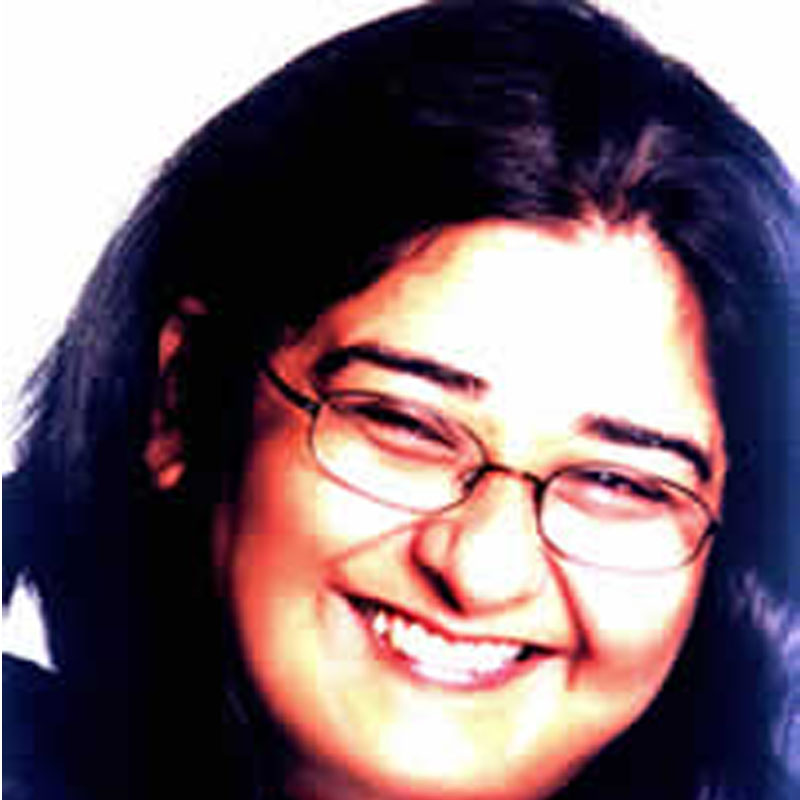
    She prides herself on being a “born rebel” and these lines from a song by Randy Newman best describe her life’s mantra. What’s more… she has lived by it ever since she heard it as a 20-year-old.

    From advertising to radio to Hindi general entertainment to terrestrial broadcast to the buzzing news business and now to branded entertainment… life seems to have come full circle for Raveena Raj Kohlli as far as her career is concerned.

    Her’s is an interesting story to tell – full of learning and surprises. “I think I have always been in an industry that was on a steep learning curve so while I learnt a lot; I also had a lot of surprises coming my way. These were different from learning because the industry that I was in, too was discovering itself most of the time,” Raveena reasons.

    She was in her 30s when she packed off with all her savings to NYU and studied feature films and broadcast news. “I am very passionate about learning things I don’t know. I have this endless thirst for knowing more. That’s why I went back to school,” she says.

    Whether it was HTA (now JWT), radio (in Singapore), Sony Entertainment Television India, Channel 9 or for that matter even Star News – each had a ‘WOW” factor to them when she joined. “When I was in advertising in the 1980s – advertising for television was just becoming a big thing and was getting more global. We were seeing global brands entering new markets and hence ad films that were made for America were being adapted to India. Then when I was working in radio in South East Asia, radio was just getting into an organised industry there. The late 80s and the early 90s were also the start of satellite television in this part of the world. When I came back to India in 1997, there was this boom of private channels, which I knew nothing about and that in itself came as a big surprise. I have always taken these leaps into the unknown. So my professional life has been very high on the learning curve,” she says.

    SONY SAGA

    Perhaps the most interesting thing about Raveena’s association with Sony as programming head is how the job fell into her lap. The lady was busy scuba diving in Lakshwadeep island along with ad man Prahlad Kakkar and his wife Mitali and happened to meet one of Sony’s directors on the same island. Sample what Prahlad said on meeting him, “If somebody up there loves you and if you are a very, very lucky person then here is this girl who will work for you.”

    “This is what Prahlad said to him while I was stumbling out of the ocean looking like a bumble bee in a black and yellow diving suit. I had not decided to move back to India. After that island incident, obviously the director got curious about me and I got a phone call saying, ‘We hear you’re lurking away with Mitali and Prahlad Kakkar somewhere on the Lakshwadeep island. We want you to come and meet us.’ When I got that call, I told them that I was somewhere in Rajasthan on a camel, then going to Bangalore and then to Singapore after which I have plans to move to Indonesia. That call was made by Kunal Dasgupta and at that point in time I didn’t even know who he was.”

    She came down to Bombay and met Dasgupta in the Sony office. “The first thing he told me as he looked up from his desk was when could I join them? I started laughing and said, ‘I don’t even know you,’ to which he said, ‘Nor do we know you,’ which is very typical of Kunal,” says Raveena.

    When she was queried by one of the American directors of Sony as to what kind of Hindi entertainment programming was going to work in India, she said she honestly had no idea. Imagine having got the job on that line! “They were happy that I was honest with them and asked me to work for them,” she says.

    That time Sony was number 56 on the charts. Despite having no experience whatsoever in the programming arena, Raveena had the gall to put a condition for accepting the job. “I accepted on the condition that only one person would carry the can on the programming decisions. If they let me be for six months, I will either sink without a trace and they could pack me and send me away or if I feel that I have it in me to do it… the sky is the limit.”

    When queried as to what made her take up a job that she knew nothing about, she says, “I have always done things that I don’t know anything about. I have been very lucky in the sense that people have taken huge risks with me. And I think I have always done the job that I have been hired to do. So it’s been full of learning, surprises and rewards.”

    9 TIMES

    This fighter has always been all smiles
    Then came Channel 9, which was a different ball game altogether. Raveena feels that much more is made of it than what was actually true. “The aim was to set up a broadcasting company, which would start off as a programming company and then move on to a channel in the terrestrial space. In the terrestrial space you have far bigger reach and far more scope for many things. For this you need to have an alliance and some sort of a financial arrangement with the one and only national broadcaster, which had professionals who had set up the company and worked for it. Our belief was that we were doing something really good and of high impact. None of us went into that with any agenda and none of us had any influence over anything,” she reflects.

    For her, the challenge at Channel 9 was whether they could set up a channel within a channel in three months. The aim was to set up a team that was the best in the business and to put all the programming on air. “My answer was, of course we can do it. Have I ever said no? So that was the challenge and that’s what we did,” says she.

    However the dream was short-lived with all the politics involved. The issue of licence came up and that’s where the dream ended. “People like me who joined the company, joined with the belief that this was going to happen for the long haul. Definitely, nobody joins the company for one year at that age. But soon we realised that there was trouble in paradise and it was again after the owners and promoters of the company to do whatever they had to do to make that licence work. But it was not meant to be. To put it in very succinct terms – I don’t know what actually happened. It may have just been an error of judgement on their part but on our part, we had a firm belief that we were going to do something and we did succeed to a certain extent,” she mulls.

    This experience is what matured her overnight. “It was a painful thing because it is harder to shut down a company than to start one. You realise the importance of human relationships because I still have a special relationship with everybody who I worked with in Channel 9. It was just nobody’s fault,” says Raveena.

    How was it being a woman CEO at that point in time? “I think it’s not just about being a woman, it’s about being a young woman. That may have been an issue in some people’s minds. I didn’t think that the Channel 9 dream was short lived because I was a woman and neither did it have anything to do with the government officials,” she supplies carefully.

    Being a young woman at the top sometimes attracts more attention than is necessary and that’s what Raveena faced at that point in time. “The problem of being a woman at an early age in a young industry, has its own consequences. You tend to make more enemies than friends and evoke more jealousies and raised eyebrows. I was always treated very well when I walked into an all male environment in the space of legislation and administration. I don’t see why a woman should have a problem because you are there as a representative of your company and it’s a job that has been assigned to you. You are not there for you. Yes, as I said earlier, you tend to attract more attention but that’s not from the people you are dealing with. It is from the people you are not dealing with,” she reasons.

    Known to be successful in whatever she has dabbled with, Raveena has “almost” never faced any insecurity from her bosses. “All the bosses that I have had have been very secure in their positions. I have had a very enjoyable and mutually respectful relationship with them, which has always been full of giggles and lots of work together minus the man-woman thing, politics and tension. A man who is your boss has to be very sure of himself to be able to deal with a woman who is capable. And a woman who is capable has to be very astute and mature and recognise who is the right boss. The only time there was any tension was in circumstances where I had a male senior who was insecure,” she provides without naming names.

    STAR WARS

    Once the Channel 9 story ended unsuccessfully, Raveena started her own production company – Sundial, which she envisioned as a multimedia company that would begin by being a production house. Hardly had she set up her company and team, than yet another challenge came her way and this was the mother of all challenges. This time it was huge. Rupert Murdoch wanted Raveena to take an English brand and convert it into a Hindi brand in 11 months.

    “It was a sheer challenge for me to take up the Star News job. The moment somebody says – She can’t do it. I HAVE to do it. The more people throw the brickbats, the more I was determined to make it happen. It did not bother me,” says Raveena, who faced a lot of negative remarks on taking up the assignment.

    When she joined, Star News did not have “a nut, a bolt, a person, a building, a network, a piece of footage, a camera… Nothing!” Her mandate was to create a news centre, bureaus, hire the team, train, orient, create programming and the backend and be on air within 11 months.

    And the rest as they say is history. She joined Star News on 15 April and on 31 March the next year, the channel was on air – one full day before the deadline!!

    “I am somebody who doesn’t regret anything. The reason I took Star News is because I realised that if I hadn’t taken it, I would have regretted it because it was a very difficult thing and it was going to evoke the maximum amount of bile, froth, hatred and jealousy. For me it was important to do something that was difficult to do and I did it to the best of my capability,” she says.

    Many people misunderstood her motives for taking this job. A lot of journalists reacted saying, “Who is this woman pretending to be a journalist?” But on Raveena’s part, there were no pretensions of being a journalist. “I am a writer and a multimedia person and I was brought in there because I am a set-upper and Murdoch brought me into Star because he knew I could deliver. And I delivered. It took one year after that for the operations to settle and I always knew I had to move on because I wanted to be an entrepreneur. I had made that decision in the year 2000,” she clarifies.

    Star India CEO Peter Mukerjea told her, “Raveena, you will have to grow the skin of a crocodile.” And she did.

    Post her taking up the assignment, it was reported in the media that she was the replacement for Prannoy Roy. “It was utter nonsense. My job was to hire a good editor and an editorial team, whether I hired the right one or not is not the issue. I accept jobs, projects and challenges,” she says.

    TIME TO DISCOVER HERSELF

    After she quit Star News, Raveena went into hibernation for a year or so. She took a long well-deserved vacation and did all the things that she had kept on the backburner. “I did up my house in Goa. I got back in touch with my family who I hadn’t seen in almost 10 years. I had a reunion with my friends who I hadn’t seen for almost 20 years. I had a family vacation for the first time in 20 years. I did things that were very important to me, which I had totally neglected,” she reflects.

    All through her break, she was very clear that she was going to start her own thing. “What I just did was nest, roost and consolidate my life and I needed to do that to go out and become an entrepreneur. I had to get my basics in order,” she says.

    However, when she was on her break, there were huge amounts of gossip, conjecture, pressure and questions and lots of job offers. She considered most of them and a whole lot of options were available to her. But she realised that her priority was to find out how valuably to spend her time and how much fun to have!

    Used to being somebody whose views are respected and not being seen as a pushover, she is one strong and intelligent lady. “I have never been the one for corporate politics. I am too outspoken and honest to be in that game. I am a team person, believe in my cause and stand up for what I believe in. That makes me a very strong willed person and I am very much used to being my own boss even when I’ve had bosses,” says she.

    HERE AND NOW

    Now is when she is using all her experience from the advertising to broadcast industry and applying the learning into her newest baby – Sundial Creative Media Pvt Ltd. The company has collaborated with Group M and is venturing into the arena of branded entertainment with a company called Show M.

    “Globally, it is the first professional approach to strategic programming for brands and it is the perfect crossover between my years in advertising and brand building and my years in programming and broadcasting. It is very exciting. This harmonious synch of two schools of thought and businesses is going to give birth to a fantastic new hybrid kind of media person, who can think both (programing and advertising) in a creative manner,” says an elated Raveena.

    Apart from television content, co-producing films is also on the agenda. “I am extremely collaborative by nature. This is something that one may not realise of a person who seems to be this strong willed woman. As soon as you get collaborative and you share your spoils, it multiplies more that even you can think. As soon as you get jealous, possessive, angry, political, conniving and vicious – that negative energy doesn’t work for very long. I actually enjoy working with people who are like minded,” she says.

    Not the one with a crab mentality, she has built strong relationships in which she has been willing to invest her time, on the basis of trust. Her honesty and her ability to say things without mincing her words has been the strongest point of her career.

    Dwelling on her life in the fast lane, one thing that Raveena regrets is missing out on her personal life. “In 20 years I think what suffered was my personal life. I am not prepared to let that suffer anymore. But it is still not about balance. It is about being with somebody in your personal relationships who is mature enough to appreciate the amount of time you have to give your work. Neither your work or home should be a compromise. There is no such thing as balance in a man’s, woman’s or professional’s life,” she reasons.

    So does this lady have any weaknesses? “My biggest weakness is that I don’t suffer fools gladly. I think I am a little too honest. I am not diplomatic and that can sometimes be a weakness. I am non-manipulative. I would have been far more successful if I had been a conniving political beast and would have achieved 10 times more than what I have today,” she laughs.

    Queried as to how the television and media industry has changed in the last two decades or so, she says, “I joined the media business in the mid-80s. When I took my first job at HTA, a nice Punjabi gentleman told my mother – ‘How can you let your daughter work in a field like advertising?’ Today, I have 22 – 25 year olds, new MBAs from Wharton and Harvard beating down my door willing to work for Rs 10,000 a month because they want to be in this business.”

    She feels the self respect, value, salience and positioning of the business had undergone a huge change in 20 years. Defining it as the most happening and relevant business today, she explains, “We are actually making more ‘Made in India’ products in our business than in any other industry. Be it the TV, movie or the internet business, these are not centers for outsourcing. Look at what has happened to the value of people who are in this business. The salary scales are incomparable. There is a shock value when you hear that the managing director of a confectionery company earns as much as a vice president does in any big media company.”

    Raveena thinks that the game in the content business has just begun. “Big players will now form strategies that will grow the business rather than restrict it. If you look at the way even contracts are structured in our business, they have never been fair to talent. In the sense, creators of content have never enjoyed the benefits of their creativity apart from a small fee that they get to produce something. The awareness is just beginning as far as the respect that they want in terms of shared rights, intellectual property recognition and credits. When that will grow, the business as a whole will grow and we will have better people coming in,” she says.

    According to her, the television industry used to be “a new and brash business and the time has come for it to become a more evolved, mature and forward thinking business that is collaborative, professional and non-corrupt. That is the only way the industry is going to grow and it will happen. Better laws, more informed people who make decisions, people who are aware of their rights, better associations, better copyright and IPR laws – when all this happens it will become more rewarding,” she says.

    She, for one, got into the business by mistake but youngsters today are consciously choosing this as their career and she hopes they will come in and create a better industry.

    (Please note that the order of appearance of women featured in this section is not a ranking or a countdown)

  • Fifa World Cup: ESS’ Goal That All Ride It

    It was around January that the team at ESPN Software India, led by managing director RC Venkateish, decided to evolve a game plan encompassing marketing, promotion and programming for the biggest spectacle in the world aka the soccer World Cup.

    Somewhere in the subconscious was also the fact that the Fifa event needed to be put up on a scale in India that would neutralise the lack of Indian cricket (considered the biggest sporting draw in the India sub-continent) on ESPN and Star Sports, which are managed in Asia by a joint venture company ESPN Star Sports.

    ESPN Software India MD RC Venkateish

    A successfully implemented soccer strategy would not only get in distribution gains, but would also partially offset (notional) revenue losses for lack of Indian cricket for which ESS has made a lunge twice without success till now.

    Considering ESPN’s parent Disney, according to international media reports, had forked out a whopping $100 million for the English-language rights to broadcast the World Cup across ABC and ESPN, it was worth giving their all, Team Venky probably must have thought.

    From here germinated the idea to have an integrated marketing, programming and promotional strategy for the Fifa show that culminated almost four months later into Duniya Goal Hai (loosely meaning the world would be watching soccer) — the punch line for ESS’ football campaign that is now being ramped up big time as D-Day for the opening event of the globe’s biggest sporting spectacle draws ever nearer. Of course, there were dollops of creative inputs from JWT, the agency for ESS in India.

    “Soccer is getting much bigger in India than it was in 2002, the last World Cup (that was shown on Ten Sports in India). Over 55 million people have watched the European League this season,” a bullish Venkateish says.

    After all, the matches of the Fifa World Cup, holding centre stage from 9 June to 9 July, have convenient timings with some starting at 6:30 pm IST just ahead of prime time viewing and when people would be trooping back from office.

    About 75 million Indians sampled the telecast of World Cup 2002 on Ten Sports and DD with a cumulative audience reach of 30.2 million in India. For the last World Cup, which marked the debut of Ten Sports in India, despite its limited spread in terms of distribution, the channel had ratings of over 50 per cent in places like Kolkata for the final.

    On the other hand, ESPN, which aired an India-Sri Lanka cricket ODI on the day the final match of 2002 WC was played, could muster ratings of just 14-15 per cent.

    The Euro 2004 continued the growth and had a cumulative audience reach of 32.3 million viewers in. This interest in soccer in India now touches even EPL that had a reach of 42.8 million for the season till date, according to ESPN.

    “This means that nearly one in every two individuals in cable homes across India has sampled the EPL,” Venkateish points out, adding that ESS hopes to further heighten this popularity through Fifa World Cup matches and other related programming.

    No wonder, concurring with Venkateish is ESPN India’s vice-president (sales and marketing) and distribution head Sricharan Iyengar, “For us the Fifa is the biggest event that any channel could have this year. It’s bigger than Indian cricket also.”

    What has made it challenging for ESS is that Indians don’t have any direct stake in the World Cup as India is still far far away from playing in the soccer fiesta. Any strategy for India would have to keep this in mind so as to make available the matches in such a manner that it involves Indians and entertains them too.

    Says ESPN India associate director marketing Paras Sharma, “As sports broadcast leaders, the challenge was to present the World Cup to Indians in a different way. The marketing strategy has been built up keeping that in mind.”


    Broad Tenets of the Indian Strategy

    At the base of the strategy is the aim “empowering the Indian audience to have a unique and customized interaction” with the property.


    This is being delivered thru the following:

    • Engagement: making the viewers play before the actual play begins.
    • Recognition: rewarding the viewers for their passion for the game.
    • Experiential: physically transporting them into the thick of the action
    • Entertainment: providing a peep into the fun side of Fifa.
     
    ESPN Software India associate director marketing Paras Sharma

    The marketing strategy, therefore, has been to focus at the larger sporting fan base and look at their motivations with respect to this sporting spectacle as this audience is looking for a lot more than just viewing pleasure. The two key drivers for building interaction: entertainment and engagement.

    Similarly, at a strategic level, the objective is to create ‘visible’ interest and traction for the event much before it kicks off, thereby extending the Football Fever to deliver on revenue and sponsor interests.

    “The challenge therefore was to position the World Cup in India not only as the ‘biggest international football event with no Indian stake’ but as the `biggest sporting spectacle’ that transcends boundaries so as to catch larger audiences and build sustainable traction for the property and the sport,” points out Sharma.

    Strategic Initiatives

    In the month of June and July the campaign will highlight how the entire world becomes eight inches in diameter (referring to television programmes and live telecasts). And that is summed up in the campaign punch line, which says Duniya Goal Hai.

    The idea is in Hinglish. Translated in English it means that ‘World is round’ wherein ‘goal’ in punned in Hindi to round and the soccer goal. This central thought would be taken forward in all marketing and communication activities.

    Phase 1: This is the Magnum Opus stage and kicked off in April. Here the aim is to create saliency for the forthcoming event two months prior by building upon the most scalable and media interesting hooks of the property. The campaign highlights the unique facets of the event and, in addition, seeding in similar key points in national and regional vernacular media. 

    Both ESPN and Star Sports have started airing programming related to the Fifa show, pushing the event besides putting out special World Cup stories.

    Phase II: The phase of the campaign revolves around creating interest around the history of the event. 

    This will be done by highlighting the unique constituents of the property itself in form of past and current players, milestones etc. 

    Phase III: This offers an Indian take through on-ground activities. The aim is to engage Indian audiences to play the WC.

    In this regard, ESS has started an initiative in association with a channel sponsor Coca-Cola called Gyraah Hindustani, which aims to take selected Indians to watch the WC in all its glory, spectacle and grandeur.

    The Adidas+ Challenge sees Indian school students competing against each other in football matches for the right to go to Germany. It is being rolled out across major cities.

    ESPN Software India marketing director Nirmal Dayani

    Explains ESPN marketing director Nirmal Dayani, “A one of its kind unique consumer involvement and activation exercise has been undertaken along with two of the leading the global sponsors of Fifa, Coca Cola and Adidas.”

    Phase IV: This, Sharma describes, as the In the Middle of Action stage. The aim is to increase new sampling and longer duration relationship with the current audience. 

    ESS will do consumer promotions related to matches, stars, and teams. According to Iyengar, once the World Cup starts, there will be contests in association with one of the channels’ sponsors, Airtel.

    ESS is also working on a tie-up for those who would be part of the flag bearing team for Fifa through a programme initiative called Learning Ground, which is being attempted to be integrated with Fifa-related initiatives to search for Indian kids who would be flag bearers during the event.


    The Programming Line-Up

    Any sports broadcast, be it cricket or hockey or football, depends heavily on analysis to hook in viewers. For this purpose, ESS has established an enriched studio panel of presenters for the football World Cup.

    These commentators will offer different perspectives on the goings on at the World Cup and leading up to the spectacle when it begins in June. Gerry Armstrong, former Irish international and now a soccer expert with ESS, Steve McMahon, former England and Liverpool player and an ESS presenter and Harsha Bhogle will handle the presentation.


    For those looking for a desi or local touch, the broadcaster will also have Indian soccer experts like Novy Kapadia, Noel Da Kima Leitao as guests every week during the event. 

    On the ground in Germany, the broadcaster will have two dedicated teams comprising Anand Narsimhan, Dave Roberts and Jason Dasey, who will capture the World Cup craze. Additionally, a special Indian ESS production team will travel across India to catch the enthusiasm.


    Of course, the specials have already been flagged off in a bid to build up viewer interest leading up to June. One such initiative last month was Fifa World Cup Stories. Six episodes of half an hour duration provided different angles to chapters of the event.

    The show featured stories on the most surprising and shocking results in the World Cups, Golden Boot winners of the previous editions, dramatic penalty shoot outs, young stars of the sport and rise to top of some of the underdogs. 

    Born To Play, airing Mondays to Fridays till early May, was a series on some of the best soccer stars the world has witnessed. The 13-episode series brought alive the magical moments from World Cup performances of Pele, Maradona, Baggio, Platini, Beckenbauer and others.

    Fifa Preview, a 16-spisode series running from 3-24 May is another programming initiative.

    Running Mondays to Fridays, this previews the 2006 Fifa World Cup Germany through exciting blend of originally shot footage from qualifiers and other innovative feature based content.

    The series will bring to life the football-ing passion and current form of all qualified nations. The series will profile stars, coaches and will also analyse each nation’s prospects against teams within their groups.

    Some other programming line-up include the six-episode Fifa Stories, Fifa Official Films (13 episodes till 19 May) that will ferret out films from the Fifa archive to research fascinating histories of the some of the most successful nations in World Cup football.

    Local feed: Another strategy that sports channels are following is having feed in Hindi for special events. ESS is no exception.

    To cater to the Hindi speaking markets, ESS will have a special Hindi feed. This will help ESS broad base the appeal of soccer for those who do not understand English and for those who might have difficulty following the accents of ESS’ foreign experts. 

    The sponsors on ESPN and Star Sports, including Fifa global associates, include Coca Cola India (presenting sponsor) Bharti ‘Airtel’ Cellular (joint presenting sponsor), Adidas India (associate sponsor), Mirc Electronics (associate sponsor) and IOC (associate sponsor).
     

    How Different Media Being Used

    ESS’ strategy hasn’t overlooked using other media to further its aim of Duniya Goal Hai in India.

    ESPN Software India VP sales & marketing Sricharan Iyengar

    As part of this game plan, cable operators and MSOs or trade affiliates are being made aware of the importance of the World Cup.

    Pointing out that exclusive events are opportunities to monetize them, Iyengar says, “The fundamental reason for doing initiatives with cable operators in various parts of the country is to create awareness in general about football and Fifa in particular. Football in terms of business and viewership is massive in states like West Bengal, Kerala and Goa.”


    Television: This will be the primary medium to reach the wide geographical spread of Indian audience. Spots will air on two leading national channels along with a large mix of regional channels. Innovative promotional activities with these channels are being looked at thus increasing the noise and exposure levels manifold.

    ESS is also negotiating with news channels to offer them footage from the event. Dayani admits that ESS has tied up for the Kolkata region with the newly-launched 24 Ghanta news channel for promotion of WC whereby the news channel will have access to news footage at no extra cost, but will help in ESS’ in branding activities.


    Radio: FM radio will be the target vehicle. It is learnt that Radio Mirchi will be the preferred partner for the Fifa event. 

    Print: To increase awareness and build on the tactical requirements, regional press has been roped in. Unique means like customised editorials have been started as a build up to the Cup so as to increase audience’s knowledge and interest in the event. 

    Cinema Halls: Sharma notes that cinema as a medium occupies a pride of place in urban India and is being used as a hype creation mechanism in addition to its value as a communication vehicle.

    Cinema halls across the metros in the country are being painted in Fifa WC colours a month prior to the event by highlighting the most entertaining aspects of the event

    Bollywood: Not leaving any stone unturned, ESS would be roping in Bollywood actors to promote the World Cup.


    The Likely Gains

    At the end of it all, it all boils down to economics and not charity. ESS, too, is looking at all round gains. But most of all in the distribution arena.


    A spectacle like World Cup might not have helped Ten Sports in 2002 the way it had been envisaged, but ESS seems to be better placed. The fact that out of the 64 matches, ESS will share with pubcaster Doordarshan only four events — the semis, final and the inaugural — gives the sports broadcaster an added advantage.


    With an eye on distribution gains, ESS feels that de-activated networks or those that had replaced ESPN and Star Sports with more in-demand channels in the area of their operations due to lack of adequate bandwidth would return within the ESS fold.

    “Fifa has given us a chance to get all the de-activated cable networks back on the roster. We expect 7-8 per cent of the networks which had de-activated ESS, will start showing the channels again now that the football fever is spreading,” Iyengar said, pointing out that trade activities with distribution affiliates are aimed towards this also.

    However, a bigger challenge post the World Cup would be to see how the Fifa show can be leveraged for other football properties that ESS has and whether the Fifa eyeballs could be converted into regular viewership for other programmes.

    “That’ll be a key challenge. The Fifa fever needs to rub off on events like PPL, Spanish League and other football properties and those we think would drive viewership and our subscription revenue,” Iyengar says.
    An optimistic Venkateish feels that the World Cup will “generate ratings, which are equivalent or higher than India international Test ratings.”

    And, if that actually happens, it would encourage ESS to weave strategies around non-cricketing properties in India in a big way.

    (Inputs from Anjan Mitra in New Delhi)

    Photo Credits: RC Venkateish, Nirmal Dayani, Paras Sharma by Sanjay Sharma/Indiapix Network; Duniya Gol Hai and Fifa logo courtesy ESPN


  • Dead men walking!

    The prologue to an agency review – an agency review is ideally an open minded exercise that is meant to evaluate the performance of the advertising agency over the past year, in as fair and unbiased manner, as is humanly possible. However, since this is about as achievable as having an advertising awards show without at least one self respecting agency deciding to boycott on ‘philosophical’ grounds, what it’s very announcement leads to is unmitigated stress, panic and confusion all round.

    “News of an impending review always fuels the need for warm brew.” The hushed oriental accent, the slight flutter of mach speed induced turbulence and Chai-La (the mystical Chinese canteen tea boy) had delivered the customary tea cup and opening barb to Ram Shankar. It was Monday morning and Ram had not yet got his bits and bytes together when Vikas (his boss) beckoned him, in a manner that meant business.

    “Mr Bose has told me this morning that we are going to have an agency review,” started Vikas, adjusting his tie in his reflection in Ram’s glasses.

    “Do you think the account is in danger?” asked Vikas in a hushed tone.

    “I wouldn’t know,” began Ram and was cut in mid sentence by PP (the creative director of the exaggerated mustache fame) bursting into Vikas’s chambers like Ronaldo in the penalty box.

    “Why are we having an agency review man? Are we going to lose the account?” boomed PP in his customary high decibel style, causing weak hearted account executives to instantly sign up for medical insurance policies.

    “Relax PP, its nothing new,” replied Vikas, in his most soothing tone, trying to function for once like the head on the business, but after he remembered that it was the first time that this was happening in five years, his morale fell faster than the credibility of ‘breaking news’ after the last pest control visit of the BMC had been aired live.

    “This hasn’t happened with us in a very long time,” echoed Planimus, the media head, in his routinely philosophically platonic tone, “I smell trouble brewing.”

    Almost on cue Dharti, the ravishingly radiant account planner walked in, “Hey the security guard told me that the account was up for review, what’s happening guys?”

    “Lets just meet in the conference room, we need to figure out a strategy,” suggested Vikas, and for once all the necessary evils were in agreement.

    The scene shifted to the conference room. Vikas, following his perfunctorily servicing impulse of staying on top of things, walked purposefully to the board, marker pen in hand straight from the ‘have whiteboard will scribble’ school of thought.

    “Let’s see what we have here,” furiously constructing geometric shapes, like he had a personal vendetta against parabolas (he didn’t draw any, just in case you assumed).
    He finished with three circles – client, agency and external forces and had somehow managed to link all three with arrows that looked like having directional issues.

    “What does all this mean?” asked an irritated PP. “Why must you complicate simple things? I bet that’s why the review is happening.”

    “If you had shown more interest in the account after finishing with the film, maybe we wouldn’t be here, client’s dislike creative who just do the glamorous jobs.”

    “It’s not my job to write calendars, I am never good with dates,” retorted PP.

    “Given the numerous angry women waiting in the reception for you daily, for once I would agree,” replied Vikas, relishing the opportunity to kick the old foe in the more delicate, unmentionable parts.

    Before PP could venture into his nuclear explosion, Dharti patted a firm hand on his shoulder, fortified with a smile that spoke waist downwards.

    “Must we be fighting like this? Let’s try and figure this out,” she purred, instantly sending goose pimples down Ram’s spine.

    However years of crunching and rounding figures had made Planimus oblivious to the wiles of women, and he still had some ax to grind.

    “Madam, you knocked us all out the last time we discussed strategy, I think the client is still nursing the bump on his head from your last interaction. In my time strategy used to be simple, over and done with in ten minutes.” He finished with a sardonic smile.

    “This isn’t your time Planimus,” cooed back Dharti, in an interesting tone that bordered between spite and contempt.

    “To lose the war, put four generals together in a room and ask them to arrive at a decision-Old Chinese army saying.” Chai-La popped in and out of Ram’s subconscious mind, leaving behind the sacred brew nestled in his fingers.

    Ram waited for the mayhem to subside before deciding to make his point. A valuable tip he had picked from Planimus, about advertising when clutter was low for more impact.

    “Could it just be that given the new personnel at the clients end, they want to look at everything in a fair and unbiased manner? You know like bringing a newer perspective to the table so that the communication that we create could actually get better and more focused? Are we making too much of our fear of losing the account?”

    All the participants in the room starred at Ram in rapt silence, like people would have when Moses was reciting the commandments. Then the conference room erupted with laughter.

    “Fair and unbiased,” choked Vikas, as he hung onto PP’s shoulder for support in a rare ‘Kodak moment of camaraderie’.

    “Should we be scared of losing the business?” stuttered Planimus as he kept banging the table in an almost tribal ritual.

    Dharti sat composed, dignified and silent through it all.

    Ram felt he had at least one supporter. All the others turned to look at her.

    “Bringing a new perspective so that we can create better communication,” she said and burst out into laughter, further fuelling the mirth factor in the room.

    Ten minutes later all attention was back to the whiteboard, though not strictly at the seismographic visuals Vikas had crafted earlier.

    “We need to figure this one out. You know how the boss panics when he hears these things, we will end up creating 42 campaigns for everything,” mulled Vikas.

    “Why 42?” Dharti queried innocently.

    “That’s because the boss is a Douglass Adam fan and you know the bit about 42 being the answer to life, the universe and everything. The chief applies it everywhere.”

    “Well I don’t mind writing a 42 slide presentation,” cooed Dharti.

    “What about the creative trying to churn out 42 campaigns, are we going mad?”

    “Well statistically 42 is an interesting number,” started Planimus and was instantly rebooted by the chilling glares that were shot in his direction.

    “Why don’t we just call Bose, maybe he will help us,” asked Dharti.

    “After the way I keep taking his case in meetings,” said PP, “I think he is having this because he wants to settle scores with me. I expect to be the target.”

    “Tchah!” interjected Vikas, “He hates it that I’m not involved on a day to day basis,” not wanting PP to steal the limelight even in such issues.

    “Why don’t we just call him?” implored Dharti

    “Who should?”
    Furtive glances were exchanged across the room.

    “He hates me.”

    “He is intimidated by me.”

    “I can’t stand the creep.”

    All eyes rested on Ram Shankar.

    “Call him chief,” chirped Vikas, relieved that the onus of this ‘stress call’ was off him. “Make it seem natural, start like you were just inquiring when it is.”

    All the others offered encouraging glances by way of support.

    Ram’s hand was trembling as he began dialing the number, somewhere deep down he felt that he was a bit too junior to be making that call, but Vikas’s quick fingers zipped across the number pad and the phone was buzzing at the other end before Ram could even think of formulating an escape plan.

    “Mr Bose, I was just calling to inquire when the review meeting would be?” he began in his most earnest voice, all eyes in the room transfixed on him.

    There was silence as Bose’s voice cackled its usual cacophonic tone for a bit. Ram put down the phone, his hand still shaking. “He says it was just a misunderstanding. The Chairman had told his assistant, ‘Get the agency to Hotel Sea-View to meet me.’ That fellow apparently has a hearing problem and so he spread the word about the agency review.”

    “I knew it!”

    “How can they dislike our work?”

    “Or our planning.”

    “Or strategy.”

    And before he knew it the other four had cleared the room and zipped off for a lavish lunch, the voucher of which Ram would have to clear later (with much explaining).

    “Tale of the review woe is useful to keep agency on toe,” the ancient Chinese rhyme (for better or verse), the express delivery of the tea cup and Chai-La had vanished into one of the circles on the whiteboard.

  • Sun TV to bank on pay revenues and radio biz for growth

    Since Kalanithi Maran started his media business 13 years back, he has been fighting against one rival: himself. Now, after years of staying almost unchallenged in the southern region, he is setting himself up for battle in newer markets.

    He has an expanded war chest of Rs 6.03 billion which he raised through an initial public offering (IPO) of Sun TV Ltd (STL) to pledge his new bet on private FM broadcasting. Also in the pipeline is a direct-to-home (DTH) service through Sun Direct TV, a privately held company.

    Holding 90 per cent stake in STL, Maran is worth Rs 78.28 billion. And the market cap of STL has hit Rs 86.98 billion in a brief span of two weeks, enjoying a 44 per cent premium over its IPO price. In media business, only Subhash Chandra‘s Zee Telefilms has a higher market cap with Rs 110.9 billion.

    Indiantelevision.com takes a close look at the ambitious plans Maran has to grow his media empire and the challenges that lie ahead of him as he heads a listed company.

    Concern for topline growth

    At question is Maran‘s ability to counter slow growth from his traditional revenue lines – advertising sales and broadcast fees. To squeeze more out of matured channels who enjoy a very high level of audience share can turn out to be a challenging task.

    Ad revenues have stayed flat for two years, sitting at Rs 1.55 billion in FY04 and Rs 1.56 billion in FY05. Broadcast fee (time slots that Sun sells to content producers on its channels) has also seen small change, going up from Rs 458 million to Rs 495 million during this period.

    Maran has attacked this somewhat in FY06. Advertising income was up 24.7 per cent to Rs 889 million in the first half of the fiscal, as against Rs 713 million a year ago. This was the period when Sun‘s combined audience share for all its Tamil channels (Sun TV, Sun News, KTV and Sun Music) went up from 60 per cent in FY05 to 70 per cent in the first half of FY06. In Kerala, the company‘s aggregate audience from its Malayalam channels (Surya TV and Kiran TV) rose from 29 per cent to 34 per cent during this period.

    The growth could escalate for the year-period (Sun has not yet announced its FY06 results), fuelled by a rate increase for Sun TV channel by seven per cent in September 2005. This is the first rate hike the channel has come up with in the last three years.

    Analysts also expect Surya TV to put up a better show in FY06, estimating its revenues to touch Rs 450 million. The Malayalam channel, facing stiff competition from Asianet, was raking in close to Rs 300 million. Other channels like KTV have also the potential to stimulate marginal growth.

    But several content producers and marketing agents associated with Sun network feel the potential to exploit more ad revenues from existing channels is limited. “With such a dominating viewership, Sun has been commercially exploiting its slots to the optimum. There is very little scope to raise ad or auction slot rates. This is particularly true of Sun TV, the Tamil flagship channel. And in case of Surya TV, the main Malayalam channel, Maran has to take into consideration the presence of Asianet as a strong competitor,” they say on request of anonymity.

    For speeding the growth engine, Maran has a multi-pronged strategy. In the short run, he expects pay-TV revenues to climb significantly once he takes flagship channels Sun TV and Surya TV pay. And in the medium-term period, the radio operations should be able to generate substantial cash flows to drive the company‘s topline growth. Also adding to the kitty will be the three yet-to-be launched channels and rise in international revenues with new alliances in overseas markets.

    “A master tactician, Maran has protected himself adequately from any slowdown in growth. Topline growth can see faster growth if Sun gets into movie production as well. Pay revenues will also fatten Sun‘s profitability,” an analyst in a leading equity firm says.

    A drag on the company‘s profitability, Maran has hived off his cable distribution business ahead of the IPO. Kal Cable, which operates under the SCV brand, was separated from 1 April 2005. In FY2005, SCV‘s revenues stood at Rs 156 million while costs were at Rs 301 million. The FY06 results will, thus, exclude the financial performance of Kal Cable.

    A result of this: net profit has surged to Rs 614 million in the first half of FY06, up from Rs 322 million a year ago. Rich profits have always been the strength of STL. On a turnover of Rs 2.9 billion for FY05, net profit stood at Rs 778 million. In fact, net profit as a percentage of total income has averaged 27.6 per cent over the past five financial years.

    “STL, the dominant broadcaster in the South Indian languages of Tamil and Malayalam, enjoys a phenomenal net profit. With a slot auction model for the main channels, programming expenses are in any case low,” says an analyst at a brokering firm.

    So how do the revenues pile up? Several estimates by analysts are available, ranging from Rs 7.5 billion to Rs 8.4 billion by FY08. Conservative estimates put it at a little over Rs 6 billion. Net income is also estimated to jump to over Rs three billion in FY08.

    A lot of these projections, however, will depend on how much growth takes place from pay-TV revenues and on the success of Maran‘s FM radio expansion.

    Sun to ramp up pay revenues

    Keeping flagship channels Sun TV and Surya TV free-to-air, STL has clocked pay-TV revenues well below its potential. In FY05, it stood at Rs 398 million, up from Rs 325 million a year ago.

    Maran wants to change all this by turning Sun TV and Surya TV into pay channels. Currently, it has three pay channels – KTV, Sun News and Sun Music. But in Chennai which is a conditional access system (CAS) market where consumers can view pay channels through a set-top box (STB), all these pay channels are free-to-air.

    Sun is yet to ramp up its pay-TV revenues. Analysts estimate revenues from pay-TV to go up progressively from Rs 500 million in FY06 to Rs 1.1 billion in FY07 and Rs 1.7 billion in FY08. This calculation is based on Sun TV going pay in the middle of this year and Surya TV converting from the free-to-air mode later in the year.

    “There is going to be a definite and substantial upside for Sun TV Ltd‘s pay revenues. Sun can scale up its pay-TV revenues by converting flagship and new niche channels to pay mode. The number of cable households, paying subscribers and pay channel rates are also expected to go up,” an analyst says.

    Sun TV, which is expected to be priced at Rs 15-20, is expected to ramp up STL‘s current 2.8 million paying subscriber base. Taking Surya TV pay, however, will be a difficult task if Asianet decides to stay free-to-air.

    STL‘s pay revenues will also come from its content contracts with direct-to-home (DTH) operators. Revenue from DTH consumers is estimated at Rs 260 million, putting the company‘s subscription revenues in the neighbourhood of Rs two billion by FY08 at the optimum level.


    Radio to tune in growth

    FM radio will be Maran‘s first media vehicle to have a national footprint, taking him outside the southern language market. He will operate 46 stations across the country through Sun TV Ltd‘s two subsidiaries, Kal Radio and South Asia FM.

    The investment required: over Rs 3.3 billion. Kal and South Asia FM will, in fact, require an approximate of Rs 1.83 billion towards acquisition of broadcasting equipement (FM transmitters, FM antennas, payment of common infrastructure), setting up of local offices and radio studios.

    But Maran realises this is where his big leap in revenues for Sun TV Ltd will come from. Though profitable, the revenues from the four operating stations are small. In Tirunelveli, for instance, Sun earned revenues of Rs 28 million in FY05 and Rs 13 million in the first half of FY06. And in Coimbatore, the income stood at Rs 56 million and Rs 32 million during this period.

    Some analysts, however, expect radio operations to contribute to 20 per cent of Sun‘s total revenues by FY08, compared to around five per cent in FY05. Sun‘s radio revenues are expected to leapfrog from Rs 147 million in FY05 to Rs 1.97 billion in FY08. In the southern language markets, Sun has the advantage of dominating ownership of movie rights which it can leverage for its radio business. But it remains to be seen how successful he can be in new markets outside the southern region.

    The structure that Maran has outlined for FM radio looks somewhat like this: Kal Radio (where Sun TV owns 89 per cent) will operate in the southern language states, while South Asia FM (Sun has 94.91 per cent equity) will take up stations beyond the Southern markets.

    Maran has not bid in Delhi, Mumbai and Kolkata, leading to speculation in the market that he may have some understanding with Astro (Sun has a JV with Astro for launching language channels). These are the cities where Red FM, which was acquired by a consortium of NDTV, Value Labs and Astro from Living Media Group‘s Radio Today, operates. But no official confirmation is available on this and it may be a matter of pure coincidence.

    Maran‘s plan is to consolidate the radio assets. The existing licenses of the four operational radio stations are, thus, being transferred to Kal Radio. While Suryan FM has licenses and operates in Chennai, Coimbatore and Tirunelveli. Udaya TV Pvt Ltd. runs Vishaka FM in Visakhapatnam.

    Analysts say Sun‘s design to operate the FM radio business through subsidiaries is to separate radio from other segment revenues for licence fee computation (4 per cent of gross revenues). Besides, Sun will have the flexibility to rope in a joint venture partner.

    Sun‘s ownership of rights of a vast number of films in various South Indian languages will provide it with a unique advantage to grow its radio revenues and earnings strongly over the next few years.

    Flexing muscles for cable distribution in South India

    Maran may be the king of content but he realises the importance of having distribution in his winning mix. Which is why he wanted to acquire Indian Cable Net (formerly RPG Netcom), the largest multi-system operator (MSO) in Kolkata, ahead of launching Bengali channel Surjo.

    Maran was so confident of the deal sailing through that in an earlier interview with Indiantelevision.com he admitted he was “on the verge of closing it.” But, as events rolled out, Subhash Chandra beat him to it and Siticable snapped up Indian Cable Net. Surjo‘s launch was shelved and the media king of the south is yet to gat a foothold into the northern market.

    No major investments have been made into the cable business for over a year. Maran did try to expand GCV‘s presence in Hyderabad but without much success. He even explored talks with Siticable to work together in that market but nothing conclusive came up. Sources say Siticable, which doesn‘t have signals from Star and Sony, is finalising plans on how to revive its network independently as it has lost market share in the city to Hathway Cable & Datacom. Maran will, thus, have to come out with a different formula even as he nurses ambitions to spread GCV‘s tentacles across Andhra Pradesh.

    In Tamil Nadu, the story is entirely different. SCV dominates cable TV operations, so much so that chief minister Jayalalitha introduced legislation in the state assembly that would allow the state to acquire and take over bigger cable TV networks in Tamil Nadu, including MSOs and optical transport systems. Though controversial, a lot of how things shape up will depend on who wins the assembly elections.

    Control of the distribution chain has put Maran in a unique position in Chennai, a conditional access system (CAS) market. The low offtake of set-top boxes (STBs) has meant that CAS has more or less been killed in this market. Sun has indirectly benefited by the virtual blackout of all the English-language channels like Star World, Star Movies and HBO. Hindi channels, in any case, did not have much of viewing in this southern-language market.

    “All the other channels have lost their business models here. Sun with its strong language content channels have become more powerful in this market,” the head of a large broadcasting company says.

    In a corporate restructuring, Sun has terminated its cable TV distribution agreement with Kal Cable from 1 April 2005. The reason: cable was losing money. “Unlike MSOs operating in the Hindi belt, SCV will have very less carriage fee. For digital to get a push, Sun TV has to go pay in the Chennai market,” says an analyst.

    Gearing up for DTH

    It is a slice of the business many players are keen to lay their hands on. In India, it doesn‘t matter if you run cable TV or IPTV operations. DTH promises to bring about addressability and better quality of service in a distribution chain that has been dominated by an unorganised cable TV industry.

    Maran hopes to kickstart DTH operations this year even as Insat 4C launches in July. Having booked space on the satellite, he is negotiating with the Indian Space Research Organisation (Isro) for eight Ku-band transponders. Initially, he had asked for five transponders on the satellite which could later be ramped up to nine.

    Sun Direct will join the race after Tata Sky launches its service. Already in existence are Dish TV and Doordarshan‘s DD Direct Plus, which offers subscribers free-to-air (FTA) channels. Soon to follow will be Anil Ambani‘s Blue Magic service, which has also booked space for its own DTH plans.

    So how will Maran stand out in this crowded market? He may come out with a specific south language package, keeping the pricing low. Along with this basic bundle, he can add sports and the other language channels to consumers who want more. Tata Sky and Dish TV as national players will find it difficult to compete in a target-specific market. Even if they match the pricing, they may not be in a position to offer all the south channels due to lack of transponder space.

    For broadening the menu to South Indian audiences, Maran will have to create more niche channels. Also necessary is to have Sun TV and Surya TV as pay channels by then. For those subscribers he fails to tap in DTH, he will try to retain through his cable network. But whatever DTH plans he has, no information is coming out from the company.

    Finding favour in the stock market

    Some analysts feel STL is an expensive buy with the stock price quoting at around Rs 1260 per share. But there are several indicators one should consider before taking a final view.

    a) There is a scarcity premium on the stock. With Maran offloading just 10 per cent stake, there is a chase among buyers.

    b) Sun enjoys a clear leadership position and there is no credible competitor emerging to challenge this status. Asianet is a strong contender but only in the Malayalam market. Maran is adequately protected with his breadth of channels. He has also developed extensive programming assets and holds rights for 2,650 movies (60 per cent are Tamils and 40 per cent Malayalam). He is in an ideal position to exploit content across all platforms including DTH.

    c) There is a growth trajectory in radio and pay-TV business. The success in these two areas is crucial to STL‘s future earnings and valuations.

    d) Profitability is the most attractive element in Maran‘s business and this is likely to continue

    e) Launch of kids and documentary channels will further add to STL‘s topline growth. Maran is in talks with Hungama TV for partnership in the kids space. While he will take care of the distribution infrastructure, the programming and other support for the southern version of the channel with initial focus in Tamil language will be handled by Hungama TV.

    f) Maran can also create a slew of channels for DTH which will allow him to increase bandwidth.

    g) These fresh investments run the risk of facing failure in the marketplace. But investors are currently betting on Sun more for its strategic than growth value.

    h) Maran has the flexibility to do a private placement and get in a strategic investor. The Foreign Investment Promotion Board (FIPB), in fact, has formally cleared STL‘s application for issue of preferential allotment of shares to foreign investors. No allotment has been made so far.

    i) Sun can also expand internationally through a $25 million joint venture agreement with Malaysia‘s Astro All Asia Network. The JV plans to collaborate in content creation for filmed and other entertainment products in Indian languages including Tamil, Telugu, Kannada, Malayalam, Hindi and Bengali for distribution to international markets.

    j) The market expects Maran to merge Gemini and Udaya at some stage with STL. But these are speculations and could prove to be wrong. Incidentally, Maran consolidated his ownership position by buying out entire stakes of Sharad Kumar and Dayalu Ammal (wife of DMK president M Karunanidhi). In Gemini and Udaya, he still has minor partners.

    k) When actor-cum-politician Sarath Kumar quit DMK to join AIADMK, speculation was rife that wife Radhika would walk her production house Radaan Mediaworks out of Sun TV. Since Radaan is the leading producer for Sun network with popular shows like Chithi and currently Chelvi, this would have an impact on STL. Nothing has happened so far and Radaan has not started making shows for Jaya TV. If it does, then it can‘t make content for Sun as Maran has a policy that disllows production houses from making shows for rival broadcasters. Will that be a severe blow for Sun? Analysts feel broadcast platforms have far higher long term strengths than production houses, particularly when competing channels are so far behind.

    Sun’s IPO may set the trend in the South

    Sun‘s IPO may have a ripple effect in the southern region, inspiring several broadcasting companies to tap the market.

    A strong case in point could be Asianet, though it has not expressed its intent to get listed so far. But Hyderabad-based Maa TV, which has been struggling to raise funds, is considering taking this route. Even Raj TV is closely observing the market trend.

    “We realise we have to add up channels so that we grow to some size. For our expansion, we require funds. We have been trying to raise private equity but have failed. We may plan for an IPO,” says a senior company executive.

    South-based listed companies like Radaan, Telephoto Entertainment and Pentamedia have actually spoilt the market with their poor financial performance after the IPO. A healthy company like Sun can open up the capital market for other players to step in.

    The problem is that companies of the size of Maa TV may not attract investor confidence unless they work out better business models. And those like Raj TV may not want to change the way they run their closely held business.

    But a transition in culture may well be on the way. Media organisations will have to keep pace with the changing times if they have to grow and flourish.

  • Television producer Vinta Nanda

    Television producer Vinta Nanda

    The fact that Vinta Nanda is a brilliantly creative writer, producer, director is undeniable. Every story that she has attempted explores fresh creative techniques, transcending boundaries. Vinta takes up new challenges and enjoys open-mind crossover experimentation in new genres and has always managed to find a committed audience for her work.

    Born in Jammu and raised in Amritsar, Jallandhar, Kota, Ajmer, Indore and Chandigarh as her father’s transferable job in the LIC took the family to different places, Vinta’s tryst with writing began very early as she used reams and reams of paper on writing long letters to the friends who would so often be left behind when they moved to a new place.

    Vinta is third in line amongst four siblings. Her holidays were spent with her paternal and maternal grandparents in Kashmir and Mumbai respectively. Academics failed to interest her except for political science in college. But, reading literary works, poetry, fiction, drama, essays, sketches, and writing have always appealed to her. Bachelor in Arts from Chandigarh, Vinta’s disinterest in pursuing further studies was a source of worry for her parents, but her two older sisters who were in Mumbai assured their father that his dreams for Vinta to be an achiever would be fulfilled.

    Just talking to her is an education, a little prodding brings forth a well-told vignette of what happened to her at different stages in her life. Vinta’s first job as an account’s executive was with Frank Simoes Advertising, which did not last more than six months. She aspired to be a journalist, but failed the interview for the Times of India journalists training programme as well as the Sophia College entrance test.

    Through a family friend’s recommendation, she got a job as a production assistant with Shobha Doctor, who was then producing Idhar Udhar and Titliyan. That’s where she met Nadira Babbar, who was the director of Titliyan, and was inspired by her amazing passion for theatre, writing and music. She quit her job and joined Babbar’s theatre company Ekjute, and tasted blood. Vinta says, “I became obsessed with art, music, dance, literature and the sheer magic of the acceptance of the audience.”

    But, following her passion did not help pay bills and with her sisters insisting she get a job to survive, she got lucky to land a job of an assistant director with Shekhar Kapur and Raman Kumar. She began getting regular work from Raman’s contemporaries and FTII batch mates. From 1983 to 1988 she worked as an assistant director and associate writer for the various TV serials and feature films like Rahee, Parbat Ke Us Paar, Tera Nam Mera Naam, Shabnam and Kasam Teri Kasam.


    She says, “I earned enough to pay my bills and do theatre until my father, who was the world to me, passed away suddenly and a sense of fear of the unknown gripped me and for some strange reason made me responsible. I floated my production company Tracinema in 1989 with Raman and began to produce, direct or write documentaries, ad films, short films, corporate films, telefilms and TV serials.”

    Tracinema produced Umeed, Shatranj, V3plus, Raahat, Agnichakra, Raahein, Sansaar, Hero Uncle, 10 Civil Lines, Deewar, Sheila, Kasbah, Aur Phir Ek Din and many other one offs for TV.

    Commenting on her work profile and achievements, Vinta says, “The fun times came with satellite television when I got the opportunity to co-produce and write the long running series Tara and its success till date illuminates and blesses our lives. The serial drove a new era and penetrated cable and satellite demographics because of which I got to do some of the best shows in the most progressive times of television in India.”

    Her talents are combined with a demeanour and commitment that lifts the bar, personally and professionally, for everyone she has come in contact with, and that is a lot of people. Vinta’s portrayal of characters in her serials and films strike a chord with the viewers for being realistic and true to life. In an age where unreal family drama serials have managed to woo viewers, it is remarkable that her characters are a breath of fresh air and years later they have a high recall value among audiences.

    In the 90’s Vinta ruled with Tara and by 1997 she had eight programmes on different TV channels when suddenly in just three days, all her programmes were pulled off air due to a change in management. A company of roughly 300 employees was reduced to nothing. Vinta recalls an incident that involved then Zee programming head Chandraprakash Dwivedi who told her, “Women like you are not allowed to enter my office or deserve an appointment.” She says that after being so successful, in one stroke she went on to being a nobody.

    But talent gets its due recognition. Mahesh Bhatt got her to write for Kabhi Kabhi on Plus Channel. And, there was no looking back after that. Then came Rahen, Agnichakra, Aur Phir Ek Din and Sansar. “In 2004, I produced, wrote and directed my first feature film in English, White Noise, starring Rahul Bose and Koel Purie,” says Vinta on her projects. In a profession dominated by male writers, Vinta has made a mark from scratch. She has not left any genre untouched having tested drama, documentary drama, comedy, talk shows, interviews and feature films.

    If that was not enough, on being asked if she would explore any other mediums after this, Vinta says, “I am promoting artistic excellence now. I am planning and creating infrastructures to support all performing and non performing arts of entertainment and doing my best to create a culture in my organization that nurtures talent. I want to help my employees to feel free from all external struggles so that they are free to deliver their best. Teaching is probably the only medium I haven’t explored and I intend pursuing it after a few years.”

    Vinta’s unflinching enthusiasm is infectious as she speaks on trivial personal queries…
    Stress buster: An afternoon spent with my niece and nephew, Devki and Shiv
    Formula for success: Work diligently and give your absolute to each moment
    Best trait: I keep smiling, all the time
    Dream gizmo: My new laptop
    Favourite holiday spot: Goa
    Worst nightmare: A bad DVD print of a good film
    Two guests you would love to dine with: Amitabh Bachchan and Rabbi
    What makes her laugh: ‘The Great Indian Laughter Challenge’ and Javed Jaffrey

    When asked if she fights male dominance in this industry and is it a challenge being a woman, Vinta says, “It is a challenge to survive this industry. Gender does not matter to me and therefore male dominance does not bother me. I do not fight male dominance, I do my job and do not get fazed about it being a man’s world while I work. If anybody forces me to see a different viewpoint, then I make sure he/she sees it my way too.”

    Funding is perhaps the biggest obstacle for women filmmakers. Vinta says, “I do see big budget opportunities reaching out mostly to men but that could be, perhaps, because there are a larger number of men in our industry than women, especially in decision making areas.”

    Adding, “A friend did point out to me, at the recently concluded Ficci convention that there were hardly any women up on the dais. Now that is a challenge for women to face collectively. We must get there and be there in equal numbers,”

    On how the television industry is going to shape up in these times of more viewer choices and greater audience fragmentation, Vinta sounds positive that this is the best time for the television industry. She adds, “Viewer choices and fragmentation of audiences have been driven by technology. Content creators have all the opportunity in the world to explore new ideas. Finally that time has come when everything that once worked will not necessarily work the next time too. So, experimenting with genres will peak and every creative mind will find space.”

    She is a resolute advocate of not succumbing to big bucks by writing inane rubbish. One can see why she enjoys her work and believes it to be her true calling, “There will be no monopolies and television will not remain television alone because content will flow like gushing waters of rivers through all available mediums. The more there is, will be less. I strongly believe that this era hails true democracy and freedom of speech. Whoever has something to say will not only have a platform, but also an audience.”

    If one assumes that her work is her only priority, then read on to see the current issues on top of her agenda. “The gap between the haves and the have nots, poverty, illiteracy and human rights is disturbing. The incorrect portrayal of life and values and the lopsided and illogical definition of our morality.”

    Another issue that ticks her off is hypocrisy and double standards of Indians and feudal behaviour of the rich that translate themselves into the caste system amongst the poor. “The lack of faith in systems and governance, politics slanting to religion and what worries me the most these days is the blurred lines between advertising and reporting,” says Vinta.

    Her work reflects her thoughts. The Distant Thunder, Yeh Sadak Ke Bacche and Vaastav are some of the documentaries made by Vinta covering issues ranging from maternal and child health, women in development, Aids, rural development to the political and legal aspects of human rights issues. These were shown at many international forums and has received critical acclaim and appreciation for highlighting topical socially relevant issues.

    Vinta’s latest documentary Gender Bender discusses the achievements of women who have made their mark in traditionally male-dominated professions. It was launched last month in Delhi by finance minister P Chidambaram.

    Among her weaknesses she lists being lazy and often overstaying her vacations, apart from hibernating for months, losing touch with the world and starting afresh when she returns. She regrets not being able to spend much time with her family and expects all of them to leave everything aside for her when she needs them. She adds that insomnia, her friends, Goa and her dog Charlie would also count as her weaknesses.

    In the same breath she says that most of her weaknesses are also her strengths. Being a workaholic and craze for all arts and forms of entertainment, plus her knowledge of India, and the itch to travel are her positive strengths. “My mother who started working at the age of 50 and still works at the age of 70, travelling by bus from the suburbs to town three times a week, my daughter Ritchelle, my sisters and my brother,” are the people in her life who keep her going.

    Yet it is not only her achievements that make her so special. She remains just as committed to many philanthropic activities. She founded an NGO called Project Smita Society in 1989, which made films for Unicef, Voluntary Health Association of India and other organizations. It was started with the objective to harness popular media so that its outreach could be the perfect vehicle for social change. “This Trust is my life. I am its working president and am in the process of broadening its base so as to be able to include all the talent that desires to contribute towards a better future.”

    Among the many people who have helped her find a footing in life are Mahesh Bhatt, Raman, Anil Bahuguna, Gaurav Saxena and Moses. Vinta has just finished scripting Kali, a story of a child widow, and will produce/direct it next year. Meanwhile, she is currently working on a feature film Magic that is inspired from the life of Mahesh Bhatt.

    Vinta’s honesty exudes confidence which reveals her down to earth nature. The pride with which she talks of job is unmistakable. She is without pretension or false modesty. And, touching base with her roots in everything she does is important to her. The story of her current show Millie on Star Plus is an example of how she translates simplicity in vision and thought to success.

  • Dish not about to let DTH first mover headstart go Sky way

    At Zee‘s office in Noida Film City, on the outskirts of Delhi, which also houses the news, DTH and sports operations with a state-of-the-art playout facility, the atmosphere these days is electric. Meetings are being held all over the place with senior management discussing restructuring, business strategies and increments in hushed tones.

    DTH business head and a younger brother of Essel Group chairman Subhash Chandra, Jawahar Goel, despite the surface cool is unable to contain the excitement even as he rushes back for an appointment with Indiantelevision.com from a management meeting.

    “These are exciting times,” he says, settling down in his plush wood-paneled office. Even as he quickly checks his e-mails on the wi-max enabled laptop, he shoots back with confidence, “In spite of Star and Sony channels‘ absence on Dish TV, we are selling 3,000 connections per day these days. This augurs well for us, though the regulatory environment could have been better.”

    Concurring with Goel is another senior executive of Essel Group, which is the parent of Zee and sister concern ASC Enterprise that holds the licence for DTH service in India.

    “We do expect competition in the middle of (calendar year) 2006, but I feel there‘s space for all players in the immediate future as DTH stands to take away some market share from cable,” says Rajiv Garg, chief executive, finance and corporate strategy, Essel.

    It is this confidence that a business could be built up even against odds and with looming competition that pumps up the adrenalin of the crack team at Dish TV, the brand name under which the DTH service is marketed.

    According to Hong Kong-based media research firm Media Partners Asia (MPA), India is set to emerge as Asia‘s leading revenue generating pay-TV market by 2015 with multichannel video industry (cable, DTH and IPTV) turnover growing from $3.6 billion in 2005 to $7.2 billion by 2010 and $10.5 billion by 2015.

    However, projections on DTH vary and depend a lot on progress (or the lack of it) made on the regulatory front (Dish‘s Goel bookmarks this as an important aspect).

    For example, MPA feels the Indian DTH market is likely to grow to Rs 45 billion ($ 1 billion) by 2015 on a base of slightly over 11 million subscribers and 7.8 million customers by end 2010.

    Contrast this against what others say. According to Sanjeev Prasad, head of equity research at Kotak Securities, the DTH market could grow to only 4 million “pay” homes or $300 million by FYE March 2010, while KPMG projects 8.6 million subscribers by 2010.

    But what most agree on is that digital television, driven more by DTH in India, has the potential of changing the electronic media landscape. In such a scenario, Dish TV, the country‘s first private sector DTH platform, stands to have a beginner‘s advantage. That‘s what most people feel.

    THE DISH STORY SO FAR
    Dish TV was launched in October 2003 by Essel Group after the Subhash Chandra-promoted ASC Enterprise Ltd, the licence holder, got all necessary permissions.

    Since DTH allows users to access a variety of digital television channels directly from the satellite without a local cable service provider, the initial thrust of Dish was in rural areas and those places, like the hilly regions of Himachal Pradesh and interiors of the desert state Rajasthan, where cable TV was a rarity and the terrestrial transmission of pubcaster Doordarshan was fuzzy.

    Thus, providing a superior viewing experience to subscribers who had not viewed anything of the sort, Dish TV built up its subscriber base; albeit slowly. The focus now has broadened to encompass urban areas where the spending power is high.

    Over a period of time, the penetration of Dish TV has increased significantly in the country. It has close to 1 million subscribers presently and is adding approximately 100, 000 subscribers every single month, says Goel. “I am quite happy with the (monthly) rate of growth. Such a ramp has been witnessed only in few top DTH platforms in the world,” he points out.

    With existing features like decent quality boxes, which support features like electronic programme guide, parental lock system and multiple audio feed (at the moment FM radio) Dish TV boasts of a capacity of carrying up to 400 channels and also giving the gaming freaks an opportunity to play video games.

    However, at the moment, technical constraints and uncertainty on the regulation front has compelled Dish to keep the offering to modest levels at conservative prices. Goel admits that channel capacity cannot be expanded at the moment, partly because of lack of transponder space and partly because selecting niche content for a DTH platform from the global market is not easy.

    “If we want to turn into a premium service, we should also have premium content. But clarity on that can only come from the sector regulator (that frowns down upon exclusive content on a delivery platform presently),” he adds.

    THE CHALLENGE AHEAD
    But from this point onward the task of Dish TV becomes that much more difficult as Tata Sky, a 80:20 joint venture between the Tatas and Rupert Murdoch, gears up to unleash its DTH service in the second half of 2006, signaling stiff competition.

    Though Tata Sky, in true Tata style of functioning, is keeping things close to its chest, reports filtering out do indicate that the service would focus on niche content, quality of service and aggressive marketing — some of which might be innovative like supplying one master DTH connections to high-rise residential complexes that can be then split up as per the local need.

    Tata Sky also hasn‘t given up the proposal of heavily subsidizing the set-top box, which will help the service gain entry into households quickly.

    Competition certainly there would be, though Dish TV CEO Sunil Khanna puts up a brave front by saying, “Competition? What competition?

    On a more pragmatic note, he goes on to point out that a change is taking place in the C&S dynamics in India where slowly analog is giving way to digital mode of delivery and transmission that will be primarily driven by DTH and to a lesser extent by broadband and IPTV.

    “If DTH is to play such a big role (in the change), all players have to grow as it‘ll help create market awareness about such a service. Tata Sky or other players‘ entry would only help Dish TV‘s growth,” Khanna surmises.

    There‘s certain logic behind such utterances. The entry of another DTH player is also likely to coerce sector regulator Telecom Regulatory Authority of India (Trai) to revisit an earlier mandate on making available all content to all platforms.

    This mandate has been openly flouted by some broadcasters who have delayed making available their channels to Dish TV on the pretext that continued commercial negotiations
    are yet to be concluded. This also means that Dish TV‘s subscribers are unable to get all the content available on cable services at present.

    “Trai‘s initiatives have been challenged in the court, while the government has its own reasons to be non-committal on issues like CAS and must provide. It is my belief that for the broadcasting industry to grow exponentially over the next five years, more government and self -regulation is needed,” Goel says.

    Consumer acquisition and investment on programming and packaging is another aspect that Dish TV needs to address as it‘s going to play a vital role in the Indian scenario.

    “The next 12-18 months and beyond will see a land grab in the distribution area, initially kick started by DTH and the launch of Tata Sky. So clearly Dish TV will require more investment in the future, particularly as STB subsidies and programming acquisition costs scale up,” says MPA executive director Vivek Couto.

    And, Goel partly agrees that customer acquisition and box subsidisation would take a toll on any DTH player as unlike in the DTH‘s developing stages in countries like the US and the UK, exclusive content is unlikely to be THE driving force of such a service in India.

    A unique market in every sense, in India it has to be combination of quality of service, good packaging of available and niche content, clever pricing of this content and pushing it into customers‘ homes by absorbing part of the cost of the box or the total hardware needed for a DTH service.

    The proverbial beginner‘s advantage may play its role up to an extent in Dish TV‘s growth. Take, for example, the cost of the box itself. While the imported boxes from Korean vendors is costing Dish TV on an average $ 38 (the average price might come down as the demand increases), industry sources say a box is likely to cost Tata Sky between $ 60-$ 65.

    “There‘s always a price advantage to the first mover. We had acquired the customer in the beginning when we paid lower satellite space rates. Though we did not experience negative cost of acquisition, things have changed now. Even Insat is unable to provide enough space to all the DTH probables now,” Goel points out.

    A Dish TV set-up box is now available in the market at an entry price of Rs 2,990 for 75 channels for three months, which also includes the monthly subscription fee for the period. The scheme was started in April.

    After this the customer has the option of paying Rs 107 per month for around 75 channels. The prices go up to Rs 300 per month for more than 100 channels, including the radio services. The company had priced its services initially in such a way as to leave some room for manoeuvring later.

    It‘s tactics like these that have kept the competition on the edge, compelling it also to review its options. Says MPA‘s Couto, “Dish‘s pricing structure has made Tata Sky revise its own plans. I‘m sure Dish will scale it (the price war) up further and then Tata Sky may respond.”

    Aware that what the likes of MPA are saying that intelligent packaging of content has some merit, Dish TV has devised various tiers also like Dish Welcome (introductory offer), Dish Bioscope (specially categorized movie channels like Zee Action and Zee Classic) and Dish Goal (for fans of European football).

    So, Dish Plus package, for example, comes packed with a wide selection of national and international channels at Rs 125 per month and offers channels like Zee Studio, HBO, TCM, MCM, Reality TV. Dish Bioscope, featuring Zee Premier, Zee Action, Zee Classic and Pakistani film channel Filmazia, costs Rs. 55 per month. News is packaged in Dish News with Zee Business, Euro News, Euro Sports News, NDTV 24×7, CNBC TV18, Awaaz and CNN Headlines News. The cost: Rs 60 per month.

    Dish Pick is an a-la-carte package that allows subscribers to pick and choose extra regional channels. Two channels come for Rs 30 per month, five channels for Rs 50 per month and all regional channels come for Rs 100 per month. (All the prices listed here are exclusive of taxes.) Channels included in this package include Zee TV, Sahara One Zee Punjabi, ETV- Rajastan, ETV – UP, ETV – Bihar, Geo TV, Zee Telugu, Jaya TV, Jeevan TV, Akash Bangla, Zee Bangla, Zee Gujarati and Marathi, India TV and NDTV India.

    NEW DISH INITIAIVES
    Knowing fully well that it has to continue reinvent itself, not only prices of Dish TV service has been dropped, but the retail networks too are being strengthened, apart from pushing digital video recorders (DVR) as a value added service.

    Dish, which presently has about 6,000 dealers around the country, is beefing up its network with an additional 3,000 dealers of HCL, the computer hardware company that is also a distributor of Nokia handsets in India.

    As per a yet-to-be-announced pact with HCL 3,000-odd HCL dealers would be responsible for selling, installing and servicing Dish TV hardware at customer end.

    “We expect that such non-exclusive deals will help us reach out to more customers and service them better,” Goel says, hinting that in the near future other such pacts may be concluded.

    Apart from this, the company is also in the process of launching anew its DVR service with focus on Delhi and Pune. Selling at Rs 16,000, a DVR will allow a subscriber to download up to 200 movies, apart from other Dish programming, to be watched at leisure.

    “We want to focus on some select cities like Delhi with the DVR offering before making it nationally available. This is a new concept and we want to do some sampling with subscribers,” Dish CEO Khanna says.

    Towards the end of June, Dish will launch its gaming and middleware facility that will allow DTH subscribers to play not only with games, but also while watching traditional television.

    With the help of technology partner Open TV, Dish plans to introduce middleware tech wherein a viewer can access background information about a cricketer, for example, who‘s playing in a match telecast on TV at that moment. (pix-Courtesy DishTV)

    However, one of the most exciting things explored by Dish TV is the introduction of pay-per-view concept in India in the real sense where subscribers of pay television have the option of watching a programme for a particular period of time after making payment for the same.

    Hoping that the Discovery-Sony Entertainment joint venture One Alliance will come on board soon, Dish is exploring whether exclusive Discovery programming (like excavation of Titanic or a famed Egyptian tomb) can be made available to Dish subscribers on selective payment basis.

    “Pay per view is a concept that‘s yet to mature in India. For that content is most important. But we are examining whether we can try out this concept with Discovery once it joins the Dish platform,” Goel informs with excitement written all over his place.

    It‘s quite apparent that Dish TV is far from being complacent. And, the announcement that at a later stage the whole DTH operation, restructured as part of an over all Zee Telefilms rejig, might be listed on the stock exchange has given the company an impetus to ramp up its activities.

    While Khanna is effusive that in the coming months Dish TV will become “more aggressive” on all fronts, MPA‘s Couto feels the restructuring has come at the right moment. “…a spin off could well be the ideal way to induct strategic and/or private equity financing in DTH.” After all, investments have to be made if the Dish operations are to be ramped up.

    (Rs 45 = 1US$)

  • B.A.G Films chairperson & MD Anurradha Prasad

    B.A.G Films chairperson & MD Anurradha Prasad

    She took a break from being a journalist to start her own production house – B.A.G Films – in 1993 along with her Member of Parliament husband Rajeev Shukla. Pumping in a modest (in today’s world) Rs 40,000 from her own savings to start the company in a two bedroom apartment in Malvia Nagar in South Delhi, B.A.G Films chairperson and managing director Anurradha Prasad has no doubt carved a niche for herself today.

    A post graduate in Political Science, Anurradha started her career in the electronic media as assistant producer at PTI TV for Money Matters. She then joined the Observer channel in 1990 as senior producer and eventually rose through the ranks to head the channel two years later. “At that point in time, I felt that I wanted to do more than what I was doing. Also it was getting a bit uncomfortable for me because of internal politics. I felt the need to take a break. At the same time, three of my colleagues at Observer also quit with me, so I felt responsible to start something of my own. That’s how B.A.G Films came into being,” Anurradha says.

    But now, it’s not just TV for B.A.G. The company also has its own media school – iSOMES (International School of Media and Entertainment Studies) – which it started in collaboration with Missouri School of Journalism, USA and offers a number of under graduate and post graduate programmes. Apart from this, the company has also entered into film production, FM radio (it recently bagged 10 FM licenses) and is also into providing content for mobile phones.

    Her firm belief that content is king has led her to venture beyond television and work successfully with other media platforms, including films, broadband and video and IVR-based mobile content. Today B.A.G Films is the mobile-content supplier to Star, Airtel, Hutch and Reliance India Mobile.

    Today Anurradha dreams of her company to become a content services brand that is a force to reckon with internationally. “When I started my company, I was able to come into media and do a lot of things that others couldn’t think of doing. At that point in time people did not understand what television was. It was a great learning experience for me as well as a big challenge,” says she.

    Anurradha’s contribution to Indian television has earned her several honours, awards and accolades over the years. She is a member of CII and FICCI Entertainment Committee. She is on the board of Uttaranchal Film Development Council, and is executive member of Film Producers Guild of India. She also has several papers on media industry to her credit.

    While now the lady is mostly behind the scenes on the television front, she has in her early days anchored her first TV show Fact Sheet. In 1994, Ru-Ba-Ru, which was anchored by her hubby Rajeev, was launched on Zee TV and immediately rose to the peak of ratings, thus earning B.A.G Films its first super hit show.

    In her early days in the media, she realised that this was a completely new world, which was dominated by men. “However, I learnt to use that to my benefit. The television camera was an object of awe in those days and it became my biggest tool,” Anurradha confides.

    When queried on her views on the television industry today, she says, “I have 100 per cent appreciation for the people in the industry. The fact that people have learnt the ropes so fast is commendable. The fact is that the medium and the people in it are young. The energy levels are high even if the experience is lacking. Also, the fact of the matter remains that whether the government supports the industry or not, it still is and will be the fastest growing industry.”

    One of the issues that is currently on her agenda is to make the government realise that the television industry is a part of the knowledge economy and hence all the support that the IT sector is getting, should be given to the television industry as well.


    She is also of the opinion that the government should be providing tax holidays in the FM sector. “We as licensees have already coughed up almost Rs 10+ billion as licenses fees to the government. It doesn’t make sense for us to pay more to them. At the end of the day, FM will also provide employment to a whole lot of people. The policy makers and the government have always treated the media and entertainment industry as a ‘naach – gaana’ company. It’s high time they start taking us seriously. Also another issue is that the industry does not have a body like NASSCOM, which will push our issues to the forefront.”

    An avid reader, her 9 – 10 hours working day starts with almost 12 – 13 newspapers, which keeps her abreast with all the happenings in the country. Due to her husband’s involvement in politics and cricket, Anurradha leads a very hectic social life rubbing shoulders with the likes of Shahrukh Khan, Priyanka Gandhi and Sonia Gandhi to name a few. She just returned from Abu Dhabi a fortnight ago, where she went to catch the cricket action live with her husband.


    When asked to list out what her strengths and beliefs are, she says, “I think my strength is that I listen to a lot of things but at the same time that can be termed as a weakness too. I don’t like wasting my energies in something that don’t fall into my scheme of things. I am very focused. Also, I also don’t believe in yapping too much about what we’re doing. I like to keep a low profile.”

    An ardent fan of music, Anurradha used to be a voracious reader but now thanks to her hectic work life, reading has somewhat taken a back seat. Also a believer of Osho, she thinks that she is different from the rest in the way she thinks in her personal and professional life.

    Not a person to run after anything and everything in order to be successful, Anurradha believes in the philosophy that “whatever is due to you, you will get.”

  • Assembly polls: Regional channels in overdrive

    Elections are a matter of life and death for politicians and political organisations. Another section of society that approach elections with equal earnestness is the media.

    With five states – Assam, West Bengal, Kerala, Tamil Nadu and Pondicherry – engaged in assembly elections in April – May, the regional television market has entered an exciting phase.
    While Assam has already completed the formalities, West Bengal had the first and second phases of polling on 17 April and 22 April. Three more phases are remaining – 27 April, 3 May and 8 May. Tamil Nadu and Pondicherry have it scheduled for a single date, on 8 May. In Kerala it is three phases: 22 April, 29 April and 3 May.

    Thus we have three important regional television markets of West Bengal, Tamil Nadu and Kerala, which command 50 per cent of the total language television revenues, trying to make the most of this opportunity for market expansion. Understandably, all these three ‘news hungry‘ markets have been witnessing a lot of churn recently, be it with channel launches or expansion of existing operations.

    Tamil Nadu is one market that has been attracting attention for all the wrong reasons. Kalanithi Maran-headed Sun TV is enjoying a superior position in the market and we are not again talking about that viewership dominance. The channel is in an envious position of having no competition at all in the news space; or to put it better, no competitor at all. While Sun TV and its news channel sibling Sun News are making the maximum out of the elections, rivals Jaya TV, Raj TV and Star Vijay don‘t have the necessary permission to telecast news and live programmes.

    Ever since its inception in 1999, Jaya TV has been fighting for a teleport licence, which would enable it to beam live news. This year, as the elections approached, the channel had intensified its efforts with the purpose of launching a separate news channel and the matter had even reached the Madras High Court. But, as per the indications, Jaya‘s plans of launching the news channel to capitalise on the election may not just get materialised. The channel is now concentrating on the election coverage by telecasting delayed news bulletins and current affairs programmes.

    “At this crucial time, we can‘t afford to indulge in court battles. We don‘t want our attention to get diverted. We are making our best efforts possible covering the elections,” states Jaya TV VP News Sunil KP.

    As already reported by indiantelevision.com, Raj TV‘s coverage of the elections is also restricted to delayed news bulletins and other non-live programmes. Star Vijay, meanwhile, sounds very pleased with what is has been doing as a general entertainment channel. “We are presently concentrating on bringing quality entertainment programmes to our viewers. Our audiences turn to us for entertainment and we are doing what we are supposed to do in the best possible manner,” quips a Star Vijay executive.

    Looking west to Kerala, God‘s own country deserves a mention more for broken promises. Keralaites were promised two more news channels ahead of the elections: MM News from print giant Malayala Manorama‘s TV arm MM TV and Jai Hind TV from the state‘s Congress party. While MM News is now targeting a May-June launch for the channel, Jai Hind will be unveiled only by mid-May. However, MM News has already started its dry run partially.

    “It is for sure that the channel launch will happen only after the elections. We want to enter the market fully prepared and we didn‘t want to launch the channel just for the sake of covering the elections. We have now started sending our team of reporters to cover election-related events, but it is not a full-fledged dry run yet,” says MM TV news director Johny Lukose.

    However, unlike Tamil Nadu, Kerala is not short of news channels. The state already has three news channels in Asianet News, People TV and Indiavision. For the youngest of the three Malayalam Communications‘ People TV, the launch timing couldn‘t have got any better. The channel was launched in 2005, ahead of the state local body elections and now in 2006 follows the assembly elections.

    To the up to West Bengal, both local as well as national players are showing equal aggresive intent in this market. Star India made its debut in Bangla last year by launching its news channel Star Ananda, in association with print major Ananda Bazar Patrika (ABP). Again in 2005, Rathikant Basu-promoted Broadcast Worldwide withdrew its GEC Tara Bangla from the market to launch news and music channels, Tara Newz and Tara Muzik. Both launches were timed to coincide with the local body elections.

    Now, in April this year, Zee Telefilms found the time ripe to launch its Bangla news channel Chobbees Ghanta in association with Akash Bangla. Kolkata-based Xenitis Group of Companies also entered the market this year with its news channel Kolkata TV, keeping in mind the elections coming up. The latter has reportedly spent Rs 100 million on the pre-launch outdoor publicity campaign.

    PROGRAMMING STRATEGIES

    As soon as the government declared the polling dates, channels across these three markets had unveiled their special initiatives. The general strategy has been, covering the election in three phases: pre-elections, elections and post-elections.

    In the West Bengal market, where the results are reportedly a foregone conclusion, issue-based programmes have stolen the limelight. “Here, there is no suspense attached to the election results. Hence, the effort has been to do more issue-based programmes. Apart from that, Tara Newz has been doing in-depth constituency analyses, live discussions and debates,” says the channel head Amit Chakraborty.

    Star Ananda has branded its election coverage special as Lalbarir Lorai. “The series empowers the viewer with a ringside view of all the twists, turns, sub-plots and issues on hand with continuous updates, news, views, live on-ground debates, travelogues, interviews with the big names, scorecard of performances, opinion polls, exit polls,” claims an official communiqué from the channel.

    Speaking on the channel‘s election coverage strategy, one Star News executive offers,” Star Ananda‘s election programmes are meant to empower the viewer to make informed choices. As a news channel, we give primary importance to this responsibility.”

    According to Zee News director Laxmi Goel, the new kid on the block Chobbees Ghanta will try to lure viewers by offering unbiased coverage and fast delivery of news. Market leader ETV, meanwhile, has increased the duration of its hourly five minutes news updates to ten minutes. However, there are not many special programmes from the channel. “Being a GEC, we are addressing a larger audience. We will put efforts to cover what matters most, the results,” says ETV chief producer Manvi.

    Speaking about the programming strategy being followed by Malayalam channels, the sub-genres followed are more or less the same as those of Bangla channels.

    According to Malayalam Communications MD and editor John Brittas, the competition has helped the channels to raise the bar in election coverage. “Malayalam Channels are more matured now. The election-related programmes have turned more in-depth and issue-based. The reports are now more objective and the quality has really gone up. Technology upgradation has also improved the quality of delivery. With so many channels out there, channels have been making their best efforts possible,” says Brittas.

    “We are trying our best bring in the quality and effectiveness of reputed national news channels to the regional language. We don‘t want to be here as just another Malayalam channel. Our aim is to deliver Keralites a channel that holds the national standards and we have been making the best use of elections to do that,” says Amrita TV director & CEO Sudhakar Jayaram.

    Asianet managing editor KP Mohanan takes pride in coming out with a series of exclusive interviews when it mattered the most. “We have been doing a lot of exclusive stuff these days. We did a half an hour live interview with the prime minister Manmohan Singh recently and that was the first of its kind in Malayalam television,” says Mohannan.

    INVESTMENTS

    Election is also an occasion that television channels choose to make fresh investments in infrastructure and human resources. According to Zee‘s Goel, the company has earmarked Rs 90 million for the first three months operations of Chobbees Ghanta.

    “Since the channel was launched just ahead of the elections, we have gone for the best of the broadcast technology and infrastructure. And of course, this is a long term investment,” says Goel.

    Tara Newz has made investments to the tune of Rs 10 million to provide best services during the elections. The company recently installed the graphics set up offered by the Beehive Systems for about Rs 2.8 million. However, Chakraborty feels that the investments have been made with long term goals in mind. “We have upgraded our systems keeping in mind the upcoming Bangladesh elections also. Tara Newz is popular in Bangladesh also, and we will be covering the elections extensively,” he says.

    According to Jayaram, Amrita TV has invested about Rs 7.5 million on its election-related initiatives. “The channel was given a facelift recently, as we completed one year of operations. We are now preparing software that will help the anchor to analyse each constituency to the minute details during the results. We are also associating with top election analysts of the country,” says Jayaram.

    Malayalam Communications is spending about Rs 4 million on its election programmes. “This is something like a mega Onam (the most popular regional festival) and we are trying our best to make the most out of it. We have made fresh investments in technology and graphics,” states Brittas.

    Meanwhile, Asianet News, the news channel from Asianet Communications, is gearing up for a major face lift. “We have spent quite a sizable amount on infrastructure. Investments have been made in various segments including graphics and server based production systems. On 11 May, when the assembly elections results will be announced, Asianet News will come out with various noticeable changes. The channel will be given a new look and feel, says Mohannan.

    Rival Indiavision has used the opportunity to acquire new equipments. “We have been renting our equipments but now we have bought our own. We have also increased our live connectivity to 10 districts this time round. Originally we had only one OB van in Delhi, and now we have one for Kerala as well,” says Indiavision executive editor M V Nikesh Kumar.

    However, for Surya TV Thiruvananthapuram bureau chief Anil Nambiar, the trick of the trade lies in using the limited resources and space to its utmost value. “Surya‘s news content duration is limited as we bank on sponsored programmes and other fiction initiatives. Hence, we are a team of 30 reporters, trying our best to come with quality coverage,” says Nambiar.

    Post results, as politicians get busy deciding their future actions and doing the performance analyses, these television channel executives will also be spending a considerable time in the board rooms, analysing their performance.

    After all, for regional channels, there is no business like the news business.

  • Starcom Worldwide North India & Pakistan MD Anita Nayyar

    Starcom Worldwide North India & Pakistan MD Anita Nayyar

    From a media executive at Interpublicity Pvt Ltd in 1983 to the managing director North India and Pakistan of Starcom Worldwide, Anita Nayyar has come a long way in her career spanning 23 years.

    Based in Delhi, Anita has also had stints with organizations like Sista’s (now Saatchi & Saatchi), Frank Simoes Advertising (now F S Advertising), O&M (now Ogilvy/Group M), Initiative Media, MediaCom and Optimum Media Solutions.

    With an academic background in medicine, she plunged into the media business in 1983 and since then there has been no looking back. “It is always interesting to take on new challenges. I have in effect done that in all of 22 years of my media career. Moving earlier in life from a medical background in academics to advertising and marketing was a huge challenge in itself and I think I’ve taken it on rather well,” says the serene lady.

    If one were to list out the brands that she has handled in her career, it would surely take up most part of this page. From durables, automobiles, engine oils, mobile phones, cosmetics, fast food to digestives, baby food, beverages, credit cards and political parties, there is not one sector that has been untouched by her.

    Anita played a small but significant role on the changing the government at the center by focused targeting both at the consumer and regions/constituency level for the “Aam Aadmi” campaign for the Congress Party. That it is the Congress’ ‘Aam Aadmi’ the Centre and not the BJP’s ‘India Shining’ (managed by Grey Worldwide) says it all. “The aim was to maximize the media impact of each rupee for Congress campaign in May 2004 and we succeeded in giving the “India Shining Campaign” of the then ruling BJP a run for its money, and that too with one fourth of its spends,” says she.

    She has also been responsible for setting up the outdoor (now Landscapes) and electronic cell – at Ogilvy & Mather Delhi during her 5 year stint with the agency in the early nineties. Known for striking the best deals in the market place and also as an ROI (return on investment) sensitive professional, Anita was also at the helm of structuring and systemizing media services at Initiative Media, MediaCom, Mudra and Starcom.

    Under her leadership the Starcom Worldwide Delhi operations have grown by 147 per cent in year one and 50 per cent in year two.

    So what’s on her agenda now? “Working for Starcom it’s but obvious that the agency agenda will be top priority. Growth is a given however, at Starcom, our holistic approach to media is key. The people internally have also been trained accordingly to look at clients issues and find the best possible solution to it rather than taking a mainstream media approach and push TV/print plans down their throats,” Anita says.

    Challenges is what makes this lady tick and one of the things on her priority list was to develop the Pakistan market for Starcom, where the agency’s launch is slated shortly. “Right now, we are in the final stages for setting up the Starcom brand in Karachi, Pakistan. The exercise entailed sourcing, interacting and negotiating with various media services agencies in Pakistan,” she offers.

    For the clients she has worked for in various sectors, Anita is known for introducing the advantages of the concept of media consolidation to GPI, Maruti, LG, Sony and Yamaha.

    Anita is of the opinion that the television industry, which is growing at a slow pace now unlike the boom years, will pick up “because of its attributes being the medium it is.”

    “While media consolidation is key to our business and the clients are the chief beneficiaries, it’s also important to ensure brand accountability. Like in case of full service clients, it is important for both media and creative to be brand custodians so that there is accountability on a brand and everything is being done in the interest of the brand/marketer,” says she.

    This straight forward, no-nonsense woman firmly believes in working on her weaknesses to convert them into strengths. Her family is her biggest support today. Her two daughters and an extremely loving, supportive and understanding husband are what keeps her going in this overtly competitive industry.

    And if you thought that it was just media planning and buying that she was involved in, think again. Anita is a guest faculty at various management institutes like MICA, Amity School of Communication, College of Media and Communication at Rai Foundation and also the Delhi School of Communication.

    On being queried as to which of her qualities helped her being in the position she is today, she says, “I have always put in my best efforts and have had a very focused approach. From being in implementation when I started in 1983 and when media planning was just about seeing the light, to have learned and moved on from there, I think one has come a long way. I could have just been restricted to implementation but have taken up all the challenges in life and given it my best.”


  • LMOs And The CAS Conundrum

    LMOs And The CAS Conundrum

    Nothing can get more complex than this. It is not only the pay-TV broadcasters and the government who are wanting to take time out for implementation of conditional access system (CAS). Opposition is coming from within the value chain of the cable TV industry itself with the distributors and the last mile operators (LMOs) expressing concern over CAS.

    “CAS is not good for consumers, distributors and last mile operators. It will lead to too much of confusion in the market. Besides, broadcasters are not providing a la carte rates,” says Cable Operators and Distributors Association (Coda) vice president Ravi Singh.

    Clearly, the mood among the cable operators is not to rush with CAS. They would rather wait to see if direct-to-home (DTH) picks up once Tata Sky launches its service later in the year. Their fear of CAS is grounded in the fact that they will lose control of their subscribers to the multi-system operators (MSOs). And in the transparent system of digital cable, they will have to open up the unreported subscribers to the MSOs.

    Cable operators’ fear of CAS is grounded in the fact that they will lose control of their subscribers to the multi-system operators
    _____****_____

    To counter this “two-way defeat,” the distributors and last mile operators are willing to vote CAS out. So how do they plan to compete with DTH? By dropping prices of analogue cable while throwing the offer open for digital service without CAS.

    Quite a miserable situation to be in if you are a MSO as you will be hurt both ways. In the scenario of a price drop, the MSOs will have to absorb the slippage. And in case of digital cable without CAS, they will have to invest while facing the uphill task of luring subscribers away from analogue. Particularly in a market that has grown a spoilt breed of over 52 million (NRS says its 61 million) cable TV consumers who are used to a large menu of channels on a comparatively low monthly subscription fee.

    The LMOs, in fact, have an open-ended strategy. If DTH starts pocketing cable TV subscribers, the gameplan is up for change. They will bend and cooperate with the MSOs, becoming a part of an organised distribution system with margins well-defined and structured.

    Yes, broadcasters have been dilly-dallying on CAS. But MSOs have not made it any easier for them with such statements as “the true value of pay channels has come to the surface in Chennai where consumers have thrown them out.”
    _____****_____

    But wait. Having enjoyed the spoils of a long grown unorganised industry, the distributors and LMOs do not want to let go so soon. Coda, an association of cable operators and distributors in Mumbai, is even talking of setting up a digital headend in a CAS regime. This is nothing new. In 2003, when the CAS topic was hot, Coda made similar rumblings that threatened but sounded empty. But this time, there is a significant change. There are around 50 distributors in Mumbai and they have invested in fibre. What this means is that they are connected by fibre with each other, except in small patches where work is going on, and have the infrastructure to put up a digital network.

    “We will jointly invest in a headend and run it as partners,” says Coda president Ganesh Naidu.

    Talk is easier than action. Investments on setting up a digital infrastructure is not all; a sizeable chunk of money needs to be set aside for subsidising set-top boxes (STBs). Then there is the issue of professionalising customer care services like a call centre and technical team for maintenance. Besides, negotiations with broadcasters can be a tedious process. And who can forget management issues between as wide a body as the distributors and the LMOs?

    Behind the garb of an entrepreneurial spirit may lie the hidden agenda of bargaining for a “pound of flesh.” The distributors, who feel insecure of their role in a CAS system, want to ensure that their place is protected as a bridge between the MSOs and the LMOs. They, along with the MSOs, have been asking for more, as share in terms of commission from conversions into digital consumers.

    The MSOs can take the blame for not ironing out differences with their distributors and LMOs. Even as the time frame for implementation of CAS is set for delay, there is no effort to fix the margins. The argument on offer: such margins can be settled only after the broadcasters come out with their proposals.

    Yes, broadcasters have been dilly-dallying on CAS. But MSOs have not made it any easier for them with such statements as “the true value of pay channels has come to the surface in Chennai where consumers have thrown them out.” Perhaps, MSOs went overboard thinking that this would win them support from the consumers and, hence, the government as it would imply cheaper cable subscription fees. The sad fate of CAS is that consumers didn’t quite agree with this.