Category: Special Report

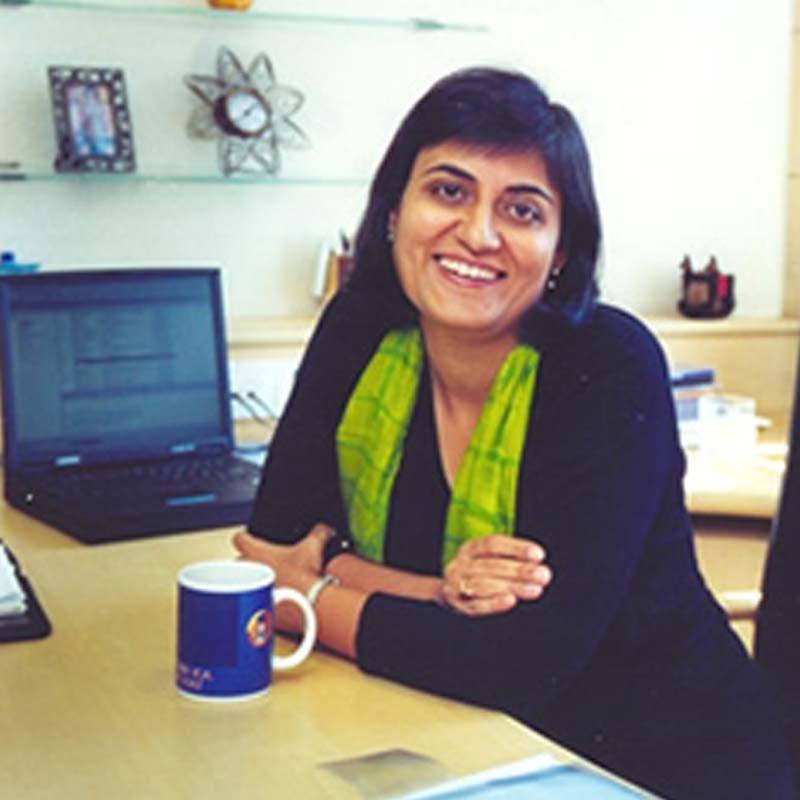
  • Radio City CEO Apurva Purohit

    Radio City CEO Apurva Purohit

    There aren’t many women CEOs in media, and the one’s who are in that position are put under the microscope. Every decision is scrutinized. And, even among those women who break the glass ceiling, few survive in the highest echelons; Apurva Purohit is one among them.

    Purohit’s 17 years in the advertising, television and currently the radio industries have proven to be the perfect combination for shaping the creative vision of the organizations that she has been associated with. She has developed an enviable reputation in her field and is widely respected by peers and seniors alike.

    She brings a solid blend of modern advertising agency experience and traditional marketing and branding expertise to the Radio City management team. She is a quintessential example of a radio city listener. Furthermore, her advertising agency experience has given her a clear understanding of media buying, placement and production.

    She is also known to have a broad skill set with expertise in human resources administration, employee development, sales and marketing support, event planning and is passionate about current events in all related mediums.

    Born in Chandigarh, Purohit spent her childhood in Ahmedabad and Mumbai, as her father was in a transferable government job. Completing her schooling in Mumbai, she went on to graduate in BSc, Physics (Hons) from Stella Maris College, Chennai in 1987 and then completed her post graduate diploma in management from IIM Bangalore in 1989.

    “Growing up I did not have any definite plans, just went by my parents’ guidance. Unlike the current generation, we were naïve and went with flow,” says Purohit.

    ADVERTISING

    Apurva with Andre Nair and Ashish Bhasin

    People known to her have been instrumental in getting her where she is. Her peers describe her as engaged, knowledgeable, and someone who holds high expectations of everyone she interacts with. Purohit is a person who “expects a lot but gives so much”. She is a believer in exploring other mediums as “to define oneself within a box is to stagnate”.

    “I had not planned out anything. I fell in love with advertising during my two months IIM summer training at HTA. I saw an opportunity to work with multiple brands rather than work with one or two brands. I enjoyed the culture at HTA and became determined to get into advertising. Back then in 1989, it was not a sought after career especially after doing management. It was a low paying kind of job, I remember I pulled down the average of my batch with the salary I accepted,” says Purohit on how she became a part of media.

    “I joined Rediffusion Advertising as a management trainee (client servicing) in 1989 after my training at HTA. The person I worked with in HTA had moved to Rediffusion and offered me a chance to join it. That is how it all started.”
    Those were the heydays at Rediffusion, with the agency getting all the best creative awards. It had big accounts like Colgate, Gold Spot, Eveready, among others.

    “Then, Shashi Sinha asked me to join media buying at FCB Ulka Advertising in 1991. My son was born soon after and I was looking for more normal working hours. Ulka is a very HR focused type of agency and gave me the option of flexi timing. There was no separate media department, so the job was interesting because I was entering a new phase in the servicing role. With the flexi timing I enjoyed at work, it was a welcome shift to media,” says Purohit.

    Sharing a laugh with Shashi Sinha and others
    Sharing a laugh with Shashi Sinha and others

    Buying media time is a skill, or perhaps even an art, that requires experience. To do it right — which means to get the most TV spots, running at the right times, for the least amount of money is a tough job. It’s tedious, involves a great deal of organization, research and planning.and requires someone with the skills of negotiation, persuasion, and patience. Purohit fitted the bill.

    Starting as accounts manager at Lodestar in 1992, Purohit became its media planner in 1993. She has an uncanny ability to communicate strategic visions and convert them into the building blocks of successful corporations.

    She is credited with bringing into the county the concept of media buying as a separate business and started the first media buying house in the country when FCB Ulka launched Lodestar as a separate media house in 1995. Purohit steered Lodestar over the next few years culminating in its winning the Advertising Club media awards Emvies in 2001. Today, Lodestar is counted as one of the top 5 media houses in the country.

    Post the advent of Lodestar, many advertising agencies started media buying and operations as separate business enterprises and these units today form an integral part of every large communications agency.

    As yet another pioneering effort, she launched the Lodestar Labcentre, a unique consultancy, in the field of media planning and developed media tools like IMPRESS, Mediagraphics and Journeyman which work on the principles of maximizing client ROI and improve efficacy of the science of media planning. These tools are being extensively used in the international network of FCB.

    “In 1997, my husband changed jobs and went to Chennai. Ulka did not have a branch at Chennai. Then, Rediffusion had won the Citibank account and they were looking for a media professional so I took over running Chennai and Bangalore branches as media director. Subsequently, the head of Rediffusion Advertising, pulled me into doing work for Delhi and Mumbai. But, I kept working out from Chennai.

    “We returned to Mumbai when my husband changed jobs again.At that point, the person heading Ulka had left and they wanted me in that position. So, though, I had the option of continuing with Rediffusion, I joined FCB Ulka as media director in 1999,” says Purohit.

    TELEVISION

    With Subhash Chandra

    In the last five years, Purohit has been an integral part of the TV media business. Says she, “Sandeep Goyal joined Zee and pulled me in. In the last 10 years, I have not made a CV. Friends have given me one opportunity after another. I knew that as a media director, I had no scope of growth and this time, it was a conscious decision to make that leap forward. It helped me get into the business of media rather than remain in the planning part of it.”

    Purohit was made the president of Zee TV in 2002 where she was heading the channel operations and structuring its content, marketing and sales strategies. She had a clear mandate – to take charge of Zee and bring back those glory days. It was no easy task, considering that the market had matured over time with audience’s attention span getting shorter and rival broadcasters getting sharper and more aggressive.

    “It was a different experience. This stint had its own kind of learning, I got to try out a lot of new things. The willingness of the management to allow new ideas was there. I learnt the whole business of media at Zee.”

    Purohit took some bold decisions during her tenure with the Thursday Premieres, Chausanth Panne and the critically appreciated soap Astitva Ek Prem Kahani, and even shifted the prime time programming line-up of Zee from the conventional Monday to Thursday to Sunday to Wednesday.

    Her tenure was marked by a certain consistency, both on the programming as well as on the management front and Zee was able to break into the Top 100 with shows such as Astitva, Jeena Isika Naam Hai, and Thursday Premieres.

    To provide viewers with high quality and thought provoking entertainment and specifically to project and depict women in a progressive manner, Apurva launched Astitva in 2001. It went on to become the symbol of the contemporary and progressive woman. It won many awards.

    She speaks of her experience of making Astitva in 2001 at a time when saas-bahu sagas ruled. “Astitva.. was a bold move when we launched it. In an era dominated by women whose persona was defined by the role she played vis a vis her male relatives: husband, father, son… Astitva talked about a woman who wanted to have it all, a husband, a family and a successful career, and on her own terms. She was not willing to take things lying down, and wanted to be treated as an equal. I think it was a huge step in the right direction and the fact that it ran for close to three years is a testimony to its appeal.”

    Purohit also played an instrumental role in getting Zee to subscribe to TAM, which it chose to rubbish in the wake of the TVR controversy in 2001, and HLL was back as an advertiser on the channel owing to her efforts at convincing both the client and the agency MindShare that Zee wanted to regain its position at the top.

    Then Times Group offered Purohit the position of COO of their to be launched channel Zoom in 2004. Apurva initiated BCCL’s venture into television and set up India’s first glamour and lifestyle channel Zoom. The channel was launched in a short span of seven months.

    “It was exciting getting into the actual process of a start-up channel, buying space on satellite, getting the team.” But, she adds, “Zoom was a claustrophobic kind of environment, very bureaucratic in its functioning, there was little scope to build further on it from availability of resources point of view. Unfortunately, they are still a very print focussed group.”

    “In that sense, I felt Zee had far more ability to take risks, though it was in a shaky position when I had joined them,” she admits.

    RADIO

    Speaking at Frames

    When Star’s stake in Radio City was brought out, the investors at MBPL asked Apurva to step in as CEO in mid-2005.

    Today Purohit is leading Radio City’s foray in the new opportunities and markets opened out by the Phase 2 policy of the government in the private FM sector. Radio City proposes to commence broadcasting in Chennai by this month end and Jaipur by the current fiscal end.

    “The investors of Radio City are again people I have known. Here, I have complete freedom in running this company. The investors in the company are very intelligent and committed to build this as a very professional organization. I have the operational freedom to run this organization and this gives me scope to leave a mark of my own. That is what one looks for ultimately. We have a great team here and the learning happening in terms of scale is huge. Radio is an interesting medium and this is my ideal job,” says Purohit.

    She is deeply in tune with her target audience. One of Apurva’s top priorities is ensuring product usability through her work with both clients and industry experts to consistently refine and improve the existing standards.

    “Clearly, It is a very difficult marketplace. There’s an enormous intersection — a real convergence — of all sorts of consumer-focused businesses. There’s lots of competition and we have to keep working at keeping audiences hooked on to our radio shows. It just becomes more and more challenging. Radio City has made its name as a company that is consistently on the cutting edge. It’s important to keep the brand experience, one that serves as a boundary for the consumer, one that they feel interested and comfortable with. They will continue to return for good content,” says Purohit.

    Speaking of her challenges in this job, she says, “Radio as a medium has not innovated enough. It still has to make an indelible mark on the consumers psyche, but doing it in the given environment where one has to play mass music is the biggest challenge. Also, driving complex minded people to a common cause is a huge challenge and managing competition is anyway always there.”

    Adds Purohit, “My time is split between strategic planning, budget and project management, and the creative side of programming. Radio City is constantly pushing the barriers and one of the best aspects of working here is that you continually find yourself at the forefront of product development. It is full of bright people in an open and friendly environment. I manage a big team, so multi-tasking is essential, Being able to deal with the day-to-day issues, developing strategy and managing budgets are all part of the job. Knowing the industry is key and I am very close to the realities of every region that we will be setting up stations in.”

    With Mediacom’s Jasmin Sohrabji & Vinod Kambli at the Emvies

    To the competitive advantage that Radio City has over other radio stations, Purohit says, “It is a well liked brand and is continuously innovating. Our polite and well mannered RJs have connected with the listeners. In the last five years, we have had a great experiential learning like what works and what does not work on radio. As far as people friendliness goes, in the media environment, we are the most professional. As we open new stations, getting local talent is important and training them to deliver a similar success like our established stations keeps us on our toes.

    “The knowledge I have gained from producing prime-time programmes for general-interest television is being leveraged to create a powerful medium with proven consumer appeal. The radio is everywhere on the planet. And, it is just on its way to far greater heights,” says Purohit.

    Purohit is very content at the way her career has shaped out. “I have never been the over ambitious kind. I do not regret anything and I feel that it has all moved in the right direction. I do not rub people the wrong way, I am a people’s person, In all my working years, there have been just three people whom I have actively disliked.” Not going into names, she says, “I do not like people who are not intelligent, those who actively follow an agenda not related to their job in order to further their interests.”

    “Maybe the only regret I have, at times, is that of recruiting the wrong people. I hired them based on their skills and not on their values. Later, working with them, I realized, I had made a mistake,” says Purohit.

    VIEWS

    Is it a challenge being a woman in this industry? “Yes and no! Fortunately for women in my generation, there was a generation of women professionals before us, who more than us, had to contend with a glass ceiling, we have been luckier in that sense. So I did not face too much of a bias. At the same time, there are certain men who do find it difficult to work with a woman, especially as a boss.”

    Purohit feels strongly about the need for television to reinvent and take a fresh look at itself to survive audience fragmentation. Says she, “Today with far higher risks at stake, cinema has been able to reinvent with films like Black, Chandni Bar and has seen a lot of fresh thinking and resurgence. Unfortunately, TV has stopped experimenting. Also, I believe that there is a dearth of programming talent in the TV industry leading to its current state of stagnation. People will start looking at options beyond TV, in cinema halls, theatres and the Internet for their entertainment if TV does not take a long hard look at itself.”

    The following are people who have left an impression on Purohit in her career
    Ratna Rajaiah: As normally happens, ones first boss, moulds a large part of ones corporate thinking and behaviour.She is one of the most talented women I have known
    Shashi Sinha: He is the person who got me into media and whose advise I value. I learnt how to manage context. When one is young, we are pure and think in a box, but leaning how to manage the environment around us, manage the dynamics of a situation, I learnt from him.
    Anil Kapoor: His visionary thinking I now understand and draw inspiration from. He is very intelligent in terms of managing people. He understands the psychology of people like no other.
    Sandeep Goyal: He recognized my inherent talents and pushed me into striving for more.
    Subhash Chandra: His scale of thought is one that I can never emulate but, only look upto. He is a clear visionary and goes wholeheartedly into something he believes in. He is always in a hurry to implement his ideas. As a professional, my thinking is much different has I have to be system oriented, look into HR and many other aspects. An entrepreneur is idea oriented and if one is able to achieve that balance between ideas and systems, then it is a winning combination.

    “It has to change. Telling different stories well is what will have to be given prime importance. Content is still king, because compelling content is the engine that pulls the entire train of profit And, radio is more like a personal friend than television and we will see further growth in the specific time bands of early morning, evenings and late nights. ” says Purohit.

    On current issues that are on top of her agenda, she says, “In Radio City, currently, we are facing the challenge of quickly ramping up from a 4-station network to a 20-station one, a humungous task in itself. Launching in new cities where there has been no FM, recruiting close to 300 people to man the stations, quickly cascading the organization vision across the geographical spread of the network and translating the success we have enjoyed in our current markets into new markets.”

    Purohit considers being extremely focused, task oriented working style, straight and matter of fact approach, high levels of commitment to organization and a far sighted constructive approach to issues as her strengths.

    Purohit misses her lectures at MICA and NM due to an hectic schedule, and it is “something that I will take up more actively in the near future”.

    How you view India today? “I think, all professionals today are fortunate to be participating in the incredible growth story of India, it’s the best time to be part of corporate India – huge shareholder value being created, lots of dynamism in the industry, a positive outlook in making things happen by the Government and the regulatory authorities. I just hope the policy makers concentrate on building economic value and don’t get sidetracked into managing political agendas. The bad part of India is the rotten infrastructure – the bad roads, the bad airports, that unending wait for the aircraft to land.

    Purohit speaks of her association with the Emvies, “I handle the Emvies as part of my role as joint secretary at Mumbai Adclub. Emvies are the gold standard in media awards and I have been associated with them right from the beginning. They reward excellence in media strategy, research and innovation. I have helped design the awards, the categories, the judging processes and the event. The awards have increased in scope and depth from year to year and today encompass the entire media fraternity from media agencies to media marketers.”

    FAMILY

    Husband Sanjay Purohit was one batch senior to her at IIM Bangalore where they met. Sanjay is the director – sales and marketing of Cadbury India Limited and is on the board of the company. They have a 12-year-old son.

    Personal Trivia

    Hobbies

    Reading especially crime fiction, travelling, writing and music as her favourites.
    Favorite Holiday spot
    Any part of Europe.
    Three guests you would love to dine with
    Arundhati Roy, Gulzar and Aamir Khan.
    What makes you laugh
    My son’s jokes and my husband’s company.
    Stress buster
    Reading / spending time with family.
    Best trait
    Deal with people with a ” you are ok I am ok” approach: believe in live and let live.
    Philanthropist efforts/ special interests
    I do try and contribute regularly to children’s causes. But, I would like to do something on a larger scale with disadvantaged children sometime in the future.
    Pet Peeve
    Litter! Why cant people have more civic sense in Mumbai? I have an intense dislike people who litter their surroundings, .it is a personal mission to stop on the roads and shout at people who throw garbage, spit , litter etc.

    On how she balances professional and personal life, she says, “I have been fortunate to have a strong support system in my mother and husband. My mother gave up her career and brought up my son, so in that sense, there was lesser guilt, something which all working women have to contend with. Apart from that, I try not to work on weekends and, between my husband and I, we try to be present on all important occasions in his school life; sports days and parents day, etc. Of course the guilt remains always of having not been around when he was ill, but you learn to deal with it. We want our son to be a world citizen, give him maximum exposure to maximum opportunities and let the final choice of career be his.”

    “I have a younger brother working abroad and a younger sister in Delhi. I maintain close family ties and I am very close to my mother. She gave up her job as a psychology professor at St Andrews college to help me raise my son. She is very encouraging & it is only because of her being an involved grandmum, that I have been able to come so far.

    Her formula for success is simple. She says, “Concentrate on the job at hand, build the small things and the large things will take care of themselves.”

  • Your Number is up!

    The Media Review – Most men have a problem comprehending figures (except those of the female form). Figures intimidate men and take them back to memories of how euphoric they felt when they made it to college and it dawned on them that mathematics was optional. These men spend the best part of their lives ignoring any numbers thrown their way. On the other hand there are those (select few) whose very world is around numerals. For whom creating pie charts, bar graphs and any other vulgar representations of data, is like chicken soup for the soul. The media review is the forum where these two opposing philosophies meet.

    ‘One-two-three-four, lord I can’t take figures no more’ the fake American drawl failed to mask the heavy Chinese accent, as Chai-La (the mystical Chinese canteen boy) delivered his nursery rhyme sounding pearl of wisdom plus the customary tea cup to Ram Shankar, before vanishing into the footnote of a pie chart.

    The agency and the client teams had gathered for the annual media review, taking place in the agency conference room. It was meant to be a very important assessment of where the client was spending his budgets and how efficiently the agency was buying for him.

    The agency President had begun the meeting by saying, “Planimus, our media head, has put together a presentation that frankly made no sense to me. But hopefully will be seen in a better light by all of you. Can we have more lights please?” he finished with a thunderous laugh, meant to awaken the dead and generally frighten some of the numbers on the presentation that were eager to come out.

    Planimus, who was a person who did his media plans with almost gladiatorial passion (hence the sobriquet, his real name was lost in the annals of time) was hardly cheered by that remark of the President. He quickly shot a glance at Vikas (the account head and Ram’s boss) urging him to open with something more sensible.

    “Thank you sir,” started Vikas, patronizingly patting the President’s hand to calm him down, “We are gathered here because Planimus has worked out a past assessment and more importantly a future implication of our media plans and budgets. So lets absorb what he has to say and then make our budgetary decisions in a more evolved and scientific manner. After all it’s all about spending money more wisely.”

    Ram knew that while that was a good opening, Vikas’s knowledge and interest in media ended there.

    Mr Bose, the client marketing head, spoke up, “Why don’t we call in PP (the creative director) he should also be a part of this.”
    An uncomfortably silent five minutes later PP entered like his name was just short listed for the train to Auschwitz

    “Ok, let’s begin with a GRP analysis, region wise, and see how these met with our set objectives,” started Planimus with almost lusty enthusiasm and then without warning displayed a slide that had a table on it, on which the figures looked as if they would be much happier elsewhere.

    There was a collective inward groan from most people in the room.

    “Why are you showing so many figures? What’s the story behind them?” asked a visibly dazed Vikas.

    “The story, my young fellow,” began Planimus in a tone that Vikas instantly hated, “is how we are doing across the country against what we had set to do.”

    “Then why don’t you just say it in a line?” PP enquired

    “It can be, but this is an analytical process and we would lead to that, also don’t you think that the client deserves to be walked through every step, especially when monetary considerations are involved?”

    “I don’t think you should dwell on this too much,” interrupted the President resurfacing briefly after he had instantly popped off to sleep just about the time Planimus had stood up to present.

    “Ok,” said Planimus with a huff and jumped 19 slides in the presentation, though clearly working under protest.

    “Why are we falling short of our GRP’s?” enquired Mr.Bose.

    “Don’t worry about these things,” boomed the President, “These are just figures, I don’t even think there is much scientific basis to them,” Planimus clearly miffed by that point raised an outraged eyebrow, which the President glossed over with the casual flick of the wrist, “but maybe if the GRP’s are down you need to spend more.” He concluded with a wicked twinkle in his eyes.

    “Why don’t we try and isolate the pattern that is emerging?” asked Bose in a tone that he hoped would make his IQ level shoot twenty points.

    “Well, we started with bar graphs, then we graduated to pie charts, soon Planimus will be plucking numbers from the very fabric of the cosmos,” concluded the President again finishing with that thunderclap of a laugh that shook a few numbers out of their reverie.

    “What’s the point of these numbers? I never see our commercials on TV?” queried PP.
    “You are in office till midnight everyday, you don’t even watch TV, plus you aren’t the target audience,” retorted Planimus.

    “PP has a point though,” began Mr Bose, as the face of Planimus began changing colors with the speed of an agitated chameleon. “Why don’t we see the commercials, even the chairman complains that his wife never sees them?”

    Planimus was tempted to say something unconstitutional about the Chairman’s wife, but years of wisdom prevailed.

    “We judge media on the basis of how well our target is being exposed to the message. Our target as we all know is the lower middle class, what use is it, even if the chairman’s wife sees our ad, for groin itching creams? We have only that much money to spend.”

    “Are you saying that you want more money?” asked Bose in a rather bellicose tone.

    “Yes, of course we always need more money,” chimed in the President and was instantly knocked out when Planimus exposed him to a slide with 144 matrix cells.

    “What I am saying is that we have to balance the fine line between those who will give us sales versus those whom we just have to pamper and as you know the latter is a statistically insignificant number,” said a defiant Planimus

    “Why don’t we just look at the larger picture and make our conclusions thereof?” interjected Vikas, doing his ‘servicing bit’ to preserve the tender equilibrium of the meeting. There was a marked rise in the temperature in the room, beyond the scope of work of the air conditioner.

    “We can, but things will only make sense if you people change your attitude towards numbers and stop being so intimidated by them.”

    “Who is intimidated?” nothing intimidates me, said the President awakening fresher.

    “We all understand numbers Planimus, numbers are the very basis of our functioning,” added Mr Bose, though cold sweat beads began to form on his forehead as the ‘144 matrix cells’ slide had not been changed over the last ten minutes.

    “Please,” gasped Vikas, “Change that slide, its beginning to suffocate me.”

    Planimus, with a sardonic smile, pushed the page down button to reveal a new adversary, four pie charts that had all the colors of the rainbow on them. PP dashed out of the room covering his mouth. Planimus felt that he had registered a moral victory of some sort.

    “I think Planimus you just type out a mail summarizing the entire presentation, and don’t use any numbers in it. Please also indicate that we will need more budgets.”
    “And analyze each and every number to its logical conclusion, Ram will help you do that, he is good at that and will bring in an account management perspective,” uttered Vikas, adjusting his tie in his reflection on Mr. Bose’s spectacles.

    Ram groaned with disgust, fear and boredom all rolled into one. He dreaded talking to Planimus about numbers, that man was numerically insane.

    “Where did more budgets come from? I never concluded that?”

    “Don’t worry Bose, that’s the sum and substance of the presentation, now let’s go and have a good lunch. Planimus you can come along as long as you don’t start asking for break ups on the bill and drawing bar graphs on the napkins.”

    So the President, Mr Bose, Planimus and Vikas checked out of the room like they had to catch a flight, pie charts still lying appetizingly unattended to on the screen.

    “Media review meetings are very short, because people who attend then have a long history with numbers,” the hushed Chinese accent, the express delivery of the tea cup and Chai-La disintegrated into a Fibonacci sequence of numbers.

    Ram wearily started to go through the first ten slides of the presentation, when almost at once he began to feel that his eyelids were being pulled down by forces beyond his control, he was overcome with the same feeling of nausea one gets when seeing the Indian batting line up perform abroad.

    Then his world went 100 percent black.

  • How not to break news

    How not to break news

    our news television medium seems to have finally begun to distinguish between truth-telling and ideological discourse. Indeed, this seems to be an increasing trend among most news channels today. Take the tagline for Zee News, for example: Haqeeqat jaisi, waisi khabar. Seemingly holding a defiant mirror to society and policymakers in the wake of post-Gujarat criticism, news channels in India have created truths far beyond the imagination of pre-liberalisation policymakers. Rising ratings for news are perhaps the closest endorsements to this trend. Why, then, do we see all around us a growing scepticism about our news channels?

    The reasons have to do with audiences themselves: the question is, do audiences expect news to tell them what’s happening, or what editors think they should know? News television channels would do well to overhaul their thinking, because the technology they use provides them with the inherent power to democratize news. For example, many channels are still experimenting with “breaking news”. An editor even spoke on a platform recently (an event, hosted by another channel), and said that breaking news was passe. Even as he was doing so, his channel was flashing “Breaking News”. Gone are the days when news was just news. Today, the delivery of news has the capacity to attract new eyeballs. A cognitive research done in the US in January 2005 showed that the attention span of a television channel-surfer is so low that his/her decision whether to switch channels is made in the first 0.15 seconds. So what’s on the screen is what either sells or doesn’t.

    Gone are the days when news was just news. Today, the delivery of news has the capacity to attract new eyeballs
    _____****_____

    Research conducted in the US last year concluded after a nationwide survey that news channels regularly use hard, unplanned news to mean breaking news – not something that necessarily takes the newsroom by surprise. The problem with this trend has to do with viewer credibility. It’s simple: ever heard of the “crying wolf” story? Breaking news can work the same way. (Actual example: “Breaking News: Salman reaches court for hearing”) If, for story after story, the attention-grabbing flash continues to disappoint the viewer, breaking news ends up breaking TRP dreams. The Salman Khan “breaking news” is based on the age-old “late news” or “just in” principle: it conveys to the viewer that the story just got in. But with live news now, the concept must undergo a change in our editors’ minds: news stories every half hour should be “just in”.

    News channels only need to stick to their own agenda in order to score: if their claim is to present investigative stories, do so without diluting the definition of an investigative story
    _____****_____

    So how can channels break through the viewer’s attention-span problem? By using a judicious mix of emotive and rational approaches. The pace of news stories is important, and many of our channels are inept at this skill. Because VT editors are armed with the latest techniques and gadgets that allow them to cut rapidly, they often forget basics like establishing scene, sequence and story. Channels seldom depend on visual richness, but too often on anchor branding. News anchors gain credibility and brand strength over time and after much sweat. Merely marketing them like an FMCG product will rarely rake in the returns. And on that note, 57 students of journalism who conducted a comparative content analysis of television channels in 2005 said that the excessive amount of advertising on many news channels is enough to lead away audiences from news.

    Clearly, therefore, news channels only need to stick to their own agenda in order to score: if their claim is to present investigative stories, do so without diluting the definition of an investigative story. However, my prediction is that news channels cannot afford to distinguish their product so clearly, and must present a mix of reportage and discussion. The writing is on the wall: our nascent TV news audiences have been hoping that the news media are an answer to pull up a failing administration. In many ways, our media have lived up to that expectation. However, that may soon change if news channels do not settle down to understanding that news audiences invariably grow more knowledgeable over time, and expect more from their television.

    (The writer heads a media institute in Pune, and is a former news channel employee.)

    (The views expressed here are those of the author and Indiantelevision.com need not necessarily subscribe to the same)

  • News channels look at scoring goals

    Soccer mania is in the air! With the Fifa World Cup scheduled to kick off 9 June in Germany, news channels in India, both domestic and international, have lined up extensive plans to capture the soccer fever.

    At the moment, most news channels are running a countdown show and profiling the teams and players in various news segment of the day.

    The scenario was quite different four years back. Then the news space was predominantly ruled by the bi-lingual Star News and the Hindi-language Zee News, besides the two international news channels, BBC World and CNN International.

    But today, the same space has more players and is far more competitive. No surprise, therefore, that all the news channels are gung ho about the football fever.

     
    THE ECONOMICS OF COVERAGE

    Industry observers say that an event of such magnitude can cost a news channel between Rs 5 million to Rs 10 million. If the annual operating expenses of news channels are taken into account, then the expenditure on Fifa World Cup might not look big, though it’s an important part of a news channel’s life.

    For example, NDTV Ltd’s operating expenses round up to approximately RS 1.78 billion annually, while TV18’s touches RS 700 million. TV Today with its three channels — the fourth one started just a few days back — incurred an annual operating cost of about RS 1.07 billion. The operating cost primarily includes expenditure on marketing, personnel, administration and uplinking.


    Since all news channels have respective long term tie-ups with global wire agencies like Reuters and APTN, part coverage of events like the World Cup come at a slightly incremental cost.

    “Generally, news channels have a long term agreement with a global news agency and for events like Fifa no extra fee is charged. News channels also inks deal with the sports channel that holds the telecast rights to access various other footage,” Zee News director Laxmi Goel says.

    According to Goel, news channels are also likely to tie-up with ESPN Star Sports as it holds the rights to Fifa World Cup for this region. “At our end, the negotiations are on with ESS and we are also talking to other agencies for acquiring additional footage. Apart from that we will use extensively footage provided by Reuters and APTN,” he added.

    With the soccer fever spreading in India though the country has never qualified for playing in the tournament, ESS is literally on a high. The sports channel is charging $100,000 for 60 seconds footage per match.

    ESS’ euphoria is not shared by all the news channels though they want to provide extensive coverage of Fifa World Cup. The high cost of accessing footage from the rights holder is still an impediment in concluding deals.

    Times Now channels’ parent Times Global Broadcasting vice-president and business head Partho Das Gupta points out that the company is in the process of “closing alliances” with ESS and others.

  • Spatial Access Solutions founder Meenakshi Madhvani

    Spatial Access Solutions founder Meenakshi Madhvani

    She’s one woman who’s been there, done that! However, hers has been a long journey spanning 25 years wherein she has faced a lot of brickbats for anything that she touched in the industry. Be it shifting gears from the account planning and managing division of Lintas to its media division; joining Zee Telefilms; setting up India’s first media independent – Carat – or for that matter even launching India’s first media audit firm – Spatial Access Solutions… it’s been a tough fight all the way.

    And Meenakshi Madhvani has come out of it all and successfully so. She literally felt her skin getting tougher and tougher with each passing day.

    Her tryst with the advertising and media industry began with a small agency called Ad Plan, where she spent one and a half years. This initial learning in a small agency was instrumental in shaping her as a person. “The small agency introduction to advertising was fantastic because in a small agency you do everything from accounts, copy, visualization, invoices, client interactions etc. It was terrific because at the superficial level, I understood all aspects of the business and that helped me in understanding what I really liked doing and what I didn’t,” says Meenakshi.

    LONG YEARS AT LINTAS

    Then came a rock solid 12 years at Lintas, where Meenakshi joined in the account planning and management division under the able guidance of Alyque Padamsee. Meenakshi joined the agency in 1980 and was with them all the way till 1992. However, she quit the agency for a year to try her hand at ad films with a company called Art Commerical; only to come back.

    It was in this one year that she was involved in the production of yesteryears’ cult comedy serial – Yeh Jo Hai Jindagi, which was being produced by Art Commercial. Her interest in film and television production is what made her break away from Lintas. “I was interested in looking at the production side of things and wanted to see if I like film or television production so I joined Art Commercial for one year. I learnt film and art commercial production and then decided to come back to Lintas,” says she.

    Alyque Padamsee described this as the rubber band effect, wherein people would leave only to come back. “Lintas had told me that I could come back to them anytime and so I went back,” Meenakshi explains.

    At Lintas she worked on a variety of clients including Johnson & Johnson and a variety of brands from the Hindustan Lever Limited (HLL) portfolio. “I had some phenomenal bosses and I think it was in those years that I discovered that a good boss can make or break your career. If you have a good boss who tests, challenges and pushes you; you actually find the strengths and reserves in yourself that you did not know existed. I had two really fantastic bosses – Atul Shrikhande (who is now in the Gulf) and Atul Sharma (who is now the China marketing head for Yum Restaurants),” says she.

    What’s more, apart from the length and breadth of exposure in the advertising industry in those early days, Meenakshi also made some great friends for life. “Deepak Roy, Khursheeda Modi and Amit Bose are all friendships that have built up because of the intensity of that experience. Those were the test years of advertising as we were developing new techniques and experimenting. Also television had just come into the market. The media scene and consumers were changing rapidly. From a protected economy, we were moving to a market economy. The 80s were very exciting times and for me the primary motivation through my working career has been enjoying what I am doing as long as I can feel that I can add value to the business and myself. So for 12 years I did not think of a change as I just enjoyed work thoroughly,” explains Meenakshi.

    At Lintas, she was the head of HLL soaps and detergents for five years and the head of HLL personal products for four years. But then fatigue set in as she had been doing the same thing for more than a decade. That’s when Meenakshi decided to try her hand at media. “After 12 years I was bored of servicing and that’s when I decided to move into Lintas’ media department. The whole media buying experience was really fantastic; because that’s when I realized that the 90s were actually going to be the era of media, and media was going to start becoming the differentiator,” she says.

    Her move into media planning and buying got her a lot of criticisms because in those early days, media was looked at as a backend function. But Meenakshi’s vision of media was totally different. “I saw media as an opportunity to make deals, strike relationships and build on data that was available,” she says

    Her aim was to change the mindset of the agency so that media buying started being looked upon as a function and not just operations. Her claim to fame here was bagging the Coca Cola and ITC accounts. “We pitched for the Coca Cola business because Coke was coming back to India in 92-93. McCann was handling the planning as the business came in with their international alignments. But in India, McCann’s buying was very weak so we pitched and won the business. Then we pitched for ITC, which was looking at aggregating business with one agency. We won that account too,” she recalls.

    However, all was not well in paradise. Differences with the top management of Lintas cast doubts in Meenakshi’s mind and she finally quit in 1994. “I had a boss who I didn’t really like working with. To be honest, I did not want to leave Lintas but my boss was making it less and less fun and I always wanted to enjoy my work. I had the option to stay back and get into strife with my boss or to take it as an opportunity to leave and do something else,” she says.

    At this point in time, she had decided that if she had dedicated the first 10 years of her career to servicing, the next 10 would be in media. “It was a conscious decision because I felt that’s where the future would be in terms of the complexity of the environment. The function needs to actually have people who had analytical skills and yet were able to look at media from the ‘outside in’ rather than ‘inside out.’ So in 1994 I joined Zee Telefilms as vice president of sales and marketing,” she says.

    ZEE HEY DAYS

    Zee TV had just launched and Subhash Chandra asked Meenakshi to come on board. “I decided to take the plunge and it was a great learning experience,” recollects Meenakshi. Zee was a joyride for her and Chandra joined the likes of Shunu Sen and Alyque Padamsee to become one of her mentors.

    What’s more, the rate card system that she introduced back in 1994 is still being followed by the industry today. She joined Zee in September 1994 and in October she decided to bring about a rate hike and sent a circular to agencies and advertisers. “There is much consternation around the rate hike but the beauty of that structure is that it allows you to take a rate hike 365 days a year because all you do is re-classify programmes depending on the kind of ratings. So the rates don’t change but your programme list within that, changes. That rate card structuring has become a standard in the industry. While the absolute costs may not go up but because programmes keep moving up as deliveries improve, your ability to charge more for the programmes is enhanced,” she explains.

    Dwelling on the feeling of having introduced a structure that is still being followed by the industry, Meenakshi says, “It is a great feeling. Sometimes these concepts are lucky accidents and sometimes they are actual brain waves. How the mind works you really never know but at the end of the day if you are able to create an approach or concept that outlasts you, then I think that it’s a true source of satisfaction. So whether it was the rate card structuring at Zee or the whole sales network that was set up; it was truly a good feeling.”

    At Zee, Meenakshi was also instrumental in tapping revenue sources from outside the country. She set up sales offices in Dubai, Singapore, Australia, Tokyo, Bangladesh and Pakistan. “We had revenue coming in from all across the region and the good thing was that we were getting rid of our inventory, creating a lot of interesting marketing opportunities around the channel whether it was sponsored film, corporate films or infomercials,” says Meenakshi.

    Working with Chandra was a great experience for Meenakshi. While her earlier boss – Alyque was an emotional and involved person; Chandra, on the other hand was cold, unemotional and impersonal. “But he is a very driven person because his only measure of people is their output and delivery. The great thing about him is that if you earn his respect, he completely backs off and gives you a free hand in whatever you do,” she says.

    Interestingly, when she joined Zee, she had told Chandra that she would not be able to work well under close supervision. “If you want me to do my best then you need to give me space. If I make a mistake pull me up; if I make serious mistakes then sack me but give me space till then,” is what she told him.

    Confidently she told him that he just needed to tell her what he wanted delivered for the network and she would do it her way. “Don’t tell me how to do it, when to do it, where to get it from. Just give me a number and it will be yours,” were her words.

    Reminisces Meenakshi, “Obviously for the first three months he must have been be very concerned but don’t forget that at that time the stakes were not that high. It’s always easier to trust somebody when the stakes are not that high. When the stakes get really high, the tension and involvement gets more and more.”

    What she learnt from Chandra was how to manage a business and how to look at its legal and financial aspects. “I also learnt to use the power of information and how some bit of information needs to be distributed, while some other needs to be protected,” she says.

    It was fortunate for her that when she joined Zee there was nothing and she was a part of the core team that had to build the company. “Another thing was that we did not know the rules. We were inventing them as we went along. My perspective when it came to creating rules is to always think of the long term. Sometimes short term approaches tend to be detrimental to the long term business interests and I was able to convince Subhashji about the need to look at the long term interests,” she says.

    One challenge she faced at Zee was that now she was on the other side of the fence – from being a buyer of media to being a seller. The first challenge for her was to understand the whole new business of television. “I had to understand the business of the television market at the macro level. At the micro level, one very big issue was the mindset change that one had to go through from being a buyer of advertising to being a seller of advertising services,” says Meenakshi.

    Also the fact was that now she was dealing with the same people who, only six months ago, were her competitors. “In the Indian context the buyer is always in a stronger position than the seller so I had to start going to agencies, meet people, seek appointments, talk to them about the channel, educate them on what the channel could do for them and why they needed to invest in us, etc. I may have been a buyer six months ago but now I was a seller and therefore I needed to start thinking like a seller and look for opportunities,” she says.

    One thing that could have been in her favour was that she knew the people on the other side and hence it might not have been that difficult to get them on board. But Meenakshi disagrees, saying, “A lot of people I was going to see as a representative of Zee were actually my competitors earlier. For them, it was a nice and happy situation to be in because somebody who was a competitor and was fighting for the same business; now was asking you for an appointment in order to make a sales pitch to you. It’s a perfect opportunity to humiliate somebody if you want to and I had more than my fair share of people who wanted to put me in my place.”

    At that time, Zee had a separate subsidiary company that looked after sales and marketing with Meenakshi at the helm. Credit goes to her for increasing the company’s revenues from Rs 500 – 600 million to Rs 3.5 billion. “One year down the line, things became easier for me because by then I had been able to convince people that Zee had to be an integral part of their media plan. But for that first year it was very difficult,” she recalls.

    After three years with the company, trouble was brewing yet again in Meenakshi’s professional life. Chandra had roped in Vijay Jindal as the CEO and managing director of Zee Telefilms and Meenakshi couldn’t see eye to eye with him.

    When Jindal was roped in, Meenakshi was managing director of Zee’s marketing company. “Jindal’s focus was completely driven by finance. His primary objective was to enhance shareholders’ value. But while looking at enhancing shareholders’ value, he was not as committed to enhancing customer value. Apart from this, I also went and told Subhashji that I wouldn’t be able to work with Jindal because there was a big difference between his and my philosophy and approach to the broadcasting business,” Meenakshi says.

    CARAT CHALLENGE

    Around the same time that this was happening, she got an offer to set up and head Carat, which was looking at entering the Indian market. Chandra tried to convince her not to leave. In fact, Chandra, who had just bought over the East India Trading Company, also offered Meenakshi the chance to take on that project and see what she could do with it. But Meenakshi was adamant. The challenge she saw in Carat was that she wanted to experience what it was to be a “small fish in a big pond”.

    “The thing with Zee was that I was heading a large business but working in a fairly limited market. Yes, I had sales offices across the globe but I wasn’t pitting myself against the best in the business. It’s great being a big fish in a small pond but I wanted to know what it would be like being a small fish in a big pond,” she says.

    Setting up Carat in 1997 was no cakewalk. Once again the advertising industry was all out against her because industry veterans thought that the Indian market was not yet ready for a media independent. Meenakshi remembers Madison Communications chairman and managing director Sam Balsara and present Starcom Mediavest Group Asia CEO D Sriram (who at that time was with Madison) going on record to say that they would give Carat six months.

    “Every conceivable criticism that can be thought of against a media independent was said. Obviously I was very concerned because if the stalwarts of the industry were saying that it won’t work then was I making a mistake? But ultimately you have to give it your best shot and that’s what I decided to do,” says Meenakshi.

    What came in handy while setting up Carat was Meenakshi’s experience at Zee. “I was able to use the financial and legal exposure that I got at Zee to set up Carat. What I had going for me was the fact that I was setting it up for an entity that was known globally and there was some amount of equity about the parent company. There was the financial strength and support of the parent company and they were willing to invest in the market,” she says.

    While her goodwill in the industry and team she built at Carat were things that worked in favour of the agency, there were a lot of things going against it.

    “One of the problems in setting up Carat was the stern resistance from the advertising agencies. The Advertising Agencies Association of India (AAAI) got together and tried to get the Indian Society of Advertisers (ISA) to actually stay away from media independents,” recalls Meenakshi.

    Another thing that can be counted as a personal achievement for her but worked against her was that at 38, she was the youngest country head of Carat globally anywhere across the network. Hence, within the group too, there was scepticism if she would be able to deliver.

    And if that was not all, another problem was that Carat did not have accreditation and hence the agency could not get commissions or credit. “I had to find a creative way to work around that issue and I did manage to get accreditation. The amazing thing is that even today, Carat is the only media independent that has got accreditation,” says Meenakshi with pride.

    Barring these initial hitches, Carat’s first big break came in December 1997 when the agency signed on Bacardi as its first major client. After that Cadbury and many other clients followed.

    “One of my biggest achievements at Carat was that I was able to conclusively prove to the industry that there was an opportunity for media independents. Two years after I launched Carat, every agency in the country launched their media divisions starting off with Sam. Then came Mindshare, Starcom and Lodestar,” says she.

    So what brought about the change in people’s mindset? Meenakshi explains, “It’s very simple. If it’s working, let’s jump in. If it’s not, then we can stay on the sidelines and pontificate. Nobody wanted to make the first move. Let’s wait and watch was their mantra. They wanted someone else to be the guinea pig and if it worked then they would marshal their resources and line up. I am sorry for being so brutal but that’s the reality and the kind of impediments that the creative advertising agencies put in were phenomenal.”

    Another boost that Carat got was with Bharti signing on as a client. “Bharti asked us to set up offices across the length and breadth of the country. Bharti marketing head Hemant Sachdev gave me the business on one condition that I set up offices in seven cities within 90 days. At the end of 80 days, I went back to him and said it was done. So suddenly from being a two office (Mumbai and Delhi) network, we became a very large network across the country,” she says.

    After that Meenakshi launched Carat Pakistan and also took over supervising the Thailand and Malaysia offices of the agency.

    FINAL CALLING – SPATIAL ACCESS

    Her stint with Carat lasted six years. In 2003, after some introspection, Meenakshi realized that till now she had built business for others, whether it was setting up the marketing and sales division at Zee or setting up Carat from scratch. Now it was time for her to do something of her own.

    Again it was disagreements with her boss that made Meenakshi quit. “I had reached a state in my life where I had decided that I am not going to compromise on issues that are very important to me. I have been fortunate that I can take a stance. I had disagreements with my boss again… the wonderful history with Peter Paska… and decided to take a stance and quit,” she says.

    In retrospect, she thinks it might have been an emotional decision and maybe she should have stayed back, fought and resolved her disagreements with him. But at the same time, she doesn’t have any regrets because she feels it was the right thing to do.

    With that, India’s first media audit firm – Spatial Access Solutions – emerged. Yet again the industry turned foe. “I had seen what was going on in the media planning and buying industry and incidentally this is something that the industry holds against me. A lot of people felt that I used to be an insider and was exposed to everything that was going on. ‘How could I turn around and become an auditor?’ was what was thrown at me,” says Meenakshi.

    “The industry felt that it was much better to have a financial auditor because they don’t know their ass from their elbow. You can hide a lot of things under the carpet when there is incompetence because of lack of knowledge, not because of lack of ability,” she adds.

    For Meenakshi, it was a logical progression to set up Spatial Access Solutions. “All industries go through phases and I knew that the industry in India was following a path. I, too, was a part of that change… whether it was from servicing into media to broadcasting to media independents. Media audits was the next logical progression for me,” she says.

    Meenakshi feels that the media scenario has now changed as more and more clients are now consolidating their media with one agency rather than dividing it between different agencies. In the earlier scenario, a series of natural checks and balances came into place because there was more than one agency involved.

    As a media auditor, there are 3 things I tell agencies:

    Do the right thing for your client – Ensure that you are actually providing him with an outstanding media service and buying.

    Charge the right fees – Don’t be pushovers where it comes to your fees. Every single agency says that others are willing to undercut commissions but the fact of the matter is if you believe in what you are doing and you know what you are doing is good why should you compromise on your fees?

    Don’t make money at the cost of the client – The fact is that today very often recommendations are made on media plans, not on the strength on whether or not the media is good for the client but on the strength of how much extra commissions the agency is getting from the media.

    “Now with all the media being aggregated and consolidated with one media agency those natural checks and balances no longer exist. The size of the business has increased and also the number of people required to service a business. Therefore the trauma of a review or moving to another agency was becoming more and more large and clients were getting stuck in that rut. The beautiful thing with a media auditor is that it acts like a marriage counsellor, who explains what the problem is with the marriage and tells the client to get their agency to give them better service, work and cement the marriage and not to walk away from it,” she explains.

    When queried as to how it felt to work with the same people who at one point in time criticised her for setting up Spatial Access? She says, “These are all creatures of convenience not conviction. Two and half years ago when I set up Spatial Access, there were allegations made about my integrity and credibility. The fact is that those same people today are happy to queue up when I am helping a client put his business up for a pitch. Today they are willing to treat me with respect, maybe behind my back they still say nasty things about me but I don’t care.”

    Many people in the industry feel that she is biased towards some agencies but Meenakshi is undeterred. She clarifies, “People in the industry think I have an agenda. I am saying this categorically and for the record that I do not have an agenda. I do not have any friends or enemies among the media agencies. I am completely transparent and fair regardless of who the agency is.”

    So after two-and-a-half years, are there still some who are not open to media audits? “Well, most of them have seen the benefits of it. Sam Balsara has gone on record to say that he’s not willing to be audited and of course prior to that he went on record to say that he was supportive of audits and the industry needed audits. Group M has been silent as far as the record is concerned, but has actively gone around telling their clients that they cannot share rates and can’t have an auditor. They are very supportive of financial auditors like Ernst & Young because they do a process and a financial audit. Out of these two, one has taken a stance and I respect him for that. He at least had the courage to speak out. But the other has not taken a stance in public but is doing everything to make sure that they roadblock their clients from going ahead with audits,” quips Meenakshi.

    Three issues on my agenda right now:

    Grow the business in terms of the size of clients and the reach of services. One of the new services we have just added on is media performance monitor. So every month we can monitor our clients’ media performance and give him a comparative analysis, which goes to him in the form of a report.

    The second thing is expansion. We are happy with what we have been able to do in the Indian market. Now we are looking at expansion outside the country. We’re in the process of signing on clients in Greece and Singapore.

    The third thing is that I have bought a small plot of land in Kamshet, which is 11 kilometers away from Khandala and Lonavala. My objective is to build my house there, plant some trees and have my own little farm.

    However, the rest of the industry has been pragmatic about media audits and have realized that they are much better having an auditor who does not have an agenda, understands this space and can add value to it.

    Today, Spatial Access has 44 clients across six cities. The firm also has three tie-ups with European companies. If these firms have clients who need an audit in India, Spatial Access provides them with the expertise.

    “We have expanded our service basket because we started out only with media expenditure, thanks to the myopic perspective of the media agencies. But because clients were migrating a lot of their marketing budgets into non media areas, we decided to look at the entire marketing investments. Now we have media as well as non media marketing investments. We look at production audits, print production, whether it’s creative fees, printing, processing etc. We also look at film production and the amount that an advertiser should be paying for a film because film production costs are going through the roof and advertisers need to understand the nuances of that costing exercise. We do PR audits, direct mailer audits, ground event evaluation as well as a reality check on the marketing expenditure,” she elaborates.

    At the end of the day, Meenakshi has no regrets. “I have made some fantastic friends and I have made some enemies also, but those are enemies worthy of respect,” she says.

  • Goal Play: Betting on the Beautiful Game

    The heat is on! As 9 June inches closer, the decibel levels around the Fifa World Cup are definitely on the rise.

    In India, it is thanks largely to the kind of drumming ESPN Star Sports, adidas and Coca Cola are doing.

    There‘s no denying, however, that fascination for football in India is still only for the international game and hence the moolah that is being spent here is like a drop in the $1+ billion global marketing ocean of Fifa.

     
    Brands that have associated with the World Cup as official partners are Coca Cola, Philips, Toshiba, Gillette, Emirates, Hyundai, Mastercard, Avaya, Budweiser, Yahoo!, Fujifilm, adidas, McDonalds and Continental Inns. In India, the most activity has been seen by Coca Cola, adidas and of course ESPN Star Sports, which is the official broadcaster. It‘s no rocket science that brands will get their ground activation rolling in soccer crazy states like West Bengal, Goa and Kerala as the World Cup nears.

    The numbers that Indiantelevision.com tried to get around the spends brands have allotted for the globe‘s most widely watched and highest revenue generating sporting event are varied but on one issue there is no argument. That when it comes to comparisons with India‘s national obsession cricket, it is a no contest.

    “If you look at football as a TV game, it‘s not so friendly for advertising with its limited break time. So as far as advertising opportunities are concerned there‘s limited supply, let‘s say 25-30 spots to be sold in a match. In that kind of scenario, the sponsors or brands who are interested in the game are looking for association-value with such a big international game, and the hype around it, rather than actual exposure and GRPs,” says Madison Media Infinity COO Ajit Varghese.


    According to industry sources, four to five brands (not necessarily all Fifa partners) are pumping in Rs 100 million only on ground level activation around the World Cup. “Some brands are also planning corporate soccer tournaments in select cities to build on the excitement,” one of them aver.

    Varghese feels that brands that are interested in being associated with a big international game like Fifa will set aside anywhere between 5 – 15 per cent of their budgets for the month-long event.

    Says Mahesh Ranka, general manager of Starcom‘s sports marketing division Relay Worldwide, “adidas has rolled out its +10 campaign. I would assume that they are not spending more than Rs 10 – 15 million on the ground activation in India.”

    Lodestar national media director Nandini Dias remains conservative on the kind of spends that brands will be shelling out for the World Cup. “I think at best the spends will compare to a single One Day International (ODI),” she says.

    While globally, the Fifa World Cup is more than a Rs 450 billion ($1 billion) marketing phenomenon, the India estimates range between Rs 225 – 450 million.

    According to Group M business director sports Sandeep Goel, total spends that Fifa can generate in India across different media would be in the region of $ 10 million (Rs 450 million). The money would come from TV, merchandise, ground activation, promotions etc. “Out if this, 80 per cent of the revenue will come from below the line and non traditional,” says Goel.

    Dias, on the other hand says she would be surprised if TV + press + radio gets more than Rs 400 million.

    Avers Varghese, “It looks like the projections this time are much higher than any of the previous World Cups, thanks to the interest and viewership it generated last time. Even TV penetration has substantially gone up since the last World Cup. My guesstimate would be somewhere between $5-7 million (Rs 225 – 315 million) from advertising,” he says.

    The general consensus is that most brands will associate with the World Cup to ride on the viewership that it will garner. While four years back, Ten Sports, which had just launched at that time, managed good ratings for Fifa; this time round the expectations are much higher.

    “Only ground sponsors will be able to leverage this event to the maximum viable limit. Others are using this as a major event to ride on the viewership. Fifa is always a big event for any marketing company targeting sports loving audiences,” says Goel.

    Initiative president and Lintas Media Group associate director Kartik Iyer says, “Depending upon the global position of various brands, investment requirements in certain regions and seasonality; a few brands have taken on positions on football. For instance, Coke India has been reported to have committed Rs 60 million to the World Cup campaign in India (inclusive of the event sponsorships). Apart from this Airtel and adidas are planning big too. Hyundai Motors is the official automobile sponsor and has branding space on the referees and officials. They have provided about 1,250 Hyundai cars for the world‘s biggest football gala.”

    However, as Varghese says, “The fact remains that the organised game, support, competition, star worship and last but not the least, money is just not there in India. Also football in India is seen as a game which attracts larger sections of lower SECs and lower town class profiles.”

  • Hungama TV COO Zarina Mehta

    Hungama TV COO Zarina Mehta

    A true blue Mumbaiite, Hungama TV chief operating officer Zarina Mehta is one of the three founder members of United Television (UTV). Her child like enthusiasm for her work is contagious but at the same time, there is a fiery temper lurking behind somewhere. With no formal training in the media and television space, Zarina has come a long way from her early days of being an edit person.

    An Economics graduate from Mumbai University, challenge is what makes her tick. “The minute everything goes smooth, I am bored to death. I don’t live for the result. I live for the actual act of fixing the problem. If there are no problems, I create one,” says she.

    This year, from being programming head of UTV’s kids channel Hungama TV, Zarina was made its COO. Kids’ programming is what she is most passionate about and it also came through her shows The Mathemagic Show, Hip Hip Hurray and Shakalaka Boom Boom for Doordarshan, Zee TV and Star Plus respectively. Hungama TV under her stewardship has recently touched the number two position in the kids’ channels space and the lady can’t stop gushing about it.

    From being a shy, terrified and retiring young girl, who used to get bullied in school, Zarina has evolved into a confident media savvy woman. And the change came about when, as an eight year old, she came back to India from Washington (where her dad was posted). “The American system of education in school is so pathetic that when I came here, I did not know how to read or write at eight. I was enrolled in JP Petit High School for girls and that is where I changed completely. It was the most nurturing, fun and fabulous place to be in. Our principle, Shirin Darasha (she’s still there), was the most fantastic principle anyone could ever ask for. She taught us to question everything. She opened up education for us and made it meaningful,” reminisces Zarina.

    By contrast when she went to Xavier’s, she hated every second of it. “It was complete rubbish. I studied Economics and if I asked a question in class, the teacher would throw a piece of chalk at me and ask me to get out. I believe English was really good because Rajdeep’s (Sardesai) mom used to teach it. But I did a terrible mistake by taking Economics,” she says.

    Confusion in her mind after graduation was what took her to Xavier Institute of Communications (XIC). There she studied advertising and marketing, only to realise that that was not what she wanted to do.

    The turning point in her life actually came in school, where she met Pearl Padamsee, who used to do theatre with them. “We used to do these magnificent school plays with her. That is what really became a career for me. It took me right through college,” she recalls.

    Being an independent person by nature, she was loathe to take money from anyone even when she was young. And as soon as her studies got over, she started giving English tuition to kids and also approached Pearl Padamsee for a job. “I asked her to give me some work and she made me a production manager in one of her plays. Right through college I did a lot of theatre and that was my best training. Theatre teaches you discipline and also what the audience likes because you are an actor on stage and you get the reactions right there,” points out Zarina.

    It was here that she met Deven Khote and Ronnie Screwvala. UTV, which is today one of the most respected film and television production companies, was born “out of fun.” Reportedly, the trio started out with Rs 37,000 in their pockets to float the company.

    “The three of us decided to start this company just for fun called UTV,” recalls Zarina. The first show they did was a television quiz called Mashoor Mahal for DD in 1989, which was hosted by Raman Kumar and created by Alyque Padamsee (who was the head of Lintas at that point in time). This was India’s first independent production as all the other shows prior to this were produced only by DD.

    As for Zarina, her first tryst with the editing machine came with Mashoor Mahal. What she had to do was mundane but she was hooked and how. Zarina recalls with much enthusiasm, “Raman used to host Mashoor Mahal and when he used to start speaking, he had a habit of taking big breaths in between words. My job was to edit Raman’s breaths! I used to come in to work at 7 am to Western Outdoor Media Technologies Limited (WOMTL) and learnt editing from someone there on a small machine with four buttons. I was so excited that I had learnt how to edit that I ended up spending the entire night at the studio. And much to my horror, my parents were frantic at home because they didn’t know what had happened to me. I was totally hooked. Although now when I look back, I don’t know what I was hooked on to, because all I did through the night was editing Raman’s breaths!”

    The rest as they say is history, but it’s still good to relive and recall history. Path-breaking shows that poured out of the UTV stable were Mashoor Mahal, Lifeline, Contact, Shakuntala and The Mathemagic Show – all for DD, since those were the good old days when the pubcaster ruled the skies. But the problem in those days was that DD did not allow any producer more than 13 episodes in a year. So, through the year, there were these “no work” periods as in those early days no one had heard of UTV. “No one recognised us when we told them we were from UTV. Only when we mentioned we were a part of Western Outdoor, did they recognise us,” says Zarina.

    WOMTL used to be one of the oldest and most experienced players in the area of post production in India. In order to strengthen its presence in the post production business, Screwvala’s United Studios (USL) acquired WOMTL in March 2003, post which the brand name was changed to USL-WOA.

    Unlike these days, when production houses have been rightly named “soap factories” as they churn out more content than one can ever imagine, two decades back it used to take producers one and a half years to produce one show. “A whole of research used to go into our shows. Lifeline was shot on film and its music was done by Vanraj Bhatia and it was directed by Vijaya Mehta. I still remember shooting on location at Nanavati Hospital. Now we look back at those days with nostalgia but the fact was that we were very bored half the time because DD would not give us more than 13 episodes a year. You put in all your love and energy into those 13 episodes,” says Zarina.

    Then came the satellite boom in the early 1990s. Channels like CNN and Star Plus entered Indian skies. CNN broadcast the Gulf War of 1991 live on television and the face of Indian television changed. In August 1991, Richard Li launched Star Plus in India, which was the first satellite channel to be beamed in the Indian subcontinent. The year after that in October 1992 Subhash Chandra’s Zee TV hit the airwaves. That was when UTV really burst forth.

    Recalls Zarina, “After producing 13 episodes a year, we produced 208 (52×4) episodes for Zee TV that year. We created blockbuster shows like Snakes and Ladders, Junglee Toofaan Tyre Puncture and Chakravyuh for Zee TV.”

    A whole variety of programming was offered to Indian viewers. One thing that Zarina always did when she went to any channel was to offer them kids programmes, since she is most passionate about them. “The first show I ever did was Mathemagic, and then came Hip Hip Hurray and Shakalaka Boom Boom. Every time I used to go to a channel, I always had one kids’ programme for them but very few of them wanted it. The first one to really recognise the power of kids programming was Star when we did Shakalaka Boom Boom for them,” says she.

    In the 10 years that followed, Zarina was involved in an array of shows like Shanti, Parivartan and Saaya amongst others. One of them also happened to be the mega flop show – Kahin Na Kahin Koi Hai on Sony with Madhuri Dixit as the host. Zarina is smart enough to admit her mistake and sees this show as her biggest failure.

    Kahin NA Kahin Koi Hai was my biggest failure ever. It was very difficult to recover from it and it was a public failure and I’m glad it happened to me because it definitely helped me. One tends to get a bit arrogant in life and Kahin NA Kahin Koi Hai brought me down a lot and that was good,” admits Zarina.

    When queried as to where she thinks she went wrong on that show, she says, “I know exactly what I did wrong and I will never repeat it again. The only reason it didn’t work was because it just wasn’t real enough. It is as simple as that. You can’t have an unreal reality show. And there were other problems too, which I don’t want to get into. At the end of the day, we did put our hearts and souls into it and at that time nobody knew how to make a reality show so we should have recognised and fixed that problem. That was a mistake and the biggest failure of my life.”

    In March 2005, Zarina joined Hungama TV as head of programming and introduced local shows like Hero and Sanya at a time when the kids’ channels space was dominated by international animation and live action shows. Hero became instantly popular among kids and also was amongst the top rated show on the channel. Sanya, on the other hand, was India’s first interactive daily show for kids, wherein at the end of each episode, Sanya faces a dilemma and has two options to get out of it. At the end of every episode Sanya turns to the viewer and asks for help. Viewers can then vote via SMS, telephone or on the Sanya website www.sanya.hungamatv.com. UTV made two versions of each episode’s ending and aired the version that garnered most votes from the audiences.

    She also introduced the Hungama TV Captain’s Hunt, wherein the channel looked for kids to be on their board of directors to provide suggestions on what was right and wrong on the channel. The Captain’s Hunt has received a hearty response from kids all over. Then came the Hungamathon – one of a kind mini-marathon for kids, which was held in Mumbai, Delhi and Kolkata. All these initiatives have made Hungama TV a truly home grown kids channel.

    Apart from local shows, some smart international acquisitions also helped the channel in a big way. Doremon is one of the most popular international shows on the channel.

    Now Zarina has another ace up her sleeve — a first of its kind reality show for kids. In what can be called a coup of sorts, Hungama TV has roped in current Bollywood heart-throb John Abraham for the John Aur Kaun? talent hunt where two kids who win the hunt will get a chance to star opposite John in a UTV produced movie. John will also be the brand ambassador for the channel for the next two years and will be involved in some innovative projects with the channel, which at the moment, Zarina is tight lipped about.

    When queried as to what she thinks is her biggest achievement, she says, “I think my biggest achievement is the way I work with people. I need them to have the same mindset as me which is hard working and go kill for the product – whatever it takes – if I may borrow CNN-iBN’s tagline.”

    “I hate hearing ‘No’ from people and that they ‘can’t’ do something. Because the fact of the matter is that if you can’t find a solution, I know I will. That’s the way I work. I hate people coming to me with small irritating problems. There is no such thing as an insoluble problem. That’s what I believe in and thankfully, all the people I work with also believe in the same,” she adds.

    Failures like Kahin NA Kahin Koi Hai aside, what from her vast portfolio is her biggest achievement? “My biggest talent is to bring out the best in people and also to recognise a good idea and make it happen. And my biggest achievement is Hungama TV. I think whatever I am doing now is my biggest achievement. I never look at the past… because that has gone by. I have enjoyed my failures as well as my successes,” she says.

    When queried as to what she thinks about the future of the television and media industry in India, she says, “The television industry space is really going to boom now. India is booming. Why is everyone going on and on about India? It is because it’s going to boom. Look at any industry – the stock market, the media space, advertising spends… it is all on the rise. The only problem in this space is pay revenues, which seem to have got stuck and it is irritating. After becoming COO, I realised what a huge impediment it is to growth. If that were to happen, there will be massive growth. So I have the most fantastic sense of excitement. I don’t think we have seen anything yet. It’s still all to come.”

  • ‘DD Sahyadri has been successfully exploring the pubcaster’s autonomy to unleash useful information’

    Another tranquil evening is setting in the imposing Prasar Bharati complex, situated at Mumbai‘s upscale Worli area.As I enter the DD Kendra Mumbai (DD Sahyadri) office, an eerie silence accompanied by that unmistakable government office aura surrounds me. The staff has slowly started packing their bags, and walking through the vacant corridor, I wonder if that terrible traffic jam has cost me my appointment with the Kendra director Mukesh Sharma.

    Meet the man though and any notions that he oversees a culture of ennui are dispelled. Sharma has just come off major brainstorming session with his key officers. As I am ushered into the spacious cabin, Sharma displays no signs of the fatigue. Over a cup of black tea, that Sharma himself prepared, he switches on the cheerful chat. He has been running the show at the Mumbai Kendra in this fashion since the last six years and the way DD Sahyadri evolved during this phase says it all.

    In the course of the conversation, the former filmmaker‘s uninterrupted journey of six years as DD Sahyadri director is unveiled frame by frame.

    A UP-ITE COMES TO MUMBAI TO LEAD DD‘S MARATHI DRIVE

    I have come all the way from Lucknow to Mumbai to head DD Sahyadri. There was a bit of apprehension in my mind when I took up the assignment. Reason, obviously the language and cultural barriers. To think like a Maharashtrian when it comes to conceptualising and ideating programming sounded a difficult proposition. However, I solved the situation successfully by following the strategy of ideating quality programmes and then banking on the local team to do the job perfectly.

    I also realised that, I could use my film background to my advantage in this position. Being a filmmaker and producer myself, I think in the same wavelength that my producers think and that came as a huge bonus. My career background helped me to interact with my clients in a better way and overall it helped a lot to increase the Kendra‘s productivity.

    THOSE EARLY DAYS

    When I joined on 4 May 2000, DD Sahyadri was in a terrible state then. Poor connectivity, substandard programmes and low grade technical infrastructure had placed us lowest in the Marathi channel chart, behind ETV Marathi, Alpha Marathi (now Zee Marathi), Tara Marathi and Prabhat. I wanted to change this.

    I started with the connectivity issue. The issue was discussed with the cable operators and the DD Public Relations (PR) machinery was effectively used to improve the relationship with all concerned. Within six months, we were seen, heard and known. DD Sahyadri discovered its own identity and that made a huge difference. I have never sold the channel as Doordarshan. I always marketed it as Sahyadri.

    To improve the programming, I did a SWOT (Strengths, Weaknesses, Opportunities & Threats) analysis of the channel and identified my target group (TG) as citizens and not consumers. I decided to run Sahyadri like a real public channel. To reach out to the masses, phone-in programmes were conceptualised. This was something new in those times. I realised that, DD Sahyadri‘s USP should be, ‘a channel that reaches the masses and empowers them — especially women — through its programmes‘.

    PROGRAMMING LANDMARKS

    Our first ever phone-in programme Hello Sakhi, has completed six years as a daily show now. So, I can say, DD Sahyadri has about 1500 hours of women empowerment programming unleashed in Maharashtra. The programme gives expert advice on issues such as legal, career, education and health and the programme was first its kind when it was introduced in 2000. Even phone-in programmes were a rare affair then, whether on DD or satellite channels.

    Then came Hello Doctor in 2001, again targeted at the masses. We also kicked off the Navratna Awards, which felicitates nine talented Maharashtrians, in the same year. Another award property Navjot Sahyadri Che was initiated in 2002 in association with Unicef. Then in 2003, we introduced Lux Hirkani Awards to honour ‘women of substance‘. As an appreciation towards our achievements in establishing event properties, Prasar Bharati asked us to produce an award show Prerna Puraskar and then New Year programmes for the national network. The New Year programmes are produced at a cost of about Rs 2.5 million and we record a profit of about Rs 7.5 million out of it.

    Since Mumbai is the hub of Indian cinema, I brought the entire Films Division from Delhi to Mumbai. The division has now become a significant player in Prasar Bharati‘s revenue plans as it functions in harmony with the DD marketing division in Mumbai.

    Overall, DD Sahyadri launched about 25 programmes during this six-year period. These cut across all the programming genres such as talk shows, game shows, events, musicals and soaps. I would say, DD Sahyadri gave a significant contribution to television in its infancy by introducing such diverse genres to the masses and the huge success these shows recorded underlines their popularity.

    REVENUE REALISATIONS & FUTURE PLANS

    Some time back, I realised that, DD Sahyadri was wasting its air time during the breaks between programmes. We used to simply display some message on the screen informing viewers about the next programme coming up. I introduced five minute programmes in these ‘lazy‘ slots and started telecasting programmes such as Hasnavari Gheu Naka (Jokes Apart). The popularity of the programme attracted advertisers and now the five minute slot has 1.5 minutes bought by advertisers.

    In 2005, Prasar Bharati introduced the Self Financing Scheme (SFS) successfully in the national channel. The logical extension of the scheme has been to regional channels and DD Sahyadri was chosen as the first regional Kendra to implement the scheme. The SFS scheme gives DD the power to market its shows and earn the returns, while producers are paid a fixed amount for their work.

    The system delivered very well for DD Sahyadri in the 2006 fiscal. We recorded revenues of Rs 280 million in the 2005-2006 fiscal, which comes to about 28 per cent of the Kendra‘s revenue. By marketing our shows in-house, we could triple our returns. As we move towards a 100 per cent implementation of the system, DD Sahyadri is targeting revenues of about Rs 300 million in the 2006-2007 fiscal,

    On 2 October 2006, on its 35th birthday, DD Sahyadri will activate a complete switchover from the sponsored to commissioned model for its show slots. We will bring all our programmes under SFS by marketing them ourselves. Presently, sponsored programmes constitute about 20 per cent of our schedule and from 2 October onwards, there won‘t be a single sponsored programme in our line up. Right now the plan is in the initial phase of implementation and we are working towards achieving the goal.

    DIRECT TO HOME (DTH) & DD SAHYADRI

    According to a study conducted by Tam recently, about 2.5 million DTH boxes were sold in the country. The study showed Zee had the maximum number of DTH customers in Rajasthan, while DD‘s DTH is most popular in the rural areas of Maharashtra. That is a testimony to DD Sahyadri‘s strong hold over the masses in the All Maharashtra market.

    DD Sahyadri has also taken an active part in marketing the DD DTH. In fact, I presented a DD DTH connection to Sachin Tendulkar during the Navratna Awards ceremony.

    DOORDHARSHAN IS AGEING

    On the lack of young talent in Doordarshan: Since 1992, DD hasn‘t made any fresh recruitment. The average age of DD employees is now 55 years. We have no new generation backing us. The government must look at this with all the seriousness required.

    SETBACKS

    Overall, DD Sahyadri – during my tenure – didn‘t have to backtrack from any of its major initiatives. However, one programming initiative did let us down. Inspired by the national network‘s successful 11 pm Bioscope experiment, where a movie is telecast over three days on DD1 part-by-part, we started a similar initiative for the 8 pm slots on Monday, Tuesday and Wednesday. But it didn‘t appeal to the viewers and we were forced to pull it off.

    PARTING SHOT

    As the DD Sahyadri director, I have been trying to do this balancing act of selling the channel as well as contributing to society. Through our various properties which are targeted at the common man of Maharashtra, DD Sahyadri has been successfully exploring the pubcaster‘s autonomy to unleash useful information. As a responsible broadcast official, I am working towards an effective broadcast policy in a digital multi-channel era in the context of social education.

  • Sony, Star One bid to get back on narrative track

    It was in early October 2005 that we last had a close look at the Hindi entertainment space. What did we see then?

    The top programmes on Star Plus were witnessing a ratings erosion of between 10-12 per cent on an average. But the key point then was that though Star Plus‘ top shows had dropped on the TRP scale, the channel share had dropped by only 5 per cent due to the expansion of the performing time bands to the weekend — thanks to KBC 2 and its effect on the weekend line up on the channel.


    KBC 2‘s unexpected exit and Star Plus‘ failure to present a fitting substitute exposed the channel‘s overdependency on the property

    Add to that was the huge success sibling Star One enjoyed on the back of two talent shows Nach Baliye and The Great Indian Laughter Challenge. So, Star as a network ended the year on a super high note with Star Plus managing to hold steady its grip on Hindi entertainment and the added bonus of Star One‘s meteoric rise in the reckoning.

    Going into the month of April 2006 though, the picture is looking a whole lot different. What has been extensively reported on is Zee TV‘s overtaking of Sony Entertainment Television India’s flagship channel SET to ensconce itself firmly as the clear number two in the Hindi entertainment space.

    What not many seem to have taken note of though is the way Star Plus’ flanker channel, which Star Entertainment India CEO Sameer Nair had hoped would make a serious assault on the number two position, has plummeted hugely from a high of 15.1 channel share in the second week of December to a lowly 5.5 for the week ended 30 April (see charts).

    This brings us to a posit that has been made earlier, but with specific reference to SET — that the recipe of relying on format shows to deliver would prove difficult to sustain as a long term proposition.

    In a sense, the trajectory of both SET and Star One has been similar. While the format shows have offered them temporary spikes, the lack of strong wraparound drama content has meant that overall there has only been a downward spiral witnessed.


    Star Plus has finally zeroed in on the period drama Prithviraj Chauhan to fill the void created by KBC2‘s exit

    Comparing the two is not exactly warranted, though except to draw attention to the inability of the format shows to drive up the channel as a whole without solid dramas (or as Nair terms it narrative fiction) as the main menu proposition.

    Why is it incorrect to compare? The format shows worked brilliantly for Star One in the sense that if one looks at where the channel was before these shows “did the trick” it was far lower than where it is now. So basically, Star One is now in direct competition with Sahara One (which has improved on the ratings reckoner). It would appear that the only way ahead from Star One is up, which should be good news as a lot of hope and money is riding on the channel.

    For Sony, a lot depends on how the strategy that the channel is charting on the narrative fiction front takes off. The results haven‘t been too encouraging so far though with the two new prime time shows launched simultaneously on 24 April (Aisa Des Hai Mera and Thodi Khushi Thode Gham) yet to make an impact. This stands out in stark relief when compared to Zee TV‘s new prime time show Jabb Love Hua, which launched the same day and is doing far better.


    Channel
    Key properties
    April-May average ratings combined
    Star Plus Kyunki…, Kahaani…, Kasauti… 12.64 TVR
    Star One Laughter Challenge, Mano Ya Na.., Kya Hoga.. 2.61 TVR
    Zee TV Saath Phere, Kasamh Se 4.44 TVR
    Sony Idol final & Idol Muqabla, Fear Factor, CID 3.36 TVR
    Sahara One Cricket, Woh Rehne Wali.., Hanuman (film) 2.76 TVR
    Sab TV Caravan (film), Idol Takka Tak, Wah Wah, Lo Kal.. 0.52 TVR


    Source: TAM Peoplemeter System TG: CS 4 years + Markets: Hindi Speaking Markets
    Period: 2/4/06 to 6/5/06


    After Saath Phere and Kasamh Se, Zee‘s latest prime time property Jabb Love Hua is now ringing the alarm bells for rival channels

    If one were to look at Zee, Saath Phere at 9:30 pm delivered and that has given the channel a huge boost. The good show from Kasamh Se, coming at 9 pm, has doubled the channel‘s excitement. According to Tam, the latest prime time offering Jabb Love Hua has also achieved a strong opening. Zee also has strong properties in its afternoon soaps, Paalki and Mamta. Zee is presently strategising its moves to strengthen the afternoon band further.

    What gave Zee the momentum was of course Sa Re Ga Ma Pa Challenge 2005, which has been a solid home grown quality format property which has pretty much chugged along without too much media noise all these years. When Zee made substantial investments in Sa Re Ga Ma Pa Challenge, it got the dividends.


    Sony’s format overkill and the resultant viewer fatigue worked against ‘Indian Idol 2‘ in viewership charts

    While speaking of Sa Re Ga Ma Pa Challenge, the case of Sony’s Indian Idol 2 immediately comes into the frame. We remain convinced that Idol is an intrinsically a strong property. So frankly, we are surprised at the low (comparatively) ratings it delivered. About the only reason that makes sense is that Sony’s format overkill led to viewer fatigue.

    After the first edition of Indian Idol signed off on such a high note, in came Fame Gurukul, which also took the music talent route. From a viewer’s perspective, it was one into the next and before gathering breath as it were, there was Idol 2 back again.

    There was a lot of “format noise” on the rival channels as well so that also has to be factored in. Music talent hunt Sa Re Ga Ma Pa has already been discussed. Then there was the celebrity dance contest Nach Baliye and the Great Indian Laughter Challenge on Star One and of course the big daddy of them all KBC 2 on Star Plus.


    Will the new soaps such as Aisa Des Hai Mera and Thodi Khushi Thode Gham see Sony pulling its viewers back to the drawing room?

    How do the coming months look for Sony? Well it depends on what are the narrative fiction shows that the channel has launched as well as those in the pipeline fare. Drawing from the example of the US, NBC has slid because it has found nothing to replace cult hits like Friends, Seinfeld and Frasier while ABC’s surge has filled the “vacuum” with hits like Desperate Housewives, Lost and Grey’s Anatomy.

    Coming back to Sony, Jassi has bid its long overdue adieu and the channel has tapped the horror genre (Khauffnak) as its replacement. The show is expected to conclude by June end. What shows the channel throws up next in the time band and how Aisa Des Hai Mera and Thodi Khushi Thode Gham ultimately fare in the ratings reckoning could well determine whether the coming months see SET’s ratings curve travelling north or further south.

  • Karnataka Opening Up!

    In the last two years, the South Indian television market has witnessed much churn in terms of fresh investments and new initiatives. In all the languages combined, at least 10 new channels were launched during this period. In this two-year period, there has been one market missing all the action – Karnataka.

    However, 2006 holds something different for the Rs 1.5 billion Kannada television market. Zee has made the first move by launching its second South Indian channel Zee Kannada, a pay channel, on 11 May. Not to be left behind, the Hyderabad-headquartered Associated Broadcasting Company Pvt Ltd, which runs Telugu news channel TV9, is targeting a July launch for its Kannada news channel – TV9 Kannada.

    Exploring the news space further in the market will be Kannada Kasturi, promoted by chief minister Kumaraswamy‘s wife Anitha. The news channel is expected to launch by year-end.

    Though the Kannada television market is the third largest player in the regional space (behind Tamil and Telugu), it, surprisingly, didn‘t help much in attracting new investments. While the Rs 1.25 billion Malayalam (Kerala) television space witnessed the launch of about five channels in 2005, Karnataka received just one single player, Udaya 2, a youth-oriented music channel from the Sun Network stable. And it required two outside players – Zee and TV9 – to bring some changes in the pattern.

    “It has something to do with people‘s mindset. It looks like Kannadigas are not very enterprising when it comes to television. They are more involved with the film business. Also it requires a mammoth effort to make your presence felt in the market since you have two established players — ETV and Udaya — to compete with. Then, Hindi also attracts audience here,” points out Shyamsundar, head of the production house Yantra Media.

    Explains ETV chief producer Manvi: “The Kerala market is different from Tamil and Telugu because, here it is not a one-sided competition. Asianet and Surya are going neck and neck, but you have smaller players also making significant contributions. The market attracts fresh investments since it is open to all kinds of experiments and fresh programming strategies. In Kerala, new players are thriving on this confidence. Other regional markets are yet to deliver that confidence.”

    In that case, what is the strategy that Zee has zeroed in on to take on ETV and Udaya in Karnataka? The media behemoth had suffered a setback five years ago when it first entered the South market through Kannada with Kaveri TV through a joint venture with Asianet. Understandably, Zee has done its homework before making the second attempt as an independent venture now.

    The preparations included extensive field research involving about 700,000 households to get its programming mix right. Soaps, films and telefilms will constitute 25 per cent of the channel programming. Gameshows and talk shows will make up another 25 per cent. As for the rest of it, there will be a stress on current affairs programmes, events and film-based shows.

    Zee Kannada‘s positioning is in direct contrast to that of its southern sibling Zee Telugu. The one-year old Telugu channel targets the young upwardly mobile viewer segment, while Zee Kannada is following the traditional strategy of going for the mass audience.

    “Being the second largest player in the regional space, you can afford to experiment a lot in the Telugu space. We had our options to choose our target group (TG) in Telugu. But Kannada is a comparatively a smaller market. Hence, the plan is to follow the traditional strategy,” states head of Zee South Initiatives Ajay Kumar.

    Most importantly, Zee Kannada will be making a conscious attempt to be very close to Kannada culture and retain the local flavour in its programmes. According to market sources, Zee has adopted this strategy from ETV Kannada.

    “ETV‘s programmes are very local oriented and that is the channel‘s USP. Almost 95 per cent of the programmes are done by local producers. Zee Kannada seems to be following the same strategy by signing up a chunk of local producers. At the same time, Udaya follows a different gameplan as it explores the whole of South and Hindi as well (Balaji Productions),” says a source.

    Shedding light on the programming strategies of the leading channels, both Udaya and ETV Kannada have created their own compartments in the space. ETV banks on serials and fiction programmes, while Udaya is known for its films and film based programmes. Udaya has three more channels in Udaya News, Ushe (film and music) and Udaya 2.

    One common strand in any South market is films and this plays a crucial role in Kannada television as well. Acquisition costs for a blockbuster film ranges from Rs 15 million to Rs 20 million.

    Knowing that having strong film content would matter a lot for the channel‘s strategy in the movie-crazy market, Zee Kannada has acquired a combo package of new and old films to create its movie library.

    “Since the TG is the same, Zee Kannada will have a head-on collision with Sun Network‘s Udaya TV and its sister channels. In this context, having strong film content will be crucial,” says a source.

    “Though ETV Kannada acquires many good films every year, Udaya is ahead when comparing the number of films acquired,” adds Shyamsundar.

    Switching to the news space, we have TV9 Kannada and Kannada Kasturi gearing up to explore the relatively virgin land. Finally offering some competition to the lone player in the segment, Udaya News. Kannada Kasturi is still in the process of streamlining its strategies whereas TV9 Kannada is preparing the ground for a July launch.

    Driven by the tagline “Close to your heart”, TV9 Kannada is positioned as a young-at-heart, urban news channel with an international look and feel. TV9 has adopted its Telugu strategy for Kannada as well.

    “We targeted the urban youth and women with TV9 Telugu. We are following a similar strategy for TV9 Kannada also. Within a short duration, TV9 Telugu reached an impressive position in the market, and we are confident of repeating this performance in Kannada as well,” states TV9 chief news coordinator Rajasekhar.

    TV9 Kannada is planning to create a space for itself in the film-crazy, entertainment-oriented market through efficient coverage and innovations. “The idea is to crack the market by providing something fresh. Kannadigas are used to the traditional methods of news delivery and presentation. Our attempt will be to take it to a new level, with a lot of innovations. The plan is to woo the urban crowd by offering them international standards in the local language,” says Rajasekhar.

    Inspired by the entry of new players, the Kannada television market is targeting a 25 per cent expansion this year. Market analysts feel that this would also inspire more local advertisers, including retailers, to try television.

    “The ratio between local advertisers versus national advertisers is as low as 10 per cent versus 90 per cent in Karnataka. The television advertising here totally depends on Mumbai and Bangalore clients. We hope this will change with the entry of players such as Zee and TV9,” says Shyamsundar.

    “The market has the potential to touch even the Rs 2 billion mark in a short time. New players mean competition, but it is surely a good sign for the business,” adds Manvi.