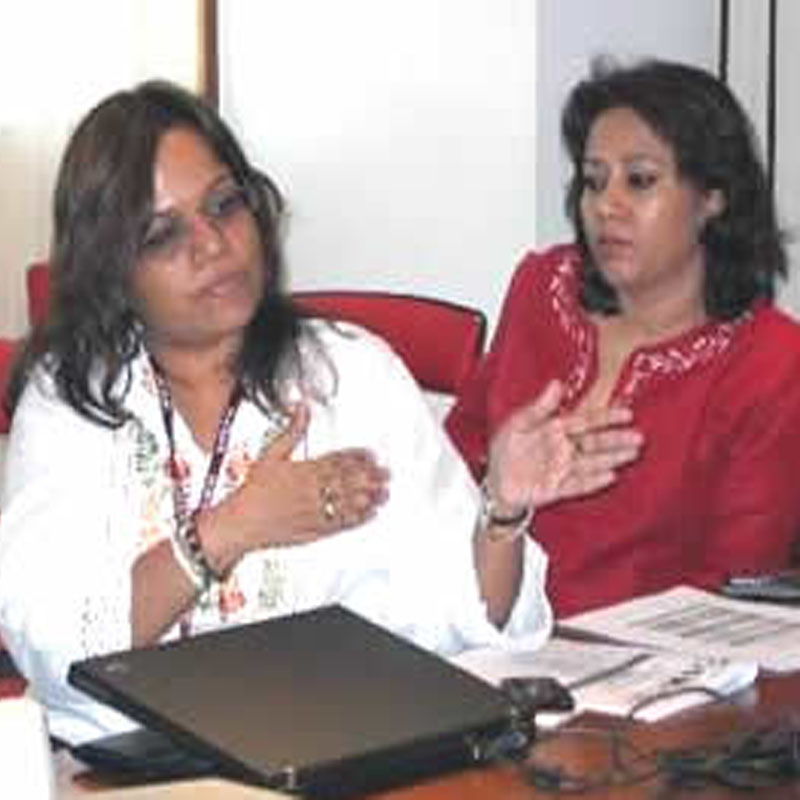
Life is not measured by the number of breaths you take, but by the moments that take your breath away.
It is a brave and determined person who decides to move out of his or her comfort zone into a job having a profile alien to him or her. And in the competitive world of media and advertising it requires steely courage. But there are many who do so and the net benefit for them: a more rounded view of the industry.
Take, for example, Punitha Arumugam, the CEO of the Sam Balsara- founded Madison Group, arguably one of the three most powerful media agencies in the country. Punitha – as everyone calls her – has switched from being a media planner to managing the business of media and advertising, and so far, she has enjoyed the journey, smooth or bumpy, to the hilt.
In 1990, she joined O&M (Chennai) as a trainee, moved to Lintas’ Initiative Media soon after as media manager and moved out as media director. Then she joined Madison as Media Services director (West) in 2000, and in a six year span, has risen from COO (West) to CEO (West) and is currently Group CEO for all India.
Early Years in Media
Born, raised and educated in Chennai, Punitha’s father was in business and her mother is a housewife. She completed her graduation in BSC (Physics) and went on to study management from Madras University. Punitha started work in media right from the start and adapted to it like a fish to water. While doing her MBA, she was assigned a summer project with Chennai- based ad agency RK Swamy and it was there that her tryst with advertising began. She hopped on to O&M on completing her education and stayed on there for a full five years soaking up all she could in her media planning job, even though her heart was in servicing.
“I realized that I liked advertising – primarily its servicing aspect. But, back then, the opportunities were rare for servicing and I joined the agency hoping to get a backdoor entry into servicing,” says Punitha.
 The protective environment at O&M gave her ample scope to learn the fundamentals of media. Says she, “O&M groomed me”.
She recalls working on some small accounts. The head of O&M Chennai R. Lakshminarayan taught her one important lesson. “I learnt from him how simplicity works and arrogance does not, however brilliant you may be at your job.”
But, after four-five years, the sense of security at O&M was a little stifling. “One just felt protected from harsh realities.”
A call from the head of Lintas Chennai, came through, dangling an opportunity to get rid of the ennui that was creeping in. She grabbed it with both hands. In those days Lintas was the agency of choice for many; the experience of working in a larger role with a larger agency was something very few could say no to. With the proliferation of media outlets and increasing spread of satellite television, the media planner/buyer was coming even more centrestage in advertising as compared to earlier. And Lintas’ was at the cutting edge of media. Agencies had started setting up specialist media units to service growing client budgets effectively. The disintermediation of media was just about beginning.
“I was raring to test new waters, so moved to Lintas as media manager,” she recollects.
The water proved testing indeed as the culture in Lintas was very different from the one she had been used to. There was a lot of new learning, and some unlearning too. “I was thrown into the waters and had to learn to swim. I learnt how to service a client at Lintas,” she says.
By nature, Punitha is unafraid to push the boundaries. She has all the qualities needed to be a successful media planner: strategic understanding, ability to grasp industry knowledge and expertise across all media. Additionally, over the years she has developed a comprehensive understanding of marketing communications which can be effectively translated into developing media goals, objectives and strategies.
Punitha moved to Bangalore from Chennai solely because the latter had limited clients, whereas Bangalore offered much more in terms of learning experience and growth. She started in Lintas’ Initiative Media handling the Britannia account; five years later when she moved out she was heading the Bangalore office.
It was the first time that she was handling sizable accounts. And she climbed steeply up the learning curve. She explains: “Britannia was a favourite client. I learnt a lot from Sunil Alagh, Vikram Kaushik, Atul Sinha and many others there.”
She recalls an incident. “The team had prepared a huge presentation to convince Alagh not to associate with a program titled “Britannia All The Best” as it was not working. But, even before he saw the presentation, he asked us, ‘Give me an option if we aren’t using this.’ And, I had no answer. We had been so busy trying to convince him to disassociate, that, we realised that there is no point in highlighting a problem without having a solution in hand.”
 She adds: “I came into my own handling the Britannia account. I got great work done in terms of strategy and media innovations. And, after that it was sheer word of mouth from people who worked with me, my clients and the media sellers who made me known in the industry.”
She decided to quit when Lynn DeSouza moved out of Initiative Media. She explains: “I look upon her as my godmother. I idolize and worship her and I felt unsettled when she left.”
Plus, Punitha felt she had nothing more to offer or do in Bangalore, so the move to Mumbai was inevitable.
“In Mumbai, I joined Carat for a month and then had a call from Sam Balsara and moved to Madison.” Her enthusiasm for the medium made her the “perfect” choice when Balsara needed someone as Media Services director (West) and Arumugam joined Madison in 2000.
She elaborates: “Generally, the skills needed are quite different. Media agencies demand individuals who are strategic thinkers, diplomatic and prepared to work long hours. And those employed by media owners tend to enjoy a sales-based environment, like to see quick results for their efforts, and will usually earn more money.”
Madison
 Punitha talks at breakneck pace, barely pausing for breath, whether she’s discussing the controversial subject of commissions or winning at Cannes.
“My growth in Madison has been phenomenal and the learning has not stopped,” she points out. At Madison, all the pitches that she led and won have made people take notice of her. “When I joined, the Mumbai office was just handling Godrej and Proctor & Gamble. Today, we have most of the blue chip accounts like Asian Paints, Cadbury’s, Essel Group, TVS, Tata Tea, General Motors, Mother Diary, Mcdonalds, Marico, Airtel, Tata AIG, Radio Mirchi, Kotak among many others.”
Punitha has helped Madison Media grow more than treble in growth from a mere Rs 3 billion in billings to Rs 10 billion in the space of just five years.
“When I first joined, we were concentrating on consolidating our current businesses like Procter & Gamble, Coke and Godrej, then over a period of time realized that we need to grow. So, we focused on new businesses and started participating in pitches. We had to grow for our own learning experience and as a confidence building measure for our existing clients.”
This passion for looking after advertisers’ interests has an air of poacher turned gamekeeper about it, given her time on the agency side of life. There’s no doubt however, that it has given her a keen understanding of the industry, and she still tries to bring that “service” aspect to Madison.
She agrees that the best thing about agencies is that one is surrounded by very bright people and one gets to see the thinking that goes on behind different clients. On her achievements in Madison, she says, “Retaining our existing clients and keeping them happy is my first achievement. When we grow, we tend to lose perspective of all who help us in our initial stages, and it’s all because of the client one expects to gain in the future. For me, it is important to hold on to our current businesses as we grow.”
 Considering her current job as her ideal job, she says, “Work is the only thing that matters to Sam. Managing this organization is great as it’s a place of great integrity. There is no conning, inside and outside the system, neither with clients. When one works in such an healthy environment where there is no politics and no pressures to make money at the cost of someone else, and, all we need to know is how to do a good job, there is very little scope of going wrong.”
Says she, “The toughest part about becoming senior is having to let go of the fun that one gets when you handle the nitty-gritties of media planning and buying on a client… I would rather be a media planner than a CEO at heart… but, guess one needs to move up to let others who work with you grow. Even today, the toughest thing for me is to let someone work on a presentation or plan or analysis instead of pulling it and doing it myself.”
Punitha has been ranked amongst the top ten influential persons in media for the last two years in The Brand Equity Agency reckoner. Her motto for success is straightforward. She says: “Apart from working hard, we don’t play games. As a corporate philosophy, we don’t pitch with rates. We work within a set framework and at times, and we often refuse clients whose philosophy and expectations are so different from ours. She gives importance to honesty and fairness and strongly believes in “letting others around you succeed and grow so that you automatically grow.” And to keep herself on her toes, she surrounds herself with people who challenge her.
 “I am very clear that if I am in the agency business in India, then there is no place to be in other than Madison,” says Punitha emphatically.
Among her best moments so far, she says, “Not losing a business that I have directly worked on and winning the Media Lions at the Advertising Festival in Cannes this year. But, I think, managing people, clients, media owners and egos everyday and being able to deliver to keep them happy is a constant high by itself.”
She admits that days of being a complete workaholic and leaving office at 2-3 am are a rarity as she makes it a point to leave office at 7 pm to make time for family and friends. Says she: “Lynn used to always say that as great it is to have a career, its that important to have other interests, too.”
On decisions at a career level, she says, “Sam did offer me the opportunity to head Madison (all India) a few years back when CVL Srinivas had left. But, I took the decision of not going for it, as I felt I was not ready for it and thought it was not in the larger interest of the organisation. So, we gave others in our system the opportunity to grow up to that level. As tough a decision it was for my personal career, but, I think looking back it was the right decision, as today, I am a better professional and Madison a stronger organisation because of it. Sam and I have always been able to discuss anything.”
And, speaking of lessons learnt dealing with clients, Punitha says, “At times when a client was being unreasonable I took a stance so that it become confrontational. Over the years, I have realised that one must never reduce any situation to a confrontation but always make it a dialogue.”
Any career decision is a combination of personal, business and timing issues. She believes there are benefits in working both sides of the fence. Punitha sums up her experiences in all three agencies as having “learnt media basics” in O&M, “learnt to manage media and clients” at Lintas and “learnt to manage a business” at Madison.
 Punitha considers herself lucky to have worked with the best media minds in India like Roda Mehta, Lynn Dsouza, Ambika Srivastava, and now Sam Balsara. She holds them in high respect and speaks of what she has learnt from them.
Roda Mehta: “Everybody looked up to her. I never really worked with her except when I was sent to Mumbai for a training session and I was exposed to her style of working. “
Lynn DeSouza: “The credit of my becoming the media professional I have solely goes to her. She gave me tremendous freedom. She was always there when if a problem arose. “
Ambika Srivastava: “I admire Ambika’s analytical skills.”
Sam Balsara: “He has taught me to be a great manager. One can’t ask for a better boss. There are no secrets between us. He would never take a step concerning me without taking me into confidence and likewise, I trust him with everything. Madison matters to both of us and we both work to see it grow.”
She lists a few current issues that are on top of her agenda:
- Paucity of people: To overcome this, we go to institutes and recruit freshers as trainees.
- Data vs Instinct: Too much dependence on data that we are losing our instincts.
- Break boundaries: There is a sense of doing the same thing better and better over the years instead of attempting to do them differently. We need to create a competitive difference that works in the market as media plans across agencies have all started looking similar.
- Breaking the 3.5 per cent barrier in terms of commission: The traditional split of the 15 per cent commission between the creative agency and the media agency is 11.5 per cent and 3.5 per cent. However, over the decades, media has become a lot more expensive in terms of people, databases, systems, infrastructural requirements etc and this industry benchmark of 3.5 per cent commission makes operating the media business profitably a little difficult. A creative agency needs minds whereas a media agency needs minds and infrastructure.
 Punitha says it is a pleasure to be a woman in this industry as “it sometimes makes it difficult for the others to say a ‘NO’. Adding that, today, the males have it tougher in media as they fight the increasing female dominance in the industry.”
In these times of increased viewer choices and audience fragmentation, she says that it is the best time to be in media as it has never been more challenging or confusing. She says, “The chaos will increase, disruptive thinking is the way of the future. More than numbers it will be consumer media insights that will drive the media decisions in future.”
Punitha likes to be extremely low profile and hates to be quoted in any Madison press releases. She is known to give the right angle to any story and guiding journalists when asked for stories or quotes, rather than seeing her name in print. She explains: “I would rather Sam and the others in the team take the limelight rather than me. As long as I know that I have contributed to the success am happy, I don’t feel the need to prove myself to others outside the system.”
She also credits Sam Balsara with getting her to socialize and attend corporate dos. “Before coming to Madison, I would always duck all the media sellers’ bashes. Sam has been instrumental in making me change as he believes that when a person takes the effort to invite you, it is courtesy to accept and attend the do.”
She agrees that it has helped make her a more extroverted person and, more importantly, has helped her in building strong relationships.
Though good at managing the agency’s finances, she admits to have very little sense managing what she earns. She whispers: “Sam is aghast and has threatened to keep away a part of my earnings. All I had were a few LIC policies. Even today, I am broke at the end of the month. As I was when I was a fresher… just don’t know where the money goes.”
She used to hate traveling (“I need my bed at the end of a long day and there is no concept of home when one is on the move”) but, she has learnt to enjoy the frequent and long journeys as “they give her time to reflect, relax and meet new people.”
She is a Hindi movie buff and makes it a point to regularly go to a multiplex – and forget about the intricacies of media and running a business – and get involved with what’s happening on the big screen – a catharsis of sorts. Says she: “Every Saturday night is spent watching a Hindi film with a friend, however trashy it may be.”
Punitha is a hopeless romantic. Though she avoids reading business magazines, she is an avid reader of fiction and non-fiction books, especially of the romantic genre. That explains her desire to one day set up a bookshop with a café where couples can sit, listen to music and read romantic bestsellers.
When asked why she has not tested any other medium, she says, “The reason I stick to media despite all the pressures and daily crisis, is because it makes my adrenaline pump all the time. I would not know how to handle a non-pressure job. I probably will wilt away due to boredom I think.”
With 16 years in this field, she has both the experience and the confidence to have her own fully developed take on a wide range of issues. Balsara’s instincts about her taking on a managerial role proved right as she has shown that she has the skills to work on both sides. Getting to where she is by doing the right thing, the right way is what matters most professionally to her. “I would prefer to compromise on success and fail knowing that I have tried hard…knowing that I have not had to resort to any hanky-panky to reach where we are,” she points out.

She shares close ties with her entrepreneur sister and her 12 year old niece Priyanka (in pic above), who she says, ‘is the most pampered brat in the whole world.’
“Chatting with my mother, sister and niece, music and reading trash romances, meeting with my friends, gyming and swimming are what I enjoy doing.” |
Punitha is currently working on overcoming all her fears. “I have a fear of water so am learning swimming. I also have a fear of pets so am currently getting a Yorkshire Terrier and am planning to learn flying and driving on Mumbai roads. Another stress buster for her is shopping. “I can shop forever for trinkets, clothes and yes diamonds.” She is not one to hold grudges, She forgets and forgives easily. “I am the first to say a sorry when I am in the wrong, irrespective of how young or old, the other person is.” On her single status: I moved very fast in my career and marriage just did not happen. Today, I love my space too much. Pet peeve: Getting no time to relax and can never hold onto my maid and driver for long. Dream gizmo: The treadmill. Favourite holiday spot: Currently Egypt and home in Chennai. Worst nightmare: Boredom with nothing to do. How you view India today: The best place to live in and work. One drawback: We are so much better than what we project ourselves to be. What makes you laugh: Anything and everything when I am in a great mood, Sometimes nothing can. Two guests you would love to dine with? |

 Even before Tata Sky can settle down and get its products out of the door, Chandra is in a hurry to launch an array of value-added services. Movie-on-demand is already available and soon to launch is gaming and interactivity. The idea is to fill up the product portfolio as quickly as possible.
 Targeting DD Direct‘s customers, Dish TV also announced a “Dish Freedom Package” plan in January. This offers viewers 40 channels in digital quality without charging any monthly subscription fee, but they had to make a one-time investment of Rs 2,690 in a digi box. Clearly, the strategy was to get into a different segment of customers and slowly entice them to upgrade to the other packages.
 Dish TV has also addressed another problem: how to increase offerings by accommodating more channels per transponder. It has recently tied up with Scopus Video Networks, a provider of digital video networking products. Having taken seven transponders on NSS-6, Dish TV can pack up to 150 channels using this compression technology.


 Such was his sphere of influence that a trivia fact on imdb.com indicates that in the 1970s, when he had one hit show after another, he had so many shows on ABC with who he had a contract that insiders used to joke that ABC stood for “Aaron‘s Broadcasting Company”. He was involved with around 70 weekly television series, which amounted to around 4,220 hours. Back to back it would take 176 days to watch all of them.
 Charlie‘s Angels showed women in a role other than a homemaker happy with kids. It is justly considered ground breaking in terms of having women who took care of business and did not need a man to look after them. More importantly it gave young girls in the 1970‘s and 1980‘s strong role models to look up to.
 Starsky and Hutch was one of the first great cop shows on American television. It paved the way for numerous cop shows including the likes of Miami Vice.
 Another piece of great casting was having Joan Collins play the matriarch in the long running soap Dynasty. This show in fact proved that Spelling was comfortable working in different genres.
 In real life Spelling had a 123 room mansion in Los Angeles which many considered to be a parallel to the life of ease and excess that the rich characters in Dynasty lived. “The house that Dynasty built‘ is how tour operators describe his mansion to hordes of tourists. In fact, Spelling was known to on occasion wave a hello to tourists. the soure of his wealth came from Spelling-Goldberg Productions. In 1986 the company went public.
 Chhabra had a privileged childhood, studied in a school run by the management and belonged to an entire young generation in the township, brimming with patriotism and steel in character. “A childhood spent in the Steel City was a fascinating and wonderful experience during a period in which Pandit Nehru, who used to refer to the steel plant as the modern temple of India, often came visiting. We grew up being proud of a nation taking birth.”
 “The college faculty comprised reputed writers and theatre personalities and educationists like Dr Sheela Uttam Singh, Indu Jain, Aruna Sitesh, Rathi Bartholomew, Aruna Roy and other national personalities who took us beyond books and imparted in us a sense of commitment, sincerity and the inherent pride to be a woman.”
 Why broadcasting? “While politics fascinated me, the studios of All India Radio beckoned my creative instincts and I got very involved with broadcasting. It was an immediate career. I was freelancing whilst studying and yet had made my mark at AIR in a short span as a compere and presenter.”
 She confesses, “I used to look down on commercial broadcasting till then, but, this study gave me a whole new insight. I learnt what wonderful things could be done if one had a strong support system, how one could make money and in turn, invest it into good programming.
 “It was very tough to get rid of the middlemen who were so deeply entrenched in our system. At that time, DD’s performance was bad, rates had touched rock bottom and there was undercutting everywhere. With complete support from my management and the team, we achieved the impossible. From a hundred faces that DD was once associated with, we have been able to make it a single face.”
 From a time when the channel was operating on leased inventory through slot marketing today, DD owns the entire IPR for all the programmes being mounted on the channel through SFS. “Under this system, we already have to our credit, mega talent hunt shows like ‘Kalakaarz’ and ‘Wheel Smart Shrimati’.”
 The satisfying aspect about her job is definitely the zilch people turnover in his organisation. “The same applies to my team. Most are kids of government officials and they keep getting offers from private firms, But, I don’t think anyone will leave as they come from similar backgrounds like mine and we are all proud of working here. Money is not everything for us. I do not work for money, it’s only my passion that counts. I love my work and I put in long hours, enjoying every moment,” says Chhabra.
 Family: The real challenge for a working woman today is to manage home and the office where the pressure on both ends is very demanding. “Here, I have been lucky to have supportive in-laws and husband who are proud of me being a working woman. They share my duties at home and even the children have rallied around me and take pride in my work.”
 On India, Chhabra says, “I keep telling my children that the best opportunities lie here in India, if you work hard and make the most of your abilities, India is the place to be. India’s absolutely challenging dynamics, its diversity, in terms of the people, language, culture is so fascinating and enervating. The media in India is looking at making the world its platform and making its presence felt almost in every corner of the world.”

 Do you have an opinion on brands taking a social stance. Help Ravi Kiran write the next chapter. Post your thoughts to
  Such buyouts, though, will be selective and limited. But coming after years of inaction, Hathway sees an opportunity in growing along with the digital market. “Competition from DTH is good as it will change the way cable TV has been functioning and open up the digital market. If cable TV can respond positively, it will increase our ARPU‘s (average revenue per user) and correct our business models,” says Jayaraman.
 Lining up premium content is not a focus area. Hathway, though, has launched an ad-free dial-up interactive music channel I-TV through its digital services. The channel, which is currently available in Mumbai and Pune, will also be taken to other cities. Hathway has also introduced gaming on its digital services last month, for which it has selected NDS technology.
 With no mentor to guide her through her media odyssey, Nandini learnt to tune the strings herself. After XIC, she joined a small agency called Interpublicity (run by Nargis Wadia) and was with them for one and a half years. “I joined them in 1988 and in those days Interpublicity used to be a very creatively inclined agency. Interpublicity had virtually no media department and Mrs Wadia used to keep telling me that I had a very business like mind and that I should actually be on the servicing side of the business. At that time the media stream of the business was really unheralded and the one of the most powerful media departments was housed in the then Lintas, so I decided to join them. While I already had a year and a half of experience, I really didn’t mind learning everything from scratch all over again. ” she says.
 In 1994 Nandini had a winged visitor. The stork came calling and the birth of her first son led to her taking her first break from advertising. “I was in this holiday pregnancy spirit and since it was my first child, I didn’t want to leave the baby to anyone in the early months. After my baby was born, I was debating whether to take a break and then go back to work. Also the fact was that since I had already taken a six month maternity leave, someone else had been servicing my accounts at Lintas. So I thought it would be better to join another organisation. My first child was born on 1 January 1994, and in November the same year, I joined FCB Ulka as media supervisor,” says Nandini.
 Setting up a new agency is no cakewalk since media is all about clout and about the amount of money being put down on the table. “We were very keen on starting it as a separate organisation. That was a tall task for anyone. I think it was a big high for me to get business on the basis of what I would bring to the table. It was a big responsibility and I was initially very awed when clients began coming on board citing my leadership as one of the reasons,” she narrates.
 The team at Lodestar found an approachable leader and a hard taskmaster in Nandini. Her office is a free walkway for anyone who is facing a problem. Being a perfectionist to the T, she has very high expectations from her team and trained them to be perfectionists as well. Lodestar’s performance at the Emvies during her tenure at the top is a testimony to the commitment her team has towards clients. “We may be much smaller but our consistent track record at the Emvies over the last few years has been extremely satisfying. The businesses we handle, the quality of output we deliver and also the team we have all put us ahead of a lot of the competition,” she proudly states.