Category: Special Report

  • Filmy: Six months and beyond

    Big movies. More wrap-around programming. Heavy marketing. That is the course Filmy, the Hindi movie channel from the Sahara stable, will take as it gears up to double its audience base over the next six months.

    The initial period, as Filmy business head Ashutosh puts it, is “more than satisfactory.”

    “We have grown against established channels like Zee Cinema, Max and Star Gold. They have been in existence longer and have built a library over the period. We had to also combat against a tough distribution environment,” says Ashutosh.

    He adds: “Over the next six months, Filmy could break the 50 GRP-mark. Filmy has also broken the myth that Hindi movie channel space has no space for a fourth player.”

    Indiantelevision.com takes a look at the six-month evolution of the movie channel and the ideas that have worked for it.

    Content Strategy: Wrap-around Programming

    To break into the competitive market, Filmy adopted an innovative programming approach. The executives at Filmy fondly call it ‘Wraparound Programming’ and this phrase meant a lot of stress on non-movie programming.

    “We worked on an image, which is filmy, fun, original and progressing. This original plan of creating a different channel, with a different look and feel, was then driven by all the other innovations, such as our characters and the off-beat film news content,” says Filmy marketing and content head Shailesh Kapoor.

    The original plan: The channel will have a daily dose of three movies at 10 am, 3 pm and 8 pm. A big movie will be telecast on Sundays in the 3 pm slot.

    Then, it will also have a variety of wraparound programming; four anchors will provide a whole new experience of seeing cinema at home. While other movie channels are mere telecasters, Filmy wanted to be the mouthpiece of Bollywood.

    The flagship set of four characters are integral to the channel‘s programming formats.

    Lallan (a rustic who has migrated to Mumbai from a small town in Uttar Pradesh), Lal Gulab (a typical villain as seen in all movies), Rokkky (who has the air of a Bollywood superstar and is played by Hindi film actor Chunky Pandey) and Ruchi Reporter (who is like a sting journalist and is interested in exposing the private lives of stars).

    “We knew that, we were not anywhere near our competitors in terms of library. Hence, we wanted to score in the other areas,” says Ashutosh.

    When Filmy started, the main concern was not about the third party content (commercials or movies), which was anyway there for a start.

    “Our focus was to create our own content such as interstials and station IDs. We wanted to create a space for ourselves in the market. Otherwise, there was no point in being a fourth channel,” explains Ashutosh.

    Research goes to prove that Filmy’s strategy reaped good fortunes.

    According to channel executives, the anchor characters are doing very well in the markets they have been targeted as per the research findings.

    For example, Lallan is a huge hit in the Hindi belt, while Rokkky has caught the attention of urban India. Inspired by the findings, Filmy has decided to give new roles to both the characters now.

    “Lallan will now also drive the marketing and promotional initiatives of the channel. The channel has decided to reduce the duration of the 30-minute show anchored by Rokkky to increase the footage of the character through various other capsules,” says Ashutosh.

    Responding to the feedback received, Lal Gulab, the video parlor owner who doubles up as a don in the nights, will now be given one single avtar.

    “This character, has been very well-accepted by urban centres, while rural viewers have found difficulty in understanding the double-act. Hence we have decided to simplify the character with some modifications,” adds Ashutosh.

    Keeping in mind that the break in TVRs are high, filmy makes it a point to spend a significant amount on wraparound production.

    Without actually divulging the figures, Ashutosh claims that, the average production budget of a 30-minute wrap-around-programme on Filmy is much higher than the average budget of a normal 30-minute television programme. “You can call it cutting-edge programming,” he says.

    The push for Filmy also came from some of the innovative tools it employed to enhance movie viewing on television. Ashutosh names Recap as one such key innovation.

    Recap was targeted at viewers who drop in mid-way. As the name suggests, it presented a capsule of the exhausted part. Then we had Aunty Break Fail, which acted as a link between commercial breaks and the movie shown,” says Ashutosh.

    The average television viewing period of an individual is about 27 minutes and hence, Recap was a key innovation. Filmy capitalised on these types of small issues, which competitors “ignored.”

    In the six-month period, Filmy also claims to have re-written few market theories. Ashutosh says the channel has gave a new dimension to the 7 am – 10 am time band, which was otherwise perceived as a non-scorer.

    “The market was skeptical about Filmy introducing a 7 am to 10 am movie band. But the band has delivered for us. We found that, it was not as bad as people thought. Then our strategy of branding slots also got acknowledged,” says Ashutosh.

    Movie Content

    Filmy has expanded its library to about 450 movies from a base tally of about 300 in the six month period.

    Apart from the Sahara One Motion Pictures productions, the channel is now also looking at other producers for acquisition, according to Ashutosh.

    “We have the advantage of being part of a leading Bollywood producer with Sahara One Motion Pictures being our constant source of good movies. To explore the space further, we are now targeting non-Sahara movies also,” he says.

    Filmy is basically looking at movies, which make good business sense. Instead of acquiring all the movies coming its way, it has adopted a strategy of buying utility movies.

    Filmy, which started its innings with Sahara titles such as No Entry, Page Three and Sarkar, has now Malaamaal Weekly, Gangster and the upcoming Katputhli tucked under its belt. As the festival season approaches, the channel is gearing up for more big ticket acquisitions, according to Kapoor.

    “Filmy is getting aggressive on the acquisition front. We are looking to buy two to three big ticket properties and then a lot of other latest movies,” he reveals.

    A key initiative forward for Filmy will be taking in the August-September period when it would be introducing Hollywood dubbed movie block.

    As already reported by Indiantelevision.com, Sahara is in talks with at least three international studios, including Buena Vista Pictures Distribution, for acquiring international titles.

    “We have conducted a research on what sorts of movies would work in Hindi language, and accordingly we have set our preferences,” says Kapoor.

    Marketing

    On the marketing front, Filmy is following the strategy of taking its lead anchors off air and positioning amidst the public.

    The channel recently associated with Rakesh Roshan for his latest release Krrish and had Lallan performing in the respective theatres. Similarly, Lallan will be doing a Shahrukh act in theatres where Kabhi Alvida Na Kehna would be releasing.

    Though Filmy has a full-fledged on-air promotion strategy, the channel is yet to hit the outdoors in a big way in terms of product promotions. However, in the next phase, this may change. And driving the initiatives will be the slew of new properties the channel is about to launch.

    “Filmy may go outdoors to promote our big movie properties. Then we will be launching at least three big ticket properties in the September 2006 – March 2007 period and this would also require good amount of promotion across all media,” says Kapoor.

    Distribution

    The channel, which was to be encrypted right from the start, faced initial hiccups as it had to swap the position for sister channel Sahara One.

    Having won live cricket content, Sahara One – the general entertainment channel – decided to encrypt the channel in a short span of time. The only way to speed up distribution was to keep Filmy on the unencrypted mode while seeding decoder boxes for Sahara One.

    Filmy then waited a longer time to regain the status of an encrypted channel. Reason: It wanted to ensure the fool-proof distribution of the boxes across the market.

    “We went encrypted on 6 August. The transition has been seamless as we had to ensure that we protect our existing reach. We are now available in 79 per cent of the TAM market,” says Ashutosh.

    Though he would not spell out the carriage fee to ensure a widespread reach of the newly-launched channel, market sources put it at Rs 100 million. The focus now is to ensure better space on the cable networks.

    A separate team has been put in place with former Sony hand Sameer Ganapathy as the head. Earlier, Sahara News and the entertainment channels were handled by the same team.

    Performance

    This month, Filmy shocked its elder sibling Sahara One by overtaking the general entertainment channel in terms of GRPs.

    An average GRP of 50 at the completion of six months has boosted the morale of the channel tremendously, says Ashutosh.

    “When we began, it was a ‘by chance’ channel, rather than a ‘by choice’ one. Keeping the tough competition in mind, it was important for us to nurture that ‘force of habit’ and the Tam data validates our success. People now watch the channel by choice,” he says.

    Filmy had opened its innings with a channel share of 4 per cent against Zee Cinema’s 34 per cent, Max’s 35 per cent and Star Gold’s 26 per cent for Week 7 (12 February), as per Tam (CS4+ HSM).

    The channel kept an average market share of 6 per cent in the next 22 weeks before shooting to the double figure of 12 per cent for week 30 (29 July). The feat was powered by the telecast of movie Hanuman, which helped the channel to garner some significant numbers in the slot.

    As per Tam data, for the period of 12 February to 29 July (HSM CS4+), Filmy holds an average market share of 7 per cent against Zee Cinema (35 per cent), Max (32 per cent) and Star Gold (25 per cent). The data reveals that, the Hindi movie genre has recorded a marginal expansion with the entry of Filmy, from 14.35 per cent to 16 per cent during this period.

    “As per our knowledge, cannibalisation from other channels has been minimal. Our entry has expanded the market to a small extent,” says Ashutosh.

    “Filmy has become a channel, which you can’t ignore. It has turned out to be a visually better looking and consumer-focussed player. We are giving a lot of stress on individual addressability. We are not taking the viewers for granted,” Kapoor sums up.

  • Saat Phere: The Dark Girl Theory

    The Thought

    “We want a serial on the dark skin theme. Give us a dark girl‘s story,” said the one-liner brief that reached producer Sunjoy Waddhwa from Zee TV.

    It was February 2005 and Subhash Chandra‘s general entertainment channel was standing at the crossroads. A new year had begun, and at the helm was the newly appointed CEO and marketing wiz Pradeep Guha with lots of expectations pinned on him.

    A slipping market share and a few under-performing prime time properties, except the long running Sa Re Ga Ma Pa, had put Zee TV under tremendous pressure. What aggravated the situation was the nearest rival Sony‘s success with properties such as Jassi Jaisi Koi Nahin and Indian Idol.

    And as luck would have it, the brief came Waddhwa‘s way at a time when he was in search of that big break to catapult his three-year old production house Sphere Origins into the big league. Though he had designed a series of successful properties under the banner of Karnik Communications, which he floated with his cousin in 1997, Waddhwa wanted a big show from his own company. Star Plus‘ Des Mein Niklla Hoga Chand, which he took up from actress-turned-producer Aruna Irani mid-way, was a very good experience and the need of the moment was another solid property to carry the success forward.

    For both the channel and the production house, the dark girl concept was a tough as well as a sensitive assignment since such a theme had never been attempted on Indian television. Hence, there was no yardstick available to check how the project would work in a space driven by tearjerker plots woven around glam-doll heroines.

    “I had an intuition that this would work. It was purely a gut feeling. The theme was bothering us (at Zee TV) for some time. Personally, I know many women who are suffering from skin colour complexes. Then take a look at the consumer market. How come all these fairness creams are doing so well? That means we have a sizeable section of our audience suffering from this skin complex. So, we decided to blend this social issue with a Cinderella story,” Zee TV programming head Ashwini Yardi says, explaining the channel‘s interest in the project.

    Taking up the Zee project meant a homecoming of sorts for Waddhwa. “My very first production Neeyat, under Karnik Communications‘ banner, was for Zee TV. Then we had Arth on the channel and then the mega Arabian night fantasy and costume drama Thief of Baghdad. The call from Zee TV meant my independent venture Sphere Origins‘ debut on the channel,” says the producer.

    “Whether number three or two in the market, Zee always had its share of loyal producers. Sunjoy had done some good shows for Zee earlier. He is very good at his work and we wanted him back on the channel. So when this challenging project came up, we decided to opt for him,” says Yardi.

    The Plot

    As soon as the creative brief reached Sphere Origins, Waddhwa swung into action. The producer called an emergency meeting of his writers in his Andheri office and a bunch of ideas were thrown in. After burning the midnight oil for many days that followed, the first draft was born. Titled Saat Phere, the soap dealt on the the social stigmas attached to the central character Saloni‘s dark complexion. The opening storyline portrayed Saloni‘s family‘s quest for a suitable match for her.

    “We were supposed to present the channel a first draft of the plot at the earliest. It was a huge challenge for my writers as they were dealing with an off-beat subject. The character of Saloni was difficult to conceive. Finally, we decided to project her as a collage of personalities – she is vulnerable, lovable, brave and compassionate. The first draft was approved. The channel keeps a close watch on the proceedings and their key inputs have shaped the final product,” says Waddhwa.

    The skeleton of the project was ready and now the challenge was to bring in the flesh – the cast. What made the task extremely difficult was the choice of a dark girl in the title role. The serial required a charismatic actress with unconventional looks. But they found an answer soon.

    “We screen-tested about 80 to 90 girls and we finally spotted our heroine Rajshree Thakur within a month. She had done a bit of acting, and hence, we were not worried about her acting skills. However, as and when Saat Phere grew, she developed her skills marvelously. Within two months, we completed our entire casting process,” says Waddhwa.

    The Slot

    It took eight months of hard work and intense planning before the channel finally zeroed in on October 2005 to launch Saat Phere. But, by then, there were signals of change in the Hindi GEC space, in favour of Zee. Sinndoor, launched in the 7:30 pm slot in mid-2005 clicked, powering Zee TV to the number one position in that particular slot.

    The Saat Phere team celebrating the completion of 200 episodes

    Sa Re Ga Ma Pa Challenge 2005, which later played a significant role in the Zee TV‘s climb along with Saat Phere, was about to launch. Hence, it was a perfect setting for the ‘dark girl‘ to kick off her innings.

    The channel and the production house were keeping their fingers crossed.

    Sindoor had picked up really well in the 7:30 pm slot and then we wanted to bring something new in the 9:30 pm slot. As Kareena Kareena, the existing soap in the 9:30 pm slot was about to wind up, we had kept a couple of options open for the slot and the final decision went in favour of Saat Phere. I was keeping the 9 pm slot reserved for Ekta for Kasamh Se,” reveals Yardi.

    The decision to replace a successful property such as Kareena Kareena with an experimental project Saat Phere required a lot of guts. “We knew that Saat Phere was going to be an important show for us as well as for Zee TV. The very moment the plot was developed, we all, including the channel executives, realised the significance of the project and we all went full on with it,” says Waddhwa.

    The month of September saw the first series of Saat Phere promos hitting television. And there was an immediate response with NGOs and women activists opposing the projected theme. “It was a sensitive subject. Hence, as and when the promos started appearing, NGOs and various women activists came out with objections on the skin discrimination. We asked them to wait till the launch. And we were right,” Yardi says.

    The Shot

    But there was one problem. The news spread that Zee TV‘s Saat Phere had got a not-so-good-looking heroine as the protagonist. Naturally, comparisons were drawn between Saat Phere and Jassi Jaisi Koi Nahin. But it died down quickly when the soap was unveiled.

    Listen to Yardi. “The media jumped into this conclusion because the Jassi lead character was an average looking person. In fact, our story was never about a good looking or bad looking female. Actually, I thought we had a heroine who is very good looking.”

    Rajshree (in red) with co-stars of Saat Phere

    The different positioning of the soap and the mystery attached to a new face (Rajshree Thakur) provided Zee TV a lot of scope to do well with the marketing efforts. The Zee TV marketing team acknowledged Saat Phere with one of the best ever marketing campaigns the channel initiated in the recent times.

    “It required a clutter breaking campaign to promote such a clutter breaking theme. The story had to stick. We started off with teasers and gradually unveiled the central character. We still continue with our best efforts for the soap. In fact, we have now decided to promote every twist and turn that comes with the story. Our effort is not to let the soap go out of people‘s mind. We even promoted Saat Phere in our recent Zee Astitva Awards,” says Zee TV marketing head Tarun Mehra.

    The Vote

    Saat Phere got off to an average start in the Hindi general entertainment space with TRPs ranging from 1.8 to 2. However, that was still an impressive beginning for Zee TV since the soap was just launched and its other prime time soaps, except Sinndoor, were faring below the 1 TVR mark. Then in the first month itself, the soap picked up really well to break into an average of 2 to 3 TVRs. However, after the initial glory, the ratings started slipping.

    “We felt Zee viewers were finding it difficult to stick to this different kind of show. The stickiness factor was missing. We gave extra thrust to the content and also initiated various innovative audience contact techniques. We asked our viewers to voice their opinions on how the story would move forward. During this time, we also started adding spikes as well as beefing up the drama element. And we were back on track with lots of improvement,” says Yardi.

    I thought we had a heroine who is very good looking: Yardi (in blue jeans) with Rajshree (in red) & Waddhwa (in black).

    “The gradual increase in TRPs meant steady viewership and this inspired us to better our product for better results. We always made our best efforts to surprise the viewer and catch him unawares. Actually we were telling a simple story, which people could very easily relate their life with. We never stressed on the drama parts, but never let a good opportunity go. Be it Salomi‘s wedding or the door mystery, the spikes were all woven very well with the story. The spikes actually helped the story to progress. We never added anything out of context,” Waddhwa reveals.

    “Audience feedback also played a key role in Saat Phere‘s success. The viewers were instrumental in certain key changes in the story line. Based on their feedback, we have changed the tracks for certain characters. As I mentioned, we incorporated lots of their ideas in the early stages of the serial,” Yardi adds.

    The Hot

    Ten months have gone by since Saat Phere hit Indian television. The soap, all of 200 episodes old, continues doing wonders for Subhash Chandra‘s flagship channel. Saat Phere presently finds itself floating in the range of 6 TVRs in the CS4+ Hindi Speaking market.

    “We actually cut it big time!”

    The pathbreaking success of Saat Phere also set new standards for the properties that Zee TV launched later. Kasamh Se, which followed, is today running neck and neck with Saat Phere for top show bragging rights in the Zee TV line up, while Tony and Deeya Singh‘s Jab Love Hua has also been accepted by audiences. Same is the case with shows such as Johny Aala Re and Sabaash India. With Saat Phere and Kasamh Se taking good care of the 9 pm – 10 pm band, Zee TV is now gearing up to do something big in the 8 pm to 9 pm band.

    Coming back to the soap in question, what next? Is there a life span for Saat Phere? “No,” is the instant reply from Yardi. “We don‘t have a climax for Saat Phere right now. The story is moving really well with a natural flow and we want the serial to go on for many years,” she says.

    “My writing team, including Purnendu, Rajesh, Usha, Raghuvir and Rahul have been putting their best efforts to retain the freshness of the project. We are expanding our story, not stretching it,” adds Waddhwa.

    As they say, the show must go on. Obviously… since Saloni‘s story is presently driving the proceedings at Zee TV.

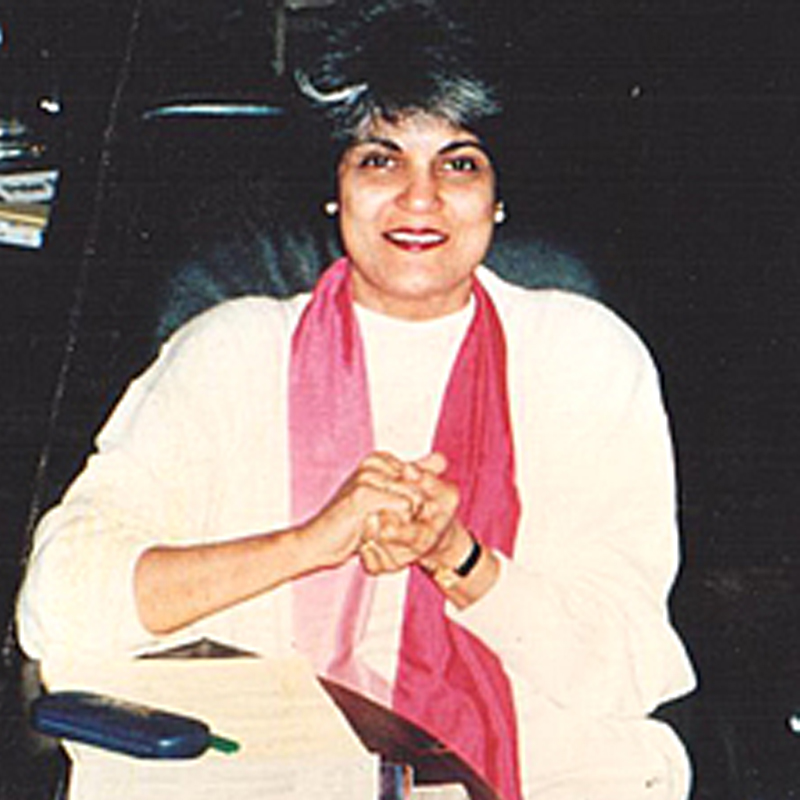
  • Ad industry veteran & MRUC Technical Committee chairperson Roda Mehta

    Ad industry veteran & MRUC Technical Committee chairperson Roda Mehta

    Having media and creative as separate functions is like running a television channel without content or a newspaper without editorial,” says Roda Mehta, ad industry veteran and mentor to many of today’s media hotshots.

    In 1971, she stepped into the world of advertising at a time when there were a handful of women in this profession and moreover, she was the first woman in the industry who was on the media side of the business. An MBA from the Jamnalal Bajaj Institute of Management Studies, Roda can well be called the doyenness of Indian media.

    Her father, an engineer, used to work for the Indian government. Born in Ferozpur, she spent most of her growing years in Delhi except for two years in Mumbai (then Bombay) owing to her father’s transfer here. But they moved back to Delhi when the Chinese invaded India in 1962. Roda studied in the Convent of Jesus and Mary and did her bachelors with Economic Honours from Miranda House.

    While in college, her father was yet again transferred to Allahabad and for Roda this offered her first experience of hostel life and living away from family. Brought up in an all girls’ environment, she decided in her third year of college that she didn’t want to pursue further studies in Economics.

    It was during this time that one of her father’s friend’s daughter, who had completed her MBA from IIM-A, had taken up a job with a company in Bombay. “I decided that even I wanted to do the same. And that’s how I started my journey. I came to Bombay in 1969 and joined the Jamnalal Bajaj Institute of Management Studies, which also happened to be my first co-educational experience,” says Roda.

    For her, those two years were the best period of her academic life where she blossomed and thrived. “We were three women in a class of 35 students. The institute opened up a whole new world for me. I was elected by my class to represent the Management Students Association, which also put me in touch with the older batch and others who were doing their course in the institute,” reminisces Roda.

    To her full credit, she literally brought life into the dormant students’ association and pepped it up. “I had a ball in getting people involved with the institute and with each other and organizing a whole lot of activities,” she says.

    It was here that she realized that she had some inherent skills, which she wasn’t aware of till then. Being chosen as the representative of a body of people who were very intelligent, smart and had a high level of mental activity gave her a high. Her skills of organization, motivation and leadership also blossomed.

    Another aspect that made her thrive was the entire teaching process at Bajaj where professors constantly challenged the students in the way they thought and the way they looked at issues. “We had some very talented professors in finance and marketing. Dr Basu who was the director and the head of the organization was also a part of our course. It was a completely different experience in terms of the teaching technique because there was no text book learning and homework but we did have to do a huge amount of reference work. It was just this whole combination of factors that suddenly made me thrive,” says Roda.

    While in the first year, they studied all subjects; in the second year the students were supposed to take up a specialization. However, the options to choose from were very limited at that time. There was specialization in personal management, marketing and operations research that one could opt for.

    “We didn’t have finance. My strength always lay in mathematics and that is the subject that got me a first class in my school and college. It was not a subject that I wanted to pursue academically but it was a subject for which thinking came to me logically. But since finance was not an option, I decided to take up operations research, which is when I was introduced to the world of computers.”

    Here she learnt to work on huge machines using FORTRAN programming language, which was used to develop mathematical tools for management decision making. A lot of her projects at that time were with banks and she worked with ICICI Ltd, Dena Bank and State Bank of India. When her course was coming to an end and placements began she and Lalita D Gupte (now joint managing director of ICICI Bank) were selected by ICICI LTD in 1971 for a then princely sum of Rs 1,100.

    After one year with ICICI, Roda was approached by Hindustan Thompson Associates (now JWT) to join them on the media side. “One of our visiting faculty at Jamnalal Bajaj was the then Glaxo marketing director Tarun Gupta. At that time, HTA had a media director called Suren Chawla and the first National Readership Survey had been released by ORG in Baroda in 1971. HTA was looking for someone with appropriate skills to computerize that large database so that they could do planning with it. Suren and Tarun were good friends and it was Tarun who recommended my name to him,” she says.

    Compared to her Rs 1,100 salary at ICICI, the HTA job was offered to her for just Rs 750. So how come she left ICICI for HTA? “See this is what life is all about. I left it for a very simple reason. We were literally the first generation post independence. I was born in 1950, so we knew about our past and it was a part of our history. We still had that fire in our belly to make a contribution and we knew that we were doing a course that gave us the base to be able to make that contribution and also to grow rapidly. We had seen our fathers doing government jobs and we didn’t want to do that but we certainly wanted to do something. One thing that was absolutely certain for me was that I wanted to contribute and grow as growth would automatically come through contribution. For me salary was not critical, it was about how quickly I could grow within an organization. I somehow felt that at ICICI it would be a slow and plodding progress,” she states.

    Another thing is that she didn’t know anything about advertising at that time and it was a challenge to take up the job at HTA. “My parents knew no different at that time and it was great that they left it to me to make that decision,” she says.

    Roda also approached the head of her operations research department DR Mrs Patil (who subsequently became the director of IIM Lucknow) and sought her advice on her career move.”She told me that this was the place where I would be able to contribute because banks were only doing what I’d already done in my course. Once I got the stamp of approval from her, I joined HTA,” she says.

    HTA came as a shock to her when she joined, more so because she came from a place where she had witnessed high levels of mental activity and was dealing with people of the same caliber. From such an environment, to plunge into a department full of clerical staff was a rude shock for Roda and she felt quite stifled.

    Soon after taking up the assignment of the readership survey, she realized that it could not be computerized since the raw data was not available. So she informed her office that it wouldn’t be possible. “But for the very first time what happened was that the agency had graduated from looking at the base figures of circulation, radio sets and cinema halls’ seats to analyzing the area of how circulation was related to readership and whether the reach of radio and cinema was to the extent of which it was being stated,” she says.

    As a result of this, for the first time clients too began to see advancement in the dialogue on how their budgets should be spent.

    The people who challenged Roda were not within the media but from the accounts servicing department.

    Some good minds like Deepak Sen, Ram Ray, Mike Khanna (who was an account supervisor at that time) and Ram Segal constantly challenged her. And it was this that made her continue at HTA despite the fact that she was feeling stifled.

    Another reason was that Roda was literally taken under the wing of Usha Shivdesani (now Usha Bhandarkar, who subsequently joined O&M and then Lintas) in the creative department. “My closest ties have always been with creative people. I had found this whole world of the creative thinking process and how ideas and messages got evolved from strategic directions fascinating and also being a Convent school product, I enjoyed the English language,” she says.

    At this time Roda was preparing herself for the profession in a strange sort of way because while she was working at HTA, she took a public speaking course for the simple reason that she lacked the confidence to be able to present. She joined USIS for the course and ended up winning the award at the end of it. “I have always been a dark horse in everything I do because there was no way in hell that I should have won the award in the public speaking course and I did! The ability to stand up and speak in front of a huge audience at the Taj was a delightful experience and it was even better when I won the award,” Roda recalls fondly.

    In the meanwhile, at HTA things were not looking so hunky dory and as it often happens, the senior management in Media felt threatened by Roda. “Once that happens, there is always a breakdown in communications and both sides begin to take positions. There was a lot of hierarchy in HTA and I was feeling stifled. I also got the feeling that I was threatening my boss. That’s when I realized that it was not going to serve me or the company any purpose and like is inevitable in every relationship – your boss stays and you have to make that move,” she says.

    While this was happening, Usha Shivdesani had moved to Ogilvy as creative director. It was a young agency and had some great minds at its helm. The then managing director Mani Ayer was 34 years of age when he took over as Managing Director of the agency in 1974. Ranjan Kapoor was an account supervisor at that time, Mr V K Trivedi was Finance Director and the legal head was Pervez Balsara. Another talented professional and a wonderful human being was the Media Controller, Praveen Desai. “Sadly enough, Praveen was an alcoholic and things were not moving on the media front. Mani Ayer had realized that to be a good agency they needed not only a strategic account management team but also a good balance between creative and media,” informs Roda.

    Her name was amongst the three that were recommended at Ogilvy’s management meeting. The other two people being considered were Deepak Raja and Indrani Sen. Roda was zeroed upon and Usha volunteered to get in touch with her.

    By this time, she had already spent four years in HTA and was more than ready to take the plunge.

    Speaking on her stint with HTA, Roda says, “Levers & Ponds were very challenging clients. They were the ones who pushed the concept of bringing marketing and advertising in synch with each other. I know I pioneered scientific media planning but to my mind the real contribution I made was in helping the client see the juxtaposition of how advertising spends could actually enhance sales through well-conceived consumer targeting. That came largely from my background in management. Had I done only Economics, I’m not so sure that I could have brought that perspective. At the same time, my Economics background did help me to understand demographics and how to target and analyze population. It was a fantastic combination for what I finally ended up doing.”

    Mani Ayer met her when she was on an assignment in HTA’s Madras office, which was headed by Ram Ray.

    In the midst of this, when this writer was enjoying some good home cooked food (something one longs for on account of living sans family in Mumbai) and engrossed in hearing Roda’s life story in her neat Pune home, she suddenly said, “This is a long saga. Do you really want to hear it all?” To which, I eagerly nodded in between spoonfuls of rice and dal. And she kindly obliged…

    “I was in Madras for three weeks and Ram Ray used to pick me up from my hotel every morning and take me to office and also drop me back. One day I told him not to fetch me. Now he was a man with his antennas always up and maybe he figured something was cooking. The reason I asked him not to come was because I had insisted on meeting the managing director of Ogilvy Benson & Mather whom I had never ever met even though he had offered me a job,” recalls Roda.

    So they met across the table and he gave her the spiel on what they were looking for, which was to make media a robust function within the agency. But Roda put forth two conditions before she accepted. She wanted complete freedom and independence to be able to do the work she wanted to do and she didn’t want to be involved in any corporate politics. “I had seen enough of that in HTA and didn’t want it to happen again,” she says.

    And the rest as they say is history. Mani Ayer granted her that and with that began her 23-year long stint at O&M.

    From being a media planner at HTA, she went in as Media Group Head in Ogilvy with Pravin Chawla as Media Controller. Mani Ayer had told her upfront that Pravin and she would handle separate set of accounts. “I must say to Pravin’s full credit that neither did he ever interfere nor did he ever feel threatened by me. If anything, he gave me support and for me it was a hugely refreshing change. I think he knew what his problem was but he had the bigness and the graciousness to accept the fact that someone younger could work along with him,” says Roda.

    Of course at Ogilvy she once again inherited a clerical team and, at the same time, a client list that had only been planning on the basis of circulation. Her first pitch at Ogilvy’s was for Corn Products for which she had prepared a scientific plan with sales figures, marketing strategy etc.

    The client was very complimentary after the presentation and the Ogilvy team followed it with the estimates for campaign release. What happened after that taught Roda her first lesson. “We sent the estimate and it was returned to us with the publications the client had been using in the past! That was my first lesson – that the client was involved with the media and that there was a direct link,” she recalls.

    As a professional, there was not much she could do unless she could break that link. “I didn’t realize it initially but that was what set me on the path to break corruption in the business through a syndrome between clients and publishers. The only weapon I had in my hand was scientific media planning. So while I didn’t succeed with Corn Products in the beginning, I decided that I was going to adopt one client and turn it around every year. Another practical factor that made me take this move was that I didn’t have trained planning staff to take on more clients,” she says.

    The second realization that struck her was that if she didn’t train people, then there was no way that she could turn this function around for the agency. She had observed how her previous boss had guarded information and she had come to the realization that it was not in the sharing of it but in its application that set a planner apart. So she set herself on the dual task of hiring people and training them.

    In those days, when Roda entered the advertising industry as an MBA, the clients’ side was also seeing an influx of MBAs. Hence the old generation was giving way to the new and that’s how things started to look up for her. “We talked the same language and if the brand manager was convinced about something, it was very unlikely that anyone higher up could dispute it as brand responsibilities had been clearly demarcated,” Roda informs.

    With this trend, a new level of marketing professionals was emerging in client organizations with decision making at the brand management level. “Support had to come from the top; otherwise there was no purpose in the brand management position in relation to the earlier sway of sales management. It was the juxtaposition of this and scientific media planning that began to work. It soon became evident when publishers went directly to our clients and brand managers would tell them that their agency made the decision and that they should approach them. That’s how, very gradually, over a period of five to seven years around the late 70s, we began to break the old nexus,” she says.

    This was also the beginning of Roda’s reputation with the media because the media suddenly realized that their links with clients had been severed and the doors influencing advertisers in their favor had closed. “That’s when my reputation began to build,” she says.

    Interestingly, it was Roda who introduced the system of appointments for media representatives as prior to that everyone would just walk into the office without any notice.

    “We had a series of media sales managers who had not evolved since they were still old timers, possibly had not trained in analyzing readership surveys. They would come to me saying, ‘Madam, you know everything there is to know about my publication.’ You can’t have a conversation when a person starts like that. So I would then ask about other things like editorial, geographic distribution, pricing policies etc. I then began to realize that people just dropping into my office like this was becoming a waste of time as I had far too much on my plate already. So that’s when I introduced the system of appointments, which was a new bolt for them,” she informs.

    With this, Roda inherited the reputation of being some kind of an ogre, a hard nut to crack. Publishers began to realize that their ability to influence decision making on advertising was not going to be the same anymore… at least for Ogilvy Benson & Mather clients. Not far behind were other clients who through sheer word-of-mouth had come to know of what we were doing in scientific and unbiased media decision-making to maximize brand interest. They began to question their own agencies on want of this service. And that is how her reputation began to build with advertisers and other agencies as well.

    During this time the price of newsprint had been going up and it became the focus of frequent rate increases in print. This in turn led to a rapid rise in advertising costs. This was also the time when visionaries like Samir Jain had just taken over the reigns at The Times of India from his father. “He had just returned from the US and his frame of reference for the daily was The New York Times. He wanted to build TOI into a like newspaper with new editorial pages serving many interest groups, offering advertisers opportunities for targeted advertising and thereby providing him new avenues for charging advertising rates. And the reality was that The Times of India did dominate the media scene of Bombay those days,” Roda recalls.

    Since her job was to maximize values in media at the lowest possible costs, she started looking at rate cards carefully and began questioning – “Why do we have to pay the rates we were paying?”

    Newspapers had two kinds of rate back then – contract rate and casual rate. If an advertiser took less than 251 or 500 column centimeters of space, he would be charged a casual rate and if he used more, the contract rate would apply. Roda questioned “Why do we need to pay two different kinds of rates? Why can’t we just pay the contract rate?”

    This was the beginning of the era of negotiation in the media industry.

    It was also around this time that color got introduced in the Sunday edition of the Indian Express and soon other publishers followed suit. The Hindu came out with a rule that you could not take a color ad in the Sunday supplement unless it was a minimum of 150 column centimeters in size. “I again questioned why we had to bind both creative message and the frequency of its appearance just to meet their demand of 150 column centimeters?”

    Magazines too began to levy charge extra for bleed and also double spread charges. Roda’s question was – “Why should I pay extra when I’m giving you two pages of advertising? You in fact are benefiting from two pages at a time?” But the argument in return was that because of the double spread, editorial content that generally appeared on the right-hand page had to be taken on another page. This did not make for a well-reasoned argument to Roda.

    While some publishers had begun to negotiate on their rate cards in order to get our advertising, some others refused depending upon the strength of their publication in its area of coverage. The Times of India was one such while The Hindu proved to be the last bastion against negotiations.

    Roda’s argument was that she wasn’t negotiating unfairly. “I wasn’t asking for a change in the base rate. I was only asking for a removal of the add-ons that they had opportunistically introduced to maximize their revenues without any real rhyme or reason,” she says.

    In 1980, Ogilvy won the Cadburys account to grow the chocolate market for which Suresh Mullick had created India’s first really big print color campaign. The tagline of the campaign was ‘Sometime Cadburys can say it better than words.’

    “The campaign had close-up shots of families enjoying and bonding. It wasn’t just the size and number of ads in the campaign; it was the sheer look of the advertising that was so refreshing. Every publisher wanted to feature it. The earlier small-size ads had featured a cow for its association with the goodness of milk in the chocolate,” recalls Roda.

    Concurrently, the client demanded presence in nearly every single publication across the country as per past practice in order to be seen and noticed. This went against Roda’s advice of delivering optimum reach targets but with high frequency through a mix of sizes and creative treatments. Cadburys nevertheless insisted and released their ads in 101 publications as a result of which they could only afford a couple of ads at a time. “After a while, the client came back to us and said that they were not being noticed. It was only then that I was able to get the client to benefit by taking the agency’s advice. The moment we changed strategy, reduced the number of publications by half and raised the frequency, the campaign began being noticed and the chocolate market began to grow finally,” says Roda.

    “But The Hindu was still resisting us on the minimum size of 150 column centimeters space issue. By which time I had won the client’s confidence as he realized that the agency’s approach had helped him improve his sales,” she adds.

    Roda now told the client that they would not give The Hindu any colour ads until they brought the minimum size down. “The client stood by nevertheless and we did not release any advertising in colour. That’s when the shoe really pinched. The Hindu finally brought the minimum size down to 100 column centimeters (which at the time suited us as the minimum size of the ads was of that dimension). Yet even when we gave them the campaign in color, I told them that they needed to remove this rule of dictating the size of ad,” says Roda.

    If one looks at it in retrospect, Roda was constantly questioning the status quo and while that, she believes, came from a certain amount of bravado, “it also came from the kind of discipline I had had from management studies, which was to look at issues from various viewpoints and to question underlying premises before taking a decision.”

    Nevertheless all was not hunky dory as with this kind of action on negotiating rates, The Times finally took a position in an INS meeting and said, “If Mani Ayer cannot rein her (Roda) in, we will have teach Ogilvy a lesson.”

    This led to Ogilvy being slapped with a notice of disaccreditation. “If an agency doesn’t have accreditation, you lose your credit period and that means your clients have to pay upfront,” Roda explains.

    When that notice was slapped on Ogilvy, a Board meeting was held. “To the credit of Mani Ayer, the Finance Director and the Legal Director, it was agreed that we would take on the challenge. I have no doubts our MD had many sleepless nights but unless you take a position, you cannot be a leader. Also, Ogilvy by now had seen the huge benefits it was deriving from its strong media function. Around 1986, we were winning clients purely on the basis of Media,” she says.

    “Everywhere in the country we were winning accounts thanks to this unbeatable inter-disciplinary combination of Mani Ayer, Suresh Mullick and I. I have to say that whatever I have achieved, I wouldn’t have been able to without the kind of support and the high ethical environment that Ogilvy provided me. When Mani Ayer promised me that there would be no politics and I would be given complete independence, he meant it and for that I owe him a huge debt,” says Roda.

    What’s more, fortunately and strangely enough, it was the Managing Director (Mr. Murali) of the very publication that Roda had pushed into reducing their column sizes – The Hindu – who at the next INS meeting questioned those present if they had any idea what they had done? “This was because Mani Ayer’s greatest industry record had been to pay the media on time. There was never a default. We were earning good profits and paying our staff huge dividends. So you cannot take an action like that with a financially strong company! The INS had to withdraw the notice. It takes no rocket science to guess what that meant to the egos of people who had taken the action!” Roda says.

    With these sequence of events, Roda’s reputation was growing bigger and bigger.

    Roda was also responsible for launching the rural and outdoor divisions of Ogilvy. “We were at a Board meeting at Jaipur, had crossed the Rs 1 billion mark in turnover. We were now looking to grow our business further. When I looked at the way our clients were spending money, I realized that outdoor was something we had no influence on, largely again because of corruption between regional sales people thanks to the budgets they were given for ‘local’ promotion on outdoor” she says.

    At the same time, she also realized that the agency had no expertise in the area and without that there was no way that this business could be won. So in 1989, Roda hired Anjali Kasbekar, who at that time was in account servicing at Lintas and wanted to make a shift into media. “I saw potential and took a chance on her. To her goes the credit of setting up O&M’s outdoor unit with Hindustan Lever as the first client for which she did an admirable job for the launch of Le Sancy soap, winning the client’s confidence in the agency’s ability to service this medium,” says Roda.

    Then in 1991, at O&M’s senior manager meeting called Master Class, issues confronting the company across all parts of the agency were discussed. Roda’s close working with client’s marketing departments had revealed O&M’s lack in communication services in rural areas where clients were entering and growing their business. So she posted it as a major thrust area for the agency.

    This rural focus was largely begun by Levers. That’s when the germ of the rural unit at O&M was sown. “With the hiring of Dalveer Singh, whose passion for rural advertising only surpassed his faith in my ability to deliver the goods, we were on our way! This unit began as a result of these small initiatives and subsequently grew to be huge money spinners for the agency, particularly after the fall of the commission system. Outdoor and Rural were two areas where we could take our commission without necessarily having to reveal what we were charging. O&M’s capitalized billing grew dramatically on account of these after we won the Hindustan Lever AOR in 1998” informs Roda.

    On the other hand, the company that Roda started the rural unit for – Levers – was the one who started looking at Media as a purchase function. They initiated the unbundling of creative and media. This also came about due to the trend with their international parent with whom they had close ties. “I think that was the biggest disservice Levers did to their brands and to the profession of advertising because it created a schism between these 2 fundamentally linked disciplines for effective advertising. With this change, every business within the company began accommodating umbrella media buys (whether appropriate or not for their brand) to ensure margins and bottom lines. Eventually in 1995 we lost the Lever media account when they went in for an AOR. In order to save on media spends, they decided to do what their international counterpart was doing to make media more transparent,” she says.

    Lynn de Souza recently sent Roda a speech by the legendary account planner Tim Broadbent, who called the separation of creative and media agencies “a catastrophic mistake” and Roda couldn’t agree with him more. “It was a huge huge mistake and I hope that in the near future we see the two coming back together. Those clients who have done this have done it to their own detriment as well of others. I hope that a new generation of marketing people will emerge who realize the mistake made by their earlier generation. Moreover, this error of judgment was made more often than not by finance and such people who had peripheral knowledge about branding and marketing,” opines Roda.

    However the unbundling model seems to be working throughout the world. So is it just a perception that all is hunky dory? “I think that good sense has come a long time ago in Europe but it has yet to get widespread client sanction otherwise it won’t happen. In fact certain media independent agencies are looking at backward integration into creative. So I think that the move will come. It’s like planning and running a television channel without the content or a newspaper without editorial content. It has to be a coherent whole and separation is unthinkable,” she explains.

    Soon enough, fatigue set into Roda’s professional life and she realized that she was going nowhere in Ogilvy. “I was doing much of the same thing. While I was away in Bangalore in 1992-93 as President, South responsible for the advertising agency in Bangalore and Madras, and later Director – Worldwide Client Service in 1994-96, I was asked to concurrently oversee the All India Media function. It wasn’t really possible to do that because both the offices were facing huge manpower problems. Clients were extremely unhappy and I was working 14 hours a day and exhausted by the end of it all. Later, handling multinational clients from the Ogilvy network who were entering India involved a lot of hand holding and strategic planning, often times beyond advertising, which I thoroughly enjoyed. So I was running the Media function by holding quarterly reviews as no one was being hired to take over my function to lead Media,” she explains.

    In 1995, Roda got to know that after being in O&M for over 15 years at senior management level, one was entitled to a sabbatical. While no one had offered it to her, she took the initiative to ask. “I asked to be sent to Harvard for three months for the Advanced Management Program. Seeing the way things were going, I knew I didn’t have very much longer in the Indian agency. Apart from that I also realized that I wanted to go beyond advertising and return to larger issues concerning business,” explains Roda.

    After Harvard, she visited O&M’s New York office and met up with Shelly Lazarus (Ogilvy & Mather Worldwide Chairman and CEO). “At that time I was involved in Worldwide Client Servicing and she asked me to give her a review of it. I think she had already made a decision to disband it but she wanted more inputs and maybe my appraisal helped her take that decision” Roda recalls.

    Back in India, Media was in shambles and one of the things on her agenda when she came back from Harvard was to reenergize it because “it really hurt me to see how low we had gone,” she says. People who she had hired and trained in the agency were leaving and there had been little she could do due to her other responsibilities. So reluctantly she offered to return to Media to resurrect the function and start an independent profit center within the agency.

    In 1997, Shelly Lazarus called 25 senior managers across disciplines and countries to propose a future strategic direction for the agency and invited Roda too. “I was with this group with 24 of the agency’s brightest minds and enjoyed it – meeting people and being active in the agency’s larger structure,” she adds.

    Seeing that there were no further opportunities for growth within the Indian agency, she gave it till December 1997 and asked for an overseas assignment to be identified in the meantime. However she would be told of overseas options in media only. What came as a wake up call for her was when she learnt that there had been two requests for her by O&M’s worldwide office to be sent to worldwide client servicing. But she was never told about it and the request was turned down twice without her knowledge.

    “There could be two reasons for that. It could be because they wanted to retain me here in India or it could be that they didn’t want me to be known internationally beyond media. I don’t know what it was and I didn’t care to ask but I knew I had to get out,” says she.

    “When I found nothing happening and raised the question in February 1998, I was told that I should have reminded them. That’s when I knew I had had enough and I put in my papers,” she says.

    For a very long time, her decision to quit was not announced internally. The reason was that Levers had put up their entire business for an AOR pitch. This was the same account that Ogilvy had lost three years ago to HTA.

    The Levers pitch was sometime in March – April and she had wanted management to announce her decision to quit. “Since I had already taken a decision, it was only fair that Levers should know about it. But I don’t think they wanted to announce it. I didn’t even want to front the pitch but I was mandated to do it. The outcome of that was that we won the rural and the outdoor business of Levers, which was the most profitable part of the media AOR. The traditional part of the business went to HTA, which was led by Ketaki Gupte, who had done a great job of it in the past,” she says.

    Finally Roda decided to send an email to announce her resignation. Of course there was a huge outpouring and a sense of despair that the last bastion of Ogilvy values was leaving the agency but she was clear in her decision. So on the 8th of June 1999, she walked out of O&M and never looked back!

    Much as it happened at HTA, the reason for her leaving was again because she was feeling stifled and throttled. “I realized that for me, my independence was very important,” she explains.

    By then she also knew that when a person is at a senior level, a lot of games go on between agencies, people, CEOs and international counterparts. “I realized that the games people were playing were not something I wanted to be a part of. The Ogilvy Board had been reduced into a dysfunctional rubber stamp Board from its once vibrant existence. The international company had upped their stake in the Indian company and it was in their interest to take over the company. Ogilvy & Mather India never got any benefit from them. We were a true Ogilvy agency – David Ogilvy style. Now we were reduced to being any other communications agency,” she says.

    With her decision to quit O&M also came the decision to quit advertising altogether. “I was with O&M for 23 years and I stayed because I found that I was contributing and making a difference,” she says.

    In 2001, the Advertising Club of Calcutta inducted Roda into the Hall of Fame for making Media what it was and “for creating a generation of media planners”. In 2003, the Advertising Club of Bombay recognized her contribution to the industry with a Lifetime Achievement Award.

    Roda feels that her contribution to the industry came not only from improving it but also helping other women in gaining sanction from their parents to work at that time. “I was very visible in the media and media itself was becoming a very dynamic business. It used to get written about in the papers giving this industry some kind of sanctity and credibility in the public eye. Ishaan Raina’s wife who worked with a bank once told me, ‘Thanks to you, our parents allowed us to work’,” Roda says.

    Now she lives in her beautifully kept Pune home and the only industry related work she is involved with is that of Media Research Users’ Council (MRUC), where she heads the Technical Committee. She set up her office in Pune, where she could be close to her father (90) and mother (85).

    Besides that, she is also involved with a lot of developmental work. “One of the things I found was that there was a lack of corporate skills in the development sector. So I wanted to form a bridge between the two,” she says.

    She got her first break in this sector thanks to a contact she had made in 1995-96 when she moved to Delhi to oversee international clients as well as the Delhi Office. “I had got in touch with someone specifically for rural advertising then. In March 1998, he organized a Round Table Conference for one of his clients – International Development Enterprises – who were involved in manual irrigation for small and marginal farmers for which he had asked me to present our experience in rural communication. When they read in the newspapers that I had resigned, they contacted me. That was the first break I got in the development sector. I have since joined their Board in India when they became a Section 25E company. I was also closely involved with Swiss Development Cooperation, the donor agency that funded their project,” Roda says.

    She has also worked with ICICI’s Social Initiative Group to develop their web portal for generating worldwide donations for Indian NGOs.

    Her view on the current agency culture: I see agencies spend money on training these days and even then end up losing people every two years. The culture has changed rapidly from being a “we” culture to a “me” culture and a “me” culture doesn’t really contribute and grow.

    What makes her tick: Strange as it may sound, I have found that while I might have been at the forefront of doing what I did, I now know that I feel more fulfilled when I work with those who serve others. For example I’d rather work with the management of an NGO than work as a member of the NGO.

    I feel very strongly about things like corruption. Right now it is my aim to work in any which way to ensure that the Right to Information Act is publicly known by every citizen of this country because it is such an important tool to ensure that their work gets done smoothly.

    She is a member of an organization called Open Space that works to strengthen civil society and also of the National Society for Clean Cities. “The Pune Municipal Corporation decided to get budget inputs this year from the local Mohalla Committees for what each ward needed to do to improve the quality of life of its residents. They would use these inputs to finalize their PMC budgets for next year and I was very active in that,” says Roda.

    “These things excite me. Anything that requires things to be developed, or requires new ways of looking at issues or anything that is on the path of growth and not stagnation is what excites me,” she adds passionately.

  • Eyeing B.A.G-ful of opportunities in media

    In the 1990s when a rookie TV producer called Anurradha Prasad started B.A.G. Films — (some old hands in the company say the strange acronym stands for Bhagwan, Allah, God) — skeptics sneered that it was another flight of fancy of a young girl from a well connected political family of Bihar, a state that can easily be dubbed the Wild East of the Indian political theatre.

    But over a decade later, critics have been more or less silenced. B.A.G. Films is today a listed company and showing decent financial results to investors, if not exactly setting the Arabian Sea on fire. It has a media training institute up and running, is doing several shows on TV channels, including Doordarshan’s terrestrial network, and has two feature films ready for release. Add to all that are its recent forays into FM radio.


    B.A.G. Films Ltd MD Anurradha Prasad

    “After the initial public offer in 2003, we were in a phase of consolidation as we realised we needed to move into a different league where more established players were operating. That’s the reason why we didn’t get into new businesses,” B.A.G. Films LTD MD Anurradha Prasad told Indiantelevision.com, sitting in her plush office in the company’s swanky corporate headquarters in Noida’s Film City on the outskirts of Delhi.


    There are also talks about B.A.G. turning into a broadcaster with the launch of at least one TV news channel (crime to be specific), if not two. But Prasad hushes away queries on this subject saying such reports are “purely speculative at the moment.” Rather, she counter-punches by asking, “Do people realize that starting a TV channel is not child’s play? And news channels are costly affairs.”


    Such assertions notwithstanding, rumours are still doing the rounds that B.A.G. is quietly preparing to launch a TV channel relating to crime news and shows as it has gained some expertise in this field by producing crime shows for Star News.


    ‘Red Alert‘ on Star News strengthened the channel‘s crime slot

    Incidentally, two such shows, Sansani and Red Alert, might not still be figuring in the Top 50 list, but do get ratings, which Prasad points out, are “heartening and encouraging.”


    After the consolidation, comes the expansion. According to B.A.G. Films vice-president (systems and planning) Amit Jain, middle of 2005 the company decided to make forays into FM radio segment, animation and creating content for mobile phones and other hand-held devises.


    Value-added services like content syndication and tailoring content for various delivery platforms for different technologies is going to become a big business, Jain explains.


    “At the moment, almost 90 per cent of the revenue is coming from TV programmes. But over the medium to long term, we expect each of the new segments to contribute significantly to the overall kitty,” Jain avers, pinning his hopes on the business activities taken up by B.A.G. in recent months.


    However, equity fund managers are still skeptical of the media company, promoted by Prasad and her Member of Parliament husband Rajiv Shukla.


    Said an equity analyst who tracks several media company stocks, “In terms of business, B.A.G. is doing well, but the programming strategy is flawed, which leaves the company with little scope to scale up operations. In media, the whole game hinges on the scalability factor.”


    ‘Siddhanth‘ on Star One gave Indiantelevision a star in Pavan Malhotra

    Another capital market analyst adds that B.A.G. Films might be doing almost 20 hours of programming per week for various TV channels, but it needs shows to break into the Top 20 and Top 50 list of programmes.


    “As a fund manager, I’d say B.A.G. needs to build up a sizeable market capitalization and show better earnings per share, which would come only when the company’s growth is good,” the analyst adds.


    For the year ending 31 March 2006, B.A.G.’s net income from sales / operations were up 16.4 per cent to Rs 423.7 million from Rs 364.1 million the previous year. Net profit after tax stood at Rs 30.5 million compared to Rs 33.8 million in the year ago period. The company said that lower net profit after tax was mainly due to significantly higher depreciation charge due to capitalization of new building at Noida. The earnings per share (EPS) was Rs 0.51 for FY’06.


    Woh Hue Na Hamare on DD

    Apart from launching two movies, the company’s average programming hours per month during the quarter ended 31 March 2006 were 46 for Q4 as compared to 73 in the corresponding quarter last year. Over 95 per cent of the company’s programmes continue to be commissioned. A new launch during Q4 ended March 2006 was Woh Hue Na Hamare, a half hour twice-a-week soap on DD1.


    Though B.A.G.’s Jain might not entirely concur with market and equity analysts, he does admit that the company is looking for both top line and bottomline growth. “Our balance sheet is very important and more important is the fact that it should reflect growth as we have to live up to our investors’ expectations.”


    B.A.G. Films Ltd was incorporated in 1993. The company has six separate business units (SBUs) which are TV software, ISOMES- International School of Media and Entertainment Studies, film production, animation, FM Radio and new media & convergence


    Here is a brief lowdown on each of the segments that B.A.G. operates in.


    TV PROGRAMMING


    The biggest revenue earner for the company presently, content generation naturally gets prime attention from the B.A.G management.


    ‘Poll Koll‘ strengthened the political satire genre on TV

    Out of the 90 per cent revenue being raked in by B.A.G.-produced shows, a bulk of it comes from the Star Group, followed by Doordarshan (DD) and regional language channel Tara, which is promoted by former director-general of DD and ex-CEO of Star India, Rathikant Basu.


    On Star News alone, B.A.G. has a number of shows like Sansani, Red Alert, Poll Khol and a programme on super-natural elements, Kaun Hai. On top of this, the company also does part news gathering for Star News as part of business process outsourcing (BPO).


    “Between 10-20 per cent of the revenue coming from Star News is through the news gathering BPO,” Prasad admits. Work from Star News contributed Rs 136 million or 32 per cent of the company’s overall revenue in FY06.


    The company has already produced more than 5,000 hours of on-air software and has a rich footage library of more than 50,000 hours. Star Group (Star News, Star Plus, Star One), Sony Entertainment Television, Sahara Network, DD News are some of the channels that B.A.G. is associated with.


    The darker side of life: Haqeeqat on Sahara One

    B.A.G. has been associated with popular programmes like Poll Khol, a political satire on Star News, Kumkum- Ek Pyara Sa Bandhan soap on Star Plus, news magazines Rozana and Khabrein Bollywood Ki on DD News and multi-award winning Haqeekat on Sahara One.


    “We are presently in talks with Sony Entertainment TV India for some shows, “Prasad said, adding that the company is also looking at exploiting other Indian language channels by producing or dubbing programmes in Tamil, Telugu and Bengali.


    According to her, the revenues are not high in regional language television, but they are avenues of expansion and future growth.


    MEDIA TRAINING


    After settling down in the media education space, ISOMES now targets an expansion


    ISOMES or the International School of Media and Entertainment Studies has collaborated with the Missouri School of Journalism, USA, the oldest journalism school of the world.


    ISOMES offers post-graduate diploma in broadcast journalism, TV production and direction and media management. The school also has six months diploma courses in acting and television direction & production, besides short-term courses like radio jockey, air time sales and TV editing.


    According to Prasad, the media training institute is now ready for expansion.


    FILM PRODUCTION

    B.A.G. is producing two films in 2006. One of the films Zindaggi Rocks stars Sushmita Sen and Shiney Ahuja. The film is scripted and directed by Tanuja Chandra and Anu Malik has composed the music.


    Sushmita Sen rocks in ‘Zindaggi Rocks‘

    The second film in Punjabi language called Mannat starring youngsters like Jimmy Sheirgill and TV star-turned –film actress Kulraj Randhawa. The film is directed by Gurbir S Grewal.


    Made on modest budgets, the B.A.G.-produced films can be called small budget films if compared to the latest box-office hit Krrish (Rs 600 million) or some earlier films in recent times in Bollywood.


    “We need to be watchful on the financial side as we are a stand alone company making forays into film making unlike established players who have corporatised a lot in recent times,” Jain says.


    While Zindaggi Rocks cost Rs 60 million, Mannat’s budget was Rs. 17.5 million. But an aggressive marketing strategy like selling various rights judiciously makes B.A.G. hopeful that part of the cost involved in film making could be recovered before the release of the movies.


    According to Prasad, “Almost 90 per cent of investment is recovered through selling rights and small budgets films can do this successfully.”


    The company has plans to release five films by 2007.


    ANIMATION


    B.A.G. Films has entered into a joint venture with Sieundesign Co Ltd, a leading Korean firm that has presence in production, distribution and licensing of animation films and TV series.


    This initiative of B.A.G. is to tap the growing animation segment and also strengthen presence in the mobile telephony content business. The JV is proposed to be named Sieun & B.A.G. Animation Pvt. Ltd.


    At present, talks are on with some American companies for creating content.


    FM RADIO


    Entering the FM Radio business for B.A.G. Films was a natural stride towards forward integration, Prasad says.


    With the government proposing to limit such cross holdings in different segments of broadcasting business via a legislation that is being hotly debated these days, such integration process may have to be reviewed by the company at a later stage.


    The company has bagged the FM Radio licences for Haryana, Himachal Pradesh, and certain parts of Punjab, Bihar, Jharkhand, Maharashtra and Madhya Pradesh. For this purpose B.A.G. Infotainment Pvt. Ltd has been formed.


    While the top management at B.A.G. is very bullish on the radio FM business, market analysts say as radio is a long gestation business activity, a lot of this enthusiasm might evaporate once operations start and a clearer picture emerges on revenues.


    “The company has a long way to go in radio business, though an announced move to form a consortium with other smaller radio operators for airtime sales is a good move,” a fund manager with a Mumbai-based company says.


    NEW MEDIA

    The world of media, entertainment, telecom, infotech and broadcasting is undergoing a change towards convergence. The benefits of technological advancement, convergence, digital broadcasting, high definition programming, streaming and compression and the challenges of an increasingly competitive market place, demand synergy and optimum utilization of resources to develop multi-purpose software for all media windows, B.A.G claims.


    With an eye on tomorrow, new media initiative includes video streaming, animation and gaming, interactive content for broadband and mobi-sodes specially developed for mobile phones and handheld devices.


    The company already provides voice content including news, cricket and sports, jokes, astro forecasts, celebrity interviews, Bollywood reviews and music album reviews in four languages, Hindi, English, Tamil and Malayalam.


    “Value added services are becoming popular in India and content would be the greatest pusher for such initiatives,” explains Prasad on why the company is flirting with activities for which there are specialized outfits already operating.


    “Presently, the revenue is not big as telecom companies take away the maximum share (80 pr cent), but over a period of time we see the content provider’s share too increasing significantly,” Jain adds.


    CONVERGENCE


    A group of professionals are working closely to explore opportunities, which are coming through 3G.


    (Rs 47 = 1US$)

  • Synergy Communications director Anita Kaul Basu

    Synergy Communications director Anita Kaul Basu

    Anita Kaul Basu is all about energy, gutsy individualism and great ideas. Anita’s determination has made her who she is now: the director of Synergy, a company that specialises in large studio based programmes, national participation, interactive shows, and is a leader in non-fiction programming.

    A multi talented woman, Anita has acted in theatre, worked in the print media, styled the who’s who in society and even modeled, but, managed all only by letting her family be top priority. She has chosen to let her husband Siddhartha Basu hog the limelight.

    Listing her strengths as team building, production, management and financial investments, she is known for creating an environment that puts pressure on delivering results but also gives time for “establishing relationships and having a very open communication style and systems.”

    The Basus floated Synergy with a view to enhancing knowledge with fun amongst all and transcending all age barriers. They have defined their roles in the workings of the company on the basis of their individual strengths. While Anita veers towards management and production, Siddhartha handles the creative aspects of programming.

    Synergy’s formats in quizzing have carved a niche for themselves amongst quiz aficionados all over the world. It has produced 30 series in 17 years, which means over 2,000 hours of programming. Synergy’s productions have also bagged 14 National level awards.

    Carrying the hallmark of quality and credibility, Anita has worked with the team at Synergy to deliver many critically and commercially acclaimed quiz formats. Both, Anita and Siddhartha have a communications background. She was in the print media, and Siddhartha was actively into theatre. Quizzing happened quite by chance. “Looking back, I have not lost out on the important aspects of work. I feel I could do that only because I was working with my husband and not for another organization,” says Anita.

    FAMILY BACKGROUND / EDUCATION

    Anita says, “My parents and my two brothers were all born in Srinagar, Kashmir. We are thorough bred Kashmiri Brahmins who have very strong links to the valley. We all speak the language, despite having been brought up in England. My father went to England in the early ’60s and has lived there ever since. A retired public health engineer, he is still living in Surrey along with my mother. Both my brothers are abroad; my elder brother Anup is in Montreal, Canada and my younger brother Arvind, a doctor, is in London.”

    Says she, “My father introduced a sound aesthetic sense in us, he sensitized us to what quality is all about. My mother gave us the capacity to love and give, without any expectations. It is your childhood that usually determines the person you eventually become.”

    She came back to India in 1975 to do her BA (Hons) in English Literature from Miranda House, Delhi University. Called ‘Fresher London’, she recalls how she bore the brunt of fierce ragging in college. “Snide remarks, catty comments and stolen clothes became part of my daily existence.”

    Not one to give up, she battled the assaults and completed her graduation. In July 1978, she did a course in Mass Communications from the Indian Institute of Mass Communications. Anita was very clear that she wanted to be in the media – more precisely in the electronic media. While studying for the Mass Communications course, she did an internship with Doordarshan (DD).

    “I found DD to be a moribund, dysfunctional and bureaucratic organization! It was a come downer! I was traumatized as I imagined quite something else. I had applied to be a news reader but, couldn’t envision myself in that chaotic scenario. Fortunately, this precipitated my decision to switch channels and move to the print media. We had senior journalists giving lectures in our institute. I did have writing skills and could think clearly. With the guidance of the institute’s director H. Y. Sharda Prasad and other senior editors, I chose to enter the print media.”

    She first joined ‘The Fortnight’ (a magazine which subsequently closed down). In 1980, Anita applied to India Today and was called by the then managing editor Suman Dubey for an interview, which she came through successfully.

    EARLY CAREER IN MEDIA

    It was a great break for Anita as India Today was the most challenging workspace. “Aroon Purie was dynamic, hands on and bubbling with fresh ideas. It was terrific to work with him as well as the close-knit team of young journalists who were there. They were the bold new breed that defied antiquated ways of approaching stories and created a fresh and bold writing style, which became a trademark of a kind. It was a very rich experience for me. I did the ‘Eye-catchers’ column and bookend stories on the arts, media, theatre and film.”

    Anita had met Siddhartha in 1975 when Mira Nair (her senior in college) asked her to audition for a part in a play directed by Siddhartha. She got the lead part. Anita was struck by his strong sense of Indian-ness, despite being very modern in all respects.

    “Siddhartha and I got married in 1983. I went to London taking a three month maternity leave when I had my first child. Spending time with my new born, I decided that I did not want my child to be reared by someone else. Our parents lived in different cities, and I decided to invest myself completely in taking care of my kids. Most often, I think we go wrong by not understanding what it takes to be a parent. I was determined to raise my kids in a particular way with value systems.”

    Things had begun to happen even as she was raising her kids at home. Just around that time, Siddhartha’s career took off with Quiz Time. That brought a lot of media attention. “Kids were, and till date are, priority number one. I went through all the frustrations and depressions of taking a backseat, but seeing my kids as well grounded as they are today, it feels right! I’d take my kids everywhere and did all I could, but worked it around my children’s schedule.”

    Speaking of how she ended up styling television personalities, Anita says, “I always had an interest in clothes. I feel that often people go wrong in the way they dress as compared to their personalities, body types and fabrics used. Styling was not given any importance and there was no sensitization to the fact that one is visible on a medium where first impact counts. It is by accident, I got recognition in styling Siddhartha’s clothes and all the hostesses on Quiz Time.”

    The second version of the popular quiz programme, launched in 1986, was also produced by the couple. It marked, in a way, Anita’s return to work, apart from initiating her into the art of TV production.

    SYNERGY COMMUNICATIONS

    In 1989, along with husband Siddhartha she set up Synergy Communications, a television production company. “Once we started our own company, I began working as a project co-coordinator, but on flexi time, so that I could spend time with my kids.”

    Anita has worked in different roles–as the project coordinator and later executive producer on shows like the Quiz Time series, the India Quiz series and the award winning show, Kaun Banega Crorepati. She was also the executive producer on the debate programme for Star Plus —A Question of Answers, and Style Today, a lifestyle programme produced for TV Today. And, she has been the producer on Mastermind India and University Challenge, telecast on BBC World. Having set new standards on TV in a restrictive era with Quiz Time, there was no dearth of work.

    The early 90s saw the satellite TV boom in the country. Though many channels tried to bite a chunk of the quizzing pie, it was a cakewalk all the way for Synergy. In television terms, Synergy has worked on varied formats and genres. Other than quiz and game shows, they have produced teleplays, a lifestyle series, a poll driven debate series anchored by Vir Sanghvi, a science driven series, series based on theatre games and a large number of corporate and promotional films.

    1996 was a tough year for her as she was struck with Hepatitis B that left her totally incapacitated. “Even turning on the bed or breathing was an impossible task. There was no medication and I had a severe arthritic attack before the Hepatitis virus manifested itself. Siddhartha handled both work and home remarkably well. With complete support from my in laws, my family and god’s magnanimity, as if by magic, a year and a half later, I was back on my feet and realized I could move without any pain at all. The same determination that made me stay back in India pulled me out of bed too,” says Anita.

    MASTERMIND INDIA

    Then in 1998, Mastermind India with Synergy at its helm went on BBC. And it opened up Indian quizzing to an international audience. Anita kept herself busy in the wings to ensure that everything went according to plan.

    Having had no formal training in production, Mastermind India was a priceless lesson. Anita did all the backend work and learnt a lot. Shooting this series involved starting from scratch, sending across 1,500 kilos of equipment – lights, generators, the works – and even couriering the famous black chair from Delhi. Here, Anita admits to being superstitious about certain things.

    “All of a sudden, we were trying to make locations out of old buildings in every corner of the country. And, with only one day to achieve that task it only made things worse. It was a programme that really tested our potential,” says Anita. The show had five successful seasons on TV.

    “We have terrific relations with BBC. Once they decide on something, they never batted an eyelid in the way we wanted things done. They are very professional in terms of payments and ideas. Channel support is so crucial to doing anything creative.”

    She has also project managed the Mastermind India book publications, Hindi and English quiz columns for various Indian newspapers and multimedia live quiz shows across the country. All the young contestants on the quiz shows have spoken about the entire team at Synergy, especially Anita, sparing no efforts to make each child feel comfortable. “My strength lies is knowing the psychology of children, so I relate to kids well and am on par with them. Our future is in our kids and we should invest in them.”

    KAUN BANGEGA CROREPATI

    In 2000, Star TV came knocking with a mega-project. Apart from redefining weekend viewing, Synergy’s Hindi remake ‘Kaun Banega Crorepati‘ (KBC) of the hugely popular “Who Wants To Be A Millionaire” was a program that single-handedly changed the fortunes of a flagging channel and an individual in financial gloom into a star in demand again.

    KBC, hosted by film legend Amitabh Bachchan, tapped the nation’s raging get-rich-quick spirit with a basic formula of a mixture of lottery, greed and the glamour of appearing with Bachchan. Anita says, “It’s about human drama, hope and disappointment.”

    The Rupert Murdoch-owned network was reportedly spending Rs 750 million over 130 episodes – nearly half the year’s programming budget. Bachchan’s fee alone was estimated at Rs 140 million. But the money paid off in entertainment value, a 41% viewership rating and unforgettable memory linked with KBC.

    “He is a director’s actor and working with him was an absolute eye opener. He is very disciplined, professional, does not encourage a coterie on the sets and lets it be known that he is not there to interact with people. He values time,” says Anita on working with Bachchan.

    Convincing Bachchan was a task, she remembers. “At the start, he was apprehensive about television per se and would say, ‘Mere se nahin hoga’. It is only after seeing the sets in London that he returned and told Siddhartha that he was game, provided we could create the very same atmosphere here. In a span of 2-3 months we got everything ready and only after seeing it, did he commit that he was on.”

    Talking of her fantabulous relations with Star, she speaks of her interaction with Sameer Nair. “He has been very supportive. He is very sharp, takes risks and is a gambler. He was 100 per cent involved in the making of KBC.” KBC 2 was put on hold after Bachchan was asked to take it easy on health grounds. Will KBC be back? She laughs, “It cannot be got rid of, it will definitely be back.”

    Synergy conducts live quizzes regularly for Tata Steel, Birlas, Limca Book Of Records, Delhi Police, Nestle, Taj Group of Hotels, HRD Network, Ranbaxy, XlRI, Maruti, Kerala Tourism, Tihar Jail, Cry, Microsoft, IIT, IIMs, Khaleej Times, amongst many others.

    Synergy counts amongst its clients, leading Indian and international media houses and corporates like Star, BBC World, Doordarshan, Zee TV, Hindustan Times, Aaj Tak, Microsoft, Maruti, CII and Tata. Over the years, their effort in helping build their client’s businesses has led to strong and durable relationships.

    Their other productions include India’s Child Genius, University Challenge, Bluffmaster and Mum Tum Aur Hum, 3…2..1., A Question Of Answers, Akshar Mela, India Quiz On Freedom, Jaane Kya Toone Kahi, India Quiz, spectrum- A Saarc Quiz, Aao Guess Karen, Eureka, Style Today, Kamzor Kadii Kaun, Russian Roulette, Beanstalk Quiz Summit, Kissa Kursi Ka, IQ- The new Age, Manch Masala and Saiyyan Bhaye Kotwal.

    That their television productions have huge audiences is undeniable, but the collective participation and infectious spirit of their live events have to be experienced to be believed.

    “Quiz as a mind sport has become synonymous with us. In Delhi, our live shows at the Talkatora Stadium have over 6000 children creating an amazing buzz. It is entertaining and educational in a land where knowledge is premium. It is no longer just a question and answer thing. KBC proved that we are pioneers in changing the nature of what a quiz can be. We have made it interactive and entertaining by finding the formula of just engaging people.”

    Siddhartha and Anita share an evolving relationship and are colleagues at work. Realizing they are working towards common goals, they don’t allow egos to take over. On this Anita says, “I think over the years, maturity has set in and we have finally achieved equanimity. Disagreements are inevitable. Given a particular situation, I guess there are only two ways out – being miserable or accepting and turning things to your advantage, subtly.”

    VIEWS

    On exploring other mediums, she says, “We have done a huge number of live, multimedia shows in the country and abroad. We have produced a series of books, provided content for many organizations and hope to broaden our strength bases to go into other areas under the media umbrella.

    On whether she fights male dominance in the industry, Anita says, “I don’t think there’s been a very obvious bias. There are probably more women working in this industry than there are men. And, fortunately they are all doing extremely well. A certain amount of gender bias is inevitable in every sphere and the media is no different. Eventually it’s all about proving your worth and being sincere. Women, I find have the capacity and the skills to work harder and not buckle under pressure.”

    “I have a marvelous team who are dedicated, sharp and very hard working, and they are mostly women. Personally, I find the male ego a huge dampener and prefer to circumvent that and fight it at the subconscious and subterranean level rather than attack it full on in an aggressive and vocal manner,” adds Anita.

    In these times of more viewer choices and greater audience fragmentation, she gives her take on the future of the medium saying it is exciting times ahead and the dawn of new frontiers.

    “Television is here to stay. The numbers are daunting. Television is the medium of now and the future- more than films, more than newspapers, and much more than radio or any other medium. The pie will become bigger and spread evenly. People are going to settle down to a viewership pattern that becomes habitual. Therefore, whether its niche or mass, there’ll be something for everyone to watch and view. It’s already sectored – income groups, age groups, gender, cities, small towns and even underprivileged section. Advertisers are having a field day – they have a lot to choose from and evenly spread over their revenues accordingly.”

    Her formula for success is “Work your butt off and never be hierarchical about that. Chase the right work and not always the money. Never ever step off the learning curve. Learn time and money management, these are two very crucial ingredients to success and always carry your sense of humour with you. It always works.”

    CURRENT ISSUES ON HER AGENDA

    “We have been in the business for 20 years now and are one of the first independent producers and have stayed small, primarily to have creative and production control. We have never done any show for the sake of doing work. Our strength is content. We have to believe in the projects that we choose and put in a hundred per cent into them, often at the cost of our own revenues. It’s a tough curve to take.”

    “We have to keep evolving, contemporizing and have to be here and now by developing new formats. There is always a rip off, but creating new formats is a challenge. We are looking at areas we are strong in and coming from a theatre background, we hope to develop formats that are not regressive soaps but dramas. It about creating a buffet of formats to give the viewers the much needed choice they desire. In a medium where nothing is sacrosanct, ideas and implementation hold sway – but only for a while. Constant innovation and big ideas hold the key for the future,” says Anita.

    Anita strikes you as one who has all the skills of a good communicator- clarity, brevity, diction and audibility…but, has strangely kept away from facing the camera.

    “The camera just frightens me. Prannoy Roy always asks, like many others, as to what I am doing behind the camera. The truth is, I get tongue tied in front of the camera. As confident as I am talking to a roomful of people I become a piece of jelly when I see the eye of the camera on me. One needs different set of skills and I don’t have them,” says Anita.

    What are the major challenges in the near future? Says she, “The growth will happen not just with the induction of state-of-the-art equipment, but investing in the right people and ideas. People are all important. It is not just a financial investment, it is also an emotional investment. At Synergy, we work like a family. All here treat it as their home. We need to love, motivate and appreciate people who work for us and that is the edifice of Synergy.”

    And for Synergy, she says, “We’re positioned for growth and – in an increasingly tough world – to use the power of our ideas to make a real difference.”

    On the ideal job, Anita says, “Really, where does this dream world exist! All of us are on a constant quest. I have yet to meet anyone who loves in totality, their work. I would like to be a gardener, a teacher maybe, teaching kids who have no access to education, a story teller or maybe a monk who sold her Santro!!!”

    Philanthropist efforts/ special interests I have been associated with the Cancer Patients Aids Association for the last few years. I spend time with cancer patients who are kids and come from underprivileged backgrounds. It’s a very humbling experience and at the same time gives me an adrenalin rush. They go through their pain ever so cheerfully and I feel we have it all and are still so miserable! It’s a paradox! It takes a very spiritual mind to realize that and be grateful for what we have.
    Stress buster My pet Golden Retriever Sheroo, who is great fun and ever so loving; pottering around and talking to my plants in the garden; my children Aditya, 21 and Medha, 17; sessions of reiki and daily meditation. However, I love music and dancing – an instant stress busters for me.
    Best trait Organised, loving, giving, seldom judgmental, sense of humour and very hardworking.
    Pet Peeve Dishonesty, insincerity, uptight and disorganized people.
    Dream Gizmo My Ipod and in the future, a robotic cook!!
    Favourite Holiday spot Glass House on the Ganges, Rishikesh, England and Paris.
    Worst nightmare If anything should happen to my loved ones, especially my children. And, drowning in a sea of muck!!!!
    Two guests she would love to dine with Robert De Niro (a complete actor) and Bill Gates (for building a revolution out of virtually nothing).
    What makes her laugh Anything and everything. Currently, I am absolutely hooked on to a Canadian, Indian stand up comic called Russell Peters. He is hilariously cruel, witty and absolutely brilliant.
    On her children Aditya wants to be a filmmaker. He just made a film 125 years of St Stephen’s College, which has been aired on Doordarshan. He is currently working with film director Shaad Ali in Mumbai and plans to do his masters in filmmaking next year. My daughter Medha has just finished her 12th and is headed to study sociology in London.
  • Access Only!! Sunsilk Gang Of Girls

    There are places in the webosphere like the dumb jock paradise Axeland, where the guys supposedly go to exercise their goofy fantasies about (what else but) girls. Then there are the places where the girls hang out… lining up for makeovers, landing themselves in great jobs, showcasing their talents, winning fantastic prizes and even able to freely voice their opinions on any issue under the sun! This is no utopian planet inhabited by women but Sunsilk’s new all girl online community ‘Gang Of Girls’.

    Sunsilkgangofgirls.com homepage

    Launched on 17 June 2006, the membership on sunsilkgangofgirls.com is growing by leaps and bounds and currently boasts over 100,000 members in a time span of 36 days. The content on the site goes beyond hair care and styling information to blogs, job offers, games and contests. It has all the qualities of a very girlie fun filled space for online interaction, thus catering to the average young urban female.

    What’s interesting is that it attempts to propagate its brand proposition through a community building exercise among its target group. Among several brands in India that are now opting to go viral through interactive brand portals, Sunsilk has leaped ahead of the rest to create a really involved community.

    Commenting on the ideation that went into this project, HLL category head Vipul Chawla said, “This initiative comes from an effort by Sunsilk to develop a greater understanding and connect between the consumer and the brand by building another interface with them. The brand stands for togetherness, fun and expertise and that’s what the site seeks to propagate.”

    A brand tie up with job site Monster.com enables members to paste their CV’s online. Girls can even showcase their talents to win a hefty prize, currently iPod Shuffles are up for grabs. Beyond beauty, fitness, fashion, relationships, astrology and expert advice from celebrity hair stylist Jawed Habib, the gang blogs and message boards entertain discussions ranging from names for your baby to patriotic themes saluting the ‘Spirit of Mumbai.’

    ‘Gang Of Girls’ had its roots in the previously launched product site Sunsilknaturals.com with 100,000 registered users. This too offered hair suggestions and had an active message board where members took discussions beyond hair care. The activity of these members gave an impetus to the brand to take the bold step of establishing a community led website.

    B C Web Wise, the creative team behind Sunsilkgangofgirls.com, supported the proposition of an online community, with a background of research via a test site targeting the existing members of the Sunsilk Naturals website. In addition, offline consumer research spread across multiple centres was conducted on the brand front.

    B C Web Wise CEO & MD Chaya Brian Carvalho said, “We have tried and tested tools that work online, and are constantly researching consumer behaviour online, trends that are catching up, popularity of various offerings etc. Backed by these learnings, we also conducted focus group research amongst the TG to find out what would get them all kicked up. Every idea that has been expressed online (Gang Wars, Makeover machine, etc.) are based on what we felt would work, and the feedback we got from our research.”

    In its attempts to restrict the membership to “the ladies”, the site has a separate section for “Desperate Guys”. Still, these so-called desperadoes are also making their presence felt with a growing membership that currently stands at around 4,000. The site also claims to have basic and content filters that can be automatically or manually operated for security purposes to block out personal information like phone numbers and email ID’s and censor foul language that appears to be a common feature.

    With proliferation of media, here’s a classic example of a brand that has been willing to experiment with a non-traditional medium and the reach of the internet has allowed Sunsilk to interact with each ‘girl’ on a personal basis. However, in stating that it is an ‘all girl’ product, it does in fact isolate that segment of male consumers that pay a good deal of attention to their tresses.

    The brand has adopted a 360 degree approach to take this huge Gang Of Girls forward through various on air and on ground activities. With a 30 second commercial aired specifically on news and English entertainment channels, the campaign has also been profiled and supported with an interview by HLL’s Chawla which has been featured on the channels including CNBC’s Ad of the Day, NDTV 24×7 Your Day Today, NDTV Profit’s All About Ads and Awaaz’s Storyboard.

    Radio promotion was also carried out through Radio Mirchi’s programme Khubsurat which had singer Mehnaz come on air with two of her oldest friends promoting the website and the innovative concept of having an online gang.

    Mehnaz was also featured in DNA, not to endorse the brand but to spread the campaign. The TVC and print campaigns were handled by JWT. In addition, online promotions were also rolled out on Rediff, Yahoo! and MSN.

    But that’s not all, the brand still has great plans in the pipeline with a calendar of activities for 2007. More immediately however, they plan to add new features to the website, including new tools like gang scopes (horoscopes), new hair styles to the makeover machine and content updates. They also plan to roll out a game show called Crack the Code, road shows and more locally to partake in college activities by setting up kiosks at college festivals like St Xavier’s ‘Malhar’ in Mumbai.

    Taking online advertising to another dimension, the Gang Of Girls URL is finding its way as forwards in many-a-girl’s inbox, thus illustrating the magnitude its seems to have acquired. “Community-building as opposed to plain info about brands is catching on. A lot of brand sites blatantly push their products even in a designated ‘fun zone’ or space on the web, which puts off the youth of today. Community-building attempts to reach out to this audience by appealing to what they like most and entwining it with their brand communication,” adds Carvalho.

    Besides facilitating the collection of data through registrations from users and instant feedback, the extensive participation in the campaign Carvalho suggests has “set global benchmarks for online marketing.”

    The brand hopes to strengthen its proposition through this initiative and a natural outcome of which could possibly be reflected in higher sales. However, Chawla opines, “Too early to say… We have a long term perspective for this and are not looking for any short term gains.”

    Either ways, the responses it has been able to garner speaks for itself and indeed marketers across the country could well follow suite exploring the varied options “non-traditional” mediums have to offer.

  • English entertainment channel ad revenue could rise by 25-30% should Tam introduce Elite Panel

    The lack of adequate measurement of SEC A! That is seen among media buyers as a big stumbling block for ad revenue growth in the niche English entertainment genre.This article analyses how media buyers view the genre (movies, infotainment and general entertainment) and the possibilities for more growth

    At the outset it is worth noting that the ad pie for the English entertainment genre is around Rs 2.2 billion. This represents a five to seven per cent growth from last year. Overall, growth is expected to be around eight per cent in the coming couple of years. If however Tam does introduce the elite panel these channels might see a growth of as high as 25-30 per cent.

    What will drive these numbers? According to OMS regional director Madan Mohapatra one will then be able to see more numbers among SEC A. It will thus make it easier to justify ad spends to clients who might be skeptical. Also, one will be able to slice and dice SEC A itself in different cities. Right now viewership for this genre comes mainly from Mumbai, Bangalore and Delhi. The TG mostly is C&S SEC A,B 15+.

    In the overall media plan, the niche English channels get into it to build incremental reach. Also, the affinity that a channel has with a TG that a channel has is also looked at.

    Media planner Rahul Panchal adds that the elite panel will see consolidation happening in the market. This means that not all channels will see a similar increase. Those channels that are able to show better numbers will be in a better negotiating position. Revenue will shift from one channel to its competitor. Now though, everything is a matter of perception. There is a clear segmentation of genre among the media community. This means that a Star Movies will not compete with a Zee Café. This situation will not change.

    Top 10 Advertisers in English Movie channels
    HLL
    L‘Oreal
    Pepsi
    Coca Cola
    Nestle
    Nokia
    Samsung
    Brooke Bond
    Tata Motors
    Paras Pharmaceuticals

    How the different channels are perceived: HBO and Star Movies are more or less on an even keel. The English film genre takes out around 50 per cent of the earlier mentioned Rs 2.2 billion pie. Depending on previous experience a client‘s view will favour one or the other.

    The reason why English movie channels fare better is that they are seen to be more mass compared to the infotainment and English general entertainment genres. They also offer better reach. One advantage that Star Movies and HBO have is that there are not many choices in this genre. Zee Studio is still confronting distribution issues while Pix, which recently commenced airing, has not gone to the media market as yet with this new offering. In fact planners feel that Pix should mature a bit before it can consider itself a serious player. Therefore there is less price elasticity happening in the English film genre.


    Properties like The Lord Of The Rings have helped boost HBO‘s library

    In terms of spot rates, on a comparison scale if English film channels charge Rs 100 for 10 seconds then general entertainment and infotainment charge Rs 50-60. As had been reported earlier by Indiantelevision.com, HBO has hiked its rates by 25 per cent.

    Information available with Indiantelevision.com indicates that this was possible because HBO‘s ad rates were much lower than Star Movies. When HBO moved to Turner last year the existing contracts that clients had thanks to deals negotiated by the One Alliance were cancelled. When deals were renegotiated sometime in June 2005 rates were reduced by seven to eight per cent. So the increase that HBO is now looking for is effectively around 16 per cent compared to what it was when it was with the One Alliance. Post the increase, HBO‘s effect rate per 10 seconds will stand at around Rs 85, still lower though than Star Movies price of Rs 100.


    The Oscars are high impact property for Star Movies

    As already pointed out, HBO and Star Movies are at an advantage here due to there not being many choices available. Of course, it is also true that English movie channels also need to charge more as their acquisition costs are higher and they have operated on a higher bargaining level for a longer period of time, opine industry observers.

    Star Movies‘ cause has been helped by high profile properties like the Oscar Awards. HBO, industry observers though note, has improved the quality of its library.

    For the third player Zee Studio, the biggest hurdle continues to lie in its distribution. This does not mean that cable operators are not carrying it. It is just that the band placement is poor and so too by extension the reception. The number of viewers, therefore, who are able to sample its properties like a few foreign films that one normally catches at film festivals are fewer. Not surprinsgly its rates are around 45 per cent less than what Star Movies charges.

    Top 10 Advertisers in English General Entertainment channels
    HLL
    L‘Oreal
    Coca Cola
    Nestle
    Nokia
    Pepsi
    Brooke Bond Lipton
    Titan Industries
    Tata Motors
    Ponds

    The English general entertainment segment takes out around 30 per cent of the Rs 2.2 billion ad pie. Star World is still seen as having a more upmarket image compared to Zee Café. Its rates are also around 30 per cent more. Panchal though was appreciative of Zee Café‘s efforts like its new look and feel which was done to make it appear more youthful. The fact though is that Star World is at an advantage because it, of the three channels (including AXN), has done the most to improve the variety of content it offers.


    Shows like Desperate Housewives make Star World attractive for advertisers targetting women

    This means that there will always be a trial audience for new shows which offers good visibility for advertisers. Star World is also unique in that of all the channels in the niche English entertainment space it is the only channel besides Zoom which is seen as having a few shows that will mainly appeal to women.

    A case in point is Desperate Housewives. Of course that is not say that women do not tune in to the other English channels as well. It is just that if you look at the programming skew it is slightly more towards men points out Panchal. So advertisers on the niche English channels usually target the male first.


    Local shows like Simply Style have Zee Cafe differentiate itself

    While Zee Café‘s local initiatives work both as a differentiator and a revenue generator Panchal feels that the channel needs to bear in mind the cost factor. Local shows help build a stronger identity for any channel. Of course, it is easier for Zee TV to do local stuff as its revenues are that much more. Both Zee Café and Star World are used in some measure to target the upwardly mobile youth. So its TG would mainly be 15-45. For AXN though, the perception is that men 25+ comprise its main audience. Here the reality shows like Fear Factor are perceived as being a strong draw.

    On the infotainment front, while Discovery was at one time much ahead, that gap has come down to some extent as NGC did a lot of things. Its Think Again repositioning last year helped in this regard. Discovery‘s rates though are still higher to go with their better viewership. It also started selling Animal Planet separately from last year.


    TV films like Hitler are key in history Channel‘s repositioning

    One channel that has improved perception wise is The History Channel. Observers note that previously it was a touch monotonous. However in April it shifted its positioning to being an entertainment channel. Products like Hitler, Nero mean that it can show quality films, series while sticking to its basic positioning of history. The opinion is that in the near future it could go ahead of NGC in terms of the cost of spot rates. In the near future it can also position itself as an alternative to the likes of Star World for ad revenue. October should be a good period to see the progress made since the revamp.

    Not much fluctuation: Planners feel that the English entertainment channels are not as badly affected by events like cricket to the extent that mass channels are. That gives them confidence to put money on them even during October – November 2006 when the ICC tourney is on. If a person wants to see an English film he will more likely do so compared to a Hindi soap when the Indian cricket side is playing.

    Another trend in this genre is that while the share of the English genre in the overall landscape has gone down, their ad revenue has gone up. Clients like Nokia have stayed loyal.


    MythBusters on Discovery. The channel has managed to keep itself in front of archrival NGC

    It may be that a client will shift from one channel to another. However, the number of clients available for English channels will never go down. Clients are also encouraged by the fact that appointment viewing generally is increasing. However, there is still room for improvement in this area.

    In terms of the yield per unit, the infotainment channels fare worse than movie and English general entertainment, say observers. Be that as it may, the quality of the audience is the USP of niche english entertainment channels. A Star Plus may give reach but quite a few of those viewers might not be relevant for example to an advertiser selling an expensive PDA phone. On the niche English entertainment genre there is a certain amount of passion involved and around 80 per cent of those viewers are likely to buy high end products. There is therefore a high amount of relevance translating into a good quality rating point.

    The more expensive a product is, the more likely a client will be to choose a niche English channel. Also, the fact is that while these channels may not contribute much revenue to the network kitty, they help augment the mother brand. They help the broadcaster offer a complete solution to clients, which is why Sony launched Pix after HBO moved to Turner.

    Top 10 advertisers in infotainment channels
    Nokia
    Coca Cola
    Pepsi
    HLL
    L‘Oreal
    Tata Motors
    Parle
    Lenovo
    Motorola
    Paras Pharmaceuticals

    A stronger focus: Media buyers also feel that the niche English channel sellers are more evolved and mature. There is a better focus on how their property fits in with a client‘s needs. This is imperative as these channels are selling an intangible space. They also do not have the ratings.

    So a certain amount of street smartness is key, especially when one considers the fact that clients and channels have opposite goals. The channel wants to get as much revenue as possible while the buyer wants the best (though not always the cheapest) price. The infotainment channels are clearly at a disadvantage in terms of revenue potential. There are six of them (three from the Discovery stable, two from Nat Geo and Zoom) fighting for 20 per cent of the Rs 2.2 billion pie.

    Revenues the channels will get going forward rest on four factors – how seriously they take their content, how well they time the launch of new shows and initiatives to get the most impact (it is not just a matter of quantity), how competitive the rates being offered are and how well they are promoted at both a client and consumer level.

    If a channel is not perceived to be as good as its competition then it needs to offer more customised packages. A case in point is what Zee Café did with Asian Paints on the sitcom Friends. A Friends makeover was done to emphasise the fact that red is the colour of love and friendship. Since Star World is perceived to be better in the market it does not have to go that extra mile if it chooses not to.

    It is also worth pointing out that a niche channel focusses more on chasing those clients who spend a lot of money on this genre rather than merely trying to increase the number of clients. That is because if the number of clients increase beyond a certain point they run the risk of spreading themselves too thin. So while a Sony will have around 230 clients, a niche channel will have far fewer clients, often by choice.

    At the end of the day skill and the level of negotiation are what count. Therefore, the head of the ad sales team is a crucial pivot. His/her attitude and strategy dictates to a large degree the performance and how successful a channel is in meeting targets. Zee Café and Zee Studio have benefitted from recently getting a separate sales team. Panchal notes that the need for sales people with strong persuasion skills is why there is so much poaching happening.

    Buying for the English channels is a mix of round on daypart (RODP) and key properties. However, most of them insist on a client not just paying a premium for a key property but also on increasing their outlay on the channel. Competition for ad revenue among niche English channels, Mohapatra notes, is at both a genre level and a channel level. However, usually the client first chooses the genre and then looks at the channel.

    There are times though when channels from different segments reflect the same values. For instance, AXN has a good duplication with the infotainment audience as it is aspirational. So now if a brand does not have Discovery or NGC in its plan then AXN can add value by giving incremental reach. On the other hand, if one advertises on Star World it does not necessarily mean that one can ignore AXN as the TG is different though they are in the same genre.

    Conclusion: In the months to come, this genre will see competition growing more fierce. It will get a boost should Tam introduce an Elite Panel. At the same time, better strategising both on air and on ground will be key.

  • Headbanger’s Ball

    Headbanger’s Ball

    Usually my Sunday afternoon siestas are broken by Barking Boxer. He lives in the building behind ours and his weekly treat is playing cricket with his human friends on the street. He cheers loudly and unreservedly. Last Sunday, he went ballistic. The size of the ball in the narrowness of the playing area confused him and drove him ecstatic at the same time – that’s right, the kids next door had switched to footer.

    As had the whole country. Not just Kerala and Goa and West Bengal. Finally, cricket fever is abating. Forgive this terrible indiscretion, but I never could understand what millions saw in twenty two men in long pants chasing a tiny ball around a wide open field, every thirty excruciating seconds, and could keep at it for hours, even days, together.

    By now, the evidence that football fever has overtaken cricket is all over the place – the viewership figures of 5.2 million speak for themselves. In a couple of weeks, Intellect will tell us how much out of home television viewing occurred as well, and I would not be surprised if that added a good 50 per cent to the overall.

    Last Sunday gave us the unusual and perhaps unlikely occurrence of two awesome live telecast finals almost back to back. Not middle of the road pop music cricket, but the intense mastery of stroke making jazz music tennis at primetime, and the ultimate headbanger’s ball later that night. From the classy Federer sporting a pristine white jacket bearing his family insignia, to the crassness of a skirmish that a hero will regret all his life, the evening kept audiences glued to their sets.

    In sheer numbers, the total home viewing audience on July 9th in the top six cities went up by 33 per cent over the average Sunday (the average Sunday itself including a live telecast ODI cricket match between home team India and the West Indies at prime time on May 28). One and a half million more viewers were added, with the audience post 11 pm alone shooting up from 2.1 million to 4.1 million viewers. Average viewing minutes post 11 pm nearly doubled from 56 to 92 minutes.

    By now, the evidence that football fever has overtaken cricket is all over the place – the viewership figures of 5.2 million speak for themselves
    _____****_____

    The maximum increase percentage wise was observed among male children aged 4 to 14 years – at 43 per cent. Boxer’s friends sure had a well filled day that day. While the maximum increase in volumes was observed among the 35 plus. 3.75 lakh more men tuned in to watch television on Awesome Twosome Sunday, up from 9 lakh men over 35 in these six cities on an average Sunday in summer. Plus a whole lot more in pubs, clubs and friend’s places.

    And hold your breath – 3.34 lakh more women over 35 too! (One of them being me.)

    All in all it was a sports lover’s treat, of course, but not just limited to the sports lover. And that’s what makes this story all that more interesting. It holds out promise for all the other deserving but so far unsupported sport in this country. Add plenty of eye candy to the promotion of the sport, speed things up a bit, pour in millions of dollars, globalize the players keeping up with the worldly new definition of ‘home’, and who knows – twenty years down the line, Barking Boxer – or his progeny – could well be keeping time to hu-tu-tu.

    (With grateful thanks to aMap for the data and Deepa Menon of Intellect – LMG for the analysis).

    (The author is Lintas India Director of Media Services)

    (The views expressed here are those of the author and Indiantelevision.com need not necessarily subscribe to the same)

  • Zee Tele’s stock soars on ratings upswing, future prospects

    Subhash Chandra touts his plans to disassemble Zee Telefilms Ltd (ZTL) into four separate entities as a necessary move to unlock value. As he stands on the eve of the digital age, he feels he can size up each line of his media business spreading across cable TV, direct-to-home (DTH), content and broadcasting with independent focus and management care.

    What this means is that the core ZTL, after the trimming, would have all the network channels except in the news and regional genres which raked in Rs 2.01 for the 2005-06 fiscal. Operating revenues of Rs 1.54 billion from cable TV would also be transferred out, further eroding the company‘s consolidated turnover.

    Even after cropping the topline, there is a mandate for robust growth. Riding on the wave of Zee Cinema and a resurgent Zee TV, the company expects to clock a 10 per cent rise from last year‘s turnover of Rs 10.51 billion.

    Says Essel Group CEO of corporate strategy and finance Rajiv Garg, “We expect an advertising revenue growth of 12-15 per cent this fiscal. While international business will sustain its 10-12 per cent growth (adding of channels and gain from Middle East operations), domestic subscription will stay steady.”

    Zee‘s road to recovery came last year as the flagship Hindi general entertainment channel bounced back big time on the ratings scale with simple storyline soaps like Saat Phere and Kasamh Se. Zee TV smelt the first scent of success since its continuous slide for over six years, with Sa Re Ga Ma Pe Challenge, a singing talent show.

    “It is not that we came out with any magic potion in programming. We just stuck to the basic rules. What made the difference this time is that we jelled as a team and came out with a winning mindset. The external environment also played a role as Sony lost audiences and Star Plus was still lighted up by the three long-running flagship soaps,” says Zee Network senior vice president Ashish Kaul, explaining the turnaround story.

    Zee‘s resurrection was born out of a long sequence of internal discussions and, in a reshuffle, Chandra‘s elder son Punit Goenka was made business head of Zee TV. In an interview with Indiantelevision.com, Goenka had then said that his induction would bring stability to the channel. “You can expect one change. We want a planned execution of what we do. We won‘t resort to any knee-jerk reactions… Here, internal palpitations happen whenever crucial projects come up. There have been instances when we started a project and left it midway… It is more like using someone who can handle pressure and bring in stability. I consider myself as one of the Zee professionals, not as a family hand. But, being a family man, I think I can bring in stability.”

    The duo of ZTL CEO Pradeep Guha and Goenka clicked and the strategy to build an entire programming wall with focus on a time band approach was chalked out. Programmes were jazzed up and a marketing buzz was created around them. The investments on Zee TV‘s content and marketing rose almost 20 per cent to Rs 2.2 billion in FY06. “There is usually a lag of 4-6 months between improvement in TRPs and ad revenue growth. So with an improvement in ratings, we are predicting a recovery in ad revenues going ahead this year with a return in pricing power,” says an analyst.

    Meanwhile, Zee Cinema, ZTL‘s second major revenue earner, continued as the numero uno in its space and posted an almost 20 per cent rise in turnover to end FY06 with Rs 1.45 billion in earnings. The channel banked on Amitabh Bachchan‘s films and a mix of new and old movies to fend off competition from Max and a revamped Star Gold.

    The change was reflected in the financial health of the company. Facing rough weather, Zee had reported a CAGR (compounded annual growth rate) of 7 per cent in revenues for the period FY02-05. This was contributed by a 28 per cent CAGR in subscription revenues and an annual decline of 8 per cent in ad revenues. The picture changed last fiscal and Zee posted a 13 per cent ad revenue growth, fueled by the ratings ramp up.

    International revenues, which account for one-fourth of Zee‘s earnings, will continue its good run, though operations from UK and US have matured. The Middle East and South Eastern region would ride on a growth wave and Zee is also planning to launch a dubbed movie channel in Russia.

    The worry, though, is the losses from new businesses which remain large at Rs 1.65 billion. But Zee Telugu, which suffered a loss of Rs 460 million last fiscal, now forms a part of Zee News Ltd. Operational expenses will continue to rise as several businesses will be in investment mode.

    The positioning of Zee Smile, a humour-based light entertainment channel, will be up for change. “We are considering whether we should turn it into a flanking second general entertainment channel or design it as a full fledged comedy channel. We have not taken any decision yet,” says Kaul. Zee is also planning to beef up content on its English channels, particularly Zee Cafe which would get a facelift.

    Some analysts have projected a high growth for the whole of Zee. “We model ad revenues to grow to Rs 8.24 billion in FY07, compared to Rs 6.44 billion in FY06 as the non ICC cricket matches pick up. We model subscription revenues to grow to Rs 13.1 billion in FY11 from Rs 7 billion in FY06. The bulk of our expected growth comes from domestic pay TV revenues which we model to grow to Rs 6.45 billion against Rs 2.95 billion in FY06,” writes an analyst in a research report.

    Several analysts, however, play these figures down, saying a lot will depend on how Zee shapes up its content businesses against intense competitive pressure.

    But what will the demerged ZTL look like? “The topline would be lower than what one would see today but bottomline would be healthier,” Chandra said in a recent interview to a business news channel.

    Zee‘s stock price has almost doubled in the last one year and is currently trading at Rs 260. The sum-of-the-parts value is what is driving the scrip up. It will further balloon when the demerger implementation is closer to date,” an analyst at a brokering firm says.

    So what are the potential downsides? There is of course Zee Sports, by virtue of its being a start-up proposition at the present. We do feel though that the new sports channel kid in the Zee family feel has the potential to contribute to ZTL‘s topline growth.

    Zee Sports

    Zee Sports is ready to play the high-cost game of sports broadcasting. After losing the four-year India cricket telecast rights to Harish Thawani-promoted Nimbus Communications, Chandra bowled just about everybody with his googly: a whopping $219.15 million bid to grab cricket rights for 25 one-dayers played by India in offshore non-ICC venues over five years.

    Even Thawani‘s humungous $612 million bid for BCCI (Board of Control for Cricket in India) cricket in India pales in comparison. With 115 days of Test cricket and 54-56 ODIs for four years, Thawani‘s payout for each match works out to around $3.57 million against Chandra‘s $8.77 million.

    Analysts are not enthused by such a high-cost bid. “We do not expect Zee to be able to recover its costs unless there is substantial rub-off effect on its distribution business. The positive aspect is that costs are back-ended, which will mitigate cash flow and balance sheet risks partially and allow Zee sufficient time to scale up its distribution business. The pace of adoption of addressability in India remains the key to Zee‘s future earnings and valuations,” an analyst at an institutional equity firm writes in a research report.

    For the first two ODIs in Abu Dhabi between India and arch rival Pakistan, Zee Sports suffered a loss. On a paying price of $10 million (Rs 450 million), sources say gross revenues from India stood at Rs 240 million (Rs 130 million on Doordarshan and Rs 110 million on Zee Sports channel). If you cut out a 15 per cent commission as media agency fee and a 25 per cent revenue share to DD (Rs 27.6 million), Zee‘s trimmed earnings would be Rs 176.4 million.

    Zee Sports business head Himanshu Mody does not agree that the offshore properties are a big hole in the company‘s pocket. The commercial exploitation from overseas markets fetched as much as was generated from ad revenues in India, he says. “Incremental subscription revenues from Zee TV‘s global channels, ad sales and earnings from content syndication were healthy. Besides, it increased the reach and visibility of Zee Sports in India.”

    Chandra is optimistic about his big bet on cricket. “We got only four days to sell the two ODIs and incurred a small loss of Rs 20-30 million. We have a staggered payment schedule which increases towards the end of the five-year period. We believe we will make money on this because of broadband and pay-per-view opportunities which are emerging. This will establish Zee Sports as a channel and boost our international subscription and domestic growth,” he told analysts.

    Chandra also believes he is paying only for the ODIs which are high-value properties. Besides, these are all India matches and will involve strong teams including Pakistan, Australia and England.

    Still, there is no getting away from the fact that Zee‘s cricket gamble needs to be backed up with good properties. Chandra will get just five matches on an average every year (the final calendar of matches hasn‘t yet been finalized), which is a spread too thin for any sports channel to command distribution clout and revenues. “A sports channel needs at least a long drawn cricket series to ramp up its subscription revenues,” says the distribution head of a leading network.”

    Having paid dearly for these spike properties, Chandra will have to build up a breadth of live mass-watched programming which will have a longer enduring value. If he is not able to manage a stream of supply that is more widespread, the property that he has acquired will lack bite and value. The youngest channel in the Zee bouquet will have to be fed with more days of live cricket or bankable international football.

    Even if Chandra loosens his purse strings, where is the cricket or football of value available to fill up the plate?

    Some options will open up for Zee like the Octagen-CSI cricket telecast rights (with ESPN Star Sports now) and the Pakistan and Sri Lanka domestic cricket (with Ten Sports), but the content will not be available before 2008. Even the ICC World Cup will be up for grabs after SET India‘s rights expire in with the 2007 World Cup in the West Indies.

    So, what does Zee do till 2008? The challenge is to develop Zee Sports as a platform for second-tier sports like football and wait till it can snap up bigger properties. Having acquired 10-year rights to AIFF (All India Football Federation) football, the task is to build this as a long term property.

    Zee Sports will focus on cricket, football and tennis, says Mody. “We hope to reap profits from football where our cost will be up by 5-7 per cent year-on-year while revenues can leapfrog. We have also got Mumbai and Delhi marathons as long term properties.”

    Working on collaboration with other sports channels is also a route Mody is going to push for. “Competition has to be more collaborative as acquisition prices of sporting events shoot up. The French Open is an example of how this can be achieved with Ten Sports allowing us to telecast the event as they had cricket on their channel,” he says.

    Zee Sports is at an incubation stage and will require long term investments for the development of the channel. For the fiscal ended March 2006, Zee Sports posted a loss of Rs 600 million. “Obviously, in the initial period there will be losses. We are not going to stop at the 25 ODIs. We will bid for the World Cup and the other boards as well. Sports as a business would grow for us,” Chandra told analysts.

    The decision to bring Zee Sports under the ZTL umbrella was something Chandra had not originally planned for. “We had created it as a separate entity because we were thinking of bringing a strategic partner in the business. But some developments took place and we decided it should become a division of ZTL,” he replied to analysts.

    The losses of Zee Sports, in fact, had a beneficial impact on ZTL‘s bottomline in FY06 as it acted as a tax shield. “It had a positive impact. Our tax liability has been reduced by at least Rs 180-200 million,” Chandra admitted.

    But by kicking in losses for a longer period, will Zee Sports be a drag on the profitability of ZTL? Making calculations based on the existing properties, Mody believes Zee Sports‘ losses would reduce this fiscal and the entity would be profitable by FY08. “We realise sports broadcasting is a long term play. As it was the only genre where Zee was not present in, we launched it with the idea of now or never. But we are in a special position by being part of a larger bouquet for both distribution and ad sales revenue exploitation. Since we also have a large global presence, we can also leverage it better,” he says.

    Zee Sports will spruce up ZTL‘s topline which has under its umbrella channels like Zee TV, Zee Cinema, Zee Café, Zee Studio and Zee Sports. Among all the horses within ZTL, it is Zee Sports which, as a startup, can provide faster growth for the company if properly incubated.

    Perhaps, it is with this logic that Chandra is putting big money behind the sports channel. Perhaps, it is also the ego of a media baron who wants to prove that he can win in sports broadcasting (after being deprived of ICC World Cup and BCCI cricket despite bidding higher on both the occasions) as well. Or is it a mix of both?

    Whatever it is, Chandra will have his task cut out for him to make money from a bid that, at the surface, seems ridiculously so high that it made Sony stay out and ESPN Star Sports come out with an offer lower than the floor price of $5 million per match.

    But it is exactly this quality which separates Chandra from the other Indian media entrepreneurs. Where others see risk, he sees an opportunity to make money.

  • Regional, News: Zee’s growth road

    Laxmi Goel is taking time to settle down in his new role as Zee News Ltd. (ZNL) director. Now in his baggage will fall a clutch of regional channels which he has to manage along with the news business he has been in charge of.

    Sitting on a revenue of Rs 2.01 billion, the task cut out for Goel is to grow the size of the egg. As the startup channels have to be nurtured and funded, he will also have to worry about the profitability of the company Though ZNL posted a net profit of Rs 161 million for the 2005-06 fiscal, this did not include the loss of Rs 460 million from Zee Telugu.

    The southern language channels will continue to perplex Subhash Chandra‘s younger brother for a longer time. While Kalanithi Maran‘s Sun Group channels hold fort in the region, Asianet is powerful in Kerala. Zee Telugu and Zee Kannada, the only two channels from the Zee stable so far, have yet to stamp their mark in a market they have newly entered.

    So, what is Goel‘s plan of attack? Launch local language news channels in the southern region and create a bundle along with the general entertainment channels. He has already executed that in the Bengali market (Zee‘s cable TV arm enjoys over 60 per share in Kolkata) by entering into a 50:50 joint venture with Akash Bangla (said to be funded by supporters of the Left party) to launch Chobbees Ghanta. “We have planned for the south Indian regional news channels which will take shape at a time we consider to be right,” he says.


    Zee News Ltd director Laxmi Goel

    Also in the pipeline is the launch of Tamil and Malayalam language channels, the two lucrative and most difficult markets to penetrate. But without it, Goel knows, the regional bouquet will not be complete. He has to take the dive into these markets, no matter what odds the company has to face. “The capex investment of each channel could be in the range of Rs 250-400 million. The launch of these channels will happen at the appropriate time,” he says.

    Zee‘s task gets tougher with Maran controlling the movie library and spinning out popular soaps from TV producers who work exclusively for the Sun Group. This forced Zee Telugu to experiment with alternate programming, aimed at younger audiences. “We launched prime time game shows and events in an attempt to get audiences veer away from soaps shown on the top three channels. The task is to break the old viewing habits of audiences. We are succeeding, albeit slowly,” says Zee South Channels business head Ajay Kumar.

    Zee Kannada has adopted a different programming plan and, with the market size being small, is tailoring programming for the mass audiences. The focus right now for this almost two-month old infant channel is to secure broad distribution as, without reach, it will not be able to build the audiences for tapping ad sales.

    Outside the southern region, all the Zee regional channels are profitable except Gujarati. Zee Bangla will see major investments on programming, marketing and film buying. So will Zee Gujarati which has already been launched in UK and US. Says Zee (Marathi, Bangla & Gujarati) business head Nitin Vaidya, “We are on a major investment drive to spruce up the Bengali and Gujarati channels. We want to turn around and establish Zee Bangla, which is in second spot, as a clear leader in that market. With Zee Gujarati available in the UK and US, we are investing to take care of those audiences.”

    In a meeting with analysts, Chandra admits Zee Gujarati is suffering small losses. “But all the regional channels in the bouquet are making marginal profits. The profits this year should grow. And we expect all the new businesses to break even by the fourth quarter of this fiscal,” he says.

    ZNL is expected to grow over 25 per cent this fiscal. Says Essel Group CEO of corporate strategy and finance Rajiv Garg, “We are projecting a revenue of Rs 2.5 billion in FY07 and Rs 2.9 billion in FY08.”

    For speedier growth, the challenge will be to up the revenues even in those regional markets where Zee is one of the leading players. This means Zee Marathi, Zee Punjabi, Zee Gujarati and Zee Bangla will have to take the tough stance of hiking advertising rates which have grown only at a snail‘s pace. Analysts put Zee‘s ad revenues from regional channels at around Rs 800 million, and only growing slowly.

    “Regional channels have a growth potential in the long term. The regional ad market is growing faster in the southern region, but there the Zee channels have a feeble presence. We see better prospects for these channels in an addressable environment. With ETV, which has a strong Marathi channel going pay, subscription revenues for Zee will also improve,” says an analyst.

    Size, though, will have to come from the news channels. As Goel says, “The news genre has seen appreciable growth in the last few years.”

    No wonder NDTV‘s total income has jumped to Rs 1.94 billion for FY06, up from Rs 1.57 billion a year ago. TV Today Network‘s turnover rose to Rs 1.68 billion while Television Eighteen, which owns and operates CNBC TV18 channel, posted a revenue of Rs 1.27 billion last year. Though Hindi channel Zee News stood firm ground in this fragmented environment, it barely managed to reap from the windfall that spread across the news networks as the ad market for this genre exploded over the last few years.

    Zee News is investing in news automation systems as it plans to gain audiences with, as Goel says, investigative journalism and focus on hard news in prime time. “We have changed the look and feel of the channel. We are also putting money in field resource augmentation. We expect our new automation systems to be working by July-August. The channel is gearing up to face the next level of competition,” says Goel.

    Muscling its way to stay head of the pack of Hindi news channels is a mission impossible at this stage, analysts say. “The Hindi news space is seeing very aggressive play from all the players including market leader Aaj Tak. But to the credit of Zee News, it must be said that it has managed to stay stable,” they add.

    In the financial TV news, Zee Business stands almost eclipsed. CNBC TV18 dominates the space and has supplemented its English channel with Awaaz to lap up Hindi viewers. NDTV has launched Profit which has much better distribution than Zee Business.

    Will Zee launch a general English news channel? Goel skirts the question. “It has been the declared mission of Chandra that you must be present in every genre and segment that has potential for growth. We will decide on this later,” he says.

    The reality is that this genre is too crowded and thin a market to accommodate many players. The operating cost, at the least, would be upwards of Rs 700 million a year and with distribution and ad revenues an issue, it is hardly likely that Zee will take the plunge now. “In the Hindi and English news space, the process of consolidation has already started because the market can‘t sustain so many players in a healthy manner. The next battle will be fought in the regional language space in the news genre,” he says.

    So, take the warning. Zee News will probably come up with more regional news channels, gobbling up some if and when they are available.