Category: Special Report

  • Mathrubhumi’s Kappa TV perks up Malayalam youth TV market

    Mathrubhumi’s Kappa TV perks up Malayalam youth TV market

    It‘s more than a cuppa coffee that most youth hold in their hands while they lounge about in Café Coffee Days or BruCafes. Kappa TV – the youth focused music channel promoted by the Kozhikode-based Mathrubhumi media group – has chosen to be different from others of its ilk – it has a programming mix in English, Hindi, Malayalam and Tamil. And this, from a group which has its origins in Kerala where Malayalam and English are the main spoken languages. As compared to this, mainline youth channels MTV, UTV Bindass, Channel V, 9XM have been sticking to one lingo – Hinglish.

    Mathrubhumi media group‘s Kappa TV adds some zing to its content with a host of English, Hindi, Malayalam and Tamil programming

    Mathrubhumi TV CEO Mohan Nair says this is but natural and expected from south India‘s first youth centric channel. He explains: “In south India, young viewers are very much into popular cultures which are represented by Hollywood, Bollywood, Mollywood, and Kollywood. Tamil and Malayali youth also tune into English and Hindi songs from Sony Mix, MTV, UTV Bindaas and 9XM. Hence, we decided to have an amalgam of these languages along with Malayalam and Tamil in our programming mix whether it is in the form of music videos we play or the language that is spoken.”

    Estimates are that the Malayalam TV ad market is around Rs 675 crore; while the reach of all Malayalam channels put together is 8.1 million households.

    Music Mojo on Kappa TV is a Malayalam me-too of MTV Unplugged and Coke Studio

    As for the ad rates for Kappa TV, sources say, they hover around Rs 850-Rs 1000 per 10-second spot.

    On the content front, Nair reveals that the channel has six to seven hours of original non-fiction content in Malayalam and English on air daily, with shows being repeated twice. Kappa TV is primarily programmed in Malayalam with 60 per cent being back-to-back music videos rolling out in Hindi, Tamil, Malayalam and English, and 40 per cent being non-fiction shows.

    Among the music-based shows, the channel airs Music Mojo, a Malayalam me-too of MTV Unplugged and Coke StudioAwesome Covers, a remix of songs of different languages; Mood Tapes, a show which captures the mood of the day and invites people across neighbourhoods to sing and compose songs; Bindaas Bollywood, which showcases Bollywood‘s best; and International Chart Busters.

    I Personally, which focuses on celebrity interviews is past of the channel‘s non-fiction portfolio

    Kappa TV‘s non-fiction portfolio includes: I Personally, which focuses on celebrity interviews; Film Lounge, a film review and recommendation show;Creative Chef and Simply Naadan – cookery shows, Street Magic, a magic show and Candid Camera which features celeb photo shoots and style tips from fashion experts. “We have chefs from hotel chain giants like Vivanta by Taj , Crowne Plaza,Holiday Innu and Le Meridien for our show Creative Chef,” informs Nair.

    A large number of celebrities from the south have already featured on I Personally. These include, Kavya Madhavan, Padmapriya, Rima Kallingal, Swathy Reddy, Mahesh Narayanan, Krish, Haricharan, Rashid Ali, Vijay Yesudas, Shyamaprasad, Kamal, Prathap Pothen , Sibi Malayil and also popular directors like Siddhique Prashant Pillai, Mohanlal and Mammootty.

    Creative Chef features some of the chefs from hotel chain giants like Vivanta by Taj, Crowne Plaza, Holiday Innu and Le Meridien

    The channel has also roped in celebrities to host its shows. The show Simply Naadan is hosted by Vishnu; Meghna Nair hosts Tales and Tunes and Sanjeev Nair anchors the show Filmography.

    Despite an array of shows in the kitty, Nair is quick to acknowledge that he needs more to push the bar as far as content is concerned. “We are mulling over experimenting with standup comedy shows, music video festivals, reality shows, short films and a series which would track the career of the top artistes or film personalities,” he notes.

    With a moving target such as the fickle youth whose attention span is hard to retain, Kappa TV has had to go the whole hog: continuous promotion, whether it is print or TV, or the outdoors or direct consumer engagement – both offline and online. It helps that it has very successful publications in-house for print communications and advertising in the shape of the Mathrubhumi newspaper – both in English and Malayalam.

    “We have allocated around 25-30 per cent of our budget each for print and television, 30 per cent for OOH mediums and the rest for digital,” says Nair.

    The channel‘s ad agency Maitri also helps out with its promotional activities and brand integrations. Promos and standups, posters and tent cards for shows likeMusic MojoFilm Lounge and Ragaramiyer can be regularly spotted in railway stations, cinema halls, coffee shops, ice-cream parlours like Baskin Robbins. “We have also tied up with certain Kerala online portals like Metro Matinee for advertising about our channel,” informs Nair. And he also narrates with pride how Music Mojo‘s popularity has seen a spinoff being played out on Club FM – an in-house radio station.

    Mathrubhumi director – marketing & electronic media Shreyams Kumar says the
    channel has ignited the imagination 
    of the young crowd, within months
    of its launch

    “International brands like Lulu, Perfetti, Baskin Robbins and national brands like ITC and Kalyan Jewellers are our current advertisers,” says Nair. “We also have a host of local advertisers like Kalyan Silks,Bhima Jewellers and Pothys Silks under our roof. We are in final negotiation with a whole host of brands including Idea Cellular and Nestle for brand tieups,” affirms Nair.

    The channel is available in almost four million cable & satellite TV homes in Kerala, on DEN, Asianet, Siticable and on select cable TV networks in Karnataka, Tamil Nadu, and Maharashtra. This apart, it is in the process of signing up with almost all the DTH providers nationally, which Nair expects will be done before Onam. It is also available internationally in north America and Europe on IPTV platforms, while it can be seen in the Gulf courtesy E-Vision.

    Kappa TV has also started pushing its content out digitally on YouTube, Facebook, Twitter and Pinterest. Video views on YouTube tot up to about 1.5 million, with some 9,550 odd Twitter followers. Facebook likes add up to some 15,000 plus.

    Definitely not something to crow about, but Nair says the digital push has been on for only four months and is helping build offline traction. “Viewers from India, United Arab Emirates, US, Saudi Arabia, UK, Qatar, Australia, Canada, Kuwait, Singapore, Oman, Bahrain, New Zealand, Germany, Malaysia and Ireland have been watching online versions of our music shows on YouTube. Videos of all our popular shows are updated daily on our YouTube channel”, he reveals.

    The digital initiative is handled by a four member team headed by Kappa TV director marketing and electronic media Shreyams Kumar.

    “Keralites and the wider Malayalee diaspora exposed to best in international entertainment was thirsting for an ethnic mélange. We at the Mathrubhumi sensed this opportunity, and this gave birth to Kappa, our specialty channel. With pulsating music, riotous humour, film review and intimate interviews, all tightly-edited, it has ignited the imagination of the young crowd, within months of launch”, says director – marketing & electronic media Shreyams Kumar.

    “This channel is a landmark achievement, since we have realised our long cherished goal of cross-media synergy. That this has occurred in our 90th anniversary year makes for reloaded pleasure.”

    The group already owns a news channel and a youth channel (both of which was launched in early 2013) under its umbrella. And it has two more licences approved by the ministry of information and broadcasting. One of these is for a general entertainment channel, which it has been planning to launch but has held back on it because of budgetary constraints. “But the desire to have at least one GEC is very much same like any other group,” discloses Nair.

    Mathrubhumi TV CEO Mohan Nair‘s Kappa TV is
    certainly serving some hot ‘cuppa‘ and has left the
    youth wanting for more

    To keep costs low, the group is using the same news channel infrastructure to roll out Kappa TV daily.

    Nair has the right pedigree to successfully steer the Mathrubhumi group‘s TV ambitions. For one, he has print media experience as bureau chief and senior editor of The Economic Times from 1988 to 1999. Then he has the requisite domestic and international TV experience, having worked for six years with Asianet Communications and with Maharaja TV in Sri Lanka before moving to Asianet Communications as COO for six years. He took up the challenge of steering a primarily print group into TV in 2010 and first off the blocks was the Mathrubhumi news channel, followed by Kappa TV.

    And his efforts have won some praise and even the attention of rivals.

    Leading Malayalam network Asianet has taken note of the success that Kappa TV has achieved. Plans are afoot to revamp one of its channels, Asianet Plus. “We are aware of the importance that a youth channel holds and that is why we are revamping Asianet plus for young viewers in the coming two months ,” affirms Asianet, business head, Anup Chandra Shekharan. Sources reveal that this revamp is going to see it emerge as an amalgam of Channel V and Life Ok

    The Sun TV group too has awakened to the potential. Music and movies channel Kiran TV has been converted into a movie channel called Kiran Movies. On the anvil, sources say, is another music channel which is quite likely to be under the Surya brand.

    Now what more could you ask for?
  • Divya Radhakrishnan & the Helios solution

    Divya Radhakrishnan & the Helios solution

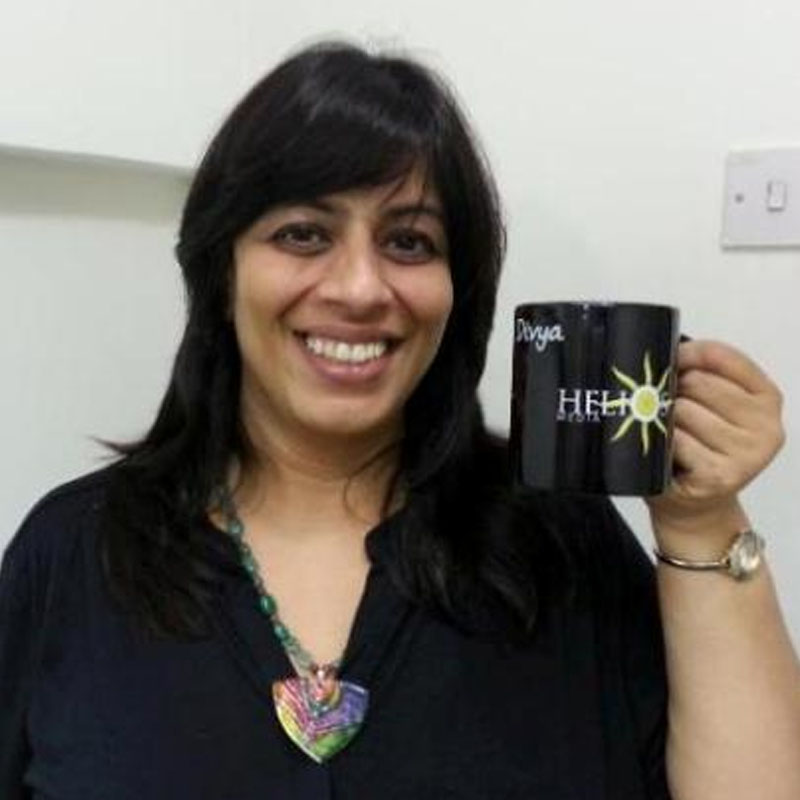
    Media veteran Divya Radhakrishnan gets a little nostalgic as she recollects that moment a couple of year ago when she was contemplating which direction her life should take. Says she: “After working for almost 25 years, when I told my mother that I was planning to quit, I least expected her to be supportive of my decision. But then her response motivated me to go ahead: she said just do it. And so I did it.”

    The former TME president finally dug her heels in and made the drastic career change.

    “I knew I was going to be on the other side of the table now and it was not going to be easy,” she says while thanking the leadership role she played at Rediffusion-Y&R, which helped her get an insight into how things work in various verticals of a media business. “But then I thought to myself that being independent and leading a business with decision-making power at my own risk would give me a greater sense of freedom and that really motivated me,” she adds.

    Her decision was pretty calculated too, she says.

    “There are close to 180 odd channels in India not aligned to any broadcast network. Agencies, clients, vendors, and others, however, expect them to have everything that a large network does like sales, marketing, research, and what have you. Now in a large network you can amortise your costs across several channels,” she explains. “But for a standalone channel the high overhead can be killing. Hence, I decided I would first focus on the sales outsourcing function for TV channels and once I achieved that, I would add more services. I needed to find someone who had a similar vision and I found that in Bala Iyengar and so we started out.”

    Right from the start, Divya was clear that her agenda would go beyond being just-another-organisation to fill a need gap, and getting recognition for creating a brand in a commoditised business of air time sales.

    Hence, Helios Media has ambitions to provide advisory and undertake operations for independent players in the broadcast industry. In order to differentiate itself it has set up various verticals like sales, marketing communications, advertising, research, content, PR, broadcast operations, syndication, events and new media to create a 360 degree outsourcing company which television channels can rely on. Divya on her part is also involved in a TV content production firm TouCan with sister-in-law Bhavna Radhakarishnan.

    With over 50 people on board now, finding the right team was not easy for Divya at the start. “Since I was coming from the other end, I needed to get the business heads in place so they could get the correct people for us,” she says.

    Among those who she managed to snare figured: Bala Iyengar (business head Zoom), Vaibhav Vishal (a former MTV veteran) and Prashant Nigam (also from Zoom). Iyengar is business director and leads the sales vertical. Vishal is the creative and content leader whereas Nigam looks after content syndication and special projects. The four pillars run the show headquartered in Mumbai, although the organisation has branches in Delhi, Bengaluru and Chennai.

    Helios is like a morphing organism, tailor making itself, depending on client and market needs. Though its headquarters are in the Maximum city, it has resources at regional levels as well.

    The organisation which started with its first client MTunes is now handling four different channels and is hoping to bill almost Rs 100 crore in revenue by this year end for them. Divya is also in conversation with others including an international TV network which wants Helios to draw out an entry and operational plan for a few of their channels.

    However, getting clients wasn‘t easy for it as it had to prove its credentials to the market.

    “The first eight to 10 months were all about investment of our resources, energy and talent to prove not only to ourselves but also to channels what we can do for them,” narrates Divya.

    Two agencies had approached the MTunes management when they announced that they would be outsourcing their ad sales functions.

    “The approach and the pitch with which Helios met us made us realise that they have enough insight and perspective about how to sell the channel at its launch stage itself,” says MTunes HD CEO Saravanan P, who asserts that the association helped their operations to touch inventory levels as high as the top two channels in the genre and they could also maintain it almost through the year.

    “The challenge was to pull off a decent ER (effective rate ) but we managed a very aggressive one which can be termed as an achievement for a channel in its first year of operation,” Saravanan adds. The agency also handles marketing, research, PR and social media.

    MTunes HD CEO Saravanan P says Divya & her team helped the new channel get very aggressive effective advertising rates

    “The past performance of the Helios team is very well known in the industry. Their recent success story with MTunes strengthened our belief on their capability. However, that is not the only reason why we outsourced our sales to them. FoodFood, being a genre creator, needed to be correctly represented to the clients and the agencies. Helios came forward with that understanding of the channel and the genre. For the long run, it is not just a few crores which advertising clients would like to put into the channel but would also like to get the correct association. We hope that Helios Media will be able to build that bridge between us and clients,” points out FoodFood CFO Sanjay Kumar Ballabh who came on board around four months back.

    Helios has a tool called DARE (defining, articulating, resulting and extending) to understand the brand and find solutions for the brand, especially for niche channels.

    “Using the tool, we could draw up the brand promise for MTunes as ‘Music like never seen before,‘” she says. “We worked almost like partners of the channel when we enabled the creation of a music countdown show called Trending which is probably the only show on right now with an indicator for the top songs in the country. We track them on YouTube, Hungama, and Radio City airplay etc and Ormax is our partner on this initiative. The concept is completely ours and has found a presenting sponsor in Airtel.”

    Divya has been focusing on other services such as marketing and content for her clients ever since she has got the ad sales engine chugging well. She says: “Marketing a channel is very different from marketing a biscuit. The customer is not really paying for a channel, and hence we have to be creative while inducing him to watch it. “

    Vivaki Exchange‘s Mona Jain & Mindshare Fulcrum‘s Amin Lakhani are impressed with Divya & the Helios team and the innovative solutions they offer brands

    Sources indicate that Helios has advised client FoodFood to go beyond cooking and also talk about other aspects related to food like eating out, food conversations, what to eat and when, health and nutrition, among others.

    Divya refused to comment on this but what she is really kicked about is the power of social media. “Digital should accentuate what‘s going on television,” she says. “And we have shown what can be done on digital through our work for MTunes.”

    Helios has designed and put together the online consumer interface for the channel in the form of its website with audio players, playlists, interviews, and what have you. But she faced a major challenge when she was assigned the task to build consumer engagement for MTunes HD on Facebook and Twitter: it had no rights to put the music it airs on TV on digital. Hence, the solution it found was to start conversations about youth interests.

    “Generally we spoke to them on Facebook and Twitter like a friend would do to them about everything that concerned them,” says Divya. “Of ocurse we also had guessing games about celebrities eyes and created special events online on friendship day. Right now we are working on creating a TV program which uses the interactivity of social media.”

    Divya and Helios have got fans in the media business. For example Vivaki Exchange CEO Mona Jain and Mindshare Fulcrum principal partner Amin Lakhani. “What sets Helios apart from the rest is not only the team which is packed with experienced as well as young talent but also the innovative ideas they come up with to service and represent a brand,” echoed both Jain and Lakhani.

    Divya knows she is onto a good thing and is looking forward to capitalise on the strengths she has built up in Helios. Says she: “When the 10+2 ad cap comes into play we will be best equipped to help our clients. Because I have all the verticals in-house and hence solutions that can help channels monetise what they have better.”

    Clearly, this is one lady on a mission.

  • How T-Series hit a Billion views on YouTube

    How T-Series hit a Billion views on YouTube

    It’s India’s No 1 music company. Now it has also got the nametag of becoming a YouTube billionaire. T-Series‘ Youtube channel crossed the billion views milestone in just a span of two years since it took the digital route. Some 2.3 million subscribers helped it get there.

    So what is it with T-Series’ YouTube initiative that has struck a chord with the digital generation? Let’s take a look:

    It’s content, content, content

    For starters, its got the most massy content – music of the biggest films out there on its mainstream Bollywood Channel, Take a look at what visitors get to consume on the T-Series home page: the music, trailers of Aashiqui 2, Yeh Jawaani Hai Deewani, Fukrey, Lootera, Chennai Express, Policegiri and Once Upon a Time in Mumbaai Dobaara. Can you get more popular content than that?

    India‘s music king Bhushan Kumar has a billion reasons to celebrate

    T-Series has over the 30 years of its existence spent top-dollar to acquire the rights to the music of some of Bollywood’s biggest blockbusters. The music of this huge catalogue has also been ported on to its YouTube channels, making for a treasure trove for music lovers.

    Then the T-Series Youtube presence is marked by many sub-channels like Apna Punjab for Punjabi Pop, Hamaar Bhojpuri for Bhojpuri content, Bhakti Sagar for spiritual music, Pop Chartbusters for Indipop videos, Shabad for Punjabi Devotional content, Bollywood Classics for 1980‘s and 1990‘s content, regional music channels and channels dedicated to full length Bollywood movies and Indian classical music.

    Though some of these channels don’t get humungous views, they go to service the long tail of consumers and cumulatively add up to large numbers.

    “These are targeted at niche audiences and we are really happy the way they have panned out. Hamaar Bhojpuri has seen really exciting numbers and has been getting views from as far as Argentina, Brazil, Germany and Middle East,” explains T Series president Neeraj Kalyan who looks after the label’s digital initiatives.

    Ok, it’s not just the content, it’s what you do with it, that counts

    “We experiment with our content and try to learn from our audiences which in turn help us improve ourselves,” explains Kalyan. “Nothing is fixed like a normal brand page of a mobile company or a cosmetic product, our product is music which is very personal and has the highest level of emotional connect with the consumers. Content programming on social media is as important as it is for television or radio.”

    T-Series’ endeavor with YouTube has always been to improve consumer interaction and make it it more interesting and engaging. Hence, it has innovative concepts like Audio and Video Jukeboxes, Bollywood Twisters, Lyrical Videos, Song of the Day and Fan of the week, which lures consumers into coming back.

    What else does it focus on? “Metadata building, tags, annotations, SEO are all standard procedures and needs constant focus to succeed in this space,” says Kalyan.

    “These require tremendous perseverance and have to be build up step by step.”

    Ok, you have played with the content. Now you have to promote it like hell using other social media where you have diehard fans.

    T-Series has a strong presence on other social media outlets such as Facebook, Twitter and G+. Its official Facebook page has 608,436 likes and hundreds of thousands of visitors at any time talking about the channel and its music. On Twitter, T-Series has around 19,627 active followers. @TSeries is buzzing with tweets and re-tweets every couple of hours. The numerous fan-driven handles of its popular movies are busy re-tweeting and sharing every update, thus adding to the social buzz – and the traffic thereof. Then it has 1.5 million people in its G+ circles, a sizeable number no doubt.

    “Social media is not like old school media, it’s a more personal medium which is primarily driven by peer activities, their likes and dislikes and if one has to enter their personal space one has to become their friends instead of a brand page. The prime focus of our strategy is to make friends instead of likes, subscriber or followers on our social media accounts.” Kalyan reveals.

    Then the T-Series digital team changes its social messaging strategy as per its content offerings. And it uses the entire strength of its social media to promote each major piece of content. For example, for a Salman Khan film, the entire social plan revolves around Salman Khan. And the zillions of tweets, updates, pictures, videos all cumulatively work to create even more buzz adding to the views.

    Work with Youtube, and get it to push your content

    By virtue of its being one of the larger players on YouTube in India, T-Series content, from time to time gets the nudge from the latter’s content team led by Manan Singhi in India. What that means is that, when visitors log on to the YouTube home page they are given prompts to visit the T Series channel as it is listed as among the more viewed ones.

    Build a digital team

    Kalyan personally supervises T-Series’ dedicated in-house digital team – though small – of around eight to 10 people. The average age is about 25-26 years, while Neeraj is 44. Says he: “T-Series’ digital team has been the winning mantra for us and will always

    The T-Series digital team is constantly on the go to keep visitors and viewers of its social media outlets engaged

    remain at the core of this success. We have genre specific experts managing all our channels and are currently busy with audience building for the niche channels. Our team interacts with fans on an every day basis; gives regular response to their queries, accepts criticism. We reward fans and recognize them online, which adds to their pride and improves interaction and helps in building a strong brand – consumer relationship.”

    The one billion views achievement has already got him praise from an effervescent T-Series chairman & managing director Bhushan Kumar.

    T-Series‘ digital driver Neeraj Kalyan

    “I would like to dedicate this success to all our fans all over the world that have helped us reach this milestone. I would like to congratulate my entire in-house digital team and the YouTube team for this tremendous feat. We look forward to achieving greater heights with our dedication and passion to offer quality content and experience to our discerning consumers worldwide,” says he.

    Kalyan says the past two years of T-Series’ association with YouTube have been a great learning and he hopes to put those learnings to help T-Series leapfrog further. “We will get to our next billion in double quick time,” he says. “I am sure we will.”

    With that kind of confidence, he well might.

  • Aidem Ventures: A comeback tale

    Aidem Ventures: A comeback tale

    Filling someone‘s shoes is never easy and especially when that someone is the person you‘ve always looked up to. Vikas Khanchandani, director of media outsourcing firm Aidem Ventures, who was part of the founding team humbly acknowledges the fact.

    “We all know Raj Nayak the man who started it and had the vision to look at an opportunity keeping in mind the fragmentation that the industry was witnessing. He has left very large shoes for me to fill and I don‘t think it‘s going to be easy doing that. After working with him for 14 years I am glad to make an attempt at fulfilling a dream and I know he is extremely proud of what we have done and continue to do.”

    Aidem Ventures was carved out of NDTV Media which ad veteran Raj had set up as a 26:74 joint venture in 2003 with major TV news network NDTV. NDTV Media‘s role was to do ad sales for NDTV (and any other channels it would launch), Mi Marathi and Sahara‘s TV channels. All was well for a few years.

    But then NDTV launched a Hindi GEC NDTV Imagine in 2008 and did not hand over ad sales to Raj and his team. He waited and watched for a couple of years for things to change, but nothing did.

    Vikas Khanchandani believes obstacles are the best path to take

    Hence, in 2010, Raj decided to quit NDTV Media and with the supposed blessings of both Prannoy and Radhika Roy he set up Aidem Ventures taking its entire sales team and business to the new firm in an effort to build a standalone enterprise. Things were hunky-dory, and Raj roped in some senior industry professionals such as Kaushal Dalal, M. Suku to strengthen the organisation. The venture was cruising until a year later when NDTV decided not to renew its contract. It was almost as if the entire floor collapsed under Aidem as NDTV accounted almost 80 per cent of the new fledgling‘s business. 
    Many of the founding senior management team headed for the exits. Around this time, Raj moved to Viacom18 as the CEO of Colors after finding an investor and well wisher, leaving with the belief that Vikas and team would successfully run with the baton.

    Raj also took the efforts to reassure everyone that the company will continue to keep its stakeholders‘ benefit in mind and will work forward to fulfilling its motto.

    “But those were tough times,” recollects Vikas. “We scaled down our operations and had to calm clients apart from making sure that our colleagues were absorbed in other companies. We did not lay off anyone.”

    The Aidem dream team: Alok Rakshit (regional entertainment & news head), Joydeep Ghosh (eBUS business head, India), Lama Choudhury (business development head)

    The investor that came in was none other than a client in his personal capacity: Ashok Gupta of the HDIL group, who was involved in a channel Live India. His entry and financial injection proved to be the proverbial turning point.

    From being a near basket case then, the firm has come back very strongly. And how. Today, Aidem has 100 plus employees and 30 clients across broadcasters and publishers nationally and claims to be more experienced in the outsourced model compared to any of its peers. The reason behind this is nothing but years of experience and practice that has built a whole host of services and IT enabled infrastructure that has given it an edge over some of the larger networks.

    “We spent two years to create extensive resources to have a robust platform which is web enabled giving people opportunity to feed, view and retrieve information on the go. We have experience across platforms and across genres from news – national and regional, regional entertainment, Hindi entertainment and niche and hence have build extensive knowledge and on pricing and strategy which have immensely helped our partners to improve their yields,” explains Vikas.

    He further adds, “We have the finest operations process and teams, something that keeps revenue based errors to negligible levels thereby bringing efficiencies in our service. Aidem also has one of the finest digital sales and operations team offering solutions to our digital publishers. Lastly, we are go-to-market experts, something that we have proven to our technology partners by creating the business model and then executing it as per plan and strategy to create one of the largest service providers in digital delivery of ad commercials within the country.”

    Madison Media COO Karthik Lakshminarayan agrees that there is a need-gap in the market and that is when such media-sales organisations have a huge potential to flourish. “Niche and regional channels don‘t have enough revenues to have a specified sales team and hence, such organisations come to their rescue unlike the large networks which have their own set ups.”

    The Aidem dream team contd: Neena Dasgupta (digital & international business head), Nikhil Sheth (Hindi entertainment & niche channels head) , Shailendra Shetty (systems head)

    Vikas has built a solid team, which is responsible for the Rs 200 plus crore business, Aidem generates across platforms for its clients. Alok Rakshit is the business head across regional entertainment and news. Neena Dasgupta looks after the digital & international businesses as business head. Joydeep Ghosh leads the eBUS Business for India. Nikhil Sheth is business head across Hindi entertainment & niche channels while Shailendra Shetty has been instrumental in devising and developing work flow and system for traffic and sales operations. Lama Choudhury heads the business development team and is actively involved with all commercial negotiations and deal evaluations. He has been with Aidem right from its incorporation.

    “Our hierarchy is simple, each business head has people under them looking after different regions,” explains Vikas.

    Tamil television broadcaster Jaya Network which has been with Aidem for more than an year is not only content but also thanks it for bringing in more clients (read: revenues). “We started with one channel but now Aidem handles the whole bouquet and within a year we have seen a 30 per cent increase in revenue,” proudly proclaims Jaya TV marketing head S Senthil Velavan.

    Similarly, The Economist which is in its second year of association with Aidem never anticipated the results it has got so far. “I knew Neena Dasgupta and when she came with a proposal for our online business, we were open to it. And all I can say is that revenues are now substantial while it was negligible when they came to us,” says The Economist India MD Supriyo Guha Thakurta.

    One venture which the organisation feels was a god-send was that of eBus, a digitial delivery and distribution platform for short form TV commercials, which it set up as a joint venture with a Singapore based company (headed by its CEO Carmine Masiello) of the same name in 2010. eBus is arguably one of the largest providers of this service to the advertising and broadcasting industries and was acquired by media logistics company IMD this year. “The acquisition gave us some good cash which has helped us retire all debt,” says Vikas. “But Aidem has the contract to manage it for the next five years. eBus is one of the finest cloud based delivery service and industry swears by it. We have around 300 clients using it.”

    Karthik Laxminarayan says outfits such as Aidem Ventures help the smaller players

    Like for any other, the journey for Aidem so far has been challenging, trying and exciting at the same breath. Not every client stays and it has had its fair share of losses. For instance, Radiowalla‘s co-founder Anil Srivatsa feels that though they had partnered with Aidem for only six months, the expectations and capabilities didn‘t match. He blames the timing for it, but however hasn‘t struck it off completely and wouldn‘t mind considering it in the future.

    Ups and down are a part and parcel of life and keeping that in mind Aidem sees itself as a platform that will create opportunities for many of its partners to grow and in the process grow with them. It has shortlisted some of the growth areas that it needs to put its energies in to and build them into substantial and valuable business over the next three to five years.

    “Right now, Aidem 1.0 is about trading while Aidem 2.0 will be about building platforms offering solutions across channels using technology as a tool to scale. We will also be building new business/services verticals using technology as a tool/differentiator that will help bridge some need gap within our industry,” says Vikas optimistically.

    He hopes to reduce the revenue dependence on channels too. “We are far better off from the days of the 80 per cent dependency on NDTV for revenues. But I would like it to come down from the 14 per cent to 20 per cent which it is currently. What that means is getting in more channels,” says Vikas.

    What was it that kept him going when everything else around him seemed to be falling apart? “It has been touch and go on several occasions,” he confesses. “But for all of us at Aidem: obstacles are the best path to take.”

    Maybe the quote by Marcel Proust “We don‘t receive wisdom; we must discover it for ourselves after a journey that no one can take for us or spare us” can sum up Aidem‘s journey.

  • Gaon Connection: Going beyond the village

    Gaon Connection: Going beyond the village

    It‘s seeking to further its connection with its core audience: those from rural India or those interested in it. Rural newspaper,Gaon Connection which hit the stands just as 2012 was ending, is now looking at going transmedia with an audio feed planned for handsets and short TV snippets on the anvil for TV news channels, and also spreading internationally.

    Founded by veteran journo and lyricist Neelesh Misra, along with his buddy Karan Dalal, with the aim of catering to the rural readers of India, Gaon Connection operates across Uttar Pradesh, Bihar and Madhya Pradesh.

    The Lucknow-based publication has a team of 15 full timers and scores of stringers all over India. Gaon Connection’s circulation has gone up from 7,000 copies at inception to 10,000 as of now, according to Misra. The 14 page Rs 5 priced weekly has a claimed readership of around 120,000.

    He says the Rs 5 tag is not too high as rural Indians spend about Rs 30 a month for their feature phone services. Therefore, Rs 20 a month for a newspaper which keeps them informed about developments important to them is quite reasonable.

    Misra has plans to increase readership of Gaon Connection and has drawn up ground activities to enable that to happen. Reading sessions are planned for schools and at panchayat gatherings, where reporters will read out the newspaper to locals.

    Additionally, it is roping in milk companies and SIM card distributors to further the availability of Gaon Connection.

    A small marketing and sales team in Delhi and Lucknow has been pitching the publication to advertisers and pulling in revenue from mainly local ones. Now Misra‘s gameplan is to attract large multinational brands and he is in conversation with agencies such as GroupM and Mindshare for the same.

    Misra got UP Chief Minister Akhilesh Yadav‘s support who dropped in at the newspaper‘s launch in December

    He believes that Gaon Connection will create job opportunities for rural youth. “For instance, we are planning to call in young people in Kanaura village in UP and train them to be journalists and distributors. What this will do is if you have a reporter and distributor in every block, you are able to create a lot of white collar talent which will give a voice to those regions,” says Misra.

    Misra believes it is now time to take the voice of Indian villages across transmedia platforms such as television and the mobile. An in-house team is in the process of scripting snippets to be telecast on news channels. Talks are on with two national channels for the same, he says, without revealing the names.

    “The ideas for the television snippets will grow from the newspaper. The vision is to eventually have a rural TV channel,” he shares. Misra plans to launch the TV snippets by end of the year.

    Gaon Connection has got rural readers asking for more; Misra is targeting a huge jump in readership

    Additonally, on the anvil is what he calls India‘s first audio newspaper. Misra (who is an experienced radio “story teller” courtesy his show on Big FM 92.7) is gearing up to create a dial-in audio feed for mobile users. The service will work on a subscription basis and will be available in the next four to five months. Talks are on with several telecom service providers.

    Going forward, Misra plans to take Gaon Connection overseas catering to the non-resident Indians (NRIs). “We are looking at setting up Gaon Connection chapters worldwide. We have received interest from folks in Singapore, Washington, London,” he elaborates.

    Misra used his personal savings – and even sold his home in New Delhi – to launch Gaon Connection. He now hopes to rope in investors to help take his pet project to the next level. His wife Yamini who joined him sometime back to look after distribution and building the business, believes in his vision. Now all that he has to do is make those with bulging pockets also fall in line.

  • The story behind Life OK’s Police Dial 100

    The story behind Life OK’s Police Dial 100

    Crime always sells, believes Shruti Anindita Vermaa who has now put on a director’s hat for the crime show, Police Dial 100 on Life OK.

    Talking about her new initiative, Shruti says, “As a director what excites me is the newness of a genre. Spearheading interesting shows and innovative concepts has been my forte.”

    Police Dial 100 is a unique show that tracks the life of cops on duty

    With the urge to do something new and interesting, Shruti and her team conceptualised a show that had real cops in the place of reel cops, capturing on camera live cases with the police as opposed to reenactment of past cases.

    Dissuaded initially by friends in the police, Shruti took the show as a personal challenge

    “There are lots of shows abroad involving cops but for India this was new thinking and for the concept that we had, there was no format at all. There are no shows that one can connectPolice Dial 100 with. It is original and 100 per cent real,” she adds.

    Life OK GM Ajit Thakur said he had never imagined that a media team could do this, but he said the series will make the people feel safer as it showed the police as it actually worked to combat crime. “Police forces have a tough job of maintaining law and order, especially in densely populated Indian cities such as Delhi and Mumbai.”

    Police Dial 100 is Life OK’s effort to delve deeper into the functioning law enforcing agencies and capturing on camera the highly stressful lives our police forces lead. The one-of-its-kind show in India will showcase things that are often not discussed on camera. The series is not based on any script and will not feature dramatisation or enactments, but will only capture reality as it happens in the police’s world. We are confident that the audience will be thrilled to see our real life heroes on camera.” adds Thakur.

    Police forces have a tough job of maintaining law and ordersays Life OK GM Ajit Thakur

    The making of Police Dial 100…….

    A show that breaks away completely from the existing crime shows, we take you to the journey of Police Dial 100, produced by Endemol India.

    Shruti discussed the concept of doing a crime show the way she envisioned it with Endemol India managing director Deepak Dhar, who was not very sure that the police would agree with her idea. Taking it up as a challenge almost eight months ago Shruti explored the various routes that would make her team’s concept into a reality on television.

    An eight month long journey…………

    Dissuaded initially by friends in the police, Shruti took the show as a personal challenge. She met the Mumbai joint commissioner of police Himanshu Roy and narrated the concept to him. An impressed Roy was completely sold on her vision for the show.

    Next Shruti approached the Delhi police commissioner Neeraj Kumar with the idea. Kumar immediately accepted the concept without even looking at any powerpoint presentation. “He said that everyone is out here to criticise the police. So if I meant what I was promising to do, he was there to give me all the support,” reveals Shruti.

    Police Dial 100 team has been permitted to sit in the control room at the police headquarters to better understand the functioning of the case

    Flushed with success, Shruti returned to Mumbai. Now she needed to have a channel on board. Dhar and Shruti discussed a couple of ideas for the show with Life OK general manager Ajit Thakur who said his channel would air it if she got permissions. “Ajit liked the idea but was not very sure if we would be able to pull it off,” says Shruti.

    Making a pilot that was great and acceptable was a major challenge.

    Even as Shruti started looking out for cases to highlight and track for it, 16 December happened. 23 year old physiotherapy intern Jyoti Singh Pandey was brutally gangraped, assaulted in a moving chartered bus by a gang of hooligans, and finally left on the streets to die with her intestines torn out.

    The media went berserk and everyone was lambasting the cops for their alleged gross inefficiency and disregard for what was going on.

    A skeptical Neeraj Kumar asked Shruti if she still wanted to go ahead with the show which would only track the police on their job (rather than be judgemental as the media was being) when she contacted him. She of course replied in the affirmative.

    Everyone is out here to criticise the police says Delhi police commissioner Neeraj Kumar

    Neeraj Kumar asked the then DCP of Delhi South Chhaya Sharma – who was the main investigating officer on the Jyoti Singh Pandey case – to permit Shruti to sit with her and capture each and every move for the next 72 hours. She was reluctant at first but finally agreed on the commissioner’s insistence.

    And it was during the course of this that Shruti got to witness first hand the efforts put in by the police to hunt down and then book the perpetrators; she tracked the protests at India Gate, the police handling the family of the rape victim as they silently saw their daughter fight for her life. She also followed the capture of the last rapist.

    Talking about the police’s determination to do their job, she confesses: “The police team in South Delhi was busy filing charge sheets and ensuring that Jyoti Singh Pandey got justice. My commitment grew stronger following this. I knew what I wanted. I spent 10 days with Sharma and her team, had lunches and dinners in their canteen and sat in their Gypsy vehicle as a silent spectator while they went about on their night patrol even as the temperature dropped to near freezing.”

    Now there was no way she was looking back. She was determined to make her show.

    But things got stalled after that. “I left Delhi to come back again in January and yet again it was a case of wrong timing. 26 January preparations were on and once again the city was quiet… I had come to shoot action but the cops had none. And finally I got my first case that not only became my pilot but also became the opening story of my series. A kidnapping case that took place at Lodhi Colony in New Delhi” says Shruti.

    Her team rushed to Lodhi Colony and shot everything from zero hour. The case was cracked in two and a half hours. The team came back with the shoot and edited the story and presented it to Life OK.

    They are more comfortable with us and our presence does not irritate them as much as it did earlier says Shruti about cops

    Above (L-R) DCP of Delhi South Chhaya Sharma, Inspector Rajendra Singh and Shruti Vermaa


    Says Shruti : “I did not have a format to refer to or a show to follow. It was just pure conviction that worked. Deepak Dhar and I took the pilot to Life OK and Ajit Thakur and his team gave us a standing ovation.”


    She admits that it has not been easy. “In terms of difficulty that we had during the pilot, well, Delhi is a huge space and when we actually started shooting, the cops were not comfortable with the idea of a camera encroaching upon their privacy. So the commissioner’s permission initiated a conversation, but the task was to win their confidence. Gradually, they started opening up and were supportive.”


    How the Police Dial 100 team works….

    The Police Dial 100 team consists of more than 100 people. It includes a creative director who is responsible for what goes on when the filming is happening and a creative head who looks after the post-production, six cameramen, three associate creative directors, reality producers, sound engineers and a support production team on ground.

    Director Shruti has been on the streets of Delhi and Mumbai in the freezing nights following the cops investigating the cases

    Besides, there is a large post-production team with six editors and six assistant editors-cum-post producers. The team generally shoots with a simple HD camera, but depending on the kind cases, they use GoPros, cameras mounted on cars, pen cameras, button cameras and watch cameras as well.

    Additionally, there is a team that has been permitted to sit in the control room at the police headquarters. So whenever there is a case, Shruti gets a call from the police control room.

    Once she decides to follow a case, she sends a team to the police station after a conversation with the station house officer so that the team can capture events as they unfold from the crucial zero hour. And this Endemol bunch continues to be with the police team that is following the case till it is solved.

    Every night the team views the footage together and also plans the way forward. Once each case is shot and the no-objection certificates of all the concerned people are in place, the entire docket along with a log sheet reaches the Mumbai office where it is edited.

    A script is written, a voice over laid and then the graphics and the music are added. The episode is then handed over to the channel which plans an interesting promo for each week.

    A team of more than 100 people are documenting real life cops on the field; quiet a refreshing change from the other crime based shows

    “There are times when after two days of shoot we realise that the story is not going forward. We bounce it off and move on to the next case,” reveals Shruti.

    She explains how each episode is put together. She says: “It is the case that is most important. We start following many case files because it is difficult to figure out at the call level the intensity or layering of the case. And the camera just follows the action as it unfolds. It is not scripted at all because there is no space for that. Direction is mainly limited to directing the cameras how to operate and also the ACD gives direction on the pitch one needs to take.”

    Shruti believes Police Dial 100 will maintain its freshness for a long time; there’s no question of staleness setting in. She explains: “Police story telling is also like film story telling. Every case has a different narrative. No

    Every night the team views the footage together and also plans the way forward

    two murders are the same, no two kidnappings are the same, the suspects are different, their backgrounds are different, every crime has a different modus operandi. So there is no chance of duplicating ever. A major part of an episode is made on the editing table because it is here that the narration is planned and scripted. The post team is huge. There are more than 20 people working round the clock to meet deadlines and maintain quality.”

    Shruti’s team includes award winning director Sohail Tatari, Amitabh Varma who handles scripts, Bapi and Tutul are in charge for music, Himanshu looks after graphics.

    When asked how much say the Delhi police have in each episode, Shruti asserts that everything is based on mutual understanding. “They trust us and we trust them,” she confesses. “So we know when to switch off the camera and they know it pretty well. They are more comfortable with us and our presence does not irritate them as much as it did earlier. The only thing they do is direct us to follow the legalities of what can be shown and what cannot. The idea is to create a great show by highlighting the work of the cops and not create a problem in the case.”

    Endemol India Deepak Dhar MD and CEO says, “For the first time in the history of Indian television we present a show that explores the real world of cops and crime. Our cameras have captured the activities of the police force, working to solve a case in real time.” He said this was real TV, not reality TV.

    Current scenario…

    The show hit television screens on 22 June at 7.00 pm on Life OK.

    At the time of writing, 12 episodes have already been shot in Delhi. Both Life Ok and Endemol have an initial 13 week telecast schedule. Shruti however has been extremely pleased with the response the first episode has receieved. She says: “Superb. I got almost 900 messages from my friends and relatives. So I know that apart from the making of the show I am also contributing to its TRP. But I know we have made a path breaking show and with a social purpose as well. So I am very satisfied with Police Dial 100.”

    “Endemol has always broken the mould when it comes to new and innovative programming”, says Deepak Dhar

    A short note on Shruti Anindita Vermaa…..

    Shruti has been a TV professional for two decades and has a varied experience on a variety of programming formats with a clutch of production houses. Amongst these figure: Balaji Telefilms as the head of non fiction division, with Gajendra Singh as a creative director, with Miditech as a creative director and supervising producer and with Applause Entertainment as the head of non-fiction and events. She has spearheaded shows like K for Kishore for Sony TV , a very prestigious project called South Asian Superstar which is a parallel version of Indian Idol on a bigger platform with five countries participating for the final title. She worked as creative director for Antrakshari and Voice of India for Star Plus, and as a senior creative director for Raaz Pichle Janam Ka for NDTV Imagine for both the seasons. She has also worked as the production designer for the National Award Winning Film Antardwand that was released last year by PVR.

  • Colors’ gung-ho digital strategy

    Colors’ gung-ho digital strategy

    Send in your tweets to @ColorsTV, be a part of a Facebook contest, stand a chance to win an iPad, tweet away your views with #Jhalak..#Madhubala. Watch Colors live, maximum You Tube hits. #ThisIsTHEchannel WithanAdmirableOnlineStrategy.

    Well, the crux of this story is just that. Colors, Viacom18‘s maiden Hindi general entertainment channel (GEC), which has carved a commendable place for itself in a very short span of time, is a channel with a massive digital presence. Hence, taking our digital series forward (read the previous stories on Sony and Star Plushere), we take you through this interactive journey of the very dynamic Colors, presenting awe inducing figures, highlighting the ever increasing online fan communities and much more…

    The official Facebook page of Colors has an overwhelming 1.88 million likes with more than 100,000 active fans. While the channel keeps its official page up-to-date with galleries and snippets of upcoming episodes, it also links the platform to the official pages of its various shows. The official page of its popular fiction dailies likeMadhubala: Ek Ishq Ek Junoon and Balika Vadhu have garnered 0.48 million and 0.43 million likes respectively. Among non-fiction shows, Bigg Boss Season 6‘s official page boasts of 0.16 million likes, whereas, the recently launched Season 6 of popular celebrity dance reality show Jhalak Dikhhla Jaa has already garnered 0.1 million likes.

    Colors contstantly updates its Facebook profile for its 1.88 million plus fans with teasers, pictures and snippets

    Apart from the official pages, Colors has gained immense popularity through the numerous fan driven pages of its hot-selling properties. The upcoming season of Bigg Boss already has a fan page featuring more than 22,000 likes, while the previous season‘s fan page figures around 0.29 million likes. But the show which seems to have broken all records is the very popular Vivian Dsena – Drashti Dhami starrer Madhubala-Ek Ishq Ek Junoon, produced by Nautanki Films. The love-hate relationship of the lead protagonist has definitely captured the imagination of the TV viewing audience. There are more than 100 Facebook Fan pages dedicated to the show with some registering more than 60,000 likes. Well, if that‘s not impressive, what will be?

    In a world where news is being replaced by a tweet of 140 characters, soap plots are tweaked according to fan tweets. Twitter enables instant reactions and feedback and Colors makes the most of this platform. With more than 81,000 followers and around 16,000 tweets, the official twitter handle of the channel (@ColorsTV) is a buzzing place. Every few minutes, the handle buzzes with tweets and re-tweets. Every couple of days, the channel also launches interactive contests to engage with its fans. Recently, @ColorsTV awarded an iPad among other goodies to winners of the #Jhalak contest. The success of the Twitter launch of Jhalak Dikhhla Jaa can be gauged from the fact that the official hash-tag was trending all over India for nearly three consecutive days and also in UK and US for some time.

    It takes a person like Vivek to spearhead the digital revolution at Colors

    Colors Digital Head Vivek Srivastava asserts: "Our effort on social media is to start and manage conversations and we have some very good brands on both fiction and non-fiction which help our cause. Just to give you an example Colors properties trended 51 times at all India level in the last financial year."

    For a general entertainment channel, the video uploads drive maximum traffic and for the same purpose, Colors launched its official YouTube channel in June 2008 and has since uploaded around 18,300 videos. The YouTube channel has 0.2 million loyal subscribers and a magnanimous count of around 149 million video views so far.

    On an average, every Colors upload garners more than 20,000 video views within a couple of days. Here as well, popular properties like MadhubalaBalika VadhuJhalak and Bigg Bossgarner average views as high as 85,000, 40,000, 50,000 and 45,000 respectively. The wedding special episodes of Madhubalaalso recorded views as high as 0.16 million. Besides, the much promoted grand premiere of Jhalak was uploaded in 33 videos, each video garnering thousands of video views.

    Srivastava informs: "The episodes are uploaded within a couple of hours of the show going on-air, however we create specific content for the internet and mobile which goes beyond catch-up for episode. This is primarily aimed at engagement, if there is a Colors fan intending to know more, discuss or comment on our shows, we have to facilitate it."

    The mainstay platform of Colors has web exclusive content, photo galleries, polls and much more

    Such a comprehensive digital presence is further topped by the official website of Colors- www.colors.in.com. This is the mainstay platform of the channel as it aims to use all its other platforms to drive traffic towards the website. It is the hub of all online activities for the channel with web exclusive content created especially for it along with live streaming, picture gallery and video uploads, trends and show trivia. What more, the channel has been successful in generating 100 million page views last year. "We have a very strong offering in colors.in.com a website which goes beyond just catch-up TV. There is news, videos, behind the scene, interviews, discussions, special content, live streaming and much more; the effort is to feed an ardent Colors fan with as much information as possible," Srivastava elaborates.

    The question which hits our mind is whether the website delivers on the huge investment? Srivastava is very clear in his answer: "Yes, we are investing in it heavily. For a content heavy platform like Colors where we own most of the IP of our content, it‘s important to have own destinations and build traction for them from a long term perspective. YouTube, Facebook, twitter and other such platforms serve as media vehicles to best engage with our consumers and monetisation of our content, since most of these platforms have huge audience bases we put significant effort on them as well."

    Colors targets all social media platforms and also boasts of ‘web exclusive‘ content. All in all, it has done it all- from having an official Facebook page to an active twitter handle; from one of the largest YouTube portals to the very interactive colors.in.com

    Why so much of social networking? What was the driving force for this aggressive online strategy? The digital head reasons: "Viewers are viewing, sharing, blogging and tweeting TV content. Consumers are willing rather eager to engage with their favourite shows and characters outside the silver screen. We realise this need, these serve as great conversation starters and opinion builders. It's important that we are present wherever our consumers are seeking us, and wherever possible channelise conversations to positively impact the brands."

    An interesting aspect of GECs online is the apt usage of archived content. A lot of older episodes of popular properties as well as popular shows that have gone off air, get a considerable amount of traction. "Blockbuster content from any era gets traction, 1000 episodes down we still have viewers watching initial episode of Balika Vadhu and Uttaran. Obviously the shows on-air will get higher traction but there is always a market for classic content," adds Srivastava.

    Madhubala seems to set precedents for the rest of the fiction shows with more than 100 Facebook fan-driven pages

    In terms of genres, some non-fiction properties like Bigg Boss stand out because of the nature of the property and its ability to start conversations. But at an overall level both fiction and non-fiction gets equal traction.

    The virtual world of Colors is not restricted to your laptop and desktop, the channel has very impressively targeted mobile as well. It all began with the launch of the Bigg Boss app which allowed viewers to watch all that is happening inside the house at any given time. The 24/7 live streaming app became an instant success and got the Bigg Boss fanatics hooked to their cell phones.

    Today, Colors is taking the app world very seriously with the launch of the Jhalak app. This has a play along feature allowing the viewers to play real time along with the original telecast of the show. Apart from this, one can participate in quizzes about the show, vote for their contestants, watch videos, express your views on social platform etc all through one app.

    Srivastava further explains: "People today are using multiple screens – laptops, smart phones, tablets etc and multiple platforms – the video sites, the social networks, Apps, Games etc to access content. Although, the numbers are small especially when compared to the reach TV as a medium provides, however the growth and engagement the medium provides is phenomenal."

    Does he see then a profound shift from desktops to tablets very soon? "Tablets and mobiles are becoming important as the second screen, however the consumption is varied, most of video consumption is catch-up in case you have missed an episode or a highpoint," he further adds: "The bigger hook is exclusive content, viewers want to interact with their favourite stars, know more about their off screen personalities, behind the scenes, news, views, interactions, sometimes even spoilers. We ensure both these are present in equal proportion on our digital platforms."

    Episode videos are uploaded within 2 hours of the telecast. Popular shows get more than 80000 average video views per episode

    On that note, one has to but, wonder about this new-found lucrative source of revenue for the channel. How does the channel use this space in order to monetise? Srivastava reveals: "For a broadcaster, advertising and subscription revenues still contribute the maximum. However, revenues from digital platform have been exhibiting significant growth. Majority chunk of the revenue still comes from Linear and VOD content, then there is WAP, Voice, Gaming etc all of which exhibit positive numbers if you have the right offering."

    In that case, is it time that GECs start taking the digital platform seriously from the revenue generation point of view? "Without commenting on the numbers the digital revenues have been showcasing a healthy growth YOY and as penetration of internet and accessibility to smart devices increases over the next few years we anticipate a bullish trend."

    Television broadcasting is going through a metamorphosing phase, what with the TAM rating fiasco and the impending AD cap regulation. Talks about reducing dependence on advertising revenues is becoming the part of every discussion. In such a scenario, is there a possibility of subscription revenues from this rapidly growing online medium? "The Subscription market on both Internet and mobile is evolving. As models become stronger and penetration increases subscription revenues will start contributing more," states Srivastava.

    All in all, Colors has definitely created an everlasting place for itself on the digital platform. Who are these who have created this dynamic virtual reality? On prodding Srivastava answers: "We have full fledged team looking after content creation, SEO, SEM for all platforms – social media, Colors website, Internet and mobile."

    Whoever you knight in shining armours are, you have surely left an imprint in this ever evolving online space. Way to go!

  • Life OK’s Sunday programming experiment

    Life OK’s Sunday programming experiment

    Attention! An experiment is about to hit Indian televisionscreens come Sunday 23 June. If you‘ve not been switching on your television set on Sunday morns or noons for want of there being any original programming – apart from movies, and have had enough of watching singing and dancing shows in the evenings, then Life OK may be your new destination this weekend.

    Bringing a new kind of programming, extending its spheres, Life OK promises uninterrupted entertainment 12 noon to 12 midnight (baara – se – baara) on 23 June. Life Ok general manager Ajit Thakur is bracing himself for this Sunday gamble…

    But is this attempt a first of its kind? A recap of Sunday programming tells us that there was a time in India, a couple of decades ago; when streets were deserted owing to the single channel king Doordarshan and its strong Sunday programming. Flashing forward from the era of a single channel universe, leading general entertainment channels (GECs) like Star Plus and more recently, Colors have also encroached this territory.

    While Star struck an emotional chord with the nation by launching the very successful Aamir Khan anchored social show Satyameva Jayate, Colors had started airing non-fiction award shows in the early afternoon, followed by a movie screening and concluding it with a soft scripted drama cum reality show- Zindagi Ki Haqeeqat Se Aamna Saamna. Zee TV has Ramayan, a mythology show in the morning slot which, however, is not living up to audience’s expectations.

    Yet, generation of 12 hours full of fresh content is somewhat a brave initiative by Star Plus’s sister GEC.

    Life OK, over the past couple of weeks has grown steadily in terms of GRPs (though it shed GRPs in week 24). The weekend slot of the channel is grabbing more and more eye balls with each passing week. With this as an opportunity, Life OK thought of going all the way and see if it works.

    Life OK GM Ajit Thakur is taking a punt with his baara – se – baara initiative on this Sunday (23 June)

    Thakur states: “I am quite delighted with the way we have received responses from the viewers over the past couple of weeks. Talking about 12pm to 12am, on weekends, we have found a bit of a gold mine as people are available throughout the day. Unlike other markets, in LC1 markets there is a lot of viewership happening. Everybody is doing show launches and wants to target between 8pm – 12am time slots so we thought to bring a change by extending our programming which has not been done by anybody till now.”

    The channel aims to own this Sunday with a combination of crime, terror, mythology programming. Audiences will get to see Savdhaan movie- part 2, which is going to be much more informative and different from the first one.

    New reality series on the list include Police dial 100, a new innovation where the channel crew will accompany the Delhi cops, running behind them, observing how they solve the cases and recording them. The reality show, produced by Endemol, will occupy a double slot along with the Savdhaan movie -Part 2. The channel had already shot 10 episodes of the show at the time of writing.

    The channel will also air fresh episodes of Mahadev and Shapat.

    More on the entertainment side, Life OK also plans to air a special Bollywood movie to garner more eyeballs.

    “Let’s raise the ambition with maha – thriller weekend baara – se – baara.” asserts Thakur when asked why he chose particularly Sunday and not Saturday as part of his weekend programming. “Saturday in terms of viewership, is not that high as Sunday. Besides, a large chunk of India works on Saturday’s and it‘s a humongous task for me to ask my team and my producers to do such a hectic programming, as 12 hours is a lot of time.”

    What is rather disappointing is the fact that this unique 12 hour programming is slated only for the coming Sunday. Thakur reasons: “To be frank, we want to test it first, this is the trail run. I wanted advertiser’s feedback and we attained success when we did 6am -6pm on 2 June. We received good responses in terms of viewership and advertisers as well. So we thought of further strengthening it by bringing baara – se – baara and I am sure we will get good responses for this as well. And when we do might it make it a regular initiative at least once a month.”

    The channel plans to promote the weekend initiative largely in the coming three days. However, the focus will be more on promoting across social media platforms rather than on-ground activities. Its management plans to leave no stone unturned to make its presence felt on digital media by targeting fan driven pages and profiles of their flagship shows likeMahadev and Savdhaan. To top it all, the channel is also buying air time on other channels, out of which, the promotion will be huge on Star network channels while few news channels and youth-based channels are also being approached.

    When asked what makes Life OK and Star Plus different in terms of content and programming Thakur says: “Star plus targets women in the household a lot more and that has always been Star’s strength. On the other hand, Life OK targets the whole family. In terms of content, Star talks about aspirations and about new Indian relationships whereas Life OK deals with crime, mythology, terror, spirituality and cops. Star Plus talks about relationships between Nanad – Bhabhi and new thinking and that is why ‘nayi soch’ whereas Life OK talks about today’s reality of life through our stories and what makes life OK on a daily basis. Life OK tries to inspire people by picking up serious social topics.”

    Further elaborating on the fact that this Sunday is an experiment, Thakur shares: “For us it is the experiment to change the rules of the game. I always have the support of Uday Shankar (Star India CEO) and Sanjay Gupta (Star India COO). And yes it is a big risk I am taking as nobody has gone into 12 hours of programming. Some would say wow great… while some would say it is too much. While, everybody is giving repeats to the audiences and we are giving original programming. What is more important for us is how our viewers will react to it.”

    Vivaki Exchange CEO Mona Jain says the experiment should do well for Life OK

    But will this trial run work for the channel? Vivaki Exchange CEO Mona Jain asserts: “There are many channels which are plugging in for reality shows on Sunday’s. Life OK is taking a good initiative by coming up with 12-hours of programming to create more impact with the audiences at large, where most of the people are at home resting. Mahadev and Savdhaanare high property shows and are taking the same route that is weekend slots, making it easy for them to spot on the ratings. And people who are loyal audiences of Life OK will watch these shows no matter what. Thus I am quite sure that this kind of experimentation should do well.”

    We, along with team Life OK, wait with anxious eagerness to know the result of this experiment…

  • Stars light up Star Parivaar Awards 2013

    Stars light up Star Parivaar Awards 2013

    Star India’s much-appreciated Star Parivaar Awards is getting glitzier and glamorous. As the actors walked the red carpet, dressed in their best attires, unlimited fun and entertainment was guaranteed. Yash Raj Studio became a witness again to a bigger and better Star Parivaar Awards 2013, which was held on 15 June. The channel has roped in Oral-B as the main sponsor and Amway as the associate sponsor for the grand event.

    The initiative marks the success and recognition of TV characters on Star Plus by the audiences who monitor them closely and daily on their favourite soaps. The function was a limitless package of path-breaking performances, glamour, humour and not to forget the gorgeous television stars.

    Sooraj (Anas Rashid)-Sandhya (Deepika Singh ) from Diya aur Baati Hum, Aaditya (Nakuul Mehta)-Pankhuri (Disha Parmar) from Pyaar Ka Dard Hain, Gopi (Giaa Manek) – Ahem (Mohammad Nazim) and Rashi (Rucha Hasabnis)-Jigar (Vishal Singh) fromSaath Nibhana Saathiya, Aakash (Rahul Sharma)- Poonam (Ishita Dutta) from Ek Ghar Banauga,Nach Baliye-5 winners Jay and Mahi, Ranvijay (Bhavesh Balchandani) -Veera (Harshita Ojha) with Ratan (Sneha Wagh) from Veera were some of the popular Parivaar faces who walked the red carpet.

    Masterchef Fame Sanjeev Kapoor, Vikas Khanna and Kunal Kapur also did the honours along with Masterchef India season 3winner Ripu Daman Handa.

    The evening could not have ended without the doffing of the collective cap to the power of Bollywood. Celebrities like Shilpa Shetty Kundra, Riteish Deshmukh, Sonakshi Sinha and Imraan Khan added some spice to the event.

    Star Parivaar Awards’ unique theme ‘Yeh Prem Kahaani Hai…Parivaar Ki’, brought out the best from the members of the family, who enthused the audience with their breathtaking acts. Be it young or old, all the popular Star Plus actors burned the dance floor with some mesmerising performances.

    With Parivaar Awards roping in Shiamak Davar to choreograph the entire show, the musical theme adopted for this year, was an add-on to entertainment. As the biggest Parivaar of the country came together to celebrate love and togetherness, the evening had its moments of pathos, joy and tongue-in-cheek humour. Present at the occasion also were quite a few TV producers who have contributed to Star Plus success: Rajan Shahi, SLB’s Arvind Babbal , Tony and Deeya Singh, Shashi and Sumeet Mittal, Rakesh Paswan, Yash and Mamta Patanaik, Kavita Barjatyya, and Rashmi Sharma. Star India’s CEO Uday Shankar, COO Sanjay Gupta, content engine head Gaurav Banerjee, Star Plus business head Nachiket Pantvaidya, non-fiction head Ashish Golwalakr were all there to cheer their actors on.

    Also on hand were Star Parivaar Awards jury members Indiantelevision.com and The Indian Telly Awards CEO Anil Wanvari, producer J.D. Majethia, and veteran journalist and writer Bhawana Somaiyya.

    This apart, the 3D mapping projection and three-sided Varsha Desai-designed stage at YRF were a revelation. While SOL Productions was responsible for the creative and the TV production of the event, Frames handled production on the red carpet and the curtain raiser.

    The highlight of the show was the group performance by Shagufta Ali (Moti Chaiji from Veera), Hina Khan (Akshara from Yeh Rishta Kya Kehlata Hai), Disha Sharma (Pankhudi from Pyaar ka Dard) and Neelu Vaghela (Bhabho from Diya aur Baati Hum) who made the audiences go ga-ga with their mind-blowing moves and grooves.

    While most of the stars burned the dance floor with their high on energy performances, the rest of the members were seen humming the new STAR Parivaar song 2013 – ‘Tum Jo Milgaye ho’ sung by Sunidhi Chauhan and Ankit Tiwari.

    Well onto the show, the event started with an electrifying prayer dance by the team of Shiamak Davar along with Bhabho, Naitik, and other popular faces of Star welcoming guests to a memorable evening. This was followed by a comic act put together by the cast of Diya aur Baati Hum and other famous actors from the show Yeh Rishta and Veera and Rahul Mahajan.

    The very dashing television chocolate boy Karan Wahi and Ek Hazaaron me Meri Behna hai fame Jeevika left the viewers in splits with their quick drollness and rocking stage presence as they co-hosted the evening for the first category of awards. Helping them with the awards segments were the lively co-hosts Jay Bhanushali, Karan Mehra, Neelu Vaghela and Ashok Lokhande.

    Star India CEO Uday Shankar gave away the ‘Har Ghar ka Pasand Sadasya’ Award.
    While on the one hand, the gorgeous Monica Bedi, who shook the audience with her exotic performance on the popular number Lat Lag gayee from Race 2, provided an oomph factor, Akshara, Sandhya and Pankhudi made the audiences go ga-ga with their thumkas and latkas.

    All through the fun and entertainment, the Star Parivaar Awards did not forget to highlight the plight of women and the injustice faced by them. The spectacular performance by Ratan from Veera and Pankhudi from surely was a highlight of the star-studded evening.

    The rope walking act with no support by Anas Rashid (Diya aur Baati hum fame Sooraj) surely made everyone skip a heartbeat.

    All in all, Star Parivaar Awards was a magnificent evening to remember with fabulous performances, surprising acts and the shinning television industry at its glamorous and entertaining best.

    Click here for photos of the Star Parivaar Awards Red Carpet

  • “Sab will be among the Top Three Hindi GECs”

    “Sab will be among the Top Three Hindi GECs”

    From being a copywriter, director to business head, the soft-spoken Anooj Kapoor has worn various hats. But what makes him different from others is the way he manages the work-life balance. He proudly claims that in his more than 20 years of career there has rarely been a day when he has been in office later than 6 pm. Even today, he leaves office at six in the evening and on weekends he switches off from work, unless required. Someone who believes in working hard hasn’t forgotten to live to the fullest too…

    Indiantelevision.com’s Meghna Sharma spoke to the executive EVP and business head of Sab Anooj Kapoor about the channel’s current plans,the reason for there being no other channel like Sab and the channel’s future plan. Excerpts:

     
    The channel underwent a revamp recently, was it really needed? 

    Nothing we do here is what everybody else does, starting from our programming which is totally differentiated from the rest in the GEC space. So, this revamp is not because others have done it too. All we have done is revamped the packaging of the channel. The last revamp was done almost six years ago, and we thought we have had a wonderful growth in the past five years. So we wanted the packaging to be more colourful. We have retained the old colours and added more colours to our package to convey freshness, more audience on the channel as well as more people sitting together to watch our shows. It can convey a lot of things, but essentially, we wanted a fresh look.


    You said you are adding more people who are watching your channel. So through the revamp and apps are you targeting youth now? 

    Asli maaza sab ke saath aata hai… has stood true for us. The entire family comes together and watches TV. We have a mix of audience, from males, females to kids. We also have a healthy mix of Sec A, B and C. So we are not trying to broad base our TG, it is already 4+.

    However, we cannot deny that new things always appeals to people. In the age-group of 4-14, we are the number one channel. In the last TAM rating, we were ahead of Star Plus. In the higher age-group, 15-24, we are fairly strong but we realised there is a need to engage audience on fresher platforms – facebook, comics, SABurbia and other apps. And the age-group after that, we keep appealing through our ads where the whole family comes together.


    Our other initiative ‘Sab ki Saafari’, is also first of its kind. The idea was to get people from smaller towns meet their favourite characters or watch a shoot. Through this initiative we get our loyal audiences to meet their favourite characters and also show them what goes on behind the camera. We have another loyalty program called SABprise wherein the more you watch the channel the more you get rewarded for it. We feel that today it has to be a two-way communication. If they have given us so much and helped us grow 600 per cent in five years then we should also give them something in return.


    With the awards season on, when can we get to see Sab ke anokhe awards? 

    We are coming back with Sab ke anokhe awards in August. The first round did well for us as we got a rating of 2.8 which I’m not going to compare with other award shows, but for a channel like ours which has a limited reach it is a very healthy rating. It was purely because of the uniqueness of the show. We came up with categories which went beyond the clichéd categories. This time we are going to add even more categories and try to be as anokha as possible. We will be sticking to our strategy of being different and innovative.


    What kind of weekend programming does the channel currently have? Any plans to introduce new shows?

    Currently, we have two silent comedies on Saturday – Guttur Gu and Malegoan ka Chintu. Guttur Gu has been recognised as the longest running silent show in the world by the Limca Books of Records, and then we have Waah Waah Kya Baat Hai which consistently rates among the top five shows in the non-fictional category on the weekend. So, we have fresh weekend programming. We might add new programs in the future wherein we will look at reality or mix of unique concepts like silent comedy but nothing is crystallised yet.

    “We touched our highest rating of 159 in February this year and now with digitisation when we are far better placed”

     
    SAB is the only comedy-centric Hindi GEC, wherein other networks have second GEC channels, why do you think there aren’t many players in this genre? 

    We are the number one comedy channel in the world. We are the only channel in the world which does daily comedy shows. If you will look at channels like Zee Café or Star World, the sitcoms they have are weekly and have seasons. We have Tarak Mehta Ka Ooltah Chashmah which has done 1200 episodes now, Lapataganj in its first avatar had done 850 episodes and FIR will be touching 1000 soon (in September). So while we have been able to be innovative, we have also done successful programming. All this while we know that there is a limited pool of comedy actors, writer, directors and producers.

    Also, before SAB, comedy wasn’t seen as an important genre by GECs. We have been able to reign in that limited talent and try to cultivate a few more. With the limited pool I don’t think there is enough talent for more than one channel to survive. And secondly, we have a DNA which has gotten us consistent success. There is no doubt that other channels have dabbled into comedy especially after seeing SAB’s success, but all the top three or four GECs have not been able to succeed. And, therefore they are apprehensive.

     
    Do you work with a certain set of production houses or open to others as well?
     
    We have always encouraged new producers, but at the same time we have certain set of producers that have consistently worked for us. We also have people who have never done comedy before and doing it successfully for us. For instance, Malegaon ka Chintu is produced by Deepti Bhatnagar Production which hasn’t done comedy in the past, Gutur Gu is done by Fireworks who have in the past done CID and Aahat. And of course, we have Asit Modi, JD Majathia, Vipul Shah and Ashwini Dheer. So, we have been able to mix both.

     
    You are also available in the US, UK and Europe, what has been the response there? 

    We are extremely popular abroad. In the UK we are the fastest growing channel.

    It is a fact that we have created almost 7,000 hours of original programming and when we compare data with other channels dedicated to comedy we are miles ahead of them. From the 70s, since DD started, no channel has claimed or can claim to be the number one channel based out of India but we can!

     
    It’s going to be a year now since digitisation took place. How has it helped the channel? 

    We have a business model which by definition doesn’t afford us very high rates and because we also have to keep our profits in mind, we couldn’t place ourselves where top three or four GECs could. This meant, we could not be well placed in the analog. However, with digitisation, we now fall in the GEC cluster. Now our sampling will soar up. We also strongly feel that our trial retention rate is high.

     
    Currently, which are the weak slots that you would like to strengthen?

    The difference between manufacturing and television is – that in manufacturing you can perfect a formula whereas in our industry, the same raw material will go to the same factory but the end product sometime works and sometime fails.

     
    Lastly, when do you see Sab among the top three? 

    We are well on our way. We have never stopped growing. We touched our highest rating of 159 in February, this year and now with digitisation when we are far better placed, I hope we will one day be among the top three.