Category: Special Report

  • Nick’s digital roadmap

    The times they are a-changin – Bob Dylan’s popular song – couldn’t have rung more true than present-day. A decade into the current century and change feels like the only constant. Gone are the days of VHS video tapes, black and white television, analog channels and wires; these have been rendered redundant by Blu-Ray discs, LED HD TVs, digital channels, Wi-fi and other what have you in terms of electronics. Mobile phones, laptops and tablets have replaced children’s toys and why not, when e-textbooks are on their way to becoming the norm in schools. The younger ‘digital’ generation is conversing in a language unbeknownst to the older one.

    In such a scenario, Nickelodeon (Nick) India, a part of Viacom18 Media, like its peers, is pulling out all stops to adapt to the changing times. Speaking at length to Viacom18 VP and business head – Digital Media Rajneel Kumar, indiantelevision.com tried to find out just how.

    The idea is to build something for advertisers to address their audience in this period says Rajneel Kumar

    “We went in for a complete revamp of the Nick India site, as we wanted to make it completely gaming-centric, along with showcasing our great library of video content,” explains Kumar.

    For the uninitiated, Nick India has an array of online properties under its wing, addressing different age groups among youngsters. Nick Jr. caters to the needs of toddlers, but parents too are actively involved in their kids’ consumption patterns. The prime property, Nick, has both kids and parents consuming or engaging on the digital platform. And then there’s TeenNick, which is the only such platform, which addresses young girls and Sonic Gang which caters to young boys, who’re typically into high octane action, adventure and drama.

    Of which, Sonic Gang has been a revelation of sorts, what with some exclusive content around popular IPs such as TMNT, Kung Fu Panda, Power Rangers and Avatar.

    With 100 plus episodes of content and nearly 60 high-end (overall more than 80) games, the Nick India site has witnessed an increase in time spent by more than six minutes, which is deemed very healthy. Additionally, it has an exclusive digital magazine titled ‘SonicMag’ which covers gaming, cars, sports and gadgets. Currently, the magazine boasts of over 49 articles, with fresh articles being published from time to time.

    Kumar says all these properties are an ideal platform for advertisers to reach out to their audience. “Looking at the overall digital economy and how we are addressing it, we are creating properties that help advertisers reach out to these particular segments, which are of keen interest to them. We are working really closely with advertisers across all categories to essentially run campaigns that are not really straight forward ones like banners and videos, but large campaigns around each of these markets that we are addressing,” he explains.

    Citing an example, he says: “If the addressable community is Nick Jr. as a category and looking at parents, our focus would actually be on taking characters from within that entire franchise and making it into how parents are an active part of the entire campaign…”

    For a one-of-its-kind platform like TeenNick, apart from fresh programming and a presence on social media, Nick also encourages associations with fashion and lifestyle brands. There are integrated campaigns running for Nick‘s advertisers, which run from the online space to the apps and as per the need of advertisers.

    Nick prides itself on having an all-round strategy. “We also look at on-ground activation. So, it’s a complete 360, and not just sending a piecemeal part of the digital experience to advertisers. It’s about integrating all our strengths and being able to address the audience‘s perspective as far as possible,” exults Kumar. 

    As far as that online video streaming monster called YouTube is concerned, Nick is very clear on how it plans to use it. “We use YouTube to primarily do a lot of promotions around our content and for showcasing teasers as also some content pieces from our entire library,” says Kumar.

    The idea is to grab the attention of the young net surfer and lead him/her to the Nick India website and the strategy has worked wonders for the revamped website, which has seen more than 50 per cent growth in traffic, a 150 per cent increase in the time spent and more than 650,000 game plays in the last 60 days. “Our strategy is solid as we’ve seen how the digital advertising industry is growing. So we are building something for advertisers to address their audience in this period,” says Kumar.

    And how does Nick manage this gargantuan task? Apparently, they have a fairly robust digital team comprising a products team around the web and mobile (the latter also includes a small in-house gaming studio), a technology team which takes care of web and mobile, an editorial team which looks after social media and content creation and a very strong sales team.

    With youngsters increasingly preoccupied with games on their mobile phones, Nick also has a strong, primarily two-fold mobile apps strategy. First, every consumer should be able to access the app which is outside of television and is addressable to that consumer. Second, consumers must be kept engaged and connected to the brand even when they are not really watching just video content. The latter is where gaming comes into play. “The most popular characters that we have around in the kids segment encourage us to really build some engaging games for kids, and we will continue to launch such games throughout the year,” says Kumar.

    He explains that all social media platforms are rigorously used to generate traction amongst consumers. “We use all the mediums available at our disposal to generate traction and that‘s an investment that we have been making and will continue making as it is clearly in line with us using these platforms as long-term consumer destinations. This will engage the consumers and help us use all platforms to market our products to reach our goal,” he says.

    But how does Nick plan to make moolah out of these activities? “By primarily focusing on advertisers as they shift their attention to digital platforms. The main strategy is to be able to build our own properties, whether it’s online or mobile, which then becomes fertile ground for advertisers and marketers to partner with us on,” replies Kumar.

    According to the KPMG FICCI 2013 report, the digital advertising market is pegged at Rs 21.7 billion and has grown at 40 per cent from 2011 to 2012. It is expected to be Rs 28.3 bn in 2013 and Rs 87 bn by 2017 growing at a CAGR of 31.1 per cent.

    “All the indicators today show the time spent on the digital medium by the target audience that we are speaking about, so it only makes sense to not only monetise on the current scenario but also to build future-ready properties across each of these,” rounds off Kumar.

    With the 2013 BCG report estimating that the number of children in the country expected to come online by 2017 is likely to more than triple to 134 million from about 40 million in 2012, Nick India certainly seems to be making all the right noises in the right direction…

  • Balajis bright new sparks

    Balajis bright new sparks

    MUMBAI: Even as television channels churn out soap operas in a bid to outdo each other, more and more youngsters are finding themselves dreaming of making it big in films and television.
    Glamour struck as these young guns are, more often than not, they are not really equipped to deal with the big, bad world that lurks beneath the shiny surface.

    This is where companies like Balaji Spark aim to step in to handhold and nurture the new talent. “Our philosophy is about nurturing. We want to do everything a parent does for a child,” exults Balaji Motion Pictures CEO Tanuj Garg about Balaji’s new talent management arm.

    With its mission to identify and manage new talent, Spark will represent both on-screen and directorial talent discovered and launched by BMPL and Balaji Telefilms in films and television, respectively. The unit will be under BMPL, and will be helmed by Firoz Engineer, who will report into Garg.

    Spark’s job will also be about guiding new talent, managing their image and PR among other things. Garg clarifies that among the hundreds of applications Balaji receives every day, its casting directors single out only such talent that they feel is worth grooming. “We are not looking at 100 people or so. It is just going to be a handful of them, who we will oversee so that there is some kind of class and pedigree involved,” he says.

    With the likes of Yash Raj Films and Viacom18 Media too having established units offering similar services, what would differentiate Spark from the rest? “We clearly don’t look at ourselves as agencies or brokers because we don’t think that’s the way talent is managed or launched. Some of the biggest names in the industry have been launched by us, and we continue to do so. It is our responsibility to help them and not use them as commodities,” quips Garg.

    Spark is all about about parenting and not deal making like others, says Tanuj Garg
    Indeed, actors such as Smriti Malhotra-Irani, Sakshi Tanwar, Ram Kapoor, Prachi Desai, Rajeev Khandelwal, Shweta Tiwari, Sushant Singh Rajput, Ronit Roy, Hiten Tejwani, Urvashi Dholakia and more recently, Rajat Tokas and Paridhi Sharma of Jodha Akbar fame, rose from the Balaji stable to achieve iconic status. Garg points out that currently, Spark will focus on the selected lot of actors instead of searching for newer faces. “We don’t want to disturb the applecart and lure people to come to us. We might do that later but as of now, our immediate plans are to nurture the talent we want to launch in TV or films,” he says.

    Spark will have a simple fee structure where it gets management fee, which is a certain price of the deal. All value-added services like paperwork, PR etc. will be part of the deal. Spark will get anything between 10-25 per cent of the deal, which is in keeping with industry standards. The contract timeframe will be a minimum of three years, though it may vary from deal to deal.
    Elaborating on Spark’s low intensive business model, Garg says: “Consumers don’t have to know about us. What matters is people in the industry know us for they will consume our talent.”

    Hats Off Production’s JD Majethia agrees. “Take the example of Sushant Singh Rajput; if he didn’t have the push of Balaji, do you think he would have been where he is today? Balaji has launched so many faces and since there are so many opportunities, it is bound to set new limits,” he says.

    Beyond Dreamz’s Yash Patnaik too feels Spark will only benefit the industry as new talent will get an umbrella where they can get groomed and hone their skills.

    Not just budding youngsters, Spark will also be managing Balaji head honcho Ekta Kapoor. “People want her for shows, as speaker or to host them. She is a brand to reckon with, and she has realised it is high time she came out if there is an interesting and exciting offer. So we will be handling her,” says Garg excitedly.

    Spark plans to partner with other entities across the nation to work with its artists to recognise the right opportunities for them in terms of brand and cause endorsements, performances and appearances on various shows and events.

    With a record-breaking career graph thus far, we are sure, Balaji will only forge ahead with this venture…

  • The seven season itch

    T he daggers are drawn and the battle field is set for what promises to be one of the most closely watched fights in recent television history.

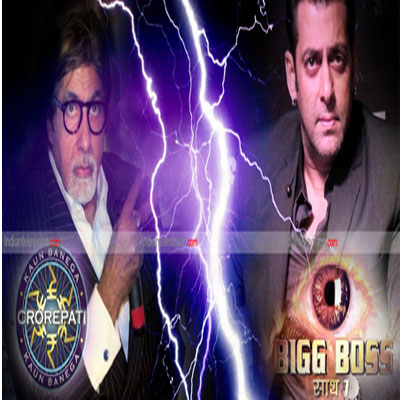
    We’re talking about the ensuing tussle between two of the small screen’s hottest properties: Sony Entertainment’s Kaun Banega Crorepati season seven vs. Colors’ Bigg Boss season seven.   

    While there really are no guesstimates as to which among these two shows will succeed in grabbing more eyeballs (… and TVTs), both Hindi general entertainment channels (GECs) are more than ready for the kill.  

    Sony is betting big on the seventh season of KBC which comes to drawing rooms beginning 6 September, in a new and improved avatar. Not to be outdone, Colors is kick-starting Bigg Boss season seven – The ‘Wow’ and the ‘Aow’ barely nine days later i.e. 15 September.

    We identify our strengths and weaknesses, and then see how we can complement our strengths with new shows, says confident Raj Nayak

    Rechristened Saptakoti Mahadhani… Kaun Banega Mahacrorepati, KBC will be aired every Friday to Sunday at 8:30 pm. whereas Bigg Boss season seven will be telecast Monday to Sunday at 9:00 pm.

    So what is the USP of this particular season, which the GECs are banking on?

    KBC aims to create a platform of opportunities for Indians across ages, genders and socio-economic groups, and has had a makeover in terms of its format and prize money, which is now a whopping Rs 7 crore, among others.

    Bigg Boss, on the other hand, arrives with a novel theme of heaven vs hell – The ‘Wow’ associated with the former and the ‘Aow’ with the latter.

    A quick look at what’s new in both the shows:

    KBC’s money tree will now comprise 15 questions and it will boast a brand new lifeline called ‘Power Paplu’ to aid those who seek to revive an already used lifeline. ‘Flip the question’ (Alat Palat) will replace ‘Ask the expert’ while ‘50:50’ will replace ‘Double Dip’.

    In the entire game play, a hot seat contestant may now use only four of the five lifelines on offer.

    A new feature ‘Play along’ has been introduced for the Fastest Finger First contestants who do not make it to the hot seat.

    Well, competition is a reality. Within the very aggressive, competitive market, you have to differentiate the niche, says N.P Singh

    Using ‘Play along’, they can play with the hot seat contestant and the one who answers the maximum number of questions in the minimum amount of time gets to win one lakh rupees at the end of the episode.

    Additionally, the time limit for the ‘Phone a friend’ lifeline has been increased from 30 to 45 seconds. What’s more, audiences can win by playing the Ghar Baithe Jeeto Jackpot.

    In contrast, Bigg Boss promises to be a roller-coaster ride for audiences, what with the heaven vs hell theme.

    Of the 14 contestants, seven will be new names residing in a separate heaven themed house while the remaining seven will be old members, staying under one roof in another hell themed house, who’ve already been members of the Bigg Boss house during the last six seasons. The contestants from both the houses would be pitched against eachother in a series of tasks.

    Among the newbies entering the Bigg Boss house are Shekhar Suman, Vatsal Seth, Suraj Pancholi, Kushal Tandon, Pratyusha Banerjee and Sonarika Bhadoria. The seventh newcomer is still to be identified.

    Blast from the past: Hellcat Pooja Mishra is among the old members who will continue to occupy the house. Other members are still not confirmed.

    There will be some amount of competition and fragmentation between the two shows, says Deepak Netram

    Apart from programming frills, the channels themselves seem super confident about their respective properties. Moreso considering Bigg Boss has had a successful run last season with an opening of 4.0 TVR (television viewership ratings); ditto for KBC’s last season which opened with 6.1 TVR.

    Colors CEO Raj Nayak says the channel is very clear and conscious in its strategy to be a complete household entertainment channel. “Today if you do a FPC (Fixed Point Chart) check across all channels, you will see Colors has the maximum variety. While strategy is one part, everything we do involves risks. But when I say risks, we take calculated risks. We identify our strengths and weaknesses, and then see how we can complement our strengths with new shows. If we succeed, they become better. If not, we keep trying,” he exults.

    Asked if Sony has any particular strategy to beat the competition, SET chief operating officer N.P Singh says, “Well, competition is a reality. Within the very aggressive, competitive market, you have to differentiate the niche. Sony in its last 17 years has always run shows which are different from the rest and that has set us apart and we continue to follow that strategy.”

    Since it is the seventh season, both shows have a great following and it will be very hard to choose one, says Ashish Bhasin

    While Lodestar UM vice president Deepak Netram agrees there will be some amount of competition and fragmentation between the two shows, he is quick to point out that they cannot be compared. “They are unique in their own way. From the past what we have seen is KBC ratings have been there year on year. So we hope to maintain that. Bigg Boss on the other hand is looking bigger; the promotions are really huge and have happened way in advance. So it will be interesting to see how this pans out,” he observes.

    Aegis Group plc chairman India and CEO southeast Asia Ashish Bhasin echoes Netram’s sentiments saying it will be a tough call between two very established properties. “Since it is the seventh season, both shows have a great following and it will be very hard to choose one. What viewers always believe in is content. If the content is of the viewers’ interest, people will definitely opt for that. The main competition will be when something else comes at that time – say a big movie is being launched by another channel or any big news event – which show loses out in that instance is going to be more interesting to watch,” he opines.

    peaking from the point of view of advertisers, Bhasin says this particular slot is becoming increasingly attractive to them as it is also the hub of reality shows. “Advertisers will go where the eyeballs are and choose the most cost-effective way to get them. That’s how pricing will be done. And that can vary depending upon what the market rates are for that channel around that point of time. I don’t think finding advertisers for any of these shows will be an issue,” he says.

    On his part, Nayak maintains Colors’ non-fiction shows generate more traction from advertisers than its fictional shows and Bigg Boss gets some of the biggest brands. However, he adds that it works as a loss leader and the channel has been investing in it because it is a cult show. This apart, it generates a lot of buzz. Estimates are that it is in the region of Rs 15-20 crore.

    Most advertisers across categories agree that since both KBC and Bigg Boss are big properties and have local audiences across age groups, they cannot afford to ignore any one of them.

    “Who would not want to take advantage of these shows to reach out to their target group? People are waiting for the shows to start and with festivals coming up; no one would be a fool to favour one over the other. Maximum eyeballs give us maximum reach,” says an advertiser who didn’t wish to be named.

    As things stand, both the shows have gone viral on various digital platforms. Bigg Boss seven’s official Facebook page boasts around 1.8 million likes and more than 30,000 people talking about it. KBC Seven is not far behind with 1.6 million likes. Both are popular on Facebook but don’t seem to be trending that much on twitter.

    Whether Big B’s charisma will work or Salman Khan’s swagger, only time will tell…

  • The seven season itch

    The seven season itch

    The daggers are drawn and the battle field is set for what promises to be one of the most closely watched fights in recent television history.
    We’re talking about the ensuing tussle between two of the small screen’s hottest properties: Sony Entertainment’s Kaun Banega Crorepati season seven vs. Colors’ Bigg Boss season seven.   

    While there really are no guesstimates as to which among these two shows will succeed in grabbing more eyeballs (… and TVTs), both Hindi general entertainment channels (GECs) are more than ready for the kill.  

    Sony is betting big on the seventh season of KBC which comes to drawing rooms beginning 6 September, in a new and improved avatar. Not to be outdone, Colors is kick-starting Bigg Boss season seven – The ‘Wow’ and the ‘Aow’ barely nine days later i.e. 15 September.

    We identify our strengths and weaknesses, and then see how we can complement our strengths with new shows, says confident Raj Nayak

    Rechristened Saptakoti Mahadhani… Kaun Banega Mahacrorepati, KBC will be aired every Friday to Sunday at 8:30 pm. whereas Bigg Boss season seven will be telecast Monday to Sunday at 9:00 pm.
    So what is the USP of this particular season, which the GECs are banking on?

    KBC aims to create a platform of opportunities for Indians across ages, genders and socio-economic groups, and has had a makeover in terms of its format and prize money, which is now a whopping Rs 7 crore, among others.

    Bigg Boss, on the other hand, arrives with a novel theme of heaven vs hell – The ‘Wow’ associated with the former and the ‘Aow’ with the latter.

    A quick look at what’s new in both the shows:

    KBC’s money tree will now comprise 15 questions and it will boast a brand new lifeline called ‘Power Paplu’ to aid those who seek to revive an already used lifeline. ‘Flip the question’ (Alat Palat) will replace ‘Ask the expert’ while ‘50:50’ will replace ‘Double Dip’.

    In the entire game play, a hot seat contestant may now use only four of the five lifelines on offer.

    A new feature ‘Play along’ has been introduced for the Fastest Finger First contestants who do not make it to the hot seat.

    Well, competition is a reality. Within the very aggressive, competitive market, you have to differentiate the niche, says N.P Singh

    Using ‘Play along’, they can play with the hot seat contestant and the one who answers the maximum number of questions in the minimum amount of time gets to win one lakh rupees at the end of the episode.

    Additionally, the time limit for the ‘Phone a friend’ lifeline has been increased from 30 to 45 seconds. What’s more, audiences can win by playing the Ghar Baithe Jeeto Jackpot.
    In contrast, Bigg Boss promises to be a roller-coaster ride for audiences, what with the heaven vs hell theme.

    Of the 14 contestants, seven will be new names residing in a separate heaven themed house while the remaining seven will be old members, staying under one roof in another hell themed house, who’ve already been members of the Bigg Boss house during the last six seasons. The contestants from both the houses would be pitched against eachother in a series of tasks.

    Among the newbies entering the Bigg Boss house are Shekhar Suman, Vatsal Seth, Suraj Pancholi, Kushal Tandon, Pratyusha Banerjee and Sonarika Bhadoria. The seventh newcomer is still to be identified.

    Blast from the past: Hellcat Pooja Mishra is among the old members who will continue to occupy the house. Other members are still not confirmed.

    There will be some amount of competition and fragmentation between the two shows, says Deepak Netram

    Apart from programming frills, the channels themselves seem super confident about their respective properties. Moreso considering Bigg Boss has had a successful run last season with an opening of 4.0 TVR (television viewership ratings); ditto for KBC’s last season which opened with 6.1 TVR.

    Colors CEO Raj Nayak says the channel is very clear and conscious in its strategy to be a complete household entertainment channel. “Today if you do a FPC (Fixed Point Chart) check across all channels, you will see Colors has the maximum variety. While strategy is one part, everything we do involves risks. But when I say risks, we take calculated risks. We identify our strengths and weaknesses, and then see how we can complement our strengths with new shows. If we succeed, they become better. If not, we keep trying,” he exults.

    Asked if Sony has any particular strategy to beat the competition, SET chief operating officer N.P Singh says, “Well, competition is a reality. Within the very aggressive, competitive market, you have to differentiate the niche. Sony in its last 17 years has always run shows which are different from the rest and that has set us apart and we continue to follow that strategy.”

    Since it is the seventh season, both shows have a great following and it will be very hard to choose one, says Ashish Bhasin

    While Lodestar UM vice president Deepak Netram agrees there will be some amount of competition and fragmentation between the two shows, he is quick to point out that they cannot be compared. “They are unique in their own way. From the past what we have seen is KBC ratings have been there year on year. So we hope to maintain that. Bigg Boss on the other hand is looking bigger; the promotions are really huge and have happened way in advance. So it will be interesting to see how this pans out,” he observes.

    Aegis Group plc chairman India and CEO southeast Asia Ashish Bhasin echoes Netram’s sentiments saying it will be a tough call between two very established properties. “Since it is the seventh season, both shows have a great following and it will be very hard to choose one. What viewers always believe in is content. If the content is of the viewers’ interest, people will definitely opt for that. The main competition will be when something else comes at that time – say a big movie is being launched by another channel or any big news event – which show loses out in that instance is going to be more interesting to watch,” he opines.

    peaking from the point of view of advertisers, Bhasin says this particular slot is becoming increasingly attractive to them as it is also the hub of reality shows. “Advertisers will go where the eyeballs are and choose the most cost-effective way to get them. That’s how pricing will be done. And that can vary depending upon what the market rates are for that channel around that point of time. I don’t think finding advertisers for any of these shows will be an issue,” he says.

    On his part, Nayak maintains Colors’ non-fiction shows generate more traction from advertisers than its fictional shows and Bigg Boss gets some of the biggest brands. However, he adds that it works as a loss leader and the channel has been investing in it because it is a cult show. This apart, it generates a lot of buzz. Estimates are that it is in the region of Rs 15-20 crore.
    Most advertisers across categories agree that since both KBC and Bigg Boss are big properties and have local audiences across age groups, they cannot afford to ignore any one of them.

    “Who would not want to take advantage of these shows to reach out to their target group? People are waiting for the shows to start and with festivals coming up; no one would be a fool to favour one over the other. Maximum eyeballs give us maximum reach,” says an advertiser who didn’t wish to be named.

    As things stand, both the shows have gone viral on various digital platforms. Bigg Boss seven’s official Facebook page boasts around 1.8 million likes and more than 30,000 people talking about it. KBC Seven is not far behind with 1.6 million likes. Both are popular on Facebook but don’t seem to be trending that much on twitter.

    Whether Big B’s charisma will work or Salman Khan’s swagger, only time will tell…

  • WIFT: WOOING WOMEN

    Women are increasingly blazing a trail in the world of film and television these days. But one is disappointed when one looks at how the ladies are faring as far as the Women in Film & Television (WIFT) association is concerned. More than a year after its formation it has only 300 odd members.

    “We fail to understand why people are still hesitant about joining. Maybe we need to be more out there (sic). We want people to spread the word so that we can help as many women as possible,” says WIFT founder Petrina M D’Rozario.

    The association is dedicated to advancing professional development and achievement for women working in all areas of film, video, and other screen-based media.

    Her association with the organisation goes back a long way when she was studying in New Zealand. When she came back to India, she thought of starting the Indian arm of the global society. Internationally, the association has organised various forums wherein people from the industry have come forward to help each other and the ones who want to enter the ‘glamourous’ world of entertainment. There are 44 chapters all across the world with over 14,000  members.


    Petrina D‘Rozario launched the India chapter of WIFT

    “After completing my studies and job, when I got back, I thought to myself that there could be nothing  better than meet people from the industry through the platform of Wift. I had made a lot of friends in New Zealand through the platform. When I found out that that there was no Wift in India, I thought of starting the platform where like-minded women filmmakers and women in the industry can meet, talk, discuss and help each other.”

    Petrina personally went and met senior women  professionals in the industry and got them on its advisory board. There are 11 advisory board members with the likes of Kiran Rao, Anupma Chopra, Jeroo Mulla, Lynn DeSouza and many more.  There are three board members including Petrina. Film critic and editor, Uma da Cunha and media relations professional Riddhi Wallia are the other members.

     “I was approached by Petrina to join the association when I was heading Colors. I was so impressed and charged by the aim of Wift that I didn‘t hesitate once to confirm my support. An impetus behind joining was to help tap talent and support women across the country to have a safe destination and network to get a foothold in the entertainment (film/television) and media industries which we all know is a very competitive field. I was keen to do my part to help all women including those from marginalised communities to have the correct and best chance to enter the industry,” recounts Grazing Goat Pictures co-founder Ashvini Yardi.

    The association doesn’t want to be known as a sorority. It is no kitty-party gang, but aims to provide opportunities to other women to interact as well as network, helping them grow in the field. “If a media student joins us, we ensure that she meets people like Kiran Rao, Zoya Akhtar and the likes. This gives the student a chance to learn from them,” says Petrina.

    Through its mentoring scheme WIFT  looks at matching professional members with experienced practitioners for mentoring over a six month period or as designed by the mentor.  The scheme is designed to increase women‘s skills, knowledge, networks and confidence as they build their careers. The mentors include the cream of the industry across disciplines like Tanuja Chandra (Director), Deepa Bhatia (Editor), Anjuli Shukla (Cinematographer), Zoya Akhtar (Director), Kiran Rao (Director),Paromita Vohra (Documentary Filmmaker), Onir (Director), Aarti Bajaj (Editor) and Akeev Ali (Editor).


    Ashini Yardi feels that WIFT is a brilliant platform which provides direction and support to women who have dared to dream

    Filmmaker, producer and activist Madhusree Dutta who is an advisory member says that such organisations are very much needed because there is a need to provide a cohesive working space in what has  male-dominated industry.  “One might wonder what travails can people like Kiran or Anupma or me go through.  The association isn’t about what we are going through now. It is about what we have gone through and do not want them to tread the same path. We want a better place and want to help women in the industry,” says Dutta while explaining her association with WIFT.

    So, does it plan to revolutionise the industry? ‘No’, comes the prompt reply from Petrina. “We are not here to ‘change’ the world because we can’t even do that. We are no big shakers who can make changes or bring a revolution in the industry individually; it all happens collectively through the course of time.”

    However, there are challenges it faces. “If you follow the crowd, there won’t be any but if you go against the tide, there will be challenges,” she says. The shortage of funds is the biggest roadblack. “In a city like Mumbai, one needs to pay-up for even putting a toe at some place. So, when we want to screen films or organise events or workshops, we do face monetary issues.”

    But she is quick to add that there are many who are willing to help them and provide venues at low or no cost to hold various events as it is for a good cause. The association aims to have events – workshop, film screenings, and discussion forms – every two weeks. And they are for women only. “However, during workshops men are allowed,” laughs Petrina.

    WIFT just finished one such event – The Red Dot Film Festival. The three-day festival (23, 24, 25 August) was held at the Films Division in Mumbai. The movies featured were by national award-winning filmmakers, actors, editors, and writers cutting across languages, forms and styles. Among them were I Am Micro, Paradesi, Celluloid Man, and many more.


    Madhusree Dutta wants the industry to become a cohesive place for women to work

    The organisation feels that films are a medium, which touch millions of lives, and therefore they have the potential to bring about a societal change, even if it is one step at a time. Be it women-centric films, which give conventional commercial flicks a run for their money. Women lyricists and music composers are taking the traditional male bastions by storm. Women writers and directors are winning international accolades for their portrayal of sensitive subjects and women actors and producers balance creativity with commercial success. The world is changing, step by step, with these exceptional women acting as the torchbearers, showing the way for the aspiring millions. Hence, the hope is that these women and WIFT will end up being the true champions of women empowerment.

    Petrina says she is hopeful WIFT’s numbers will rise. “We have kept membership low at Rs 2,000 a year for professionals and Rs 700 for students,” she says. “We would love to have many more than what we have currently.”


    Karisma Kapoor and Shobha De at the launch of The Red Dot Film Festival

    Internationally, WIFT organizes regular get togethers like luncheons, special events, high teas to foster exchange of ideas between its members and the association has almost become a movement for women in the TV and film trade. The numbers in India too will surely rise over time, there’s no doubt, as WIFT starts getting more active and word of mouth spreads amongst the army of women who are defining film and television today.

    But don’t be surprised by the first words you hear if you are a woman in media and you happen to be introduced to Petrina. “Are you a member of WIFT? If you are not, then it’s high time that you did.”

    With Petrina as chief evangelist, you’ll hear a lot of WIFT in the coming weeks, months and years. More power to her elbow!

  • Life’s OK digitally

    When Harvard wizkid Mark Zuckerberg launched facebook in 2004, he never imagined it would ignite a revolution in terms of the way people communicate and share information.

    Indeed, social networks have emerged as the next big thing after email and the Internet, and not just individuals and communities but even our television channels are happily jumping onto them for bettering their ‘connect‘ with the audience.

    After demystifying the digital strategies of Sony Entertainment TelevisionStar PlusColorsand Zee TVindiantelevision.com trains its lens on the endeavours of Life OK – Star India‘s sister channel – in this space.

    For starters, Life OK‘s Facebook page boasts 1,293,603 likes and more than 63,600 people talking about it simultaneously.

    We also have efficient partners that understand the nuances of social media engagement and help spread marketing ideas across digital and social platforms, says Ajit Thakur

    The page is kept up-to-speed with pictures, videos, polls and all the hot gossip, and shares links with the official pages of various shows aired on the channel.

    In a day and age when 140-character tweets more than news make headlines, the plots of Life OK‘s many soaps are also tweaked through fan tweets. The official twitter handle of the channel @LifeOKTV is abuzz with nearly 20,840 tweets from over 16,555 followers at the time of writing. With instant reactions and feedback the staple of twitter, Life OK makes the most of this platform with timely tweets and re-tweets.

    To cite an example, the channel created, #ThePerfectBachelor, for its upcoming reality show The Bachelorette India – Mere Khayalon Ki Mallika and garnered more than seven million impressions. So much so, the hash tag found its way to the numero uno spot on India trends, that too within half an hour of the beginning of the contest. It was only the second Indian show to trend for 21 hours.

    #ThePerfectBachelor hash tag garnered more than seven million impressions

    Life OK is aware that for a general entertainment channel, video uploads draw the most traffic. And so, it launched its official YouTube channel in December 2011, and has since uploaded 5,000-odd videos. Viewers can watch the latest episodes of top-rated properties like Mahadev, Shapath andSavdhaan among others.

    To top it all is Life OK‘s official website http://www.lifeok.com/. As the channel‘s mainstay, the website aims to use all its other platforms to draw more and more traffic.

    It is easily the hub of Life OK‘s online activities with web exclusive content including live streaming, picture gallery, video uploads, show trivia and a concert section. There‘s also the shows schedule for those who want to know what time their favourite show will be telecast during the day.

    Says Life OK general manager Ajit Thakur: “Social media platforms are a great place to directly engage and interact with consumers. The idea is to leverage the various platforms to drive engagement and increase affinity towards our content. We also provide additional content specific to digital platforms for users who have supported us, or in facebook terms, ‘liked‘ us.”

    The official Facebook page keeps its page up-to-date with pictures, videos, latest buzz and polls

    This is not to say Life OK‘s engagement with its audience stops at social platforms. “We are constantly trying to connect with our audiences, be it through dialogue on social media platforms or sneak previews of our content. With every show and channel marketing campaign, our digital spends supplement the print and TV mentions, thus creating a 360 degree surround across media,” provides Thakur.

    A shining example of the channel‘s 360-degree approach is the way it created the Laajo Ki Diary blog on four platforms including wordpress, blogspot, tumblr and Rediff before the launch of its show Gustakh Dil. The blog gets updated with new posts on a day-to-day basis, keeping viewers abreast of what‘s happening on it.

    The website is decked up with web exclusive content including live streaming, picture gallery, video uploads, show trivia and a concert section

    But how does the channel promote its online presence? “We have a dedicated digital content and marketing team, who focus their energies on creating interesting content for the digital audience. We also have efficient partners that understand the nuances of social media engagement and help spread marketing ideas across digital and social platforms,” replies Thakur.

    Just in case you‘re wondering which platform gets the most traction, Thakur isn‘t very helpful. “Each platform delivers a specific objective while facebook is a great place for fans to engage with us, consume rich media content and share with friends; twitter being much more time-sensitive, helps create buzz about relevant topics and shows at the right time. YouTube on the other hand is a great platform for users to sample our content (mostly short form content) and also drives digital monetisation,” he says.

    Well, talk about the channel being omnipresent in the digital space…

  • Zenga TV has high growth ambitions in the mobile TV segment

    Zenga TV has high growth ambitions in the mobile TV segment

    Everybody yearns for a big-bang entry when they start off their career. The same can be said about Zenga TV which decided to take the path one would rarely tread upon.

    At a time when most of the mobile TV platforms were approaching mobile operators to be carried, Zenga TV offered the first free 'live TV' service in the country. People scoffed and laughed but two years after a debut with IPL 2009, serving seven million viewers in over 140 countries, the company has turned profitable. Now, after adding more than 150 channels and 18,000 movies to its kitty, the platform will soon be venturing into delivering original content in 52 genres.

    Shabir Momin, who made Zenga TV from scratch, will look for investors in some years to scale up the free mobile TV platform's ambitions

    Out of these, production in four genres namely fashion, styling, comedy, fashion and cooking will be done by Zenga, itself while the rest will be aggregated from all over the world such as music, gaming, extreme sports, travel and other fashion. "These four genres need localisation," says Zenga TV founder, MD and CTO Shabir Momin.

    A technologist all his life, Momin and his friend Vikramjiet Ray invested about six to seven million dollars into this venture which started reaping profits within two years. Industry sources put it at anywhere between Rs 2-3 crore per annum.

    Starting off at a time when the minimum bandwidth was 20-25 kbps in India as compared to 78 kbps in other parts of the world, they developed a code to provide live streaming at 2.5G and at this low bandwidth. Even though 3G is being promoted, only 10 percent of Zenga TV's users are 3G users. The arrival of 4G will only enhance the picture quality, according to Momin.

    Zenga TV has a long list of Indian channels as well as 30 international ones which are genre specific. However, 70 per cent of the traffic comes from movies while 30 per cent from channels out of which Aaj Tak, Pogo, 9xm are some of the popular ones. Animated content being in the top ten has surprised even those at Zenga TV. Some of the other channels it streams live are NDTV Profit, Raj News Kannada, Focus TV, Big Magic, 9XM, Sahara filmy.

    One of the news channels on the portal which wished to remain unnamed said that two years ago when they got into a deal with Zenga TV it helped it because it targeted non-smartphone users, even though it had an application of its own. However, its expectations from the association has been only 'just met' and in order to have more control from its side it is looking at revaluating the contract and seek more opportunities outside of Zenga TV.

    "Zenga TV is not very viable because broadcasters do not want to lose big money from their DTH and cable operators who may object to live streaming for free on the internet at the same time making money on advertising," says media consultant Sanjeev Hiremath. This could be why Star, Zee, Sony etc are not part of the bouquet but are available on its competitors Ditto TV and Apalya. Demand for these channels is there; according to Momin, but since there is no ROI for it and so he opted to not negotiate with them. To date a 50:50 revenue share is maintained with all its channels. Market estimates varied from approximately Rs 25,000 to Rs 7-8 lakh per channel. 

    "I would rather give you exciting and intriguing content which is cost effective for me as well," states Momin.

    Speaking in terms of demographics, 45 per cent of viewership comes from rural India while 35 per cent comes from urban cities, Delhi and Mumbai being the larger chunk of it; the rest from tier II cities. Local retailers propose a data plan to customers which will let them watch free TV on mobile. This benefits the customers as a lot of times electricity isn't available to watch TV and the plan is approximately Rs 200 a month. It also means customers coming back to them every month.

    Abhishek Joshi joined the team a few months ago to spearhead the project from Mumbai The time when most traffic is on it is from 11:00 am to 2:00 pm. The average time span is 10 minutes per view and six to eight views per month each amounting to 250 million views per month. And is a male dominated area wherein 70 per cent viewers are men. The target group is 13 to 65 years but a majority of the viewers are the young audience between 18 to 35 years. About 85 per cent of viewers are from India while UK, US and UAE keep juggling in the top three spot from the international countries.

    It has an automatic system that adds servers to tackle unexpected increase in traffic, when it isn't manned and when traffic goes down, it automatically kills the servers. From two, the team now consists of 55 to 60 people in Delhi and Mumbai with an attrition rate of just 0.5 per cent most of the team being freshers who are brimming with ideas. Momin who was formerly the CEO, gave way to Abhishek Joshi to be the CEO in July 2012, marking the beginning of the Mumbai office. Bangalore and Kolkata are the next expansion destinations.

    At inception it was available on Windows, Android and iOS while Symbian 60 was added recently. Anybody with a browser could view. Everything is cloud based with seven Amazon servers across the world. It was only in 2012 that the app was created. Momin maintains that an app will not be made for Blackberry phones. It has over 10,000 fans on its Facebook page.

    Zenga TV works purely on advertising with more than 60 brands currently, most of them from India. It got its break when it bagged Pepsi during its telecast of IPL 2009. Cadbury, Red Bull, Aditya Birla, Fiat are some of the other brands it has deals with. Both video and banner ads are present but what is prevalent more is video ads that are either pre roll or mid roll. Industry sources put the CPT for a video ad at Rs 300- 350 and a banner ad at Rs 180-190. The annual revenue would be around Rs 13-14 crore per annum. Just like on television, depending on the customer's brand campaign the ads can be modified such as L-shaped ads or bugs. It can also be targeted based on content, channel and geography. A team of five works on ad sales.

    Media planners seem to be skeptical despite Zenga TV's claims. Ignitee digital media planner Saurav Kumar says that it is a good advertising platform if the client is targeting mobile phone customers. However, he adds that mobile phone commerce is still at a very nascent stage. "There is not much ROI on mobile advertising," points out Kumar. Lodestar Universal vice president Deepak Netram believes that Zenga TV is yet to gain critical mass but as an add-on, it is a great platform available.

    Money spent on mobile advertising is just five to ten per cent of the total as of now and the only way an increase can be seen is when the coverage of 3G increases and the price of 3G subscription decreases. In a mobile TV market of 30 million dollars, Momin claims Zenga TV owns about 60 per cent of it. "If you ask me, mobile TV advertising is the future," says Hiremath.

    Momin stated that he had initially approached mobile operators, which was the custom around 2007 but the business model was hitting a negative end for him so he decided to set up his own brand and connect directly with the users. It could have been a risky stance, but he decided to be his own master than be someone's slave (in this case the operators). "We are the only profitable company in this space. All the others are more than fifty points negative," he claims. "Most of my competitors work for operators," he says. Had Zenga TV decided to go the same way they wouldn't have been able to control price point.

    Apparently, not a single penny goes into marketing Zenga TV and everything was done by word-of-mouth. More than 50 per cent of users tend to come back and Momin attributes it to the fact that they have no system of registration or forcefulness.

    Changes have also come about since then. To increase content discovery, a search bar and index were added. Some football sports are being reviewed but only half of sports content is financially viable for it.

    Consumption patterns have changed from channel specific to genre specific viewership. 

    Predictions are that the current space of mobile TV advertising is about Rs 150 crore and in two years time it is set to multiply to Rs 3,000 crore due to better network. Zenga TV sets itself a target of doubling its viewership, profit and revenue and for the last three years they've surpassed their own predictions.

    As for the future, Momin says he might think of raising investors or IPO someday but he will not give up ownership of the company. "I didn't want to have investors initially because they have their POV and they drive it in a way you may not want to," he says.

    There is a general feeling that digital is the way forward. Zenga TV has achieved some success but still stays relatively unknown. In Momin's words, "Those who don't know Zenga TV don't use Zenga TV."

  • Zee’s digital plan: Apps for all

    Zee’s digital plan: Apps for all

    The title of Zee TV’s latest primetime offering – Connected Hum Tum – inadvertently spells out the predicament most general entertainment channels (GECs) find themselves in today.
    Indeed, be it a Sony Entertainment Television, Star Plus, Colors or Zee, given the increasingly competitive TVT scenario, every channel today faces the continual challenge of staying connected to stay in the minds of its audience.

    Zee TV has differentiated its digital presence based on the kind of shows on air. Right from religious, musical, self-help to horror programmes, says Akash Chawla

    So, how do channels go about cracking this rather tough nut? How do they perfect the science of understanding viewer habits amidst the growing clutter of GECs? Apparently, they’ve found the perfect solution in social media.

    True. From being just an informal platform for friends to chat and share pictures, social media has evolved into the most preferred medium to stay connected and TV channels are no exception to this norm.

    In fact, indiantelevision.com kick-started its digital series in a bid to understand the individual digital strategy of each television channel within our purview. After a close look at the digital strategies adopted by the likes of Sony Entertainment Television, Star Plus and Colors, we now take a sneak peek at the digital approach of Zee TV.

    With a slew of social media initiatives including mobile apps and missed call theory incorporated into its reality shows, Zee TV has tried to stay on top of its game as far as remaining connected with its audiences. Let’s take a look at what’s on offer…

    A finger in every digital pie

    Zee TV’s tryst with the digital space began in 2009 when it launched its official channel on YouTube.

    Today, the YouTube channel boasts 613,650 subscribers, with over 428 million views of the 30,950 videos, making it one of the most viewed channels on YouTube.

    Episodes of daily soaps like Qubool Hai, Pavitra Rishta, Jodha Akbar and Punarvivaah as well as reality shows like Connected Hum Tum and Dance India Dance Super Moms are regularly uploaded on the YouTube channel. These apart, “Episodes of previously aired popular soaps like Chhoti Bahu, Star Ya Rockstar, DID Li’l Masters 2 and Yahan Main Ghar Ghar Kheli are also made available on it,” informs Zee marketing head, national channels, Akash Chawla.

    The mainstay platform of Zee has web exclusive content, photo galleries, polls, full schedule of the shows and much more

    Apparently, “Qubool Hai – the sweet, light-hearted love story of Asad and Zoya and their families leads the pack on the Zee YouTube channel,” reveals Chawla, adding, “We get an average of 1,60,000 views per episode of Qubool Hai uploaded on our YouTube channel.” Pavitra Rishta follows suit with an average of 50,000 views per episode

    Apart from the YouTube channel, Zee TV keeps its viewers updated about the cast of its shows, teasers of upcoming episodes, and show launches through its official Facebook page that boasts 422,915 likes and more than 23,500 fans in constant discussion.

    “Even our shows have a huge following with pps that engage the audience. Dance India Dance for instance has 503,700 likes with 13,000 plus active followers,” gushes Chawla, adding, “The last season of Sa Re Ga Ma Pa attracted 0.15 million likes, and the number of active users went up to 8,000 while the show was on-air.”

    Hum, tum aur social media

    Zee’s latest primetime offering Connected Hum Tum is the latest in its endeavours in the digital space.

    Even before the show premiered on television, Zee created original parallel online content to promote it.

    Short comic videos were created with the central theme of ‘Men Who Understand Women’ Society. They all had a crew turning up during scenarios where the man is clueless about what has upset his woman and provide him with remedial measures. Parodies of real-life situations, the videos all but left the audiences in splits.

    A month prior to the show launch, Zee created a wave of curiosity around it through daily teaser posts on Facebook and Twitter. These built intrigue around the show’s novel concept and the identity of its celebrity host.

    Ultimately, “When Abhay Deol was revealed as the host, the social media space kept buzzing with pictorial posts of the actor with his tongue-in-cheek commentary about women and how he just cannot understand them! The title song of the show – a fresh, catchy video featuring the actor, was launched on YouTube and all other video platforms alongside its on-air launch,” Chawla informs about Zee’s social media strategy during the launch of this show.

    He points out that on the anvil are live chats with Abhay on Twitter, Google hangouts with the participants and live tweeting during the telecast of an episode with an on-air twitter feed – all to drive increased viewer interactivity and participation.

    Zee TV has also created a YouTube gadget, which serves as the primary engagement platform for audiences to consume Connected Hum Tum online. It has episodes, uncut videos, a discussion forum on the themes of daily episodes, and video biographies of the six protagonists – all updated on a day-to-day basis.

    Going a step further, Zee TV has differentiated its digital presence based on the kind of shows on air. “Right from religious, musical, self-help to horror programmes, we have apps for all,” informs Chawla. “When Ramayan was first telecast on Zee, the channel launched a virtual Ram Mandir app on Facebook. This helped people to perform virtual aarti. We got an impressive 10,000 page views for this app, within the very first week,” he says.

    Similarly, when Sa Re Ga Ma Pa 2012 was launched, Zee TV introduced the Call and Sing app, allowing fans to record their songs and post their recording either on their own walls or friends’ walls. “This was a way to engage people, as they could now showcase their singing prowess to their friends and Zee TV followers alike,” Chawla reveals.

    It doesn’t end there. Zee TV’s Twitter handle, @ZeeTV, has nearly 73,233 followers. Interactions are usually driven by the channel and picked up by followers. Fans who are interested in behind-the-scenes gossip are kept updated through live tweets.

    Exults Chawla: “Our comprehensive digital presence is further topped by the official website www.zeetv.com. This being our mainstay, we use all other platforms to drive traffic towards the website, which is complete with a picture gallery, video uploads, trends, show trivia, news and discussions and much more.”

    During the audition of Dance India Dance 3, Zee TV went to the extent of allowing online entries. “We recorded a whopping 50,000 participants registering for auditions with votes reaching a cumulative figure of 1.75 lakh,” says Chawla.
    Mobile’s the way to go

    With Ditto TV, users can watch movies, television shows, sports and latest news and updates, at their own convenience, even when away from home says Manoj Padmanabhan

    The launch of Ditto TV on 29 February 2012 marked the channel’s foray into the mobile space. Ditto TV was unveiled as an Over-The-Top TV (OTT) distribution platform offering live TV channels and videos-on-demand (VOD) to consumers on their mobile phones, tablets, laptops, desktops, entertainment boxes and connected TVs.

    About Ditto TV, Zee business head, new media, Manoj Padmanabhan, says: “With Ditto TV, users can watch movies, television shows, sports and latest news and updates, at their own convenience, even when away from home.”

    The platform has a Movies-on-Demand section with close to 500 Hindi, English and regional movies, and a vast library of videos-on-demand from popular TV shows such as Hum Paanch, Saath Saath, MTV Coke Studio, MTV Bakra and Comedy Nights with Kapil as well as online content. 

    “What’s exciting is that users can watch missed episodes of their favourite on-air shows from Zee TV, Colors and other regional channels on Ditto TV within a few hours of their telecast on television,” Padmanabhan informs.

    With a presence across mobile platforms such as Android, iOS, Symbian, Windows 8 and Blackberry, Ditto TV has 65,210 likes on Facebook and 1,420 active followers on its Twitter handle – @ditto_tv.

    Padmanabhan reveals that they recently launched an innovative teaser campaign on the Zee YouTube channel comprising interactive videos to give a fresh twist to the concept of ‘anytime viewing’. He is quick to point out that though currently, most of their traffic is from India with only 10 per cent of their base being international users they plan to expand their international presence this year.

    Zee’s YouTube page has all the popular shows and gets more than 40,000 average video views per episode

    Zee’s next big initiative in the mobile space came with the launch of the Dance India Dance (DID) mobile WAP site and mobile app, which coincided with the third season of the show. This made DID the first ever reality show on Indian television to be present as an application on all mobile and digital platforms.

    In March 2012, within three days of unveiling it, the app reported more than 10,000 downloads and rated 4.5 out of 5 on the Android app store – a very competitive score, considering the Android store is an open platform and the reviews therein are all user-generated.

    About the overwhelming response, Chawla says: “The interactions with popular judges and contestants of the show made the mobile application go viral in the digital space, setting new benchmarks with 2,12,852 WAP site page hits, 18 lakh page views and 14,642 comments in the ‘live comments’ section within months of its launch.”

    Not only did the DID 3 app become a major hit in India but also in 25 other countries including the US and the UK. “It reinforced the fact that mobile marketing is the best way to capture the youth and the tech-savvy generation of smart phone and feature phone users,” points out Chawla.
    Riding on the success of the DID 3 app and following the overwhelming response to the initial episodes of DID L’il Masters, the app was converted to its DID l’il Masters avatar in May 2012. This actually made users come back for more.

    Zee TV constantly updates its Facebook profile with pictures, polls and snippets

    “Features like live chats and personalised dance tutorials with masters and skippers were introduced along with regular updates. A built in missed call feature allowed users to vote for their favourite contestants,” says Chawla, adding, “There was an increase in the number of users with the official download count crossing three lakh downloads across all four platforms.”

    To top it all, the app won accolades from the marketing fraternity when it won a Gold and a Bronze at the Smarties 2012 and MMA Global for being the best mobile app and the missed call feature, respectively.

    “The missed call feature recorded a landslide 56.1 million votes just through DID Li’l Masters 2,” informs Chawla. Overall, Zee recorded a one million download mark among Hindi GECs for its non-fiction shows, demonstrating the success of its mobile app revolution.

    While it may be safe to say Zee has been pressing all the right buttons digitally speaking, let’s see what does the channel comes up with next considering creativity never ends in this space

  • Industry leaders’ thoughts on Independence Day

    Independence. We in India have had it for so many years that the India that is emerging does not know what it is like to not be free. For millions, the struggle to get freedom from the British, Portuguese and sundry other rulers are just chapters in their history books. But occasions like Independence Day and Republic Day remind us that we were once subservient and that we overcame bondage and won our freedom.

    15 August is the 67th year of our independence. For sure, the Indian flag will be hoisted in neighbourhoods all over India. Smaller flags will be mounted on cars, cycles and bikes. And even smaller ones pinned on our shirt pockets. Patriotic songs will be played out on radio and on TV.

    And hopefully for a day we will forget all our complaints against rising prices, economic upheaval, a political and administrative class that is showing little backbone for fair governance and well-being of its citizenry, corruption and the lack of respect that many in India have for women. Hopefully, we will remember the price that was paid for the valuable freedom that we enjoy today. And feel proud to be Indian. We, at indiantelevision.com surely are and even proudly carry it in our name.

    Indiantelevision.com‘s young team of journalists spoke to senior professionals from the advertising, broadcasting, cable TV and marketing sectors to get a fix on their feelings on India‘s 67th Independence Day. And also to gather from them on what their favourite patriotic song or movie is. Read on to feel patriotic:

    O&M India executive chairman & NCD Piyush Pandey

    I am very proud to be an Indian. I think India is a very significant country with many diverse cultures and we have come a long way. In the future, I wish the country to be in a much better shape than what it is currently.

    Mile Sur Mera Tumhara is my favourite patriotic song and truly depicts the light of Indian culture and unity amongst Indians.

    NDTV executive vice chairperson Narayan Rao

    I feel good that we live in an independent country but it shouldn‘t be taken for granted.

    I‘d like broadcasting to be world class and for journalism to have high standards, credibility and ethics.
    My favourite song is Saare Jahan Se Achchha.

    Publicis director, CCO south Asia Bobby Pawar

    Yes I am proud and happy as well that I am living in an independent country as an independent man.

    I really don‘t have any ideas about where the industry is headed. If I did know, then I probably would make millions on it. However, I am very optimistic about the growth in the industry.

    My favourite movie is my friend‘s Prasoon Joshi‘s film Rang De Basanti and the title song from the same movie is my favourite song.

    Discovery Networks Asia Pacific, sr VP & GM, head of revenue, pan-regional ad sales & south asia, Rahul Johri

    I am proud of being an Indian and happy about it. I think in the coming years the broadcasting industry will evolve as the market evolves. I see many more options on offer for viewers and I see the broadcasting industry only growing further.

    My favourite patriotic song is the video Ye Mera India by Saleem and Suleiman which is on Animal Planet.

    Zee, chief content and creative officer Bharat Kumar Ranga

    I renamed myself from Mukesh to Bharat, when I was in the fourth standard. I fell in love with Manoj Kumar‘s character as Bharat inUpkaar. So when I was filling my form for fifth standard, I renamed myself as Bharat. This is how deeply I feel about India. Though firangi competition is welcome, but in India only Indians will rule. I am among those, who believes in the country.

    It is in India, that media enjoys the stature of being the fourth pillar. It started with print and went on to books and films. There was a certain independence given to broadcasters, but that was not utilised to the maximum. Though India has done well in a lot of sectors, but growth in media has not been great. We need to break away from daily and weekly competitions to unleash the power of media.

    My favourite patriotic song is Mere Desh Ki Dharti from the movie Upkaar, I still get all charged up hearing the song. Purab and Paschim was one movie which aptly brought out the power of India, and that is my favourite patriotic movie.

    Draftfcb+Ulka advertising ED & CEO Ambi M G Parameswaran

    I am proud to be an Indian. And I value my freedom. 
    As a nation, the change I would like to see is that the slowdown, which we are witnessing, goes away. I know it will be another 12-18 months before that happens, but then we will see double digit growth after that. The GDP growth needs to regain momentum, business confidence need to rise, rural development really needs to happen, and food prices need to come down.

    My favourite patriotic movie is the Tamil film Kappalottiya Thamizhan.

    Star Den Media Services, CEO Gurjeev Singh Kapoor

    We feel proud to be independent and we celebrated Independence Day at our workplace too on 14 August. Everyone was wearing small paper flags across their hearts proudly. We decked up the office with balloons and placed a small flag on every workstation.

    In broadcasting, freedom of expression is critical and this has rarely happened in the past, but it is witnessing a change. Things have gone through a revolutionary change and kudos to the industry for bringing in this welcome change.

    I love patriotic movies, but Saat Hindustani (1969) andShaheed (1965) figure among my favourites.

    Zee News CEO Alok Agrawal

    I feel good as an Indian. We are living in a democratic country. There are lots of things we need to do to improve. We all have some amount of influence that we can use.

    We are launching an entire new initiative Bharat Bhagyavita. Our responsibility as media is to inform and empower people with knowledge and make them aware of their rights and encourage them to do something about what‘s going on.

    Nothing comes to mind. I don‘t go by defining a favourite. Any patriotic song is fine. I like almost all songs.

    Media Consultant, Sanjeev Hiremath

    For me patriotism is a feeling and cannot be defined in a song, though I really love the Hollywood movie ‘Independence Day‘.

    In the 67th year of Independence, the biggest achievement for India is that it is no longer considered as a developing nation. A lot of Indian companies are now investing in overseas business. Our GDP is robust and we are above world average. I am proud to be an Indian and the reason is its diverse culture. My only concern is that though individually we are progressing, the country collectively isn‘t. Even today 70 per cent of the population lives on 1.50 dollars a day. It makes me sad. The political scenario needs to improve.

    What is good about the cable and satellite industry is that we are not 10 years behind when we compare ourselves to other countries. We have been making gradual progress and now with DAS, in the next two years we will be up close with the world cable and satellite industry.

    Playtime Creations TV producer Hemal Thakakar
    As an Indian we feel proud that we had so many great men and women who gave their lives for freedom we enjoy today. Somewhere I think we have failed them and have misused freedom which they got for us. I hope, pray and wish we correct that.

    For broadcasters, future is shining. Digitisation is beginning of new horizon as our country gets hungry for more entertainment and infotainment. New avenues are discovered and looking at the Indian diaspora and the fact that we are a young nation, the broadcast industry is going to get a major boost.

    My favourite song is the title track from the film Swades and Kandho Se Milte Hain Kandhe.

  • Advertisers vs Broadcasters: The battle for weekly TV ratings

    Advertisers vs Broadcasters: The battle for weekly TV ratings

    Aegis Group plc chairman India & CEO South East Asia Ashish Bhasin does not mince his words when he says. "In the next 24 to 48 hours many broadcasters are going to be getting cancellation notices from advertisers for spots booked with them. I have been getting SMSes from some of my key advertisers to move ahead with pulling off ads from TV."

    Adds Group M South Asia CEO & Advertising Agencies Association of India (AAAI) executive committee member C.V.L Srinivas: "Starting yesterday, cancellation notices have been going to broadcasters from advertising clients across the board."

    "Earlier broadcasters took the decision and now advertisers are doing so," adds IPG Media Brands CEO Shashi Sinha.

    The CEO of a channel confirmed that his network had received emails concerning 10-11 clients. "They have given us 72 hours to resolve the issue. If we fail to revert to weekly ratings all release orders for TV spots will stand cancelled," he says.

    That is the state of Indian media today. A battle royale is brewing – some call it the mother of all battles. The two warring parties – on one side of the battle line are the advertisers, and on the other are the seven broadcast TV networks.

    Group M's CVL Srinivas says advertisers will stay away from TV until they get proper weekly viewership data

    The decision Sinha is referring to relates to these broadcasters unilaterally ordering TV ratings agency TAM Media to change the frequency of reporting on their viewership from a weekly routine to a monthly routine. And to also report those details in absolute numbers, not in percentages.

    The seven broadcast networks have more than 100 channels under their umbrella, accounting for almost 50 per cent of daily TV viewing in India.

    Advertisers on the other hand have a war chest of Rs 14,000 crore which they pump into TV channels annually to promote their products and services to TV viewers who are their consumers. And almost 60-70 per cent of that goes into those seven broadcast networks.

    "I don‘t know see why there should be a need for anyone to have a confrontation at this time," expresses Bhasin.

    Aegis Group‘s Ashish Bhasin says advertisers would prefer to put money in the bank then advertise in this situation

    In fact, the broadcast industry has been increasingly flexing its muscles in recent times. While they are competing for viewership with each other daily, they have over the past four or five years increasingly bonded together, finding common cause on issues which are plaguing them. Whether it was on the cable TV carriage fee burden or self-regulation or digitisation, the broadcasters have stood united and lobbied hard to get their views heard and get decisions taken in their favour.

    One of the issues with the ad industry was the gross billing issue. This had been a practice for decades followed by ad agencies, and broadcasters for TV spots carried on them. The broadcasters – led by their association the Indian Broadcasting Foundation (IBF)- wanted the practice to be changed to net bills when the income tax department got after them to pay tax for ad agency commission (which was not being paid by them actually but was only mentioned in the bill). Ad agencies – AAAI – resisted this change even though the IBF continually urged them to do so.

    IPG Media CEO Shashi Sinha says advertisers are now taking their decision

    The IBF then put its foot down and said its broadcaster members would pull out all TV spots from TV channels. Ad agency resistance continued for a couple of days before it melted and agencies, the Indian Society of Advertisers (ISA) and the IBF hammered out a solution, which saw net billings becoming the practice, albeit with a legend of 15 per cent commission attached. To media observers, it clearly showed who had the power – broadcasters.

    "Agreed that broadcasters had their way in the net billings case because it related to a routine mechanical exercise which did not impact advertisers. It only concerned agencies and broadcasters," explains Bhasin. "But this time it is the advertisers themselves who are being impacted."

    Adds Srinivas: "And advertisers are saying, we will not advertise on those channels for which we don‘t have data. We as their agencies cannot plan on a monthly basis without data and hence are complying with our clients."

    Madison Media COO Karthik Laxminarayan cautions that aggression is not a solution

    "The key thing is that these days advertising comes in bursts of four to six weeks," points out Bhasin. "And if reporting is going to come after the period is over, how will advertisers monitor how their communication is faring with TV viewers? The world is moving to real time reporting of viewing habits. The advertiser has a right to know how the money he is spending is faring and whether it is getting him results. With the monthly reporting, it will not be efficient."

    "India and Vietnam are the only two nations which don‘t have a daily ratings system," adds Srinivas. "And now we are talking about going monthly. It is a retrograde step and it has been pushed through without any logic."

    Bhasin points out this time the broadcasters are a divided lot too. "While these seven broadcast networks are demanding monthly reporting and monitoring, the others are still going with weekly reports," he says. "How can you have two sets of practices in the same sector?"

    Vivkai Exchange CEO Mona Jain: Advertisers will blink first

    But the fact that the broadcasting industry is divided is going to work in the advertisers favour. "I don‘t know why there is this misconception that we cannot do without these 100 channels," says Srinivas. "This is a myth. We can do good media plans and reach our customers even without these channels. There are another 200 channels we can use. And they have said they are more than willing to do deals with us. DD could be a good option."

    He also believes that advertisers are going to start putting their money into other media outlets like below the line, print, and digital. "The floodgates are going to open for digital advertising. We have seen so many clients talking about using digital media over the past month ever since the TAM issue has broken out. And over the past 24 hours two clients have totally shifted from TV – one to a print plan and the other to a digital one. Agreed one of them is a niche player, but the advertising mindset is changing."

    Agrees Sinha: " What are the alternatives left for advertisers? Some might go to print, some might stay away or some might even come back to TV, no one knows what will happen until and unless both parties talk it out."

    Havas Media MD Mohit Joshi says it is a lose-lose situation for all

    Bhasin believes advertisers might also choose to totally do without advertising and straightaway add the money saved to their bottom lines "And in this tough economic times, it is better to have cash in the bank then spend it," he says.

    "It‘s true," points out Srinivas. "Advertisers would rather not advertise than advertise without any data. One or two months without advertising is not going to break any brands. There are even more efficient ways to reach customers than TV."

    What has left most media professionals confused is the hard stance taken by broadcasters. "I agree there could be genuine problems with TAM. But how is 30 days for reporting ratings better than weekly ratings when the data is not trusted by them? There is no logic to the broadcasters‘ stance. This is not a banana republic where you turn things on and off as it suits you," says Srinivas.

    ISA media committe head Hemant Bakshi will be playing a key role

    The question on the top of everyone‘s minds is: who is going to blink first and how long will the difference of opinion continue between broadcasters and advertisers? According to Bhasin, the basics of any business is "the client is always right. I think, within a week, better sense should prevail and things should get sorted out."

    Srinivas is not willing to speculate on the time period but says advertisers will stay off the TV channels until they start getting the weekly data they seek.

    "Obviously advertisers will blink first. Where will they get such a mass reaching medium," says a TV channel CEO. "They came running back to us on the third day during the net billings crisis when we blocked them out for two days."

    Vivaki Exchange CEO Mona Jain believes that "there will be some kind of a push back wherein it will be the advertisers who will have to compromise."

    Lulla says it is a private matter between broadcasters and advertisers

    Others highlight that the combative attitude should give way to finding solutions. "We, as an industry, should not think aggressively but progressively; and try to resolve it by having a healthy discussion," expresses Madison Media COO Karthik Laxminarayan.

    Havas Media India MD Mohit Joshi says that on a personal level, "I am sad that all of us together are not able to find a solution. All such issues are in a lose-lose domain. Nobody is actually going to gain. Broadcasters could end up losing revenue."

    Indiantelevision.com got in touch with ISA media committee chairman Hemant Bakshi to get the advertiser perspective and he said he would prefer not to at this stage.

    Ditto with broadcasters. Indiantelevision.com got in touch with Star India CEO Uday Shankar, Viacom18‘s Sudanshu Vats, Times Television Network CEO Sunil Lulla for their views. All of them refused to get into any discussion. "This is not a matter for public scrutiny. It is a private matter which has to be resolved between broadcasters and advertisers," says Lulla.

    For their individual sakes, hopefully they will do so soon.