Category: Special Report

  • IndiaCast/Viacom18 all set for MIPCOM 2013

    IndiaCast/Viacom18 all set for MIPCOM 2013

    IIf you thought shows such as Comedy Nights with Kapil, Uttaran or even Jhalak Dikhhla Ja have takers only in India, you couldn’t be more wrong. Indeed, there is a huge demand for these programmes even in faraway markets like Latin America, Africa and Eastern Europe to name a few.
    Which is exactly what draws aggregators and distributors such as IndiaCast to MIPCOM, the world’s biggest market for content.

    So what does IndiaCast have on offer this year at MIPCOM? “While we already have a strong syndication portfolio with our dramas. movies  and reality shows from Colors, we will also focus on content from our regional channels, news channels as well as the MTV content, “replies IndiaCast group COO Gaurav Gandhi, who will represent the company along with four others at MIPCOM.

    More specifically, IndiaCast/Viacom18’s entire catalogue will be on offer. “We have more than 25 channels in our network and so, our booth will feature content from all of these channels. This will include Ballika Vadhu, Uttaran, Madhubala, Jhalak Dikhhla Ja, Bigg Boss, MTV Roadies and also content from ETV and the news channels,” informs Gandhi.

    We will be looking at a strong syndication portfolio in our dramas and reality, we will also focus on content from regional channels, news channels as well as the MTV portfolio says Gaurav Gandhi

    And what is IndiaCast hoping to achieve at MIPCOM? Says Gandhi: “Indian dramas are finally breaking into mainstream in many markets. We hope to find more buyers who are willing to experiment and try Indian dramas for the mainstream local audiences in the respective markets and we want to target buyers who want to remake our shows  (with script and format rights) in their respective countries .  Latin America and Turkey have been the predominant forces in exporting their drama series sales worldwide. There is an opportunity for us to break into that market in a big way. Having already licensed our content to Africa and Europe (to the mainstream market), I am hoping to tap markets like Latin America this year.”

    Gandhi believes that demand for the programming that IndiaCast is hawking will also be strong in areas where Indian and south Asian diaspora are present in large numbers. This apart, there is another chunk of viewers in several countries which enjoy watching Indian programming dubbed and sub-titled in local languages. “Central Asia, Eastern Europe, Latin America and Africa are some of these nations,” he says.”We are looking at new distribution outlets and buyers from there for both our channels and programmes at MipCom this year.”

    Citing a couple of examples of how the event is a platform to help export content and reach out to a larger base, Gandhi says: “It was here that we sold the script of our show Uttaran, for a remake in Africa. While normally Indian channels buy formats/ scripts, we were the first ones to have sold the script to an international player. We recently sold the MTV Roadies format internationally. The discussions for this had started in MIPCOM only.”  

    MIPCOM makes it easier for exhibitors to meet people from different markets and sell content. “If it wasn’t for a market like these where would one find buyers from Serbia, Croatia, Bosnia, Macedonia and Tanzania?” he questions.

    And considering there is a sizeable regional population around the world, the aggregator is concentrating on regional content as well. “We have sold Gujarati content to a local channel in the US and also to west African countries this year. So for our regional content, this year, we will focus on building on that and tapping new markets” says Gandhi.

    The frenzied buying and selling of content apart, several affiliate meetings will keep IndiaCast executives busy at MIPCOM. “This is where we will talk about distribution of our channels; like Colors, MTV India, Rishtey which is our second GEC in the UK, ETV,  and News18 among a host of other channels,” informs Gandhi.   

    IndiaCast will concentrate on all platforms like Cable, DTH, IPTV, terrestrial and all forms, both linear and non-linear (VOD, SVOD, NVOD and PPV). “We are amongst the largest suppliers from India to VOD platforms. Our content is on Netflix, Itunes, YouTube etc. We have a lot of meetings lined up for such platforms as well,” he adds.

    It looks likely to be whistlestop and tiring MipCom for Gandhi and his team. And in all likelihood profitable too. 

  • Astill’s study of India through cricket binoculars

    Astill’s study of India through cricket binoculars

    The book came out last month; but our review has found space on indiantelevision.com only in September. Readers, who have not yet got their hands on the book, would be wise to do so. I am a cricket fanatic and thoroughly enjoyed reading this fast paced close peek of the evolution of modern India. And would advice you to do the same if you love the game of the red cherry – or white one – if one looks at what’s in use in modern day cricket.

    James Astill

    James Astill, the Economist’s correspondent in India between 2007 and 2010, watched the rise of IPL. With cricket’s biggest shebang as the back ground, he has gone on to narrate a wider story of modern India.  Much of this story is known. Yet while Astill relies on previously published material, what makes his book exceptional is his first-hand reporting.

    The ‘tamasha’ of Astill’s title is a Hindi word meaning entertainment or show. As he tells the story, it was inevitable over time that the Indian public would forsake the extended dramas and longueurs of Test cricket for the shorter, more colourful and energetic forms of the game. This process began with India’s completely unexpected victory at the 1983 World Cup under the leadership of Kapil Dev, and has now reached its ultimate incarnation in the cat and mouse game also termed as the Twenty20 format and controversy’s favourite child the Indian Premier League.

    Astill is a keen follower of the game and says “the story of Indian cricket is not only about cohesion and success, but is deeply pathetic.” He has very objectively and figuratively described the poor state of infrastructure in the country; a place where millions of children aspire to wear the Indian jersey someday. But the harsh truth is they are unlikely to even get a chance to play an organised version of the game, with a good bat and leather ball. One of the most touching stories is of the railway clerk in Rajkot who, using a concrete pitch and tattered nets, has coached several first-class cricketers, including his son – now a leading light of India’s Test team.

    Politics in democratic India, Astill observes, is “feudal, corrupt and vindictive”, and the administration of cricket is no more than an aspect of politics. Money was everything in the establishment of the IPL, the cricket itself almost incidental. More than $700 million was paid for the first franchises. The Indian captain, Mahendra Singh Dhoni, is reckoned to earn $21 million a year from the game. Foreign mercenaries such as Kevin Pietersen and Shane Warne were bid for like prize bulls at a livestock market. At some matches the players’ salaries were flashed up on the scoreboard alongside their batting averages; going on to emphasis the fact that the sport has been portrayed in a completely different light.

    Astill seems to have talked to everyone who is anyone involved in this deeply unattractive business – including Lalit Modi, the now-disgraced founder of the IPL, whose capacity for intrigue was exceeded only by his genius for making enemies. Almost equally disconcerting is the formidable Sharad Pawar, who combines the job of India’s agriculture minister with controlling the Indian Cricket Board and being president of the International Cricket Council.

    In comparison with the corporate (read: administrators) and the Bollywood stars who keenly follow the action from the boundary’s edge, the players seem considerably more likeable. Astill tracks down the inspirational Warne, former captain of the Rajasthan Royals. Warne speaks up expressively on behalf of Twenty20, before innocently sabotaging his case by admitting that “for me it’s always about Test cricket”.

    The striking thing about most of those in charge of the IPL is their lack of real passion for cricket itself. They are in it to seek exposure, to sell advertising, to exercise power. Almost none of the money filters down to fund coaching or grass-roots facilities. As for the games themselves, Astill’s judgment is that most lack tension and the real edge of competition.

    Astill relentlessly highlights all this and comes to the sad conclusion that India may end up killing the great traditions of cricket. And yet Astill finds that in the streets and on patches of waste ground in the slums and villages of India, (during his stint in the Indian-subcontinent) the game is furiously alive, uniting millions in the simple desire to hurl a ball fast or spin it with conniving intent, and to hit it far. “This is where Indian cricket resides,” Astill writes eloquently, “far from the elite, the corrupt politicians and turkey-cocking film stars who have laid claim to it.” And therein lies the hope that this most beautiful of games will survive.

  • Astill’s study of India through cricket binoculars

    The book came out last month; but our review has found space on indiantelevision.com only in September. Readers, who have not yet got their hands on the book, would be wise to do so. I am a cricket fanatic and thoroughly enjoyed reading this fast paced close peek of the evolution of modern India. And would advice you to do the same if you love the game of the red cherry – or white one – if one looks at what‘s in use in modern day cricket.

    James Astill

    James Astill, the Economist‘s correspondent in India between 2007 and 2010, watched the rise of IPL. With cricket‘s biggest shebang as the back ground, he has gone on to narrate a wider story of modern India.  Much of this story is known. Yet while Astill relies on previously published material, what makes his book exceptional is his first-hand reporting.

    The ‘tamasha’ of Astill’s title is a Hindi word meaning entertainment or show. As he tells the story, it was inevitable over time that the Indian public would forsake the extended dramas and longueurs of Test cricket for the shorter, more colourful and energetic forms of the game. This process began with India’s completely unexpected victory at the 1983 World Cup under the leadership of Kapil Dev, and has now reached its ultimate incarnation in the cat and mouse game also termed as the Twenty20 format and controversy’s favourite child the Indian Premier League.

    Astill is a keen follower of the game and says “the story of Indian cricket is not only about cohesion and success, but is deeply pathetic.” He has very objectively and figuratively described the poor state of infrastructure in the country; a place where millions of children aspire to wear the Indian jersey someday. But the harsh truth is they are unlikely to even get a chance to play an organised version of the game, with a good bat and leather ball. One of the most touching stories is of the railway clerk in Rajkot who, using a concrete pitch and tattered nets, has coached several first-class cricketers, including his son – now a leading light of India‘s Test team.

    Politics in democratic India, Astill observes, is “feudal, corrupt and vindictive”, and the administration of cricket is no more than an aspect of politics. Money was everything in the establishment of the IPL, the cricket itself almost incidental. More than $700 million was paid for the first franchises. The Indian captain, Mahendra Singh Dhoni, is reckoned to earn $21 million a year from the game. Foreign mercenaries such as Kevin Pietersen and Shane Warne were bid for like prize bulls at a livestock market. At some matches the players’ salaries were flashed up on the scoreboard alongside their batting averages; going on to emphasis the fact that the sport has been portrayed in a completely different light.

    Astill seems to have talked to everyone who is anyone involved in this deeply unattractive business – including Lalit Modi, the now-disgraced founder of the IPL, whose capacity for intrigue was exceeded only by his genius for making enemies. Almost equally disconcerting is the formidable Sharad Pawar, who combines the job of India’s agriculture minister with controlling the Indian Cricket Board and being president of the International Cricket Council.

    In comparison with the corporate (read: administrators) and the Bollywood stars who keenly follow the action from the boundary’s edge, the players seem considerably more likeable. Astill tracks down the inspirational Warne, former captain of the Rajasthan Royals. Warne speaks up expressively on behalf of Twenty20, before innocently sabotaging his case by admitting that “for me it’s always about Test cricket”.

    The striking thing about most of those in charge of the IPL is their lack of real passion for cricket itself. They are in it to seek exposure, to sell advertising, to exercise power. Almost none of the money filters down to fund coaching or grass-roots facilities. As for the games themselves, Astill’s judgment is that most lack tension and the real edge of competition.

    Astill relentlessly highlights all this and comes to the sad conclusion that India may end up killing the great traditions of cricket. And yet Astill finds that in the streets and on patches of waste ground in the slums and villages of India, (during his stint in the Indian-subcontinent) the game is furiously alive, uniting millions in the simple desire to hurl a ball fast or spin it with conniving intent, and to hit it far. “This is where Indian cricket resides,” Astill writes eloquently, “far from the elite, the corrupt politicians and turkey-cocking film stars who have laid claim to it.” And therein lies the hope that this most beautiful of games will survive.

  • Afternoon slot: Siesta time for GECs?

    Afternoon slot: Siesta time for GECs?

    Back in the nineties, afternoon shows enjoyed their heyday when women, once done with household chores, settled down, lunch in hand, sometimes maid in tow, to watch their favourite serials including Shanti and Itihaas.  

    Two decades later, the once-popular afternoon slot seems to have lost its relevance, with a majority of broadcasters choosing to air re-runs of prime-time shows rather than focus on fresh content.

    The decline of this slot can be attributed to a number of reasons. Firstly, while there’s now a rash of channels, there seems to be precious little to excite a large section of women post their morning routine. Secondly, many more women are now at their workplace at this time of the day. Thirdly, several news channels may be airing more interesting shows at the same time.

    While this is broadly it, indiantelevision.com decided to look closer at the changing trends of the past two decades to get a better idea whether it’s really curtains for the afternoon slot.

    Popularity graph

    It is not that there is no potential in the afternoon slot. But, its about priority. There is more scope for improvement if we try to capture viewers in the prime time slot, says Nikhil

    Madhok

    In 1994, Shanti and Swabhimaan – two serials aired on Doordarshan – captured a nation’s imagination, catapulting the afternoon slot into the limelight. This was when cable television had just arrived on Indian shores and private satellite channels were focused on building their primetime band as also building viewership in the afternoons.

    In 2000, Sony tried to dominate the afternoon turf with Ghar Ek Mandir, which lasted for a good two years. Meanwhile, most other channels stuck to re-runs during that time band.

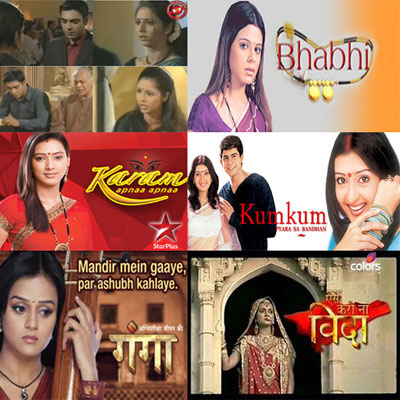
    The channels however soon woke up to the fact that it was the homemaker who had the potential to draw advertisers. With this realisation came the game of one-upmanship among Hindi GECs. Around the same time, a slew of shows mushroomed including Kumkum – Ek pyaara sa bandhan (2002 – 2009), Bhabhi (2002 – 2008), Karam apna apna (2006 – 2009) and Humari Devrani (2008 – 2012). They came to be known as the K shows and saw a long innings with increasing visibility year-on-year.

    Another landmark came in the form of Zee Woman, Zee’s pioneering effort to bring a women’s magazine on television. Launched on 12 July, 2004, Zee Woman revolved around the homemaker and occupied the 12:30 pm to 3:00 pm slot. It offered everything a women’s magazine does – features and tips on beauty, interiors, cookery, good house-keeping and the latest fashion trends.

    We are the service providers. If broadcasters need that service, we will be happy to bring alive that slot, says Sudhir Sharma

    Three years later, Zee Woman suffered a blow from two shows – Meri Doli Tere Angana (2:00 pm) and Rakhi (1:30 pm) – both having fresh content. By contrast, GECs like SAB and Life OK preferred to play re-runs of their most popular shows.

    In February 2010, Colors too jumped onto the bandwagon. The channel produced two shows – Agnipareeksha Jeevan Ki… Ganga (1:30 pm) followed by Aise Na Karo Vida (2:00 pm), packaging the duo as Saanjhi Dopahar. While the shows got a good viewership in the first week, there was a dip in viewership, second week onward.

    All say, the afternoon slot was created mostly for women, especially homemakers. With a majority of soaps revolving around women and their issues, the shows found instant connect. In fact, some of the afternoon shows fared better than their prime-time counterparts. For example, Kumkum which ranked fourth among Star Plus’s top ten shows of all time and was the country’s fourth-longest running serial as well.

    It was sometime after 2010 that Hindi GECs started losing interest in making new shows for the afternoon slot. Television channels including Sab, Sahara One, Life OK and Zee went back to airing re-runs of prime-time soaps in the afternoon.

    Why did the afternoon slot die?

    Today, we dont have enough good writers and ideas for us to put content for the afternoon slot, says Ajit Thakur

    The reason, according to Colors weekday programming head Prashant Bhatt is: “Afternoon slots were extremely popular when there were not many GECs. Fewer channels meant fewer options for people to choose from the available shows aired across channels. This gave channels an opportunity to air fresh content in the afternoon slot. But the scenario has changed now.

    Viewers have an option to watch eight programs during prime time but end up watching only one. So channels telecast re-runs of their prime time shows in the afternoon, so viewers can catch up on them.”

    Examples of this are Balika Vadhu on Colors, which is repeated five times in a day and accounts for 25 per cent of the channel’s viewership and Sony, which aired re-runs of its crime fiction series CID (1998 till the present) for four to five hours in the afternoon slot.

    According to Bhatt, there’s so much original programming in terms of prime time shows that there’s no need for original programs in the afternoon. With re-runs of prime time shows during the afternoon, audiences get to catch up with what they haven’t been able to watch.

    With too many GECs comes growing competition among them. This means they might focus on the marketing and promotion of evening prime time shows that bring more viewership and consequently, more money.

    The afternoon slot should have more dramas that appeal to women. The content should include more of romance and cast eye candy men, says JD Majethia

    So have producers and directors lost interest in producing shows for the afternoon slot?

    “Definitely not,” shoots back Sunshine Productions owner Sudhir Sharma, adding: “If broadcasters see the need, if broadcasters do any business henceforth, then we will be ready to do it. We are the service providers. If they need that service, we will be happy to bring alive that slot.”

    According to Star India vice president marketing Nikhil Madhok, the channel is first trying to strengthen its evening slot rather than bring fresh content in the afternoon. “In Star Plus, we have initiated expansion of our programming time with the launch of Ek Ghar Banaunga during early prime time at 6:30 pm,” he says. : “It is not that there is no potential in the afternoon slot. But, it’s about priority. There is more scope for improvement if we try to capture viewers in the prime time slot. Also, it is more important from a financial perspective and viewership availability,” he adds.

    Afternoon slots still hold promise, but it is a bit risky proposition as the shows need to generate sizably better ratings than the repeat ones, says Navin Khemka

    Madhok is also quick to point out that the channel is open to innovative ideas and experiments with different time slots. “We had filmed Satyamev Jayate at the 11:00 am slot when we found potential in that. It was followed by Lakhon Mein Ek, which ran for certain number of weeks and then we didn’t follow up. We have also opened up the weekend 7:00 pm slot, where we air content related to our reality shows,” he says.

    For a newly launched channel like Life OK however, fresh programming in the afternoon slot does sound interesting. “Yes! Definitely! But, it is about funding.  And if there is already enough good content that can be picked up from the prime time and aired in the afternoon, there is no point in airing fresh content. Also today, we don’t have enough good writers and ideas for us to put content for the afternoon slot,” says Life OK general manager Ajit Thakur.
    Thakur though did say it was an important slot and it was just a matter of time before it would come back.

    What about DD, which in a sense, pioneered the afternoon slot? Says Doordarshan director general (programming) Mukesh Sharma: “In DD National, our afternoon slot is flooded with strong Hindi programming. Though we air repeats, it is doing extremely well for us. To be practical, viewers don’t watch all the shows that are aired on television during prime time. Taking that into consideration during afternoon, mostly women who have missed out on their favourite shows have an option of watching it in the afternoon. And this works perfectly for us.”

    Afternoon slots were extremely popular when there were not many GECs. Fewer channels meant fewer options for people to choose from the available shows aired across channels, says Prashant Bhatt
    Speaking about DD’s big properties like Saraswatichandra, Tum Dena Saath Mera, Aur Ek Kahani and Hari Mirchi Lal Mirchi that are well adapted by the audiences in the afternoon, Sharma says:

    “These soaps are doing well on the track as the target audience is women (housewives).”

    ZenithOptimedia senior vice president Navin Khemka has a different view. “If any Hindi GEC launches afternoon show/s, it will definitely work as there is a good chunk of audience sitting there and FMCG advertisers want to dominate this slot and would like to invest in full force.

    Afternoon space should focus more on family and drama series that adds value to the content.

    Afternoon slots still hold promise, but it is a bit risky proposition as the shows need to generate sizably better ratings than the repeat ones,” he says.

    So if the afternoon slot were to be reconsidered by broadcasters, what kind of content would work? Says Hats Off Productions owner and actor/director JD Majethia: “The show’s topic, subject, and the small aspects should all be women-oriented. The afternoon slot should have more drama that appeals to women. The content should include more of romance and cast eye candy men. These are things women cannot watch during the evening time with their family. The content can also be inspirational and designed differently to attract the audience during the afternoon slot.”

    In most cases women who have missed out on their favourite shows have an option of watching it in the afternoon, says Mukesh Sharma

    Apart from broadcasters not giving enough importance to the afternoon slot, the other reasons for its decline include the rise of shows like Saas Bahu Saazish on news channels. While the then Star News (now ABP News) started the trend of airing ‘behind the screen’ gossip from various shows, other news channels too caught on. Soon enough, women were glued onto these shows, many a times preferring these to daily soaps.

    While there are different views on the relevance of the afternoon slot and whether broadcasters should reconsider fresh content during afternoons, whether channels will ever get back to brand new content in this time slot, only time will tell.


  • Ten Sports Rajesh Sethis relocation challenge

    Ten Sports Rajesh Sethis relocation challenge

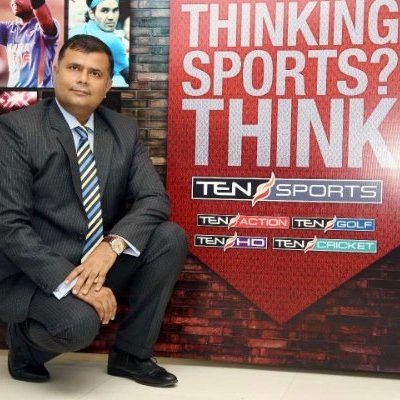
    Ten Sports CEO Rajesh Sethi is clocking a lot of flying miles these days. And it is easier to catch him aboard a flight en route to Dubai than in his office. Reason: Well! He is busy organising a massive relocation of staff from Ten Sports’ Dubai office to Noida in Uttar Pradesh.  

    It is not only Sethi who is caught up with this shifting. Even those who have agreed to relocate are busy wrapping up rent agreements for accommodation in Dubai, repaying local loans, seeking admissions for their kids in schools in Noida, packing their bags and searching for new accommodation options in north Indian industrial town and surrounding areas.

    Ten Sports Network (TSN) which operates five sporting channels- Ten Sports, Ten Cricket, Ten Action, Ten Golf and Ten HD is today owned by Zee which bought out the Dubai-based Bukhatir group’s 95 per stake in Taj Television in 2010. And it had seen some sort of an exodus even then. Senior managers, mainly expatriates, headed for the exits following the acquisition by India’s most known TV network. Among those who bailed out included:  COO Peter Hutton along with his number two Mark Denton, both of whom cofounded the network with former CEO Chris McDonald who had left even earlier.

    We are now consolidating our operations in India with the purpose of increasing stakeholder value and also enhancing viewership experience expounds Rajesh Sethi

    TSN has some prime cricket properties which can be considered hot viewing options for Indian sports TV viewers. This includes the exclusive India rights to telecast action on the field for five cricket boards – South Africa, West Indies, Zimbabwe, Pakistan and Sri Lanka. As compared to this, rival ESPN Star Sports has the rights to domestic Indian cricket, which it pocketed after committing close to $770 million dollars to the BCCI.  Neo Sports – another sportscaster in India – has the rights to New Zealand cricket, while Sony Entertainment boasts of the highly popular and profitable though controversial Indian Premier League. This apart, TSN has also signed up other sporting properties such as WWE, US Open, ATP Tournaments, WTA, Ryder Cup, Moto GP, Euro league, PGA Championship, Asian Tour, European Tour and Tour De France.

    Clearly, when Ten Sports was set up in Dubai, it was headed by expats who were tapping into investments provided by Bukhatir with employees having several different nationalities as is the practice amongst companies in west Asia. At the time of being set up, the company had more than 100 staff and it had stated that “Taj represents Dubai’s premier television production resource. No other production facility in the UAE can match Taj in terms of technology, experienced personnel and efficiency. “

    When Zee TV acquired the network from Bukhatir, chairman Subhash Chandra too had waxed eloquent about having an outpost in west Asia. “The acquisition of a stake in Ten Sports not only gives us a strong foothold in the arena of sports broadcasting across Asia but also strengthens our operations in the Middle East,” Chandra had said then.

    The Zee Network currently operates popular entertainment channels in the Middle East and has a team – headed by Mukund Cairae – which looks after its interests there. In fact, Cairae has done very well for Zee in the Middle East, North Africa, Pakistan and has been ranked 24 in a list of powerful Indians for the region.

    A Dubai-based broadcast professional who has been in the Middle East for more than a decade gives his perspective on Zee TV there. Says he: “Zee TV’s operations in the Middle East involve turning around its GECs and movie channels and producing and acquiring local Arabic content for its channels Zee Alwan and Aflam. It also garners local advertising revenues for its bouquet of channels. Cairae and his team operate out of the same Ten Sports building from the third floor.”

    Two years on after acquiring Ten Sports, Chandra discovered that it was bleeding badly and running up losses running into crores, something which a former employee says upset him greatly. He decided to shift Ten Sports’ base to India to generate whatever sayings he could generate from the move. For the network, it became a mandate to be implemented.

    Says a sports broadcast veteran: “The sports business is pretty tricky, especially international sports rights. You buy the rights in dollars, which have been appreciating consistently against the rupee, and you take advertising in rupees. The rise in advertising rates has not been making up for the depreciation of the rupee against the dollar. Hence, unless distribution revenues go up significantly which have not so far, losses are bound to be there. For the Zee Network it made eminent sense for Ten Sports to shift its technical operations including play out, production and post-production to a lower cost base like Noida where it has its uplinking hub, rather than operate out of expensive Dubai where employee costs are pretty stiff, and everything is costlier.”

    Agrees Sethi: “The move is a part of our decision to make India a hub for better synergies, virtues and also for huge scales of economy, which the country, as a common central location, offers us. We have a significant set up in Noida with huge facilities and have invested heavily in both technology and modern equipment. We are now consolidating our operations in India with the purpose of increasing stakeholder value and also enhancing viewership experience.”

    An investment analyst expects the Ten Sports shift to Noida to generate savings in double digit crore annually for the Zee Network. A local TV professional estimates that the savings will be in the region of $4-5 million per annum, mostly in employee costs. “It’s a very good reason for them to shift,” he says.

    Since Chandra’s diktat was announced, the rumour mills had been running internally that relocation was coming, and several employees had already started looking for other options. Dubai-based Ten Sports COO Sanjay Raina left the firm in June end and is reportedly working with Fox International in Dubai.  A handful quit to take up jobs with other regional broadcasters, according to local reports.  Additionally, Mumbai-based TSN CEO Atul Pande chose to take up another posting within the Zee Network and Sethi was brought in as his replacement in mid-2013.
    Sethi claims that the first communication regarding the shift was relayed in March this year while the final letter went out in August.

    The Dubai-based broadcast professional – quoted earlier – highlights that “Effectively only a month’s notice was given to employees. The way TSN management has dealt with the relocation is objectionable. They could have dealt better with it on the human resources front. Employees have been given just one month’s severance pay; look at Network18 in India, it is giving employees a three month severance package. You have to remember the Dubai media job market is saturated with very few jobs going around. Working rules in the Middle East are pretty tough for Indians. Many of the former Ten Sports employees are literally on the streets; and this after serving the organisation for so many years. Remember their families’ future is also in jeopardy.”

    But Sethi empasises, “Every Dubai-based employee has been given an opportunity to relocate to Noida. While few are happy, there are a few who are anxious about the change. People are free to either take the opportunity or refuse. No one is being laid off.”

    Employee reaction to the offer has been mixed, says the Dubai-based broadcast professional.  He explains: “Most staff that had earlier moved to Dubai had done so to get higher salaries and to upgrade their life style. These executives and professionals are now apprehensive about shifting to Noida, where they will have to start from scratch. For many employees, this was more than a hint to resign. “

    Sethi however maintains that quite a few of the staff are looking forward to the change even as “There are others who are happily ensconced in the Arab emirate and not very enthusiastic about the shift. This is because of nationality issues. While there are a few who are happy and are in fact pushing to bring forward the shift date, there are others who are uncomfortable because they do not have roots in India. This is basically due to mixed nationalities that Ten Sports employs.”

    Out of the 114 employees with Ten Sports in Dubai, it is learnt that around 15 Pakistani employees have chosen to discontinue as working in India was not feasible.  And about 25-30 of them are actually boarding the relocation boat to Noida. The others are struggling to stay afloat.

    For employees being yanked out of the relative comforts of Dubai, things don’t just end with moving to a new workplace in crowded and noisy Noida. Concerns are also being aired about their pay slips being clipped.

    “The base salary according to Indian standards is anyway less. Additionally, there are taxes. One can expect a 30-40 per cent cut in the salary,” informs the Dubai-based broadcast professional.

    Sethi begs to differ. “We are not majorly cutting salaries of those we are relocating.  The taxation laws in the two countries are different. While India has a huge taxation policy, Dubai is a tax-free nation. And I do not think this can be termed as a salary cut,” he says.

    The TSN CEO expects the relocation exercise to keep him busy for at least another couple of months. Settling down the staff to a routine could take a little longer.

    But when it is completed and Ten Sports’ operations start purring smoothly out of India, he would have fulfilled what he had been mandated to do when he was hired for the job earlier this year.

  • Reliance Entertainment Digital has its eye on English entertainment content

    Reliance Entertainment Digital has its eye on English entertainment content

    Reliance Entertainment Digital CEO Manish Agarwal is pretty excited about his company’s date with MipCom this year.  Says he:  “We want to understand the market and its offering and how relevant it is for the digital business. We are always in search of some interesting and innovative content.” 

    For Agarwal, who is into content publishing, participation in Mipcom is likely to become an integral part of doing business, though his company is participating in it for the first time.
    “It gives us an opportunity to explore the large variety of content which we need for the various platforms like BigFlix, Zapak etc. We will obviously focus on networking with more content providers and aggregators across the globe,” says he.

     Reliance Entertainment Digital which launched its over the top (OTT) service BigFlix last year is sorted in terms of Indian programming and now wants add on international content in more genres and languages.

     “We want to expand our offerings to the consumer. Participating in Mipcom will help us explore more opportunities,” he says.

    We want to expand our offerings to the consume and participating in Mipcom will help us explore more opportunities believes Manish Agarwal

     Agarwal says that an increasing group of young Indian consumers is gorging on digitised content on hand held devices and on their PCs. “It is essential for Indian service providers to experiment with new type of content across genres and content-types. And it is just not that Indians will consume only trailers or paparazzi content, they will also look at different content and so we want to explore with a variety of content,” he highlights.

     The focus this year at Mipcom he emphasises will be on acquiring entertainment content – especially that which originates from English speaking nations or with English subtitles.
    “This will be entertainment for English speaking audiences, entertainment for masses and for kids. This is the reason we are going not only for Mipcom, but also for Mip Junior,” he informs.

    For those visiting Mipcom to sell gaming content, expect the Reliance Entertainment 

    representative at your stall. “We will also look at gaming content or gaming IPs on which games can be created. So we are aiming at kids entertainment both in gaming and VOD content which caters to everyone or in niche segments in the country,” says he. “In terms of gaming IPs, since we are present across the globe, we will go for any IP which is popular. So we will be hunting for any IP across different markets in order to get a license to create mobile games

     The OTT service which delivers its content online to connected devices – a la NetFlix in the US – is looking at stacking up its video-on-demand (VOD) menu. “This can subsume movies-on-demand, TV-serials-on-demand and animations-on-demand. And for gaming again we are looking at the mobile platforms.”

    And the company is shopping cheque book in hand. So sellers will indeed be kept busy by this emerging digital giant from India.

  • Ten Sports’ Rajesh Sethi’s relocation challenge

    Ten Sports CEO Rajesh Sethi is clocking a lot of flying miles these days. And it is easier to catch him aboard a flight en route to Dubai than in his office. Reason: Well! He is busy organising a massive relocation of staff from Ten Sports’ Dubai office to Noida in Uttar Pradesh.  

    It is not only Sethi who is caught up with this shifting. Even those who have agreed to relocate are busy wrapping up rent agreements for accommodation in Dubai, repaying local loans, seeking admissions for their kids in schools in Noida, packing their bags and searching for new accommodation options in north Indian industrial town and surrounding areas.

    Ten Sports Network (TSN) which operates five sporting channels- Ten Sports, Ten Cricket, Ten Action, Ten Golf and Ten HD is today owned by Zee which bought out the Dubai-based Bukhatir group’s 95 per stake in Taj Television in 2010. And it had seen some sort of an exodus even then. Senior managers, mainly expatriates, headed for the exits following the acquisition by India‘s most known TV network. Among those who bailed out included:  COO Peter Hutton along with his number two Mark Denton, both of whom cofounded the network with former CEO Chris McDonald who had left even earlier.

    We are now consolidating our operations in India with the purpose of increasing stakeholder value and also enhancing viewership experience expounds Rajesh Sethi

    TSN has some prime cricket properties which can be considered hot viewing options for Indian sports TV viewers. This includes the exclusive India rights to telecast action on the field for five cricket boards – South Africa, West Indies, Zimbabwe, Pakistan and Sri Lanka. As compared to this, rival ESPN Star Sports has the rights to domestic Indian cricket, which it pocketed after committing close to $770 million dollars to the BCCI.  Neo Sports – another sportscaster in India – has the rights to New Zealand cricket, while Sony Entertainment boasts of the highly popular and profitable though controversial Indian Premier League. This apart, TSN has also signed up other sporting properties such as WWE, US Open, ATP Tournaments, WTA, Ryder Cup, Moto GP, Euro league, PGA Championship, Asian Tour, European Tour and Tour De France.

    Clearly, when Ten Sports was set up in Dubai, it was headed by expats who were tapping into investments provided by Bukhatir with employees having several different nationalities as is the practice amongst companies in west Asia. At the time of being set up, the company had more than 100 staff and it had stated that “Taj represents Dubai‘s premier television production resource. No other production facility in the UAE can match Taj in terms of technology, experienced personnel and efficiency. “

    When Zee TV acquired the network from Bukhatir, chairman Subhash Chandra too had waxed eloquent about having an outpost in west Asia. “The acquisition of a stake in Ten Sports not only gives us a strong foothold in the arena of sports broadcasting across Asia but also strengthens our operations in the Middle East,” Chandra had said then.

    The Zee Network currently operates popular entertainment channels in the Middle East and has a team – headed by Mukund Cairae – which looks after its interests there. In fact, Cairae has done very well for Zee in the Middle East, North Africa, Pakistan and has been ranked 24 in a list of powerful Indians for the region.

    A Dubai-based broadcast professional who has been in the Middle East for more than a decade gives his perspective on Zee TV there. Says he: “Zee TV‘s operations in the Middle East involve turning around its GECs and movie channels and producing and acquiring local Arabic content for its channels Zee Alwan and Aflam. It also garners local advertising revenues for its bouquet of channels. Cairae and his team operate out of the same Ten Sports building from the third floor.”

    Two years on after acquiring Ten Sports, Chandra discovered that it was bleeding badly and running up losses running into crores, something which a former employee says upset him greatly. He decided to shift Ten Sports’ base to India to generate whatever sayings he could generate from the move. For the network, it became a mandate to be implemented.

    Says a sports broadcast veteran: “The sports business is pretty tricky, especially international sports rights. You buy the rights in dollars, which have been appreciating consistently against the rupee, and you take advertising in rupees. The rise in advertising rates has not been making up for the depreciation of the rupee against the dollar. Hence, unless distribution revenues go up significantly which have not so far, losses are bound to be there. For the Zee Network it made eminent sense for Ten Sports to shift its technical operations including play out, production and post-production to a lower cost base like Noida where it has its uplinking hub, rather than operate out of expensive Dubai where employee costs are pretty stiff, and everything is costlier.”

    Agrees Sethi: “The move is a part of our decision to make India a hub for better synergies, virtues and also for huge scales of economy, which the country, as a common central location, offers us. We have a significant set up in Noida with huge facilities and have invested heavily in both technology and modern equipment. We are now consolidating our operations in India with the purpose of increasing stakeholder value and also enhancing viewership experience.”

    An investment analyst expects the Ten Sports shift to Noida to generate savings in double digit crore annually for the Zee Network. A local TV professional estimates that the savings will be in the region of $4-5 million per annum, mostly in employee costs. “It’s a very good reason for them to shift,” he says.

    Since Chandra’s diktat was announced, the rumour mills had been running internally that relocation was coming, and several employees had already started looking for other options. Dubai-based Ten Sports COO Sanjay Raina left the firm in June end and is reportedly working with Fox International in Dubai.  A handful quit to take up jobs with other regional broadcasters, according to local reports.  Additionally, Mumbai-based TSN CEO Atul Pande chose to take up another posting within the Zee Network and Sethi was brought in as his replacement in mid-2013.

    Sethi claims that the first communication regarding the shift was relayed in March this year while the final letter went out in August.

    The Dubai-based broadcast professional – quoted earlier – highlights that “Effectively only a month’s notice was given to employees. The way TSN management has dealt with the relocation is objectionable. They could have dealt better with it on the human resources front. Employees have been given just one month’s severance pay; look at Network18 in India, it is giving employees a three month severance package. You have to remember the Dubai media job market is saturated with very few jobs going around. Working rules in the Middle East are pretty tough for Indians. Many of the former Ten Sports employees are literally on the streets; and this after serving the organisation for so many years. Remember their families’ future is also in jeopardy.”
    But Sethi empasises, “Every Dubai-based employee has been given an opportunity to relocate to Noida. While few are happy, there are a few who are anxious about the change. People are free to either take the opportunity or refuse. No one is being laid off.”

    Employee reaction to the offer has been mixed, says the Dubai-based broadcast professional.  He explains: “Most staff that had earlier moved to Dubai had done so to get higher salaries and to upgrade their life style. These executives and professionals are now apprehensive about shifting to Noida, where they will have to start from scratch. For many employees, this was more than a hint to resign. “

    Sethi however maintains that quite a few of the staff are looking forward to the change even as “There are others who are happily ensconced in the Arab emirate and not very enthusiastic about the shift. This is because of nationality issues. While there are a few who are happy and are in fact pushing to bring forward the shift date, there are others who are uncomfortable because they do not have roots in India. This is basically due to mixed nationalities that Ten Sports employs.”

    Out of the 114 employees with Ten Sports in Dubai, it is learnt that around 15 Pakistani employees have chosen to discontinue as working in India was not feasible.  And about 25-30 of them are actually boarding the relocation boat to Noida. The others are struggling to stay afloat.

    For employees being yanked out of the relative comforts of Dubai, things don’t just end with moving to a new workplace in crowded and noisy Noida. Concerns are also being aired about their pay slips being clipped.

    “The base salary according to Indian standards is anyway less. Additionally, there are taxes. One can expect a 30-40 per cent cut in the salary,” informs the Dubai-based broadcast professional.

    Sethi begs to differ. “We are not majorly cutting salaries of those we are relocating.  The taxation laws in the two countries are different. While India has a huge taxation policy, Dubai is a tax-free nation. And I do not think this can be termed as a salary cut,” he says.

    The TSN CEO expects the relocation exercise to keep him busy for at least another couple of months. Settling down the staff to a routine could take a little longer.

    But when it is completed and Ten Sports’ operations start purring smoothly out of India, he would have fulfilled what he had been mandated to do when he was hired for the job earlier this year.

  • Sun shines on kids

    Sun shines on kids

    The Sun TV Network – with its repertoire of 33 channels across genres including entertainment, music, movies, comedy, news and kids – is arguably a very big name in television (media), both in India and Asia.

    While the group debuted with its entertainment channel, Sun TV, back in 1993, children got their very own space on the network not before 2007. The Kids Cluster, as it came to be called, kick-started with Chutti TV (Tamil), followed soon by Kochu TV (Malayalam), Chintu TV (Kannada) and Kushi TV (Telugu).

    Of the four kids channels, Chutti and Kochu are extremely popular with a nearly 80 per cent reach in the states of Tamil Nadu and Kerala, respectively.

    Kavitha Jaubin knows that maintaining a kids channel is difficult but for Sun Network it has proved to be a good market

    The mainstay of the cluster, whose core target is kids in the age group of four to fourteen years, is cartoon acquisitions from numerous distributors and production houses like Sony Pictures, Warner Bros, Viacom18 and Scholastic. 80 per cent of the content is similar on all four channels while the remaining 20 per cent varies based on cultural preferences of the state in question.

    Says Sun TV Network Kids Cluster of Channels Head Kavitha Jaubin: “Till now, we’ve only been airing acquired content but we hope to own a few titles soon, considering how well we’ve understood our little audience’s interest patterns and what content they view the most.”

    The acquired content has to be dubbed by a skilled team in each state, which develops a script in the respective language. “The USP of our channel content is the nature of dubbing. It is extremely witty and is thoroughly enjoyed by our audience,” says Jaubin, adding that nearly a week goes into scripting and dubbing an episode.

    Yes, there is some amount of in-house content produced by the network’s 20-strong programming team, which includes game shows, chat shows, news segments, cookery shows and arts and crafts shows. For the purpose, they have studios in Chennai, Hyderabad and Bangalore.

    While a major portion of the content is international, the network is looking to change this trend by including more local content. Some of the popular shows include Geronimo Stilton from Moonscoop, Penguins of Madagascar, Avatar from Viacom18, Jackie Chan Adventures from Sony Pictures and Little Prince from DQ Entertainment. Recently, the network acquired Little Krishna from Viacom 18 for Janmashtami, and is looking to acquire more such as Barney and Friends.

    Since the cluster caters to kids, the channels take care to handpick the content and also censor it to suit the tiny tots.

    “There are a few things that we particularly avoid – violence, content that hurts the sentiments of any section of the population or forces parents to scrutinise it,” says Jaubin.


    The other thing the network does in terms of cartoons is placing them as per the time band and the age of the audience viewing them.

    The morning audience mainly comprises kids between eight and 10 years of age, which changes to pre-schoolers by afternoon. Whereas, evenings are when kids in the age group of 9-14 years watch these channels, often accompanied by parents. At this hour, the channel claims to focus on edutainment type of cartoons more than action.

    Speaking of cartoons, those among the Kids Cluster of Channels airing them seem to be doing well.

    Mudra Max Media south head Anil Sathiraju says that a channel which talks regional does better than the one which does not. “Chutti TV is doing very well and for a kids’ TG, it delivers fantastically,” he says.

    According to Sathiraju, the cartoon genre doesn’t face competition from regional channels, with only Chithiram TV from the Kalaignar Group doing fairly well in Tamil Nadu and none in Karnataka, Andhra Pradesh and Kerala.

    It’s mainly national channels like Pogo, Cartoon Network and Disney that are capable of giving the cluster channels a run for their money. “The effect Pogo gives is pan-India while a Chutti TV or a Chintu TV is only restricted to the state,” says Sathiraju.

    Advertising-wise, the ads aired on these channels are directed straight at the kids who’re watching. The prime time of 3:00 pm to 8:00 pm on weekdays and also weekends is when advertisers make the most out of their products. ITC, Surf Excel and Horlicks are some of the brands that advertise with these channels.

    Sun TV sources revealed all four channels in the cluster would be generating advertising revenue in the region of Rs 80 crore with Chutti and Kochu contributing a lion’s share.

    The channels are hardly visible on the digital front. The website has a game section which includes colouring and puzzles. A small section allows users to upload their childrens’ photos on their birthdays that will be displayed on the site. Show timings for the day can also be found out.

    Children dressed up for an event organised by Chintu TV

    Most of the marketing they do is for their shows through outdoor events. There are regular events and contests, the most recent one being on Janmashtami when kids were made to dress up as Lord Krishna and his consort Radha and click photographs.

    Other events include Chutti Premiere League on the lines of IPL, where a cartoon character heads a team and children vote for their favourite team; theme-based carnivals and so on. “This has definitely helped us gain visibility and intensify the already existing popularity,” says Jaubin.

    Is there room for more channels in the kids’ space? “It is a challenge to tailor programs that suit kids’ interests, and at the same time, sustain it,” says Jaubin.

    As things stand, the Kids Cluster seems to have made a place for itself in kids’ hearts although it continues to face stiff competition not from regional but national children’s channels.

  • Sun shines on kids

    The Sun TV Network – with its repertoire of 33 channels across genres including entertainment, music, movies, comedy, news and kids – is arguably a very big name in television (media), both in India and Asia.

    While the group debuted with its entertainment channel, Sun TV, back in 1993, children got their very own space on the network not before 2007. The Kids Cluster, as it came to be called, kick-started with Chutti TV (Tamil), followed soon by Kochu TV (Malayalam), Chintu TV (Kannada) and Kushi TV (Telugu).

    Of the four kids channels, Chutti and Kochu are extremely popular with a nearly 80 per cent reach in the states of Tamil Nadu and Kerala, respectively.

    Kavitha Jaubin knows that maintaining a kids channel is difficult but for Sun Network it has proved to be a good market

    The mainstay of the cluster, whose core target is kids in the age group of four to fourteen years, is cartoon acquisitions from numerous distributors and production houses like Sony Pictures, Warner Bros, Viacom18 and Scholastic. 80 per cent of the content is similar on all four channels while the remaining 20 per cent varies based on cultural preferences of the state in question.

    Says Sun TV Network Kids Cluster of Channels Head Kavitha Jaubin: “Till now, we‘ve only been airing acquired content but we hope to own a few titles soon, considering how well we‘ve understood our little audience‘s interest patterns and what content they view the most.”

    The acquired content has to be dubbed by a skilled team in each state, which develops a script in the respective language. “The USP of our channel content is the nature of dubbing. It is extremely witty and is thoroughly enjoyed by our audience,” says Jaubin, adding that nearly a week goes into scripting and dubbing an episode.

    Yes, there is some amount of in-house content produced by the network‘s 20-strong programming team, which includes game shows, chat shows, news segments, cookery shows and arts and crafts shows. For the purpose, they have studios in Chennai, Hyderabad and Bangalore.

    While a major portion of the content is international, the network is looking to change this trend by including more local content. Some of the popular shows include Geronimo Stilton from Moonscoop, Penguins of Madagascar, Avatar from Viacom18, Jackie Chan Adventures from Sony Pictures and Little Prince from DQ Entertainment. Recently, the network acquired Little Krishna from Viacom 18 for Janmashtami, and is looking to acquire more such as Barney and Friends.
    Since the cluster caters to kids, the channels take care to handpick the content and also censor it to suit the tiny tots.

    “There are a few things that we particularly avoid – violence, content that hurts the sentiments of any section of the population or forces parents to scrutinise it,” says Jaubin.

    The other thing the network does in terms of cartoons is placing them as per the time band and the age of the audience viewing them.

    The morning audience mainly comprises kids between eight and 10 years of age, which changes to pre-schoolers by afternoon. Whereas, evenings are when kids in the age group of 9-14 years watch these channels, often accompanied by parents. At this hour, the channel claims to focus on edutainment type of cartoons more than action.

    Speaking of cartoons, those among the Kids Cluster of Channels airing them seem to be doing well.

    Mudra Max Media south head Anil Sathiraju says that a channel which talks regional does better than the one which does not. “Chutti TV is doing very well and for a kids‘ TG, it delivers fantastically,” he says.

    According to Sathiraju, the cartoon genre doesn‘t face competition from regional channels, with only Chithiram TV from the Kalaignar Group doing fairly well in Tamil Nadu and none in Karnataka, Andhra Pradesh and Kerala.

    It‘s mainly national channels like Pogo, Cartoon Network and Disney that are capable of giving the cluster channels a run for their money. “The effect Pogo gives is pan-India while a Chutti TV or a Chintu TV is only restricted to the state,” says Sathiraju.

    Advertising-wise, the ads aired on these channels are directed straight at the kids who‘re watching. The prime time of 3:00 pm to 8:00 pm on weekdays and also weekends is when advertisers make the most out of their products. ITC, Surf Excel and Horlicks are some of the brands that advertise with these channels.

    Sun TV sources revealed all four channels in the cluster would be generating advertising revenue in the region of Rs 80 crore with Chutti and Kochu contributing a lion‘s share.

    The channels are hardly visible on the digital front. The website has a game section which includes colouring and puzzles. A small section allows users to upload their childrens‘ photos on their birthdays that will be displayed on the site. Show timings for the day can also be found out.

    Children dressed up for an event organised by Chintu TV

    Most of the marketing they do is for their shows through outdoor events. There are regular events and contests, the most recent one being on Janmashtami when kids were made to dress up as Lord Krishna and his consort Radha and click photographs.

    Other events include Chutti Premiere League on the lines of IPL, where a cartoon character heads a team and children vote for their favourite team; theme-based carnivals and so on. “This has definitely helped us gain visibility and intensify the already existing popularity,” says Jaubin.

    Is there room for more channels in the kids‘ space? “It is a challenge to tailor programs that suit kids‘ interests, and at the same time, sustain it,” says Jaubin.

    As things stand, the Kids Cluster seems to have made a place for itself in kids‘ hearts although it continues to face stiff competition not from regional but national children‘s channels.

  • Nicks digital roadmap

    Nicks digital roadmap

    The times they are a-changin – Bob Dylan’s popular song – couldn’t have rung more true than present-day. A decade into the current century and change feels like the only constant. Gone are the days of VHS video tapes, black and white television, analog channels and wires; these have been rendered redundant by Blu-Ray discs, LED HD TVs, digital channels, Wi-fi and other what have you in terms of electronics. Mobile phones, laptops and tablets have replaced children’s toys and why not, when e-textbooks are on their way to becoming the norm in schools. The younger ‘digital’ generation is conversing in a language unbeknownst to the older one.

    In such a scenario, Nickelodeon (Nick) India, a part of Viacom18 Media, like its peers, is pulling out all stops to adapt to the changing times. Speaking at length to Viacom18 VP and business head – Digital Media Rajneel Kumar, indiantelevision.com tried to find out just how.

    The idea is to build something for advertisers to address their audience in this period says Rajneel Kumar

    “We went in for a complete revamp of the Nick India site, as we wanted to make it completely gaming-centric, along with showcasing our great library of video content,” explains Kumar.

    For the uninitiated, Nick India has an array of online properties under its wing, addressing different age groups among youngsters. Nick Jr. caters to the needs of toddlers, but parents too are actively involved in their kids’ consumption patterns. The prime property, Nick, has both kids and parents consuming or engaging on the digital platform. And then there’s TeenNick, which is the only such platform, which addresses young girls and Sonic Gang which caters to young boys, who’re typically into high octane action, adventure and drama.


    Of which, Sonic Gang has been a revelation of sorts, what with some exclusive content around popular IPs such as TMNT, Kung Fu Panda, Power Rangers and Avatar.

    With 100 plus episodes of content and nearly 60 high-end (overall more than 80) games, the Nick India site has witnessed an increase in time spent by more than six minutes, which is deemed very healthy. Additionally, it has an exclusive digital magazine titled ‘SonicMag’ which covers gaming, cars, sports and gadgets. Currently, the magazine boasts of over 49 articles, with fresh articles being published from time to time.

    Kumar says all these properties are an ideal platform for advertisers to reach out to their audience. “Looking at the overall digital economy and how we are addressing it, we are creating properties that help advertisers reach out to these particular segments, which are of keen interest to them. We are working really closely with advertisers across all categories to essentially run campaigns that are not really straight forward ones like banners and videos, but large campaigns around each of these markets that we are addressing,” he explains.

    Citing an example, he says: “If the addressable community is Nick Jr. as a category and looking at parents, our focus would actually be on taking characters from within that entire franchise and making it into how parents are an active part of the entire campaign…”
    For a one-of-its-kind platform like TeenNick, apart from fresh programming and a presence on social media, Nick also encourages associations with fashion and lifestyle brands. There are integrated campaigns running for Nick’s advertisers, which run from the online space to the apps and as per the need of advertisers.

    Nick prides itself on having an all-round strategy. “We also look at on-ground activation. So, it’s a complete 360, and not just sending a piecemeal part of the digital experience to advertisers. It’s about integrating all our strengths and being able to address the audience’s perspective as far as possible,” exults Kumar. 

    As far as that online video streaming monster called YouTube is concerned, Nick is very clear on how it plans to use it. “We use YouTube to primarily do a lot of promotions around our content and for showcasing teasers as also some content pieces from our entire library,” says Kumar.


    The idea is to grab the attention of the young net surfer and lead him/her to the Nick India website and the strategy has worked wonders for the revamped website, which has seen more than 50 per cent growth in traffic, a 150 per cent increase in the time spent and more than 650,000 game plays in the last 60 days. “Our strategy is solid as we’ve seen how the digital advertising industry is growing. So we are building something for advertisers to address their audience in this period,” says Kumar.

    And how does Nick manage this gargantuan task? Apparently, they have a fairly robust digital team comprising a products team around the web and mobile (the latter also includes a small in-house gaming studio), a technology team which takes care of web and mobile, an editorial team which looks after social media and content creation and a very strong sales team.

    With youngsters increasingly preoccupied with games on their mobile phones, Nick also has a strong, primarily two-fold mobile apps strategy. First, every consumer should be able to access the app which is outside of television and is addressable to that consumer. Second, consumers must be kept engaged and connected to the brand even when they are not really watching just video content. The latter is where gaming comes into play. “The most popular characters that we have around in the kids segment encourage us to really build some engaging games for kids, and we will continue to launch such games throughout the year,” says Kumar.

    He explains that all social media platforms are rigorously used to generate traction amongst consumers. “We use all the mediums available at our disposal to generate traction and that’s an investment that we have been making and will continue making as it is clearly in line with us using these platforms as long-term consumer destinations. This will engage the consumers and help us use all platforms to market our products to reach our goal,” he says.

    But how does Nick plan to make moolah out of these activities? “By primarily focusing on advertisers as they shift their attention to digital platforms. The main strategy is to be able to build our own properties, whether it’s online or mobile, which then becomes fertile ground for advertisers and marketers to partner with us on,” replies Kumar.

    According to the KPMG FICCI 2013 report, the digital advertising market is pegged at Rs 21.7 billion and has grown at 40 per cent from 2011 to 2012. It is expected to be Rs 28.3 bn in 2013 and Rs 87 bn by 2017 growing at a CAGR of 31.1 per cent.

    “All the indicators today show the time spent on the digital medium by the target audience that we are speaking about, so it only makes sense to not only monetise on the current scenario but also to build future-ready properties across each of these,” rounds off Kumar.

    With the 2013 BCG report estimating that the number of children in the country expected to come online by 2017 is likely to more than triple to 134 million from about 40 million in 2012, Nick India certainly seems to be making all the right noises in the right direction…