Category: Special Report

  • Zees Buddha wows buyers

    Zees Buddha wows buyers

    CANNES: Mipcom presents the perfect opportunity to mix business with pleasure. And so it was that the producer of Zee TV’s latest series Buddha, BK Modi, hosted a lavish bash at Cannes’ La Mandala Beach on 8 October to introduce the series to the international market even as his guests partied the night away. 

    The party was organised by Indiantelevision.com’s ITV 2.0 Productions on behalf of Buddha Films.

    One couldn’t have asked for a better setting, what with the glistening waves, cool breeze and interim light showers coupled with scrumptious snacks and drinks that flowed freely.

    While the first episode of Buddha played out on the mammoth screen, the invitees – Indians as well as lovers of all things Indian from across the globe – set the dance floor on fire with some signature Bollywood moves. The party continued till the wee hours of the morning and Buddha surely impressed – with its costumes, sets, graphics and more so, its production quality.

    For those among the industry who’ve been waiting to see the actor who plays Buddha, here’s some dope: “He’s a debutant,” according to Modi and will be announced on 13 October. Apparently, he had to undergo rigorous training to get under the skin of the Buddha.

  • Digital media pips news channels at the post

    Digital media pips news channels at the post

    NNES: News is a hard business and it’s only set to get tougher with the proliferation of digital and social media.

    Till recently, the 250 news channels across the globe were faced with the task of offering factual news and engaging with their audiences. As if that wasn’t enough, they have to now contend with stiff competition from digital players as well. 

    So the big question confronting them is: “How to innovate in order to keep both television and online audiences?”

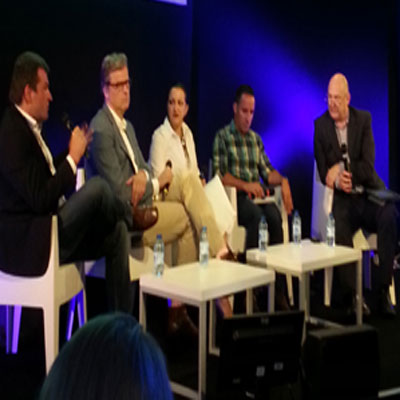
    Day two of Mipcom saw a session titled ‘Programming and engaging in the digital age’ where speakers threw light on new methods and tools of audience engagement. 

    The session was moderated by the Association for International Broadcasting chief executive Simon Spanswick with speakers including BuzzFeed president and COO Jon Steinberg; CNN International VP and general manager, digital Peter Bale; Facebook director of partnerships Andrew Mitchell; Al Jazeera Media Network, new media department manager Moeed Ahmad; and Winther Productions creator and producer of Dining with the Enemy Gry Winther.

    Spanswick kicked off the session saying: “Almost a third of all UK adults use the internet for news, and similar statistics are coming out from other territories.” 

    Mitchell stressed the importance of Facebook and Instagram as platforms to share content produced by broadcasters. “We introduced API here in Mipcom. This will allow more meaningful content and facilitate communication. Facebook is a great tool for growth, allowing people to connect and share content. Facebook has more hard news than soft news. We tend to remember the funny stuff, but it’s the more meaningful stuff that sticks with you,” he said.

    Forty per cent of BuzzFeed’s traffic comes from Facebook, said Steinberg, adding: “In all, 70 per cent of people come to us through various social networking sites. We have 120 full-time writers, doing original content.” Speaking of BuzzFeed’s partnership with CNN, Steinberg said: “The channel gives us video footage which is then remixed and re-cut in shorter, shareable format for YouTube and a younger audience.”

    Steinberg opined that social platforms have made things easier for international news organisations. “The stories spread fast as well as powerfully on social networks,” he said.
    While Ahmad echoed Mitchell’s sentiments saying hard news was being shared more than soft news. “The lack of sharing for particular verticals is not because of that vertical, it’s because of poor journalism,” he said.

    Speaking of Al Jazeera’s online news channel AJ+, he said: “Even today, YouTube has more entertainment than news content. However, AJ+ is an independent destination. We are building teams at a number of locations including New Delhi and Doha among others. The new channel aims at providing clarity through content.”

    As for CNN’s digital strategy, Bale said: “The channel will give the background for breaking news rather than simply breaking the information. You will hear the story from the real people.”

    A common observation was that no one wanted to read an old story on social media which is why something new and catchy had to be written. Mitchell said: “Channels will also have to think, ‘Why will someone share content?’. Consumers will not share old and boring news. They will share what is heartwarming, new and fresh content or something which they feel is important for friends.” He informed that Facebook was now crunching data to spot linkbait and ensure that they don’t appear in people’s news feeds. “We are now tracking how quickly people return to Facebook after clicking on the news link. We are also trying to cut down on spammers,” he said.

  • Facebook making people cling to TV

    Facebook making people cling to TV

    CANNES: Whoever said Facebook and others of its ilk were responsible for driving audiences away from television would be forced to do a rethink after this gem of a revelation from Facebook VP of partnership, Dan Rose.

    “Facebook now talks of television. And discussions or comments between friends are more about content aired on television,” said Rose in his keynote address on the inaugural day of Mipcom.

    And it didn’t end there. He went on to announce: “We have expanded our list of data partners across the globe.”

    Among the ten global TV companies with whom Facebook has partnered is Star India for beta test- this being its first partnership in India. Says Star India, EVP marketing and communications Gayatri Yadav: Star India will be the first media brand in India to partner with Facebook as part of a beta to use their APIs in our programming. The goal is to work closely with Facebook to develop this offering and leverage this tool to gain rich insights into social conversations on Facebook related to our content. Today the first port of call for consumers when they want to talk about content is often social media people love sharing their thoughts and feelings about the latest shows online. This will help us better understand audience reactions to programming and deliver better real time consumer insight.”

    The other networks include: TF1, Esporte Interativo, Canal+, CBC, Food Network, Channel 4, ProSieben, and Discovery.”

    Rose explained how social media had become an inseparable part of television. “There is now an intersection of social media and TV. In fact, now, TV is leveraging new technology to improve its experience with social media,” he said, while addressing a packed auditorium at the Palais des Festivals in Cannes.

    Referring to Facebook as the second screen, Rose said: “So while everyone thought we were driving people away from TV, the second screen is in fact making them cling to TV.”

    Substantiating his statement with facts, Rose elaborated: “There were 29 million interactions on Facebook about Wimbledon. When MTV Video Music Awards was aired, there were 26.5 million interactions about the awards on Facebook. Also, NBA finals received close to 125 million interactions.”

    Statistically speaking, there are 1.15 billion people on Facebook today. An average mobile user in the US spends approximately 14 hours every month on FB and nearly six hours on Instagram. 18 million people in France are active users of Facebook, of which 11 million use mobile phones for it.

    Asked what keeps Facebook alive and ticking, Rose said: “There are three best practices to follow: One, to spark the conversation. Facebook has added #Hashtags and also come up with trending topics to spark conversations. Two, we connect with fans through public figures. People on Facebook love hearing from public figures. And thirdly, leverage tools. We launched public feed API that gives real time feed of public posts.”

  • Its a full plate for IndiaCast/Viacom18

    Its a full plate for IndiaCast/Viacom18

    CANNES: It’s been a fruitful first day at Mipcom for IndiaCast/Viacom 18 (booth number 10.3, level 1), which met up with nearly 43 buyers from markets including France, Indonesia, Russia, Switzerland, Australia, Brazil and Jordon to name a few.

    The group expects to meet at least 120 companies from across the globe over the next three days of Mipcom.

    IndiaCast group COO Gaurav Gandhi says: “We have 15,000 hours of content in our library across the group and we add more than 2,000 hours of fresh programming each year.”

    The biggest draw according to Gandhi is: “Scripts of our famous drama series like Uttaran and Madhubala. That apart, formats like Roadies, Splitsvilla and Crunch aired on MTV are also in demand.”

    IndiaCast/Viacom18 has on offer about 40 shows including Na Ana Iss Des Lado, Ballika Vadhu and Comedy Nights with Kapil as also regional channel content and around 40 Bollywood films.

    “Mipcom is a good place for connecting with potential buyers from many smaller markets that we don’t have offices in or otherwise would never be able to reach out to. The discussions & negotiations begin here. It needs to be naturally followed up for things to materialise,” says Gandhi.

    The group is looking to monetise all its intellectual properties to the hilt. “For example Japan has a huge market for clips and looks for buying clips of many of our shows. East Europe wants drama series dubbed in their language. Africa wants script rights…” informs Gandhi.

    And yes, Colors’ recently launched series 24 is another property the group is betting on. “As regards 24, we are in the final stages of closing the deal with Pakistan,” reveals Gandhi.

    Apart from selling content, the group is also looking at acquiring content for its various channels. “We need to be sensitive towards what we choose. It should connect with our audiences. We are looking at acquiring family drama content and also non-fiction shows,” rounds off Viacom18 executive VP strategy and business development Anuj Poddar.  

  • Wheres the party tonight?

    Wheres the party tonight?

    CANNES: After a frenetic day one at Mipcom, replete with 23 conferences plus sessions and nearly 30 meetings per booth of the hundreds spanning the Palais, participants were still left with enough and more energy to party the night away.

    Indeed, the opening night bash, organised in collaboration with The Argentine National Film Board (INCAA), was a memorable affair.

    Almost everyone in the street outside was headed to the party.

    With Argentina being this year’s ‘Country of Honour’, everything – right from the waiters to the performers – had a distinct Argentinian flavour to it.

    A more-than-full house, some of the guests spilled over to the lawns of the Palais, nursing their drinks and engaged in animated conversation.

    For those who came wearing their dancing shoes, the after party continued at Carlton Beach, well into the wee hours of the next day. With slight showers, a cool breeze, scintillating music, overflowing booze and scrumptious food, it proved to be a real stress buster.

    Again, this was just one of the many parties happening at Carlton Beach around the same time; the Fox and Disney bashes prominent among them.

    With three more days to go, the partying looks set to get harder…

  • Viral on your mind?

    Viral on your mind?

    A‘Kolaveri Di’ kind of video with the capacity to go viral doesn’t happen every day, and that’s something marketers and the junta might do well to remember.

    There have been enough and more cases of online campaigns that fell flat on their face just as there have been instances of campaigns that fared considerably well in recent times (Dove’s real beauty, Flipkart’s Nation wants to know, Dhanush’s Sachin anthem).

    Content is king

    So what are the ingredients that make for success? First up, it’s the content. GroupM ESP national director (sports and live events) Vinit Karnik opines that videos like ‘Kolaveri Di’ and ‘It’s your fault’ are an engaging and entertaining way to disseminate a social message and build awareness.

    Watch the video: Boost pays tribute to Sachin’s 23 years of stamina!

    Gasoline founder and chief creative officer Anil Kakar says the first rule of creating online content is that it needs to be worth sharing. “The potential reach shareable content can offer is enormous and brands are currently only scratching the surface,” he says.

    Referring to two recent viral videos ‘It’s your fault’ and ‘I quit’, Draftfcb Ulka Interactive (digital arm of Draftfcb Ulka) creative head Sudarshan Sudevan says: “These two videos share different lights in the context of one’s feeling, one is targeted at the mass and the second, targeted at a single person….her boss. But the common platform that they share is – being vocal about it. That’s the lesson you can learn from it. Exercise your freedom of expression to the maximum… without fear. You can be a total stranger but your voice is surely heard if it has a message. That’s the power of this digital medium.”

    Not to do list

    Successful online content is often disruptive, based on a powerful insight and more importantly, follows a set of rules in social media that are way different from other forms of media.
    Experts believe the most common mistake that someone/some brand can make while launching a digital campaign is to create it to go viral. According to Infosys global head (digital marketing) Ashok Lalla, that is the biggest fallacy. “Virals happen. Of course, one can help them happen through content which is very high quality and well produced, and also through extensively promoting the content. For example, Idea’s Honey Bunny was promoted across media and that drove the viral-ness of the video online,” he points out.

    Similarly, Everest Brand Solutions president Dhunji Wadia says if one tries to create a campaign to go viral, there are a million ways to go wrong as there is no fixed formula or template for these videos. “You just have to click with the consumers, literally! Firstly, if it doesn’t impress me, how will it impress the world? One can get carried away with an idea, which does not make as much sense after production as much as it made on paper. Don’t hesitate to start fresh in such a case. Secondly, is the product/service forced into the communication? Sometimes there is a ‘disconnect’ between the product/service and the ad concept. If the two are not inter-twined, the product will be left hanging after a great concept.  It will hardly be noticed. Try to find a common ground between the two.”

    Highlighting mistakes marketers/advertisers tend to make, Sudevan adds: “Low budget for a promotion to be launched ‘asap’ plus maximum output demanded (for example say 1 million likes) and hence resorting to social media leads to bad ideas and bad execution, considering the time the agency gets to churn this out in that shoe-string budget. Also, no research of the ecosphere of social media or what or how much a campaign should cost or the time it should get competed within leads to selection of bad ideas presented by some smart agency.”

    With or without social media

    All said, the social media universe is swelling and no advertiser or marketer can afford to ignore it. Besides, with the dipping rupee and dwindling economy, conventional Indian media is facing the heat, rendering social media the smartest option in the current scenario. 

       
    Says Kakar: “What makes social media unique is the fact that brands can, for the first time, have a conversation directly with consumers. This is a huge paradigm shift of sorts, which is already testing our collective skills as an industry. Also, for the first time, we can gauge accurate responses through analytics and tools, engage with a select audience, should the need arise, and alter content according to responses. Social media is also a great platform to engage opinion leaders or ‘feeders’, who help promote content onto blogs, twitter, facebook and other platforms for a multiplier effect, generating free PR, which would have otherwise cost an arm and a leg for an advertiser.”

    Watch the video: AIB seeks an answer to whose fault is it anyway?

    FoxyMoron co-founder and director – new business and innovations Pratik Gupta seconds Kakar saying: “A lot of brands want to reach out to their audience and it might be as simple as uploading a TVC on YouTube. One must remember that a TVC is watched by the entire family, out of which, not all could be the target audience wherein the people who will click on social media are the correct viewers.”

    Gupta gives the example of the campaign Baby Lips Kiss Song featuring Alia Bhatt that FoxyMoron recently did for Maybelline. He says there are many brands that are utilizing the platform to the fullest to reach their TG.  He also talks about the YouTube channel Q-tiyapa by TheViralFeverVideos saying they are doing everything right to strike a chord with the youth.

    And what do advertisers have to say about digital platforms? “Advertising is a 360-degree experience. That’s when a user feels the brand in totality and since every medium has its own plus points, it’s best to design any campaign keeping in mind the purpose of the campaign,” say advertisers.

    Then again, there are the naysayers who feel digital media and by extension, social media is still not a mass channel of outreach in India. Statistics for internet usage vary between 70-140 million and those for social media are a subset of this. So, it’s unlikely to be the medium of choice for all brands for all seasons. At best, digital/social media may be the medium of choice for a younger, urban-centric demographic concentrated in major metros and towns across the country.

    Whatever be the case, one thing is clear that with the medium encouraging conversations on various social platforms, the movement of content from ‘airing’ to ‘sharing’ can catalyze the internet audience to great effect.

  • Close What do buyers want?

    Close What do buyers want?

    CANNES: That they’ve come to Mip Junior looking for kids’ content doesn’t really mean they are clear about what they want to buy. Which is where the conference titled ‘What do buyers want’ stepped in and did some much-needed hand-holding.

    Moderated by C21 Media editor-in-chief and managing director David Jankinson, with panellists including Nickelodeon senior VP, global acquisitions and international programming Jules Borkent; The Walt Disney Company SVP, programming, scheduling, multi platform and acquisitions Paul DeBenedittis; RTL Disney Fernsehen head of acquisition and co-productions Frank Dietz; and Cartoon Network VP content acquisitions and co-productions Adina Pitt, ‘What do buyers want’ concentrated on the proliferation of devices and platforms for kids’ entertainment.
    DeBenedittis said: “We don’t really think of ourselves as just a linear TV screen. Today, content is a means to distribute the message about the Disney brand, no matter where the audiences are.”

    Added Pitt: “The number of screens from where kids can consume our content has increased. So, the focus now is to provide the best possible content on the screens that are being used widely.”

    With viewers today moving faster than channels, this was probably the best time for producers to be in the business of kids’ content, Pitt pointed out.

    DeBenedittis spoke about how audiences are just a click away. “Considering the amount of content one can watch online, viewers have moved from the remote to just a click. Channels are competing with YouTube. But what is different about us is that we can tell a story,” he said.

    Pitt spoke about how channels were concentrating more on comedy content for kids. “Kids come to us to laugh. So even if it is mystery or action or drama, our content always comes with a bit of humour and it works well with our core target audience. Ben 10 being the biggest example,” said Pitt.

    Ditto for Nickelodeon. “We are looking at pure comedy. Kids want to laugh and that is what brings them to us,” said Borkent.

    Pitt said their budgets were so tight they could not afford to buy anything that was less than extraordinary. Nickelodeon, which had launched an app earlier this year, was now creating content specifically for it, including some digital commissions, which according to Borkent, could be developed into a TV show.

    Even channels like Cartoon Network were flipping through the internet to see if there was anything interesting to be converted into content. “There are numerous ideas in the internet, some brilliant. People just need someone to help them tell the story better. So we are always looking for something that is undiscovered,” revealed Pitt.

    DeBenedittis cautioned against the tendency to develop any single platform in isolation. “Developing content for only one platform is not the most efficient way to leverage resources. It is about using the platform to distribute content as opposed to being very focused on a platform and developing content specifically for it,” DeBenedittis said.

  • Mip Junior puts spotlight on VOD

    Mip Junior puts spotlight on VOD

    CANNES: Mip Junior took off on 5 October at the tony Carlton Hotel in Cannes.

    The spotlight was on children’s content as delegates discussed everything from tight budgets to the change in focus to Video on Demand (VOD) to the challenges and opportunities that lie ahead.

    The first session ‘Money Matters: Finding Finance in New and Different Ways’, moderated by Debbie Macdonald consultant Debbie Macdonald and presided over by Snow River Media chief executive Angus Flethcher, concentrated on new business models, opportunities and challenges facing the independent creative and producing world.

    “Technology has changed and so has the audience. The audience is moving dramatically from one platform to the other. There is an extraordinary revolution going on, and it’s exciting to be in the middle of that change,” said Flethcher, adding that though television could be scary, the good part is: “We can directly speak to our audience. Producers today need not make a half an hour or one hour series. Instead they can create a one minute video for the internet and get immediate feedback.”

    He said content producers now had both newer entry points and people to talk to. Citing the example of Angry Birds, he elaborated: “The character was developed with a story, not as a series, but as a game, and it has done tremendously well.”

    The first session stressed on the importance of the VOD platform. While it was the success of Netflix that made everyone think of VOD as a medium to reach out to audiences, BRB Internacional CEO Carlos Biern said, “Most important is the audience (kids), who can, with VOD, be glued to animation 24X7.”

    Whereas the second session, ‘New Content Deal-Making: get the most of your VOD rights’, spoke about how the VOD platform could be utilised to reach out to audiences. Biern observed it could prove fruitful for advertisers as well while The Jim Henson Company executive vice president, global distribution Richard Goldsmith informed: “VOD is quickly becoming television. So while we look at VOD as a separate source of income, every time we have a conversation with channels, they also want to buy the VOD rights. This shows how important it is becoming for all of us.”

    What emerged is that while Netflix and Amazon may continue to rule the roost, the remaining VOD players had to stand out from the crowd. “We want to become the only option in children’s tablets and smart phones. We all need to involve with our brands to be able to connect with our target group,” said Toon Goggles managing director Stephen L Hodge.

    The key takeaways of the talks seemed to be that every show will sooner than later turn into an app and that SVOD will soon replace standard linear television.

  • From television to web on the go

    From television to web on the go

    CANNES: Day two of Mip Junior put the spotlight on how kids today are increasingly moving from television to the web.

    “This year, four trillion gigabytes of social data was generated. In fact, two years down the line, the number will double,” said SuperAwesome CEO Dylan Collins, adding that Netflix and YouTube were two of the biggest platforms for children to watch/upload videos and listen to music.

    “There is a re-definition of trend. This year, YouTube has seen 100 hours per minute of video being uploaded. And this has built up from zero, six years back. YouTube could probably kill half a dozen entertainment companies tomorrow, just because of how many children are there,” he said.

    SuperAwesome recently asked 2,000 children what presents they’d like to unwrap on Christmas Day only to find out that kids favoured iPhones and iPads over traditional games consoles and handhelds.

    Speaking about the shift to multiple screens, Collins said: “A lot of people talk of two screens, but there are actually four – the mobile, laptop, TV, and desktop. If one has to look at China, the usage of mobiles has exceeded that of desktops. This is where every kid is going.”
    Again, kids with their own tablets are using more Android than iPad, Collins pointed out. “So when you’re thinking about creating new IPs and new brands, build them for tablets and not necessarily just iPads,” he said.

    He stressed on the need for producers to think multi-channel from the very beginning. “Parents today are ready to pay $10-20 for tablets. Everything that interacts with kids involves video and that is the way ahead. Video isn’t going away, in fact, online video is getting bigger and everyone needs to think about it from day one,” he said.

    The morning session also concentrated on games, apps, toys and books for kids.

    In a session on ‘Borderless IPs’, MakieLab CEO Alice Taylor informed the audience about her creation of physical goods from virtual ones. “MakieLab is a start-up making customisable 3D printed dolls, born out of the trend where children were seen collecting in virtual worlds like Moshi Monsters and Club Penguin to customise avatars. We wanted to turn these avatars into real dolls.”

    MakieLab now has a website and an app, and will also launch a game in early 2014. “The app helps children build their own doll through simple slide-bar controls. MakieLab is also working at creating an 11-minute 52-episode animated show aimed at girls, based on the Makies characters and world,” Taylor said.

    Compania de Medios Digitales (CMD) COO Marcelo Liberini spoke about his product Gaturro, which started as a comic in 1993, and has now moved to TV and video. “We ended up building a full trans-media property around this character, and this year, we are finishing the work on the TV series,” Liberini said.

    In 2010, CMD also launched Mundo Gaturro, a virtual world, which has since spread to online radio, a social network called Picapon, webisodes and a video-on-demand platform. “We are expanding into mobile too. We are now in the process of porting the virtual world, ready to be used on tablets,” Liberini said.  

  • Mipcom 2013: Bigger and Better

    Mipcom 2013: Bigger and Better

    CANNES: If you thought 1,200 participants at Mip Junior was big, think again. 

    We’re talking 13,000 participants from 100 countries; 4,400 buyers with 40 sessions and keynotes; 1,700 exhibitors across five exhibition floors; and approximately 100 Indian companies with their biggest formats. Mipcom 2013 is finally here and how!

    Starting 7 October at the resplendent Palais des Festivals in Cannes, the four-day fest will see some of the biggest content deals being sealed. The Indian contingent will see Star TV with its biggest format Mahabharat and Zee TV with its new offering Buddha among others. Events to watch out for include the key note address by Zeel MD and CEO Puneet Goenka along with Dreamworks Animation CEO Jeffrey Katzenberg.

    So what’s the Mipcom allure really? For one, launching and selling programmes and expanding sales to new platforms. Second, discovering and acquiring the newest and best content in every genre and platform. Third, finding co-production partners and new international channels to enrich offerings and last but not the least, expanding industry knowledge, understanding trends and discovering new business models.

    And while Cannes gears up to welcome a host of participants from around the world, indiantelevision.com preps up to keep you up-to-speed with what’s happening out there…