Category: Special Report

  • Industry leaders’ thoughts on Independence Day

    Industry leaders’ thoughts on Independence Day

    Independence. We in India have had it for so many years that the India that is emerging does not know what it is like to not be free. For millions, the struggle to get freedom from the British, Portuguese and sundry other rulers are just chapters in their history books. But occasions like Independence Day and Republic Day remind us that we were once subservient and that we overcame bondage and won our freedom.

    15 August is the 67th year of our independence. For sure, the Indian flag will be hoisted in neighbourhoods all over India. Smaller flags will be mounted on cars, cycles and bikes. And even smaller ones pinned on our shirt pockets. Patriotic songs will be played out on radio and on TV.

    And hopefully for a day we will forget all our complaints against rising prices, economic upheaval, a political and administrative class that is showing little backbone for fair governance and well-being of its citizenry, corruption and the lack of respect that many in India have for women. Hopefully, we will remember the price that was paid for the valuable freedom that we enjoy today. And feel proud to be Indian. We, at indiantelevision.com surely are and even proudly carry it in our name.

    Indiantelevision.com’s young team of journalists spoke to senior professionals from the advertising, broadcasting, cable TV and marketing sectors to get a fix on their feelings on India’s 67th Independence Day. And also to gather from them on what their favourite patriotic song or movie is. Read on to feel patriotic:
    O&M India executive chairman & NCD Piyush Pandey

    I am very proud to be an Indian. I think India is a very significant country with many diverse cultures and we have come a long way. In the future, I wish the country to be in a much better shape than what it is currently.

    Mile Sur Mera Tumhara is my favourite patriotic song and truly depicts the light of Indian culture and unity amongst Indians.
    NDTV executive vice chairperson Narayan Rao

    I feel good that we live in an independent country but it shouldn’t be taken for granted.
    I’d like broadcasting to be world class and for journalism to have high standards, credibility and ethics.
    My favourite song is Saare Jahan Se Achchha.
    Publicis director, CCO south Asia Bobby Pawar

    Yes I am proud and happy as well that I am living in an independent country as an independent man.

    I really don’t have any ideas about where the industry is headed. If I did know, then I probably would make millions on it. However, I am very optimistic about the growth in the industry.

    My favourite movie is my friend’s Prasoon Joshi’s film Rang De Basanti and the title song from the same movie is my favourite song.
    Discovery Networks Asia Pacific, sr VP & GM, head of revenue, pan-regional ad sales & south asia, Rahul Johri

    I am proud of being an Indian and happy about it. I think in the coming years the broadcasting industry will evolve as the market evolves. I see many more options on offer for viewers and I see the broadcasting industry only growing further.

    My favourite patriotic song is the video Ye Mera India by Saleem and Suleiman which is on Animal Planet.

    Zee, chief content and creative officer Bharat Kumar Ranga
    I renamed myself from Mukesh to Bharat, when I was in the fourth standard. I fell in love with Manoj Kumar’s character as Bharat inUpkaar. So when I was filling my form for fifth standard, I renamed myself as Bharat. This is how deeply I feel about India. Though firangi competition is welcome, but in India only Indians will rule. I am among those, who believes in the country.

    It is in India, that media enjoys the stature of being the fourth pillar. It started with print and went on to books and films. There was a certain independence given to broadcasters, but that was not utilised to the maximum. Though India has done well in a lot of sectors, but growth in media has not been great. We need to break away from daily and weekly competitions to unleash the power of media.
    My favourite patriotic song is Mere Desh Ki Dharti from the movie Upkaar, I still get all 

    charged up hearing the song. Purab and Paschim was one movie which aptly brought out the power of India, and that is my favourite patriotic movie.

    Draftfcb+Ulka advertising ED & CEO Ambi M G Parameswaran
    I am proud to be an Indian. And I value my freedom. 

    As a nation, the change I would like to see is that the slowdown, which we are witnessing, goes away. I know it will be another 12-18 months before that happens, but then we will see double digit growth after that. The GDP growth needs to regain momentum, business confidence need to rise, rural development really needs to happen, and food prices need to come down.

    My favourite patriotic movie is the Tamil film Kappalottiya Thamizhan.
    Star Den Media Services, CEO Gurjeev Singh Kapoor
    We feel proud to be independent and we celebrated Independence Day at our workplace too on 14 August. Everyone was wearing small paper flags across their hearts proudly. We decked up the office with balloons and placed a small flag on every workstation.

    In broadcasting, freedom of expression is critical and this has rarely happened in the past, but it is witnessing a change. Things have gone through a revolutionary change and kudos to the industry for bringing in this welcome change.

    I love patriotic movies, but Saat Hindustani (1969) and Shaheed (1965) figure among my favourites.

    Zee News CEO Alok Agrawal
    I feel good as an Indian. We are living in a democratic country. There are lots of things we need to do to improve. We all have some amount of influence that we can use.
    We are launching an entire new initiative Bharat Bhagyavita. Our responsibility as media is to inform and empower people with knowledge and make them aware of their rights and encourage them to do something about what’s going on.

    Nothing comes to mind. I don’t go by defining a favourite. Any patriotic song is fine. I like almost all songs.

    Media Consultant, Sanjeev Hiremath
    For me patriotism is a feeling and cannot be defined in a song, though I really love the Hollywood movie ‘Independence Day’.

    In the 67th year of Independence, the biggest achievement for India is that it is no longer considered as a developing nation. A lot of Indian companies are now investing in overseas business. Our GDP is robust and we are above world average. I am proud to be an Indian and the reason is its diverse culture. My only concern is that though individually we are progressing, the country collectively isn’t. Even today 70 per cent of the population lives on 1.50 dollars a day. It makes me sad. The political scenario needs to improve.

    What is good about the cable and satellite industry is that we are not 10 years behind when we compare ourselves to other countries. We have been making gradual progress and now with DAS, in the next two years we will be up close with the world cable and satellite industry.
    Playtime Creations TV producer Hemal Thakakar

    As an Indian we feel proud that we had so many great men and women who gave their lives for freedom we enjoy today. Somewhere I think we have failed them and have misused freedom which they got for us. I hope, pray and wish we correct that.

    For broadcasters, future is shining. Digitisation is beginning of new horizon as our country gets hungry for more entertainment and infotainment. New avenues are discovered and looking at the Indian diaspora and the fact that we are a young nation, the broadcast industry is going to get a major boost.

    My favourite song is the title track from the film Swades and Kandho Se Milte Hain Kandhe.

  • IRF 2013: James Cridland: Indians love their radio

    IRF 2013: James Cridland: Indians love their radio

    James Cridland is a radio futurologist and managing director of Media UK and Radio DnS. He was the Digital Media Director for Virgin Radio in London in 2001; in 2007 he joined the BBC to work on the BBC iPlayer for Radio; he also worked at PURE, Audioboo, UK Radioplayer. He is a trustee of the Radio Academy, and sits on the International Radio Festival Advisory Board.

    At the recently concluded International Radio Forum (IRF 2013) at Zurich, Cridland had a session on “How People Are Listening to Radio in Today’s Multiplatform World – and what your station needs to do about it.” This is part I of a two part summary of Cridland’s session by The Indian Television Dot Com Pvt. Ltd. group South India Head Tarachand Wanvari. Excerpts:
    New Broadcast Format

    Cridland began by saying,”Let us talk about how people are tuning into radio in today’s world. There is the internet, FM and AM, there is a new broadcast format – DAB+ or HD radio and then radio broadcast through the TV that is strongly visible in a many of countries. The UK is one of the countries that broadcast radio in all the four formats like most European countries. In terms of popularity, FM is first; internet is the third most popular in terms of number of people tuning into live radio, but it’s alongside TV as well.”

    Cridland revealed that based on the latest figures, for the first time ever in the UK’s radio history internet streaming of radio stands way above radio over TV. “This counts anything and everything that anybody classifies as being a radio station. This is from a pretty robust census survey. We have noticed something interesting here, FM radio is broadcast radio, TV is broadcast, DAB is broadcast, as is HD and there is a real story here in terms of the continuing strength of broadcast.”

    However, Cridland admitted that both AM and FM have seen slow decline over the last five years while DAB in the UK has had a slow increase as have TV and internet radio, but the last two were still very small.

    “There is an awful lot of talk about how internet radio is the future of radio. The reality right now is that internet is a quite small part of radio consumption at present. But no predication can be made for next 5-10 years. Right now broadcast is preeminent in terms of radio consumption,” said Cridland.

    “In the UK, only 20 per cent of radio listening is in car, DAB is pre-installed in 33 per cent of all new cars. In the UK we have no pure play radio stations that are internet only. One of the reasons is a very strong public service broadcaster (BBC), and also the music rights in the UK are expensive”, said Cridland.

    “The US is quite different, where comparatively, 50 per cent of all radio listening is in cars. Pandora is preinstalled in a third of all new cars, and if it were a radio station. It would have a seven percent of the market share in the US. Over fifty percent of Pandora’s consumption is on mobile. HD radio is preinstalled in thirty percent of all new cars and Sirius XM is pre-installed in a number of new cars, but a majority of people actually don’t buy the service once the free period lapses”, further revealed Cridland.

    Comparing the various landscapes

    “Actually when you start looking at the US for radio consumption, then it is very different, because the US has a very different media landscape. HD radio works brilliantly in the US. It should work brilliantly in Canada and in Mexico as well,” said Cridland.

    “In the UK, the owners of the radio ratings service are all radio stations. The same happens in Belgium in France and across most of Scandinavia. The US is a very competitive radio market and all the players don’t work together. That’s why, HD, a good protective technology works brilliantly for the US and fits in with the differences in media consumption there. “

    “In Europe it is a different story and in India too it’s even more different. In India, they love their radio. Radio has a future there because 94 per cent of the listeners in Mumbai tune into radio on mobile phone, only 16 per cent on radio receiver. So radio consumption is very different, depending on where you go across the world,” said Cridland.

    New broadcast platform

    Cridland said, “New broadcast platforms create choice. You can see that if you are a program maker, all of a sudden there is a bunch of additional choices that you can actually have. Loads of additional choice is great news if you are making content because it means that there are more places that want to buy and air your content that enables you to be heard by more people”
    “You can see that all of a sudden we have radio stations for specific niches. Planet Rock is one good classic example of a Rock station that never gets onto FM. Then a religious radio, Premiere Christian Radio and the United Christian Broadcasters; we have got additional music choice from services such as Absolute Radio which is actually growing their business and additional the public service broadcasters business as well.”

    Taking a quick look at broadcast versus internet, Cridland said, “I believe podcasting and on-demand content is where radio has headed. On-demand is a great way of getting more people tuning in, but we can only forget about the power of live radio at our peril.”

    Countries exploring new broadcast platform

    “There are a number of examples where internet and broadcast are working together. For example, Kronehit -a CHR station in Austria. They have a bunch of additional services online-from Kronehit Love which plays love songs to Kronehit Balkan Bees, because they have a lot of people from the Balkans who’ve moved over into Austria so they have produced a radio station especially for them. They can’t do this on FM because they can’t get additional licenses, but they can do it on things like DAB+ and on the internet world, and they also have their own personalised music,” informed Cridland.

    “Similarly if we go to Australia, Southern Cross Austereo- one of the largest radio groups in the world broadcast has a bunch of radio stations across Australia in FM, AM and DAB+. They also have Songl which is their equivalent of Spotify,” added Cridland.

    “In Turkey – Spectrum Medya runs a bunch of radio stations. You have to register if you wish to listen to those radio stations online. Once you have registered then the ad-breaks online contain specific advertising for your type of demographics. It is a great way of making additional revenue, but only possible on the internet,” opined Cridland.

    “In the US there’s a company called Entercom that runs a bunch of radio stations. They work with a company that helps them sell advertising online for which you don’t need to register. All you have to do is to visit their websites and listen. They have teamed up with a company that knows the websites that you have been to. So,if a person has booked a flight to New York, they’ll give him an ad for hotels in New York. It is a great way of earning more cash from your advertiser,” felt Cridland.

    “The cost of broadcasting on the internet to a larger audience is significantly more than broadcasting over FM or HD or DAB+. There is a pretty low threshold where the internet suddenly becomes quite expensive. I am not saying that internet is a bad thing. In fact, internet and broadcast do work together really well, but it is going to be a long time before internet gets even to twenty percent of the listeners” revealed Cridland.

    Elaborating further on the way radio and internet work together, Cridland said, “The States have really cracked this. There’s Nextradio, it uses FM to get the audio from an FM station with a ludicrous name of Hack FM and it is using the internet to get additional information on a mobile device. One can click to play this song and click to get more information and more actions such as sharing and liking. All of this is available through HD radio.”

    “Analogue FM will never die out. It’s a noble aim for any country to try and phase out FM, I can’t see it happen. If I was a pirate radio broadcaster, I’d be rubbing my hands in glee at that prospect. FM does a great job if you can get an FM license.”

    Radio receivers

    “The problem is that radios are rubbish. In a typical radio, when you turn it on, it asks you if you want FM radio or DAB+ or do you want internet radio. It is almost as if it is a set of different radios in one unit sharing one speaker and they all work differently which is bizarre. The TV industry has completely got the user experience sorted out.”

    Speaking on standards on radio receivers, Cridland said that there were no standards. If someone was to buy an FM radio in the US and brought it to Europe, it wouldn’t pick up half the radio stations and the ones that it did pick up would sound rubbish. In Japan, European FM radio would probably pick up half the radio stations there, they used a different waveband. Cridland said that AM works differently in the US as compared to Europe. There were no worldwide standards. “We need to have a continental standard, and the continental standard for Europe is DAB+, and a DAB radio stations is also available on a DAB+ receiver.”

    (Part II, about how people are listening to radio on the mobile, will be published soon…)

  • The LGBT challenge for Indian TV & cinema

    The LGBT challenge for Indian TV & cinema

    It’s said that a country’s art and culture reflect its plight in the best way. At the present time its TV and films that have become the biggest platform to showcase the visual arts. And in the present situation when the lesbian, gay, bisexual, transgender (LGBT) community is facing a tough time after the Supreme Court reinstated that gay sex will remain a criminal offence, it seems so apt.

    On Wednesday, the Supreme Court gave a severe blow to the largely-closeted homosexual community in the world’s largest democracy. It overturned a 2009 ruling by Delhi’s High Court, which had lifted a ban on gay sex between consenting adults that dates back to 1861. According to SC, only parliament can now change the penal code. Under Section 377 of the Indian Penal Code (IPC), sexual activities “against the order of nature” – including homosexual acts – are a criminal offence.

    The law says: “Whoever voluntarily has carnal intercourse against the order of nature with any man, woman or animal, shall be punished with imprisonment for life, or with imprisonment of either description for term which may extend to ten years, and shall also be liable to fine.”
    While the law has can be extrapolated to cover even heterosexual couples indulging in oral or anal intercourse, it’s the folks with alternate sexual orientation (the LGBT community) that are the most troubled.

    Apparently, if we look back, we would realise that "mainstream" commercial TV and cinema  (whicht are not just the most disposable form of art in the country, but also the most common source of entertainment across masses) are mostly devoid of any content that features the LGBT community. 

    'Maryada…lekin Kab Tak' featured a gay couple but the main plot overshadowed this sub-plot

    While in the world cinema space, we have had aesthetically and artfully shot films like Brokeback Mountain,All About LoveAnother Country among many others, in India, the ones that feature gay relationship are either very caricaturish in nature (like Dostana that largely made fun of a gay relationship), or aren’t promoted enough to reach the masses. 

    Films like Fire by Deeepa Mehta, My Brother Nikhil and I Am by Onir, one of the short films in Bombay Talkies by Karan Johar and Dunno Y…Na Jaane Kyun have tried to bring up the topic to the fore, but our country’s film certification board hasn’t let them reach the audience the way they were supposed to. Others like Girlfriend sank without a trace as most of the scenes were just meant to provide cheap thrills rather than focusing on the issue. There have been many other independent films, like You Can't Curry Loveabout an Indian gay, Vikas who works in London that has won awards and acclaim at international film festivals but in India remain confined to the certain sections.

    Mitchell and Cameron in 'Modern Family'

    The situation on TV seems to be even worse. While the world TV is opening up to a cross-section of issues, we seem to be lagging far behind with most of our shows still featuring the saas-bahu sagas.

    So if, internationally, we have shows such as Mom and Dads, an Israeli series involving a menage-a-trois between two gay men – Ima and AbaZ and the mother of their child; Modern Family, a comedy that tastefully puts across the relationship of a gay couple; The New Normal that follows a wealthy Californian gay couple – Bryan (Andrew Rannells) and David (Justin Bartha) – who have a child through a surrogate mother; Sean Saves the World about a gay father and his teenaged daughter; and The Fosters produced by Jennifer Lopez featuring a lesbian couple and their three kids, airing on TV, in India, we can hardly recall anything similar.

    While there’s no serial featuring a gay couple in the lead plot, even the side-kicks who have portrayed gay characters haven’t been fleshed out well. One of the first official gay characters was Petha, portrayed by Deven Bhojani in Tara almost two decades ago, that even a hardcore TV viewer would hardly be able to recall. Maddy in Jassi Jaisi Koi Nahi portrayed by Rajesh Khera was another character that showed an alternate sexuality openly, however it was more comical in nature and barely brought out the issues of the community.

    'Moms and Dads' is about a gay couple raising a baby

    It was only in 2010 when Imagine TV reprised a popular Telugu serial Rakth Sambandham that dealt with the character of a closeted eunuch, the industry had thought that Indian TV is coming of age. But unfortunately, the serial, Rakt Sambandh starring Dhruv Bhandari and Sriti Jha, didn’t work its magic on the audience and met with a natural death very soon.

    Another show, Maryada…Lekin Kab Tak had a strong sub-plot featuring a gay relationship portrayed by actors Dakssh Ajit Singh and Karaan Singh. But that too didn’t make much difference as it was overshadowed by the main storyline.

    At a time when the entire country is debating on what could be done to protect the rights of the LGBT community and is suggesting various measures from bringing in young leaders and disowning the judiciary, shouldn’t the creative industry instead of shouting and screaming on social-media platforms come forward and work towards putting the spotlight on this minor community whose members can now be labelled as criminals just because they love someone from the same sex!

  • Close Curtains come down on Mipcom 2013

    Close Curtains come down on Mipcom 2013

    CANNES: Mipcom 2013 drew to a close yesterday after one week of frenetic activity. Even as buyers, sellers and exhibitors bid adieu to the world’s largest content market amidst plans to meet again the coming year, a panel of independent experts got together to summarise 2013’s hottest trends.

    Yummico co-founder Traci Paige Johnson observed that digital has changed the way content is developed and consumed. “There is a new trend: content producers can create pilot projects, put them on the digital medium and test for audience response. With digital, there is also an explosion of where the content can be put,” she said.

    Paige said the need of the hour was to keep devising ways to offer more and think about stories and characters digitally though ‘Content’ still remained the king. Content producers especially faced the challenge of connecting digitally with children.

    A key takeaway was that everybody is now looking at bolder and newer ways to package and sell content. As FTI consulting managing director Mary Ann Halford pointed out: “Content producers are now thinking ‘out of the box’. And that’s because the consumer is consuming content from everywhere.” Halford further said that Netflix and Amazon had made producers competitive. “This outburst will lead to more dynamic deal making. Hope no producer has made a five year deal with broadcasters.

    In a sense, Mipcom 2013 was about changing needs as Superhuman founder Louisa Heinrich observed: “Buyers, sellers, content producers – all of them need to be more flexible in formats, content, distribution and rights models. So, if one has a 23 minute episode, they need to be flexible enough to also have a seven minute episode and still maintain the content.” Heinrich said content producers should stop thinking of people as being ‘mysterious’ because only then would they come up with new ways to do business.

    Like many others, Heinrich heaped praise on Netflix saying it was a testament that people would pay for what they liked.

    Mipcom also highlighted the fact that there were lots of customers for quality TV. “If customers are leaving TV, it is because they are demanding more content. More screens and fragmentation has led to more opportunity to make money. Content producers are getting more and more experimental. 

    Channels are also entering the digital medium and it is a far less risk than launching a new show on TV,” said one of the speakers at the wrap-up session.

    The panellists were agreed on one thing: With 30 per cent traffic on Twitter talking about TV shows, social media was surely driving people to consume more content. “It is a golden age for television. There are so many stories to say and to live in,” they concluded. 

  • Content distribution revisited

    Content distribution revisited

    CANNES:  “In India, we produce so much content and it is up on the web in the next three and a half minutes,” began IndiaCast Group CEO Anuj Gandhi. He was speaking at a panel on ‘Access is the new ownership: A new look at content distribution’, on day two of MIPCOM.

    Moderated by Superhuman founder Louisa Heinrich, the session focussed on changing audience expectations and how consumers ought to get what they want to watch, where they want to watch, instead of what content distributors want to show. 

    “We need to ensure that quality content is produced and is also made available cross country,” Gandhi reinforced.

    Describing India’s internet story as ‘spinning faster than the globe’ Gandhi substantiated his statement with statistics. “India has 150 million internet users and ranks number three worldwide. 75 per cent of the population using internet is below the age of 15. Almost 86 per cent of Indian web users visit a social networking site, of which 80 million are on Facebook.”

    “That apart, there are 220 million mobile devices sold every year. There are 700 million mobile phone users and 40 million are 3G subscribers. India boasts of seven million tablets and 0.5 million are sold per month. Also, there are 50 million smart phones and three million sold every month,” he said.

    India is the second most important market for internet giants, Gandhi said, adding: “Consumption of video has shot up in India, with more and more people hooking on to YouTube to watch videos.”

    Gandhi further informed the audience that the rollout of the national telecom policy would target 175 million broadband users by 2017, up from the current 15 million. “100 hours of content is being uploaded to YouTube every minute. Also, the good news is that the data access charges will come down by 70 per cent.”

    Coming to IndiaCast, he said it is looking at ways to handle traditional media. “We are getting shackled by the traditional platform. We are losing out on opportunities. The traditional platforms have ring-fenced content rights. There are longer contracts and limited flexibility.

    So while the traditional platform is growing, it is also getting expensive and has capacity constraint. Content needs to travel. We need to exploit our rights to ensure that the content is made available everywhere,” said he.

    Gandhi foresees a five-fold increase in data consumption in the switch from 2G to 3G and another five times with that to 4G. “There will be a three times growth in the YouTube revenue in the next two years and two million paying mobile TV subscribers in the next two years. The number of people watching YouTube has already crossed 50 million and the channel is now looking at ways to monetize it,” he said.

    Asked about the role of the broadcaster in social media, Gandhi said: “Well, the key issue is to have a 360 degree marketing campaign and social media is one such platform. As a content distribution company, we need to analyse what people are saying about available content. We need to be innovative, be aware of what is happening in the markets, and also keep experimenting with windowing and stop playing safe.” 

  • MIP Digital Fronts to debut at MIPTV 2014

    MIP Digital Fronts to debut at MIPTV 2014

    CANNES: Reed MIDEM’s closing conference today saw the announcement of ‘Mip Digital Fronts’ at MipTV 2014.

    Effectively, Mip Digital Fronts will be the world’s first international screenings showcasing buyers, producers, distributers, advertisers and strategists from the global TV and digital entertainment ecosystem.

    MipTV 2014 (the 51st annual MipTV) will be held in Cannes from 7-10 April next year whereas the MIP Digital Fronts will be held at the Palais des Festivals on 9 April, 2014.

    With MipTV being the world’s longest running annual television content market, conference and exhibition event, Mip Digital Fronts is estimated to reach over 11,000 international executives from approximately 100 countries, which includes 4,000 buyers, of which 800 will be Video on Demand (VOD) and digital acquisition specialists.

    Significantly, Mip Digital Fronts aims to create the digital entertainment industry’s first true international marketplace for production, distribution and acquisition of high-quality original content produced exclusively for audiences on online web channels and app-based/OTT streaming video platforms.

    Reed Midem director television division Laurine Garaude said: “For 50 years, MipTV has been the global destination to acquire new programmes. As the quality of online video entertainment evolves, the critical mass of audiences and advertisers is being reached, creating a sustainable marketplace for digital online production and distribution.”

    “By introducing ‘Mip Digital Fronts’ at MipTV, we are simultaneously building a market for digital studios, while creating a platform for television and film studios to leverage their digital programming and production assets during the market.”

    ‘MIP Digital Fronts’ was conceived by Reed Midem, following the success of YouTube’s original online content showcase at MipTV 2013.

    It will feature a full-day programme of 45-minute curated screening from world-renowned platforms, digital studios and online channels, and cover all genres of original digital content, including scripted and non-scripted series, shorts, formats, games, animation and content targeting kids and young adults. Additionally, there will be on-stage interviews with producers, creative executives and talents behind the content.
     

  • Content explosion an opportunity for TV

    Content explosion an opportunity for TV

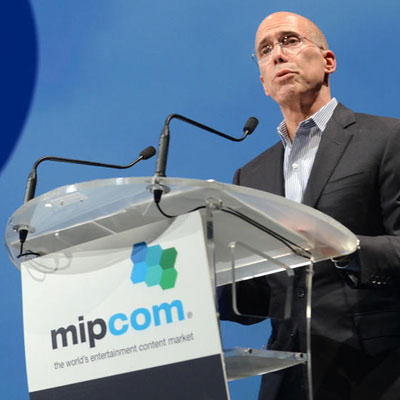
    CANNES: “It is all about opportunities and it isn’t simple. Opportunity involves risk and in many instances, feels threatening,” said DreamWorks Animation CEO Jeffrey Katzenberg.

    Named ‘Personality of the Year’, Katzenberg was delivering the key note speech at Mipcom. “If one person seizes a new opportunity, then someone else has to lose ground,” he added.

    Speaking about the evolving television, film and online video markets, he said: “Over the next two years, there will be an explosion of content on the web. In the 40 years I’ve been in the entertainment industry, I don’t think there’s ever been a time filled with so much new and unique opportunity for the world of television.”

    After a successful stint in the film industry, DreamWorks has expanded its footprint to television production and distribution. The production house recently struck a deal with Netflix for providing more than 300 hours of original content, acquired the YouTube multi-channel network AwesomenessTV and partnered with RTL Disney Fernsehen. 

    Dispelling fears that the era of TV was coming to an end, Katzenberg said, “Linear TV will do just fine, even with the internet explosion.”

    Taking the audience through historical advancements since the invention of the printing press in 1445, he said, “Throughout history, it has never been seen that one form of media was replaced by the other newly launched technology.”

    A firm believer in the concept that each technology imparts a new role to that which has come before it, he said: “Because there are so many emerging distribution options, there will inevitably be more demand for content.” 

    Regarding the AwesomenessTV acquisition, Katzenberg said: “The deal gets us directly in touch with our teen audience in a way that we simply can’t with movies or TV shows. Just like an additional layer in a parfait, the entire media experience simply becomes richer and more satisfying.”

    He pitched for mobile entertainment as a solution to the problem of ‘waiting’ saying: “Up until very recently, we literally twiddled our thumbs while we waited. There was nothing else to do. Now our thumbs have a higher purpose than to twiddle. Through touch screens, we actually now can touch the world. Thanks to these devices, ‘waiting’ as we know it, is dead.”

    “Mobile has become an asset to traditional TV, rather than a threat. There is a crossover phenomenon happening in the relationship between mobile and linear TV. For instance, AwesomenessTV created a show by compiling the best clips from its YouTube channel and airing it on Nickelodeon. Mobile serves as an incubator of talent and concepts, driving additional traffic to traditional TV.”

    Katzenberg concluded his keynote by expressing a need for great storytellers. “Storytelling – in any medium – is very difficult, and great storytellers are difficult to find. Whether the media is old or new, content continues to reign as king. And this is because – like all royalty – it is rare. Once the touch of great storytellers is added, touch screens can take us anywhere and everywhere,” he rounded off.

  • Mexico is Country of Honour at Mipcom 2014

    Mexico is Country of Honour at Mipcom 2014

    CANNES: After Argentina, it is Mexico’s turn to be crowned ‘Country of Honour’ for Mipcom.

    The Mipcom 2014 ‘Country of Honour’ protocol was signed today by Reed Midem entertainment director Jerome Delhaye and ProMexico CEO Francisco N Gonzalez Diaz, making Mexico – the largest producer of Spanish language content – the Country of Honour for Mipcom 2014, scheduled to be held in Cannes from 13-16 October 2014.

    Speaking at the occasion, Reed Midem director television division Laurine Garaude said: “ProMexico’s support for the ‘Country of Honour’ initiative reflects Mexico’s commitment to developing its entertainment industry across the global market.”

    Gonzalez Diaz said: “We are absolutely thrilled with the announcement of Mexico being the ‘Country of Honour’ for next year. We will be delighted to showcase why Mexico is becoming such a sweet spot in this industry.”

    Mipcom 2014 will see a dedicated focus on Mexico’s vibrant television, film and digital media industries. ‘Focus on Mexico’ will feature high-level conferences, screenings, co-production matchmaking and Mexican themed networking events. 

    To be launched at MipTV 2014, ‘Focus on Mexico’ will extend through Mipcom, aiming to provide global entertainment executives an opportunity to discover the country’s rich content across fiction, documentary, factual, formats, animation, digital media and kids’ content.

    Gonzalez Diaz added: “Mexico’s recognised talent as well as very competitive costs, high quality infrastructure, natural wonders, world renowned hospitality, attractive market, proximity to key international spots and generous incentives has turned our country into the industry’s destination of choice.”

    The ‘Country of Honour’ programme is organised in partnership with ProMexico, the government agency that supports Mexican exports internationally and is in charge of attracting investments into the country.

  • Disruptions are a necessary evil

    Disruptions are a necessary evil

    CANNES: We live in times of fast changing technology where more often than not, the only way to keep pace is to unlearn what we’ve just learnt and re-adapt ourselves to the transformation.

    Exactly the point Deluxe Media Europe senior director, sales and business development Darren Baker was trying to drive home when he said: “Every time you think you have learnt everything, you have to adapt and learn again. The need is to adapt quickly and learn again.”

    Baker was addressing a gathering at Verriere Grand Audi Level one at the Palais on day two of Mipcom.

    “The important thing is to learn quickly and react to the disruption,” he further stressed.  
    Referring to cinema, TV, VCR, DVD, BluRay and now VOD as techniques used for disruptions, Baker said that while the disruptive nature of some technological shifts was immediately evident, in other cases, it became clear only through tracking the patterns of adoption.

    Speaking of one too many portals in the content supply chain, he said: “The consumer wants the content, the content provider wants to provide the content and the portals are ready to carry them. But then there are too many contracts. There needs to be a disruption here.”

    Not just portals, he also pointed out that there are just too many schemes and updates. “By the time the consumer is happy that they have got all the programmes, the portal updates its software and the consumer has to change the entire system yet again,” he said.

    In his view, the proliferation of vendors too posed a problem. “If you have a large number of vendors, you should reduce them,” he advised buyers.

    Offering his take on successful disruptions, he said: “There is a need for constant improvement in every company. A fresh approach is always welcome and refreshing the digital policy every few months also helps,” adding that with every four year old ignoring television and moving towards mobile and social media, “companies need to be open to disruptions”.

  • Desperate Housewives gets an African flavour

    Desperate Housewives gets an African flavour

    CANNES: Looks like Disney Media Network is on a roll with its president global distribution Ben Pyne, making a slew of announcements on day two of Mipcom.

    First up, a local production of Disney’s iconic series Desperate Housewives is on the cards. Christened Desperate Housewives Africa and filmed in Nigeria, the series, co-produced by EbonyLive TV and Disney Media Distribution EMEA, is slated to hit television screens in the summer of 2014.

    Disney Media Distribution general manager emerging markets Giovanni Mastrangelo said: “Co-producing the series with EbonyLife TV offers an opportunity to engage African audiences through locally relevant and entertaining storytelling. The local version of the series, starring pan-African cast, will bring to life the universal stories and characters created by ABC Studios.”

    Said an excited EbonyLife TV CEO and executive chairman Mo Abudu: “In Desparate Housewives, we find one of the most amazing formats for TV and are extremely excited to be co-producing it with Disney. On our part, and in line with our mission which is to bring original, home-grown and premium content with an African soul, we will work to ensure parity with the original storyline and production values that have characterised the global series, without compromising on the African essence.”

    The series will feature established and emerging African talents and is being shot 
    in Lagos, Nigeria, where a local ‘Wisteria Lane’ too has been found.

    Secondly, Pyne announced the launch of Disney Movies on Demand, a Disney-branded subscription-based video-on-demand service in Hungary.

    Scheduled to air on FUSO on 25 October, Disney Movies on Demand includes classic and live action titles such as Cars, Toy Story, Wall-E, Pirates of the Caribbean, Mary Poppins and Aladdin among others. The FUSO platform is available on Sony LG, Samsung and select Android tablets and iOS devices and will soon be made available on Xbox One and Sony PS4 as well. 

     
    Speaking of its very first branded subscription-based SVOD service for Disney in Hungary and Eastern Europe, Fuso Ecosystem president Csaba Lazar said: “Fuso’s subscribers will be delighted about the content, which will be available on Fuso premium service. We are excited to be the first eastern-European country to launch such a SVOD service.” Pyne informed that the deal was mediated and negotiated by Eastwest Entertainment, the Australian movie and television distribution company and Profour Film.

    The third and last announcement was about Disney Media Distribution licensing ABC Studios and Marvel Television’s new series Marvel’s Agents if S.H.I.E.L.D to broadcasters across the globe in 155 territories including Channel 4 in the UK, Kanal 5 in Sweden, Viasat 4 in Norway, Digiturk in Turkey, OSN in the Middle East and North Africa and Star World Premiere HD in India, among others.

    Which means episodes of the series will be available to distributors who show English language programming within 24 hours of its US debut on ABC, as well as in the dubbed in local language form 14 days after the airing. Pyne informed that a number of agreements with new media platforms have been concluded to complement the show’s linear transmission. As part of this, even viewers in China can access the series 24 hours post the US transmission on Sohu LeTV, iQiyi, Tencent and Tudou.