Category: Special Report

  • The year of big movie acquisitions

    The year of big movie acquisitions

    By Neeraj Vyas

    If we were to reflect on the landmark moments of 2013, we could proudly say that it has been an impactful year with many highs. To start off, Indian Cinema celebrated 100 years of diverse and distinctive movies. It is a momentous occasion for the world’s largest producer of feature films with over 1200 releases a year in more than 25 languages. The casts got bigger, the designing of the film got more glamorous, the locations more exotic and the technical values are at par with anywhere else in the world.  

    On the flip side, most of this additional cost was passed on the broadcaster and acquisitions became hugely expensive. Surprisingly, these high costs have not deterred many broadcasters from acquiring big banner films at pre-production stage even though it is almost impossible to gauge how well the film will be received by television audiences. In future, movie deals will probably be governed by the revenue generated at the box office.

    On the digital front too, the channel focused on building its brand equity and connect, apart from trying to keep strengthening the positioning of the brand.With competition within channels heating up to garner maximum viewership, the stakes attached to such upmarket films has evolved to be much more complicated than it has been in previous years. Marketing budgets for the television premiers of these films is something which has seen a huge increase with each channel upping the level of spends and trying to be distinctively innovative with each premier. For Aashiqui 2, the biggest romantic musical of the year, at MAX, we raised the bar for marketing innovations across all mediums of communication. The channel engaged with its viewers across all platforms – print, online and outdoors raising to a crescendo with the stars of the movie engaging with some lucky viewers thereby creating a much required stickiness for the brand. The main aim was to attract fresh viewers and entice older ones to watch the film again.

    The digital space is constantly evolving and our endeavour is to customise everything we do on the digital platform. Some of the innovations on the social platform were the IPL Jhumping Jhapak app. Also, MAX was the first Hindi movie channel to integrate live tweets on Jab Tak Hai Jaan.

    From an overall industry perspective, I feel the highpoint was the rollout of digitisation across the country in phases. Although much delayed and slower than anticipated, it opened out a whole new opportunity for channels to increase shelf space. The proposed ad cap pushed many networks to launch new channels to adequately maximise their inventory supply. At MAX, our focus was to consciously deliver better films and energise the brand to engage with our loyal viewers.  

    Looking forward, the film channels will also need to re-evaluate the way advertising is sold so that the true value is gained in return for the delivery of this product to large chunks of audiences.

    (Neeraj Vyas is senior VP and business head, Sony Max. The views expressed in the above article are the author’s personal views)

  • The year of the great tossing

    The year of the great tossing

    The year Indian news television channels got a sneak peek at what Pi Patel must have experienced while battling the raging storm in mid-seas in Ang Lee’s Life award winning Life Of Pi. Like Pi, news channels were tossed around, heaved up and down, had spear sharp rain and high waves buffeting them, got scalded by the hot sun, went through bouts of starvation and dying thirst – and they lived – at least most of them did – to tell the tale. It was a tough, tough year for them no doubt.

    Rising inflation, a tough economic environment which saw advertising spends being slashed, rising costs for carriage on cable TV and DTH, further fragmentation and evaporation of viewership – all led to their top lines and even bottomlines being beaten black and blue. Net result: layoffs, restructuring, reorganisation, was the name of the game. To top it all, the regulators – the Information & Broadcast (I&B) ministry and Telecom Regulatory Authority of India (TRAI) – too got into the act. The I&B pushed ahead with its digitisation drive even as it cracked down on them for paid content, and the TRAI ordered a reduction in advertising time permitted on air on channels.

    The news television industry has always had problems of plenty. More than 100 TV channels battle for a piffling Rs 2000 crore in ad spends. And more jumped onto the bandwagon during 2013 -an estimate is that around 25 new news channels made their debut. As though there wasn’t enough competition for the small morsels of advertising available in the various states and languages all over the country. But what kept the whole industry gloomy was the heartbeat aka advertising revenue which stayed flat for the whole year; and for some it even dipped. The big players were the ones who got to taste a little blood while the others struggled to make money out of inventory.

    The alarm bells started ringing out earlier in the year when TAM Media the viewership ratings agency did a rejig with its panels and started reporting on LC1 towns and also a new set of data reflecting the digitisation that was spreading across phase 1 towns. As an outcome, some of the channels ended up showing near zero viewership. TAM said this was because real viewership patterns were cropping up with deeper penetration of people meters.

    NDTV India, one of the older news broadcast networks, tried in vain to prosecute TAM’s parent AC Nielsen in the US on charges of fraud, but the NY court shooed it away, saying it should fight the legal battle on Indian turf. Allegations of TAM being rigged started rising to a cacophony and unanimously several channels decided to unsubscribe from TAM including NDTV, Times, CNN and Zee. A fierce battle issued between channels, advertisers and TAM that also saw support grow for the Broadcast Audience Research Council (BARC).Angry advertisers threatened to pull out advertisements from channels that had unsubscribed from TAM- including the seven big networks. After weeks of an impasse, resolution finally came about with rolling ratings of four weeks and silver, gold and platinum packs for clients. The major change coming about was the conversion of TRPs to TVTs. Satisfied channels finally went back to TAM but are still clinging on to the new lifeline-BARC.

    It was in the second quarter of the year that a bunch of channels in Kolkata under the Saradha group went belly up with the financial and real estate group going bust. Questions were raised about the MIB’s laxity in issuing broadcasting licences. In a bid to tighten its procedures, it wrote to all channels, asking them to provide them with details about their operations and to see if they were still complying with the licence terms. Some 67 channels did not; and had their licences revoked. The MIB also became stricter about norms relating to directorial appointments on news channels’ boards.

    But the big big fight of the year was the one that blew up when the TRAI introduced a quality of service regulation that restricted advertising air time to just 12 minutes per hour. Broadcasters who were accustomed to showing 20 to 25 minutes of ads experienced a jolt when this came out. They all collectively revolted, specially the news channels claiming that their revenue would be affected in an industry that is already suffering much losses. The News Broadcasters Association (NBA) also met the I&B ministry to ask TRAI to go easy on this regulation.The industry seems to have pacified the ministry on the content front at least, with the NBA, the Broadcast Editors Association, and the Indian Broadcasting Foundation (IBF)’s Broadcast Complaints Content Council (BCCC) in place. This despite, 2013 saw paid news being discussed very aggressively. Suggestions to set up a body to monitor broadcast – just like how the Press Council of India (PCI) does for the print media – were made. But the NBA opposed this strongly, saying that the self-regulatory mechanisms that are in place are enough to ensure that the news channels stay in line.

    The news channels yelped that they feared a shut down if the ad cap were to be implemented right away. They suggested that the ad cap, if necessary to be implemented, should be concurrent with the completion of digitisation in the country as then there would be more revenue flowing in. I&B minister Manish Tewari seemed to concur and even came out in their support on this approach.

    The interim order got smiles on some of their phases. The year 2013 was choppy to say the least for most of the news industry. High carriage fees, a slowdown in advertising growth, and extremely thin subscription revenues had forced even the older and long established news networks to look for solutions to keep their businesses viable. Almost all of them reorganized, consolidated their news operations which led to lopping off of bloated employee payrolls. The big buzzword during the year was the integrated newsroom – wherein a centralized bureau of journos and news crew helps service web, TV, and other online properties for a news network having several news channels.Finally the regulator decided to give the news channels some more time. A new advertising limit per hour was set. 20 minutes of ad time for news channels and 16 minutes for GECs till 30 September and after that everyone would have to together switch to 12 minutes and would have to submit compliance reports. But this formula did not go down well with the NBA even as the TRAI announced that it would rap violators on their knuckles. Some NBA members– along with some other niche channels – decided to take steps to protect themselves. They challenged TRAI’s mandate in the Telecom Disputes Settlement Appellate Tribunal (TDSAT) which heard arguments from all the affected parties for nearly 20 days. The NBA’s appeal to the tribunal got them an interim order preventing the regulator from taking any action against erring channels, allowing them to heave a collective sigh of relief. Even as the TDSAT was about to deliver its judgment, a coincidental verdict was given by the Supreme Court which stated that the tribunal had no power to hear or adjudicate on challenges to TRAI regulations. Swiftly, the TDSAT dismissed the case and the NBA immediately moved the Delhi Court to hear its plea. The Delhi High Court after listening to the initial appeal decided to get into its details later, giving the next hearing date as 13 March 2014. It however gave an interim order disallowing the TRAI from taking any coercive actions against channels not following the 12 minute ad cap.

    At the time of writing, Zee Media Corp was slated to take the same route following the announcement of the merger of DMCL – the company that produces the Times of India-challenger newspaper DNA – with it. It had prepared for the merger by donning a new moniker, dropping Zee News and naming itself as Zee Media Corp. The year saw it running a skeleton Telugu news channel, even as it launched Zee Rajasthan Plus.Network18, NDTV, UTV Bloomberg, BAG Network, among many others shed staff. Network 18 bid adieu to nearly 350 people, NDTV shut down its Mumbai bureau itself and Bloomberg handed over the much dreaded pink slip to 30 staffers. Roles of those retained were redefined and they were given additional responsibilities.

    Several other new offerings are lined up for 2014 including an English news channel, English business channel and two regional channels for Odisha and Bihar-Jharkhand . The company also repackaged itself and came up with a new positioning which seeks to attract India’s youth to watch its news channels.

    The year 2014 looks set to be an exciting one with national elections on the anvil. Even international channels have taken note of this with Al Jazeera, France 24 and BBC World News sprucing up their presence in the country. But there are challenges that the broadcast news sector will have to face: the ad cap situation needs resolution, carriage fees need further reduction, and the struggle to make money continues. But what’s keeping the sector hopeful is the scheduled completion of digitisation by end 2014. The hope is that the dark clouds will part to reveal a silver lining. And then clear skies.With controversy surrounding the Sahara group and its consistent clashes with the Securities Exchange Board of India, it decided to drop the Sahara name from all the channels, retaining the Samay as a brand. India TV too changed its complete look while it has also brought on board several news professionals including veteran Q W Naqvi. Bag Films hired former Star group president Ravina Raj Kohli on its advisory board while IBN7 CEO Dilip Venkatraman left the organisation after giving it a new look. The ABP group announced that it would launch new services but was stalled on account of the MIB’s tough stance on licensing norms and procedures. Even then a rumour that persisted through the year was the rumour that its former partner Star India would re-enter the news channel business.

    The year 2014 looks set to be an exciting one with national elections on the anvil. Even international channels have taken note of this with Al Jazeera, France 24 and BBC World News sprucing up their presence in the country. But there are challenges that the broadcast news sector will have to face: the ad cap situation needs resolution, carriage fees need further reduction, and the struggle to make money continues. But what’s keeping the sector hopeful is the scheduled completion of digitisation by end 2014. The hope is that the dark clouds will part to reveal a silver lining. And then clear skies.

  • Will the new Gutthi work?

    Will the new Gutthi work?

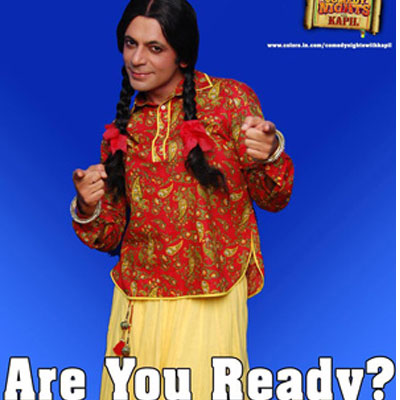
    Even as Sunil ‘Gutthi’ Grover’s recent exit from Colors’ popular show, Comedy Nights with Kapil, continues to be grist for rumour mills, the latest development flies in the face of all speculation that ‘Gutthi’ will no longer be part of the series.

    Promos doing the rounds since last week on the channel show Palak, Gutthi’s on-screen sister, searching high and low for the missing Gutthi didi, leading us at indiantelevision.com to believe that while Grover is out, Gutthi may return, with some other actor playing the part.

    This wouldn’t be the first such instance when a popular TV character has been replaced. But examples from the past such as Smriti ‘Tulsi’ Irani in Kyunki Saas Bhi Kabhi Bahu Thi and Kavita ‘Inspector Chandramukhi Chautala’ Kaushik in FIR go to show that whenever actors who play important characters walk out from the show, they are either brought back on public demand or the show’s popularity dips because they are no longer part of it.

    With this background in mind, we spoke to a cross-section of industry to understand whether the new ‘Gutthi’ would fill the void left by Grover’s ouster.

     Said Big Synergy director Anita Kaul Basu: “The original is the original. You might do variations to it, but it is actually the original that stays. It is how a person as an actor plays that character. He brings in his own individuality. One can bring ten other people with the same name, but it is this guy who has made the difference with a personal and intimate approach. There is only one ‘Gutthi’ and that is Sunil Grover. You can get 10 other ‘Gutthi’s’ but that is not going to cut ice.”

    On the other hand, media planners are of the view that the show is more important than its characters. They spoke of actress Ketki Dave, best known for her turn as Daksha ‘a ra ra ra’ Virani and how Kyunki… survived for eight long years even after she quit the soap.

    Madison Media COO Karthik Lakhsminarayan echoed similar views. “This kind of female character never lasts long. Lots of cases keep on happening but consumers keep such cases aside and move on. Finally, the show is larger than any individual. People do not worry about all this; of course, they are affected for some time, but that is not the end of the story. It is the show that holds audiences and not the character,” he said.

    But won’t Comedy Nights with Kapil, currently clocking 7,000-8,000 TVTs, lose its charm without Grover? “It all depends on who the new actor is. You cannot predict it at all. But it is not even impossible; anybody can take anybody’s place. It definitely depends on who’s doing it and how he plays with the character. Of course, nobody can copy him; nobody can do whatever he has done. By contrast, you never know the one who comes might be better than him or as good as him. In the past too, we have seen a lot of characters being replaced – all established performers,” reasoned Sunshine Productions producer Sudhir Sharma.

    Drawing a parallel to another chart-leading Colors’ show,Baalika Vadhu, he said: “In Baalika Vadhu, when Anandi was replaced, people thought the show might go off-air, but if you look at the show now, it is doing extremely well. It is the chart-topper. Add to that, Ganga too has now been replaced so it all depends on a case-to-case basis.”

    Comedy Circus, producer Vipul D Shah exults: “I always believe that it is the combination of an actor and the character. The show can get somebody better than Sunil. I am confident that the new actor will also be able to take ‘Gutthi’ to another level. Sunil has played this kind of role even Comedy Circus and he is fantastic. At the end of the day we are talking about mannerism, dialogue delivery and characterization. If the new character has all these elements, it will grow as popular as Sunil. You know that nobody can do better than ‘Gutthi’, but suddenly you realise that there is a replacement to the character and as an audience you have to accept whatever comes along our way.”

    According to sources, Grover, who charmed his way into audiences’ hearts as the original ‘Gutthi’ of Comedy Nights with Kapil, quit the show over creative differences and Colors’ refusal to give him the remuneration hike he felt he deserved. When rumours surfaced that he was planning to launch a show on a rival Hindi GEC woven round ‘Gutthi’, Colors’ panicked and fired a public notice in leading newspapers saying whosoever attempted to launch or be associated in any way with ‘Gutthi’ would be dragged to court. The channel’s claim over a character from one of its shows attracted much debate till Grover went public saying he had every right over the character as he had created it in the first place.

    While we cannot comment on whether Colors is right or Grover, we can certainly wait and watch to see who fits into Grover’s rather large ‘Gutthi’ shoes…

  • India-A hotbed for news channels

    India-A hotbed for news channels

    “To improve is to change, to be perfect is to change often.” This quote from Winston Churchill is in my opinion the best way to describe 2013 for the Indian television market scenario and BBC Global News, the parent company of BBC World News and bbc.com.

    Let’s first take a broad look at the changes in the Indian market.  While regulation forced the industry to adopt digitisation, it is commendable that the industry responded and today MSOs have had around 70 to 80 per cent success in seeding STBs in phase I and phase II. Digitisation has happened and is progressing – but at the moment that is only the technical side. Addressability remains a concern. But large changes such as this in markets as humongous and diverse as India are bound to take time. Our outlook is positive and we are hoping that once business models start to take shape, this change will be positive for all stakeholders. But there is no doubt that traditional models are being disrupted. The cable industry will have to look at differentiation, quality of service and value added services to drive revenue growth. The capacity constraint that drove carriage revenues is likely to moderate with digitization. There is demand for niche content. New launches are happening in the super-niche format. The demand for Pay-TV is growing with increase in the availability of premium content. Consumers are willing to pay for HD content. Cable operators have also started offering HD-enabled STBs.

    The other major change is the pattern of consumption of content. Viewing has become personal with the consumer demanding and expecting flexibility in terms of timing, volume of content consumed and place of consumption. Increasing mobile & broadband penetrations and affordability of smarter devices are offering alternative digital distribution platforms. Consumption of live TV on-the-go and catch up TV is on the rise.  All these are very positive changes that signal well for the robust growth of the industry.

    It has also been a year of evolution for BBC Global News. We moved into state of the art brand new studios in the heart of Central London in what is easily the world’s largest and most advanced newsroom. Both in anticipation and in response to audience trends, we have successfully converged our news operations to deliver the best multimedia, multi platform international news. Our improved look on TV, our website, our apps – all these make for a greatly enhanced experience for the consumer. Our new brand campaign ‘Live the Story’ is not just an advertising tool, it is an ethos for the way we approach content and we want to reinforce that message in the market. It is in recognition of this ethos that World News America received an Emmy award for “Best continuing coverage of a news story” for Ian Pannell and Paul Wood’s reports from Syria. And among our many editorial highlights was the 100 women season with Mishal Husain’s exclusive interview with Malala featuring not just on BBC World News but across all BBC platforms domestic and international. Indeed one of the catalysts for 100 Women was the Delhi gang rape attack in December last year.

    It is great to see the audience responding to us. In India, BBC World News has maintained its status as the leading international English news channel among the country’s affluent, influential opinion leaders, business decision makers and frequent international travellers, according to the latest Ipsos PAX survey. BBC World News also beats India’s domestic news channels to take the number one spot amongst the highly desirable, upscale audience.  BBC Global News, including BBC World News and bbc.com is the only news brand across TV, online and mobile to show quarter on quarter growth. Social media is equally important for us to improve our engagement and we continue to achieve important audience milestones on Twitter. @bbcworld now has more than 5 million followers and @bbcbreaking has passed the 8 million follower mark.

    As economics and politics in India become even more interesting with the country entering election mode, we have just announced a season of programmes focusing on India to air in February 2014. India Direct will delve behind the headlines to bring audiences insight on our country as we strive to be significant player on the global stage. The India Direct season will give BBC audiences around the world the opportunity to see everyday life in India. Through programmes like Fast TrackOne Square Mile and Working Lives, the BBC’s unrivalled network of journalists explore the issues faced by people here – from the economic opportunities and challenges to living life at every level of society; from its traditions and history to future plans and innovations.  We are looking forward to what promises to be a really insightful coverage of India. We also hope to bring an international perspective to the coverage of the elections. As the world focuses on India, our journalists will also showcase India to the rest of the world with our global coverage.

    The world of media and journalism is very dynamic and India is a vibrant market. We believe that the changes in the media landscape are all positive; we ourselves are steadily progressing in tandem with global trends and certainly have a very positive outlook for India. We believe that the market respects and appreciates our content and that our ability to provide superior international news content on multiple platforms will differentiate us and keep us growing.

    (Preet Dhupar is BBC Global News COO for India. The views expressed in the above article are the author’s personal views)

  • Getting Dolby 5.1 audio into Anil Kapoor’s ’24’

    Getting Dolby 5.1 audio into Anil Kapoor’s ’24’

    While the Indian television industry is no stranger to 5.1 Dolby surround sound, the recently concluded season of Anil Kapoor’s 24 on Colors garnered much appreciation for skilful use of this technology, while setting a benchmark for television shows to follow. 

    As most readers would be aware, Dolby  5.1 (five point one) surround sound is the common name for six channel surround sound multichannel audio systems, using five full bandwidth channels and one low-frequency effects channel (point one). Dolby Digital, Dolby Pro Logic II and DTS  are all common 5.1 systems, and use the same speaker channels and configuration, having a front left and right, a centre channel, two surround channels and a subwoofer.

    I wanted the experience to be exactly the same as when viewers spend Rs 100-200 on a ticket to watch a film in a cinema hall, says Abhinay Deo

    So how was a technology commonly associated with commercial cinema incorporated to create a more immersive experience for viewers within the comfort of their homes?

    Says Dolby India country manager Pankaj Kedia: “We started the dialogue with 24 quite early when everything was in the pre-production stage. We supported and worked closely with them right through the entire production and post-production. I think 24 is unique because the promise that we have been talking about, the possibilities we have been talking about for 5.1 and HD, 24 has made it all possible. Because consumers watch the content; they are not watching a channel or a particular operator. I think 24 as content is a new genre from an Indian broadcast perspective, and it has taken this experience to an altogether different level, which has never been possible before.”

    For 24 director Abhinay Deo, sound was one of the stars of 24. “Sound for me is a very important aspect. A film or emotion cannot be complete without the right sound. We started with the show, and looked at it both as a television product and as a feature film. I wanted the experience to be exactly the same as when you spend Rs 100-200 on a ticket to watch a film in a cinema hall,” says Deo.

    “I didn’t care about what it is that television viewers are used to, and I was warned about it time and again… ‘This won’t work in television… we are not used to this… and so on…’ But we went out with what we believed in. Forget about who is used to it and who isn’t, who used it and who didn’t. We gave them the experience we feel they should have had,” he adds.

    With only LCDs, LEDs and Plasma TVs supporting HD, how did the team ensure that HD viewers with home theatre systems and those without and those with plain vanillas TVs with normal stereo sound have an equally enjoyable experience?

    Replies Deo: “That was the biggest challenge in sound for us. We did a lot of pre-production. We didn’t do anything majorly radical in either of these parts. We did a lot of R&D and made a standard so that people on both sides of the fence could enjoy that experience. We kept the volume at a level it should be at; not more, not less. And that is great because of the Dolby experience.”

    Coming to the technology itself, sound designer for 24 Nimish Chheda goes on to explain the nitty-gritty. “We gave it a cinematic approach, right from the start; our studio had speakers behind a perforated screen equipped with a digital projector, making you feel like you are sitting in a theatre,” he says. “We had layers of all the elements – dialogues, sound effects, and music. We mixed it, keeping in mind what was important for a particular shot. We highlighted what was important in every shot and moved onto the next shot and thus, ensuring a smooth flow.”

    To keep the sound as ‘real’ as possible, ambiences were used more than sound effects. For the purpose, the team scouted the city at particular times, recording four-channel or ‘quad’ sounds. Usually in 5.1 surround sound, dialogues are always in the centre speaker and sound effects are in the left and right speakers, while ambiences are in the front left and right and the rear left and right channels. Hence, a viewer seated in the centre gets a surround sound experience.

    To keep the sound as _real_ as possible, ambiences were used more than sound effects, says Nimish Chheda

    Recording location sound proved to be an uphill task throughout as each episode took at least seven to eight days to shoot. For example for episode No 3 which is supposed to happen between 2 am and 3 am. Since the filming of that specific episode was done over eight days, ambient sound kept changing every night. 

    Unlike the norm on TV wherein the camera audio with its two channels is used, for 24, the team opted for eight dedicated channels. Specific microphones were assigned to Kapoor as the main protagonist Jai Singh Rathod, and film sync sound set up was used for the rest of the cast.

    Approximately 60 per cent of the filming was outdoors as compared to a general TV series; and Deo was extremely rigid about filming locales with natural environments. “Hence, we had to be extremely particular about ambient sound interference like a lorry honking or a dog barking when sound was being recorded,” says Cheddha.

    Another requirement that they had to keep in mind was that of the title sponsor Tata Motors. There was a commitment from the team to ensure that each and every Tata car sounds as real and distinct as it does on the streets. Hence, all these sounds were recorded on location. 

    The five-member strong post-production team comprised a dubbing engineer, foley artist, foley recordist, sound editor, and the sound designer, who also served as the mixing engineer for the entire series. The background score was done by two music professionals – Mark and Gaurav – while a team of post-production coordinators made sure the entire process between sound and video was smooth.

    No particular servers were used for audio though there were dedicated two 2TBa Enterprise Edition internal drives (10,000 rpm) for the purpose. This apart, they were backed up on two 2 TB drives each; thus three back-ups happened simultaneously at the end of each day.
    Standard Avid and Protools software were used for designing, clean-ups, mixing and so on.

    According to Pankaj Kedia, the biggest challenge for Dolby during the making of 24 was to preserve the content creator_s intent

    First the dialogues recorded on the eight track location sound recorder (Deva), were cleaned up and in unfortunate cases, where the ambient levels were too high, they were marked for dubbing. In the episode which had Richa Chaddha and Anil Kapoor on a construction site, despite all efforts to do live noise reduction of ambient sound; the team had to dub almost 80 per cent of it.

    Then, the location ambience tracks were listened too very closely…as well as the sound design and sound effects. In the sound design process, we used certain sounds which were generated using Kyma Pacarana. The rest of the sound effects were used from the library or recorded live to ensure that the sound is as real as possible. The music tracks from the music composers were then layered into the session, and making it ready for the 5.1 Dolby mix. 70 per cent of the background score used in the Indian series was that used in the US, and the Indian music composers had to work with the two stereo tracks that the music came down in to add their elements and nuances.

    The challenge was to make sure all the elements worked well in TV 5.1 for which the team did a lot of R&D. All the tracks were mixed as per the Dolby Mix Level of -23dBfs.

    General television shows comprise of just dialogue and music; the challenge here was to keep the overall mix i.e. the sound effects, music and dialogue proportionately loud enough, yet crystal clear when listened to separately, giving you a complete cinematic feel out of your general tv speakers.

    It may come as a shock but on an average, 70 hours were spent on post-production per episode to deliver 42 minutes of content. Of these, 30 hours were devoted to cleaning up and leveling of dialogues, 25 hours to sound designing and the remaining 15 hours to the final mix. “Time was always a challenge, we had to give unmix’s, Dolby 5.1 mix & a stereo mix version for every episode to the channel for their Promos and the HD and SD platforms respectively” says Cheddha. “But it was fun, which generally TV is not.”

    The dogged focus on getting it right ensured that Colors’ technical and quality control team gave it the go ahead for almost every episode. The only exception was the first in the series, which had a problem that got clearance after corrections from the production house. 

    The show is a refreshing change to Indian television, believes Resul Pookutty
    Deo points that the sound and technical standards used in the original US version of 24 became the gold standard for Dolby audio in TV shows worldwide. And the desi version too toed the same line. “I think the US 24 in its time, reinvented TV there, which is what our intent was as well,” he says. “Hence, we were clear when we said that whatever they had, we must have. There is standardisation in terms of treatment of sound, as Dolby did with the original. But having said that, Los Angeles and Mumbai are totally different and the way they sound is totally different. We needed to hear Mumbai at a particular hour. In that sense, the original US version is pretty clean whereas ours is noisy and that is great.”

    According to Kedia, the biggest challenge for Dolby during the making of 24 was to preserve the content creator’s intent. “We wanted to deliver the content exactly in the same way it was meant to be and not in any different way. The bullet sound, the explosion and the whisper had to all sound exactly the same that they’d been designed to,” he says.

    That’s a sound way of looking at things. And it worked if one goes by the kudos the entire sound team has been getting. Hear out what Oscar winning sound designer Resul Pookutty has to say.  “I haven’t seen it much on TV; I was supposed to do the sound for the same. But my schedules didn’t allow me to work on it, what I’m hearing is a lot of good things about the show, which in a way is a refreshing change to Indian television.”

    Indeed. And may the tribe pushing the envelope on sound in Indian television increase.

  • Santa, are you listening?

    Santa, are you listening?

    It’s the season to be jolly. It’s that time of the year when children are told to be on their best behaviour so that Santa Claus showers them with candy, toys and gifts the night before Christmas. However, it isn’t just kids who are busy making merry and wishing that the portly old man with the white beard brings them a sack full of goodies. Grown-ups across ages continue to believe in the sanctity of Father Christmas. A day before Christmas eve, indiantelevision.com asked people associated with the film, television and cable industry what they would most wish for from Santa. Read on to know what they said…

    This Christmas, I would like Santa to gift me a regulation, which will ensure that all government – both state and central – levies are removed. Also, I would like that post digitisation, the revenue share for broadcasters, multi-system operators and local cable operators should be 1/3rd each.

    Shaji Mathews, COO, GTPL, Hathway


    I would like carriage fees to be wiped out, subscription revenues to be as per world norms and till such time as that doesn’t happen, for there to be no ad cap.

    Narayan Rao, executive vice chairperson NDTV and president NBA


    We want Santa to bring reduction of taxes by the government which currently range between 35 and 40 per cent (note: exemption of Entertainment Tax).

    Anil Khera, CEO, Videocon D2H


    This Christmas, I would like clients to use a lot more of video conferencing facilities to enable less travel, more productivity and less fuel usage. As an industry, we need to look at options which not only help us but the world as a whole too.

    Nandini Dias, CEO, Lodestar UM


    I want Santa to come with a magic wand this Christmas with a click of which, the marketing of my films is taken care of! I want to concentrate on making good content and don’t want to bother about how the content will reach its buyers/target audience. Santa sir, we are creative souls and not bankers/financiers who have to keep bothering about marketing cost more than telling our stories – please kuchh karo.

    Yusuf Shaikh, head – distribution, acquisition and IPR management, Percept Picture Company, Percept Limited


    Rajinikanth once said, ‘If I say it once, I have said it a million times’. So, if I take care of one wish, it will take care of million wishes. I want Santa to be there with me every single day and not once a year. If he will be with me 365 days, he will give me gifts every single day.

    Divya Radhakrishnan, managing director, Helios Media


    Christmas is a time to party. I have two wishes from Santa this year, one on a professional level which is that Santa should give some sanity to the Telecom Regulatory Authority of India (TRAI), so that they can force the multi-system operators to introduce packaging and complete the process of digital addressability. Also, I would want Santa to gift me tickets to Disneyland, so that I can take my five-year-old daughter there.

    Sudhish Kumar, executive director , Sagar E Tachnologies


    I would like better rates from advertisers and inventory from TRAI.

    Ashok Venkatramani, CEO, MCCS


    Too many cases of people in the industry engaging in unfair means. Those who indulge in piracy are not nice. Santa should take them to the North Pole and bury them in ice! So be Good and may Santa visit everyone with good fortune, health and happiness…!

    Pankaj Krishna, founder and CEO, Chrome Data Analytics & Media


    I wish Santa could give me some professionals at the top level to help upgrade Doordarshan.

    Jawhar Sircar, CEO, Prasar Bharati

  • The year of the big risk

    The year of the big risk

    MUMBAI: As the headline states, Year 2013 will go down in history as the year of the big risk in Indian television and media. Whether it was with big jump into cable TV digitisation or in the area of experimenting with new programming formats or working on changing the status quo in TV ratings or in battling the Telecom Regulatory Authority of India’s (TRAI’s) ad cap, the year saw everyone playing a long hand. India’s economic growth slowed down; inflation went on the rampage as did the dollar when it appreciated drastically against the rupee, but the industry took things in its stride.

    The biggest of the gambles was the leap of faith the industry took (as though it had a choice) on the government mandate of digitising India’s fragmented nearly 100 million subscriber strong cable TV market. With no clarity on how it would roll out, everyone in the ecosystem plunged ahead – almost recklessly – into phase I and phase II, distributing nearly 18 million set top boxes (STBs). This at a time – when even a year later after digitisation commenced – there is no understanding between the multi-system operators (MSOs) and the local cable operators (LCOs) or the broadcasters on who would do the billing and take a call on how the revenues would be split post the completion of the set top box (STB) seeding and who would own the subscriber.

    The other pieces of good news during mid-2013 were the $110 million investment the Sameer Manchanda-led MSO DEN Networks attracted from Goldman Sachs and the $18.5 million that Hathway got from Prudence.

    The industry, however, took to digitisation in fits and starts. Some cities such as Chennai, thanks to a state government with a vested interest in cable TV, chose to not obey the centre’s digitisation order. Others went to court and delayed things a bit. The TRAI and the ministry of information and broadcasting (MIB) however kept at it doggedly. Though both played a soft hand, they pushed the industry hard. Deadlines were extended, consultation and supplementary consultation papers were issued and recommendations made to accommodate the industry. But they kept at it and the fact is that STBs moved into Indian cable TV homes on a scale unprecedented globally.

    Some roadblocks remained in the 42 towns where digitisation has made some progress: complete collection of Consumer Application Forms (CAFs), incorporation of subscriber information into the subscriber management system and consumer billing. LCOs have been loathe to part with all their subscriber data, as there is no surety that the MSOs will not cut them off once they have all the info.

    But just as the year was ending, light was showing through, with Hathway and the Maharashtra Cable Operators Federation (MCOF) working on hammering an agreement that could put in place a business model for LCOs and MSOs that could be replicated nationally. The other pieces of good news during mid-2013 were the $110 million investment the Sameer Manchanda-led MSO DEN Networks attracted from Goldman Sachs and the $18.5 million that Hathway got from Prudence. The efforts of InCable to set up HITS under the leadership of Tony D’Silva and the Rs 300 crore investment by Grant Investrade Limited (GIL) in InCableNet and InDigital was also notable. The cherry on the cake was the setting up of cooperatives across the country.

    DTH players, were not so lucky. Their efforts to consolidate or expand or raise capital did not meet with much success.

    DTH players, however, were not so lucky. Their efforts to consolidate or expand or raise capital did not meet with much success. Reliance Digital TV and the Sun group talked for a large part of the year to merge their respective DTH services, but the dialogue stopped when expectations on valuations by each of them did not match. Airtel also had many conversations to raise capital from investors, but was unsuccessful. Tata Sky, however, managed to get an injection of funds from the Tata group, even as it failed to convince ISRO to give it its transponders which it so desperately needs to expand its consumer offering. But it has not deterred it as it went ahead and started a massive box replacement programme, upgrading millions of consumer STB’s to MPEG-4 so that it could pack more channels into homes.

    The second gamble that the broadcast industry took was when it took on the advertiser and advertising agency fraternity in the gross vs net billing issue and on who is liable for the tax on the commission that agencies get from marketers. Advertisers and agencies had threatened to cut off the advertising lifeline for broadcasters if they even tried to change the century old tradition of gross billing. Indian broadcasters called their bluff, and even blacked out TV commercials for a day. Belligerent agencies, advertisers and broadcasters glared at each other for a while. Finally, a solution was worked out; net billing was introduced – in a format which was to the satisfaction of all concerned, including the tax collector who accepted that broadcasters need not make any payments for past commissions made to agencies by advertisers.

    At one stage, seven TV networks walked away from TAM, leaving its future uncertain. TAM, broadcasters, marketers and agencies once again sat across the table and the ratings agency agreed to change the way it would deliver the viewership numbers. TV ratings were jettisoned and viewership per thousand was ushered in.

    The third punt the industry took was in the area of reaching a consensus on changing the Indian TV ratings currency run by TAM Media Research for more than a decade. The year commenced with news broadcaster NDTV continuing with its case in a New York Supreme Court, charging TAM Media and AC Nielsen of corruption and manipulation of TV ratings. The court turned down NDTV’s plea. Though later, it went in appeal, which was also dismissed by an American judge, who asked the Indian newscaster to fight its case in Indian courts.

    TAM  Media spent the year fighting fires on several fronts. The pubcaster DD was pretty irked with it as the network’s shows did not generate much rating despite its wider reach and penetration in both urban and rural India. TAM at the beginning of the year added less than class 1 (LC1) towns to its reporting to find a solution around that. Simultaneously, it started reporting on the digitised phase I and phase II towns. The change in the universe saw the ratings of some private broadcasters plummet, while those of others went up. Sony Entertainment Television attributed the drop in ratings for its much touted IPL to the addition of LC1 towns.

    This got the private broadcasters’ goose. One by one like dominoes around mid-this year, they announced that they were cancelling their subscriptions to TAM as they had lost faith in the currency. At one stage, seven TV networks walked away from TAM, leaving its future uncertain. TAM, broadcasters, marketers and agencies once again sat across the table and the ratings agency agreed to change the way it would deliver the viewership numbers. TV ratings were jettisoned and viewership per thousand was ushered in.  

    BARC remained in the news throughout the year, with its several meetings, road shows and several biddings. As we came to the end of the year, BARC had finalised the French audience measurement company Médiamétrie as its ratings partner, using audio watermarking technology.

    The industry also quickly revived a comatose Broadcast Audience Research Council (BARC), hired a CEO in Partho Dasgupta, and quickly went about shortlisting vendors, suppliers in a bid to have another ratings system in place by mid-2014. BARC remained in the news throughout the year, with its several meetings, road shows and several biddings. As we came to the end of the year, BARC had finalised the French audience measurement company Médiamétrie as its ratings partner, using audio watermarking technology.

    2013 was also the year of the TRAI, which is led by its warlike and extremely determined chieftain Rahul Khullar. He went around whipping almost everyone in the TV ecosystem in a bid to drive ahead digitisation and also the seeding of boxes in phase I and II towns. And then he pursued the MSOs diligently to get aggressive on customer application forms and billing. The TRAI was hyperactive to say the least. Consultation papers, open houses, private meetings – it went the whole hog in trying to bring about some change and order in the way the industry operates. At the time of writing, an extremely irritated regulator had once again pulled up broadcasters and MSOs asking them to sign inter connection agreements with the latter being told to announce subscriber packages, so that true digitisation could be said to have been achieved.

    Amassive shot in the dark that the broadcast industry took was in challenging the TRAI’s stance on curtailing TV commercial air time to 12 minutes. TV channels and networks approached the TDSAT and appealed that the TRAI had no right to do what it was threatening to implement and that it would damage the industry permanently.

    A massive shot in the dark that the broadcast industry took was in challenging the TRAI’s stance on curtailing TV commercial air time to 12 minutes. TV channels and networks approached the TDSAT and appealed that the TRAI had no right to do what it was threatening to implement and that it would damage the industry permanently. Just as its arguments were beginning to sink in through several hearings, there came the news that the Supreme Court, in another hearing, had declared that TDSAT is not the right platform to challenge TRAI regulations, the High Court is. What that meant was that the months of work done by TRAI, broadcasters and TDSAT came to nought and the argument moved to the High Court where the appeal would begin afresh.

    Year 2013 saw some new risk takers diving into the already competitive television market. Among these figure: News Nation, Zee Rajasthan Plus, Jia News, &Pictures, Zee Anmol, Star World Premiere HD, InSync and Romedy Now. But several others who were willing to roll their dice did not get government clearances. Estimates are that around 50 channels are awaiting licensing from MIB. Epic TV, Blue TV, Maha Movie are some of those which figure in this list. But the MIB released data in early December 2013 which revealed that around 784 channels have been licensed to beam over India. The MIB also cancelled 61 licences of broadcasters, in the wake of the collapse of the Saradha group, as they had provided insufficient information about changes they had made in the management or their operations after being licensed.

    Year 2013 saw some new risk takers diving into the already competitive television market. But several others who were willing to roll their dice did not get government clearances.

    On the Hindi GEC front, channels for the most part walked the tried and tested path in soap, drama, reality TV, though attempts at mythogolicals and historicals did bear fruit. Colors walked unknown terrain when its CEO Raj Nayak wagered with the Indian adaptation of American thriller24 with Anil Kapoor in the lead role, and also with a new stand-up comedy show Comedy Nights with Kapil. The first got critical acclaim; the second, a vast popular following. Nayak also gambled with seasons, bringing back shows such Na Bole Tum Na Maine Kuch Kaha for its second season.

    Star Plus continued to lead the genre for almost the entire year, with second, third and fourth places being traded between Colors, Zee TV, Sony, Life Ok and Sab. Period dramas and mythological drams such as Saraswati ChandraMahadevMahabharata from Star Plus and Life Ok did well with viewers. Staid old Zee was the real risk taker this year with its reality show –Connected Hum Tum (adapated from Armozia Formats). It tracks the life of ordinary folks on TV. India’s oldest existing private network flagged off shows such as Jodha AkbarBudha and added another leg to its DID franchise in DID Super Moms. It did phenomenally well for Zee TV. Sony too had a winner in its period drama – Maharana Pratap, even as its long serving CID,Adalat continue to keep it amongst the top six Hindi GEC roster. Life Ok was the surprise of the year as it has emerged as a strong contender. Channel V, Sony, Zee TV all refreshed their packaging and branding through the year.

    Colors walked unknown terrain when its CEO Raj Nayak wagered with the Indian adaptation of American thriller 24 with Anil Kapoor in the lead role, and also with a new stand-up comedy show Comedy Nights with Kapil.

    The year also saw channels risking with the film industry in a big way. Star India announced that it was forking out almost Rs 900 crore for exclusive telecast rights of all of Salman Khan’s and Ajay Devgn’s films which will be released till 2017. Then film maker Kamal Hassan attempted to premiere his film Vishwaroopam on DTH platforms but had to retreat when theatre owners protested.

    What started with Amitabh Bachchan in 2000, has now snowballed with Madhuri Dixit, Salman Khan, Mithun Chakraborty, Karan Johar, Shilpa Shetty, Anil Kapoor all becoming permanent fixtures on the small screen. Other film stars too made TV shows a must stop to promote their films. Whether it is a Hrithik Roshan or an Ajay Devgn, they definitely stopped over on the sets of a Taarak Mehta Ka Ooltah Chashmah or a reality show to promote their films. While this helps create excitement on the respective shows, too many appearances on television has made them seem rather deja vu for viewers.

    Whether it is a Hrithik Roshan or an Ajay Devgn, they definitely stopped over on the sets of a Taarak Mehta Ka Ooltah Chashmah or a reality show to promote their films. 

    Film folks turned to TV production too during 2013. Anil Kapoor co-produced 24, Sanjay Leela Bhansali produced Saraswati Chandra, Anurag Kashyap announced a fictional show starring Amitabh Bachchan, who is also reviving his production house Saraswati Audio Visuals to co-produce the show with Endemol. His wife Jaya Bachchan has also announced that she is going to make her TV debut. The Bachchans’ TV fiction show debut is much awaited as it is the septuagenarian who opened the doors for Bollywood’s big stars to host or be a part of non-fiction shows with his fabulous performance on Kaun Banega Crorepati.  

    Sports in India still means cricket for the masses. However, the year 2013 saw efforts being made to kick start other sports such as football, hockey, and even badminton through leagues. At the forefront of this was the Rupert Murdoch-owned Star India which coughed up Rs 3,851 crore to acquire the rights to domestic and international cricket from the Board of Control for Cricket in India until 2018. The deal covers 96 matches, including all the international matches India plays at home and local tournaments such as Ranji Trophy, Duleep Trophy and Irani Trophy. It even invested huge monies in becoming an associate sponsor of the Indian Premier League and followed it by paying close to Rs 200 crore to become the sponsor for Team India. This just a year after it scooped out close to Rs 1,700 crore to Disney to acquire its 50 per cent stake in their ESPN Star joint venture. The year also saw Star India rebranding and relaunching the six channels under the Star Sports umbrella Star 1,2,3,4,5,6 and introducing Hindi language commentary.

    Sports in India still means cricket for the masses. However, the year 2013 saw efforts being made to kick start other sports such as football, hockey, and even badminton through leagues. At the forefront of this was the Rupert Murdoch-owned Star India which coughed up Rs 3,851 crore to acquire the rights to domestic and international cricket from the Board of Control for Cricket in India until 2018.

    2013 has also been the year when Sony Entertainment’s billion dollar plus investment to acquire the rights to broadcast the Indian Premier League for 10 years was being questioned. Viewership ratings showed some slack, even as the entire league was embroiled in a betting and fixing scandal, which involved players from different teams. Fears were that viewers would be put off, but these were short lived and it is evident from the fact that Sony has started selling inventory for the 2014 edition at higher advertising rates than earlier years.

    In the meanwhile, on the news front, it was the year of pink slips. Almost every news network trimmed the fat on bloated payrolls as the economic crisis bit deeply. Efficiency is the buzzword today in television as TV networks grapple with a tough competitive environment, high costs, and shrinking margins. News channels like NDTV, Network 18 and Bloomberg reorganised their operations, and told excess staff to go home, with journos and camera crews being the hardest hit. Zee Media (earlier Zee News) too got shareholder approval to merge the group’s English newspaper DNA with itself. Its plan is to create an integrated newsroom serving TV, internet and print. It is quite likely that the process of doing this will result in excess staff being ejaculated. Already, its cousin sister channel Ten Sports relocated staff from Dubai to Noida, a move that saw many of them putting in their papers.

    On the news front, it was the year of pink slips. Almost every news network trimmed the fat on bloated payrolls as the economic crisis bit deeply.

    Efficiency was also the buzzword with advertisers, this year, in getting a better bang for the buck. Hence, companies such as Amagi Media saw takers for its geotargeting advertising service. Bengaluru-based Amagi Media announced its deal with Hindustan Unilever (HUL) and the Viacom18 kid’s channel Nickelodeon. The deal meant that an HUL TV commercial could run simultaneously on Nick nationally in different versions, depending on geographical location using Amagi’s DART platform. The platform also entered in a partnership with Zee TV, Zee News and Zee Business.

    With all the twists and turns in the year 2013, the upcoming year looks set to be even more interesting. Will the industry earn rewards for all the risks it took? Or, will it be forced to to continue to play the role of the great gambler?  That’s a bet we at indiantelevision.com  are not willing to wager on.

  • South Indian GECs push fiction to include Saturday

    South Indian GECs push fiction to include Saturday

    Television viewing has always been about appointment viewing – catch up with your favourite shows on a particular day at a particular time.

    While airing fiction shows from Monday to Friday and comedy and movies over weekends has been somewhat the norm, a clutch of channels down South, particularly in Karnataka, has taken a shine to fiction shows spilling over to Saturdays as well.

    Asianet Suvarna, Star’s GEC channel in Karnataka, took this route about six months ago when it started airing fiction shows for six days a week.

    Star’s Malayalam GEC Asianet followed suit with a few prime-time fiction shows extended to Saturday.

    Recently, Sun TV, the Tamil GEC from the dominant Sun Network, joined the fray with its prime-time fiction shows replacing a movie and a game slot on Saturday.
    Not to be left behind, Sun Network’s Malayalam GEC Surya TV added Saturday to the telecast of the crime thriller Satyameva Jayate and its Kannada GEC Udaya TV also traversed the same path.

    So, what prompted these GECs to include Saturdays in their fiction line-up? Apparently, the channels believe airing soaps on a Saturday is more profitable as compared to airing movies, which they used to earlier. “Producing a half-an- hour fiction serial would mean investing about Rs 70,000 to Rs 80,000 whereas acquiring a movie would mean spending at least Rs 2-5 crore depending on the movie,” says Asianet Suvarna business head Anup Chandrashekaran.

    Another factor is that while Tamil Nadu is probably and arguably the best movie market in the south, the Karnataka film industry isn’t prospering too much, according to many channel executives. Hence, neither advertisers nor the revenue from Kannada movies is consistent as compared to that from shows. Again, movie repeats depend on the premiere performance. A good movie can fetch anywhere between Rs 40 lakh to Rs 60 lakh  as ad revenues from its first telecast. This means that for recovery it has to be telecast several times but repeats don’t get the same value.

    It also states that the number of films certified from Karnataka has dropped from 162 in 2008 to 128 in 2012. Whereas, the number of films certified from Tamil Nadu has grown from 175 to 262 in the same time span.

    A month ago, Zee Kannada too joined this elite club with fiction shows between 6:00 pm and 8:00 pm extended to Saturday. “Production of Kannada films has come down and for a movie to premiere on TV takes nearly a year unlike Bollywood where the gap between the theatre premiere and TV premiere is just two or three months,” says Zee Kannada nonfiction programming AVP Balaraj S.

    Balaraj says that Tamil Nadu and Andhra Pradesh are better off since movies do well there

    The Deloitte report also stated that though Tamil and Telugu films are adopting better technology to match Hollywood standards, the same is lacking in the other two markets.

    It also highlighted that since the beginning of this year, broadcasters in Karnataka and Kerala have become selective in acquiring rights of small budget movies due to the use of low quality digital cameras resulting in poor visual appeal on TV.

    ETV Kannada, which was the first GEC to extend its afternoon and evening fiction shows to Saturdays nearly two years ago, has seen better viewership since because most people are at home over the weekend.

    “It is a cost effective way of managing your Fixed Point Chart (FPC) or else you have to invest in movies or events. Fiction shows have appointment viewing and time spent on them is very high,” says Viacom 18 EVP and business head –Kannada, Bengali and Oriya- Ravish Kumar.

    For showcasing movies, the channel makes use of its existing bank rather than relying on new ones. Kumar believes that by the time the movie gets premiered on TV, the interest in it has already faded.

    Balaraj feels that the only good thing about premiering movies is a better sampling of viewers while Chandrasekharan says it is easier to get advertisers locked for six days rather than approach new ones every week for a Saturday.

    Ravish feels that having shows on Saturday gets more viewers due to it being a holiday for most

    So will this trend catch up with other states as well? Balaraj feels that it won’t affect Tamil Nadu and Andhra Pradesh since the film community there loves producing and audiences gorge on movies. New Generation Media Corporation CEO RBU Shyam Kumar, who heads newly-launched Tamil GEC Pudhu Yugam, feels it is too early to speculate. “A movie acquisition runs into crores of rupees and recovery time is long and most channels have a separate movie channel as well,” he says.

    While the Deloitte report said of the total revenue of Rs 2,680 crore from the South Indian film industry in FY 2013, the lowest was from Karnataka with just Rs 150 crore as compared to Rs 1,190 crore from Tamil Nadu and Rs 1150 crore from Andhra Pradesh, the silver lining is that the report also estimates that the Karnataka market is set to grow at a CAGR of 18 per cent by FY 2017 to reach Rs 250 crore, the highest of all four.

    TV advertising market in south India was pegged at Rs 4000 crore during FY 2013 with Karnataka contributing Rs 710 crore. So clearly, television stands at a better position than film.

    The media planners we spoke to feel that as long as serials get good viewership, brands won’t have any problem advertising for an extra day in the week and Saturday anyway gets better viewership since it is the beginning of the weekend.

    Be that as it may, the weekends look to have rung in the end of weak and expensive movies on TV in Karnataka, and the dawning of cheaper fiction shows. 

  • ‘All parties need to come together to take home grown leagues to another level’

    ‘All parties need to come together to take home grown leagues to another level’

    Star Sports presented a unique series of Knowledge Sessions – the India Pro Leagues Forum 2013 in New Delhi. STAR India President – Sports Nitin Kukreja delivered an engaging and insightful keynote address at the inaugural session of the summit, elaborating on the growing appetite of the Indian sports fans and the enormous growth potential of sports in the country.

    Does ‘sport’ in India really begin and end with ‘Big Boys’ Cricket’? Or do we just see it that way? Across the length and breadth of India, there are strong communities and pockets of interest where people are passionately engaged with local sports and local players – football in Bengal, hockey in Punjab and Orissa, badminton in Hyderabad, basketball played in schools and table tennis played in clubs, colleges and offices across the country.

    But if a tourist landed in India and turned on the television or turned to the sports page of a newspaper, we could forgive him for thinking that India cares only about international cricket when Team India is playing.

    Why then, has this rich diversity of interest and talent not been harnessed? Why is it that in the media, on television and in the public mind-space, sport equals international cricket? How is it that the English Premier League enjoys such a phenomenal following within the UK when the English national football team has not won an international competition since 1966! Why is it that an average 18-year-old in South Delhi or Bandra is more emotionally connected to the fortunes of Manchester United or Chelsea than say the Mumbai Ranji side (40-time winner of Ranji trophy) or the Indian National Kabaddi team (winner of all 4 World Cups played so far)? You may argue that not many nations play Kabaddi other than India and Pakistan; well – you could say the same about Baseball! The US is the best example of a country that thrives on local sports and leagues – some of their sports are played in no other country – yet they call it “World Series Baseball” and Babe Ruth is an American hero and legend.

    When you watch a badminton match live, it is astounding to see the speed of the game and the agility of the players

    Americans follow their city and college teams with a passion – across baseball, American football, basketball and ice hockey; Italy, Spain, Turkey – all follow their local soccer teams with a fanaticism; tourists visiting Galatasaray are advised not to wear rival team colours while visiting! And note that all these nations consume their sport in their own respective languages.

    In the last 15 years in India, entertainment and movie channels have gone local with a vengeance; the number of regional channels has gone up from just a handful pre-2000 to over 300 today; while Hindi accounts for 55 per cent of TV viewership; regional language content accounts for 30 per cent of viewership share; and it’s not just about language; a Bengali, Marathi or Tamil show is rooted in the local culture and ethos with participation from the local creative fraternity.

    It is only the Sports genre in India that has remained aloof from localisation – until 2008 there was no IPL, and until 2012, telecast of cricket was limited to English, a language spoken by less than 10 per cent of India.

    In India then, how can we take local sports and leagues to the next level? Broadcasters have a big role to play in this but more importantly the entire ecosystem – the sports federations, the government and the news media and advertisers need to come together to ensure that our home grown leagues get the money, resources, infrastructure and coverage that they deserve.

    Look at the quality of television coverage for International Cricket over the years – the evolution has been amazing – the production quality, the camera work, the graphics, the slow-motion replays and the immensely talented people who narrate the action – all these elements really take the television viewer closer to the game; it is immersive, engaging and a pleasurable experience even for casual viewers who are not dyed-in-the-wool fans; television coverage has played a huge role in growing the fan base and support for Cricket; this is despite the fact that for all these years, all coverage was in English.

    But even in Cricket – the more local forms of the game – be it Ranji trophy, Irani Cup or university cricket have so far been treated as the poorer cousin – the benchmark for coverage that has been set for international cricket needs to be duplicated in the local forms of the game. The fact remains all the international heavy weights – from Tendulkar to Yuvraj Singh to Kohli – have cut their teeth on and emerged from these local level tournaments.

    The task is even greater for other sports – where even the national level game has not got the coverage it deserves. Consider the coverage that an average Hockey or Football match gets – you see some indifferently placed cameras and a disinterested narrative; there has been no attempt to make the viewer experience the thrills, the speed or the skill involved; when you watch a badminton match live, it is astounding to see the speed of the game and the agility of the players. The current standard of television coverage does not even begin to capture that excitement and skill.

    In a pre-digitised world with limited bandwidth, TV broadcasters were forced to follow a one-size-fits-all approach and therefore focused on only saleable national-level content at the expense of local content and language; but in a digital world the consumer has ability to access a variety of content in multiple languages and on multiple platforms; broadcasters would be doing a great disservice if they continued to use a cookie-cutter approach and did not use this opportunity to go deeper and serve the interest of all pockets of interests whether by sport, region or language.

    Great production values are not enough, the on-ground event also needs to be organised and mounted like a spectacle – this is where the sports federations have a key role to play. They must enable and nurture talent, and promote and market the game at least in the locales of affinity if not in the whole country. They must do their part to ensure that the Sports pagecarries interesting stories and coverage of the game and the players– and not only controversies! But most important, they need to partner with the other stakeholders in the ecosystem with the long term vision of growing the sport – without the spirit of partnership and the vision; the league or the sport will not grow.

    The government has a huge role to play – by allocating adequate monies, developing stadiums and infrastructure and putting in enabling policies in place. The government allocates around Rs 1000 crore to Sports (and Youth Affairs) which is the budget for the current year. That number is less than what we will be paying only for one tournament -the ICC T20 world cup – that number is less than the number that Star invests in sports each year. It means that Star is a bigger investor in sports in India than the government of India itself!

    It can be argued that Kabbadi is not popular because only few nations play the sport but the same can be said for Baseball as well

    The scale of magnitude of the government’s investment should be at least 10x of that number! Why do you ask? More than half of India’s population is below the age of 25 and 65 per cent below 35; Sports has a crucial role to play in youth development and can even be a huge generator of employment. IPL has opened up career options for 120 players; not just 15. Hockey players can now make up to 60 lakhs for one month of play in the HIL; Badminton players can make 50 lakhs for 3 weeks of work; not to mention the production, support and service staff that works on these leagues. When the hockey union went on strike in Canada a while ago, the prime minister of the country got involved because his fear was that a prolonged strike would have an adverse impact on the GDP of Canada! More than anything, it showed the power of sports and its ability to be a huge economic growth engine.

    Forget about investment, even simple hygiene factors such as easing procedures can go a long way – it cannot take 38 different permissions just to host a hockey match in a certain venue; increase venues and the number of permissions multiplies!

    It’s a vicious circle, since there is no investment, there is no growth and no popularity for local leagues and sports – therefore they attract no money! The common man (or woman) in India does not view “sport” as a viable career option or life choice; it remains a “hobby” to be pursued in free time;

    Star has thrown its weight behind building an enduring viewer proposition around local leagues and sports– and in the language of the people. Our tryst with these local sporting leagues has thrown up some interesting results: We partnered with Calcutta Football League, one of the oldest leagues in Asia and in the world with 157 Kolkata based clubs and units to air their league matches on our Bengali movie channel. In the core national male audience, the TV viewership is 4-5 times higher than your average EPL match! Even with the current quality of football and coverage, an East Bengal-Mohan Bagan match attracts crowds up to 70000 in the stadium!

    We also partnered with Hockey India League the first edition of which was held in January 2013. The excitement on grounds was to be seen to be believed. For e.g. grounds in Ranchi were completely packed to support their Ranchi Rhinos team which went on to win the league; there was a lathi-charge two days before the match when demand for tickets got out of hand and in fact when the match was on – even the neighbouring stadium that simply had a big screen projecting the match – was full! The excitement rivalled that seen in Wankhede stadium or Eden gardens during high-octane international cricket.

    University cricket is another great example – during the Jamia vs Bangalore’s Jain university match, stadium was so packed that it took 40 mins to enter; and the crowd was chanting – not “Sachin Sachin”, not “India India” but “Jamia Jamia”! The pockets of passion exist; it is on us collectively to harness and magnify them.

    There has been no attempt to make the viewer experience the thrills, the speed or the skill involved when you watch a Hockey match

    The IPL has shown the way in how to mount a successful local league; granted that it was built on an already popular sport – but all the stakeholders have done a great job in coming together to mount it like a spectacle – it is no longer a game but entertainment and a serious alternate to any other movie or television show. Clearly, a “manoranjan ka baap”.

    There is a lot more to be done and many challenges to overcome. It will take a spirit of partnership with federations and people with vision to get there – for the benefit of sports, for the benefit of the country and for a healthier and fitter society! I’ll leave you with a small snapshot of the passion of local sports; as I mentioned before, it is for us to build upon them.

     
  • Sports broadcasting: A sticky 2012 wicket

    Sports broadcasting: A sticky 2012 wicket

    It’s the festival of lights. And for many the festival of noise courtesy exploding fireworks. In the hope of reducing the number of those belonging to the latter tribe, we, at indiantelevision.com, decided to put a display of firecracker articles for visitors this Diwali. We have had many top journalists reporting, analysing, over the many years of indiantelevision.com’s existence. The articles we are presenting are representative of some of the best writing on the business of cable and satellite television and media for which we have gained renown. Read on to get a flavour and taste of indiantelevision.com over the years from some of its finest writers. And have a happy and safe Diwali!

    (Written By Ashwin Pinto in 2013. He continues to write on sports television and English Entertainment)

    Posted on : 02 Feb 2013 08:41 pm

    Sports broadcasters ensured that live sports remained attractive in 2012. Even as the revenue side looked tough, prices touched the roof as Rupert Murdoch‘s News Corp and Sony were willing to bet more. Zee-owned Ten Sports did not lose ground and retained the cricket rights that came up for renewal. Neo redrew its strategies and decided to stay away from the high-cost cricket rights.

    A number of key cricketing properties came up for grabs. In most cases, however, the incumbent broadcasters ended up retaining the rights despite strong competition.

    The entry of Multi Screen Media‘s (MSM) much awaited sports channel Sony Six only exacerbated the situation on the acquisition front.

    Owning the lucrative telecast rights for the Indian Premier League (IPL), MSM‘s keenness to add other key properties like the Board of Control for Cricket in India (BCCI), England Cricket Board (ECB) and English Premier (EPL) only helped jack up the prices.

    The keenly contested BCCI media rights were bagged by Star India for Rs 38.51 billion till 2018. MSM, which had bid Rs 37 bilion, lost the rights by a whisker.

    Another case in point is the ECB rights which were retained by ESPN Star Sports (ESS) for $200 million till 2019. ESS had earlier secured the rights for $80 million.

    However, it was not just cricket that saw record money being splurged on acquiring rights. Football, too, had its share of penny. ESS retained the English Premier League (EPL) rights for three more years but not after committing a mind-boggling $145 million. In the previous three-year cycle it had committed $46 million.

    While it is true that an aggressive Sony Six had the incumbent rights holder on its toes to retain the rights at any cost, it is also true that the sports broadcasters had the impending digitisation as part of their plan while making the bids.

    Digitisation was the key theme for sports broadcasters because subscription is the way forward. Sports broadcasters in India, like their counterparts elsewhere, are still heavily dependent on ad revenue while subscription revenue is still inadequate to correct the lopsided business model that has taken a toll on their P&L.

    While the broadcast industry will be waiting with bated breath to see which way the digitisation piece moves, no one knows better about the significance of the exercise other than the sports broadcasters.

    Even as the broadcasters splurged money on acquiring rights, certain rights like the New Zealand and Bangladesh cricket rights did not find any takers since the broadcasters saw little value in them. NZC rights were earlier held by MSM while Bangladesh rights were with Nimbus Communications.

    Away from the big properties, the new sporting leagues too found favour with broadcasters who are happy to partner the rights owners in building these leagues that have potential to become big in future.

    ESS acquired the global media rights for Hockey India League (HIL) that was launched with much fanfare as a rival to Nimbus Sport and Indian Hockey Federation‘s (IHF) World Series Hockey (WSH). The five-team HIL is a Hockey India property with the backing of International Hockey Federation.

    The IPL fever spread to other countries with Sri Lanka, Bangladesh and Pakistan coming with their own IPL-styled leagues.

    ESS, which had lost out big time by not bidding for the IPL rights in 2008, went all out to acquire the rights for Bangladesh Premier League (BPL) and Sri Lanka Premier League (SLPL). The Pakistan T20 league is expected to take off in 2013.

    Ten Sports, which has been airing local tournaments like Chennai Open and I League, acquired the rights of Elite Football League of India (EFLI) that finally kicked-off after a period of uncertainty.

    The broadcaster also holds the rights for i1 Super Series which is in limbo due to the exit of co-promoter Anjana Reddy, all thanks to the financial mess that her family-promoted media company Deccan Chronicle finds itself in.

    Ten Sports further fortified its territory by renewing rights with West Indies Cricket Board (WICB) for a period of seven years. In 2011, the sports network had renewed rights for South Africa and Zimbabwe.

    The challenge for Ten Sports would be to protect the Sri Lanka and Pakistan cricket rights in the face of an aggressive Sony Six which is looking at having some cricket properties outside the IPL.

    In line with its strategy of having specialised sports channel, Zeel launched Ten Golf, a pay-driven channel priced at Rs 200. With Ten Golf, Zeel has five sports channels in its bouquet which includes Ten Sports, Ten Cricket, Ten Action+ and Ten HD.

    Six, the sports entertainment channel from MSM, has identified Ultimate Fighting Championship (UFC) and National Basketball Association (NBA) as the properties with which it plans to build its sports channel.

    What about Neo Sports? The Nimbus Communications-promoted sports network has not thrown in the towel yet while at the same time agreeing that meeting revenue targets in an analogue environment has been challenging.

    After losing the rights for India cricket, it is focusing on non-cricket sports which saw the cricket-focussed channel Neo Cricket being rebranded as Neo Prime.

    The broadcaster had Asia Cup and Uefa Euro 2012 as its saviour as it reworked its distribution deal with TheOneAlliance.

    Neo Sports Broadcast COO Prasana Krishnan says, “We are focusing on five sports- tennis, soccer, badminton, hockey and golf. Euro was our first major non cricket event and it was a good experience. We had renewed our deal with One Alliance for two years. We had also re-branded Neo Cricket as Neo Prime. Earlier if you did not have cricket, you were switched off. However, in a digital world this content has more value which is why we are present on all the DTH platforms despite the absence of cricket.”

    Bundesliga is currently the main driver property for Neo apart from Badminton World Federation (BWF) events. The broadcaster is also experimenting with Raj Kundra and Sanjay Dutt promoted Super Fight League (SFL).

    Krishna believes that with digitisation the rights of non cricket will fetch more money as broadcasters see the opportunity to unlock value. “But we will not go madly after rights. We will take properties if it makes business sense. There is no pressure on us to acquire properties. Our current deals are long term.”

    News Corp‘s big-bang sports play in India

    The biggest development of the year was News Corp‘s acquisition of ESPN‘s 50 per cent stake in ESPN Star Sports, thereby bringing down the curtain on the 16-year old joint venture that was formed with the intention of exploiting the nascent Asian market together.

    ESPN got $335 million for its 50 per cent stake in the company that valued ESS at $770 million. The deal meant ESPN‘s exit from the Asian market with a two- year non- compete clause. ESPN‘s presence is limited to digital products like ESPNcricinfo and ESPNFC amongst others.

    The divorce saw veteran sports broadcasting executive Peter Hutton take charge of ESS replacing the long serving Manu Sawhney who moved to iconic football club Manchester United as director.

    Star India, under whose watch the sports broadcasting business is expected to fall in India, has become a formidable player in the Indian market. Minus IPL, Star and ESS own the four big ticket cricket properties like BCCI, England, Australia and ICC rights.

    Ad spend at Rs 19 billion

    On the ad revenue front, the genre degrew to Rs 19 billion from Rs 21 billion in 2011 with the absence of the 50 over World Cup. The year, however, had bi-lateral home series against New Zealand, England and Pakistan in addition to the ICC Twenty20 World Cup.

    According to GroupM Maxus Client Leader Jigar Rambhia, cricket delivered well for advertisers and the rates across the three formats held steady.

    As far as non cricket events were concerned, the Olympic Games stood out. “It helped advertisers build brand saliency. India won six medals which earlier had not been expected. So companies that were present benefited,” says Rambhia.

    The IPL saga

    For a sports broadcaster, the IPL continues to be the most lucrative property with a high return on investments (ROI).

    Even from a sponsors point of view, the IPL delivers value notwithstanding controversies happening off the field. Cola major Pepsi‘s bid of Rs 3.96 billion for the IPL title rights is a testament of IPL‘s value. The amount is almost double of what DLF, which decided not to renew the costly IPL sponsorship deal, was paying.

    In fact, it was IPL‘s value proposition that made Southern media conglomerate Sun TV bid Rs 4.25 billion for the Hyderabad team. The bidding was necessitated following the termination of Deccan Chargers from IPL after a prolonged legal battle.

    While the BCCI found itself in healthy position selling its properties at record price, the same cannot be said about the franchises except for teams like Mumbai Indians, Chennai Super Kings, and Kolkata Knight Riders.

    The King XI Punjab team, which had earlier expected to breakeven in the fourth year, will only do so next season thanks to the legal fight. The good news though is that the dispute with the BCCI has been resolved. It has to pay a fine of Rs 10 million which is basically a slap on the wrist.

    Brand Finance India director Unni Krishnan, however, maintains that the valuation is very much in keeping with the trends being seen.

    “The IPL ecosystem‘s long-term value has been steadily coming under pressure and is tracking back to its base value of $2 billion from the heights of $4 billion. Further the Deccan Chargers team had come under a cloud due to misconduct and poor governance, in a sense mirroring a lot of ills which the IPL as a whole faces,” he says.