Category: Satellite Operators

  • ISRO’s PSLV-C35 launches seven other satellites successfully

    ISRO’s PSLV-C35 launches seven other satellites successfully

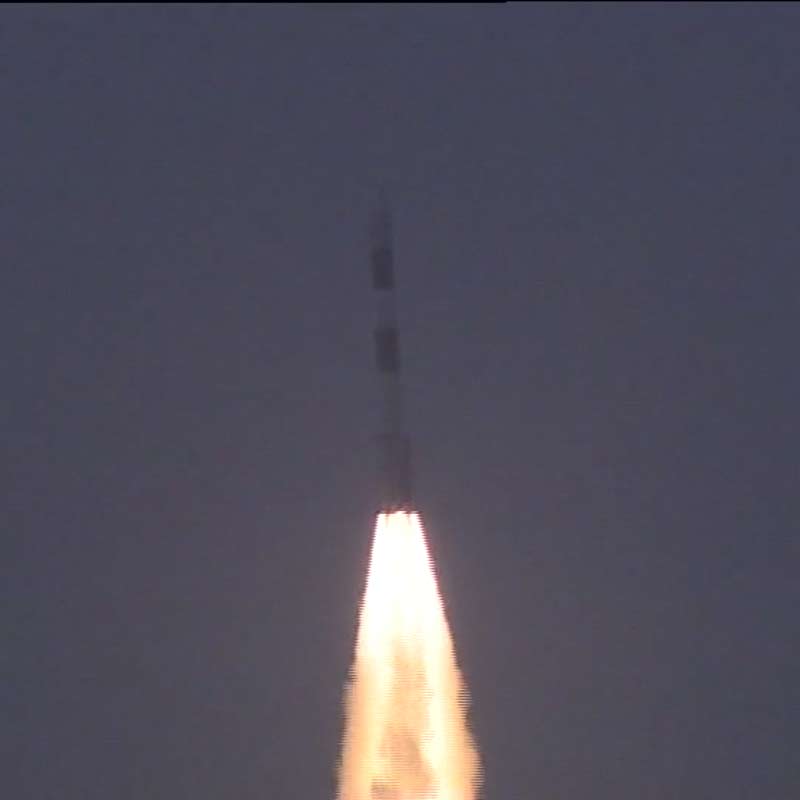
    MUMBAI: Around two hours  after lift-off and after placing India’s weather satellite ScatSat1 in a polar sun synchronous orbit at 720 km, the Indian Space Research Organisation’s (ISRO’s) PSLV C35 rocket fired once again. Following that maneuver, it placed another seven satellites in orbit at an altitude of 670 km.

    The seven satellites included two from Indian educational institutions (PISAT and Pratham) and three commercial initiatives from Algeria (Alsat-1B, 2B and 1N) and one each from Canada (NLS-19) and the US (Pathfinder 1).

    ISRO chairman AS Kiran Kumar called the Monday launch as a landmark day in its history. The reason: the PSLV C35 mission marked the first time that the space organization  had successfully fired the  polar satellite launch vehicle twice to place satellite in different orbital altitudes. And, it was also the longest PSLV mission tackled by ISRO. 

    ScatSat-1 has a lifespan of five years and it is meant to give e weather forecasting services through the generation of wind vector products,  while the the 10 kg Pratham developed by  by IIT Bombay intends to estimate the total electron count with a resolution of 1km x 1km location grid. PISAT from the PES University will explore remote sensing applications. 

    Algeria’s ALSAT-1B is an earth observation satellite (103 kg), ALSAT-2B a remote sensing satellite (117 kg) and ALSAT-1N (7 kg) a technology demonstrator. Canada’s NLS-19 is a technology demonstration micro satellite (8 kg) and Pathfinder-1 is a commercial high resolution imaging micro satellite (44 kg).

    Kiran Kumar said that ISRO’s next launch is slated for 4 October which is the communication satellite GSAT-18. 

    Congratulations poured into ISRO from all quarters right from Suresh Prabhu to M Venkaiah Naidu to the President Pranab Mukherjee to Shivraj Singh Chouhan to Nirmala Setharaman and finally from the prime minister Narendra Modi.

    Also Read:  ISRO’s PSLV-C35 takes off successfully, Scatsat1 launched

    Also Read:  ISRO to launch eight satellites using PSLV on 26 September

  • XTreme-AsiaSat to provide 4K premium UHD content

    XTreme-AsiaSat to provide 4K premium UHD content

    MUMBAI: 4K-SAT, the Ultra-HD channel operated by Asia’s premier satellite operator Asia Satellite Telecommunications Co. Ltd. (AsiaSat), will be broadcasting premium extreme and outdoor content from XTreme Video on AsiaSat 4.

    XTreme Video is producing the best 4K content for extreme sports fans worldwide. Its UHD content on 4K-SAT will include some of the most stunning extreme and outdoor content, such as the successful mountain biking series ‘MTB Insights’ and the world’s wildest freestyle motocross show ‘Masters of Dirt’.

    “The brilliance of 4K definition truly comes into its own when the subject matter is as visually captivating as extreme and outdoor programming. We’re committed to bringing the highest quality programming to audiences around the globe, via partnerships with platforms, broadcasters and partners like AsiaSat,” said Joe Nilsson, senior director of business

    “XTreme Video offers exciting, adrenaline pumping programs that are very popular amongst viewers of all ages that are interested in extreme sports. We want to bring an immersive quality viewing experience to viewers via our platform on AsiaSat 4,” said Sabrina Cubbon, vice president, marketing and global accounts of AsiaSat.

    ‘4K-SAT’ continues to impress major TV operators and viewers across the region with unique and compelling UHD content in fashion, lifestyle, nature, movies, TV series, documentaries, extreme sports and technology.

    Since 1994, XTreme has been the home of independent creators capturing and documenting the culture, locations and stories of extreme activities. Asia Satellite Telecommunications, the leading satellite operator in Asia, serves over two-thirds of the world’s population with its six satellites.

  • XTreme-AsiaSat to provide 4K premium UHD content

    XTreme-AsiaSat to provide 4K premium UHD content

    MUMBAI: 4K-SAT, the Ultra-HD channel operated by Asia’s premier satellite operator Asia Satellite Telecommunications Co. Ltd. (AsiaSat), will be broadcasting premium extreme and outdoor content from XTreme Video on AsiaSat 4.

    XTreme Video is producing the best 4K content for extreme sports fans worldwide. Its UHD content on 4K-SAT will include some of the most stunning extreme and outdoor content, such as the successful mountain biking series ‘MTB Insights’ and the world’s wildest freestyle motocross show ‘Masters of Dirt’.

    “The brilliance of 4K definition truly comes into its own when the subject matter is as visually captivating as extreme and outdoor programming. We’re committed to bringing the highest quality programming to audiences around the globe, via partnerships with platforms, broadcasters and partners like AsiaSat,” said Joe Nilsson, senior director of business

    “XTreme Video offers exciting, adrenaline pumping programs that are very popular amongst viewers of all ages that are interested in extreme sports. We want to bring an immersive quality viewing experience to viewers via our platform on AsiaSat 4,” said Sabrina Cubbon, vice president, marketing and global accounts of AsiaSat.

    ‘4K-SAT’ continues to impress major TV operators and viewers across the region with unique and compelling UHD content in fashion, lifestyle, nature, movies, TV series, documentaries, extreme sports and technology.

    Since 1994, XTreme has been the home of independent creators capturing and documenting the culture, locations and stories of extreme activities. Asia Satellite Telecommunications, the leading satellite operator in Asia, serves over two-thirds of the world’s population with its six satellites.

  • Two Intelsat satellites with C and Ku-Band transponders set for launch tomorrow

    Two Intelsat satellites with C and Ku-Band transponders set for launch tomorrow

    NEW DELHI: Two Intelsat communications satellites – Intelsat 33e and Intelsat 36 – are being launched into orbit on 24 August, with Arianespace in the final stage of preparations.

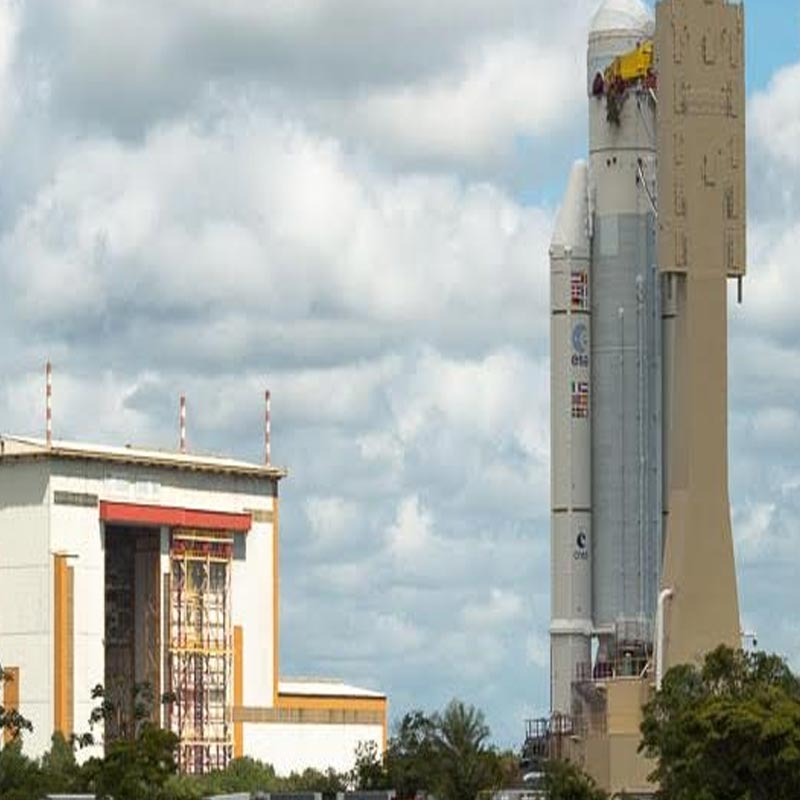
    This sixth mission of the year will be launched from the Ariane Launch Complex No. 3 (ELA 3) in Kourou, French Guiana, atop an Ariane 5 booster. The launch window starts at 5:55 p.m. EDT (21:55 GMT) and extends for 45 minutes.

    The work on the launch started in mid-July with the arrival of the satellites in French Guiana. Intelsat 33e and Intelsat 36 were shipped to the Guiana Space Centre in late July. Both spacecraft were put through a series of tests including electrical checks verifying command and telemetry systems, as well as electrical propulsion tests, validating the Xenon propulsion system. The engineers also performed bi-propellant tests to make sure that each thruster responds correctly to activation commands, and to prove there were no leaks.

    With a lifetime of fifteen years, the Intelsat 33e has been built by Boeing and is based on its 702 MP platform. The satellite weighs 6.6 metric tons and measures 7.9 by 3.8 by 3.2 meters. It features two deployable solar wings, each with four panels of ultra-triple-junction gallium arsenide solar cells, capable of generating up to 13 kilowatts of power.

    Equipped with 20 C-band and 249 Ku-band transponders, Intelsat 33e will be inserted into a geosynchronous orbit inclined 60 degrees East, replacing Intelsat 904. The satellite is designed to deliver carrier-grade telecom, enterprise networks, aeronautical connectivity, and certain media services.

    This is the second spacecraft in the company’s EpicNG series – a high-performance, next-generation satellite platform that delivers global high-throughput technology.

    Its Ku-band spot beams are to provide broadband services for Europe, Africa, West Asia, and Asia, while a Ku-band wide beam provides broadcast coverage of Europe, West Asia, and Asia. The satellite’s C-band spot beams will cover high traffic telecommunications centres in Europe, Central Africa, West Asia, Asia, and Australia. When it comes to the C-band wide beam, it is expected to deliver coverage over sub-Saharan Africa for data and media services.

    Intelsat 36 with a life of over fifteen years was manufactured by Space Systems/Loral (SSL) and is based on the SSL-1300 bus. Weighing about 3.25 metric tons, its dimensions are 17 by 10 by 11 feet (5.2 by 3.1 by 3.4 meters). The spacecraft has two deployable solar arrays that will generate up to 15.8 kilowatts of power. Intelsat 36 is fitted with 34 Ku-band transponders and 10 C-band transponders. Its Ku-band payload will support Intelsat’s MultiChoice direct-to-home service in South Africa, while the C-band payload is expected to provide in-orbit resilience for the video content distribution neighborhood at 68.5 degrees East where the satellite will be co-located in a geosynchronous orbit, together with Intelsat 20.

    The Intelsat 33e satellite was on 6 August mated with the payload adapter in the S5 payload facility and four days later it was encapsulated in the payload fairing. Intelsat 36 was installed on the payload adapter four days later and its encapsulation took place afterwards with the stack was placed atop the Ariane 5 launcher.

    The launch rehearsal and final preparations of the booster for the upcoming liftoff were held last week, while the rollout of the rocket to the launch pad was scheduled to be performed one day before the planned blastoff. The final countdown for the liftoff will be commenced 11 hours and 30 minutes ahead of the launch.

    Designated VA232 in Arianespace’s numbering system, it will see the Ariane 5 rocket fly for about 42 minutes when Intelsat 33e will be released into orbit first nearly 29 minutes after launch, while Intelsat 36 will separate 13 minutes later.

    According to Intelsat Investor Relations Vice President Dianne J. VanBeber, “We take the next step in establishing our Intelsat EpicNG high-throughput platform with Intelsat 33e, the second in our series of seven planned satellites. We also launch Intelsat 36, which is a fully committed custom payload for an important DTH customer in South Africa,”

    The Ariane 5 in ECA configuration is the heavy-lift rocket for missions to geostationary transfer orbit (GTO) and usually carries two telecommunications satellite payloads. The flight is powered during the initial flight phase by a cryogenic core stage and two solid rocket boosters, followed by the use of a cryogenic upper stage for orbital injection of the payload.

    The 54.8-meter tall ECA is an improved version of the Ariane 5 launcher, designed to deliver payloads, mainly communications satellites, weighing up to 10 tonnes.

    Although it has the same general architecture, some significant changes were made to the basic structure of the generic version to increase thrust and enable it to carry heavier payloads. ECA is also used by institutional customers for non-GTO missions; for example, launching ESA’s Herschel and Planck scientific missions in 2008.

    This will be the 232nd liftoff of an Ariane vehicle from the Kourou Spaceport. It will be the fourth Ariane 5 launch of 2016 (the 87th Ariane 5 launch overall) and the sixth of 12 flights planned this year by Arianespace, utilizing its family of the heavy-lift Ariane 5, the medium-lift Soyuz, and the lightweight Vega.

    Arianespace’s next launch is scheduled for 16 September when it is expected to send into orbit PeruSat 1 for the Peruvian Armed Forces and four SkySat Earth-observing microsatellites for Skybox Imaging. The mission will be performed by the Vega launcher, lifting off from Kourou.

  • Two Intelsat satellites with C and Ku-Band transponders set for launch tomorrow

    Two Intelsat satellites with C and Ku-Band transponders set for launch tomorrow

    NEW DELHI: Two Intelsat communications satellites – Intelsat 33e and Intelsat 36 – are being launched into orbit on 24 August, with Arianespace in the final stage of preparations.

    This sixth mission of the year will be launched from the Ariane Launch Complex No. 3 (ELA 3) in Kourou, French Guiana, atop an Ariane 5 booster. The launch window starts at 5:55 p.m. EDT (21:55 GMT) and extends for 45 minutes.

    The work on the launch started in mid-July with the arrival of the satellites in French Guiana. Intelsat 33e and Intelsat 36 were shipped to the Guiana Space Centre in late July. Both spacecraft were put through a series of tests including electrical checks verifying command and telemetry systems, as well as electrical propulsion tests, validating the Xenon propulsion system. The engineers also performed bi-propellant tests to make sure that each thruster responds correctly to activation commands, and to prove there were no leaks.

    With a lifetime of fifteen years, the Intelsat 33e has been built by Boeing and is based on its 702 MP platform. The satellite weighs 6.6 metric tons and measures 7.9 by 3.8 by 3.2 meters. It features two deployable solar wings, each with four panels of ultra-triple-junction gallium arsenide solar cells, capable of generating up to 13 kilowatts of power.

    Equipped with 20 C-band and 249 Ku-band transponders, Intelsat 33e will be inserted into a geosynchronous orbit inclined 60 degrees East, replacing Intelsat 904. The satellite is designed to deliver carrier-grade telecom, enterprise networks, aeronautical connectivity, and certain media services.

    This is the second spacecraft in the company’s EpicNG series – a high-performance, next-generation satellite platform that delivers global high-throughput technology.

    Its Ku-band spot beams are to provide broadband services for Europe, Africa, West Asia, and Asia, while a Ku-band wide beam provides broadcast coverage of Europe, West Asia, and Asia. The satellite’s C-band spot beams will cover high traffic telecommunications centres in Europe, Central Africa, West Asia, Asia, and Australia. When it comes to the C-band wide beam, it is expected to deliver coverage over sub-Saharan Africa for data and media services.

    Intelsat 36 with a life of over fifteen years was manufactured by Space Systems/Loral (SSL) and is based on the SSL-1300 bus. Weighing about 3.25 metric tons, its dimensions are 17 by 10 by 11 feet (5.2 by 3.1 by 3.4 meters). The spacecraft has two deployable solar arrays that will generate up to 15.8 kilowatts of power. Intelsat 36 is fitted with 34 Ku-band transponders and 10 C-band transponders. Its Ku-band payload will support Intelsat’s MultiChoice direct-to-home service in South Africa, while the C-band payload is expected to provide in-orbit resilience for the video content distribution neighborhood at 68.5 degrees East where the satellite will be co-located in a geosynchronous orbit, together with Intelsat 20.

    The Intelsat 33e satellite was on 6 August mated with the payload adapter in the S5 payload facility and four days later it was encapsulated in the payload fairing. Intelsat 36 was installed on the payload adapter four days later and its encapsulation took place afterwards with the stack was placed atop the Ariane 5 launcher.

    The launch rehearsal and final preparations of the booster for the upcoming liftoff were held last week, while the rollout of the rocket to the launch pad was scheduled to be performed one day before the planned blastoff. The final countdown for the liftoff will be commenced 11 hours and 30 minutes ahead of the launch.

    Designated VA232 in Arianespace’s numbering system, it will see the Ariane 5 rocket fly for about 42 minutes when Intelsat 33e will be released into orbit first nearly 29 minutes after launch, while Intelsat 36 will separate 13 minutes later.

    According to Intelsat Investor Relations Vice President Dianne J. VanBeber, “We take the next step in establishing our Intelsat EpicNG high-throughput platform with Intelsat 33e, the second in our series of seven planned satellites. We also launch Intelsat 36, which is a fully committed custom payload for an important DTH customer in South Africa,”

    The Ariane 5 in ECA configuration is the heavy-lift rocket for missions to geostationary transfer orbit (GTO) and usually carries two telecommunications satellite payloads. The flight is powered during the initial flight phase by a cryogenic core stage and two solid rocket boosters, followed by the use of a cryogenic upper stage for orbital injection of the payload.

    The 54.8-meter tall ECA is an improved version of the Ariane 5 launcher, designed to deliver payloads, mainly communications satellites, weighing up to 10 tonnes.

    Although it has the same general architecture, some significant changes were made to the basic structure of the generic version to increase thrust and enable it to carry heavier payloads. ECA is also used by institutional customers for non-GTO missions; for example, launching ESA’s Herschel and Planck scientific missions in 2008.

    This will be the 232nd liftoff of an Ariane vehicle from the Kourou Spaceport. It will be the fourth Ariane 5 launch of 2016 (the 87th Ariane 5 launch overall) and the sixth of 12 flights planned this year by Arianespace, utilizing its family of the heavy-lift Ariane 5, the medium-lift Soyuz, and the lightweight Vega.

    Arianespace’s next launch is scheduled for 16 September when it is expected to send into orbit PeruSat 1 for the Peruvian Armed Forces and four SkySat Earth-observing microsatellites for Skybox Imaging. The mission will be performed by the Vega launcher, lifting off from Kourou.
  • Over eighty tele-education networks established using Edusat between 2004 and 2010

    Over eighty tele-education networks established using Edusat between 2004 and 2010

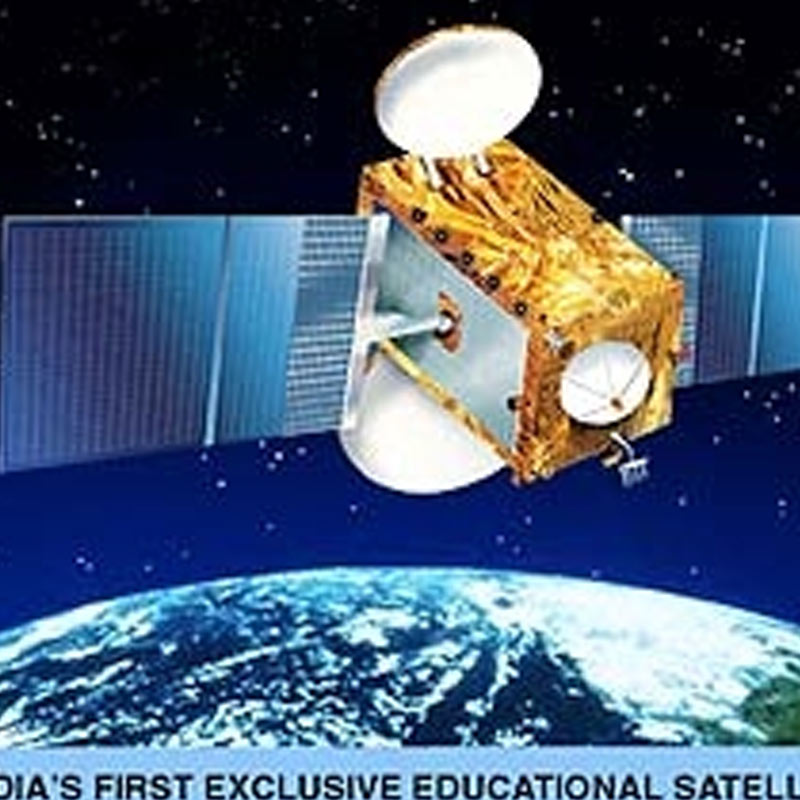
    NEW DELHI: A total of 83 tele-education networks connecting about 5000 interactive and about 55000 receive only terminals were established with the help of the Edusat satellite between September 2004 and October 2010.

    Parliament was told today by Space Minister Jitendra Singh said the satellite had been planned for demonstrating the capabilities of satellite communication technology for education sector.

    It was launched in September 2004 and supported the educational services till October 2010.
    During this period, many educational transmission experiments were demonstrated using satellite communication networks.

    After October 2010, the tele-education networks are migrated to other communication satellites like INSAT-3C, INSAT-4CR and GSAT-12.

  • Over eighty tele-education networks established using Edusat between 2004 and 2010

    Over eighty tele-education networks established using Edusat between 2004 and 2010

    NEW DELHI: A total of 83 tele-education networks connecting about 5000 interactive and about 55000 receive only terminals were established with the help of the Edusat satellite between September 2004 and October 2010.

    Parliament was told today by Space Minister Jitendra Singh said the satellite had been planned for demonstrating the capabilities of satellite communication technology for education sector.

    It was launched in September 2004 and supported the educational services till October 2010.
    During this period, many educational transmission experiments were demonstrated using satellite communication networks.

    After October 2010, the tele-education networks are migrated to other communication satellites like INSAT-3C, INSAT-4CR and GSAT-12.

  • AsiaSat and Digital Magic join hands to create original UHD content for ‘4K-SAT’

    AsiaSat and Digital Magic join hands to create original UHD content for ‘4K-SAT’

    MUMBAI: Asia’s premier satellite operator Asia Satellite Telecommunications Co. Ltd. (AsiaSat) is collaborating with Digital Magic, an industry-leading provider of advanced imaging solutions to co-produce UltraHD (UHD) content for AsiaSat’s UHD channel ‘4K-SAT’, on AsiaSat 4 at 122°E.

    The co-production includes a knowledge-based UHD mini-series on satellite communications to provide an easy-to-understand introduction to topics such as how a satellite works, how it serves people and how it is used in broadcasting high quality content.

    “Compelling content is the key to drive UHD viewership. Creating original content is the first step of our collaboration with Digital Magic. Digital Magic is an industry renowned content producer in UHD and VR. We look forward to developing more together for our audience in Asia,” said Sabrina Cubbon, Vice President, Marketing and Global Accounts of AsiaSat.

    “We are delighted to partner with AsiaSat, Asia’s UHD satellite broadcasting pioneer to create original, insightful content to educate and inform our viewers in the region. Initial content viewing among youth has suggested that this is a meaningful attempt to broaden public interest and knowledge in space and communications,” said Percy Fung, Production Director of Digital Magic.

    AsiaSat’s ‘4K-SAT’ channel is currently broadcasting a variety of full UHD content. Major TV

    operators in the Asia-Pacific have access to it via AsiaSat 4.

    ‘4K-SAT’ is available free-to-air on AsiaSat 4 with the following reception parameters: Orbital Location: 122°E
    Transponder: A4-C13H Downlink Frequency: 4120 MHz Downlink Polarisation: Horizontal Transmission Standard: DVB-S2
    Compression Standard: HEVC Modulation: 8PSK
    Symbol Rate: 29.72 Msym/sec

    FEC: 5/6

  • AsiaSat and Digital Magic join hands to create original UHD content for ‘4K-SAT’

    AsiaSat and Digital Magic join hands to create original UHD content for ‘4K-SAT’

    MUMBAI: Asia’s premier satellite operator Asia Satellite Telecommunications Co. Ltd. (AsiaSat) is collaborating with Digital Magic, an industry-leading provider of advanced imaging solutions to co-produce UltraHD (UHD) content for AsiaSat’s UHD channel ‘4K-SAT’, on AsiaSat 4 at 122°E.

    The co-production includes a knowledge-based UHD mini-series on satellite communications to provide an easy-to-understand introduction to topics such as how a satellite works, how it serves people and how it is used in broadcasting high quality content.

    “Compelling content is the key to drive UHD viewership. Creating original content is the first step of our collaboration with Digital Magic. Digital Magic is an industry renowned content producer in UHD and VR. We look forward to developing more together for our audience in Asia,” said Sabrina Cubbon, Vice President, Marketing and Global Accounts of AsiaSat.

    “We are delighted to partner with AsiaSat, Asia’s UHD satellite broadcasting pioneer to create original, insightful content to educate and inform our viewers in the region. Initial content viewing among youth has suggested that this is a meaningful attempt to broaden public interest and knowledge in space and communications,” said Percy Fung, Production Director of Digital Magic.

    AsiaSat’s ‘4K-SAT’ channel is currently broadcasting a variety of full UHD content. Major TV

    operators in the Asia-Pacific have access to it via AsiaSat 4.

    ‘4K-SAT’ is available free-to-air on AsiaSat 4 with the following reception parameters: Orbital Location: 122°E
    Transponder: A4-C13H Downlink Frequency: 4120 MHz Downlink Polarisation: Horizontal Transmission Standard: DVB-S2
    Compression Standard: HEVC Modulation: 8PSK
    Symbol Rate: 29.72 Msym/sec

    FEC: 5/6

  • Govt claims it invoked security considerations, says it is studying PCA order against Antrix in Davos case

    Govt claims it invoked security considerations, says it is studying PCA order against Antrix in Davos case

    NEW DELHI: The Permanent Court of Arbitration (PCA) in The Hague has said that the annulment of the agreement between Devas and Indian Space Research Organization’s commercial arm Antrix in 2011 which resulted in denying Devas commercial use of S-band spectrum constituted an expropriation.

    PCA administers cases under the arbitration rules of the United Nations Commission on International Trade Law (UNCITRAL).

    In a reaction, the Government of India reiterated that it had invoked the essential security interests through a well reasoned, valid and proper CCS decision. The award of the Tribunal is being examined and legal recourse, as deemed fit, will be taken.” We also remain committed to pursue our larger national interests including sovereign strategic security interests in this matter”, it said.

    This ongoing case with Mauritius-based Devas Corporation over sharing of spectrum on satellites may result in huge payments as compensation to Devas.

    The order said by this action, the Indian Government expropriated the investments of Devas’s foreign shareholders and also acted unfairly and inequitably, thus making it liable to pay financial compensation.

    (In a statement, the Government of India said The Tribunal had said it’s essential security interest provisions of the Treaty do apply in this case to an extent. The limited liability of compensation shall be limited to 40% of the value of the investment. The precise quantum has not been determined as yet. The Tribunal has dismissed the Claims as regards violation of other provisions of the Treaty viz., (i) unreasonable or discriminatory measures; as also (ii) Most Favoured Nation treatment, it said.

    In 2005 Antrix and Devas entered into an agreement for the long-term lease of two ISRO satellites operating in the S-band. The deal was for 70 MHz of S-Band frequency used to provide multimedia services by leasing most of the transponders on the GSAT-6 and GSAT-6A satellites for 12 years. Devas was to pay $300 million over the said period.

    However, the government annulled the contract after reports of unilateral process and presumptive loss to exchequer due to the deal. Following this the US investors in Devas moved a case against Antrix.

    In 2015 the International Chamber of Commerce (ICC) tribunal ruled that the Antrix’s annulation was unlawful and awarded Devas damages and pre-award interest of approximately $672 million, plus post-award annual interest accruing at 18 per cent until the award is paid in full.

    Devas Multimedia, based in Bangalore, was set up by former ISRO scientists and some U.S. investors. According to Devas website investors included Deutsche Telekom AG, Columbia Capital LLC, and Telcom Ventures LLC.

    Meanwhile, the Enforcement Directorate, has issued a show cause notice to Devas for violation of Foreign Exchange Management Act 1999 and are further investigating the case under Prevention of Money Laundering Act 2002. The Directorate has issued show cause notice to Devas for contravention to the provisions of FEMA 1999.

    The CBI has filed an FIR against, inter-alia, M/s Devas Multimedia Pvt. Ltd, Bangalore; and other unknown public servants of M/s Antrix/ISRO/DOS. This case is presently under investigation.